All these Log Cabin Quilts were hanging in a special vintage exhibit in a quilt show some years back, and I think I photographed them all. And while there are a lot of images here in this collage, I didn’t put them all in.
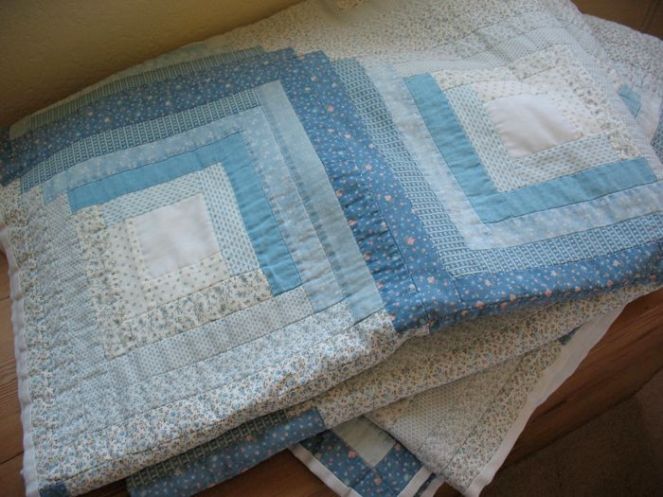
This Log Cabin quilt, above, was the second big quilt I ever made and it took me four years from start to finish. When the quilting was all done, I brought the backing fabric to the front, folded it over, stitched it down and called it a binding (the quilt police are gasping!). But it was what I knew how to do then. I quilted this by hand through the hot summers of my time in Texas, finishing it up in the mellow spring of the Bay Area in California.
So for our First Monday Sew-day group I chose the Log Cabin block. This group is geared toward new quilters, so I’m trying to figure out the basic blocks a quilter needs in their skills basket, and designing a monthly handout to match. You can get your PDF handout here:
It’s in a PDF form, two-sided. Trying to keep it simple, I only tackled two of the hundreds of variations of Log Cabin blocks. We’ve been doing this for a while, so search for First Monday Sew-day to get the rest of the handouts.
And variations of setting, too. I’ve made a few different kind of Log Cabin blocks. Here are a few:
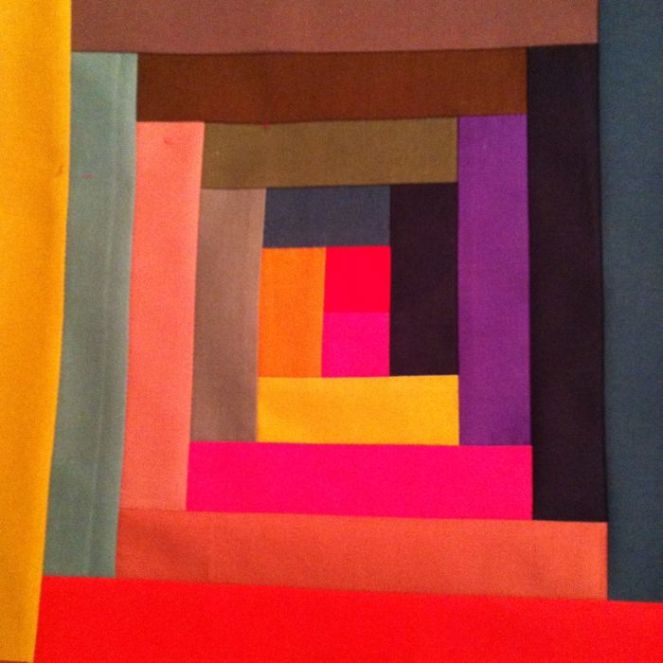
A wonky Log Cabin quilt, given to my son.
A block for this quilt:
And even a funky round Log Cabin block, made by varying the sizes and lengths of the strips. Yes, Log Cabins are definitely in our heritage, especially our quilting heritage.
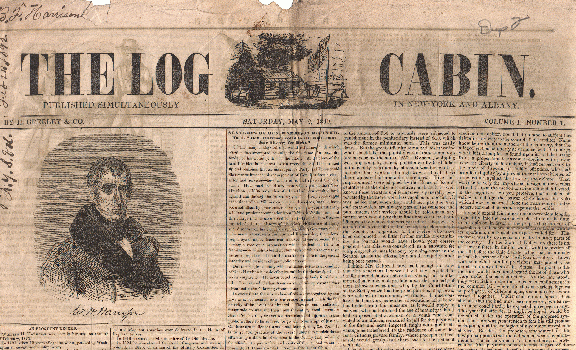
Barbara Brackman provides information on the origin of this name: “In June of 1866, an Iowa diarist known only as “Abbie” wrote that she “went to town, bought Delaine [wool blend] for my log cabin.” On the last day of July she “wrote a letter to Sis and worked on my log cabin.” If you don’t know about Barbara Brackman, a quilt historian, click over to her site and learn. She’s always my go-to source when I have a question.
So, even though we can’t meet together, that doesn’t mean we can’t have our First Monday Sew-day. If like me, you are stuck at home and you make a Log Cabin block, send me a photo!
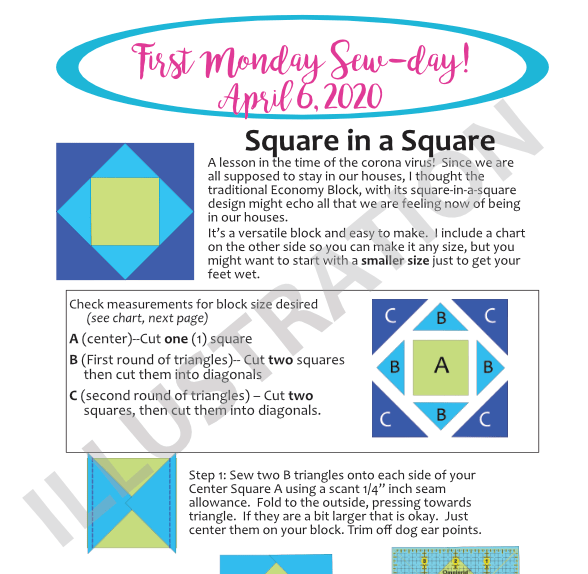
I help teach a group of beginning quilters, and we call ourselves First Monday Sew-day, and yes, I know it’s not the First Monday today, but it’s COVID-19 season and nothing is normal anymore. For this First Monday Sew-day, I chose to teach the Economy block, also known as the Square-in-a-Square block.
I’ve made a little handout to go along with this, which includes a detailed chart of measurements. Click to download the PDF file:
(NOTE: I’ve also collected all my First Monday Posts and put them in their own page at the top of my blog, just in case you want to find them easily.)
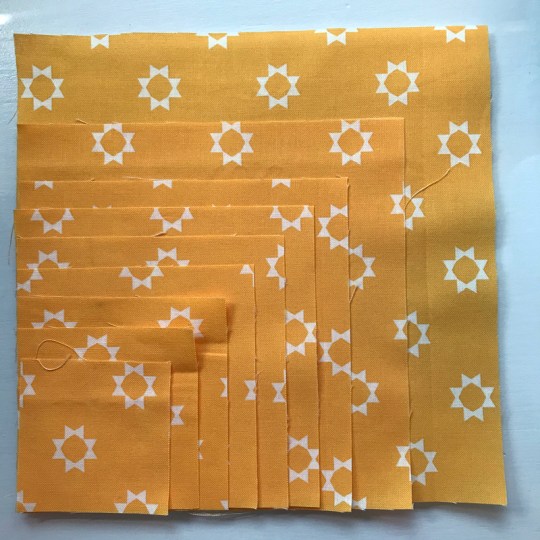
I looked at Catbird Quilt Studios’ chart, but then decided I wanted to test out my own measurements. First I cut some sunny yellow fabric for the centers.
I pulled some neutrals from my stash, cut the triangles, then painstakingly went through each measurement, adjusting it to what I thought would work for teaching beginners, then went to work.
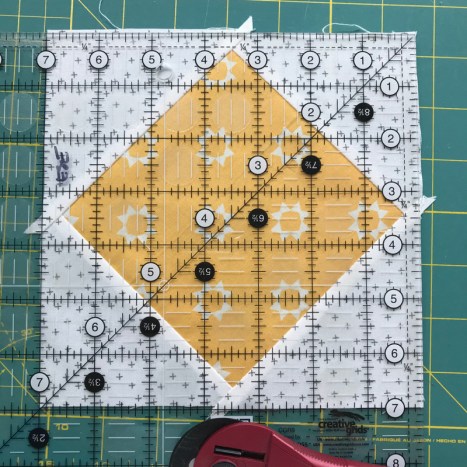
After getting the first set of triangles on, I squared it up, jotting down the measurements as I went through each size.
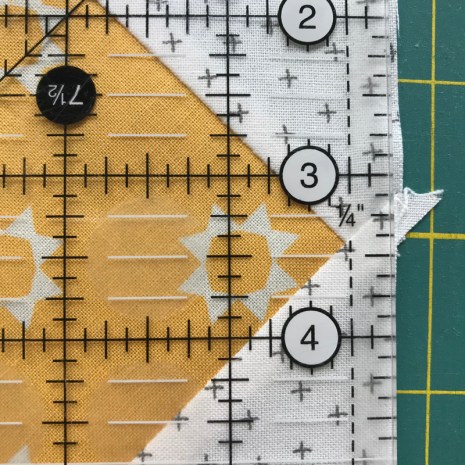
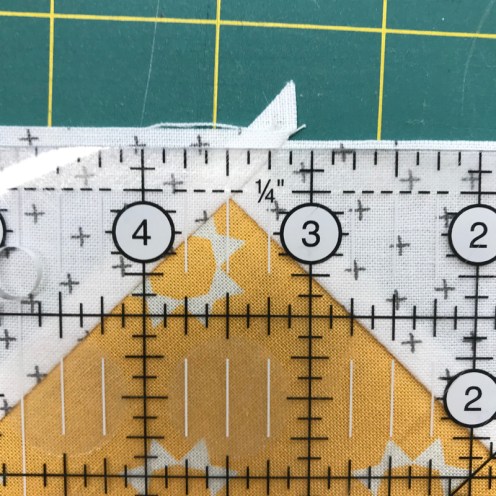
When you trim, do your best to leave a 1/4″ of seam allowance at each point, as shown above.
I love this color of blue, known around our house as painting-tape blue.
I’ve already put the triangles on the first two sides and pressed them. Now I’m starting on the second set, with the finish below:
Here are all the sizes, stacked up together. I’m thinking bordering the smallest sizes again to equal that large 15″ block in the lower left, and seeing what evolves.
This is a free pattern from the Robert Kaufman Fabric Company, and it uses the Economy block, but the quiltmaker fussy cut center blocks for more interest.
I added one more set of triangles on this economy block to get this quilt. Doing a search on “economy block” yields lots of images to scroll through.
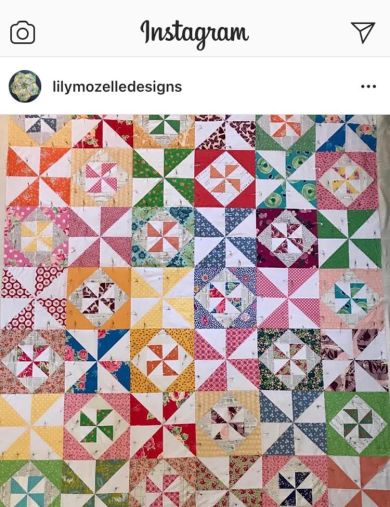
I liked how this quilt maker had pinwheels inside their Economy blocks. Our beginners learned how to make pinwheels when they learned about Half-Square Triangles.
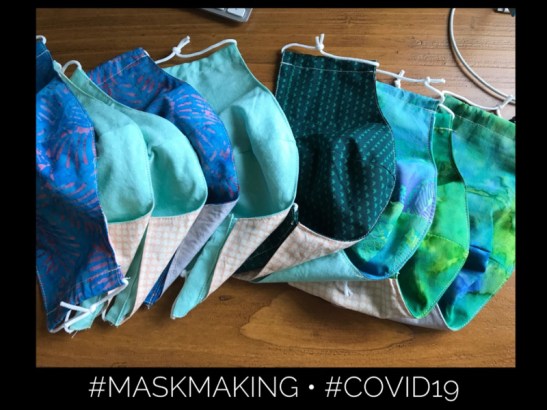
And I’m still making masks. I am making them for people I know, friends and family who need them as our particular county is a mask-wearing place.
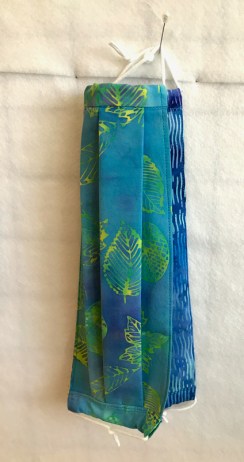
So when two friends came by and I realized that these masks wouldn’t work for them, I went back to the Accordian-style mask, added a nosewire sleeve and turned the sides into plackets, through which I could slip some elastic.
I’d say this is the fourth or fifth iteration of cloth masks that I’ve made. I kept wondering why I couldn’t be like all the other mask-makers of our particular universe, and just settle into one kind? I was heartened by “Tear It Up and Start Again,” an article by Harry Guiness, that reminded me of things I used to teach my college students, back in the day. I reminded them never to turn in their first draft, as the really good writing starts to happen on the third or fourth rounds (inevitably the class would groan about this point). Guiness notes that “Too often, when it comes to self-improvement, we create idealized, top-down systems with unnatural rules and regulations. We naïvely assume that we will somehow stick to our rigid plans when life gets random and hard, throwing unavoidable chaos and crises into the mix.”
We’ve all had some unavoidable chaos recently. While this article dealt more with those self-improvement plans we all make for ourselves (I hope you have all torn yours up during this stay-at-home time), I did like his nuggets of truth, such as this one: “When a plan or resolution fails, the solution isn’t to dismiss it and try a new, equally rigid prescription next year or next time. It’s to build on what worked, ruthlessly cut what didn’t and start straight away on a much-improved second draft.” I like that I won’t have to discard what I learned in my first draft, but can carry forward the best parts.
“I never lose. I win or learn.” This phrase has been attributed to many, but whoever said it was on to something. Hopefully we won’t lose during this time of forced idleness (for some), crashing boredom (for some), an onslaught of toomuchtodo (for some). We can win at our tasks if everything goes smoothly. However, you can tell by my variety of masks that it doesn’t — usually — go smoothly for me, but we can still learn new things about others, or new things about ourselves.
I’ve learned I like to tinker to figure out which mask will fit which face. I’ve learned that I can’t read the news before I go to bed at night. I’ve learned that my current forced isolation and distraction (courtesy of the novel corona virus) is not the best working environment for getting my quilting projects done.
I’ve learned a million new science-y facts about peak dates and doubling rates and flattening the curve and so on (I am married to a scientist), which may or may not come in handy in the Life After COVID-19. But hopefully I’ve also learned that my first drafts can lead to successful subsequent drafts, no matter whether it’s writing, or quilting, or making masks.
We had our First Monday Sewday this week, and the little group grew by two new participants. For those who don’t know about how we started, it began because a young woman in our church wanted to learn how to quilt. Then we found out a couple of more wanted to learn also. I rounded up a couple of capable experienced quilters, and they agreed to teach and serve as a resource, and Beth offered up her home for us to congregate.
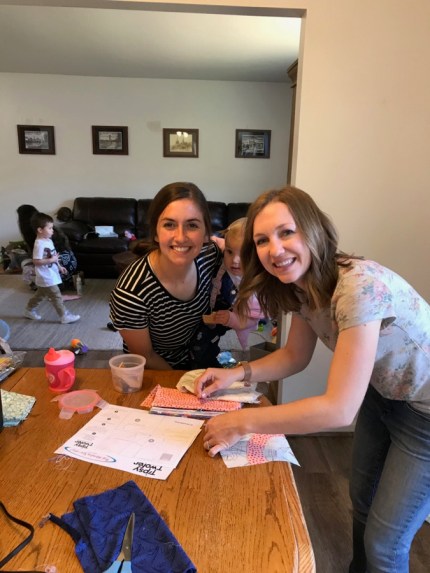
Above is Amber, who finished this month’s block. It’s called Tipsy Two-fer, and was designed by the fabulous Simone, shown below giving her little mini lesson.
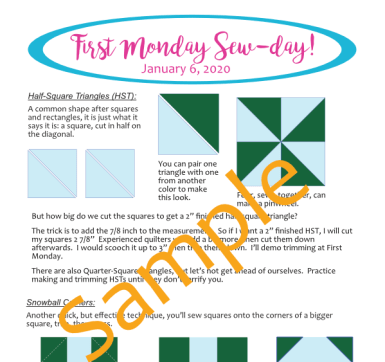
Download the block pattern from Simone’s website at simonebradford.com, where you can also see lots of different ways to put the block together. I also have a First Monday Sew-day handout you can download (PDF file; sample above): FirstMondaySewday_3_2020
Hayley and Caitlin are working on their blocks.
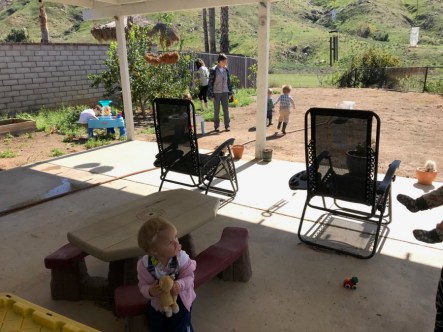
We had eight children under the age of six here, and Beth was also getting new fences. Vanda’s mother (visiting from the Czech Republic) agreed to keep an eye on the chaos children.
And it was Beth’s birthday, shown here hoisting up her son to help blow out the candles.
Since I’m a record-keeper, here we all are together. I’m impressed that Vanda could smile as her son was trying to bolt off her lap to Grandma (who took our photo).
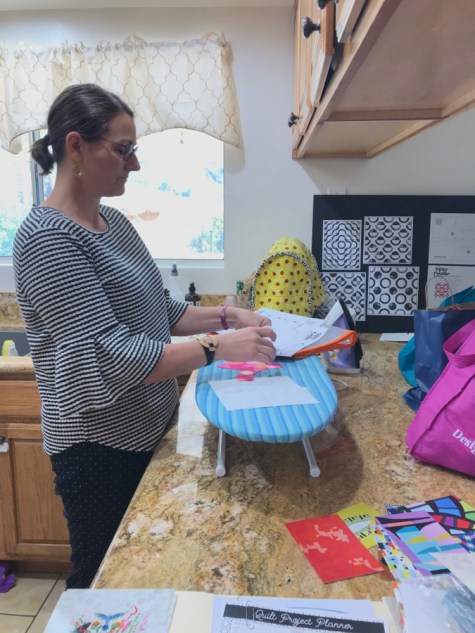
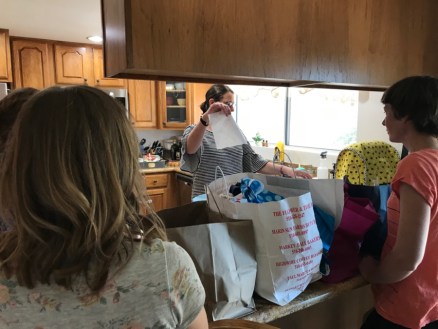
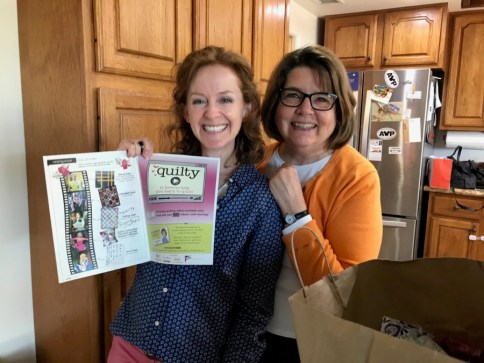
Since you know what I’ve been doing for weeks and weeks (house painting and trying to cram it all back in my sewing room), it gave me the opportunity to cull through some fabrics; I took four shopping bags of fabrics that quickly were sorted through and taken to new homes. I also brought some magazines, and remembered that I had a quilt published in the back of this Quilty issue. Amber jokingly requested my autograph, and we laughed together — but really it was all about the good mood present. Not a whole lot of quilting went on, but the young moms were able to talk and visit and we had cake and a Simone-block and a really great time.
Other First Monday Sew-day handouts are here:
This handout is about the basics: rotary cutting, accurate seams and pressing. Simone also talked about how to choose colors for a quilt. That day we sewed four patches together.



















 OccasionalPiece--Quilt!