300 Quilts · Creating · Totes and Purses

Keep Kalm-a-La and Carry On-A-La

Well, my candidate didn’t win.

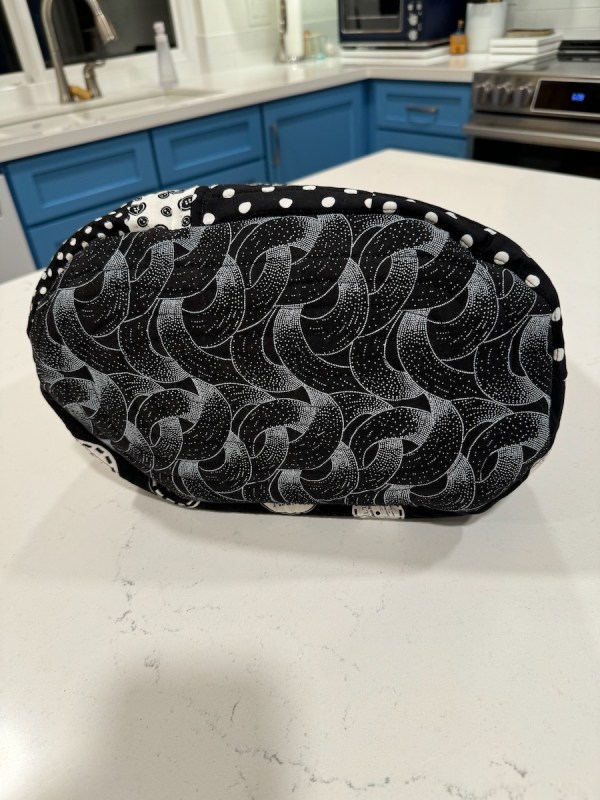
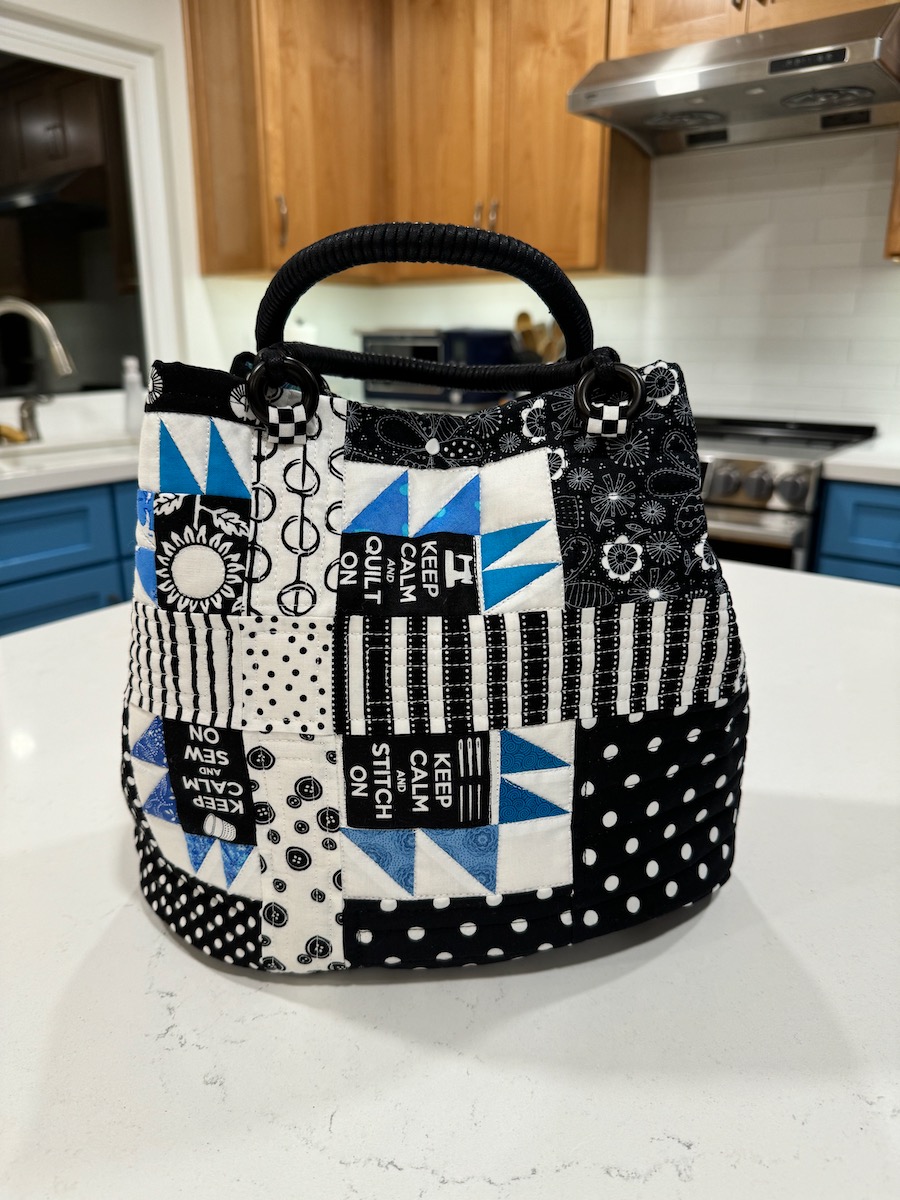
However, I was making this bag the whole last week of the election, and because I was inadvertently using the Keep Calm and Carry On (only it was Press On, Quilt On, etc.) and they had a skit on Saturday Night Light Live with Maya Rudolf and Kamala Harris that had a lot of joy and lot of play on words (including the title of this blog post), you really can’t blame me for merging it into the effort, can you?
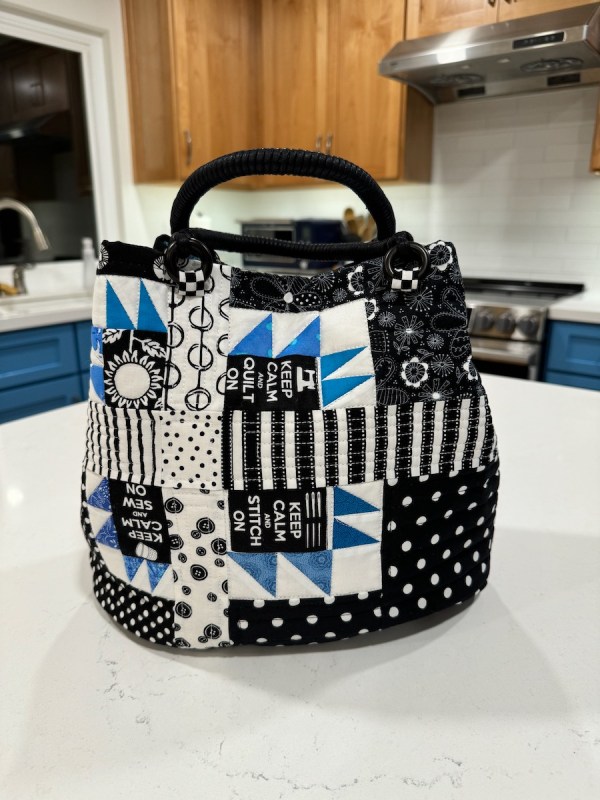
I say it’s okay to name things after current events, as I’m just fitting in with my quilting ancestors (thinking of all the quilts I saw in the DAR exhibits while I lived in DC that were named after election things like the Henry Clay Campaign Quilt or the Fort Sumter Flag Quilt and such). Really I just call it the Black and White and a Pop of Color challenge project for my guild, and I’m done a full 6 weeks early, for which I am celebrating! And no, no one from my Guild ever reads this blog, so I’m safe to write about it.

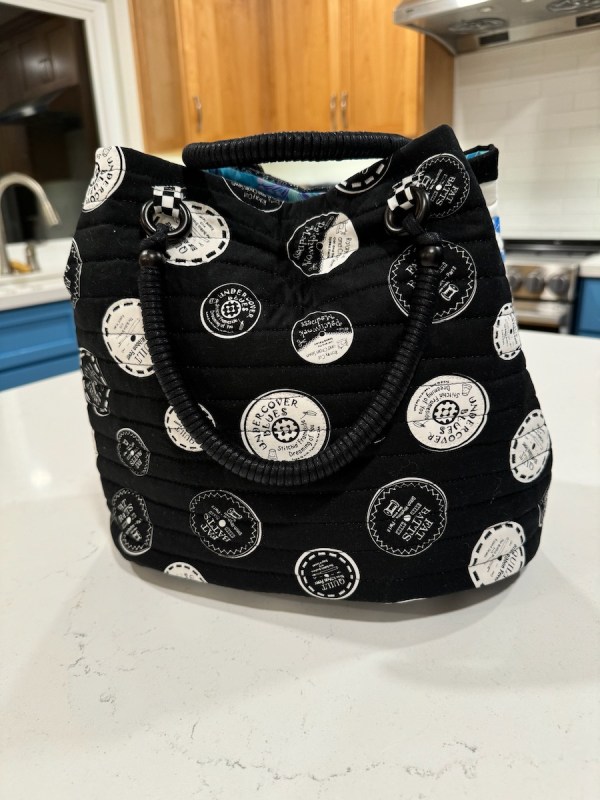
This took me ton of time, because of all that cord-loop business inside.
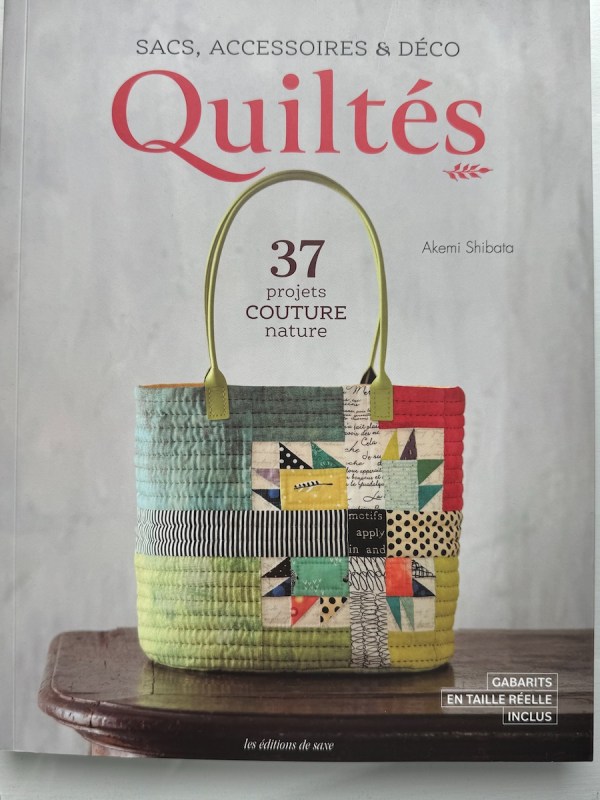
The pattern came from a book I picked up in France, which was all in French, but it was a Japanese designer, and yes, I made some shortcuts and mistakes and no, we aren’t going to talk about those. But thank heaven for Google Translate. Isn’t that colorful one on the cover a lot of fun?

I used some handles I’d purchased ages ago in Japan at Yuzawaya (and attached with little cloth loops), but it took me numerous shopping expeditions both at brick-and-mortar stores and ETSY, to even get something resembling the cord I needed, and I raided another bag for the clasp. Like I said, if I were in Japan, all these parts would be at the local Yuzawaya store. I still think I need to order thicker cord for the right look, but oh well.
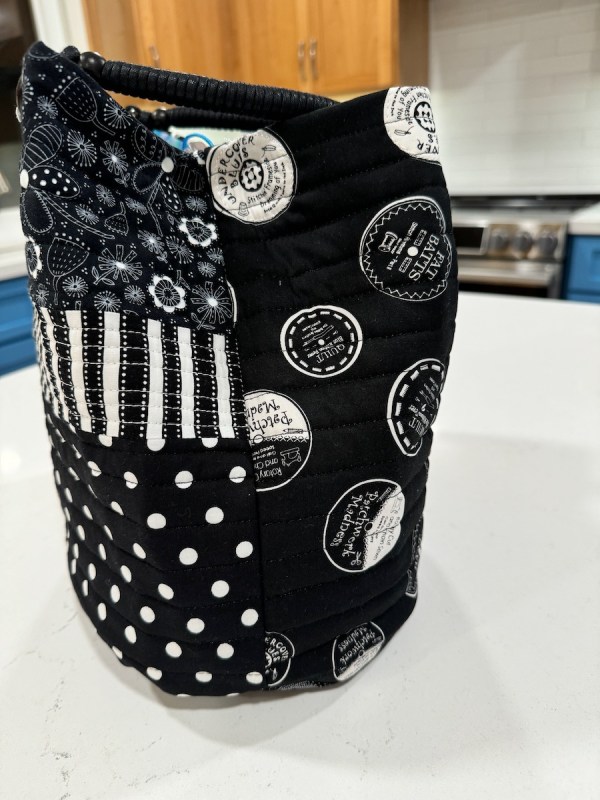
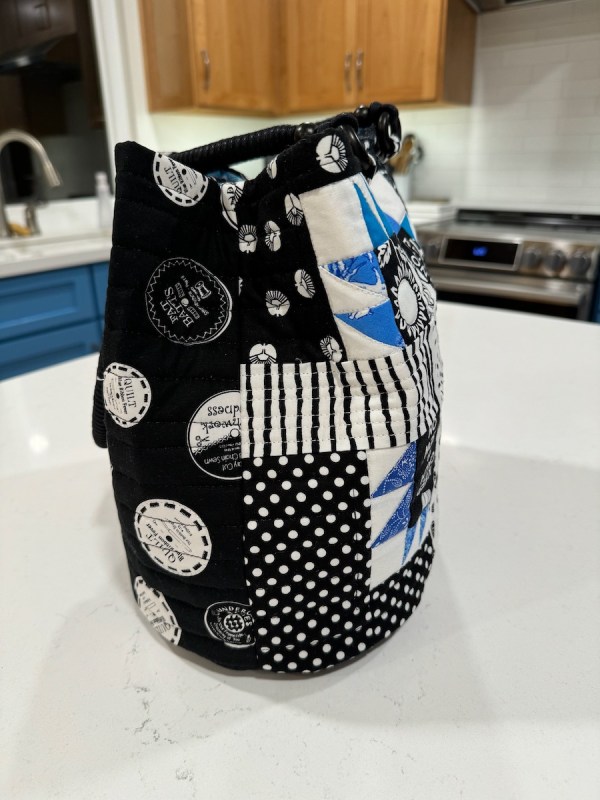
Side, side, and bottom. Since it took me as much time as some of my quilts, it has a number (293) and is indexed in my Indices, above. I do think it’s clever how the cord draws up the bag to give it shape, but just don’t know if it will work long-term. At any rate, the Guild Challenge is due in December, and I’m DONE!

While I was out shopping for cording — in early November — Christmas music was playing. I couldn’t get out of there fast enough. November is a time for gratitude, fall colors and fall quilts.
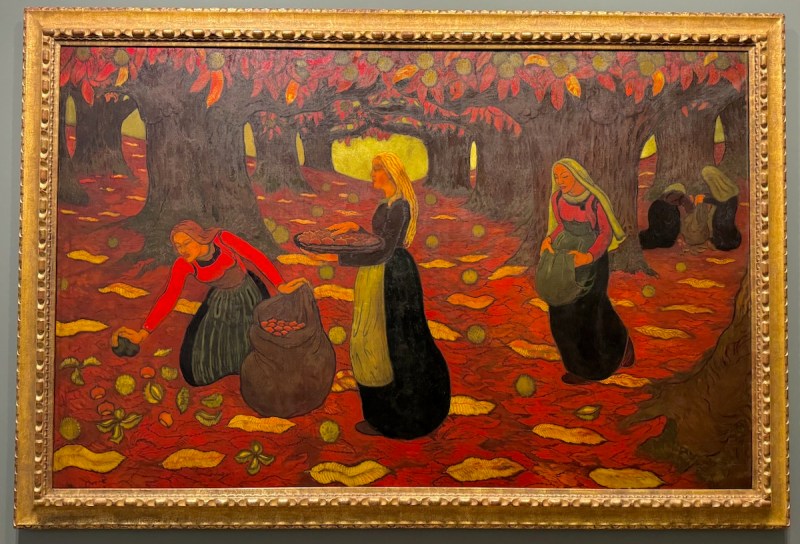
Autumn: The Chestnut Gatherers, 1894 by Georges Lacomb. Seen at the Norton Simon Museum.
Autumn Leaves, original design More autumn quilts seen here.

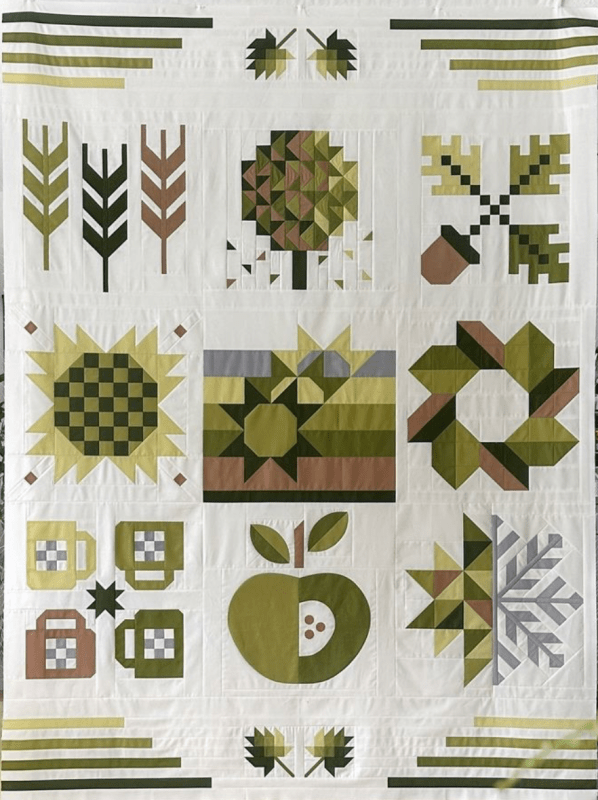
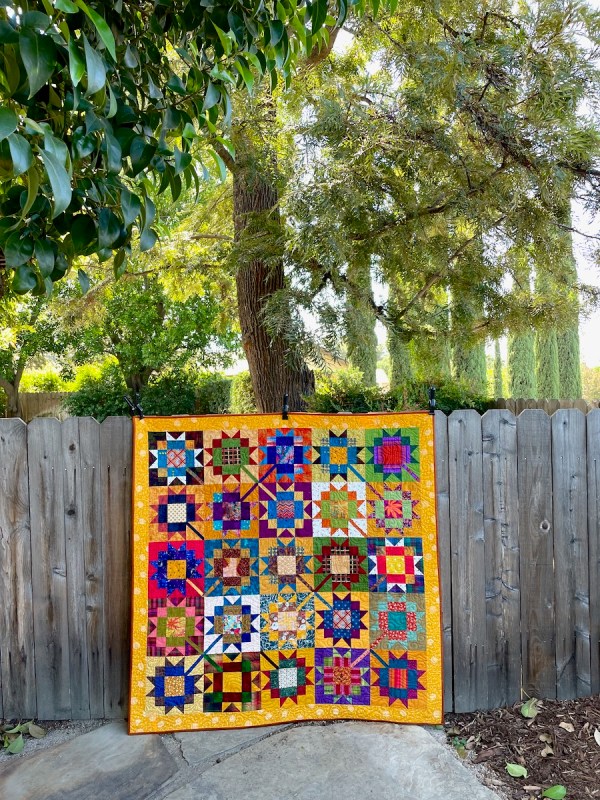
Why do I bring up autumn quilts? Because we’ve all seen these blocks from the #sweaterweathersampler2024 in our Instagram feed, an offering from some very talented women. I like the 2024 quilt offering better than their 2023, but they are fun to see pop up (check out this exhibit from some quilters in Germany). The one above is from Iva Steiner, an incredibly talented longarmer and quilter.

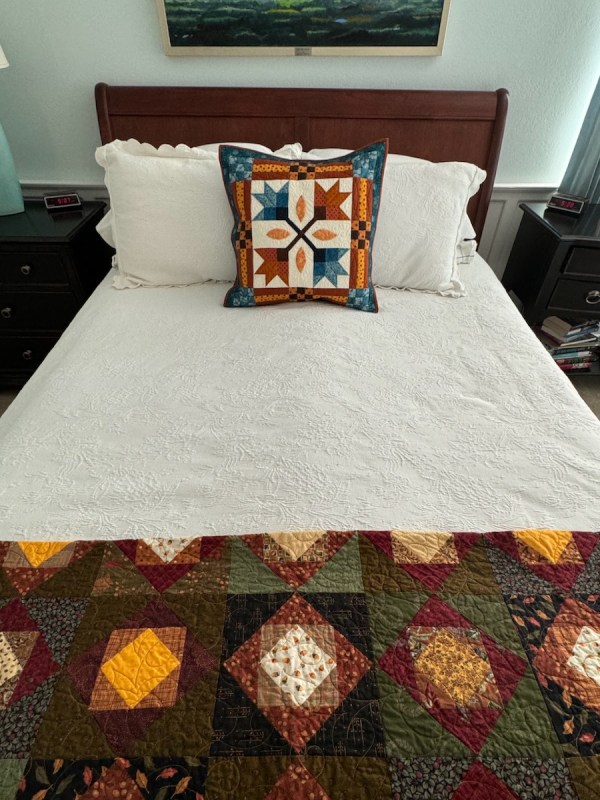
But, given the general season of thankfulness and thanksgiving, I’m happy that I like the autumn quilts that are in my house.

Given the general anxiety we all felt the past two weeks, I’m glad that the election is over and I don’t want to hear anymore about it for a long, long while. I was also feeling anxiety over quilting a very organic quilt that I’d made, and all my usual doodling wasn’t cutting it. My husband suggested just going with the flow, meaning following the lines of the organic fabric.
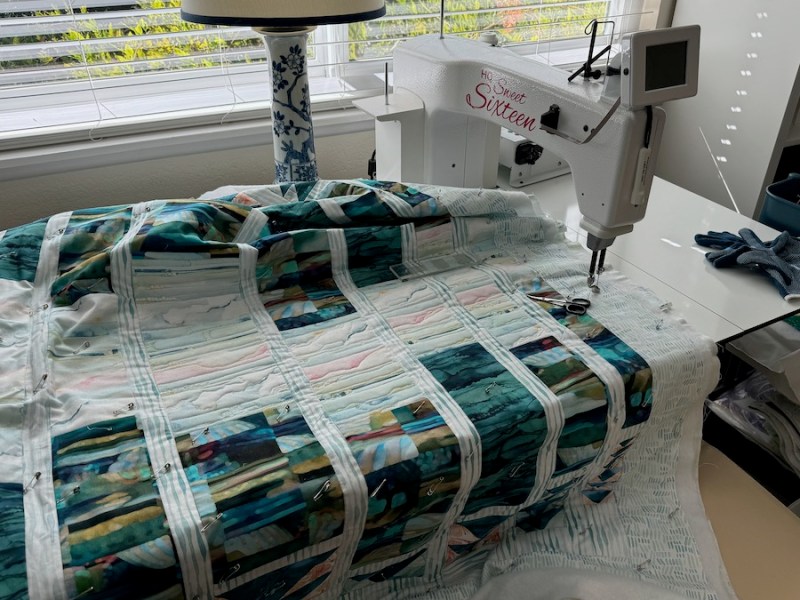
I guess I knew that in my heart, but it took my sweetheart to state the obvious: all those fancy geometric designs I was familiar with in my usual fmquilting just weren’t going to cut it with this one.
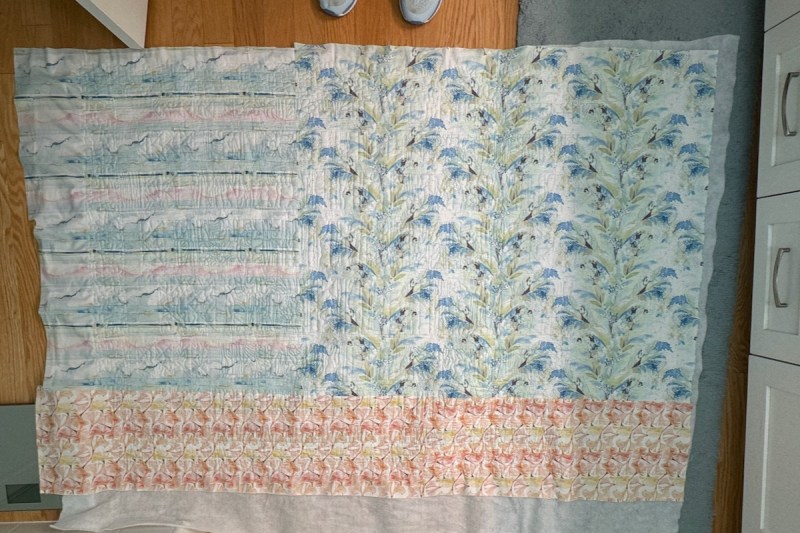
The back, a conglomerate of leftover fabrics. I have great light in my bathroom, so I take progress shots in there a lot.
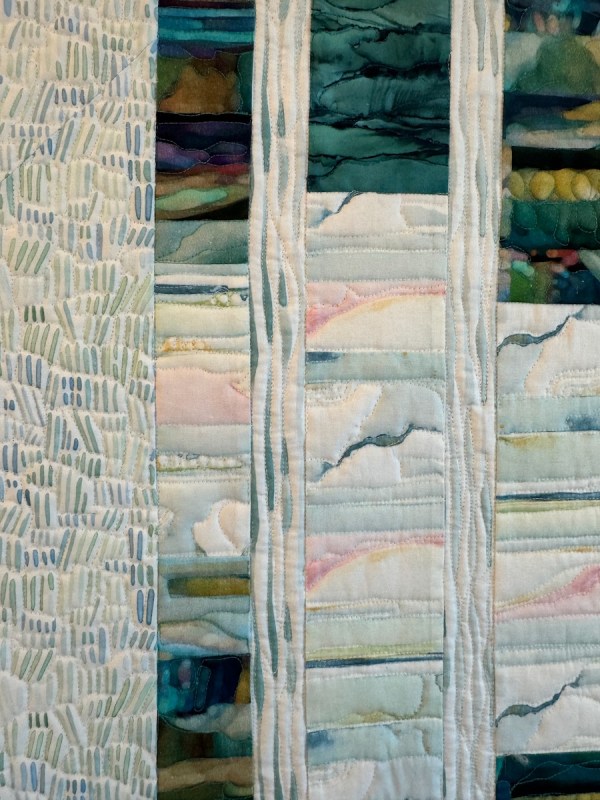
Even in the border, I went organic, like blocks of waving grain, or striated boulders, or I don’t know what. Full reveal after I get the borders on.
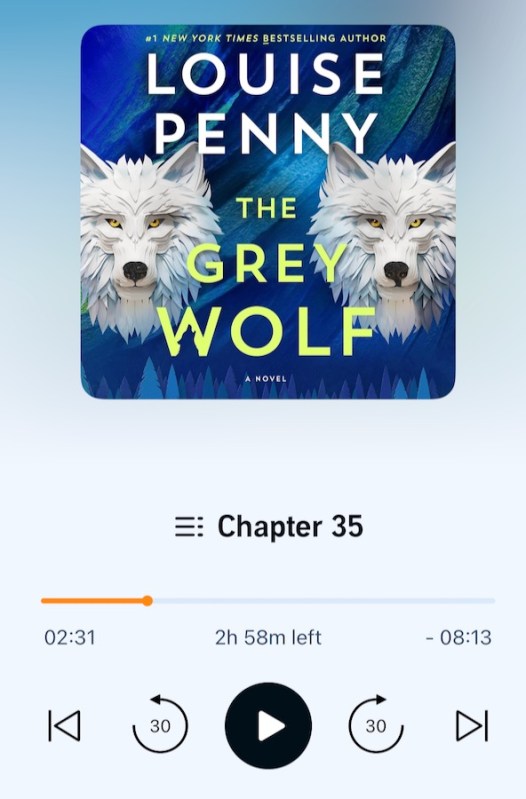
I only have three hours left in this novel. I almost can’t stand to stop, but this morning I’ve got a lesson to teach to the church ladies, so things will slow down on the listening for a while.

But a good book can really get me to sit down and get the quilting done. I’ve got my eye on getting this one and this one quilted up and finished, too.

We’ve spent so much time in the last few months looking ahead, so I thought I would leave you with this quote, from Adam Miller from his book Original Grace: An Experiment in Restoration Thinking:

This quote has made me think, and ponder a lot. When our Instagram feeds are blitzed full of other people’s achievements and when we are battling one demon after another, it can make us long for days when we used to be super-charged in making, or looking forward to days when we can get to the machines and roll like crazy. But, as Miller notes, creation unfolds in the present. All that we take in now will be fuel for the creativity when we sit down and enjoy the stitching in a present-not-here-yet. We need days when we can stop and notice the autumn colors. Or take a few days to practice forgiveness. Or linger on some days to fill our heart with thanksgiving.

Happy Autumn, y’all!

300 Quilts · Patterns by Elizabeth of OPQuilt · Quilts

Twilight Garden • Quilt Finish

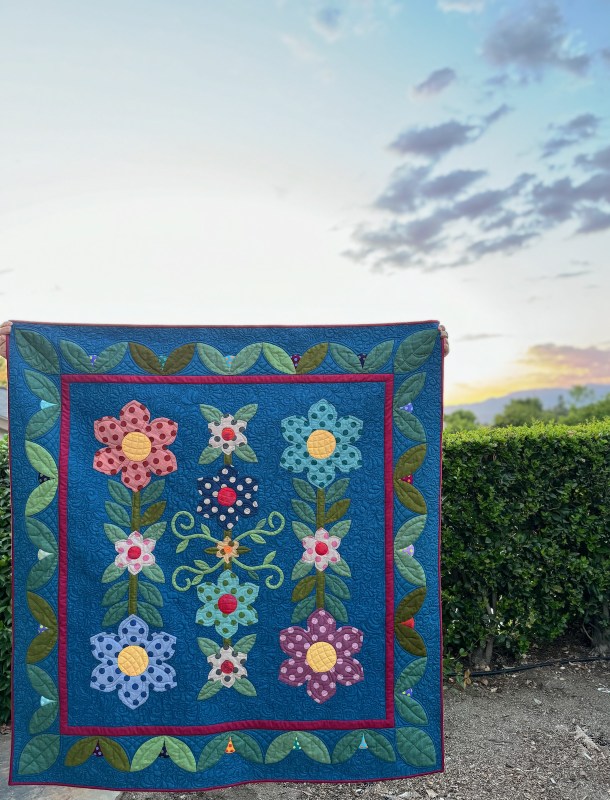
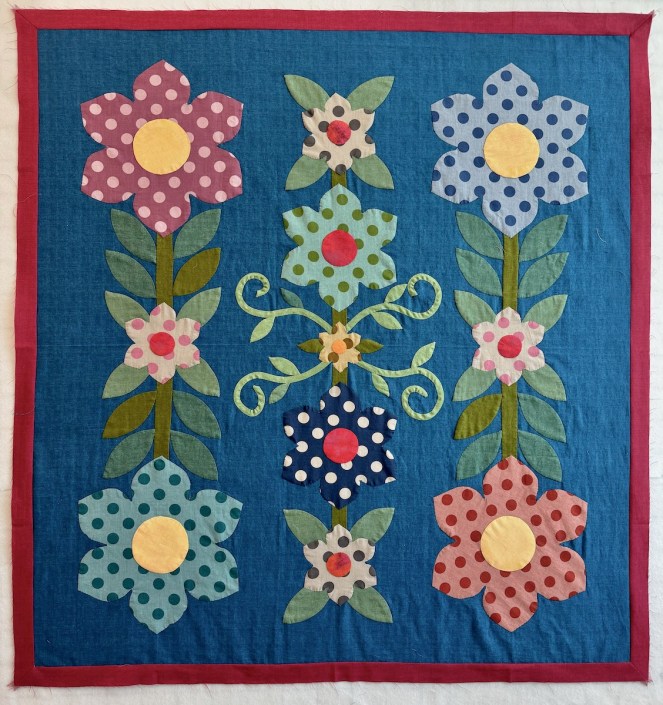
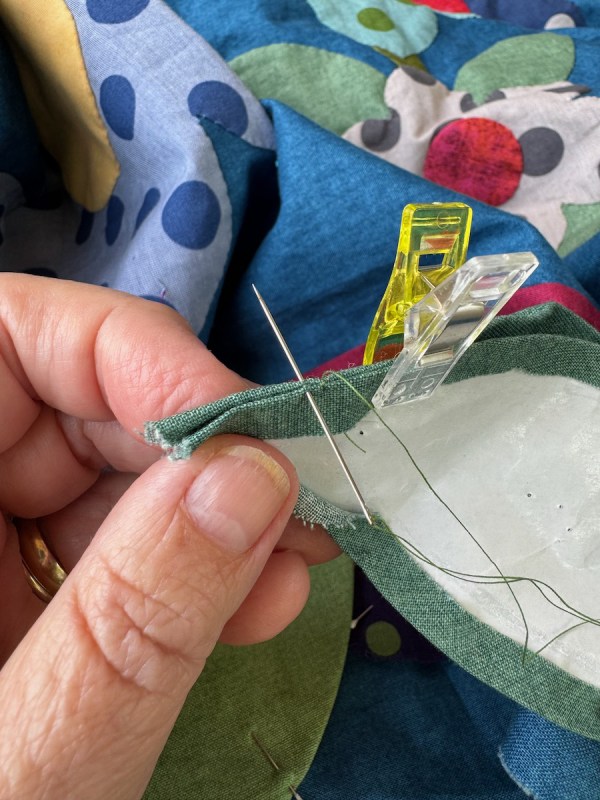
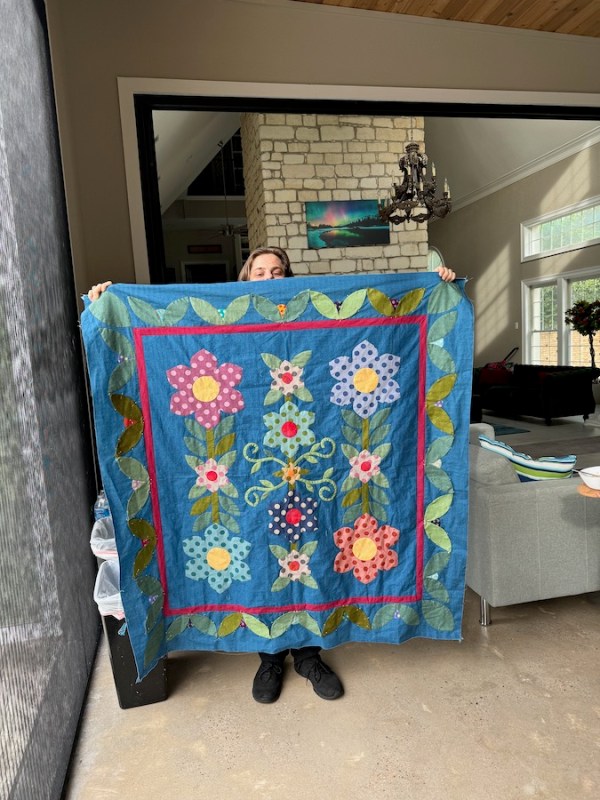
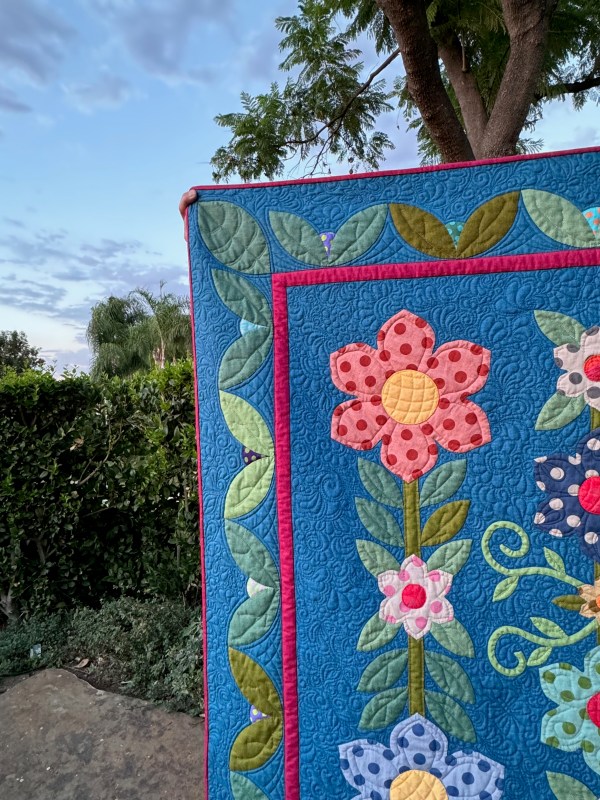
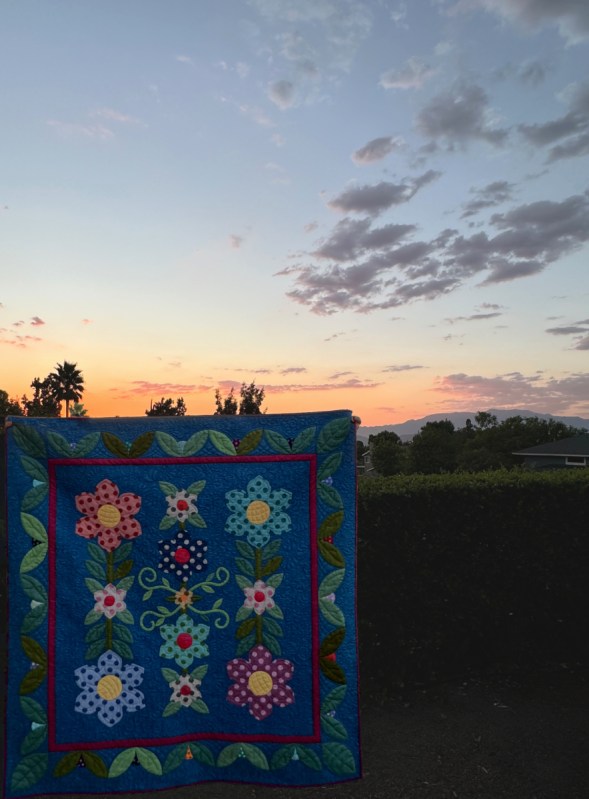
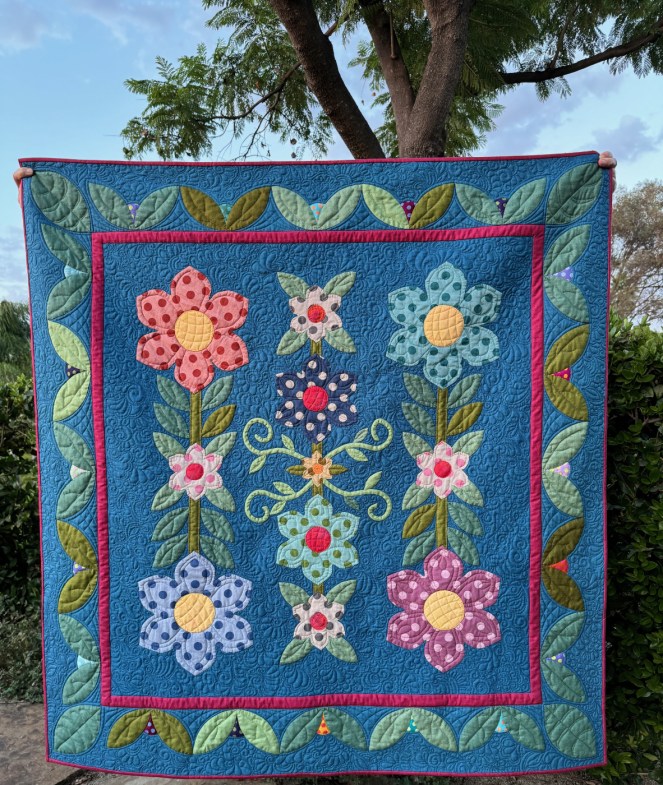
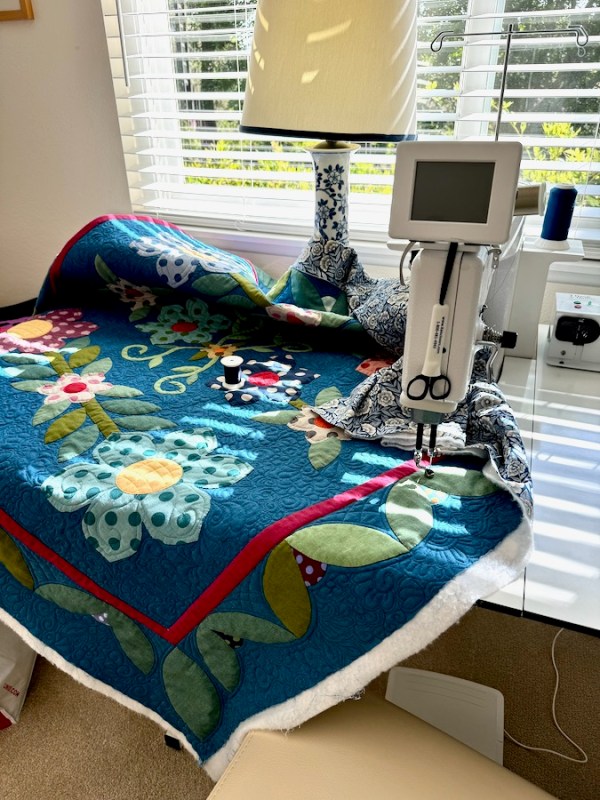
One summer night when we were sitting out in the garden, the year before all the mosquitoes arrived, we watched the bats dip and speed away, the tiny bird dash in to alight on the fountain. The night was calm, the sunset was unfurling in the background. We lingered, talked, until the stars blinked on and the twilight had slid into night. This quilt is about that kind of night, that feeling of letting the chatter of children, and friends, and a loved one float around you, when time is…timeless.

Sometimes ideas have to percolate a while in my brain. I’ve learned you can’t hurry them, anymore than you can recapture your sew-jo, as quilters like to say. Creative time comes on its own schedule. (This is Quilt #292 on the Quilt Index, above.)

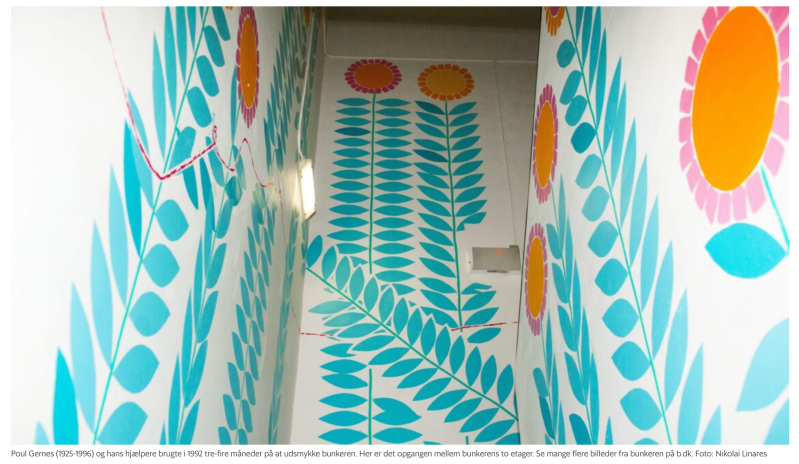
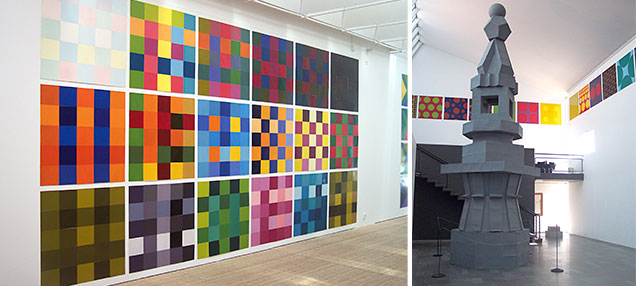
I was also inspired by a trip in 2016 to Copenhagen and Stockholm, where I learned about the art of Poul Gernes, an artist who used strong colors, and simple shapes that expressed a wild traditionalism, if there is such a term.

(from here)

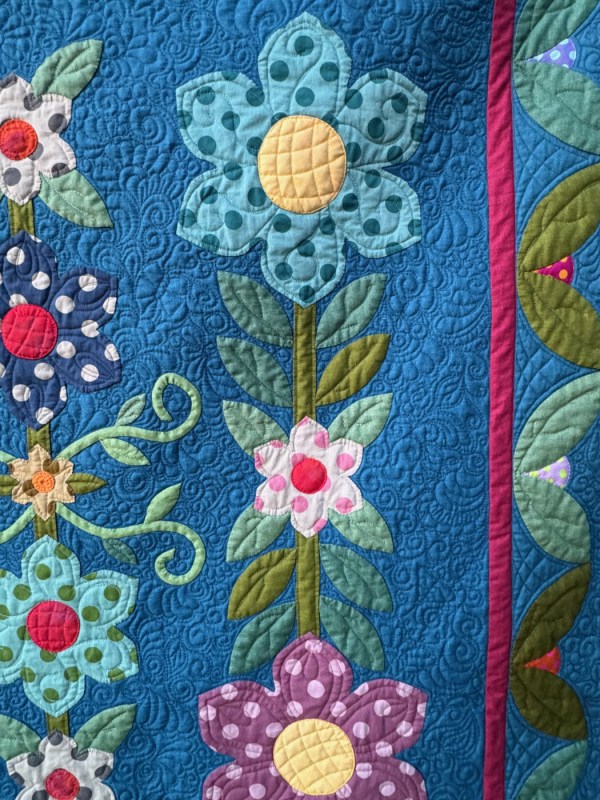
So somewhere between a summer night and a trip long ago, I started playing around with flowers on strong stems, then threw in the center tendrils to focus the eye. I’d been given a stack of Tilda’s polka dot flowers, which are not a typical palette, and I found some linen-look fabric for the background and leaves.

This was all I’d envisioned, but it just didn’t look “done.” So I ordered up more fabric–difficult to do when designers don’t label their colors (well, Kaffe does…)–and got to work.

It was during my New York Beauties project, so I kept going back and forth between the bright saturated solids of that quilt, to these inviting, musky deep colors of twilight.

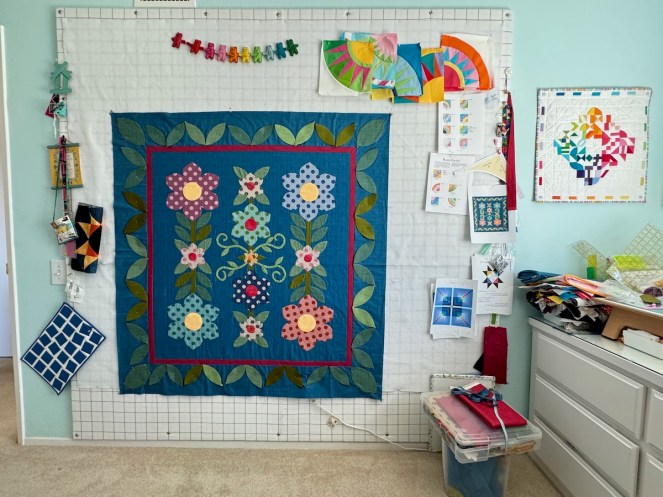
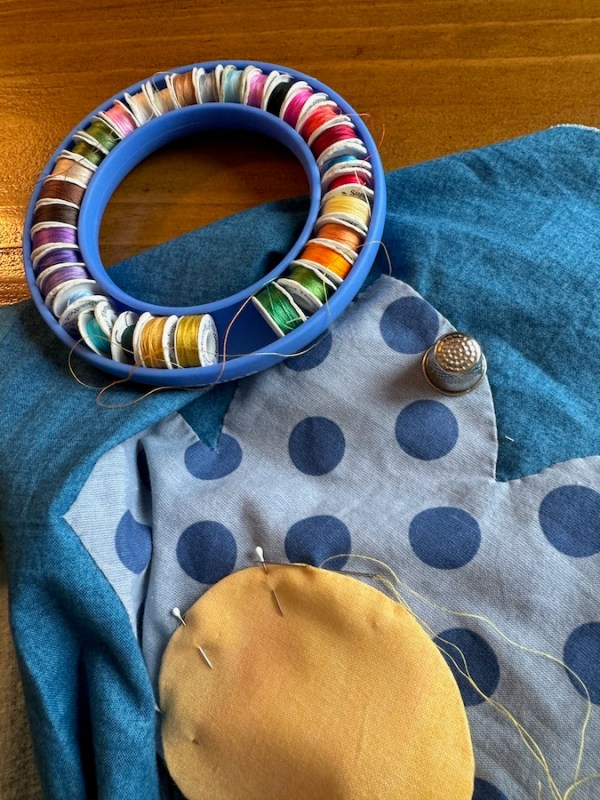
I pinned everything together with short appliqué pins, and took it on the road — traveling to see grandchildren and the total eclipse in Texas.

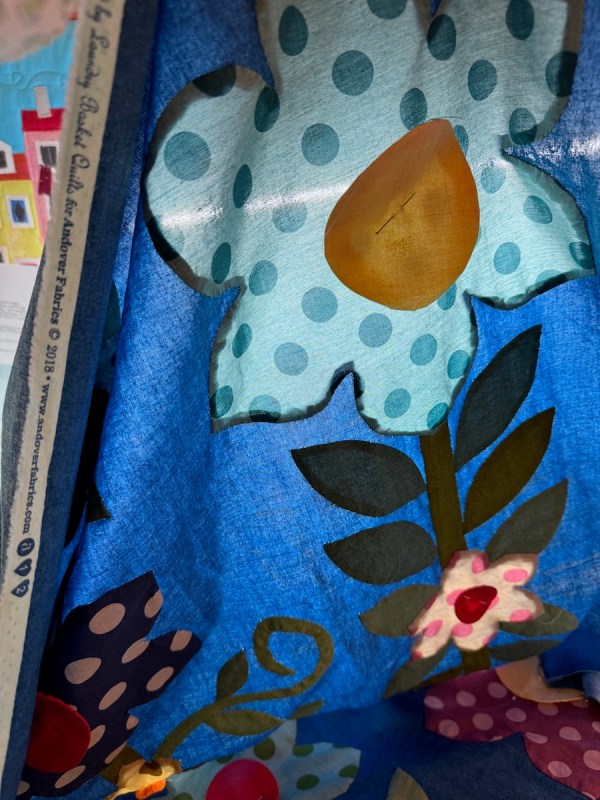
Yes, I cut out the background of the flowers, and lined the centers of the flowers for a flat, solid look. (I glue-dotted the lining into place, to hold it until I would get it quilted.)

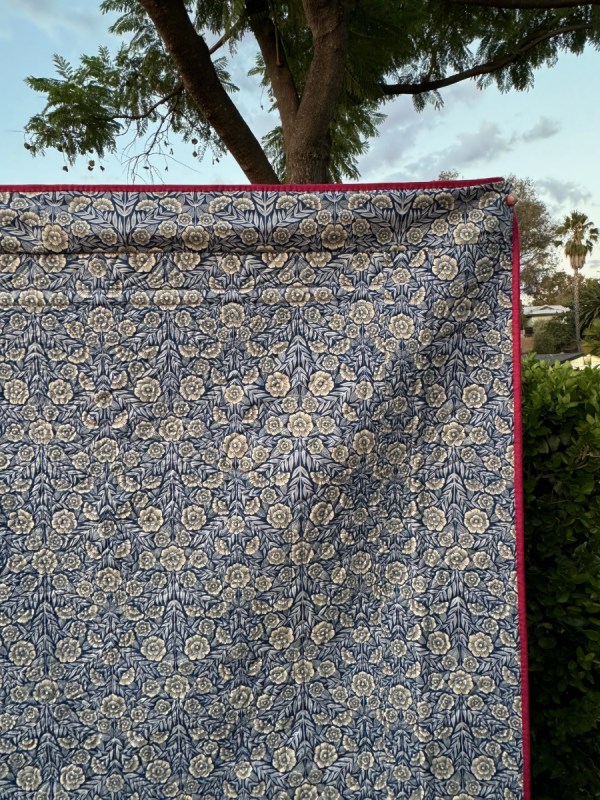
A couple of nights ago, I grabbed Dave and we went out to the side garden just as the light was dimming, so as to photograph the quilt. This light makes the details soft, the dense quilted foliage falling into the deep blue background, letting those simple Danish-inspired flowers rise to the front.

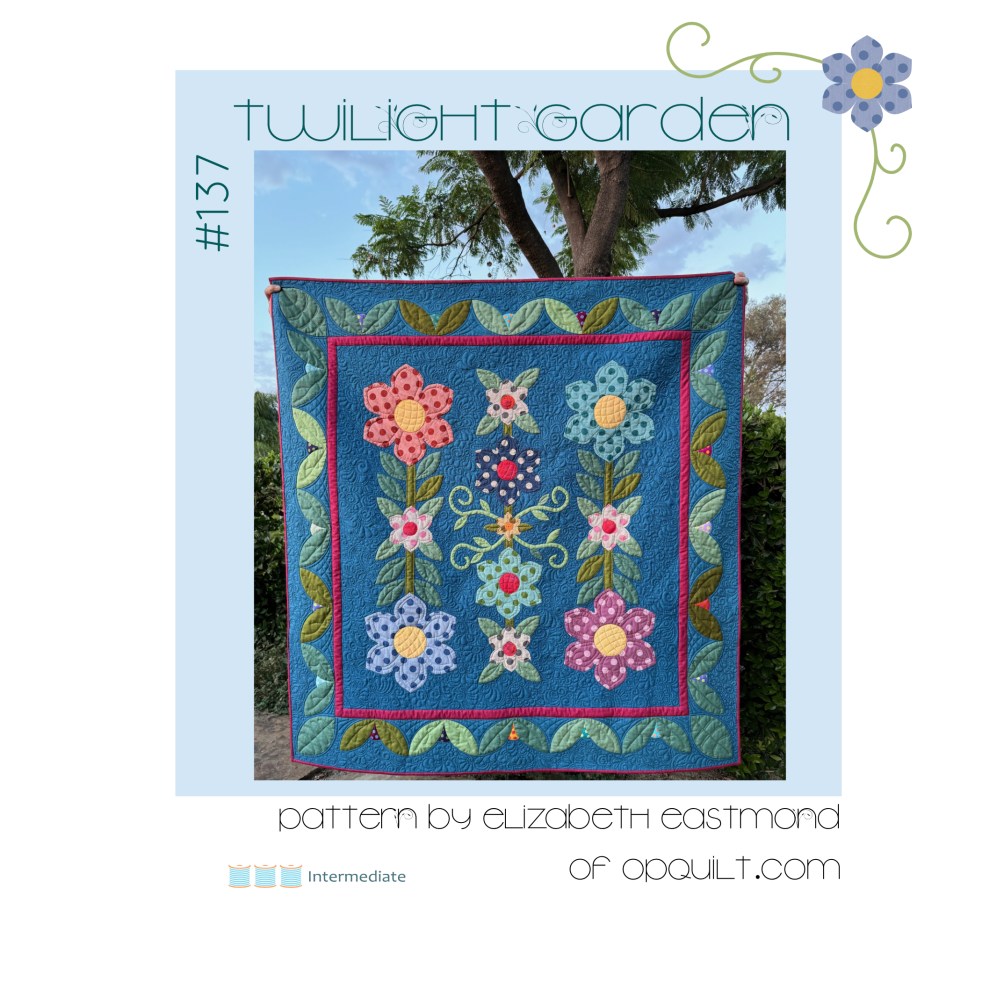
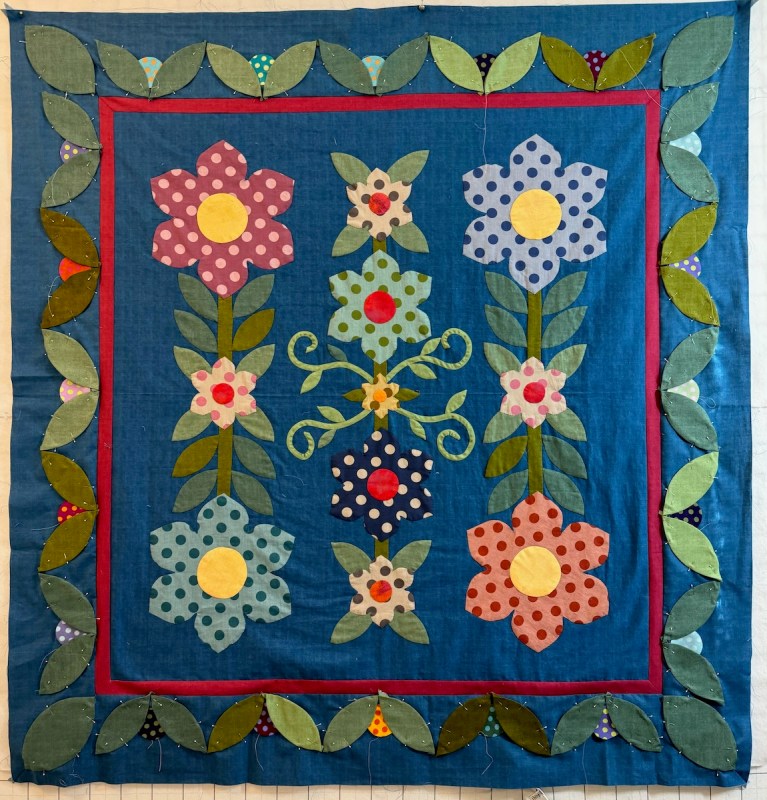
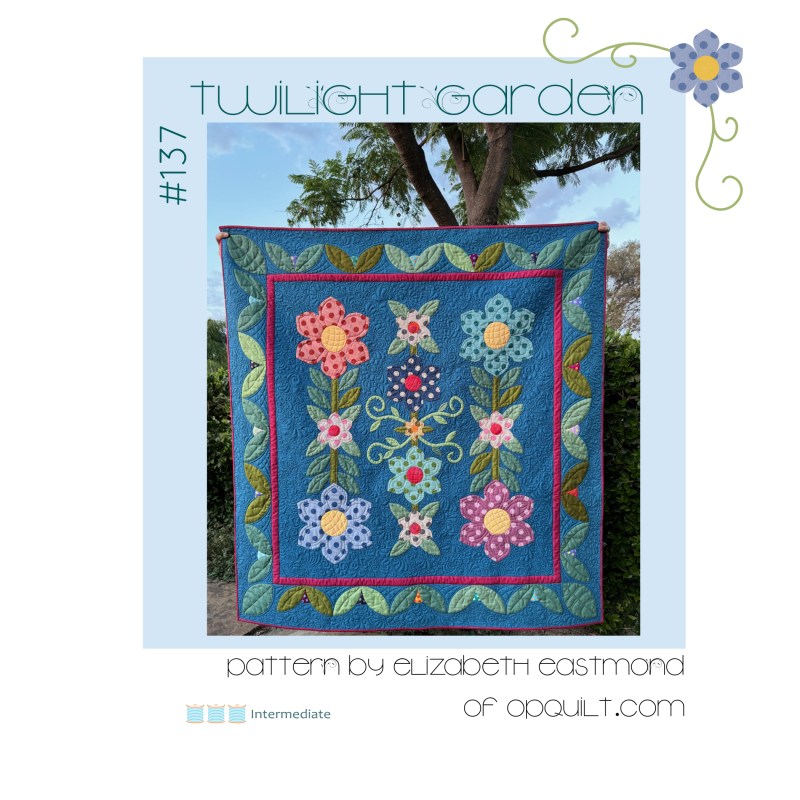
I wrote the pattern as I made this, and decided to add in three different sets of instructions, in case you were making it with raw-edge appliqué or needle-turn or machine appliqué. And then I added that outside border, so it’s thorough, with lots of patterns and words. But hopefully you’ll find your own design when you make it, and will add another garden to our world.

I went back and forth between Intermediate or Experienced Beginner, but in the end, decided that if you knew something about appliqué, it would go better. But other than that, it’s not a difficult quilt. I do have an extensive guide for laying it out, but it’s okay if you just want to use your own eye. I do reference a couple of quilters in the pattern, who I thought explained things well. One is Gladi Porshe, who writes about making vines and mixing appliqué styles.

Pattern is in my PayHip Shop here. Usually my patterns are $12 US, but I decided we all need more flowers so I have it for an introductory price until mid-November. Sometimes I post a coupon for a percentage off when I put up a new pattern, but this way, you won’t have to enter in a code, and can just grab the deal if you want it. All my patterns are downloadable PDFs.

Enjoy a night in a twilight garden–

Other posts with this quilt

February 2023 • This and That
Quilt Your Life, Quilt Your Stuff
Eclipse Road Trip 2024 (brief glimpses)

More Poul Gernes. Another story about him is *here.* Born in 1925, he died around 1996, well before my trip.

300 Quilts · Quilt Finish

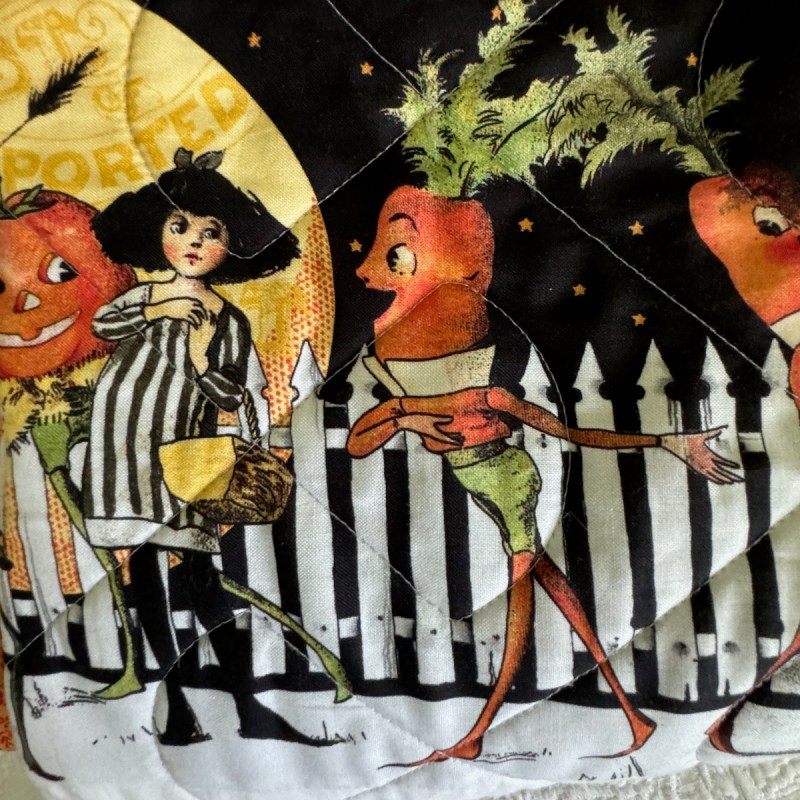
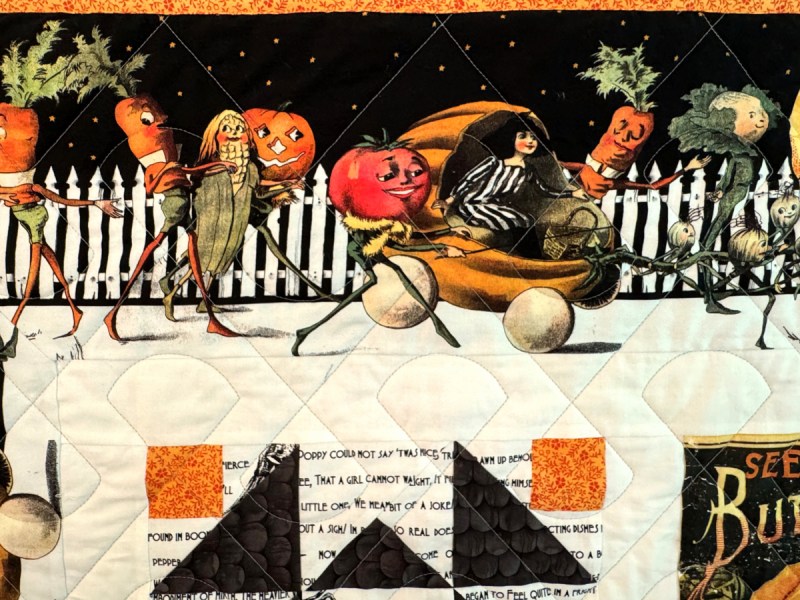
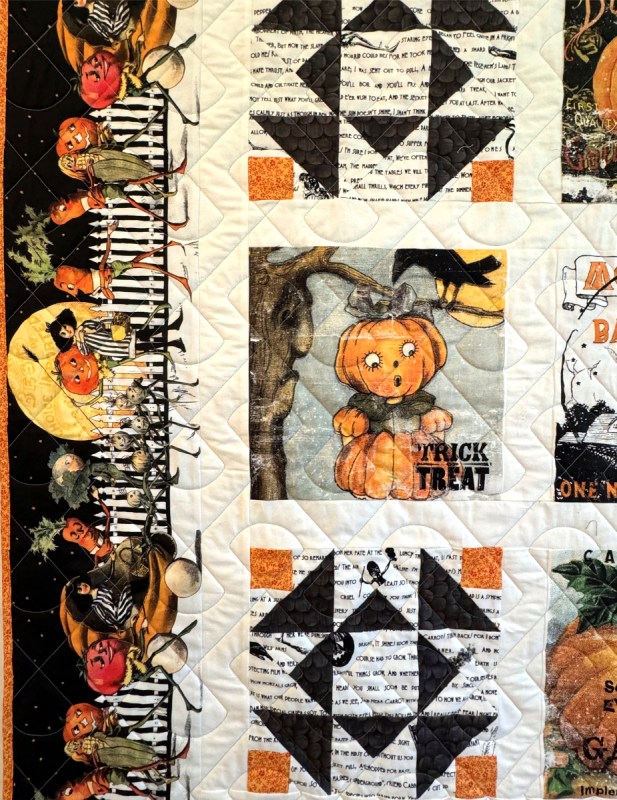
Halloween in the Vegetable Patch

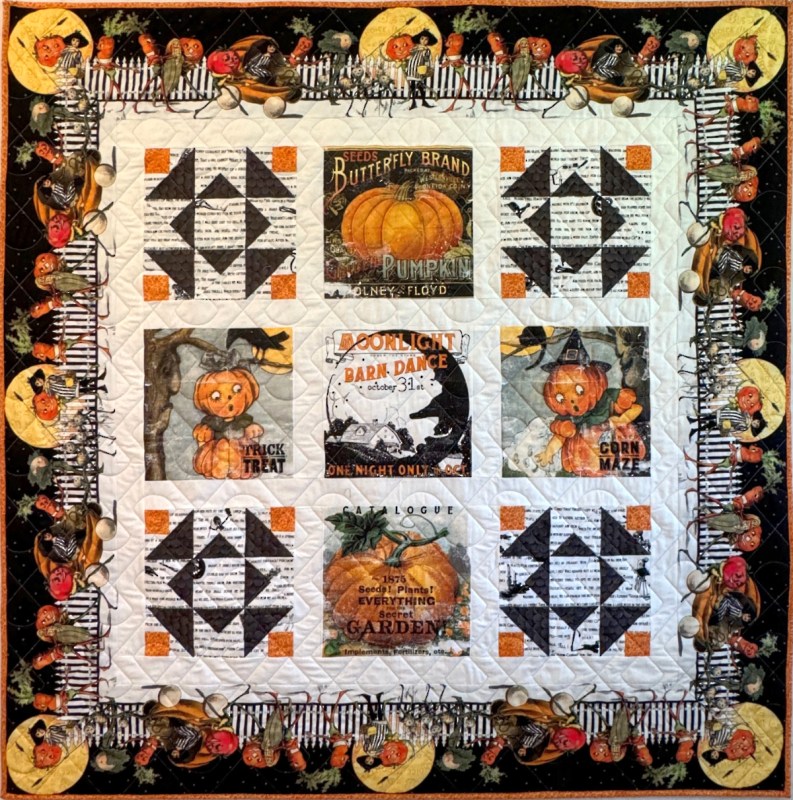
At first I thought it was a squash patch, but there were the onions. And the carrots. And the cabbage and corn, so I included them all:

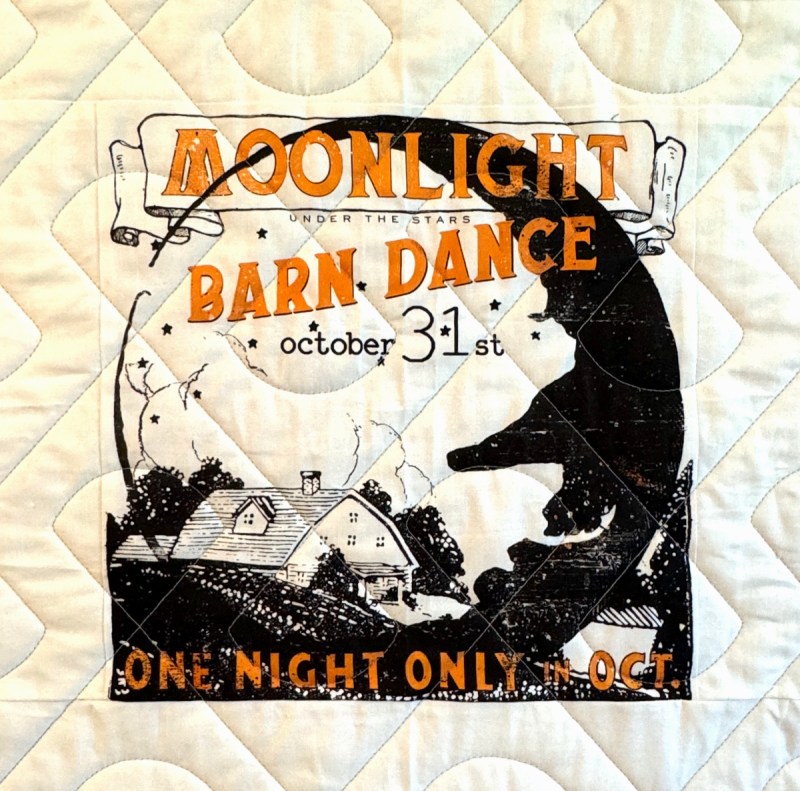
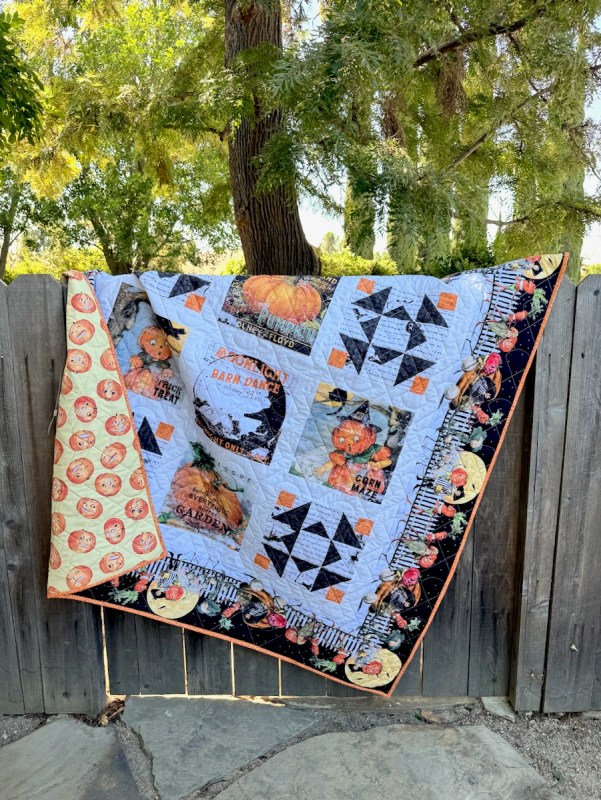
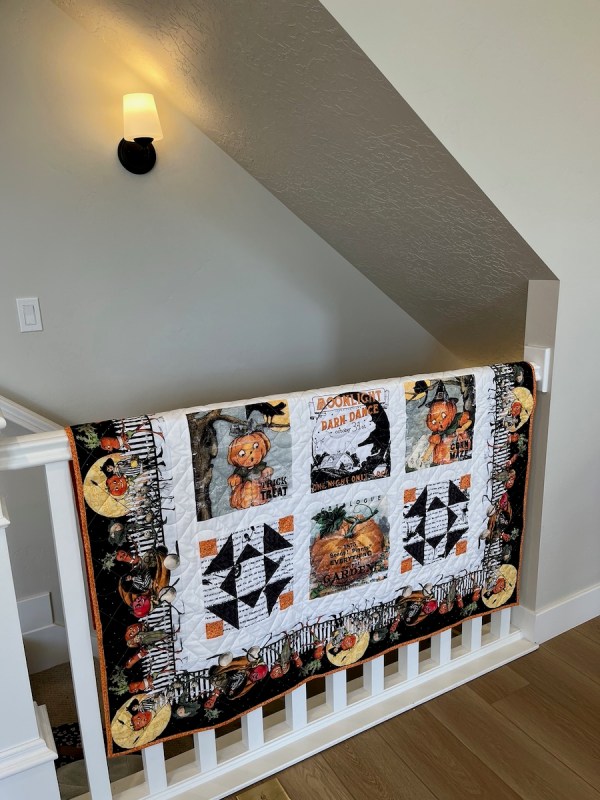
Of course, the fabric is by J. Wecker Frisch, which I fell in love with (pattern) and convinced Leisa and Carol to buy, too. Leisa and I sewed the quilts together, then dropped the tops off on Tuesday. The quilter had them back to us by Thursday night — a record. We wonder what we are going to make next, for we are both giving them to our sisters. A quilt this whimsical needs to be gifted.

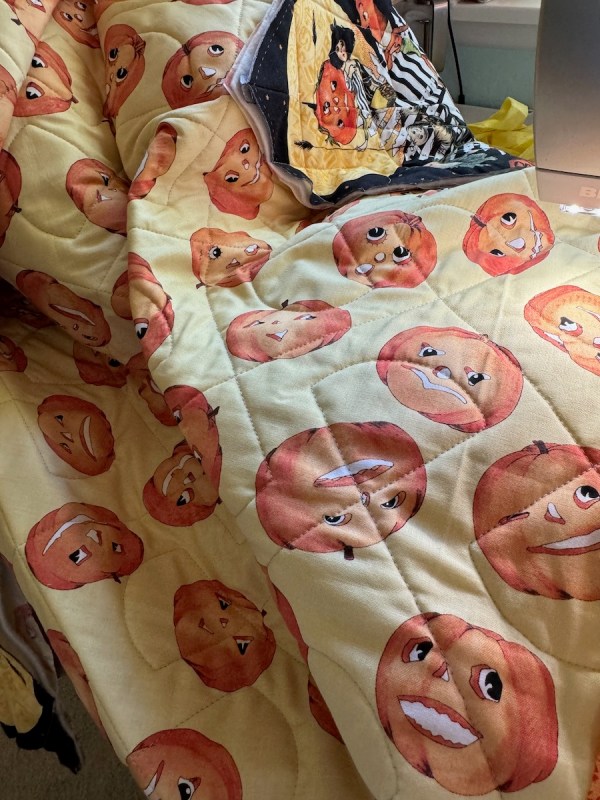
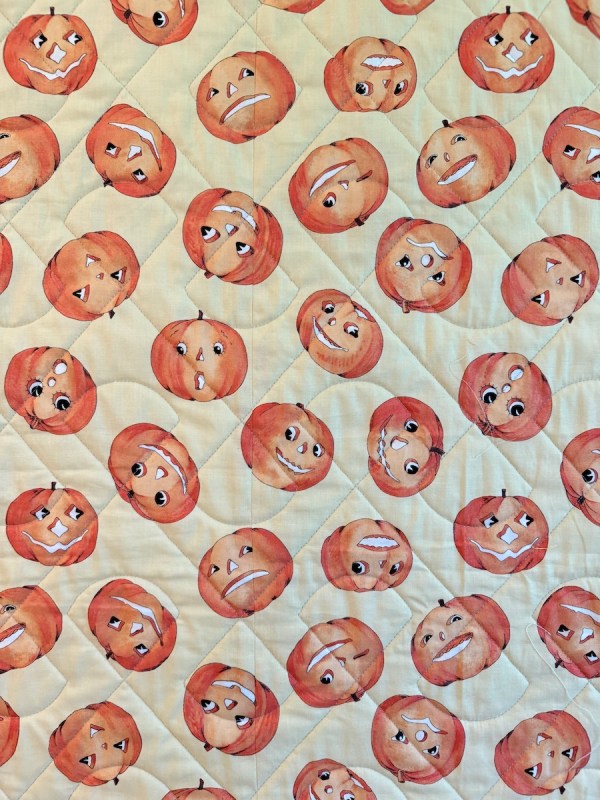
As I was trying to beat a deadline, I put a machine-stitched binding on it, but the quilt is still very soft and snuggly, due to the very loose density of the quilting. I hope my sister loves using it this coming season. I snapped a photo of the backing while I stitched. I thought these Halloween heads were hilarious. And I loved how well the seaming went on the back — it was a challenge to match up those pumpkins, but I think I did okay.

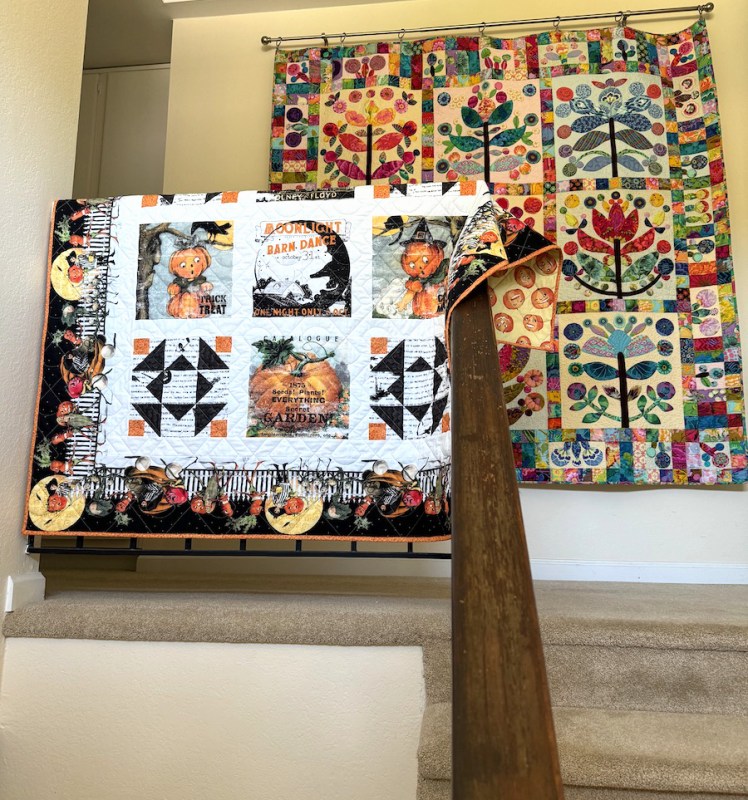
My sister Susan said she’s going to hang it over her stair rail, so I thought I’d given it a try before it left our house. Halloween in front, summer in the back hanging on the wall. Time to change out the hanging quilt, as tomorrow, what my daughter calls the “bers” will be here: September, October, November, December. But we’ll also have a scorcher of a week, so out here in Southern California, we’re not quite through with summer’s heat.

Quilt #291 • 54″ square

And it’s gone!

And this one waits patiently to be finished.

Soon, soon.

(Too early for pumpkins?)

P.S. The quilt arrived, and is hanging nicely on her stairwell.

Mr. Pumpkin pillow, available here
300 Quilts · Patterns by Elizabeth of OPQuilt · Something to Think About

Do you like giant?

Giant ideas? Giant bugs? Giant fabric stores? Giant mounds of laundry?

Sometimes we like giant things, like big spaces, big bowls of our favorite desert, big travel trips that include The Very Large Array. Other times, we don’t: huge messes that we have to clean up, massive surprise expenses, big insects, a huge amount of bumper-to-bumper traffic, or hurricanes. It’s like we know that some leaps of fancy and expressive gestures bring exuberance, excitement, joy, like standing next to a really tall sunflower in a field of yellow in the south of France. This big, we like.

Standing next to the heap of stuff we just dragged out of the garage and now have to sort and put it back in? Or the downed trees and aftermath of a storm system on our corner of the world? Or a task we’ve been putting off and putting off that has gotten ginormous in our imagination? Maybe not so much.

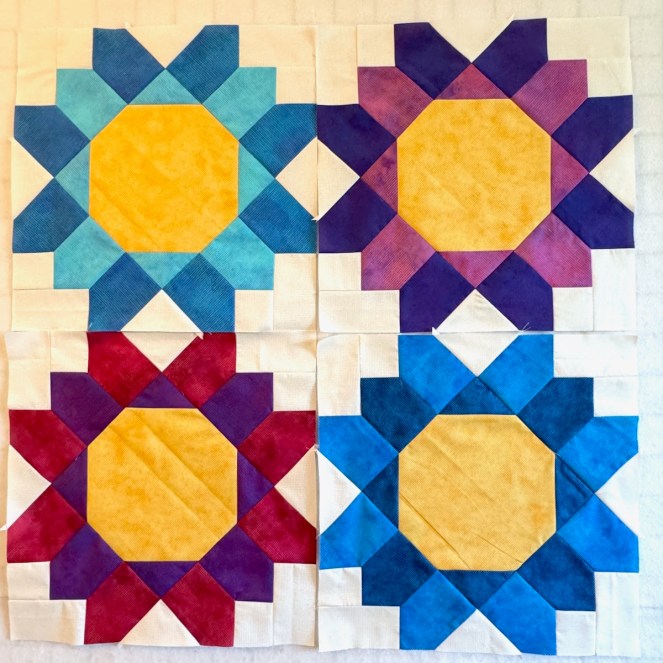
The Very Large Quilt Blocks

We like Big that we choose. We like Big that takes our breath away, like the Grand Canyon, or a sunset that stretches for miles across the New Mexico desert. We like Big where we can stand on our own solid ground and meet that idea or sight or brilliance, while not being swept down a canyon in life-threatening rushing water. As Arash Javanbakht and Linda Saab note “When our “thinking” brain gives feedback to our “emotional” brain and we perceive ourselves as being in a safe space, we can then quickly shift the way we experience that high arousal state, going from one of fear to one of enjoyment or excitement.”

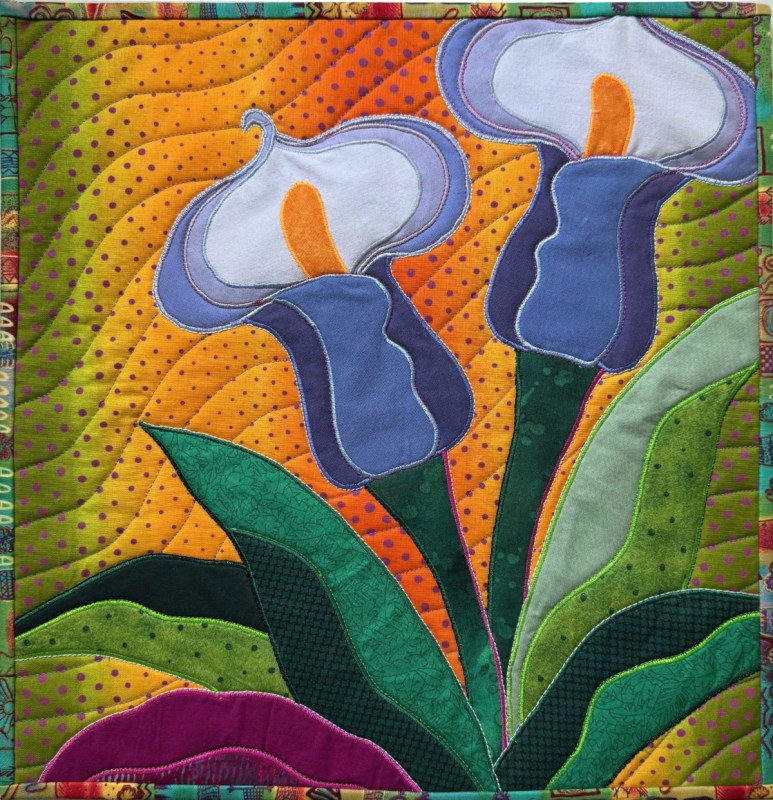
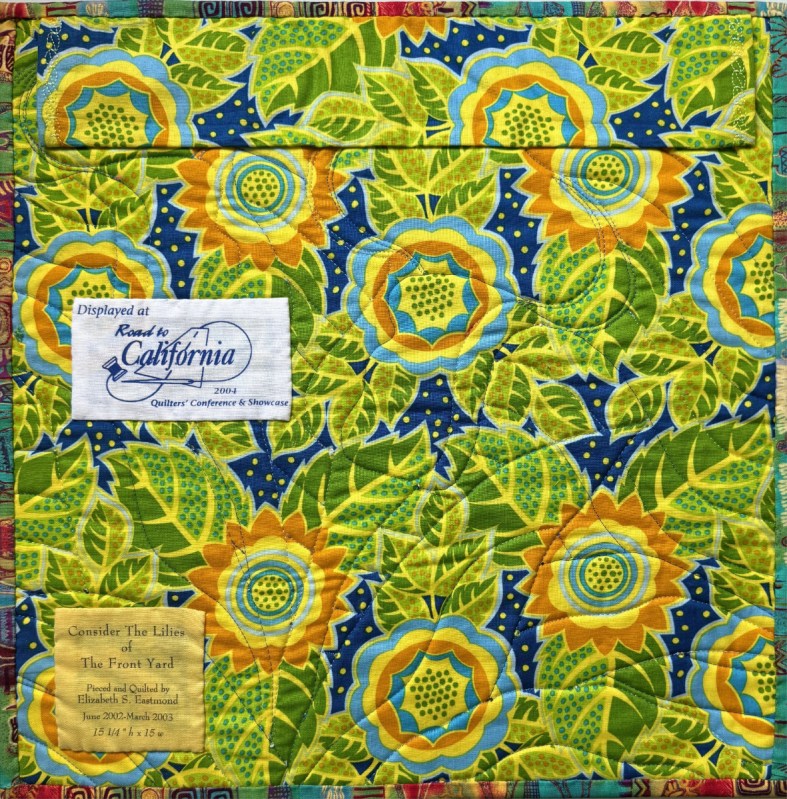
Consider The Lilies of the Front Yard, quilt number 51 • March 2003

However, I’m more interested in the brain shift needed to think Big. I remember taking a class with Jane Sassaman once at a guild retreat, and she was encouraging and lovely. I have always done better with small-scale projects, but in Sassaman’s class I got busy creating the wildest thing I could, as I greatly admired her quilts. She strolled around the class and came to help, when I raised my hand, stuck as I was on the design in front of me.

“Can you go bigger?” she asked. “Really make that lily jump out of its place? Get those leaves to look slightly menacing?” I’ll try, I said. Alas, I could not. Did not.

One website offers up that large-scale art is a way for the artist “to express themselves in a way that is unique and personal” and that “[l]arge scale art follows the tradition of monumental masters like Botticelli, Rembrandt, Monet, Picasso, and Klimt. Especially popular in the 18th century, it was used to depict scenes of history on large scale wall art. Thus, for its sheer size and themes, this type of painting was considered “more important” than portraiture, still life, and landscape.”

stained glass effect

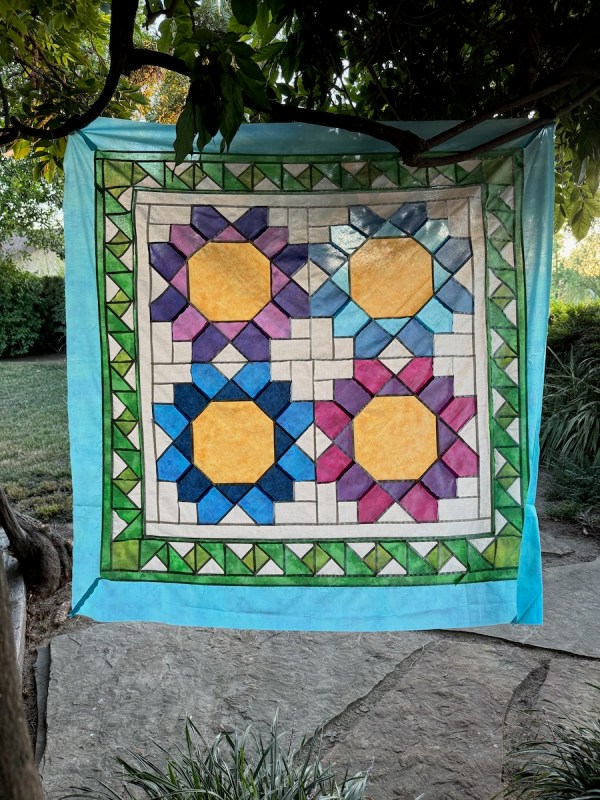
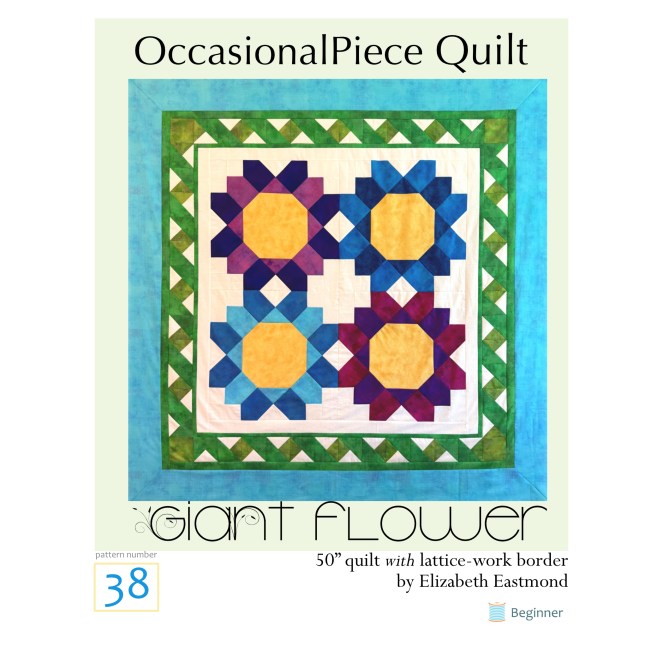
Well, I don’t know about all that, but I did make a few giant flowers, gave them a latticework frame and a blue-sky border.

So maybe all I have to say today is to do something big.
You might surprise yourself.

Giant Flower pattern found here.