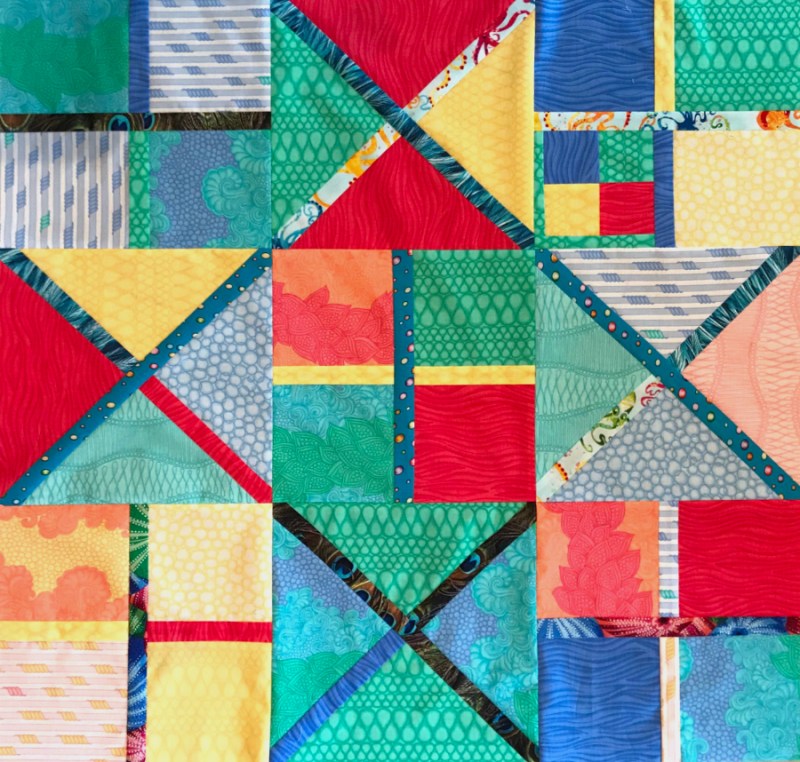
Gridsters

The History of Bees

Well, my bees, at least. I recently stepped down from leadership of the Gridsters Bee, but Melanie and Patti (listed alpha order) are the new leaders, and they let me tag along and help out so I won’t go through withdrawal. So as I was organizing, shifting, cleaning out my Google Drive, the list ended up like this:
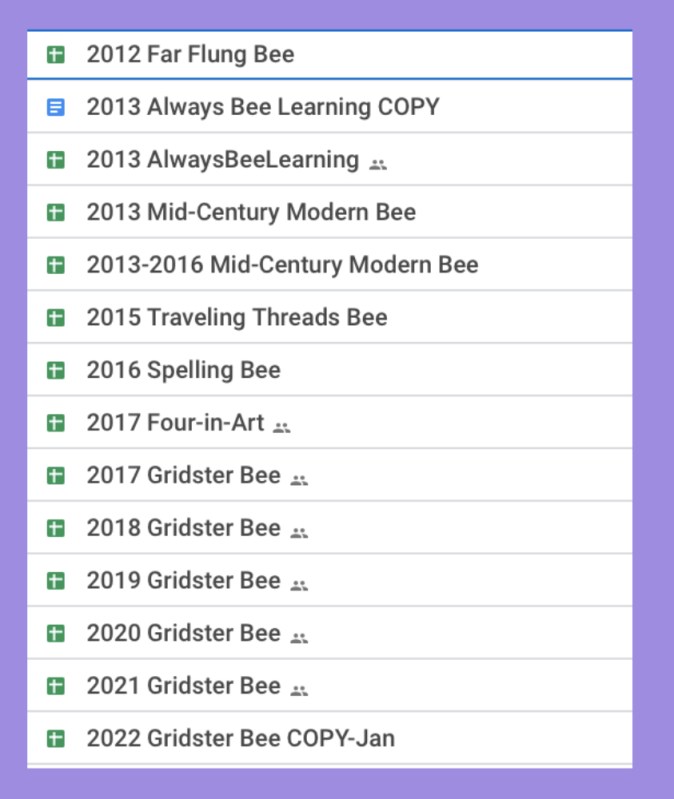
I’ve participated in fifteen quilt bee groups in the last ten years, often simultaneously. My life has been richer for this and I’ve met so many wonderful quilters. (I’ve met a few cranky women, too.) I met one whose house burned down during the bee and we all donated money to help replace her stash. I’ve met someone who did professional roller skating. I’ve met women like me and not like me. I’ve met quite a few people in Australia, in Canada, and all over the United States. Many others are on Instagram — I love the connections we’ve made and the friendships that continue.

I’ve received some beautiful blocks, some blocks I had to reconstruct and some blocks I couldn’t do anything with at all, but were so interesting, I saved them. Sometimes people put my blocks in their quilts and sometimes they didn’t. I’ve made several Ayumi envelopes, multiple versions of Dresden blocks, and bazillions of HSTs.

Here are some of the logos of some of those bees.

Occasionally I see new bees forming online and I want to say — yes! jump in! make for each other! You’ll learn what blocks you want to make yourself, and you’ll learn which blocks you never want to make again.

At the end of my five years with The Gridster Bee, I put together a slide show of quilts from many of our members, and it was one of the final events of my 2021. I loved that even in spite of the pandiddle (stole that one from Carol — a beemate), at least a dozen of us were cutting and sewing and quilting. Add that to the letters you’ve written telling me about your projects, your intentions for making and I’d say we all made it through the last couple of years in reasonable shape. If you want to see a great array of quilts and blocks, click on our home on Instagram, and enjoy the eye candy.

And here is the launching of Gridster Bee 2022, with a lot of very talented women.

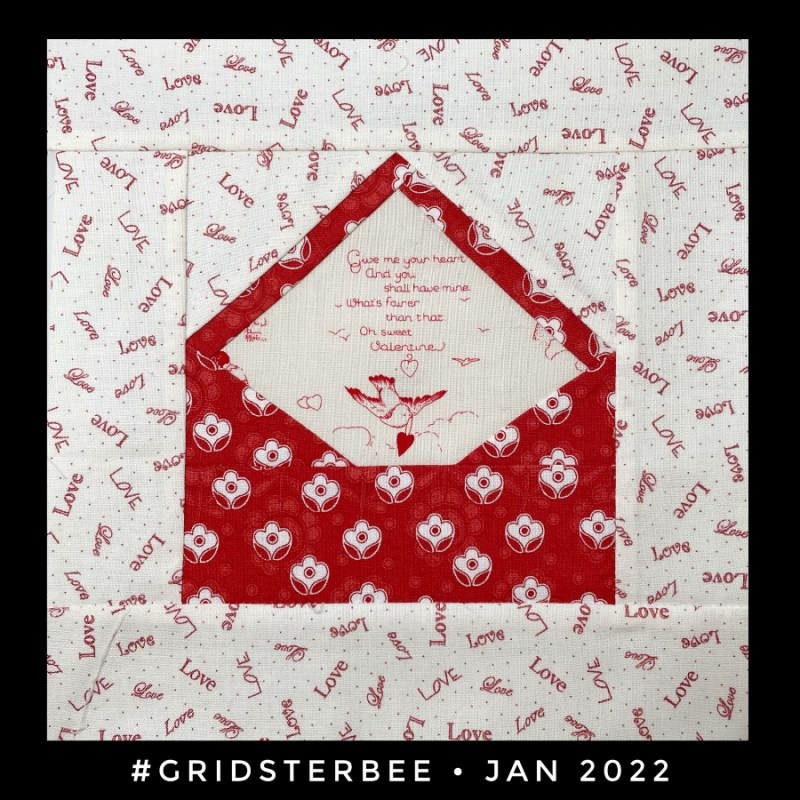
The first blocks were for Patti, who chose Ayumi’s Envelope Blocks (and here, too), but with a twist. We added larger borders on the sides, and chose fabrics that denote romance or love. I had fun choosing.

I’ve drafted up a lot of the Sew-A-Long quilt, and am now making the sample out of Sherri and Chelsi’s fabric, Sincerely Yours. Coming soon. The post-Christmas blahs grabbed me for a while, and of course, we had to eat up the chocolates people brought us. Then there was the going through the ornaments, followed by lifting the holiday boxes up into the garage rafters. Mopping the kitchen floor and cleaning the bathrooms await.

It’s nice to take the advice from my friend Allison who made this for me, since I was leader of Gridsters for a few years. It’s a treasure, with great advice.

Happy Quilting! Take it one stitch at a time.

300 Quilts

Thieves Meet Old Woman

At least that’s what Google Translate said it meant, when I typed in…

…which is the newest song for the newest dance craze, introduced to me by my daughter on Instagram as well as other celebrities (make sure you turn on the sound):

And this led me to a whole rabbit hole of watching lots of people dance in 7 second spurts (mostly young ones, hence the title of this post makes sense), the thieves being whoever stole all those years from me when I was busy raising children, schlepping groceries and making an occasional quilt.

Which led me to an article in the New York Times that found a correlative link between creativity and exercise:

“If you often exercise, there’s a good chance you also tend to be more creative, according to an interesting new study of the links between physical activity and imagination. It finds that active people come up with more and better ideas during tests of their inventiveness than people who are relatively sedentary.”

There is no hard and fast connection, but maybe all these dancers are on to something. And yes, I downloaded the song to listen to while on my walks, but you can forget me trying to do that dance.

My burst of enthusiasm for the Triple Sunflower took several hits this week, as I tried to figure out where this quilt is leading me. Here’s the progression in two montages, Progression Forward and then, Progression Backward:

Too blah, too pastel, and as my husband pointed out, the flowers and stems in the center were bolder than the borders. The quilt was headed to a pastoral landscape, but I was thinking more Paul Gauguin or Wolf Kahn, with more saturated color. And I noticed the slight curve on the right border and worried it was going to amplify onwards, outward through all the rest of the construction. It was at this point that I emailed The Medallion Quilt Queen, Melanie of Catbird Quilt Studio, who knows everything about medallion quilts. She talked me down off the proverbial ledge, and got me re-oriented towards making progress:

Yes, progress meant I ripped off all the previous borders and then, in between watching young people dance on Instagram, doing all the laundry and shuffling nearly every fabric in my stash from the ironing board to the design wall and back again, I finally added the medium-dark blue border. I am also auditioning some brighter fabrics for the next one. Which I will probably change again.
The happy dance this week was having Kelley, my quilter, stop by and show me some new samples she’d stitched out, and we auditioned them for my Wealth of Days quilt. Can’t wait to see it finished.

I’ll give social media the last word:

Patterns by Elizabeth of OPQuilt · Software

Thoughts on Constructing a Quilt Block

Note: This post has been updated (March 2024), with notes on the pattern and the quilt. See below.


Recently I had a chance to do some beta-testing on BlockBase+, which is a revised version of Electric Quilt’s original software. I will write about the sofware next month when I host a giveaway for this software, but this post is about the process of making. In our beta-testing, we were asked to make test quilt blocks, check for spelling issues, functionality, etc. so I thought I would try out a new-to-me quilt block.

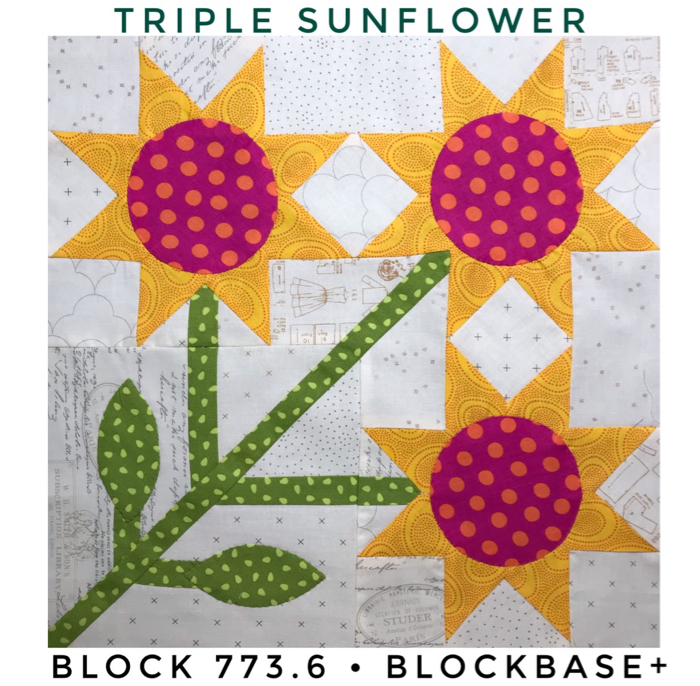
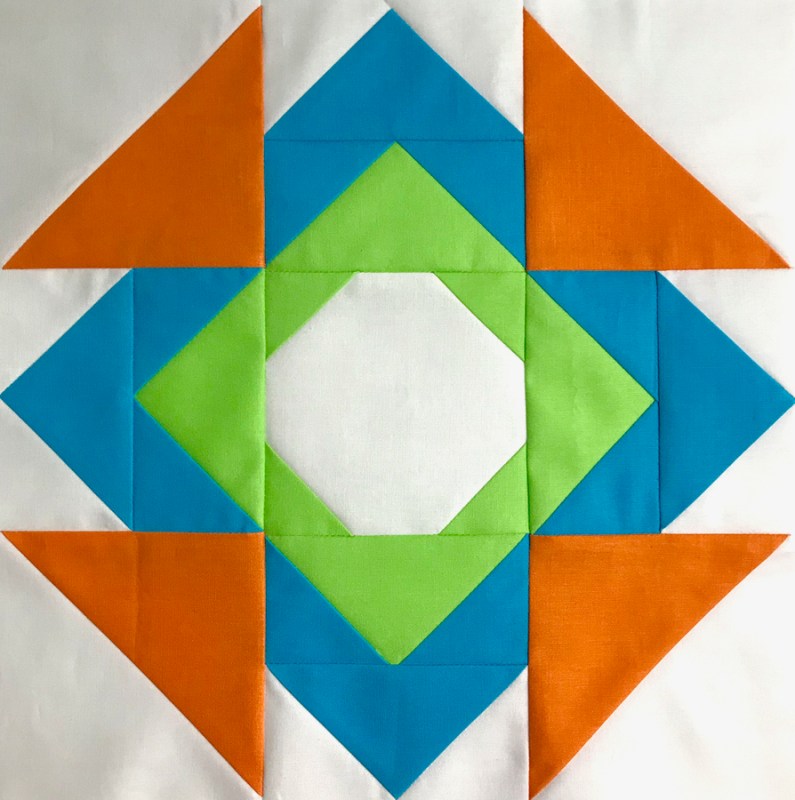
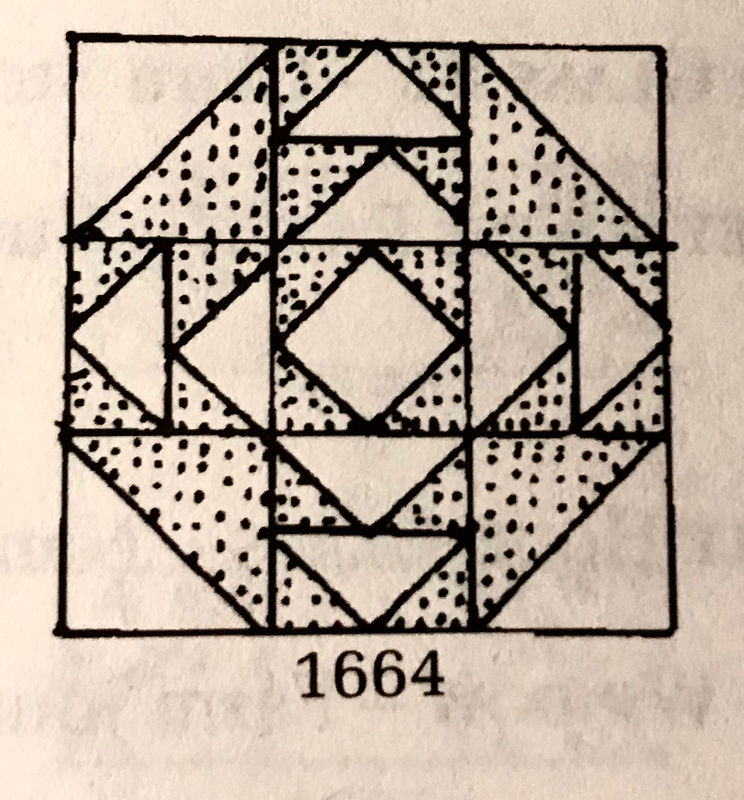
Every block in BlockBase+ has a name and a number, based as it is on the Barbara Brackman Encyclopedia of Pieced Quilt Patterns. I thought this looked cute, so I went for it.

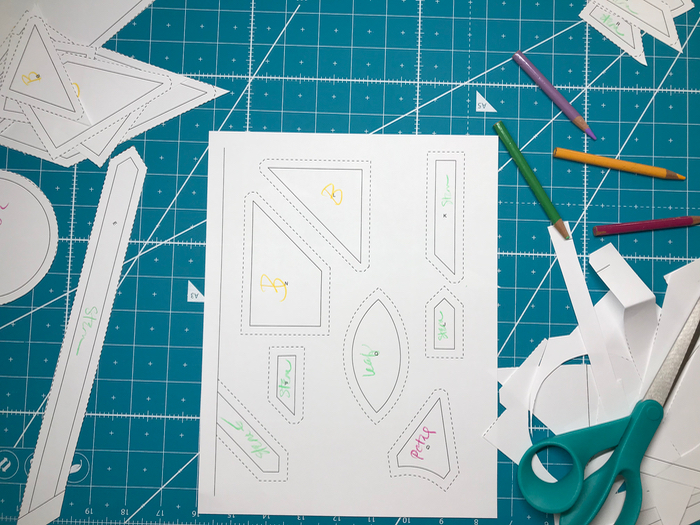
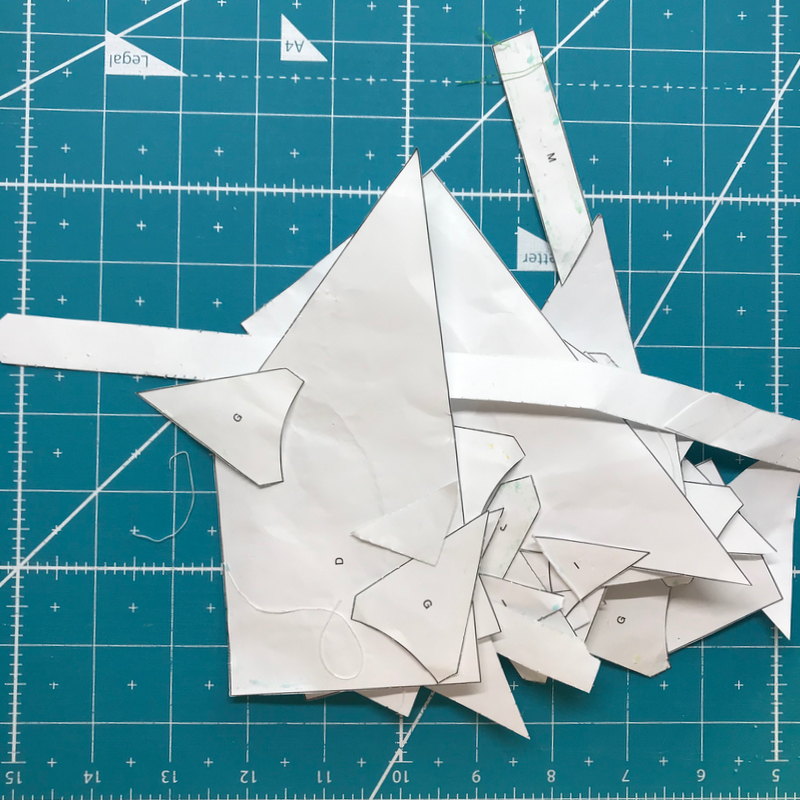
I printed out the templates, labeled them as to the color I wanted, then got to work.

This whole thing was a little tricky, trying to get the petals seamed around the blocks and little triangles. But I really really liked the design I had cooked up (coming soon), so I persisted.

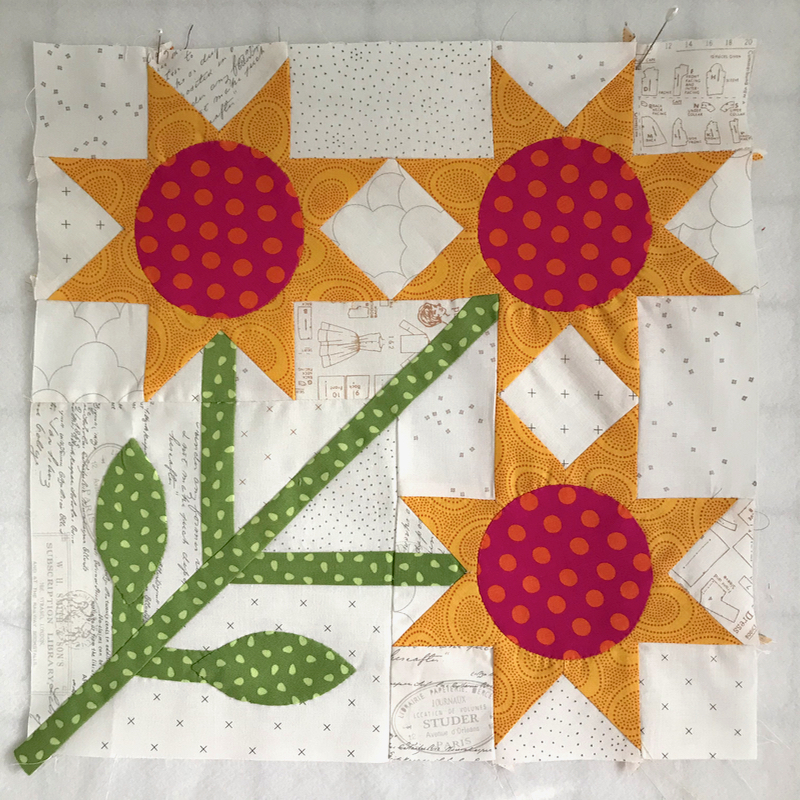
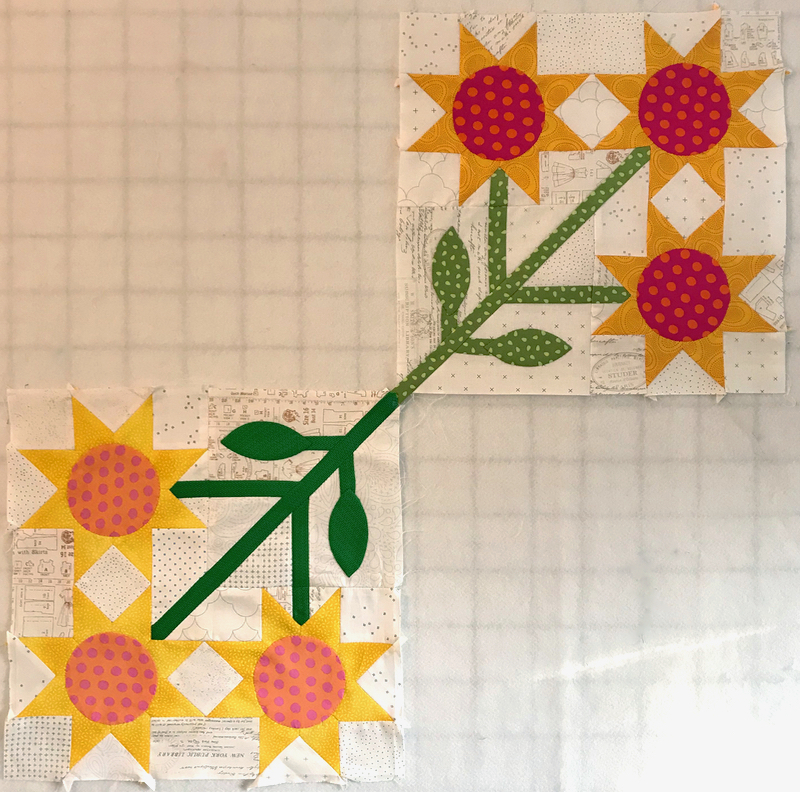
You can see the finished quilt block above, but all I could think was, how did this quilter in the early part of the 20th century put this thing together? But some early quilters did, as I found in a search online:

The blurb describing it says: “Antique Vintage Triple Sunflower Quilt Top in 1930’s prints beautifully hand and machine stitched.  This measures about 33 x 47.5 inches and is in very good as found vintage condition with 8 places that need to be resown.” NOTE: It sold for $26 this past September 2020.

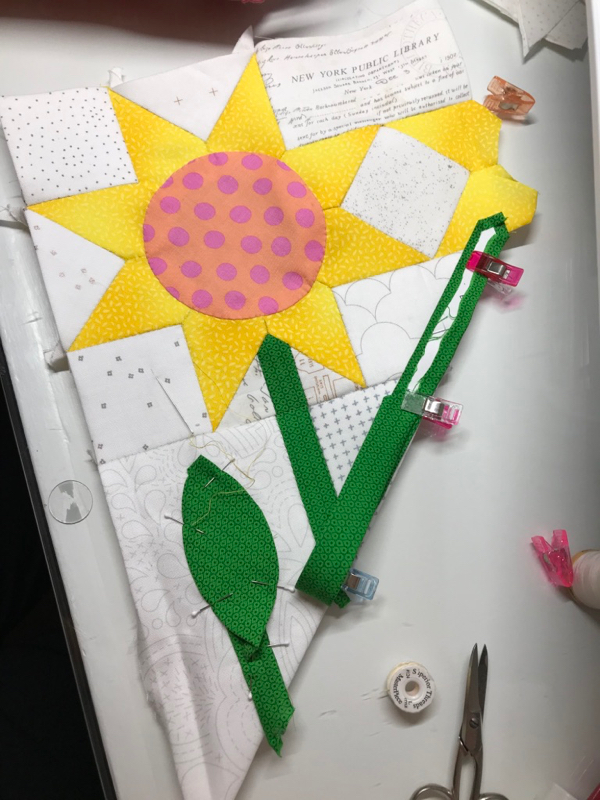
I had not seen those antique quilts when I started this block. So on the second round, I decided to try using English Paper Piecing in putting it together. Many sections went together more easily, like the petals: crisp and sharp.

This long stem was less fun.

The back. I think it’s always fun to look at the reverse side of EPP.

Done. This took me about two days of pretty constant piecing, but I did get to watch a few episodes of Ted Lasso on Apple TV (colorful language alert).

Side by side, back and front.

But there was a clue! And what was the clue I garnered from the antique blocks?

Okey-dokey. This would have made things so much faster and easier. There is also a lot of variety on the stems and leaves, all hand-appliquéd after the four blocks were assembled. And I was able to really enlarge the green-bordered block to see the grain of the background pieces: the grain is not all straight of grain, so while I don’t know if they did a lot of EPP at that time, they might have. Or they might have used odd bits from their scrap bags.
(I don’t know about you, but I wish some fabric designer would do a replica of the lower right petals of the blue sunflower block at the bottom, with those cool alternating blue-white half circles.)

Overall: putting in a seam on the rectangles and the center squares would make it easier to construct. However, I do like the long stem in one piece…pieced-in, rather than appliqued.

Stay tuned for more updates.


March 2024: Thought you might like an update on the finished quilt.

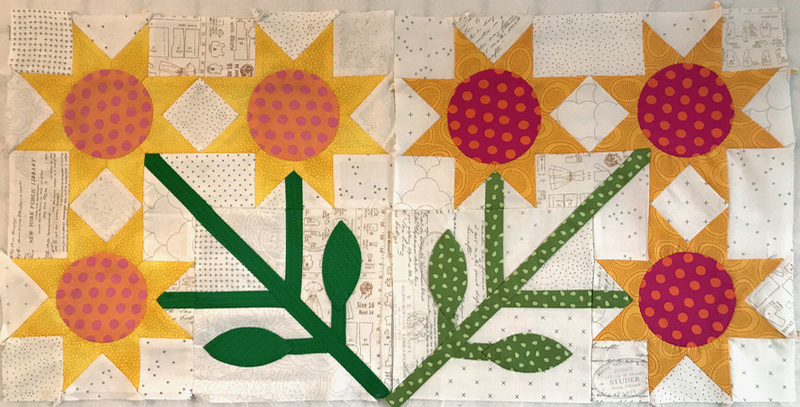
I finished Sunny Flowers, and while it has always been available in my pattern shop as a PatternLite pattern, I recently did an major overhaul on the pattern, adding in bits that I hadn’t before (like the borders), and yes, I changed the pattern to include a seam between the flowers, as you can see in the blue-dotted block in the lower left.

If you purchased one of the earlier versions, you should be able to download the revised pattern for no charge. (If there is a problem, please contact me.)

Now, back to our originally scheduled blog post.


Regarding the giveaway for the Walk book: the Husband Random Number Generator picked a winner, and I’ve notified the winner by email. Thank you to all who wrote. I had the best time reading all your springtime descriptions, and felt like I was visiting different areas of the country and world. I laughed at many, and got warm feelings on others. You are all amazing writers and quilters. Thank you for reading.
Happy Quilting!

P.S. Happy Pi Day. Since I’m not making a pie, enjoy these random pie charts from The Internets.

Hotel California Pie Chart
Free Quilt Pattern · Shine: The Circles Quilt · This-and-That

This and That: Pattern Release, Quilts, and Variations on the Puss-in-the-Corner Block

Recently QuiltMania Magazine and I entered into a collaboration — one of those collaborations that finds you in the middle of the night cleaning out the front closet, or tidying up the bookcase in the family room, or hunting all your sewing studio for your favorite piece of fabric. So I tidied up rewrote wrote a new finishing pattern and it’s now up for sale on PayHip. This pattern provides the setting templates and instructions for putting all those circles together cohesively.

Eventually I’ll put out a pattern with all the blocks, but for now, the Shine series consists of the free ones on QuiltMania, four more blocks for purchase, and this pattern to set the quilt together.

The original pattern was from my write-it-up-in-Microsoft-Word days, all the while plugging in poorly lit photos of the steps. Now it has many illustrations, as I’m finally getting the hang of my creative software, and what I don’t know how to do, I’ve figured out a few workarounds. The above illustration was one of those.

I made up a new EPP circle pattern, Summer Day, and threw that in at the end, figuring whoever checks this out would like a freebie.

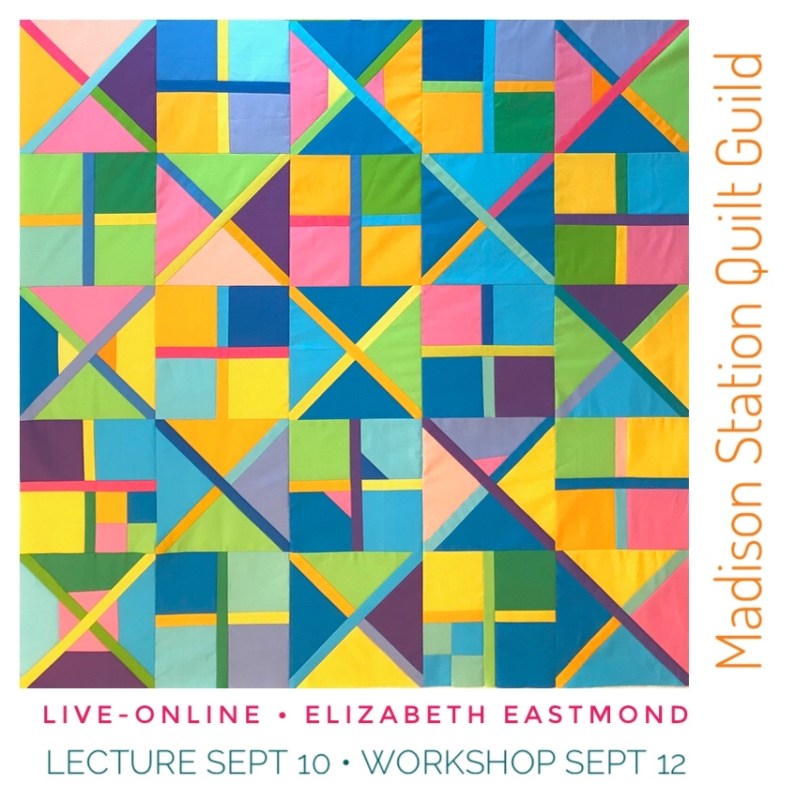
Last week I taught a live-online lecture for the Alabama Station Quilt Guild, and the Criss-Cross Quilt below was sent to me by Gisele, one of the participants. I love the colors she chose and thought the quilt was really terrific.

A few weeks ago my friend Mary of ZippyQuilts sent me a photo of her version of my Merrion Square pattern, made larger as it had a specific size need. I love her interpretation and the cute bunnies in the town square.

Last year, in April 2019, I received this comment from Karin on an old post:

“I’m just embarking on making this quilt (Crossed Canoes) as a memory quilt for my parents. We lost my brother, an avid canoeist, in December. Thank you for that idea! I’m making mine with my brother’s shirts and a few other fabrics from my stash for extra vibrancy.” My original post was about my sister and her group of friends making a memorial version of Crossed Canoes quilt for a friend. I love this pattern, and this post tells that story as well as provides a free downloadable pattern of this block.

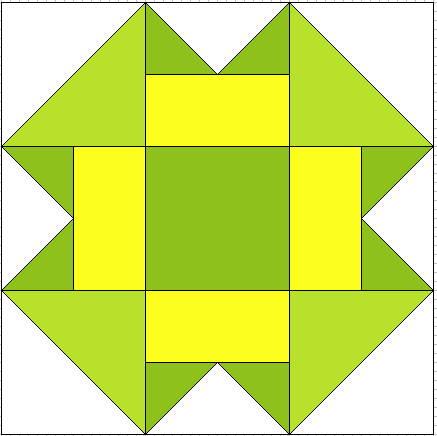
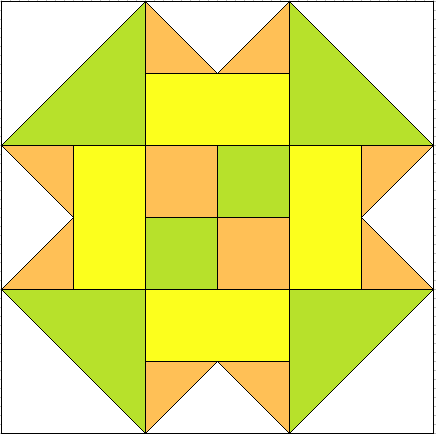
Last post I had put up our Gridsters Bee Block for September, attributing it to a variation of Puss-in-the-Corner block.

On further look, it is more like a variation of Illinois, from the periodical Hearth and Home, published from the 1880s to the 1930s.** What a difference a few well-placed color shifts can make! What would happen if I made a few color shifts, or line shifts, I wondered? The following riot of squares and triangles ensued. In my defense, it was late, and I was too tired to do the dishes, so I sat down to play with what my friend Janet calls “a quilter’s video game,” our quilting software.

These are grouped by first, the block, then a grouping of possible quilt designs. There’s a lot so feel free to just scroll quickly.

The basic Puss in the Corner block. I guess those little square blocks are the farmhouse cat, tucked away in the corner sleeping.

Basic Quilt with no sashing. If you squint, you can start to see a secondary pattern emerge. #needshelp

So I added some color. It needs some value shifts, I think.

Variation. I cleared out the undergrowth.

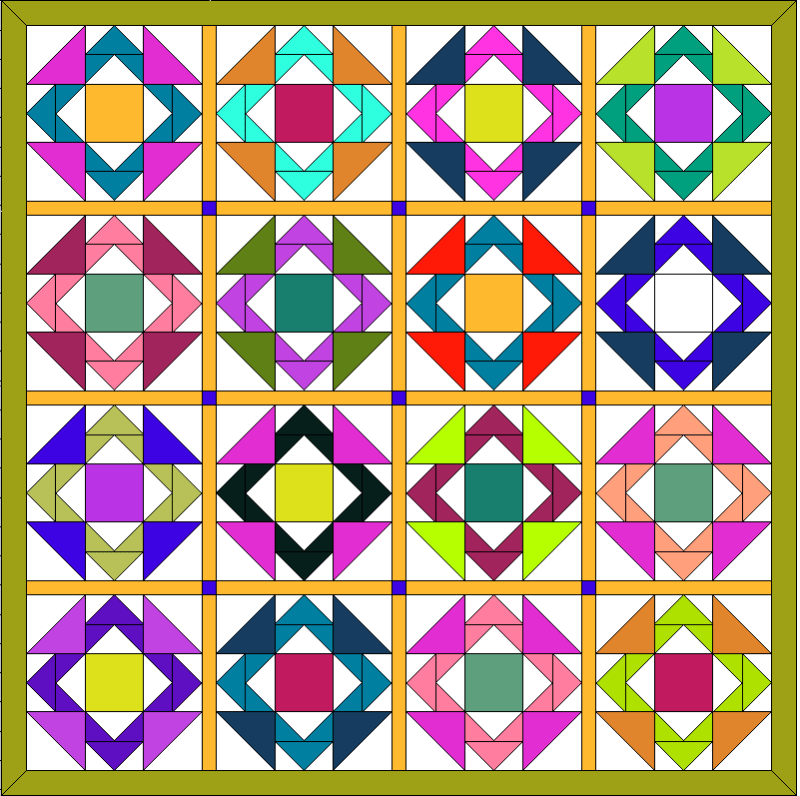
This final rendition has some different versions of coloring the blocks, along with some sashing.

I thought the prominance of the flying geese might make for some goose tracks throughout the quilt.

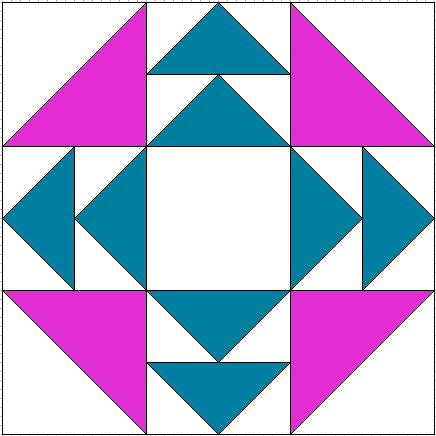
Here’s the basic Illinois block, in the coloration from Hearth and Home publication.

Okay. Maybe we could do something with this one.

I must have been really tired to use so much purple.

Okay, how about I keep the flying geese and Puss-in-the-Corner corner blocks, but just turn them all inward-facing?

Busy, but could be fun as a scrappy quilt, playing around with where the blocks touch. Of course, our quilting foremothers would have always had sashing, right?

This was a neighbor to Puss in the Corner, and is called Big T.

I went this direction first, swapping out the center. Nah.

Here’s the variations of that block. I kind of like how it looks like the corner edges are folded down.

Here’s what I played with, all capsulized. And below are the blocks in white, and then further down, a PDF of the pattern templates.

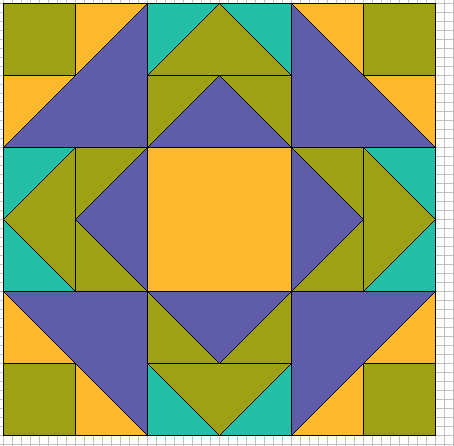
Final thoughts: The top left block looks like it has more possibilities, less places to call a halt to other ideas. The other three blocks kind of box in the quilter, confining the creativity to the block itself. I would like to try matching these up with other nine-patch variations, and see what kind of quilts those combos could yield.

Here are the basic block PDF files for download. They all make a 12″ block.

Happy Stitching!

+ + + + + + + + + + + + + + + + + + + + + + + + + + + + + + + + + + +
**This information was gleaned from the quilter’s bible, The Encyclopedia of Pieced Quilt Patterns by Barbara Brackman.