100 Quilts · Quilt Bee · Quilts

Heart Houses–Far Flung Bee

Krista received her Far Flung Bee Blocks, so now I can write about them.  Like a pregnancy, I figure it’s not my news to tell, so I like to let them do the Woo-hoo! thing and then I’ll follow up.  Since I’ve only done In-Real-Life Swaps, it’s probably all wrong, like when I sent in my Polaroids. . . Whoops, did it all wrong.
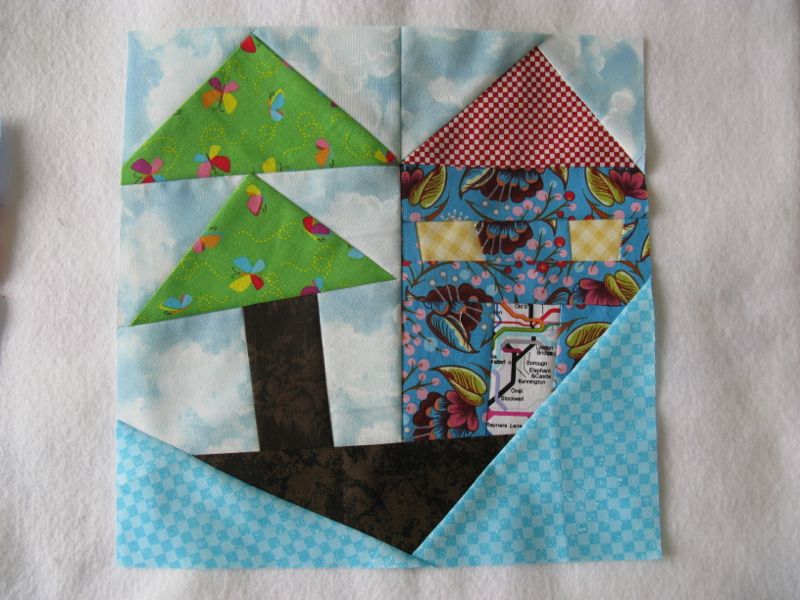
She wanted a wonky house.  And trees, if you please.
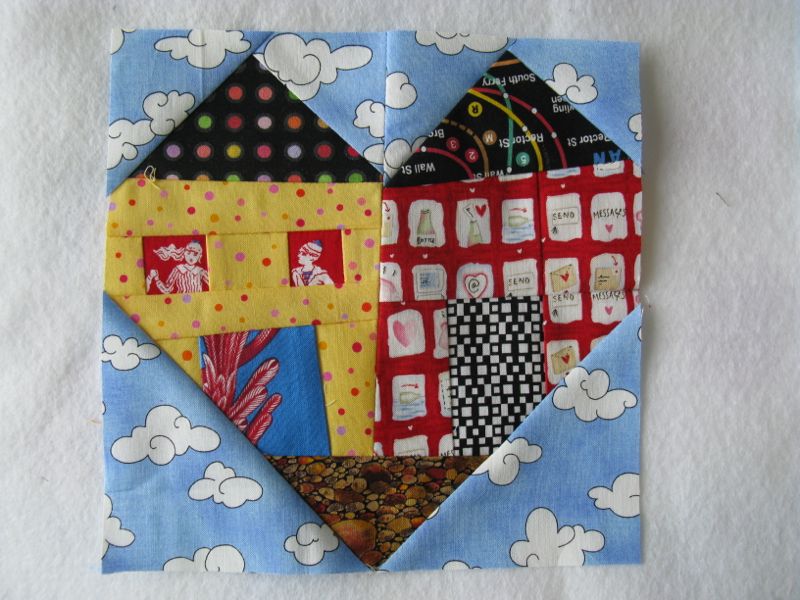
But I thought about how she recently got engaged, and so I drew from a quilt I’d made a couple of years ago (one block is up in my blog header), and made her a block that featured a heart made of two houses.  Aw.  I’m of the mind you should always celebrate love.  Especially “goofy love,” as Krista refers to it.  (I remember those days with great fondness.)
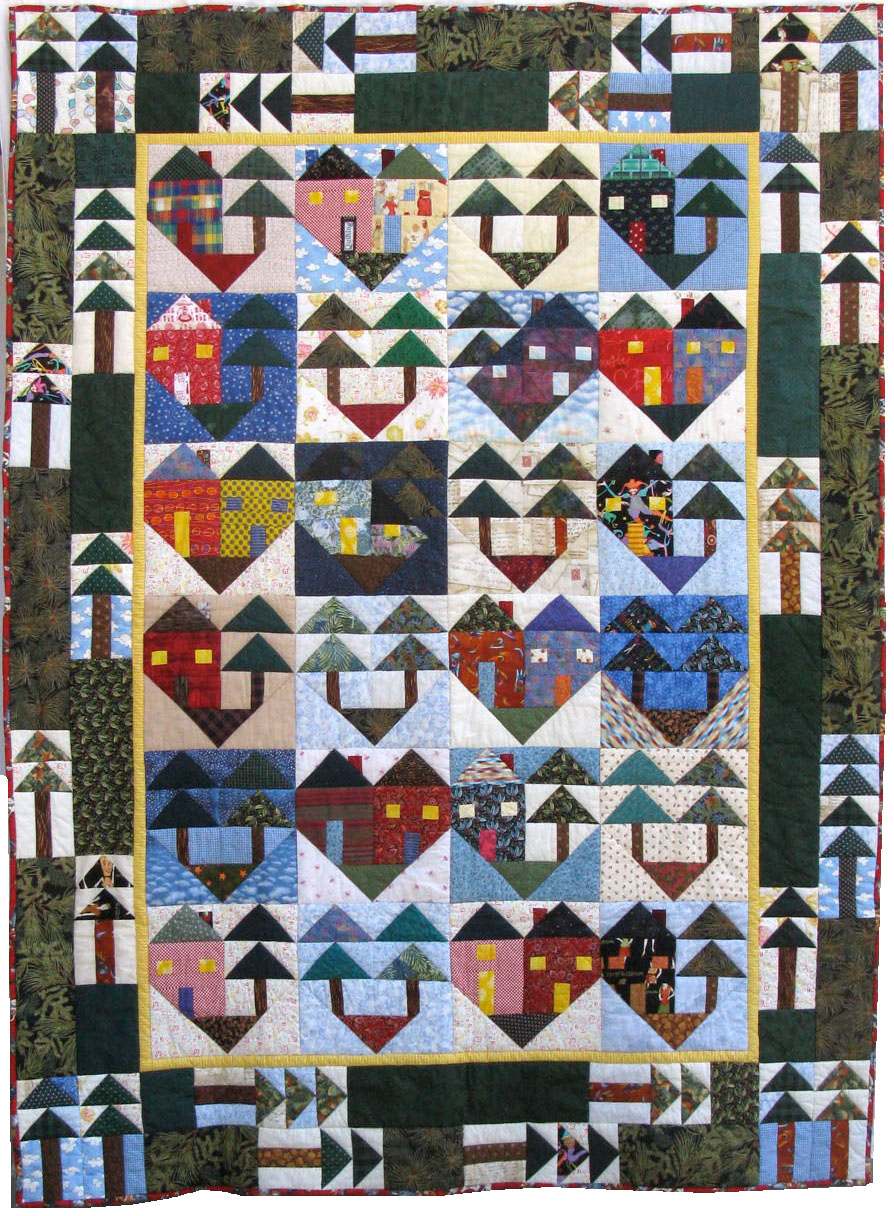
This is Number 68 on my 100 Quilts List.  A version of this quilt was on the cover of a quilt magazine some time ago, and I had searched my hard drive for the downloaded file, but couldn’t find it.  I started drafting it again, then tried the internet.  No luck.  Finally it was in the last place I looked. (Sorry for the wobbly lower edge — for the photo, I had it on a quilt rack extended yea-high and the wind interfered.)

Here’s my PDF of the block that has all four blocks–click to download: heart_houses

They show it for paper piecing, but no way was I going to do that.  The blocks on my quilt are about 12″ on the short side because I wanted JUMBO houses in among my pine trees.  I took it to the local copy shop and blew up the PDF  and taped the pattern pieces together.  I just cut them out and use the pieces as a pattern, sometimes just measuring then cutting.

I made the long blocks for the border sort of randomly, first making the tree tops, then gauging how long those trunks needed to be to fit.

I backed it with some Mary Lou Weidman fabric.

That was the year I was in charge of a camp for young women ages 12-18, which was held up in the pines in the San Bernardino forest near Big Bear Lake.  It’s a LOT of work, and I was working with a camp director who I found out later was brilliant in working with recalcitrant teenagers, but not so brilliant in doing the grunt work that has to be done to get a camp organized.  Her team was also untested, but were very strong-willed about what should and shouldn’t be done.  I had been to a similar camp when I was a girl, had gone back as an adult counselor for several years, so I came at it from a different angle.  Needless to say, that was a challenging spring as we tried to quash all our personality quirks in order to get the camp planned.

And on top of all that, it was my only my third semester teaching at a community college, and they’d given me a new level of class to figure out, and I felt like I was nearly underwater all the time just on that issue.

So, what else to quilters do?  They make a quilt.  I called this Hearts in the Pines.  I finished the top and with only a few weeks to go, the semester ending, I called my quilter and she did stitch-in-the-ditch to stabilize the quilt.  I stitched the binding on, but didn’t have time to sew it down.  I took it to camp and in the few free minutes I had in between kitchen crises (oh, didn’t I tell you that two of the cooks backed out at the last minute and so I was in the kitchen too?), visiting with the girls, my husband (who I’d recruited to join me) and my angel daughter who drove in from Arizona with a friend to help her mom, I finished stitching around the quilt to get that binding on.  And much later, I finished the quilting around all the houses and trees.

I always like how quilts have a story behind them.  Whether it’s just one of those quick quilts that you throw together for a baby shower, or one that represents a time in your life, the story — I believe — makes the quilt.  Just like Krista will hopefully remember the summer she was engaged, when she looks at the quilt she made from a few wonky heart blocks.
Classes · Tutorial

June Flowers/Tulip Tutorial

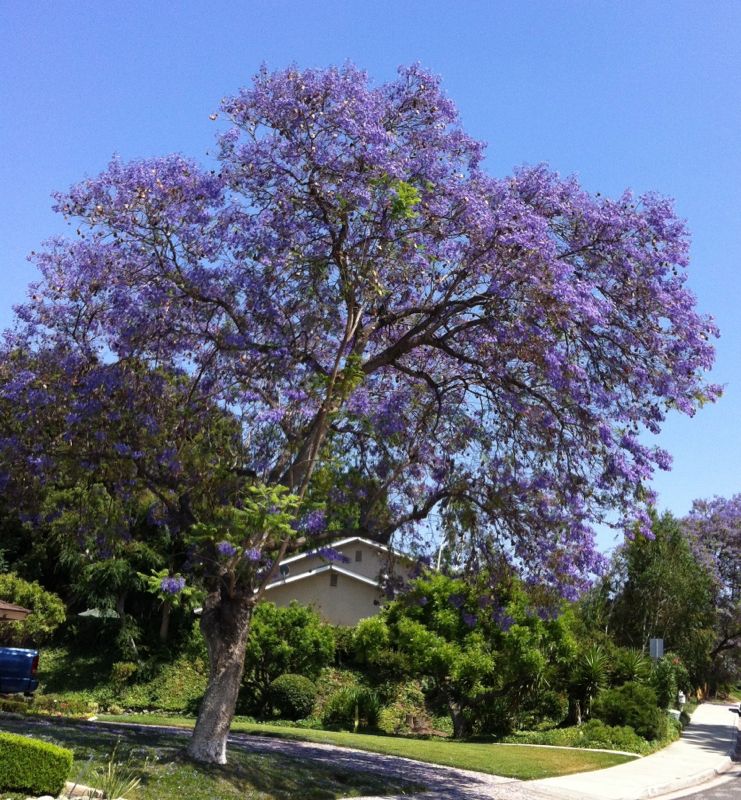
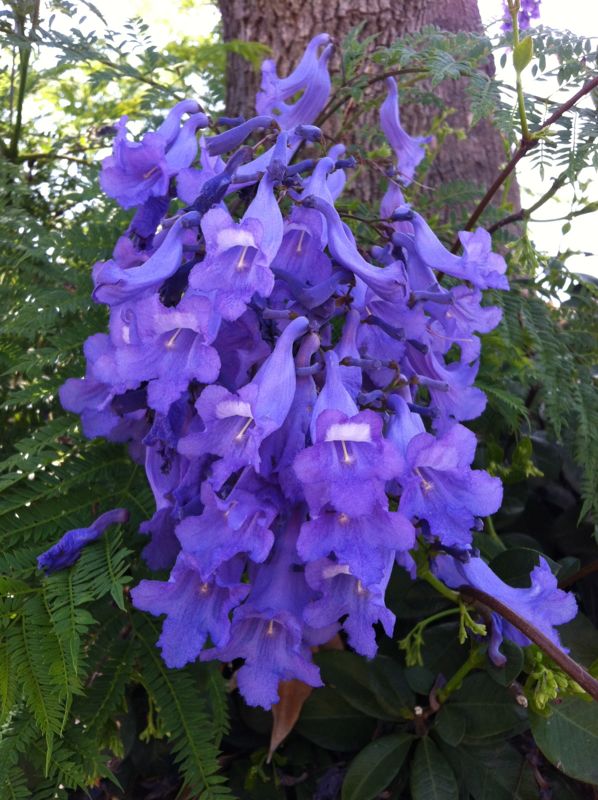
Every June the jacaranda trees put on their bluey-purple-periwinkle display of flowers, and we all wander around wondering how we got to be lucky.

And like clockwork, every June they dominate my photos — exquisitely colored blossoms on hills, around bends while the rest of the year these trees blend into the landscape.

And I’m heading to a class with Becky Goldsmith (the designer of the quilt I did last year: Come A-Round) and we’re doing a flower in class, so I chose a night-blooming plant for color inspiration for fabrics to pull.  This comes from the Sherwin-Williams paint website “Chip It,” where you load up a URL of a photo and they provide their colors.  I just like how it looks, and it helped me pull from my stash.

So when it came time to decide on a block for the Far-Flung Bee, that was easy: a flower.  I also wanted something of simple construction (9-patch) because of my fabric requrements–I wanted some fabrics with text to be incorporated into the blossom.

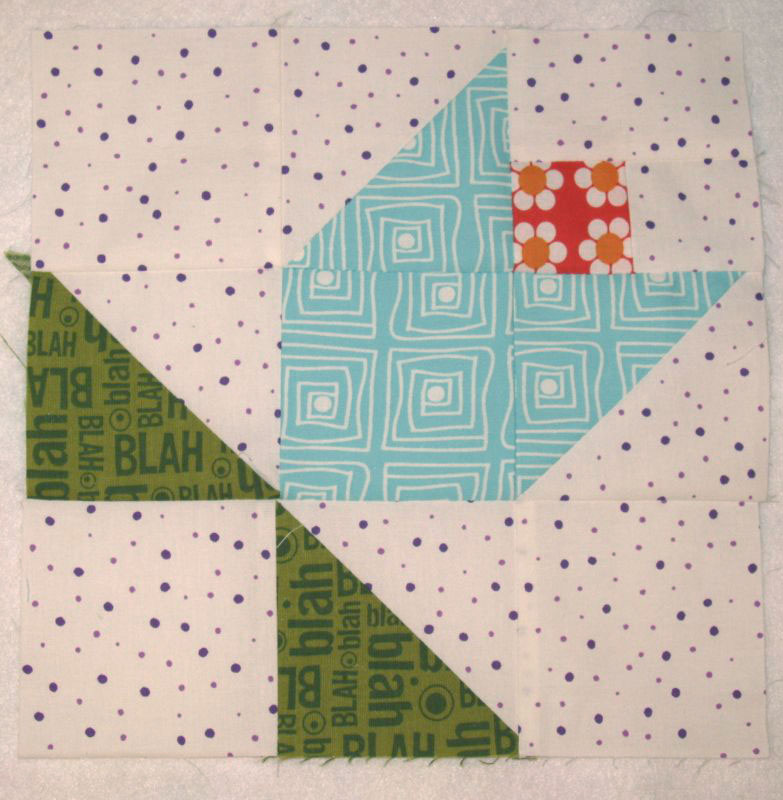
Here are two versions of that tulip/flower block, and the text fabric is used two different ways; one is in the background fabrics and the other is included in parts of the flower.  That green fabric saying Blah Blah Blah is a treasure for me as my friends Bert and Rhonda sent it to cheer me after my surgery in December.  I’ll always think of them when I use those fabrics (thanks, guys!).  So here’s how to do it.

For one 9-inch flower block:
Cut four 3 1/2″ squares–3 from the background fabric, 1 from the flower fabric
Cut four 3 7/8″ squares–2 from the background fabric, 1 from the flower fabric, 1 from the leaf fabric
Cut one 2″ by 3 1/2″ rectangle from the background fabric
Cut two 2″ squares–1 from the background fabric and 1 from the stamen fabric

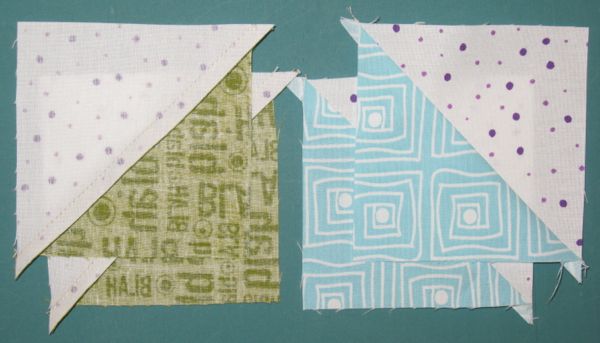
Working with the 3 7/8″ squares ONLY, place one background square on each of the flower and leaf blocks.  Draw a diagonal line from corner to corner, or if you have the Quick Quarter tool (shown above), draw a line on either side.  You’ll stitch just inside this line (towards the center), or if you have drawn a single diagonal line, you’ll stitch a SCANT quarter-inch seam on either side of your drawn line.

Cut from corner to corner, inbetween your stitching.

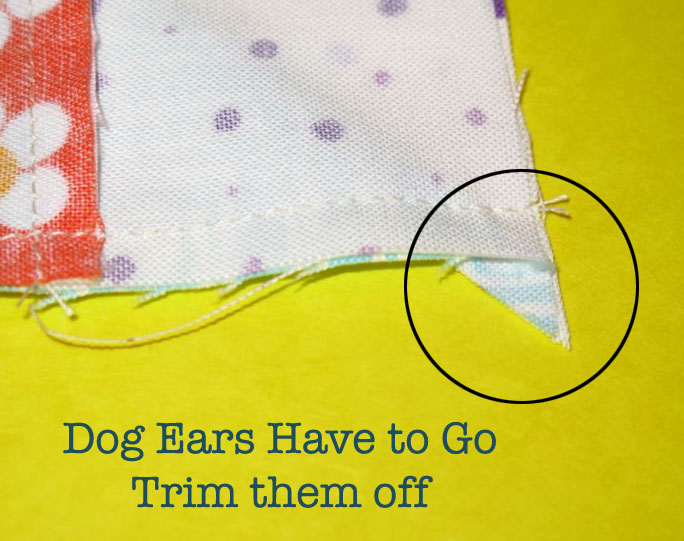
Press the seam allowance away from the background triangle, as shown.  Notice those dog ears on the corners? We’ll cut them off later.

Working with the 2″ square blocks and the one rectangle now.  Seam the stamen fabric block to other 2″ background fabric block.  If you’re like me and getting up and down to the ironing board gets tiresome, just finger press that seam towards the stamen fabric.  Then seam the rectangle onto this unit.  Okay, now go to the ironing board and press that flat.

Lay everything out. Smile, because it looks cute. AND it’s fast!  Seam them together in rows, working across the block.  Keep track of which direction that bottom leaf goes.  I did it wrong twice.

Now it’s time to trim off those dog ears.  (I actually trim them as I seam the pieces together, not waiting until a final moment, but this is just a reminder to get them off now).  I use that old fashioned tool that works so well: scissors. Snip snip snip while holding it over the trash can.

  I’ve flipped it over to show the directions for pressing.  Basically you want to have the seams going in opposite directions so they’ll “nestle” together when you go to sew the rows.  Lay it out again, the sew the final seams, joining the rows.  Double check that bottom row twice, so you don’t sew it in wrong (like I did).

You’re finished with one block.  Eat Your Vegetables, by laying a ruler over it and truing up the block to 9 1/2″.  It will sew down to a finished 9″ block in your quilt.

Here’s a mock-up of one layout, using 1″ sashing and corner squares.  I’ve also thought that since it’s based on an easy nine-patch block, that a grouping could be made of half-sized (4 1/2″ finished) blocks that could be interspersed for a more random look.  That’s for another day.

Enjoy your spring flowers!

Quilts

Scrappy Star, part I

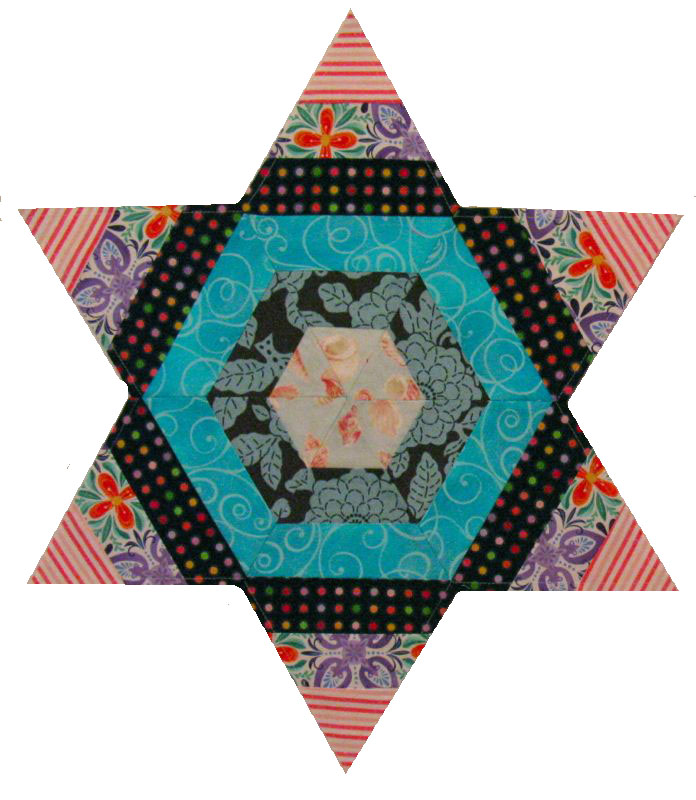
I’ve been diving into scraps this week, as I had a couple of days all to myself.  Inspired by a quilt I saw in the Scrap Attack Flickr group, a scrappy star by Svetlana of s.o.t.a.k homemade, I decided to try it myself.  It looked similar to lots of spiderweb blocks found in many traditional blocks, some published ages and ages ago, I thought I might be able to draw on my years of quilting and put it together myself.

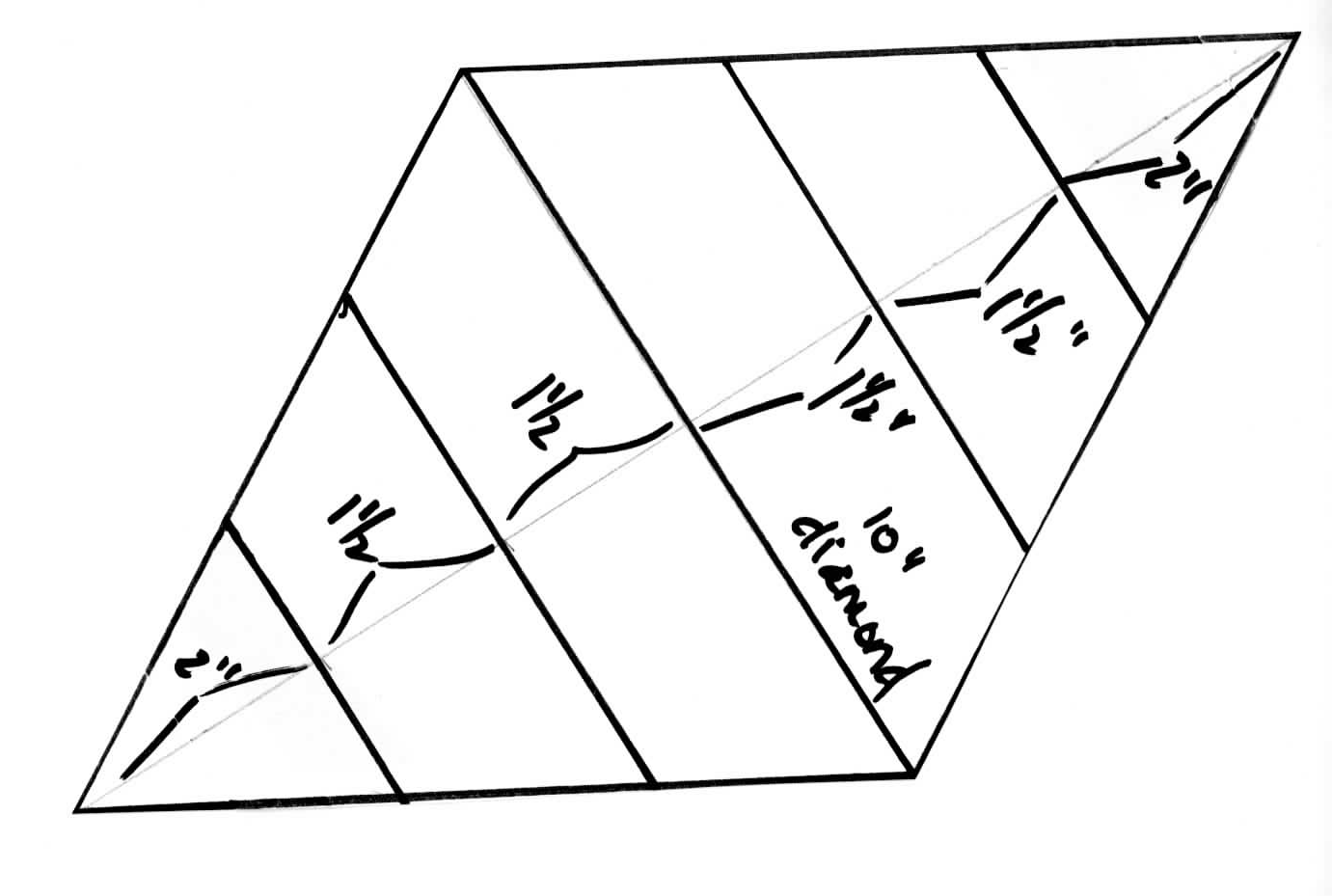
First, download my scrappy stars paper piecing template by clicking on the link (NOT the picture).  It should measure 10 inches from tip to tip when you print it out.

A tip I learned from Becky Goldsmith is to print out your paper piecing templates on vellum paper.  I bought a package some time ago from my local paper store, so I went to the copy center and printed ONE copy of the diamond.  Then I pulled the original off the platen glass and checked it for size.  Yep.  Same size.  I wanted to make about eight stars (and there are six diamonds in each star), so I printed off 60 copies — about ten more diamonds than I needed, just in case.

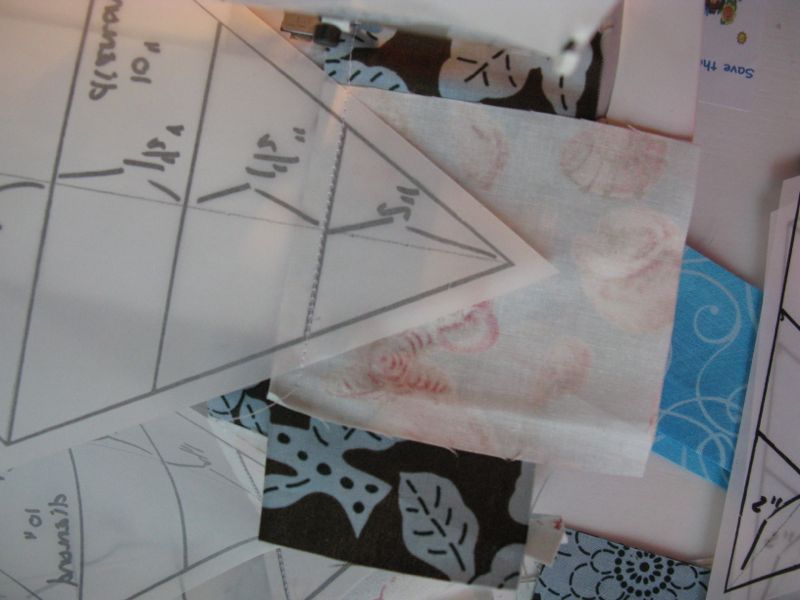
Okay, so PANIC!  When starting a new process or project, I can feel overwhelmed by it all.  But then I said to myself, just choose six fabrics that go somewhat together, in fact the less they go together the better it will be.  That’s all, then you can take it from there.  I chose fabrics, laid them out, liked them.  I cut 3″ squares for the two tips, then I cut the rests of the strips 2 1/2 inches wide by 6 1/2″ long.  Yes, I know that’s way wide, but I liked some squoosh room when working with them.

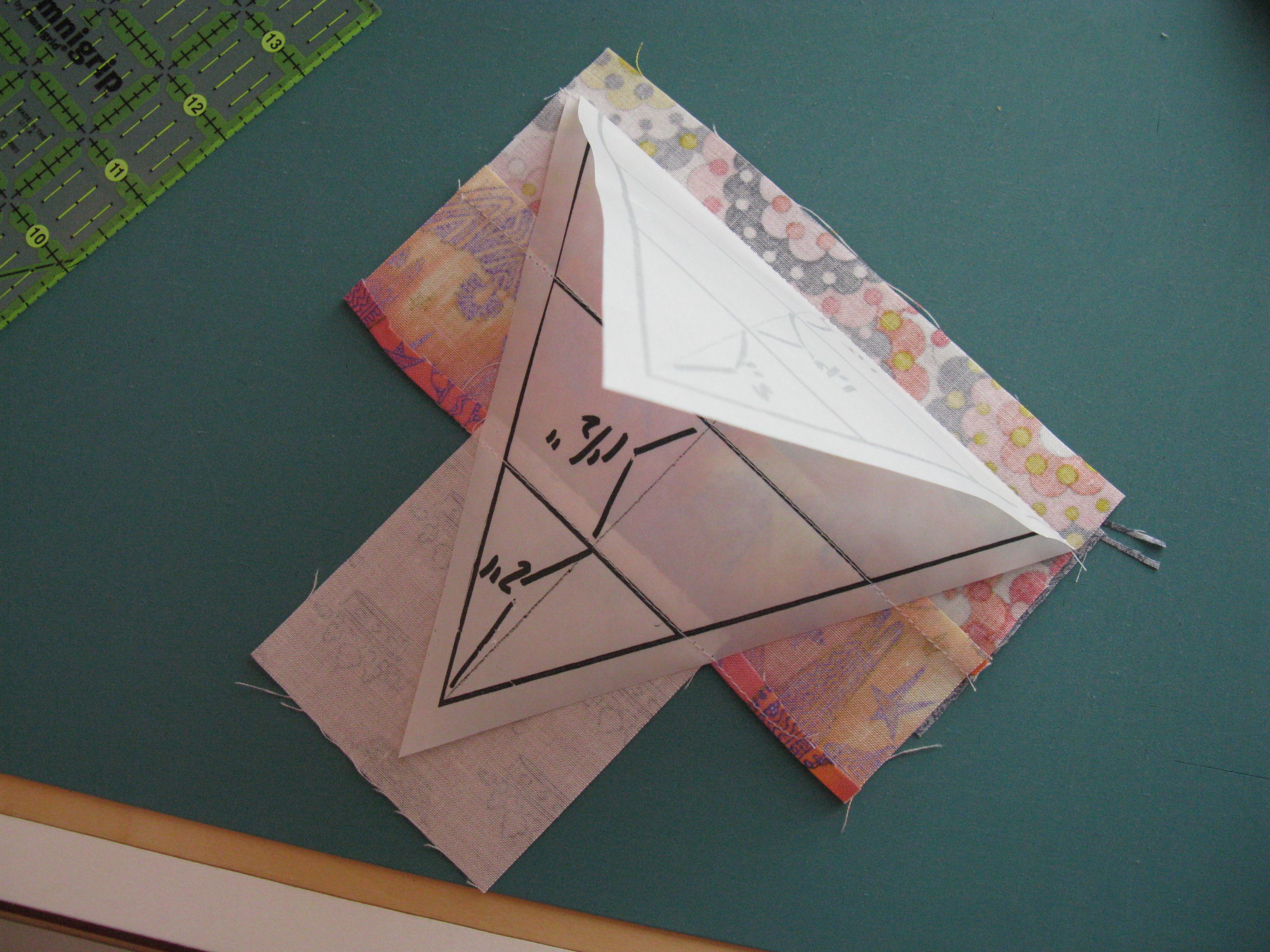
Line up two at first, peeking through the parchment template to line them up straight.  Stitch on the line.  If you are not familiar with the technique, there are several YouTube videos (just google “paper piecing”).  I don’t trim up the sides yet.

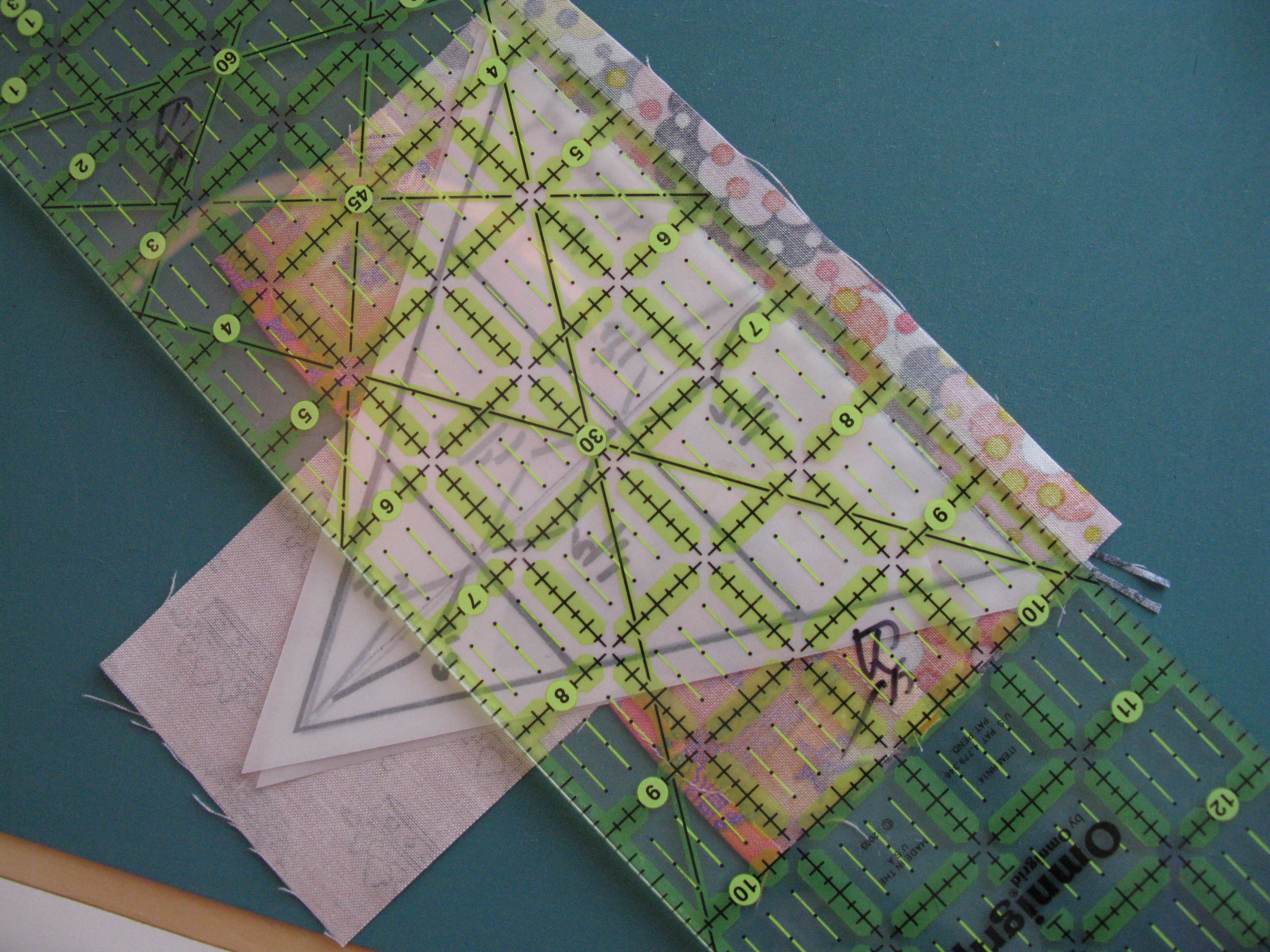
As you progress, you’ll need to trim off the excess in between your seaming.  Lay it out flat on your cutting surface, and crease back the template on the stitching line, making a nice crisp crease.  This also helps when you rip that paper off, later.

Line up the ruler, slice off the extra.  Iron the fabric down into place, then keep going until you fill up your diamond.

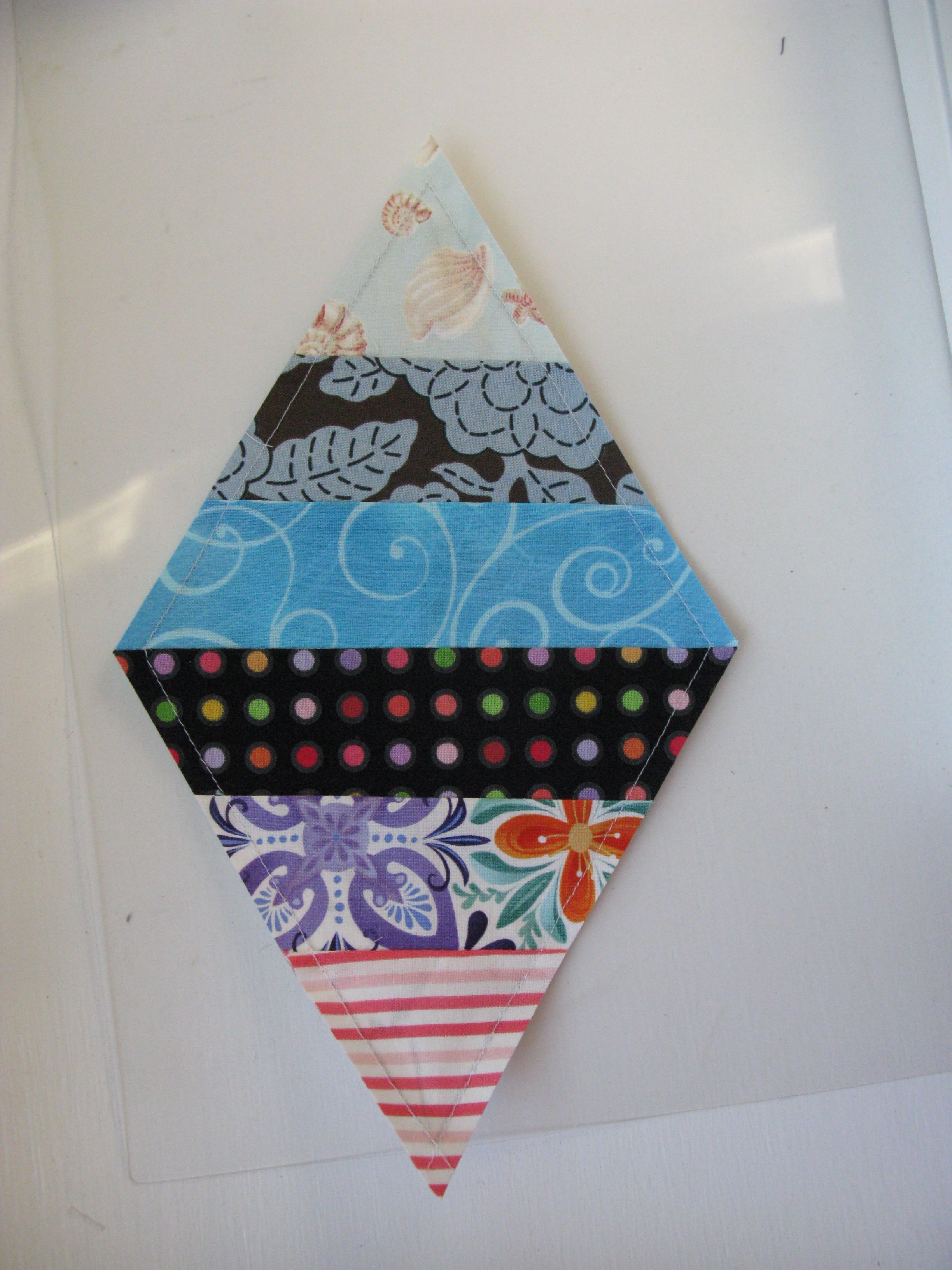
From the paper side, use the marking to stitch around the outside edge.  Since you are using scraps, some may be off-grain and this stay-stitching helps stabilize that outside edge.

Trim.  It looks sooo pretty now, but now comes the real fun!

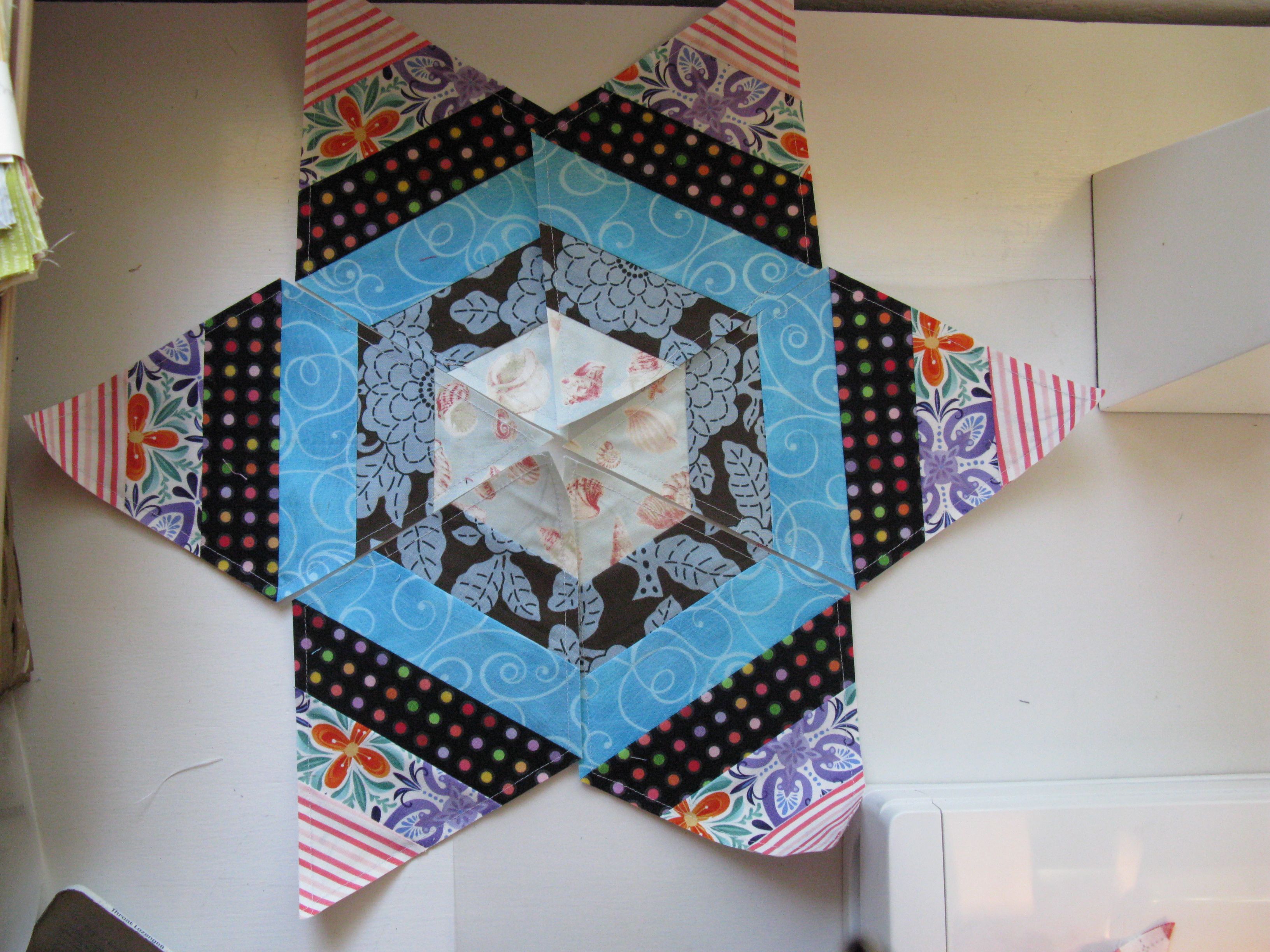
Lay them all out.  * Smile.*  Since you are working in such a large scale (20 inches from tip to tip), that star really makes an impact.

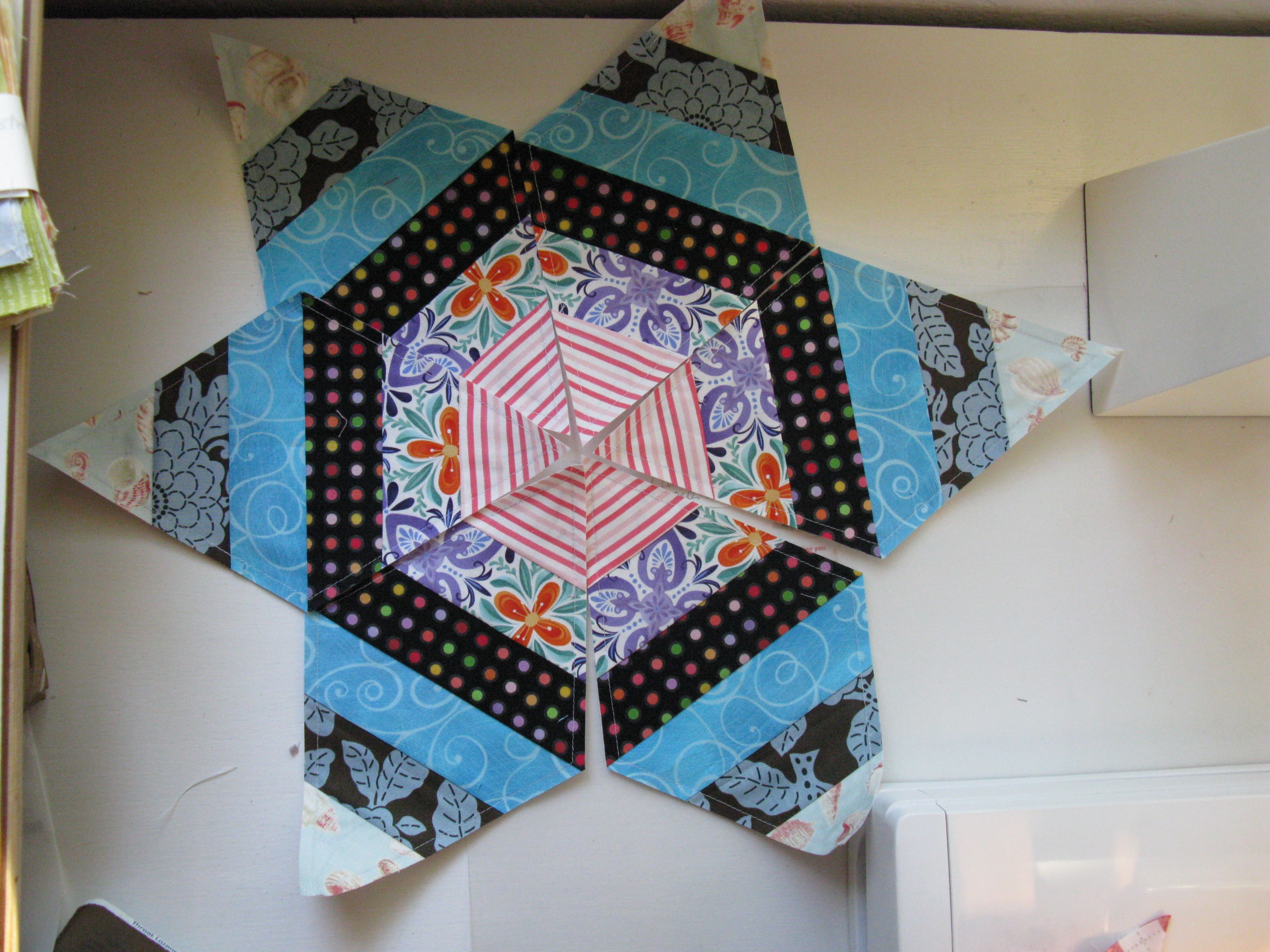
Or do I like it this way?  Flipping them around creates a totally different look.

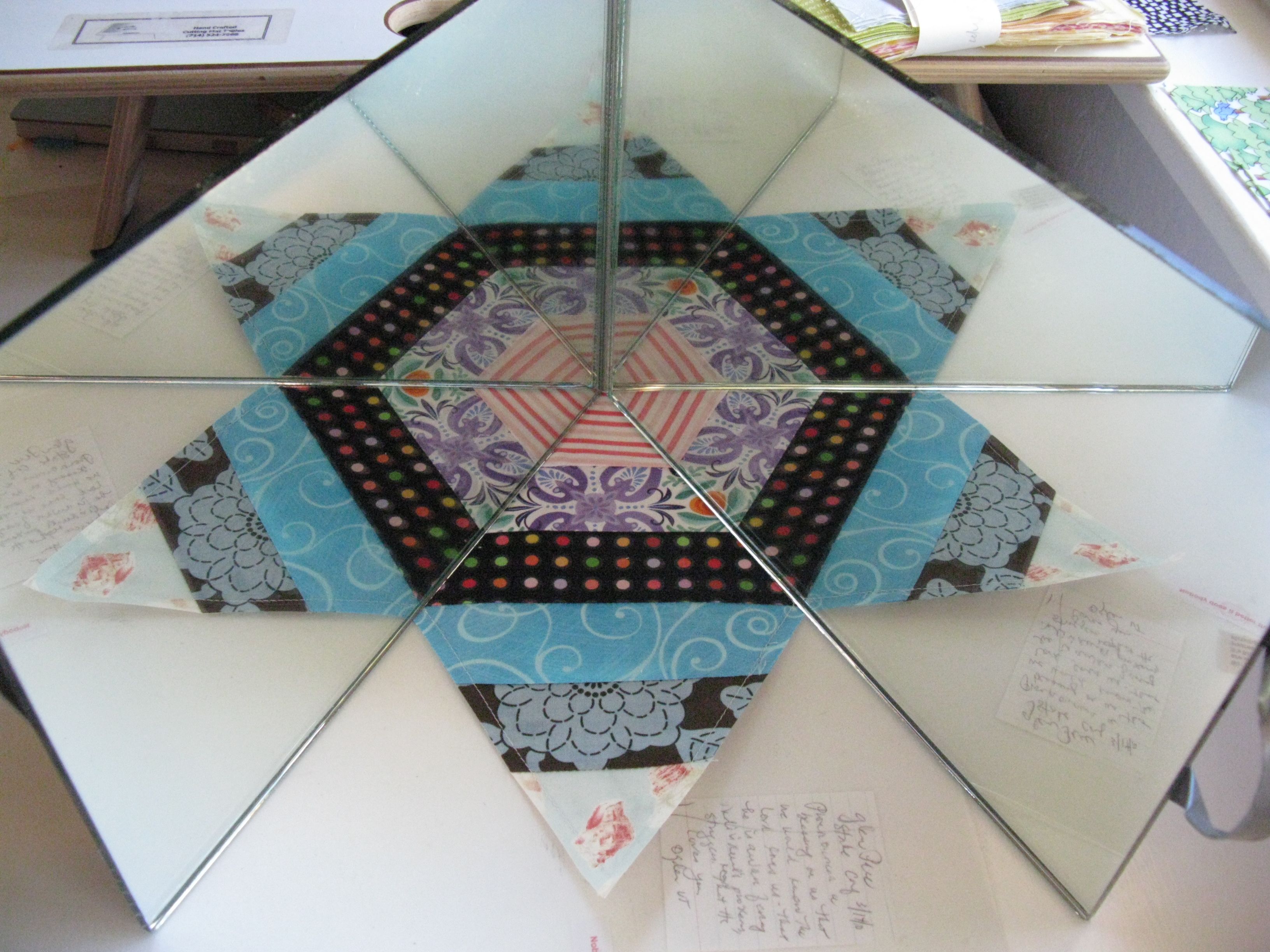
I have this clever device: a hinged mirror.  I place ONE diamond, set the edges of the mirror on it, and voila! My block, in reflection.

This is what it looks like from the top, sitting on top of one diamond.

Check back Tuesday for how I put the pieces together.  AND. . .Don’t forget to come back on Wednesday for our thread giveaway.  We have ten different bloggers participating in the Leap Day Superior Thread Giveaway.