200 Quilts · Four-in-Art

Friend and Foe: Four-in-Art Challenge • Feb 2016

FriendFoe_front

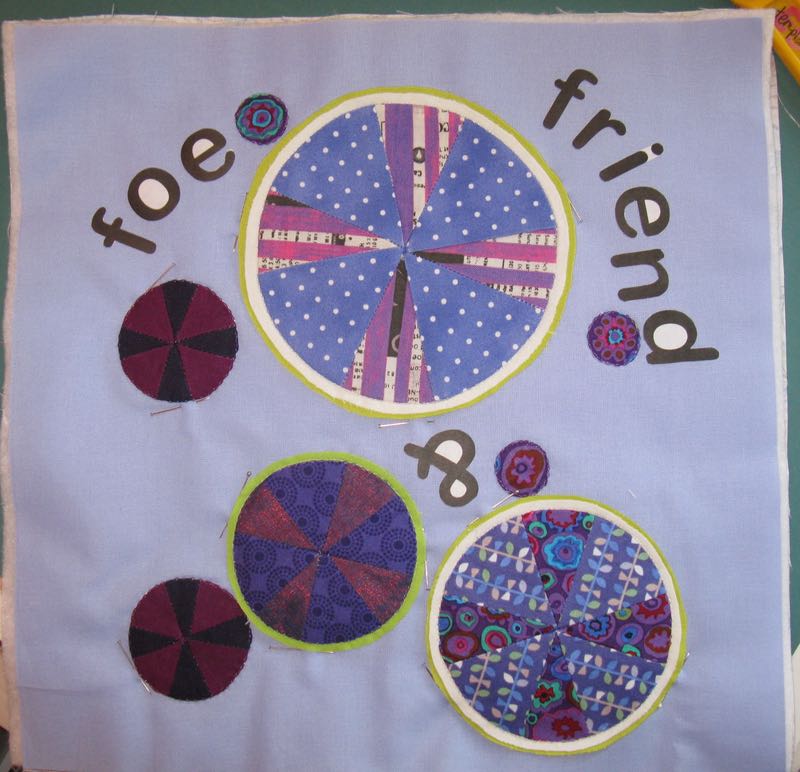
Friend & Foe
Quilt No. 156, February 2016
#1 in the Color Series: Microscope

We have a new year and new members (see below) and a new theme: Color.

TaxolMicroscope1And this quarter’s challenge was “microscope.”  So of course, I started haunting microscopy sites, trying to find the right molecule to make for this challenge.  And it had to be colorful, right?

I recently had two friends diagnosed with breast cancer, and one of my other friends, Heather, is a long-term survivor of Stage IV breast cancer.  I knew Taxol was used to combat aggressive cancers; so wrote to my friend Heather (also a professor in biology) for her reaction to that drug.  She went through all the sciencey stuff, but I kept asking “Friend, or, Foe?”

Finally she wrote: “Foe during the treatment.  Friend for the result.”

Taxol assemblage

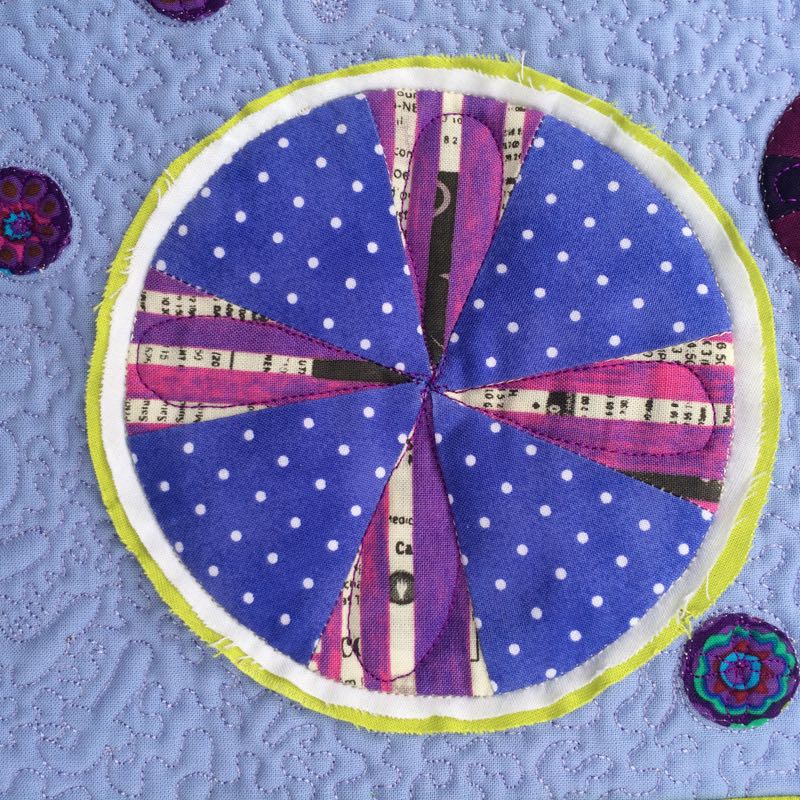
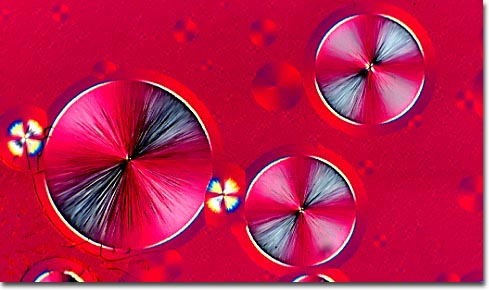
For something that causes such horrible side effects in the treatment, the molecule is this lovely spherical shape, with the innermost parts looking like four petals of a daisy, or an airplane propeller:

taxol

Of course, I can use any color I want — right? — so I decided to use periwinkle as the background, with magenta and purple as the parts of the molecule.

FriendFoe_1

I constructed the bit I wanted to by paper piecing, then plain-old-pieced the rest.  I stitched it to a white square, then a chartreuse square, as the purple was just lost on the quilt, plus it imitated the circle around the molecule.  I made different sizes of different fabrics, then finally, small circles.  Then came the arranging: FriendFoe_2a FriendFoe_2FriendFoe_2c

FriendFoe_0

Using a font like Simone used two challenges back, I printed it the words on freezer paper in my inkjet printer, then cut out each letter.  I didn’t cut out the centers, but just free-handed that when it was time to quilt around them.

FriendFoe_0a

FriendFoe_3cFriendFoe_3

I first outlined the letters with small free-motion quilting stitches, then started stippling around them.FriendFoe_3b FriendFoe_3a FriendFoe_4
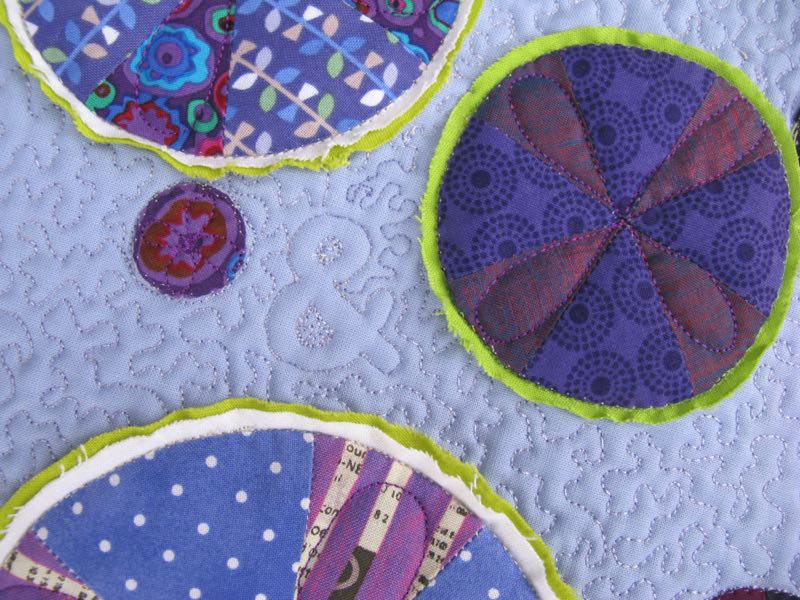
I mean, I had just taken a class with David Taylor and if I didn’t know how to stipple now, I never would.  I decided to leave the edges raw on the white and chartreuse fabrics to bring a little organic texture to the process.  All the while, I’m thinking about the women I’ve known who have breast cancer, and while I stippled I sent them –and continue to send them– good karma for a long and happy life.

FriendFoe_back

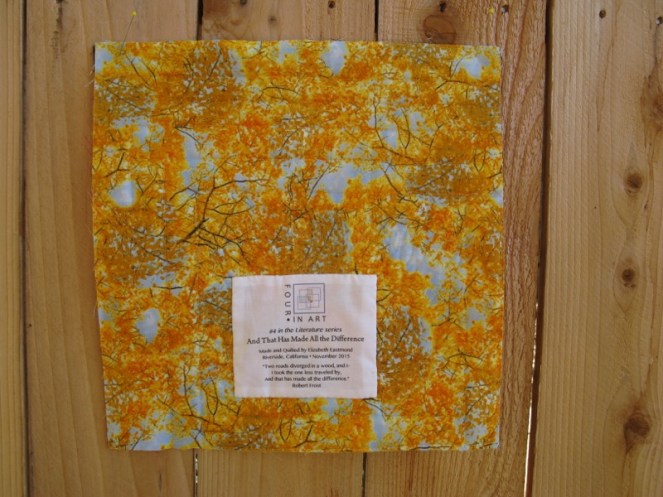
The birdcage fabric reminded me of that upper drawing of the sphere of Taxol, plus I liked it.
FriendFoe_frontupsidedown

I had originally planned to have the quilt go this way: with the “friend” part first, but then I remembered what Heather said, and I realized that the Foe was first, then Friend.  So I switched it around (correct orientation is at the top of the post).

science hallway

We went over to my husband’s work (he’s a professor at the local Big U) and I loved this picture of a real “science” hallway, with all the faculty’s posters of their results (shown at meetings) hanging along the hallway.

DAE office

This is his office, and why he never cares if my sewing room at home is a mess.  Thank you, dear.

Taxol Butterfly Duo

Simone and I at church, holding our Four-in-Art quilts.  I am happy to have found such a fine group of quilters to make art quilts with.  Bet you are wondering what Simone made, right?  Please visit the rest of our group, to see how they interpreted Color: Microscope.  We also have a blog, Four-in-Art Quilts, where you can find us all.

Betty         https://www.flickr.com/photos/toot2

Camilla         http://faffling.blogspot.co.nz/

Catherine         http://www.knottedcotton.com

Janine         http://www.rainbowhare.com

Nancy         http://www.patchworkbreeze.blogspot.com

Rachel         http://www.rachel-thelifeofriley.blogspot.com

Simon         http://quiltalicious.blogspot.com

Susan         http://patchworknplay.blogspot.com

And Susan just announced next quarter’s challenge: Music.  Reveal is on May 1st, 2016.  Can’t wait to combine both music and color together.

˚˚˚˚˚˚˚˚˚˚˚˚˚˚˚˚˚˚˚˚˚˚˚˚˚˚˚˚˚˚˚˚˚˚

Occasionally my blog software places ads here so I can blog for free.  It’s a good trade-off.  I do not control the content, nor frequency, nor receive any money from these ads.

Creating · Four-in-Art · Quilts · Something to Think About

Microscopy for Four-in-Art Feb 2016

cocaine

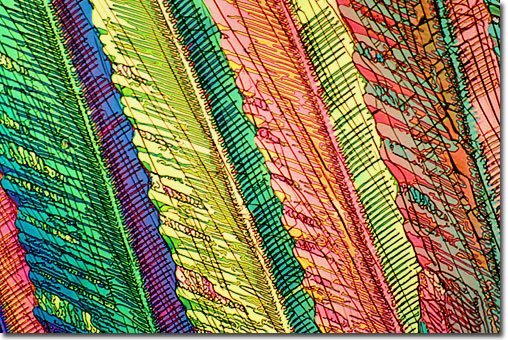
This microscopic image is cocaine.

I found it while researching images for this quarter’s Four-in-Art challenge of “microscopic.”  The overarching theme is color, so of course, I was drawn to this as an idea for a quilt, hating what I’d already started piecing a couple of days ago.  As any good grad student knows, the best way to postpone the inevitable work on a deadline is to do more research.

The image of cocaine is from a website run by Michael Davidson, who recently passed away.  But he would take the images from his laboratory’s microscope and use them to make neckties.  I thought we could keep going and use them to make quilts.

nioxide

This is nickel oxide on sodium chloride, an image from his website.  After exploring his butterfly gallery, I moved on to the pharmaceutical section, and noticed that not only were Mr. Davidson and his team a whiz with microscopy, they also had a sense of humor, as witnessed by the last line in the description of caffeine:

caffeine

To quote: “Caffeine is a central nervous system stimulant most commonly found in the coffee we drink every morning….Symptoms of overdose include insomnia, restlessness, tremor, delirium, tachycardia, and running of the mouth.”

taxol1

Taxol, a drug used in chemotherapy.  I’ve pinned quite a few of these to my Pinterest Board Art Quilts, as they will become the inspiration for this quarter’s efforts.

serendipity illusNot only was wandering through the internets a way to spark my creativity for this month’s looming deadline (to be published on Feb. 1st), but also I allowed myself to goof off do the research because of an article recently published in the New York Times about Serendipity, or more specifically, “How to Cultivate the Art of Serendipity,” by Pagan Kennedy.  She talked first about the word’s origins, noting that we “think of serendipity as something like dumb luck.”  But it was coined in 1754, when Horace Walpole noted that he “had been entranced by a Persian fairy tale about three princes from the Isle of Serendip who possess superpowers of observation.” In writing a letter to a friend, “Walpole suggested that this old tale contained a crucial idea about human genius: ‘As their highnesses travelled, they were always making discoveries, by accident and sagacity, of things which they were not in quest of.’ And he proposed a new word — “serendipity” — to describe this princely talent for detective work.”  So, as Kennedy notes, the word meant “a skill rather than a random stroke of good fortune.”

She quotes Sanda Erdelez, a University of Missouri information scientist, who divides serendipitsts into three groups: ” ‘non-encounterers’ ” or people who see “through a tight focus, a kind of chink hole, and they tended to stick to their to-do lists when searching for information rather than wandering off into the margins. Other people were “occasional encounterers,” who stumbled into moments of serendipity now and then. Most interesting were the “super-encounterers,” who reported that happy surprises popped up wherever they looked. The super-encounterers loved to spend an afternoon hunting through, say, a Victorian journal on cattle breeding, in part, because they counted on finding treasures in the oddest places. In fact, they were so addicted to prospecting that they would find information for friends and colleagues.”

So, maybe in “researching” my Four-in-Art quilt, I’m just really being a super-encounterer, finding that “happy surprises” pop up with each click of the mouse button.

Or maybe, I am just putting off the inevitable: getting the work done.

4-in-art_3button

Four-in-Art Microscopy.  Coming soon to a blog near you.  Premiering February 1st, 2016.

˚˚˚˚˚˚˚˚˚˚˚˚˚˚˚˚˚˚˚˚˚˚˚˚˚˚˚˚˚˚˚˚˚˚˚˚˚˚˚

P.S.  Pagan Kennedy has written a new book, titled Inventology.  The blurb from her website says “Inventology is a must-read for anyone who is curious about creativity and imaginative leaps.”


Four-in-Art · Quilts

And That Has Made All the Difference: a Four-in-Art Quilt

Made All the Difference_full

And That Has Made All the Difference
Quilt No. 151, November 2015
#4 in the Literature Series

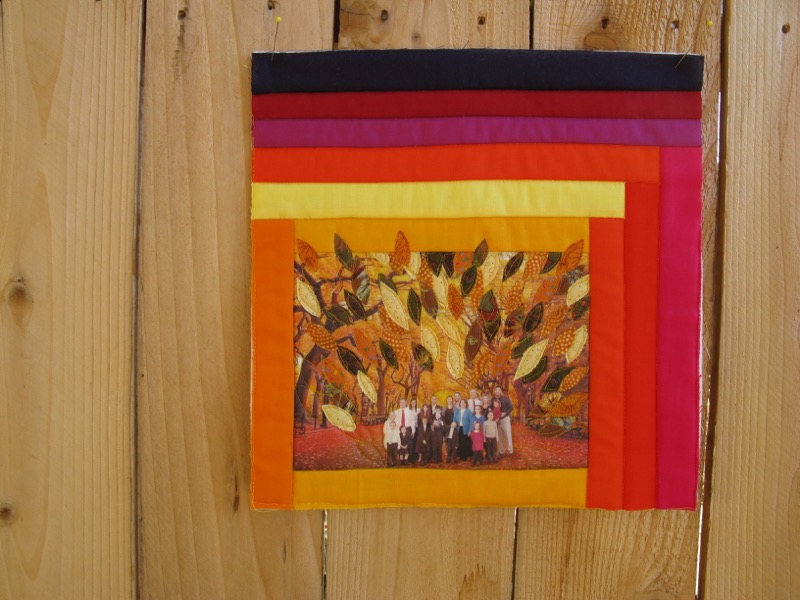
I close out the Literature Series with another poem, a famous poem, by Robert Frost.  You can even guess what it is by looking at the colors, and those leaves — yes, I chose “The Road Not Taken.”

MadeDifference_1

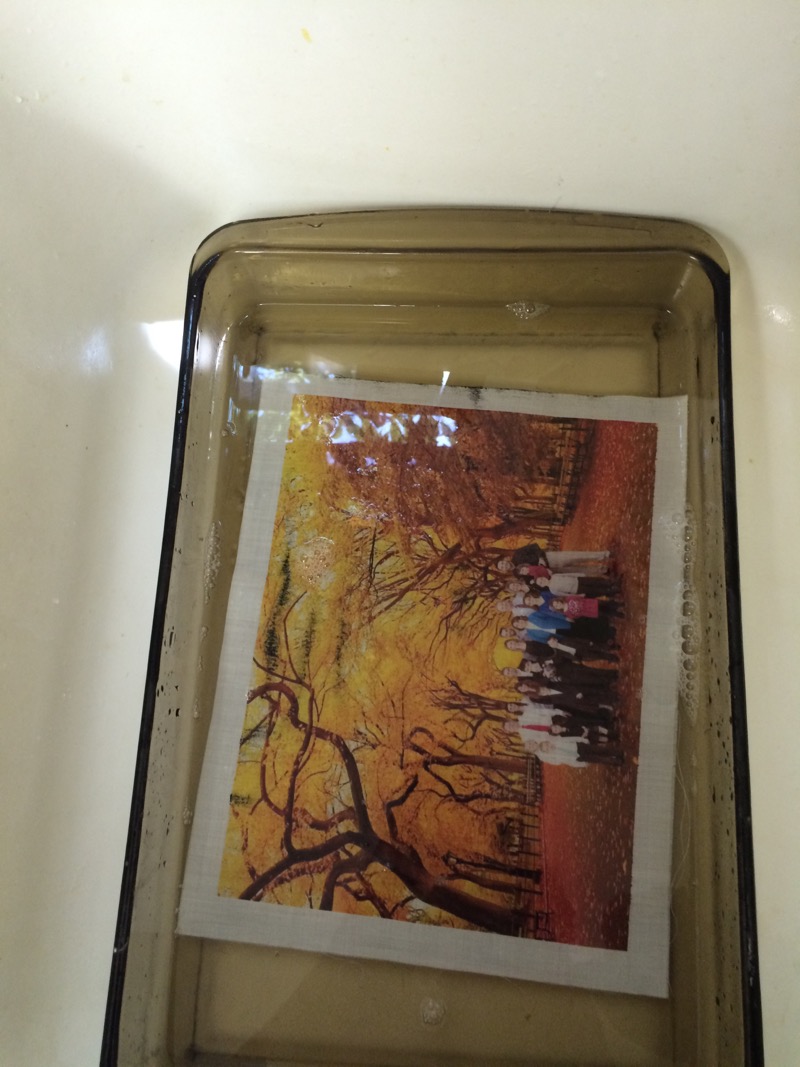
I chose a family group picture from the last time we were all together, almost 2 years ago this December, and cut-and-pasted it into a photo I grabbed from the web of a golden allee (which I think must be in New York’s Central Park).  I tweaked it, then printed it on some fabric I’d prepared with Bubble Jet (more info about that on *this* post).

MadeDifference_2

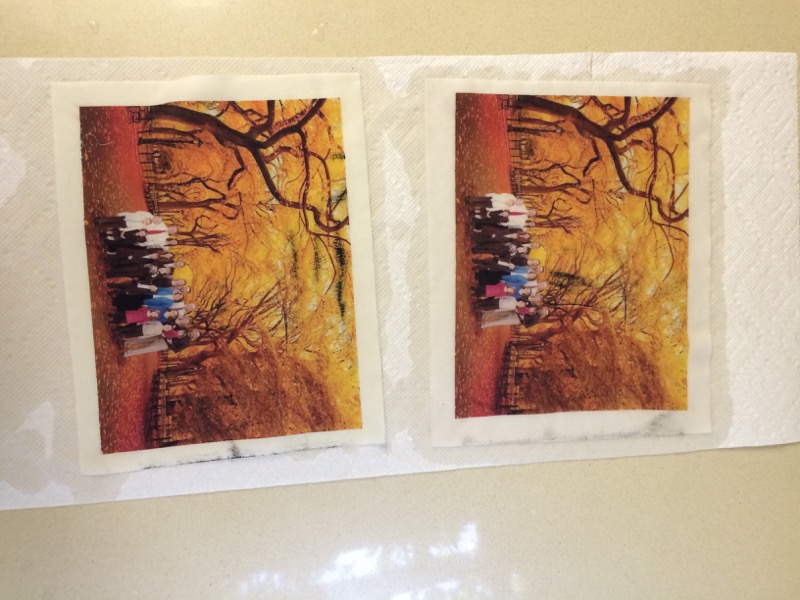
I let it dry from the printing, then set it with Bubble Jet Set, laid it out to catch the excess moisture (below), then hung it to dry.

MadeDifference_3

It needed more leaves.  So I cut out scads and scads of leaves from fabric that I’d backed with fusible webbing, and ironed them on.  I framed the photo with a partial log cabin arrangement, then quilted it.

Made All the Difference_1

In conjunction with the making of this quilt, I read the book by David Orr, The Road Not Taken, which is an analysis of this poem, which apparently most of us get wrong (sorry to be the one to break this to you).  We think it’s about rugged individualism, of the choices that we make and how we come out on top.  That idea, apparently, is routed firmly in our American way of looking at things, which is to say, that as a country, America comes out on the top in scales ranking us as the most individualistic  (only the Czech Republic was tied with us.)  And it’s certainly part of the part and parcel of this poem, when we talk about it and think about ourselves as that individual (notice how there are no other people in this poem) striding through a dappled forest, making astute and informed choices.  But really, it’s about so many things.

While there are many threads in this book, I was quite intrigued with the idea of being at the crossroads.  And in introducing that idea, Orr wonders if it’s not about the final victorious moment, but rather it is about”[t]he moment at the crossroads”. . . “in which all decisions are equally likely. We haven’t moved, we haven’t chosen, we haven’t sinned” (51).  Orr quotes the introductory note on Frost in the second edition of The Norton Anthology of Modern Poetry:” ‘The Road Not Taken’ seems to be about the difficulty of decision making but is itself strangely reluctant to resolve. It keeps us in the woods, at the crossroads, unsure whether the speaker is actually even making a choice, and then ends not with the decision itself but with a claim about the future that seems unreliable’ ” (70).

MadeDifference_backEven Frost himself, in a note to Leonidas Payne in November of 1927, writes: “My poems—I should suppose everybody’s poems—are all set to trip the reader head foremost into the boundless. Ever since infancy I have had the habit of leaving my blocks carts chairs and such like ordinaries where people would be pretty sure to fall forward over them in the dark. Forward, you understand, and in the dark” (53).

Forward and in the dark is about how I feel about many decisions I make, but the quality of individualism whispers in my ear at all times: I am the one who can see clearly to choose, as if the “I” was unchanging, solid, rooted in bedrock.  Yet doesn’t the choosing change us?  And then doesn’t every choice become monumental?  Orr agrees, saying that “If we can’t persist unchanged through any one choice, then every choice becomes a matter of existential significance—after all, we aren’t merely deciding to go left or right; we’re transforming our very selves” (60-61), which is one aspect of what the poem is about: choice is slippery and transformative, yet a constant in our lives.

Made All the Difference_2

However you think about it, I did make a significant choices some twenty-six years ago to marry my husband, to join with him in raising the four children I brought with me out of a period of loss and devastation, and in doing so I not only changed my life, but the lives of the children.

And that has made all the difference.MadeDifference_back

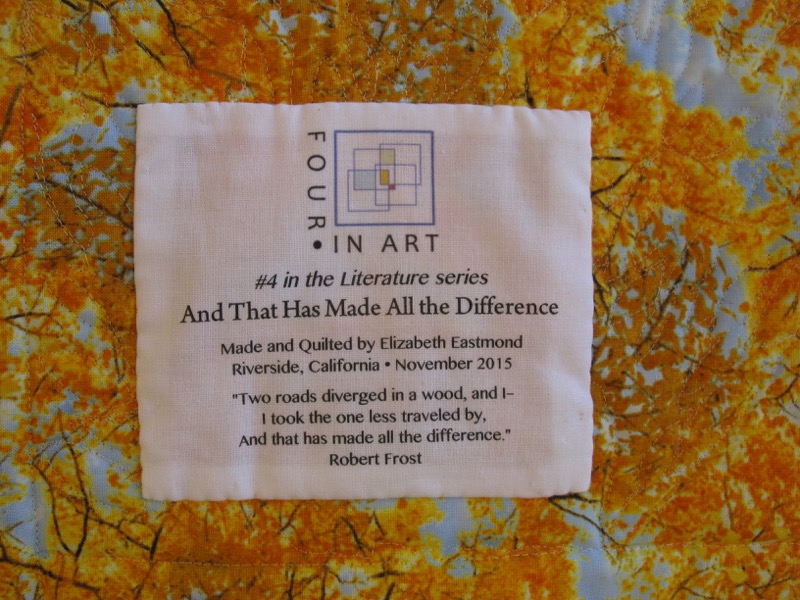
MadeDifference_label

“The Road Not Taken,” by Robert Frost

Two roads diverged in a yellow wood,
And sorry I could not travel both
And be one traveler, long I stood
And looked down one as far as I could
To where it bent in the undergrowth;
Then took the other, as just as fair,
And having perhaps the better claim,
Because it was grassy and wanted wear;
Though as for that the passing there
Had worn them really about the same,
And both that morning equally lay
In leaves no step had trodden black.
Oh, I kept the first for another day!
Yet knowing how way leads on to way,
I doubted if I should ever come back.
I shall be telling this with a sigh
Somewhere ages and ages hence:
Two roads diverged in a wood, and I—
I took the one less traveled by,
And that has made all the difference.

MadeDifference_front

FourinArt_2105

Here they are together.  Somehow I need to stitch them together and meld them together into one quilt.

Tiny Nine-Patch

About Us: We live all over the world, from Scotland and Australia to the continental United States.  Our blog is *here.*  Please visit the other members of our Four-in-Art Group and see their Literature Art Quilts:

Betty at a Flickr site: http://www.flickr.com
Catherine  at Knotted Cotton (delayed by house flood; will post later)
Nancy at  Patchwork Breeze
Susan at PatchworknPlay
Tiny Nine-Patch
Next reveal date is February 1st, 2016.  We have had a series of emails amongst ourselves, clarifying where we want to go in the next year, and found again our desire to keep working together.  Rachel is now the head of our group, and we will have a new theme and quarterly challenges.  Stay tuned.
4-in-art_3
Quilts

The Woods Run Mad With Riot: A Four-in-Art Quilt

4-in-art_3Mad With Riot_frontlabeled

The Woods Run Mad With Riot
A Four-in-Art Quilt, August 2015
#3 in the Literature Series

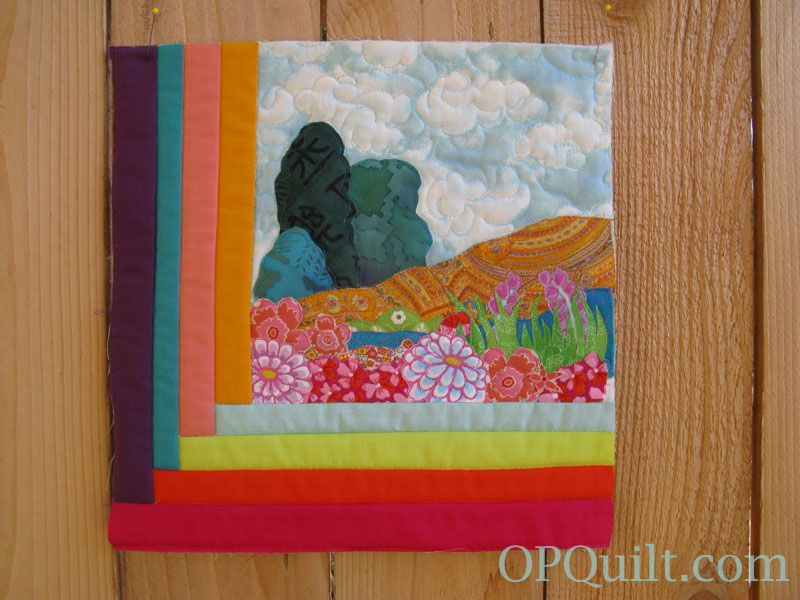
As always, my exploration of a subject in this series starts with the literature, and the poem I had originally chosen just wasn’t cutting it.  It didn’t evoke that hot, slightly wild feeling that day after day of hot weather can produce, when even Mother Nature seems slightly out of control, patting her damp forehead with a handkerchief, swooning slightly at how overcome her gardens are, the tempo and volume of the cicadas and crickets and birds, and wondering if she’ll last out the heat.  THAT kind of evocative.

So I went hunting and found a new poem that did the trick:

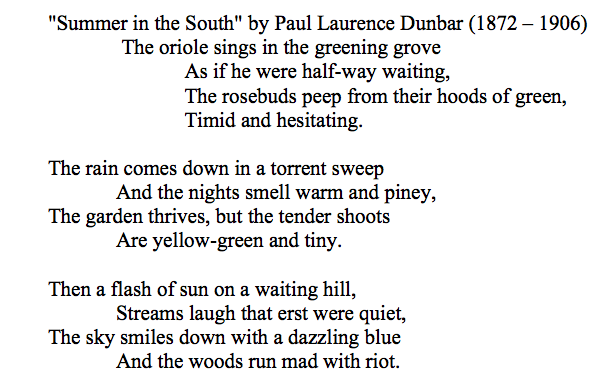
Summer in the South

And how in heaven’s name could I pass up a poem that had such a great closing line: “the woods run mad with riot”?  So that became the title of this piece — immediately — and I tried to figure out how to express this in fabric.  While I normally do a deconstruction post after my reveal post, I’m combining them into one this time.

MadRiot_1

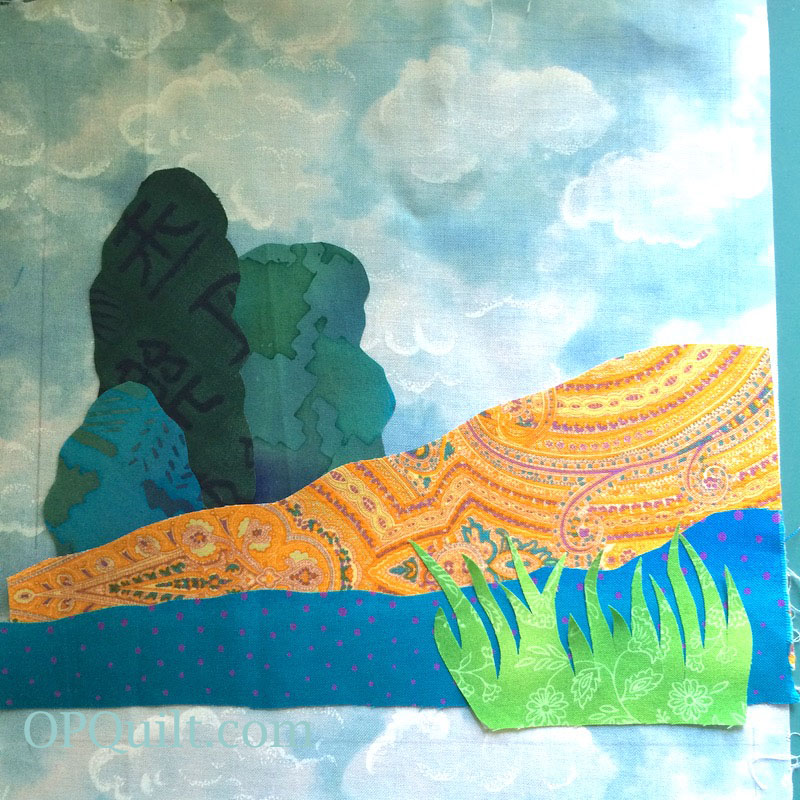
The trees in the background would have to be slightly oppressive, the sky colors clear, not soft or muddy, and when I found this great paisley fabric in gold, things just started to gel, as I thought it looked like a field crisping up, the tractor marks a design in the tall wheat fields.  Or whatever fields.  The poem has a line about shoots being “yellow-green” and there’s something about water, so here we go.  I used SoftFuse Premium this time, my new go-to fusible for fabric.  I pressed the paper-backed fusible to the back of the fabric, let it cool, then free-form cut the shapes, remembering to work backwards visually, so it would come out correctly after I peeled off the paper.  (Note: In other quilts, I have peeled off the backing and cut what I needed freehand, without using the paper for drawing. Here are some tips for using SoftFuse Premium from Marti Michell’s blog.)

MadRiot_2

I thought about borderie-perse, that method of appliqué that has always seemed to me to be rich and visually saturated, and since this poem is leading me onward, I turned to this technique, cutting around blossoms and wads of flowers and slipping them into place to build up my scene.  The SoftFuse is slightly tacky on the back, sort of like a Post-it note, so I can stick it down and it won’t move, yet I can reposition it when I need to.

MadRiot_3

I know that I will be adding log-cabin-type strips to the edges; here I’m auditioning colors.

MadRiot_5

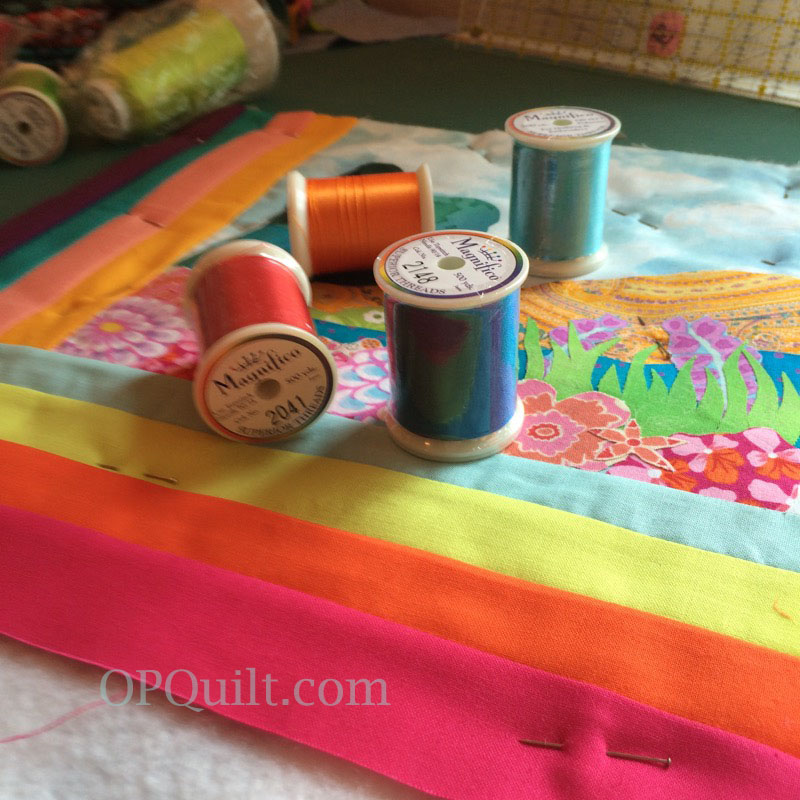
I sewed the strips on the edge, then auditioned threads for quilting.  I’d picked up quite a few Magnifico spools from Superior Threads, a mid-weight poly thread with a lovely sheen and I just have to say I love this thread.  I use Bottom Line in the bobbin, lower my thread tension by half (from the 4.2 range to the 1.9 range) and it all quilts up beautifully.  I stitch around all the flowers, put a bit of quilting in the stream and field, and quilted around the clouds.

MadRiot_4

Time to trim.

Three of Four

Here it is with the other two, already done.  I can already see that the last piece is going to need to be bold as well.  And I may have to rework Winter a little bit.  Hmmm. . . not while it is so sweltering hot.  I need to just sit on my porch, letting the afternoon breezes cool this place down, sipping something cold and icy and refreshing, while fanning myself with a wide-bladed palm leaf fan, swooning a bit.  It’s that kind of a hot summer!

Mad With Riot_back

Mad with Riot_label

Tiny Nine-Patch

About Us: We live all over the world, from Scotland and Australia to the continental United States.  Our blog is *here.*  Please visit the other members of our Four-in-Art Group and see their Literature Art Quilts:

Betty at a Flickr site: http://www.flickr.com
Catherine  at Knotted Cotton
Nancy at  Patchwork Breeze
Simone at Quiltalicious
Susan at PatchworknPlay
Tiny Nine-PatchNext reveal date — the final in our Literature series — is November 1st.
4-in-art_3