
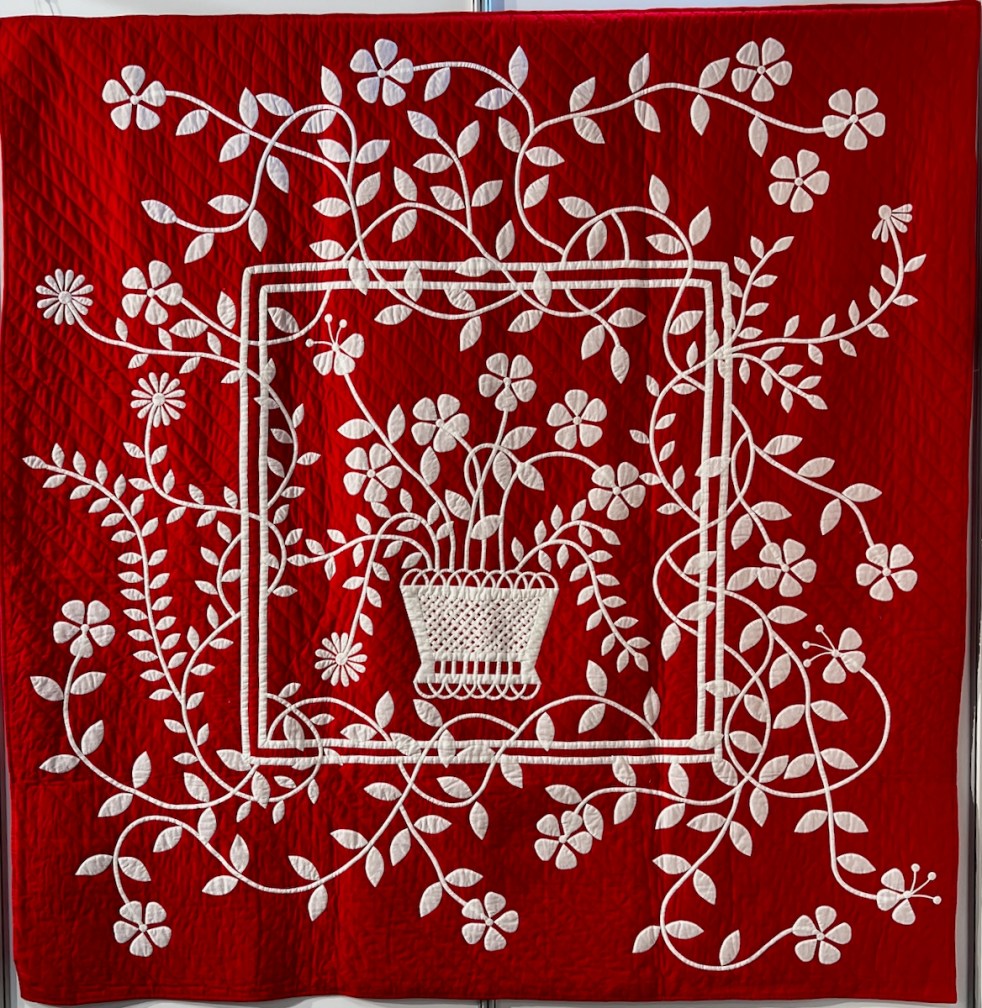
This post about the Carrefour European Patchwork show 2025 covers:
• Venue 10: Chapell St. Blaise, with Tania Tanti
• Venue 11: Église St. Nicolas, with a quick look at embroideries sponsored by Guldusi
• Venue 12: Salle Des Fêtes, with Fiona Lindsay, Jenny Bear, Hae Ok Chang, Patchwork Association of Kazakhstan
I have a main Carrefour Quilt Show page that lists all the posts of all the meetings I’ve gone to, and includes the posts from this year too. If I haven’t mentioned it before, you might enjoy these posts more if seen on a desktop computer or even a tablet. Cell phones re-format the layout and can sometimes do strange things to how it looks on the screen.
If you are interested in going to Carrefour, I wrote two posts for them about our travel, and how we put the trip together. You can find them here and here. Their main website is HERE, where you can subscribe to their newsletter (scroll to the bottom).
–––––––––––––––––––––––
Now that the orientation is complete, the story is that last year my husband and I had a chance to go to the Carrefour European Patchwork Show in the Silver Valley, near Colmar France. That’s called the Val d’Argent, in France in the Alsace region, and yes, there is great food and beautiful countryside. One of the things we like about this show is that is spread out over four small towns in the valley, and they use churches and community centers and municipal buildings, so you really get a feel for being in that area.
Venue 10: Chapell St. Blaise
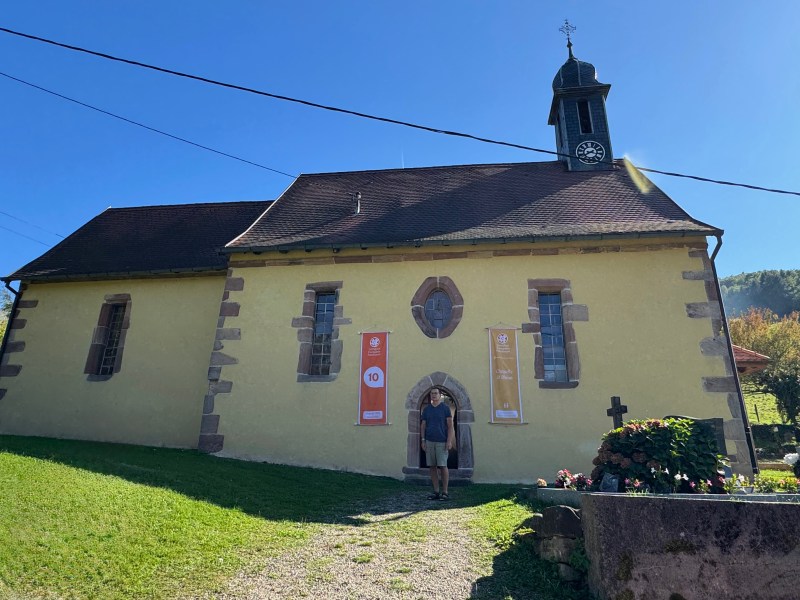
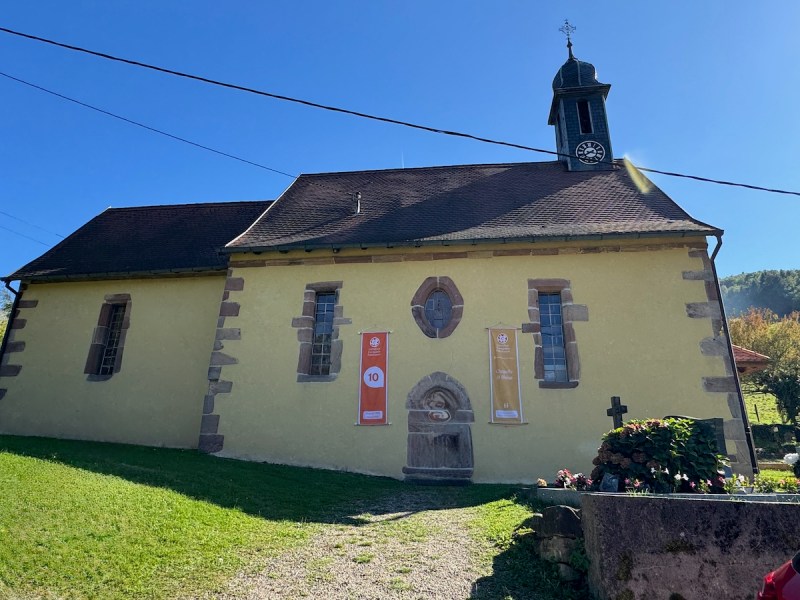
Venue 10 is a small little chapel, the Chapelle St. Blaise, basically a one-room church. I stood there for a long time but that man wouldn’t move from the doorway…so I erased him. (!) Let’s see if this video will embed:
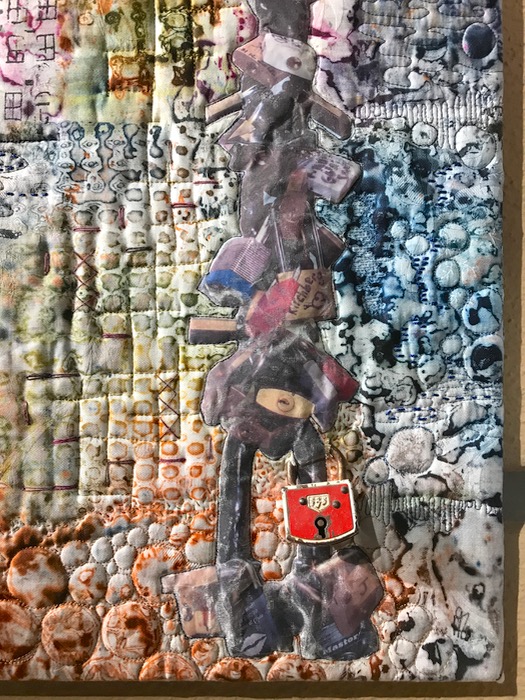
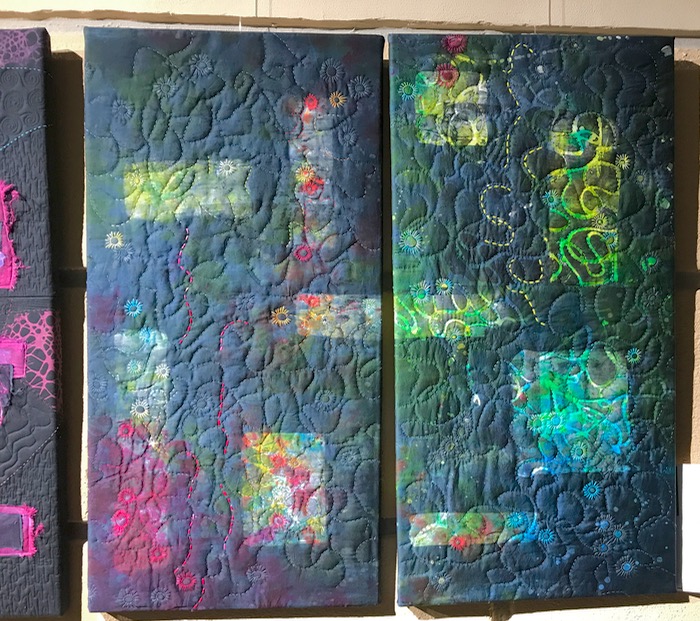
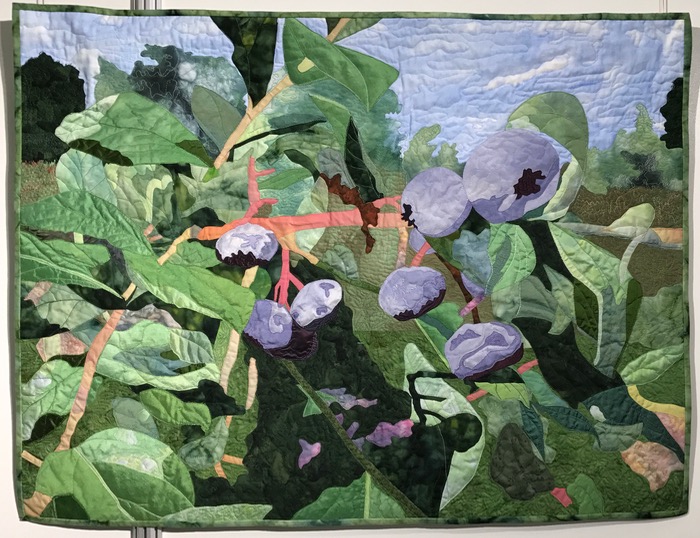
Click on image to start the movie. The voice you hear is the artist, Tania Tanti, talking to some quilters about her technique. Now to see some of her quilts. Many are not pieced, but instead are painted with textile paints then quilted and embellished.
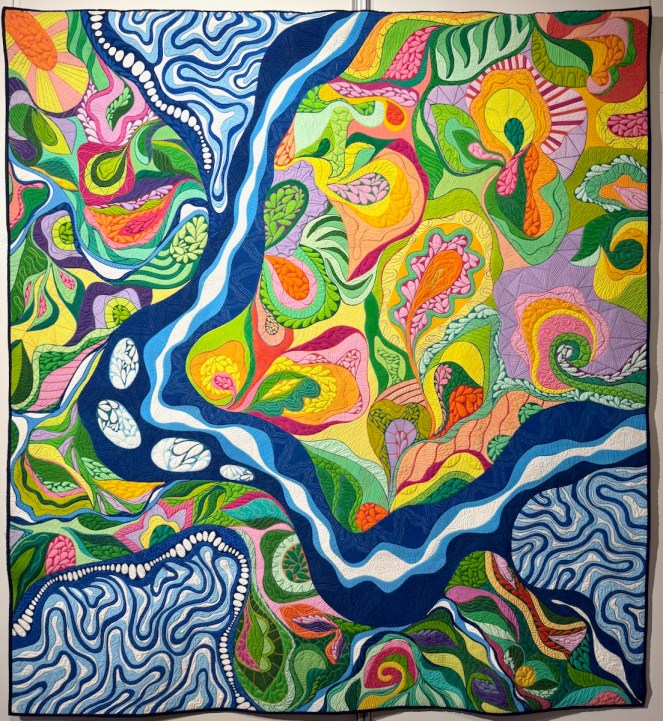
The is quilt that starts the movie, above.
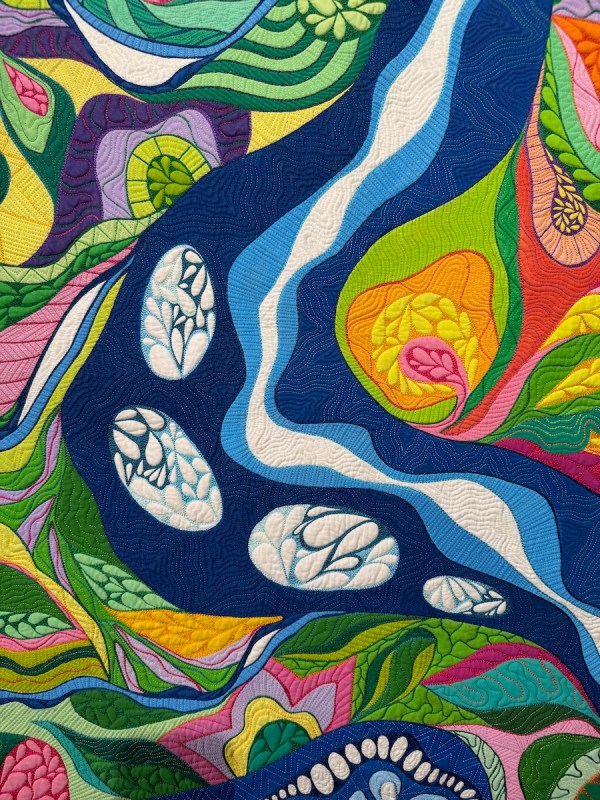
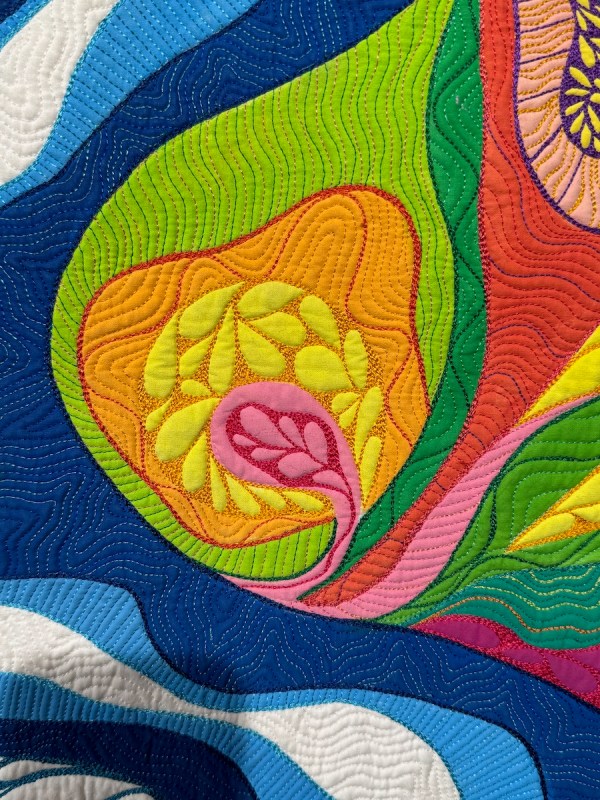
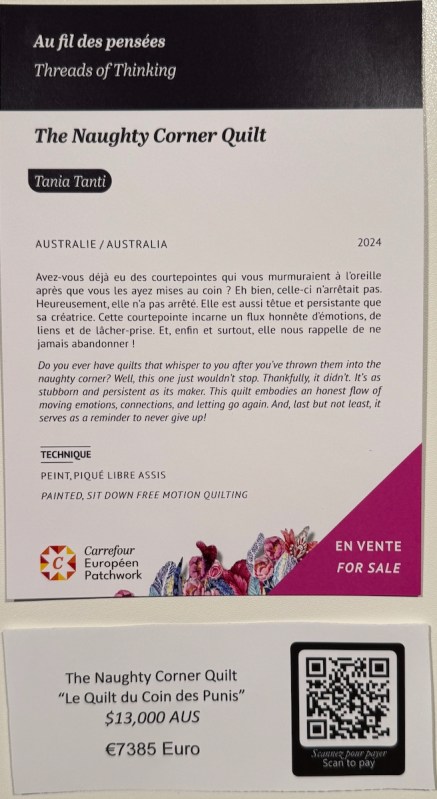
Click on any photo to enlarge. I took detail shots so you could see the amazing amount of work in each of her pieces.
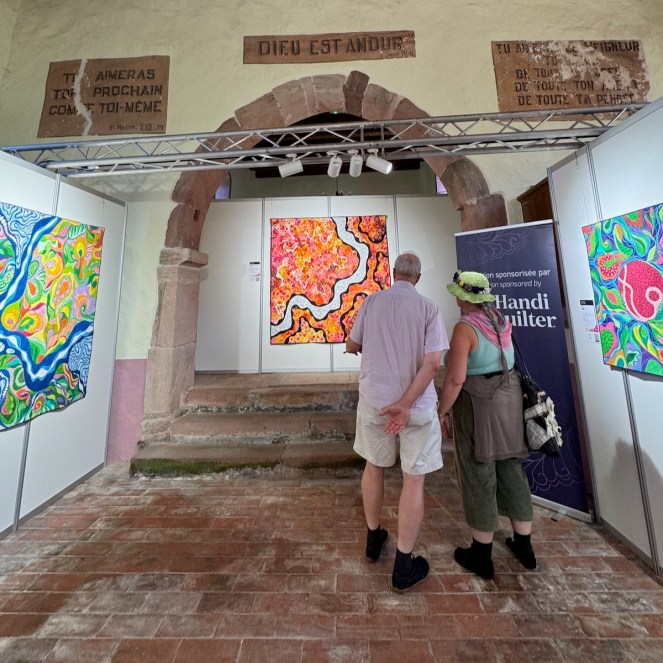
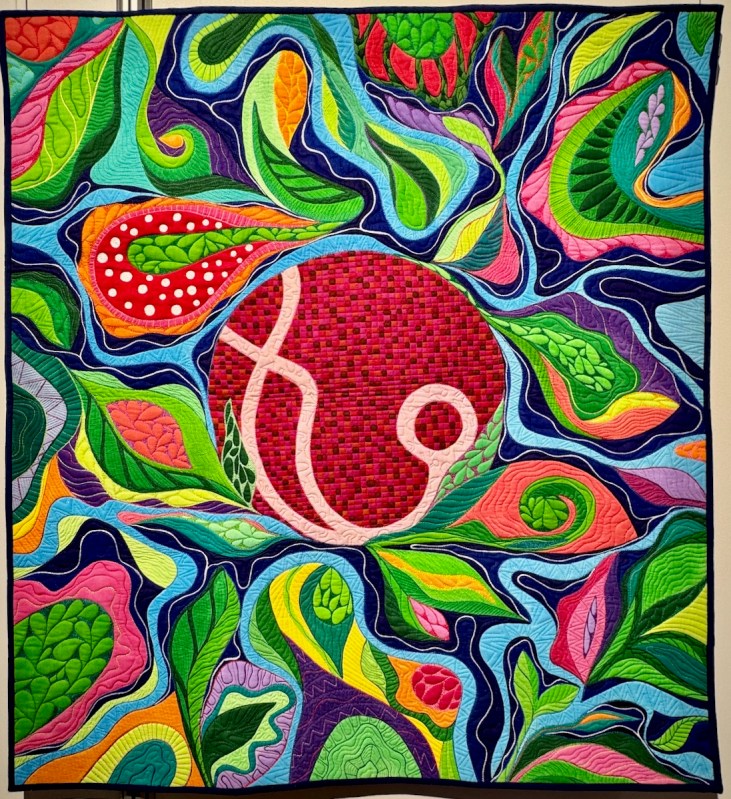
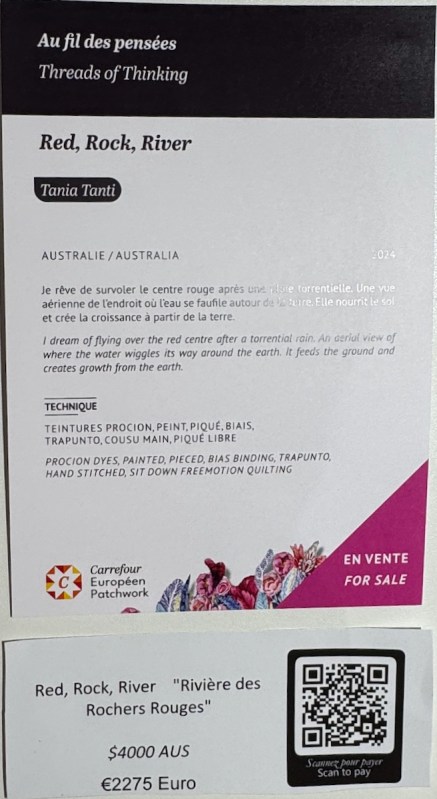
Please click if you want it larger.
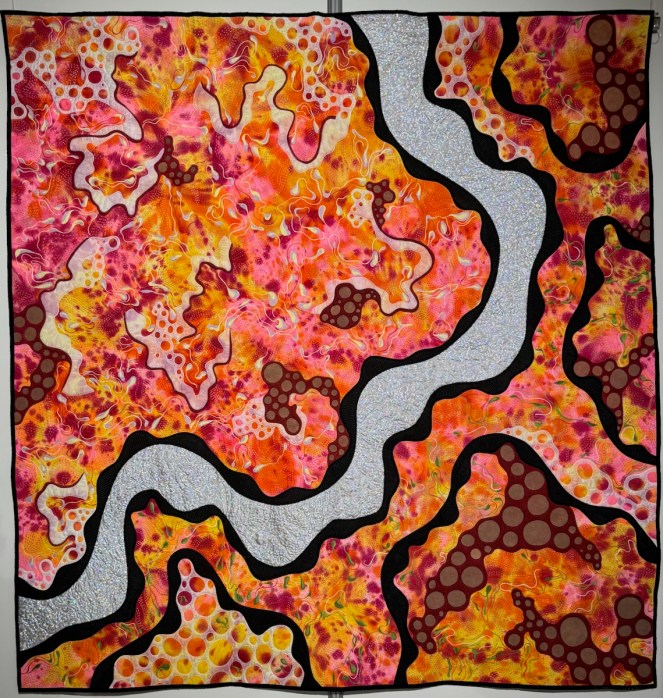
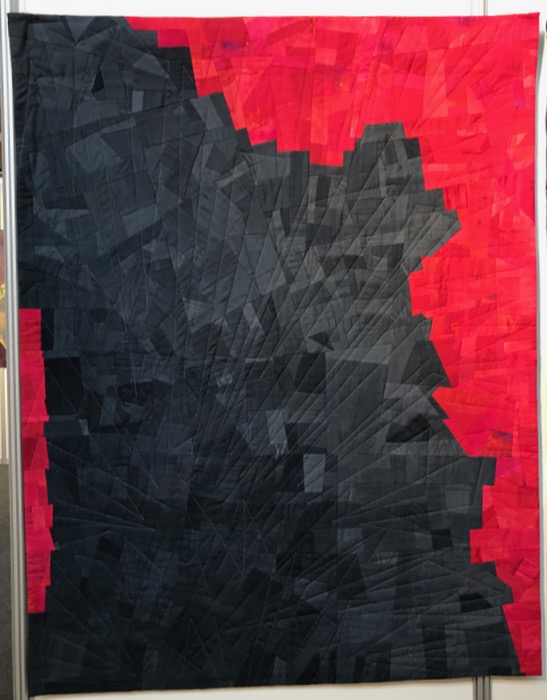
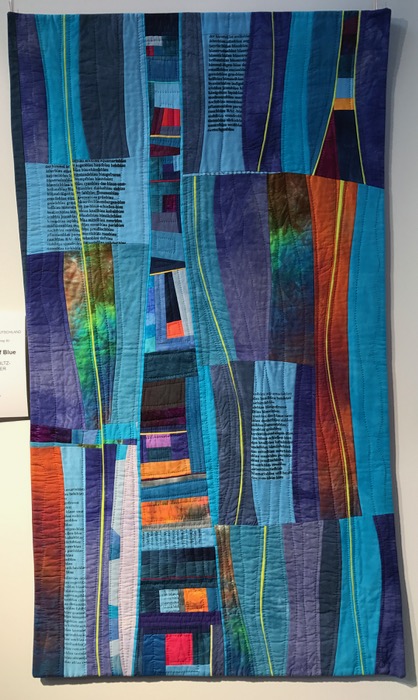
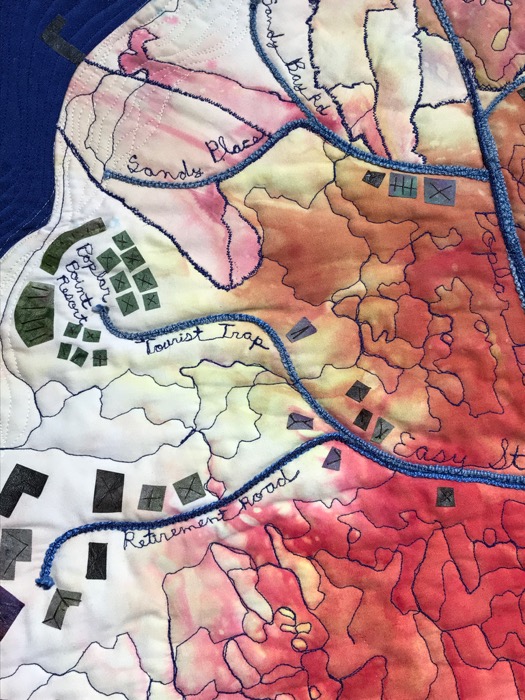
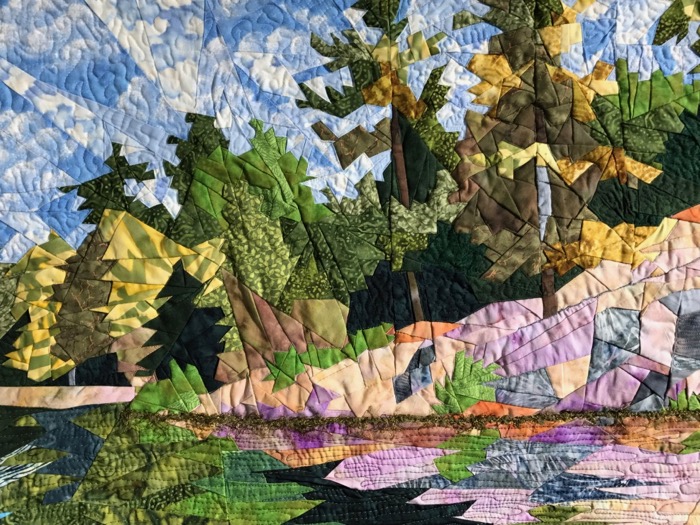
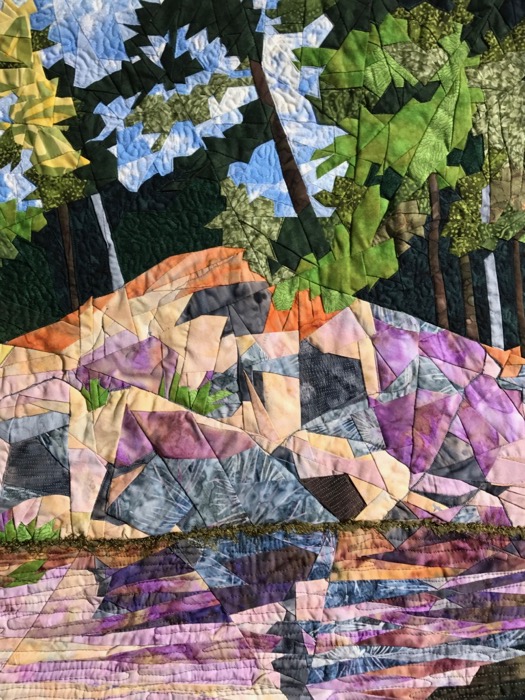
Red, Rock, River by Tania Tanti. She writes: “I dream of flying over the red centre after a torrential rain. An aerial view of where the water wiggles its way around the earth. It feeds the ground and creates growth from the earth.” In her technique section she writes: “Procion dyes, painted, pieced, binding, trapunto, hand-stitched, sit-down free motion quilting.”
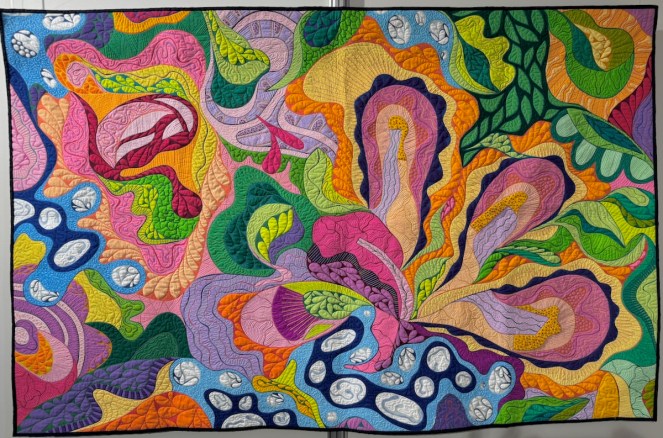
She writes: “At then beginning of this year I faced my second battle with breast cancer. As soon as I could I got back into my studio and focused on small achievements each day. This is my Recovery.” And that is the title: Recovery. Technique: Painted, free-motion quilting, hand-quilting.
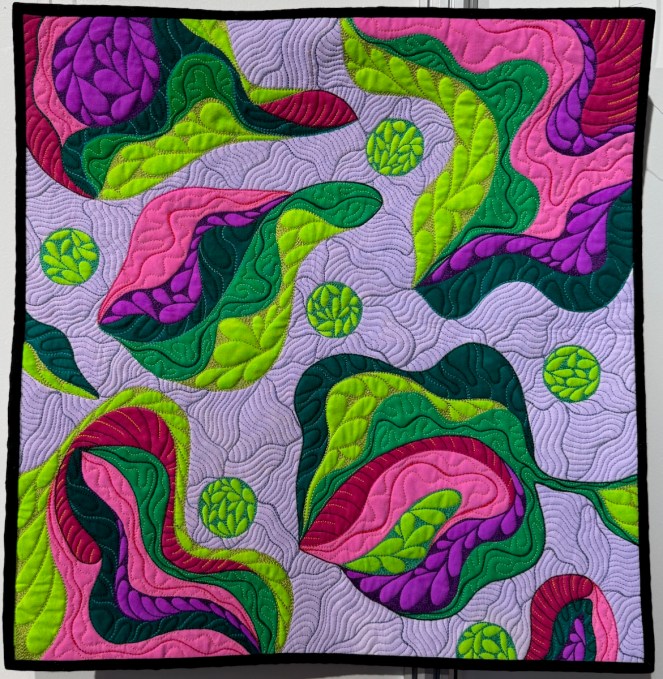
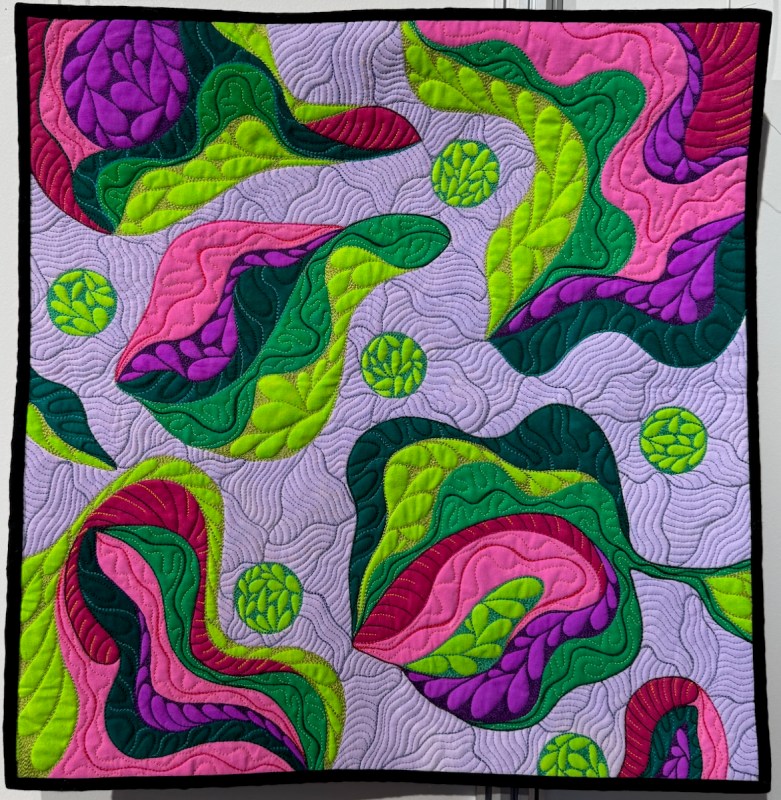
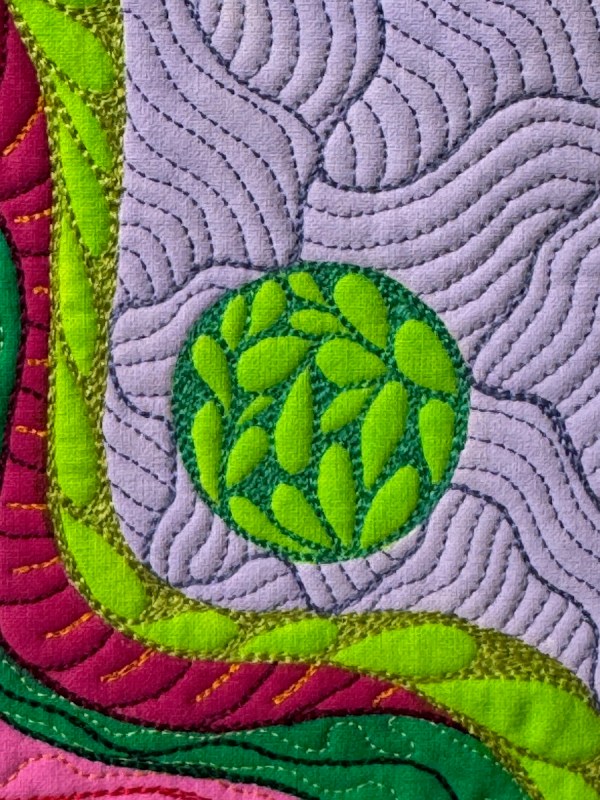
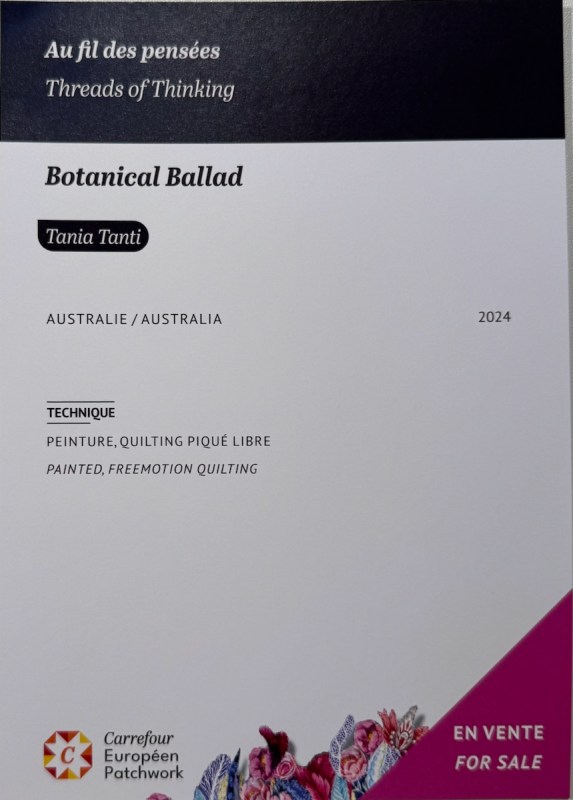
Tania Tanti is on Instagram, if you’d like to keep up with her.
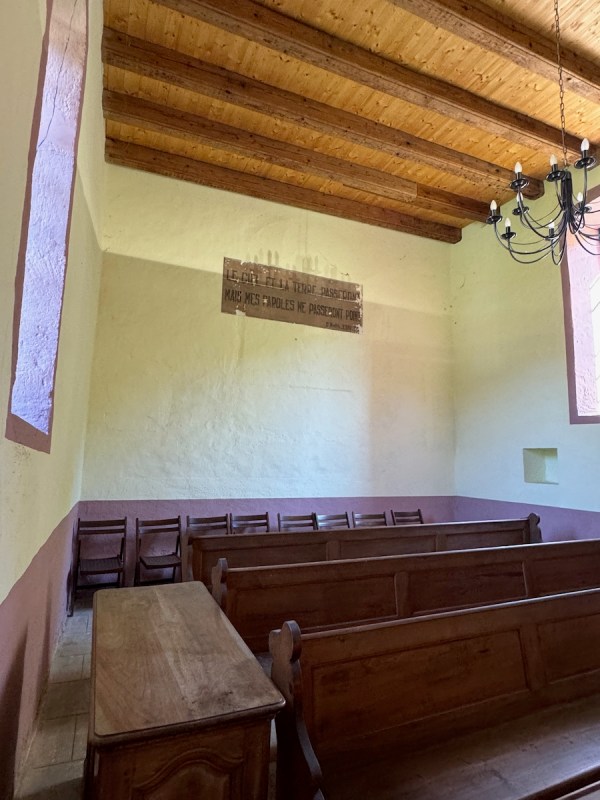
I looked behind the wall to see this spare room in this church.

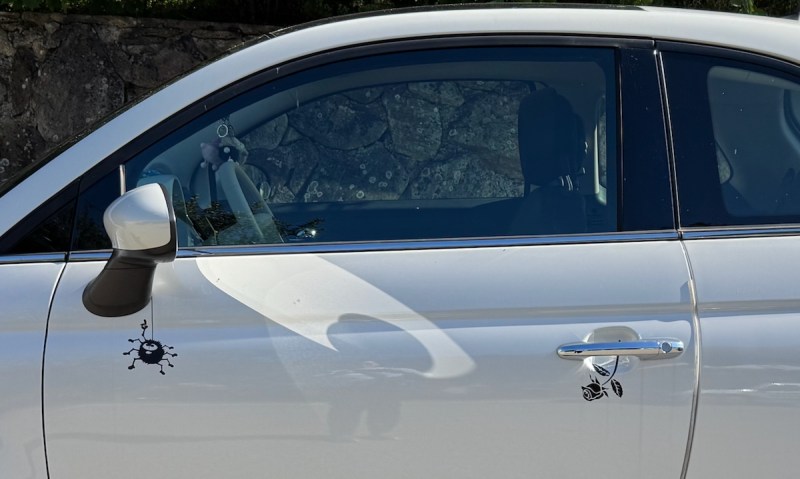
Look carefully: a spider! (not our car)
Onward, through the valley.
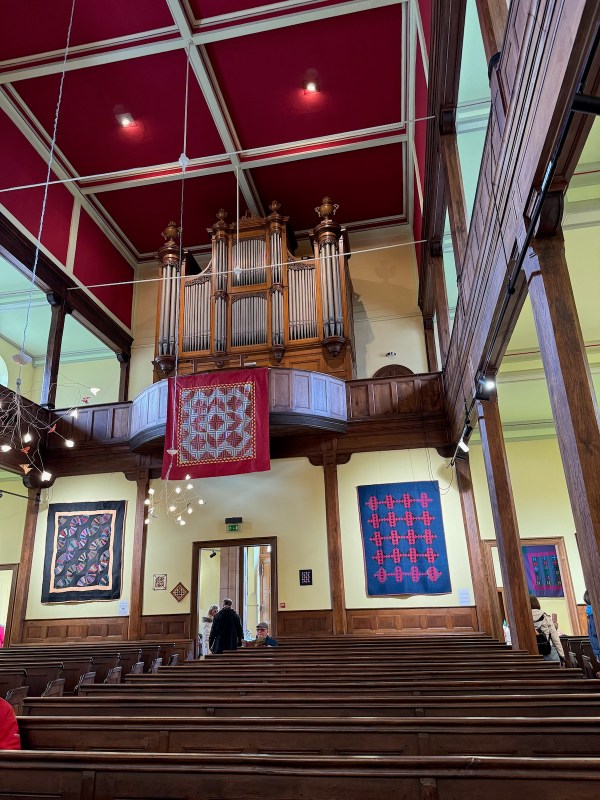
Venue 11: Église St. Nicolas
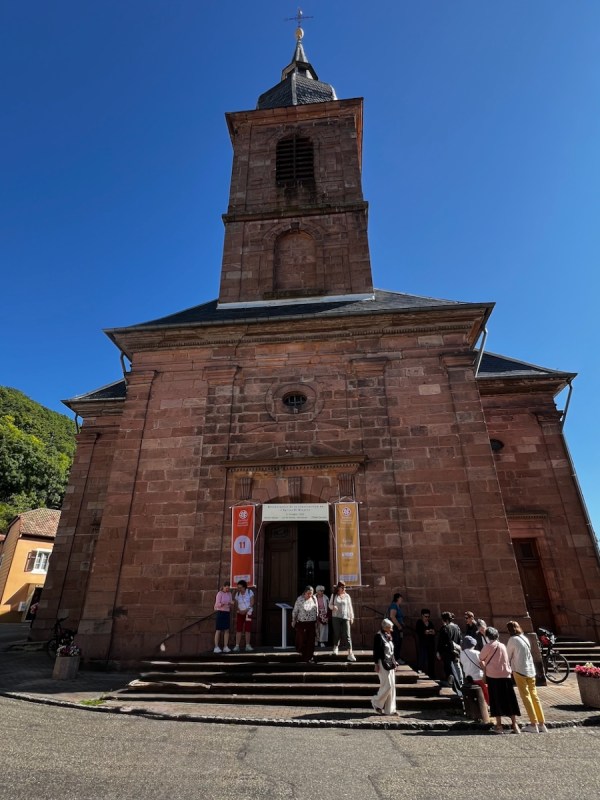
Hopefully you can hear the bells. Right after this, we went for a take-out lunch from the local market. The choices were rather cleaned out, but we found something. There were a lot of quilters there — so happy to see this!
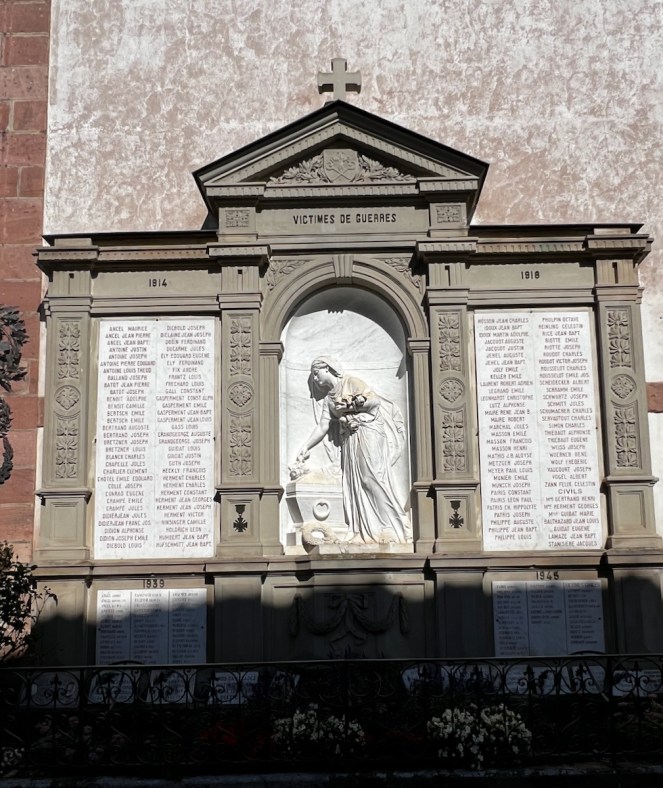
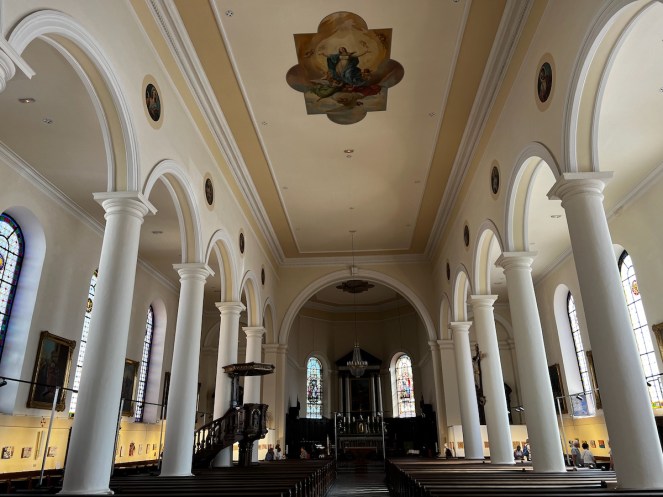
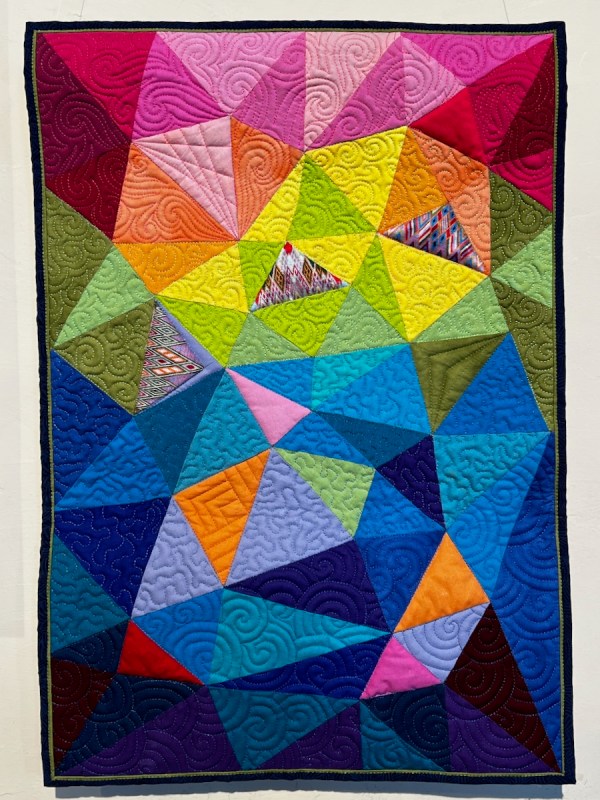
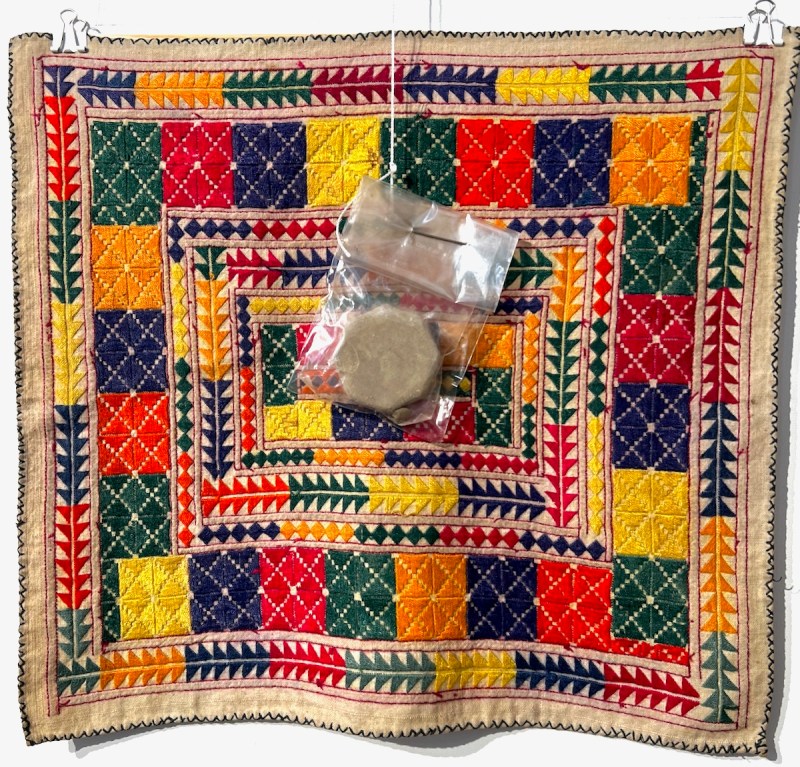
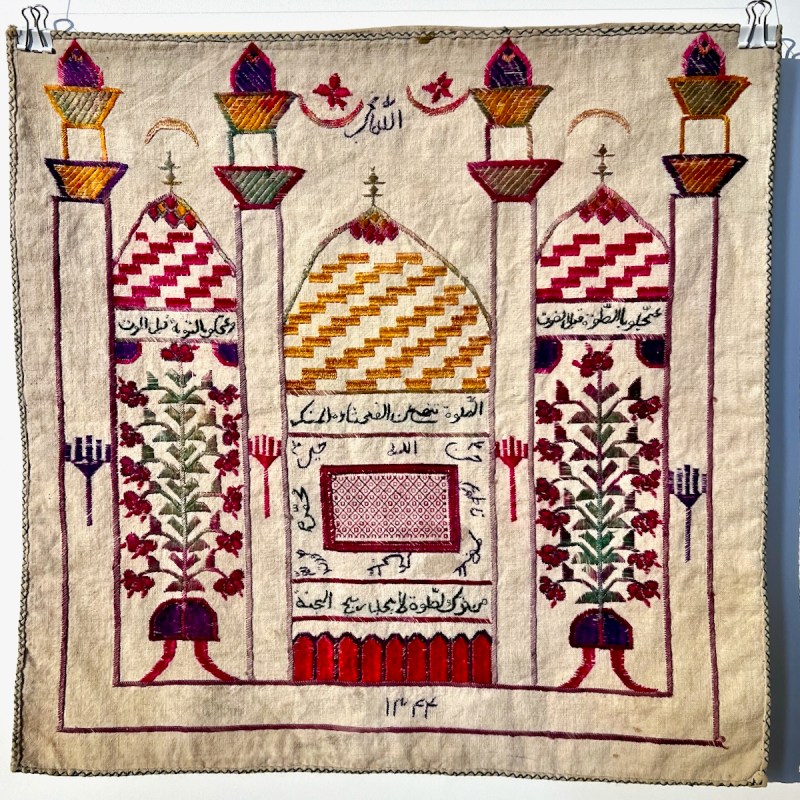
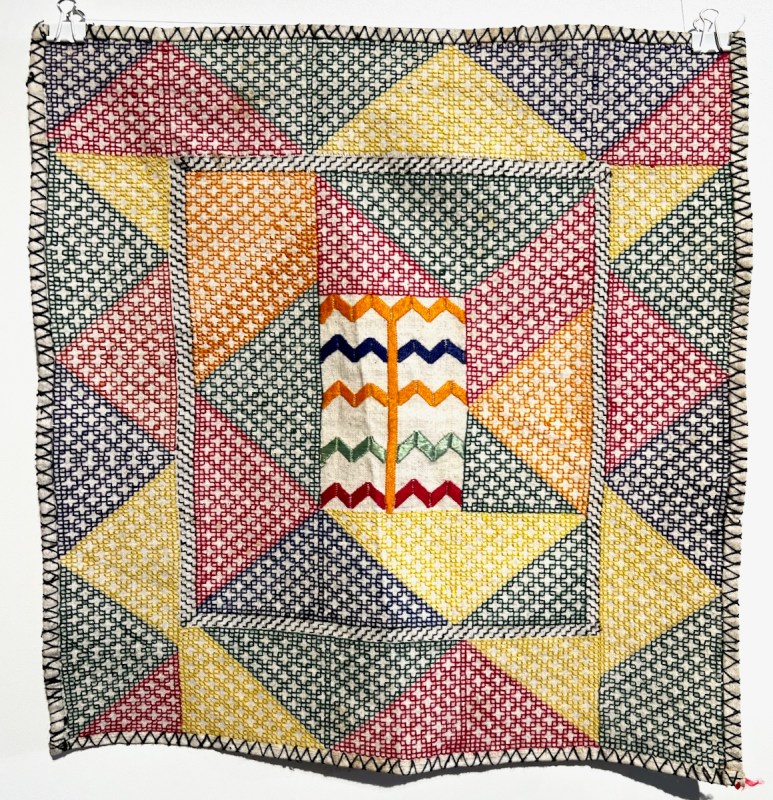
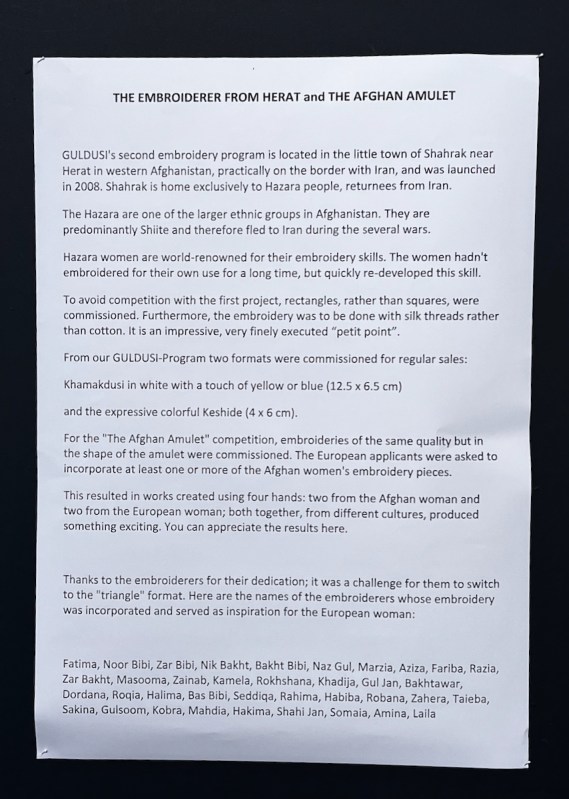
I admire and enjoy the art of these churches. The exhibit here was titled Guldisi, which is a hand embroidery program launched in 2004 (quoting from the catalogue), which “now enables 200 women in Afghanistan to support their families….Each piece will include at least one silk embroidery in the shape of a triangle, created by the Afghan Woman.
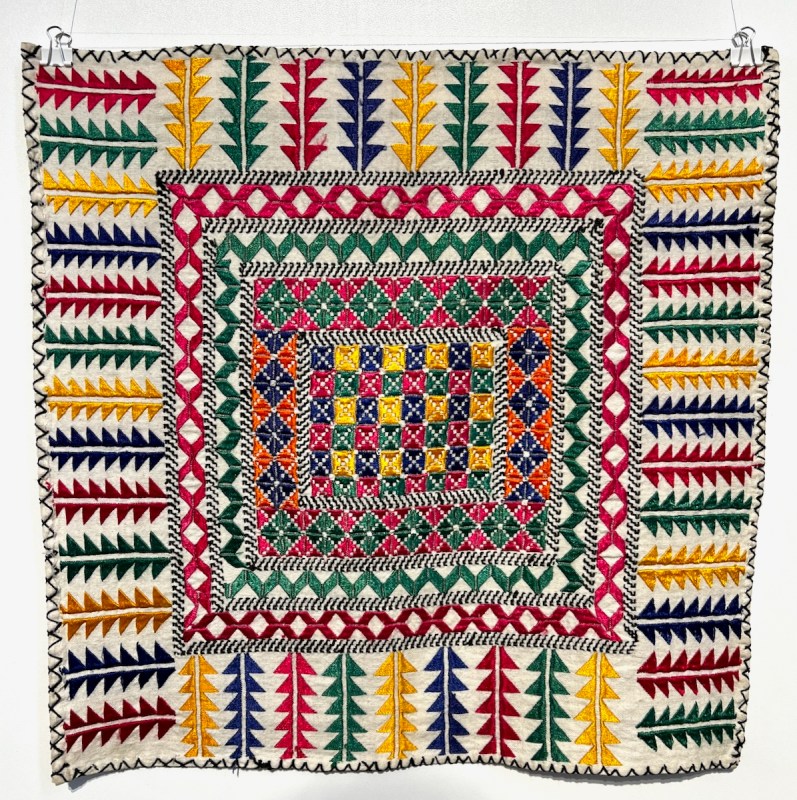
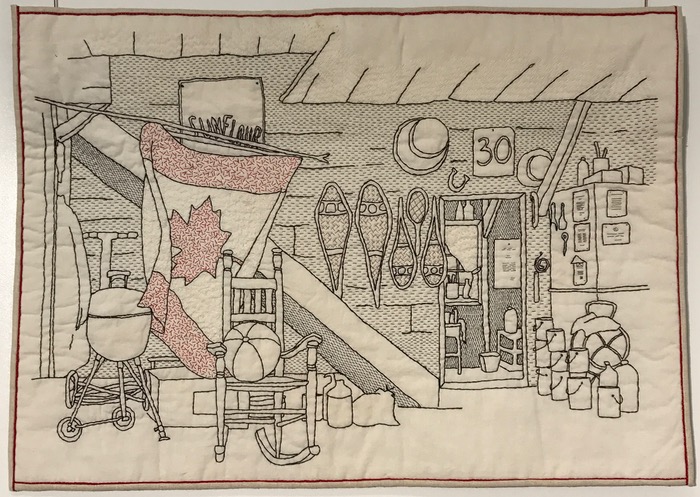
There were also many embroideries, which I found fascinating, and which included some blackwork/redwork.
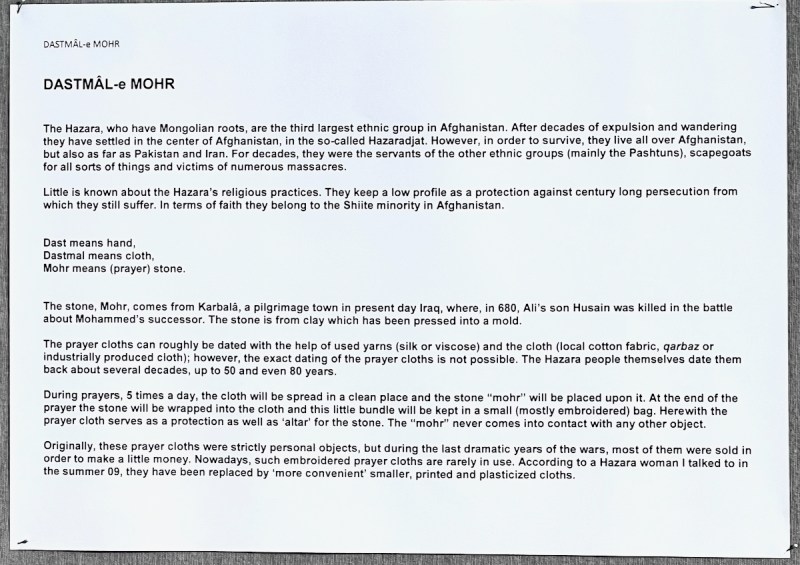
These two signs were somewhere on the wall; click to read.
Venue 12: Salle Des Fêtes
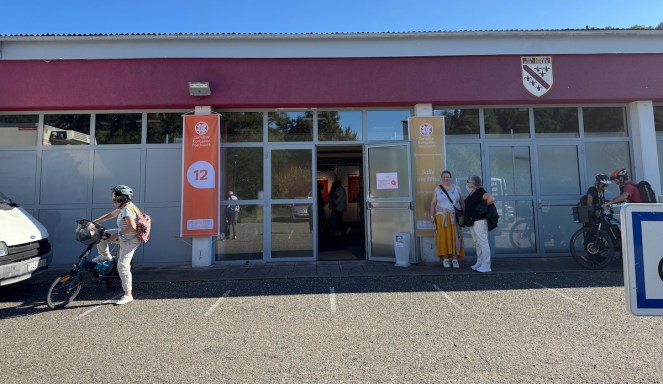
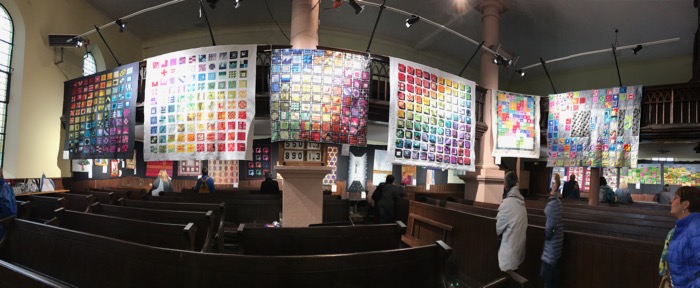
We drive to the Salle des Fétes, or the Party Room…and they are having quite the party!
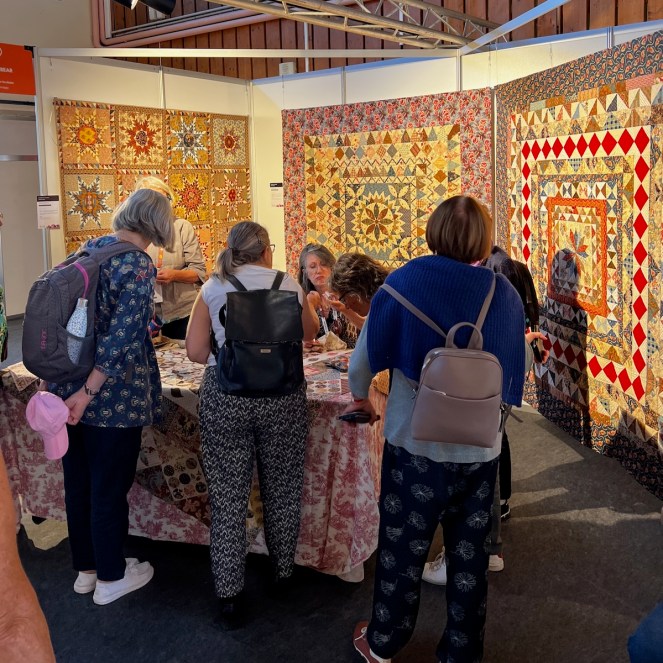
A gathering.
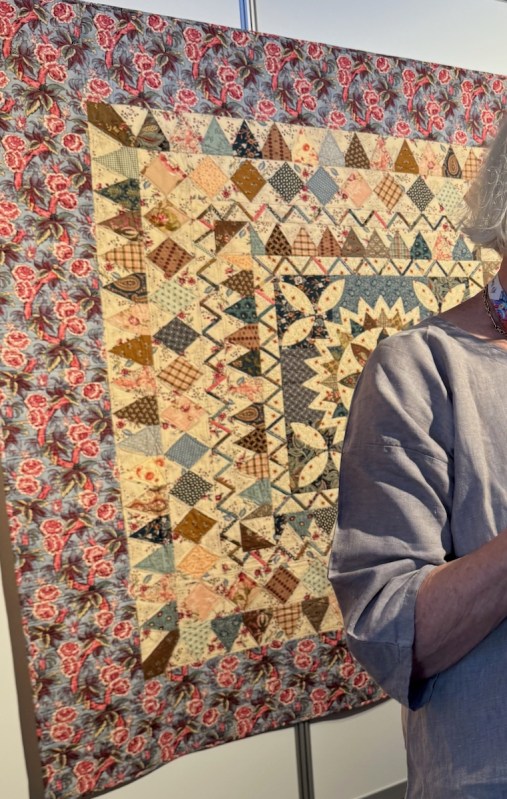
A glimpse of a quilt.
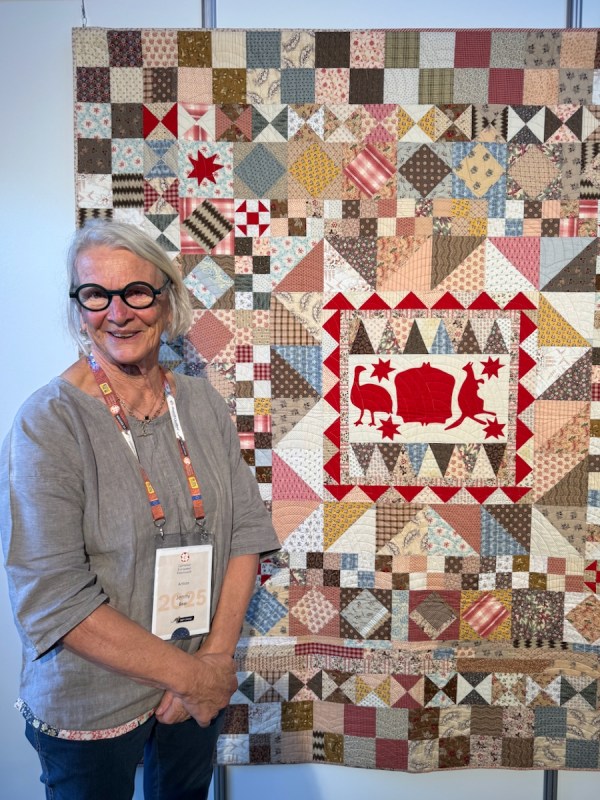
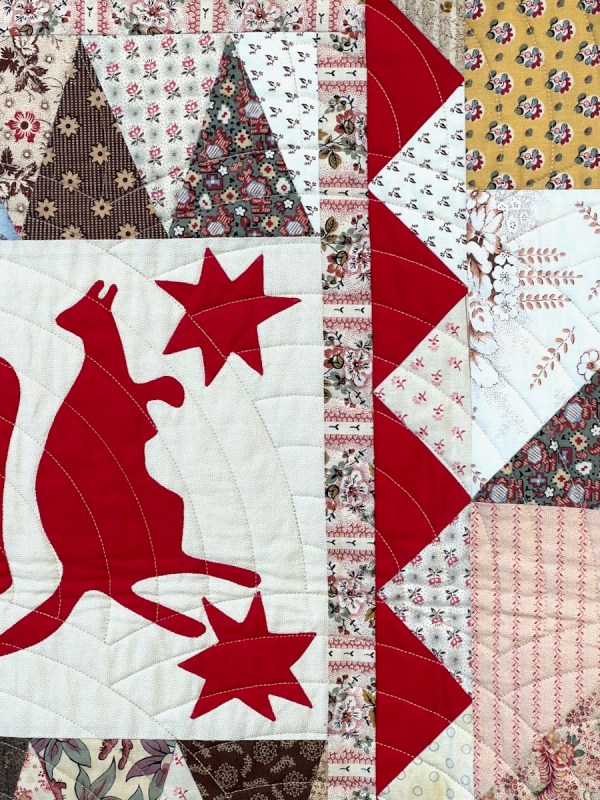
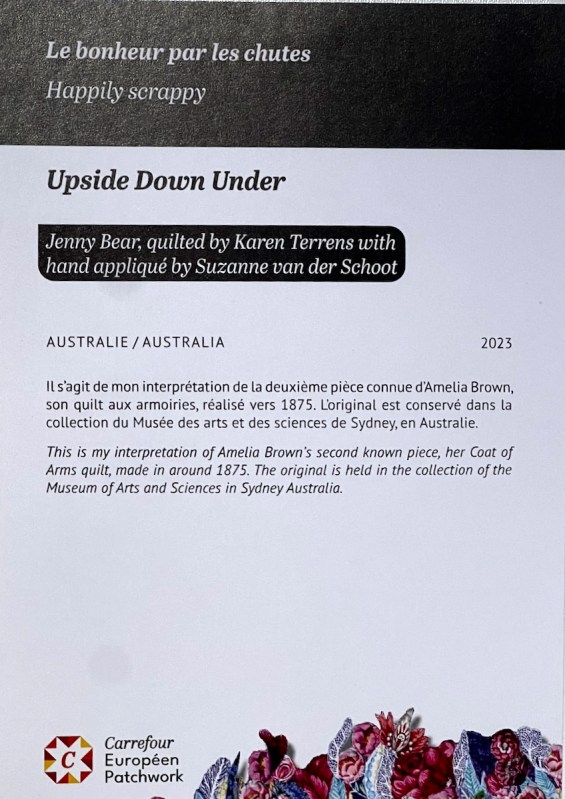
And we meet Jenny Bear! She is a renowned quilter from Australia, known for her scrappy quilts, but exquisitely put together. The catalogue called her “Happily Scrappy” and said that “Jenny’s quilts are a celebration of social history, fabric, color, frugality, and the art of making do. She loves using her stash of antique, vintage and reproduction fabrics as well as rescuing old, unquiltable or broken tops, fragments, orphan blocks and tiny scraps to make something beautiful from them. Her favorite quilts are simple, utilitarian and achievable by anyone who loves to sew.”
She “has been making quilts for more than 40 years….and after her exhibition here, she hopes that her quilt making will return to hobby level and that there may again be time for housework and gardening” (from catalogue).
Everyone was busy, but I loved that quilt on the table.
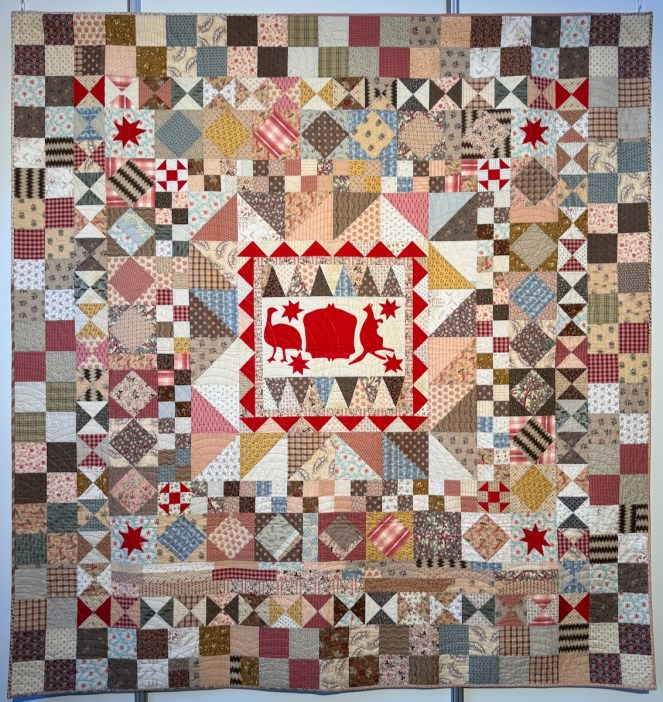
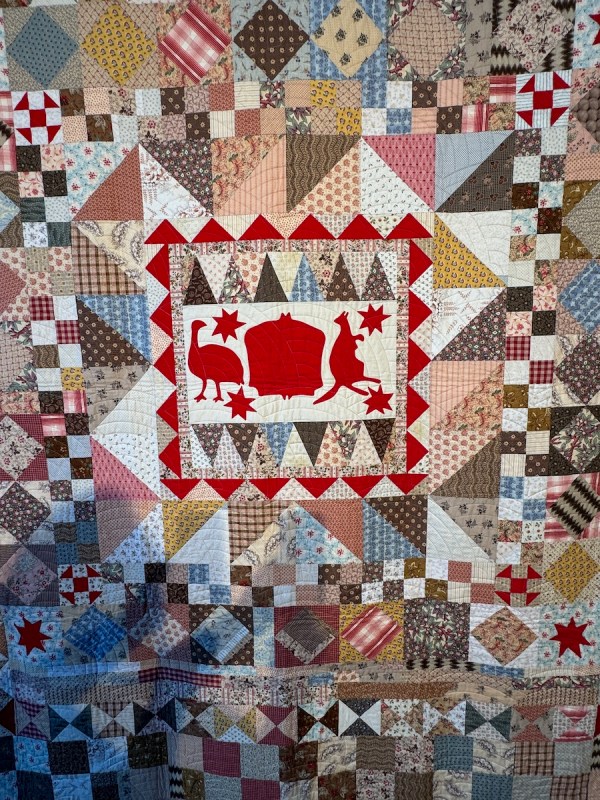
And on another table, it looked like she was creating something new:
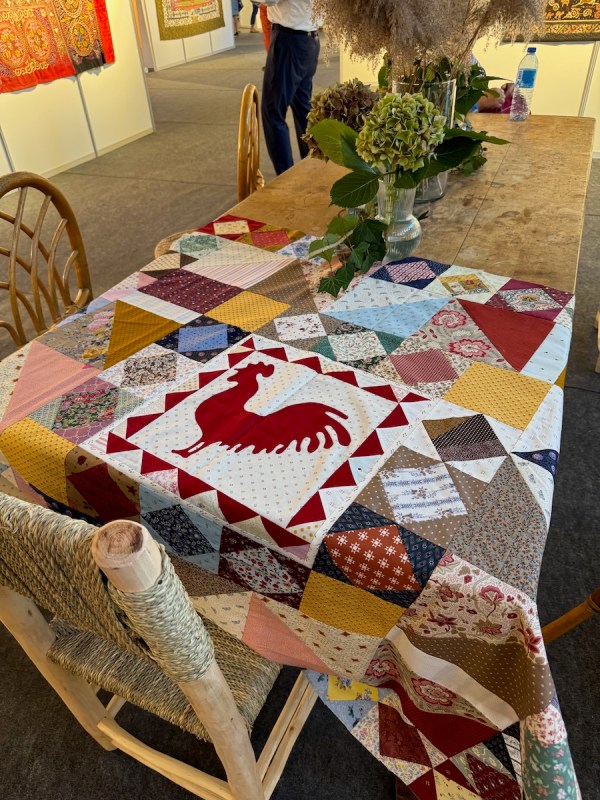
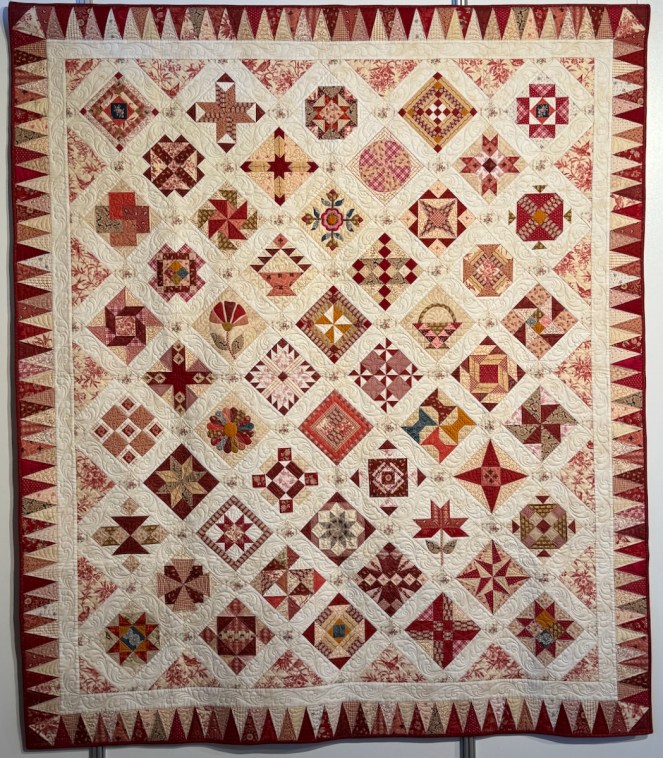
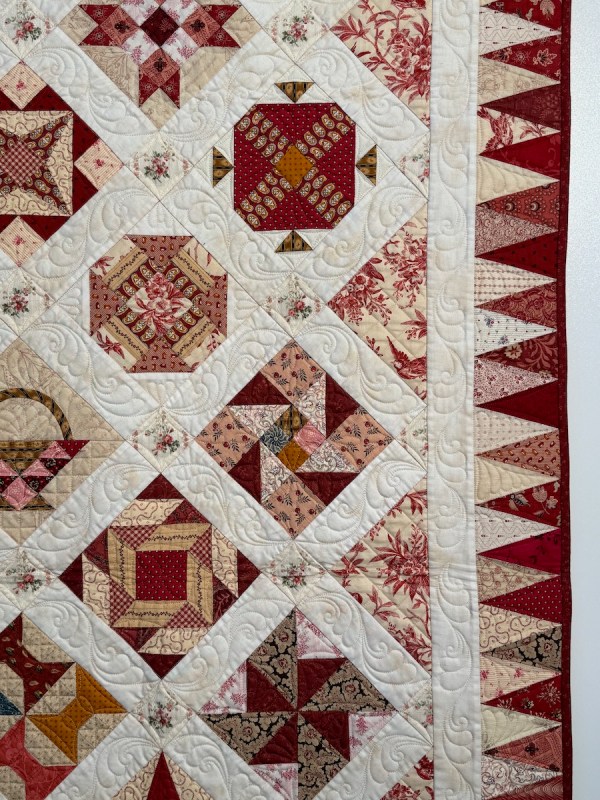
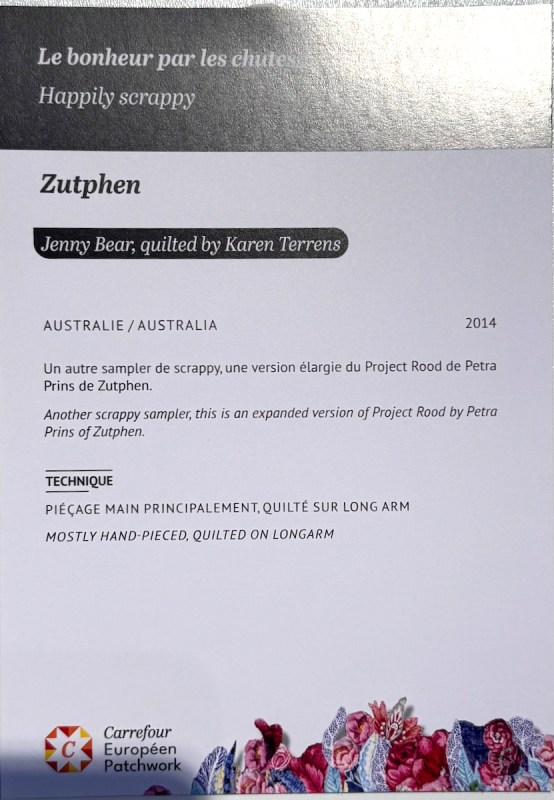
Such a rich tapestry of fabrics and piecing…it just glows.
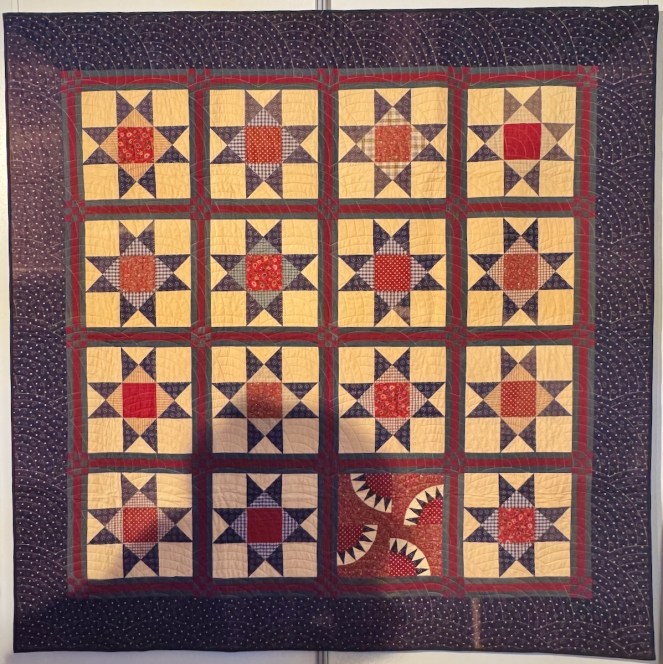
This was a favorite, but I do love stars.
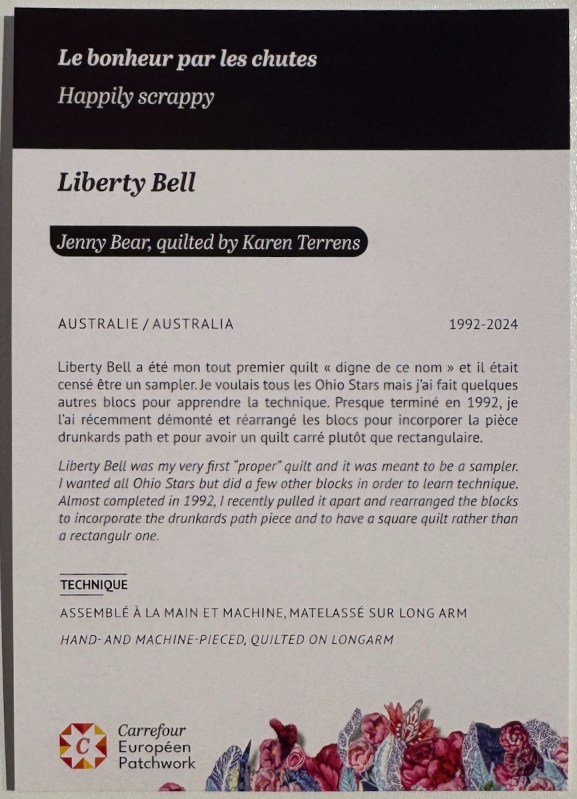
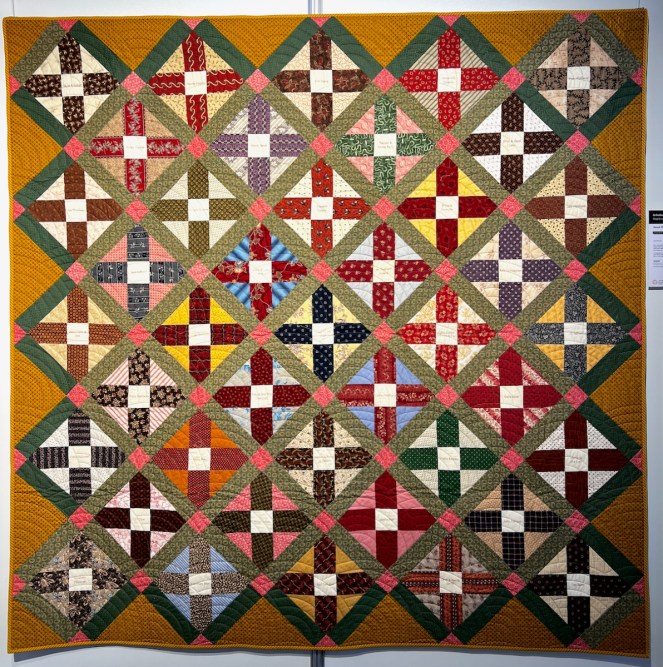
Simple, yet so powerful in its design.
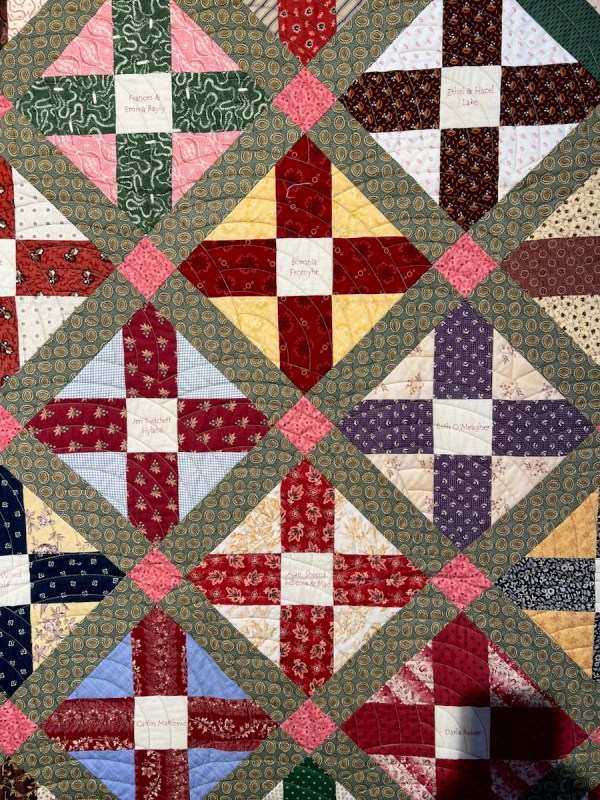
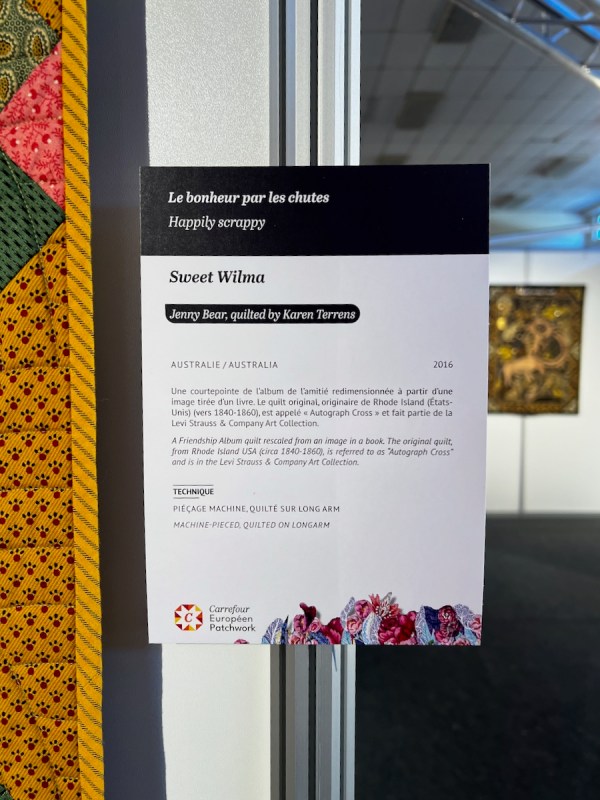
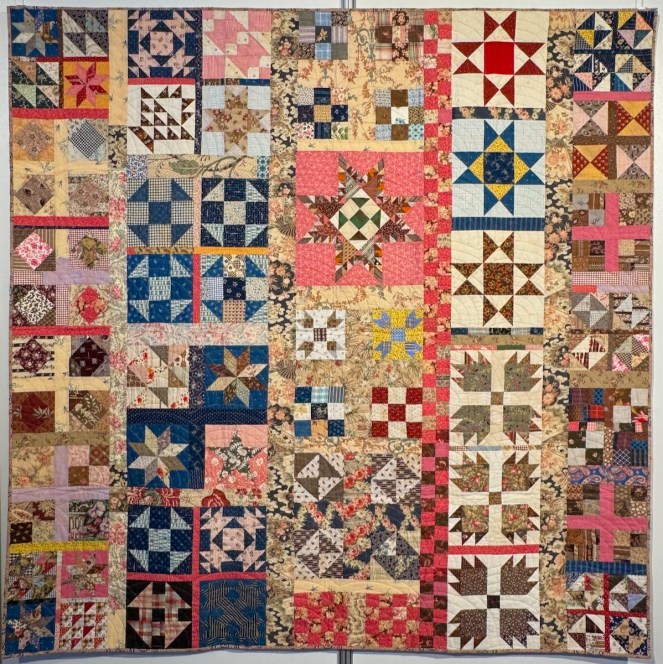
My orphan quilts never look like this.
This is Sweet Georgia Brown, from 2023. She writes: “Using antique fabrics dating from around 1840 to 1910, this hotchpotch of oddment blocks was inspired by an early twentieth century piece featured in “Unconventional and Unexpected” by Roderick Kiracofe, a book that has inspired many a quilt of mine. Many of the blocks were gifts from friends or purchased from Jane Lury and David Hubert. It is indeed happily scrappy.”
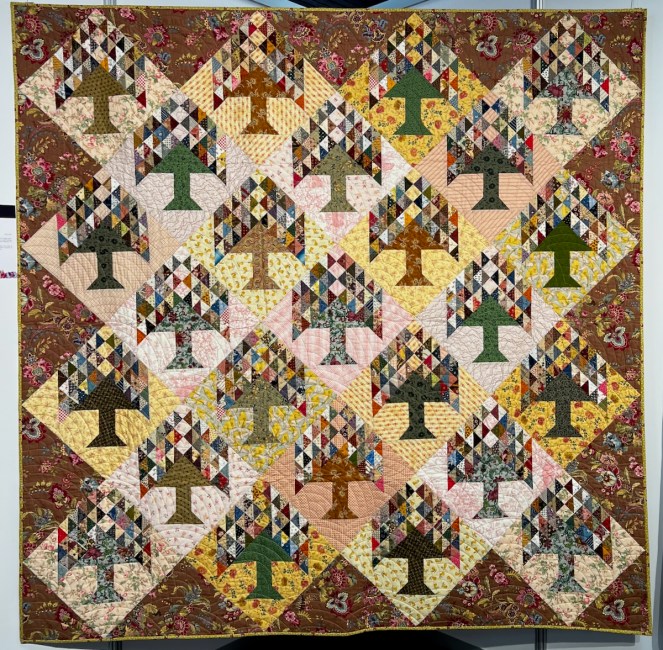
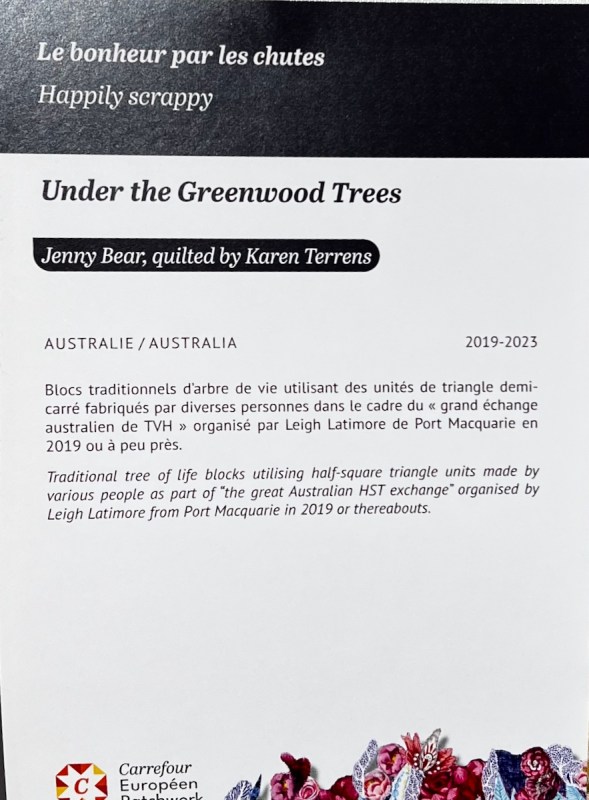
A giant block-swap brought Under the Greenwood Trees to life.
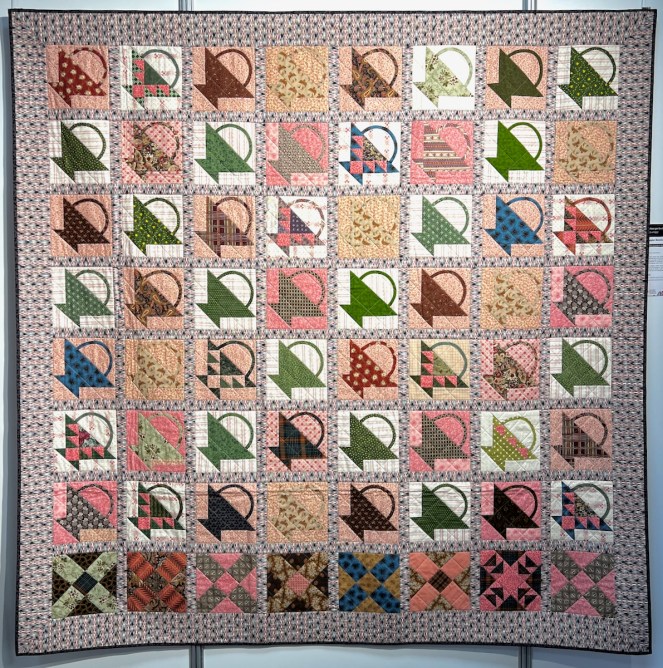
Last one of Jenny’s is Scrappier Bennington Baskets. It is made by Jenny Bear, and quilted by Karen Terrens. The title card says: “This is a scrappier version of Linda Collins’ “Bennington Baskets” featured in her book with Quiltmania “Treasures from the Barn.” The basket block is traditional but the setting is quite quirky, especially with the row of oddment blocks at the top in the original, but at the bottom in my version.” Mixing blocks is a great idea, one to try for sure.
She’s on Instagram if you want to see more.
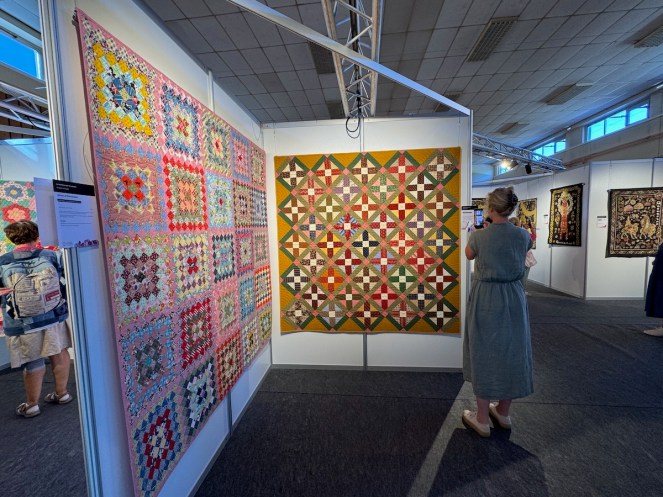
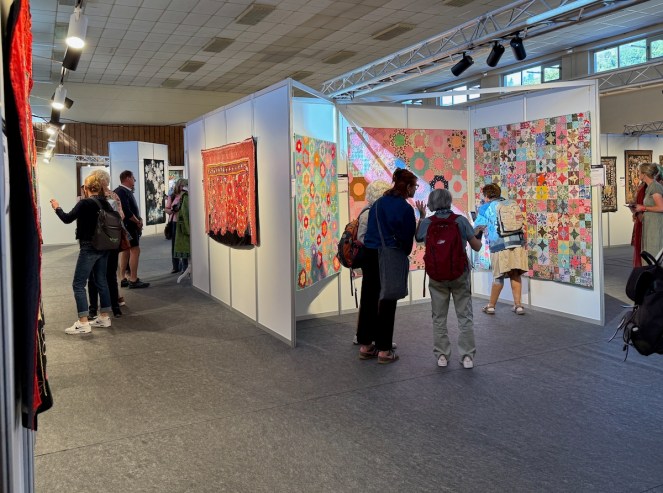
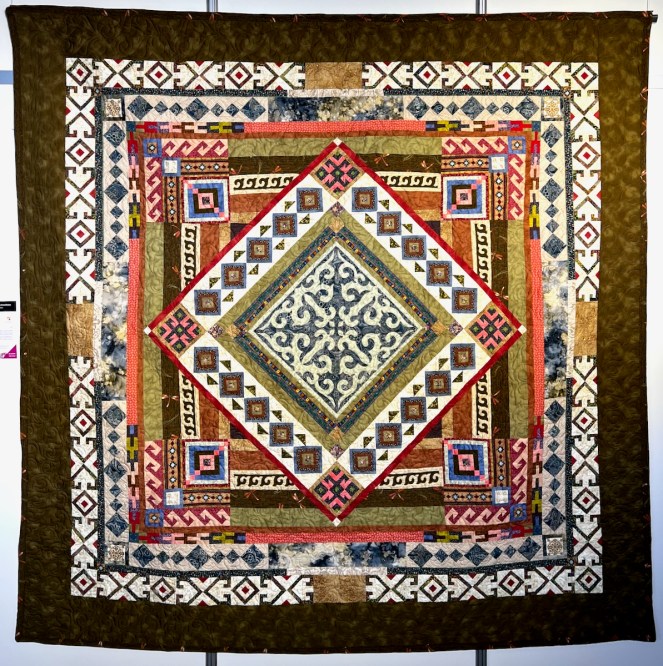
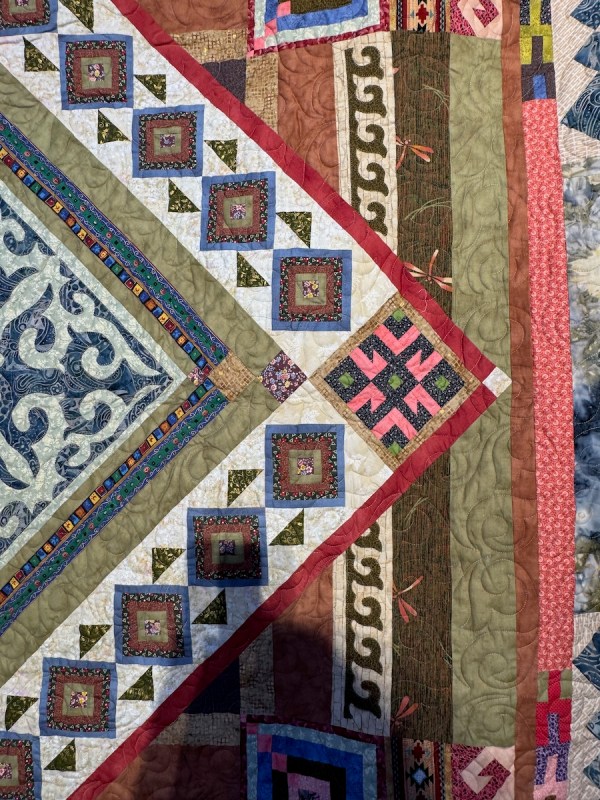
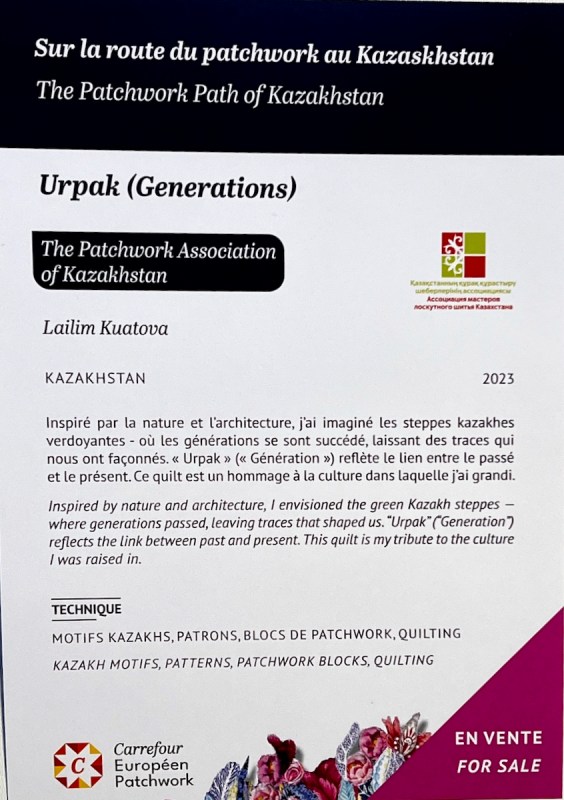
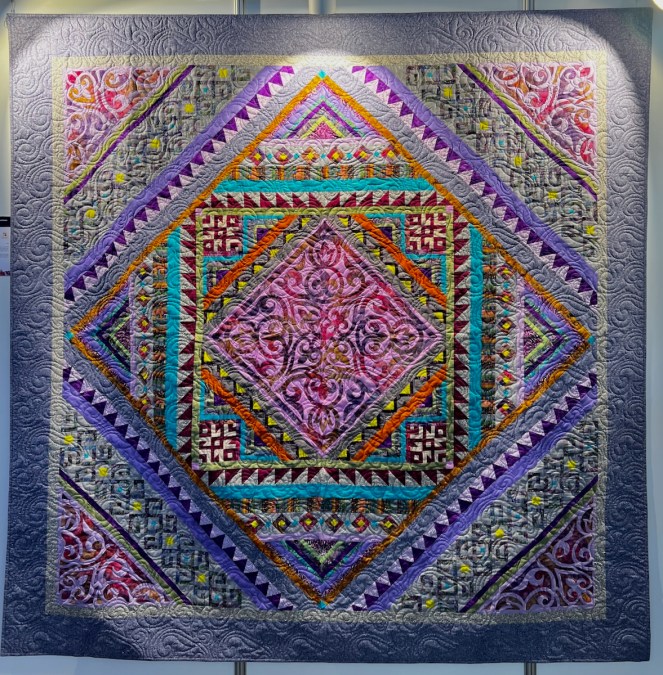
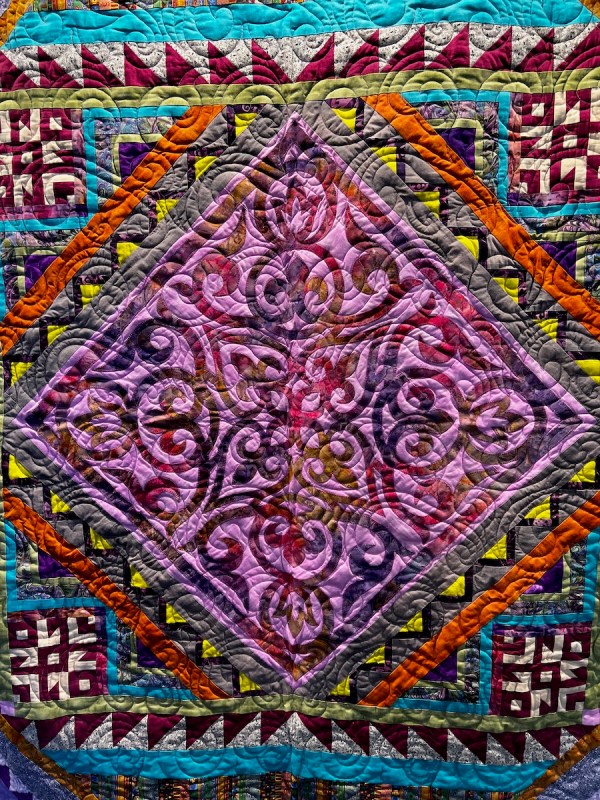
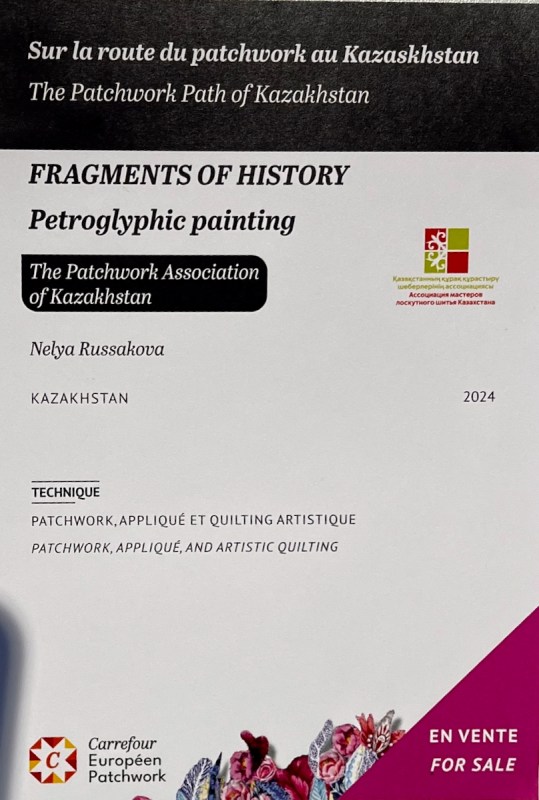
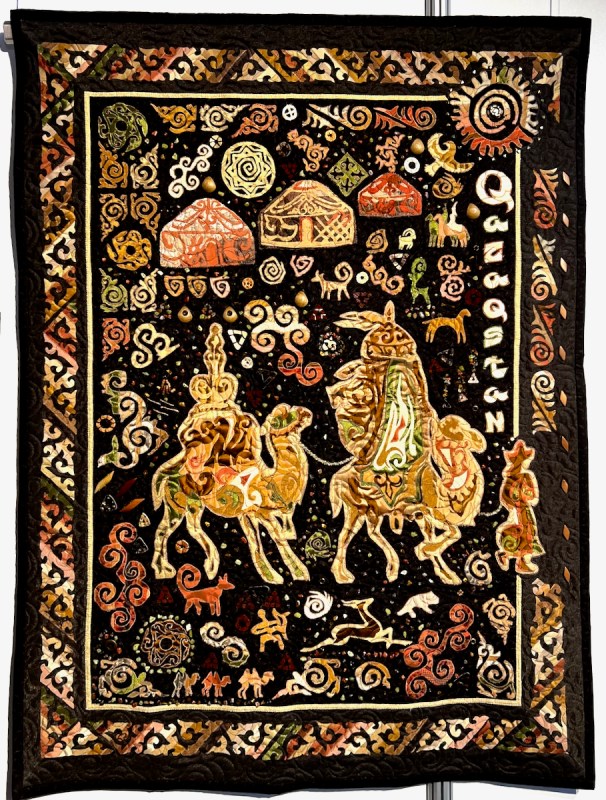
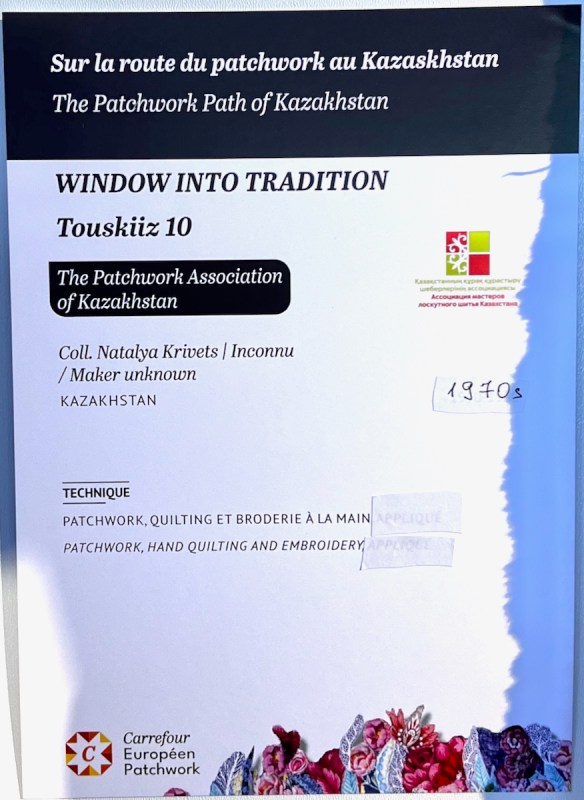
Right next to Jenny’s was the Kazakhstan quilts, a collection brought to Carrefour by the Kazakhstan Patchwork Association. This was founded in 2013, and has over 180 members “dedicated to promoting and developing ethnic-style patchwork (Kurak) and art quilts. The organize workshops, competitions, and the annual Orient Bazaar Festival.” The catalogue goes on to say that “this exhibition merges historical tradition with modern outlook in Kazakh quilting. At its heart is Tuskiiz-traditional wall coverings reflecting Kazakh nomadic culture.”
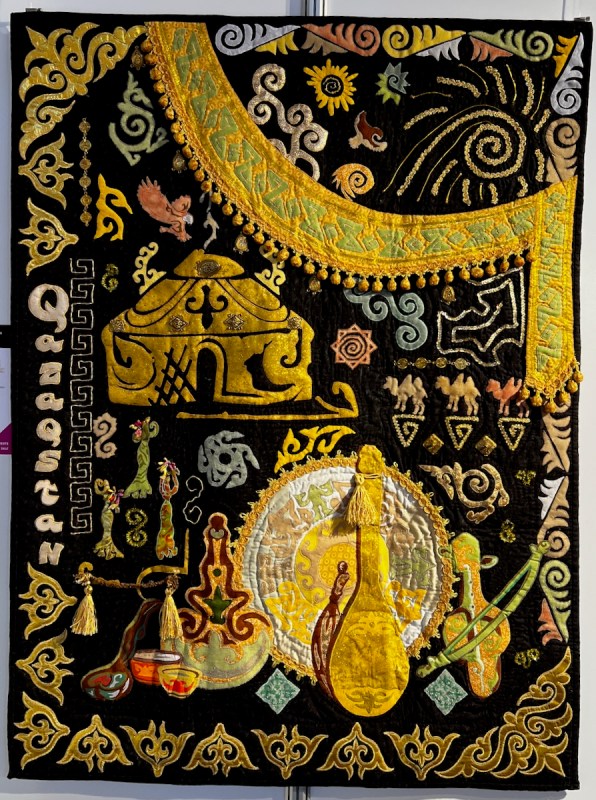
How many of us have made house-block quilts? Here’s one, using their traditional home, a yurt. A house quilt, but from a different land.
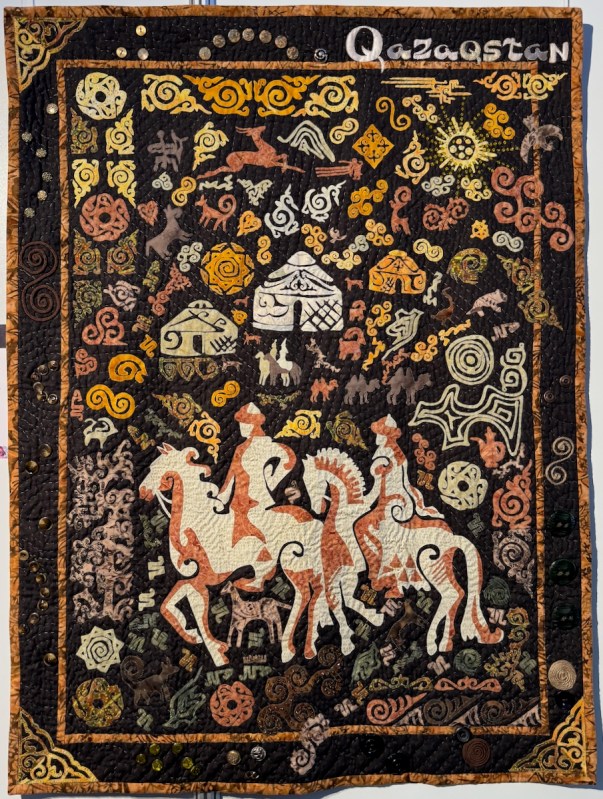
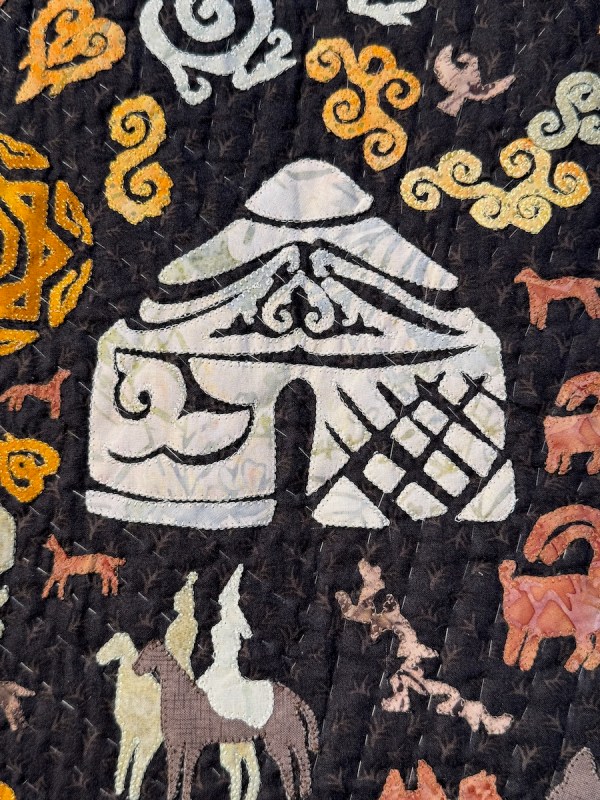
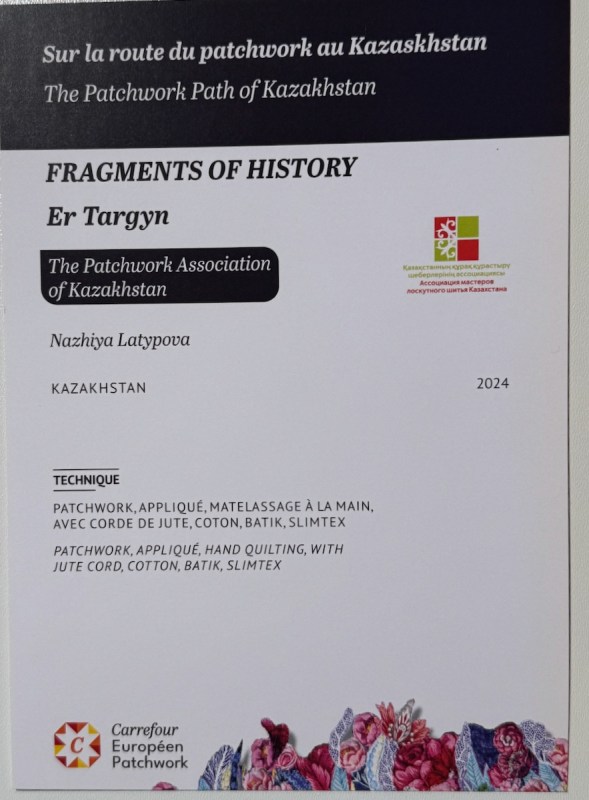
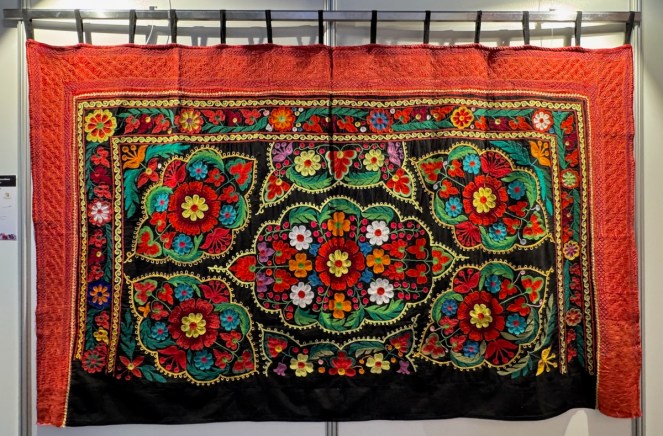
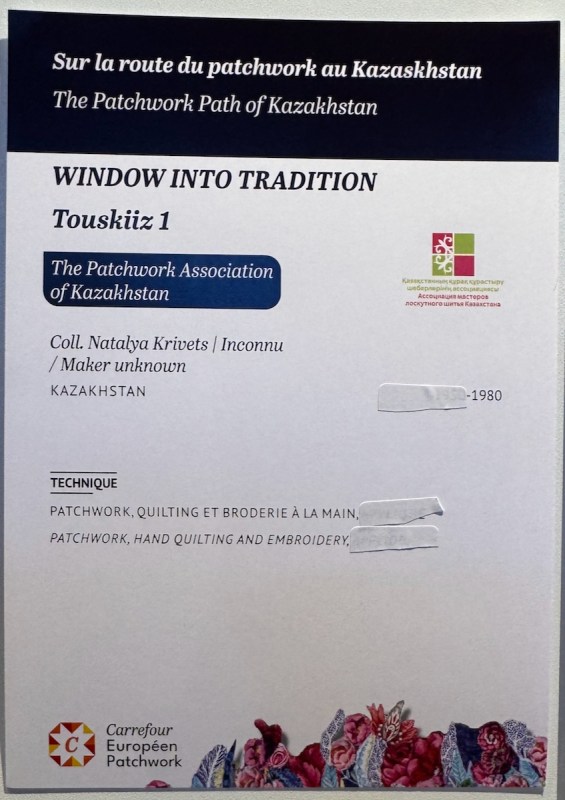
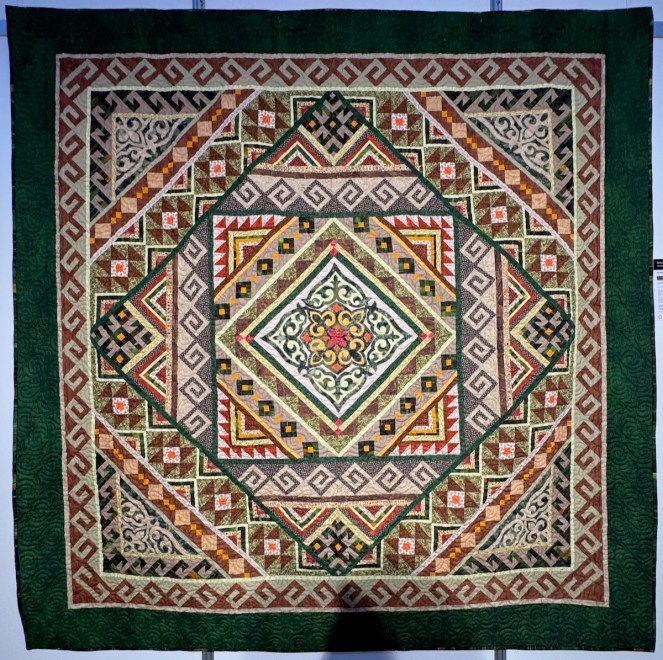
A quilt we are familiar with, but the motifs are all germane to their culture and country.
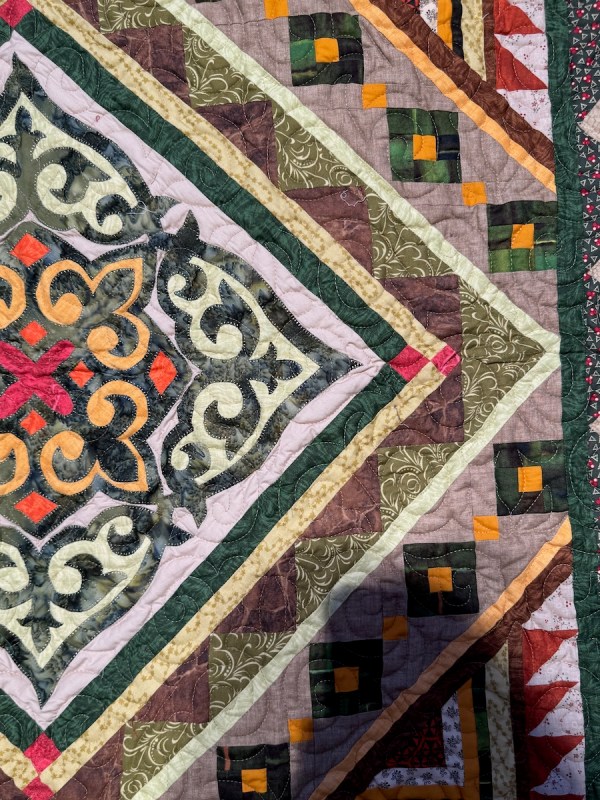
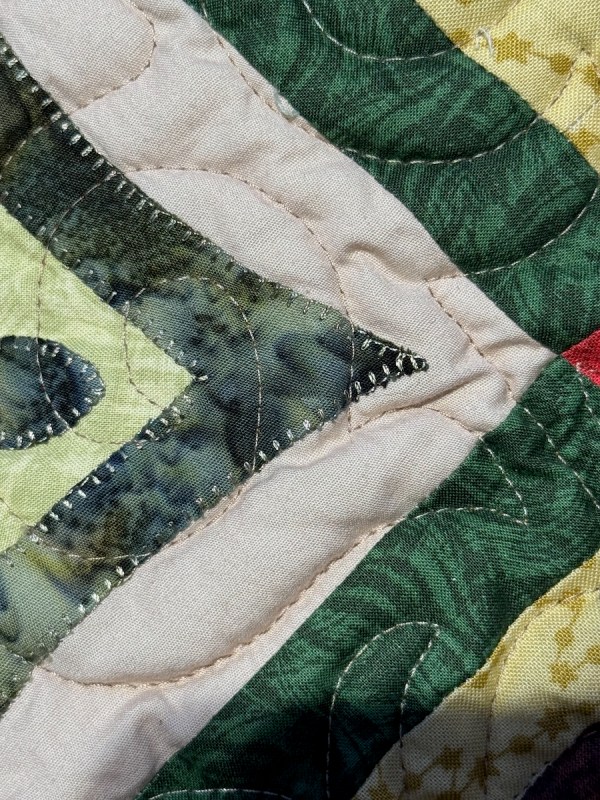
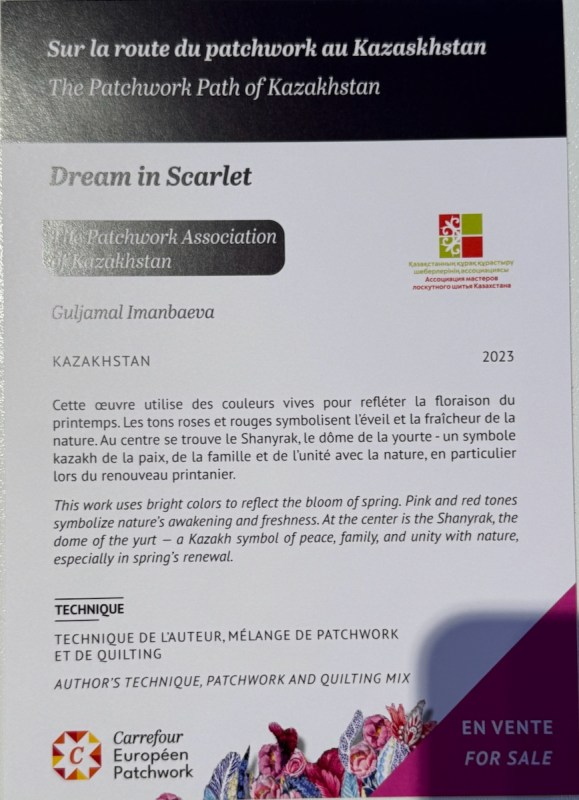
Click to enlarge.
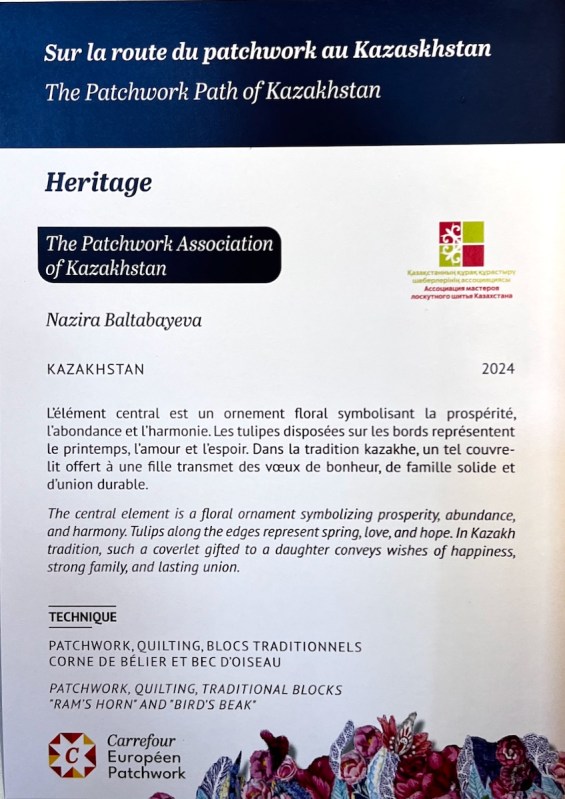
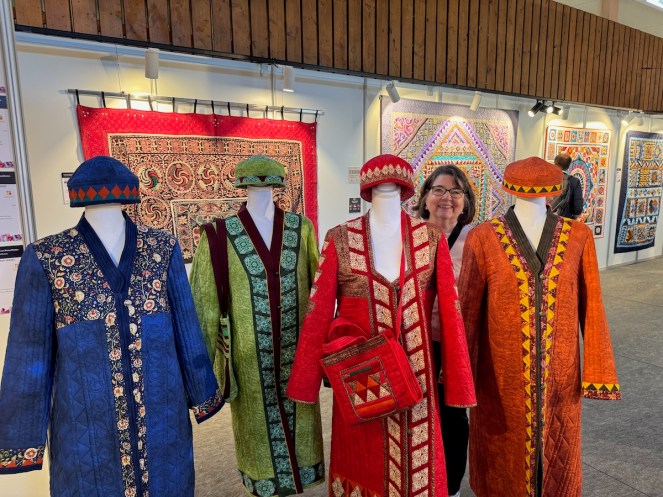
Natalya Mametniquazova Tamara Stroscherer (at least I think that’s her name, or their names?) made a series of four garments, titled “Four Seasons Chapan Series” with Spring, Summer, Fall and Winter.
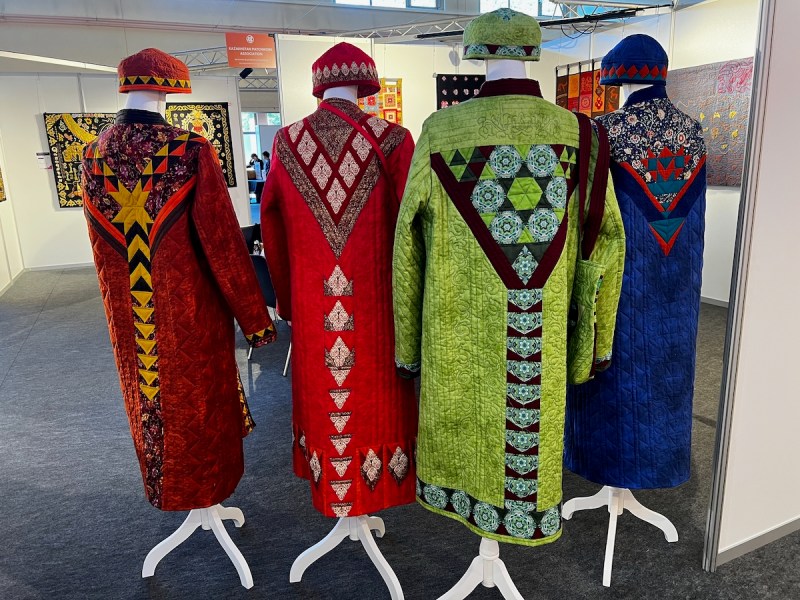
A couple more from this country:
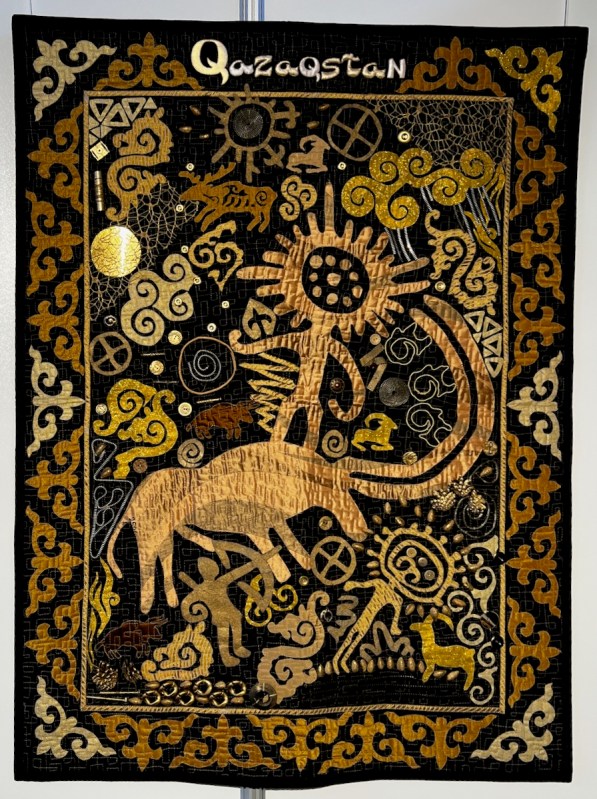
There were several artists in this Party Room. We have two more to go, if you are still with me!
Hae Ok Chang, South Korea
Hae Ok Chang, from South Korea, blends Korean and Western influences in a style that ranges from contemporary to traditional. One of her more well-known quilts has snowflakes on a traditional pieced quilt:
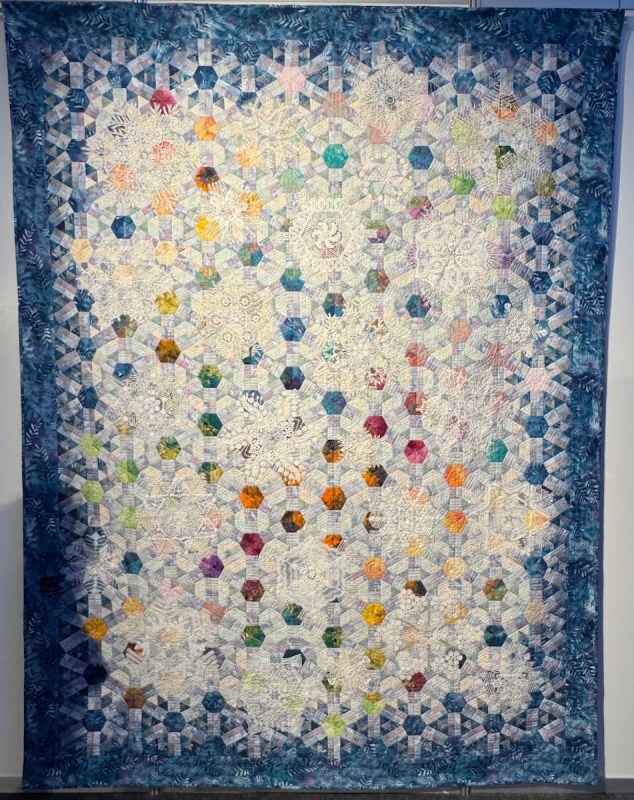
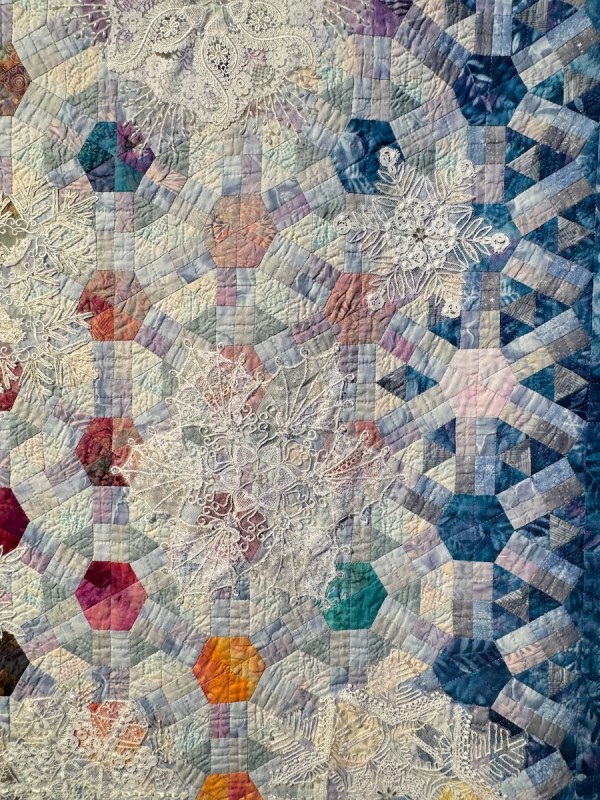
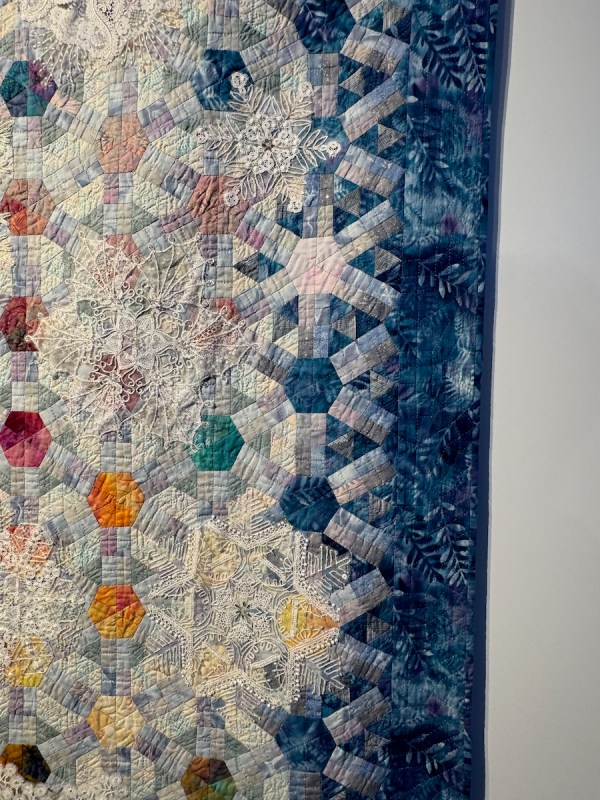
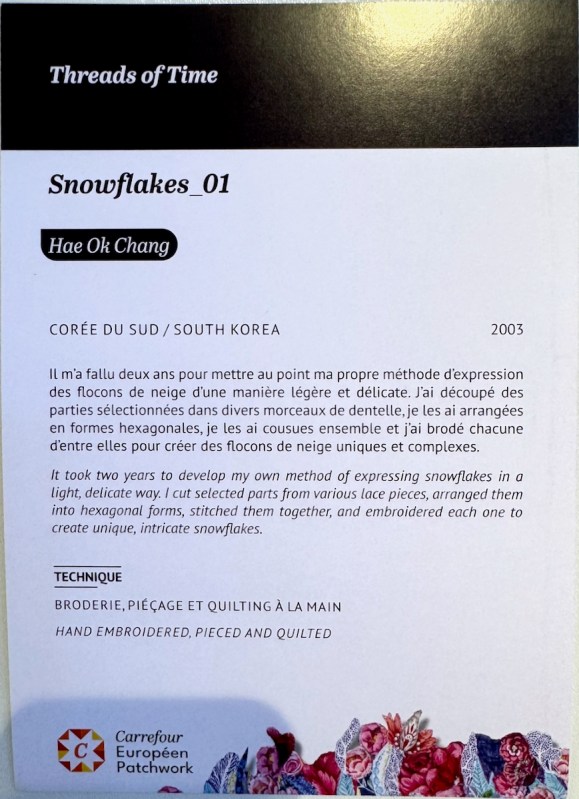
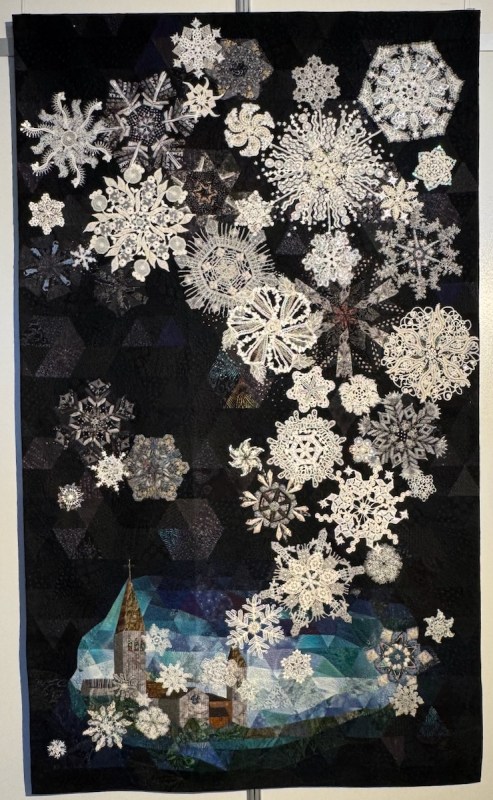
Here is another Snowflakes quilt, Snowflakes_04.
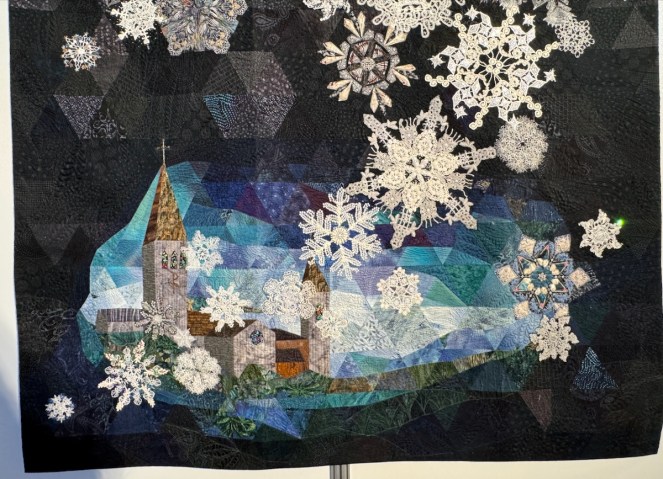
She writes: “Hesitating to start a large piece as my strength waned with age, I began a joint work with my daughter. She created the background, I made the snowflakes. Inspired by the night sky over St. John’s Catholic Church, it evokes angel wings and a chorus of family and friends” (from title card).
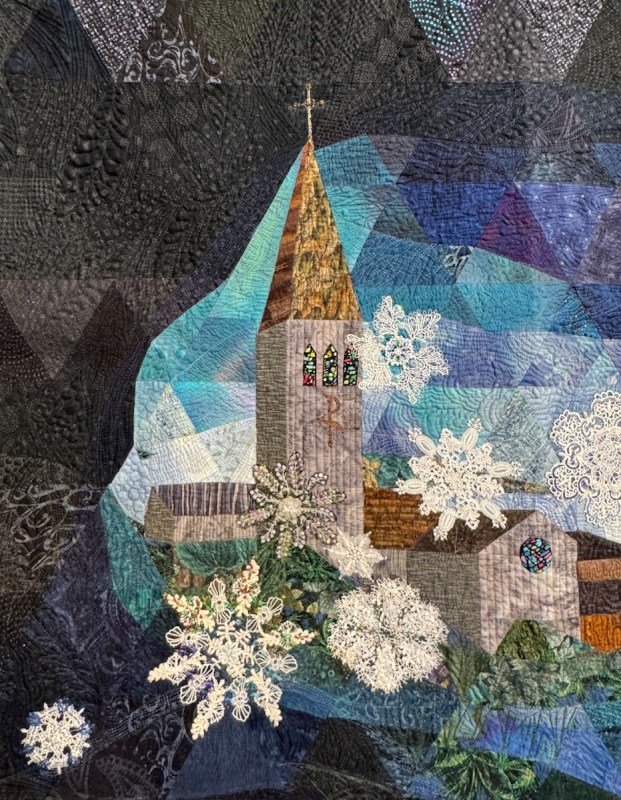
It is heavily quilted by machine, with hand-embroidered snowflakes.
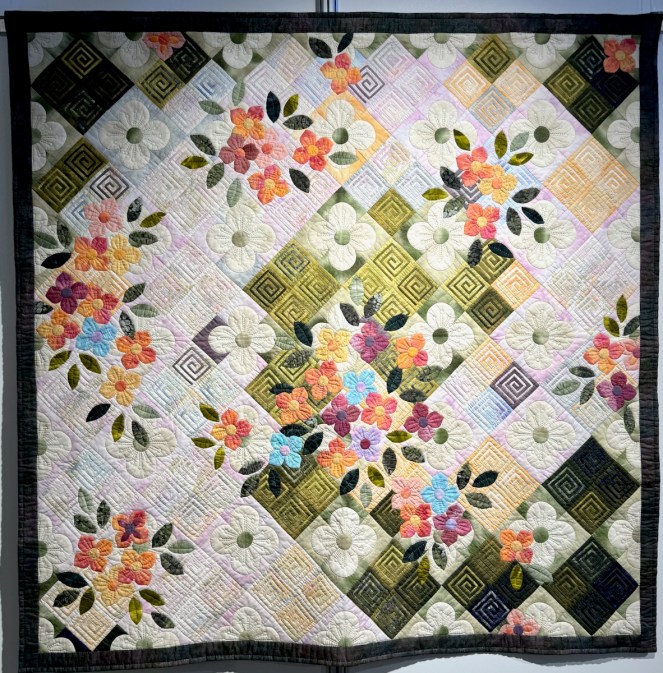
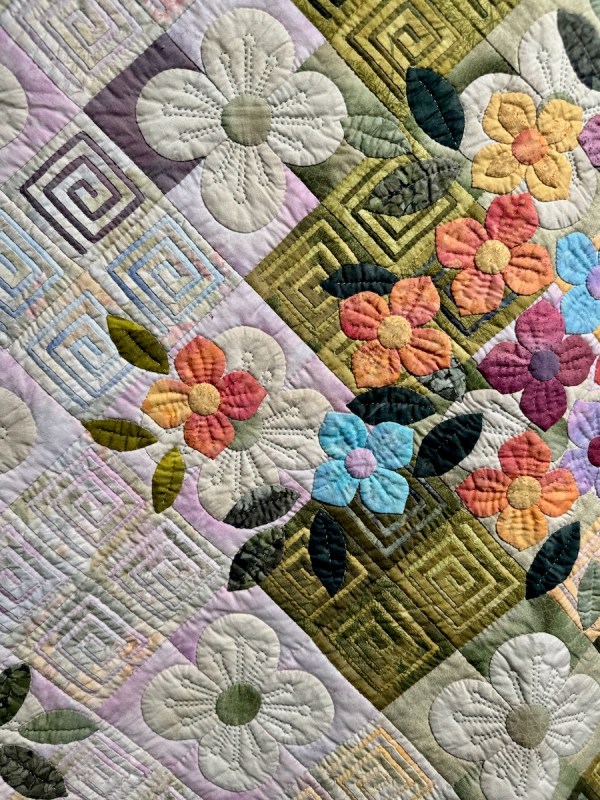
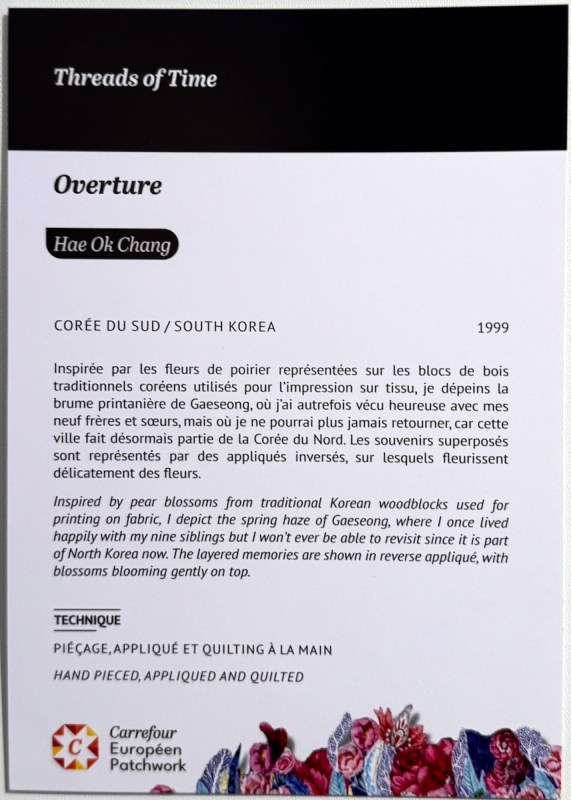
She also makes more traditional quilts, such as this one, inspired by pear blossoms.
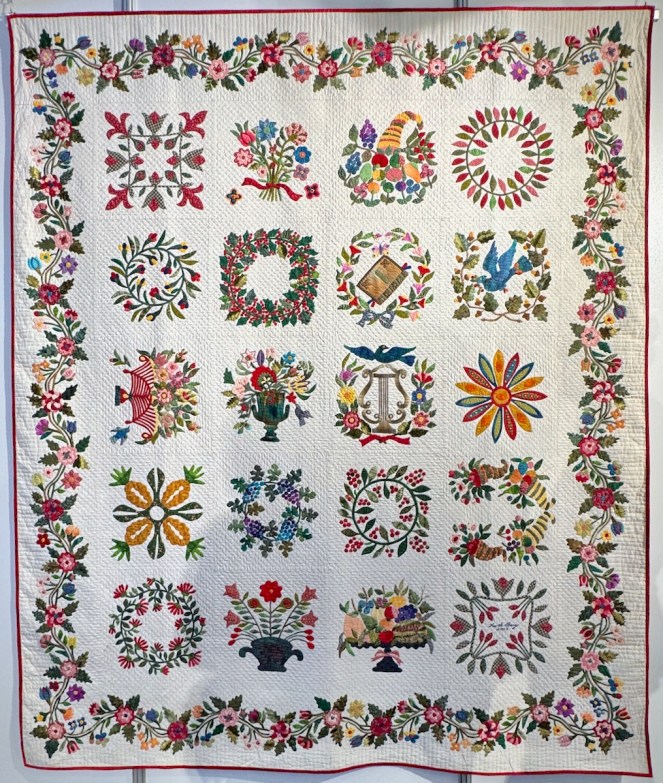
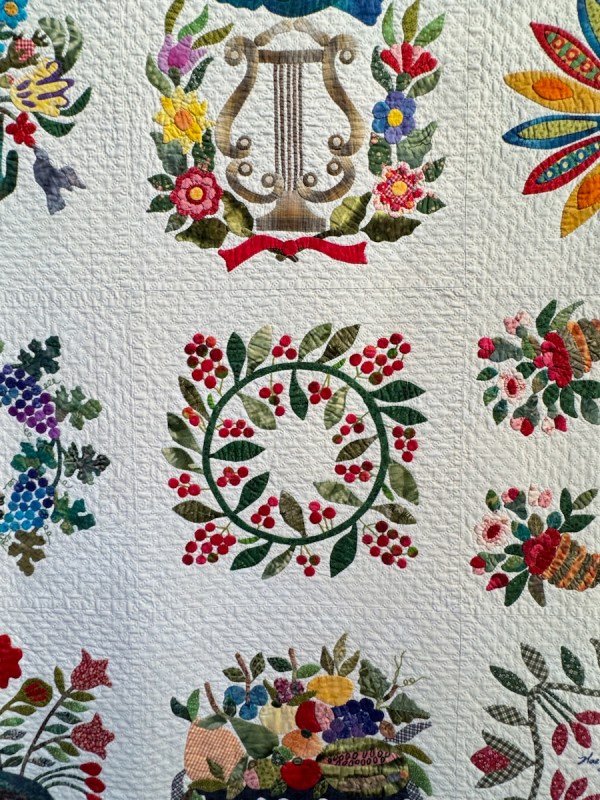
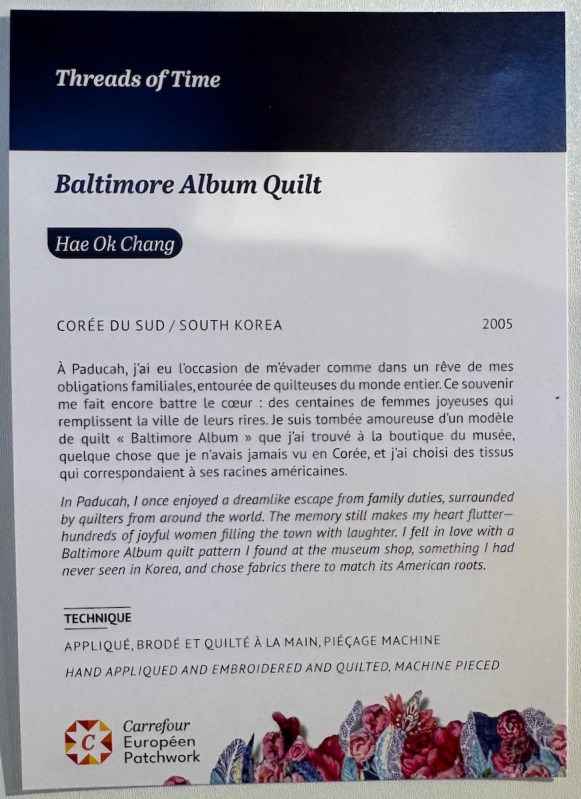
This was inspired by a trip to the Paducah Quilt Show.
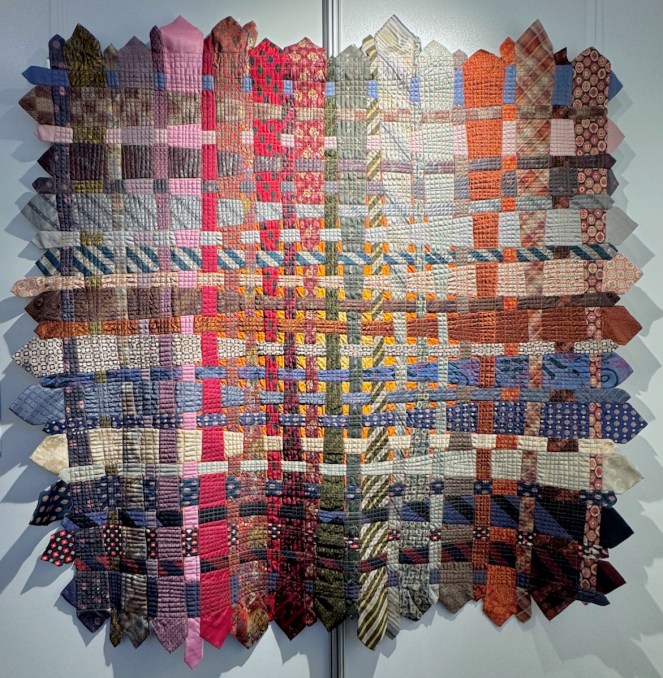
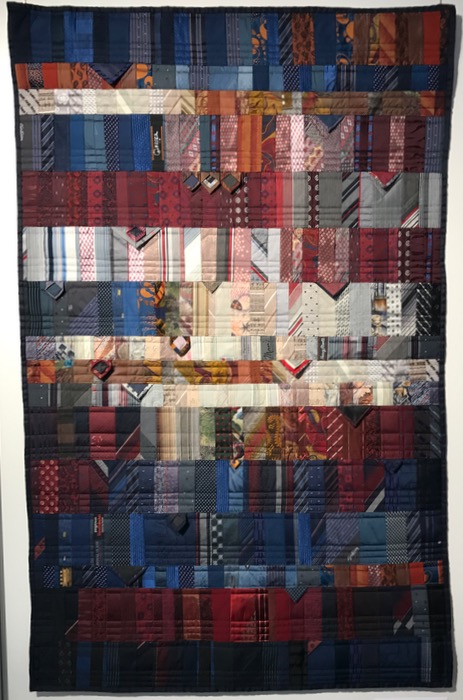
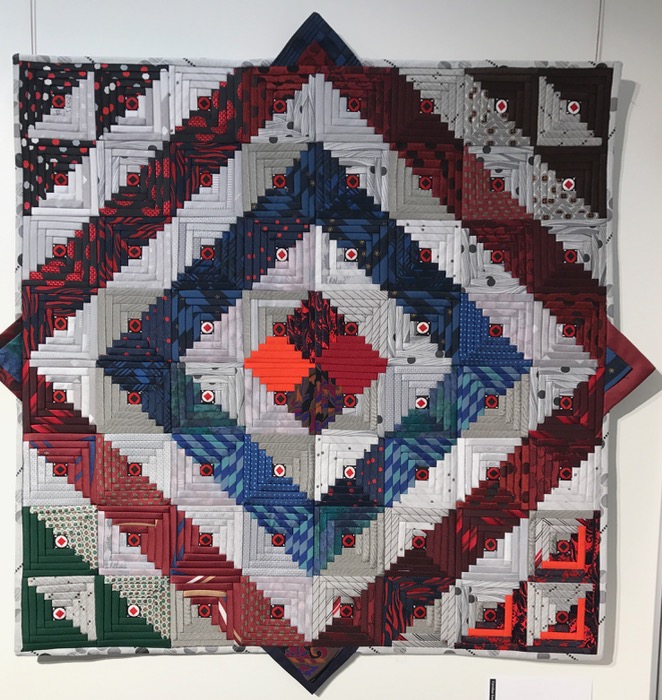
Titled Husband, Chang says she “wanted to weave my retired husband’s neckties into a story. Moments of joy and pride as he walked our daughter down the aisle, welcomed a daughter-in-law, celebrated with friends, and shared hardships. Days of work, success, and failure. I keep his devotion, love, hope, and sorrow close to me. Made in 2007.
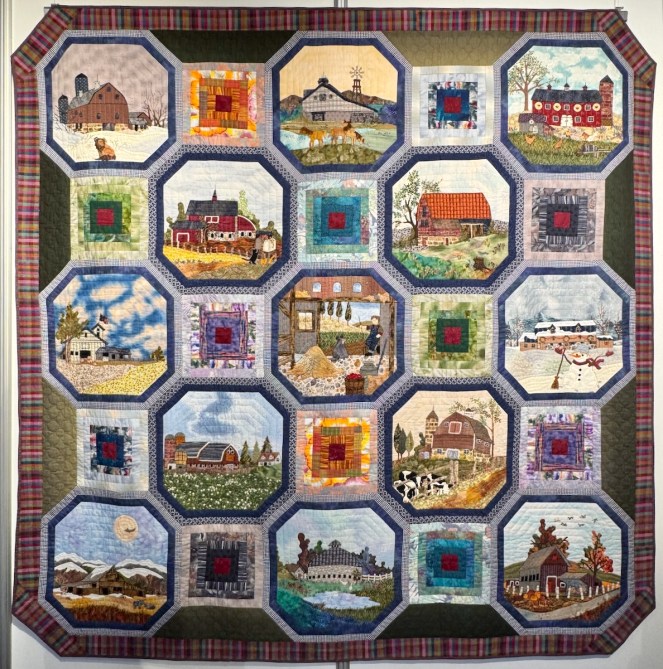
This quilt was made in 2012, after her husband passed away. Title: Time and Seasons.
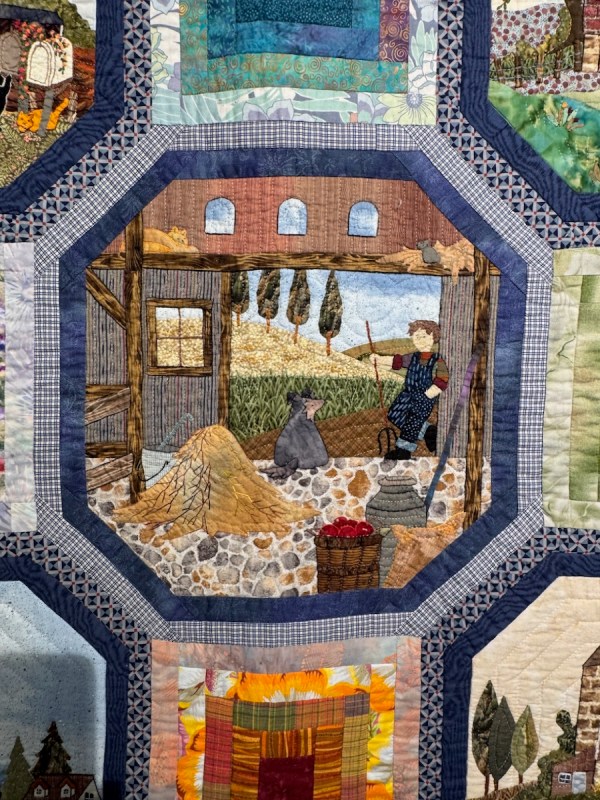
She writes: “After my husband passed away in 2012, I couldn’t bring myself to do anything for a while. I had started this quilt earlier, but left it unfinished. Eventually, I returned to it, intensely embroidering each octagonal block with meadows, flowers, birds, animals, wind, and trees. As I followed the seasons, life slowly returned, and I felt grateful to still have work to do.”
Technique: Machine pieced, hand appliquéd, embroidered and quilted.
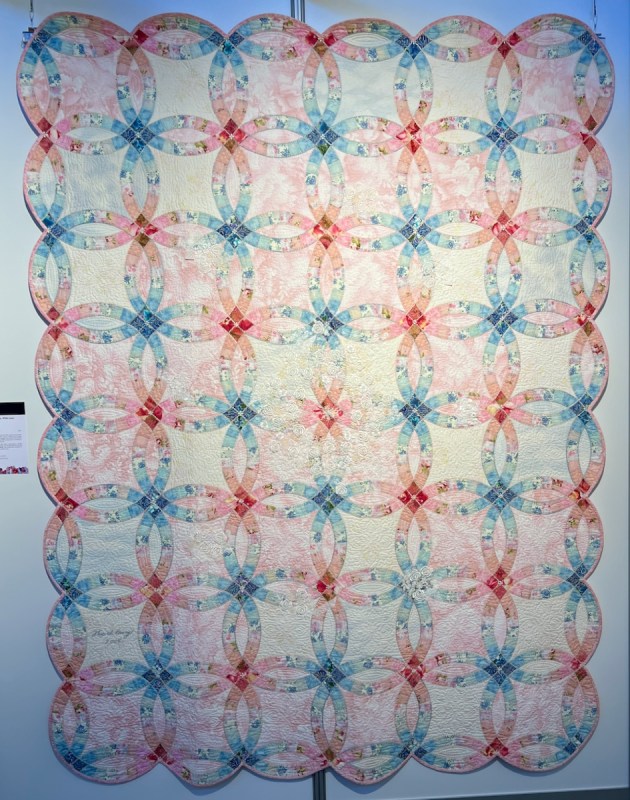
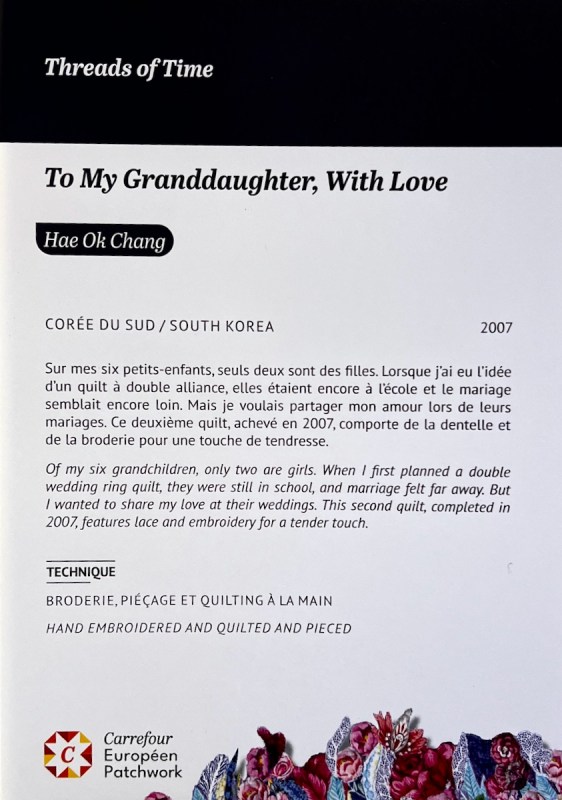
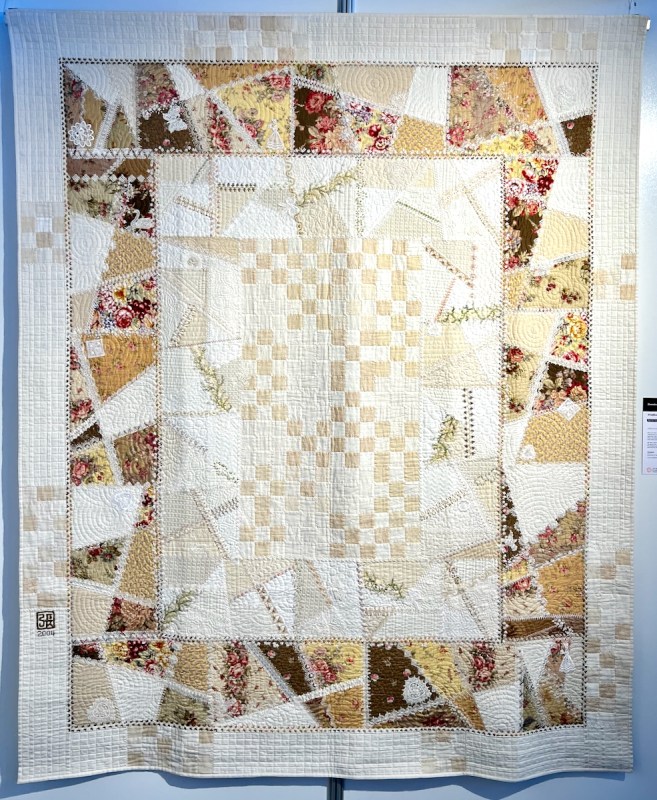
Title: Wildflowers 01, by Hae Ok Chang
Title Card: “We three sisters spent hours together knitting, sewing, and making clothes. My eldest sister did everything well, the second was precise and skilled, and I, the youngest, just tried my best. As I embroidered this work, I often thought of them and our time together.”
I have three older sisters, so this one was especially meaningful to me, although we don’t sew together.
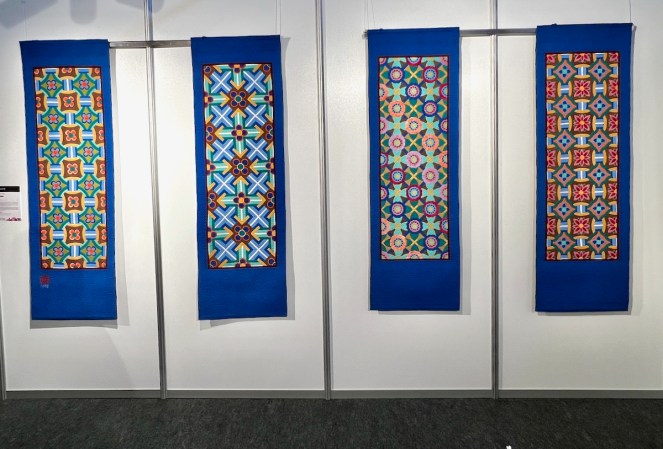
Title: Serene Glory
Unfortunately, I didn’t get a good photo of the title card. You can find her on Instagram, too.
Fiona Lindsay, from Australia
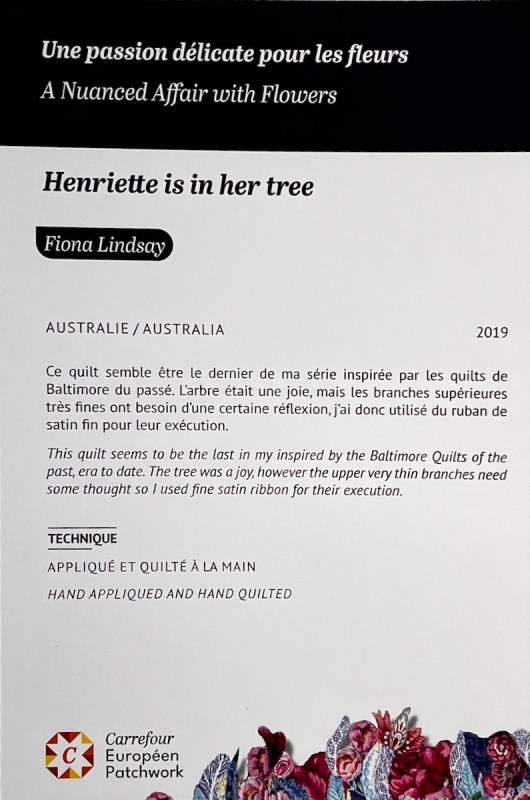
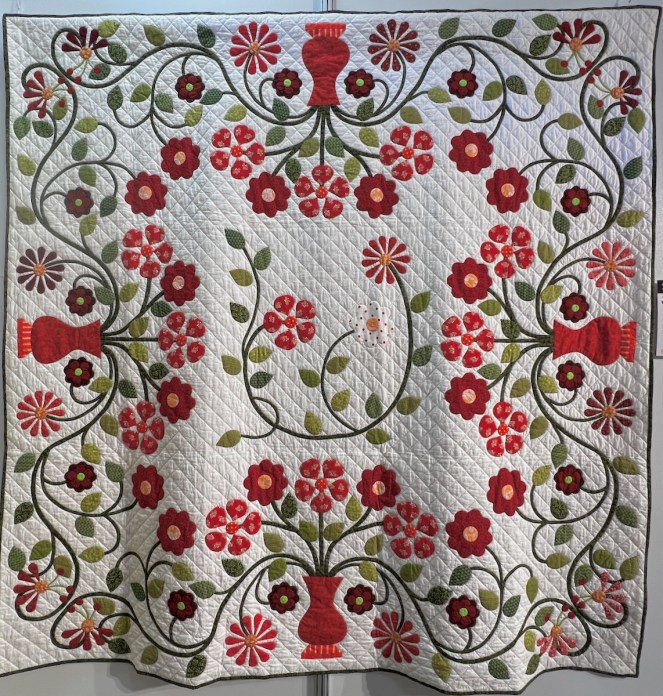
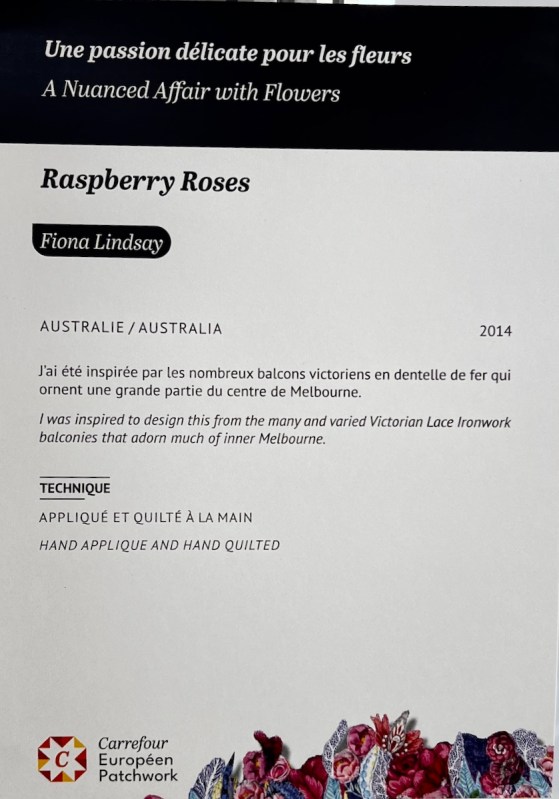
Fiona Lindsay is our last quilt artist for this post, but not the least! as they say. Also showing in Venue 12, her quilts were a veritable flower garden, a theme of hers, chosen carefully, as she loves sewing and she loves gardening.
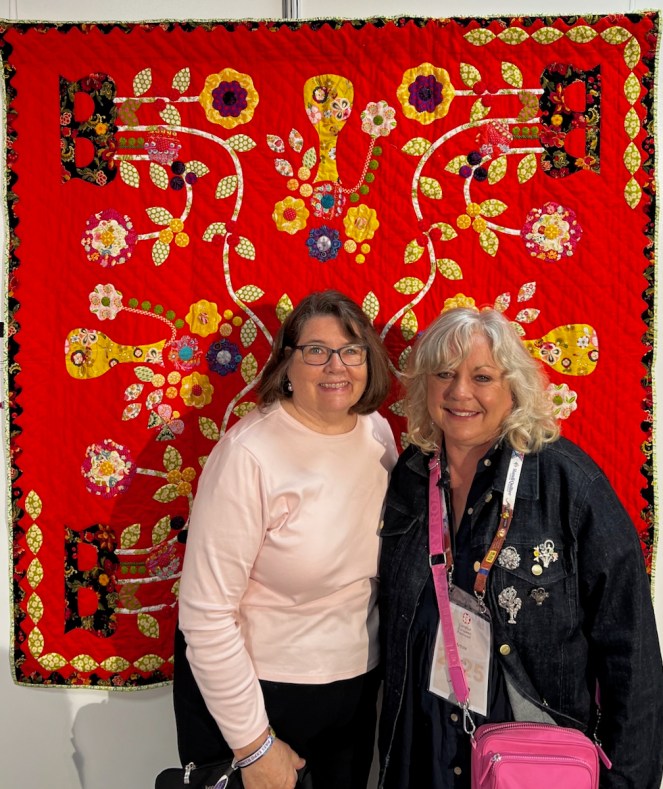
She was so fun to talk to, and agreed to let me record her talking about her ideas about color and stitching and practice and quilting. It runs about a minute.
Now, for her garden of flowers!
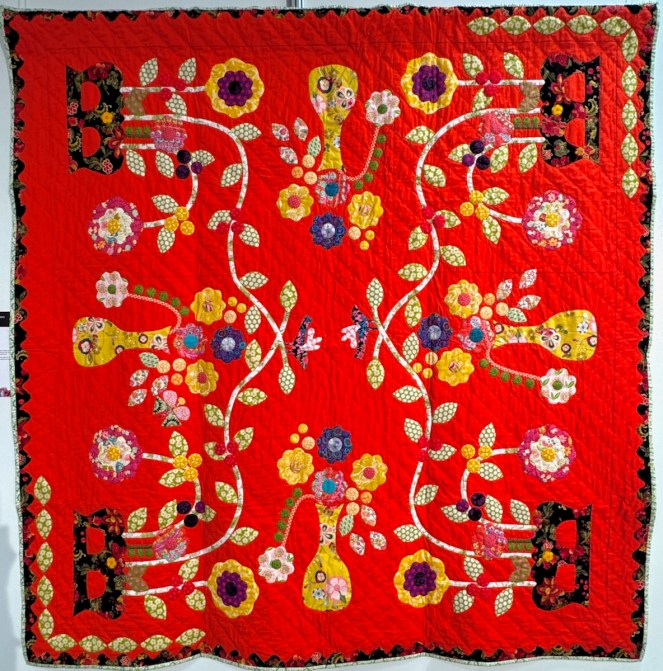
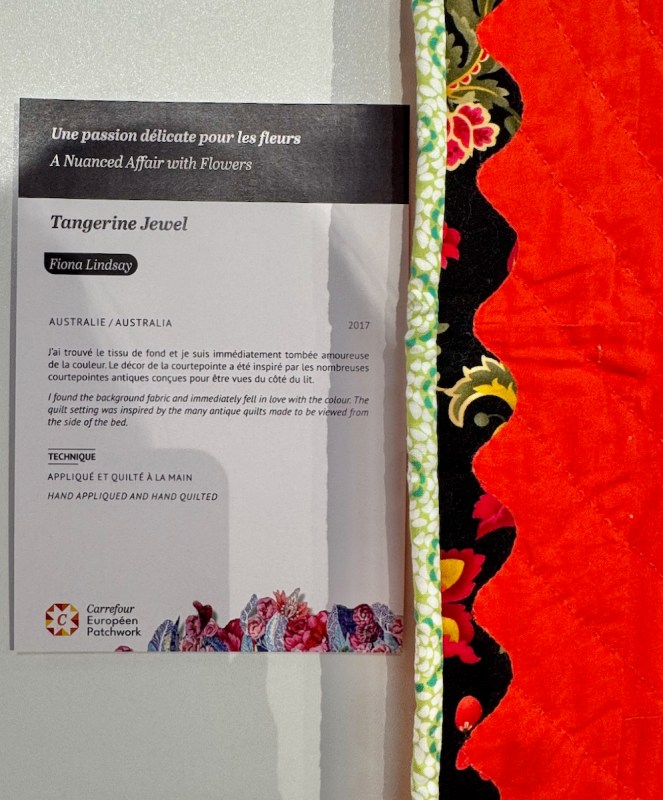
As a reminder, all the quilts are very well lit up, but the shadows can be very strong. I tried to crop them out/edit them out as best as I could.
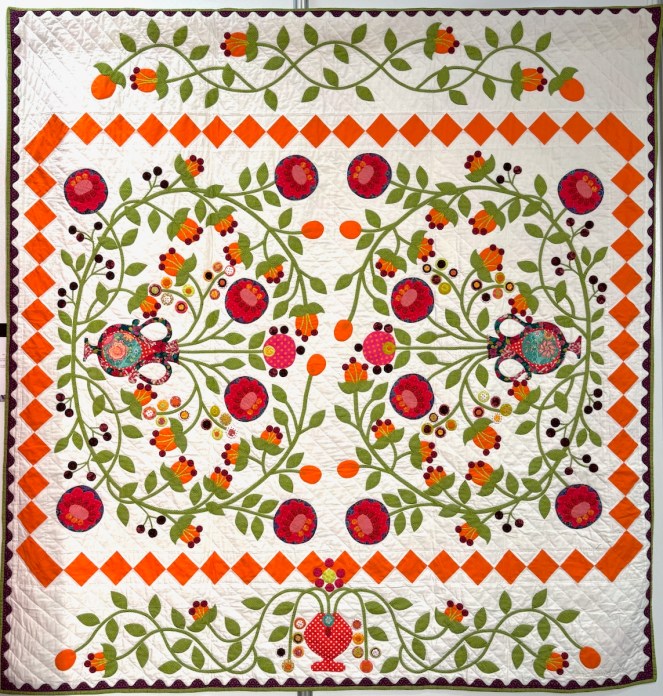
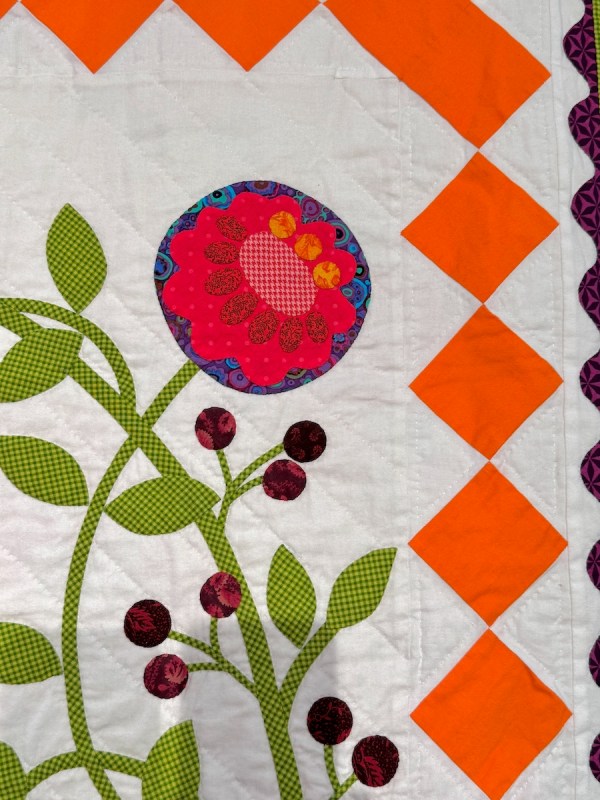
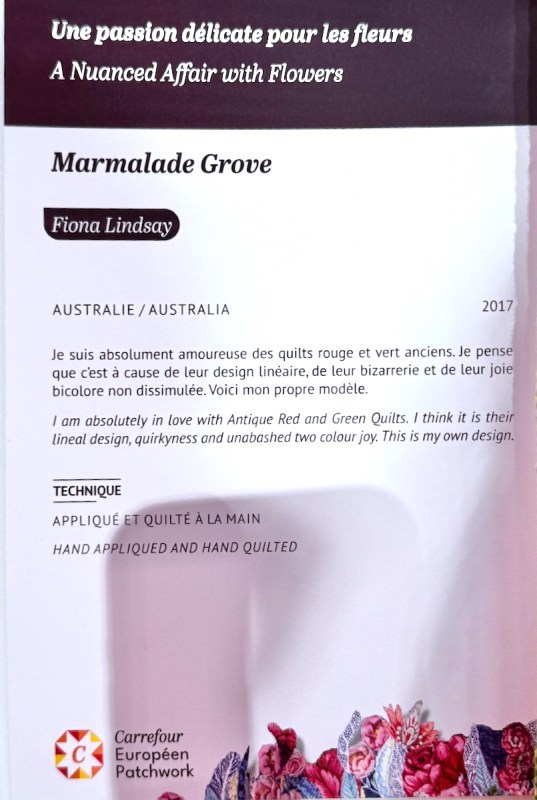
Those teensy seeds on the blossom, and the wonderful shape and proportions of this quilt: loved it!
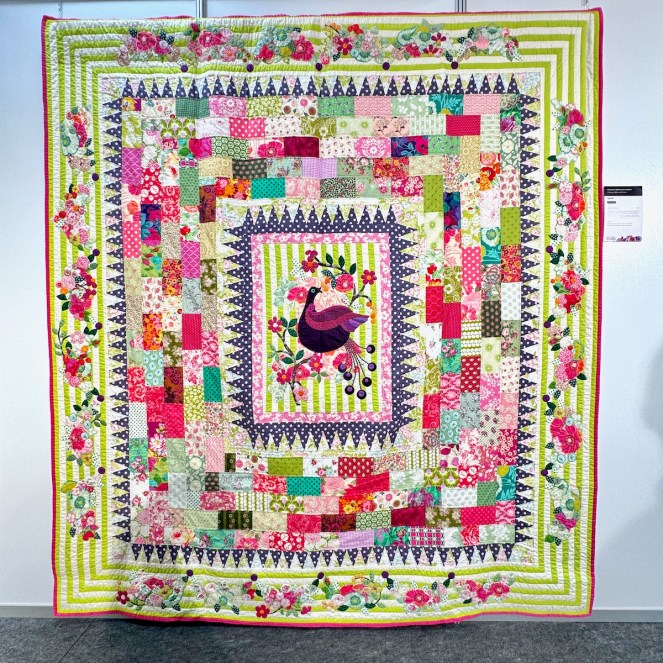
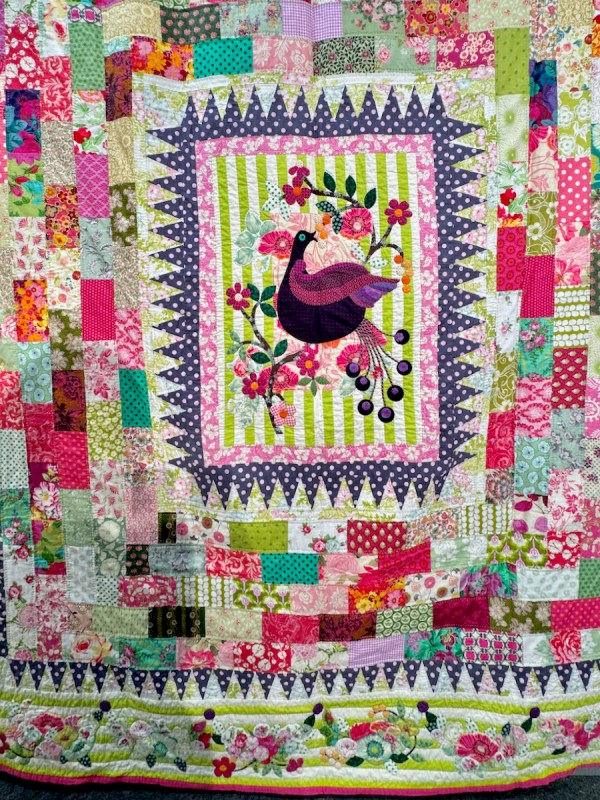
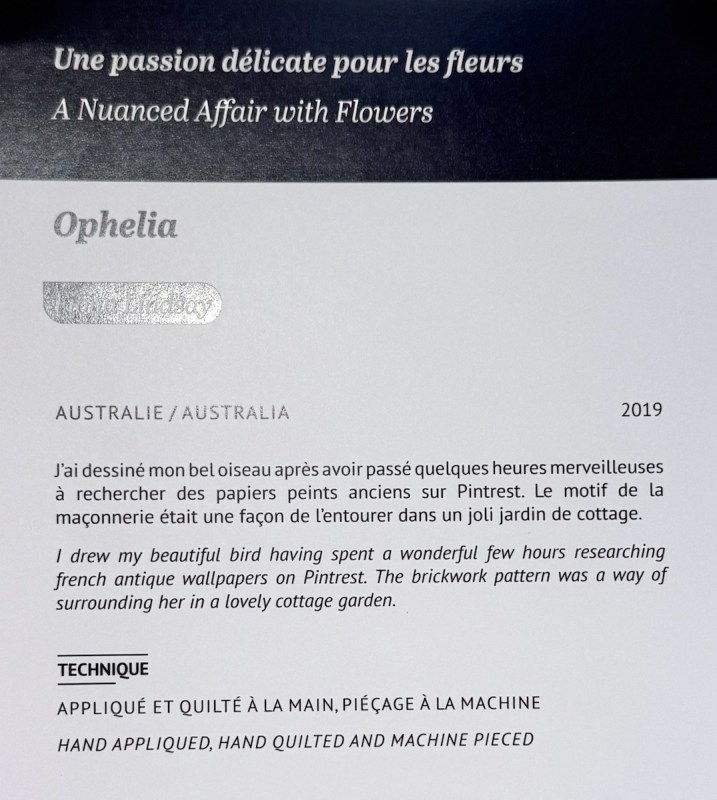
(Click to enlarge.)
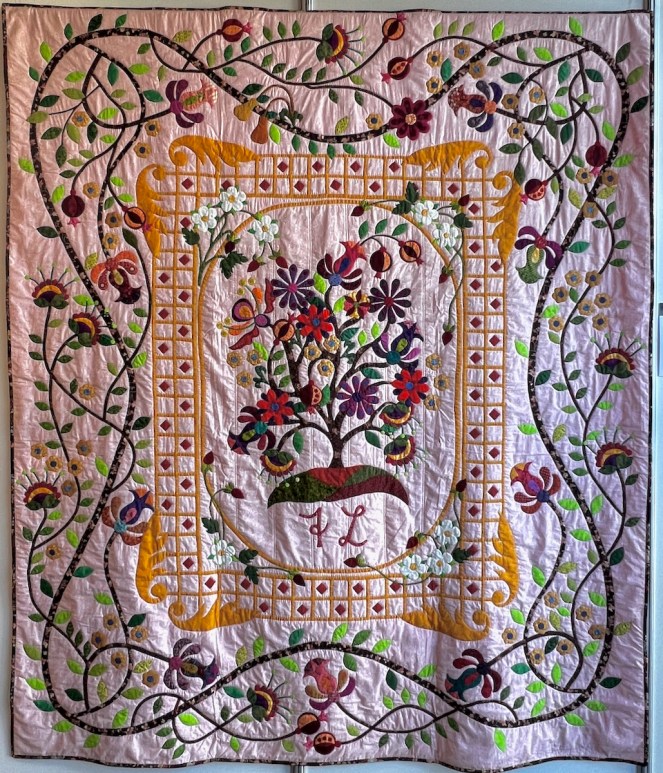
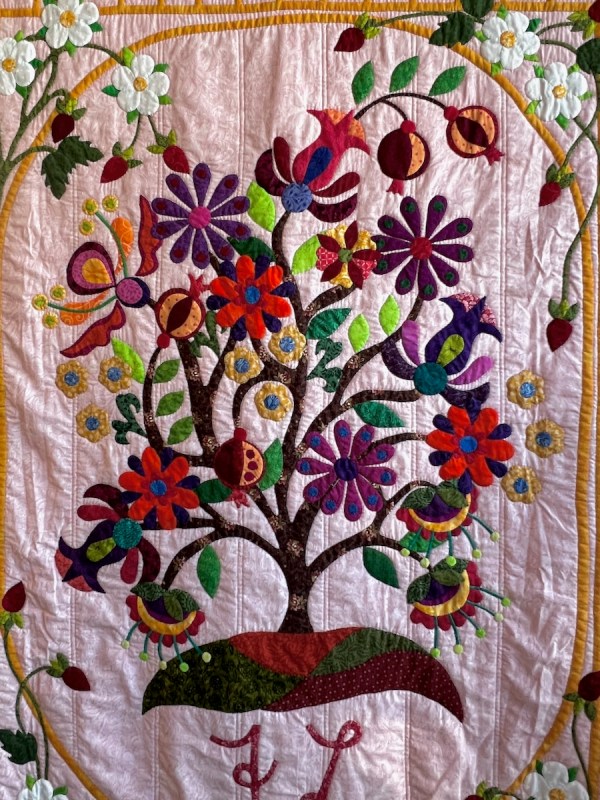
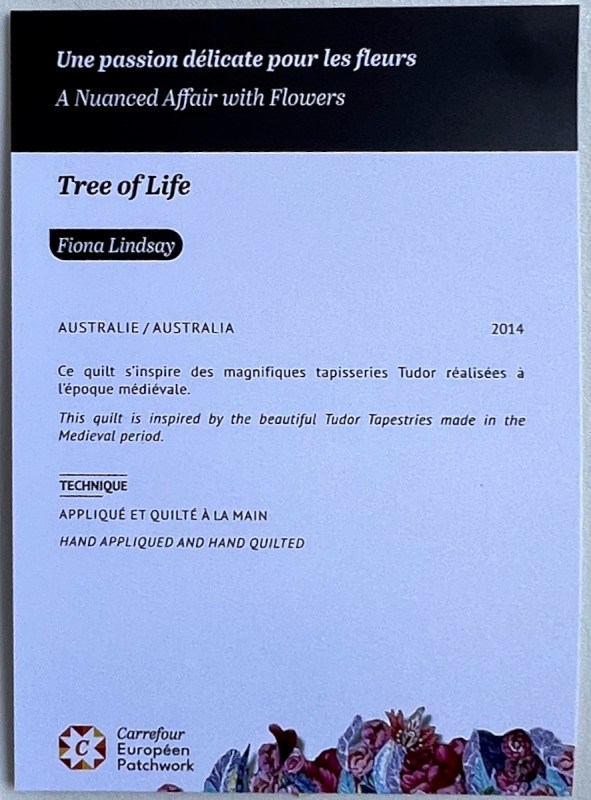
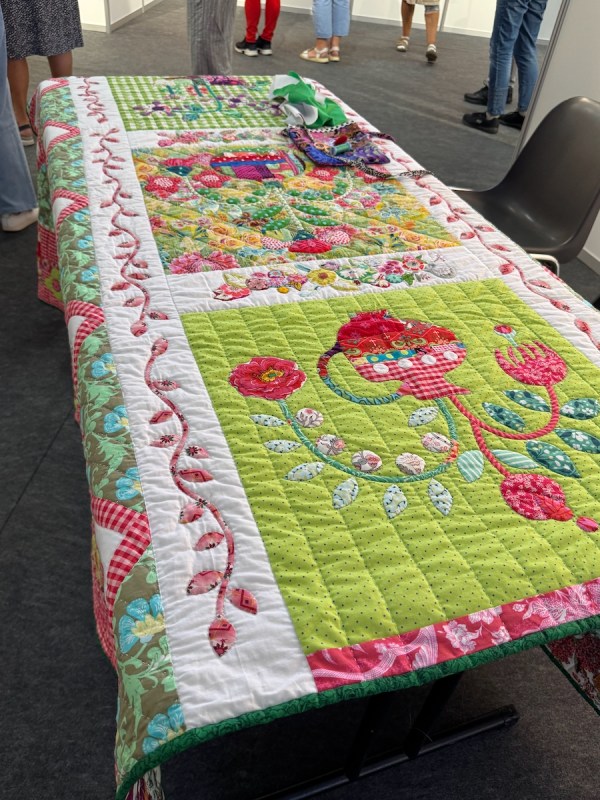
Those border vines have an energy all their own.
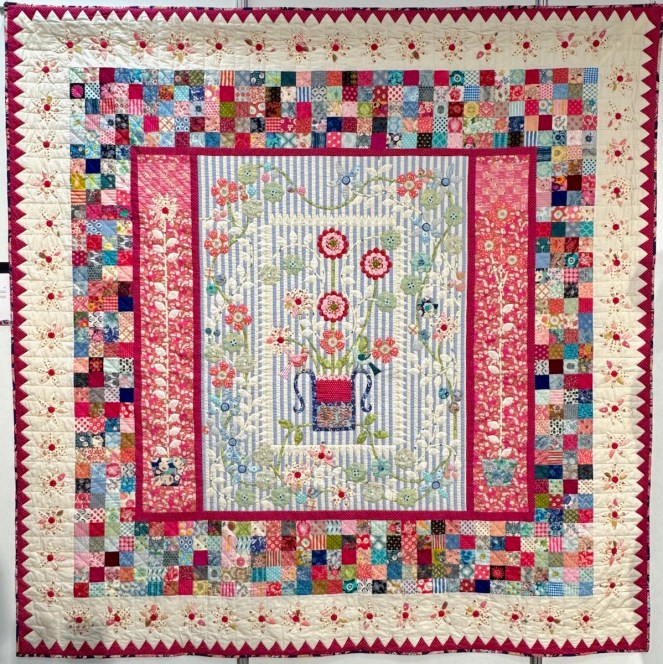
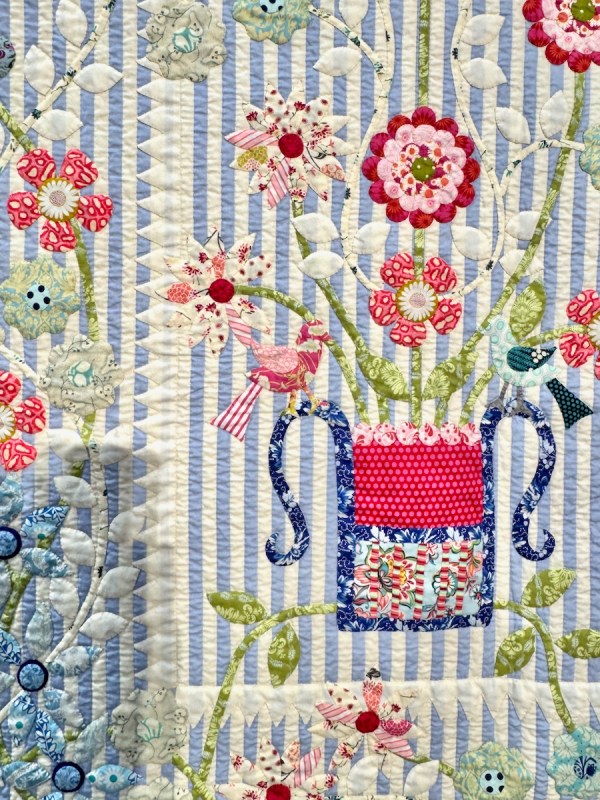
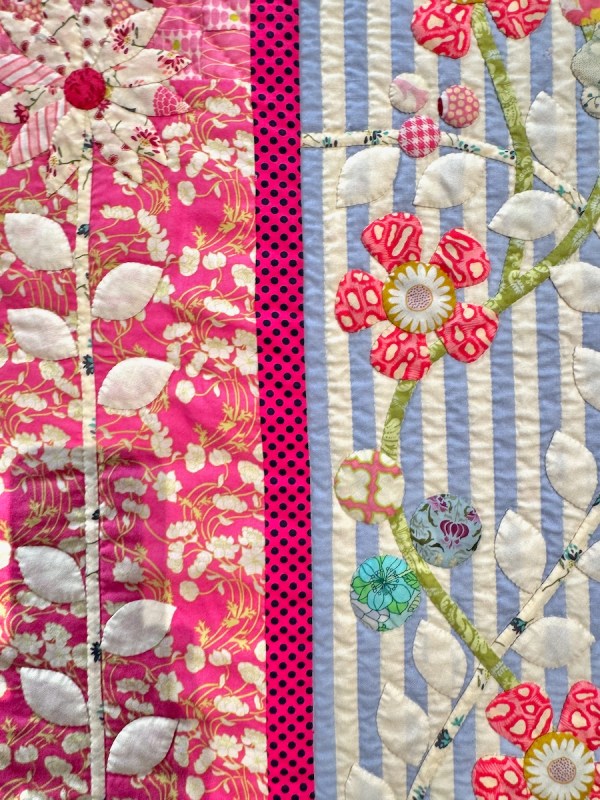
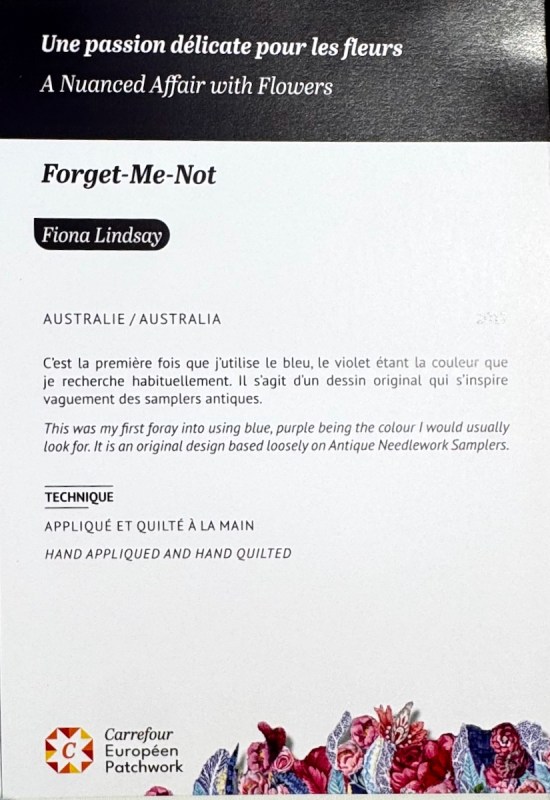
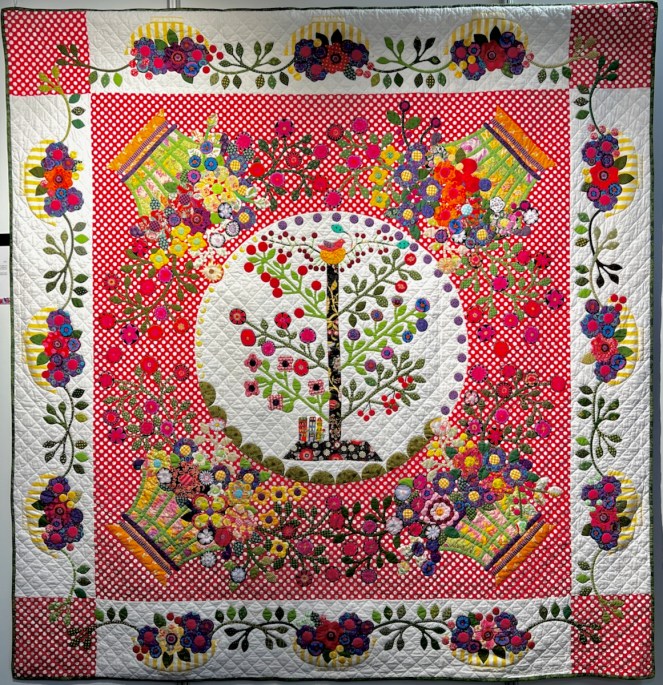
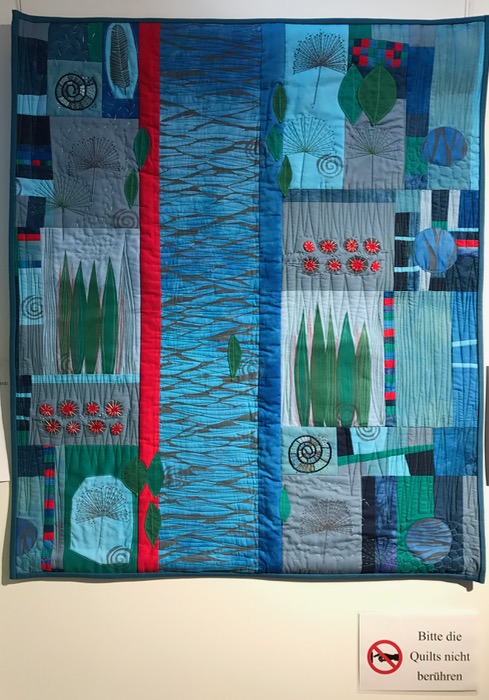
By now you can see that she can put together fabric combinations and colors with such skill, that she makes it look easy. I love the balance of the stems and the shapes of the flowers, too.
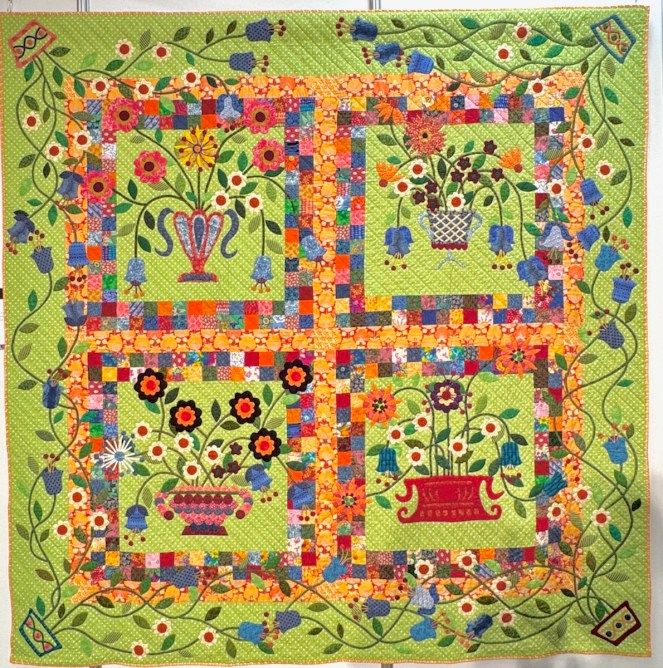
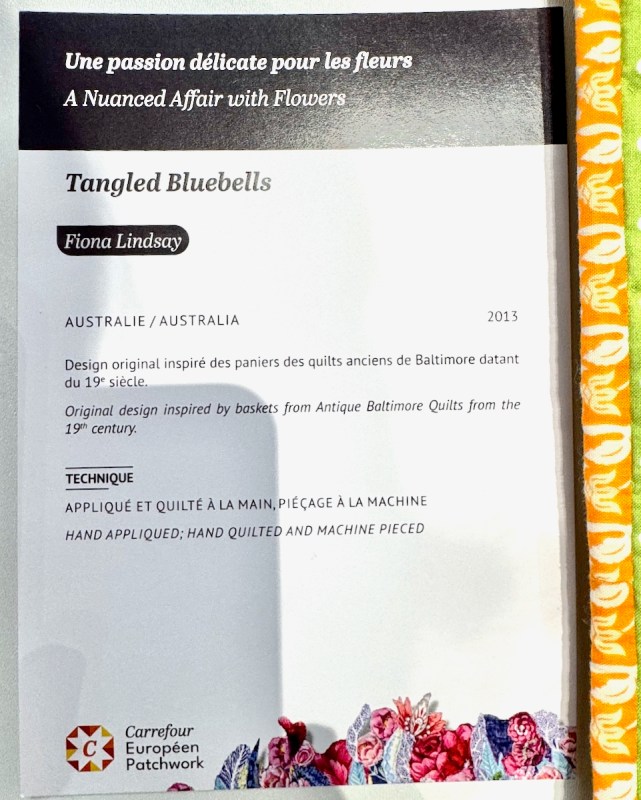
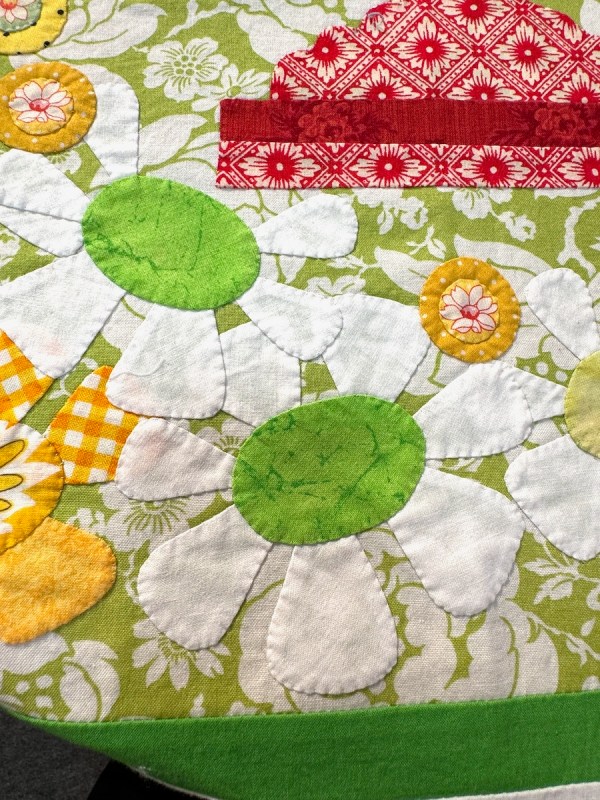
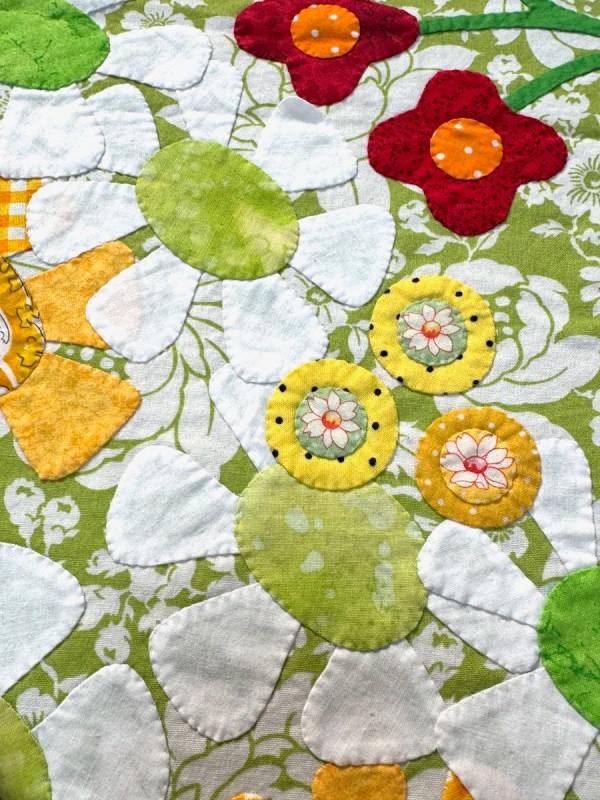
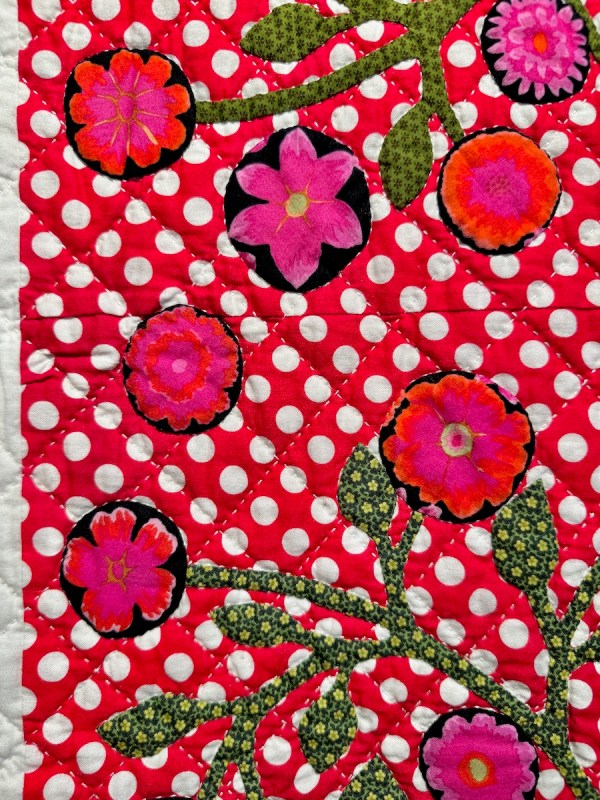
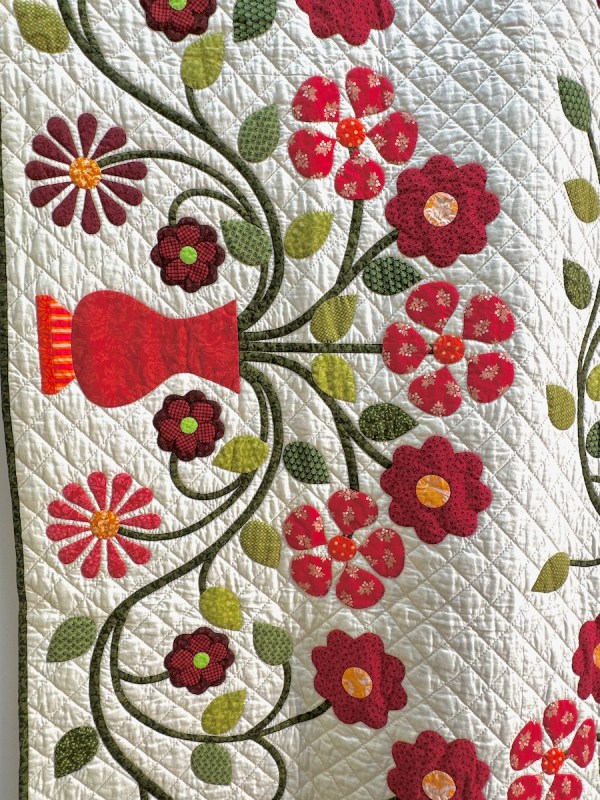
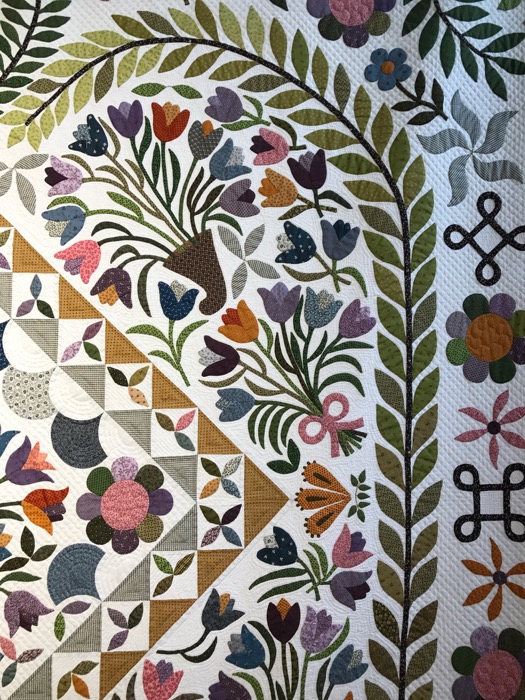
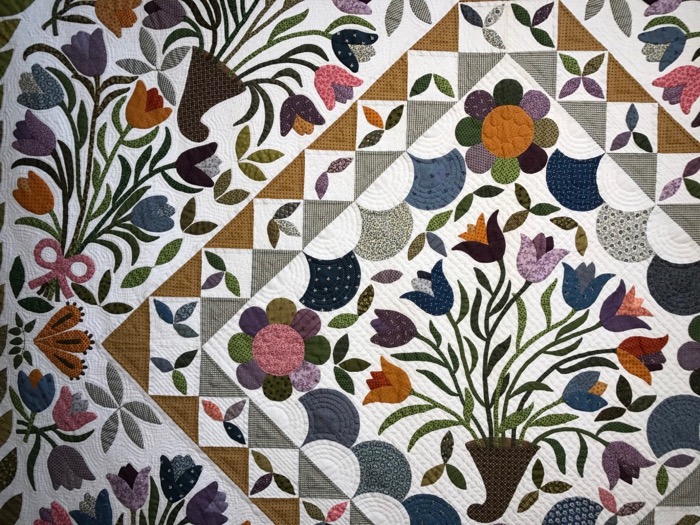
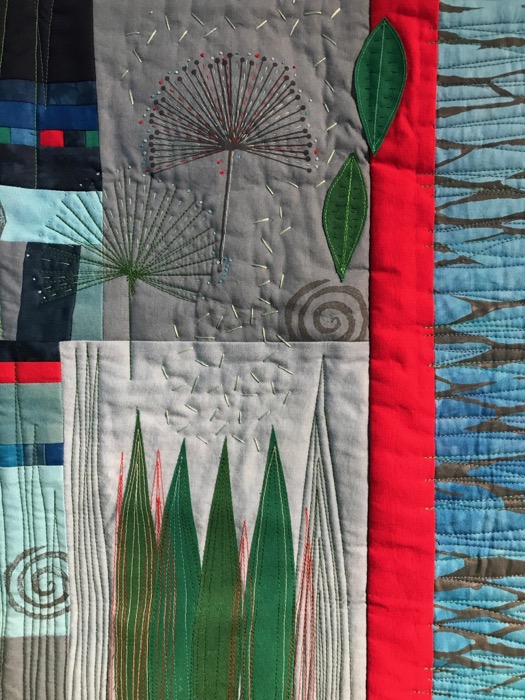
One reason why I do these posts from Carrefour is not only to introduce you to new quilting artists, and to let you glimpse the passions from around the world (which Carrefour is so good at bringing together), but also as sort of a reference book for our own designs. Who would have thought to put a Baltimore-style urn of flowers together (above) with a wild vine running free from tiny pots in the corners? Yet it all works with that pieced border and the wild orange Kaffe fabric sashing. Here’s a closer look:
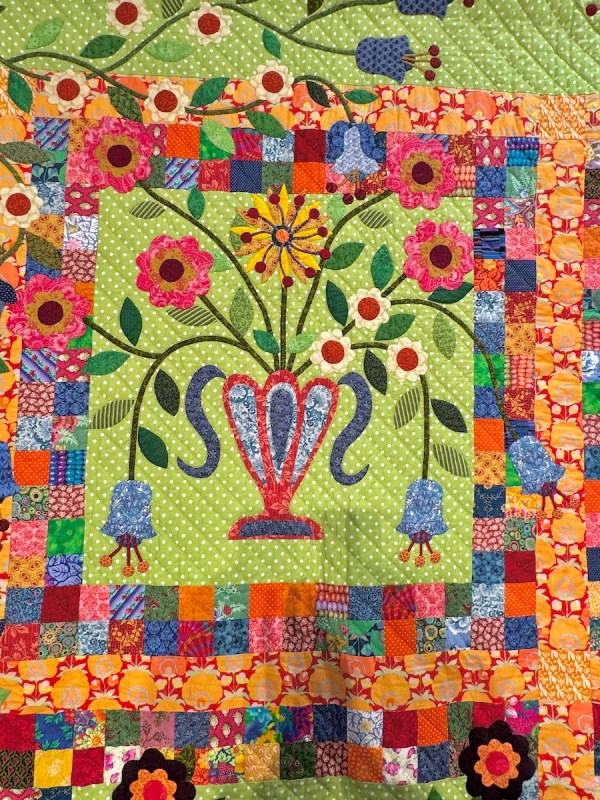
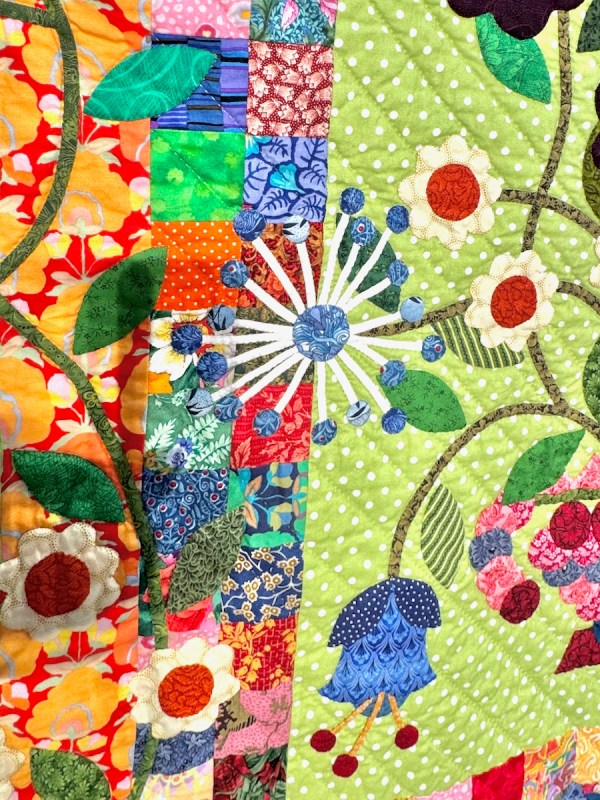
It was great to see a close-up of her work:
Okay back to the quilts.
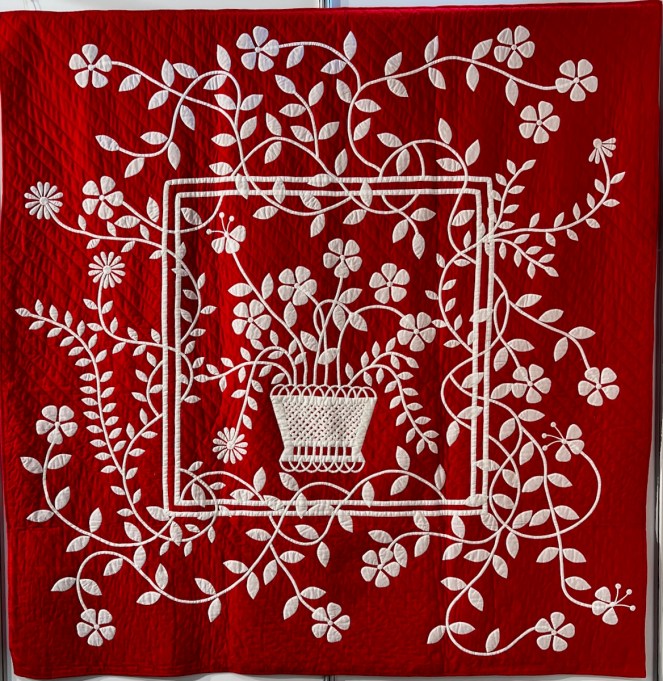

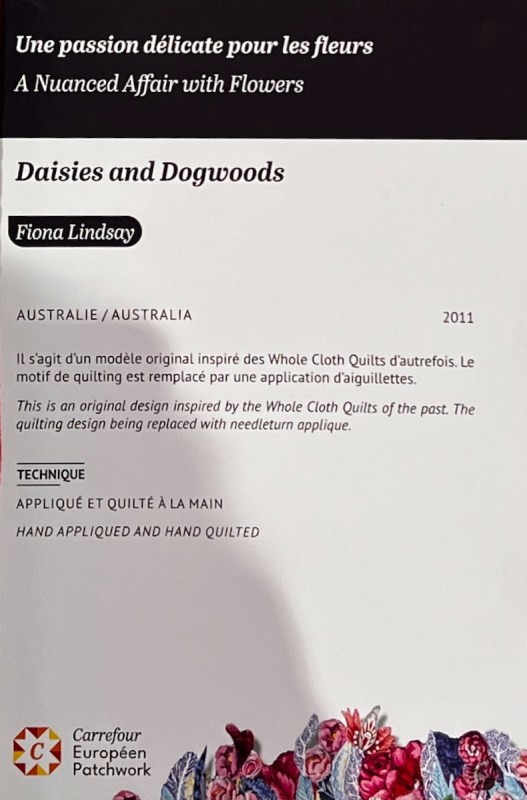
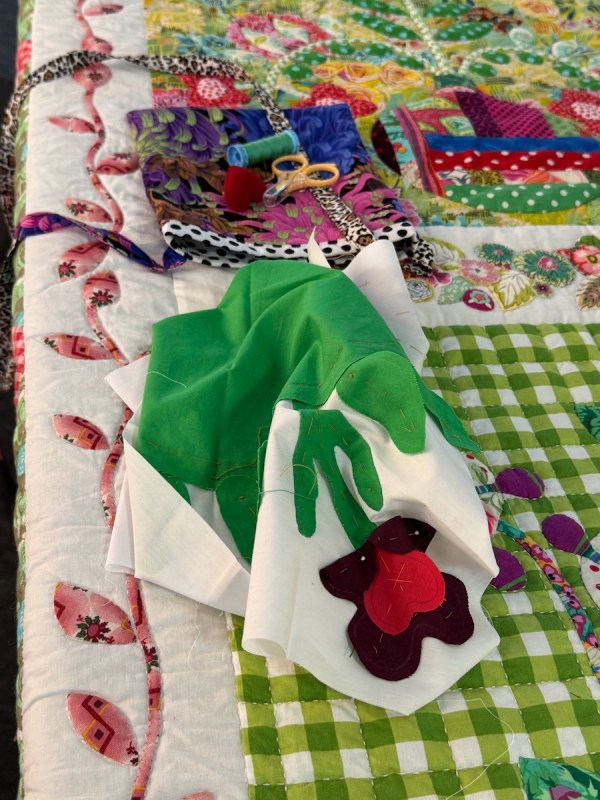
And now for the favorite from the last post withf Janet O’Dell’s quilts: the antique quilt, but given a Fiona twist:
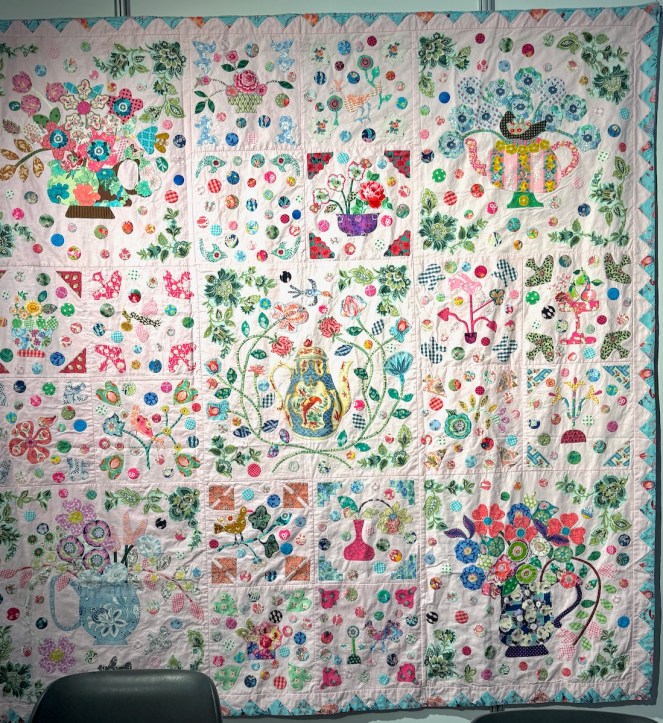
In pink! With color!
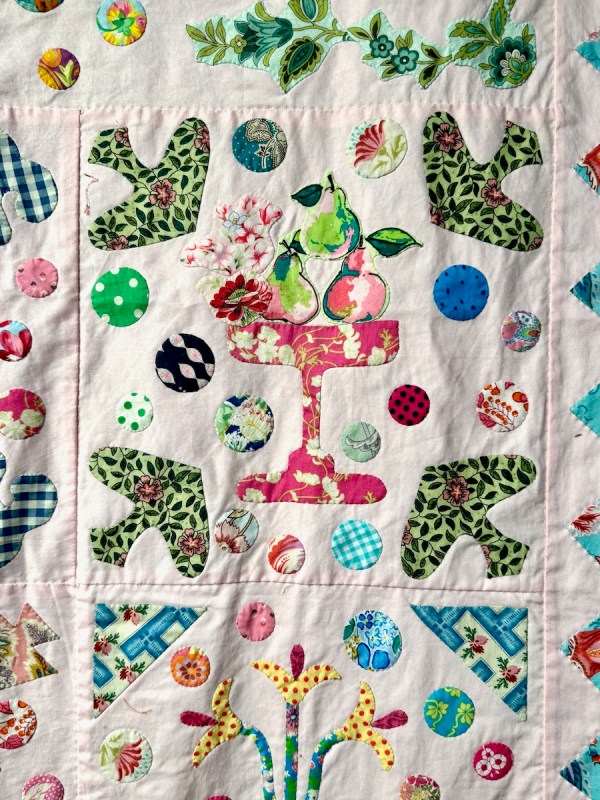
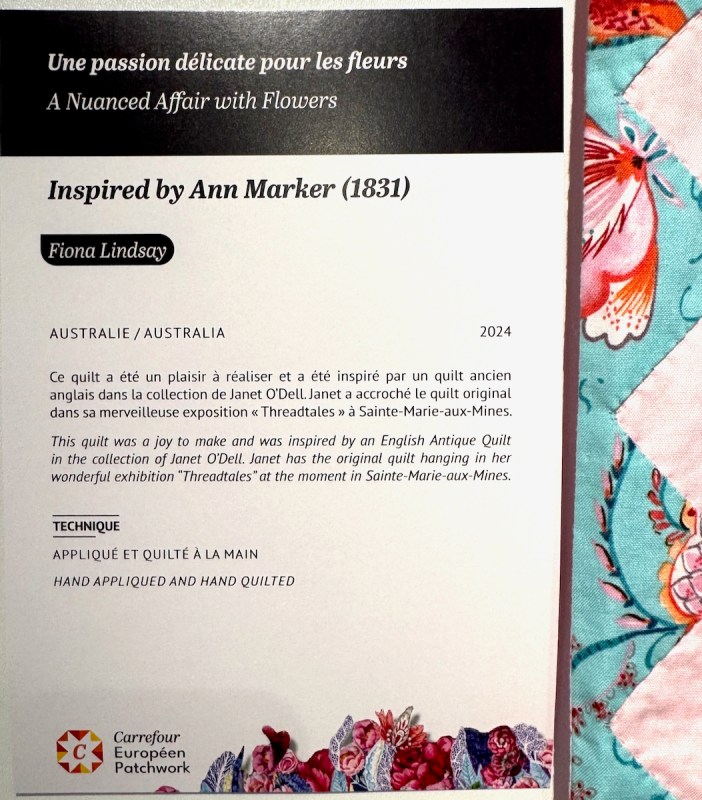
And now I know the maker of that antique quilt: Ann Marker, from nearly 200 years ago. This truly is free and fabulous appliqué — the joy in these shapes just radiates.
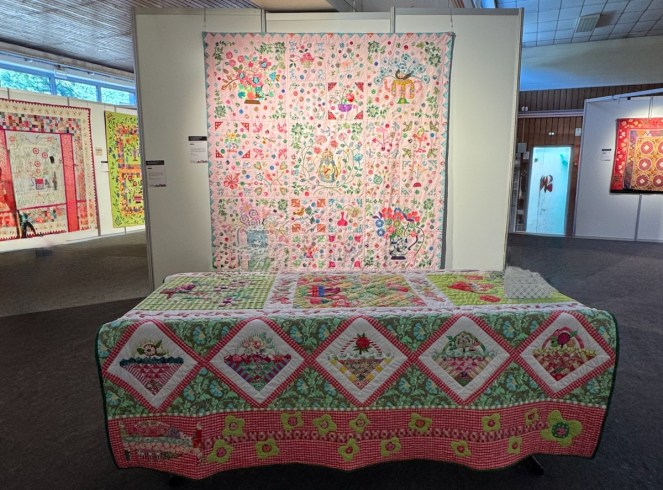
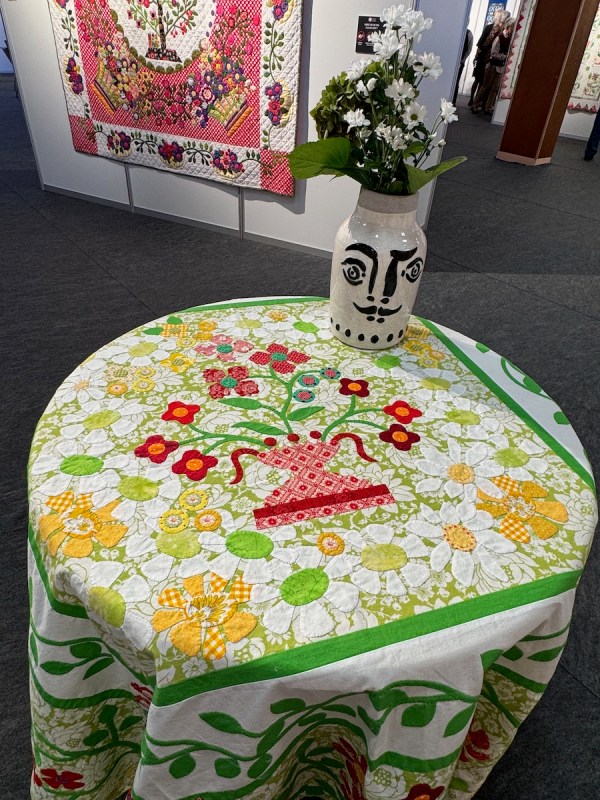
Thank you, Fiona, for all your beautiful flower quilts. You can find her on Instagram.
And thank you to all the other quilters and artists.
I know this was a really really long post, but again I hope you’ll treat it like a reference, as well as a delight. I think I have at least one or two more post in me before finishing; it will come soon. Very soon. (Teaser: next up is Racheldaisy, from Australia.)































 OccasionalPiece--Quilt!