300 Quilts · Quilts

My Small World Top • flimsy finish

mysmallworld2019_final full top

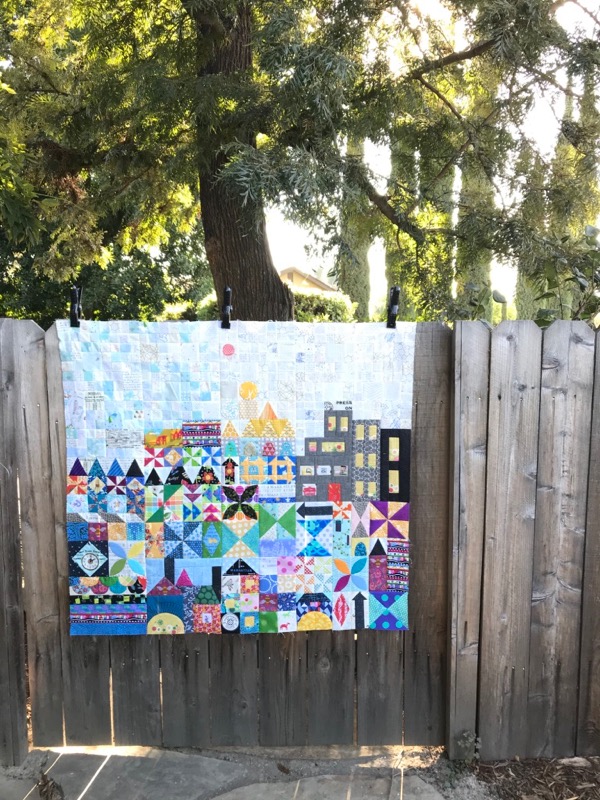
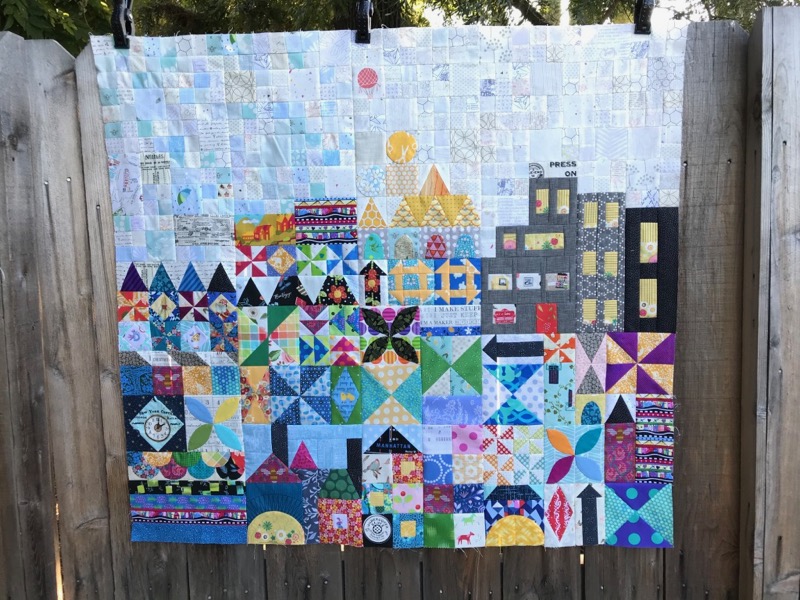
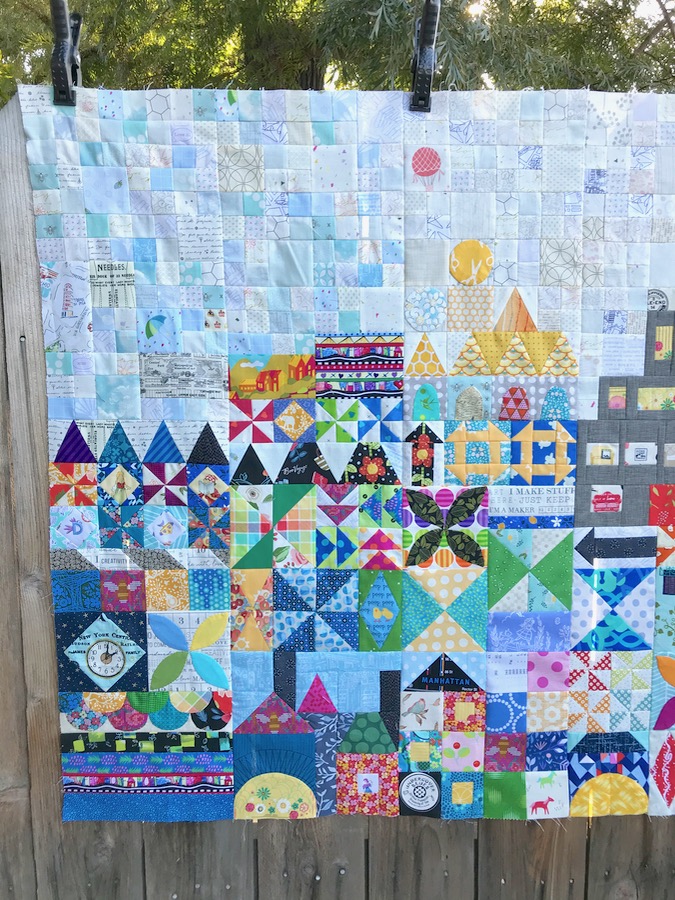
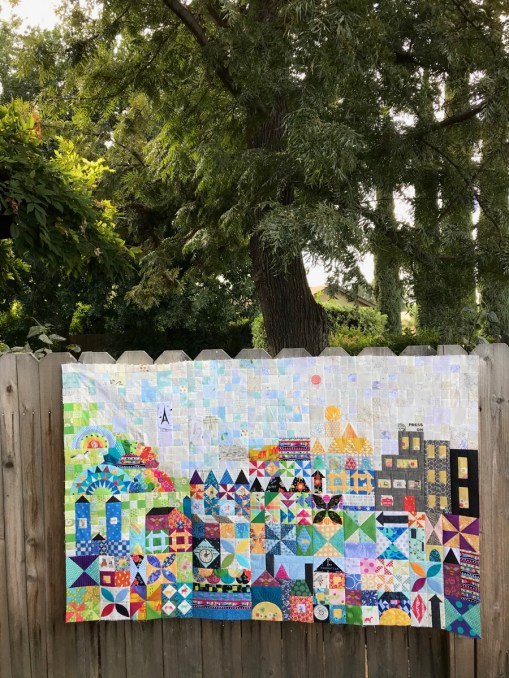
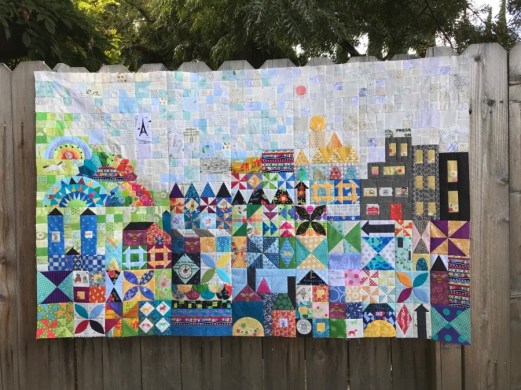
It’s done!  I decided to forge with ahead My Small World because basically, nothing else in my life was getting done with that mess in the sewing room, and I wanted to be finished with this project, the Third Hard Quilt of 2019. Here, in my backyard studio, I’m showing the finished flimsy of My Small World, a pattern by Jen Kingwell.  I made some changes here and there, but it’s basically her pattern.  Began in 2014, I was nudged to completion by a new Instagram Quilt-a-long #mysmallworldsewcial, where many others are still working.  Let’s take each of the last two sections, one at a time:
mysmallworld2019_5_completed

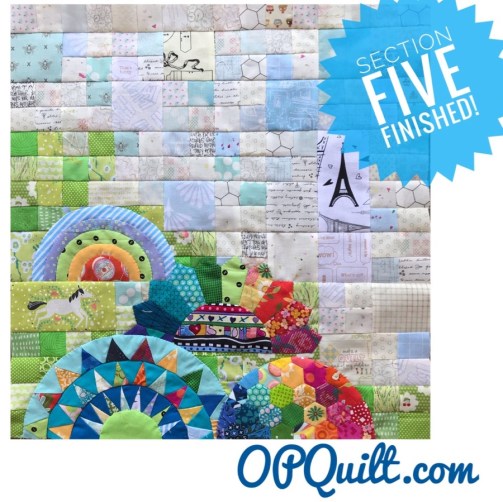
One late night I was thrilled to discover an Eiffel Tower in one of my fabrics.  I love the embroidery others had done, but it wasn’t for me.
mysmallworld2019_5_1a

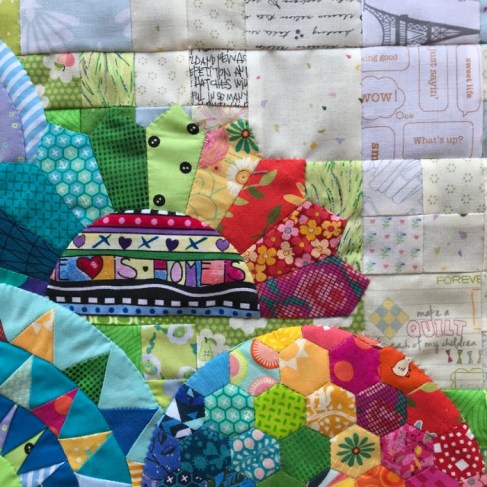
I took the hexie bubble with me to Guatemala last week, and stitched it up while chatting with my sister/BIL (who we went to visit) and on the plane home.  I brought home some illness, courtesey of the Chicken Bus airplane we flew home (kidding, it was a regular airplane but there were a lot of people sneezing, coughing, etc).

I made a teeny video of our visit to the bus depot in Antigua, where we saw a lot of Chicken Busses, so nicknamed because they can carry everything, including live chickens.  If I could have figured out how to add a chicken bus to this quilt, I would have; I fell in love with them, as well as Guatemala.
mysmallworld2019_5_1c

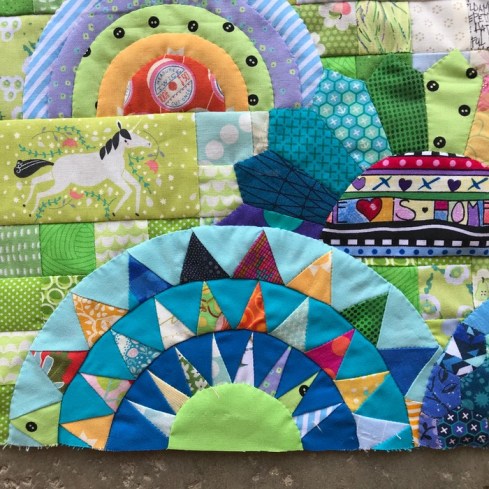
I also fussy-cut a unicorn (just under the top rainbow, but everyone on IG called it a horse–his little white horn is hard to see).
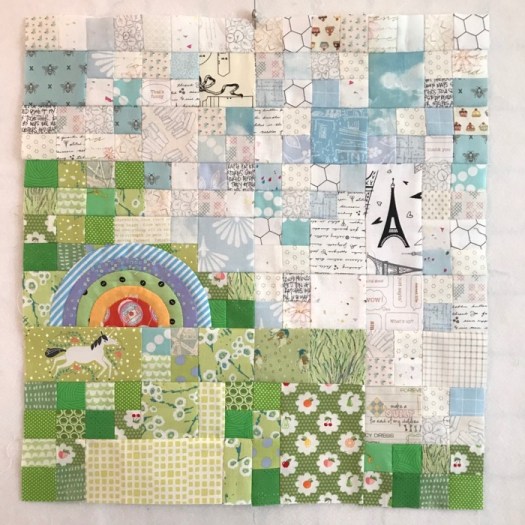
mysmallworld2019_5_1d

Underneath the arches and hexie-bubble are bigger blocks of fabric, as I figured I was going to cut them out from behind the two structures at the end, and why waste all that piecing?  I cut out the fabric from behind the rainbow (shown above) and the spikey arch and hexie-bubble:
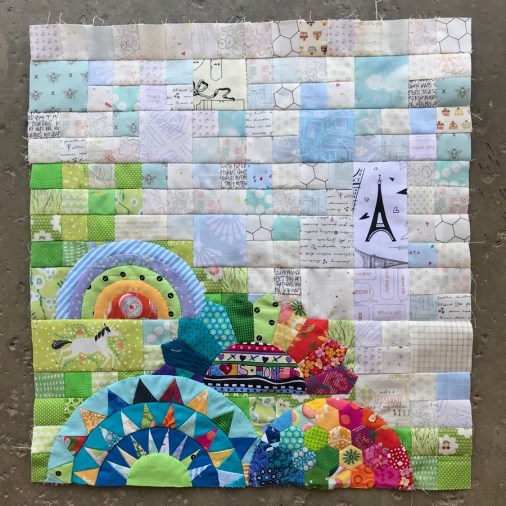
mysmallworld2019_5_1

Those arches were a grind, but I did them.  I included other tips and tricks in this post.
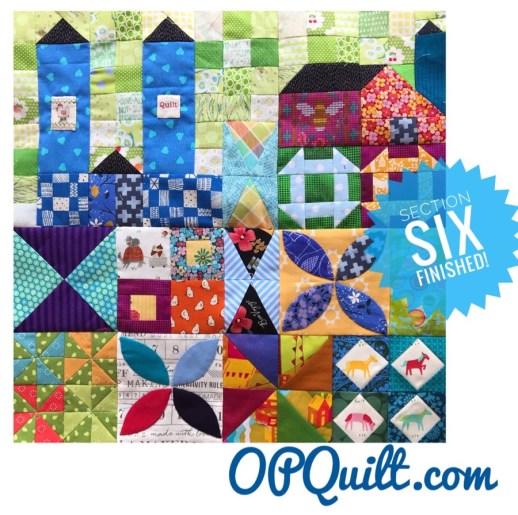
mysmallworld2019_6_completed

Section six was a relief to get to, after those arches.
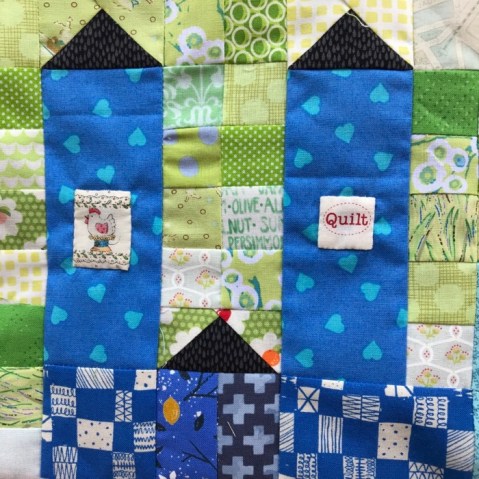
mysmallworld2019_5_2a

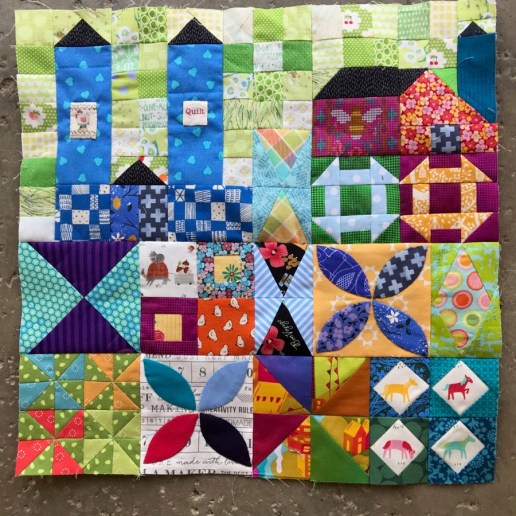
I liked the two blue silos, but they were a bit stark, so I added signs to them: a sewing chicken and the word Quilt.
mysmallworld2019_5_2b

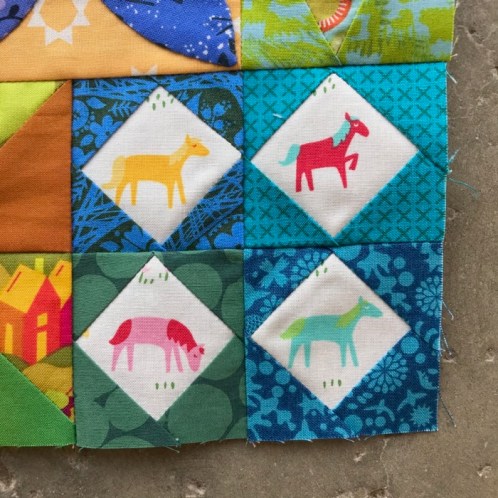
I changed the order of the bottom row of patches around, and I just couldn’t face another eight teeny flying geese, so I did a square-in-a-square with fussy-cut horses, since this is the farm section.
mysmallworld2019_5_2mysmallworld2019_5_3

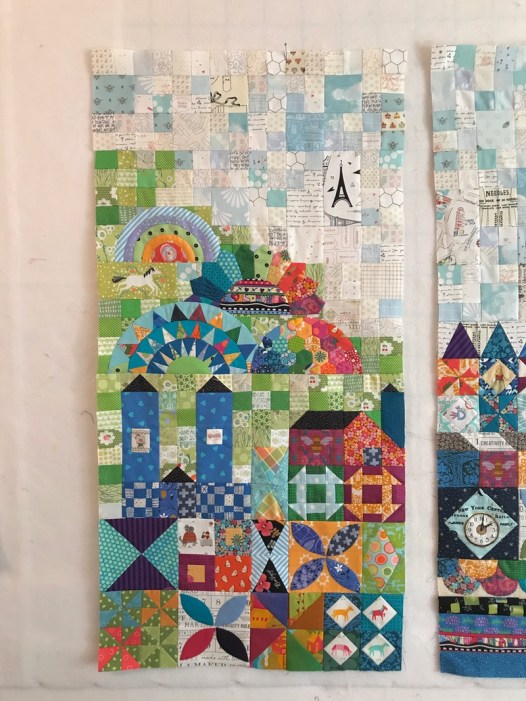
I sewed those two sections together, then stitched it to the other part of the quilt I’d already completed.
mysmallworld2019_5_full top2

Yes, I’m pretty happy to be at this point.  My friend Laurel added a border to hers and I’m considering that, too.

My To-Do list of items is lengthy, all being held hostage by this quilt.  Now I need to go and clean up my sewing room, vacuum, clean some bathrooms, and try to find the extra furnace filter in the garage, as well as maybe take a nap. But I’m done!!!

300 Quilts

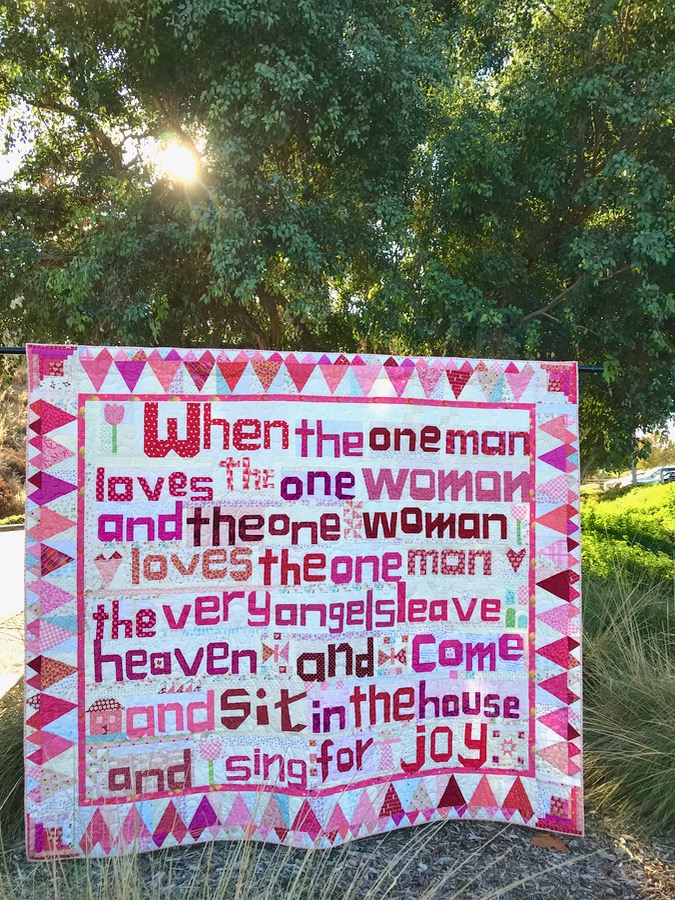
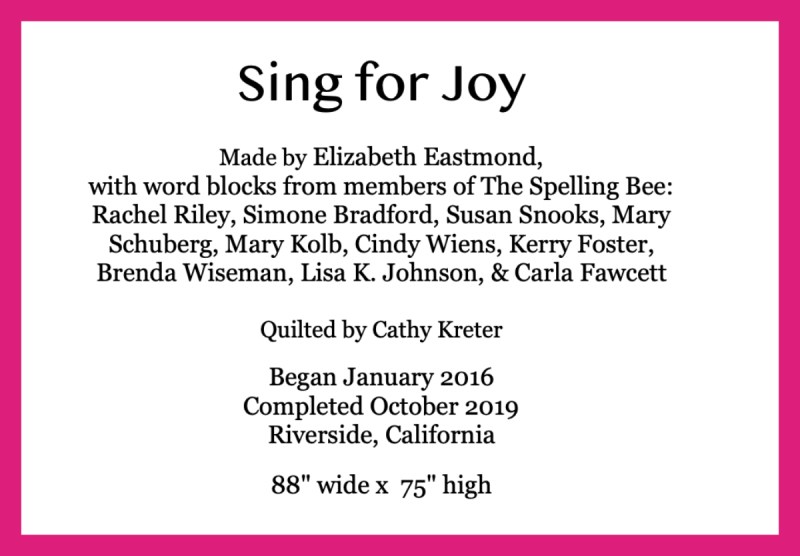
Sing for Joy • Quilt Finish

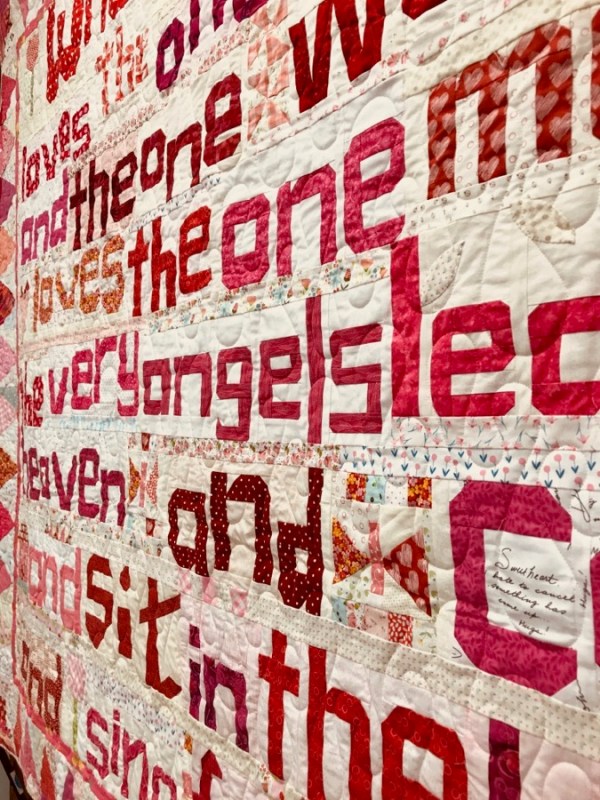
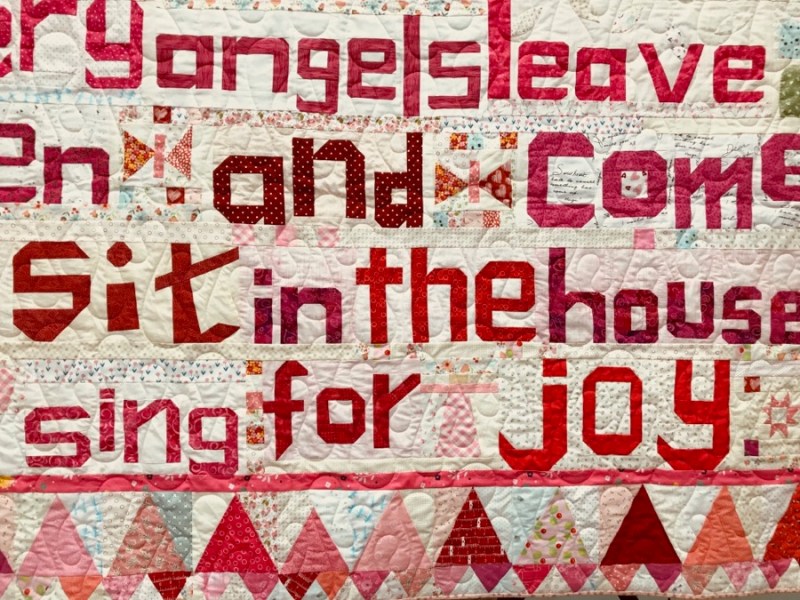
Sing for Joy_3

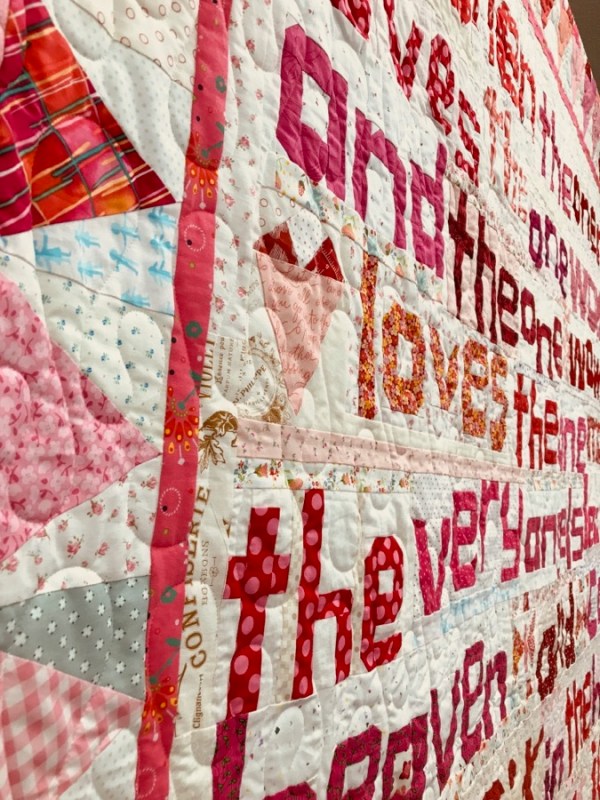
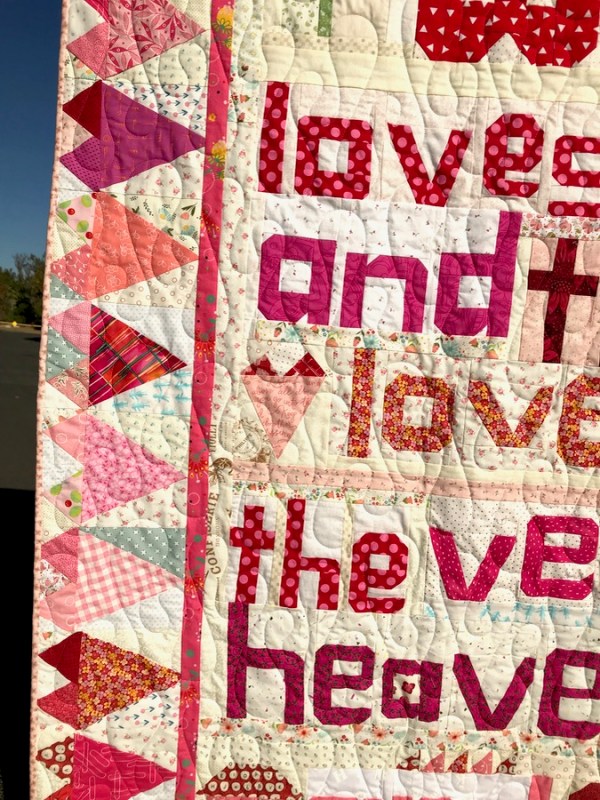
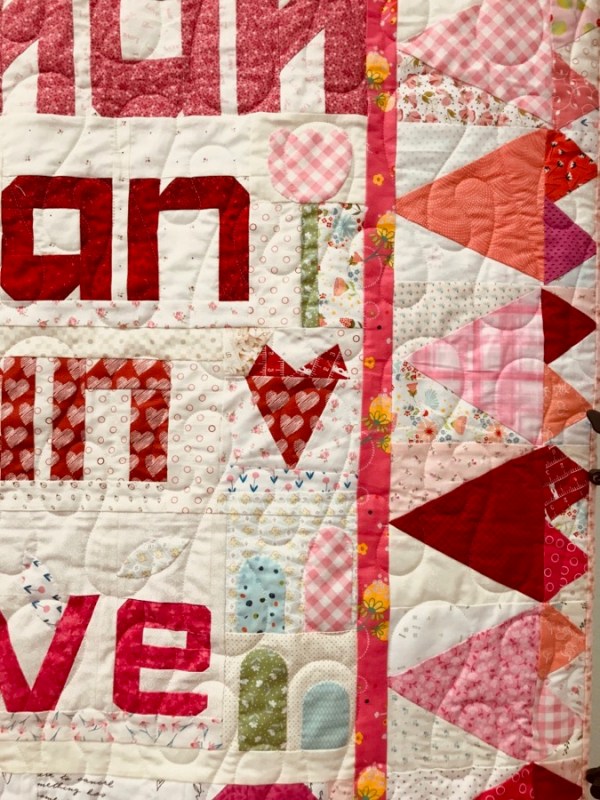
Sing for Joy • Quilt #226

This is the second of my Three Hard Quilts to Make for 2019.  It’s a lovely day now that Sing for Joy is finished.

Here was my recipe in a few easy steps:

  • I decided I wanted to make a quilt with words, so I bought every quilt book there was on words.
  • Then I decided I wanted mine a bit wonky and NOT paper-pieced. 
  • I sent around an email to see if anyone else was interested, and some colleagues in a former online bee jumped in, so we ran the Spelling Bee ran for one year, all of us making words for each other.
  • I follow Kviltstina on Instagram, and she has the sweetest little creative shapes on her feed, so I put some of them in this quilt.
  • Here’s a blog post, with free pattern, for the hearts around the edges.

I posted the how-to’s, one by one on Quilt Abecedary.blogspot.com, where they still live.

Sing for Joy_4

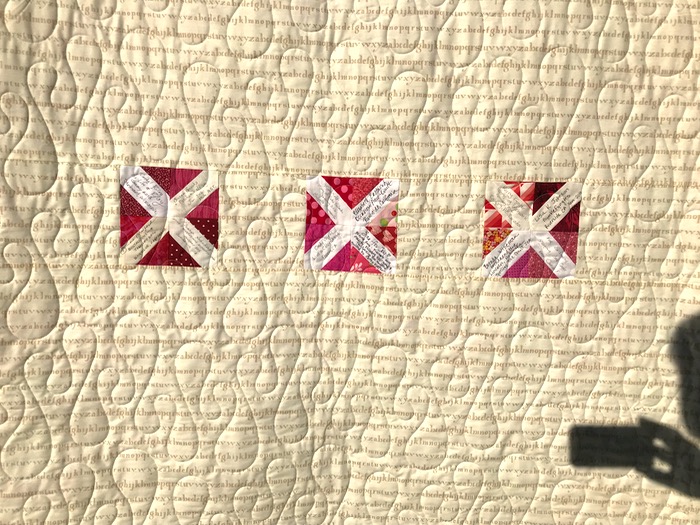
The back, showing the signature blocks of my beemates.  I had to remake one, when the ink started running down the block when I pressed it; I guess she grabbed the wrong pen.  (It’s always something, right?)

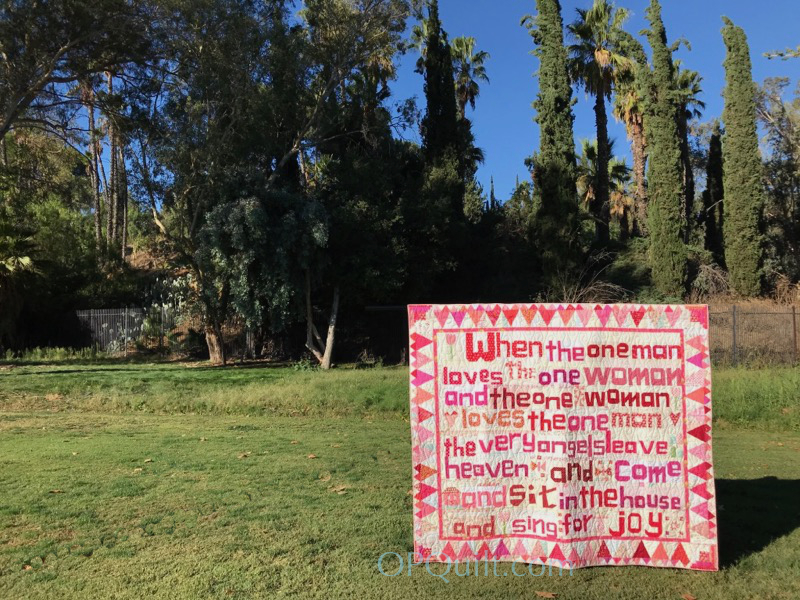
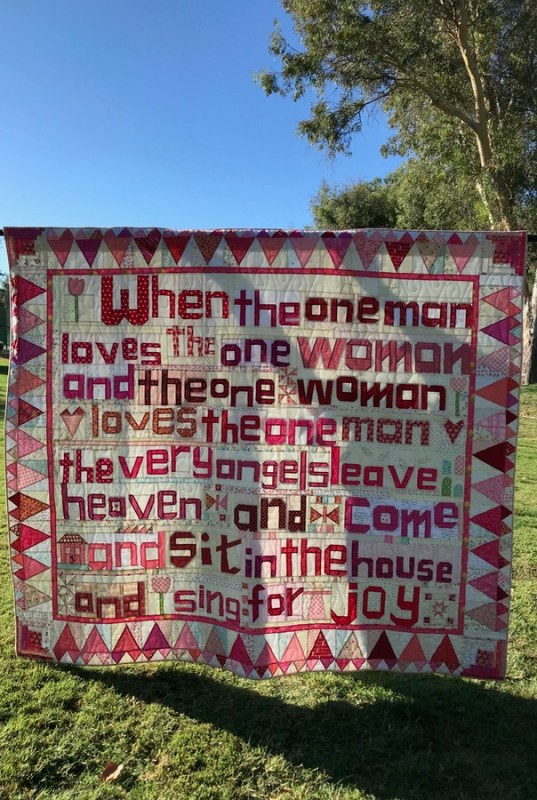
Sing for Joy_1 Front

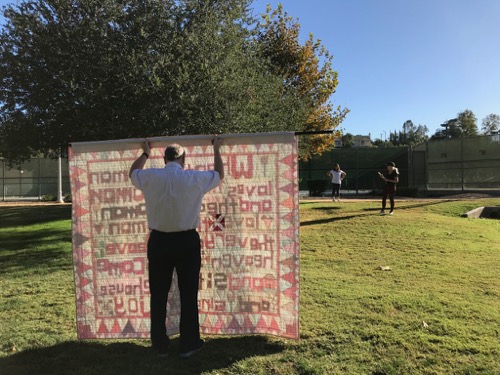
My husband and I went out for some photos in our neighborhood park, and several of the walkers asked about it, wondering how long it took to make it?  (Why is that always the first question, when people talk to us about our quilts?)

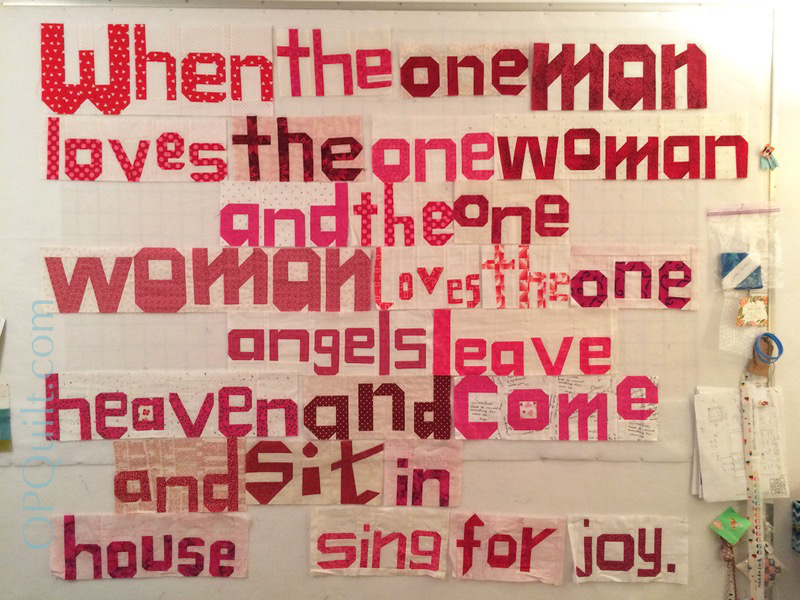
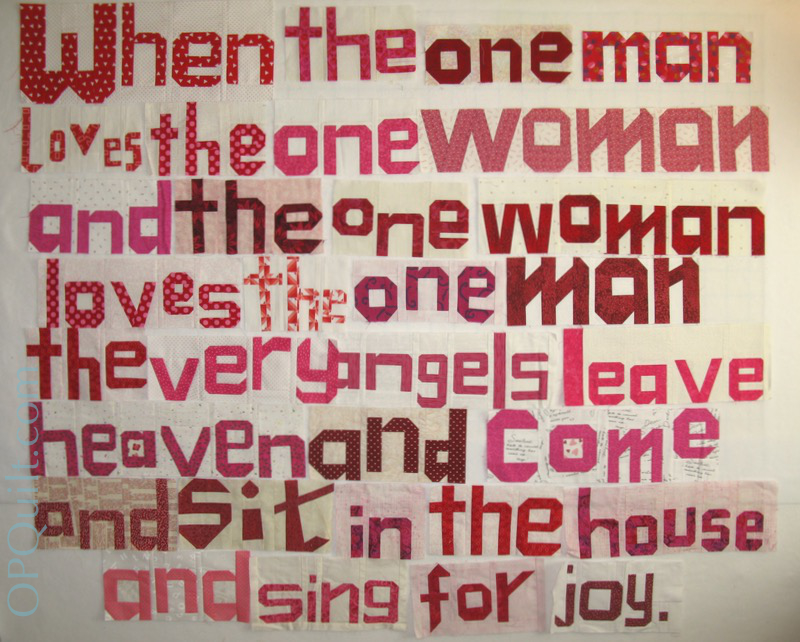
I began in 2016, and finished it this year (some early photos, above). I had to remake some of the words and cut down others, so I could fit them evenly on the quilt.   I hand wrote a label and pieced it in with the signature blocks, but if I printed one out it would say:

My brother and I had an active discussion last week about whether or not there is such a thing as a soulmate.  I said I believed there is no such thing, as it was the stuff of movies and greeting cards.  What is possible is that you find yourself a partner and you work to build a relationship and sustain each other and the family.  Soulmates are ephemeral, I said.  Of course, he disagreed with me, as so might some of you.

But what I think I do believe in is a cheerleader, someone who has your best interests at heart, who encourages you, listens to you when you’re sad, upset, cheers you on in happy times and is steady and consistent.  Someone who is always on your team, and for who you’ll do the same.

This quilt is a tribute to my cheerleader of a husband, who 30 years ago married me and my four young children, raising us all.

He makes me Sing for Joy.

Sing for Joy_holding a quilt.jpg

First Hard Quilt of 2019
Second Hard Quilt of 2019 is this one, Sing for Joy
Third Hard Quilt of 2019

Sewing

My Small World • Section 3 & 4

mysmallworld2019_4_1 full.jpg

I know you are thinking, no — praying — that someday soon I will be through with This Quilt, and believeyoume, you are not the only one hoping and praying that I can add it to my list of Three Hard Quilts of 2019 to be completed.  I’ve finished two Hard Quilts and I’m determined not to put any other quilt up on that design wall until I slay this Patchwork Dragon.

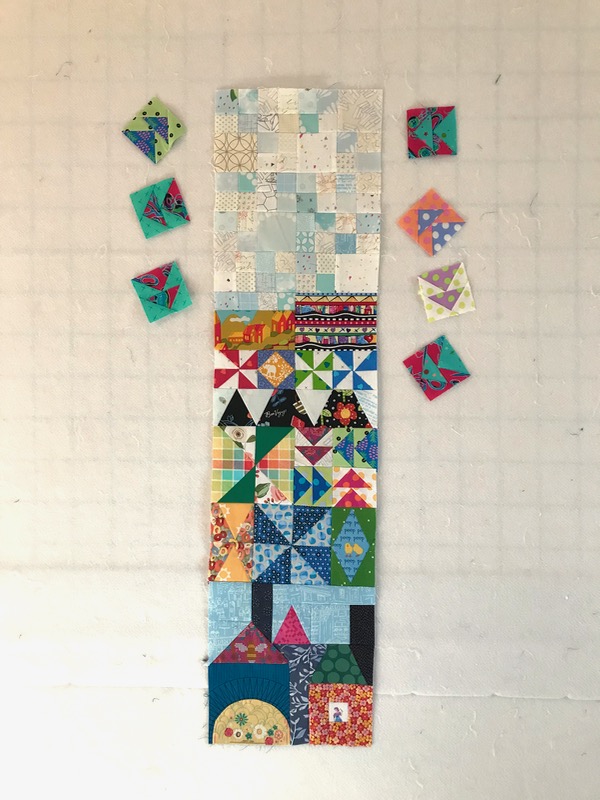
So I’m here to report progress: Section Three AND four are finished, hallelujah, but I’m celebrating probably less than you are because I have two more sections to go and I get stuck on the smallest things.

mysmallworld2019_3_1

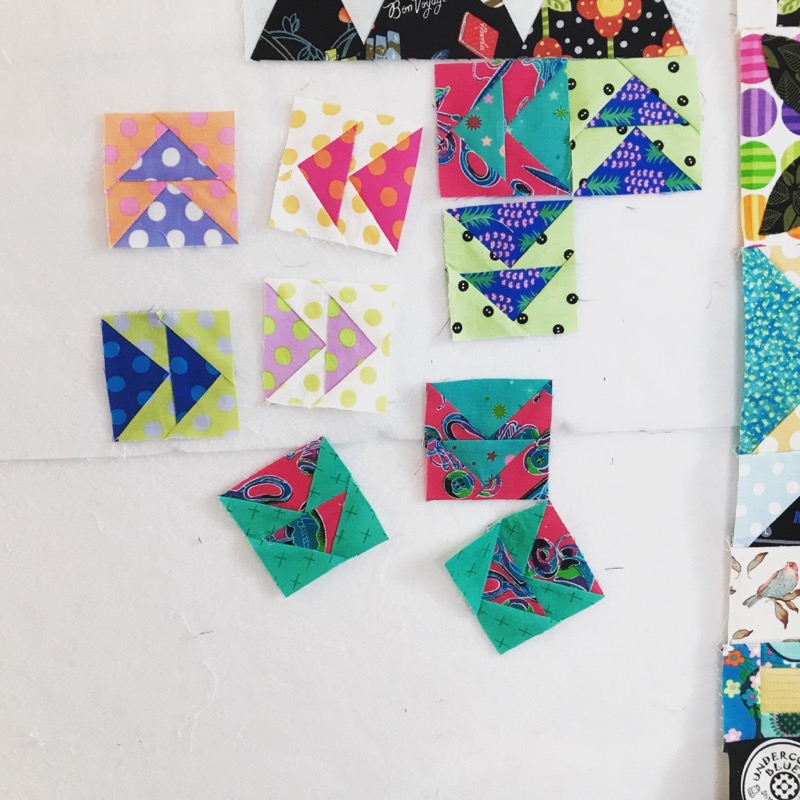
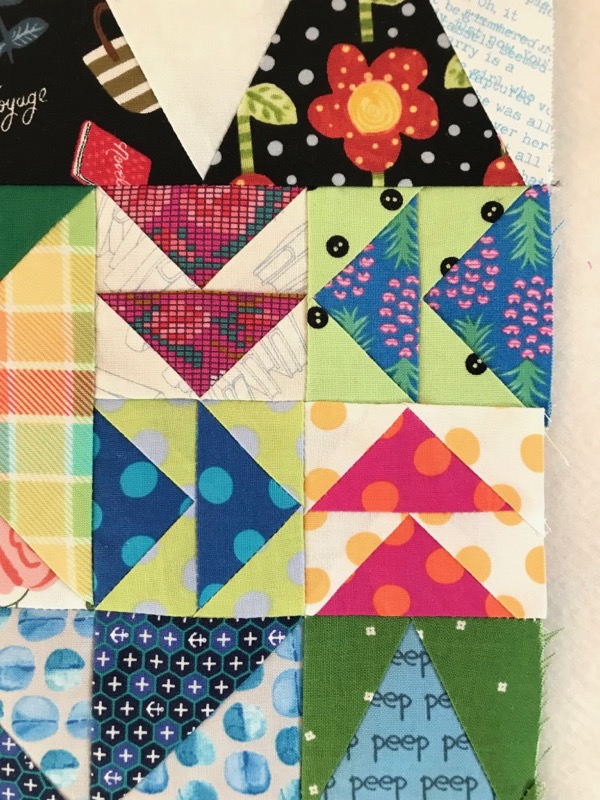
Like the flying geese in Section Three.

The approach I took the first time I made started this quilt was to pull every fabric out of my cupboards, strew them around and clip a square of this or a square of that and piece it into this quilt.

I occasionally try that approach again.  Which doesn’t work, again.

mysmallworld2019_3_1a

The best approach is to see what you’ve already thrown into the first two sections, then replicate that, either via color/value or the actual fabric, if you can find it the mess. The completed flying geese, above — which you can see is sort of an amalgam of all the geese I tried.

I’m finding the paper piecing templates from Sarah of SewWhatSherlock very helpful, if you want to get yourself a set.

mysmallworld2019_3_2

I also learned that I am truly stuck, lunch helps.  And maybe read the newspaper.  And then start in on the big shapes, letting the detritus come later.

mysmallworld2019_3_3

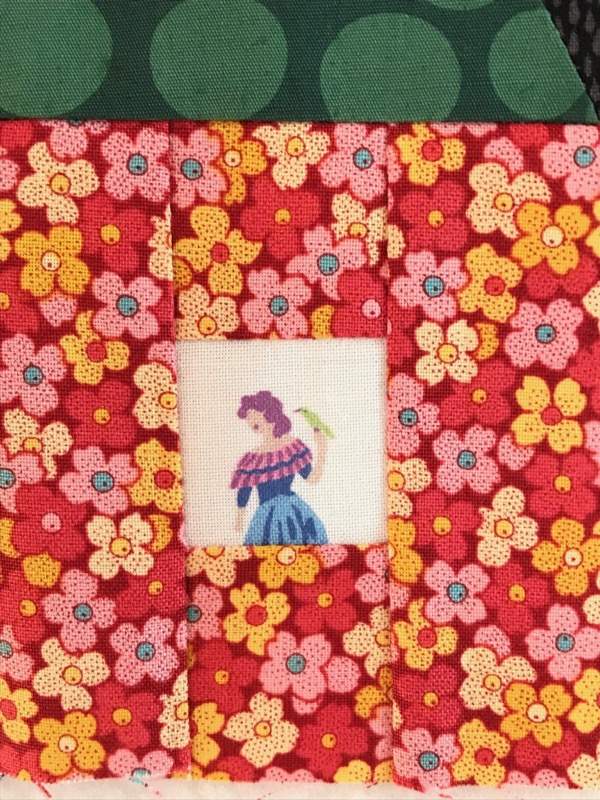
I can work in new bits here and there, like this woman with her bird.

mysmallworld2019_3_3a

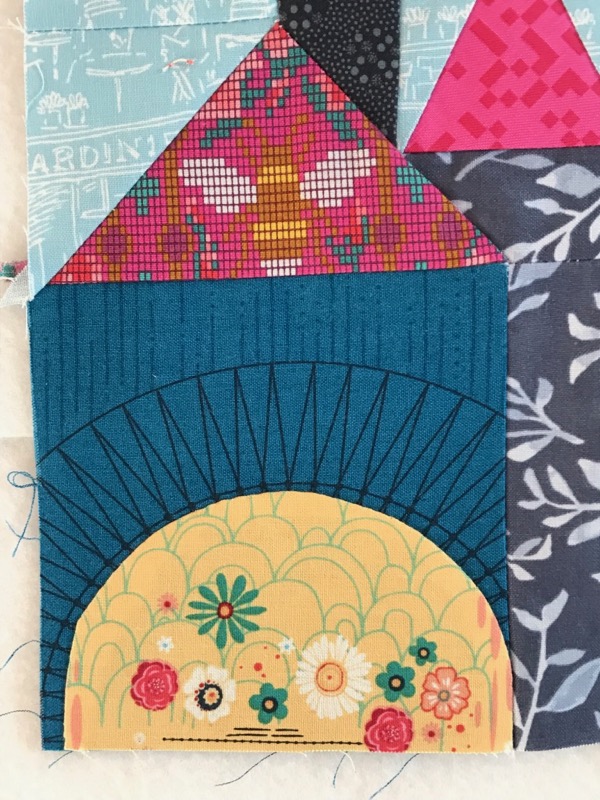
Or some fun repeated shapes, the appliquéd half-circle echoed in the fabric.  I can’t decide if this yellow is a fancy front window, or two hidden doors, camoflauged, or a re-planted tunnel under this European-style gate to the city.mysmallworld2019_4_2.jpgmysmallworld2019_4_3.jpg

Then I charged into Section Four — and why not? the whole sewing room is already a disaster — hand-sewing clamshells and fussy cutting blocks, and cutting multiples of the lower section strips but finally deciding, and now these sections are sewn together: 1 & 2 & 3 & 4.

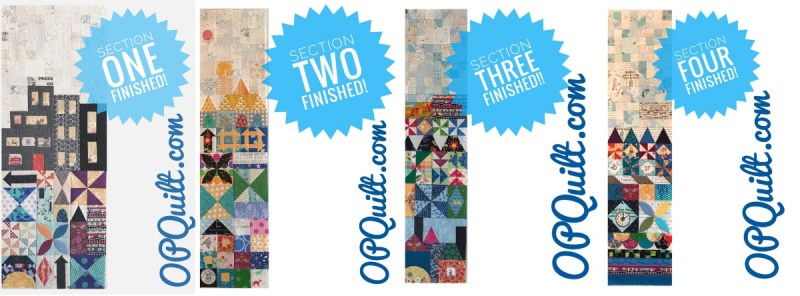
To recap:

My motto: Making progress, square inch-by-square inch.

My Small World Quilt, a pattern by Jen Kingwell.
Mess in the sewing room, by Elizabeth Eastmond (me).

Something to Think About

Making: Another view

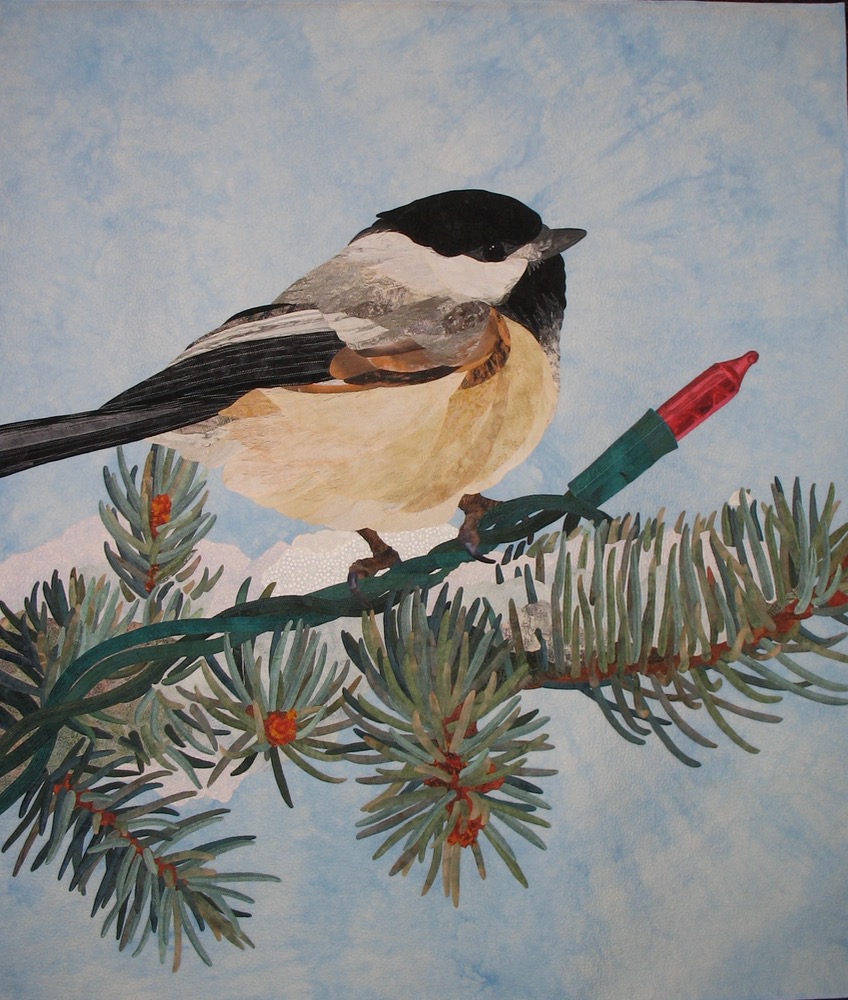
Christmas Chickadee_Taylor.jpgRecently I attended a lecture by David Taylor (at PIQF), which was humorous and interesting.  One interesting fact was, that while he did these incredible quilts with very detailed applique and quilting — most taking about a year to complete, when he was at home when he wanted to relax, he did very different work for himself.  He worked on the Piecemakers’ Calendars.

(A photo of his Christmas Chickadee is on the left.)

My husband and I had just had a discussion about this, about how I, as a pattern maker and creator of original quilts, sometimes make other people’s patterns.  I had a hard time explaining myself, for both facets of my quilty life give me much pleasure.  Why wouldn’t I alway make my own designs? I have tons more ideas than what you’ve seen, many more ideas to explore.

So I was intrigued by David Wu’s article titled “In Praise of Mediocrity.”  His opening lines hooked me: “I’m a little surprised by how many people tell me they have no hobbies. It may seem a small thing, but — at the risk of sounding grandiose — I see it as a sign of a civilization in decline. The idea of leisure, after all, is a hard-won achievement; it presupposes that we have overcome the exigencies of brute survival. Yet here in the United States, the wealthiest country in history, we seem to have forgotten the importance of doing things solely because we enjoy them.”

joggers

Wu goes on to say that he believes it is because we afraid “of being bad” at our hobbies.  If all the joggers are supposed to be marathoners-in-training, or all the painters supposed to be the next Rembrandts, that places the pressure of linking our identity to our hobby, with the result that we feel “you’d better be good at it, or else who are you?”

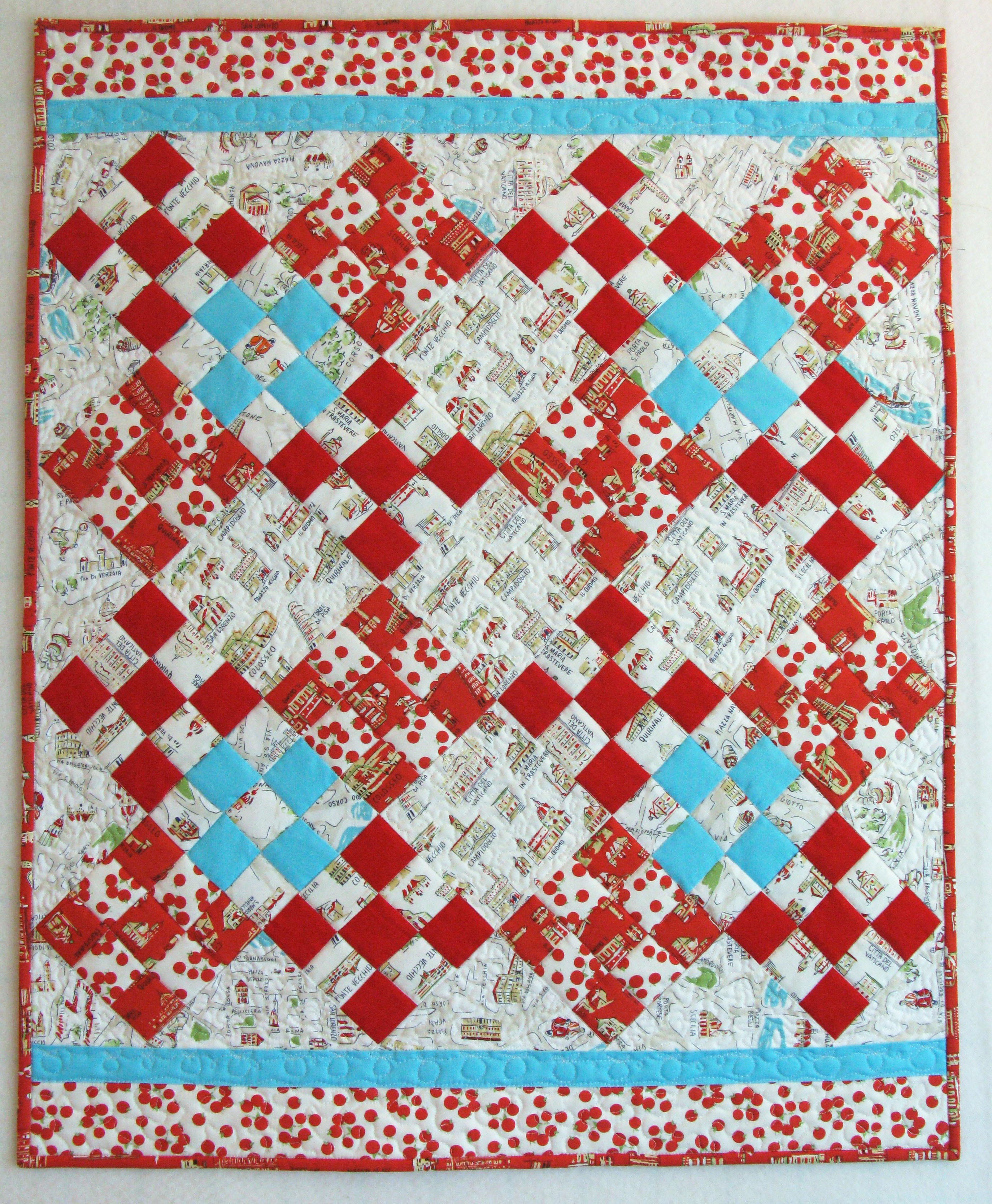
TakeMeBacktoItaly frontI just finished the last of my Guild visits for the year, and from early on this year, I worked into my lecture a quilt that I think it a distinct “failure,” on so many levels: the colors don’t work, the pattern is good, but the fabric choices are all wrong, the quilting is meh.  But I show it in among my fancier quilts just to say that not every quilt is a home run, and most quilts don’t make it into the top ten of national shows.
Wu notes that in always striving to be excellent in our hobbies, it becomes more like work.  We lose “the gentle pursuit of a modest competence, the doing of something just because you enjoy it, not because you are good at it….But alien values like ‘the pursuit of excellence’ have crept into and corrupted what was once the realm of leisure, leaving little room for the true amateur.”

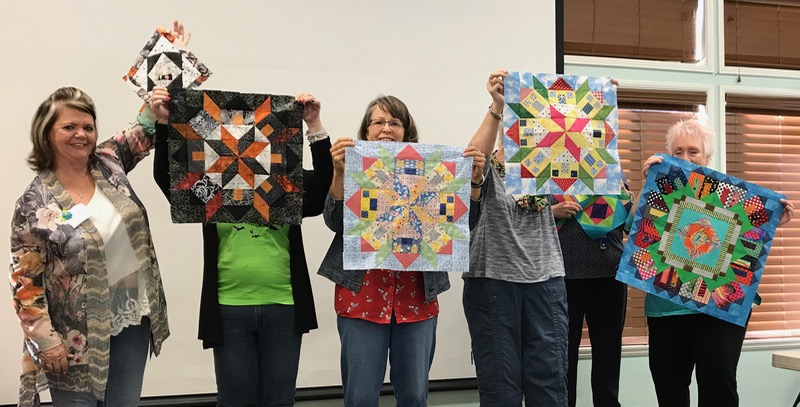
The people in my quilt workshops are always comparing their efforts with my samples, some of those sample having been made multiple times, so they are fairly free from errors.  The result is that I often leave them up on the front table when I’m chatting with the students about color choices, or design choices, wanting to see what they want to put where, what colors they want to make their quilts.

CitrusBeltGuildWS_4a

If we, or our students, or the women at retreats, or the neighbors around the small sewing circle feel like we have to be excellent at everything we do, isn’t this like being “trapped in a cage whose bars are not steel but self-judgment”?  Wu does not think that becoming good at something is terrible: “I don’t deny that you can derive a lot of meaning from pursuing an activity at the highest level. I would never begrudge someone a lifetime devotion to a passion or an inborn talent. There are depths of experience that come with mastery.”

BeeHappy_June_7

I want all my students to want to sew, to enjoy the process.  So what if the quilt doesn’t ever leave your bedroom? Is it less wonderful if it never gets into a show? It hopefully is the making that is the pleasure, or as Wu puts it: “a real and pure joy, a sweet, childlike delight, that comes from just learning and trying to get better,” finding “exaltation in the mere act of doing.”

Happy quilting!