Since all the recipients of my handmade Christmas gifts have received — and opened — their presents, I can now share what I made for my four children. Gifts for adult children and their families can be challenging. Sometimes we’ve given money so they can share an experience, sometimes we’ve purchased gifts for the whole family — spending hours in the toy aisle at Target — but sadly, most of the grandchildren want something from the toy aisle at Amazon these days. Other years we’ve given a beautiful Christmas picture book.
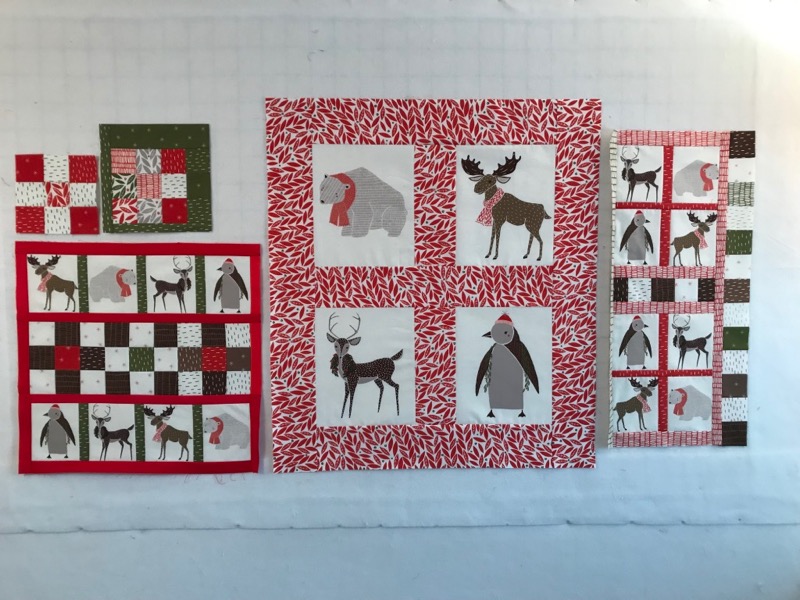
This year, we went this way.
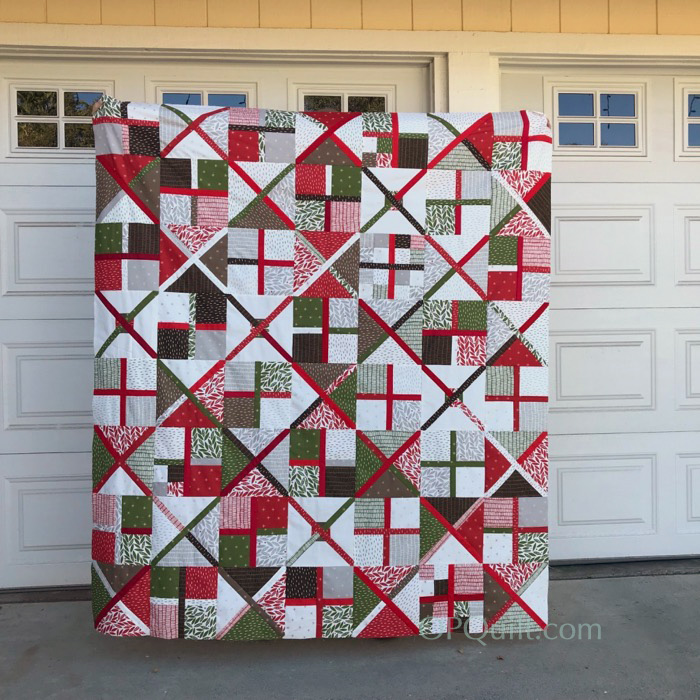
I had leftover bits from my Criss-Cross Christmas quilt, but had to search to find more fabric to make what I wanted, then used an entirely different line for the backing and binding. When these lines sell out, they are gone gone gone.
I started these in April (in process photos, above) and finished, quilted, and bound them in November and mailed them before Thanksgiving so the families could use them in their decorating (if they wished). I unpicked the upside-down animals, righting them (as seen in the left photo).
We were at my daughter’s for Thanksgiving, and I snapped this quilt, casually tossed on her bed. I thought it looked great. I hope to get photos of what the other families are doing with their table toppers/bed accents/wall hangings/whatever.
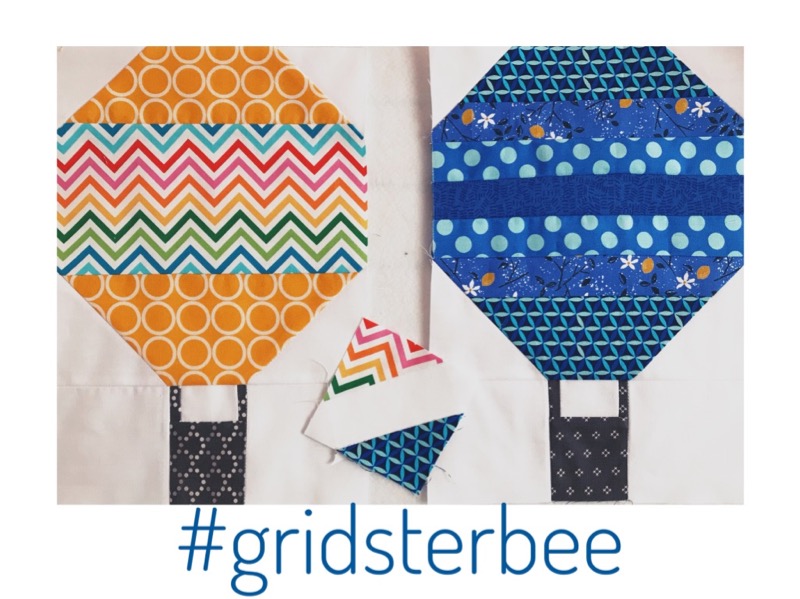
We finished up our 2019 Gridster Bee by making these hot air balloon blocks, free from Woodbury Way. They are for Afton, who lives in an area known for their hot air balloon festivals, so it’s a fitting block for her (although she may just really like them, I haven’t asked). I was supposed to do Block 4, but things just kind of morphed into something else once I got going.
Finally, in other happy news, this is a photo of me dropping off three quilts that were accepted to the upcoming Road to California Quilt Show.
We have quite a group that will meet up there, with Lisa bringing friends from Utah, Carol coming all the way from Boston, Kelley from Palm Springs, and the locals (Simone, Leisa, Laurel and I). It will be a gathering, of sorts, for a few members of the Gridster Bee! We generally meet upstairs for lunch, overlooking the gallery of hanging quilts. This year I’ll have a quilt in that gallery as well, as our Inland Empire Modern Quilt Guild has been selected to provide those quilts. I’ll have more news about all of this when it gets closer to Road, which will be held January 20-26, 2020.
I have one more Christmasy post on Christmas Day, so until then, keep your spirits Merry and Bright while finishing up the shopping, baking and gathering. And if you are having a solo holiday experience this year, I wish you lots of good music, great take-out, and quality sewing time.
I figured in December that a post about High Productivity and Strenuous Piecing and Hours of Quilting might better be replaced with something of lower impact. So, let’s go to Guatemala, look at fabric and maybe do some shopping.
This view of Antigua shows the bowl-shaped valley surrounded by volcanoes, where we spent two days, as well as two days in Guatemala City. Who was “we”? My sister Cynthia and her husband Gary are on an eighteen-month humanitarian mission in Guatemala City for our church; they spend long hours in a dental clinic, where Gary donates his services. My sister is his assistant, so we took advantage of their time there and went to see them for a short weekend. (Now I wish it had been much longer.)
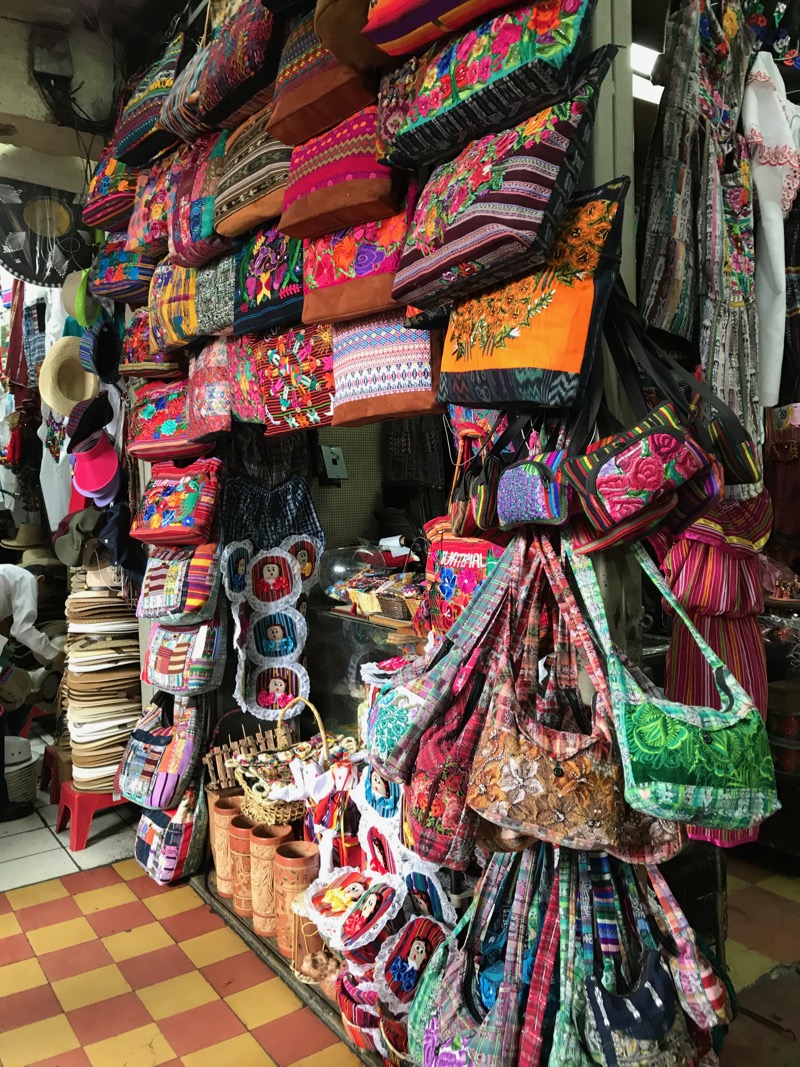
We took a red-eye from LAX to Guatemala City, and that first day we went to a market in Guatemala City, where I tried to not pick up everything and buy it. Surface pattern everywhere: it’s what a quilter loves.
They sell everything here, including bouncy balls for play.
My first purchase was this huipil, a hand-loomed top that is worn by Guatemalan women. There are many different styles; this one happened to be embroidered; some have woven designs instead, like those shown below:
Here is the queen of her village (R), with her mother (center) and her older sister, at an indigenous ceremony where they choose the Queen from 100 different villages. My sister has a blogpost about these young queens that is fascinating reading (where many more fabrics and textiles can be seen). Cynthia (my sister) also sent me a lengthy YouTube video for me to watch before I went to Guatemala, which taught me a lot about their native and artisan textiles. We explored that first market, where I showed incredible restraint, but I must admit to already having sent a letter to her, asking her to pick up a couple of more things.
We walked a couple of blocks away to Lin Canola (door on the right) where they had two big rooms full of fabric wrapped on circular bolts. (I obtained permission for these photos.)
Bliss. (My sister knows me well.)
From all those bolts, I first chose these.
Then I added some accents, as I want to make this:
I have vivid fantasies.
The next day we boarded a chicken bus and went to Antigua.
Just kidding–we went in a nice car, but oh, how I love to see these fabulous, re-purposed school busses. Here’s a video. They have a person who rides along, calling people to get on, and helping with all the luggage atop the busses. In the video you can hear the callers, as well as see some un-decorated American school busses.
We went first to Carolina’s Textile Museum, where in the entry courtyard, a young woman was weaving on hand loom, anchored above her head, and strapped around her hips. She was quick with her hands and interesting to watch. I have many videos on Instagram using the #fiestaguatemala2019 hashtag, as well as in my stories.
Textiles Carolinas flier
This huipil is rare–completely woven back and front, and done by a woman for her future mother-in-law. The young bride gifts it to her mother-in-law on the wedding day, and it is used in many ways: a shawl, sewn up the sides for a huipil top, or folded up and placed on her head to shield her from the sun. Then, the mother-in-law is buried with it. (I’d have a hard time parting with it, if I were a new bride!)
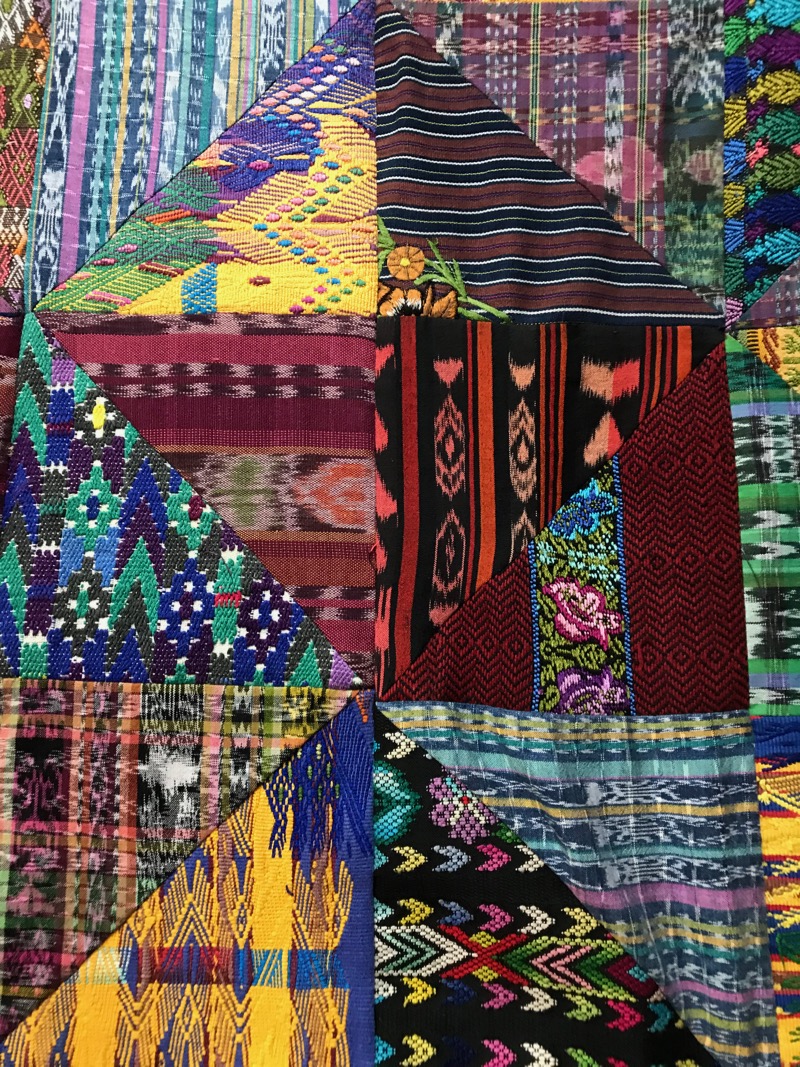
The my sister noticed this patchwork quilt up on the wall. Carolina (below) brought out two more quilts:
The too-worn fabrics are cut up into patches, or parches in Spanish. Yes, I came home with some.
My sister and I, with Gary in the background. (I purchased the scarf.)
We left Carolina’s, which was on the outskirts of Antigua, and headed into town to pose with all the street vendors near the iconic arch.
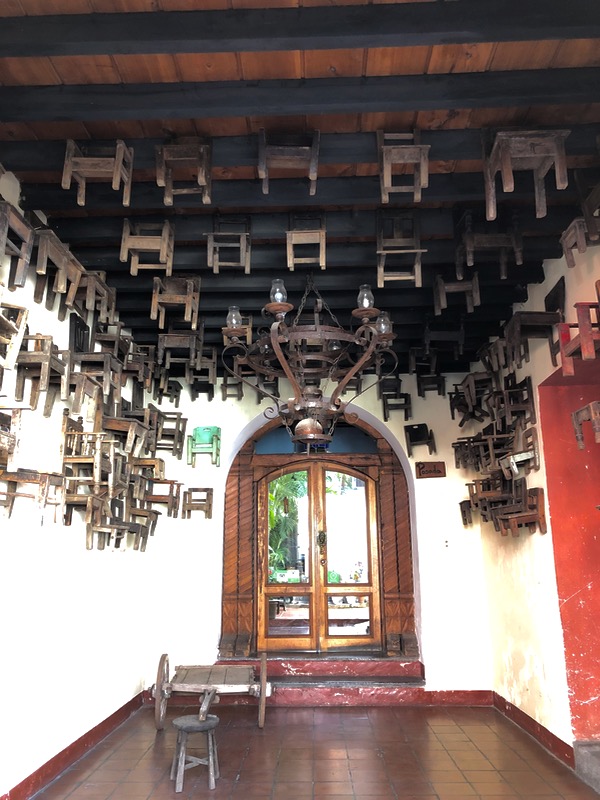
Our hotel was El Convento, mentioned in this article in the NYTimes. I took about a billion pictures of this small, perfect, hotel, which I’m not posting here. Above is the swimming pool.
In the area just outside my room, they had tourist-safe water to drink (not shown) and little flowered meringues to enjoy. I did enjoy them, and often.
We spent some time in the main plaza, where I purchased some souvenirs from this young girl and her brother. Interesting to see our thrift store clothing show up here.
Wares for sale one day in our hotel. I kept trying figure how to pack it ALL up into my suitcase, but only purchased a doll for a friend who collects.
One early morning we went down to the bus depot (where we took the chicken bus video) and enjoyed all the colors there.
Thearch and volcano, early on the morning we left to head back to Guatemala City.
We brought home the two stacked wreaths the angel, a few table runners, placemats and the fabrics, but if I’d had another suitcase, I would have brought home so much more. It’s truly a textile-lovers’ paradise.
Before we left, I had to call to make sure our credit/ATM card would work overseas and ended up talking to a young woman who was born there, but has only returned once. When we came home, this note was in our mail, a thoughtful sentiment.
I do appreciate my sister and her husband hosting us for a long weekend in the middle of their busy, giving lives. I was especially thankful to spend time with my sister. I have three sisters, but all of them live far away from me, so it was lovely to talk to her, stroll around Antigua with her, and deepen our relationship.
The last thing I want to say is that it’s Christmas time, so be kind to yourselves in the rush. I know you are all busy with your final preparations for family, friends, and a day or two to yourselves, but take time to listen to a carol, take a breath, and enjoy this season of light.
I could say to the moon and maybe to the stars, and back.
I could say Guatemala, but you already know I’ve returned home from there.
I could say sick, but now I’m better, and yes, I had a nice Thanksgiving at my daughter’s house. They even had a quilt shop in her tiny town in Arizona, but since I’d been in there several times and the fabric was all the same, every bolt every time, I didn’t think it warranted another stop.
I could plead The Fifth and just get on with it, which is what I’ll do.
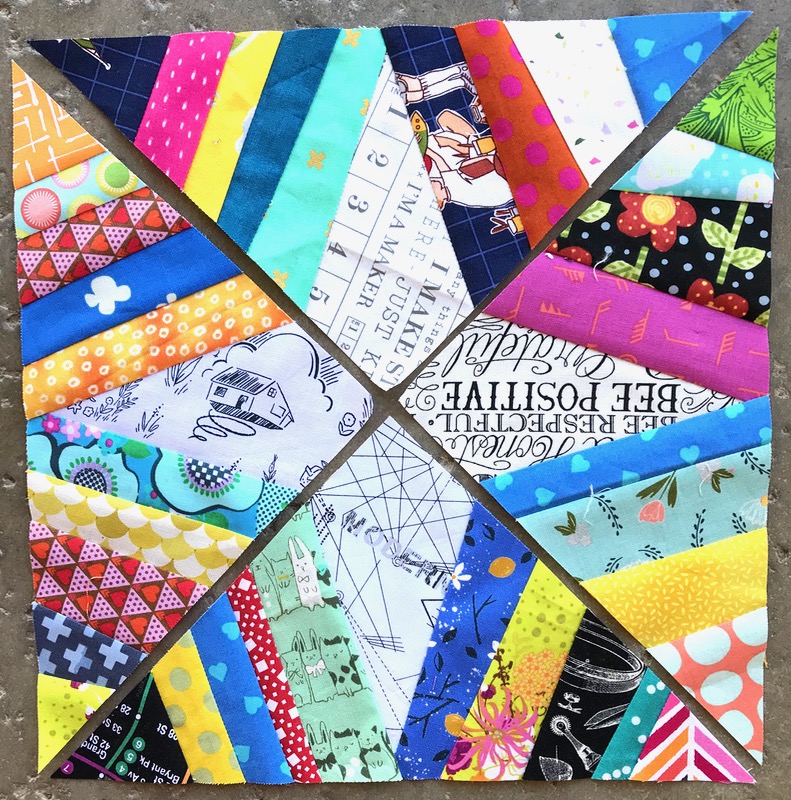
It’s always good to begin with a finish, even if it is only a block. In this case, this finish went to my buddy Allison in the GridsterBee: a free online spider-web block, which we printed out onto paper and got to work with all those skinny litle scraps of fabric in that bin over there, next to the iron.
Above are scenes from my Thanksgiving (click on image to enlarge):
(from upper left, going down) 1)El Travatore, an old motel in Kingman AZ (the longest piece of extant Route 66 runs through this town), 2) the family just before enjoying the two turkeys and two kinds of sweet potatoes and salad, and multiple pies and then falling into food coma sometime later on, 3) teachers’ gifts my ever-talented daughter dreamed up and put together.
Sign at top right: a Truth.
Two views of storefronts across the bottom that my daughter designed: THE Farmhouse used to be her shop until last year, and West of 3rd is her friend’s shop. We went out Saturday for Small Shop Saturday, so I hope you visited yours.
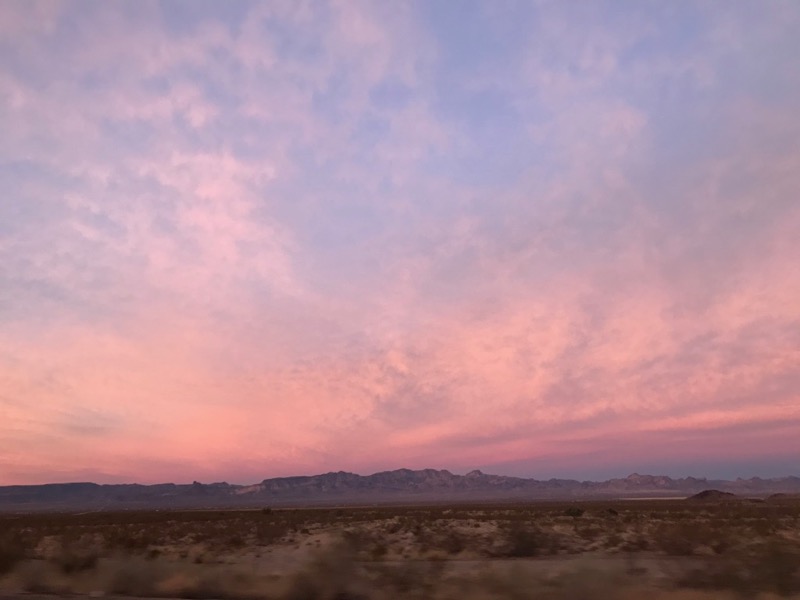
Sunday morning, really early, heading out across the Mojave Desert. (Mojave is spelled with a “j” in California, but spelled with an “h” in Arizona, as in Mohave, and that’s just the way it is.)
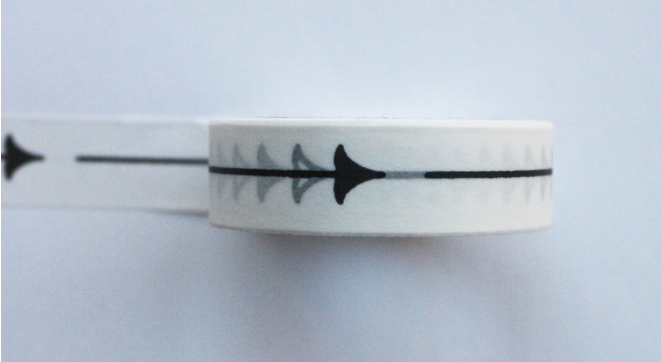
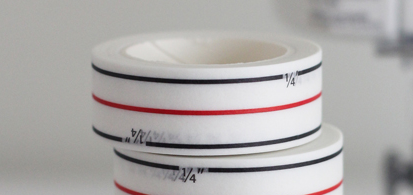
I picked up a few of these. It’s washi tape on major sale at the Get To Work Book website. I bought it because I’d seen this from here:
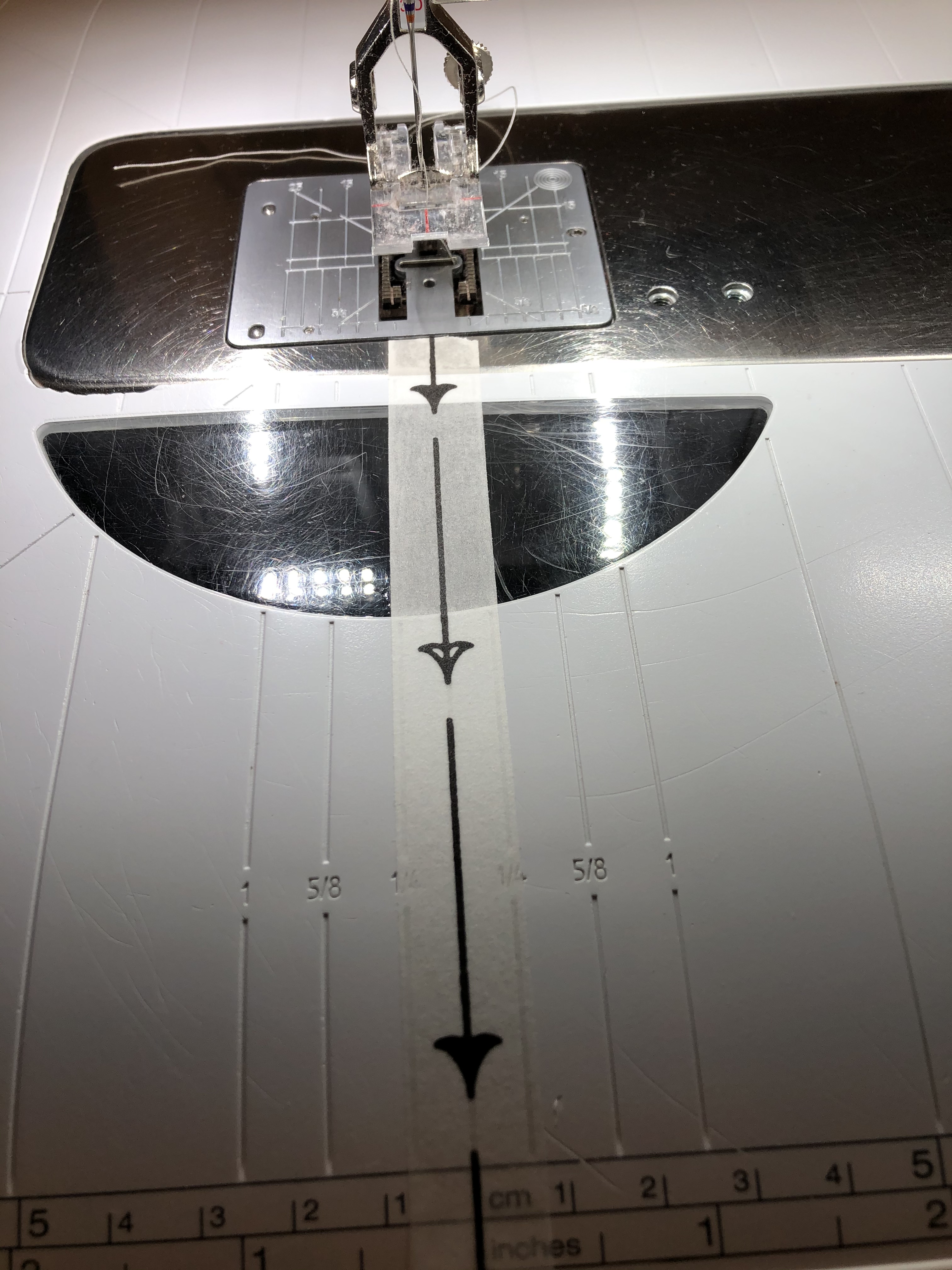
and figured out we could draw our own lines on either side.
My friend Carol figured it out.
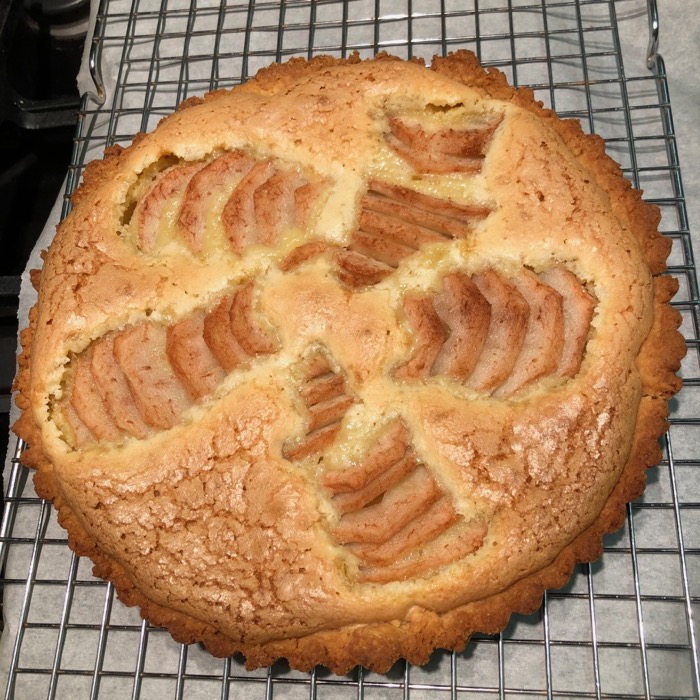
Monday, I launched into laundry, but later rooted out the pears we’d stuck in the fridge the week before and made a Pear-Almond Tart. I always know the routine is coming back when I start baking again. The recipe is over on my recipe-blog: ElizabethCooks.com.
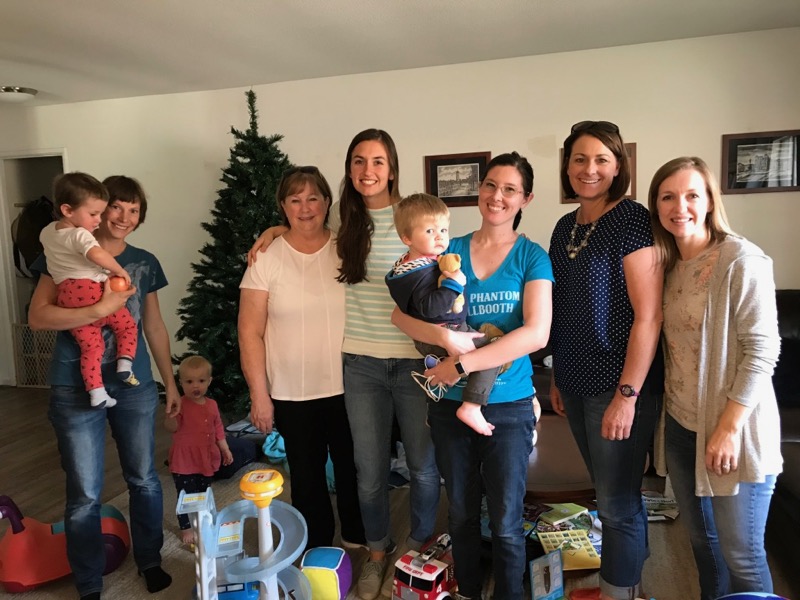
Then fun-of-fun, we found a couple young women who wanted to learn to quilt, and so we rustled up a small group, calling it First Monday Sewday. (We’re missing a kid from the photo, and me, of course.) It was chaos, but really fun.
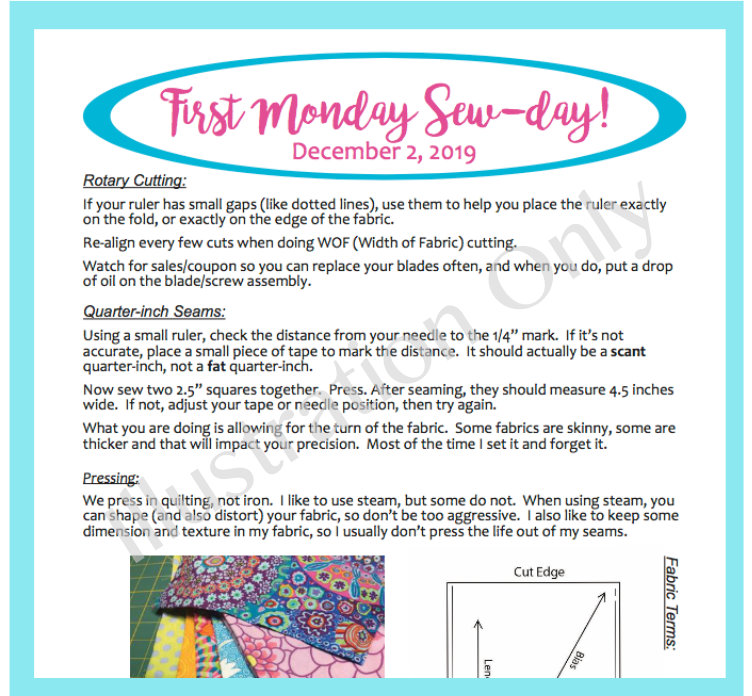
I made up a little handout for the newbies; click below on the link if you’d like to print it out:
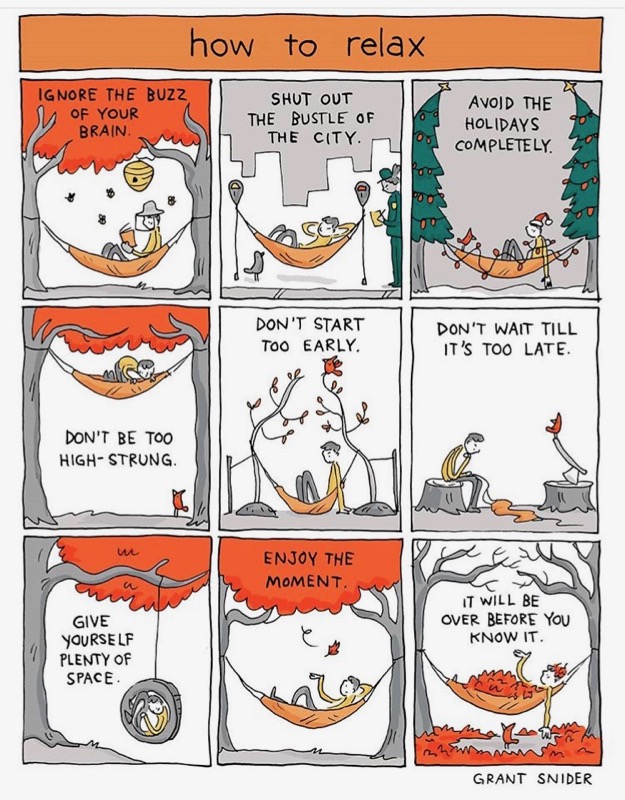
All good suggestions from Grant Snider, except for the top right.
Many years ago we took our children to Italy, scraping together frequent flier miles, and saving for months before we showed up in Rome on Christmas Eve. Being in a different place for Christmas broke my “Overwhelm Them with Gifts” habit, well-formed after raising children for twenty years, helped along by American merchandising.
That night we walked down to Vatican City, walked through the newly opened Jubilee Door, and experienced a midnight mass where they placed the Christ Child back into the empty manger in Nativity Scenes everywhere.
Christmas Day we slept in a bit, then went out again to see the parade of the Pope’s Swiss Guards, listen to the service in Basilica of Santa Maria Sopra Minerva where, after the service, I stood to sing the Hallelujah chorus with everyone, but I did it in English. My family sat beside me in the church for all of about ten minutes, then ducked out to see the Pope bless the crowds gathered in front of St. Peter’s. No, we aren’t of that religion, but seeing the holiday from another perspective changed how I view Christmas.
I believe in gifts (I’ll show you what I made our families later) and celebrating, but I try to do it in a quieter way, enjoying hours of Christmas music, decorating with my husband’s nutcracker collection, baking up a few treats, while taking the incessant retail merchandising blast in much smaller doses.
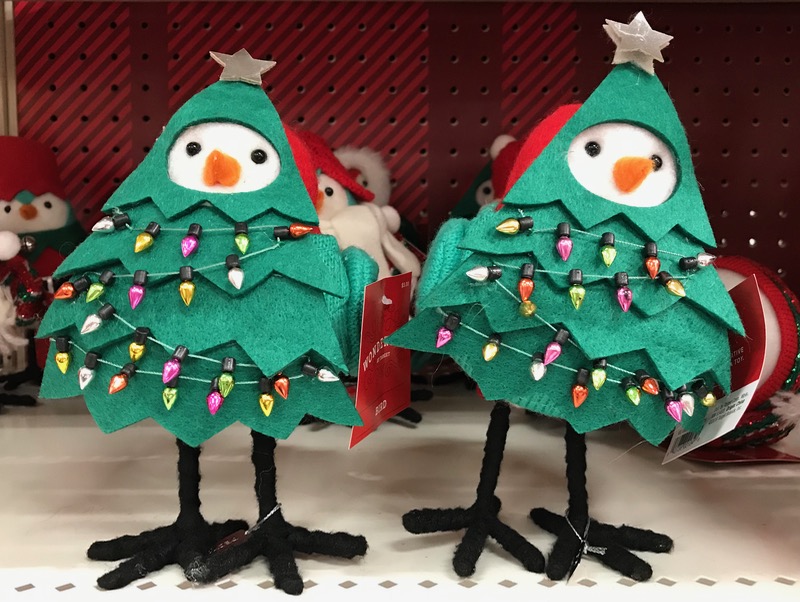
Target’s newest birds
Glad to see you all again! I hope you ease into the holidays, too.
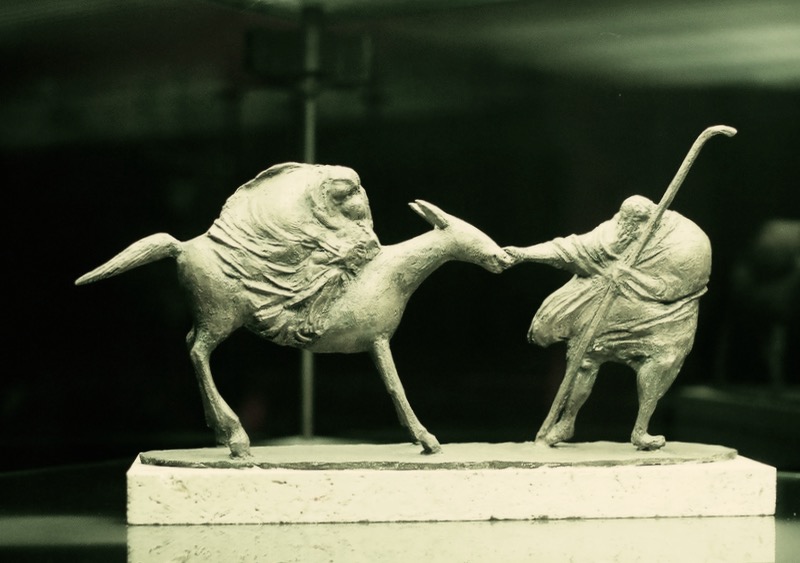
Favorite small sculpture in the Vatican; December 1999
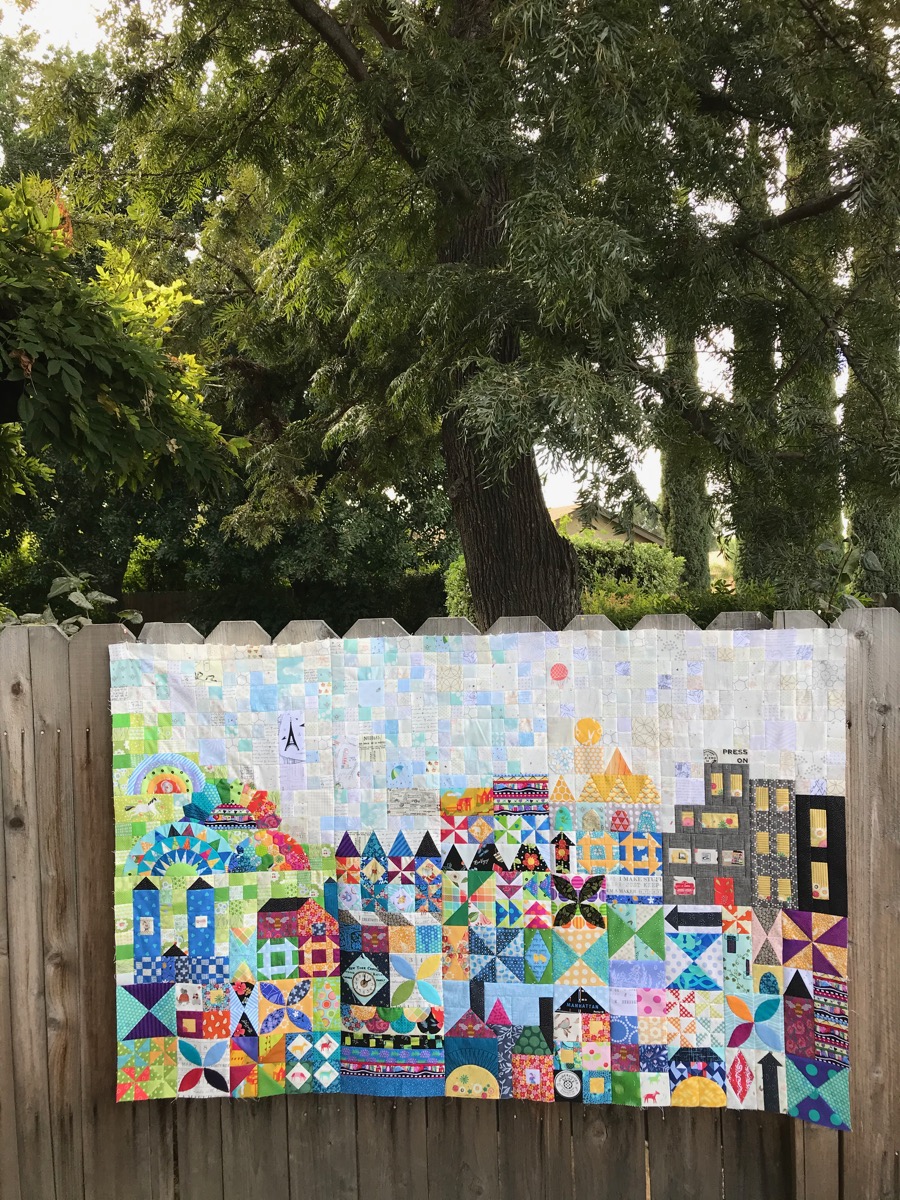
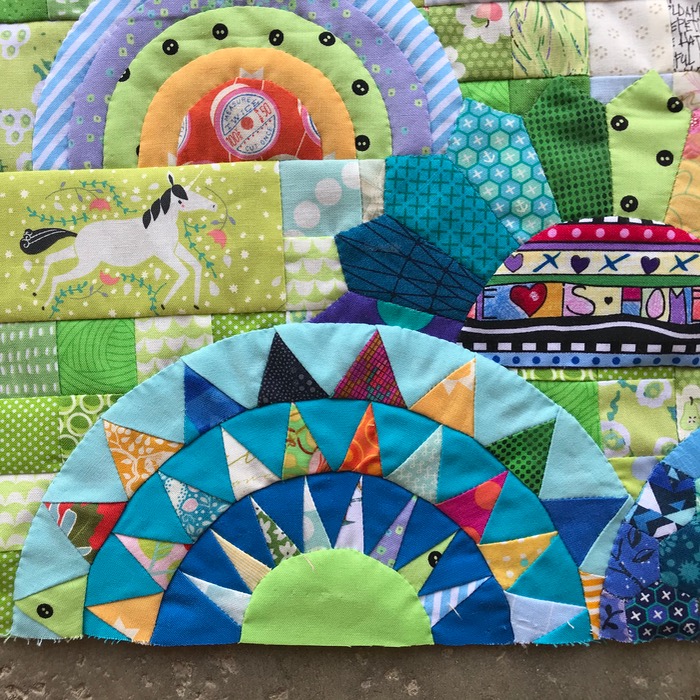
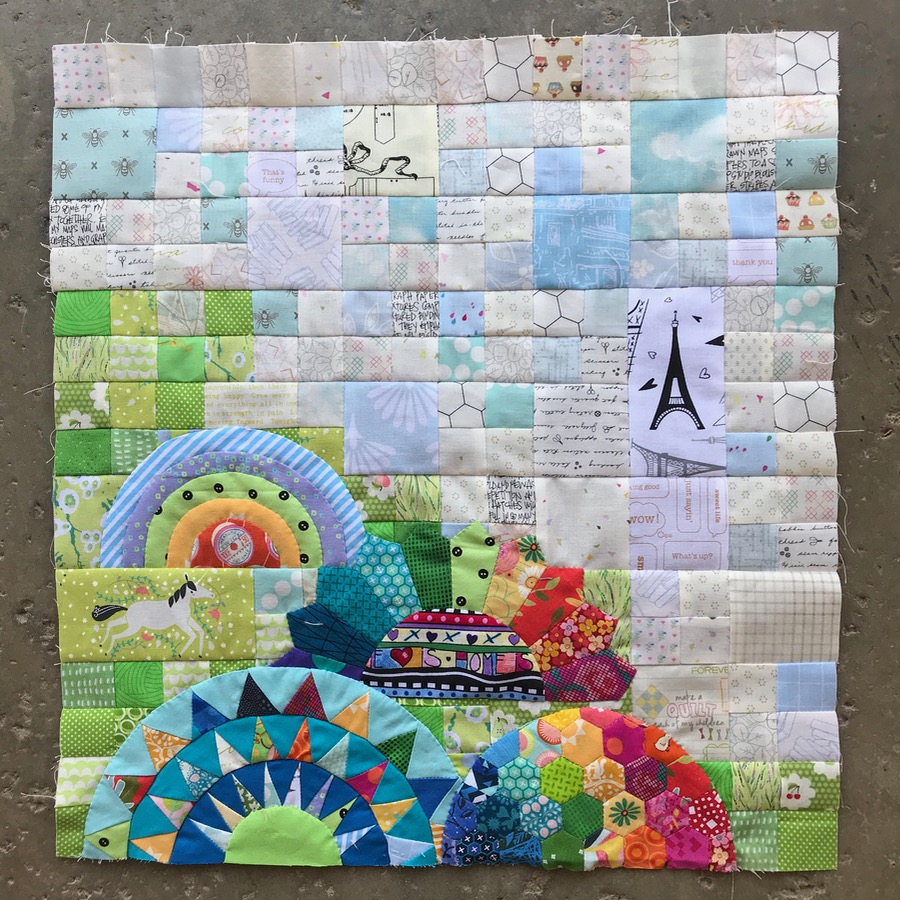
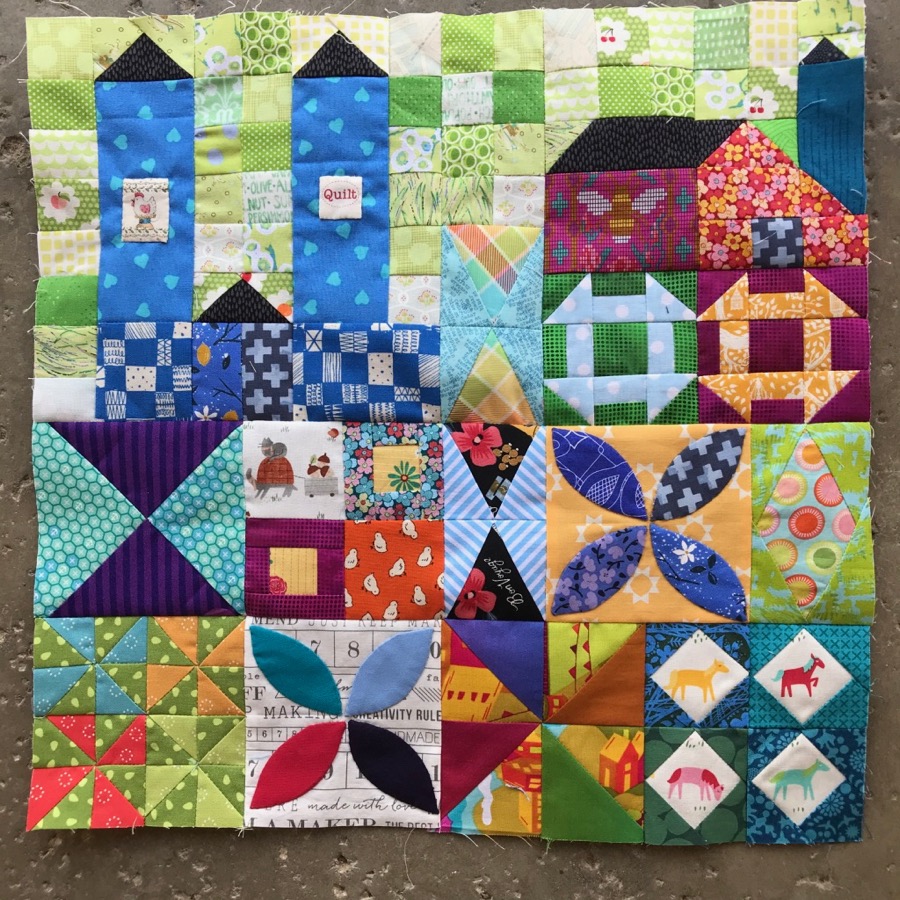
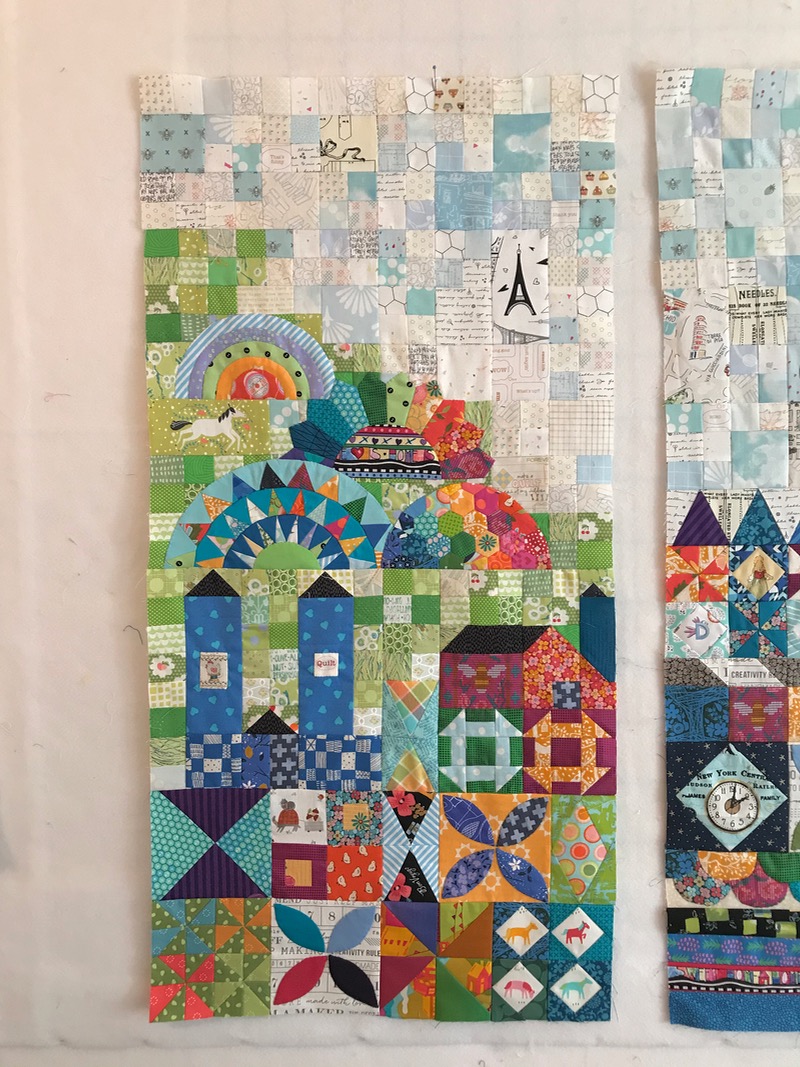
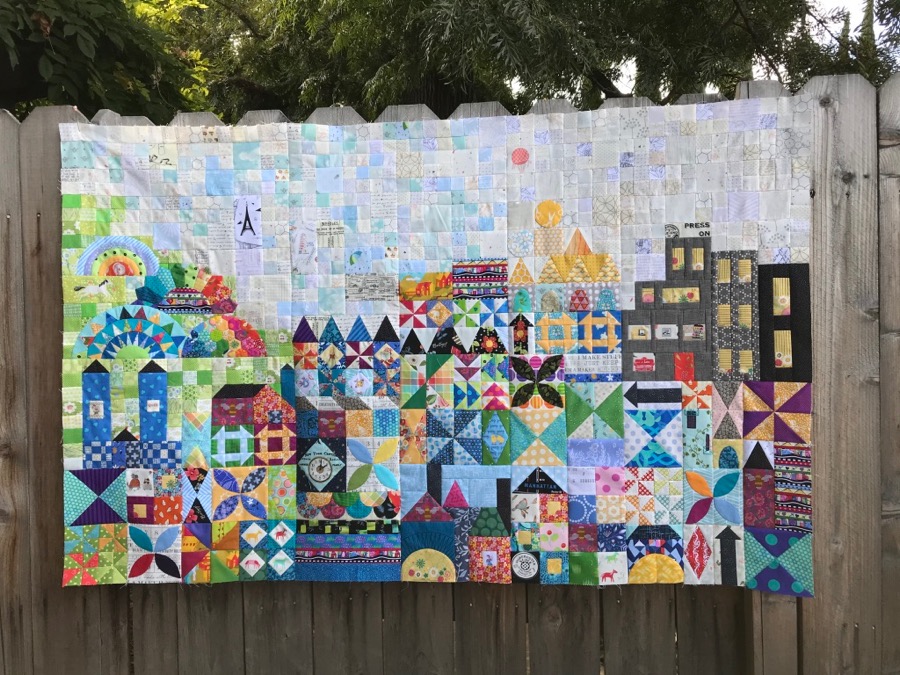
It’s done! I decided to forge with ahead My Small World because basically, nothing else in my life was getting done with that mess in the sewing room, and I wanted to be finished with this project, the Third Hard Quilt of 2019. Here, in my backyard studio, I’m showing the finished flimsy of My Small World, a pattern by Jen Kingwell. I made some changes here and there, but it’s basically her pattern. Began in 2014, I was nudged to completion by a new Instagram Quilt-a-long #mysmallworldsewcial, where many others are still working. Let’s take each of the last two sections, one at a time:
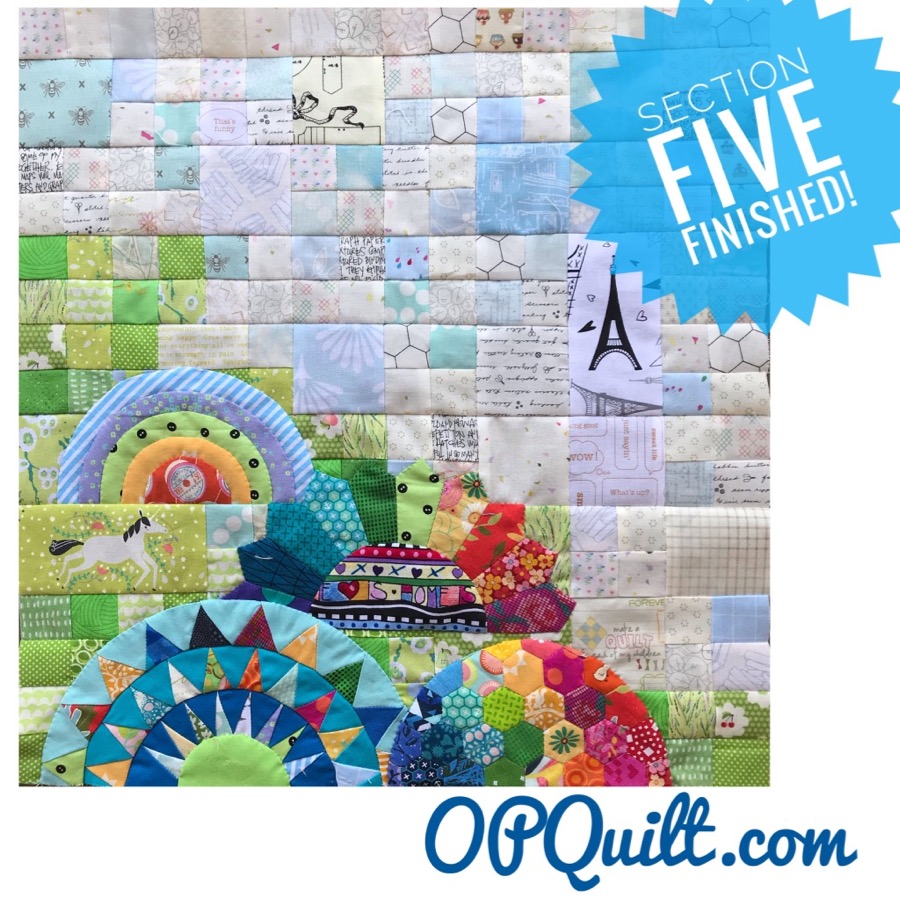
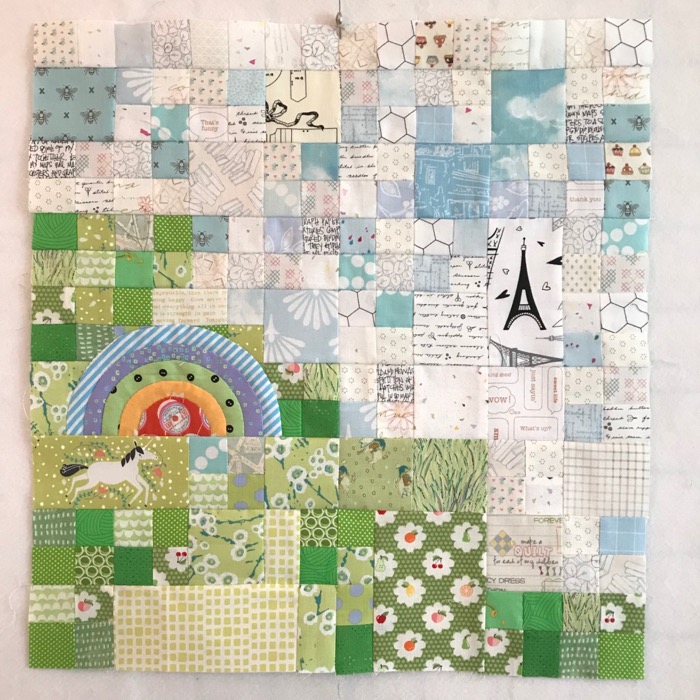
One late night I was thrilled to discover an Eiffel Tower in one of my fabrics. I love the embroidery others had done, but it wasn’t for me.
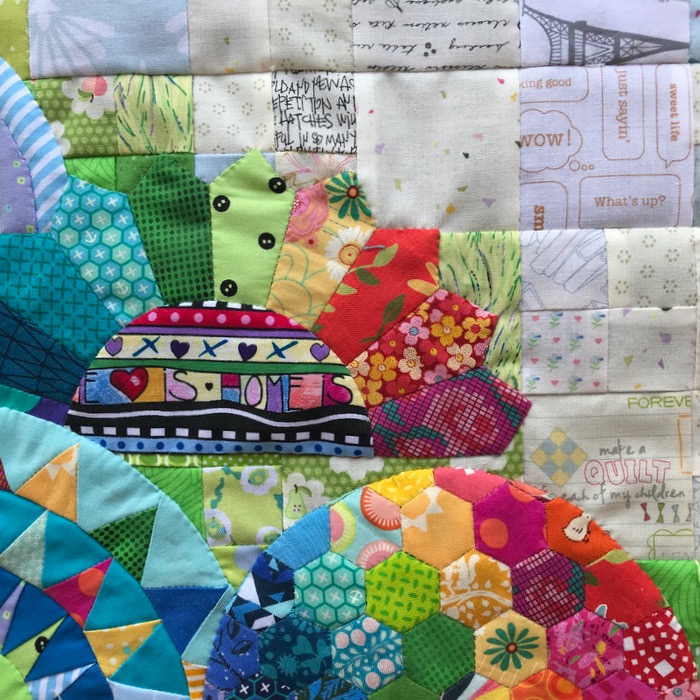
I took the hexie bubble with me to Guatemala last week, and stitched it up while chatting with my sister/BIL (who we went to visit) and on the plane home. I brought home some illness, courtesey of the Chicken Bus airplane we flew home (kidding, it was a regular airplane but there were a lot of people sneezing, coughing, etc).
I made a teeny video of our visit to the bus depot in Antigua, where we saw a lot of Chicken Busses, so nicknamed because they can carry everything, including live chickens. If I could have figured out how to add a chicken bus to this quilt, I would have; I fell in love with them, as well as Guatemala.
I also fussy-cut a unicorn (just under the top rainbow, but everyone on IG called it a horse–his little white horn is hard to see).
Underneath the arches and hexie-bubble are bigger blocks of fabric, as I figured I was going to cut them out from behind the two structures at the end, and why waste all that piecing? I cut out the fabric from behind the rainbow (shown above) and the spikey arch and hexie-bubble:
Those arches were a grind, but I did them. I included other tips and tricks in this post.
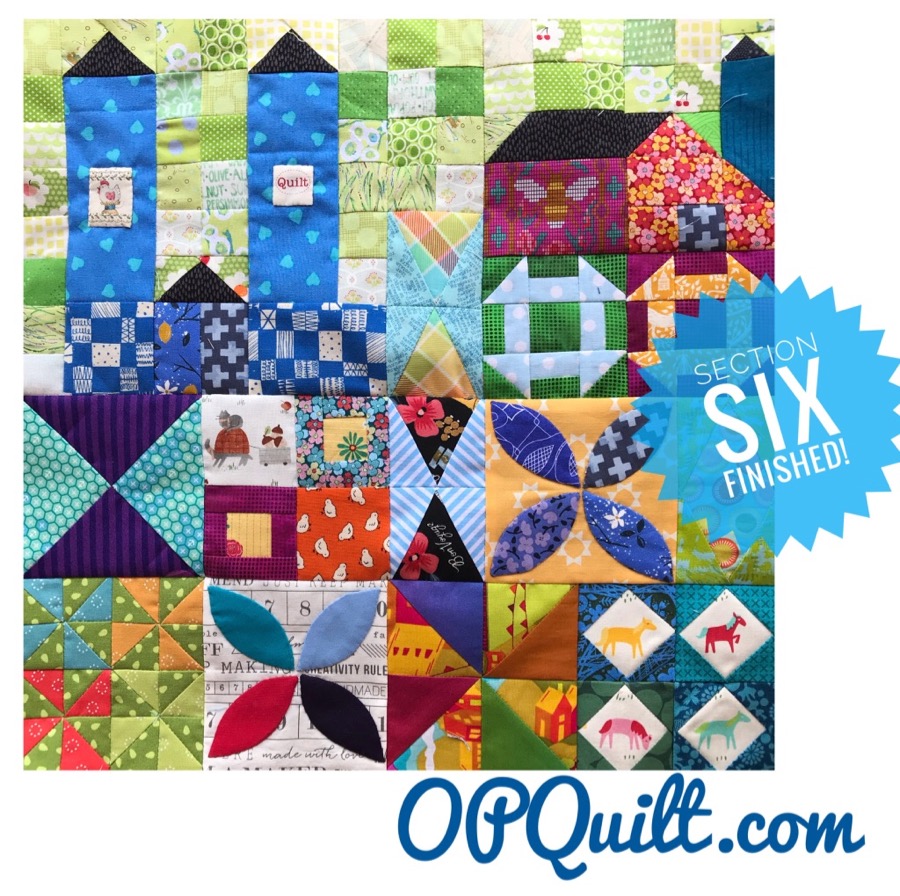
Section six was a relief to get to, after those arches.
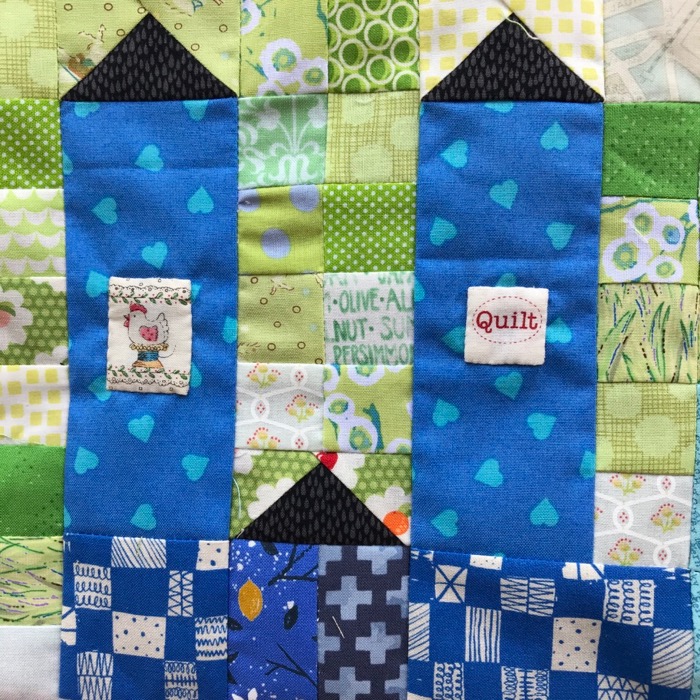
I liked the two blue silos, but they were a bit stark, so I added signs to them: a sewing chicken and the word Quilt.
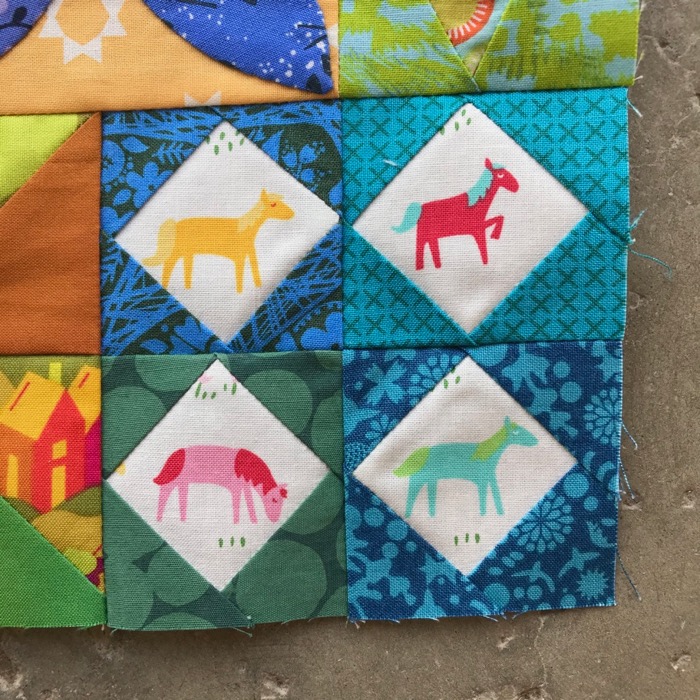
I changed the order of the bottom row of patches around, and I just couldn’t face another eight teeny flying geese, so I did a square-in-a-square with fussy-cut horses, since this is the farm section.
I sewed those two sections together, then stitched it to the other part of the quilt I’d already completed.
Yes, I’m pretty happy to be at this point. My friend Laurel added a border to hers and I’m considering that, too.
My To-Do list of items is lengthy, all being held hostage by this quilt. Now I need to go and clean up my sewing room, vacuum, clean some bathrooms, and try to find the extra furnace filter in the garage, as well as maybe take a nap. But I’m done!!!


















 OccasionalPiece--Quilt!