Creating · European Patchwork Meeting · Quilts · stitchery

Shopping at the European Quilt Meeting

All posts in order are on the European Patchwork (Carrefour) page.

EuroPatchwork Meeting Program

The brains of the meeting.  I’d done some prepwork (looking at the website) so I knew what I wanted to see.  The very first thing: see the vendors.  I told my husband it would be like going to Disneyland for quilters.  Everything was new and different to me, but since I only have a small suitcase, I had to choose fun and interesting things.

EuroPatchwork 2017_Vendorsprices
Since fat quarters were running about $5 a piece (with the conversion rates) and fabric was 22 Euro (about $25 dollars) per meter, I knew right off the bat I wouldn’t be buying any “American” fabric, and gained instant sympathy for European quilters at these prices!

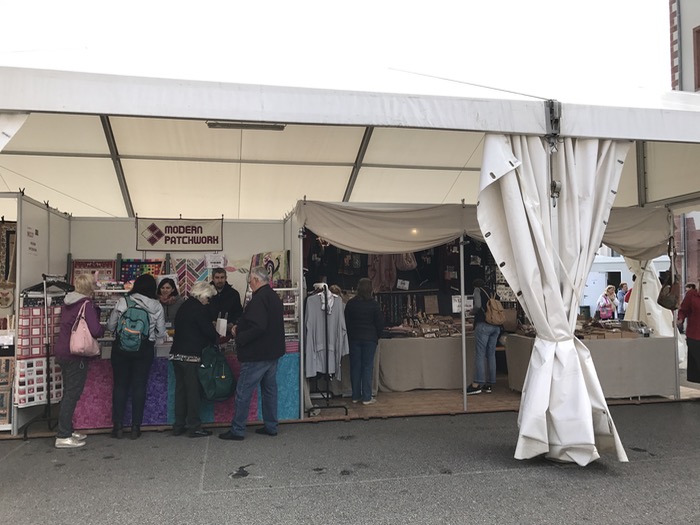
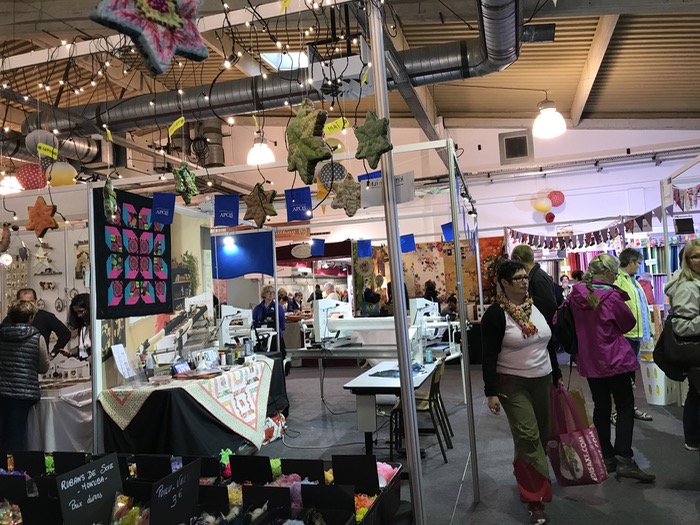
The vendors were in a combination of inside “Espace Commercial” and outside tents, with one side of the tent opening to the passersby (and the weather).  I saw many of the drapes drawn to close in the booths when it was raining.
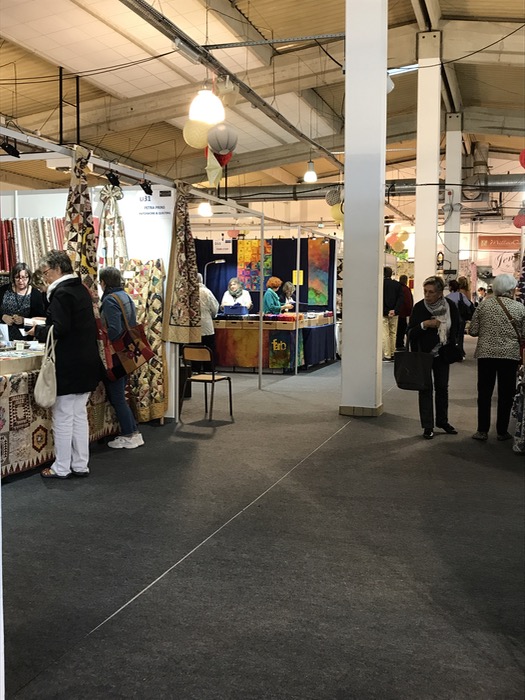
The Commercial Space was weather-proof, but hot and stuffy.  I took these photographs early in the morning.  When we doubled back before leaving, it was very crowded.
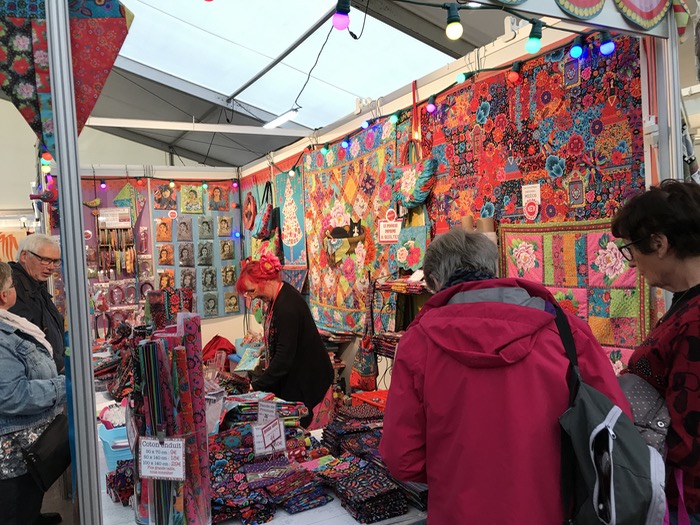
EuroPatchwork 2017_VendorsVenue4

Who wouldn’t want to shop at this booth, with its array of Kaffe fabrics and a vendor with bright pinky-red hair?

EuroPatchwork 2017_VendorsVenue6 Moda

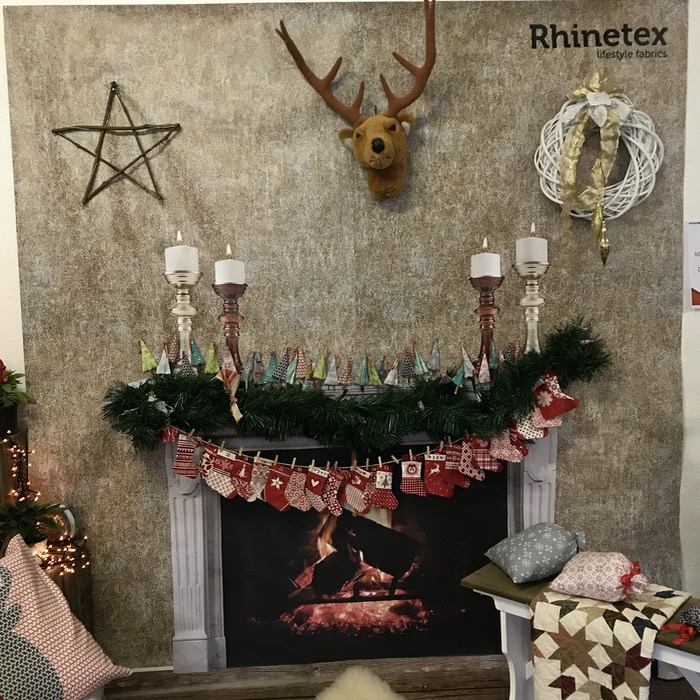
This isn’t exactly a vendor, but the distributor (Rhinetex) who’d rented out the ground floor of this old house, displaying some Moda fabrics (don’t they always do it spectacularly?).

EuroPatchwork 2017_VendorsVenue6 Moda3EuroPatchwork 2017_VendorsVenue6 Moda2

And inside, the famous Tula quilt for her new line, and a sweet scene at the fireplace, with their logo on the felt backdrop.  Lots of quilts in here, and it was fairly mobbed.

EuroPatchwork 2017_VendorsVenue5 creatives

The last venue I want to mention was titled “Les Createurs” and was filled with beautiful handiwork from “designers and craftsmen.”  I definitely coveted a few pieces of jewelry, as well as that blue coat in front. Now to show you what I bought and what their booths looked like.  I asked permission for all photos, but was told more than once they’d only like me to take a “general” photograph (imagine this word with a French accent); I totally understood their request and why they made it.

EuroPatchwork 2017_Vendors1

These folks are from the west side of France; she has a book out (I saw it at the book booth, but since it’s all in French, well…)  I’m always thinking small, so I picked up these two fat quarters.


EuroPatchwork 2017_Vendors1aEuroPatchwork 2017_Vendors2
Across from them was the Costuretas de Moly booth, with the most charming kits and small handmades.  I saw a lot of sweet little bags and pouches with detailed scenes appliquéd and embroidered on the fronts and backs.  They are from Catalan, Spain.

EuroPatchwork 2017_Vendors2a

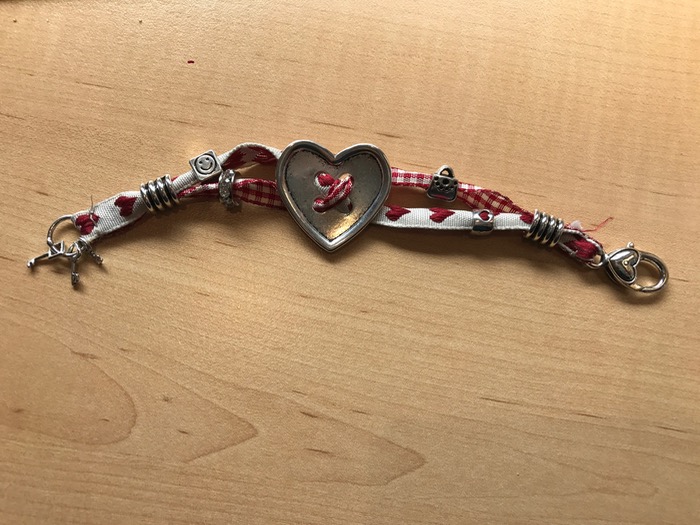
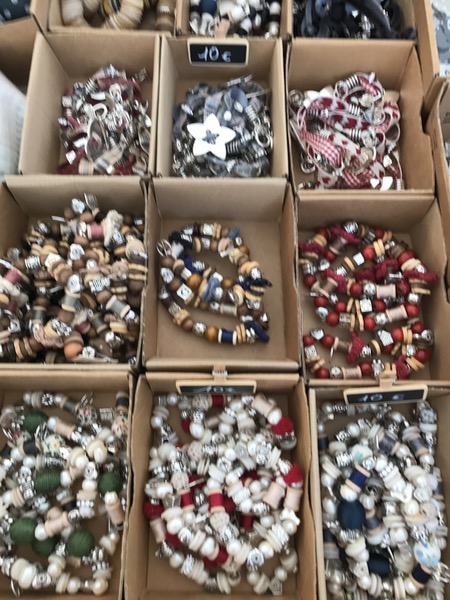
A small bracelet, a quick blurry shot of the bins of bracelets (they didn’t want their booth photographed) and random German Christmas Tree, the only thing I regret buying.  The vendor had tacked green rosettes of fabric around all the outside edges, and I thought maybe I could tie on some green primitive rags instead.  Oh well, we’ll see.

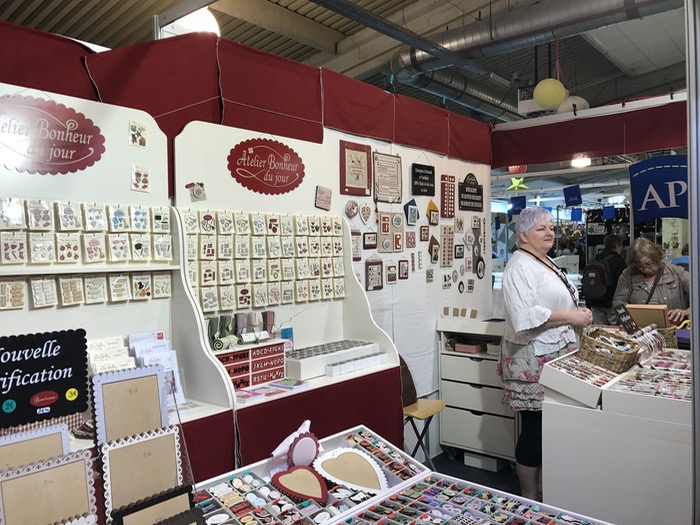
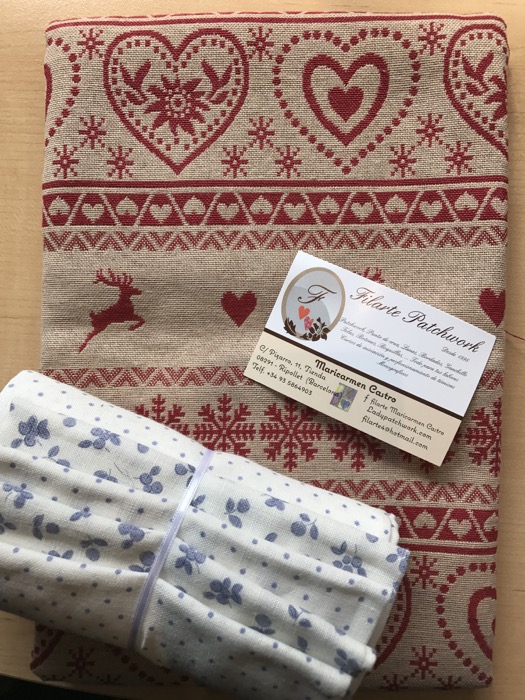
The handmade, laser-cut embellishments were purchased next, from a booth that made it hard to decide, given their categories of sewing, animals, children, family, house, etc.
EuroPatchwork 2017_Vendors5aEuroPatchwork 2017_Vendors5

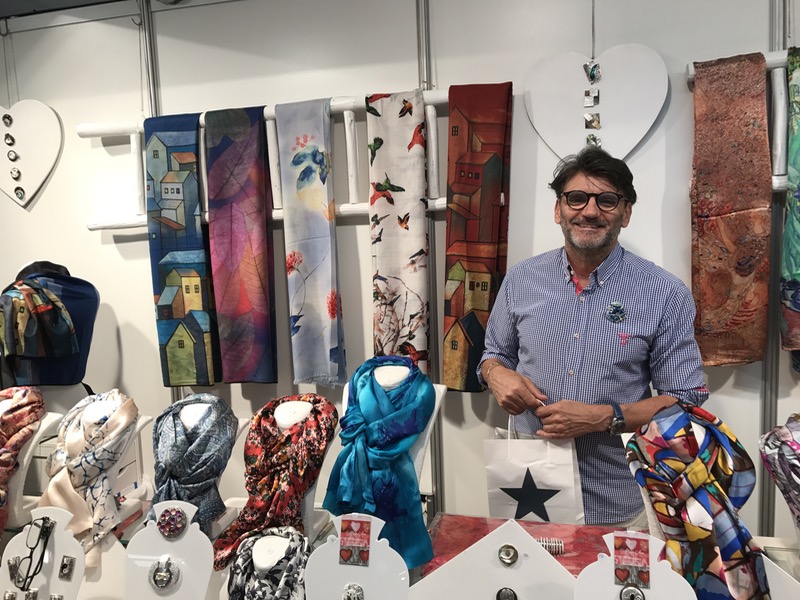
Even though I said to myself “no fabric” the Filarte booth drew me in with their linens.
EuroPatchwork 2017_Vendors6

My husband and I both liked the scarf on the outer upper edge of the houses, but when I tried on the leafy print next to it, well, that one came home.  It is wool and cotton so I will be very warm in sunny old Riverside. (I’m wearing it now, as I type this next to the chilly window in our hotel in Geneva.)

EuroPatchwork 2017_Vendors7c

I had a total fangirl moment when I realized whose booth I was standing in front of: Un Chat dans l’aiguille.  The lady on the right is the artist who makes up all these beautiful pieces (and whose name I think is Christel–hard to figure it out when you don’t speak the language).  I fell in love with her Matryoshka needle case, that I saw in a shop when I was here in Geneva last year, but they didn’t have any more (it’s out of print).  So when I got home, I looked up who made it and read all about her and her designs.

EuroPatchwork 2017_Vendors7aa
But what to chose?  None of them are cheap, so I had to choose carefully.

EuroPatchwork 2017_Vendors7aEuroPatchwork 2017_Vendors7b

I went with this little pouch with all its flowers and scalloped edge detail.

EuroPatchwork 2017_Vendors7aab

When I looked inside, I can see why her kits are so popular: everything is well-labeled, ordered and she even included a needle.
EuroPatchwork 2017_Vendors9

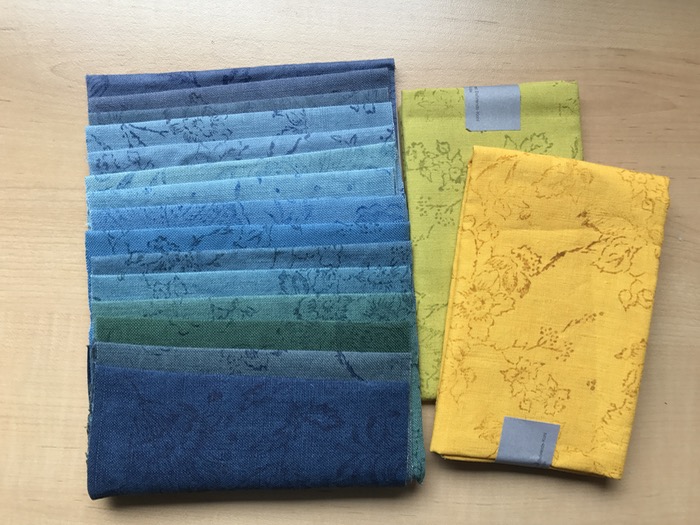
Sometimes what draws you in to fabric is that it is the exact opposite of what you’d normally buy.  Like the dusky shades of printed and dyed linen on the left.  Then you spend the next two hours mentioning to your husband that it won’t be enough fabric to do anything with, so you circle back around (my husband is a saint) and then pick up two more fat quarters to round it out.  I’m assuming it was the wife of the man (below) sort of strongly suggested that it was not good to put the heavier weight linen next to the quilt-fabric-weight linen on the right.  But I loved the look of the thicker threads in the first pack and couldn’t be persuaded to change.  If only they’d had the colors on the right in the heavier.  The vendors are from Germany.

EuroPatchwork 2017_Vendors9a

EuroPatchwork 2017_Vendors9b

Here’s the back of the package, in case you ever run into them.  Like I said, nearly everything I saw was unique, unusual, and not seen in the American markets.

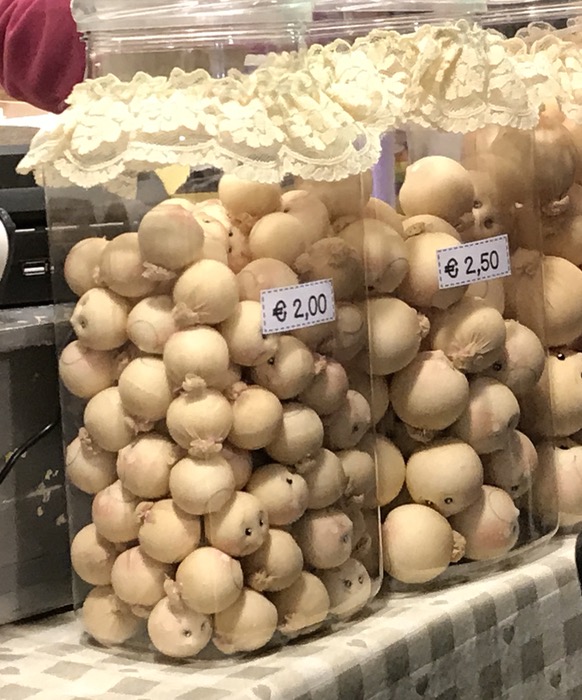
Like these doll heads:
EuroPatchwork 2017_VendorsRandom HeadsEuroPatchwork 2017_Vendors10EuroPatchwork 2017_Vendors10a
We saw this sign while walking between exhibit locations, and entered into the little lane where several booths were set up with bolts of fabric.  At the back was a burned out house (?) with buttons for sale in what looks like the garage.  Or maybe the whole house was under renovation?

EuroPatchwork 2017_Vendors10bEuroPatchwork 2017_Vendors10c

The quilts are pretty backdrops for what I purchased: the two buttons, above, and a necklace.

EuroPatchwork 2017_Vendors11

The penultimate purchase was this dishtowel from the Beauville exhibit in Sainte Croix-aux-Mines, one town away from where we started.  I have one more purchase, but I’ll mention it when I get to the various exhibits.

Alsatian Dress Lady

Here’s the woman in the Alsatian dress again.  It is so beautiful, and of course, I wondered where I could get that apron fabric.  We saw her again later in the Old Theater venue, so stay tuned.
SaveSave

SaveSave

SaveSave

SaveSave

European Patchwork Meeting · Quilt Shows · Quilts

European Patchwork Meeting • September 2017

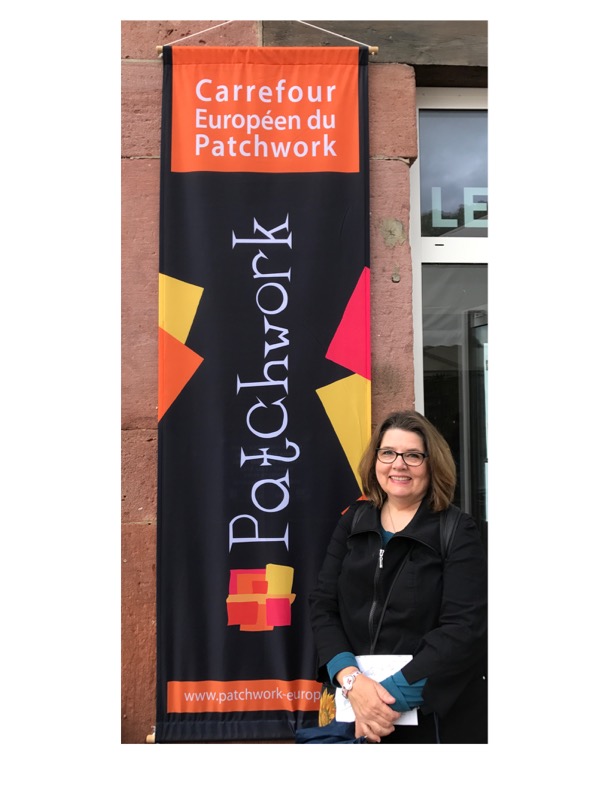
European Patchwork Meeting Banner

All posts in order are on the European Patchwork (Carrefour) page (both years listed).

When my husband had the chance to work again in Geneva, France and we found out the European Patchwork Meeting was the same weekend, we made plans to drive up to France to attend.  I have several posts about this, so it will be a bit comprehensive, as it was an experience that was unique in many ways, but familiar as well.  The bits of a quilt show (as we call it in the United States) are a big convention center, filled one-half with the quilt show and one-half with the vendors.  We are used to certain fabrics and know the prices of things and pretty much know how the quilt show part is run, too.

The name of this is the 23rd Carrefour European Patchwork Meeting, and as Sally S., an astute reader pointed out, “The word [Carrefour] means crossroads in French and is a reference to the fact that the show is at the centre of Europe, literally where France, Germany and Switzerland meet, and also I suppose where European quilters meet. It’s also the place where the Amish found themselves figuratively at a crossroads, many of them deciding to follow their leader to a new life in America.”  Their website has many of the particulars, and I trolled their Instagram feed for weeks before coming.

Roxanne and ESE

How did I find out about this?  The lovely Roxanne.  Here we are before we headed out one day (I am terrible at selfies).  I’d met her last year in the Manor Dept. Store in Geneva, and we’ve corresponded ever since.

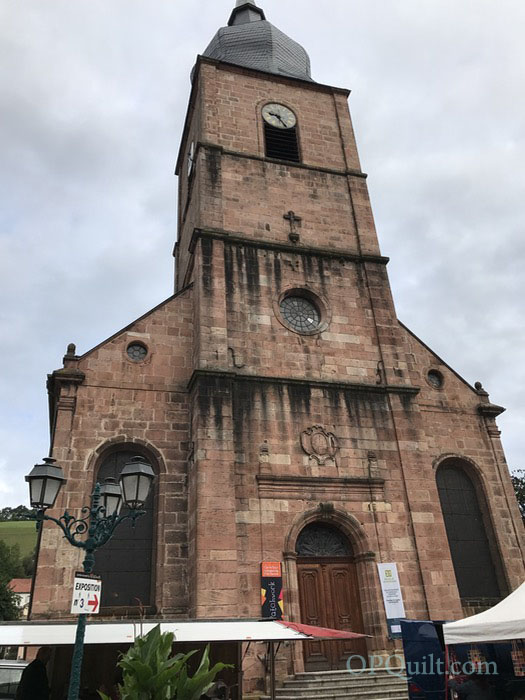
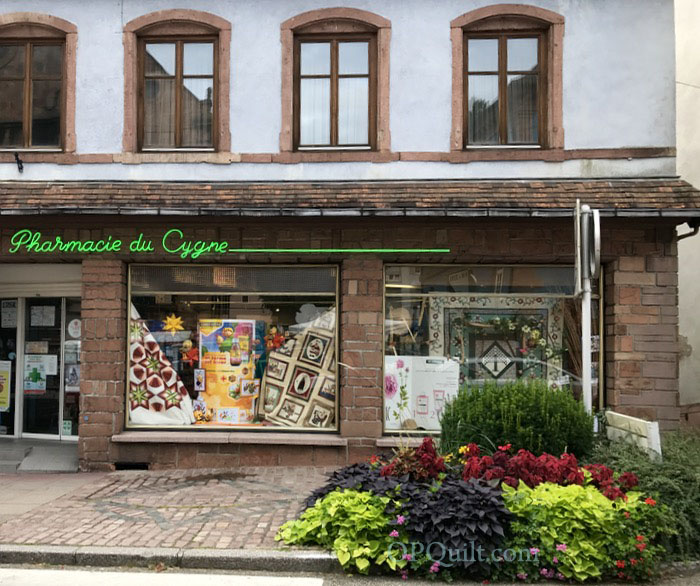
The Patchwork Meeting was about 4 hours from Geneva, so my husband and I drove most of the way, breaking our journey in Mulhouse, France, where we stayed overnight.  We drove the rest of the way Saturday morning and arrived in St. Marie-aux-Mines about 9:10 a.m. [Roxanne and her husband went separately.] We were so early, we found a great parking place.  Above are scenes from the village.  It rained off and on that day, which was too bad for the vendors, but we did our part (insofar as my suitcase could accommodate–see next post).

The whole town put out the welcoming carpet, with quilts hanging in shop windows, little pop-up shops in various places, food for sale, and in front of many venues, local & regional shops would bring their items for sale: breads, leather goods, flowers, souvenir items.  It’s a very festive feeling!

Europatchwork Sites
from here

The Patchwork Meeting is in four separate villages:
Sainte Marie-aux-Mines (main)
Sainte Croix-aux-Mines
Liepvre
Rombach-Le-Franc

These four towns are in the Val d’Argent region (silver mining was the early mainstay industry), which is also where the our American Amish had their beginnings, so there is always an Amish display, apparently, in each show.  I’ve been putting up some teasers on Instagram, but wanted to save the quilts for this space, as I can go slower and write more about the exhibit.

My planned posts are (I’m listing them here so I can link them):
European Patchwork Meeting Overview (this post)
Vendors and What I Purchased
European Patchwork Meeting International Contest Winners
Lea Stansal’s Embellishment Embroideries & Mary Koval’s Antique Quilts
Gabriel Paquin: Design and Graphics
Quilt National Contemporary Quilts
Luke Haynes/Ian Berry/Nancy Crow/Mirjam Pet-Jacobs
SAQA Canada: Art Quilt Exhibition
Final Post: Amish Quilts, ValPatch (quilt guild from this area), Beauville, Andree Leblanc’s Log Cabin creations/various, Patchwork Guilde–Germany/various

EuroPatchworkMtg 2017_1
Woman in traditional Alsace costume

I think that about (un)covers it!

Free Quilt Pattern · Sewing · Totes and Purses · Tutorial

The Visual Story of a Sewing Kit

Rescue boats fill a flooded street at flood victims are evacuated as floodwaters from Tropical Storm Harvey rise Monday, Aug. 28, 2017, in Houston. (AP Photo/David J. Phillip)

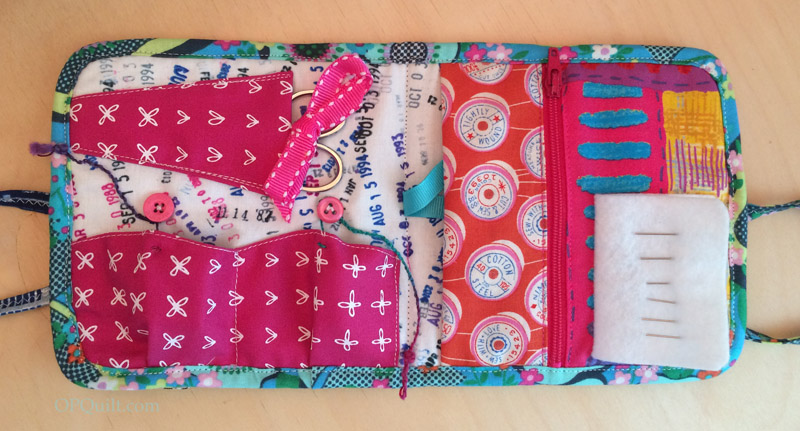
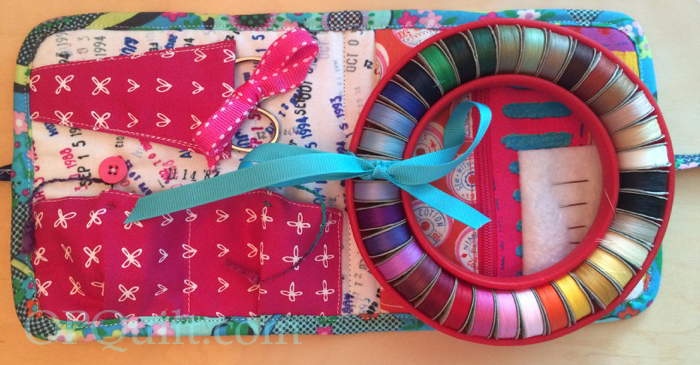
Okay–here’s what helps keep me busy while I’m watching hours of footage about the Hurricane Harvey disaster: hand-sewing.  So I came up with my own little sewing kit.  Start Here, with this rough sketch of a pattern: Sewing Kit_opquilt-pattern

SewingKitESE_1and these dimensions:
SewingKitESE_dimensions
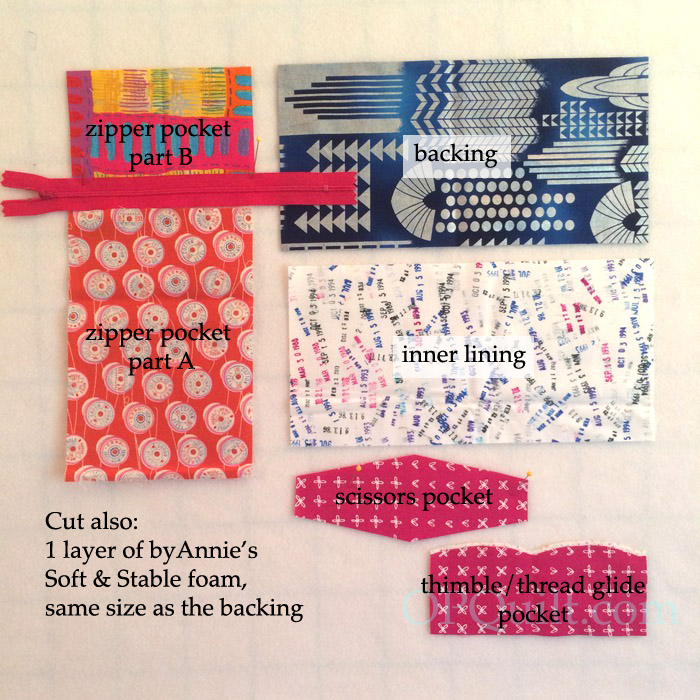
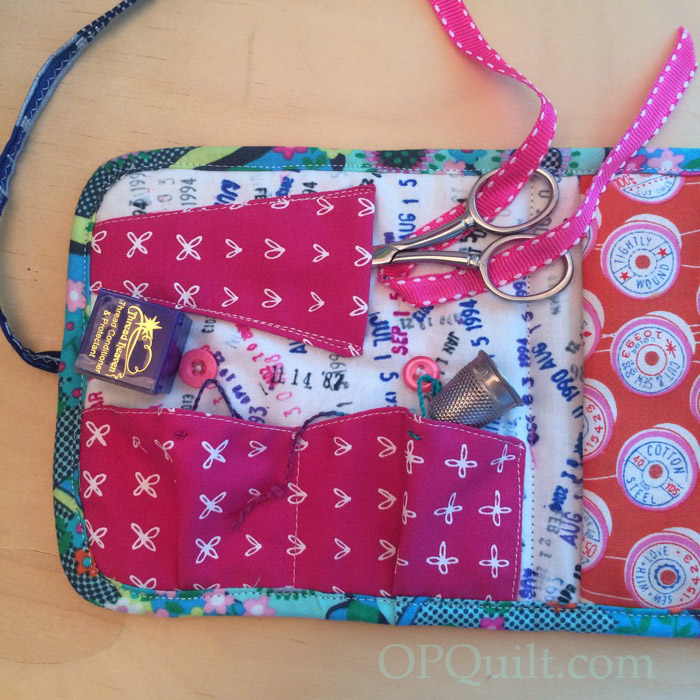
Cut out.  Quilt Soft & Stable lightly to backing, as you just want to hold it in place, you don’t want to distort it. NOTE: although it doesn’t show really well, I cut two of the notions pocket (thimble and thread glide); the dotted one (you can see it below) is the lining.  Remember to cut with wrong sides together, as the pattern piece is not symmetrical.

SewingKitESE_2

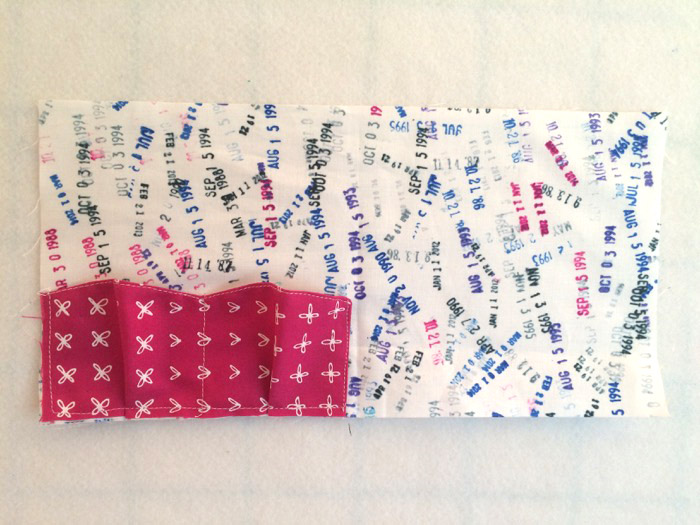
Stitch it together along the curvy top, and the right side.  Turn inside out, topstitch along the curvy edges. and make the pleats.  Top stitch along the two sides and the bottom, holding it in place to the inner lining. I like light linings, so I can see what’s going on.SewingKitESE_3

SewingKitESERefer to above photo for the rest of these sketchy detailed directions.
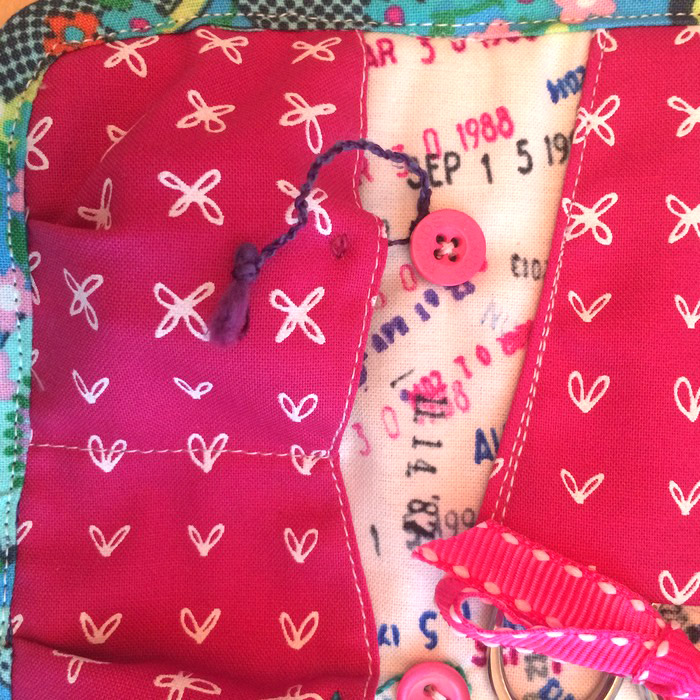
Sew down one long side of the scissors pocket; turn and press.  Turn in 1/4″ on the other long side; press.  Top-stitch the scissors pocket onto the lining.  Slide your scissors into place, and figure out where the ribbon needs to go: backstitch a ribbon into place.

Match up the backing with the lining and all its decor, putting wrong sides together and pin. All the edges will be raw edges.  Find the center line (where you will fold this closed) and stitch down the center to anchor the parts together.

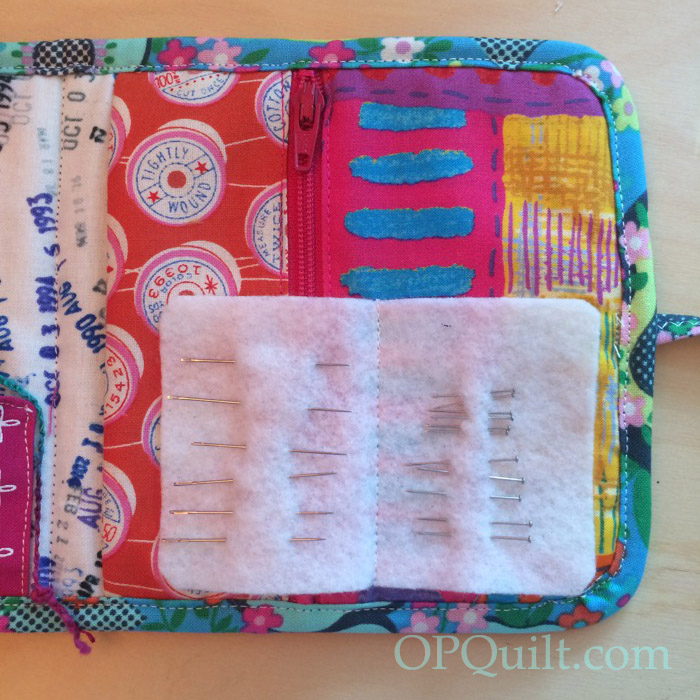
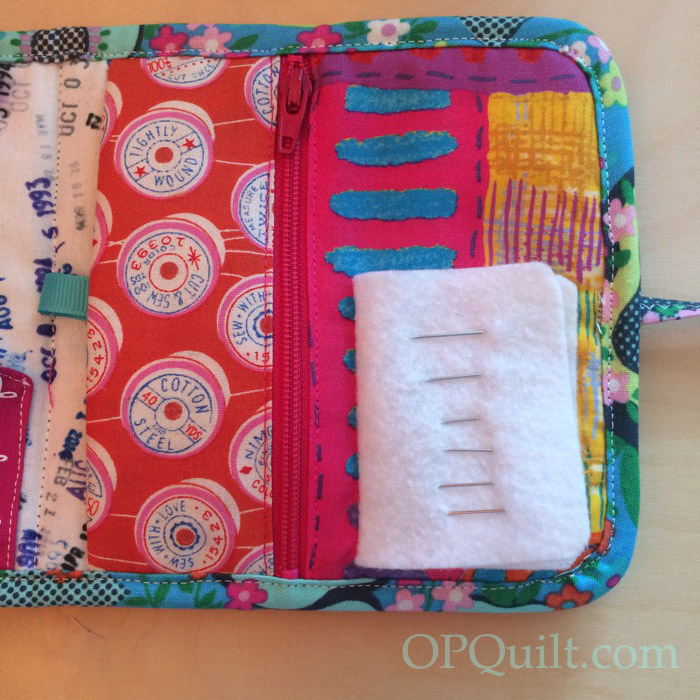
Insert the zipper between the two zipper pocket pieces, cutting zipper down to size after sewing thread tacks on each end to keep the zipper on its track.

If you want a needle holder, cut a piece 1-3/4″ by 4″ and stitch to the zipper pocket as shown in photo above.  Then fold the zipper-pocket-assembly in half, creating a pocket.  (You can see the aqua ribbon sneaking into the pocket in the above photo.)  Place zipper pocket on right side of lining and stitch around this narrowly–just to hold it in place.

Lay a spool of thread on all the corners and trace; cut the edges into a rounded edge.  You can omit this step, and just do the corners like a quilt binding.

Bind the edges with a double-fold binding: cut a piece approximately 20″ long and 1-1/4″ wide.  Fold raw edges into the center and press.  Open out binding; first stitch WST with binding to back.  Fold to the inside, pinning or glueing to keep in in place, then topstitch.  Make two other double-fold pieces, roughly 12″ by 1-1/4″ and zig-zag.  These are your ties.  Stitch them to either side of the outer edge (refer to photo way below).

SewingKitESE_3a

Add other trim: two buttons for the “String & Button” closure (yes, that is its official name).  I found some interesting thick string and sewed that through the little pocket at its tallest point and then knotted it behind the pocket.  I used Fray-Chek on all raw edges of string and ribbon and ties.  To close, you wrap it around the button (shown, above).

SewingKitESE_4

SewingKitESE_6SewingKitESE_6aSewingKitESE_7SewingKitESE_8SewingKitESE_9

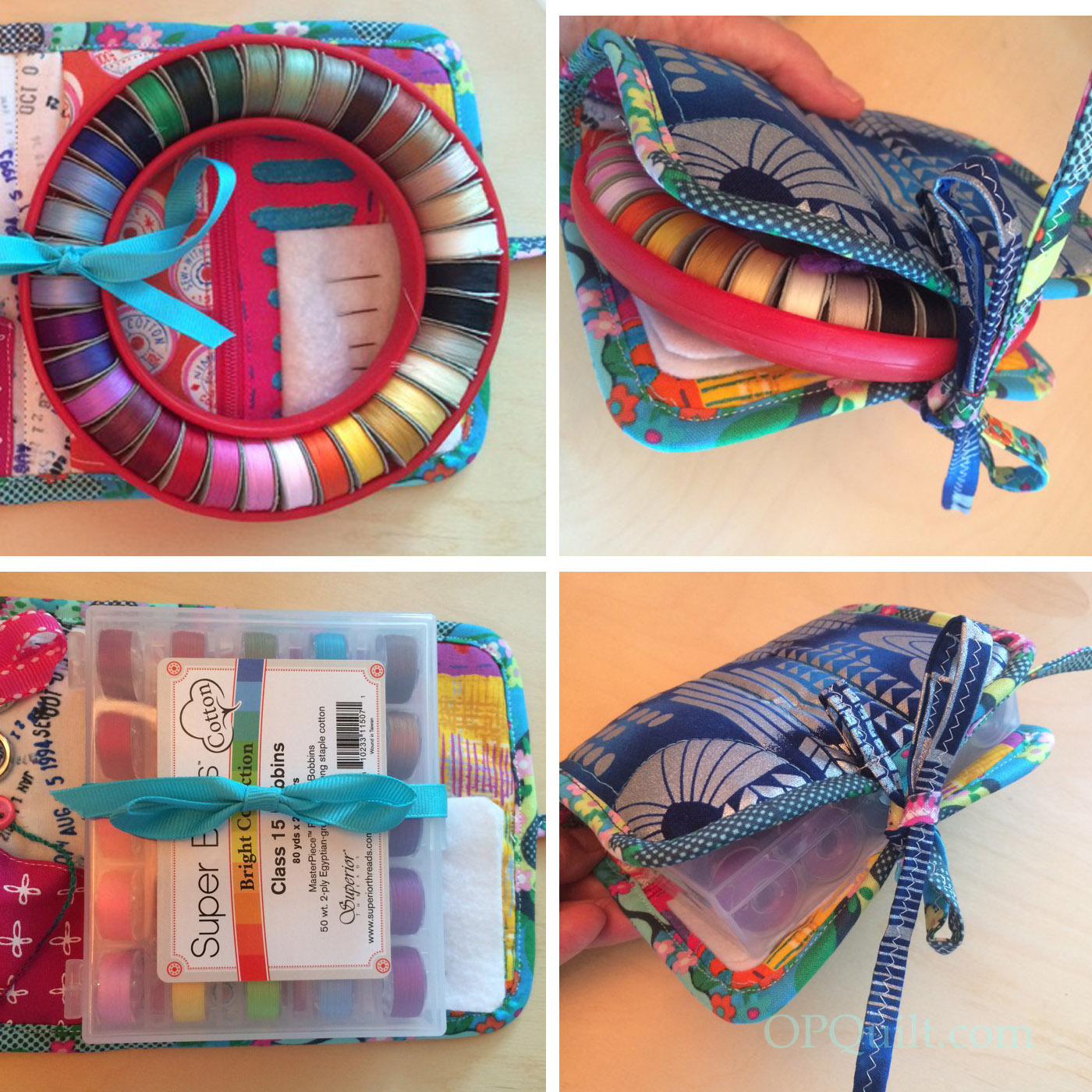
I use the Superior Threads Bobbin Donut in doing my hand stitching.  I tried and tried to think of a way to get it attached, and finally resorted to sewing a ribbon to the center. SewingKitESE_10

I also tried it out on their new Super Bobs box, which is what is replacing the Donut.  They still have a few donuts for sale on their website if you hate to see it go.  Truth: I probably won’t shove the donut or the box into the sewing kit…but I might.

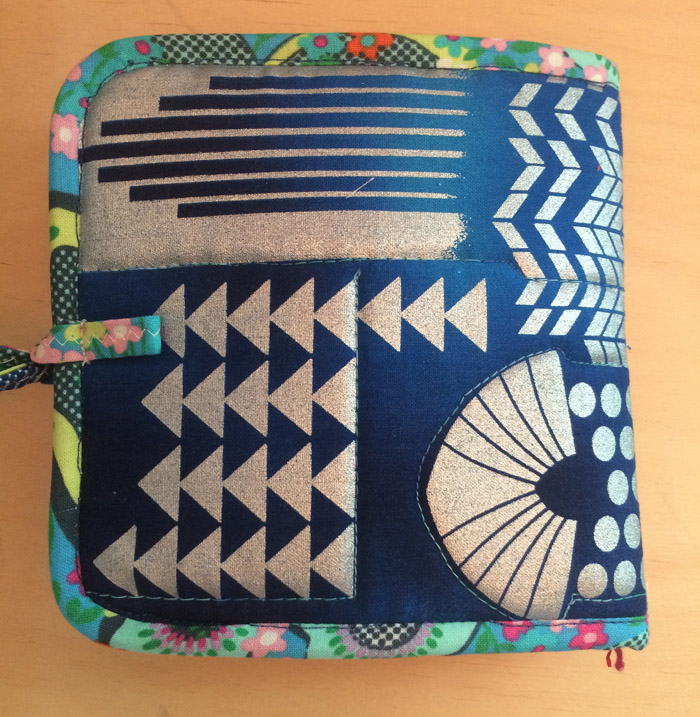
I realize that I assume you have some sewing knowledge when I posted this, but another Truth: it’s also for my reference if I ever want to make another one.  The very cool fabric on the outside is from Timeless Treasures Fabrics a few whiles back.  It’s called Lux, if you want to go looking.

Why did I make this?  I have lots of pouches and bags and I love them all, as most came from friends.  I also have a couple of sewing cases, too, but I found myself toting around my stuff in a zipper baggie, as nothing quite suited me.  So I know this is what works for me, but maybe you can find something in here that will work for you.

SewingKitESE_11

It matters little how much equipment we use; it matters much that we be masters of all we do use. ~Sam Abell

I have to say that my attention has been preoccupied with the victims of the Houston flooding.  My son and his family moved there a week ago (I know!), and I try to keep tabs on them as much as he is able to.  I’m not the only one focused that way, with loved ones being flooded.  We’ve contributed to the Google Hurricane Harvey Response (they’ll contribute matching funds), and there are many other charities where you can donate.  Please consider helping in this way, as this is catastrophic.

And One More Thing: Get your own Emergency Supply Kit.  Have water, basic necessities, food that’s portable.  None of us can expect that rescue will be a part of our community’s offerings, in case of disaster (and you know what your own disaster can be).  We have to expect that we’ll need to help ourselves first.

Samaritans help push a boat with evacuees to high ground during a rain storm caused by Tropical Storm Harvey along Tidwell Road in east Houston, Texas, U.S. August 28, 2017. REUTERS/Adrees Latif TPX IMAGES OF THE DAY – RTX3DRSF

SaveSave

SaveSave

Quilts

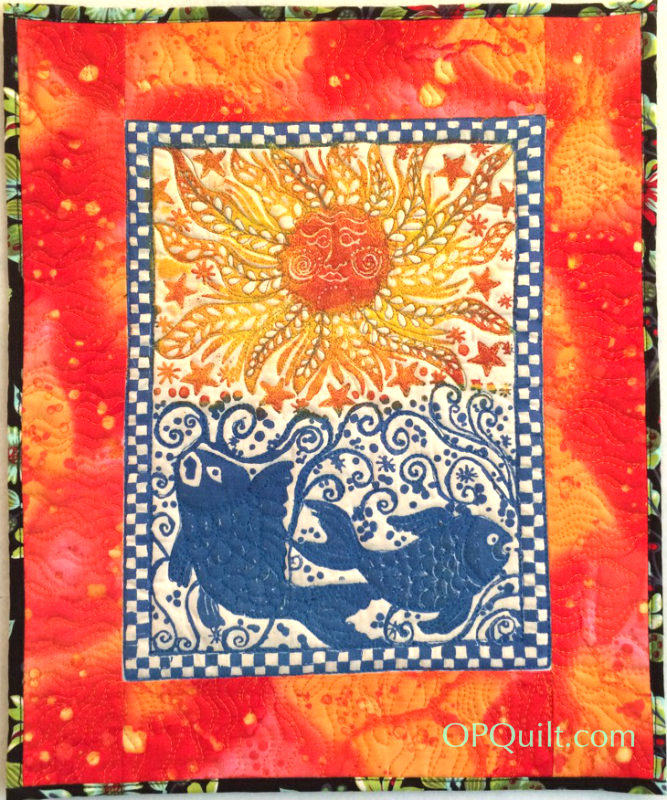
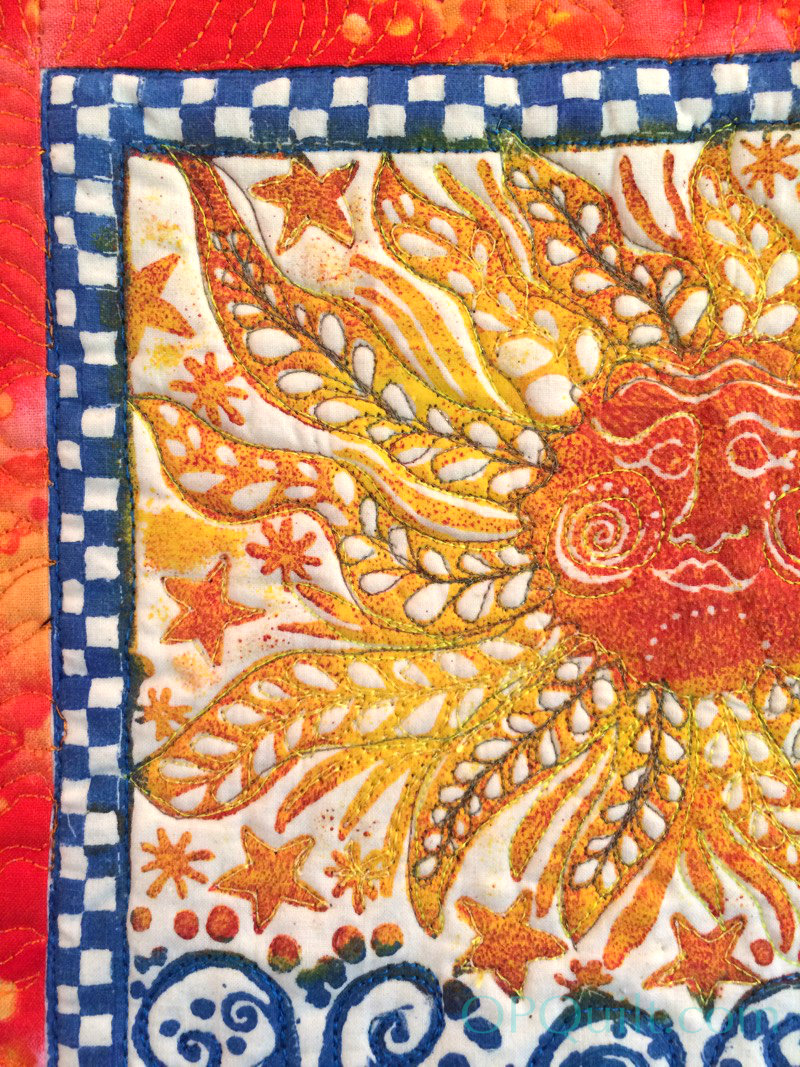
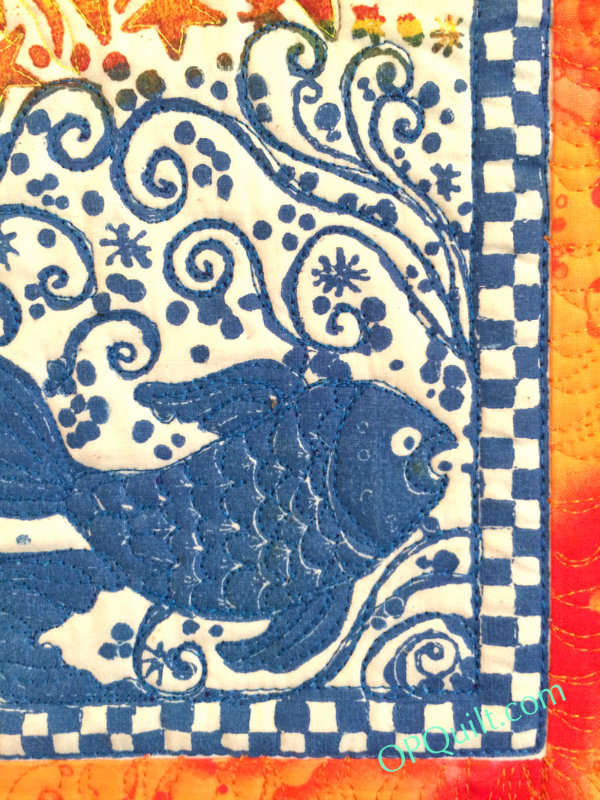
Mr. Golden Sun

MrGoldenSun_mini

Mr. Golden Sun
Quilt No. 187
13″ by 16″ tall

We had a great time on Monday, watching our partial eclipse.  I’d made eclipse cookies, people brought lemonade, and we all cheered when the timer went off telling us that we were at the “most” partial.  What an event!  What a day!  I loved best the idea that all of us were focused together on the celestial happenings, uniting us under the mantle of the Great American Eclipse.  Mark your calendars for the next one on April 8, 2024.  See you then.

MrGoldenSun_detail2

So in trying to find something else in my sewing room, I ran across this partially finished mini quilt.  What you are seeing is the very first free-motion quilting that I ever tried…

MrGoldenSun_detail1…along with the most recent free motion quilting.  You can’t really tell much, but I’m glad this partially-finished quilt is now in the finished category.  Check that off.affinity_photo

You are also seeing a “Photoshop-free” image.  I’ve been dependent on Photoshop for years and years, having learned it in college when it first came out.  But I decided the best way to learn new software is just to try new software.  Yes, having some knowledge of what does what in these digital editing programs does help, but a new companion book is coming out in October, and they have help forums, and there is always Professor Google, if you can articulate your problem.  Affinity Photo is also cheaper than Photoshop (Affinity Designer is the Illustrator equivalent).

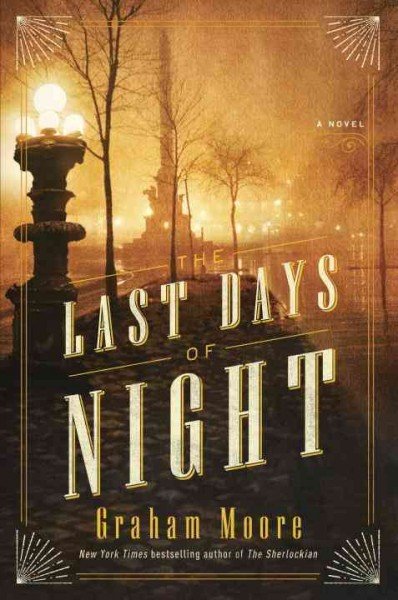
Last Days of Night_Westinghouse

I recently finished listening to Graham Moore’s The Last Days of Night, a book about the feud between George Westinghouse and Thomas Edison.  I recommend it highly.  There are lots of quotes about failure, and success, and about how, as Leo Buscaglia says:

We seem to gain wisdom more readily through our failures than through our successes. We always think of failure as the antithesis of success, but it isn’t. Success often lies just the other side of failure.

That book taught me that through multiple failures, America gained electricity, that even an early failure can be made into a finished quilt, and even though some might think my eclipse was a bust (because it was not “totality”) even a partial eclipse can be magic.