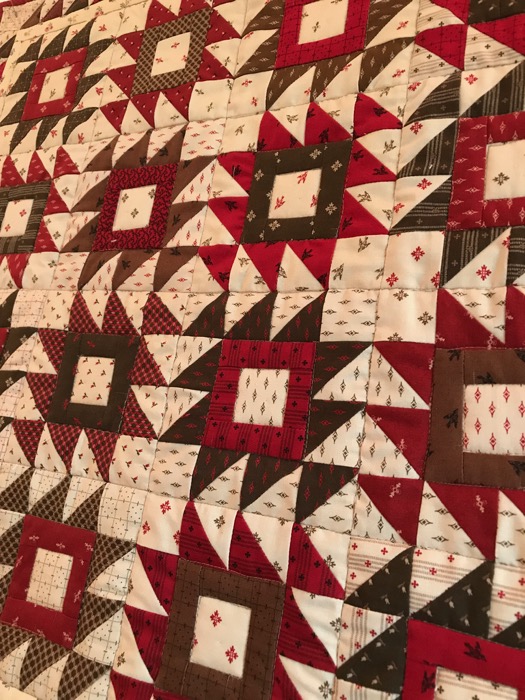
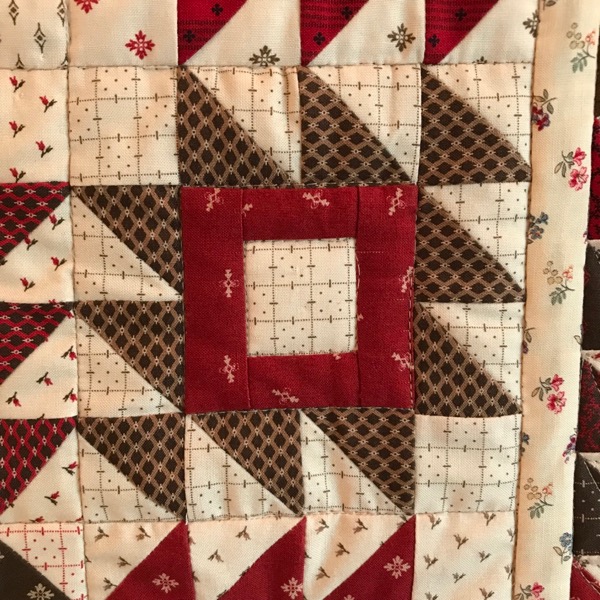
It was a lot of mind over matter, but I finished the borders, worked out the measurements and sewed everything together. There seemingly was a big canyon between where I was last post and where I am now: getting it ready to quilt, but really, it wasn’t that hard once I settled down, stopped freaking out and followed Melanie’s advice.
I finished the Gridster Bee blocks for Linda for August. I like her idea of lots of churn dashes all the same size, but in a variety of fabrics. If you head to our hashtag on IG, you can see that Linda has already received some of the blocks.
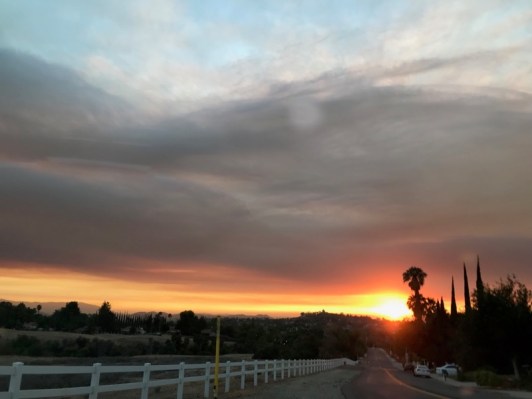
The same night I finished the Northern Star Medallion top, I stepped outside to see this.
We drove up to the top of our neighborhood to see where the smoke was coming from–way over yonder in Orange County on the left bumpy mountain. California is burning up, and it’s only the beginning of August. When I first moved here 27 years ago, we only had fires in September, just like clockwork. Every year there would be one big one, and then it would be done.
Tonight the fire map looks like this and it’s not even September. Oh yes, we also have an earthquake map, a smog map, but we don’t generally have snow or flood or tornado maps, like some of you do.
This morning I had to have a couple of stitches taken out from a recent procedure, and the doctor was about to throw these into the sharps container. When I asked, he gave them to me. I washed them up and put them in my sewing supplies–those tweezers are great for grabbing the end of the seam of an HST to keep it from going wonky, and I’ll find a use for those scissors. Yes, I’m still sewing on my hexies. I think I’m halfway there.
Look at that yucky sky in the background–seems like it will be a good idea to stay inside and start quilting!
The last time I worked on this, Neanderthals worked on chipping rocks for tools.
The last time I worked on this, Bing Crosby was crooning White Christmas.
The last time I worked on this, I had straight cut bangs and was in fourth grade.
Kidding. But it has been a while.
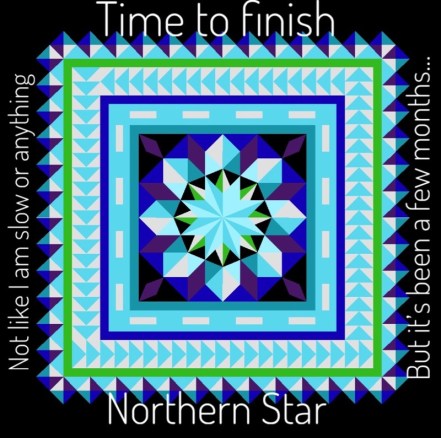
This is the fantasy version, done up in my favorite quilt software, Quilt Pro.
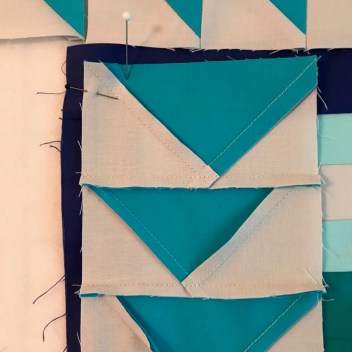
The next ring was a series of Flying Geese. I got the geese done and they didn’t fit.
Typical Medallion Quilt nonsense.
Those solid-color bands in between the pieces sections have many names, but Melanie, of Catbird Quilt Studio, also calls them Spacer Borders, and has a great blogpost on working with your pieced border and spacer borders to put the quilt together. Another post of hers talks about designing medallion quilts in general, and is another great reference.
I wrote to her for advice (she really does know EVERYTHING about medallions and her blog is full of wonderful writing), and sent me a tiny example of how to do the math to figure it out:
I did follow her instructions, trimmed some of the blue adjustment/spacer border, and the geese fit perfectly. I also pinned them on a flat surface, working to keep the quilt square and not make any bubbles in the surface.
Lovely night shot. It’s always late, lately.
As per her advice, I cut the next border larger, and am now working on trying to get that last border to fit.
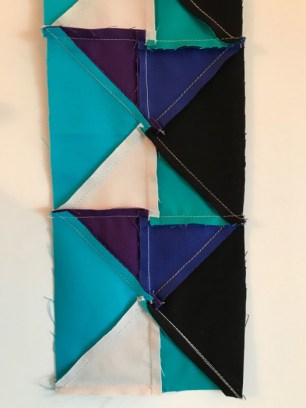
But this process this week has not been without some angst, as I first thought I was so smart to make a HST, cut that in half and then half again. But that won’t work, as these last blocks have the colors in very specific places.
So I pulled out my triangle maker from Bonnie Hunter and started making the size I needed (I learned how to use her tool when I made her En Provence quilt in 2016-17). Never let a new skill go wasted, or at least use it once in a while to keep it from totally slipping out of the old brain.
In looking at the unit, I thought I would make the four-patch center, then adjoin the larger top/bottom triangles. No. It worked out better to create the unit above and sew them together.
I splayed the back seams so the joins weren’t so bulky.
Now I’m auditioning adding another teal border on top of the green, or cutting down the green adjustment border to fit the pieced border. I’m leaning toward the second one.
I thought these last sections would go more quickly, but I was quite bogged down the other night, trying to figure the dang thing out. I’m back on track now, I guess. Medallion quilts are one of my favorite quilts, but they can be tricky.
Last weekend we spent a few days up in the mountains of Southern Utah, feeling a bit too hot in the day, but blissful at night as we enjoyed the quiet and the breeze and a rare double-rainbow. I also taught Free Motion Quilting to some of my relatives, as well as how to sew hexies. They were receptive, and it was a weird thing to be sewing out in nature, but the cabin had electricity, and they wanted to learn.
Here’s to summer. Let’s hope I get this Northern Star Quilt done before the snow flies.
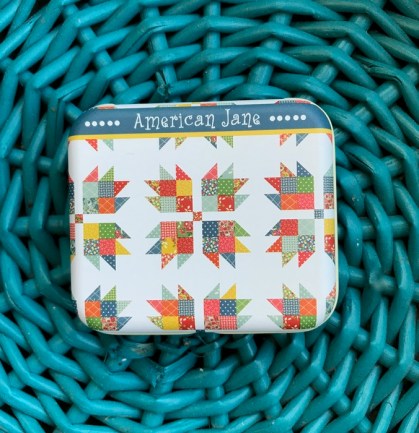
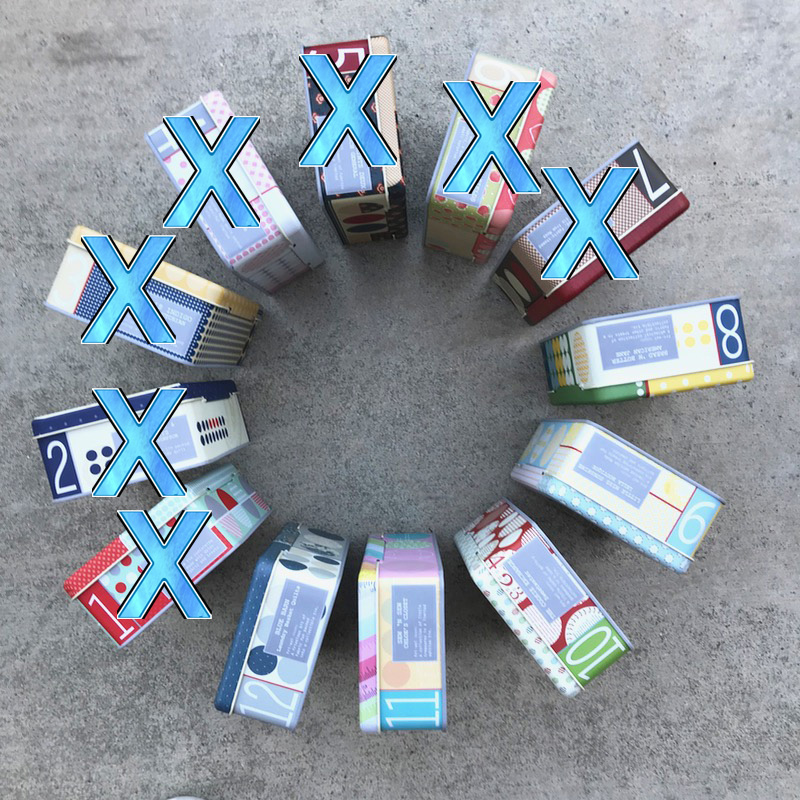
September’s box is Frivols #8 and is a tin from American Jane, with a whole host of fancy and fun prints. The Moda blog notes that:
“There is a correction to the pattern – Background, Sashing, and Borders. The first line should say 3 – 5 1/2″ x width of fabric strips. From the strips, cut 18 – 5 1/2″ squares.”
Duly noted. I’ll figure it out when I get there.
Here’s the layout of prints from their blog–colorful and charming. And I was happy to see that there are fewer half-square triangles in Sandy Klop’s quilt design.
The freebie for this Frivol is a sweet little tin with this month’s quilt design, that is just about the size of a charm square, perched up there by the bigger tin. I also love the quote on this month’s card: “Be yourself. Everyone else is already taken.” While it is attributed to Oscar Wilde, this attribution — as in so many other quote attributions — is a little squishy. For more discussion on this, visit the Quote Investigator. In fact, if you read this article, it seems like Wilde was a bit more pessimistic about this whole idea of authenticity:
It is tragic how few people ever “possess their souls” before they die. “Nothing is more rare in any man,” says Emerson, “than an act of his own.” It is quite true. Most people are other people. Their thoughts are some one else’s opinions, their lives a mimicry, their passions a quotation. (c. 1900)
I happen to like the Thomas Merton version:
“In an age where there is much talk about “being yourself” I reserve to myself the right to forget about being myself, since in any case there is very little chance of my being anybody else. Rather it seems to me that when one is too intent on “being himself” he runs the risk of impersonating a shadow.” (c. 1967)
I have to say my favorite instance of this idea is from Gordon B. Hinckley, an earlier president of my church. He writes about discouragement when he was called on a church mission at age nineteen, feeling like he could never do what was required of him:
So often we can focus too much on ourselves, and how we feel from moment to moment. While this aesthetic — to “forget yourself and get to work” — seems to hail from another era, I like to think about it sometimes, when I often can’t find the energy to finish up the chore, to get the work done, to complete the task. I felt that way with Frivols #7, as you probably know. And somedays I have to ask myself: “What do I want to have done by the end of this day?”
Perhaps all this seems so far from the supposed Wilde quote of “being yourself,” but for me they are linked. Perhaps the work is me, the getting done is the shaping of who I am. And hopefully, in forgetting myself and getting to work, I will become my best self.
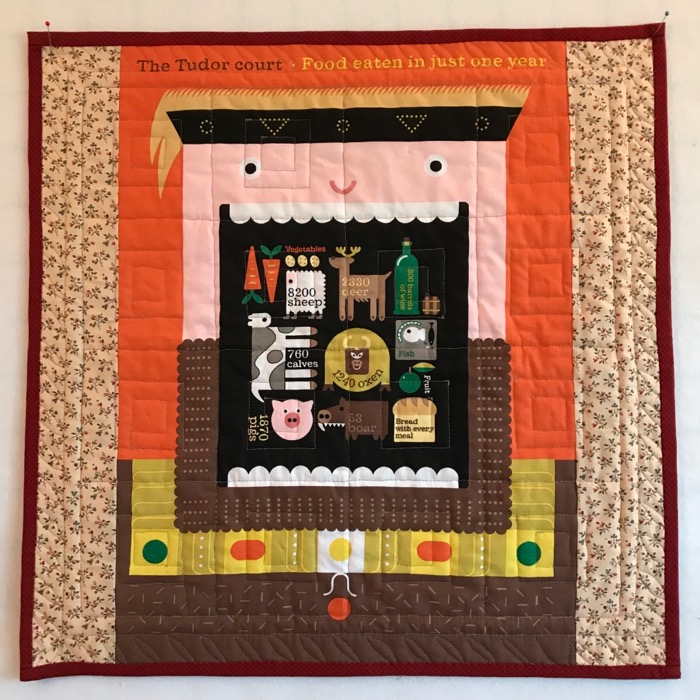
With great relief and happiness, I present to you: Bread with every meal.
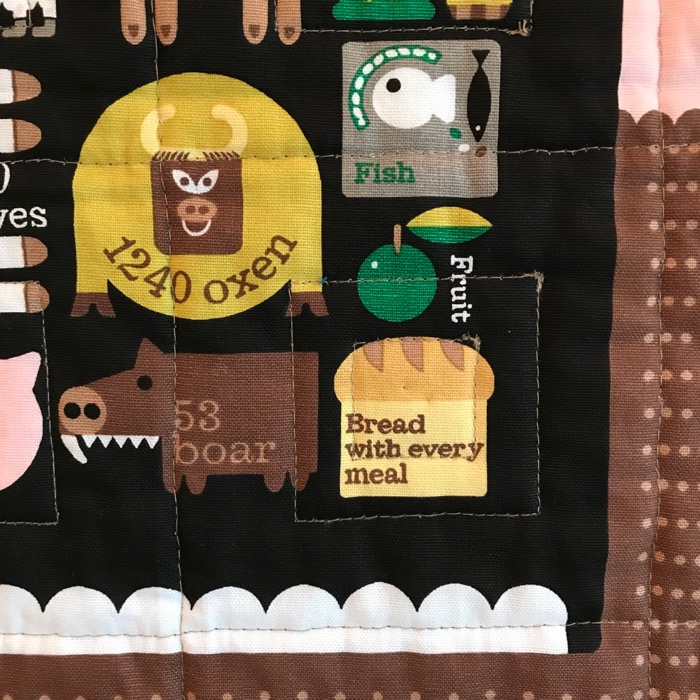
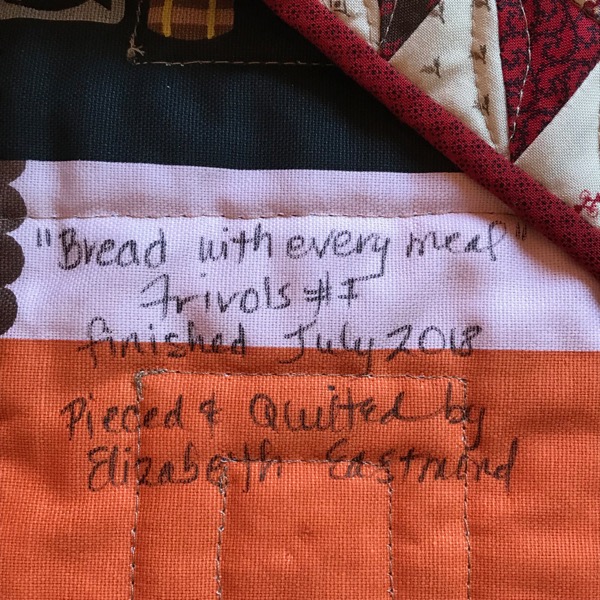
The title comes from the back of this quilt, a tea towel my sister gave to me when she was doing the Great Purge and downsizing her life.
And in that grouping of statistics about what was eaten, was this phrase, “Bread with Every Meal.” Weird to take this for a title, I know. I don’t usually like to be that obtuse in the naming of my quilts.
But it reminded me of the dailiness of quilting, for me. That nearly every day I am at a small feast at my “table” — my sewing room — partaking of the goodness of cloth and patches and stitching. It makes me happy, and so it’s not a far leap to think of this as my daily bread.
Even when I intensely dislike what I’m doing.
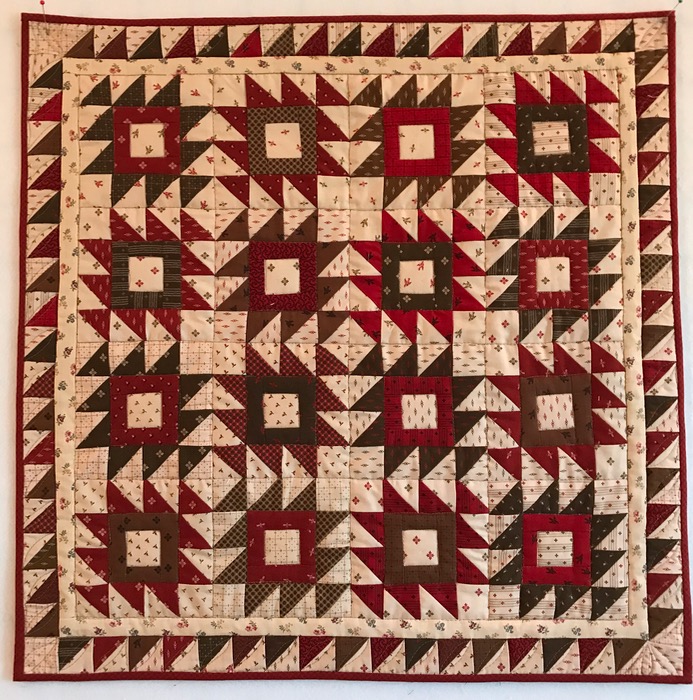
Yes, making this quilt was one moan after another, working on it, wadding it in the corner, avoiding it. These are not my kind of fabrics, and making teensy 1-1/2″ half-square triangles is not my favorite thing to do. But I adore the designer (Lisa Bongean) and so I was determined to be a Brave Girl and finish up this quilt.
It won’t win any awards for piecing, or for that matter, quilting, but it will win prizes for being DONE. So now I can post this:
That’s 7!
Yep, seven down and five to go.
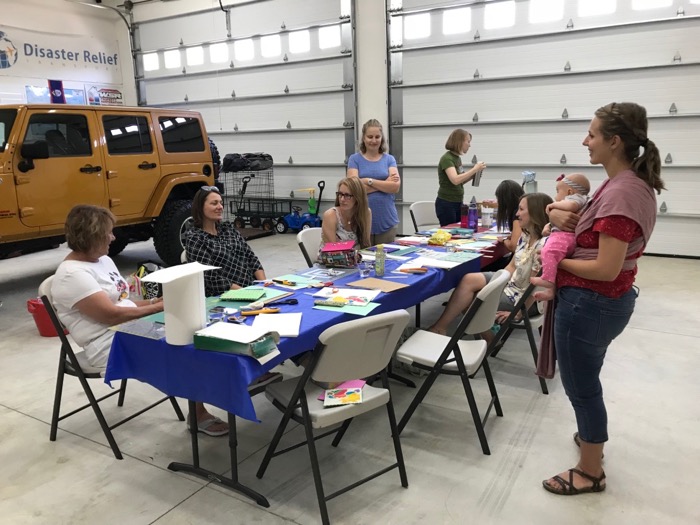
In other happy news, we had Camp Create last weekend. For years a group of us had gotten together regularly, the first Friday of every month for the Good Heart Quilters. It came time to end that monthly gig (no short story on this tale, so I’ll skip the telling), so we went out with a bang, with Camp Create.
I put up a bunch of photos on Instagram, but for the historial (hysterial?) record, I’ll post them again here on the blog.
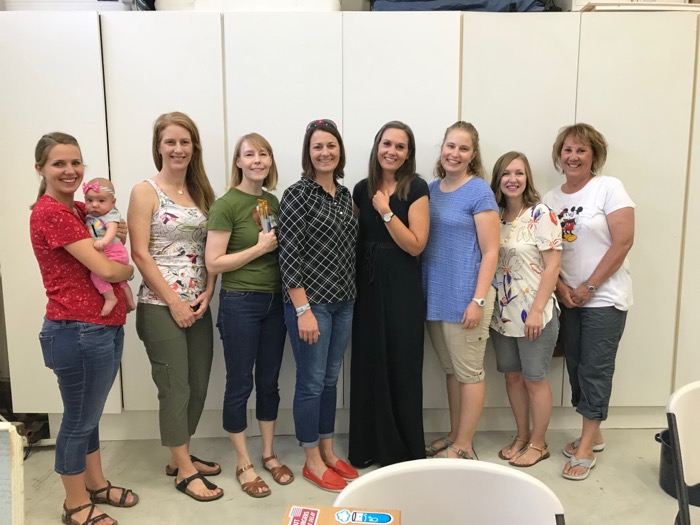
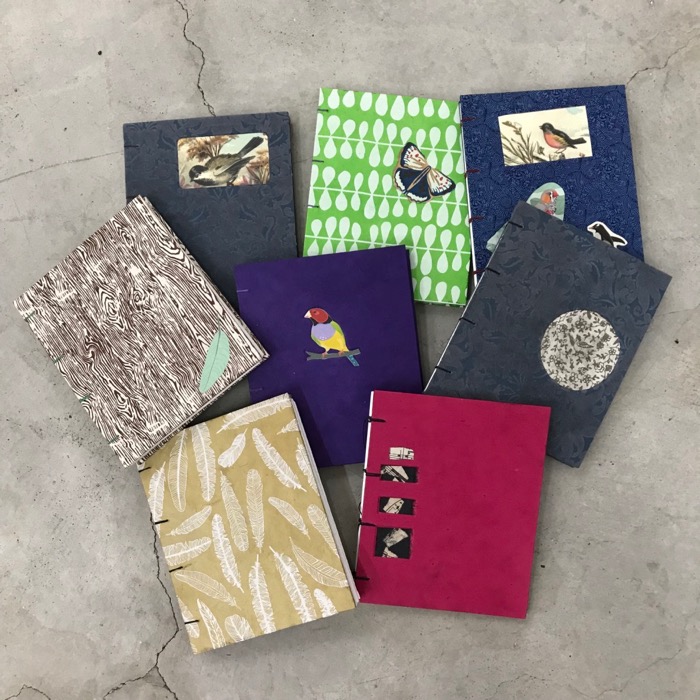
Amy, in the green shirt, above, teaches classes on handmade books at the local art museum, and came to teach us the Coptic Stitch and how to make a book from scratch. I could go on and on about her, but she is waaaay talented, as are all the ladies above. She anchored the first half of Camp Create, held in Leisa’s (air-conditioned) garage.
Claire bundled up her wee daughter, Jane, as she worked on her book next to Leisa.
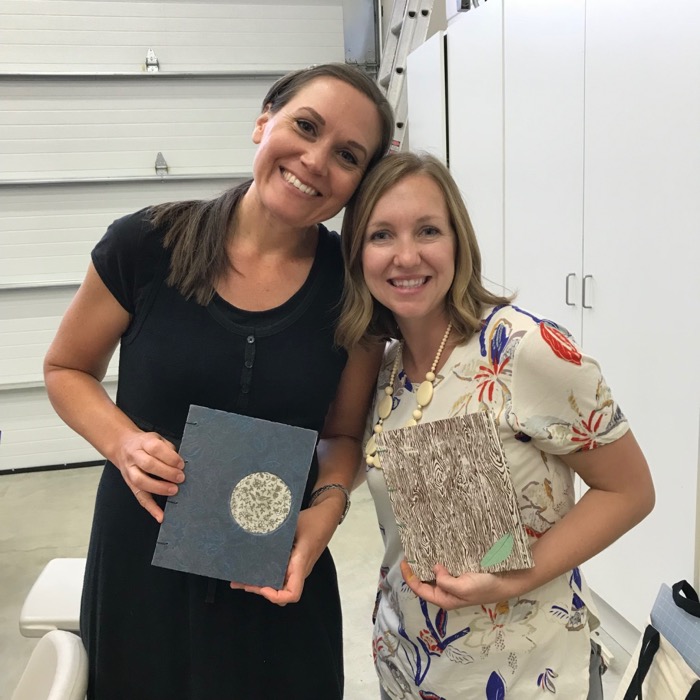
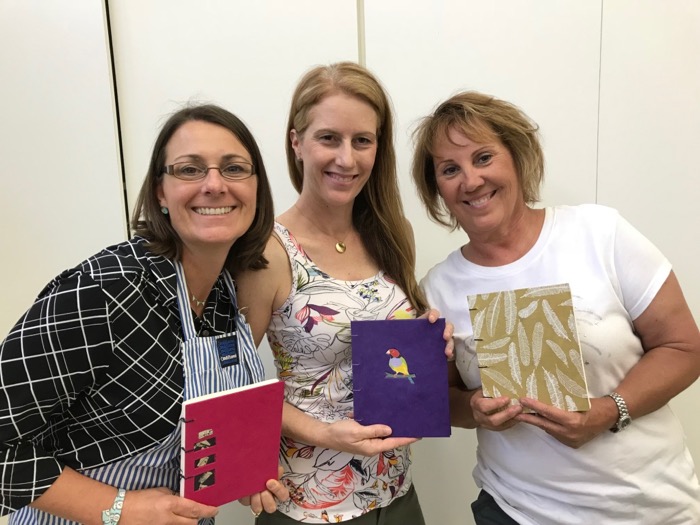
All our books. One of my favorite lines of the day was when one of us hadn’t finished up our binding and laid it down with the rest. Amy carefully tucked the threads underneath saying, “We can hide our secrets.” Yes, indeed. Mine is the green one with the butterfly (click the link for the video). Amy had the best papers from which we could choose.
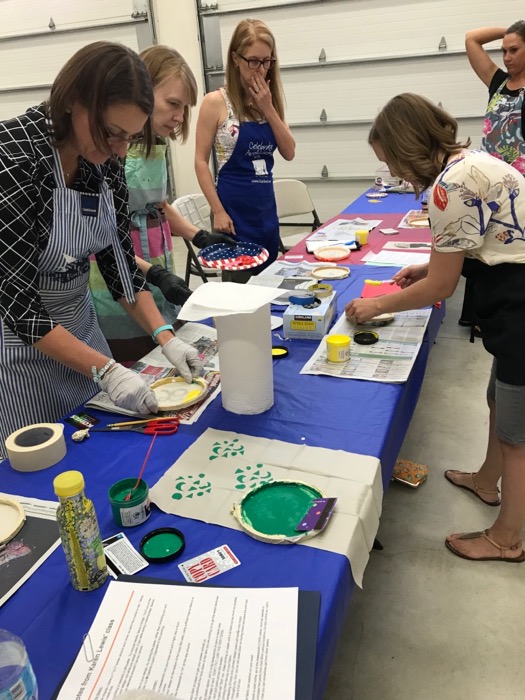
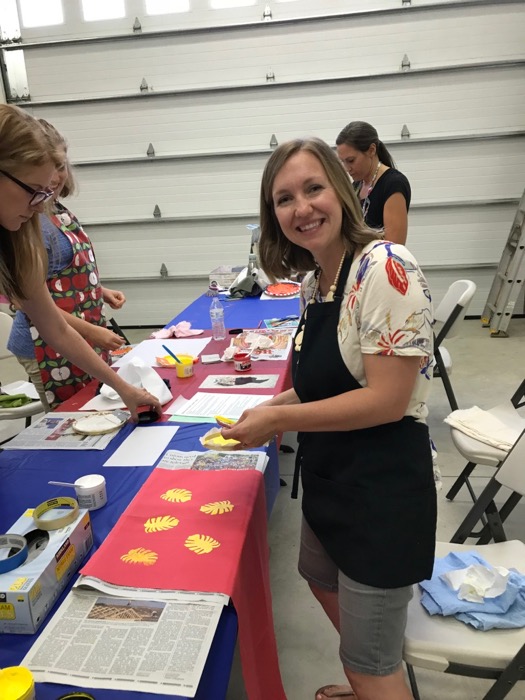
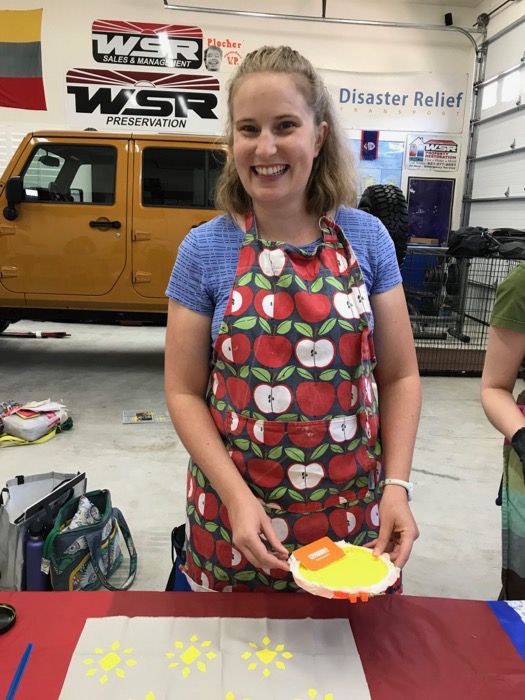
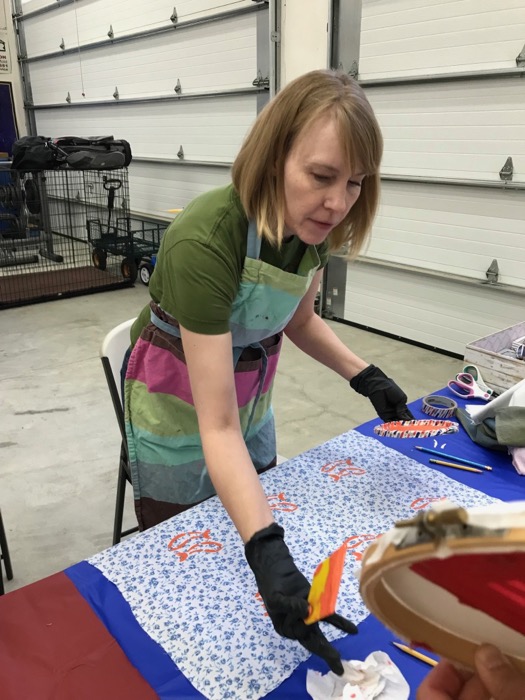
Then we had lunch and switched gears to screen printing. Both Simone and I had taken Karen Lewis’ class at QuiltCon, and Julie was also experienced at this technique, so we taught the technique to these fine crafters.
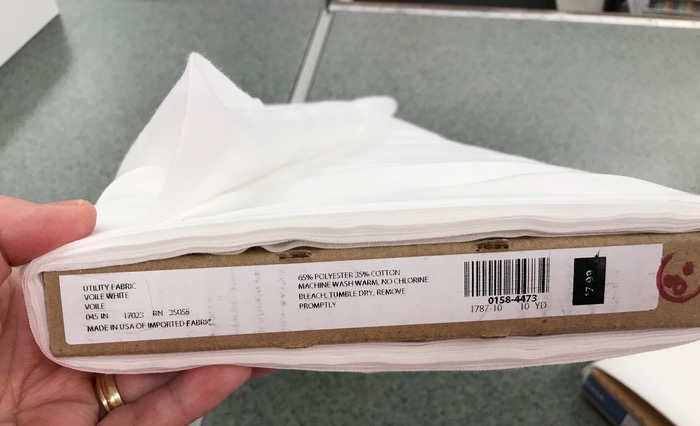
For those of you wondering where to get the screen printing cloth, I found this “utility fabric” at JoAnn Fabrics, and it seemed to work great. It’s not 100% cotton, but I did all my printing with this and I’m happy with it.
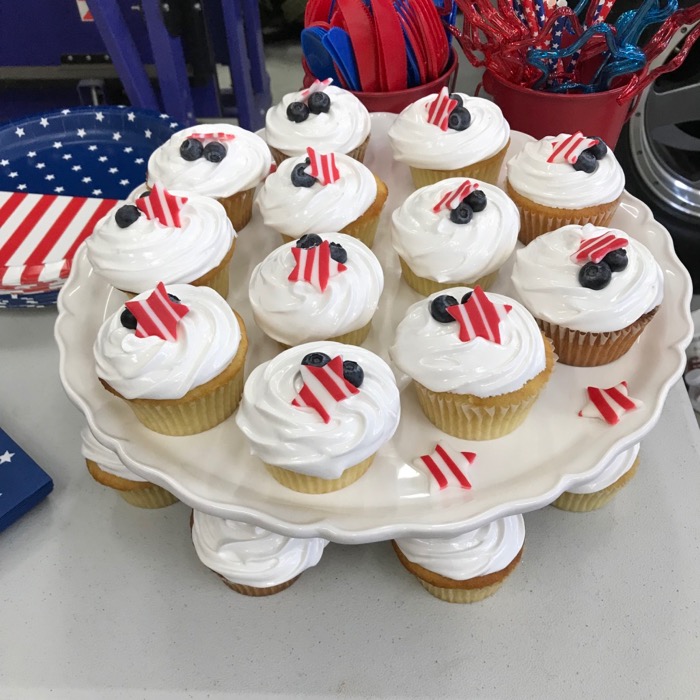
Amy was experienced in screen printing, and knew to wear gloves.Claire’s cupcakes
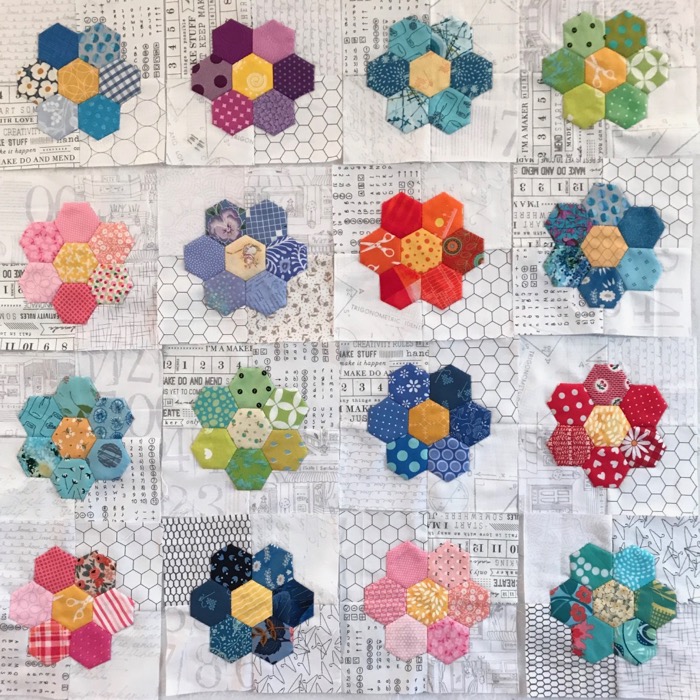
In other news, I’m making progress on my Hexie Flower quilt, a design by Sherri McConnell. (More info on her blog.)
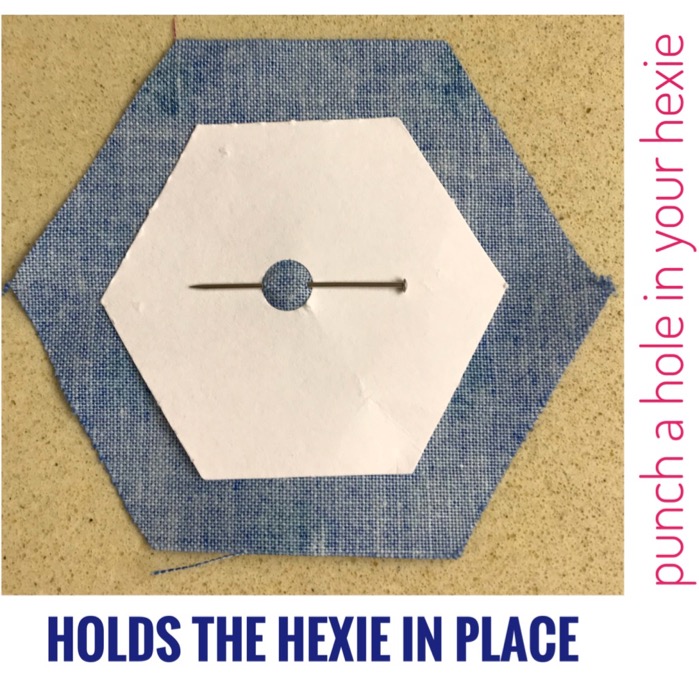
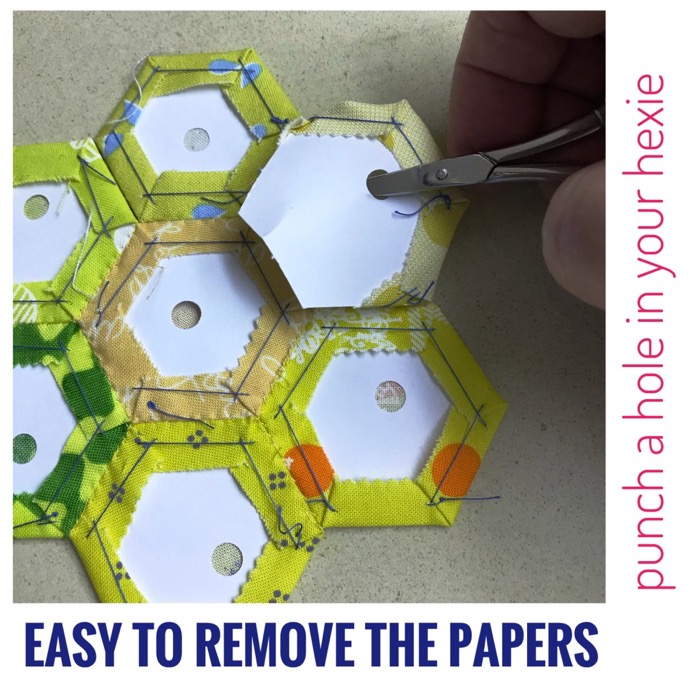
And here’s my contribution to Hexie Lore: punch a hole in your paper. You can anchor your hexie with a straight pin while you stitch (so the fabric doesn’t move around), and at the end, insert the tip of your scissors into the hole and pop it out. I use the basting method where you don’t take out your stitches, and I use a hexie template to cut out the fabrics.
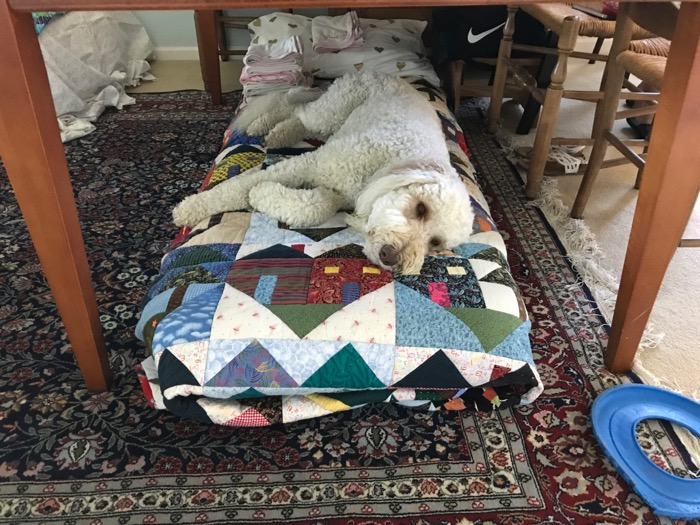
Lastly, we had some visitors. I set up the grandchildrens’ beds downstairs in the dining room, and Maddy’s bed was taken over by their dog, Cookie. Really, it’s more like their younger sibling, Cookie.
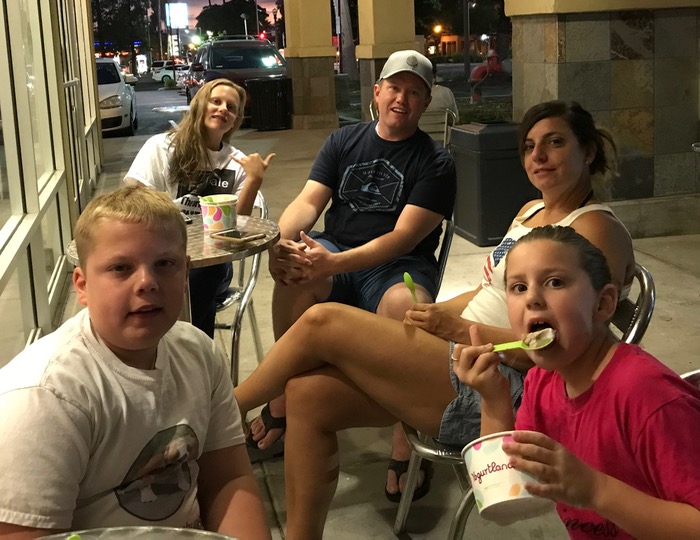
A summer treat: frozen yogurt. We miss you already–come again!!

 It was a lot of mind over matter, but I finished the borders, worked out the measurements and sewed everything together. There seemingly was a big canyon between where I was last post and where I am now: getting it ready to quilt, but really, it wasn’t that hard once I settled down, stopped freaking out and followed Melanie’s advice.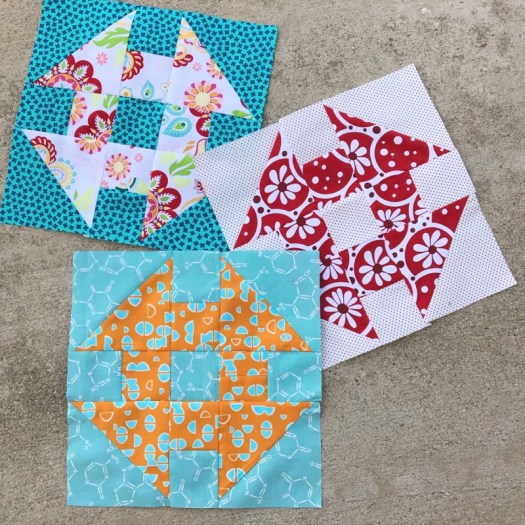









 OccasionalPiece--Quilt!