Totes and Purses · Travels

Sewing in Translation

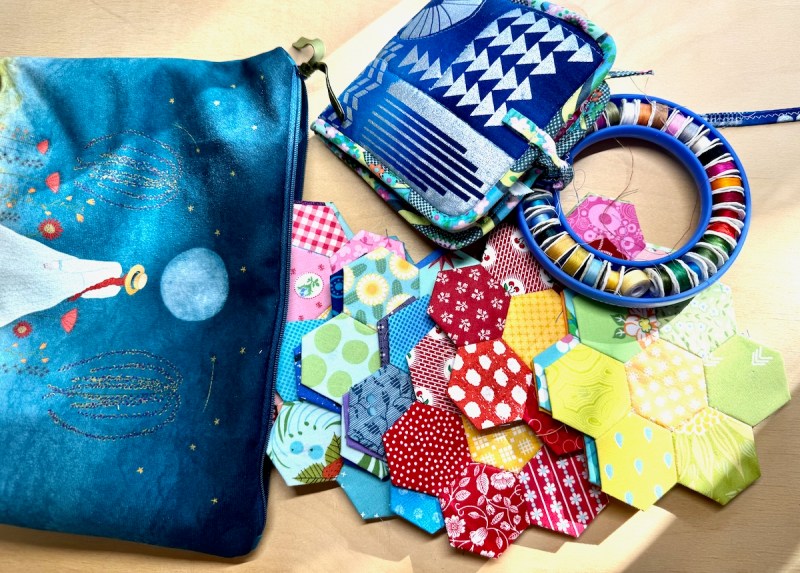
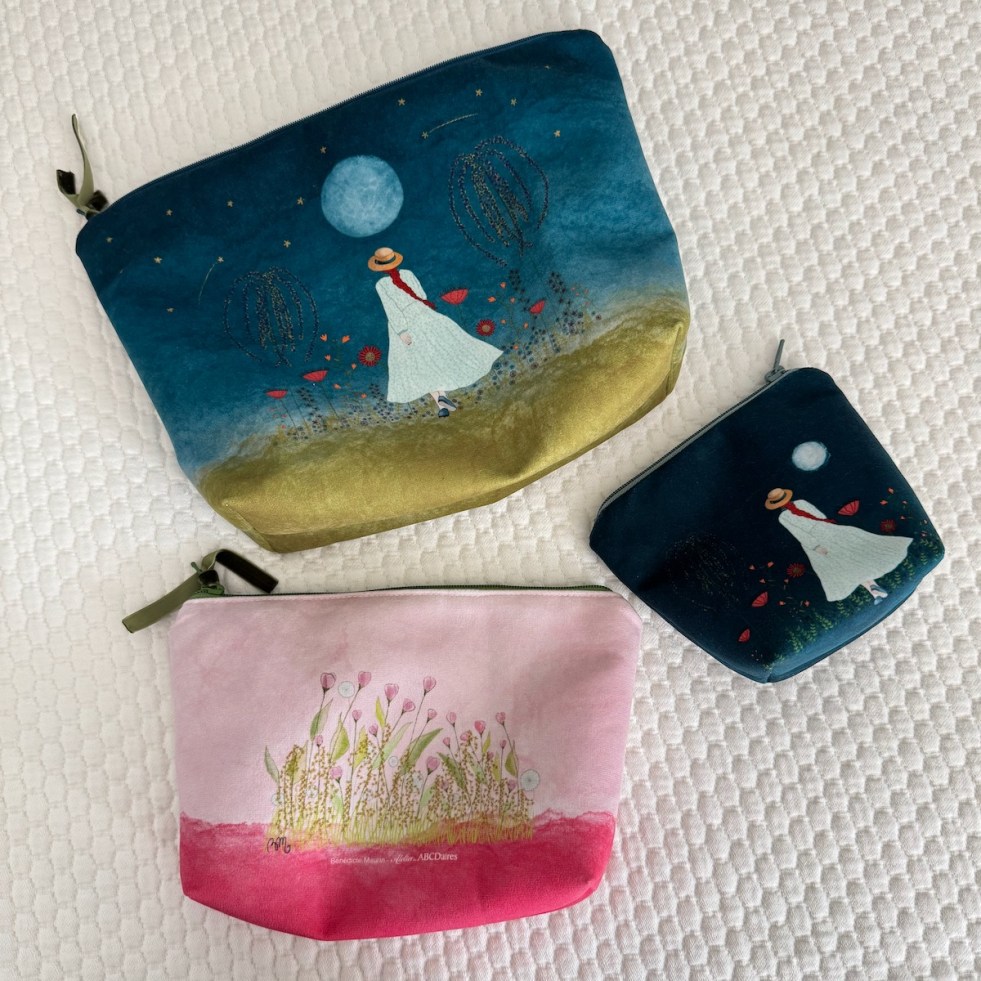
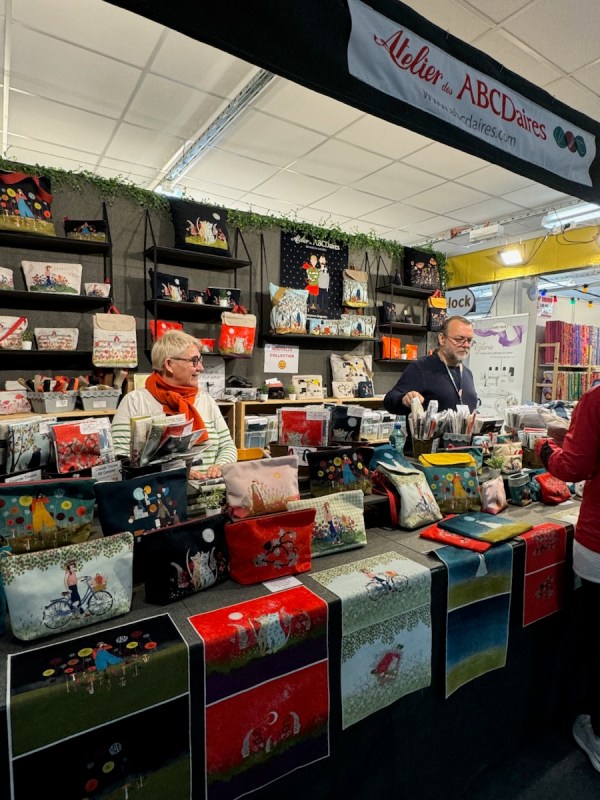
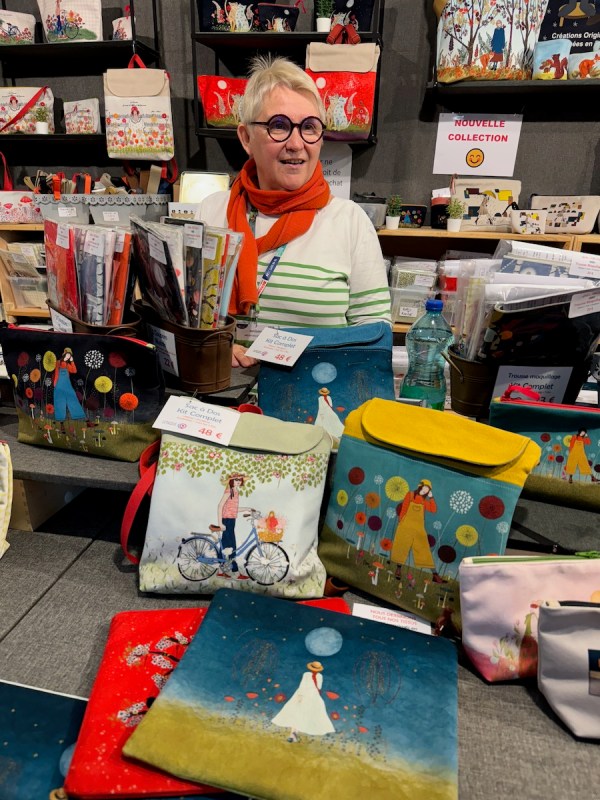
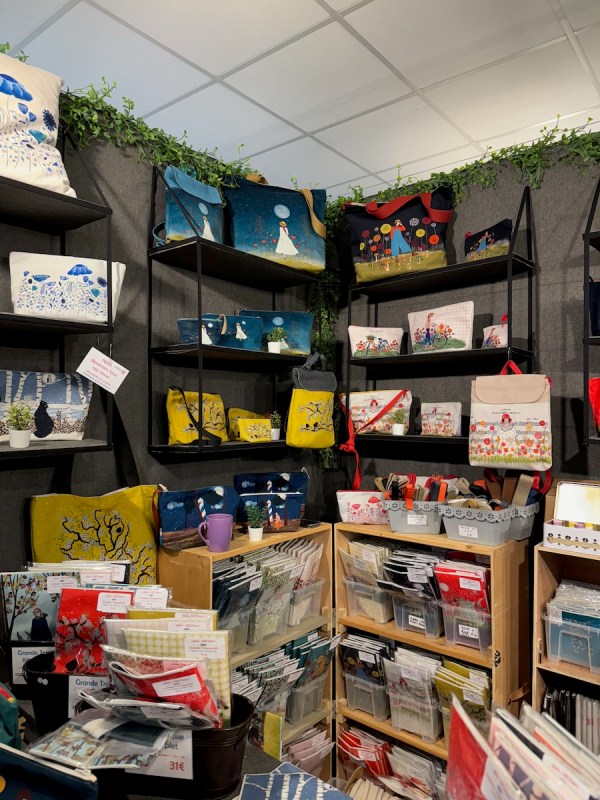
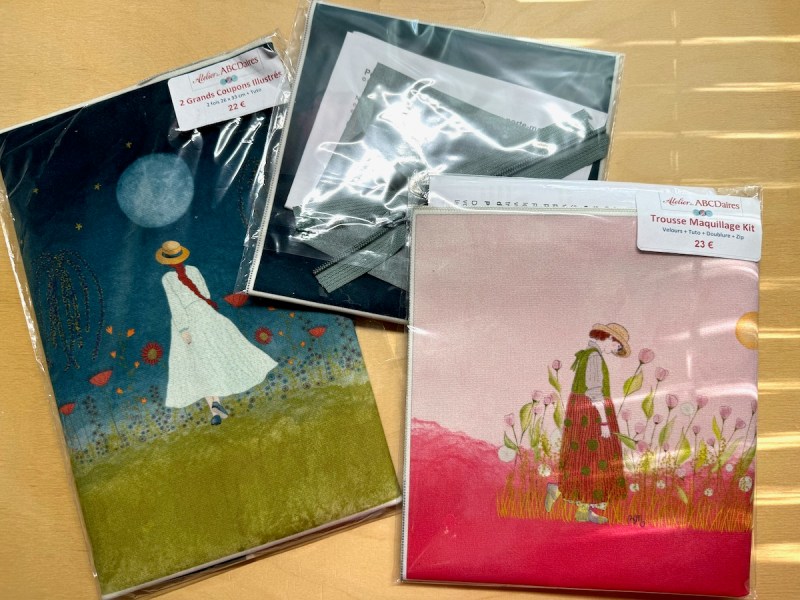
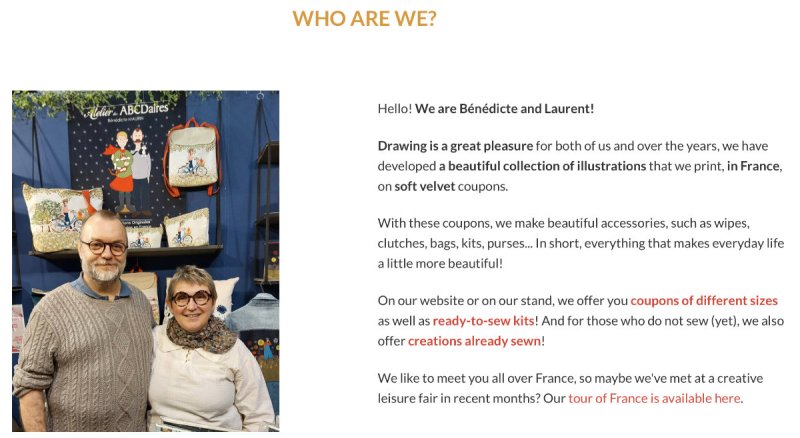
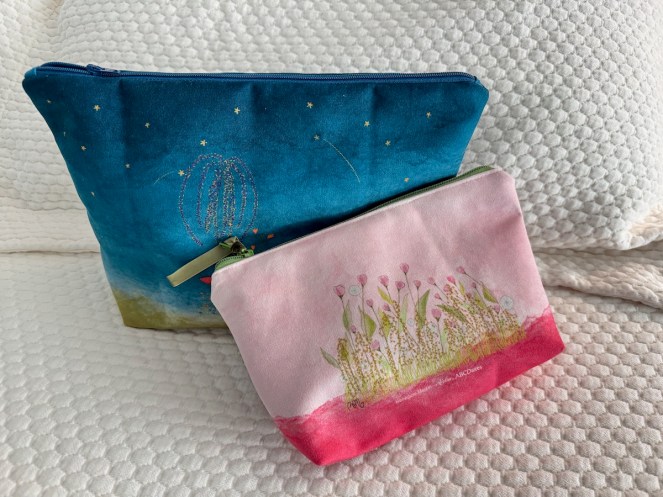
You know when I stood in the shopping area of Carrefour Quilt Show last September (2024), I wanted to buy up all the fabrics and patterns and everything, but alas my suitcase was small, so I had to limit myself. One of the choices was a series of small pouches from ABCDaires, with a soft velvety fabric with absolutely charming printed designs. I tend to buy something that I won’t see in the States, and this fit the ticket. I bought three: two kits and one that just had the printed fabric.

(taken with permission)

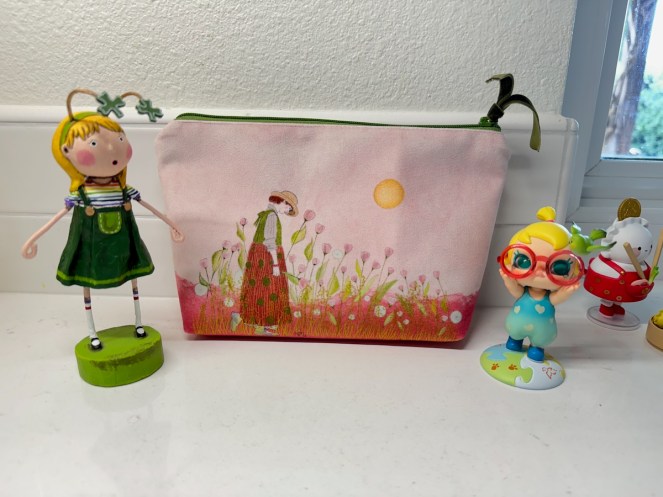
There is a front and a back to each pouch with different designs. One kit was pink with a girl in flowers on the front, and then just the flowers on the back. The colors were rich and saturated, so I was hooked.

However…Note to future self: Just.Buy.The.Kit. For the un-kit purchase, I luckily had a zipper that was a perfect match. However, the zippers in the kit were just a bit heavier duty, plus she included the lining, a waxed lightweight canvas.

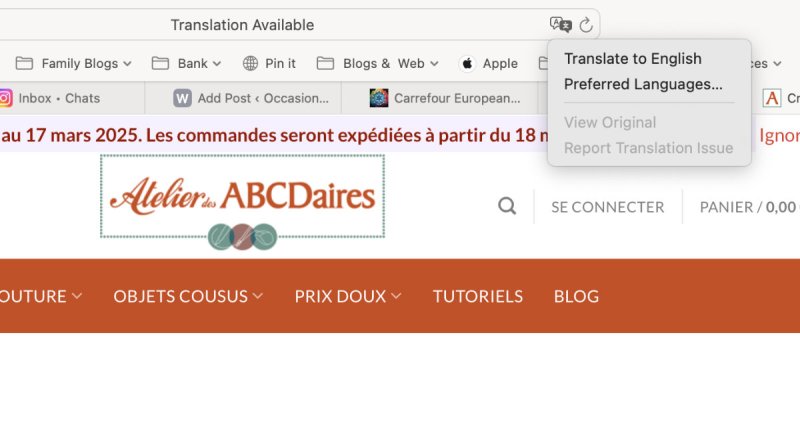
But how can I sew it if it is in another language? you ask. Google Translate to the rescue. Let’s start with their website, ABCDaires:

I have the Google Translate in my browser, so I just click on the little icon in the upper right of the search bar; in some reading I did it suggested that now you have to use Chrome as your browser to get that. (I don’t know–do some searching online.) Or you can head to Google Translate and paste in the URL of the page you want to see in English:

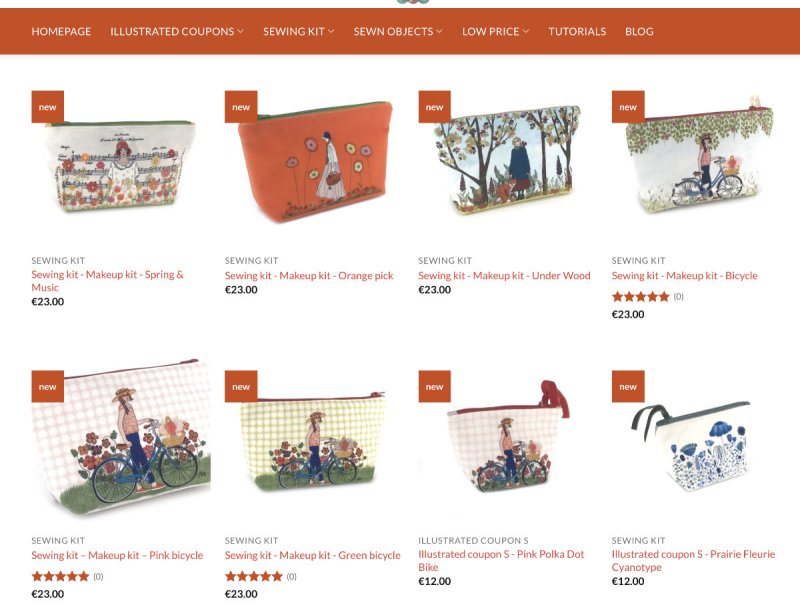
This is Google Translate (above). Click on the Websites box, paste in your URL and it should translate most of the language for you.

Now the website is all in English, and you can click around to purchase the little kit you want. Yes, you will still have to convert the metric measurements while sewing. I have a small ruler that I use for just this.

She was very helpful and just lovely and spoke English! They also have a downloadable PDF of instructions on their website. I’ll talk about that in a minute.

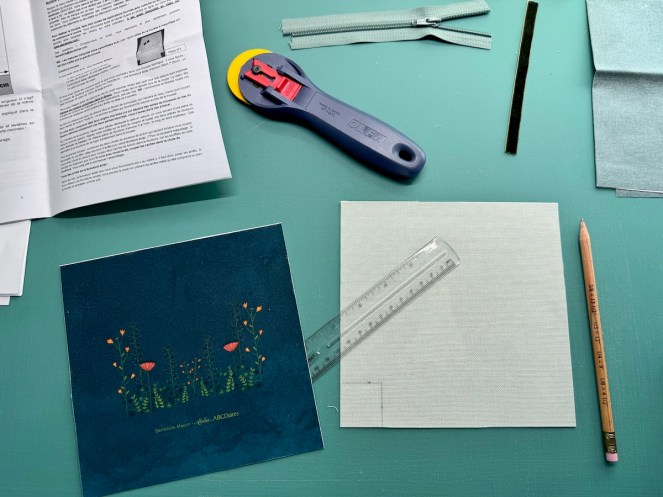
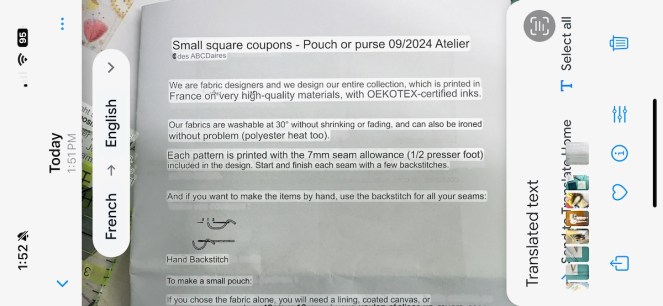
This is the smallest of the three I purchased. You can see the little ruler I use that has cm and mm marked on it. The first thing you do it mark off small squares in the corners, but she has two different measurement options. This was the first wrinkle in the translation business. Which one? I tried using my Google Translate on my iPhone. You open up the app, choose PHOTO and hold it over the paragraph:

After a second or two, all the French is in English (I chose the language, but you could choose any). I learned a “coupon” is a “pouch” or maybe “fabric” or not (it’s not always perfect). So I went to the section about the corners, but alas, still couldn’t figure it out. I then went to math, something we quilters are good at. If the fabric measured X by X then I used the larger dimension, and if it was a different X by X, I would use the smaller. I measured the printed fabric, which gave me my answer. (I’m using “X” so I don’t give away her pattern.) I’m just saying, don’t be frustrated, but try another angle to solve your translation difficulty. Onward.

Ends go on the zipper, zipper gets sewn to the fabric…a usual sequence of steps for a pouch.

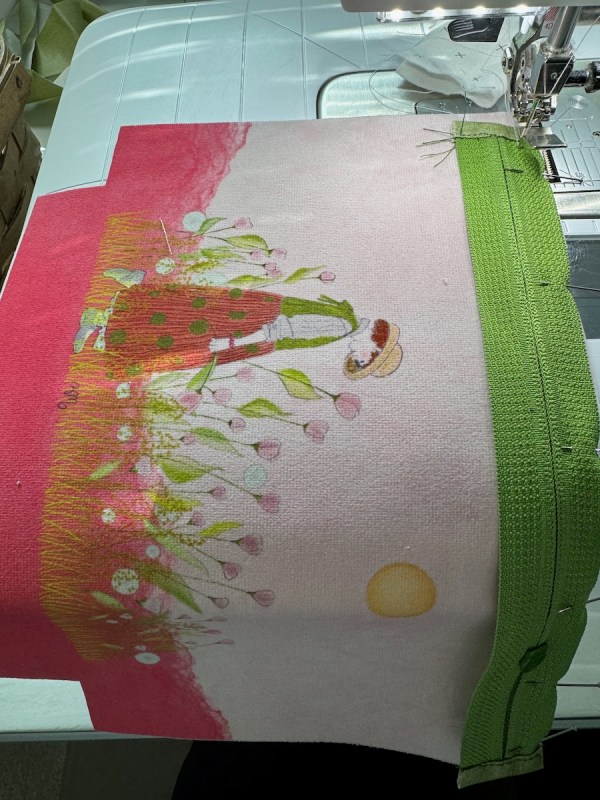
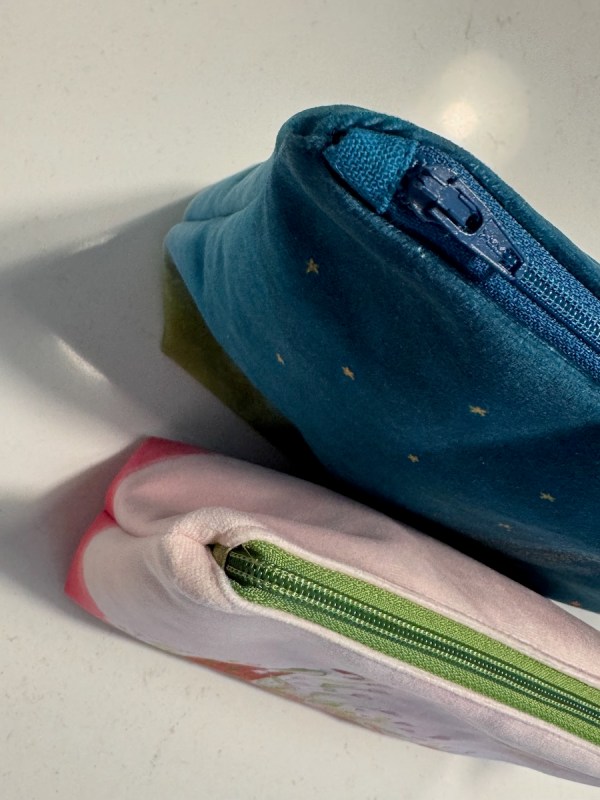
Since this is a velvet minky, I didn’t want to put a hot iron on it and scorch it, so I found my roller came in handy for flattening the seams. On the pink pouch, I opted to topstitch down the fabric with the zipper (she gives two options). I won’t do that again — in a minute I’ll show you why. [Of course it could be that I’m a dweeb at sewing pouches, and the results have everything to do with that.]

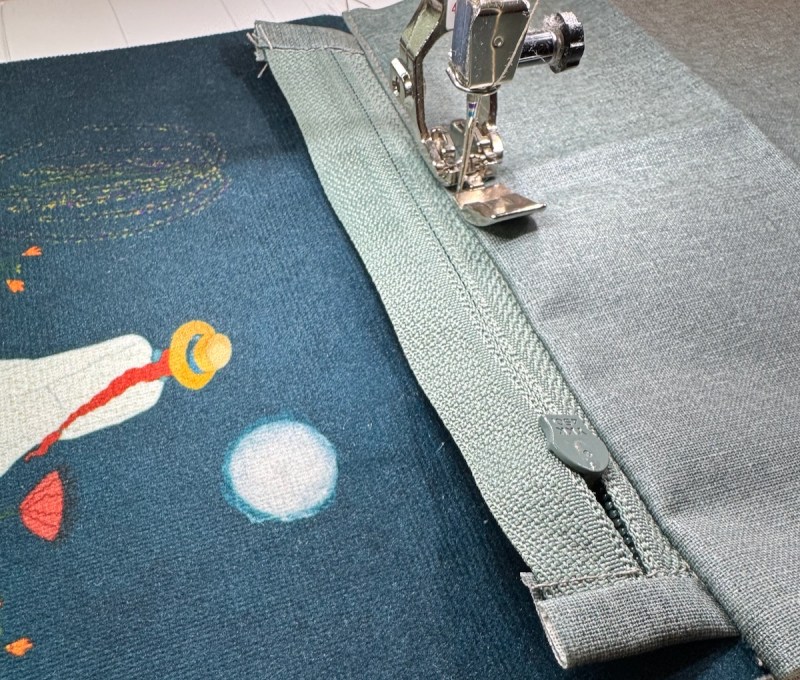
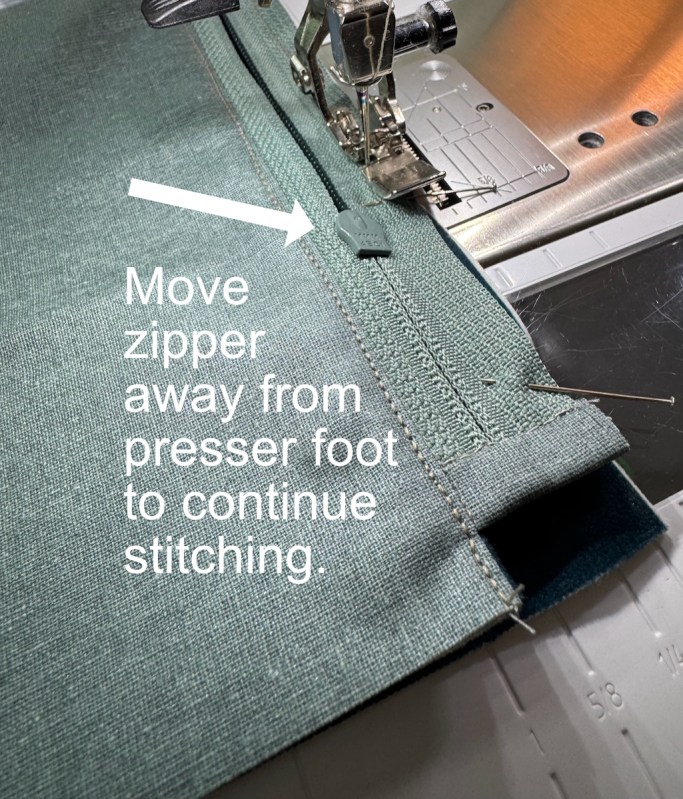
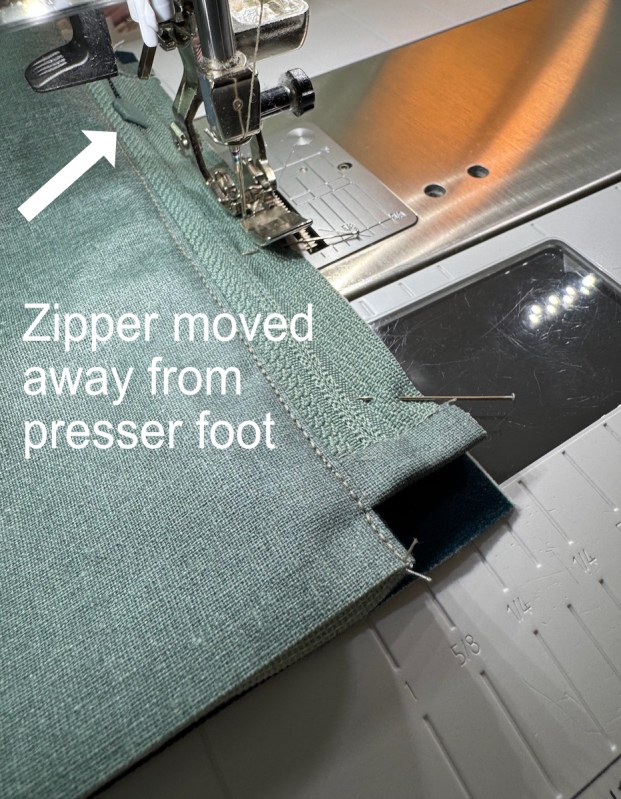
In the first photo, the designer fabric is shown smoothed away to the left, away from the stitching going on on the lining/zipper tape. As usual, when your presser foot approaches the zipper pull, leave the needle in the fabric, raise the presser foot slightly, and move it to the back where you’ve already stitched. This will eliminate bumps in the stitching line.

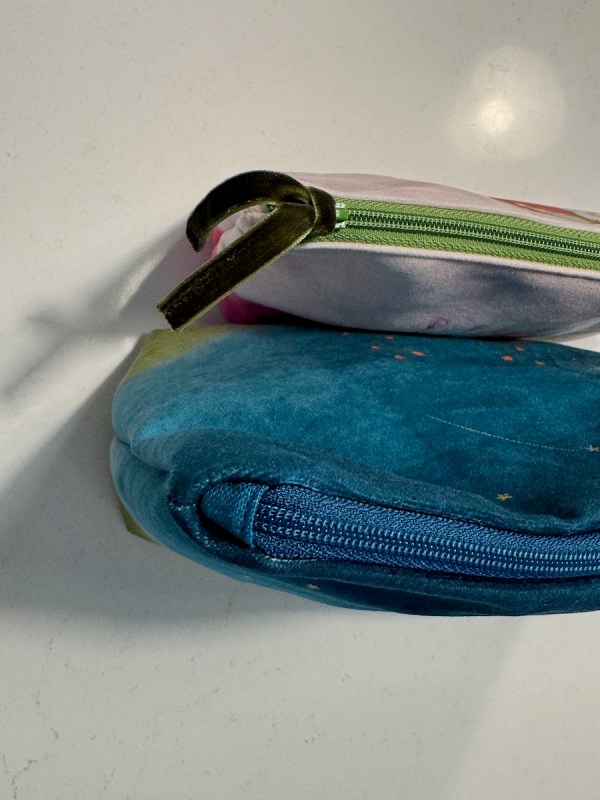
First one done! She has a clever way to put in the velvet ribbon so it becomes a nice zipper pull on a traditional zipper.

Here we go again. I used a bit of fabric from the stash for the zipper ends. I chose a spotty lining fabric (in upper right corner).

Done! The second one went so much faster, and I only top-stitched on the zipper, not the top designer fabric.

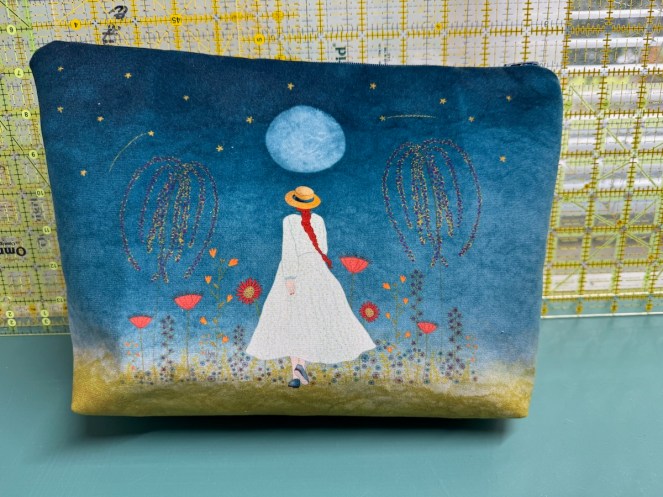
Back designs on both.

Notice how wonky the zipper ending is on the pink? I mean, it’s functional, but not as lovely as the blue zipper. I chalk it up to how the top-stitching impeded the inner seam. (I need to find a cute ribbon for the blue bag.)

UPDATE: I’ve since sewn the last blue pouch, and now I think it was the coated lining fabric “zipper ends” that gave me so much trouble. The fabric “end,” shown above, was much easier to manipulate. So maybe, if you make these, find a coordinating fabric, rather than use the coated fabrics.

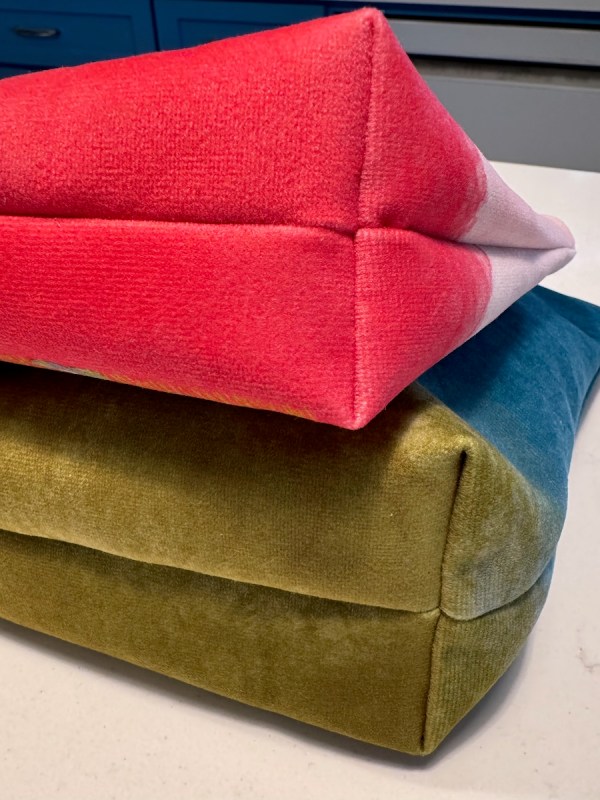
I love how the bag color blends into a second color for the base.

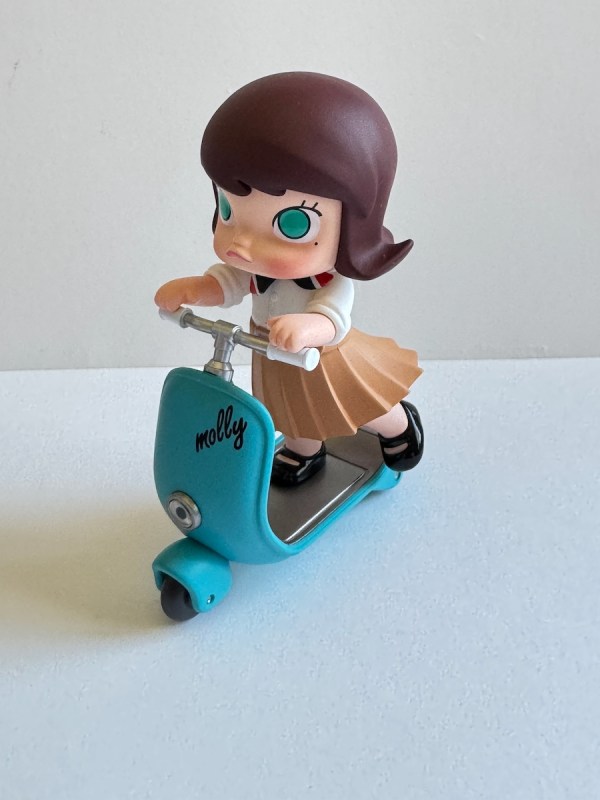
Baby Molly and St. Patrick Day Girl posing with the pink bag. (You know I have to put Molly in here somewhere.)

Now, a caveat. This was an easy translation task, relatively. The company had an English download for the instructions, and I already had the Google Translate installed in my browser. I was also familiar with how the iPhone’s Google Translate worked too, having tried it out on an earlier trip to Japan, where I found out that my breakfast roll was made with the “breath of heaven.” (Okay, so it doesn’t always work so well with idioms, but I took that to mean it had flour in it.) The app has improved greatly since then, I assume because of a a positive use of AI in our lives.

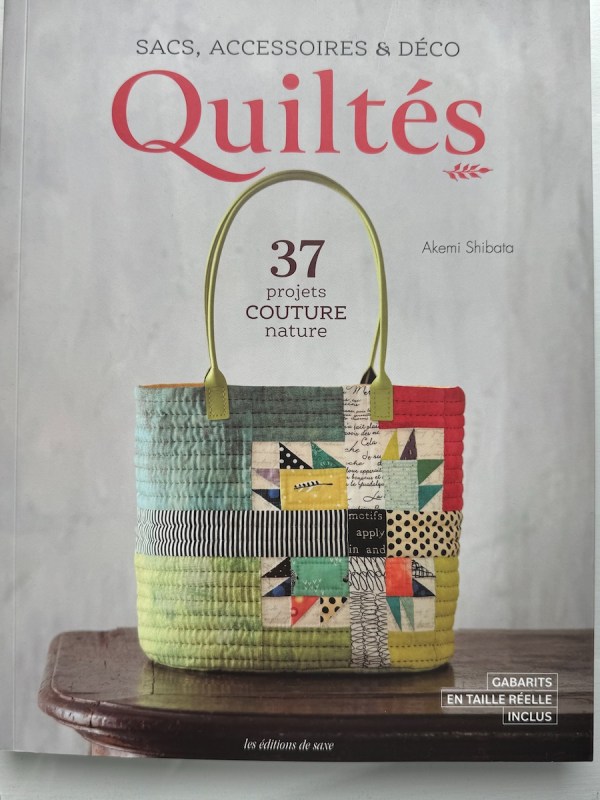
I struggled more on this project, made from a book I’d purchased at Carrefours and also published in French. The trip-up came because it was a JAPANESE bag, translated into French:

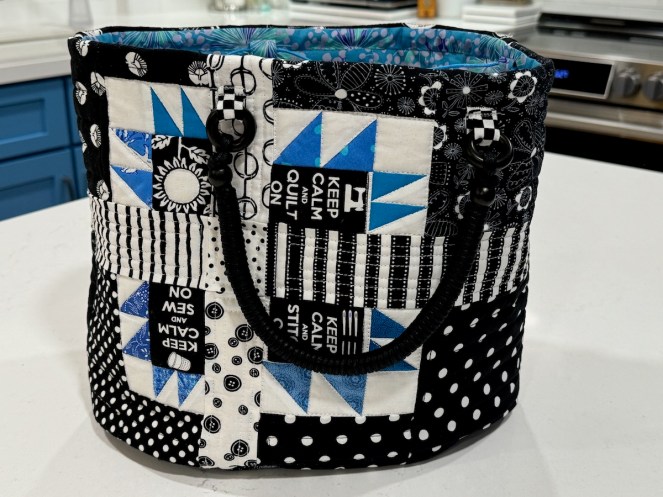
I did use a lot of “how to sew Japanese bags” searches on the internet, with questions like “Do I trace the pattern off the pattern sheet in the back of the book?” (yes) and “Are seam allowances included?” (no). This required a huge MIND shift, and aside from sewing the bottom to the top edge of the bag, I made it. (That’s why it looks upside down, ahem.) I did a lot of improvising, but I also love it, too.

I guess what I want to say is that it is a big world of quilting out there and we can always stand to have our horizons enlarged and widened, helping us to bridge all the acrimony and bitterness that can sometimes be found around us. I am in minor grief just about every day with the parts of what I once held dear being taken apart and sold for dross. So I’ve stepped up and purchased another subscription to a news organization, donated to three different local public broadcast stations, apologized to my Canadian friend Kaylie for who I’ve made two baby quilts, apologized to some scientists I know who won’t get funding for their research saving crops from pests (I do like to eat). I guess I’ll soon be apologizing soon to Greenland, too. And Mexico. And Europe, where I’ll be this year — I hope they let me in. I hope America lets me back in, and lets me have my phone after going through customs. I remember traveling in Italy when Hilary Clinton was running for President and the taxi driver went on and on about how her opponent was like Berlusconi, a real rat, he said. I assured him that she would win. Haha, spoke too soon.

I guess I just want to say that make friends with our international neighbors, sew their projects, buy American products (so they can survive the boycotts from other nations), but mostly just sew. I could go on and on, but I have many friends who are very happy right now, and I love them too. Mostly I just try to translate my complicated feelings and make the results come out with a bit of peace, a bit of kindness and a lot of forbearance.

Sort of like sewing with beautiful fabrics from a lovely French shopkeeper–

Update: I had some questions about what kind of fabric this was. After reading this post, I’d say it hews closer to a product similar to Celosia Velvet, as the back is very sturdy and is not stretchy, nor drapable.

European Patchwork Meeting · Quilt Shows · Travels

Carrefour 2024: Quilts IV

This post is about two different places in the 29th Carrefour European Patchwork Show: 

  • Espace D’Exposition (Venue 11): Quilt en rêve (remakes of antique quilts), France Aubert (Passion for Samplers), Selma Huisman-Hilderbrand (Walk Down Memory Lane)
  • Église St. Blaise (Venue 7): Virginie Peyre

Hope you are all still with me, with seeing quilts from all over quilt land, but mostly from the European guilds.

All posts in order are on the European Patchwork (Carrefour) page.

In Venue 11 (Espace Commercial) there was enough room to do several exhibits. This quilt is from Quilt en rêve, “an association of British, Dutch and American antique quilt enthusiasts. Some of them have been quilting for over 30 years, always conscious of working in a traditional way, paying attention to detail, the choice of fabric and hand sewing” (from here). (UPDATE: I heard from one of the members, Gabrielle Paquin, and she wrote that currently “the team is essentially French and we have an Hollander lady with us.”)

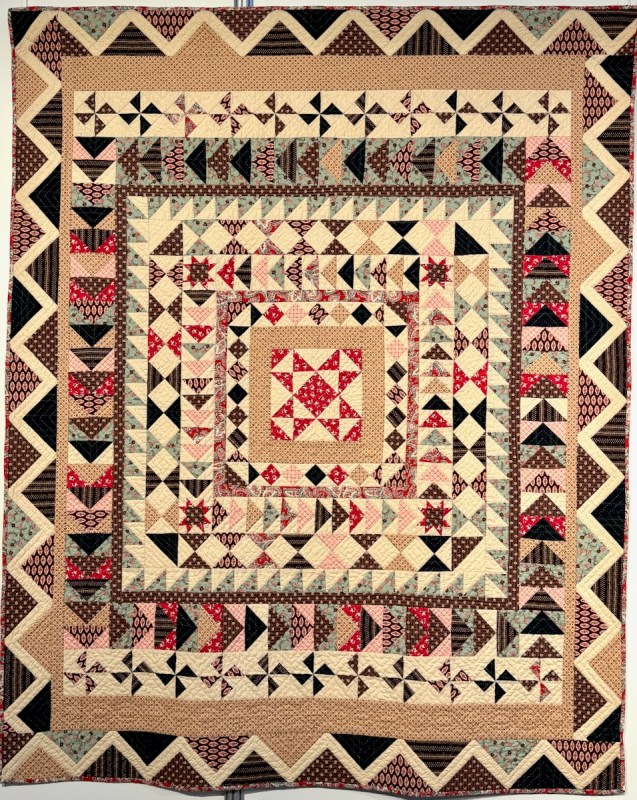
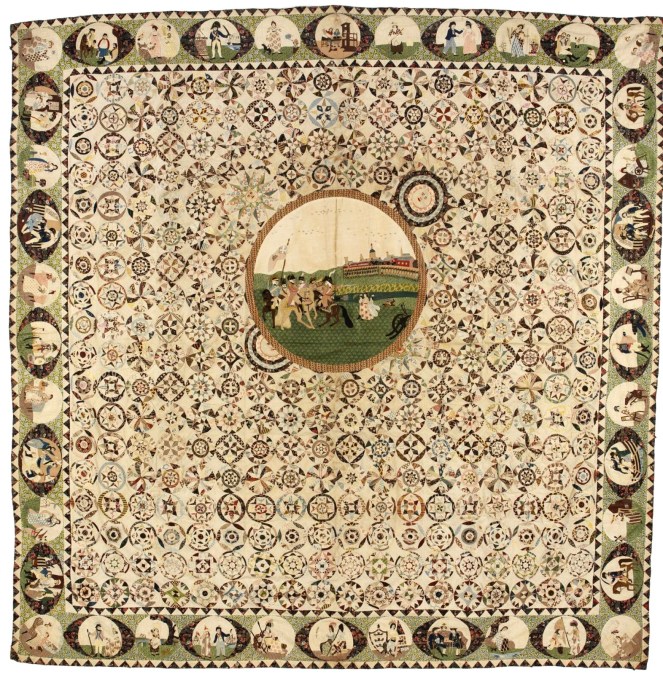
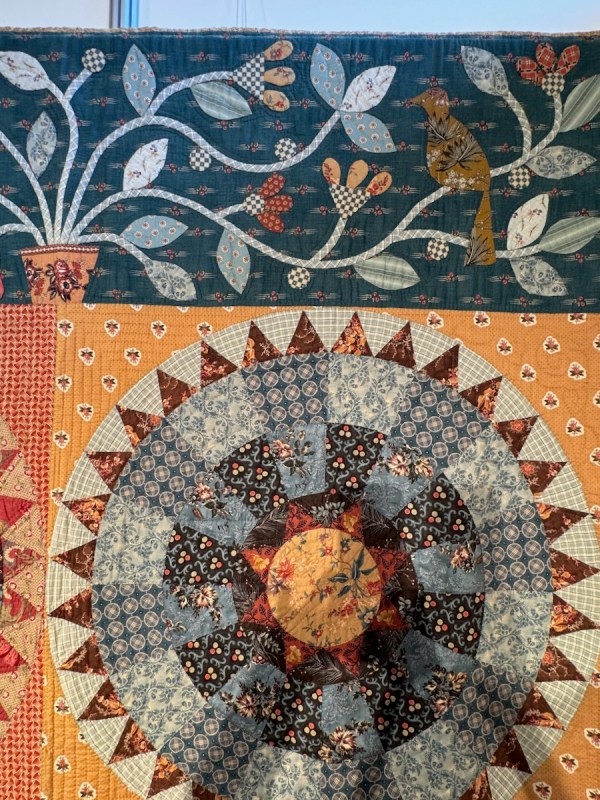
Michigan, a quilt by Martine Crabé-Lanux (from France), who was inspired by a quilt from the 1850s. The center is a sailor’s compass, with other details of soldiers carrying flags and Masonic symbols. The quilter designed the floral border and other details.

Aline Joulin, from France, was inspired by an 1880’s log cabin from Connecticut and named it Noyank. These more than 500 small blocks are made on muslin, and the placement of the red “lends a balance to the whole. The quilt is knotted.”

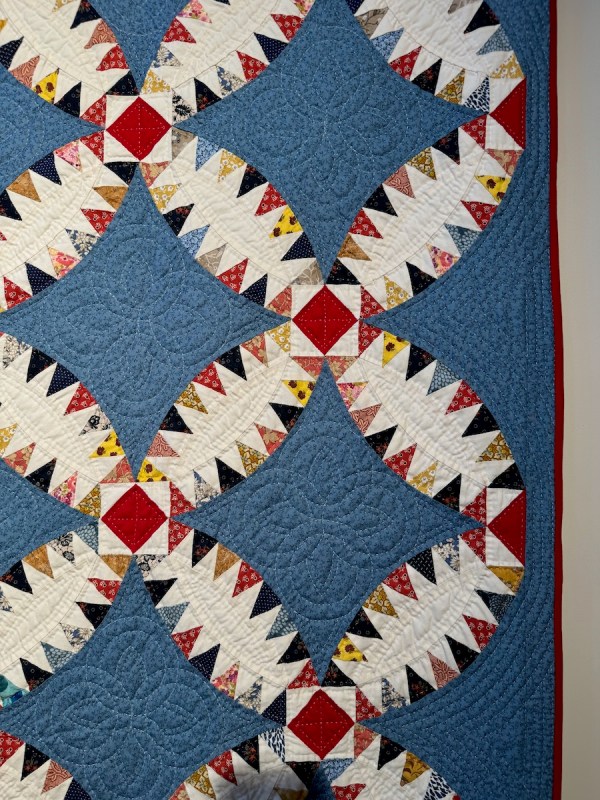
While the maker and the Instagram of Quilt en rêve calls this “Wedding Rings in Blue,” in America we typically call this Pickle Dish (Brackman numbers 304 and 305).
Made by Gabrielle Paquin (France), this is entirely made by hand.

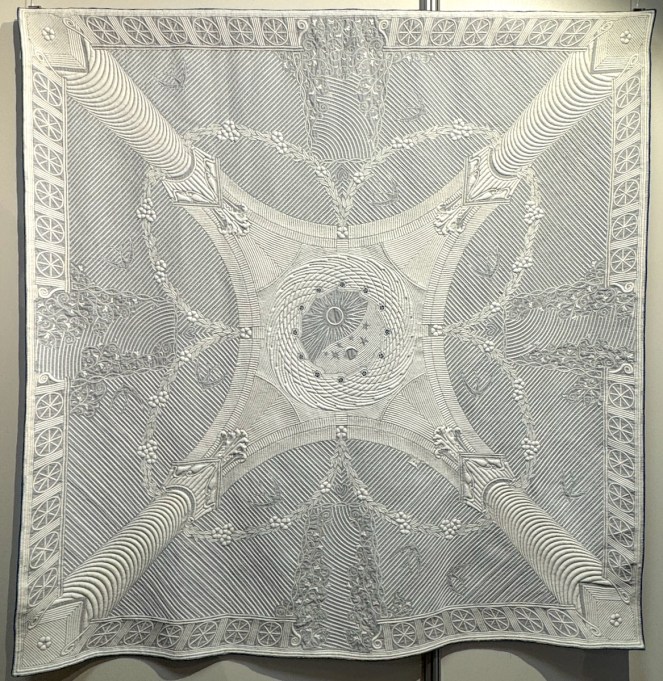
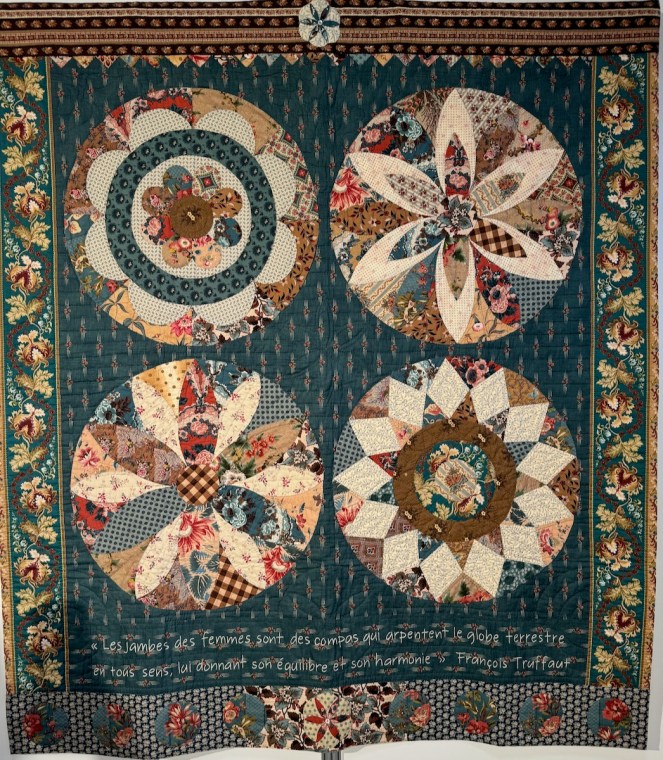
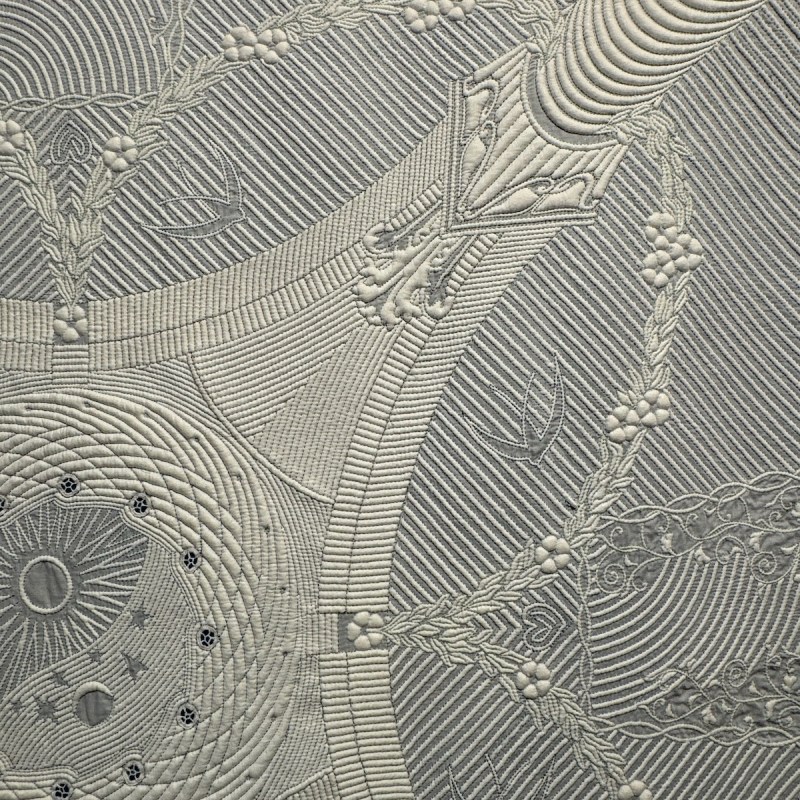
Kiosque, by Jacqueline Audouin-Dubreuil (France). She made this boutis quilt entirely by hand, 10 stitches per centimeter, 600 meters of thread, taking approximately 2000 hours of work. The base cloth is a teal blue, and the design is by Hubert Valéri. Click any photo in the gallery to enlarge.

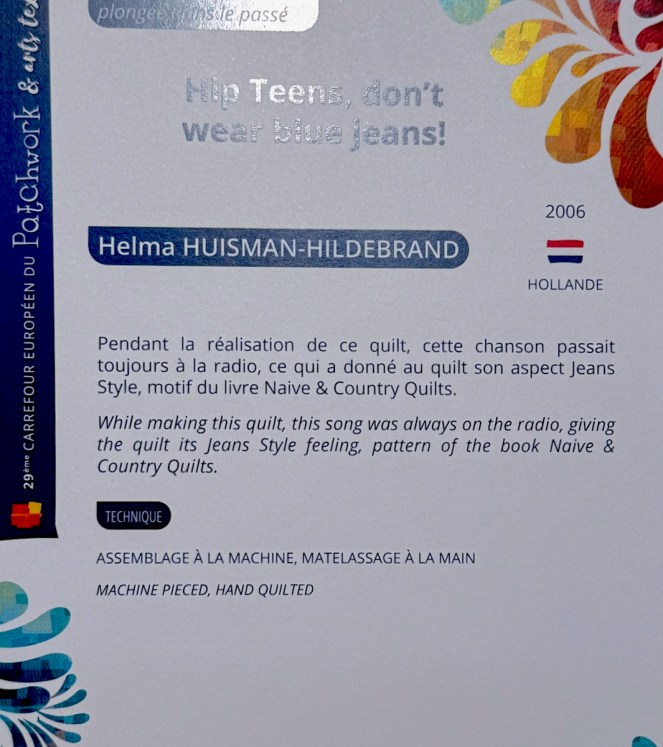
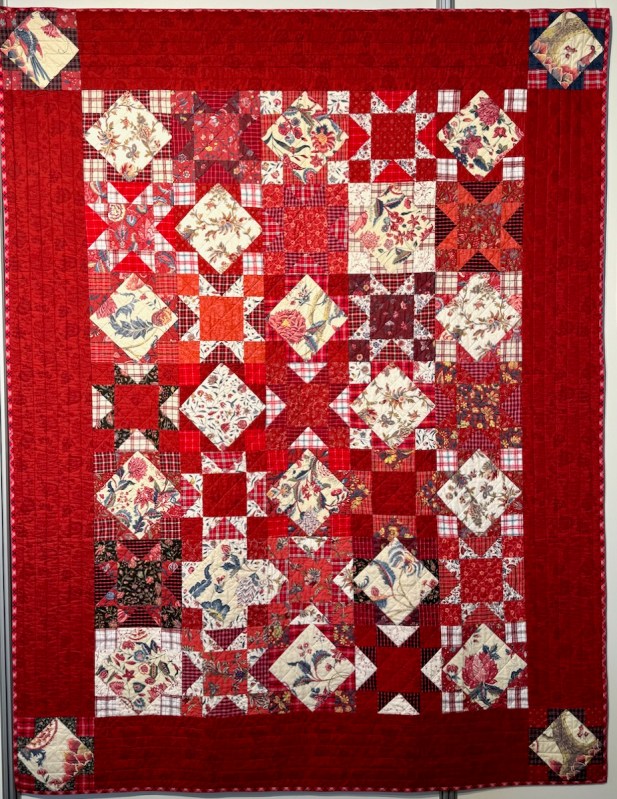
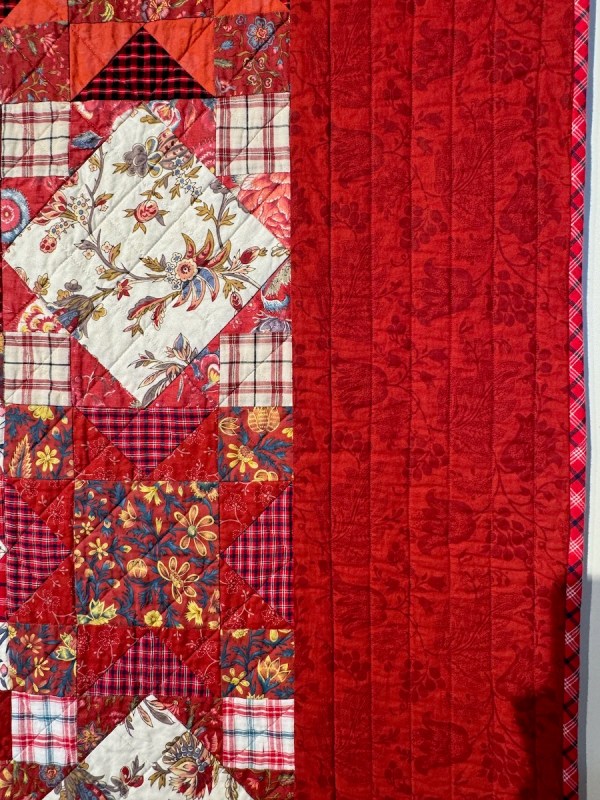
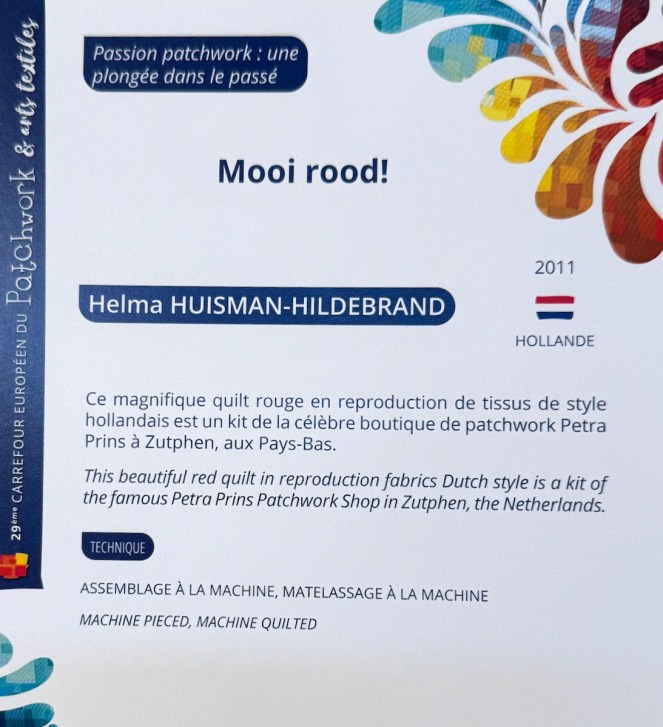
Helma Huisman-Hildebrand, from Holland, also had her own exhibit. She “works and lives on a cargo ship which operates on the rivers and channels throughout Europe. Together with her husband, they operate as captains on their ship and run their shipping company. In her spare time, she loves to make antique looking quilts, from the 1830s to the early 1900s. Due to a lack of space, she works in her kitchen on the ship. She constructs the quilts by machine, given her limited amount of time, yet hand-quilts them” (from the catalogue).

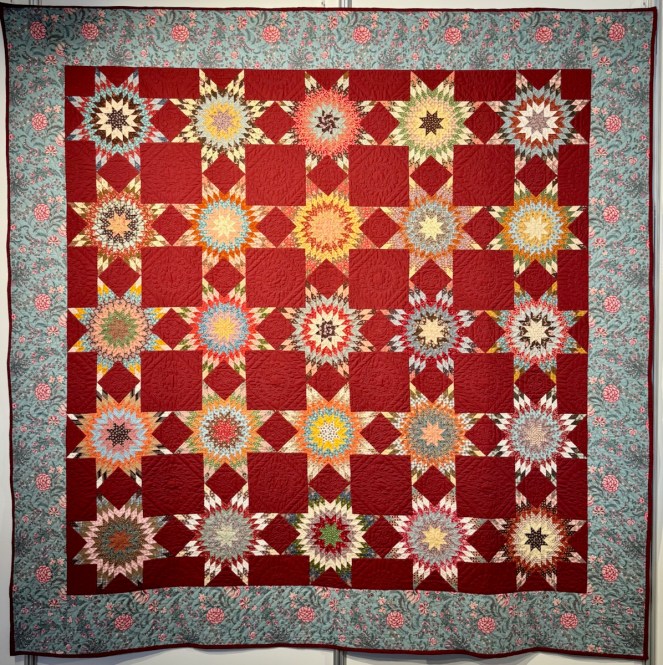
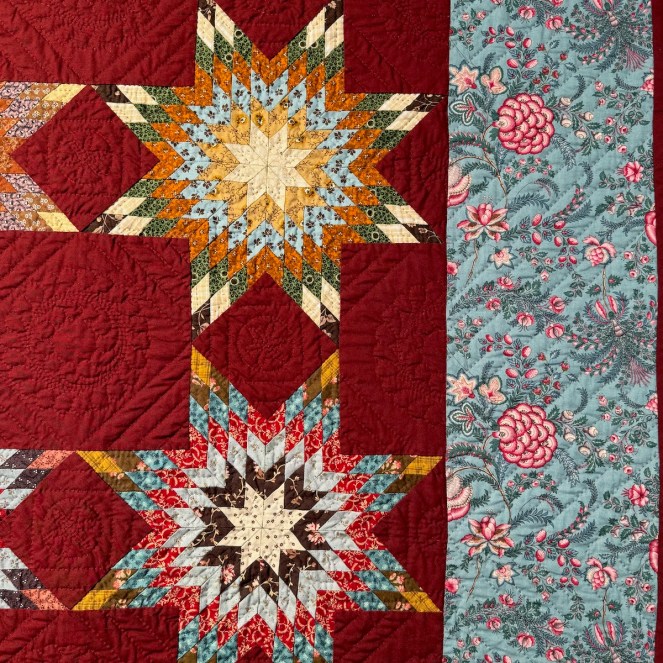
The quilt above is titled Forever Touching Stars: “I was ‘star-strucked’ seeing this quilt in Nel Kooiman’s collection, and luckily she gave me permission to remake it. The original quilt was made around 1880 in Kentucky.” (from title card)

Here is a gallery of her quilts, with title cards and some details shots. They are all magnificent! (Click on the arrows in the middle on the sides, to advance the slides.)

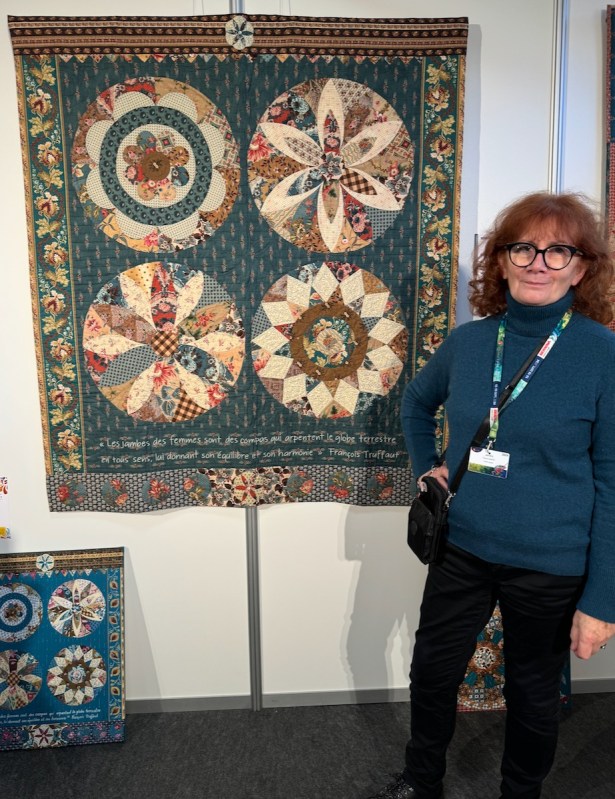
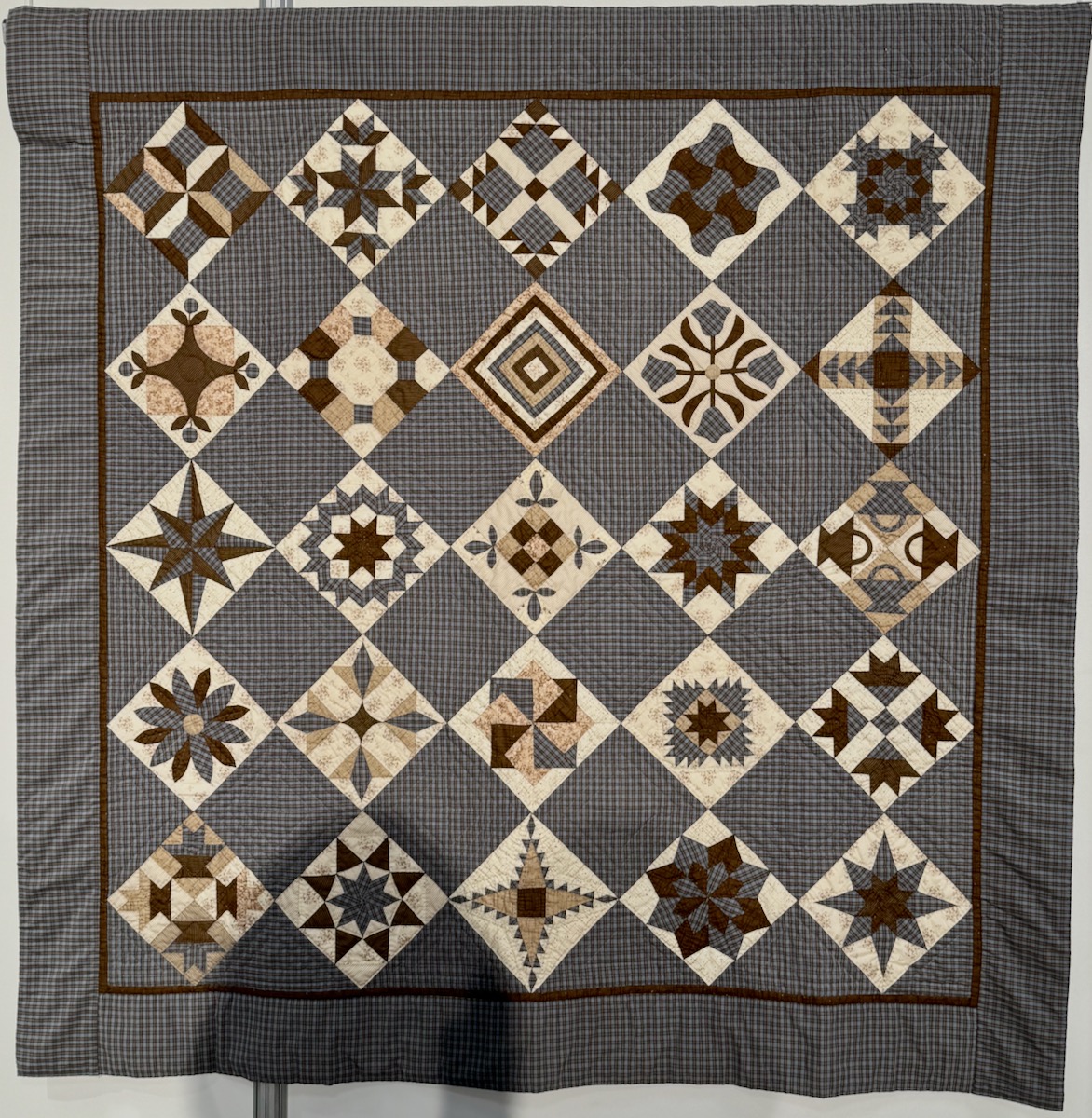
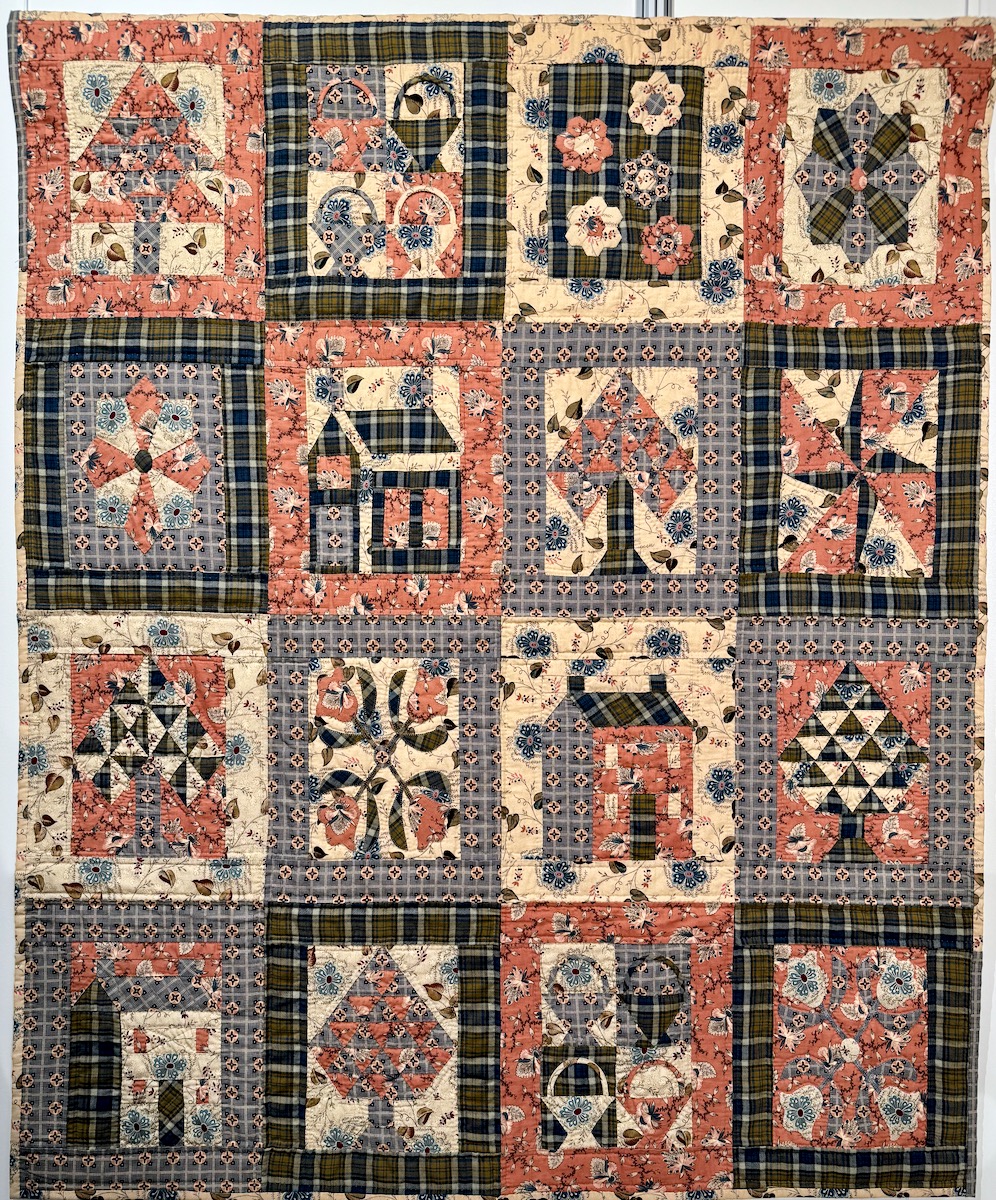
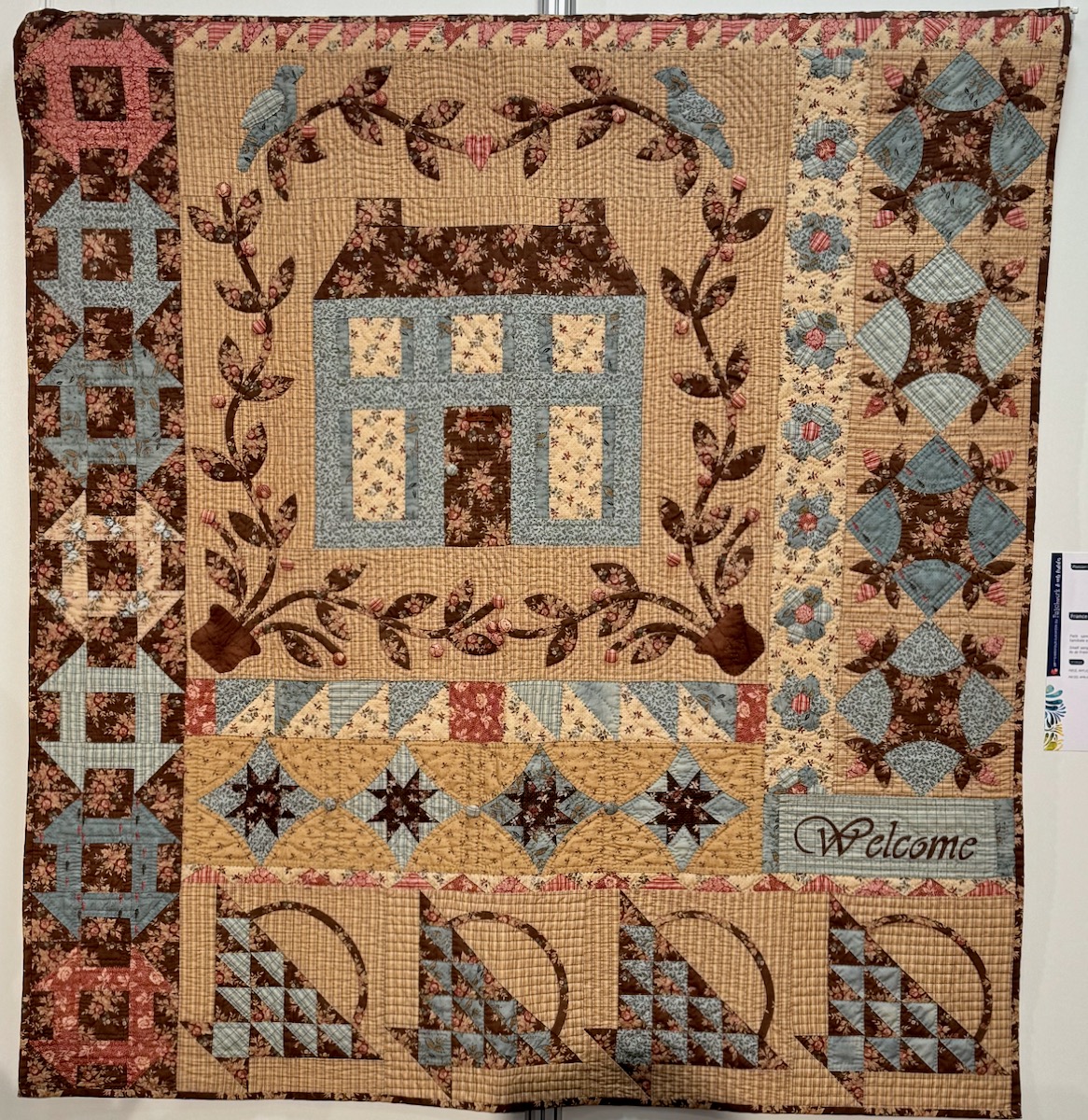
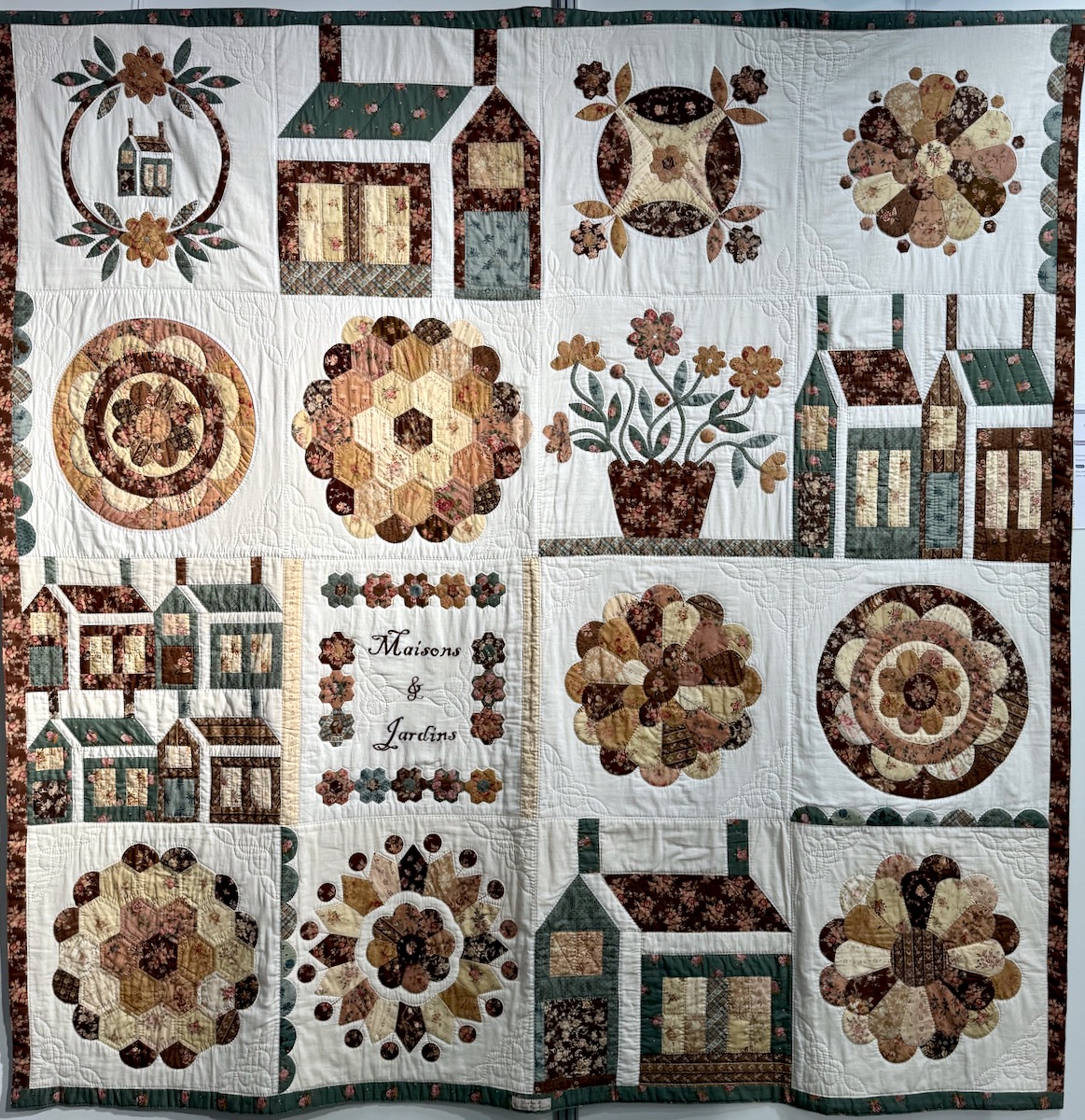
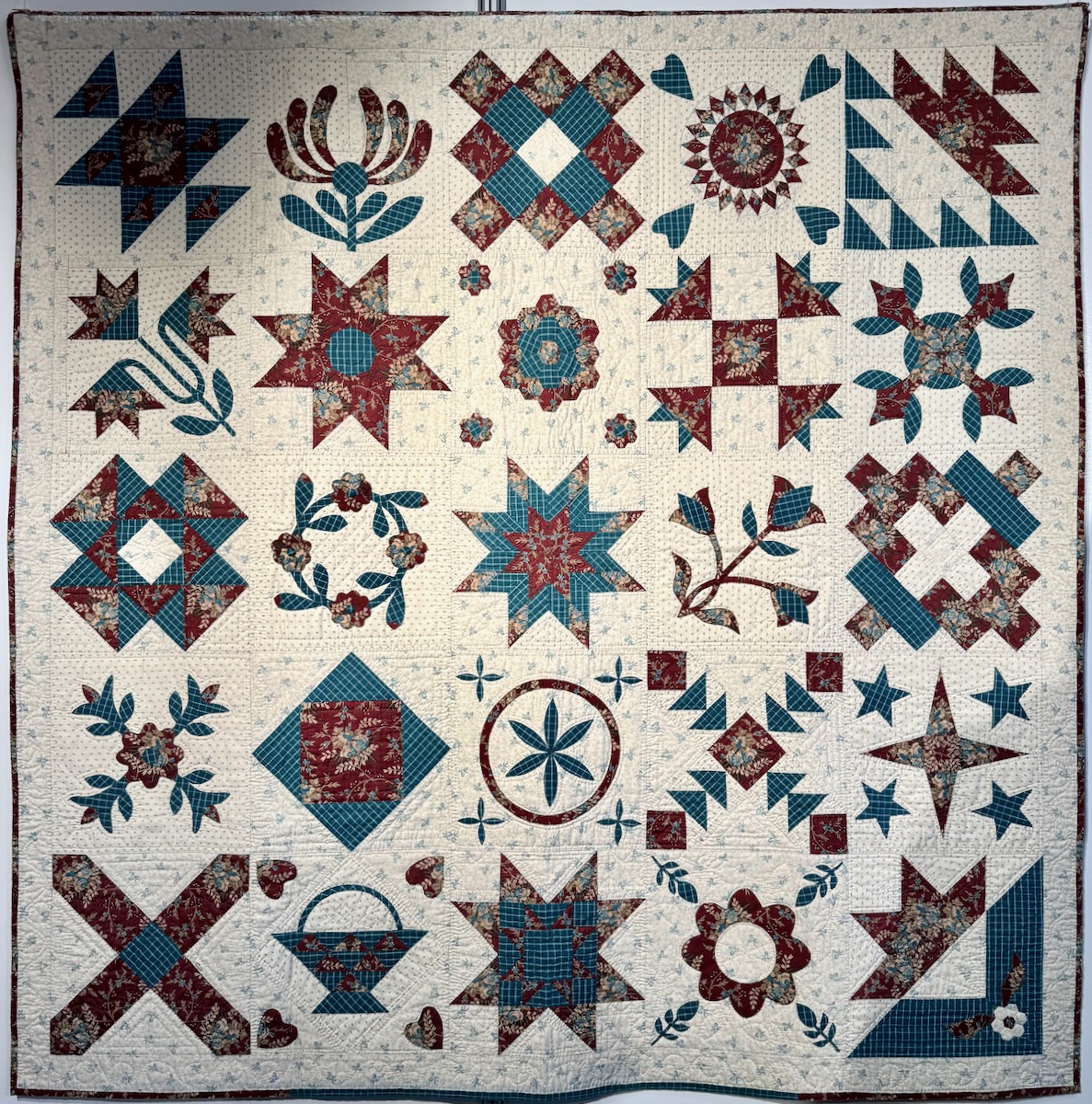
France Albert, shown above by one of her quilts, has a passion for samplers, so they put a grouping of her work in the show. That is not all she can do, but see that color of her sweater? She calls it “duck blue” and it’s her favorite. So many of her quilts are hand-pieced and hand-quilted. Here are two galleries (click to enlarge any quilt).

(from top to bottom, left to right):

Row 1: Suzanna, Karen B (an homage to Karen Blixen in combining sampler blocks in the color blue-gray for Denmark)

Row 2: Rose (sixteen traditional square blocks redesigned as rectangular blocks), Welcome (a small sampler created to represent their move to the Ille de France region), Maisons & Jardins (Houses and Gardens)

Row 3: Henrietta (thirteen blocks from the “Antebellum” block of the month from Barbara Brackman, along with twelve additional appliqué blocks.)

(from top to bottom, left to right):

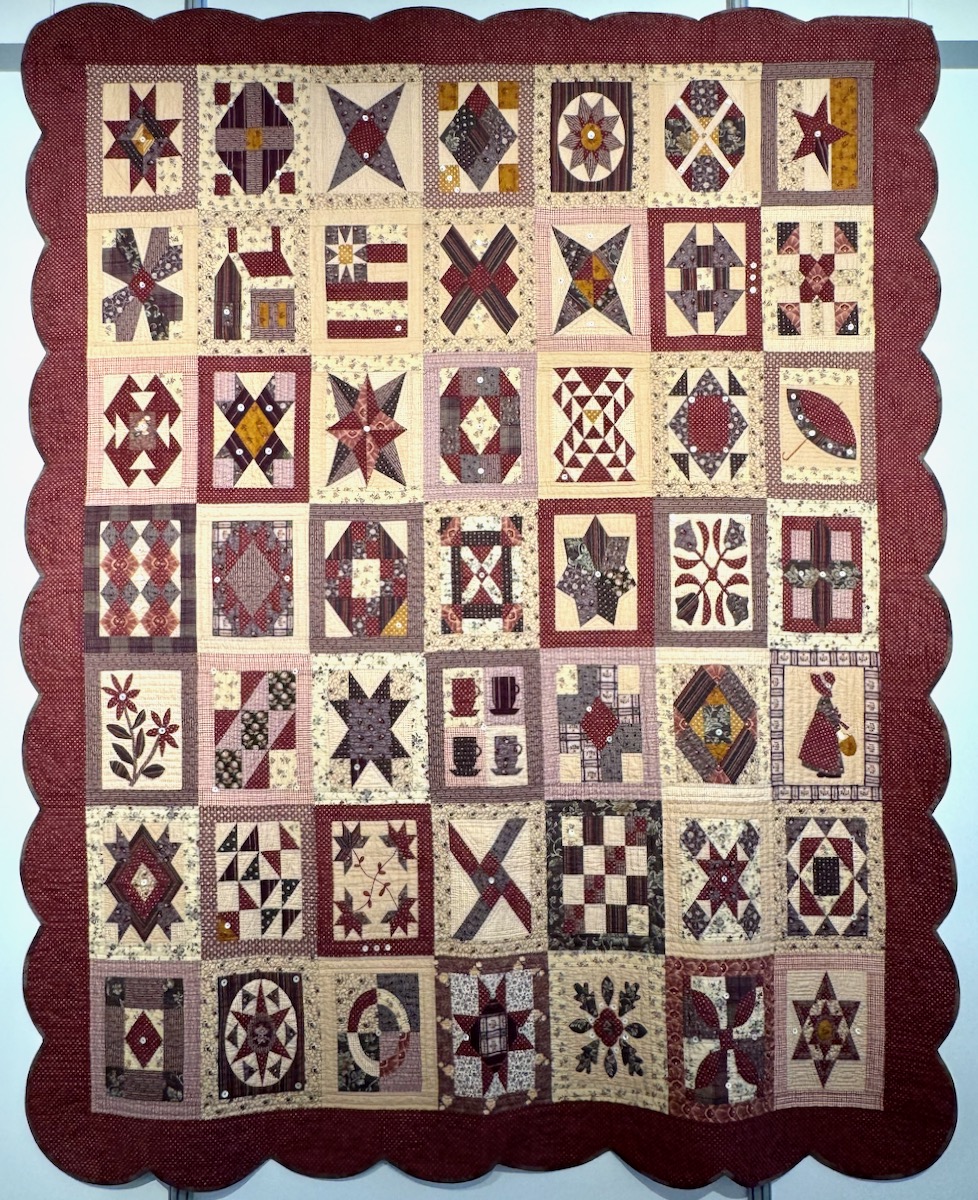
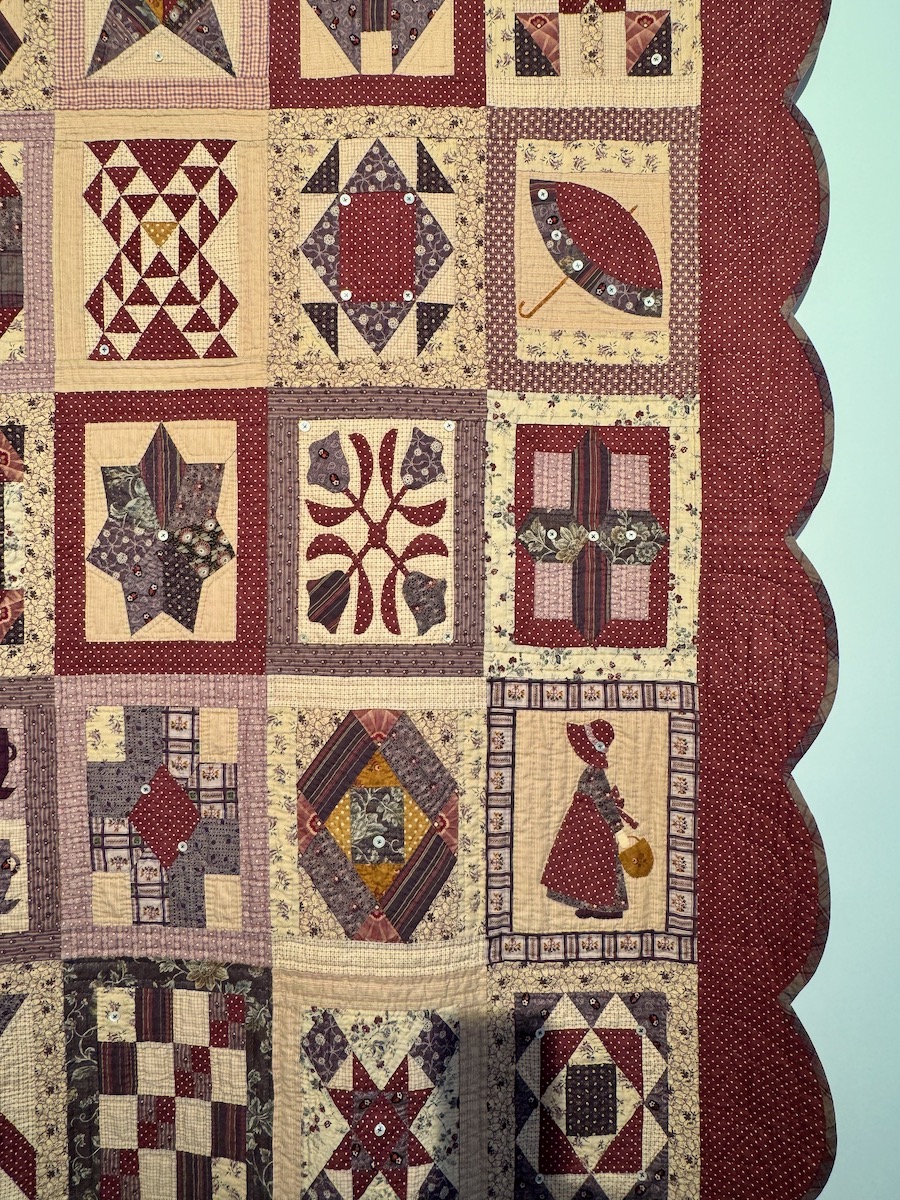
Row 1: Juliette (a tribute to her grandmother, with rectangular blocks, 113 mother-of-pearl buttons, and the use of the color violet, the color of feminism)

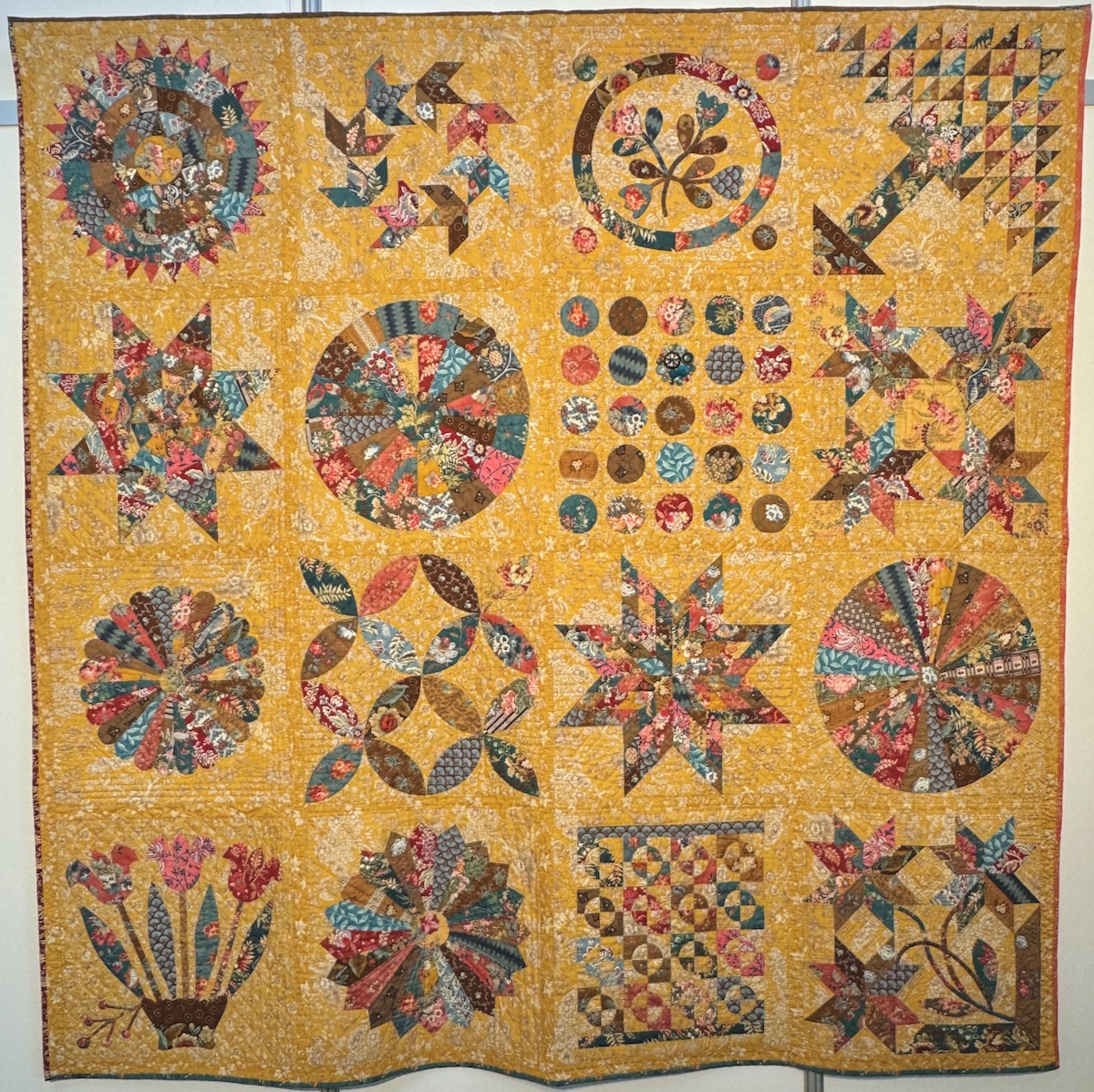
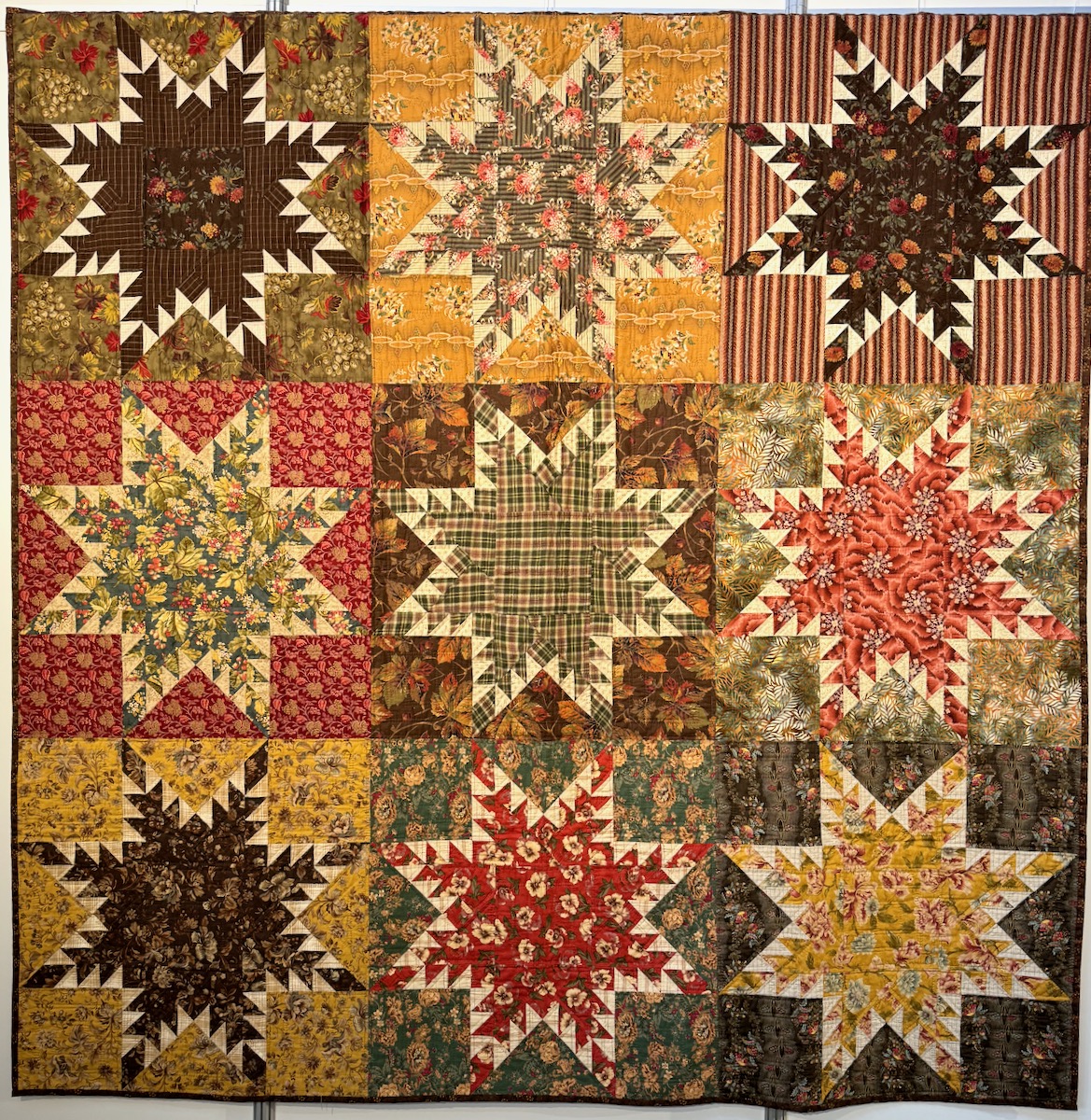
Row 2: Moutarde (she had to hunt for fabrics, using 26 of them in the end), Toiles Plumetées Automne (feathered star in autumn colors), and her handwork, resting on the top of her chair at her table.

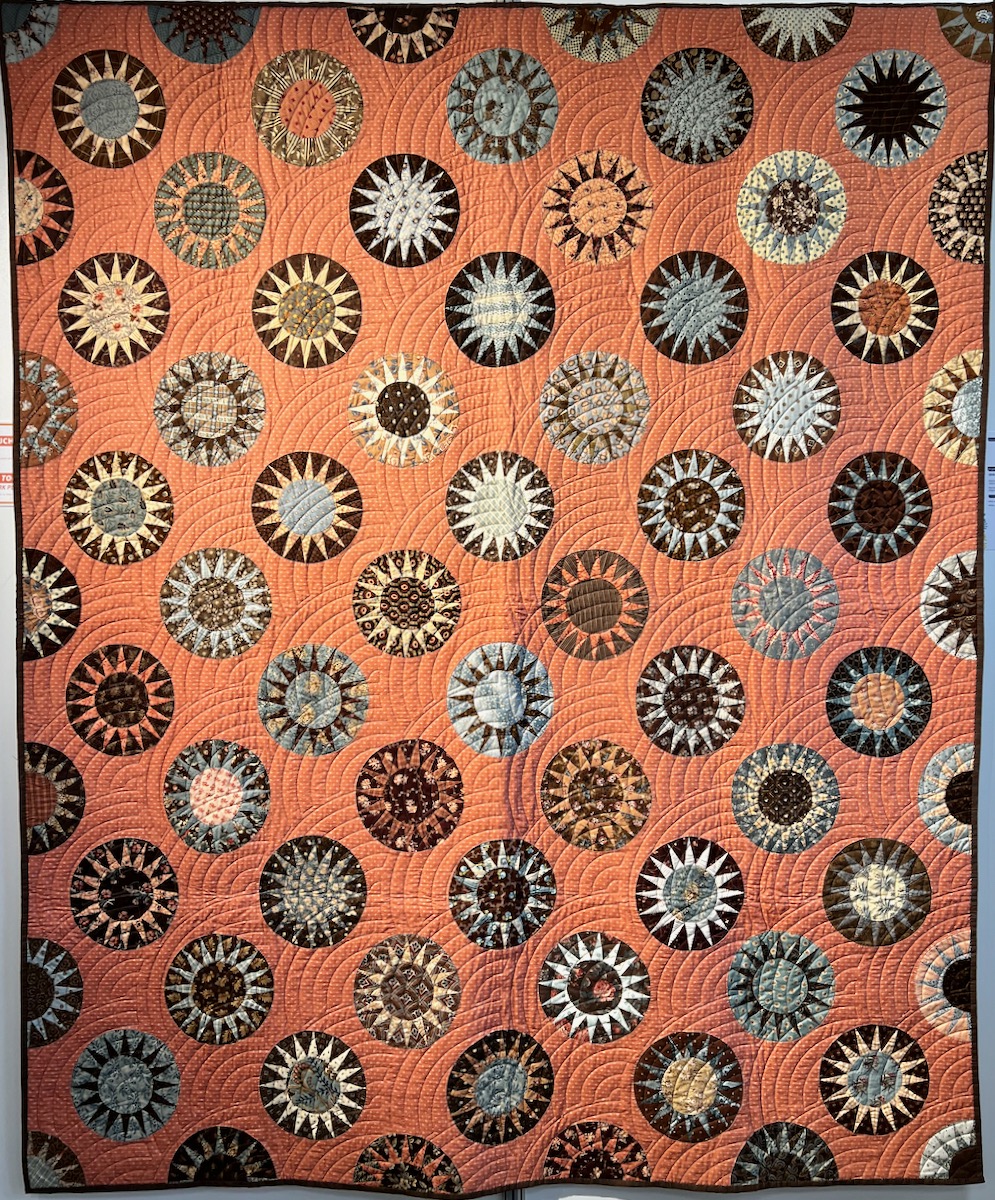
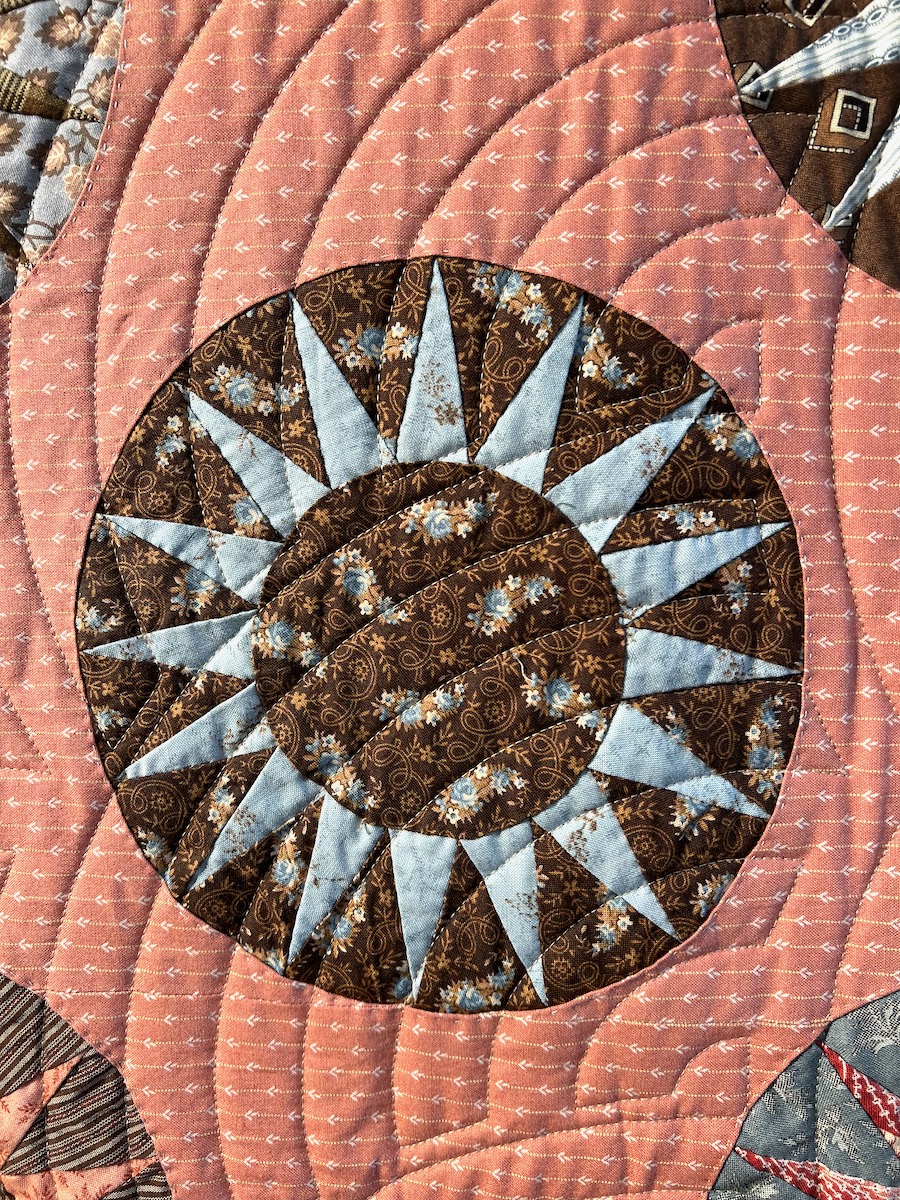
Row 3: Nora (quilting done by Mom Quilts; this is a reproduction of an antique quilt from Virginia in the 1840s). What I noticed was even though the quilting was done by a long-armer, she went in and hand-stitched around each circle.

She had a card up at the beginning of the exhibit. Thank you, Google Translate, for letting me know what it said.

Note the use of her buttons along the outside binding.

This is known as the King George Reviewing the Volunteers quilt, housed in the V & A Museum in London. It was the inspiration for two of her other quilts (shown below). Yes, all those tiny circles were English Paper-pieced. Click on the link above to see more photos and read more about it.

Alexandra, by France Aubert

Improbables (Click to enlarge quilt on the left.)

Title: Sarah

She writes on her title card that this is “a passion for round blocks in the gypsy spirit.” I love that border!

Ecrit avec des fleurs (Written with Flowers). She writes “my hobbies written with only floral fabrics.” A self-declaration that could apply to so many of us.

By the way, this is where we were, just up from the dismantled Eiffel Tower.

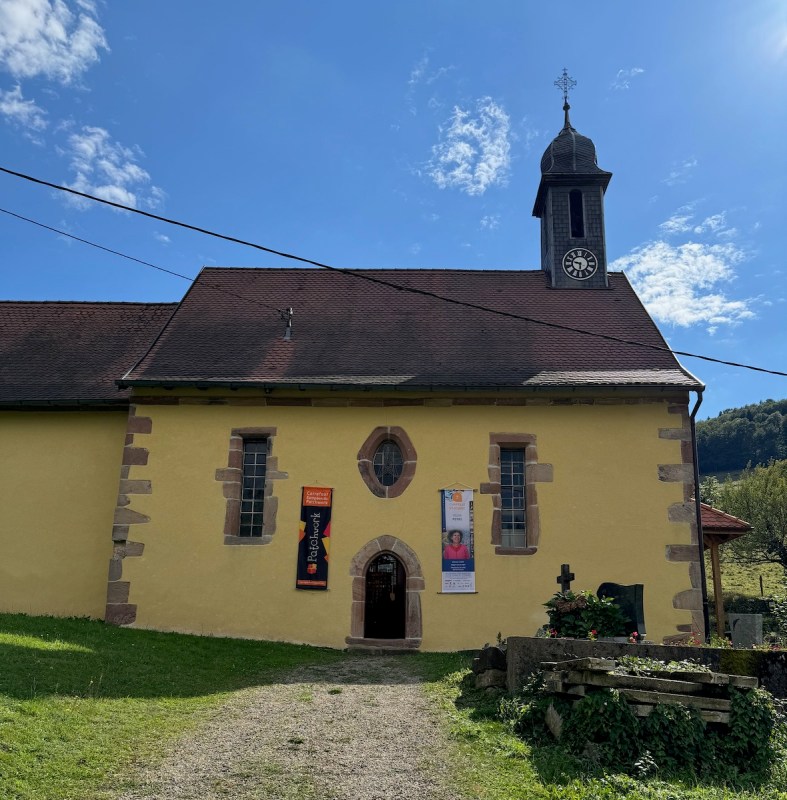
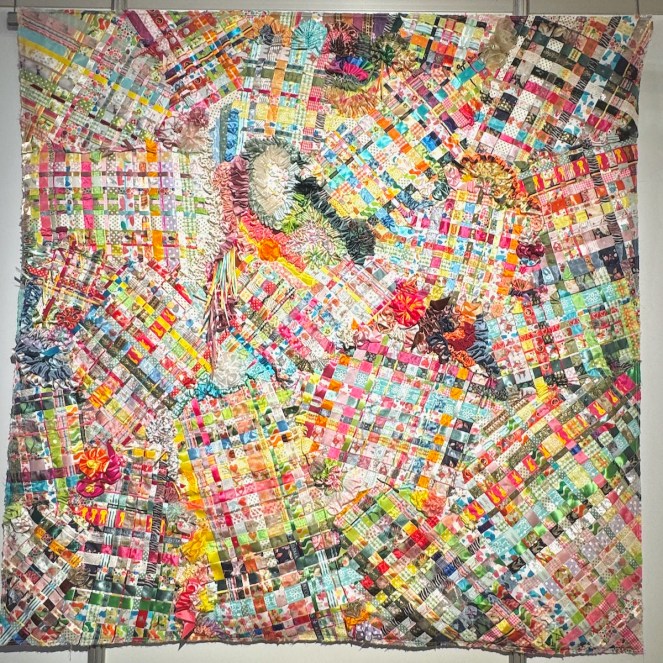
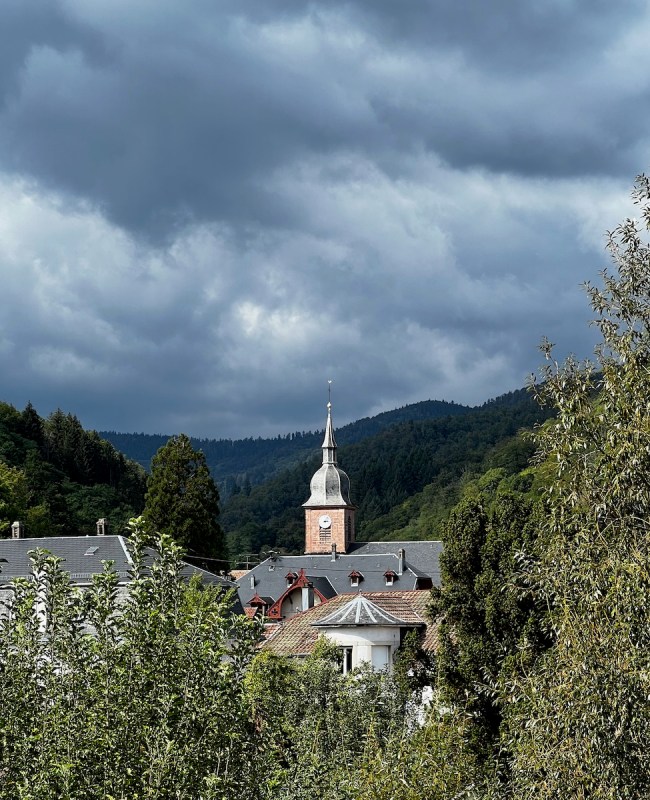
More scenery. The little yellow church was Venue 7, with Virginie Peyre. One of her quilts is below. And the other was a World War I memorial, something we see in a lot of churches in Europe, as it ravaged the towns and villages.

Tapis Volant

She writes: “As a gift, I received an avalanche of ribbons intended for confectionery; this sudden abundance, plus the novelty of the material, put me in a trance! I pleat, bubble, pucker, weave, accumulate, saturate, letting pleasure be my guide.”

It was certainly novel!

We’re catching the late afternoon sun and it’s beautiful.

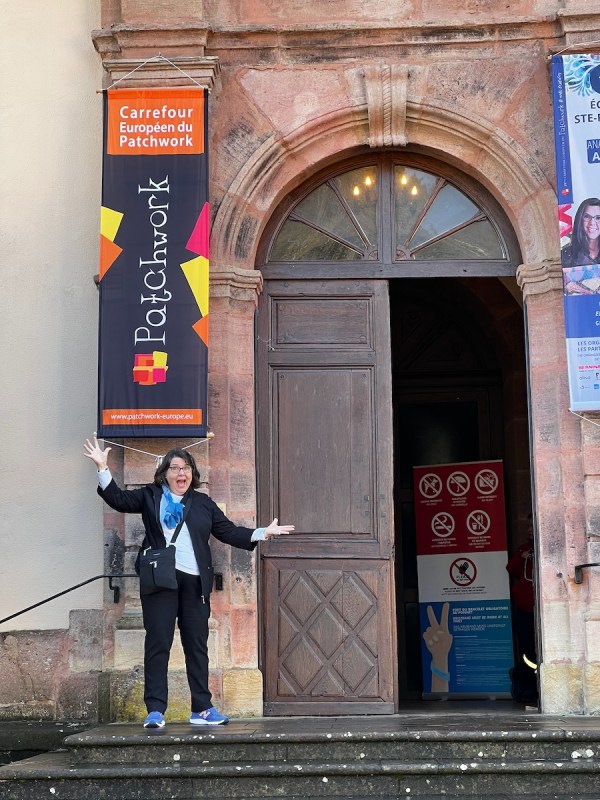
Yes, it’s late and we’re tired, meaning on that day in the past, it was time to get back to our hotel, check in with our daughter and our granddaughters, find some dinner, and a good night’s sleep. I will slide in more quilts to this blog at a later date (yes, I have more), but for now, we’ll leave me there on the steps saying “Are we done yet?”

Thanks for reading and for writing–I have so enjoyed seeing your reactions to these wonderful quilts!

Carrefours European Patchwork Meeting sitemap (in case you need to look up the artists)

European Patchwork Meeting · Quilt Shows · Travels

Carrefour 2024: Quilts III

This post is about two different places in the 29th Carrefour European Patchwork Show:

  • Espace des Tisserands (Venue 6): Victoria Findlay Wolf, The Modern Quilt Guild, Quilt Art, Léna Meszaros
  • Chapelle St. Joseph (Venue 9): PatCHquilt’s Concours Round Bobbin Invitational Challenge.

Hope you are all still with me, with seeing quilts from all over quilt land, but mostly from the European guilds.

All posts in order are on the European Patchwork (Carrefour) page.

See that grey low-slung building behind the red/yellow Meteor drinks tent? That is Espace des Tisserands, which translates to Weaver’s Space, and is an exhibition building.

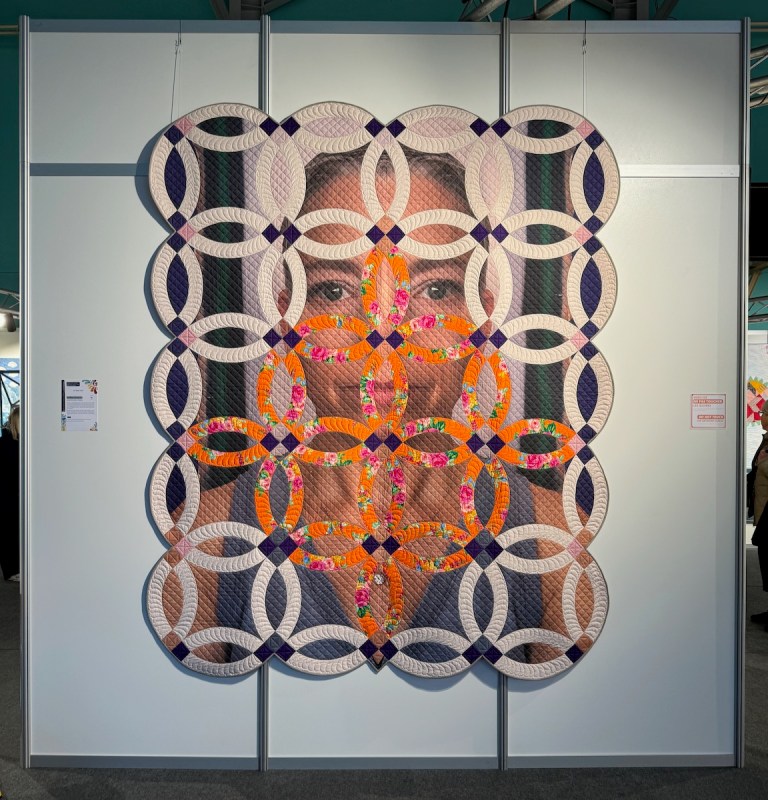
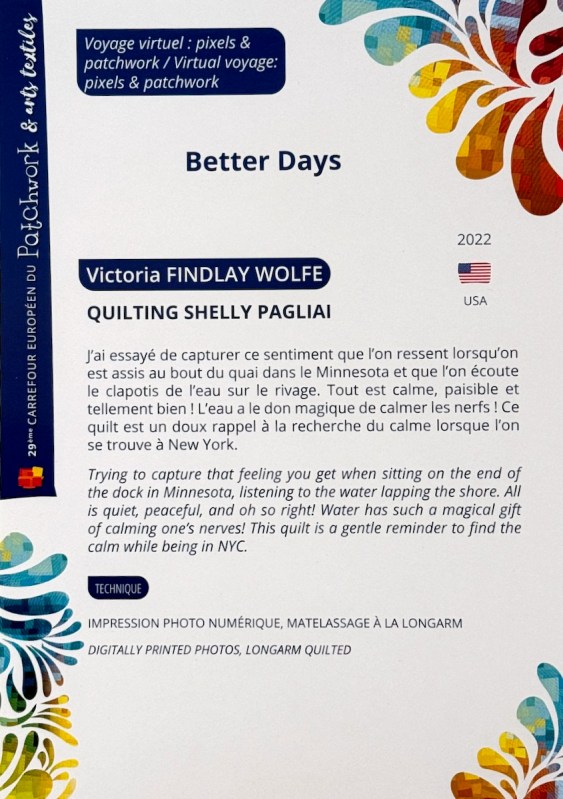
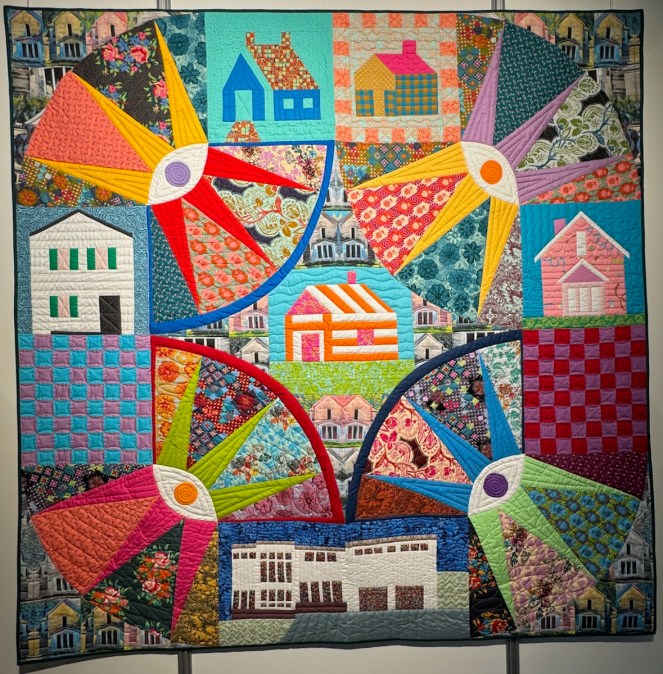
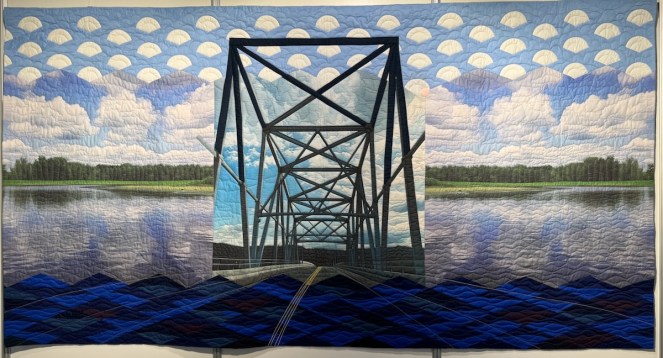
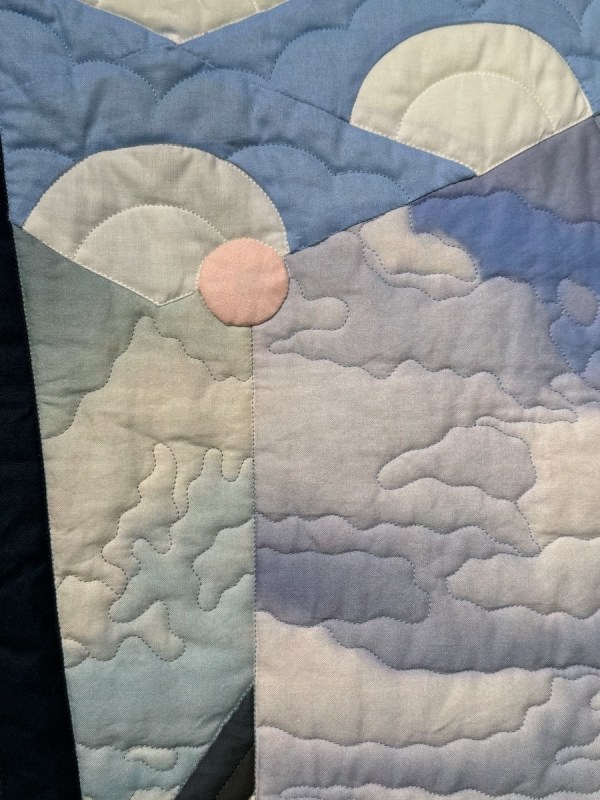
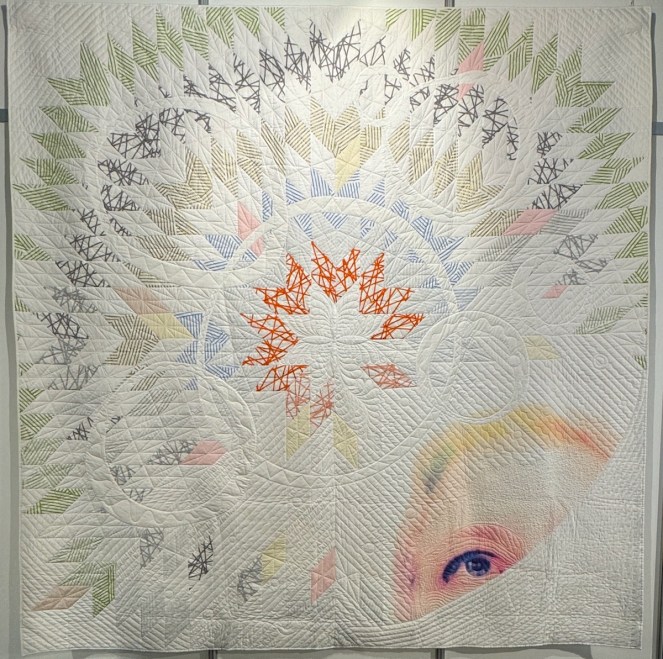
First up in the post, is an exhibition by Victoria Findlay Wolfe, shown here with a self-portrait done in quilt. I am a fan of hers in many ways, and could almost be jealous of her being able to show at Carrefour, but I know how gracious she is (her talk from QuiltCon 2020 was disarming, thoughtful, and genuine), and how hard she works for her success. Of course, when you are star-struck, it’s hard to say anything coherent, so I didn’t ask her anything. Now I’d like to know, why she has started to incorporate photos-on-fabric in her work, what she thinks about this trend, how far can it go, and all that other stuff. Her latest book is also intriguing.

I didn’t photograph all her quilts (now I’m asking myself why not?). Mostly it was that we had only one day to see the Patchwork Show, and we were moving at a pretty good pace to try and visit all four towns and all seventeen venues. Next time I’m going slower. As always, if an image is in a gallery, clicking will enlarge it.

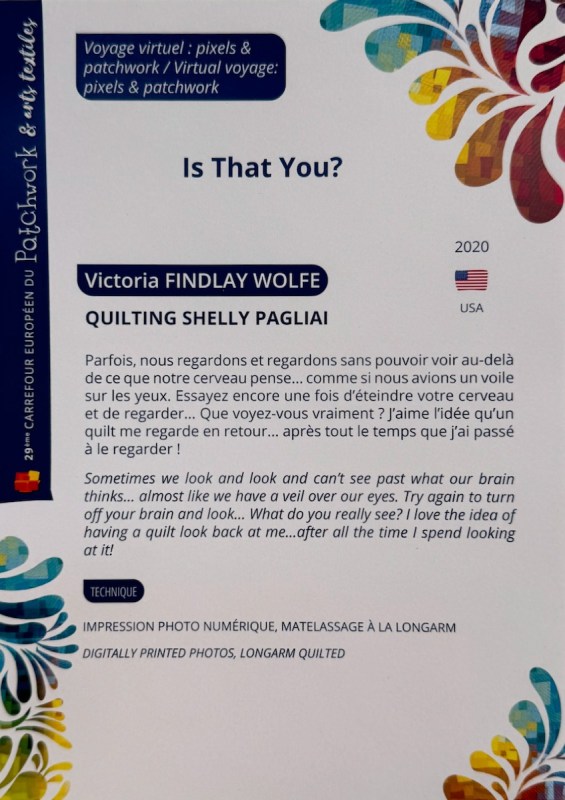
I also like how prominent the name of her quilter is on these title cards.

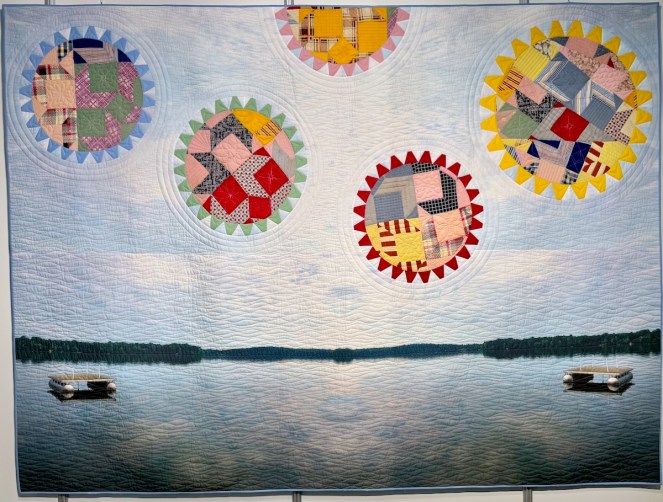
I love the line up of old-fashioned metal lawn chairs, both on the bottom and on the top. She used her own line of fabric in the white circles, and it’s a favorite fabric of mine. And — sorry to say — I didn’t stop to take a photo of this title card. I wrote to her and she gave me the title: “Polka Dot Garden Party.”

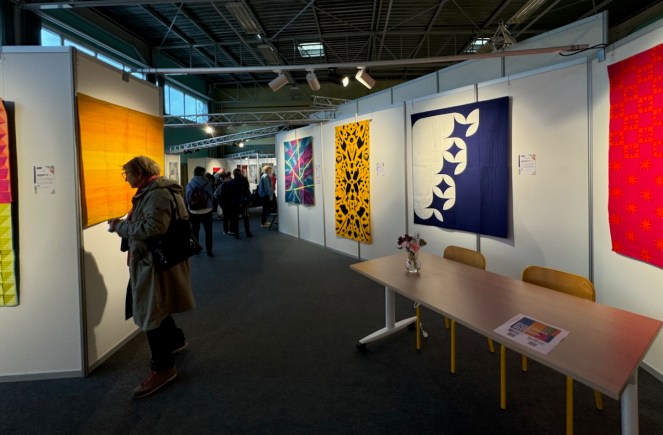
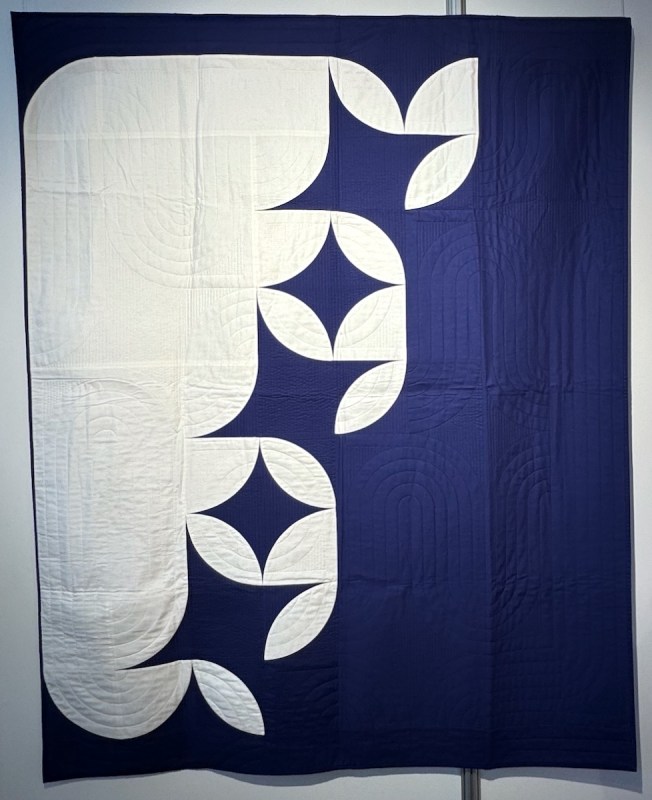
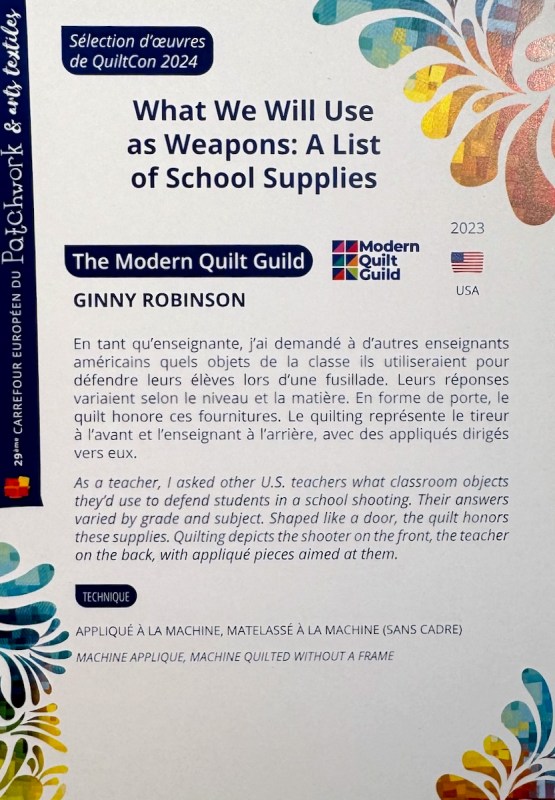
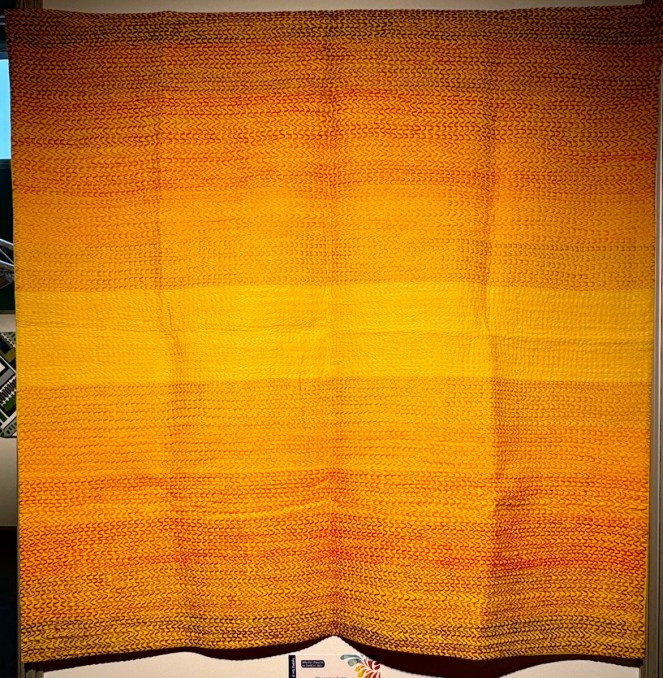
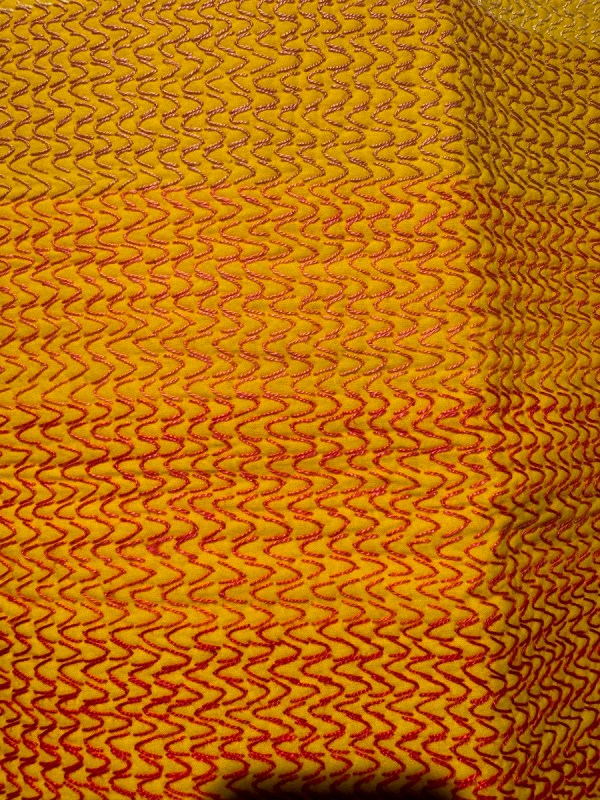
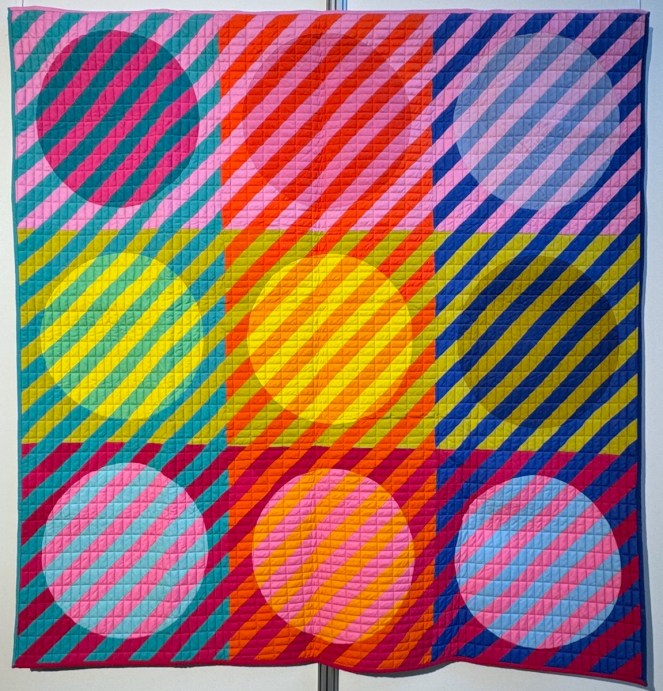
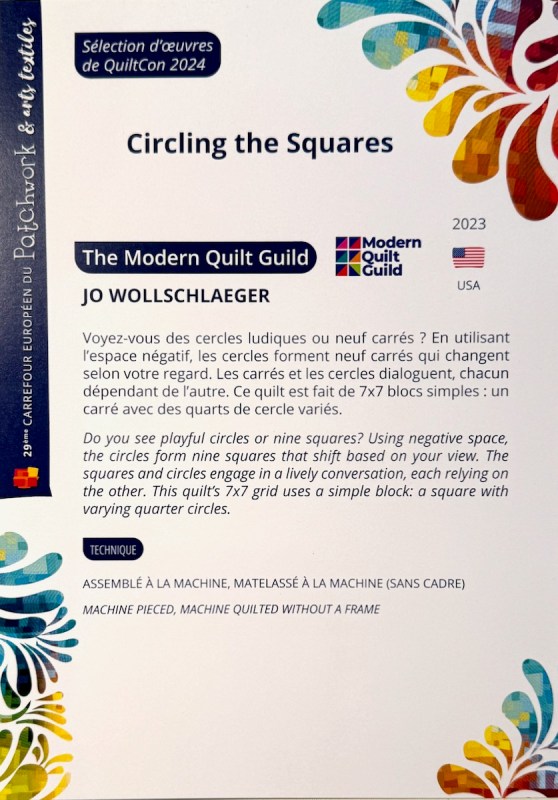
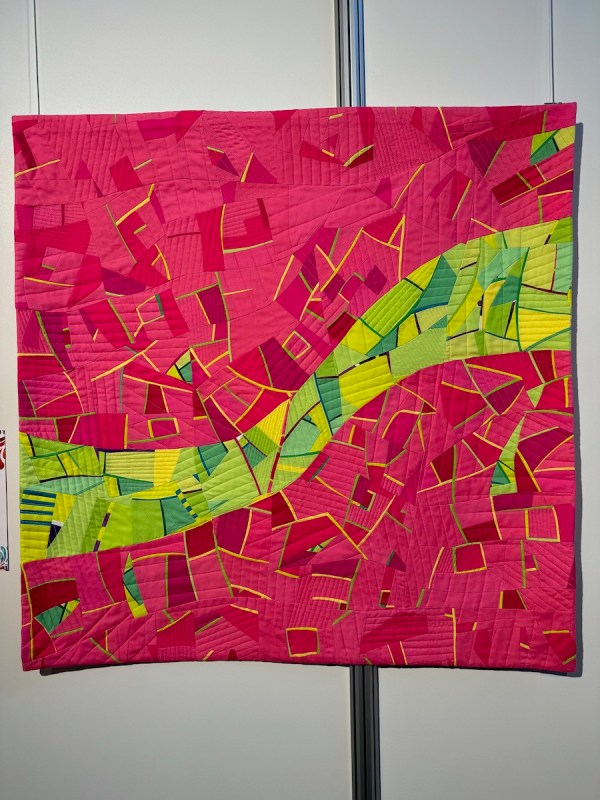
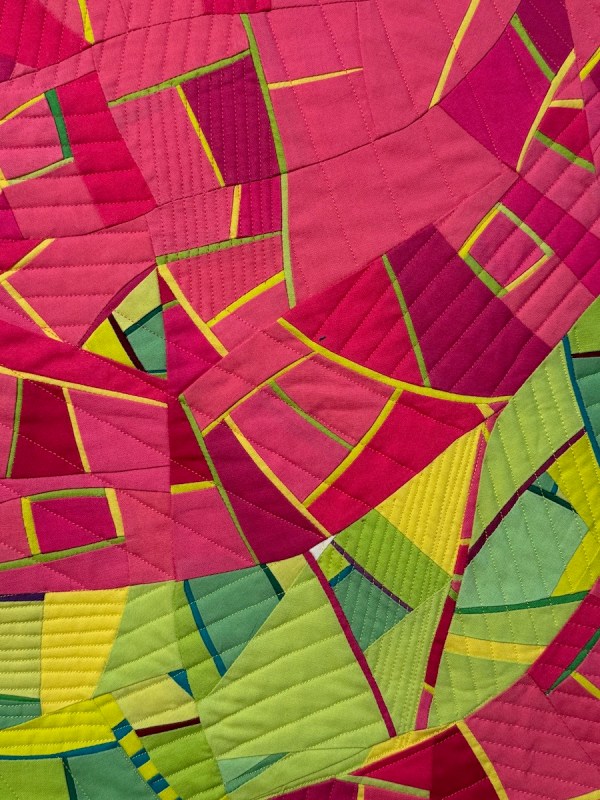
The large exhibition space is divided up with moveable walls, and we meandered towards The Modern Quilt Guild’s section. I spotted Yvonne Fuch‘s quilt (blue and white) and Ginny Robinson‘s quilt right away.

I tried to take different angle shots, so they could see how their quilts looked hanging, and with the other quilts.

I hope you are getting good at reading French. Always was happy to see the English underneath!

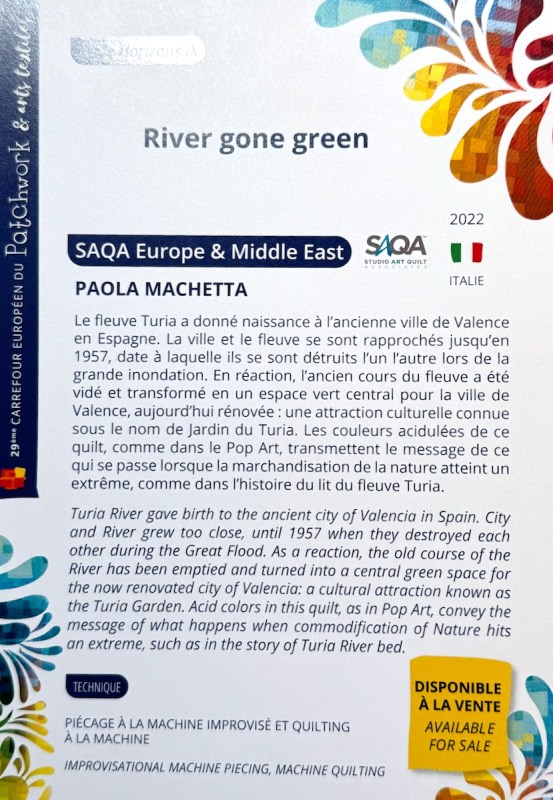
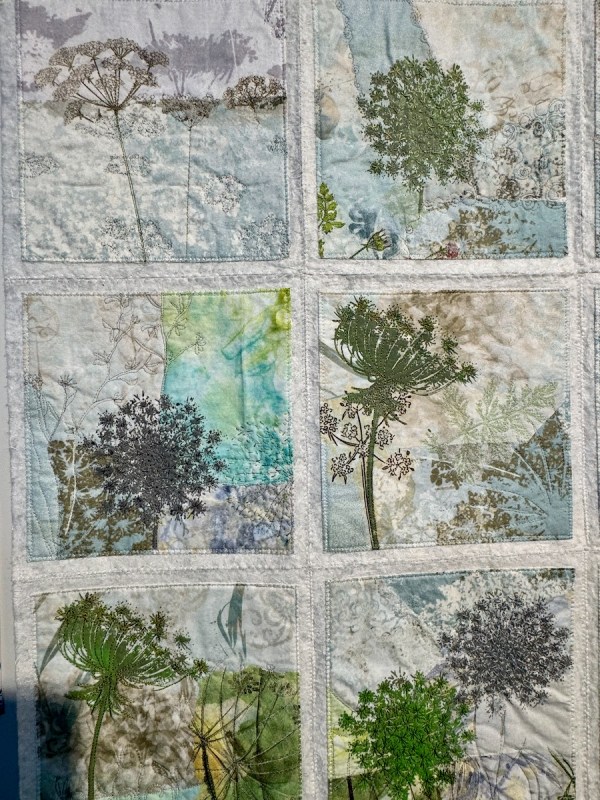
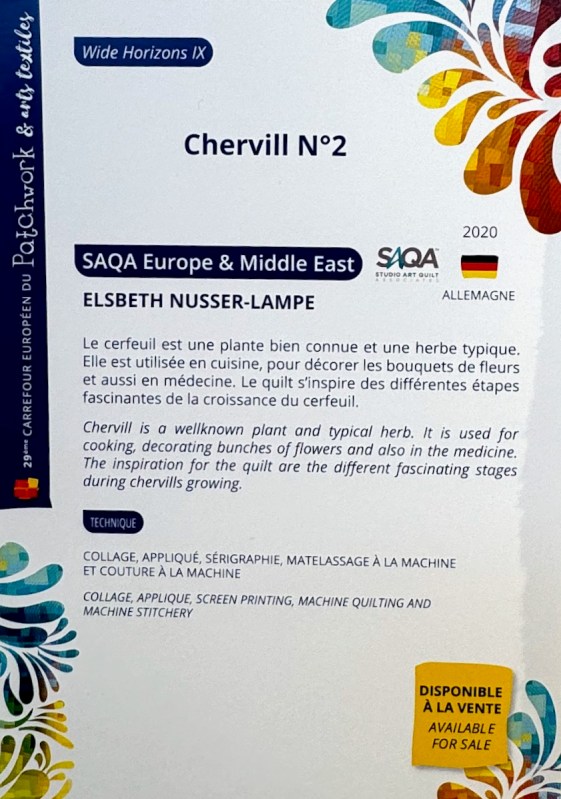
This is a quilt from the SAQA Europe and Middle East collection, right next to the Moderns.

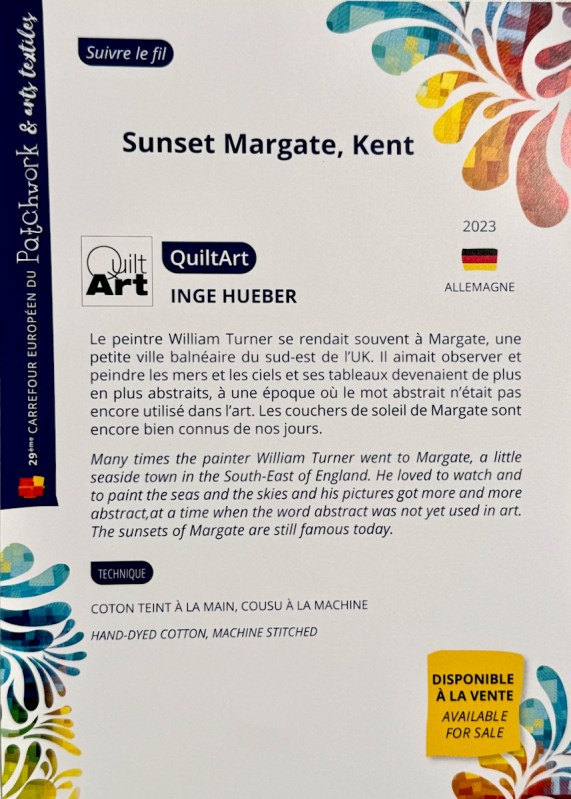
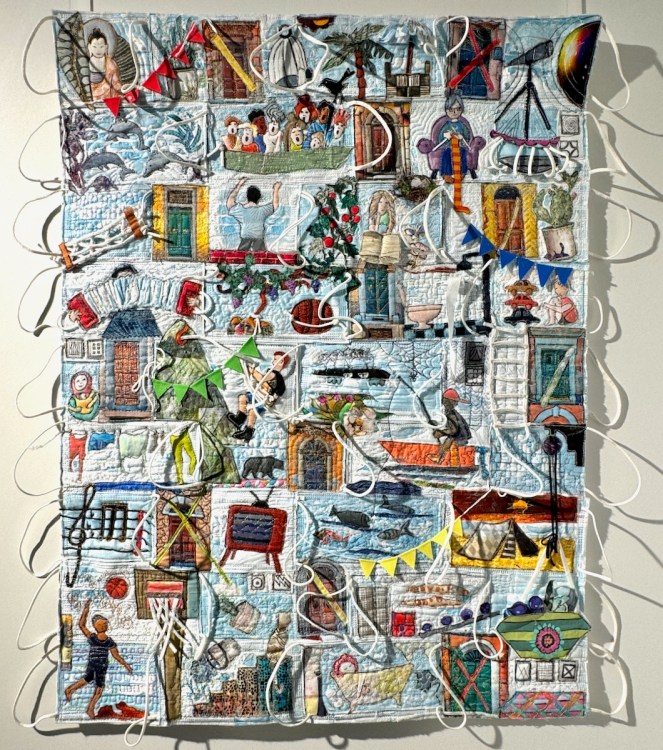
And then we slid right into Quilt Art, and their exhibit, Following the Thread:

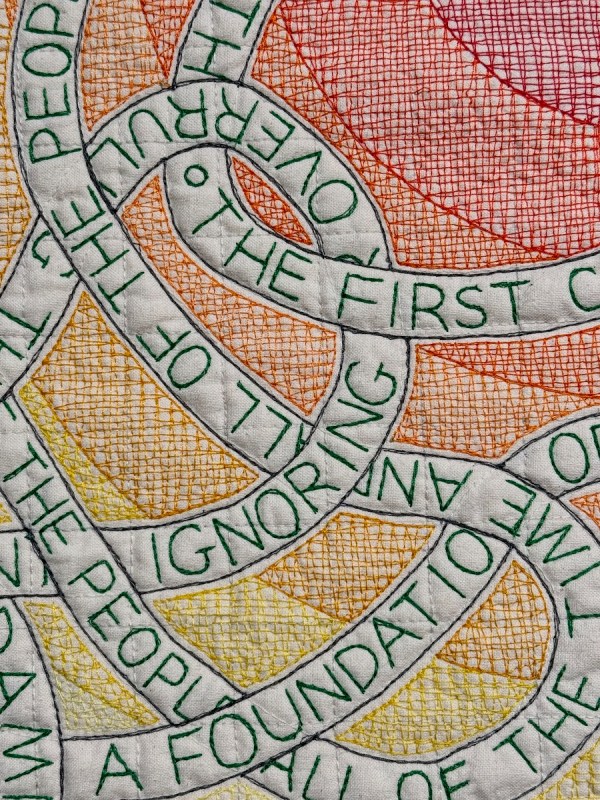
Sara Impey’s quilt puts into words what we are feeling here in America, with our election in a couple of weeks, even though she is from Britain. I guess the post-truth puzzle happens in many countries!

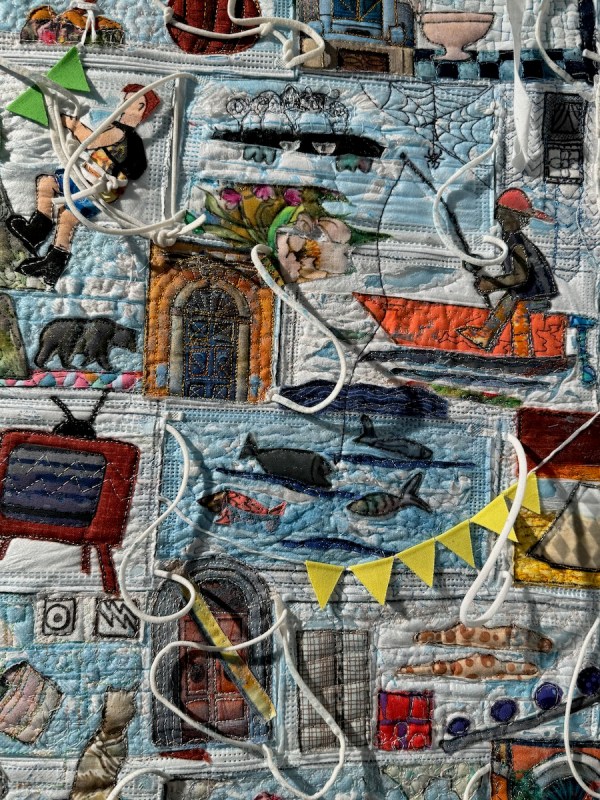
I wanted to show the details on this first, before you saw the full quilt:

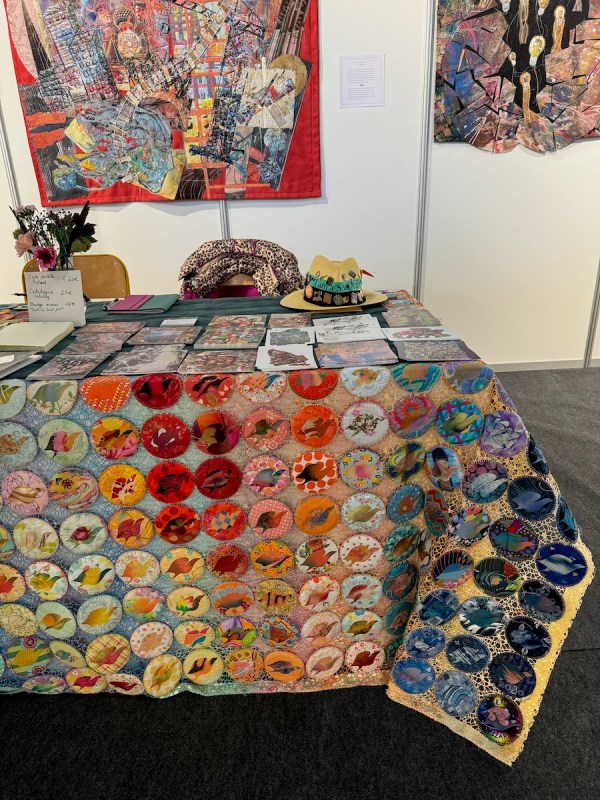
Of course I loved this quilt of circles, sewn onto a semi-sheer fabric, and used for her tablecloth. Léna Meszaros had a small collection of her works; clicking on the link will tell you more about her and her work. Here is one that caught my eye:

Given that I brought home a full-blown case of covid after returning home, this quilt certainly was apropos for this time in my life. (Click to enlarge any image.)

She also had some sculptural works; I thought the Tour de France cyclists riding up the Eiffel Tower hat was a kick!

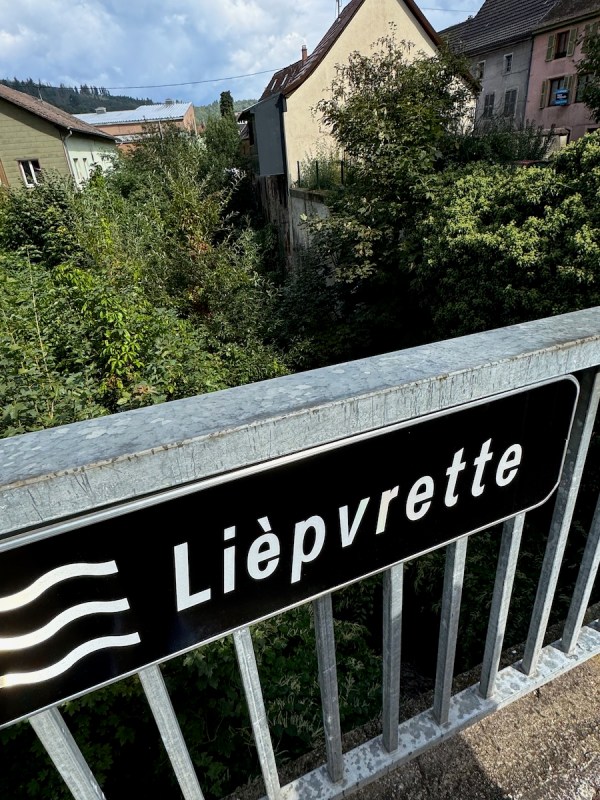
We walk by the lavender house one more time, and cross the little river…

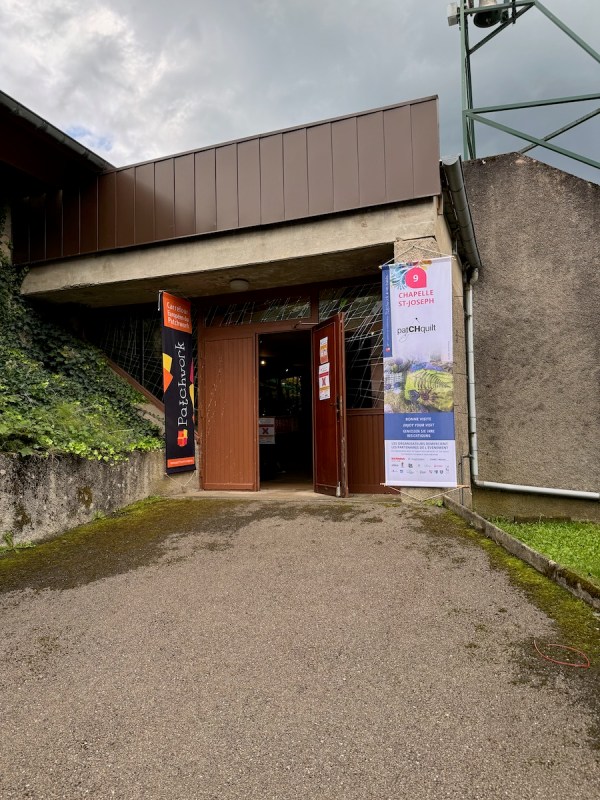
…because we are headed to our car, and moving on out of Sainte-Marie-Aux-Mines. Well almost–we have one more stop, at Chapelle St. Joseph (Venue 9) on the edge of town (below).

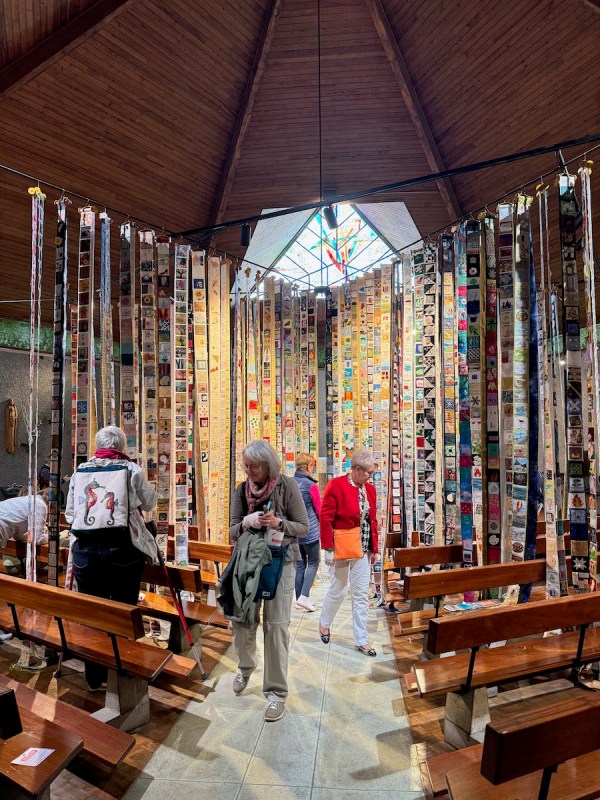
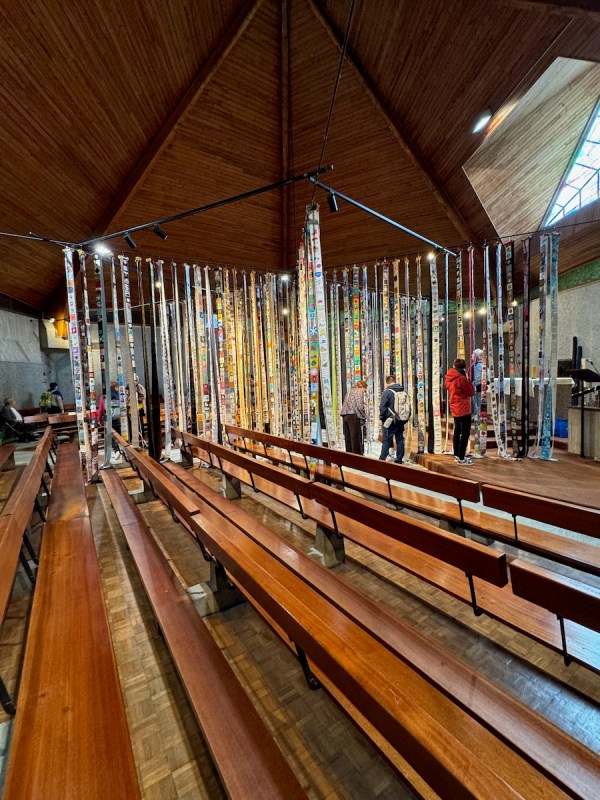
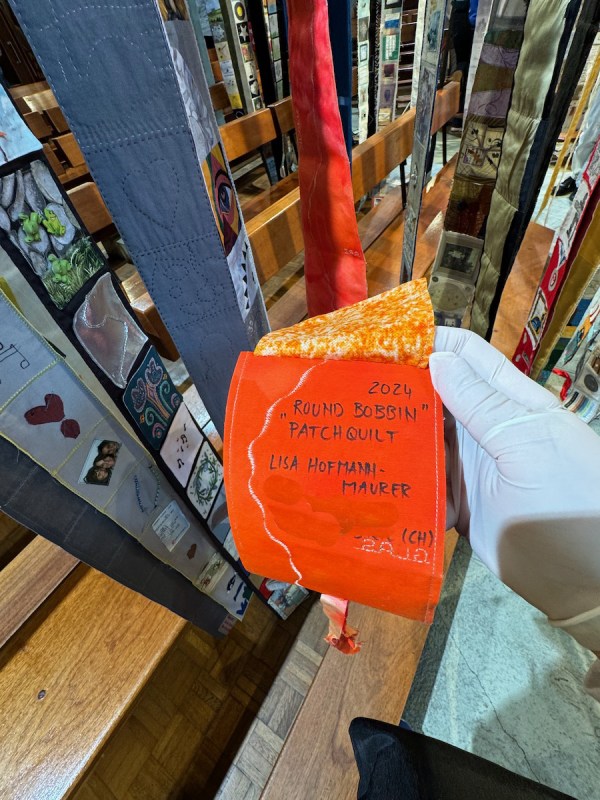
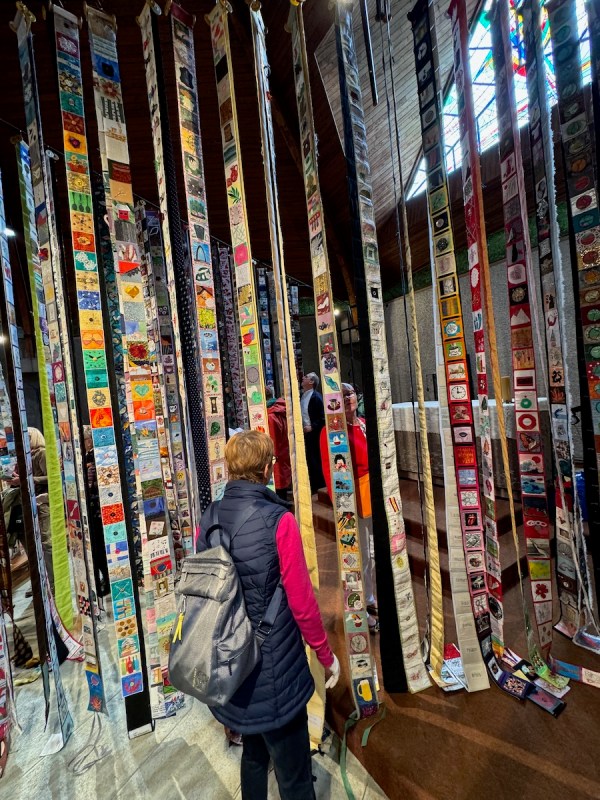
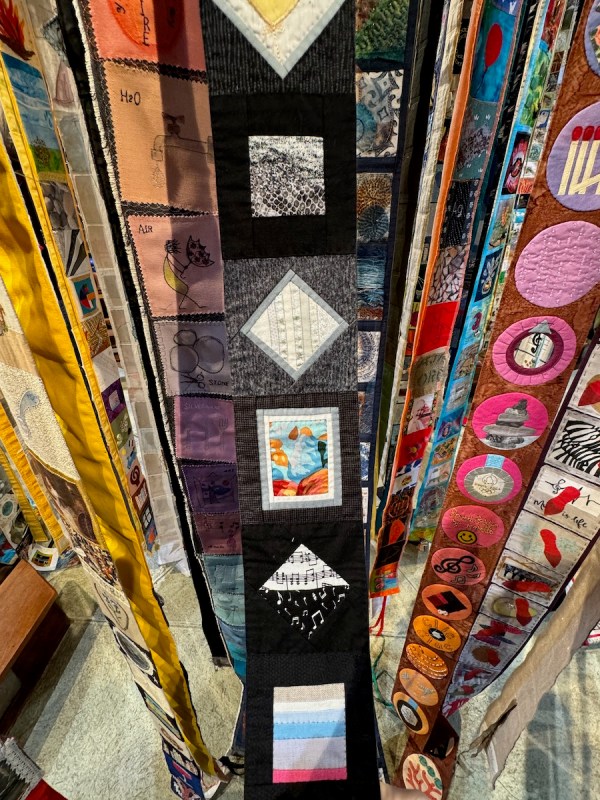
As we walked in, they handed us a latex glove. Oh, this is something different. On a giant frame, like the spokes of a wheel hung all these strips: about 500 of them, from 16 countries, and with 15,000 images. There’s only one way to see this, and it’s to go straight in.

Dave gives me a smile — it’s a happy place, with so much energy!
I step out to the side to get another perspective, and to look again. From the website:

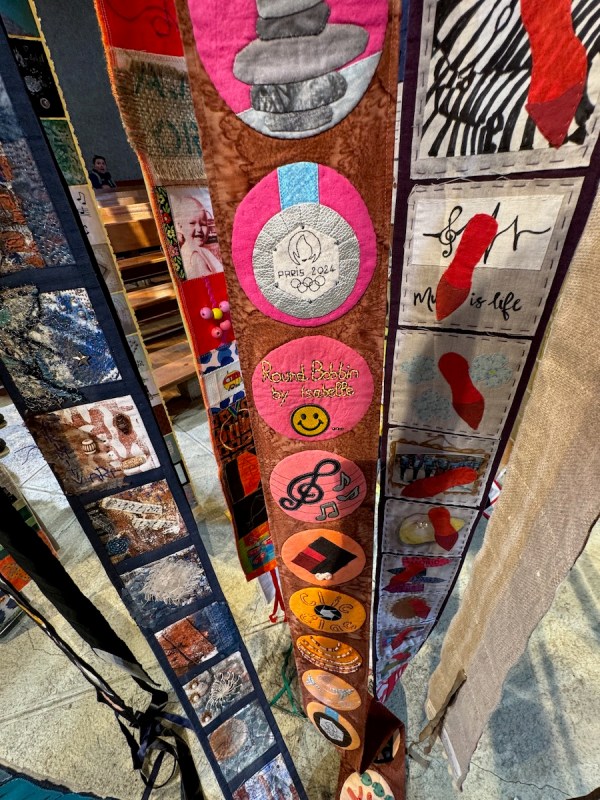
“For its 35th anniversary, PatCHquilt invited all European guild members to apply for an identical 12 cm wooden bobbin. The 35 tiny mixed media blocks that make the long ribbons are based on the traditional themes of wedding anniversary gifts. This juried exhibition is the European premier of the collection. Not one bobbin is like the next, every type of textile technique is represented, from weaving to embroidery to batik.”

The catalogue further explained that the “35 tiny mixed media blocks that make the long ribbons are based on the traditional themes of wedding anniversary gifts.” Here’s a listing of those gifts, European-style.

Note: PatCHquilt has the C and the H capitalized on purpose.

(I blurred out some of the personal info on the labels.)

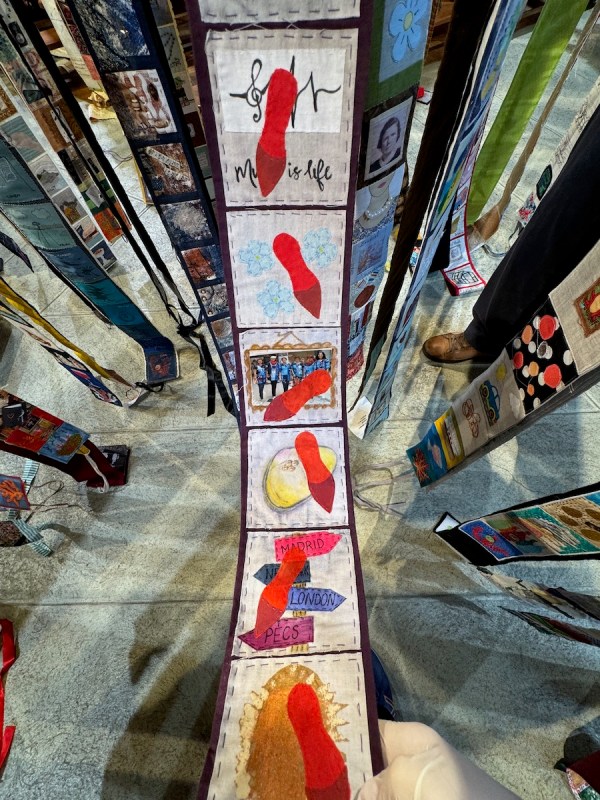
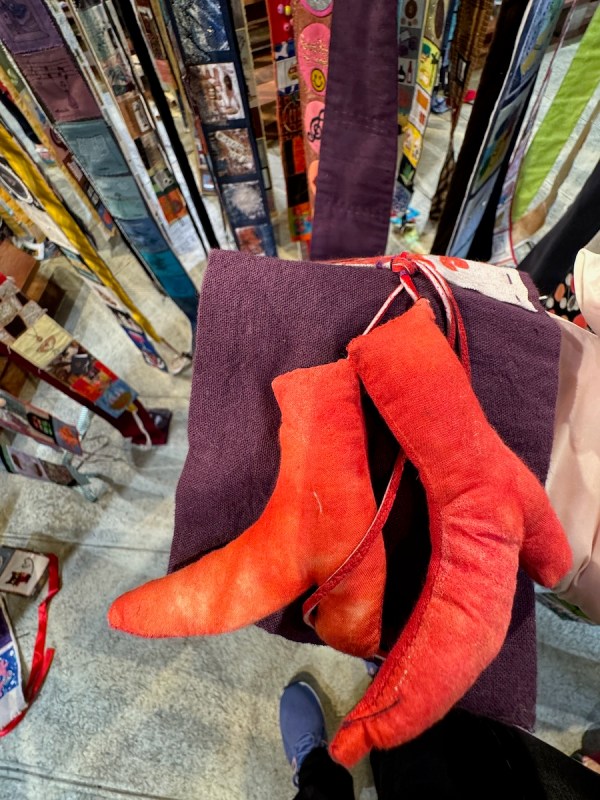
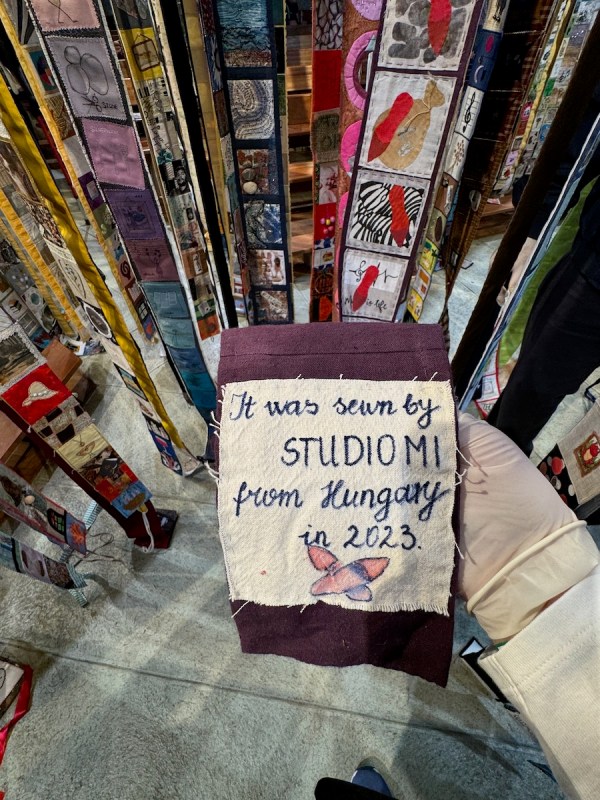
I thought Studio Mi’s interpretation of the red heels going the ribbon was pretty clever. Her tag even had them, along with a small decorative pair.

I think the idea was to use the listing of gifts, but perhaps not to get too precious about everything, maybe stitch it in a more casual way; the overall effect of these quilt ribbons put a smile back on our faces, and gave us energy to keep going. We even had music:

Towards the end of the video, you can see the “bobbins” that hold the streamers.

It was hard to leave this happy place. I’ve been thinking a lot about the idea of discovery — how critical it is to my life to not be told everything, leaving some spaces for a spark of learning something new. I thought I “knew” quilt shows. But this exhibit was one I did not expect, but loved.

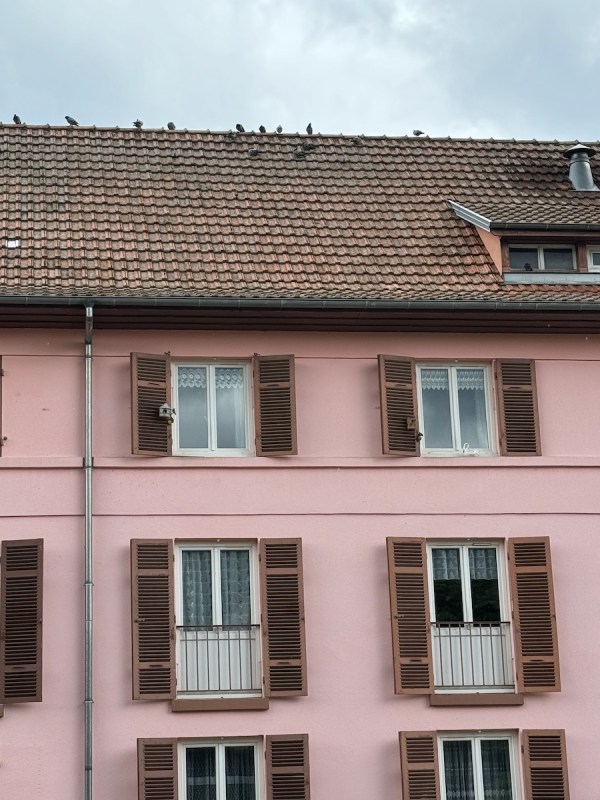
Across from the Chapelle St. Joseph was this pink apartment building of three stories. Well maybe four with that teeny window at the top. But two of the shutters on the third floor had tiny birdhouses attached to them, and the birds were fluttering all around.

With a baguette that we grabbed from one of the food tents, we climbed back into the car and headed off. One last thing for this post: Bits and Pieces of the Olympics.

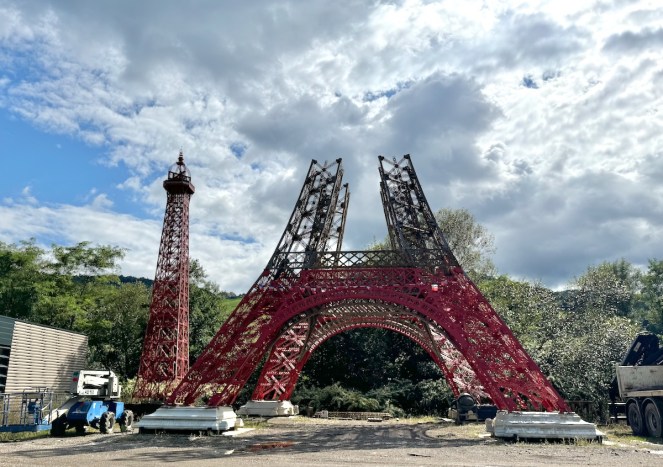
We have no idea why a half-assembled Eiffel Tower is sitting in a junk yard way out here in Alsace.

Next post, which may be the last if you are too tired of all this and if I can cram more in: Saint Croix Aux Mines, Lièpvre and Rombach-le-Franc. There are fewer venues at the next three towns, but a couple of knock-your-socks off exhibits. (Okay, maybe there will be *two* more.)

European Patchwork Meeting · Quilt Shows · Travels

Carrefour 2024: Quilts II

I’m writing about the experience my husband and I had at Carrefour European Patchwork Show in 2024, in Alsace France.

All posts in order are on the European Patchwork (Carrefour) page.

Previously, we arrived in Saint Marie-aux-Mines, and hit the Vendor Mall to start. Then we looked at the exhibits in the Theater (amazing), and now, we head on down the street to Venue 4: the Église des Chaînes, where the exhibit on the Amish is shown. The Anabaptists originally hail from this region, so this show always pays tribute to them by showing their quilts and their handiwork, including a tiny doll bed. (Click to enlarge any photo.)

I love Amish quilts, and many credit them with impacting the Modern Quilt movement, with their strong colors and simple shapes, although that was the first time I’d seen a Jacob’s Ladder block set like this (blue/red quilt).

Okay, leaving Venue 4 and heading to 5, Temple Réformé, where Val Patch was exhibiting. It is “an association from the Silver Valley (Val d’Argent in Franch) region (Sainte-Marie-aux-Mines, Sainte-Croix-aux-Mines, Lièpvre and Rombach-le-Franc), which is composed of over 20 friends. Its members are patchwork enthusiasts and some of them have been patchworking for over 30 years” (from the program).

I loved seeing all the color and forms; more info is found on the Carrefour site. But wouldn’t you like to have one of their pins (if they have one?) I would!
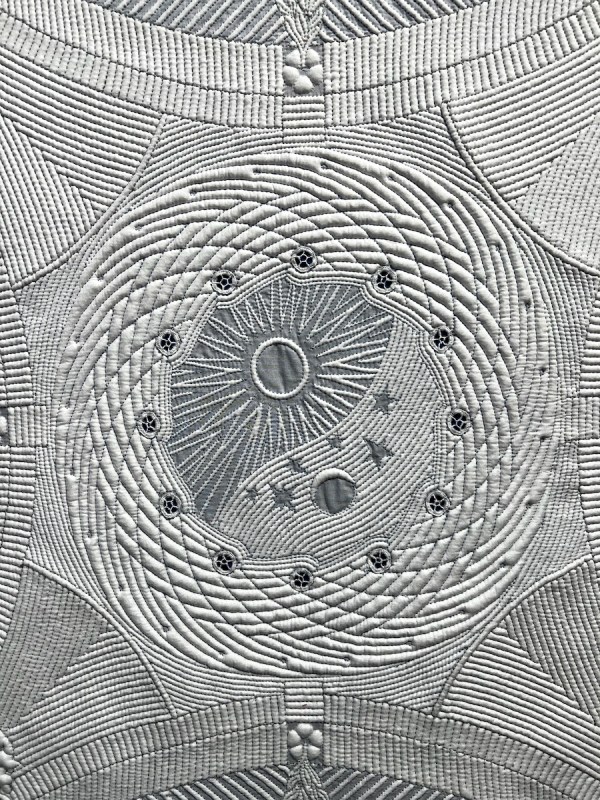
After that, we double-back to Venue 3: Église St. Louis to see the Anne Bellas exhibit, From River to Ocean, passing some street scenes on the way (it’s really a small village, but love all the sights).

It’s a challenge to light these older churches for quilt exhibits, and I give all kinds of credit to Carrefour European Patchwork Show for the bunches of light they bring in (you can see the scaffolding in the two photos, above — a long rail at the edge of the benches with lights aimed at the quilts). So I’ve tried to adjust the photos on this end, at the computer, to compensate as well.

Anne Bellas’ work was between improv and modern interpretations of different scenes. Often I traipsed to the end of a bench to get the best view I could, as she was inventive with her materials and thread. Here are a few of my best photos (not all of the photos were ready for blog-prime-time).

The program notes state:

“After living for a long time on the Atlantic coast, and now residing in Nantes on the banks of the Loire, Anne is obviously sensitive to the theme of the ocean and water in all its natural forms: coastlines and estuaries, rivers and lakes, stormy or dry seas, ice floes and storms are words that her imagination tries to recreate. For this series, on which she’s working…her sister Cécile, a budding writer, came up with a short text to accompany each of the works, developing the emotions and memories they evoke for her” (from Carrefour European Patchwork program, 29th edition).

(I did my best on the title cards as they were over my head in height; please forgive.)

I love the Saint peeking out overhead, watching over us quilters. Really, old churches and quilts might possible have a natural affinity one for another.

She also had a few small quilts for sale, too:

The white signs advertise Tissus (fabric) for sale.

We’re heading back across the tiny river to Venues 6 and 8, but I’ll save 6 (Espace des Tisserands) for the next post.

Many places were decorated, some with traditional items (geese and swans are big around here), and some with quilts (Pharmacy of the Swan):

Église Ste. Madeleine, venue 8 (with DH at the base of the steps).

Viewpoints, an international fiber art collective, exhibited here and many of the works referred to the poem “Ithaka,” by Constantin Kavafis (inspired by Homer’s Odyssey). The program notes say “Ithaca is the path, it is both a journey and a goal. Ithaca is life itself.”

This is where — several weeks later — you really hope you got the right title card with the right quilt. On these two, I don’t really know. (Click on any in the galleries to enlarge.) I did head to Hsin-Chen’s website and she does have a bit about Ithaka, so my fingers are crossed.

I also looked up Betty Busby, and maybe I’m right?

Get out your scraps!
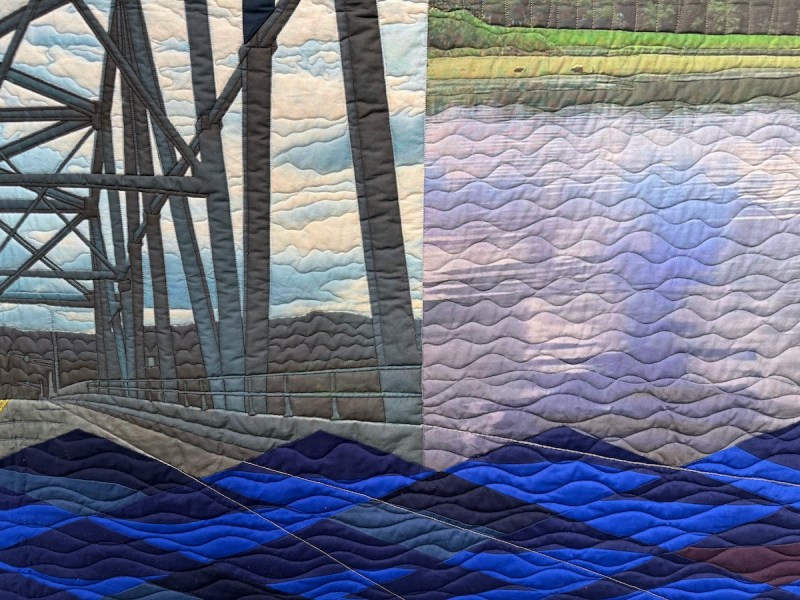
Giving you a feel for how things were, in this exhibit.

Time to get to work in our sewing rooms/studio/garage/basement/wherever you and your fabric find each other.

Next up: Carrefour: Quilts III: All the moderns, Victoria Findlay Wolf’s new exhibit, and others.