Quilts

[in Just-], a Four-in-Art Quilt

4-in-art_3

For those of you who are avid English Paper-Piecers and are new followers, welcome!

in Just_in the garden

[in Just-]
#2 in the Literature Series
Quilt #147

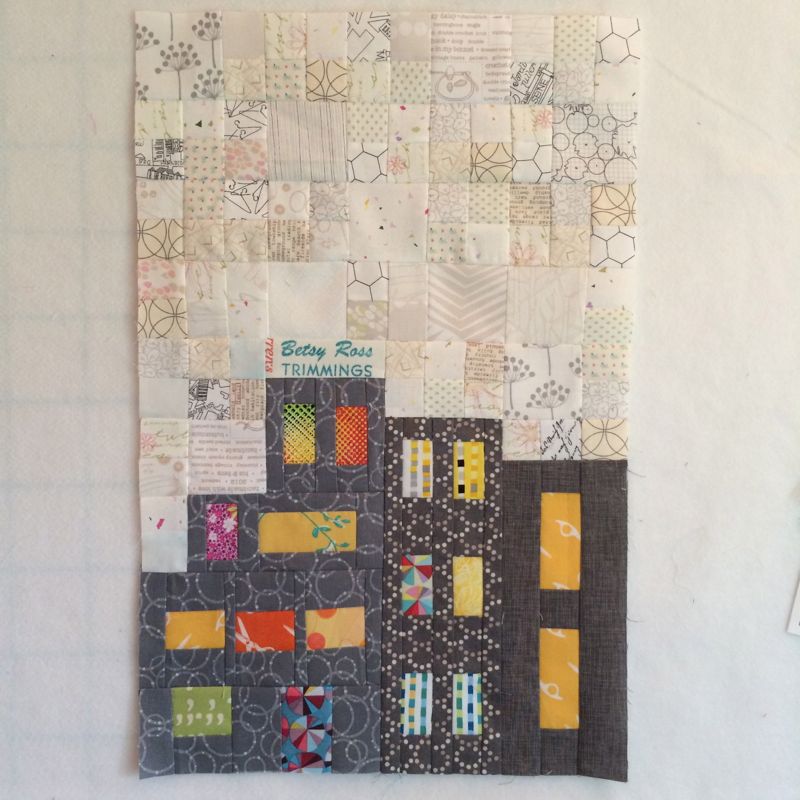
Continuing our theme of literature and my personal love of poetry, this is the second in a series of four art quilts for this year, a collaborative effort by the Four-in-Art Quilters, a name chosen because we do four small (12″ square) art quilts per year.  For this quarter, I chose e.e. cummings’ poem “[in Just-],” a poem about a balloon man selling balloons in Spring.  I’m also following a seasonal theme, as the last art quilt focused on Winter.

in Just_front

e.e. cummings’ poem appears on the surface to be a simple sensory poem about “when the world is puddle-wonderful” and “bettyandisbel come dancing / from hop-scotch and jump-rope.”  It’s a world where the wonders of childhood dominate, from mud, “piracies” and “marbles” to  the sight of a balloon man with his wares to sell to the children.

in Just_in the vines

But in the last stanza of the poem, the capitalization and descriptions change.  The “old balloonman” becomes the “goat-footed balloonMan,” with his whistling pipes and inferences of Pan, a somewhat lascivious ancient god who is half goat, but has the reputation of pursuing the women.  Suddenly the poem changes, the games of childhood left behind as Pan brings different games to “eddieandbill” and “bettyandisbel,” games from which they will never stop playing.

Balloon Man

(detail of center panel)

When this version is presented by my students to the group (they each have to choose a poem, analyze it and present it), there are some groans, as in, “can’t this just be about balloons and spring and mud and marbles?”  Yes, it can.  But perhaps e.e. cummings is trying to have us look at two spheres at once: childhood and adulthood, and that razor-thin edge where we cross over from one into another.  We then have an interesting discussion (all very G-rated) about when they felt they crossed the dividing line from childhood to adulthood, and the answers vary from when I got my driver’s license, to when I first kissed a boy, to when someone left home, to when they had their first jobs and bills and live-in girlfriends.  And so it goes.  The balloons of childhood escape from our hands into the heavens, and we can never get them back.

Two Art Quilts

I plan to join all the quilts together when I’m finished; here are the two I’ve completed thus far.

in Just_back

[in Just-]

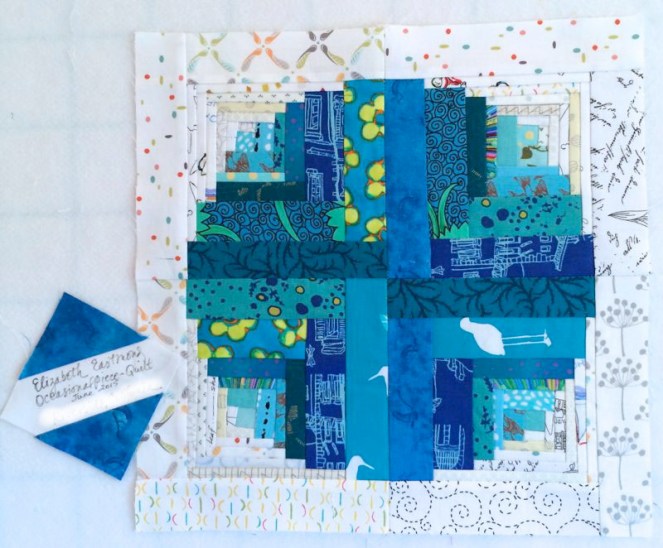
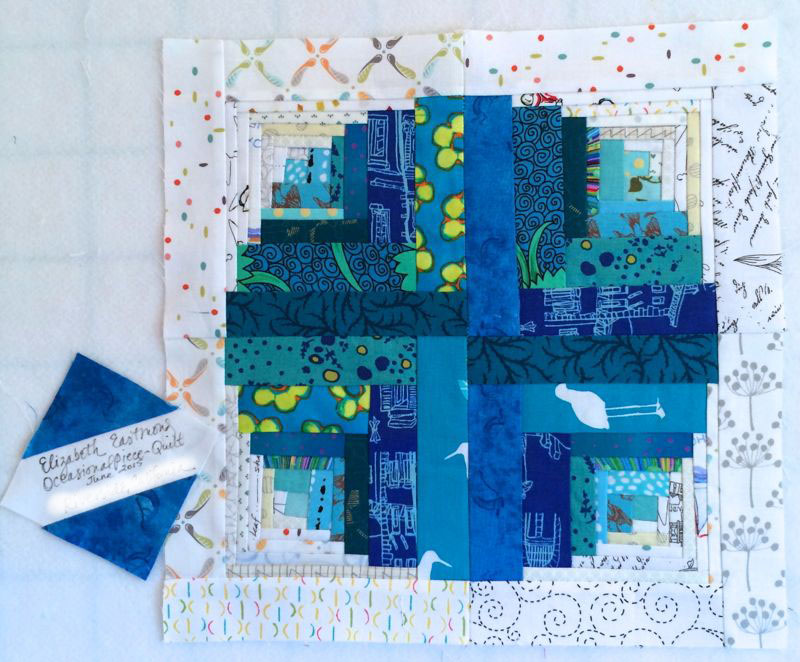
in Just_labelI can’t believe I left off the author’s name, so I hand-wrote it in.  There will be a final label when all the four quilts from this series are joined, so I’m just not going to worry about redoing it right now.  The “Deconstruction Post” will be next, with some info about how I made this quilt.

Tiny Nine-Patch

About Us: We live all over the world, from Scotland and Australia to the continental United States.  Our blog is *here.*

Please visit the other Four-in-Arters, and their quilts around this theme:

Betty May 2015Betty at a Flickr site: http://www.flickr.com
Catherine May 2015
Catherine  at Knotted Cotton
Jennifer May 2015
Nancy May 2015
Nancy at  Patchwork Breeze
Rachel May 2015
Simone May 2015
Simone at Quiltalicious
 Susan May 2015
Susan at PatchworknPlay
Tiny Nine-Patch
EPP · Quilts · Shine: The Circles Quilt

Circles Block #11–EPP Sew-A-Long

Circles EPP Button

Circle Block #11_OPQuilt

Circle #11: Vintage Test Pattern

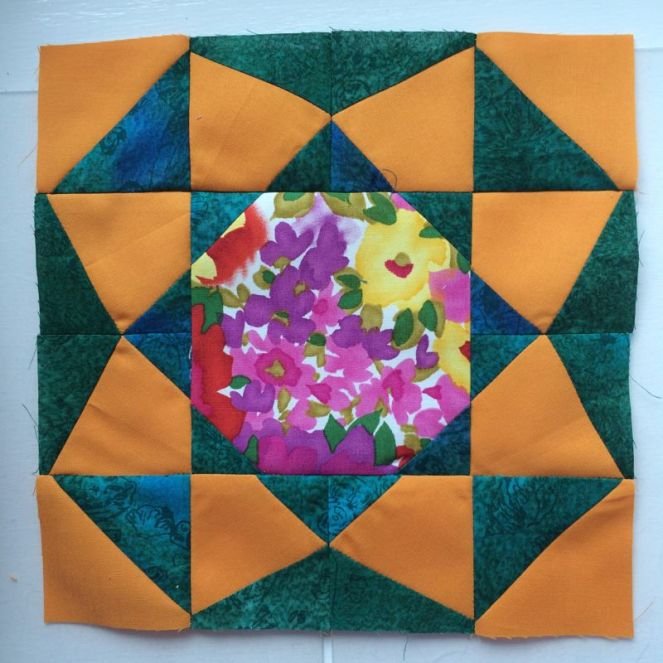
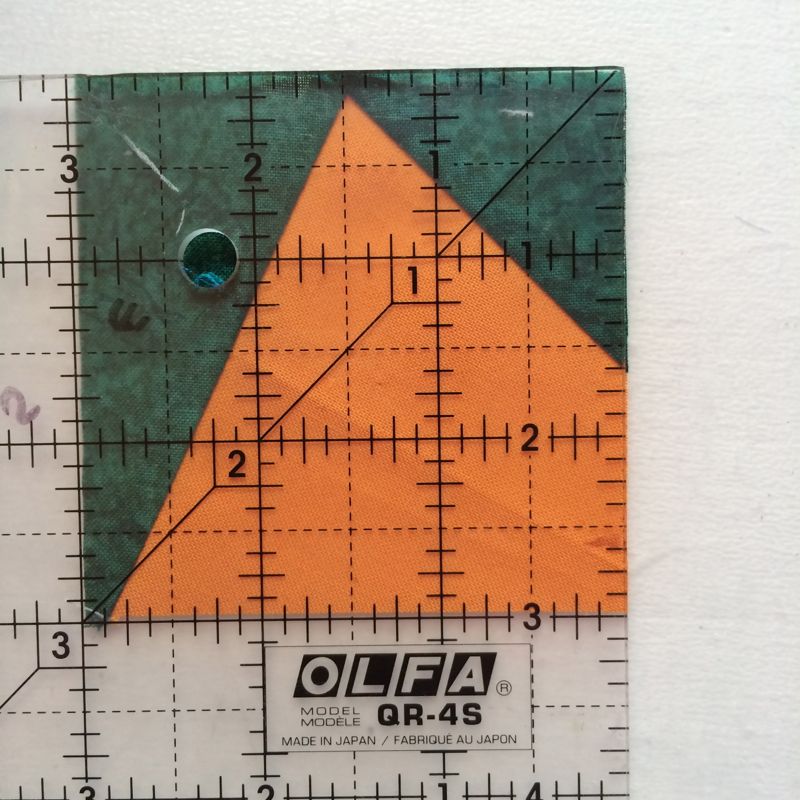
This is the eleventh block in a series of twelve circle blocks, conceived and created when I needed another hand-sewing project, and wanted something beyond hexagons.  I had several sources of inspiration for this one:

Vintage TV Test Pattern

TP-WABCcolor

2012-Ma-June-044

1960s-Color-TP-v1As a child, I remember these “television test patterns” on the tube when I’d get up too early, before the station had signed on.  And I liked the Greek Cross reference, too, since many of these circles were designs taken from a Greek Orthodox Church in Ljubljana, Slovenia (from our vacation last year).  So I give credit to both sources of inspiration.

The free patterns are now returning (I did not do Red, White & Blue version of this block).  Again, I request that you not distribute them, but send people here to this website to get them.  Click to download a PDF file: 

SHINE Block 11 pattern_opquilt

Please remember to set your printer settings to 100% and check the little scale square included on the pattern.  It should measure 1″ in size. Illustrations below are with the OLD version of the pattern, so it may vary from what’s included now.

Circles Block Eleven

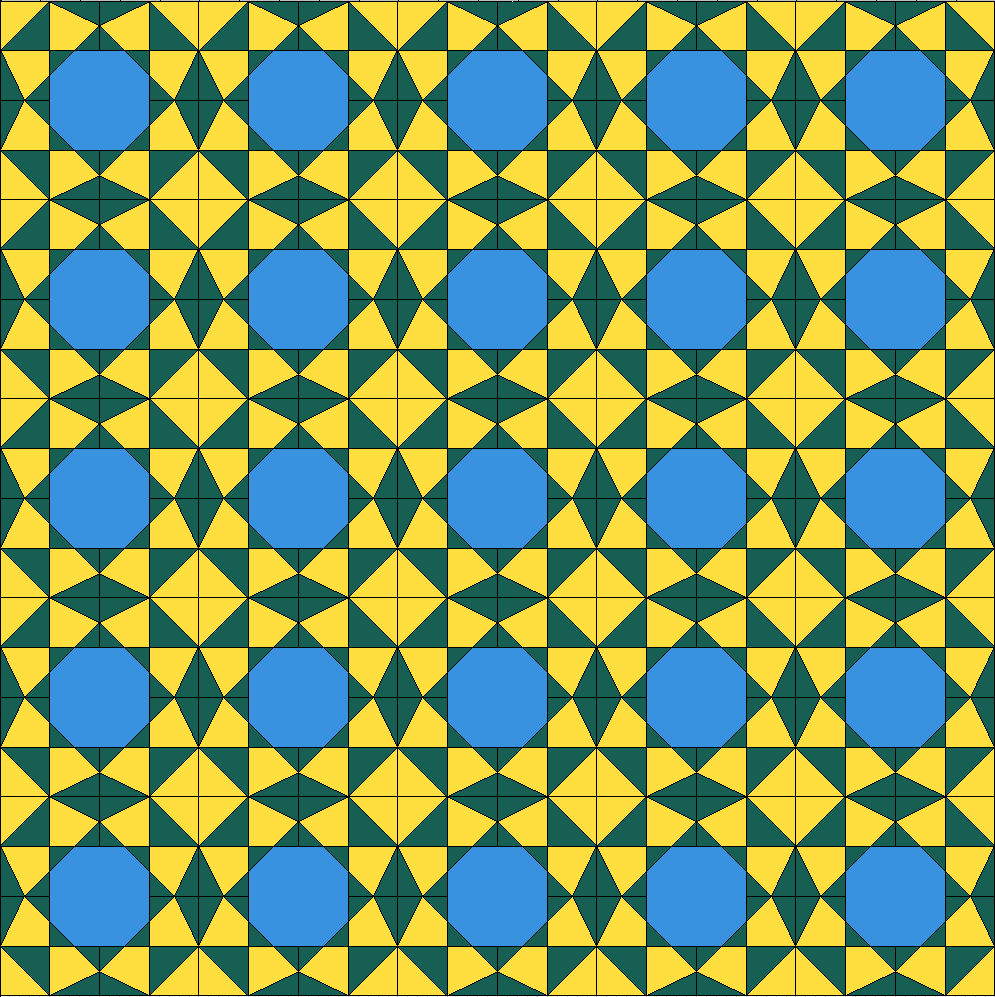
Here’s the circle drawn up in my quilt software.  I’ve taken to printing out this little color drawing and putting it in a small bag with all the glued-up pieces.  I like referring to the drawing as I work.

Circles 11_1Choosing Fabric

Picking fabrics–I always lay them out.  I jumped the gun and cut the cross-bars early, as I have another circle with that fabric and while I wanted these circles to be different from one another, I still wanted them to be able to have a conversation, so I repeat fabrics here and there.  When you cut out your center circle piece, cut it about 1/4″ bigger than it is.  See Circles #10 for some tips on the center circles.

Circles 11_2points layout

Once I got all the little points around the top of the circle printed out, I noticed that it would be hard to figure out where the “curve” of the triangle was, so I drew little arrows on every one of them.  As it turned out, I was okay about figuring out how they went, but if you think you might need the extra assist, do it now.

Circles 11_3glued points and raysKind of looks like a tomato with leaves.

Circles 11_4 pieces laid out

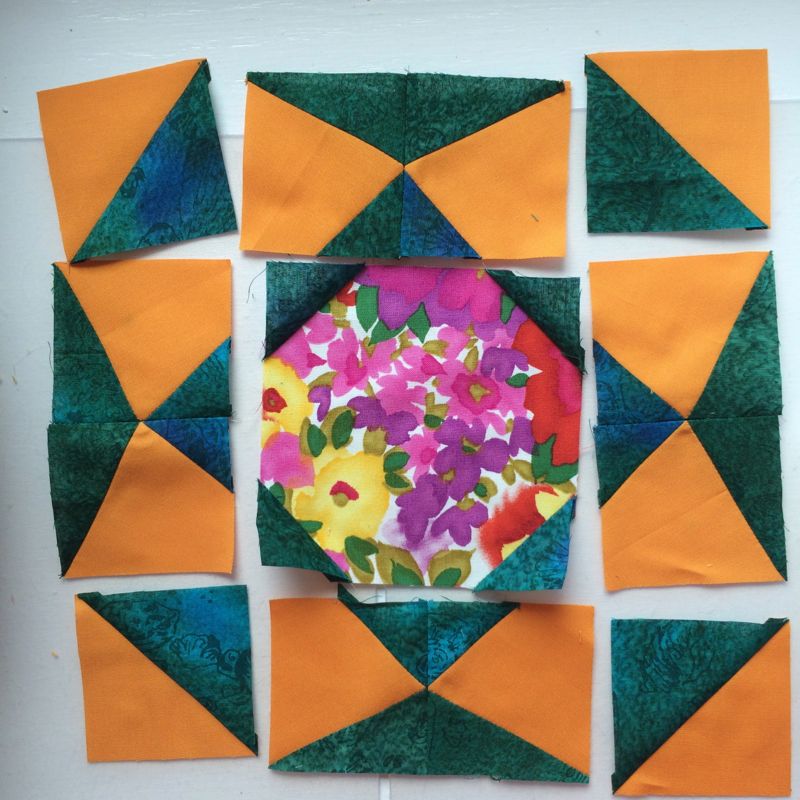
As is my habit, I lay out all the glued pieces for one final check before I start sewing them together.

IMG_4762

Then I loaded them all up in my little bag with the drawing and went outside to the patio to stitch, while listening to my audio book.

the-last-chinese-chef-cover

This time it was The Last Chinese Chef, and I was craving Chinese food by the time I finished listening to this.  But not Americanized Chinese food; I wanted the food in the book.

Circles 11_5 first units stitched

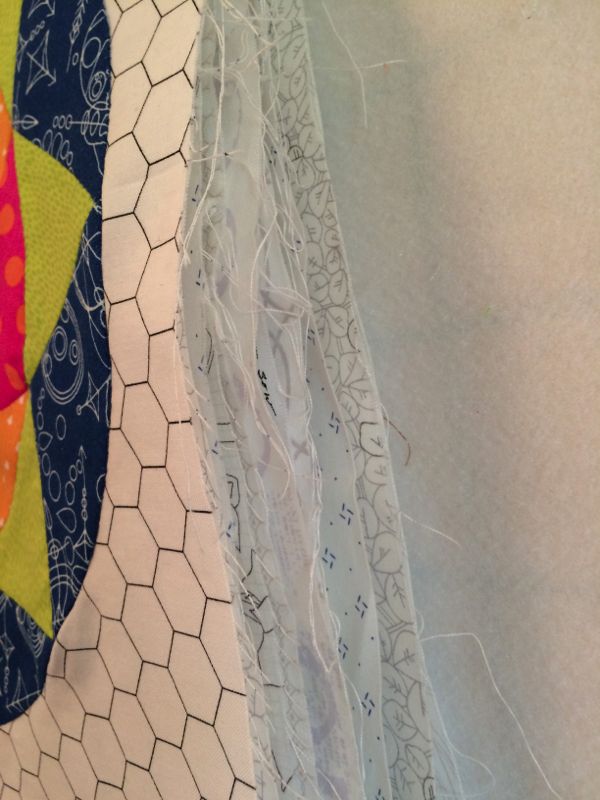
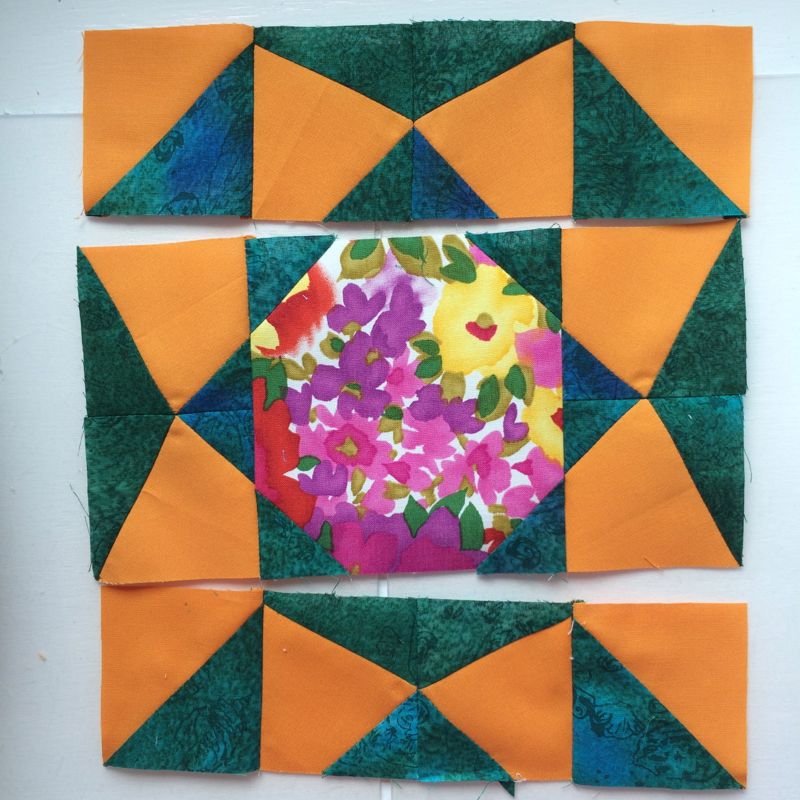
Stitch the upper row sections together, then the lower, then join them, keeping those seams aligned if at all possible.  Notice that I have not glued down the lower edges of the lower section to their papers (the innermost part of the circle), as I want to appliqué the center circle onto the piece, and it’s a lot harder if I’ve folded the edges and glued them down.

Circles 11_6 more bits laid out

Then, line up four green triangles with their curved edges at the bottom, and the points that go in-between them (three pieces). Lastly, lay the half-triangle on each side.  NOW sew them together.  You don’t want to be sewing on a full-triangle on those outer edges; ask me how I know.

Circles 11_7 crown stitched

When sewn together, it should look like this.  It’s now after dinner and I’m inside, still listening, but sewing by lamplight, instead of by sunlight.  I couldn’t stop listening to that book, nor stop sewing.  These get addicting.

Circles 11_8 crown onto first unit

Join a checkerboard unit to the triangles unit.

Circles 11_9 rays to first units

Then stitch one of those ray-sections to the checkboard units, making sure you are attaching it to the same side on all four units. In this photo you can clearly see the raw fabric edges of the lower checkerboard pieces.  Sew together two of these units, then sew those two units together to create a full circle.  At this point, you can remove all the papers, except any that are at that outer edge.  If the papers are hard to slip out because they are glued, use the tip of your small scissors or a stiletto to loosen the fabric (so you won’t have to tug and pull).

Cut a 14 1/2″ square of backing fabric.  Yes, it is bigger than the circle, but I want to make sure I have enough to work with when I figure out how I’m setting all these together.  (I have no clue at this point!)  Now it’s decision time.  This version, with the red rays arranged North-South-East-West, or. . .

Circles 11_10 OPQuilt

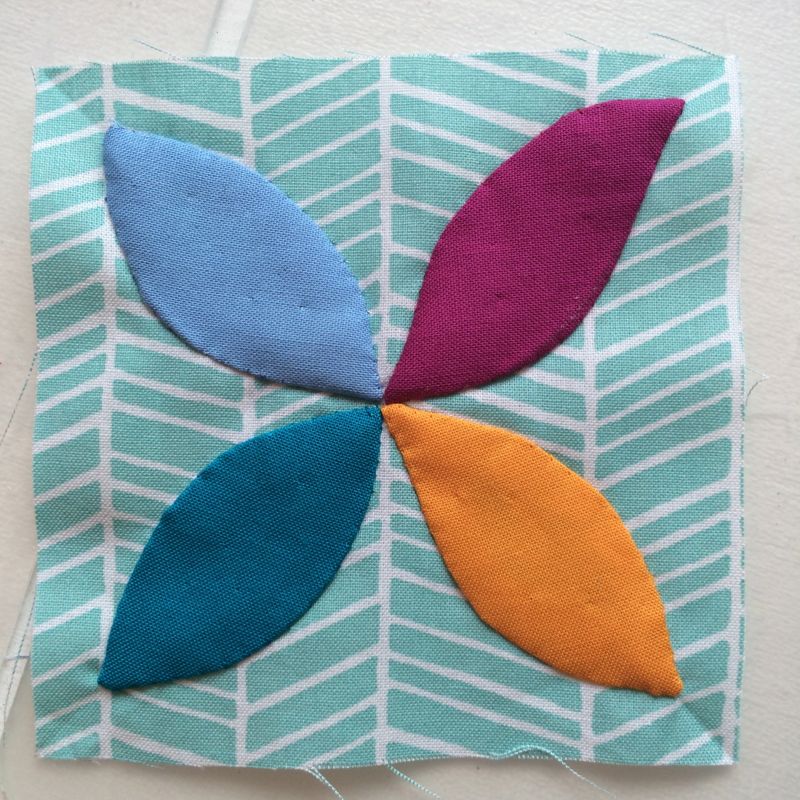
Circles 11_ 10aAlternate Circle. . . this version, with the rays arranged like a flower?  I marked the centers of my large backing square, and set down the circle, pinning it for appliqué.  I went with the traditional version (North-South-East-West).

Circles 11_11 OPQuilt

Cut away the backing fabric, leaving a 1/4″ seam allowance. I love these little Karen Kay Buckley scissors, as the tips have little teeth that grip the fabric, holding it while trimming even the smallest bit of fabric.

Circles 11_12 OPQuilt

Pin on, then appliqué the center circle.  See Block #10 for some appliqué tips.  I should have placed that “weave” pattern aligned straight up and down, but instead I just slapped it on.  As a result, I always want to tip my head to the side when looking at the center circle.  I’m sure no one else will notice (well, now you will) so I’m not redoing it.  Keeps it real, keeps it interesting.

Circles 11_13 OPQuilt

Remove all the papers, and admire your work.

Circles 11_14 OPQuilt

Circles All Eleven by Ironing BoardHere are they all are, lined up on an ironing board that is obviously used for other things than ironing.  (Anyone else have to clear off their ironing board in order to iron something?) I think they do play well together! I’m posting this circle block a wee bit early as we have our Quarterly Four-in-Art Reveal in two days, on May 1st.

4-in-art_3

I hope you’ll join me then for our little gallery of art quilts!

Quilts

Sing A Song of Sampler Blocks

Two Quilts_again

Sing A Song of Sampler Blocks_front

Sing A Song of Sampler Blocks
Pieced, Appliquéd and Quilted
57″ high by 53 1/2″ wide
No. 146 on my 200 Quilts List

Sing A Song of Sampler Blocks_1I went up to my university’s botanic garden to photograph these two quilts, loving the contrast of the rustic against the brightly colored blocks from my beemates in the Mid-Century Modern Bee.

Sing A Song of Sampler Blocks_detail2

I put out a call for a variety of blocks in 6″ or 9″ or 12″ sizes, and then as they came in, placed them all up on my design wall to see how they played together.  I used some of the ideas from these friends to create a few more blocks, following Carla’s lead when she created hers.  Like Carla, I also worked in the small signature blocks as part of the design.

Sing A Song of Sampler Blocks_front heroic

One day I opened a card from Rhonda, another friend back east, and she’d made me a bird block to be added to my project, as she had read my blog and wanting to contribute to my modern sampler.  So that spurred me on to making a few more birds as well.

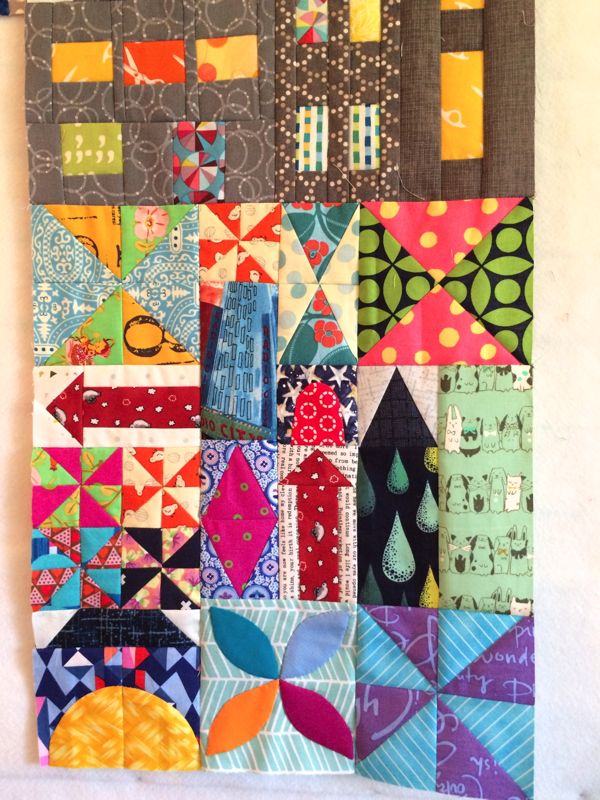
Sing A Song of Sampler Blocks_detailThen I had to try some flowery blocks, two different kinds to go with all the other flowers, and a Dresden block, and once I got started, I also added a Road to California block (made four times so it would be big enough to add variety).  It’s kind of fun to try making all different kinds of blocks.  Finally I had enough, and the right size of blocks and I was able to sew it together.  Happily so, thinking about my good friends.

Sing A Song of Sampler Blocks_back

I saved some of the smaller blocks for the back.

Sing A Song of Sampler Blocks_label

Two quilts_2015

Two quilts with flowers

Happy Spring!  Spring into some quilting!

Quilts

Pineapples and Crowns

Gazebo with two quilts

Pineapples and Crowns_front iphone

Pineapples and Crowns
Pieced, Appliquéd and Quilted
61″ square
No. 145 on my 200 Quilts List

Looking up into the cupola

Pineapples and Crowns_labelThe pineapple blocks were pieced by two different bees and I over six months: the Mid-Century Modern Bee and the Always Bee Learning Bee.

Pineapples and Crowns_lounging around

Pineapples and Crowns_back

Pineapples and Crowns_signature blocksI had forgotten to piece all the signature blocks into the backing from Mid-Century Modern Bee, so I just kind of swooped them onto the back.  While they may look a bit unusual, I figure the back of my quilt is like looking in my clothes closet–no one will see it but me–and this way I won’t lose these precious tiny blocks.  I wish I had a signature block from the other piecers of the blocks, but that bee didn’t do them, and that bee is now scattered.

Pineapples and Crowns_detail1The background is a series of petite prints on a white or creamy colored ground–no beiges or grays to muddy the clarity of the colors–and is a contrast to the solids of the pineapple steps and the crown petals.

Pineapples and Crowns_detail2I quilted this quilt over a week, using seven and a half bobbins, in a free-swirling pattern, outlining the leaves and stems in the border.  I got the idea for my border from the masters of borders, the Piece O’ Cake ladies, but varied it somewhat to fit what I needed.  I was interviewed for an article on quilting last week, and I noted that if we think we are making something original, we are slightly delusional.  Actually I wanted to say we are straight-up delusional, for everything comes from somewhere else, but I qualified it so quilters wouldn’t have their feelings hurt.  The idea, I think, is to make that snippet of influence new for you.

Mark Ronson, the well-known DJ-record producer, noted  in his TED talk  that we are all sampling from everyone else, sampling being his word for when recording artists slip in a line or two from someone else’s recorded song to bring a texture or a reference to the work that has gone before (cue at 6:15 for his discussion).  So you might say I sampled some early pioneer in the use of her pineapple block and the Piece O’Cake ladies for the border, and both of these were probably sampled from somewhere else, somewhere.  I feel richer for being a part of this quilting universe, with good ideas slipping in from places beyond.

Pineapples and Crowns_front

Yes, you did a notice another quilt in that first photo.  Stay tuned.

These photos were taken in our local university’s botanic garden, in the gazebo near the iris section, overlooking the creek gully.  It’s a very old gazebo and I fully expect that one day I’ll arrive with my quilts and it will be gone. Until then, it will be sampled into my photos, my coda on the making of a quilt.