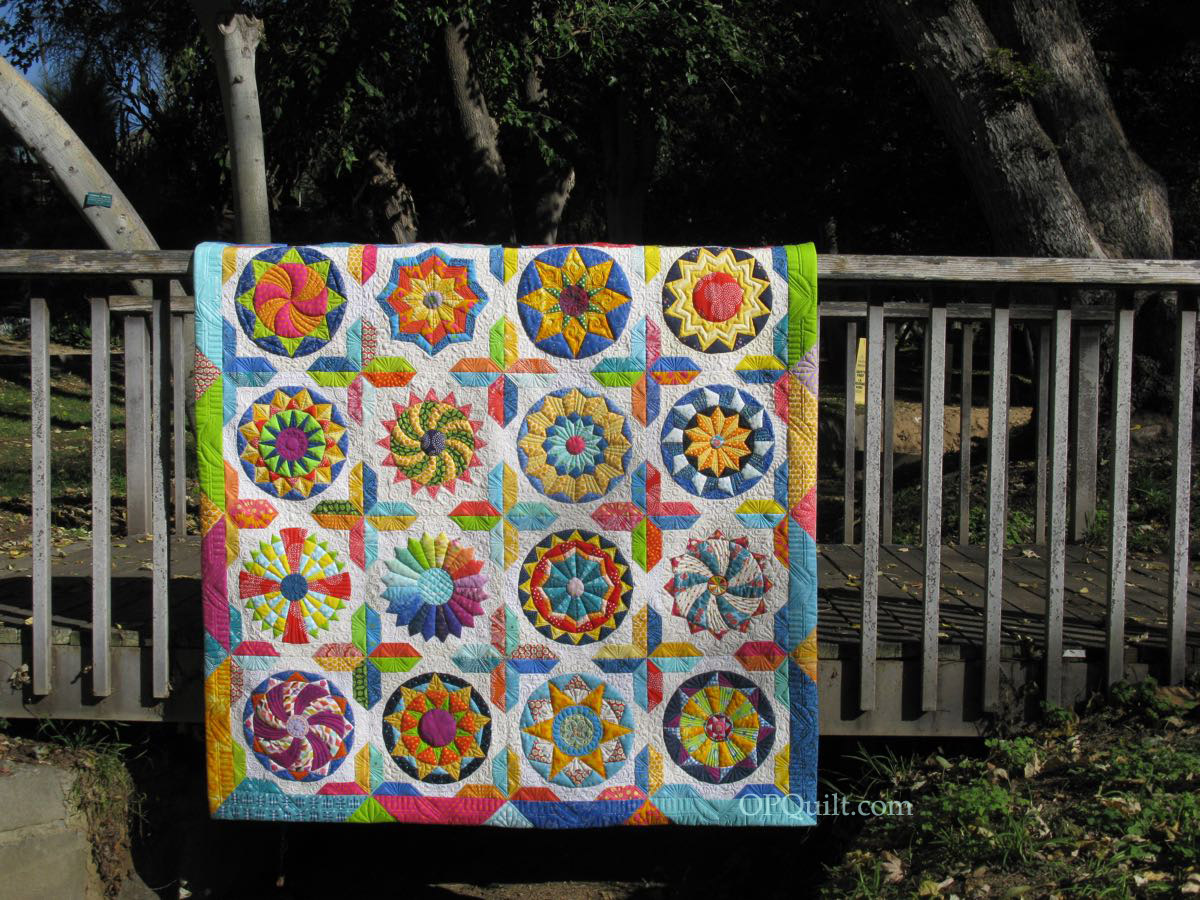
This quilt finally finished, I took it out for a photography session with the help of my husband.
I started sewing the first block in June of 2014, and finished the top a year later. The quilting was finished at the end of September, but it wasn’t until now that I could get time to take it up to our university’s Botanic Gardens to get some photographs.
My husband’s favorite block. As some of you know, many of these blocks were inspired by art in a church in Slovenia, as well as designs from our travels. Most of the patterns and accompanying tutorials are free on this blog, found *here* as well in a tab labeled Shine: The Circles Quilt.
This shows the quilting. I was trying out double batting (polyester with wool), and found it was a challenge to move the heavy quilt around on the machine. It took me nearly 4 months to quilt this thing, as I was hobbled with a shoulder injury. But I was able to finish it!
As I quilted, I thought a lot about my brother-in-law Tom, who passed away a little over a month ago. He maintained a beautiful small garden in his backyard, and so in one of the corners I quilted in a flower in his memory (shown below). Many offered advice and help while I was quilting: thank you, everyone.
detail of quilting from the back
This closes a chapter in my life. Lovely to see you here, Shine!
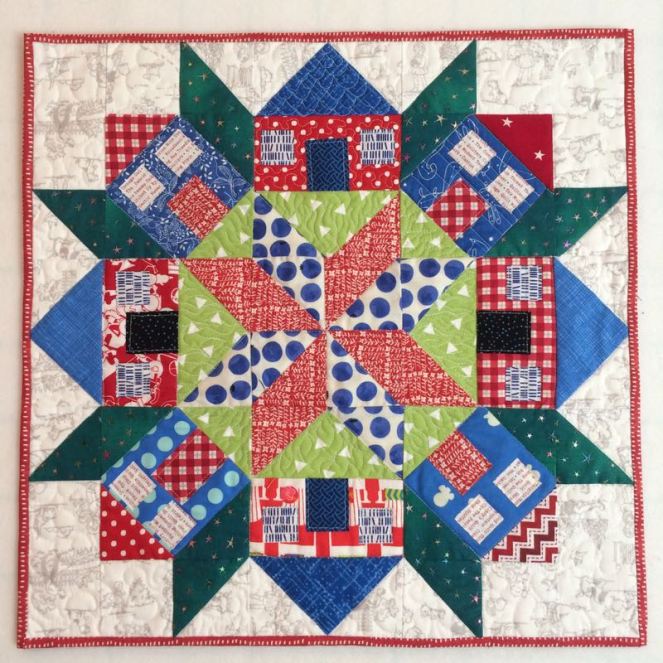
First up is finally completing my little house quilt, which I titled Celebration. I thought it was a 4th of July house quilt, but now I think it may be sort of Christmasy (or not), so I went vague on the title. It’s made from my Home Sweet Home Mini Quilt pattern, and works up quickly. I need to make a Halloween mini houses quilt. Soon.
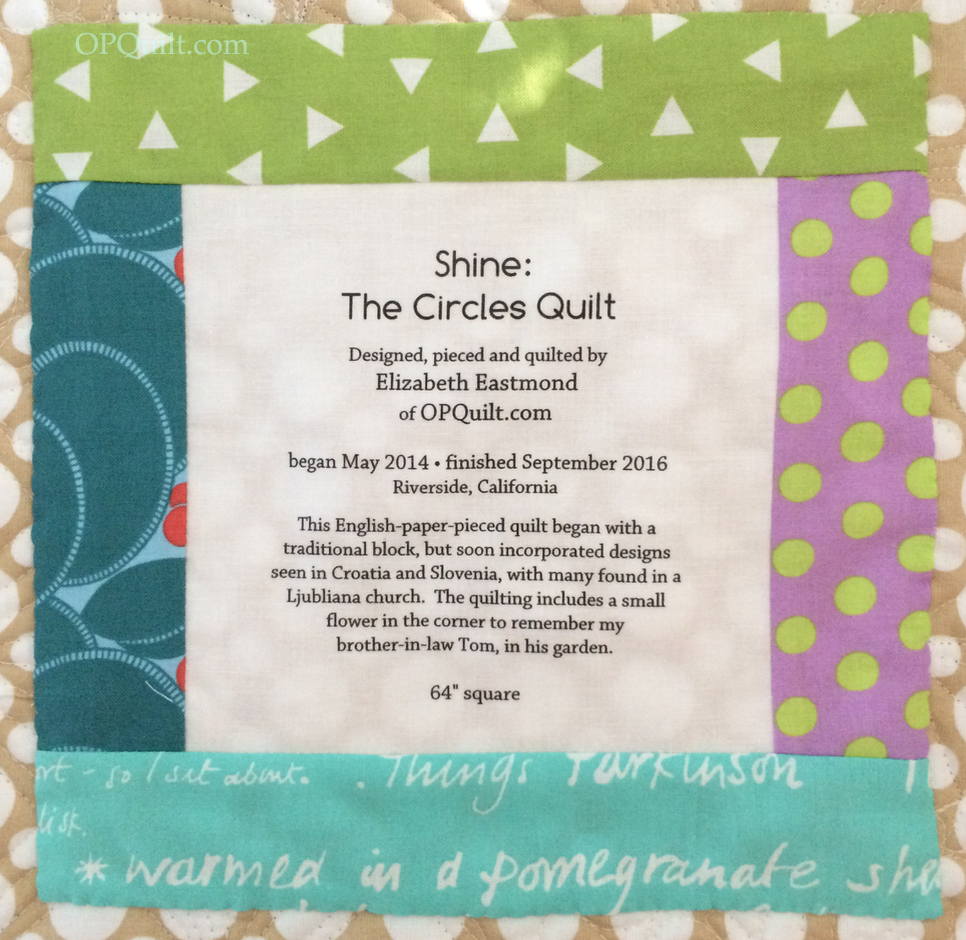
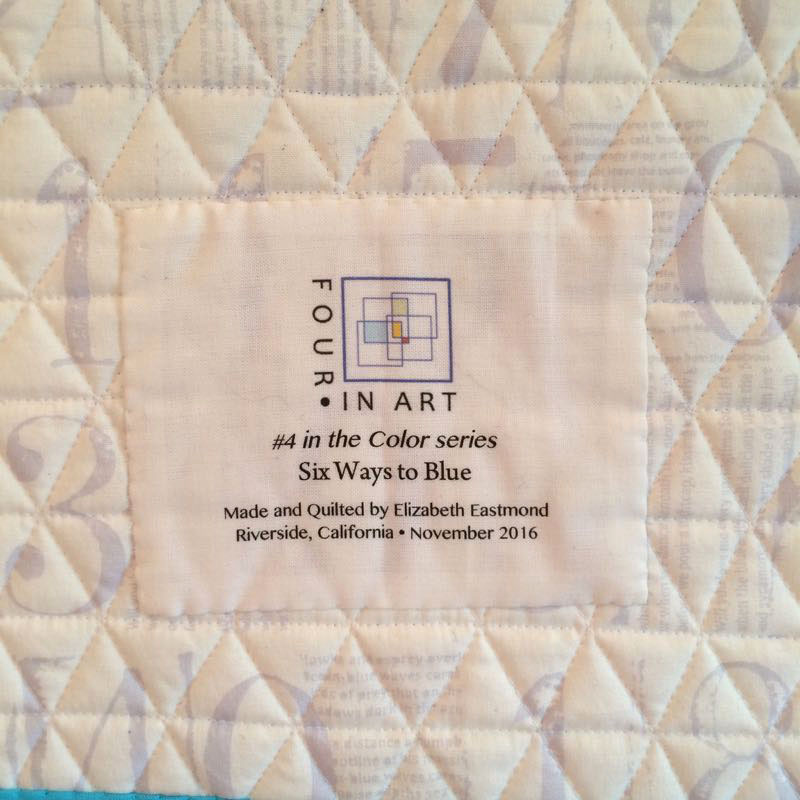
And since I’m still jet lagging, this is the label, so I can call it done. I love that fabric on the back.
Sometimes I get discouraged about the pile of stuff around my sewing room, and realize one reason why I don’t get a lot completed (which is why I pushed forward to get that little house quilt done) is because this has been a year of traveling. Other trips not on here are Kansas City, San Diego, Sweden (which was in conjunction with Copenhagen), and Switzerland. It’s been fun, but now I’m ready to stay home for a while.
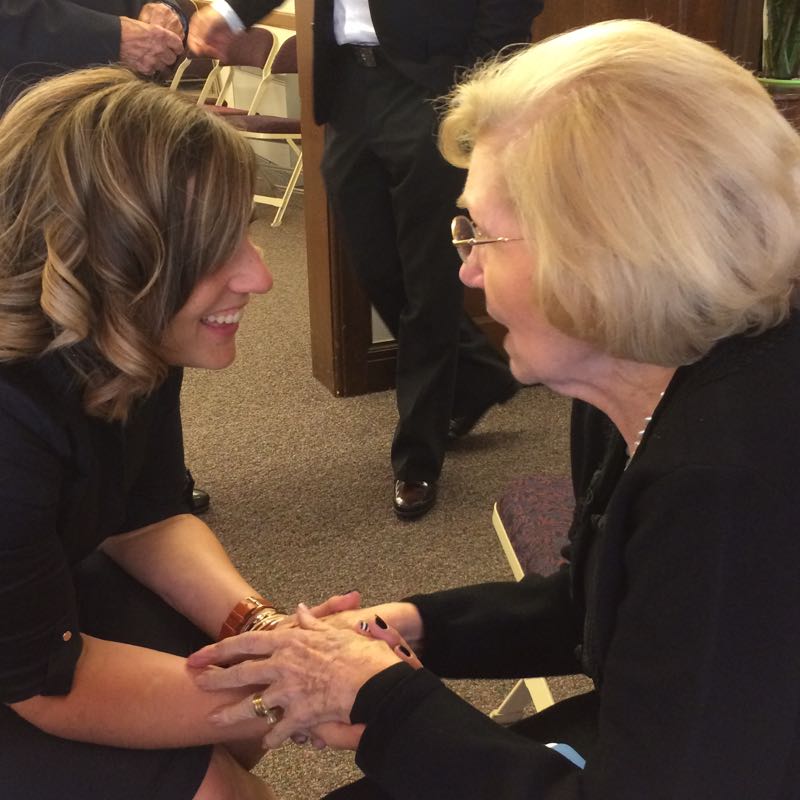
I snapped this photo of my daughter and my mother together (my mother’s namesake) while we were in Utah, another one of our trips.
I finished up my final four Chuck Nohara blocks. I really like this one, and plan to use this design again.
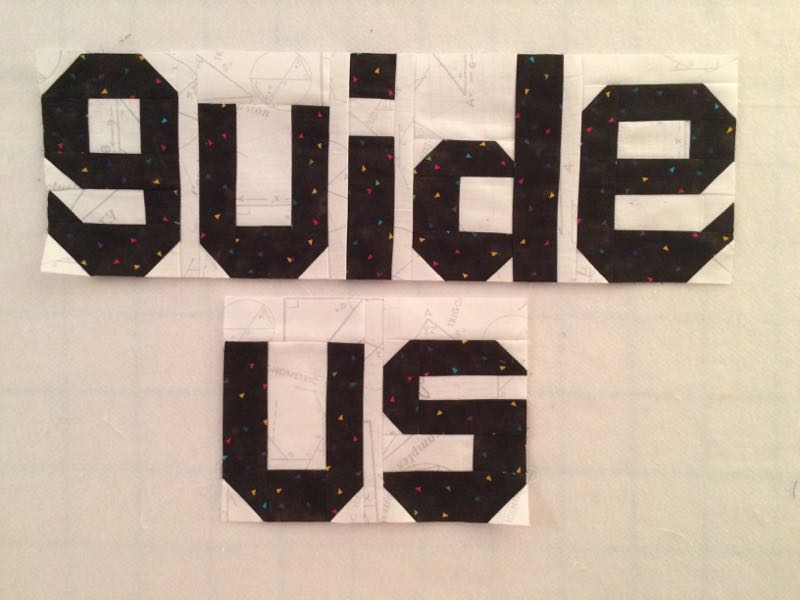
I finished up Cindy’s blocks for our Spelling Bee group. Our group worked together for a year, swapping blocks with each other as we made words based on the alphabet on my Quilt Abecedary Blog. She asked for dark fabrics on low-volume backgrounds for her words.
Since her blog name is Live A Colorful Life, I couldn’t resist this black fabric with little bits of colorful triangles floating around in them.
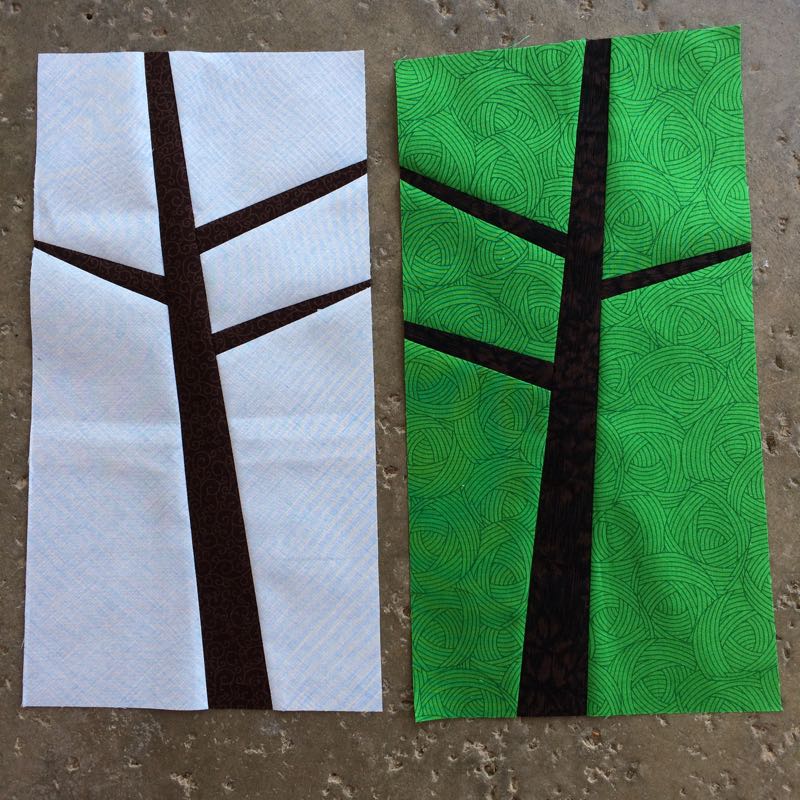
I also finished Nancy’s blocks for her request on Mid-Century Modern Bee for November. It was a slash and fill approach to making trees, one on light blue and one on green. I hope she likes them. She’ll trim them up to her preferred slant, so they are bigger than she requested (she wants them at 6 1/2″ by 12 1/2″ finished). After four years of working together, our fearless leader decided it’s time to go, so I have only one more block to complete.
I see a lot of bees collapsing and going away, as people seem to have moved on to doing QALs or 100 Block Assemblies. I am still part of one bee (Gridsters) which, as a mark of faith in the bee concept, begins next year anew. I enjoy getting to know the women I trade blocks with over time, and will continue to follow them even though the bee is ending.
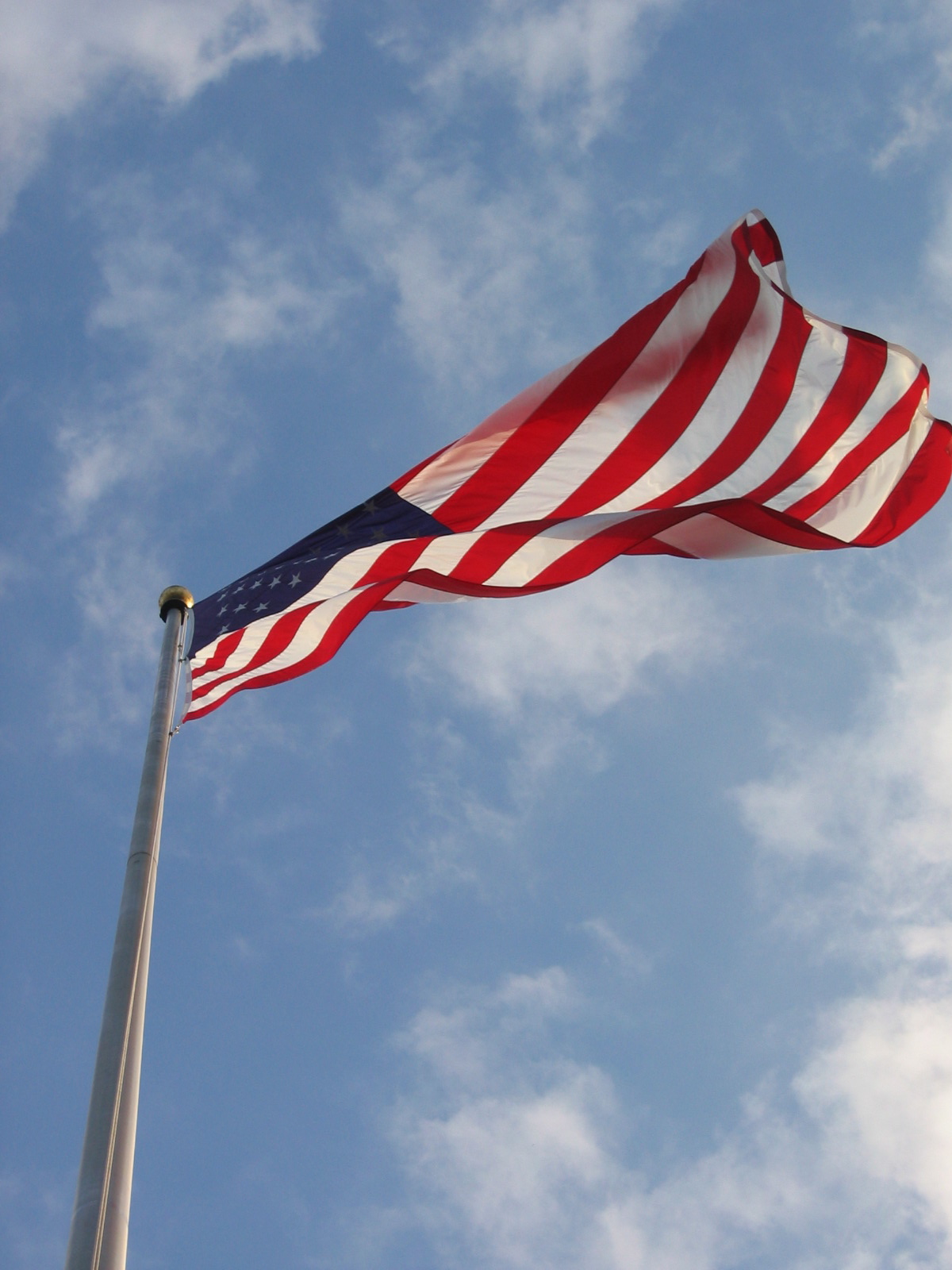
Finally, a note about yesterday’s election: In 2004-2005, I lived in Washington DC for a year, while my husband took his sabbatical at the State Department. I was able to attend the Inauguration Ceremonies of President George Bush’s second term. I did not vote for the man, but attended this display of our nation’s ability to keep our system of democracy rolling forward.
That cold January day was an emotional day, full of patriotism and pride in our country. When I was in DC a couple of weeks ago, they had already started building the massive platform which will hold the band, the dignitaries, the guests, and the future leaders of our country. I applaud our country’s ability to focus on what’s important, and hope that I can some time soon feel more enthusiastic about our recently elected officials, in both the Executive and Legislative branches of government.
I still believe in our democracy, and am glad to have participated in expressing this belief by casting my ballot Tuesday morning.
Final note: usually when I can’t decide how to typify my posting, I call it a This ‘N That post, and just throw stuff up. The downside? The title is so vague, if I scroll through later, I can’t tell what I’m talking about. (I also have the same problem when I visit my friends’ blogs, looking for something.) Thankfully, the search box on this blog is run by my software, so you can find just about anything by typing it in the box.
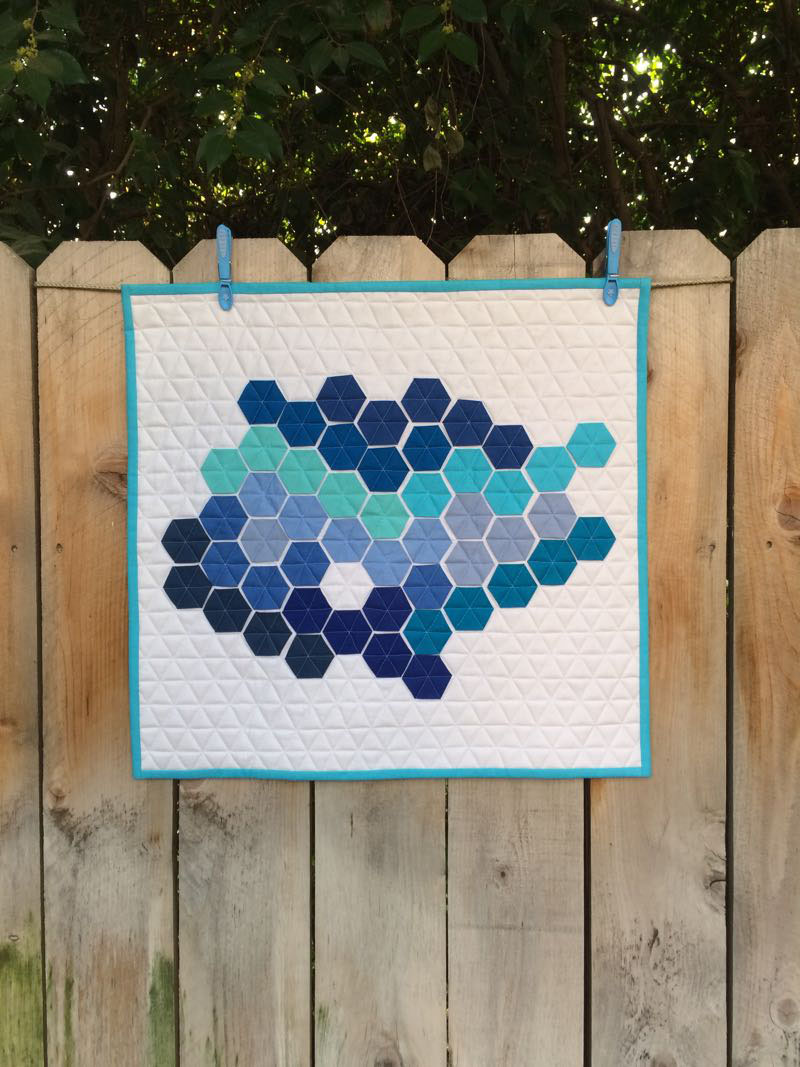
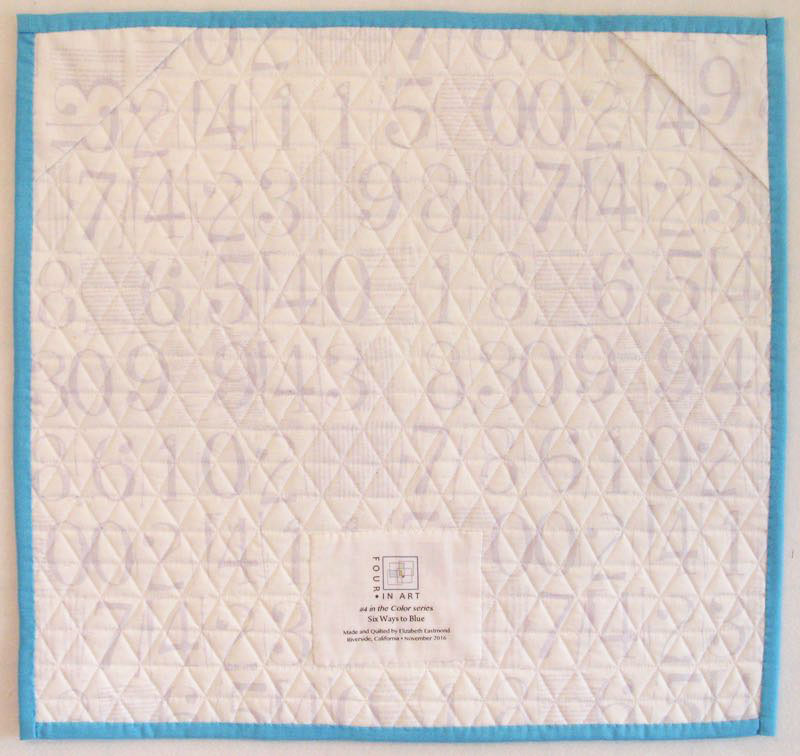
Six Ways to Blue
Quilt #169, November 2016
19 1/2″ high by 21″ wide
#4 in the Color Series: I’ve Got the Blues
Blues can mean too many things, all at once. Peacefulness, depression, sadness, the thrill of a line of music (a wailing saxophone), my favorite crayon in the box and the color of my husband’s eyes. I could think of references to blues six ways to Sunday and never run out of things to link that color to: ocean, sky, geysers, crystals, ice, flowers.
Blue also has a powerful connotation to mood. The other day when I was feeling a bit blue, my blue-eyed son surprised me with a FaceTime call from London, just before he was calling it a day (having traveled through the blue skies and over the big blue ocean to get there). We chatted about his recent travels to Madrid, our travels to Lisbon last year, where we together with my blue-eyed husband saw the azulejos (blue and white tiles) of that country. It lifted my spirits, and I was thankful for his true-blue devotion and caring.
The only ancient people who had the word blue in their vocabulary were the Egyptians, largely because they had developed a blue dye. In 1858 a scholar named William Gladstone, who later became the prime minister of Great Britain studied Icelandic sagas, the Koran, ancient Chinese stories, and an ancient Hebrew version of the Bible. Of Hindu Vedic hymns, he wrote: “These hymns, of more than ten thousand lines, are brimming with descriptions of the heavens. Scarcely any subject is evoked more frequently. The sun and reddening dawn’s play of color, day and night, cloud and lightning, the air and ether, all these are unfolded before us, again and again … but there is one thing no one would ever learn from these ancient songs … and that is that the sky is blue.” (from here)
Wikipedia notes that the clear sky and the deep sea appear blue because of an optical effect known as Rayleigh scattering. When sunlight passes through the atmosphere, the blue wavelengths are scattered more widely by the oxygen and nitrogen molecules, and more blue comes to our eyes. Rayleigh scattering also explains blue eyes; there is no blue pigment in blue eyes.
We’re not the only artists inspired by the blues.
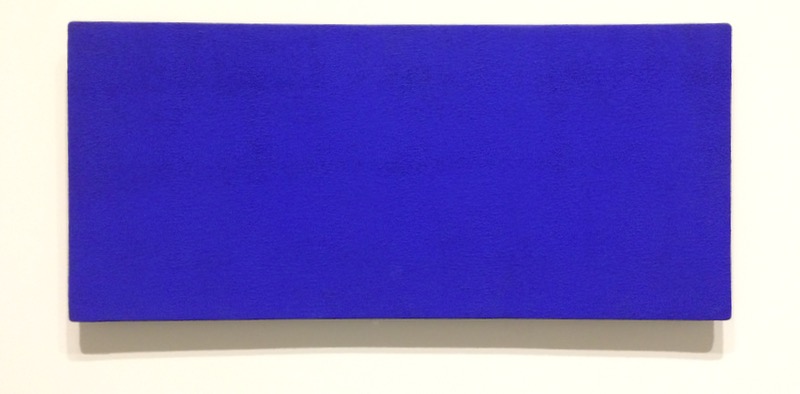
Untitled Blue Monochrome (1960)
Yves Klein (1928-1962) was a French artist who worked with a chemist to create a startling Ultramarine Blue when he mixed powder with synthetic resin. He patented this as IKB: International Klein Blue, and became known for his use of this color.
When Klein came to California to work as a visiting artist, Edward Kienholz “gave him this kit as a welcome gift, providing Klein with tools to create…while away from his home studio.” The valise, which has a tag that reads “resident of the universe,” includes “such things as a spray can of IKB paint, a page of instructions, [and] a jar labeled GRIT” (text taken from National Gallery of Art label next to painting).
“Klein’s attraction to blue was rooted in his belief that it was the least material color: ‘All colors bring forth associations of concrete ideas, while blue evokes all the more the sea and the sky, which are what is most abstract in tangible and visible nature.”
I love blue in all its variants, and enjoyed bringing the abstract to the tangible in cloth and thread.
We will begin again next year with a new challenge, going on our fifth year. We have people who join us, leave us, but a few of us keep going on. Please visit the other members of our group and see how they interpreted this challenge:
FYI: The next post talks about the construction, the pattern I used, and the next challenges, and why I want to make this all over again (because some parts really bug me).
˚˚˚˚˚˚˚˚˚˚˚˚˚˚˚˚˚˚˚˚˚˚˚˚˚˚˚˚˚˚˚˚˚˚˚˚˚˚˚˚˚˚˚˚˚˚˚˚˚˚˚˚ My blogging software puts ads here so I can use their site for free. I do not know about, nor choose, the content, nor do I receive any money from these ads. ˚˚˚˚˚˚˚˚˚˚˚˚˚˚˚˚˚˚˚˚˚˚˚˚˚˚˚˚˚˚˚˚˚˚˚˚˚˚˚˚˚˚˚˚˚˚˚˚˚˚˚˚˚˚˚
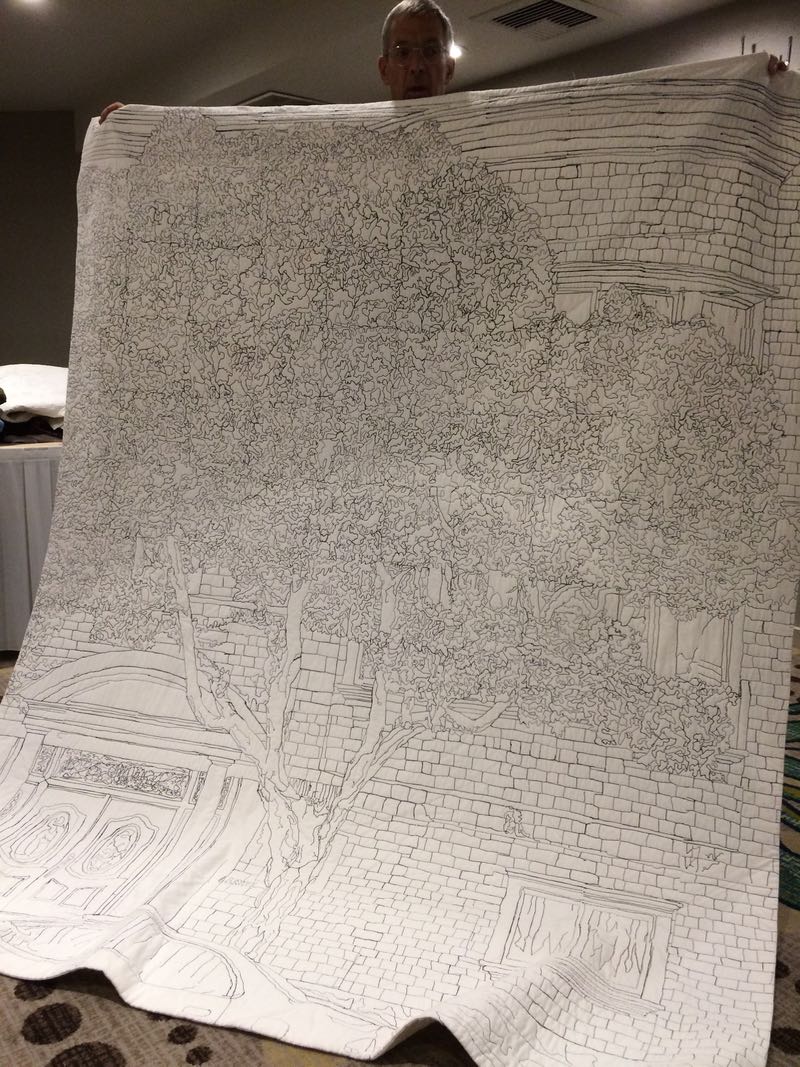
The evening of my class with Joe Cunningham, he had a lecture in the hotel, and since there were only four of us, he told the organizers he could hold up his own quilts and talk at the same time. So we began with a song of his (guitar and all) and then he pulled out his quilts. In between we got “four lectures in one,” as he talked about how he came to quilting. He’d started collaborating with Gwen Marston in 1975, and then she taught him to quilt. They were both inspired by the collection of an older quilter with her handmade quilts, a woman who kept the quilting tradition alive during the middle years of the past century. In 1990, he ended his collaboration with Gwen Marston, moved to New York, then to San Francisco to work with the Esprit Collection of quilts. He never left.
Lake Street House, by Joe Cunningham
He developed this quilting process working in conjunction with the people at Handi Quilter, where he could enter in a complex pattern into a computer and “tile” it back onto his quilt in the quilting. Each tile takes about 45 minutes to quilt, but creates all sorts of interesting patterns in the quilting. I asked him about the trend to matchstick quilting, and he had only one thing to say: “lost a chance to be creative.”
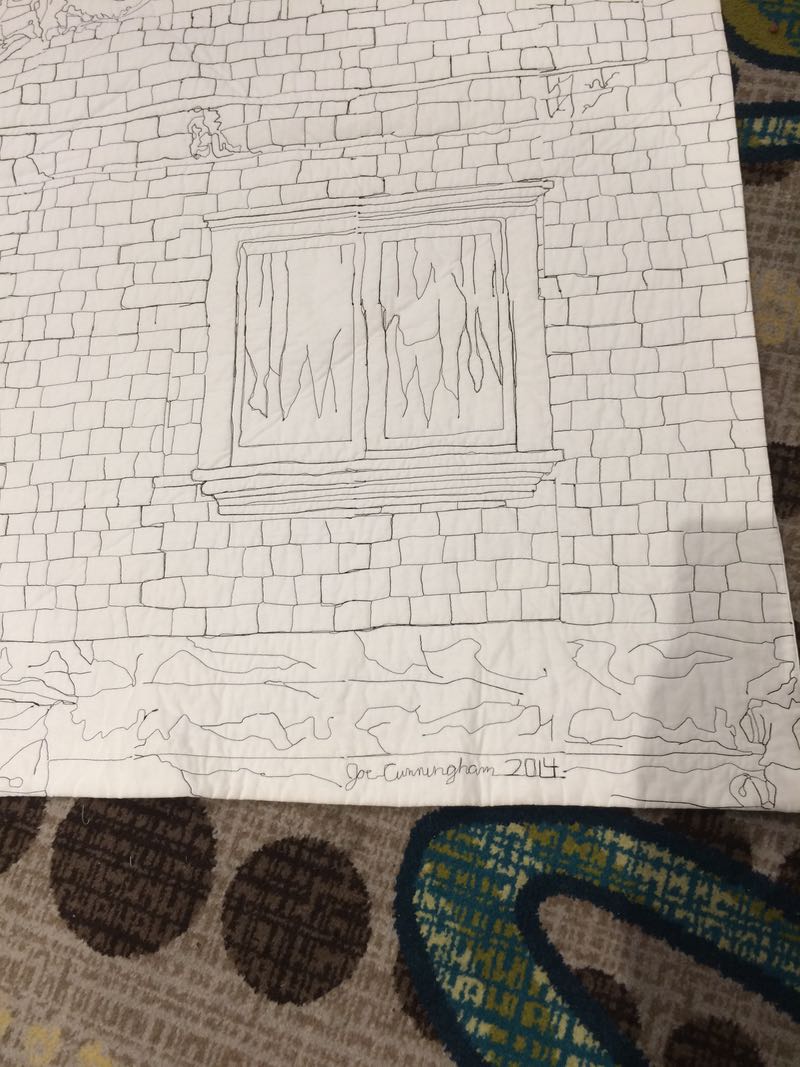
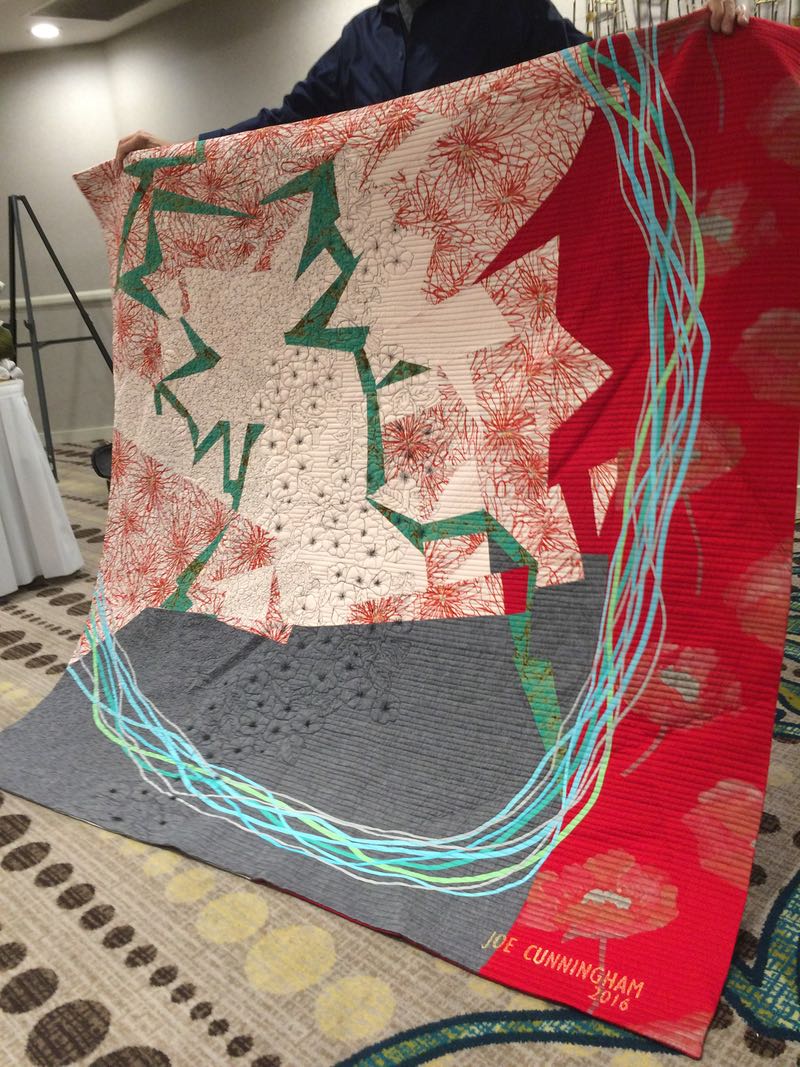
And this is how he labels/signs his quilts: his name and the year stitched into the top.
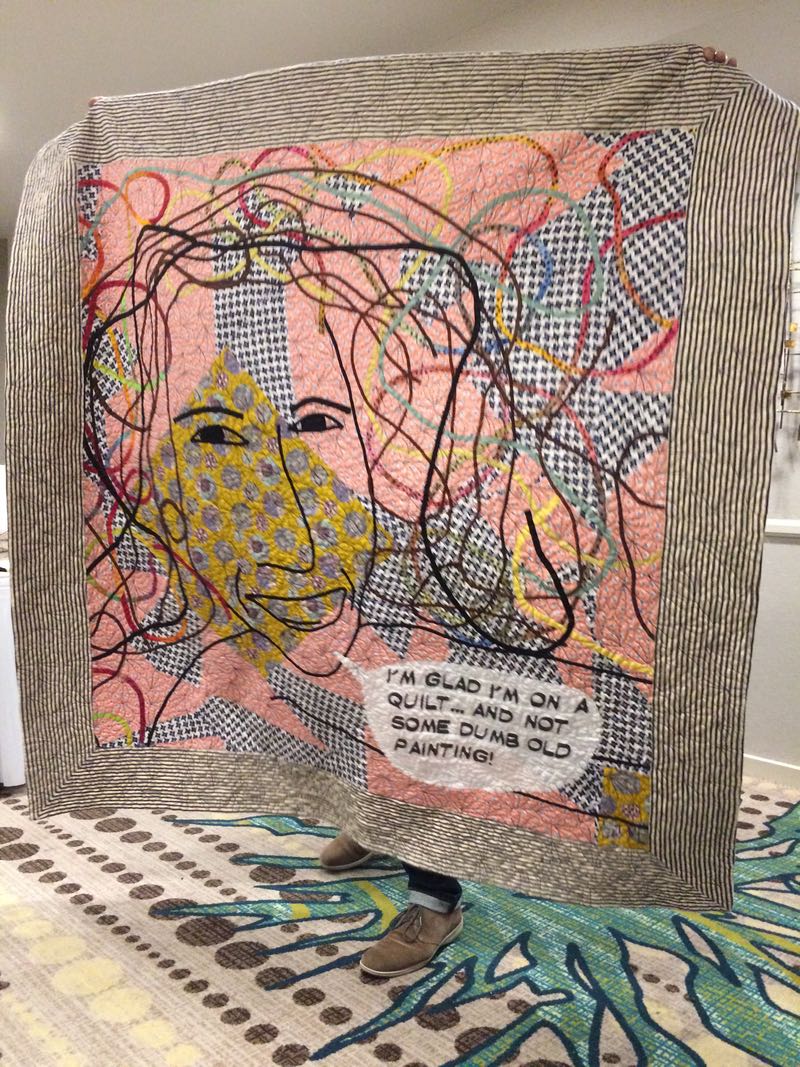
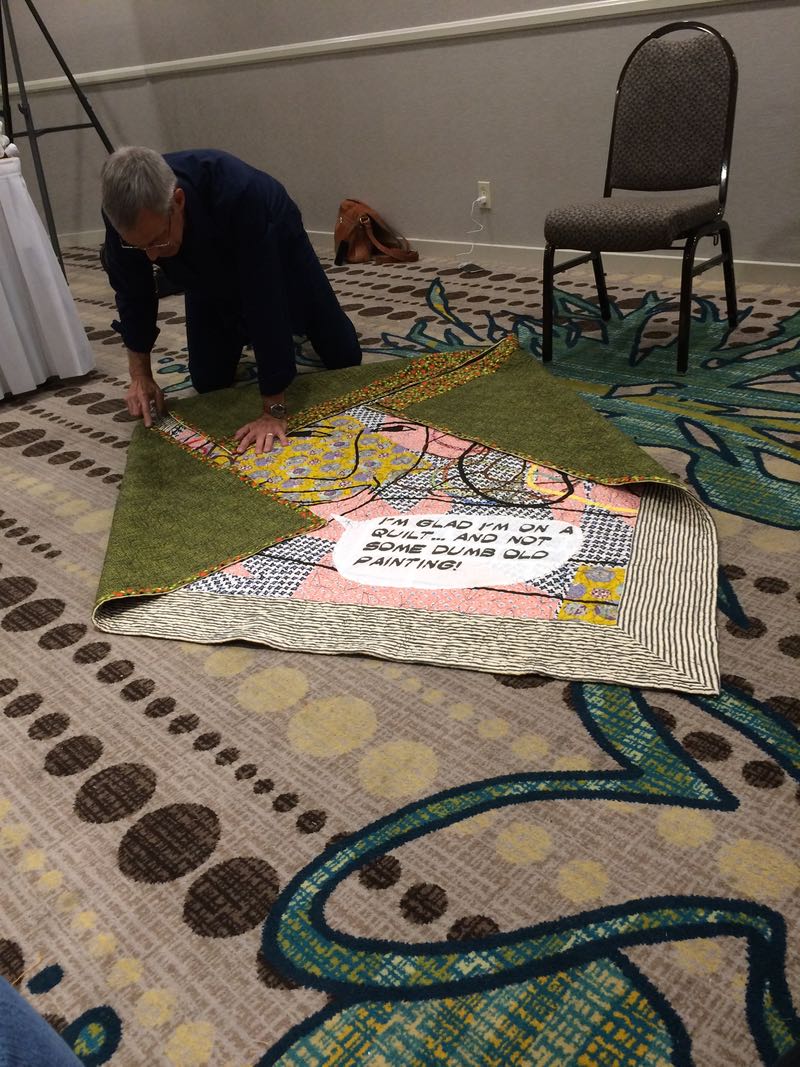
I’m on a Quilt, by Joe Cunningham
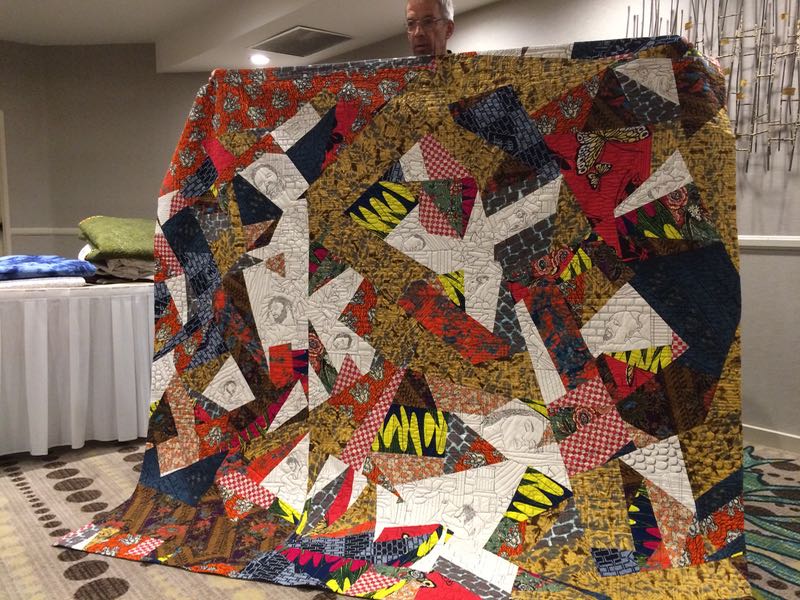
Both Joe and Luke Haynes, another art-centered quilter who is male, seem to be quite adventurous in the use of large blocks of particularly unattractive (ugly?) fabric and making that fabric hew to their vision of the quilt, an approach worth learning. So much of what I see is that we quilters are the ones commanded BY the fabric to the end result, rather than the opposite tack.
Something else I noted in his approach — that I also see in Luke Haynes — is figuring out the space where quilting and the art world collide and how to use that tension and friction.
(Of course, I’m fascinated by the mundane: how he folds his quilts so there are no creases.)
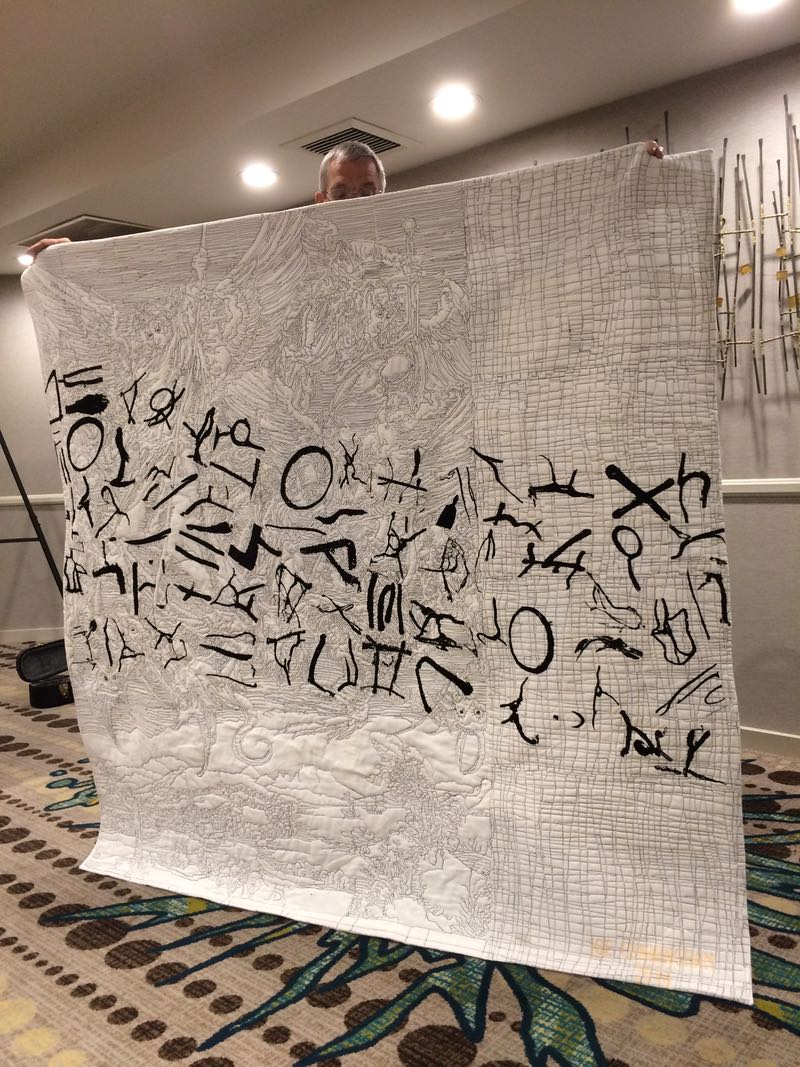
Kiev Protesters Quilt, by Joe CunninghamDetail, Kiev Protesters Quilt
He talked about how a quilt is allowed to say several things: I love you. I’m thinking about you. Memorial quilts. But he was fascinated one day by the blockades in Kiev, and how those who were protesting just fell to sleep anywhere.
For me this quilt reminded me of what he said in class: that he makes a quilt to see what it will look like.
Bicameral Lovers Knot, by Joe Cunningham
Log cabin blocks are in the background. Look up what bicameral is, if you don’t know.
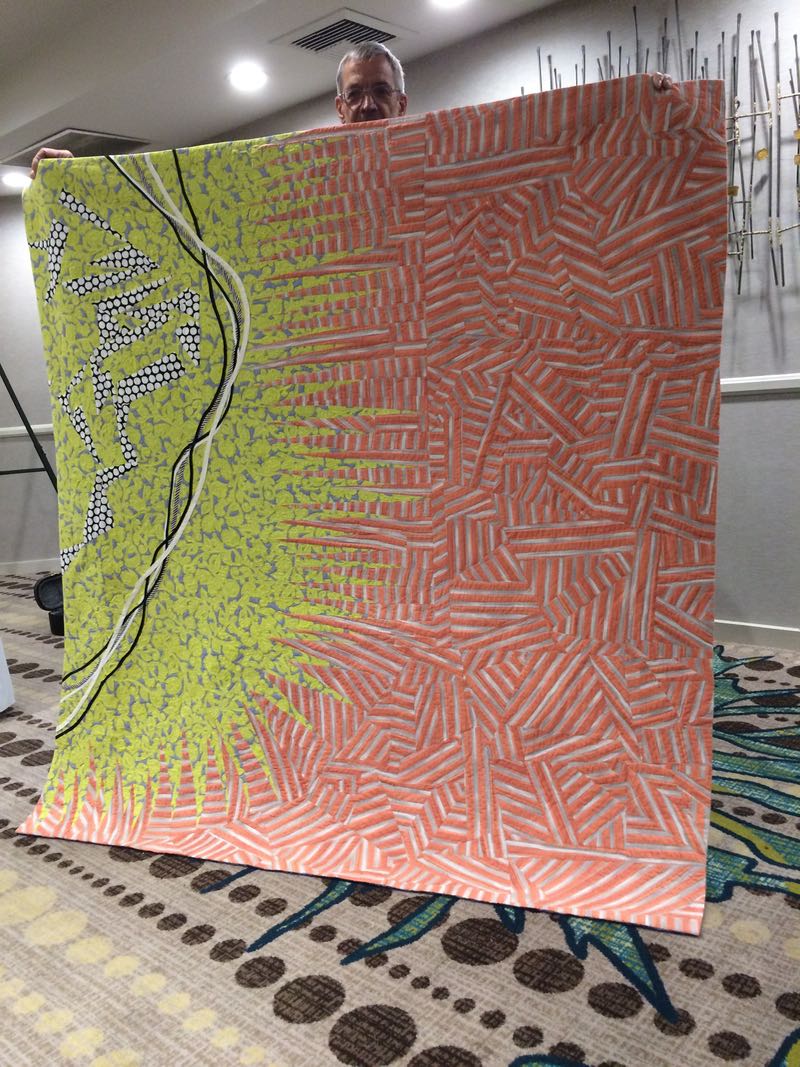
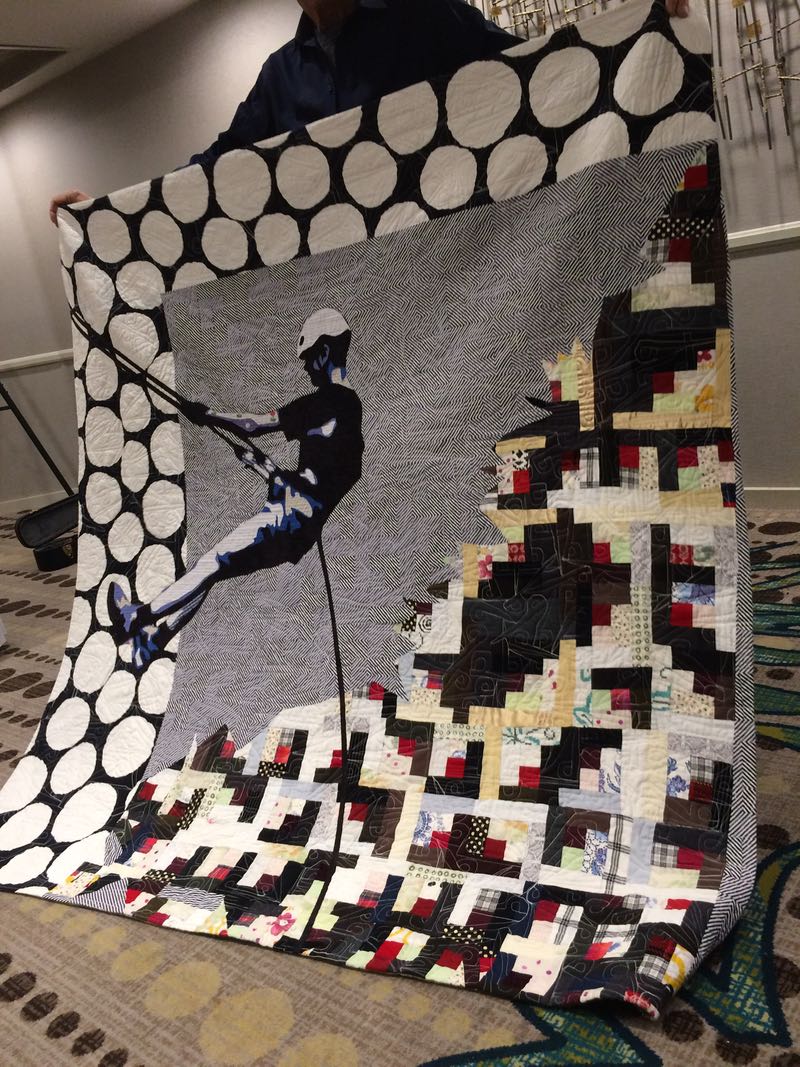
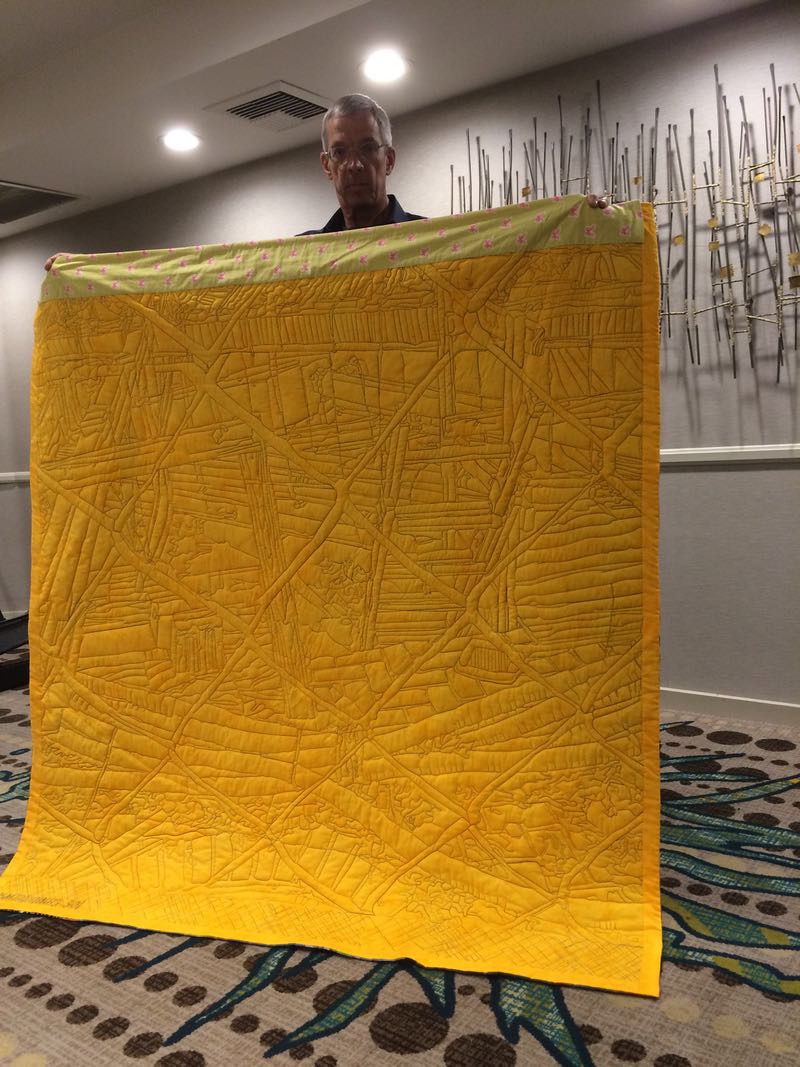
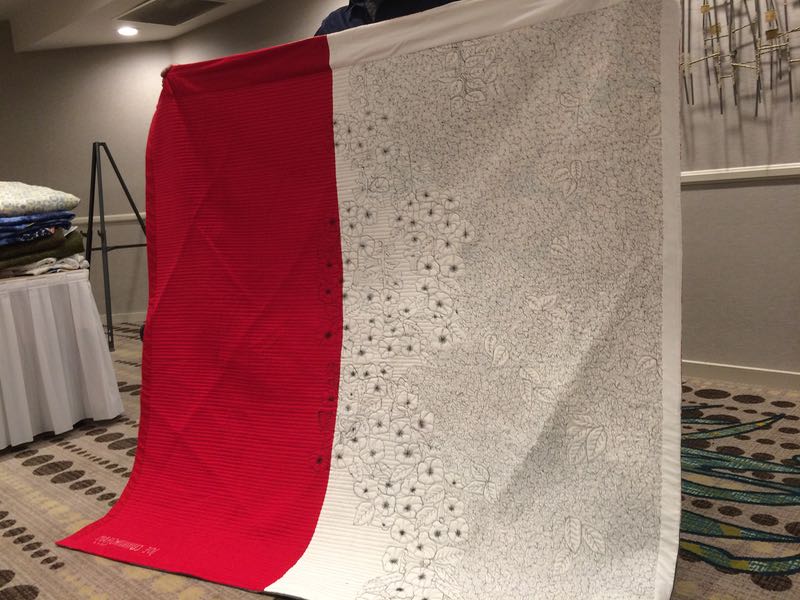
New York Beauty, by Joe CunninghamBack of New York Beauty, showing the quiltingMountain/Mountaineer, by Joe Cunningham
Luke gave him some of the leftover Log Cabin blocks from his recent exhibit, and Joe made them into this quilt, minus the mountaineer. His wife walked in where it was hanging and said that he needed a figure there, so Joe gave it back to Luke, who added the climber
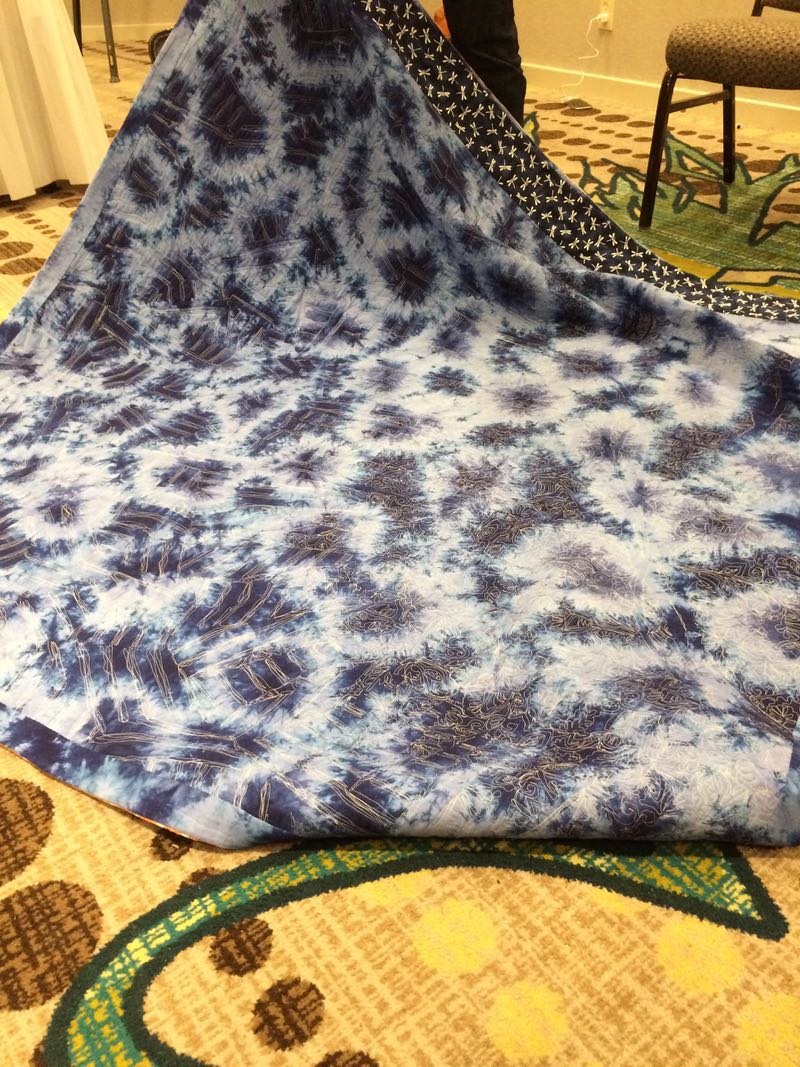
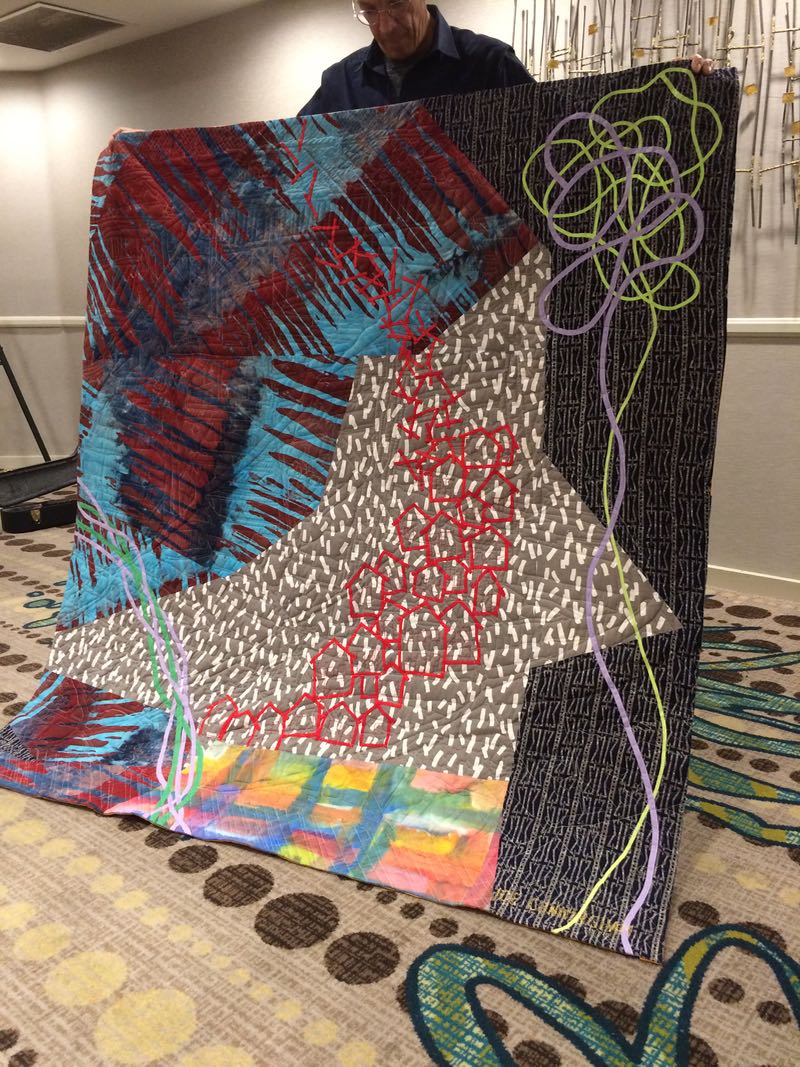
Crazy City–San Francisco, by Joe CunninghamBack of Crazy City–San FranciscoCrazy City–the Creek, by Joe CunninghamBackTar Patch Quilt, by Joe CunninghamDetail and Signature
He covered so many topics that I can’t write them all here, but they were fascinating and I thought about them all the way home, such as (I’m paraphrasing):
If a piece of art looks like art, then it’s somebody else’s art. [Can’t we apply this to our quilts?]
The brilliance of quilts in the colonies [our early American colonies] was in the egalitarian nature of it. It wasn’t just for the rich, which it had been earlier when quilting was done in imitation of European quilts, but it was for the masses.
These women changed the definition of a quilt from a commercial item to a gift. The quilting, done around a frame, cost no money. Because of this, it remained in the realm of women and was invisible to the men, especially the merchant class.
Quilts from Europe in the earliest days were of four types: whole cloth, honeycomb (think EPP), strippy or medallion. From there, we invented blocks. From four types, we know have over 400,000 different patterns, an independent realm created by women.
And finally: “We make quilts like everyone else…unless you don’t want to.” A trap door exists for us to escape the sameness and make our own vision.
I love classes where I have as much for the brain as I do for the creative, visual, tactile side of the equation, and this lecture certainly gave me everything. I’m so glad I was able to go, and so glad QuiltFest brought out this great speaker.



















 OccasionalPiece--Quilt!