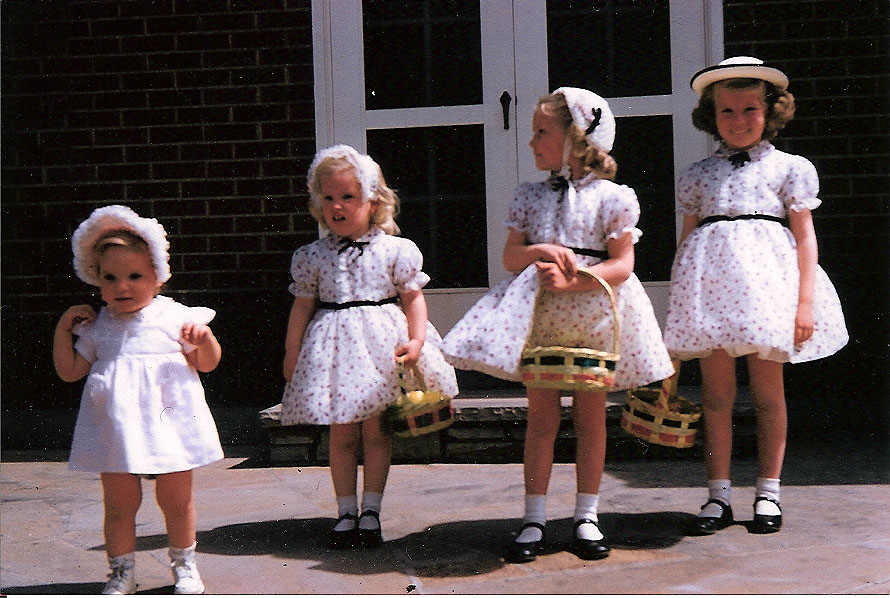
A long long time ago, back when little girls wore Mary Jane shoes and babies wore white high-top leather lace-ups, and Easter hats were required when wearing dotted swiss voile dresses, there were four little girls. This story is about the two youngest: me (the baby girl) and my sister Susan, (standing next to me).
My two older sisters were, well–older, which meant that Susan and I were left to our own devices, desperately seeking to be older ourselves, to crack that inner circle of mystery and intrigue that belongs to older women. Even if they were four and six at the time.
New Journeys
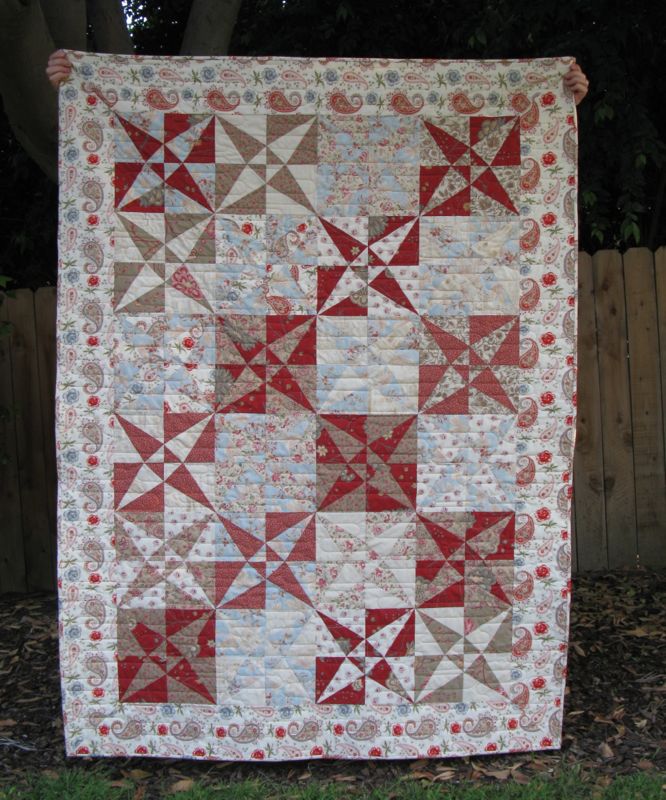
Fast forward about 55 years. And to a 60th birthday for my sister Susan. I thought it was quilt-worthy, to finally obtain that title of Older Woman, but not in the feeble, grandma-hunched-over sort of Older Woman. More like the energetic, full-professor, world traveler, amazing knitter sort. And my sister Susan is all of those.
So I made her a quilt with the block pattern of Crossed Canoes, because it holds many meanings for her. Not only has she canoed/portaged/survived the Boundary Waters of Minnesota multiple times, she is a steadying sort for her husband as he faces a battle for newly-diagnosed cancer. I titled it New Journeys, because at age 60, she is heading into a new kind of boundary waters, slipping into a different kind of journey at her age of exploring new horizons, managing new experiences, and always, learning to read the surroundings for how to thrive. She will excel at that last one, as she always has.
I told my sister Cynthia–that next little girl up the line in her Easter dress–that I was making Susan a quilt, and did she want to contribute? She did and I was glad, for then this quilt can be a hug from both of us in days to come. Bon Voyage and Happy Birthday!
New Journeys, back
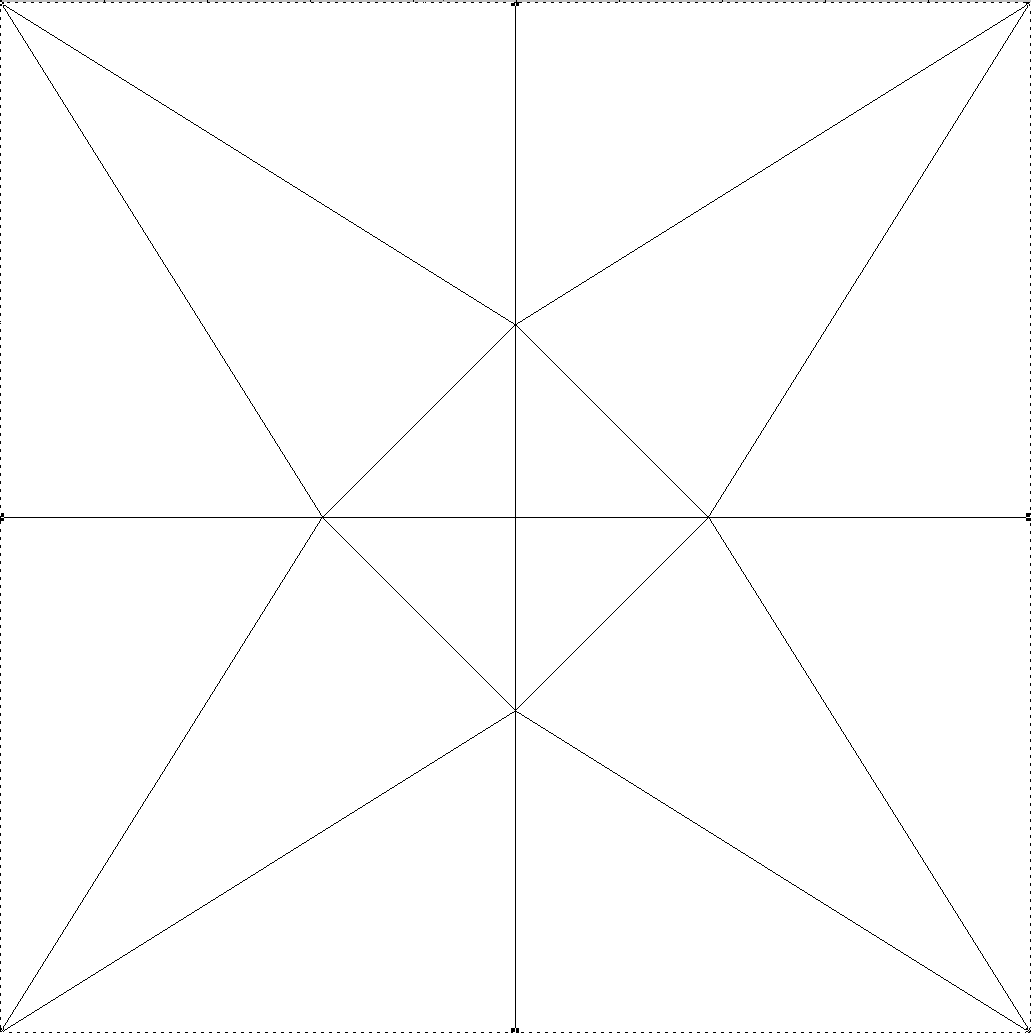
Here’s the block. It’s not to scale, but supposedly the PDF file is (click here: Crossed Canoe 10). I chose to make my canoes a little wider than longer, as I wanted to showcase the French General fabrics (plus a few others from my stash). My block measures 10″ square and the quilt is a nice “hug” or lap quilt size. I hope Susan gets many hugs from it!
Click *here* to return to Amy’s Creative Side: Bloggers’ Quilt Festival 2012 to see other amazing quilts (and read some very cool stories).
I brought along my third block of the rose window block series — still working on it — but I think a friend of mine wants to try doing this too, as she’s a “Band Mom” and needs something to keep her hands busy while she whiles away those long hours at competitions. Good luck, Lisa!
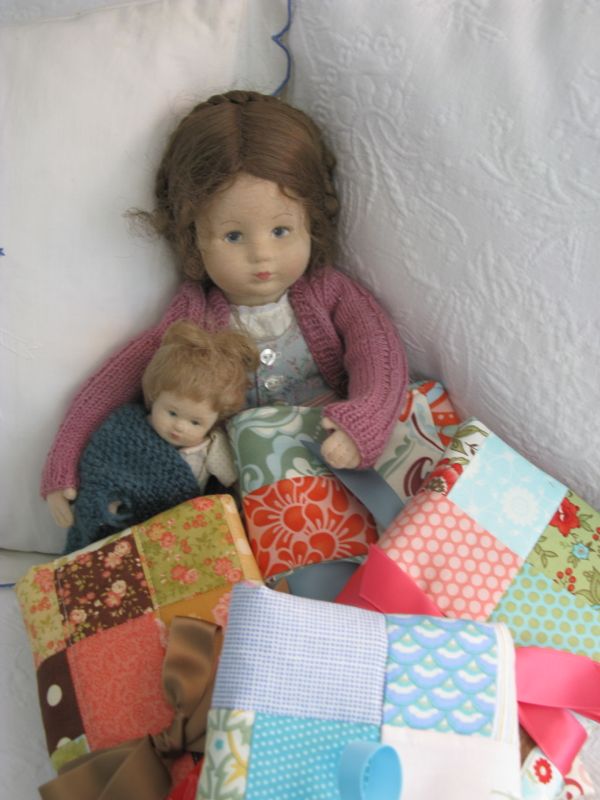
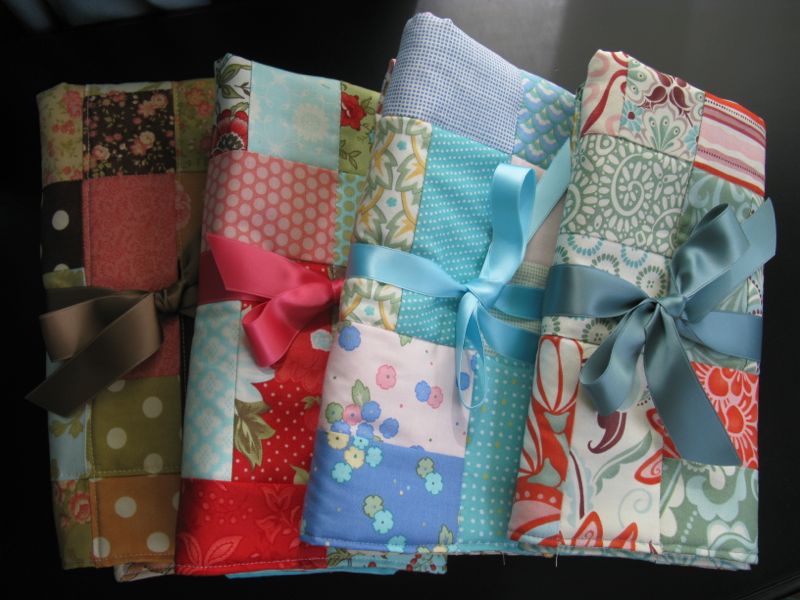
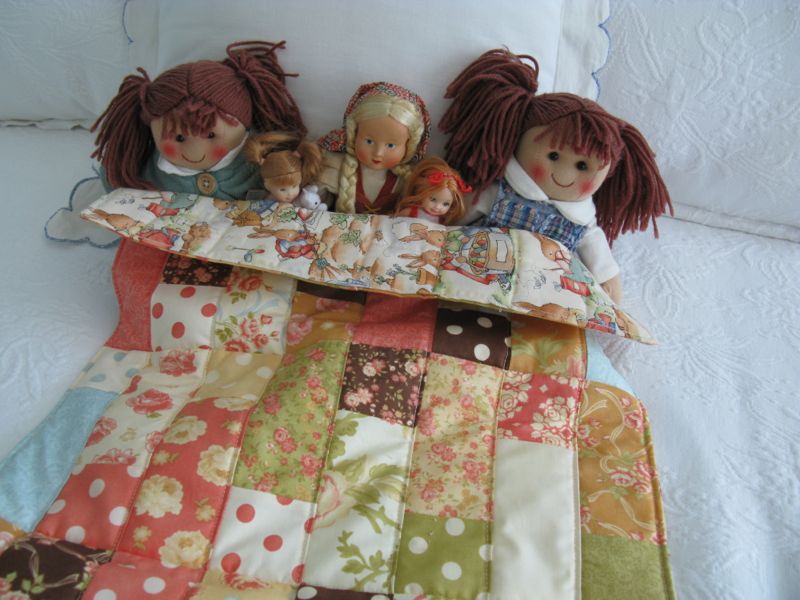
Before we left, I was also able to finish a series of doll quilts for my son’s daughters: Emilee, Megan, Brooke and Danielle. Their mother Kim got them the most adorable doll beds for their dolls for Christmas, and I’d been wanting to make them little quilts ever since I returned home.
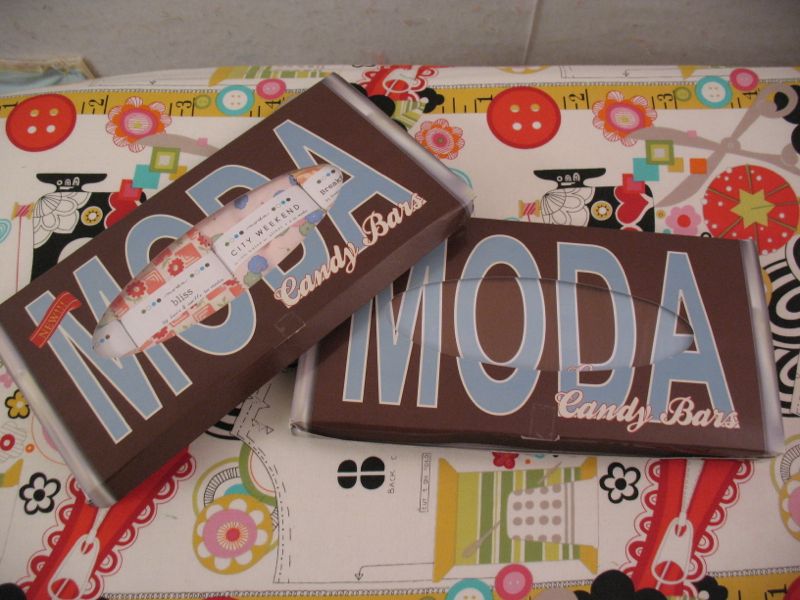
Somewhere along the way, I had purchased Moda Candy Bars, which area pack of four stacks of fabric (measuring 2 1/2″ by 5″) and while I liked having the variety of pieces, I had no idea what to do with them.
One little stack makes the perfect-sized doll quilt. I was thinking I’d do four different quilts, but ended up with three different patterns (the two on the top are the same–a variant of rail fence).
I tied them up with some silky double-faced satin ribbons (hair bows for my granddaughters?) and sent them off before we left to our Spring Break vacation.
I hope these girls like them!
Many thanks to Lee, for hosting us on her website, Freshly Pieced, every Wednesday. Return there to see what others are working on.
Last night I pulled out some Moda Candy Bar stacks, fed up as I was with convalescing. Sometimes you just have to sew something.
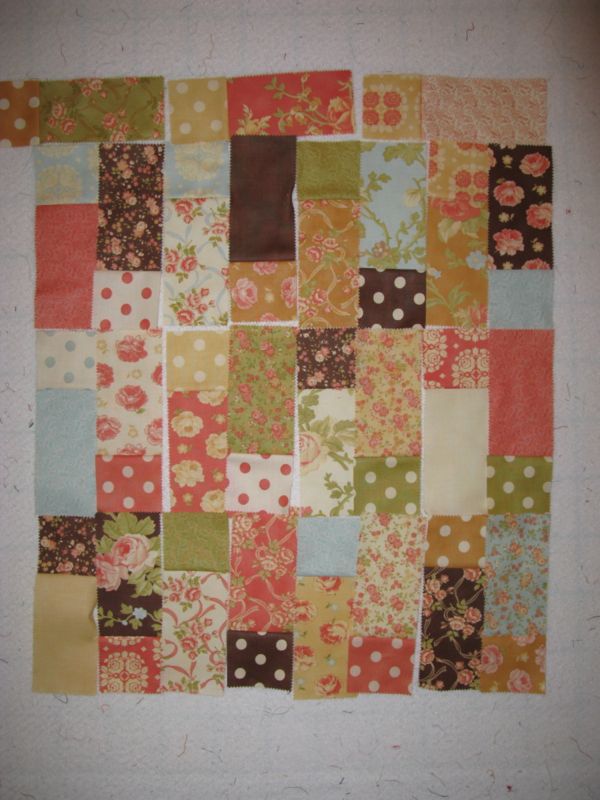
I was thinking about that Sticks and Stones pattern, so cut some of the 2 1/2 x 5″ strips into half, then sewed them onto the existing strips. I tried to count so it would come out somewhat even.
I decided to flip them: every other row would have the “stone” part on the bottom. I sewed them together, trying to be careful of my gimpy leg (which I’m tired of being careful about. Let’s just say I am not a very good sick person.).
After sewing the top together, I did the pillowcase method of layering backing (face up), top (face down), then the batting, then sewing around the edges. I clipped the corner at a diagonal to get rid of the excess, then turned it and stitched the opening closed. Quilting just off the seam vertically, with a couple of crosswise quilting lines finished it off.
One doll quilt for a granddaughter–done. I have six granddaughters still in doll-playing mode. Five more to go. But not until I recover a little more, according to the doctor today. Lay around more, he says. Rest–stay on the bed. So I guess I’ll do as the dolls above are doing and watch a few more movies.
Or better yet — I’ll go and read all your fabulous WIP projects on today’s linky page, hosted by Lee of Freshly Pieced Fabrics. See? I feel better already, knowing I have an adventure waiting for me. Many thanks to Lee for hosting us all on WIP Wednesday.
I teach college English and currently we are studying short fiction. I had a nice moment the other day when my vocation interlocked with my avocation and I was able to talk about quilts in class. The short story we were studying was “Everyday Use” by Alice Walker and it’s an interesting riff on how our quilts become valuable to others once they become a commodity, or have a price put on them. In this scene, the returning daughter named Dee (who calls herself Wangero) is going through the house looking for decorations, and fixates on some quilts. Ignoring her sister Maggie, who is in the kitchen doing the dishes, her actions are narrated by her mother:
After dinner Dee (Wangero) went to the trunk at the foot of my bed and started rifling through it. Maggie hung back in the kitchen over the dishpan. Out came Wangero with two quilts. They had been pieced by Grandma Dee and then Big Dee and me had hung them on the quilt frames on the front porch and quilted them. One was in the Lone Star pattern. The other was Walk Around the Mountain. In both of them were scraps of dresses Grandma Dee had won fifty and more years ago. Bits and pieces of Grandpa Jattell’s Paisley shirts. And one teeny faded blue piece, about the size of a penny matchbox, that was from Great Grandpa Ezra’s uniform that he wore in the Civil War. “Mama,” Wangro said sweet as a bird. “Can I have these old quilts?” I heard something fall in the kitchen, and a minute later the kitchen door slammed. “Why don’t you take one or two of the others?” I asked. “These old things was just done by me and Big Dee from some tops your grandma pieced before she died.” “No,” said Wangero. “I don’t want those. They are stitched around the borders by machine.”
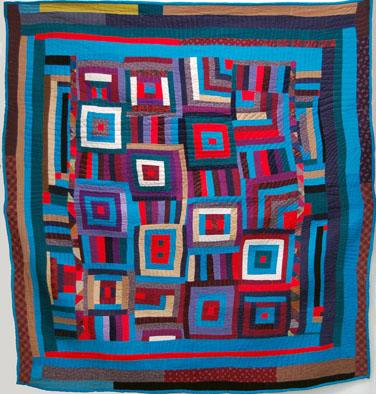
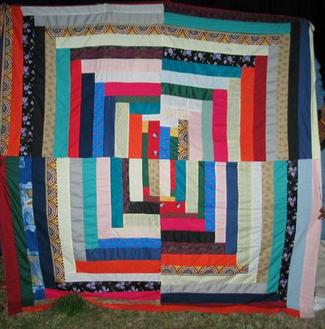
I found pictures of Gee’s Bend (above) and made a Google Doc slideshow about the quilts that these women made. While the quilts mentioned in Walker’s story appear to be more traditional than the Gee’s Bend quilts, I thought it would be interesting for the students to see this body of work.
“No,” said Wangero. “I don’t want those. They are stitched around the borders by machine.” “That’ll make them last better,” I said. “That’s not the point,” said Wangero. “These are all pieces of dresses Grandma used to wear. She did all this stitching by hand. Imag’ ine!” She held the quilts securely in her arms, stroking them. “Some of the pieces, like those lavender ones, come ftom old clothes her mother handed down to her,” I said, moving up to touch the quilts. Dee (Wangero) moved back just enough so that I couldn’t reach the quilts. They already belonged to her. “Imagine!” she breathed again, clutching them closely to her bosom. “The truth is,” I said, “I promised to give them quilts to Maggie, for when she marries John Thomas.” She gasped like a bee had stung her. “Maggie can’t appreciate these quilts!” she said. “She’d probably be backward enough to put them to everyday use.”
So the title comes from the returning daughter (Dee/Wangero) aghast that these treasures would be put to “everyday use.” She goes about raiding the house for things that ARE put to everyday use: the top of the churn dash, various other household items. The final straw for the mother (who is the alternate voice in those two passages above) is when Dee/Wangero is asked what she’ll do with the quilts:
“Maggie can’t appreciate these quilts!” she said. “She’d probably be backward enough to put them to everyday use.” “I reckon she would,” I said. “God knows I been saving ’em for long enough with nobody using ’em. I hope she will!” I didn’t want to bring up how I had offered Dee (Wangero) a quilt when she went away to college. Then she had told they were old~fashioned, out of style. “But they’re priceless!” she was saying now, furiously; for she has a temper. “Maggie would put them on the bed and in five years they’d be in rags. Less than that!” “She can always make some more,” I said. “Maggie knows how to quilt.” Dee (Wangero) looked at me with hatred. “You just will not under.stand. The point is these quilts, these quilts!” “Well,” I said, stumped. “What would you do with them?” “Hang them,” she said. As if that was the only thing you could do with quilts.
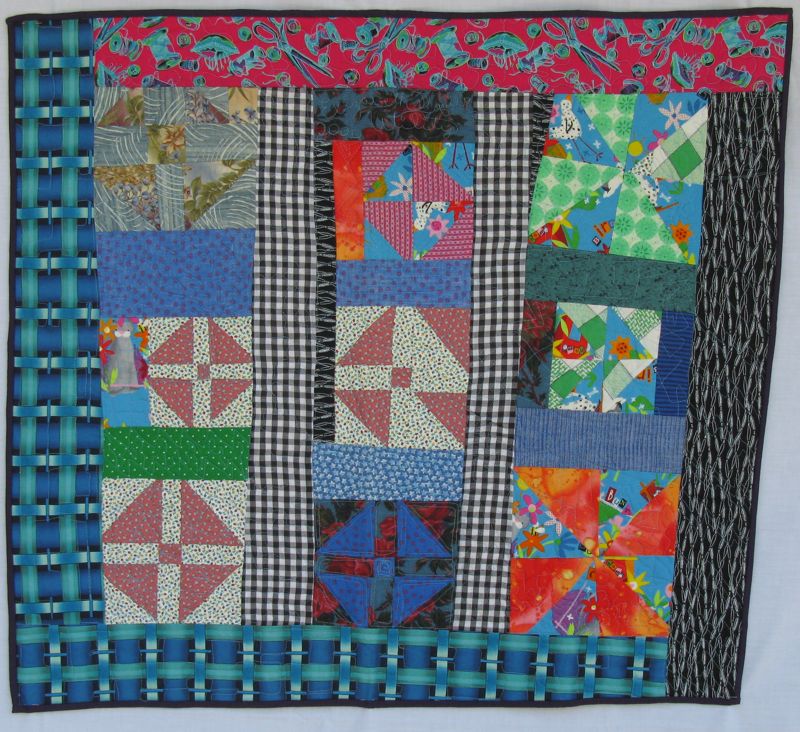
I also took in a utility quilt I had made with Roberta Horton in a class I took when I went to Houston. Roberta didn’t allow us to use our rulers (which made the quilt very “wonky” and crooked), and made us put in an “ugly” fabric so we could learn to work around it. We also had to sew a few of the patches in backwards, but the general appeal for me of this quilt was the idea that quilts don’t always have to be perfection, an idealized thing of beauty. I liked learning that quilts were sometimes made in a hurry and were made to be used.
So it was a lovely few minutes in class, and I resisted the urge to keep talking about the quilts and quilters and focus instead on the Englishy part of class: Walker’s story. But the underlying thread — that many quilts are made to be used and not hung on a wall — resonates with me.
And perhaps it’s why this photo of my grandson Riley is so pleasing to me. He and his two sisters came for a visit this past weekend, and he toted along the baby quilt that I’d made for him. That first morning, he called me in to show me that he’d made his bed, and I couldn’t resist snapping this photo of him, standing atop his quilt. It’s being put to good use — everyday use, even when he comes to Grandma’s house.













 OccasionalPiece--Quilt!