100 Quilts · Quilts

Harvest Weekend

pumpkins

With pumpkins and tawny hues and brown grasses prevalent in the colors at this time of year and in the Northern Hemisphere, falling temperatures, it triggers the idea of harvest: cutting the wheat, gathering the last of the fall vegetables,  All Is Safely Gathered In, and that sort of thing. Well, what constitutes a harvest?
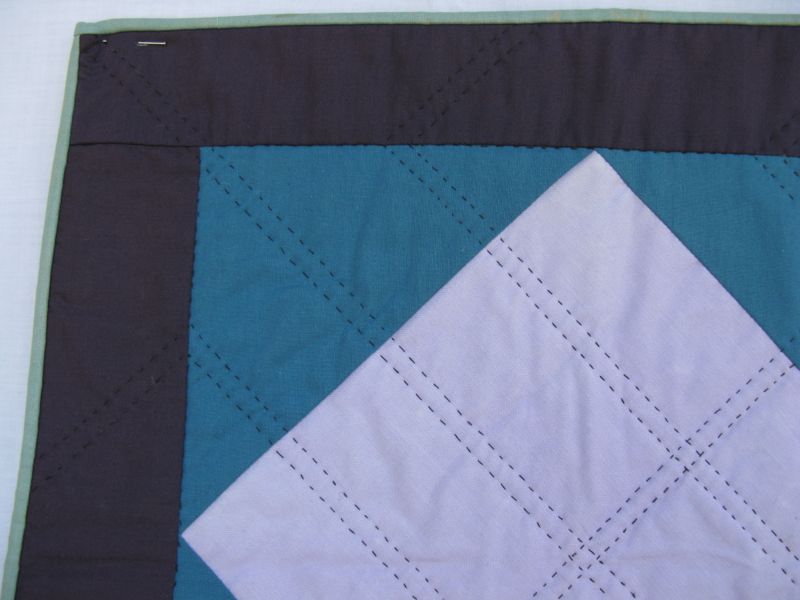
Amish Doll Quilt_detail

It all starts with seeds, a planting of an idea, a sowing of labor with the yield some time off in the future.  An idea, like beginning to learn how to make Amish quilts from a book, as I sat in the scorching heat of a Dallas Texas summer many years ago, sweat running down my back reading Roberta Horton’s Amish Adventure.
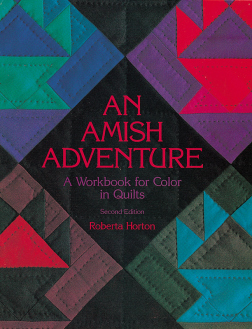
Amish Adventure_1

I had escaped to the back porch for three minutes peace from the marauding hordes of hot tired children in watching some movie on the VCR, steeping my mind in the stillness of these stunning quilts.

Horton Amish-Quilt-1

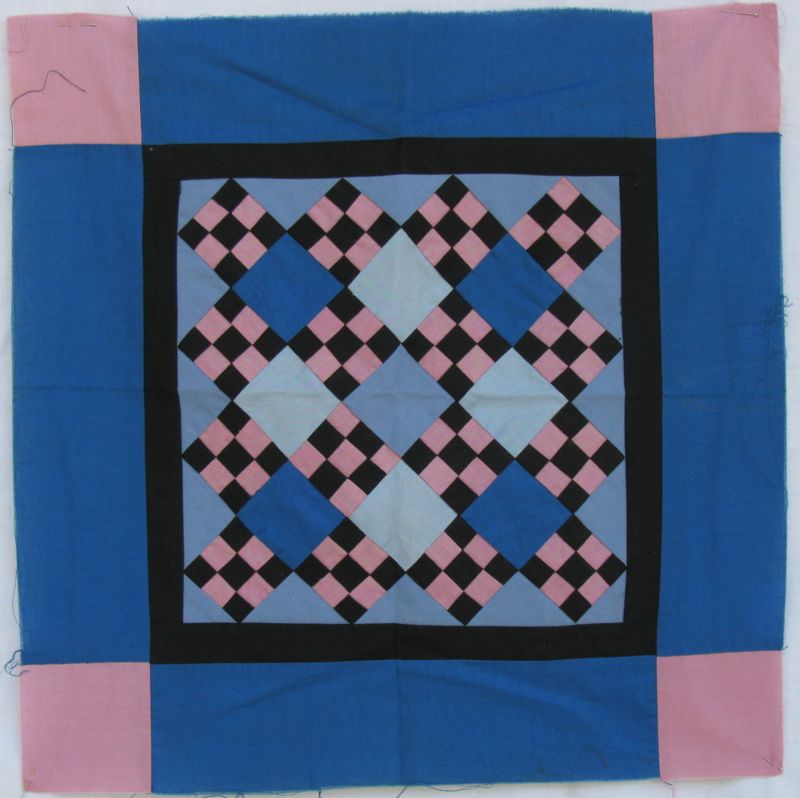
Strong graphic design and the muted, yet brilliant, colors enticed me, and I began small, with doll quilts, experimenting in the shapes, the colors.  At that time the best we could hope in terms of solid fabrics was a mix of cottons and polyester-cottons.  Purists would gasp now, but we had just barely graduated from using cardboard templates with taped edges to cutting out the lids of margarine tubs to use instead.
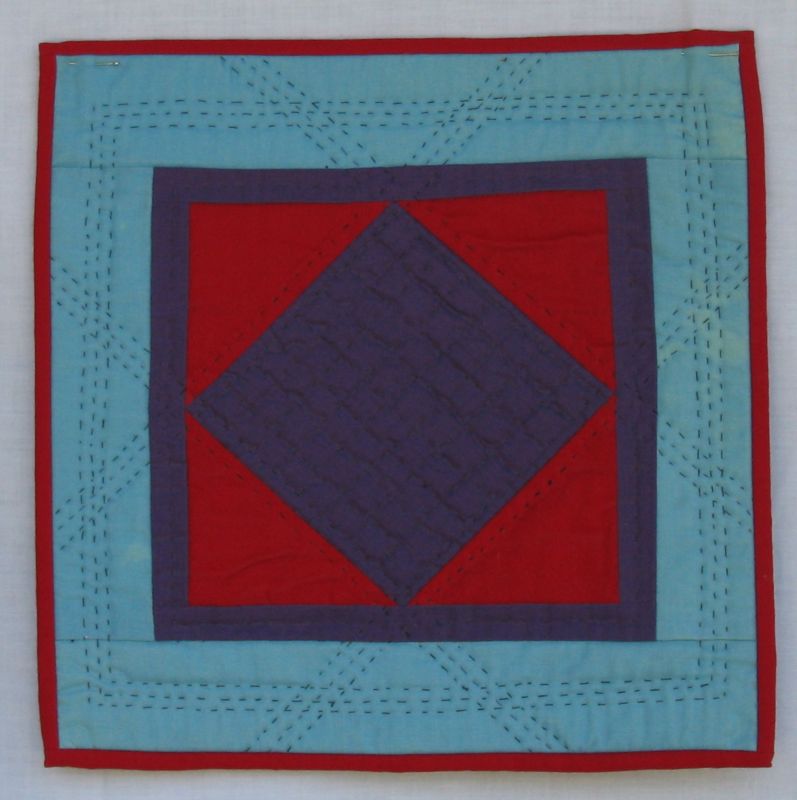
Amish Doll Quilt_2

Roberta Horton’s book, first published in 1983, rocked my tiny isolated world of quilting.

Amish Nine-patch

I moved from doll quilt-sized quilts to a larger wall quilt, still unfinished.  And then to a larger quilt, laid out in rows in the corner of my bedroom for weeks, while I refined the gradations of color.

Amish Sunshine and Shadow

I had drawn out Sunshine and Shadow on graph paper, trying to figure out the coloration, mimicking what I saw in fabric. This was early in my quilting career: all of my quilts on this post are numbers 10 and 11 quilts on my 100 Quilts list.  I also made a faceless doll to match what I’d heard were common in the Amish country.  And then, Amish Quilting was the first quilt class I ever taught, in a small shop in Arlington, Texas, now defunct, and yes, we made a doll quilt, and yes, we used Roberta Horton’s book.
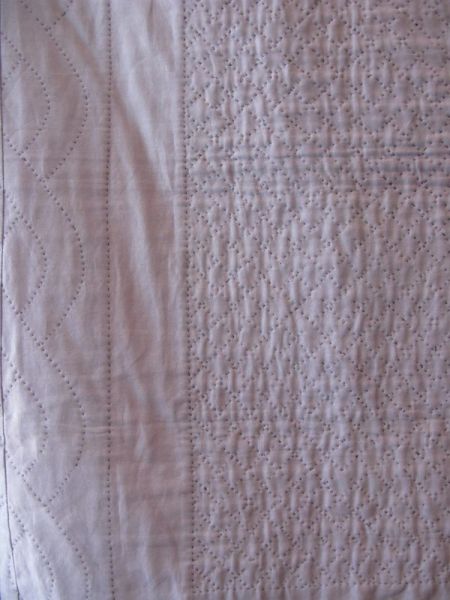
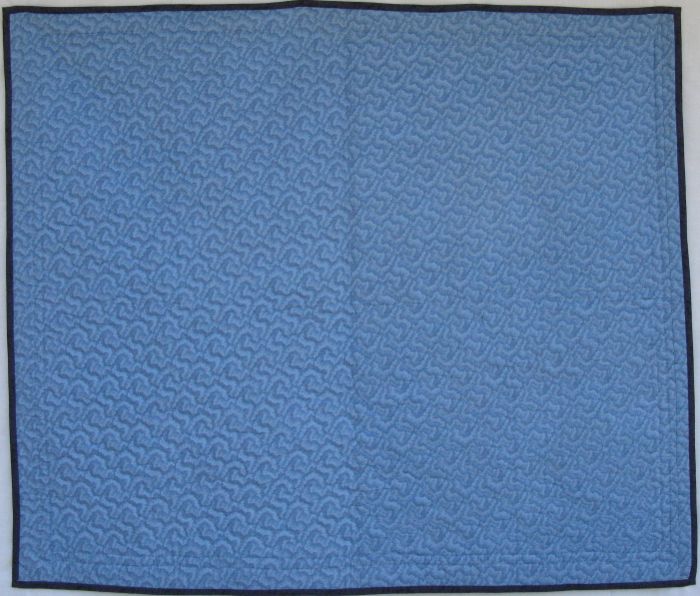
Amish Sunshine and Shadow_back

Back to the Sunshine and Shadow, I figured out the borders, sandwiched with flannel (as she noted that Amish quilts were flatter than our fluffy renditions) and I began quilting it by hand, criss-cross, and then cut paper patterns for a twined-vine border design.

Amish Quilts Adventure Continues

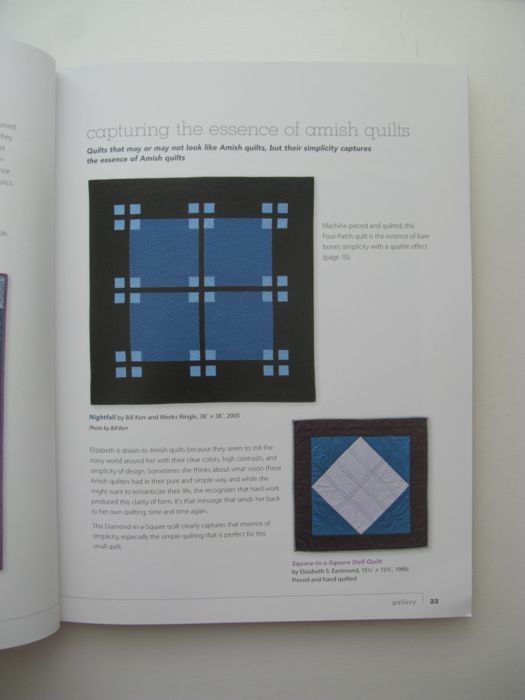
The seed planted by Horton and her quilts and her book is now in a second harvest, if that’s possible.  Last summer, C & T Publishers put out a call for Amish quilts of all types to be considered for a new rendition of An Amish Adventure. I submitted my photographs and had one quilt accepted.  The book has now been released and is titled Amish Quilts–The Adventure Continues, and it as much a celebration of that first book in C & T’s publishing history as it is the style and cultural contribution of the Amish quilt–certainly a forerunner to today’s modern quilts.
Amish Quilts Book_2a

Here’s my doll quilt, made so many years ago.  I now consider it as an entry in the first round of strong bold graphic designs and solid fabrics.  In the book, mine is right next to Weeks Ringle and Bill Kerr, of the Modern Quilt Studio and Craft Nectar blog.  I certainly did do a happy dance in the kitchen as I opened up the package.

You can get the book from the C & T Publishing website and from Amazon.com.  My mother already has her copy, so I know it is shipping.  If you haven’t had a chance to make yourself an Amish quilt, perhaps now is the time, before too many more harvests stride past.

Amish Doll Quilt

I like to think about harvests, as to me it always indicates a leap of faith somewhere.  At some point I made a quilt, and now can “raise the song of harvest home.”
100 Quilts · Quilts · Schnibbles

Sand, Sea, Schnibbles and Y-seams

Joyce Carol Oates, the very prolific American novelist and writer was asked what she did when she finished a novel.  Did she go on vacation?  Did she stare into space? “I read poetry,” she said. “I find it is good to let the mind rest a bit from the ardors of a novel.” Well, at least that’s how I remember it, when I attended her lecture as a graduate student at our local University of California.

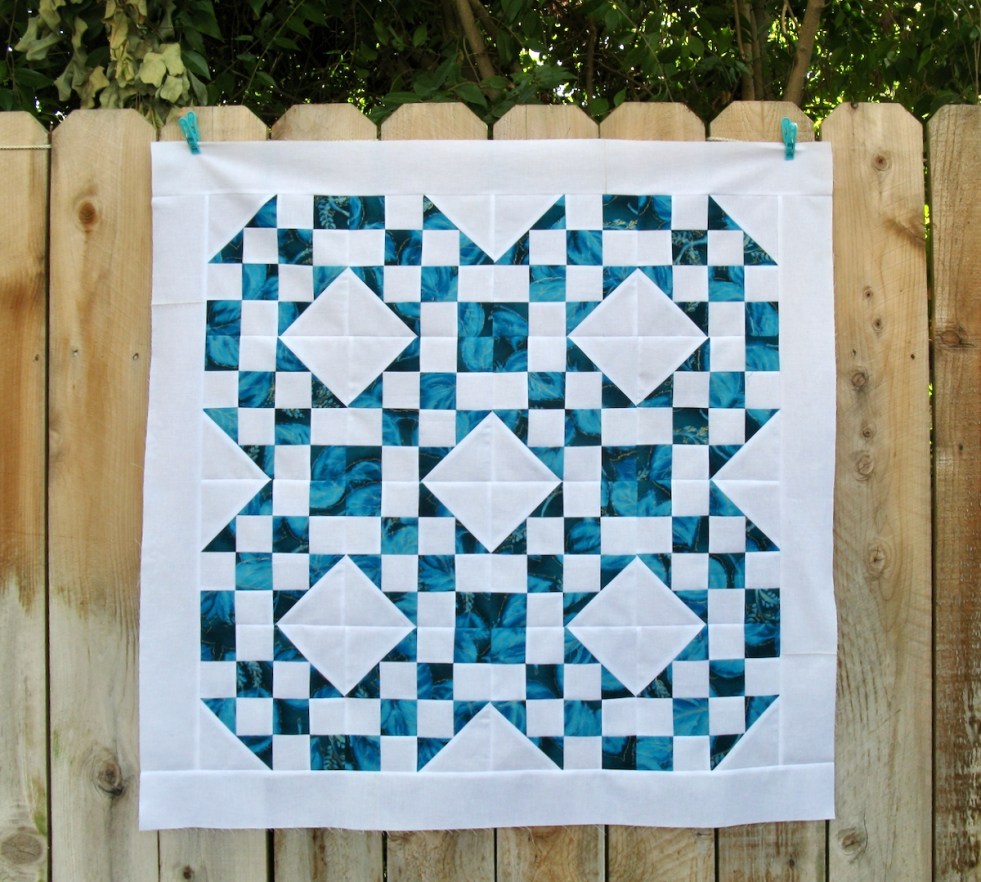
Sea and Sand Quilt Top Schnibbles

After last week’s wrestling of the difficult quilt (coming up), this is my poetry after a novel, say, The Brothers Karamasov, or something.  I missed last month’s Schnibbles outing–too busy with the beginning of the school year, but I was pretty determined to do one this month.  It was a squeeze play, especially after I started reading the directions.  I couldn’t make heads or tails of them, as it was a pattern geared strictly to pre-cuts, which I don’t generally buy.

Back Sea and Sand

(I like the back with its little open four-patches seam allowances.)

I stormed downstairs all lathered up about my frustration, but luckily my sister Susan had given me a treat to assuage the raging quilter within: some delicious cookies from Joan’s on Third in Los Angeles.  It rescued me, and I went back upstairs, figured out how to cut strips from my fabric and get going.  If you are not a pre-cut user, you have been warned.  However, there is a nifty method for making those pieced triangles/checkerboards in the corner, so Miss Rosie’s pattern company was redeemed again.  (Still think there should be directions for those of us who use fabric-by-the-yard!)

Mercerie

The original pattern’s name is Mercerie, and they do it in many different fabrics, hence, the need for charm pack directions.

And the Y-seams?

FAL Tutorial Header

On Tuesday, I’ll be doing a guest-blog post about how to sew the Dreaded Y-seam.  Stop by Leanne’s, of http://shecanquilt.blogspot.com to see the secrets.

In the meantime, read some poetry.  Here’s one from the Poetry Daily website:

On My Seventieth Birthday I Try to Skinny-dip in Boston Harbor
by Sandra Kohler

I cover my nakedness this morning
with an outsize purple tee, “Outrageous
older woman” scrawled in pink across
the chest. A gift from my son, daughter-
in-law. Beneath it, the only part of
my body where my skin fits me still,
unmarred by time—my shoulders.

Sunrise, ebb tide, half an inch of water
covering Tennean Beach’s pebbles, mud
I sink into as soon as I step out toward
dawning sun. Planning this baptism I
forgot to check tide charts: I’d have to
wade through seventy feet of muck to get
my feet wet: no quick strip and dip here.

Turning seventy: I never imagined this.
Years ago, when I’m visiting my eighty-
something mother-in-law, she’s gossiping
about a neighbor, calls her “an old lady”
—stops herself, says, “I know I’m old
too, but not inside.” Inside, what age
am I? Thirty, eighty, fourteen?

Will sinking into this muck renew me?
On the drive home, passing a shallow
wetland between abandoned factories,
I see a flash of white: two egrets gingerly
wading, stepping, spreading their wings
in the risen light over a brood of hatched
fledglings, as new as aging is to me.

100 Quilts · Finish-A-Long · Quilts

At the Bandstand, Under a Starry Night

 At the Bandstand, Under a Starry Night, front

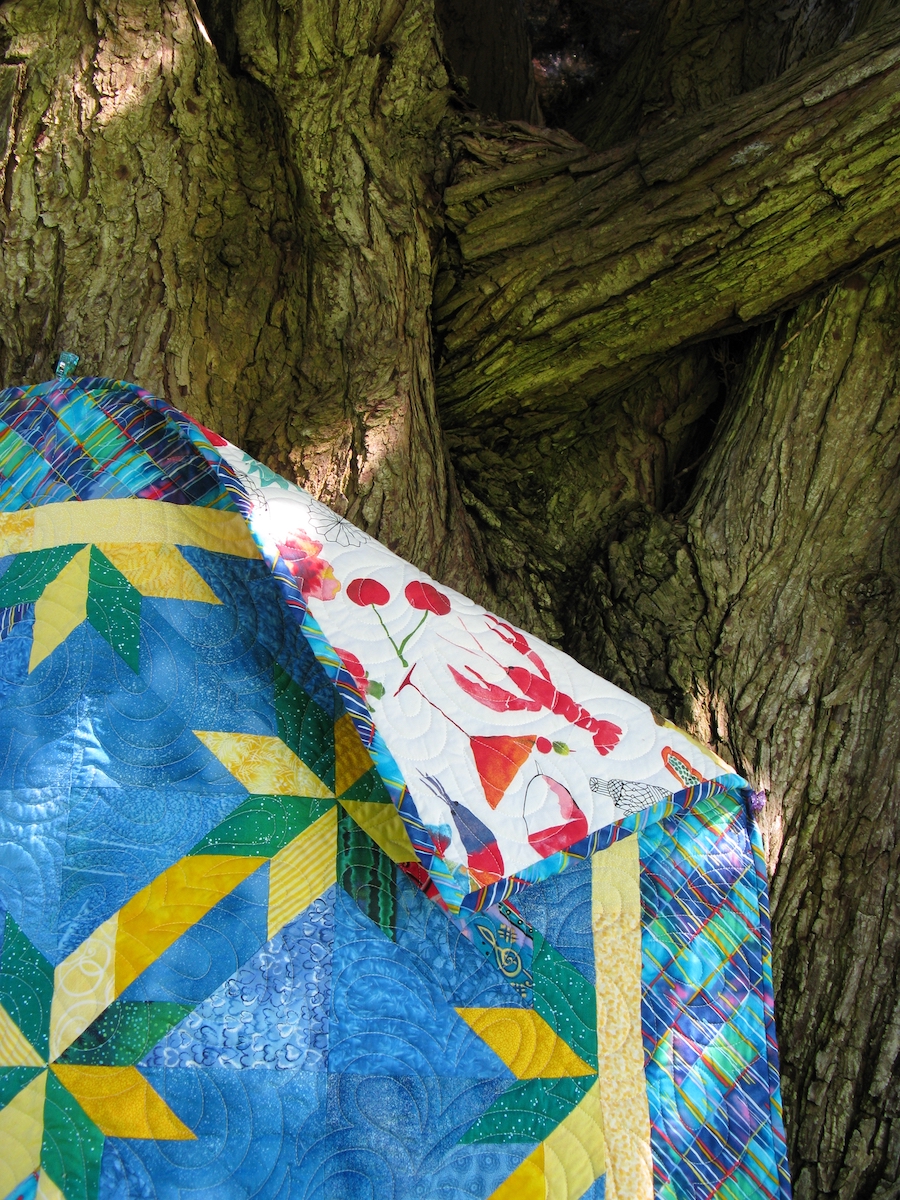
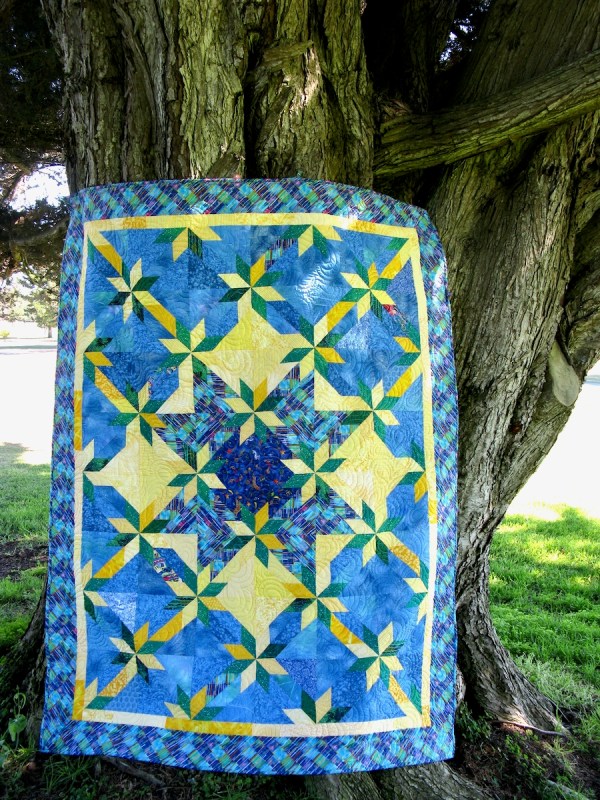
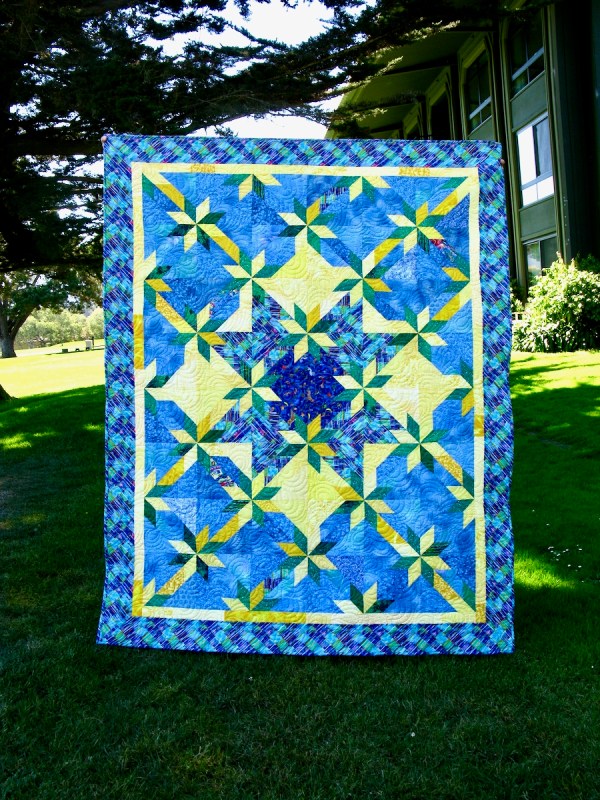
I’ve written about this quilt on this blog before, where I referred to it as Hunter’s Star, a description of the block.  But now it is finished, binding and all, and has a new name: At the Bandstand, Under a Starry Night.

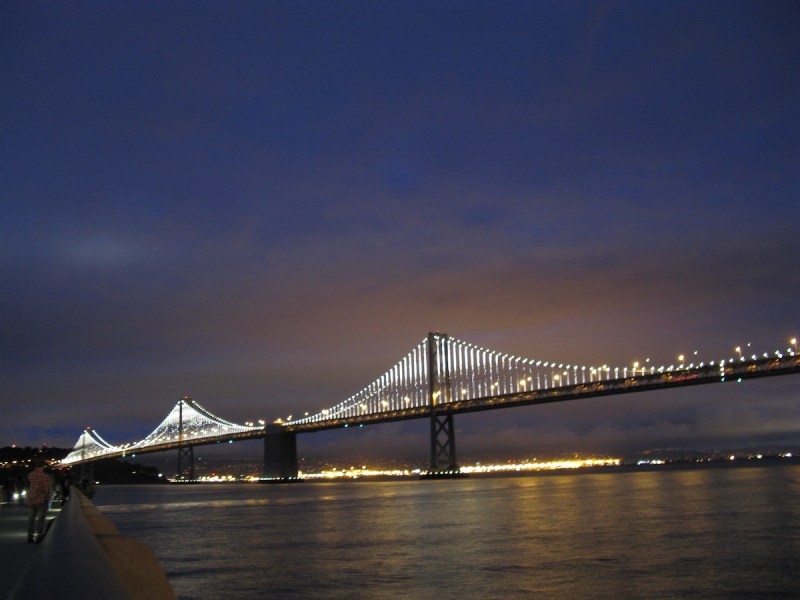
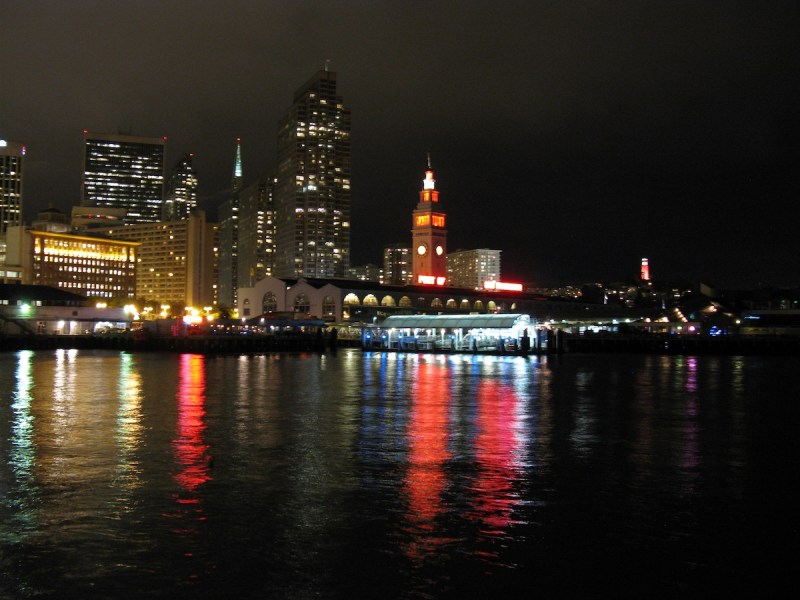
I’ve done a couple of “under the starry night” experiences this past week, and there’s also been some bandstanding, or music.  The photo above is of the San Francisco Bay Bridge, where they have an LED art installation, The Bay Lights, which makes patterns with fish swimming across the bridge, clouds, waves, shooting lines, sparkly doodads and all sorts of patterns.  We drove up to San Francisco to see this, as it’s only here for two years.

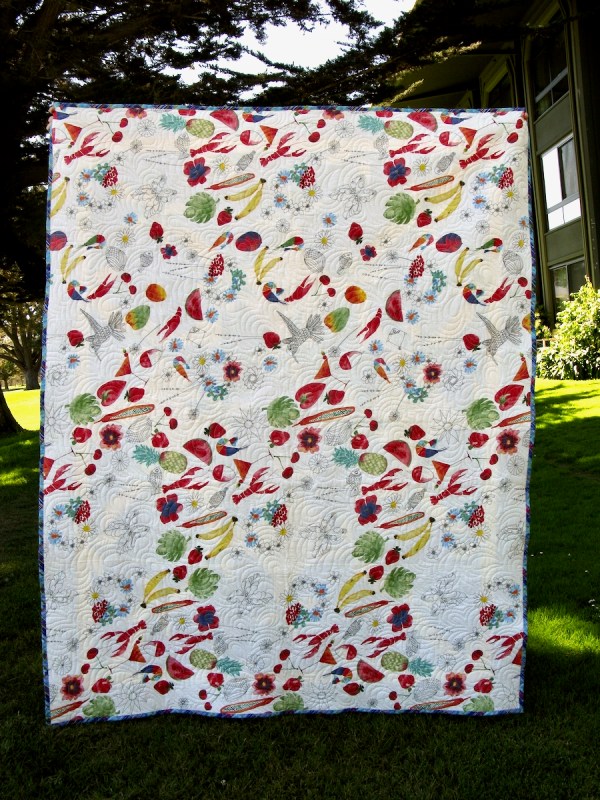
And here’s The City’s lights, with the Ferry Building in the foreground.  Back to the quilt: I had first made this quilt for my youngest son’s college quilt.  He was enamored of music of all kinds, acquiring the nickname of Audioman, so I incorporated music-themed fabric into the Hunter’s Star design, a personal favorite.

 At the Bandstand, Under a Starry Night, back

However, he took one look at it and kind of squinched up his eyes, subtly shook his head and didn’t say much.  I figured it out, and made him a different one (#43 on the 100 Quilts List), which he liked much better.  This one sat around.

I pulled it out because I’d put it on my Finish-A-Long list, rummaged through my fabric stash, finding the borders already cut out.  I slipped in the yellow inner border for some variety (funny how your quilting tastes change), found a large piece of IKEA fabric and put a back on it so my quilter could get it quilted for me.

As you all know, it had been a beyond-stressful week for me not only for my own puny reasons, but troubles within my larger circle of people I love.  And then the landline phone on the house telephone went out.  That’s it, I said.  So I sat down and put on the binding, and Friday morning found me traveling north with my husband to a scientific conference.  I happily stitched as he drove.

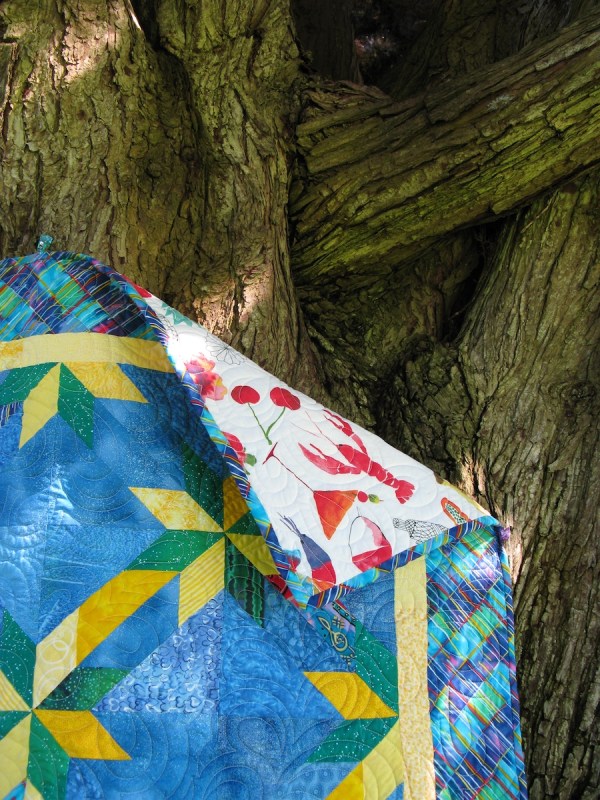
 quilt on a large cypress tree, outside our hotel room

So we found ourselves here in Monterey and it’s the jazz festival — a Big Deal, with Big Names — jazz in the lounge, on the stereo, musical instruments being seen everywhere.  And I thought of the best kind of music, being played with great affection and intensity under a starry night, perhaps even by a band on a bandstand on a summery night, and so the quilt found its name, and its finish.

This is one of my project on the Finish-A-Long list, and quilt #47 on my 100 Quilts List.  Yes, I went backwards.  (Although now I only list them when they are completed, earlier I slipped in a couple of tops only.)

100 Quilts

Using the Other Side of Fabrics

First off, after I finally figured out how to use Mr. Random Number Generator, and making sure that comment included a trip, I’m happy to announce that the winner of the Itsy Bitsy Scissors is Mary, of Needled Mom.  Congrats!

I figured since I subjected you to a swath of vacation photos, I needed to get real and get some real quilts back up here on the blog.  I started yesterday on the newest Schnibbles for June, Dulcinea, beginning with the background fabric in a navy-blue print:

background dulcinea

A high-quality iPhone photo, uploaded, then recaptured as a screen shot.  Love technology.  Kidding, but it does come in handy.

mockupDulcinea

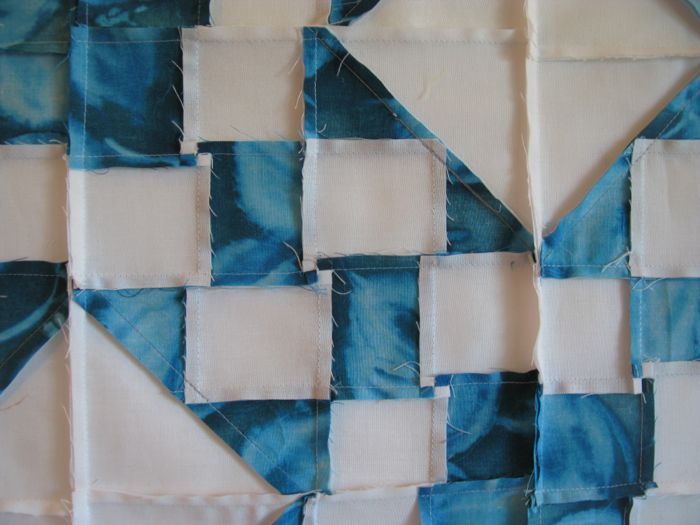
I filled in with mostly Comma prints, but a few others (I hate doing one line of fabric), but it just wasn’t going anywhere for me, until I turned the background fabric over to the “other side,” not the “wrong” side (shown in pink circle).  Why do I not say “the wrong side”?  It comes from the era of watercolor quilts, when we tried to blend blend blend our tones across multitudes of itty-bitty squares.  We learned to consider both sides of a piece of fabric as possibilities.

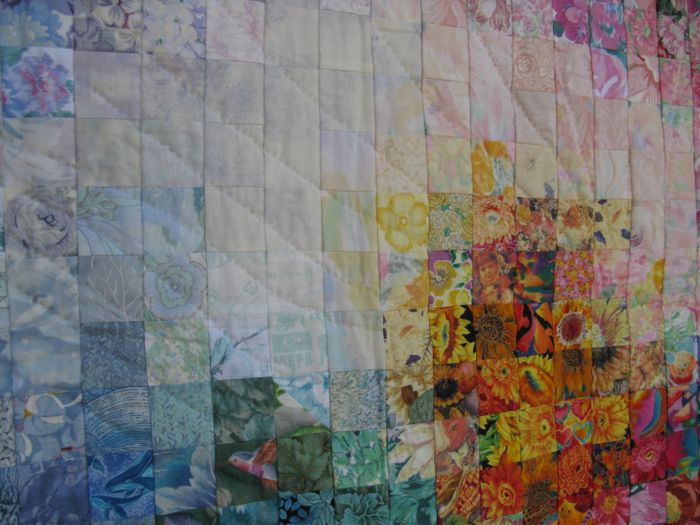
Watercolor Quilt

Here’s my version: Color Study: Night Infolds the Day.  My friend Leisa got us started on this adventure–I think it was her first quilt ever.  We cut about a zillion little squares, and since that cool gridded fusible web hadn’t been invented yet, we pieced them all.

Watercolor detail 2

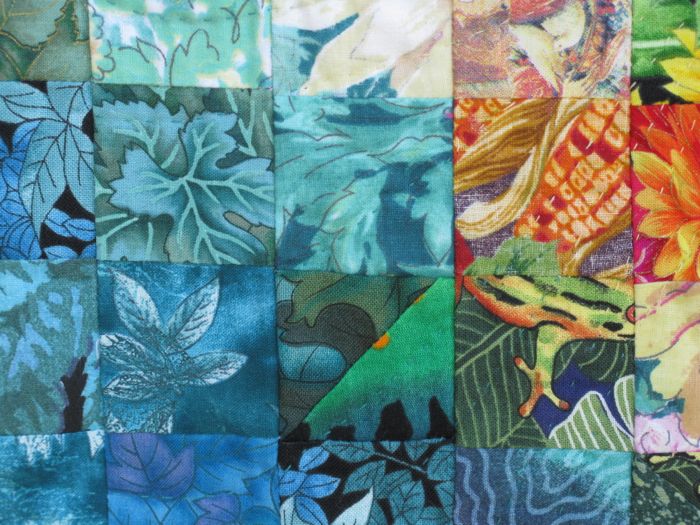
So the technique was to smooth the colors across the colorful sections, and sometimes no matter how many little squares you browsed through, it just wasn’t possible.

Watercolor detail1

So you flipped the piece over and used the “other side,” like the middle partial square in the upper row, and the full right-hand square in the second row.

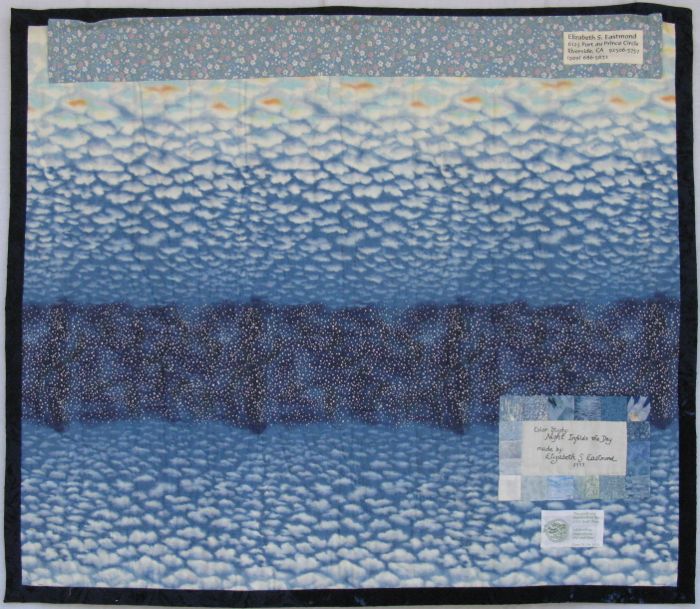
Watercolor Back

I used an allover celestial print for the back–that was pretty daring for that time — all of 14 years ago.

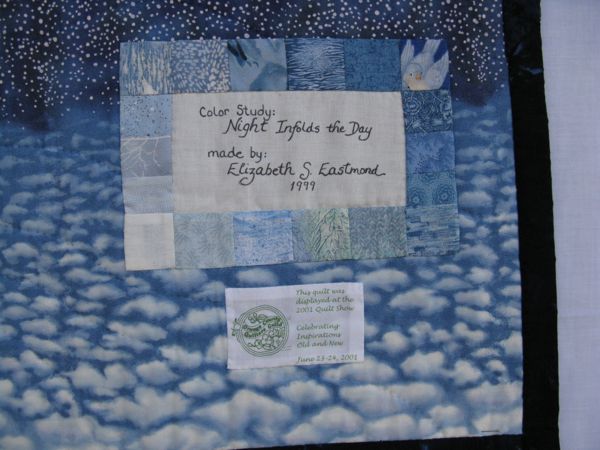
Watercolor Label

The label.  I exhibited this is a local quilt show, and stitched on their label, too.  The best part of this story is that our friend Tracy adopted our six pizza boxes full of squares (we sorted them by value, from light to dark), added about a zillion white squares and made herself a wonderful quilt from our leftovers, another value of getting together in a quilt group.  This is #29 on my 100 Quilts List.

Carmel BluesAnother quilt where I used the “other” side sometimes, was on the quilt I made for my mother (mentioned in last week’s post).  We’d gone to a quilt show in Carmel, where I’d picked up a fat quarter pack of blues.  This is titled The Blues of Carmel, and is #19 on my 100 quilts list.  It’s named not only for the ocean at Carmel’s edge, and that pack of blues from the quilt show, but also because my mother has blue eyes.

Carmel Blues Back

The back of this is merely a whole cloth, allover design, which I used as a guide to hand-quilt.  Pretty much the only people who machine quilted their quilts at that time were J. C. Penny’s or Sears.  It was hand-quilt, or yarn-tie.  Quite a range of options, right?  Since this was made in my earlier days, it doesn’t have a label.  I need to remedy that.  This quilt was published in Joen Wolfrom’s book Color Play (page 64). Don’t know who Joen Wolfrom is?  Google her.  Her book, Patchwork Persuasion is ground-breaking.  And just typing “#19 of 100 Quilts” makes me realize how far I’ve come, and how far quilting has evolved, in the nearly two decades since I made this.  Of course, I’M not any older.

Dulcinea Label

This was on my melon for lunch, which reminds me I need to get back to sewing that Schnibbles quilt, another one in Sherri and Sinta’s Another Year of Schnibbles!