Something to Think About

Cleaning the Design Wall

Since I am away from the computer for a while, I’m running a few favorite, previously published posts.  
This one originally ran on July 22, 2010, but is modified for today’s post.
˚˚˚˚˚˚˚˚˚˚˚˚˚˚˚˚˚˚˚˚˚˚˚˚˚˚˚˚˚˚˚˚˚˚˚˚˚˚˚˚˚˚˚˚˚˚˚˚˚˚˚˚˚˚˚˚˚˚˚˚˚˚˚

Here’s the before:

The during:

The after:
Okay, that’s not a very exciting thing to do, right?  We want all our sewing tools to keep on working, day after day, no complaints, no breakdowns, no upkeep or maintenance required.  But it’s such a little thing to take a few minutes and cheap-o lint roller remover and stroke down the board.  And really, is the Before picture really so objectionable? Yet, what surprised me is how many of the threads that came off on those sticky papers were seemingly invisible to me.

But since I did it yesterday, just walking into the room is different.  My pin wall is thread-free (for the time being) and it makes the room look cleaner.  It made me think of the premise behind Malcolm Gladwell’s book The Tipping Point: that an epidemic can start with one small thing and roll on out from that.   It’s like how picking up the towels in the bathroom and rehanging them triggers a cleaning of the sink.  Or washing the curtains makes you repaint the bedroom.  I’m talking about those kinds of mini-epidemics, that are just one person wide and one person deep. Those changes I make myself.

My sewing room (aka The Study) had been a mess since we arrived home from our trip to Canada and I just didn’t seem to have the mental energy to put the things away.  But I cleaned the threads off the wall and now I’m putting away those little naggy things that linger after travel is done.

So maybe, taking time off to take care of things has unintended consequences?  That this can, in some ways, apply to our own creativity level?  That taking time off to clean out a few cobwebs, have a walk on the beach, or take a minute to sing along to a popular song in between shuttling the family to various places is like cleaning the threads off the design wall?

boyinwaderpool

Perhaps a little mental maintenance on our own selves is why summertime is such a tonic, even if we don’t know what ails us.

Something to Think About

Process vs. Product

Since I am away from the computer for a while, I’m running a few favorite, previously published posts.  
This one originally ran on July 16, 2010, but is modified for today’s post.
˚˚˚˚˚˚˚˚˚˚˚˚˚˚˚˚˚˚˚˚˚˚˚˚˚˚˚˚˚˚˚˚˚˚˚˚˚˚˚˚˚˚˚˚˚˚˚˚˚˚˚˚˚˚˚˚˚˚˚˚˚˚˚

Is it possible to lust after another person’s finished quilt?  Yes, quite possibly.  Definitely. For sure.  The quilt shown above uses the Castle Peeps line, and was put together by  Elizabeth Hartman, of Oh! Fransson.  I purchased the blue colorway of this line this summer and before I close out my sewing blitz and focus on The Job, I’m dying to throw together one more quilt.  This design has inspired me.

There’s been a lot of talk on the blogosphere about the issue of production in quilting, and I’m here to add my .02.  Jennifer, of “That Girl. . . That Quilt,” has written a whole series of her thoughts about “quilting without obligations.” They seem to be a reaction to the feeling that quilting is all about production, rather than about the process.  This is an age-old discussion and is found in other corners of the creative universe.

When I was an undergrad, working in the black and white photo lab, this idea–process vs. product–was discussed constantly.  To give you a flavor of what our conversations sounded like, as we blew dust specks off of our negatives and worked at creating “art,” have a listen to the little clip below. Yes, it’s dense, but give it a go.

I think his point that when we focus on product, we may miss other connections that may arise from the creative process is valid, but there are times when product is not the Big Evil.  Sometimes I just want to get something done, speaking of quilts and quilting.  Sometimes I just want to quickly make up a quilt in a fabric line because I want to see that on my bed.  I’m not interested in being drawn into the process of the quilt–I just want to lay down under it.  Or hang it up on the wall.  Or because the process has already happened in my mind, in thinking about it at the back of my brain when I couldn’t get to the sewing machine for one reason or another.

I read a lot of blogs, like the rest of you, and many of them are designed as advertising.  The quilt artists/makers have been involved in the process of their art and designed fabric/patterns/quilts that they need to sell in order to make their living.  Many blogs are tied to online quilt shops.  These are valuable places for me to go and get my ideas, be exposed to new fabrics, enjoy the fruits, if you will, of other people’s labors all before I take up my rotary cutter to slice into some fabric.  I enjoy these blogs, love reading them, admire the work.  But I do not ever confuse what they are doing–earning a living–with what I am doing.  Some other blogs have “taken the process pledge,” and try to put out on their blogs how they arrived at the journey’s end.  This is a valuable resource for us as quilters when it truly involves process, and not just a “how-to” tutorial (although I like those too).

It seems to me that there is enough room in this quilting universe that we can quilt what we want to, blog when we want to, go off on vacation when we want to, work (when we have to) that we don’t need to compete.  Commercial blogs? Non-commercial blogs?  They are resources for us all to glean from.

ProductProcess_PreK+KImages, and interesting reading,  from *here*

Product?  Process?  We need them both.

Quilts

Contrasts: Four-in-Art August 2014 Challenge

Screen Shot 2014-05-18 at 8.19.46 PM

from *here*

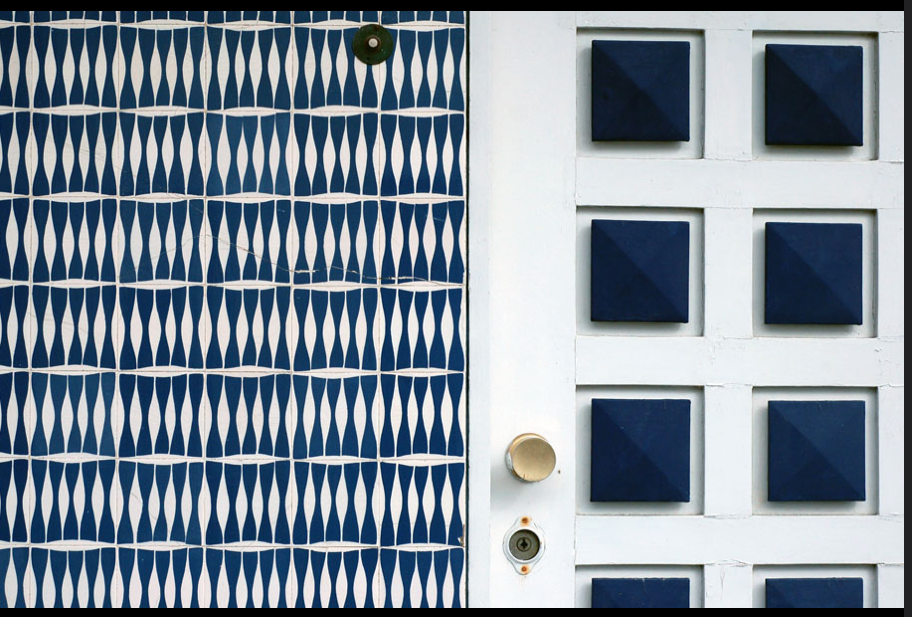
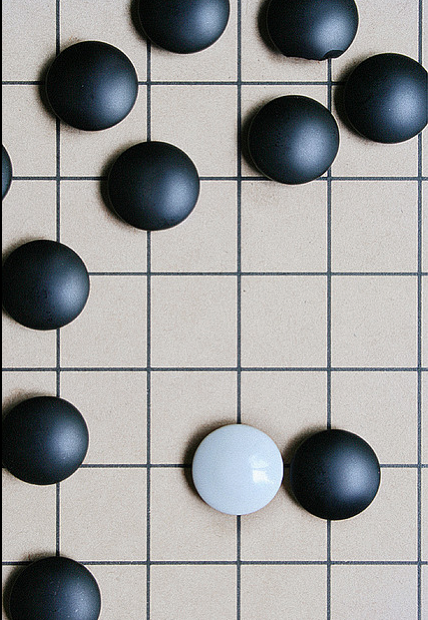
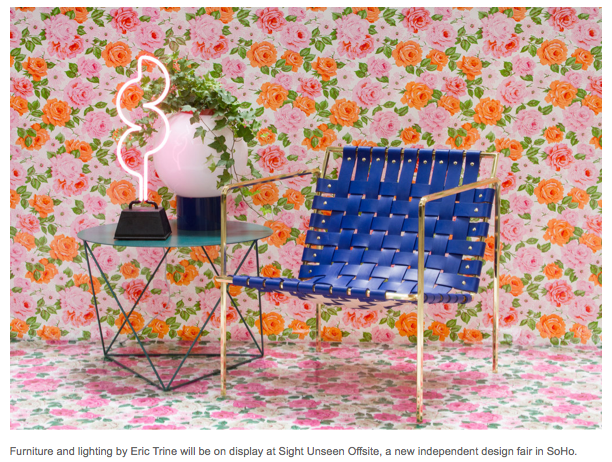
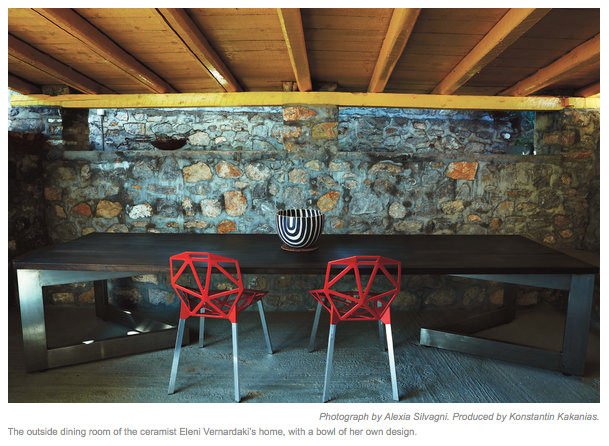
The theme for our August 1st Challenge Reveal is “Contrast.”  Anne suggests the contrasts inherent in cities: noisy/quiet, man-made/natural, fast/slow, wealthy neighborhood/poor neighborhood.  I have started thinking about this, but first, my interest is in the visual contrasts: dark/light, colorful/greyed, smooth/rough, thin/thick.

Screen Shot 2014-05-18 at 8.39.29 PM

from *here*

The following images are snapshots from the New York Times Travel/Design Magazine: “T.”

Screen Shot 2014-05-18 at 7.44.15 PM Screen Shot 2014-05-18 at 7.44.49 PM Screen Shot 2014-05-18 at 7.54.55 PM Screen Shot 2014-05-18 at 8.02.38 PM

4-in-art_3button

2014 Yearly Theme: Urban • August 1st Challenge: Contrast

Quilts

Quilts and Stitching in Art

Okay, I had a fun time in Washington, DC this spring once I realized I could play I Spy and look for quilts.  I think this is a good game that I should keep playing, and if you have a picture of a quilt in art — whether it be in a painting or a photograph in a museum — send it over and when I get a slew, I’ll do a post.

Bishop_ Sewing2

Okay, this isn’t technically quilting, but it’s stitching.  This is a detail of Mending, by Isabel Bishop and hangs in the National Portrait Gallery.  She writes “I have noticed regular denizens of [Union] Square [in New York City] who, sitting on the benches or on the fountain, easting, sewing or rearranging their worldly good in paper bundles, seem to be leading the most private of lives, entirely oblivious to the public character of the place.  The not-beautiful forms of the fountain seem. . . to make a throne for the old man sewing his trousers; he is billowing old overcoat [becomes] a robe.”

Bishop_Sewing

Elias Howe Pillow

This is a needlepoint stitchery in the gallery of the Washington National Cathedral that honors the 100 Most Famous Americans, all who have a red needlepoint pillow on a chair. Of course I was drawn to this one, honoring Elias Howe, inventor of the modern-day sewing machine.  We ALL owe him a debt.

Freckelton_Harvest1

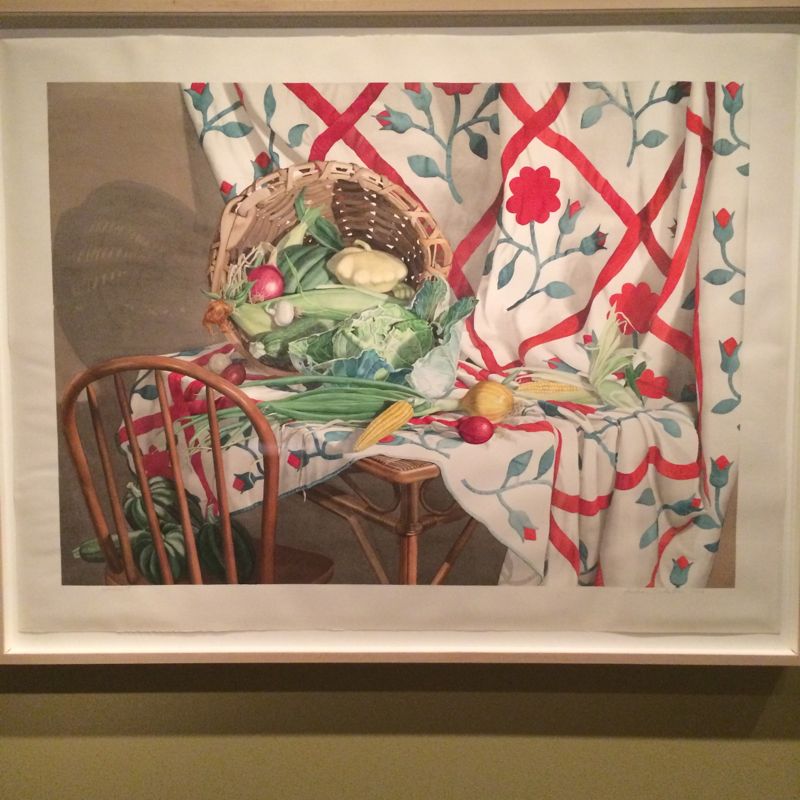
Sondra Freckelton’s Harvest is one of her still lives that capture “the quiet beauty of domestic, often feminized objects — quilts, garden implements, house wares, and fresh produce gathered from her own garden in the . . . Catskill Mountains.”  I don’t know about you, but I was interested that a Smithsonian label-writer plopped in that phrase of “domestic, often feminized objects” when discussing Freckelton’s watercolor.  Don’t tell our male quilters this.

Freckelton_Harvest2

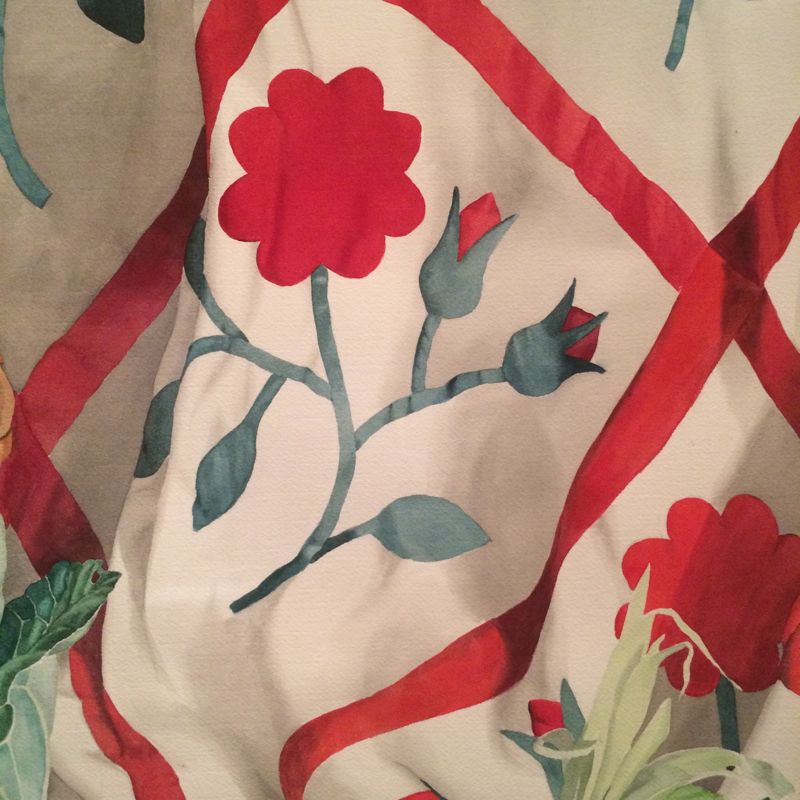
And I knew she wasn’t herself a quilter, for who of us would plop down vegetables on top of this gorgeous appliqué quilt?

Pieced Quilt_Fletcher_1

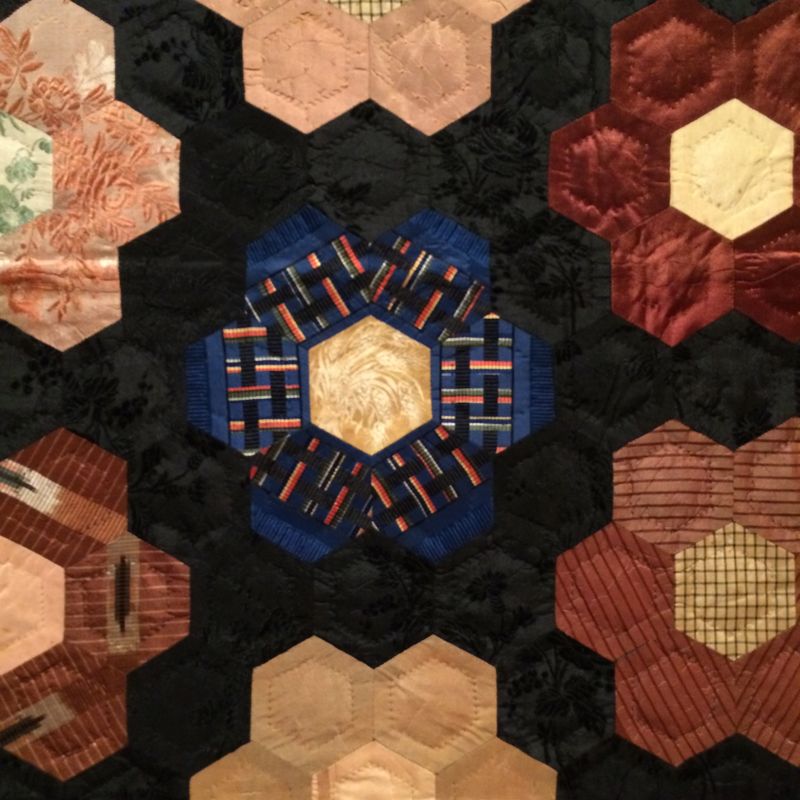
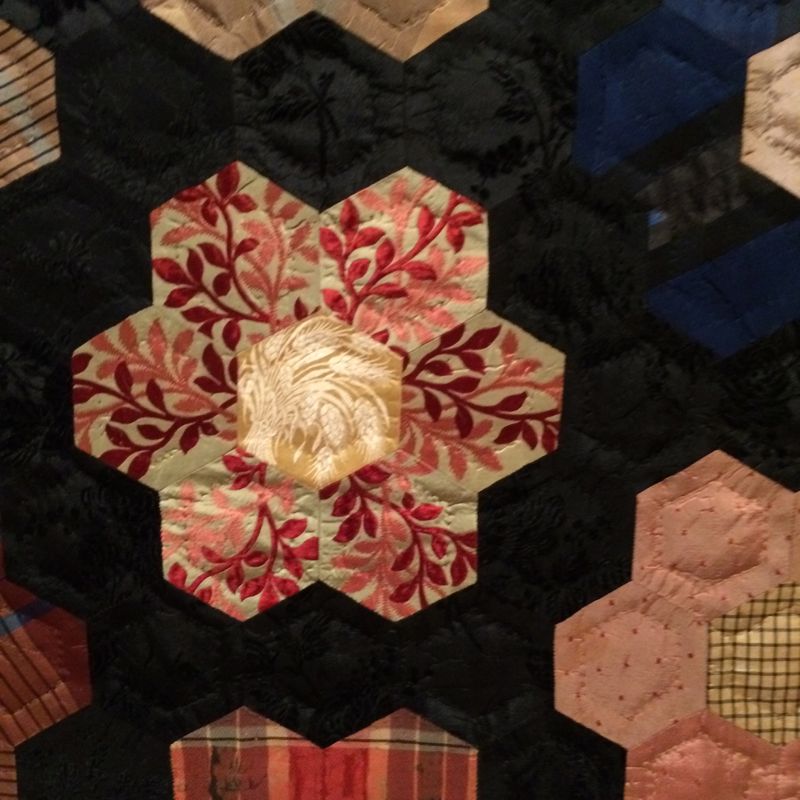
Mary Fletcher was born in 1940 and died in 1922, but her fine hand-pieced hexie silk quilt now resides in the Smithsonian’s National Portrait Gallery.  We are all jealous!

Pieced Quilt_Fletcher_2

I decided she had an amazing scrap bag to have so many beautiful silks to work with.

Pieced Quilt_Fletcher_3

Pieced Quilt_Fletcher_4

Sharrer_Tribute all

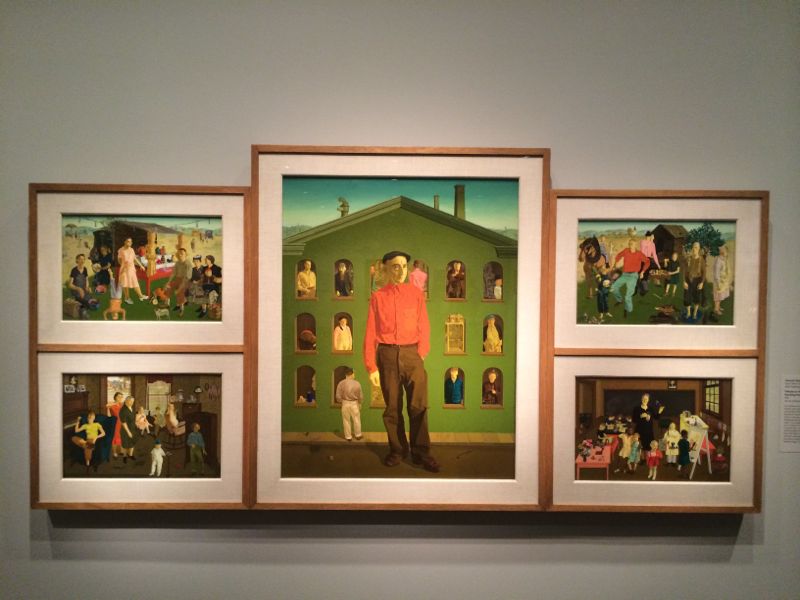
And lastly, Honore Sharrer’s Tribute to the American Working People, who employed the polyptych format of medieval paintings to pay homage to the working people of America.

Sharrer_Tribute quilt

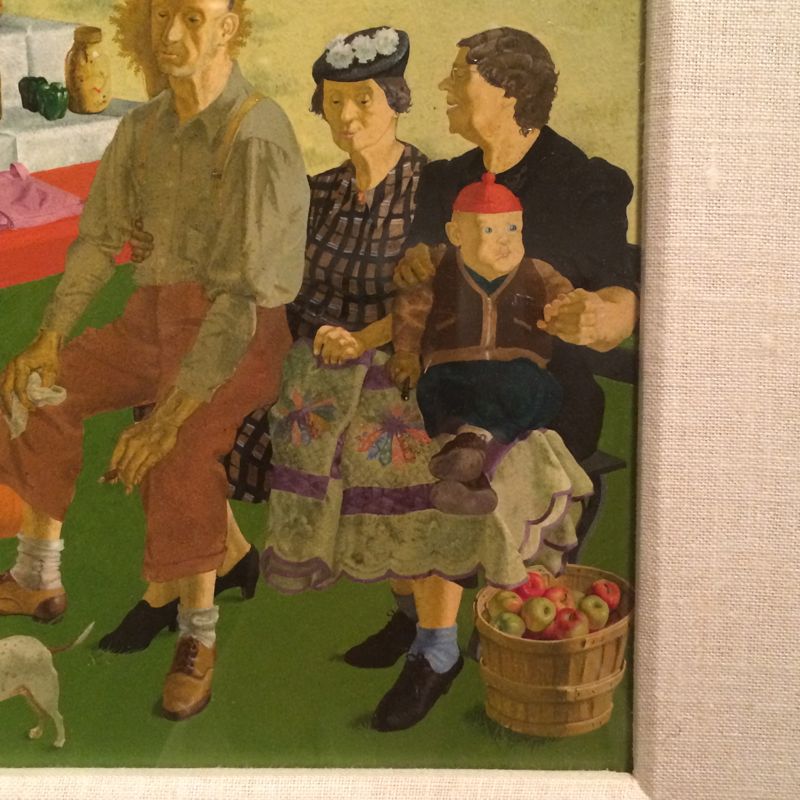
And here’s the quilt–in the upper left panel: a lovely scalloped Dresden Plate.