Quilts

Two Blocks, Two Machines

Windmill Blocks

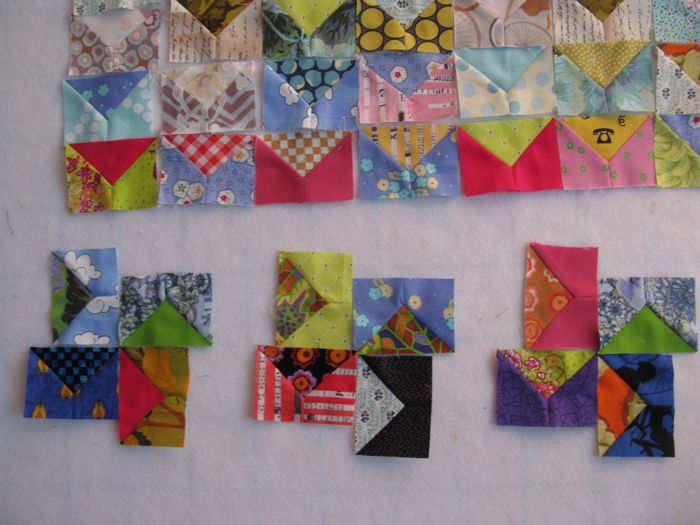
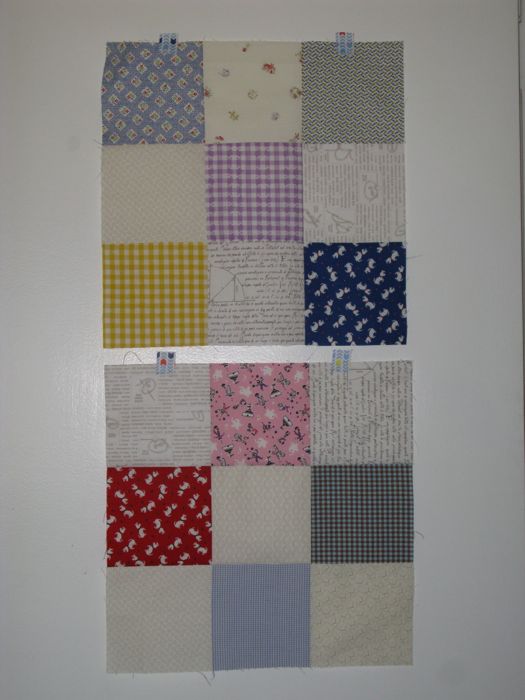
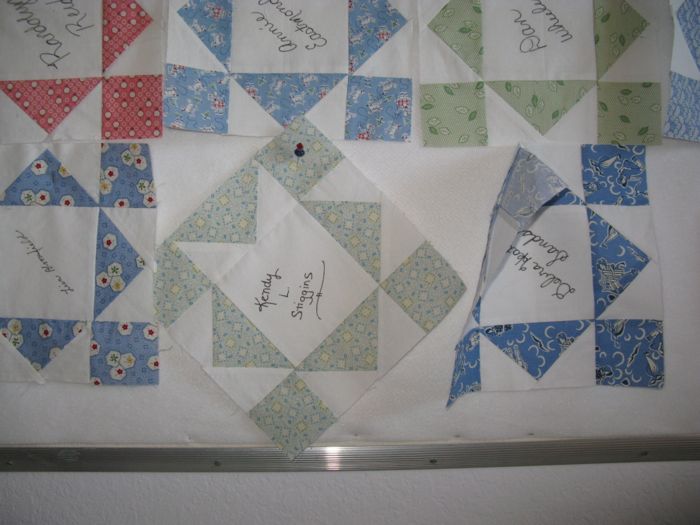
Bees are interesting things.  I’m in a new one and am still figuring out how it ticks when this block arrived in the mail.  The instructions read to leave the quadrants unsewn as the bee-er wants to really make her quilt scrappy and move the blocks all around.  It’s paper pieced.  Seventy-two pieces per block (4 quadrants).  It took me over 7 hours, closer to eight hours, to finish the two blocks.  I began wondering about this quilter–who would send out such a complicated block to the bee and expect us to do not only ONE, but TWO blocks? I began wondering about what a sheep I was to follow along, when I should have just sent back the unused fabric after the first block and the scraps for the little triangles, and kept it to one.  The end result was that I didn’t feel very good about her, nor about myself–for not standing up and saying “This is excessive.”  I was more than happy to send that off this morning!

Steps Quilt Blocks

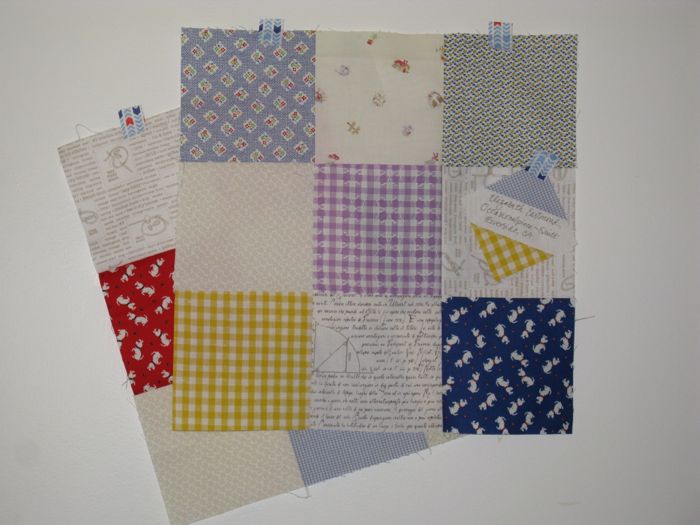
This is the blocks from another bee-er in the same bee.  Because my first batch of fabric got lost in the mail, I was doing her September blocks in October.  These blocks were already cut out, and both went together in under an hour.  I’m happy to spend more than an hour on a bee block, but the contrast between this quilter’s and her bee-mates was astounding.  I felt good about things as I mailed off her blocks this morning.

Green Sewing Machine

On our walk yesterday morning, we passed by the house of an older neighbor, who was downsizing and moving up to the high desert.  Stuff had to go, including this funky green sewing machine.  We continued on our walk, never mentioning it, but on the return loop, I said to my husband, “Want to go and get the car . . . and your wallet?”  He laughed.  When he came back there were two machines waiting for him to load into the car (I didn’t take a photo of the other), but I got both for $55, including the matching cabinet that the father-in-law had made for this green machine.

I took them right up to my Sewing Machine Whisperer, and he said they were worth tuning up, so into the shop they went.  “You know, you have no foot pedal,” he said, gesturing to the green machine.  In my defense, it was early in the morning, so when I went back, the older neighbor went up into her sewing room, but couldn’t find it.  I left my name and phone number, and hopefully it will turn up.  I’ll get these two older machine back in a few weeks; I plan to give one to my granddaughter, who wants to learn to sew.

Today I plan to sew my brains out.  And NOT on complicated funk-inducing, grumpy-generating bee blocks.

Quilts

Sand, Sea, Schnibbles and Y-seams

Joyce Carol Oates, the very prolific American novelist and writer was asked what she did when she finished a novel.  Did she go on vacation?  Did she stare into space? “I read poetry,” she said. “I find it is good to let the mind rest a bit from the ardors of a novel.” Well, at least that’s how I remember it, when I attended her lecture as a graduate student at our local University of California.

Sea and Sand Quilt Top Schnibbles

After last week’s wrestling of the difficult quilt (coming up), this is my poetry after a novel, say, The Brothers Karamasov, or something.  I missed last month’s Schnibbles outing–too busy with the beginning of the school year, but I was pretty determined to do one this month.  It was a squeeze play, especially after I started reading the directions.  I couldn’t make heads or tails of them, as it was a pattern geared strictly to pre-cuts, which I don’t generally buy.

Back Sea and Sand

(I like the back with its little open four-patches seam allowances.)

I stormed downstairs all lathered up about my frustration, but luckily my sister Susan had given me a treat to assuage the raging quilter within: some delicious cookies from Joan’s on Third in Los Angeles.  It rescued me, and I went back upstairs, figured out how to cut strips from my fabric and get going.  If you are not a pre-cut user, you have been warned.  However, there is a nifty method for making those pieced triangles/checkerboards in the corner, so Miss Rosie’s pattern company was redeemed again.  (Still think there should be directions for those of us who use fabric-by-the-yard!)

Mercerie

The original pattern’s name is Mercerie, and they do it in many different fabrics, hence, the need for charm pack directions.

And the Y-seams?

FAL Tutorial Header

On Tuesday, I’ll be doing a guest-blog post about how to sew the Dreaded Y-seam.  Stop by Leanne’s, of http://shecanquilt.blogspot.com to see the secrets.

In the meantime, read some poetry.  Here’s one from the Poetry Daily website:

On My Seventieth Birthday I Try to Skinny-dip in Boston Harbor
by Sandra Kohler

I cover my nakedness this morning
with an outsize purple tee, “Outrageous
older woman” scrawled in pink across
the chest. A gift from my son, daughter-
in-law. Beneath it, the only part of
my body where my skin fits me still,
unmarred by time—my shoulders.

Sunrise, ebb tide, half an inch of water
covering Tennean Beach’s pebbles, mud
I sink into as soon as I step out toward
dawning sun. Planning this baptism I
forgot to check tide charts: I’d have to
wade through seventy feet of muck to get
my feet wet: no quick strip and dip here.

Turning seventy: I never imagined this.
Years ago, when I’m visiting my eighty-
something mother-in-law, she’s gossiping
about a neighbor, calls her “an old lady”
—stops herself, says, “I know I’m old
too, but not inside.” Inside, what age
am I? Thirty, eighty, fourteen?

Will sinking into this muck renew me?
On the drive home, passing a shallow
wetland between abandoned factories,
I see a flash of white: two egrets gingerly
wading, stepping, spreading their wings
in the risen light over a brood of hatched
fledglings, as new as aging is to me.

200 Quilts · Family Quilts

This and That and a New Baby

New Baby Anselmo

While the rest of us have been having a summer, my son and his wife have been having a baby: they flew to Iowa (sweet corn country) to pick up their newest son, making four in that family, and number eleven grandchild for me.

Older Anselmo Boys

We had the older boys stay at our house, and here they are doing a little corn shucking of their own with grandpa.

Charlie's Quilt-front

Somewhere in here, I finished the quilt for Charlie, this newest grandson.

Charlie's Quilt - back
Charlie's Quilt - label

I love love the back of this fabric: Backyard Baby, and so instead of a formal label, I scattered the information within the breezy trees.  (That little white dog, with its ears blowing backwards, cracks me up every time I look at it.)  While I finished it up a couple of days ago, I’ve learned to write the birth month on the quilt.

This is quilt #120 on my 200 Quilts list.

But summer is always slightly ADHD with going here, going there and not staying home to clean out the garage, don’t you think?  So here’s a bit more this and that:

Polaroids

Kris, of Duke Says Sew What, is doing another Polaroid Swap, if you want to join in.  I’m slow to post this, so hurry over to her blog and leave a comment to let her know you are participating; you have until August 26th to mail in your blocks (domestic — the international mail-in deadline is a bit earlier).

Endeavour

Several nights this summer, my husband and I have streamed down Endeavour, the newest detective series on our iPads (we have an Apple TV), a prequel to Inspector Morse and which I like better.  The star, Shaun Evans, is an interesting mix of loose ends and brilliant thinking.  It also helps to have one of these to get into the mystery:

Magnum Mini Almond

And finally, finishing up this peripatetic post, is notice of a

Giveaway Banner

I attended the Long Beach Quilt Show last weekend and picked up a couple of fun things to giveaway to my readers and followers, knowing that the end of summer is coming and we can’t say good-bye to its crazy days without a little fun.  Giveaways (I have more than one!) will be posted at the end of this week, and I’ll pick my winners next Monday, the 12th.

Backyard Baby fabric dog

Have a nice end to your summer!

Quilts

Faced Binding Tutorial

FacedBindingTitleA faced binding is applied to the front of your quilt and is wrapped to the back.  If done well, it can’t be seen at all from the front, allowing the last border of your quilt to act as the frame for your quilt, and eliminating one last design element from your quilt.  Often used on art quilts, when an additional line of a border would distract from the art, it can be also be used on our regular quilts.

kaleidoscope-top

I used it on Kaleidoscope, as the printed border needed no other embellishment.

Step One: Prepare the quilt and strips
Trim the batting and edges of your quilt.  In the best world, your trimmed line falls at the edge of your fabric.  A little fudging here and there is okay.

For the binding, you’ll need four strips, one for each edge.  Measure the edges of your quilt and add 10 extra inches to that measurement.

Cutting

Cut 4″ wide strips for a medium- or large-sized quilt, and 3″ wide strips for smaller quilts.

Trim Ends

If you need to piece the strip to provide the right length, trim both ends at a right angle (make sure they are slanted the same way) and piece together on the bias.  Fold the strip in half lengthwise and iron.

Step Two: Applying Binding Strips
Leaving a tail on each side of about 5 inches, pin the binding strip to the FRONT of your quilt, raw edges even, with the folded edge of the binding falling toward the quilt center, just like you would for a regular binding. Only this binding is giant-sized, and you won’t stitch around the corners continuously.

Pinned Binding

Continue pinning the strips onto each side.  Pin the strip nearly to the end, as you’ll be leaving the last one-quarter-inch of each seam unsewn.

QuarterInch from Corner

I measured one-quarter-inch from each corner edge, and placed a pin there to remind me to stop sewing.

Stitching Binding

Stitch on the binding, using a quarter-inch seam allowance, and stopping at your placed pin, 1/4″ from the edge.

Step Three: Mitering the Corner

Pressing

Take the quilt to your ironing board and using a light touch, press the binding strips away from your quilt.

Mitered Corner2

Then lay the quilt so you can fold back the binding tails, as shown.  Work to have a perfectly straight 45-degree angle on those folds where they meet; use a ruler to help you align it, if necessary. Press.  The slight gap you see there between the folds is normal–the folds relax when you take the iron off.  It’s better to have a slight gap than to have an overlap.

Mitered corner1

Another view, but this is just fingerpressed.  While you can just fingerpress the folds, I think it’s better to get a hot iron on there so you can see the crease.  (See next image.)  Remember that you are pressing through double-folded fabric, so do a thorough job.

Unfold and align the binding strips for the first corner, making sure the pressed diagonal lines meet and folding the quilt down and out of the way.  You are also making sure the top folded edges meet.  I try not to pin this next seam to death, instead using only three pins:

Mitered corner3a

• #1–Place a pin at the outer, folded edges of each binding strip and line the creases up.

• #2–Then go to the bottom, near where it’s joined to the quilt, and poke a pin from the top crease down into the bottom crease, lining them up.

• #3–Lastly, line up the creases at the center and place a pin there.

Again, you are pinning along the crease you made when you ironed in that beautiful miter at the ironing board.

Stitch the seam.  You’ll begin stitching from the folded, outer edges and sew back towards the quilt-binding seam (at the bottom of the picture).  There’s really no need to “tack” by backstitching.  So don’t.  Just leave your thread tails long and you should be fine.

Mitered Corner 4

Trim the extra fabric to one-quarter-inch, as shown, then press the seam open.

TrimCorner

This is the backside of that mitered join up above.  Notice how the seam allowances become smaller at the point?  That’s because I trimmed them down to eliminate bulk.  Trim out as much of the batting as you can, while making sure you don’t cut the stitching. Don’t skip this step.  Just proceed carefully.  (You will be fine.)

Step Four: Understitching
Often used when attached a facing to a neckline in dress-making, understitching is a technique to join the weensy seam allowances to the faced binding, which will keep them from rolling to the front and showing on your quilt.

First, since you pressed the binding away from the quilt up above, you’ve already started on this step.  If you didn’t press at that time, do your best to press it now, going as far into the corner as your iron will allow.

Understitching

Line up your needle so you are just to the right of the binding seam.  Stitch a straight line, smoothing the binding and the quilt away from the seam as you go, keeping a light tension on the quilt/binding fabric.  Light.  The success of understitching depends on not letting the binding bunch up toward the quilt, nor wandering in your stitching onto the quilt.  Stay on the binding, smooth away the  binding and it will go as smooth as butter.

Of course you can’t sew deep into the corner, so go as far as you can and cut the thread tails long.  Now begin again on the next side.  You’re almost there.

Step Five: Sewing down the Binding

Carefully turn the binding to the back of your quilt, giving it a quick press, if needed.  Gently ease out the corners.  If you are brave and not foolhardy, you can use a chopstick to help ease out the tip.  But if you go too far, you’ll have a mess on your hands.  Proceed gingerly.

If after turning, you think your corners are distorted and look like the tips of a witch’s shoe, a little pulling at the side edges, just below the tip, will shorten that tip and bring it back into shape.  Set it with a little shot of steam from your iron, then press it with your fingers or a piece of wood until it cools.  Seamstresses use “clappers,” or smoothed wooden tools just for this purpose.  However, it’s better to lay a piece of cloth down and put your tender fingers on that, that to smash the heck out of it with a hot iron.  Never over-iron your quilts, or blocks, for that matter!  A horribly flattened block means that, to me, someone has decided to start wearing out their quilts early.

Stitching Down Binding

You’ll stitch the binding down by hand, just as you do a regular quilt binding.  Now you can clip those long thread tails on the top of the binding as you come to them.  Tuck the long tails that are on the backside of the binding up inside–no need to trim those.  If you find your miter is buckling just a little and has too much fabric, with your handsewing needle take a small tuck and secure it with tiny stitches.

All done!

Faced Binding--back

This is what the binding looks like from the back, when finished.

faced-binding-front

And this is the binding from the front–invisible!

Note: If you need to attach a quilt sleeve for hanging, you’ll create your tube of fabric and stitch it on now, aligning the top edge 1/2″ to 3/4″ down from the top, and leaving a slight bulge in the sleeve to leave room for the hanging rod.

˚˚˚˚˚˚˚˚˚˚˚˚˚˚˚˚˚˚˚˚˚˚

Return to OccasionalPiece-Quilt (or OPQuilt.com)

Colorwheel Blossom_front