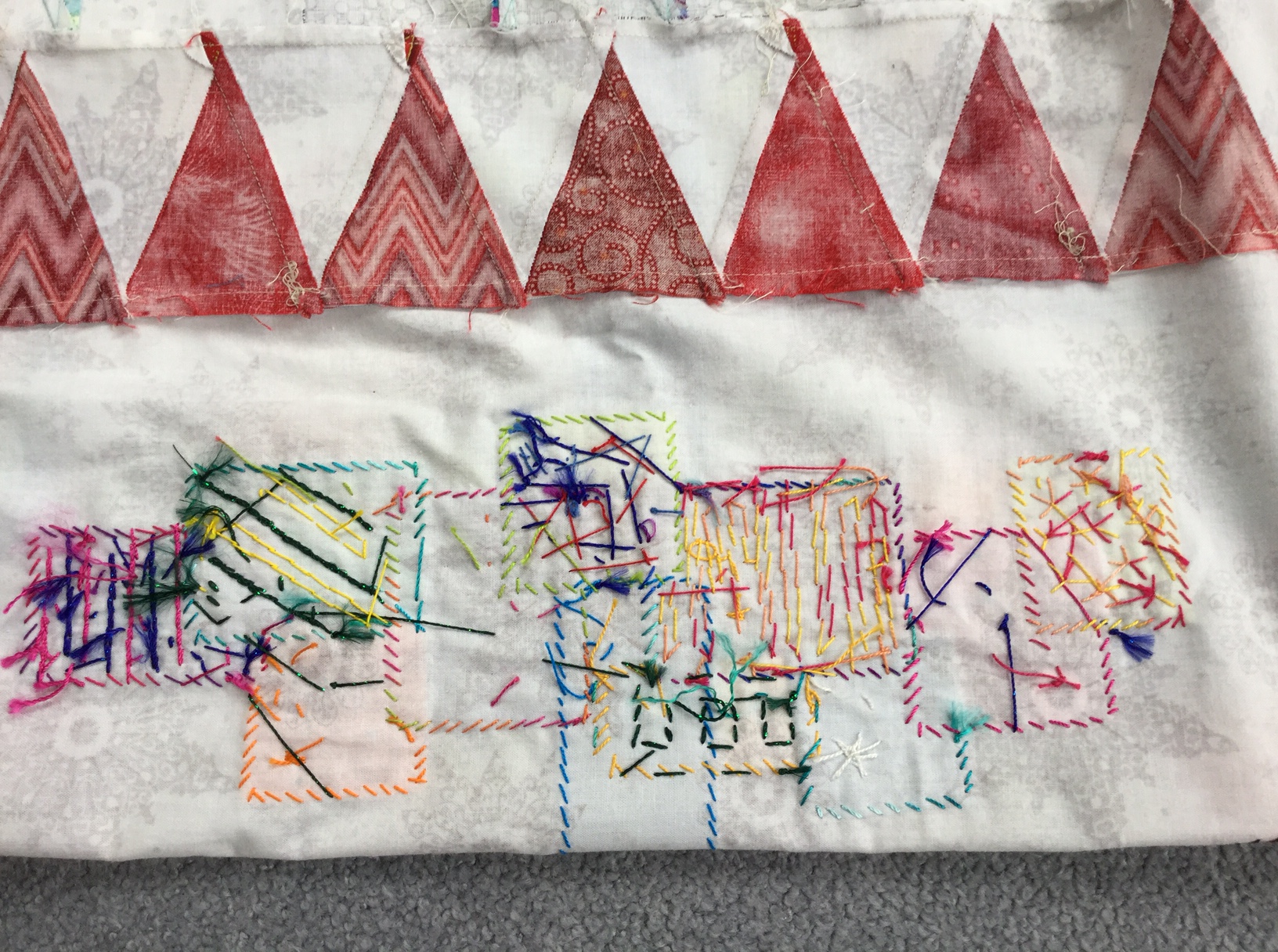
Oh Christmas Tree QAL · Quilts

Oh Christmas Tree QAL–STEP 5

STEP5XmasTree

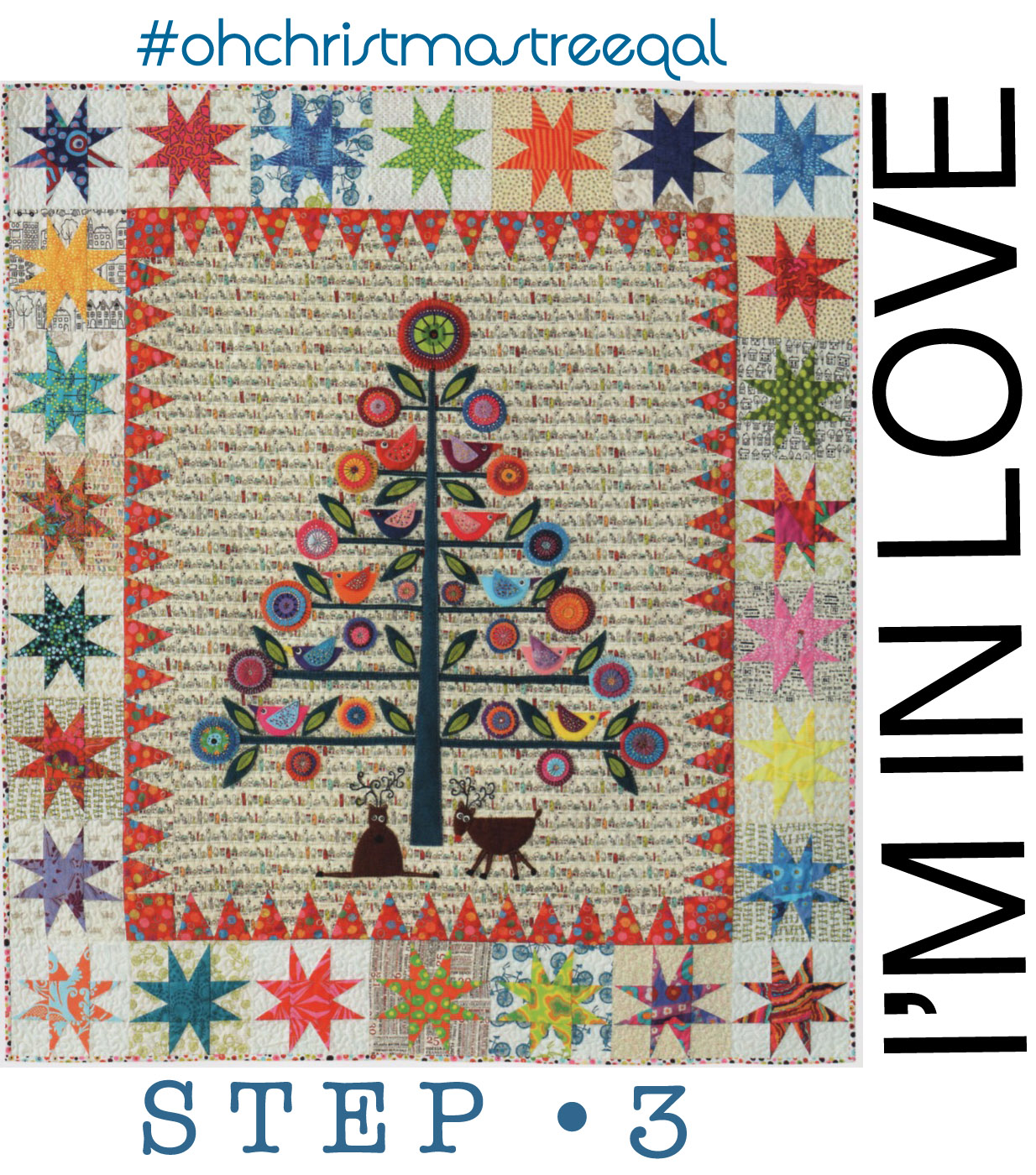
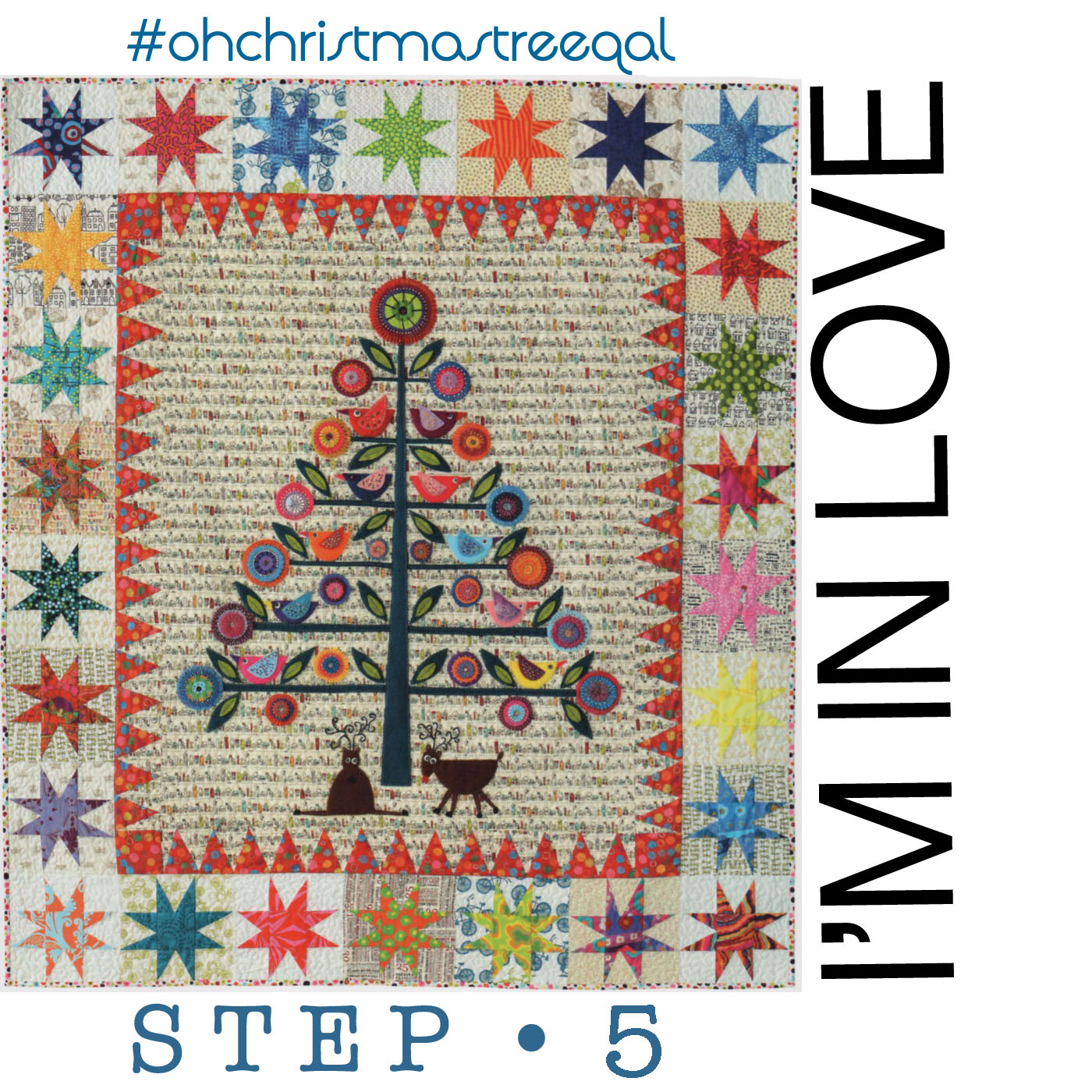
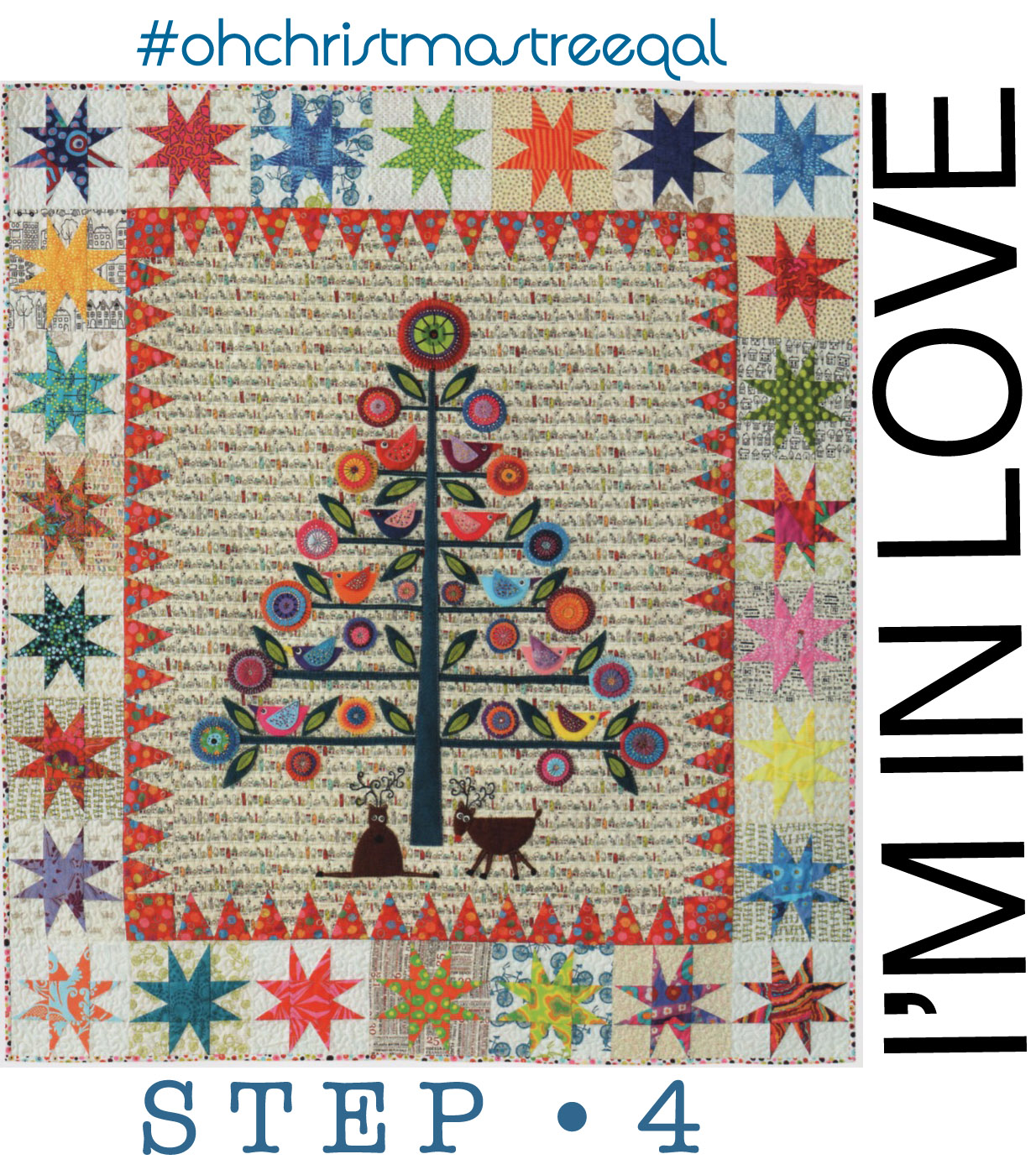
Today is Step 5 of our Oh Christmas Tree Quilt-a-Long (#ohchristmastreeqal), following a pattern by Wendy of FlyingFishKits and which was published in Simply Moderne issue #3, by QuiltMania. As always, we have an assist from Wendy of  Wendy’s Quilts and More (blog) and wendyquiltsandmore (IG), as she is slightly ahead of us in her creating.

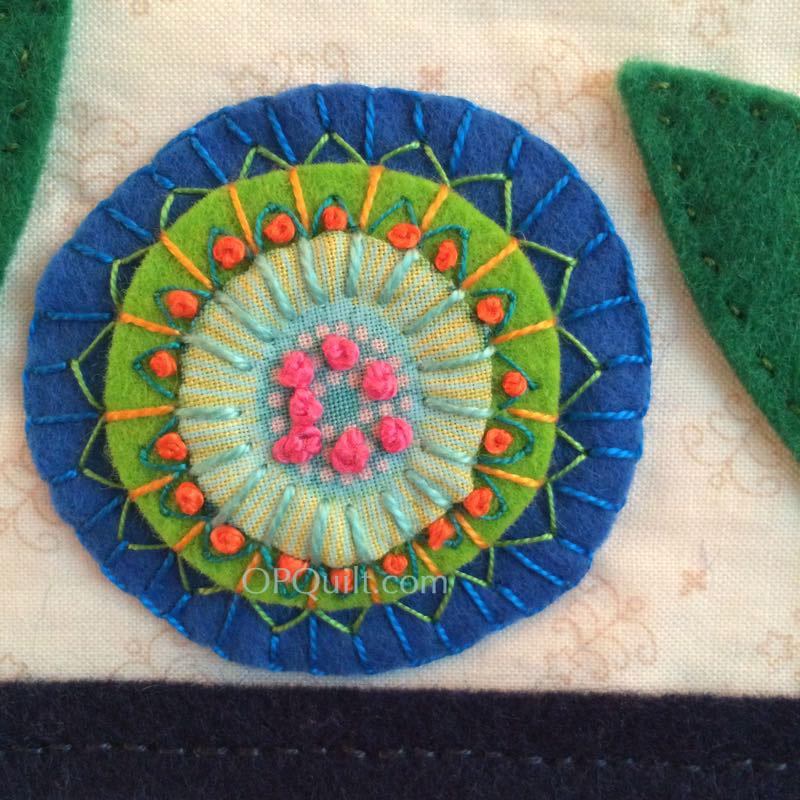
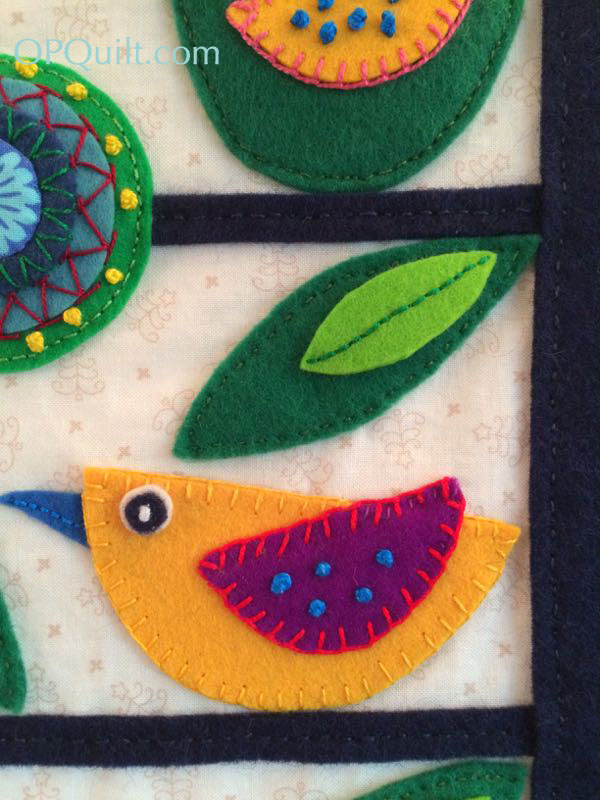
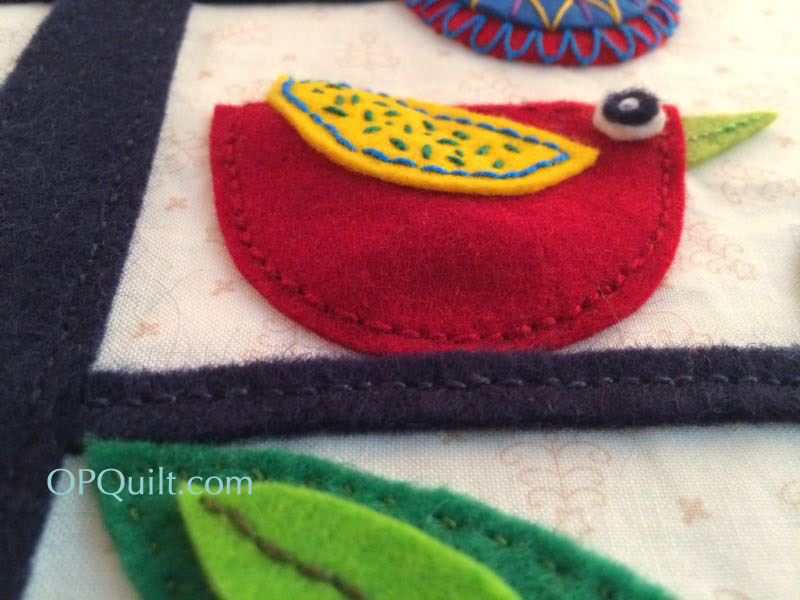
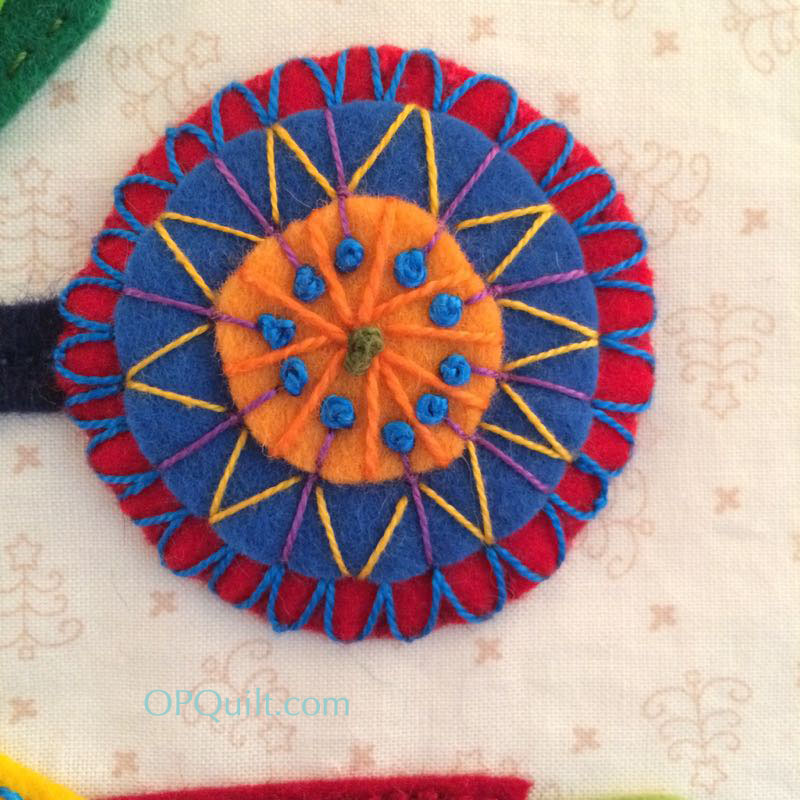
Giveaway Banner

And because of the nice people at National Non-Wovens, we also have a giveaway of 100% wool felt, and their new colors of their rayon/wool felt. Read through all the way to the end to find the giveaway. Giveaway is now closed.

This month we’ll look at possible under-the-tree scenes; there are four:

(1) the reindeer cavorting, as shown in the original pattern,
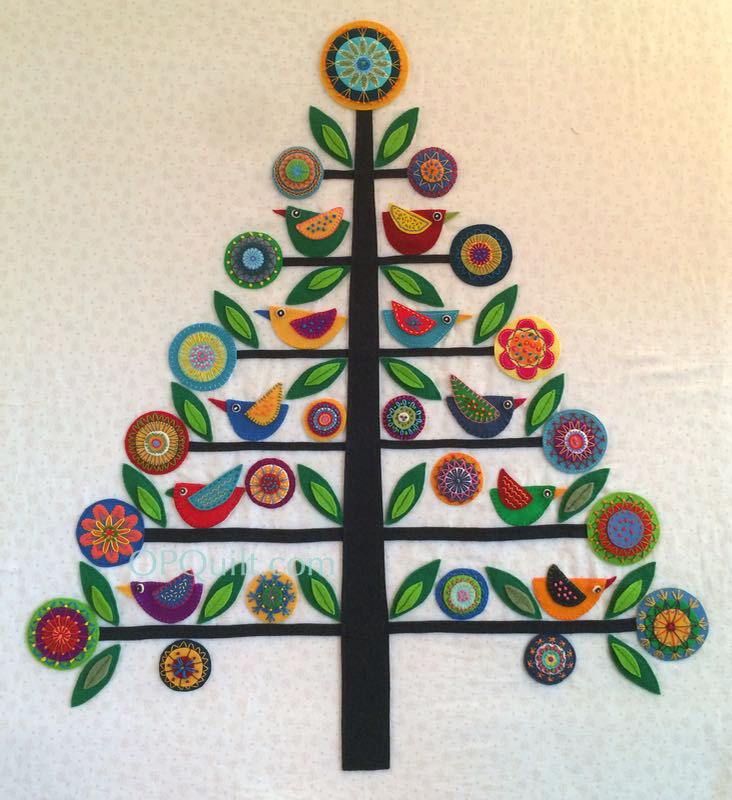
Wendy Full Tree

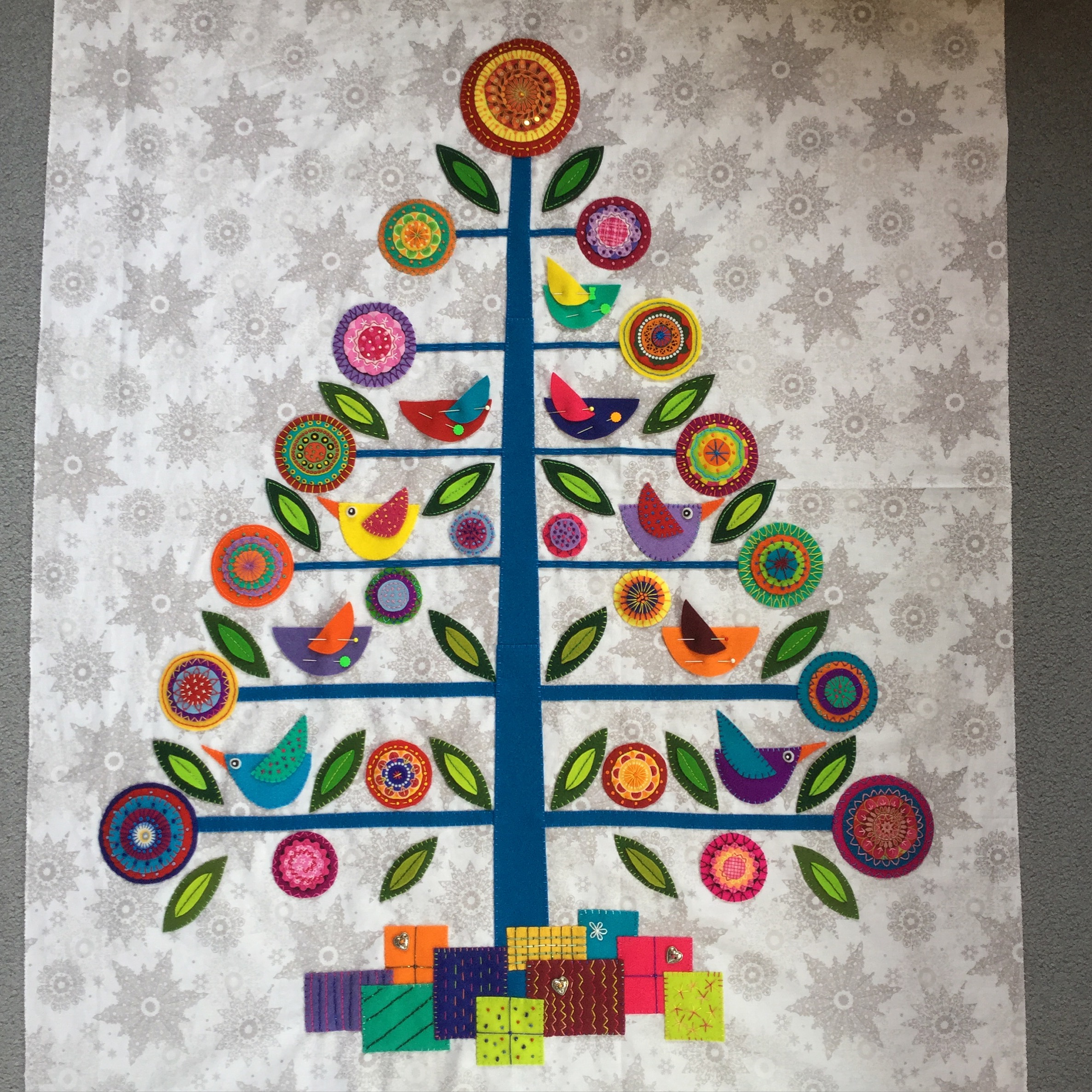
(2) Wendy’s packages,

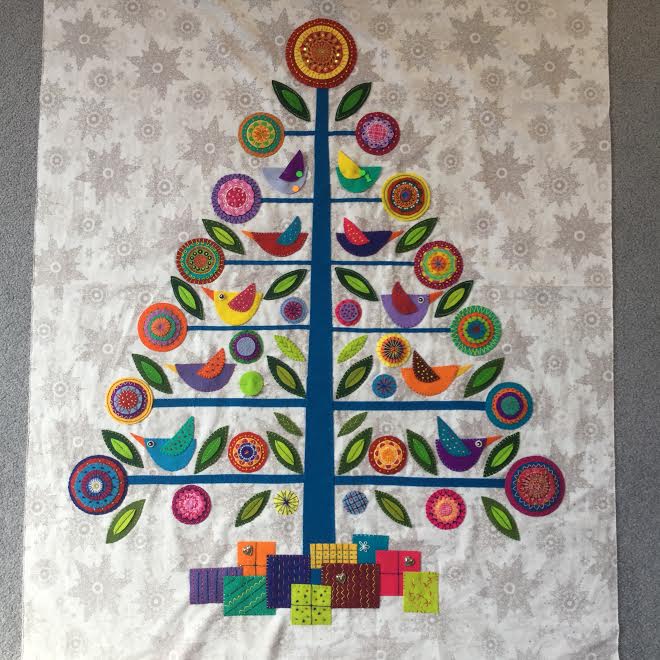
(3) nothing, or

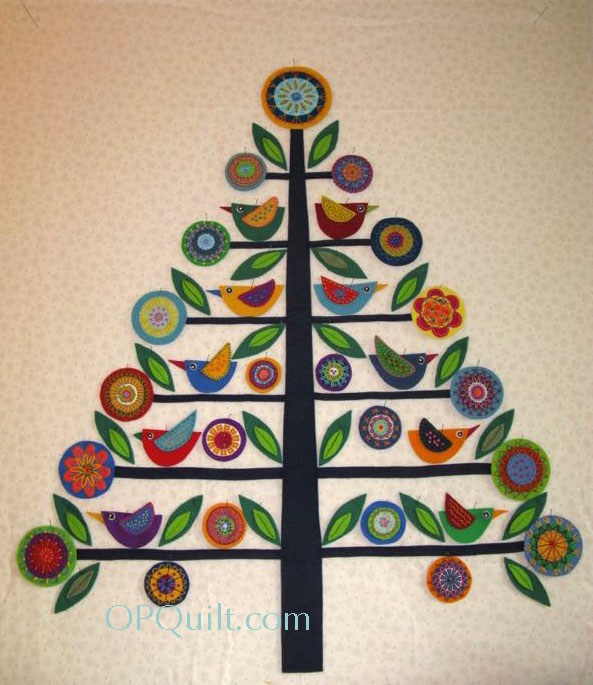
OhChristmasTree_Full Tree

(4) a nativity scene.

First, Wendy’s packages.
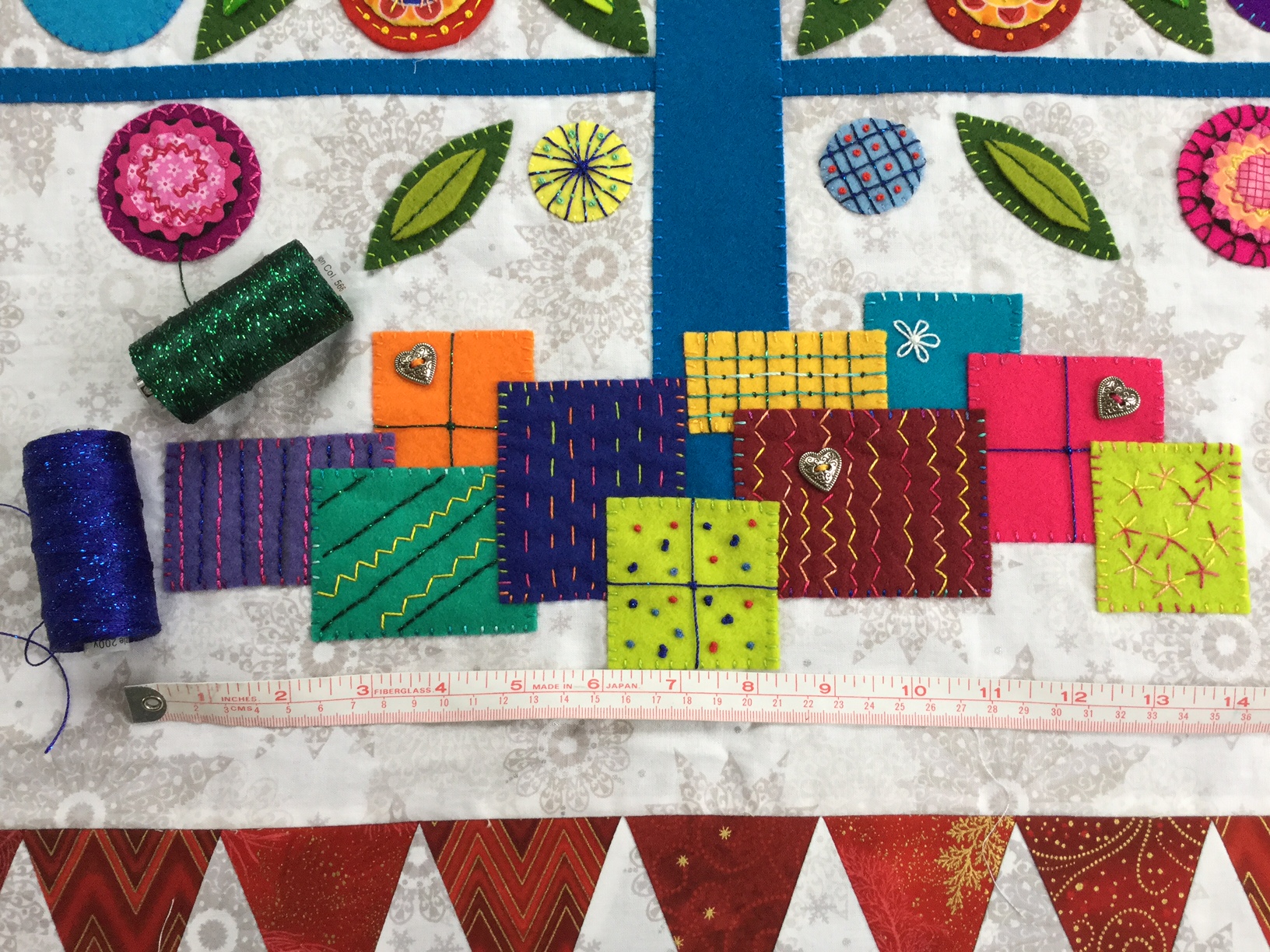
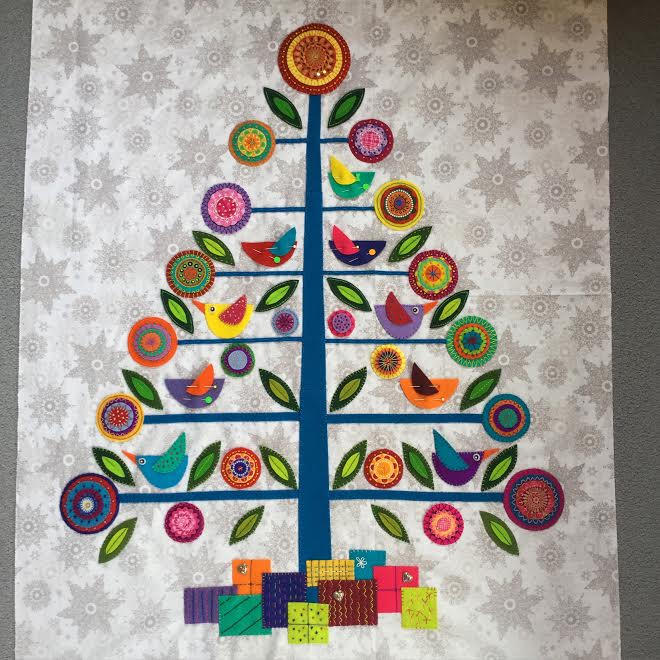
WendyPackages1

She has included photos, with a tape measure so you can see the overall length.  Remember, also, that she added a few extra flowers and leaves on her tree, as described in our last post. WendyPackages2

When I asked her about the packages, she wrote:

“You’ll see the boxes range from 2” to 3” and were really just cut from scraps of felt.  So whatever is left over.  I used threads to make them look like presents (including my Wonderfil Dazzle – which has bult in sparkle). And added a few novelty buttons from my button box.  I’m even going to add bows from ribbons once it’s quilted.”WendyPackages3

“So total length of presents = about 14”.  I just fiddled around until I was happy with the layout.  Sort the layout before stitching, because then you don’t need to stitch on the bits that will be covered up by another present.  I went for a range of colours and stitched a variety of patterns on them, just like real presents would appear under a tree.  I didn’t attempt balls or bikes, just kept it very simple.  You can imagine what might be in them.”
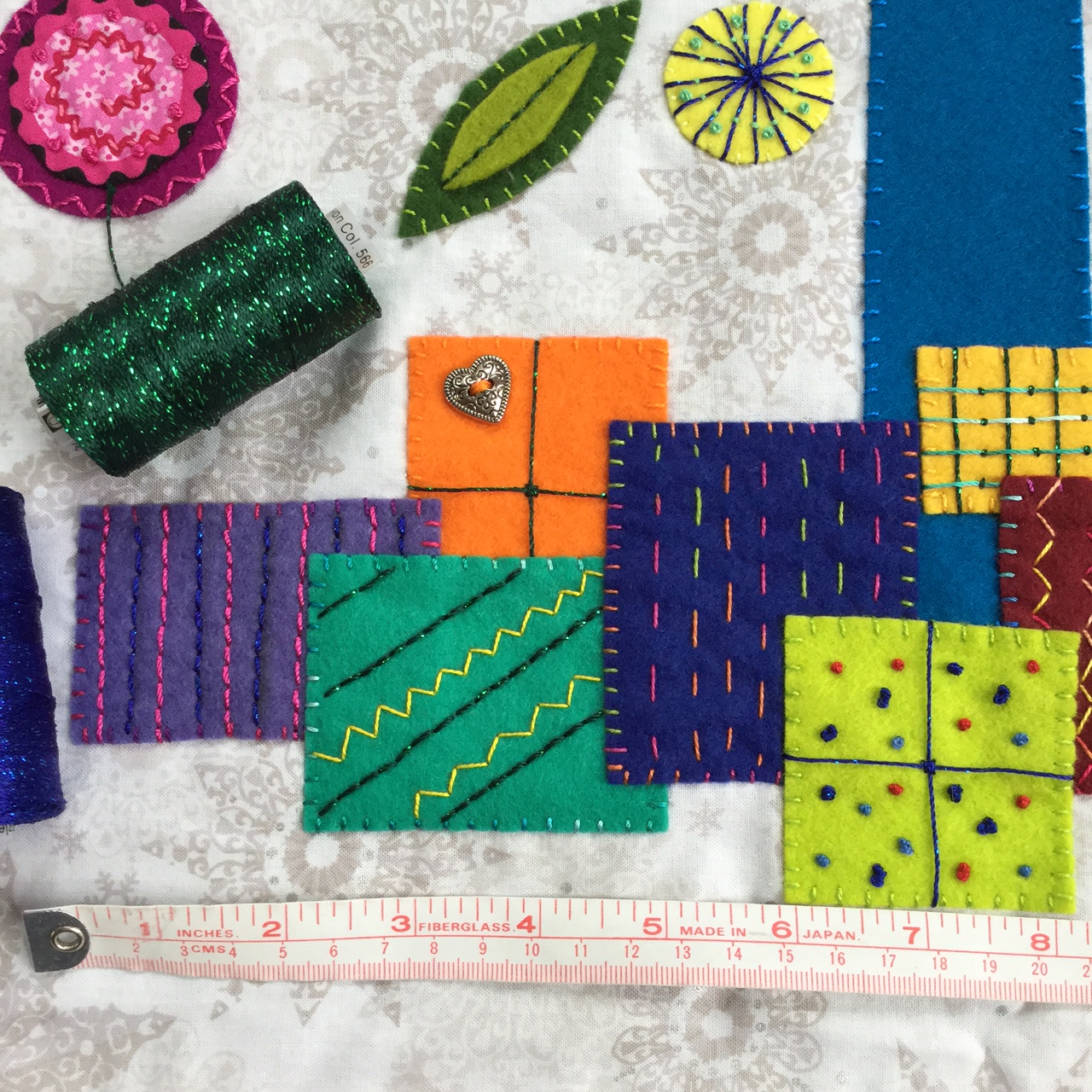
WendyPackages3 WendyPackages4back

I also asked her if she had embroidered them before, or after, she’d attached them to the backing:

“I had to check if I embroidered before or after I attached them.  The back view shows it was after.  I tend to take things cautiously and add more if I think it needs more.  Feel free to include that back view photo – sometimes it’s easier to remember if you’ve seen a photo.”

Thanks, Wendy–this is a great alternative!

Secondly, if you are going to do the reindeer, just follow the directions on the pattern, embroidering them before you put them on, then attaching them as we did the flowers and birds.

Third, do nothing.  I’ve heard from some of you, and there seems to be an ambivalence about whether or not to put anything.  You may want to hold off until you get your borders on, then decide.
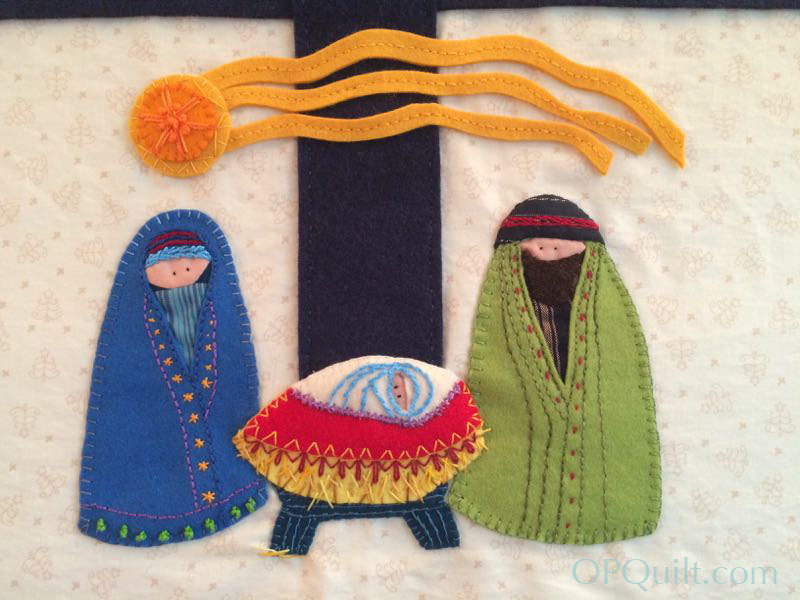
OhChristmasTree_Undertree1Full Scene

Fourth, the nativity scene.  I looked and looked for something that might work, finally adapting a folk-style couple with Baby Jesus between them, found on an Eastern-European art site.  I had thought about a silhouette of Mary and Joseph, but it just didn’t look right with our folk art flowers and birds.  I tried making them larger, as I realize it looks now as if the birds could put Baby Jesus into their nests, but I would have had to adjust the background placement about 3 months ago, and there was no way I was going unpick everything and re-do that.  So I decided that they would just look like one of those Nativity Scenes we put up around our house: smaller, a replica of the Holy Family.  In  the end, I am happy with how they turned out, but I always try to give you an idea of what I was thinking.  If you are doing options 1, 2, or 3, we’ll see you next month when we’ll do the sawtooth border (border #1).  But keep reading for the Nativity Scene how-tos.
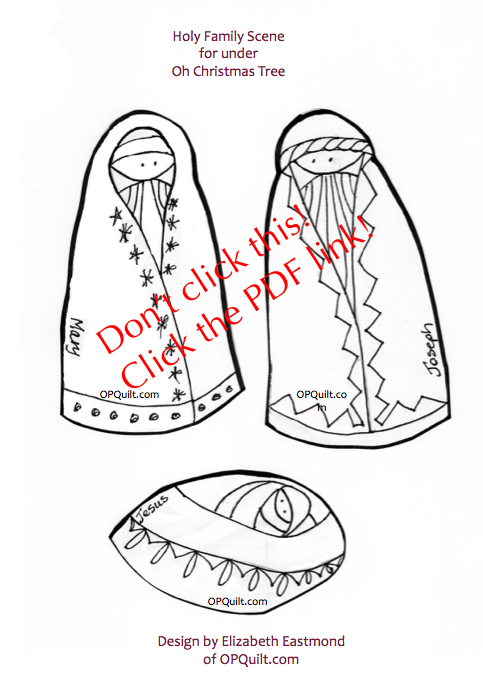
Holy Family

First up, the pattern, free of charge, no cost, no frills, and yes, you’ll have to improvise the manger and Joseph’s beard.  But the price is right.  Click this link in blue to download a PDF file of the pattern: Holy Family_OPQuilt  (Don’t click on the illustration.)  Print this out at 100% or larger (I used 100%).

JOSEPH

OhChristmasTree_0JosephPattern

Here is Joseph’s pattern, all cut out.

Basic steps:
1. Cut paper pattern pieces out; I cut a slit up Joseph’s robe pattern to get at the face and the under-robe.  I left the headscarf section on top in place for now.
2. Cut out the robe out of felt (don’t cut a slit up the center of the felt), then snip a slash in the middle to cut out triangle-shaped center, following the cut out of the paper pattern.  After doing that, cut pattern, freeing up the head scarf piece.  (I show it above all together, but really the paper pattern is in three parts.)
3. Cut face out of interfacing, and bond to face fabric–don’t make the face fabric too pink.  Joseph lived in the Mediterranean.
4. Cut under-robe, by tracing around the triangle-shape with a marking pencil, then cutting 1/4″ away from that tracing.  I tried to use stripes for both Mary and Joseph’s under-robes.
5. Cut out head scarf, by the same tracing method described above.
6. Cut out deep background out of black felt.  SEE BELOW.

OhChristmasTree_Joseph's underlay

I realized, after doing Mary, that the under-robe needed much more support than just cloth.  So I laid the pieces as shown above onto some black felt, and cut 1/4″ around everything.  That larger black felt piece (deep background) will be largely invisible, but is needed so the center section doesn’t become too floppy.
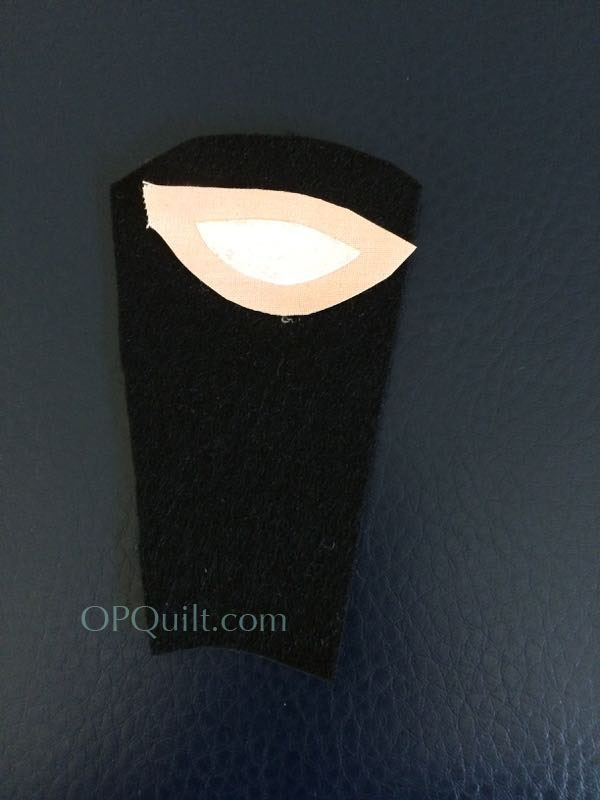
OhChristmasTree_1Joseph

7. Trim the face to 1/4″ around the interfacing.OhChristmasTree_2Joseph
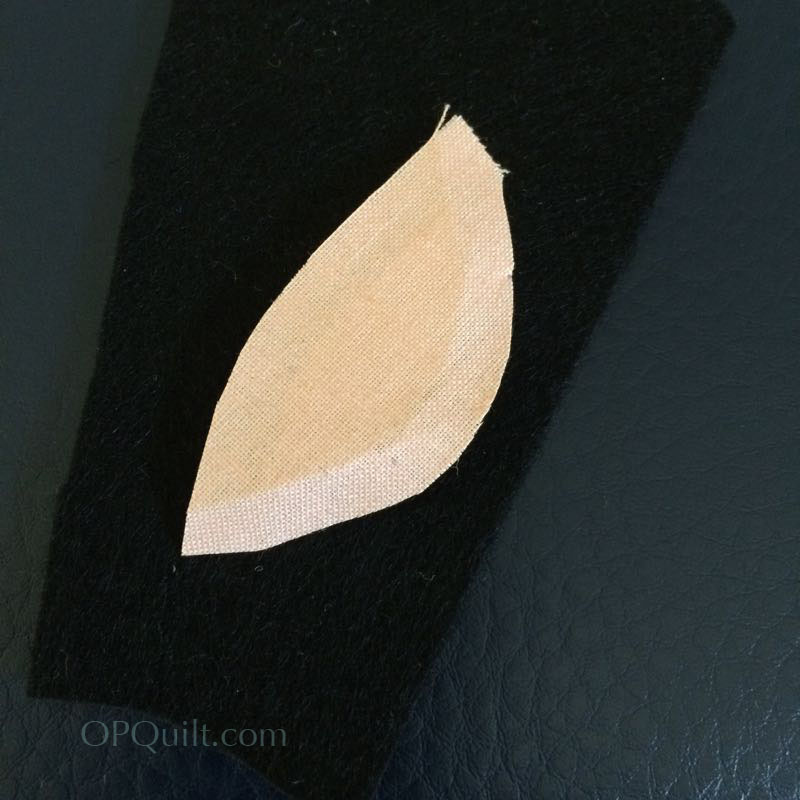
8. Pinch around the lower edge to establish a fold line for appliqué.  No need to do the top as it will be hidden by the head scarf.OhChristmasTree_2aJoseph

9. Find the center, fold up the “chin” and pin in place.  OhChristmasTree_3Joseph

9 (cont’d.) Appliqué down the face lower edge (see above photo for details) to the black (deep background).  Fold under the top edge of the under-robe and appliqué that just under the face.  They need to touch. Place head scarf onto felt robe piece.  Fold under lower edge and attach to face opening in the felt with tiny stitches.  Then fold to the back and tack down everywhere.OhChristmasTree_4Joseph
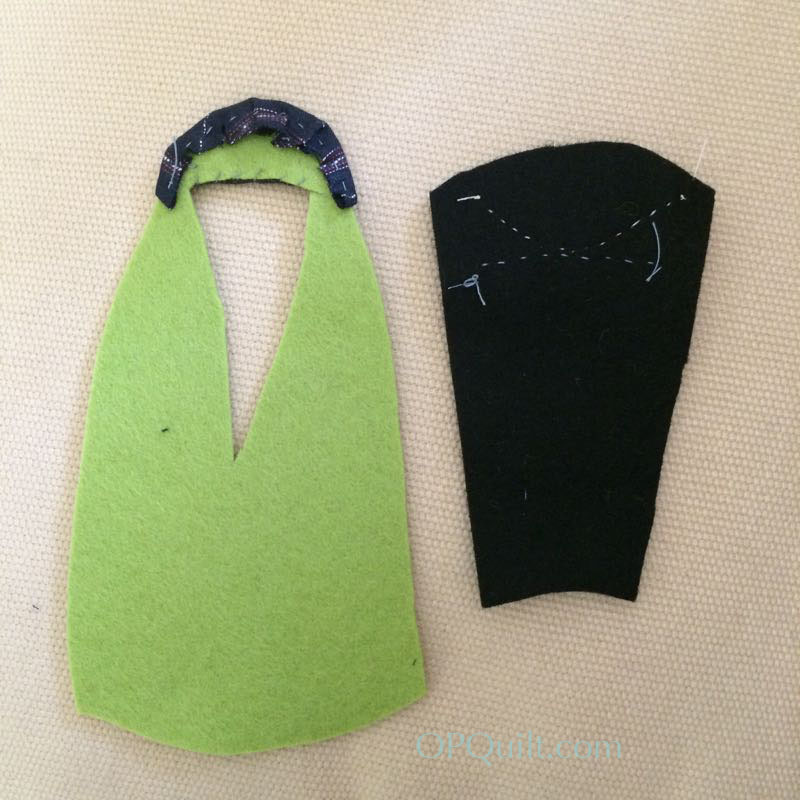
This is how things looked from the back.OhChristmasTree_5Joseph

10. Center the under-robe/face piece behind the robe/head-scarf piece; pin.OhChristmasTree_6Joseph

Lifting up the edge, trim away the excess.OhChristmasTree_7Joseph OhChristmasTree_8Joseph

Tack into place from behind.  It will really be anchored by the embroidery stitches you do, but you don’t want it slipping around while you handle it.  All of the above steps took about 30 minutes; it looks longer because I’m describing them to you, but since this is smaller, the stitching goes quickly.

MARY

OhChristmasTree_Mary1pattern

Repeat basic steps with Mary, but there is no separate step for the head scarf.  Make a (deep background) piece out of black felt for Mary as you did for Joseph.  (I didn’t, and I wish I had, so ignore that tiny deep background piece above (and below) and create one as large as Joseph’s.)OhChristmasTree_Mary3pieces

In addition, DON’T trim the upper edge of Mary’s face piece until nearly the last step, as you need all that extra.  DO trim the “chin” area to 1/4″ seam allowance, then pinch along the fold line, as you did for Joseph’sOhChristmasTree_Mary2bfacefront
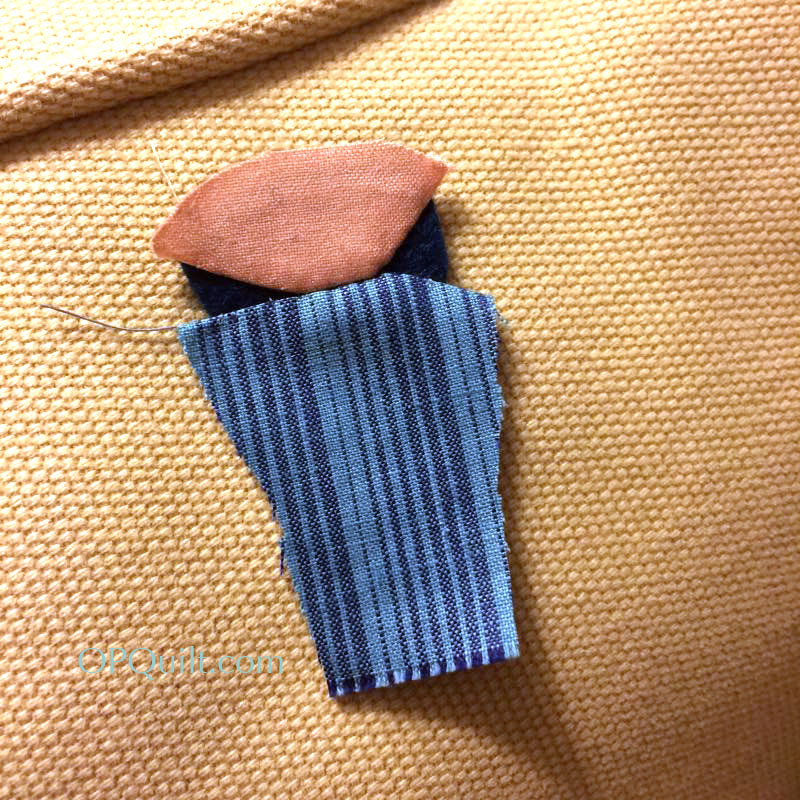
Pretend this is all on a (deep background) black felt piece, as is Joseph’s. It should be.  Construct in the same fashion, turning up lower edge of face and appliqué onto black felt piece, then do the under-robe the same as Joseph’s.  OhChristmasTree_Mary5assembled
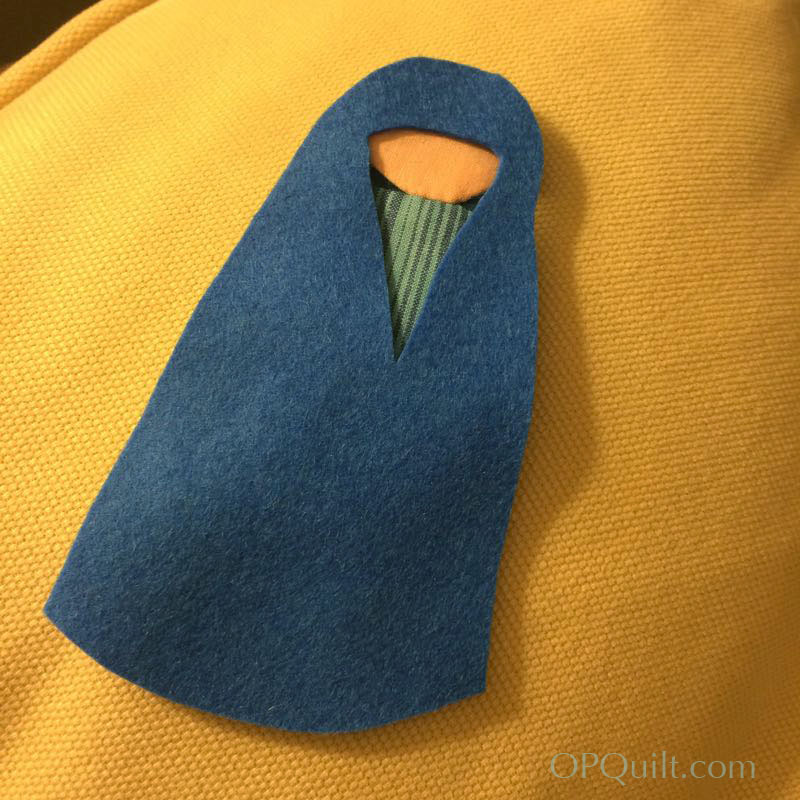
Mary doesn’t have a head scarf that is a different piece of fabric.  Women in her day and religion didn’t show their hair, so I purposely didn’t make hair for her; you be the judge of what you want.OhChristmasTree_Mary4pinned

Pin the under-robe/face piece in place and tack down from the back, as you did for Joseph.  Sorry for the nighttime-on-the-sofa-cushions photo.OhChristmasTree_Mary6embroidered
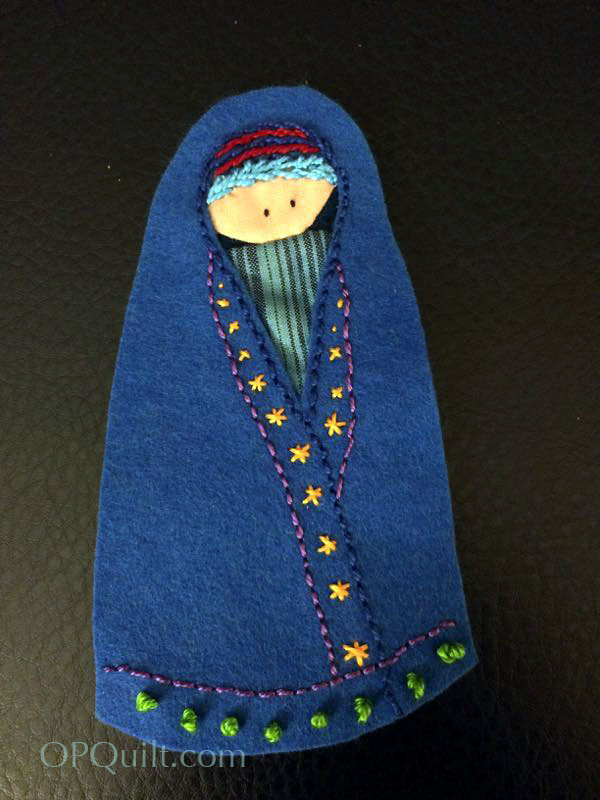
Now add the embroidery.  I put several lines of “scarf” on her, alternating navy and red threads, then another line of “braid,” closer to her face, to lower her forehead (foreheads shouldn’t be too large otherwise they’ll look funny).  I used blue slightly slanted stem stitches, to give texture.  I did a back stitch to outline the fold of her robe, then up around her head, mostly to anchor the robe/face/deep background piece in place.  I did a backstitch about 1/3″ away at the hem, narrowing as it came near her face, then around the lower edge.  I added small flowers and decorative French knots.

OhChristmasTree_1Couple

Time to add some embroidery to Joseph.

OhChristmasTree_Undertree6

I did two lines of stem stitch on the scarf, acting as a braid holding it on.  Then I figured out his beard by tracing a shape off the pattern about 1/2″ long, as wide as the opening, and in a wide arc at the top on his face.  I used felted wool to get the right texture.  Tack that on.  Then start adding embroidery to the robe: back stitch, seed stitch, building up layers of design.

I actually gave some thought to the colors I used.  Knowing that red is for the Savior’s robes after He’s resurrected, I tried to incorporate that in.  Purple in my mind is for royalty, so Mary got some of that.  Of course, Mary has to be in blue–she just does.  I always think green is about life and living things, so Joseph got that color.  You decide what colors matter to you, and where to put them.  I stitched Joseph’s decorative lines in a variegated thread, so they have some depth to them.

OhChristmasTree_Undertree4

In stitching the vertical lines, be sure to get narrower near his face, and farther apart nearing the hem of his robe.  Add eyes.  They are not French knots, but merely a tiny stitch.  Set Mary and Joseph aside.

BABY JESUS

OhChristmasTree_Jesus1

Here are the pieces cut apart, with wool felt.  DON’T CUT THE YELLOW LIKE THIS.  I learned my lesson from Mary and Joseph and re-cut the lower yellow to be sort of a large oval; see below.OhChristmasTree_Jesus3
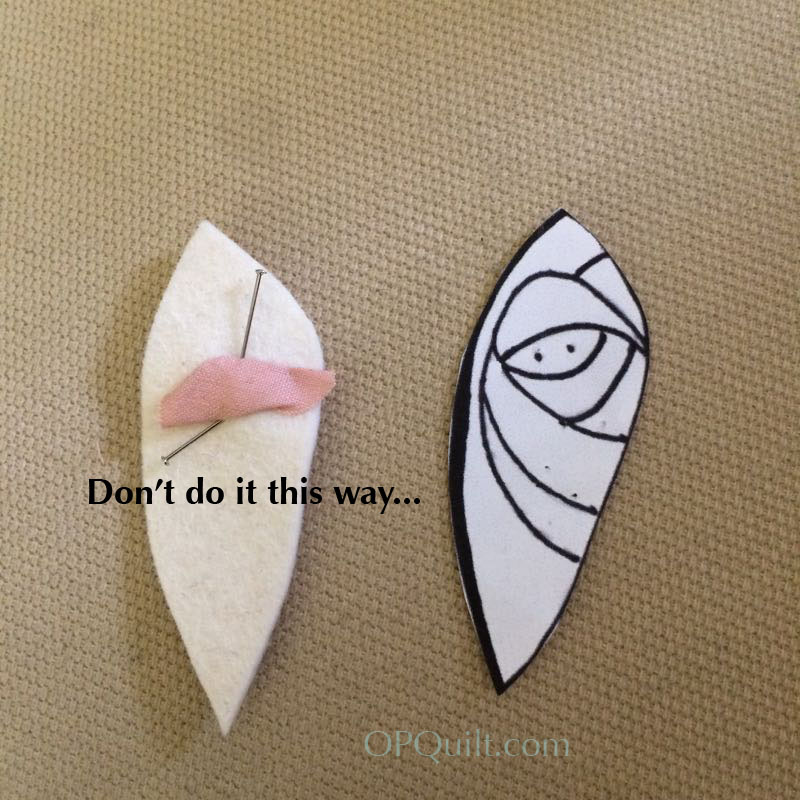
And here’s another DON’T DO.  Don’t appliqué the face ON the white.  I’ll show you a better way in a minute.OhChristmasTree_Jesus4
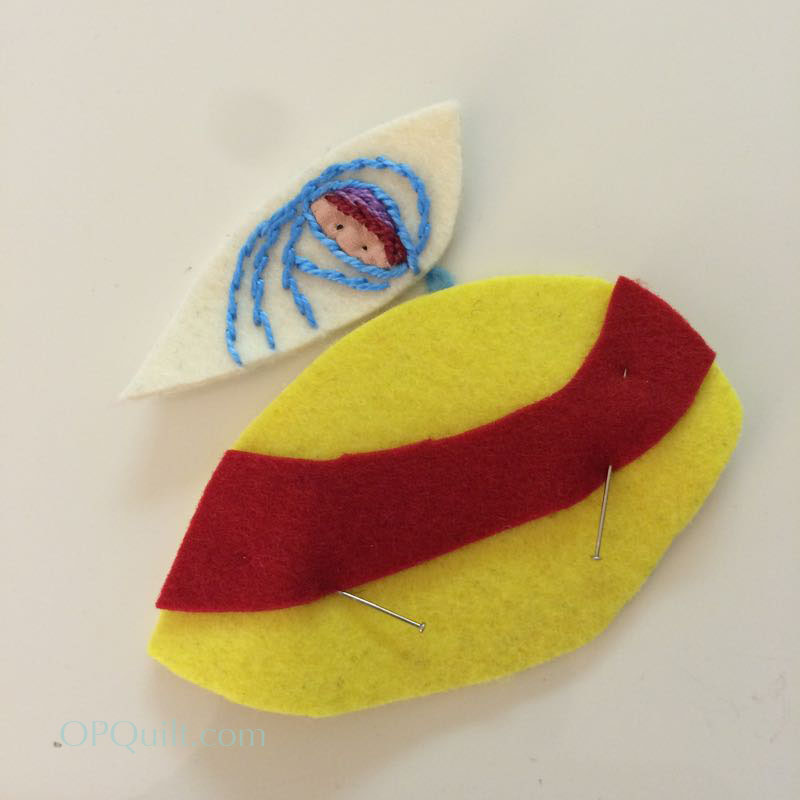
Here’s the face appliquéd on like his parents.
OhChristmasTree_Jesus5

Yes, he does resemble a Cabbage Patch Doll. OhChristmasTree_Jesus6

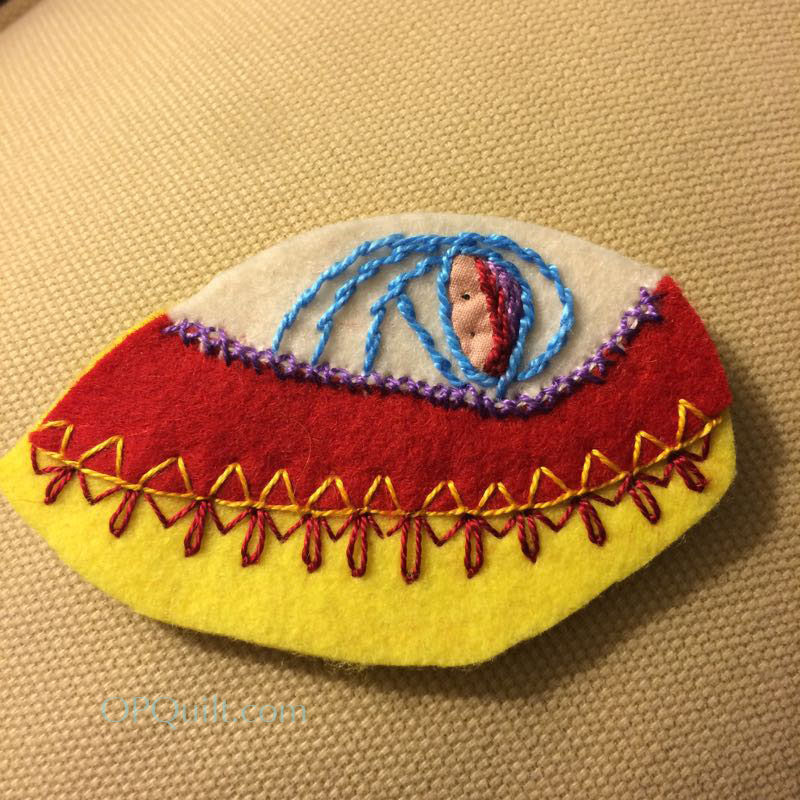
 So, instead, CUT OUT that oval-ish slit.  Tack the baby’s face in BEHIND the slit (easier to do at the beginning).  Stitch the swaddling cloth lines in blue around the face.  Then layer him on the yellow felt, with the red felt nestling in just below the white (see above, for the colors I chose).  Start anchoring everything down with stitches.  You can’t really see, but behind those purple cross-stitches is a small overcast stitch anchoring the white to the red to the yellow.OhChristmasTree_Jesus7

Now, doesn’t Baby Jesus’ face look better peeking out from behind the swaddling cloths?OhChristmasTree_Jesus8
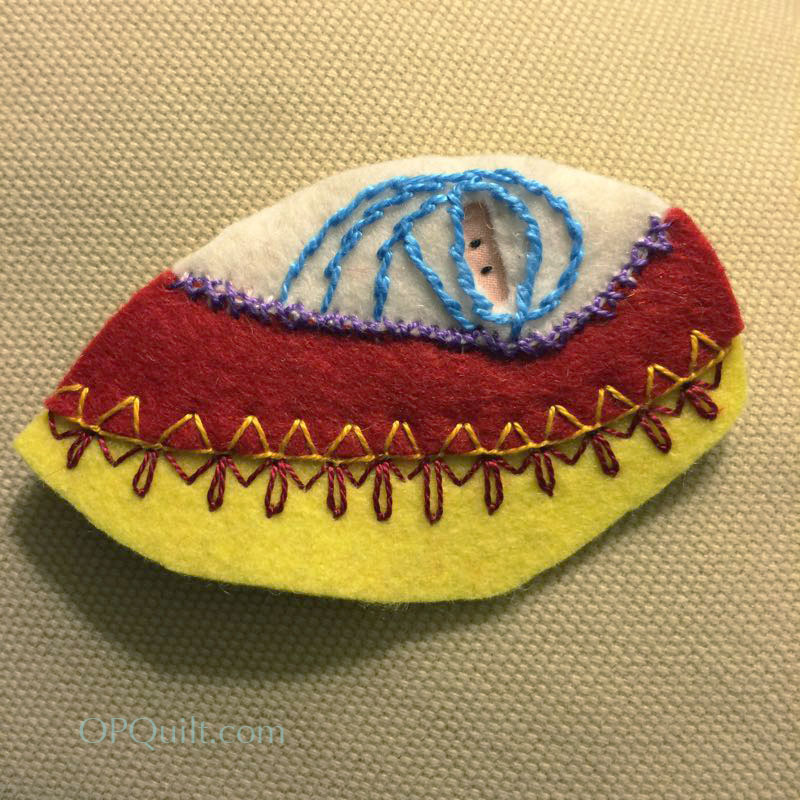
I did the angled buttonhole stitch on his blanket, using yellow thread on the red, then tried to make a red fringe-looking stitch, as if there were fringe dangling down over the yellow (which becomes hay).  I did the hay stitches at the end.
Manger

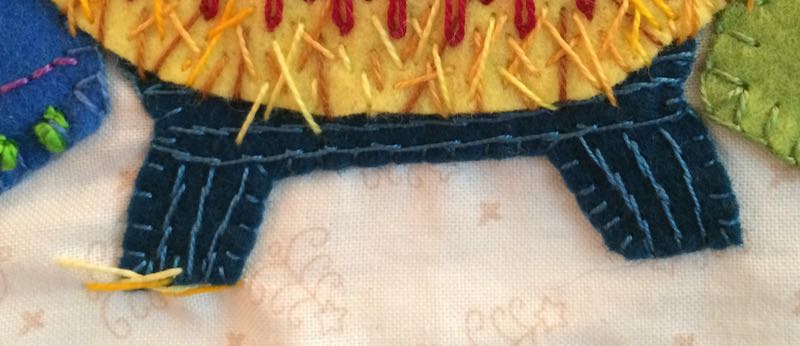
The manger was a half circle of blue, into which I cut legs then straightened out the bottom edge, so it looks sort of like a pot with legs.  Or a step stool with a thick seat.  It’s slightly less than the width of the baby’s assembly.

All of the decorative wood-grain stitching was done as before I tacked it onto the background.  That is simply a stem stitch, done loosely and jaggedly, in a thinner thread (size 16 pearl cotton, but 12 would be fine), trying to imitate wood.  The small buttonhole stitch is how I sewed it to the background, and that happens when attaching all of the Baby Jesus’ unit.

Star and Star Trails

OhChristmasTree_UndertreeStarCut a 1 -1/2″ circle of yellow felt, and a 1 -1/4″ circle of light orange felt.  Embroider them as shown (omitting the outside small yellow stitches–that’s added when you tack it onto your background).

The star trails are about 7 ” long, about a fat quarter-inch wide, and are slightly wavy lines.  Sometimes they are a bit thicker.  Don’t be too precise with them, as you are making folk art.  In addition, make gradual waves — not sharp curves.  You can shape them into the slight curving shape when you attach them, largely because of their gradual waves.  I used a backstitch to put them on.  I did not attach them to the star, but stitched them on, making sure they all ended in one place, then stitched down the star over that.

OhChristmasTree_Undertree8 OhChristmasTree_Undertree9

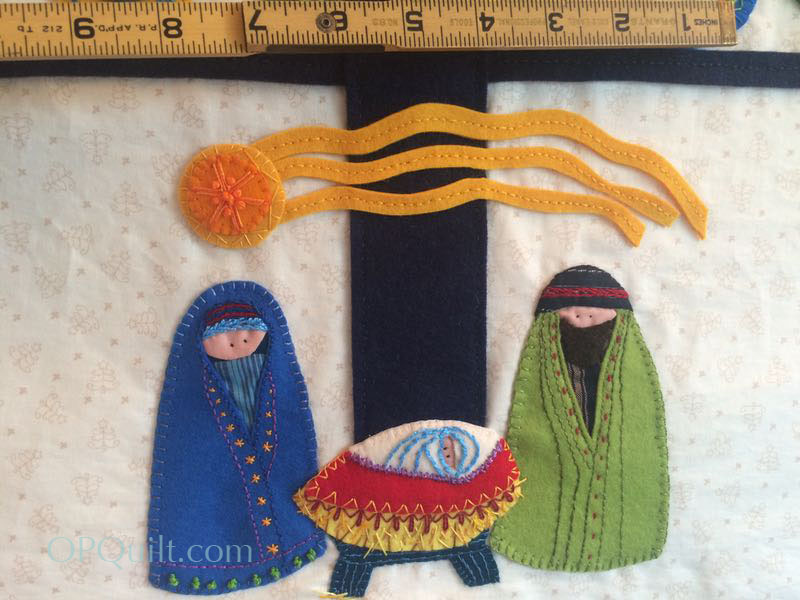
Here’s a ruler showing the approximate placement of things.  The end of the tree is about even with the top of the blue manger.  I pinned and checked several times, moving things by quarter-inches until I got them the way I wanted them.  Notice that Joseph is closer to the tree, and Jesus overlaps both their robes.  It just looked better that way to me: you decide what you like.

I used a buttonhole stitch to attach Mary all the way around, but only did Joseph’s robe.  I switched to sewing thread and simply tacked down Joseph’s head scarf, without decorative stitches around it.
OhChristmasTree_UndertreeSewing

Now I’m starting on the hay for Baby Jesus. Notice that I completed the zig-zagging buttonhole stitch along the sides of his red blanket.  If you have yellow felt peeking out, trim it slightly smaller than the red and finish the stitching down.  In the photo above, Mary, Joseph, the manger and the upper half of Baby Jesus are all stitched to the background.  For the hay, I used a variegated light brown–golden yellow–med. yellow thread.

OhChristmasTree_Manger2WoodStitches

I started by making “hay” stitches all over, crossing each other, going over the edge like real hay would.
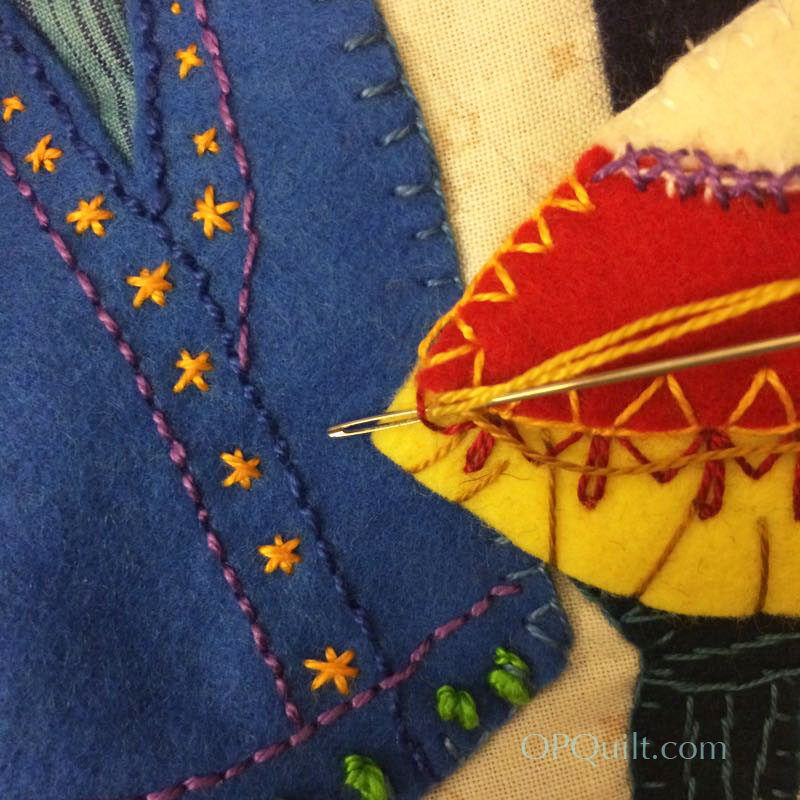
OhChristmasTree_Manger1Straw

I turned the needle around and “threaded” it through the fringe on his blanket, when I needed to stitch hay behind the fringes.  The thread colors in variegated run in long sections.  Above you can see that I went quite wide with the med. brown section, then when the golden yellow section came up, I went over that section again.  Some stitches are long, some are short.  Some are perpendicular to the lower edge (I did that at the beginning, to anchor it to the background). Some stitches are at a 45-degree angle.OhChristmasTree_Manger3FallenHay
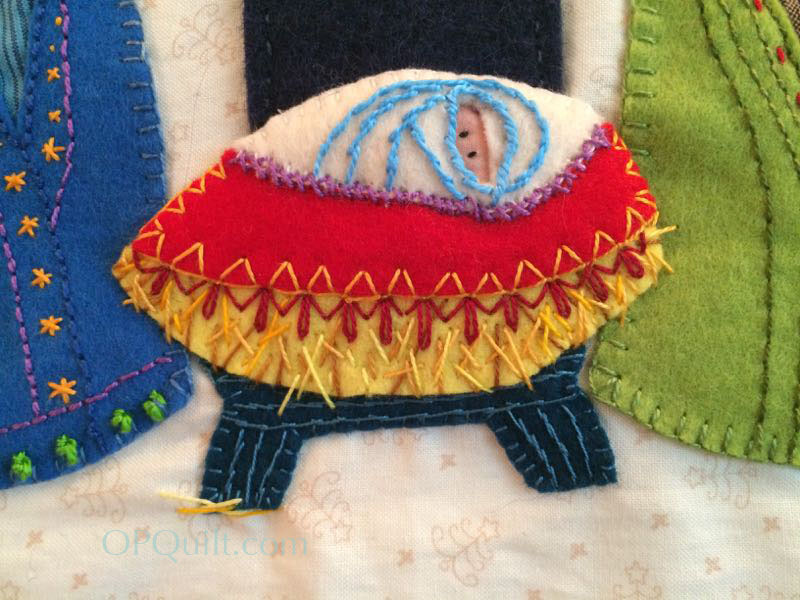
I even put a few strands of hay on the ground, and had them fall over the yellow onto the manger and onto Joseph’s and Mary’s robes.  It has to look slightly dis-organized, like, well. . . hay.

Here are some more pictures of the Nativity, showing detail.OhChristmasTree_Undertree5 OhChristmasTree_Undertree4 OhChristmasTree_Undertree3
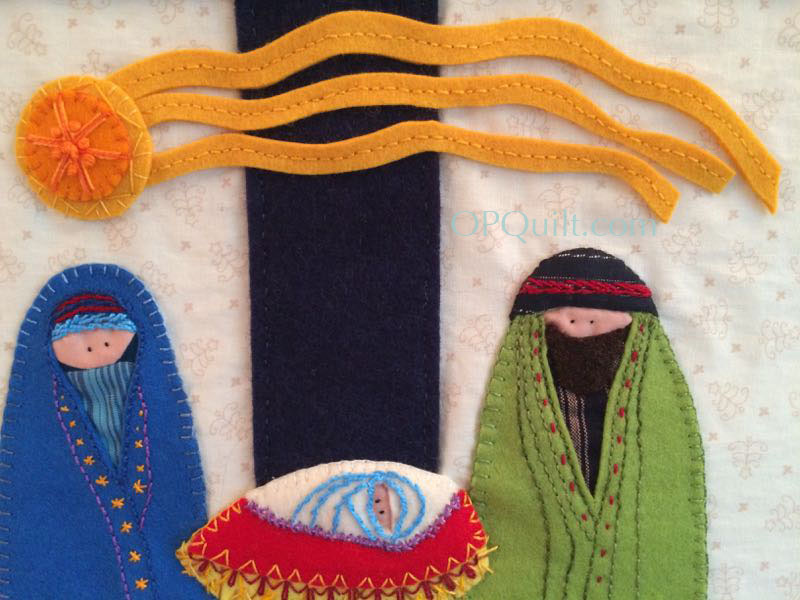
Mary was stitched down with a variegated blue thread; I like how it went lighter around her head.  Totally random.OhChristmasTree_Undertree2b OhChristmasTree_Undertree1Full Scene
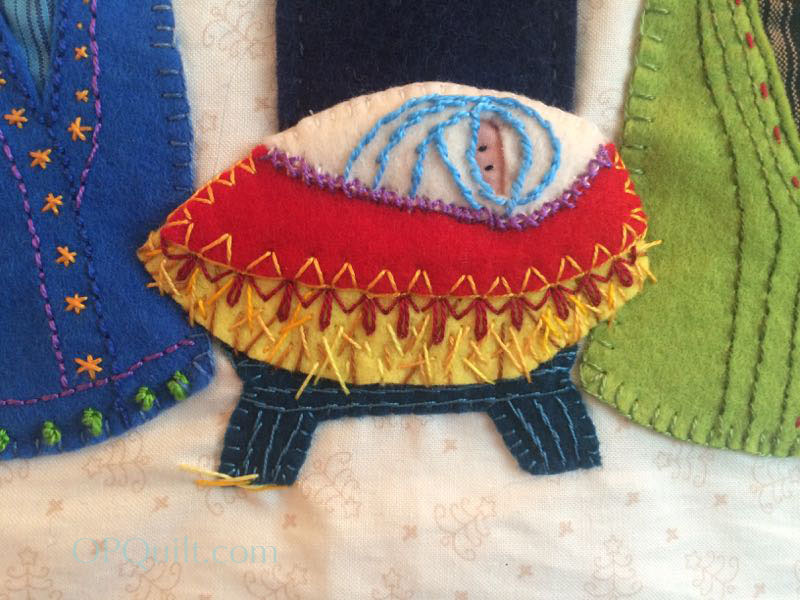
Whatever you choose to do, please keep tagging your photos on Instagram with #ohchristmastreeqal, so we can all share in your progress.

Giveaway Banner

As I was wandering the aisles of Quilt Market, I found the National Nonwovens Company, who deals online with retail at Commonwealth Felt.  After seeing my enthusiasm for wool felt — I don’t think they’d had that much excitement in the whole time they manned their booth — they happily donated some samples both of their 100% wool felt as well as their wool/rayon felt blend in their new colors.
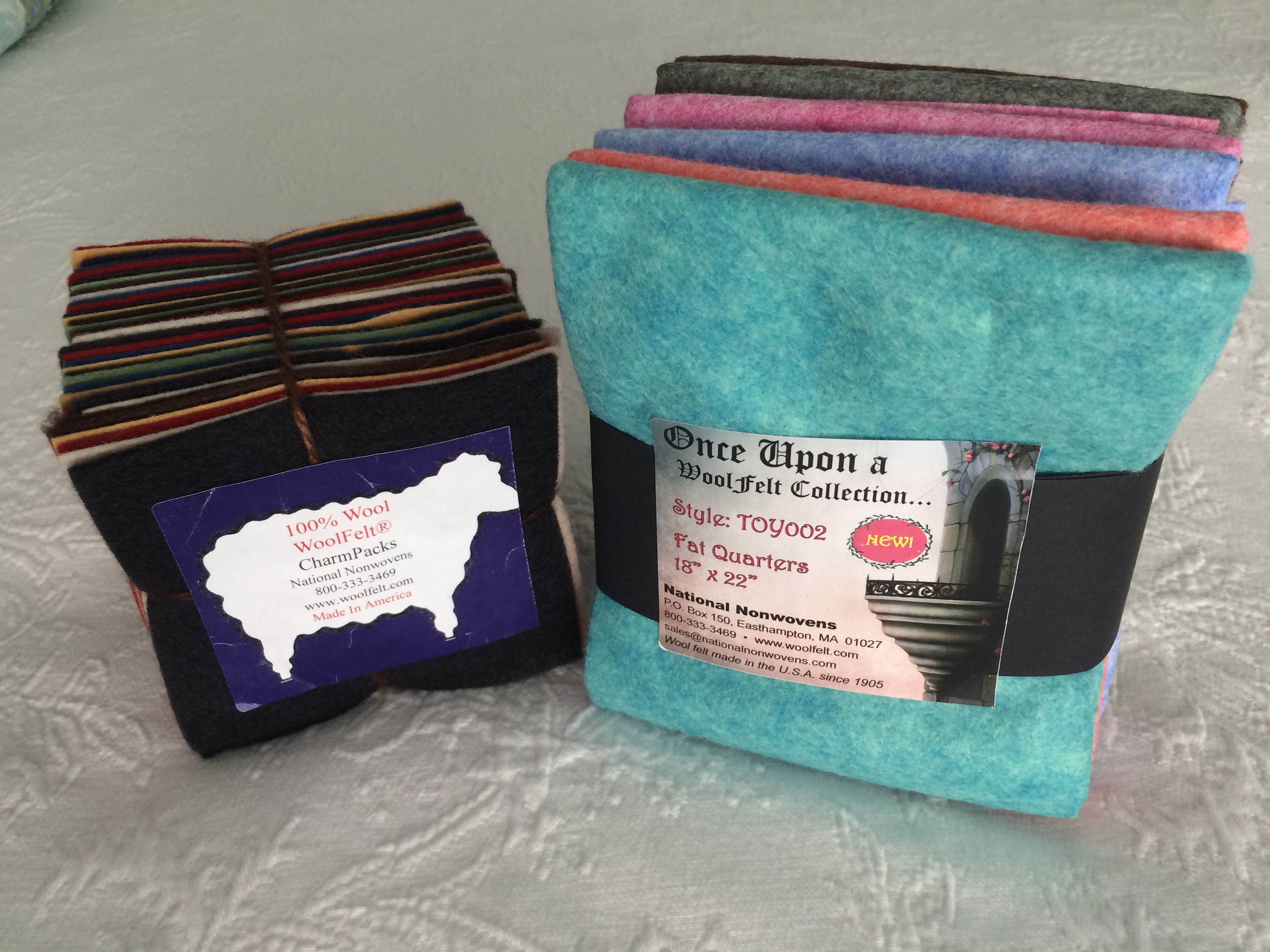
Felt Giveaway2

The packet on the left is a mix of fall/summer colors, including medium blue, yellow, red, white, green and black:
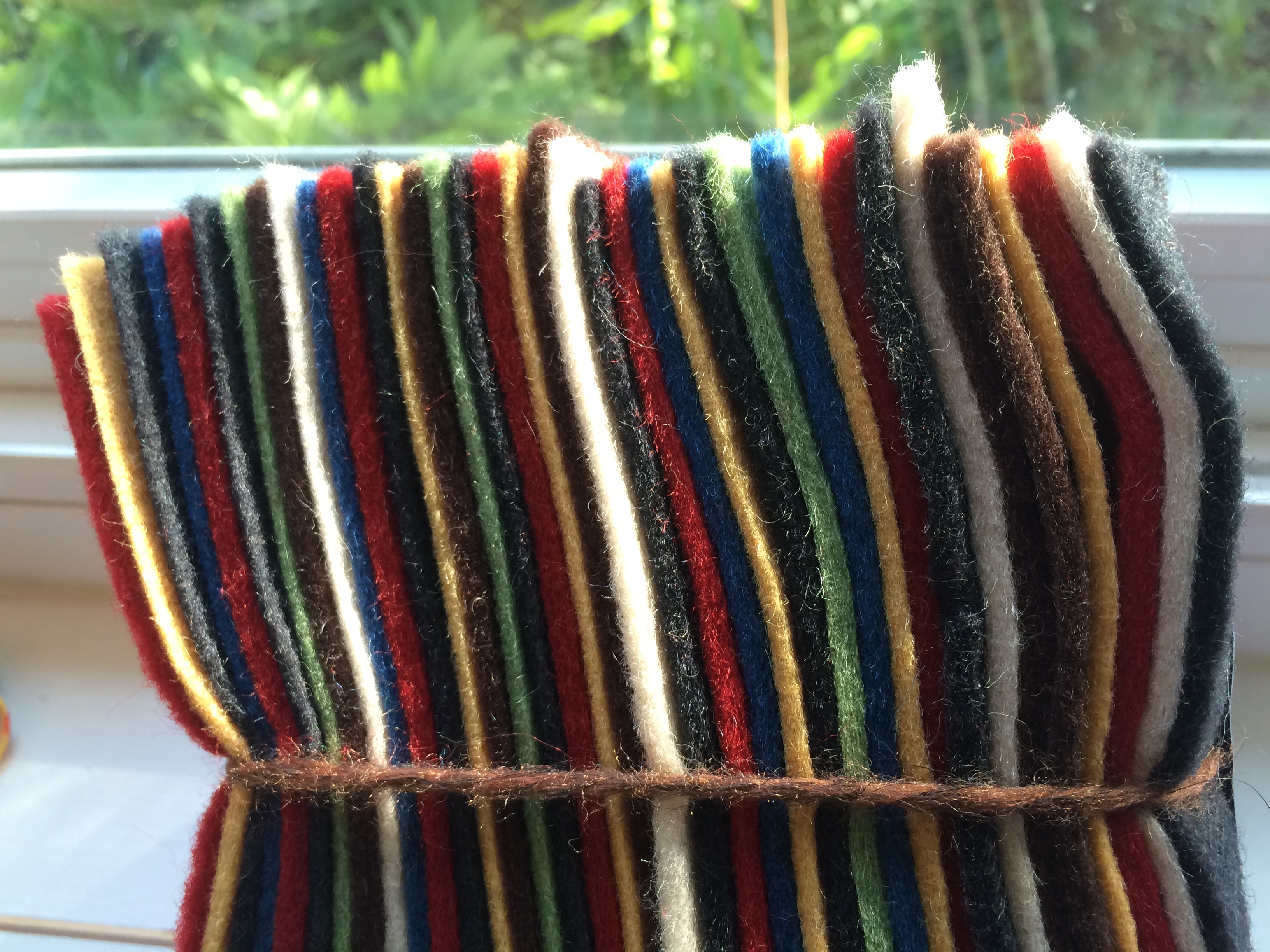
Felt giveaway 4

To win, leave a comment below telling me why you don’t think it’s crazy that we’re making Christmas things in JUNE (sometimes I think I’m crazy!).  I’ll activate the Husband Random Name Generator and pick a winner.  Good luck!
Here’s a recap of our schedule:

January, Step “prepare”: buy the magazine, books, gather your fabrics, buy the felt/wool, buy/find the pearl cotton.
February, Step 1: Make the tree on the background and stitch it down.
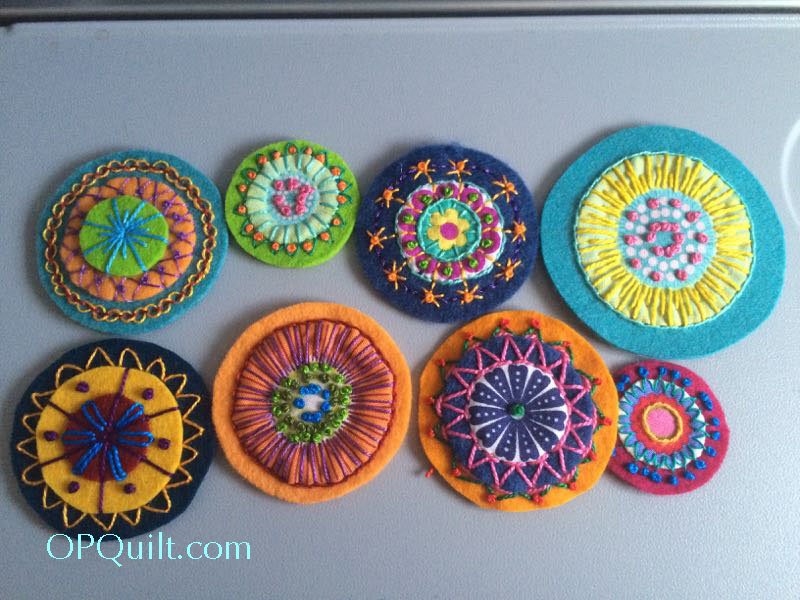
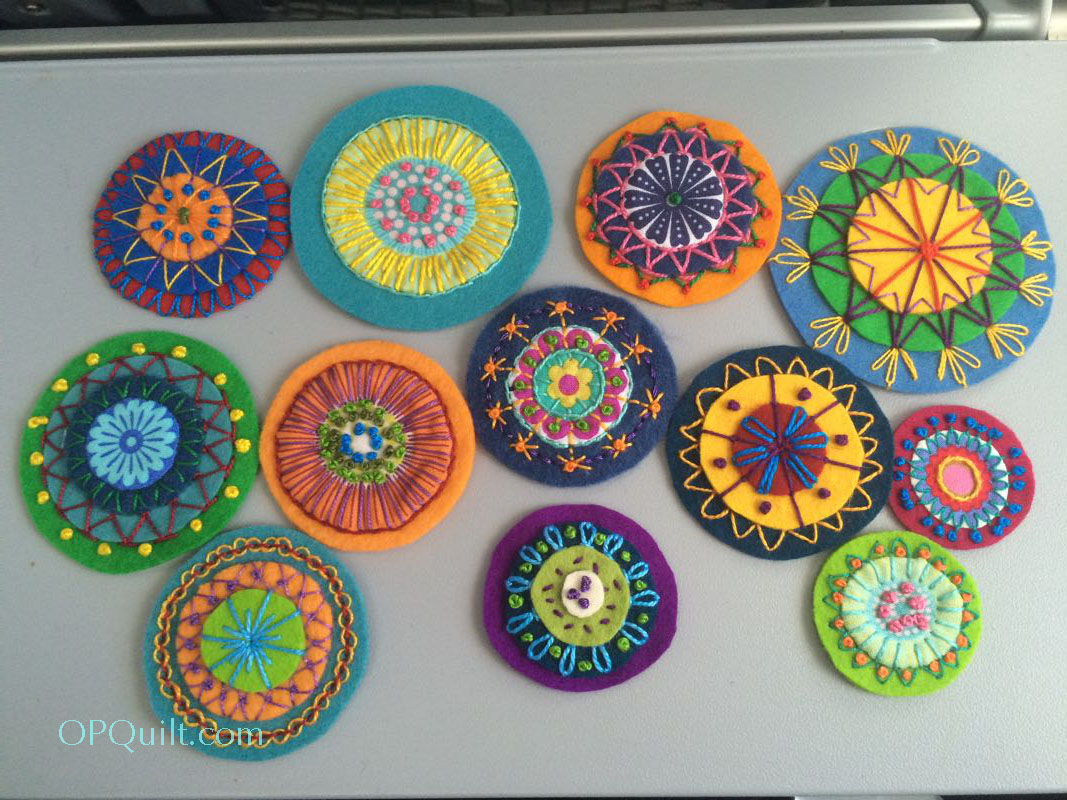
March, Step 2: Make 21 flowers.
April, Step 3: Make 10 birds and all the leaves.
May, Step 4: Appliqué down the flowers and birds.

June, Step 5:  Scene at bottom of tree–make, then appliqué onto background.

July, Step 6: Sawtooth border (reds); sew together and attach.  I’ll have another idea for you to try, as well.

August, Step 7: (finish up Quilt-A-Long): Make wonky star blocks, sew them together and attach border #2.

September, Step 8 Show and Tell, just in time for school starting again.  Please send pictures of whatever state your Christmas Tree is in–whether it’s just the bones of the tree, of a completed top–we want to see it!
Happy Stitching and we’ll see you in July!

Oh Christmas Tree QAL · Quilts

Oh Christmas Tree QAL –STEP 4

5XmasTreeMay4

Today is Step 4 of our Oh Christmas Tree Quilt-a-Long (#ohchristmastreeqal), following a pattern by Wendy of FlyingFishKits and which was published in Simply Moderne issue #3, by QuiltMania. As always, we have an assist from Wendy of  Wendy’s Quilts and More (blog) and wendyquiltsandmore (IG), as she is slightly ahead of us in her creating.

ohchristmastree4_0treejpg

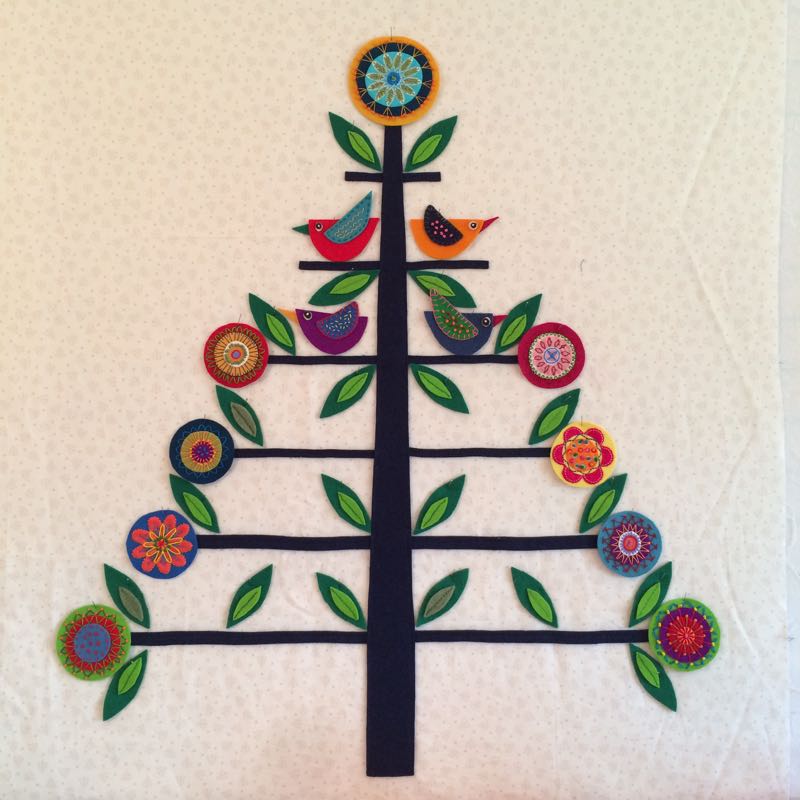
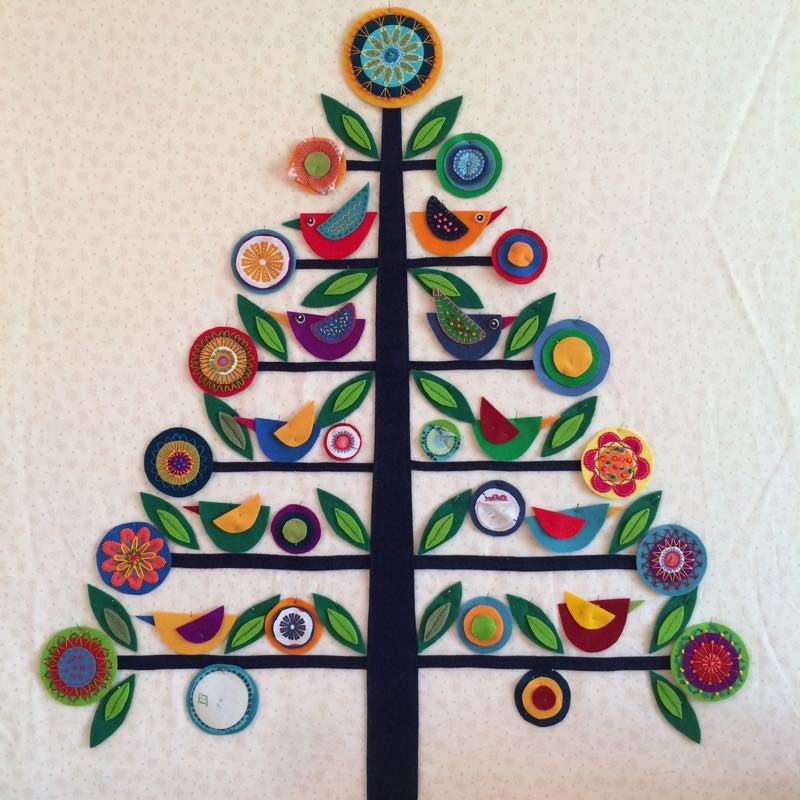
Here’s the twist: instead of creating the under-the-tree scene this month, I’ve gotten so many queries about sewing these things on to the background and the tree, that I think we’ll head that direction instead.  Go with the flow, right?  Above is my tree, everything sewn on.  I’m heading this direction because a lot of those questions have to deal with the idea of how much embroidery to put on that outer edge?  Should you leave a space for attaching and more embroidery?  Should you go right to the edge?

The basic idea for attaching is this: lay out your circles, birds, and leaves to your liking, using the pattern and photos as a guide.   As I go through the rest of the flower photos, I’ll have some tips, so please read through to the end.  But first! Wendy has some tips for us about what’s ON the tree:
ohchristmastree4_20

She writes: “I thought I had too much white space in certain areas.  I’ve added 4 more small leaves and 4 more small circles, keeping the additions symmetrical because the gaps were symmetrical.  I just felt some areas were less densely filled than others and I didn’t want gaps in the middle of my tree.  That’s probably because I didn’t exactly follow the pattern for the size of my leaves and flowers, but also because things move slightly as you sew them on.”  She sent me two photos.  The “before” is above.

ohchristmastree4_21

This is the after.  You can see extra circles and extra leaves.  (And yes, I love her under-the-tree scene!  Next month, next month.).  In addition to adding these extras, she attaches them differently than I do.  First she lays them all out, takes a photo so she can remember where they are, and then takes all off but the items closest to the tree trunk.  She sews those down first then adds in the decorations bit by bit, moving from the center to the outside, because she said she got tired of being stuck by pins.
ohchristmastree4_10

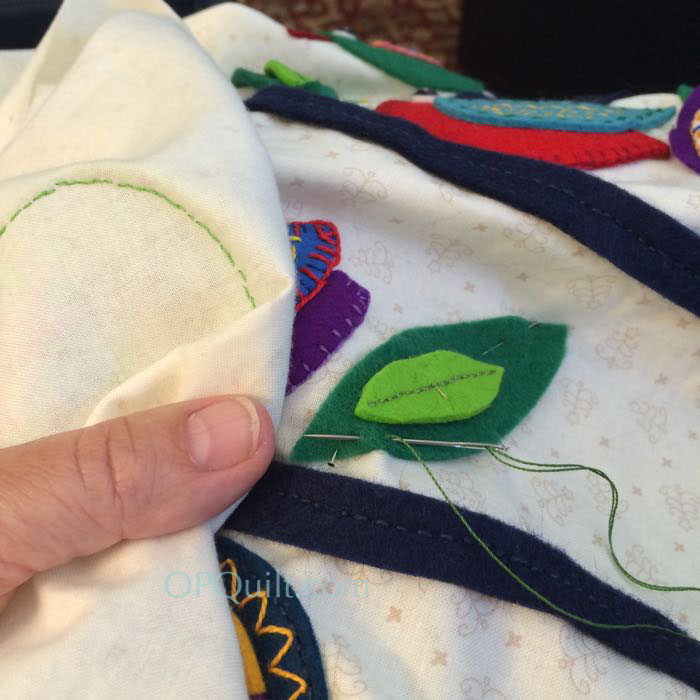
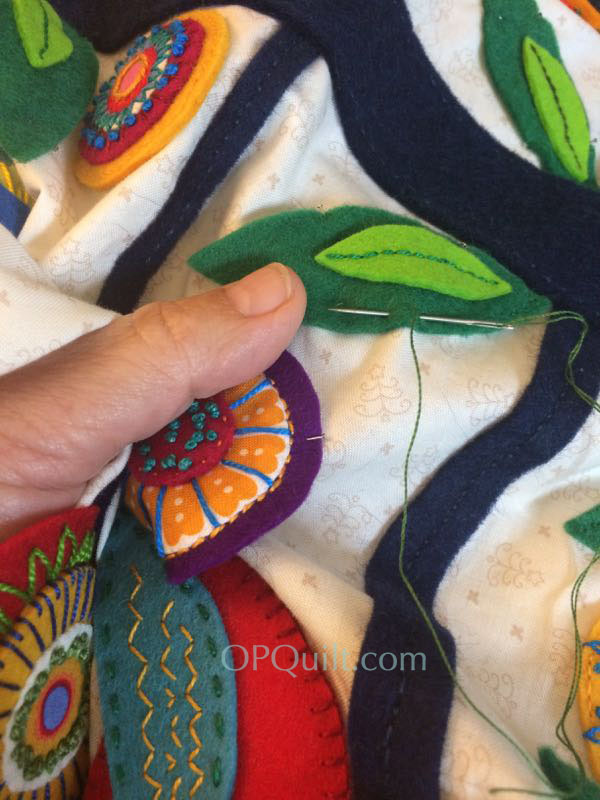
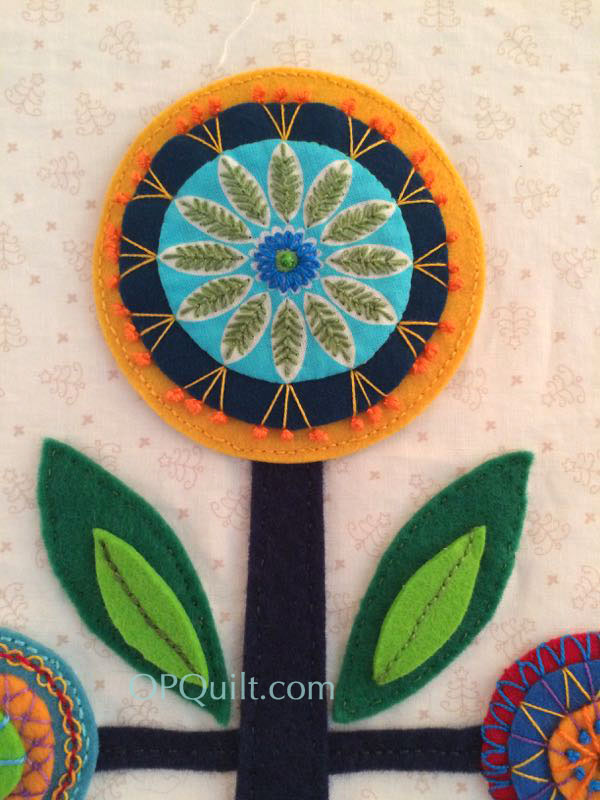
I couldn’t face the thought of re-attaching the flowers after I’d gotten them arranged, so I used appliqué pins (shorter than usual) and sewed on the decorations moving from the outside toward the center. Since I use really small pins, and put my hand around the flowers and birds as I sew, I didn’t have too much trouble.  One IG reader said she used a bit of glue to secure the decorations and from her photo it looks like she’s attaching them from the inside to the outside. Again, try what works for you.ohchristmastree4_11

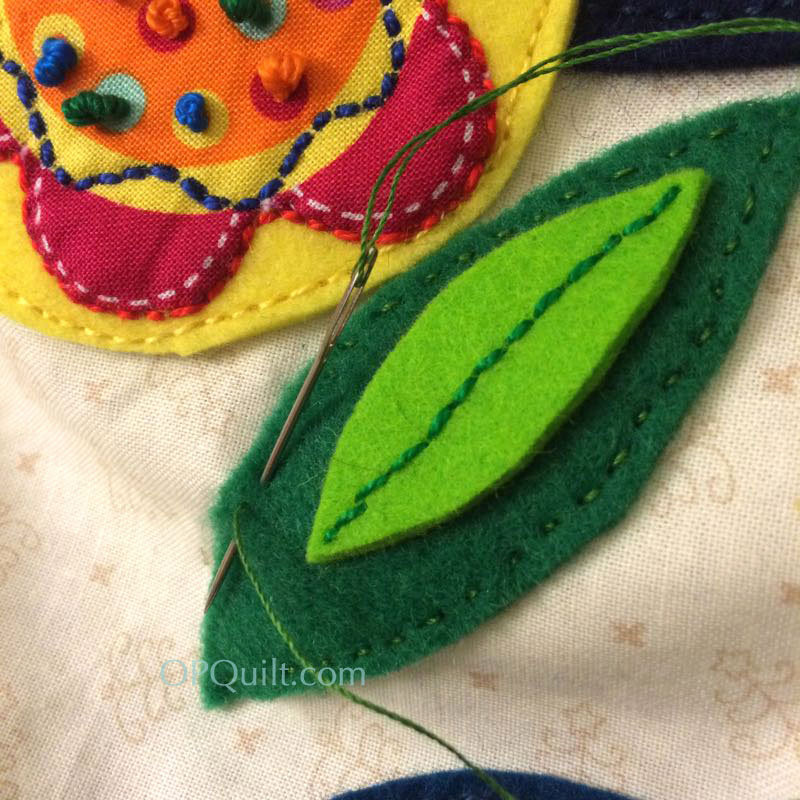
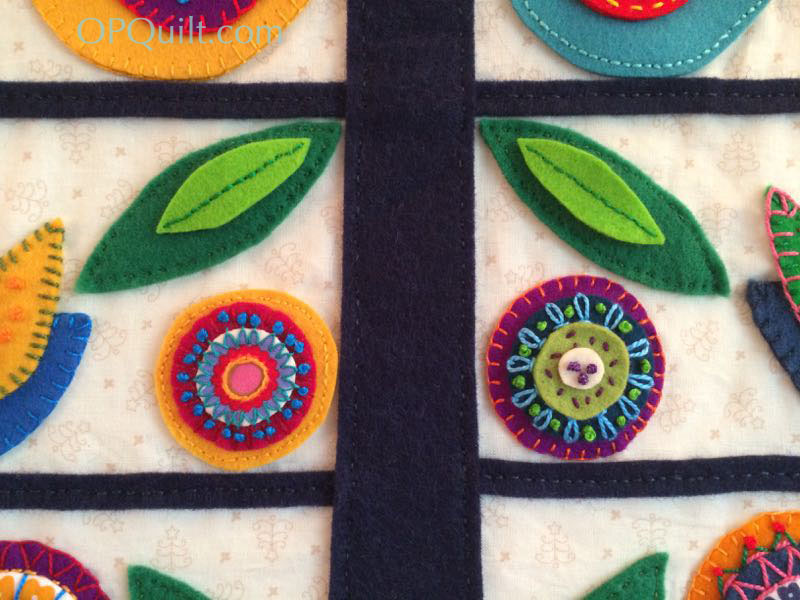
You can see me scrunching things up in my hand.  Since I worked from the outside in, I had very few pin pokes.  I attached the leaves by using the same stitch I used on the trunk: a separated back-stitch (refer to this post for more info).

ohchristmastree4_14I was intent on getting them all on, and doing it quickly.  You could take more time than I, adding an extra embroidery stitch, if you wanted, for it’s YOUR tree.ohchristmastree4_12

I also learned to put a regular pin right in the middle of my decorations just before I started sewing them on, so they wouldn’t buckle.  I have one bird who looks like she is expecting, as the wool can shift as you are attaching, bubbling up.  I’ll show the Mama Bird to you later.

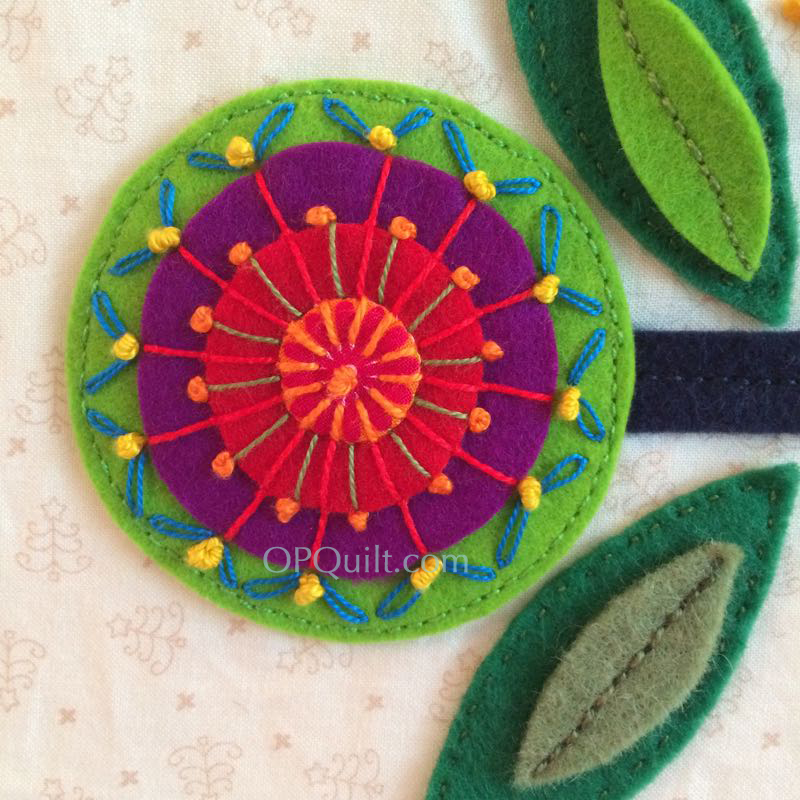
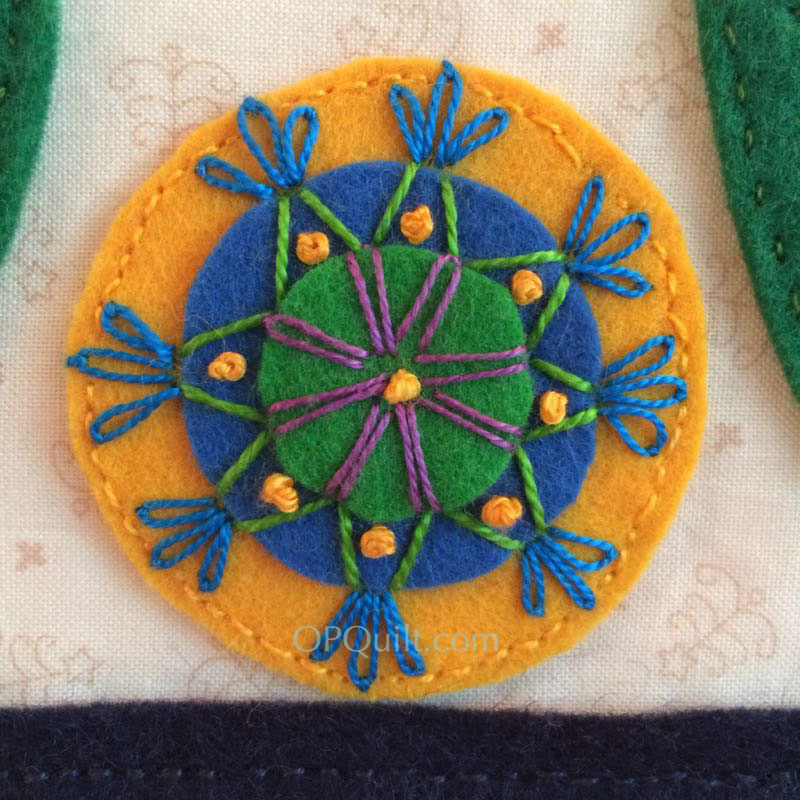
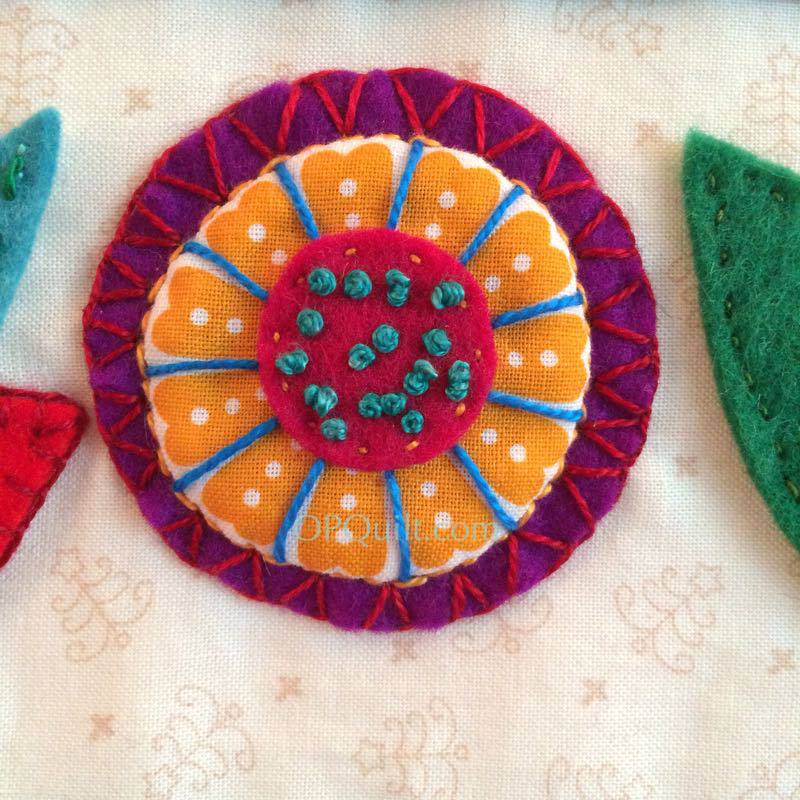
Now for some general tips about attaching the flowers and birds.  Before we talk about different ways to sew them to your tree, here’s a couple of photos of circles before attaching, showing various state of “close-to-the-edgeness” of the embroidery.ohchristmastree4_1flowers

After I pinned these to the tree, I went in and added another circle under the red one, giving it a bit bigger presence.  Ditto on the purple circle below.  You may find yourself making small alternations after you get everything pinned down, either adding leaves and circles as Wendy did, or giving another border to a too-small/wrong-color flower, like I did.ohchristmastree4_1flowers2

ohchristmastree4_5

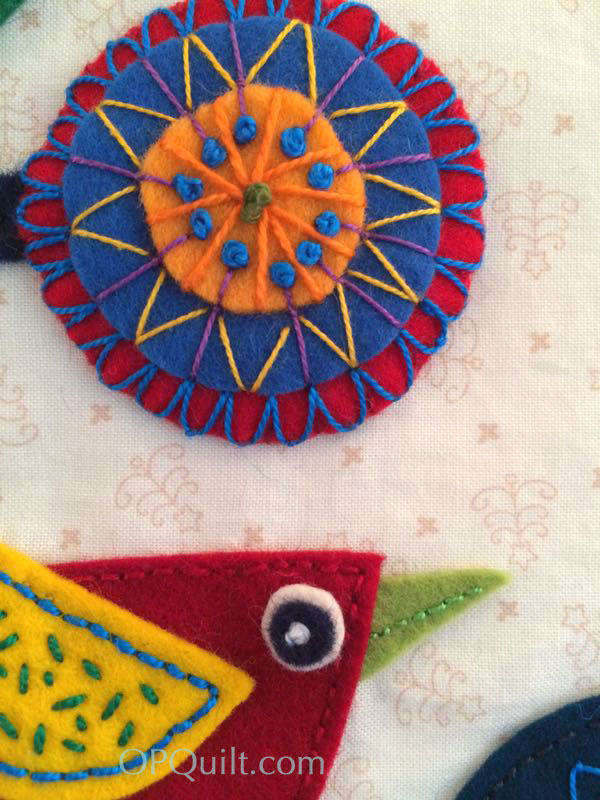
I group the way I sewed these down into two categories: A) snuggle a stitch in or around the existing embroidery, or B) adding another ring of decorative embroidery to affix it to the background.  Let’s do the A-category first.  You saw the flower medallion above; I attached it with tiny stitches at right angles to the outer edge in a matching thread.
ohchristmastree4_5a

Wendy often leaves the wings undecorated, using the “attachment phase” to put the stitches on, but I’d already embroidered them when she told me this, so I sewed it down to the background by using a small matching (green) thread in between the existing decorative (pink) stitch.

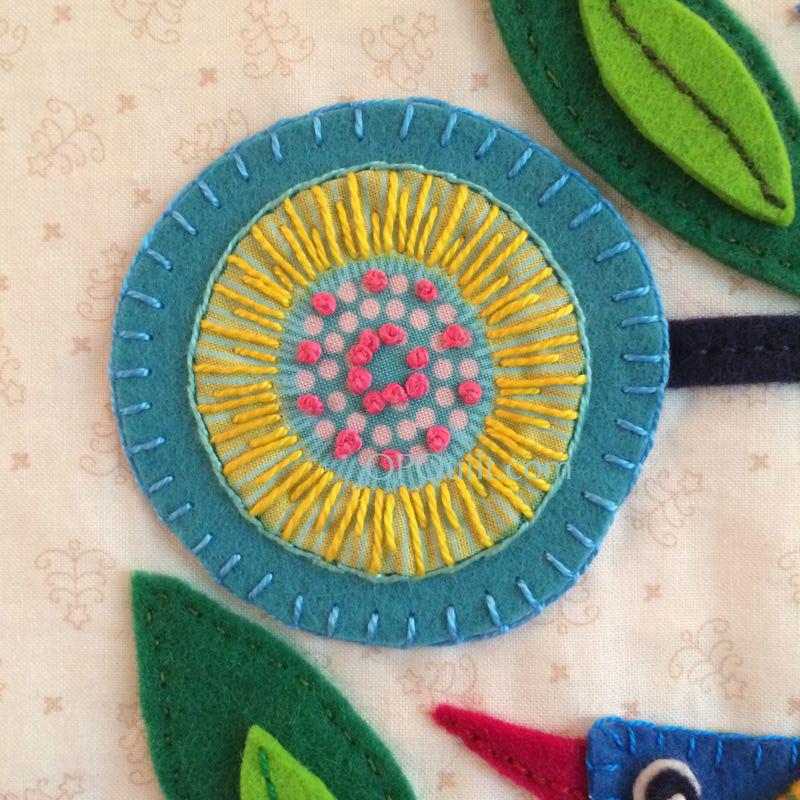
ohchristmastree4_5eI used the small perpendicular stitch again here in matching (blue) thread, but varied the length of them slightly, so the longest are between the yellow stitches and the shorter stitches are near the yellow.

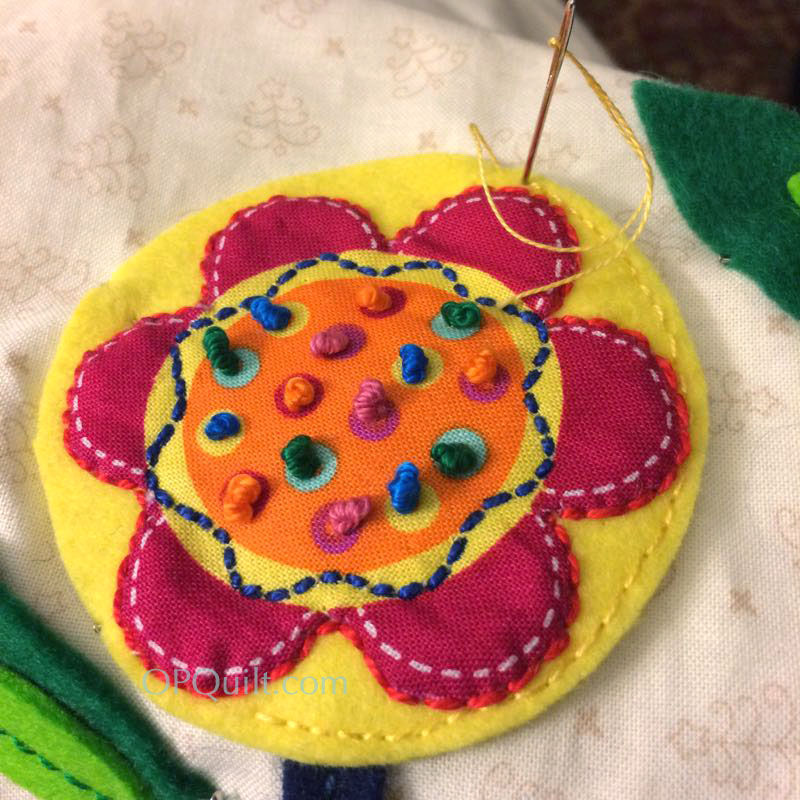
ohchristmastree4_15I also decided to keep some flowers simpler, and did a simple backstitch around the outside edge.  Keep it smallish and even, and you’ll get questions like I do: “Did you do it on the machine?”  No, and if you look closely, you’ll find the bobbly places.  Remember, this is folk art and we aim to enjoy ourselves!  More backstitching:ohchristmastree4_6 ohchristmastree4_6aohchristmastree4_6bohchristmastree4_6c
Now for some B-categories: adding another bit of embroidery to attach them.ohchristmastree4_5b

This is a slanted buttonhole stitch.  It’s done exactly the same as a regular buttonhole, but instead of keeping the needle perpendicular to the outside edge, you slant it.  I like the look of this one a lot.ohchristmastree4_5c

Regular buttonhole.  I used matching thread if I thought the flower was busy enough.ohchristmastree4_5d

Here’s where I used the backstitch (on the small yellow flower, left) and then used a different color of thread in a buttonhole stitch (magenta flower, right).ohchristmastree4_5f

Here’s an “un-even” buttonhole stitch, with shorter and longer “legs” of the stitch, co-ordinating with the existing embroidery.
ohchristmastree4_7

This bird was sewn on with a matching yellow thread, buttonhole stitch.  But I slipped a smaller seed (or regular) stitch in between the existing red buttonhole stitch on the yellow bird’s wing to sew that down.  ohchristmastree4_7a

Photography of women depends on flattering angles, but I dropped the camera down low so you could see my pregnant bird.  She didn’t start out that way, but the wool shifted.  The bubbling up is exaggerated from this angle–it’s not really noticeable from the front, but now you know why I started putting that pin in the center of my birds and flowers as I stitched them down.  Didn’t have that trouble with the leaves, for some reason. She’s attached to the background with a simple backstitch.  I also did a line on the birds’ beaks.  I tried to make them happy birds (It’s Christmas, remember?) by the slight curve of the stitching, but some of the birds turned out a bit moody.ohchristmastree4_8

This is another where I snuck a small stitch in between the existing embroidery (A-category), and below, the last photo (!) where you can also see detail on the bird’s beak.ohchristmastree4_9

We are definitely getting closer to the end, now, and I’m pretty excited.  Next month (June 2nd), I’ll have an alternate scene for you for under the tree, and then we’ll roll out from there.

ChristmasTreeLogoSM

No giveaway this month, but here’s a recap of our schedule:

January, Step “prepare”: buy the magazine, books, gather your fabrics, buy the felt/wool, buy/find the pearl cotton.
February, Step 1: Make the tree on the background and stitch it down.
March, Step 2: Make 21 flowers.
April, Step 3: Make 10 birds and all the leaves.

May, Step 4: Appliqué down the flowers and birds.

June, Step 5:  Scene at bottom of tree–make, then appliqué onto background.

July, Step 6: Sawtooth border (reds); sew together and attach.

August, Step 7: (finish up Quilt-A-Long): Make wonky star blocks, sew them together and attach border #2.

September, Step 8 Show and Tell, just in time for school starting again.

Yes, we cut a month off our sewing, so you’ll have plenty of time to finish your quilt before December.

Happy Stitching and we’ll see you in June!

Giveaway · Oh Christmas Tree QAL · Quilt-A-Long · Quilts

Oh Christmas Tree QAL • STEP 3

4XmasTreeApr

Here we are again, gathering together for the next step of the Oh Christmas Tree Quilt-A-Long (#ohchristmastreeqal), using the pattern found in Quiltmania’s Simply Moderne, issue #3, designed by Wendy Williams of Flying Fish Kits.

ohchristmastree3_flowers1 ohchristmastree3_flowers2

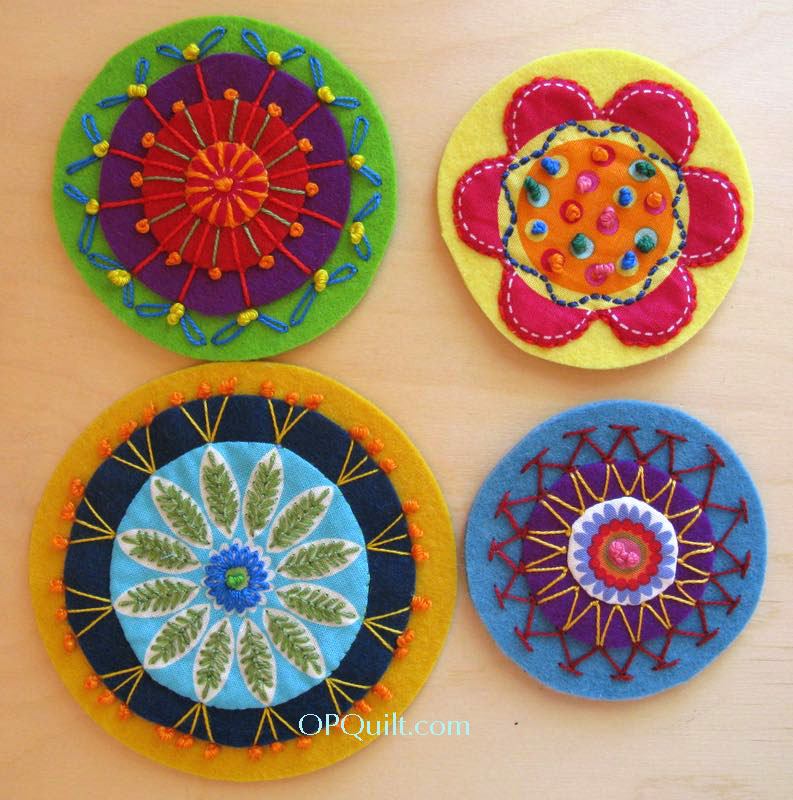
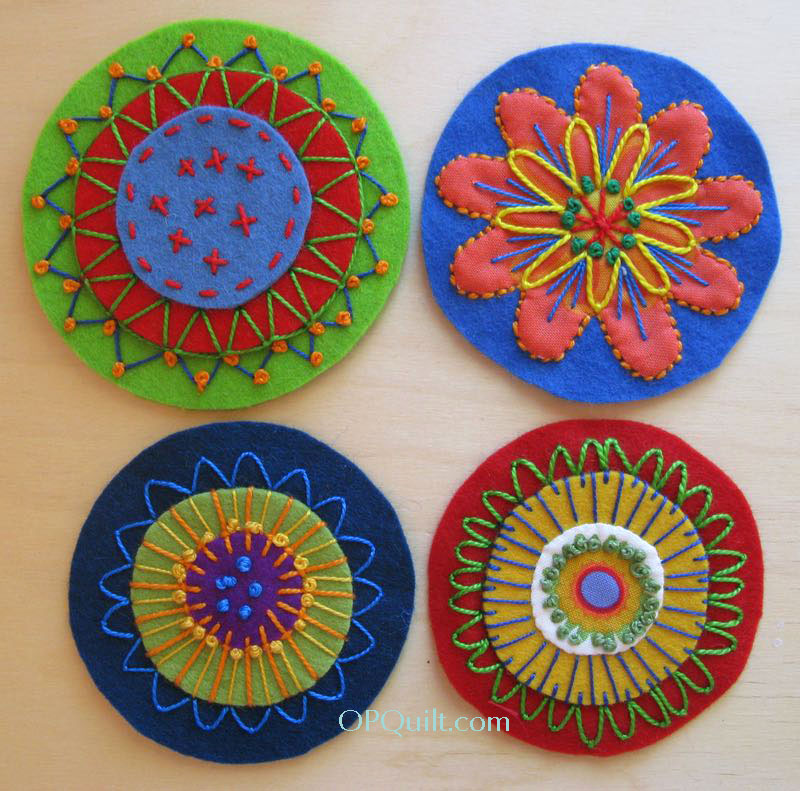
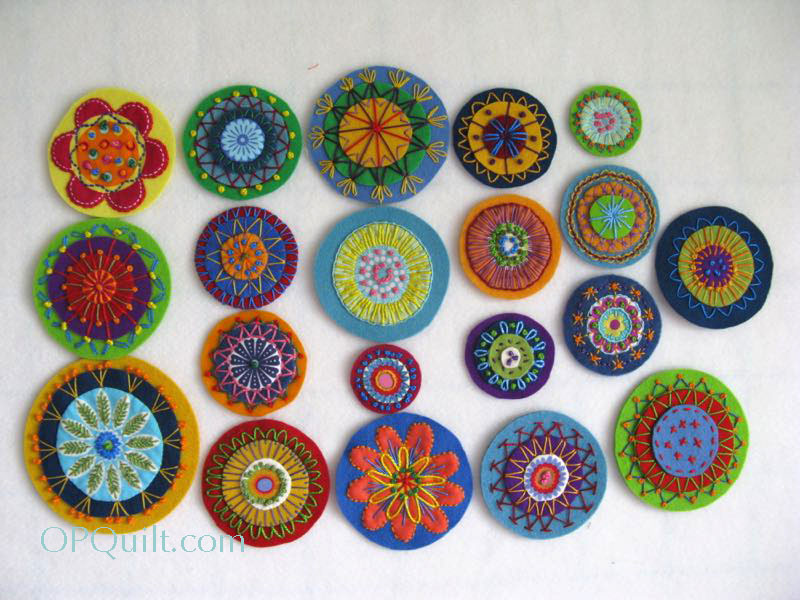
At this point, you’ve been working on your flowers for a month, and if you are like me, that first one was like jumping off a high dive, and thinking the pool was empty and you’d go splat.  But you didn’t, and your flower circles are looking wonderful and you are actually having a great time.  Keep working on them, you’ll need 21 of them in the various sizes shown on the pattern.  I have to admit that all of mine are not the “perfect” size, as some are larger than what is called for.  I mocked up the tree the other day (I’ll show you this at the end) and it was okay.  So no fretting.  Just #startyourneedles and keep creating and stitching.

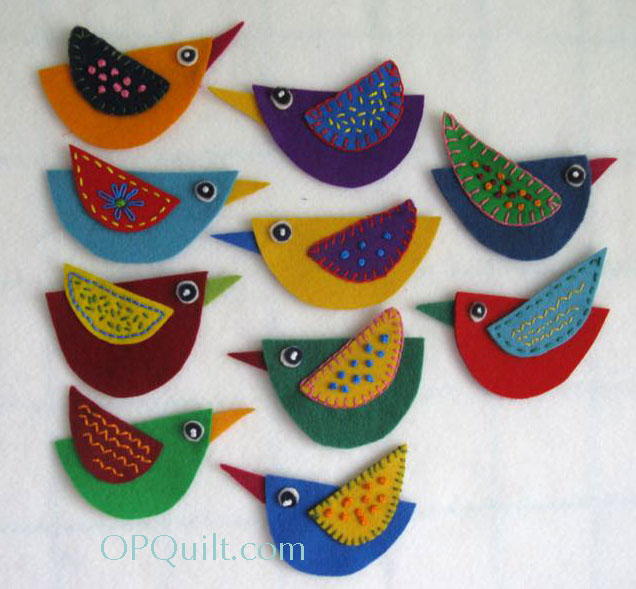
But. . . this month we’re adding two easy tasks: leaves and birds.  First up, birds.

ohchristmastree3_birdsA

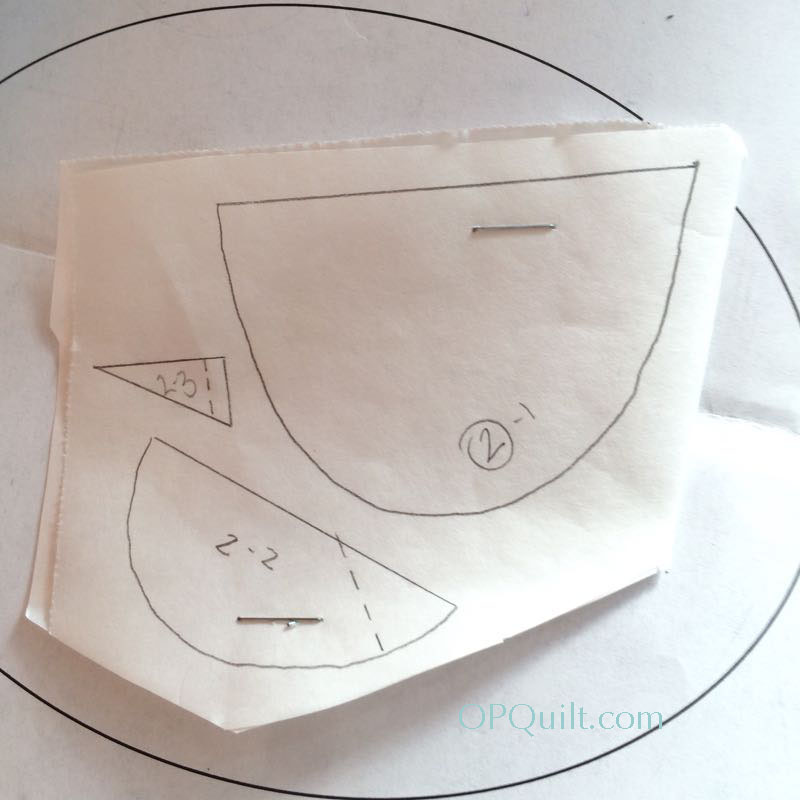
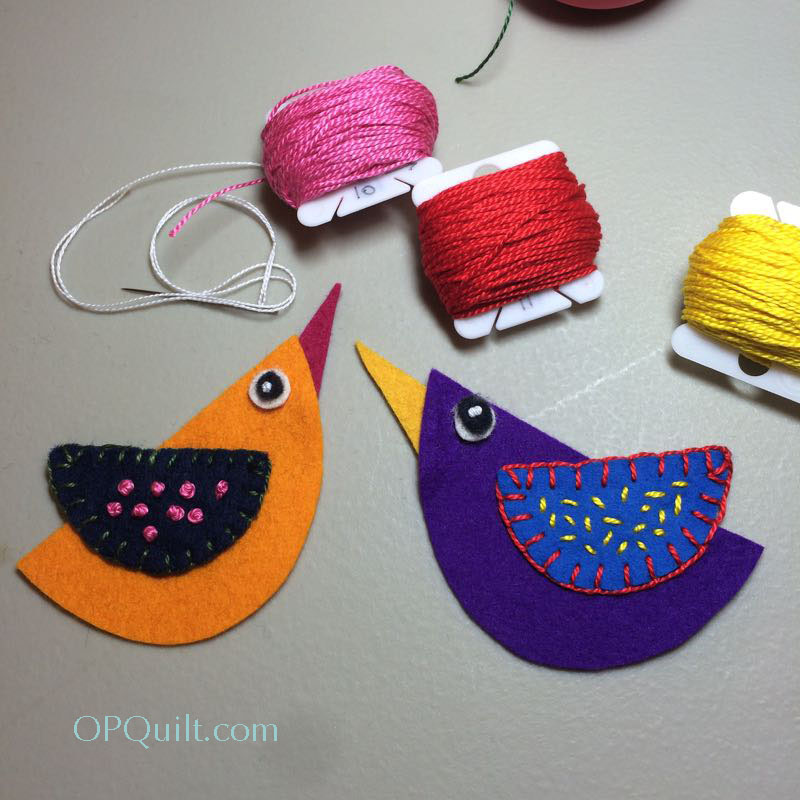
Remember all that tracing you did of the birds, and how you labeled them and marked the dashed overlap lines on a folded piece of freezer paper, so you’d be making two copies of the bird (one regular, and one reversed) and you stapled it together to keep the pieces from shifting? Now’s the time to get them out.  Hold them up to the light and transfer the dashed overlap marking on the wing to the wing piece on the other side, then cut them out and start picking your colors.ohchristmastree3_birdsB

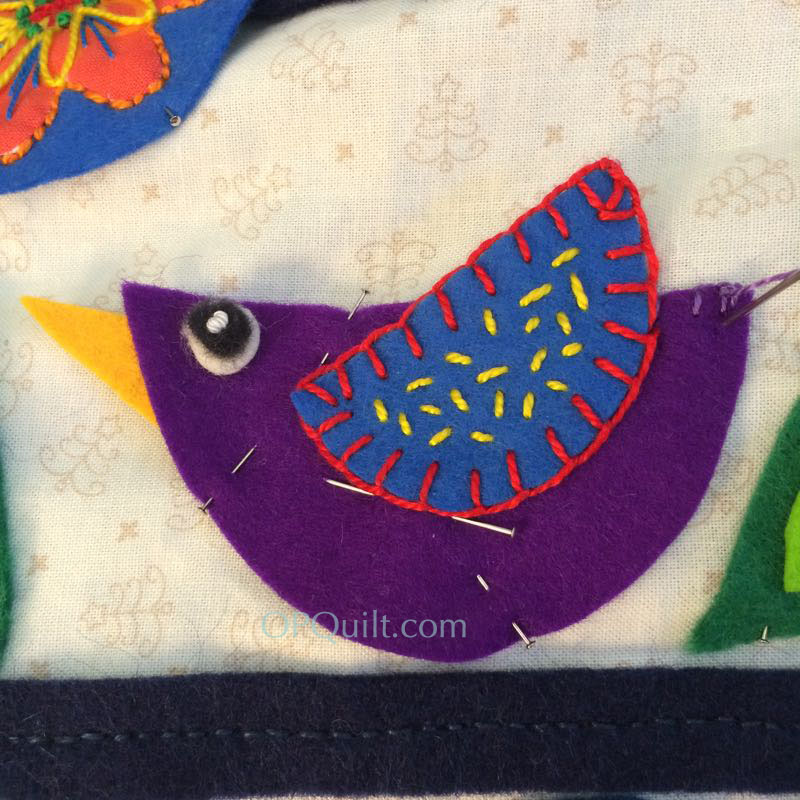
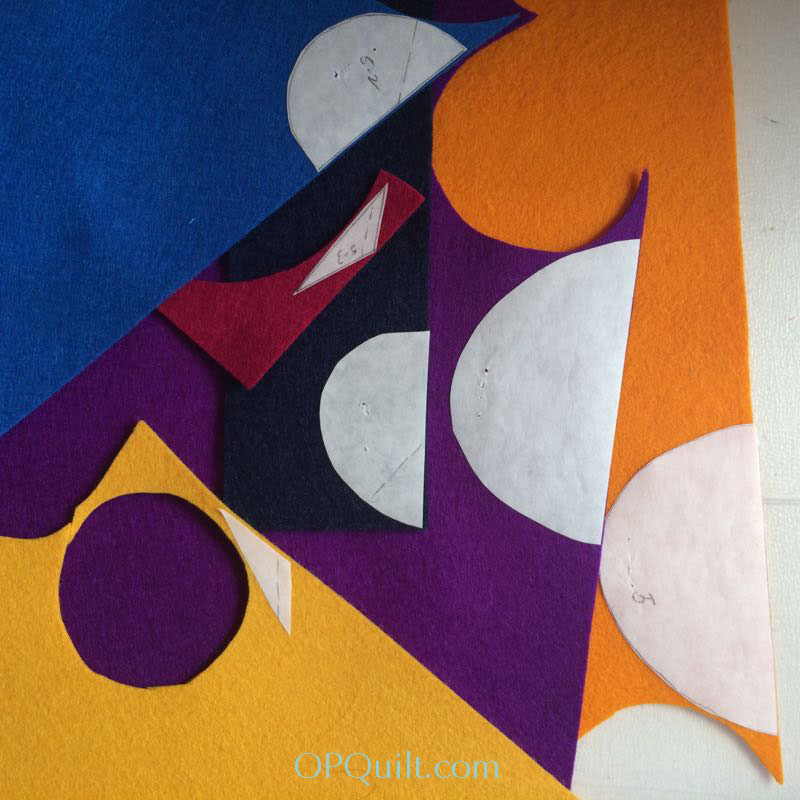
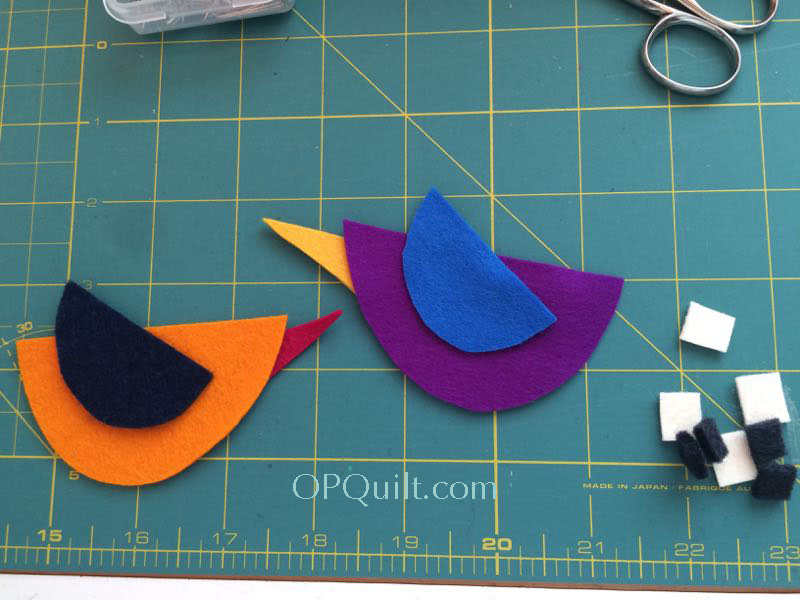
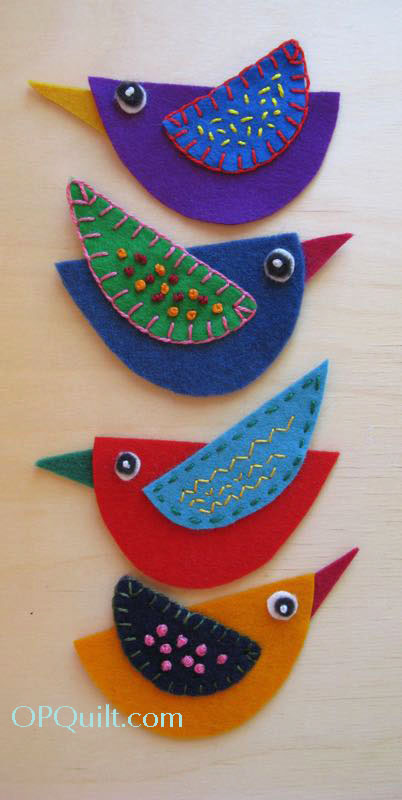
Be bold!  Red beaks! purple bodies! wild wings!  I ironed down the freezer paper patterns, using a wool setting (NOT your regular cotton setting–or you’ll scorch the wool), and then cut them out.  I tucked the beaks under the body, guesstimating where they’d go (hint: NOT even with the top of the body) and pinned them.  Then I place the wing on the bird, using the dashed overlap line to place them, then pinned that in place.ohchristmastree3_birdsC

(No worries…I fixed that purple bird’s wing before I pinned it down!)ohchristmastree3_birds1

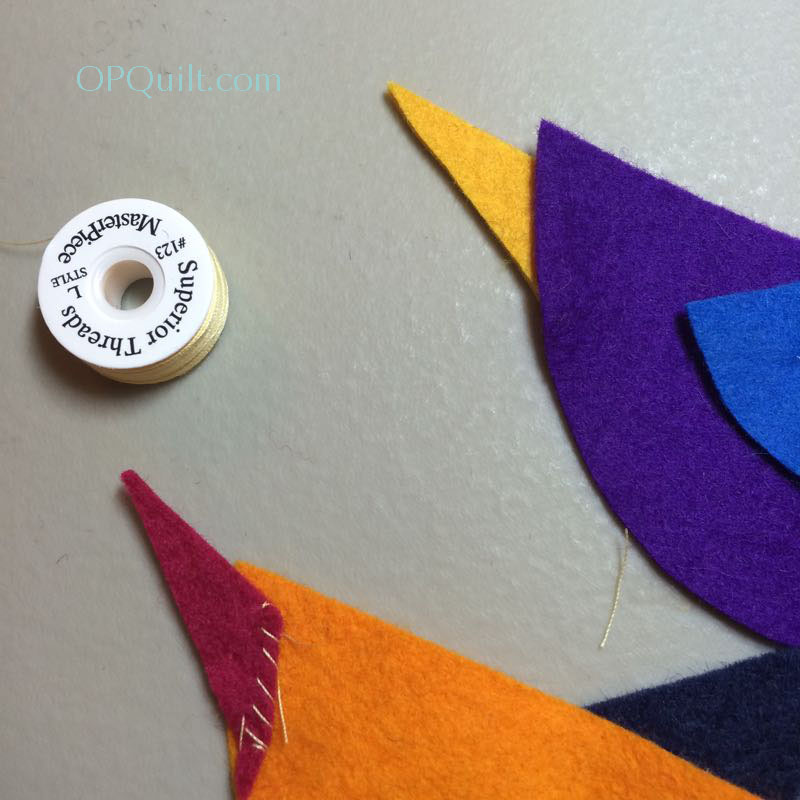
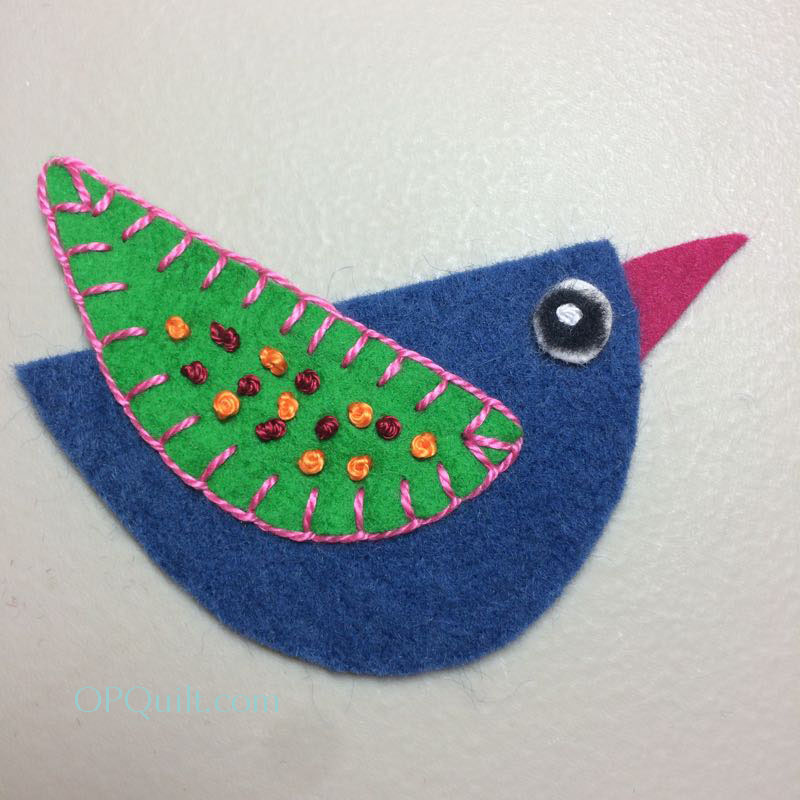
Wendy of Wendy’s Quilts and More gave me a tip to sew on the beak first.  I just used a few overcast stitches to get it on securely.  I’d never qualify for a bird plastic surgeon, that’s for sure.ohchristmastree3_birds2 Then attach the wing by blanket stitches (or overcast stitches, or a back stitch or a running stitch), beginning where it attaches to the body and work your way around the lower edge and back up again. ohchristmastree3_birds3

Now do the floaty part of the wing, and tie it off.
ohchristmastree3_birds4

Add a few French knots, or seed stitches, or whatever small decorative stitch.  Cut a teensy circle of white, then an even teensier circle of black and secure them both with a French knot, done with white thread.  I started by cutting 1/2″ squares of white felt, then rounded them off, and then cut smaller squares of black and just kept going around and around, cutting, until it was the right size.  Be prepared to sacrifice a couple of eyeballs until you get the hang of it.ohchristmastree3_birds4a

Ta-DONE!ohchristmastree3_birds4b ohchristmastree3_birds5

I got fancy with that red bird, attaching the wing with running stitches, and doing a zig-zag stitch across the wing.

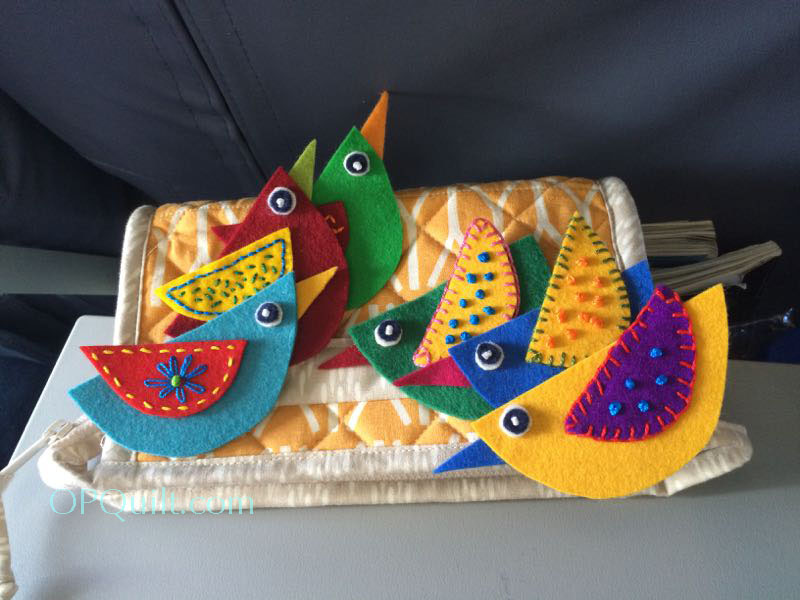
ohchristmastree3_63birdsallI took them with me on my trip to Portugal and Spain (pictures of that trip are on my Instagram, to the right and on a previous post) and was able to get them sewn without too much trouble on the [long] flight out there.  These go MUCH more quickly than do the flowers, so I’m also adding LEAVES to this month’s tasks.

ohchristmastree3_leaves1 ohchristmastree3_leaves2 ohchristmastree3_leaves3 ohchristmastree3_leaves4

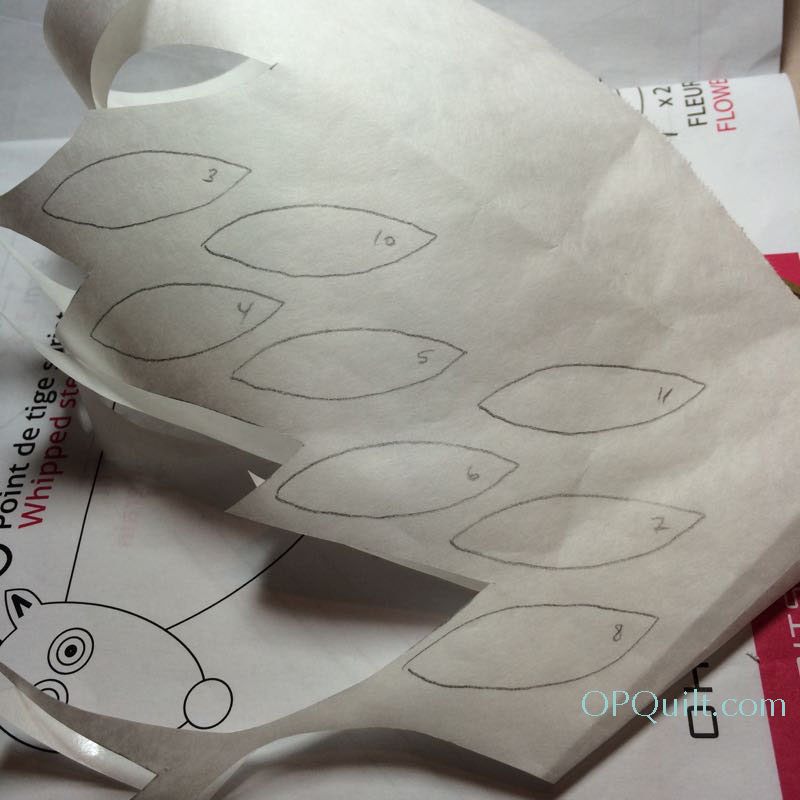
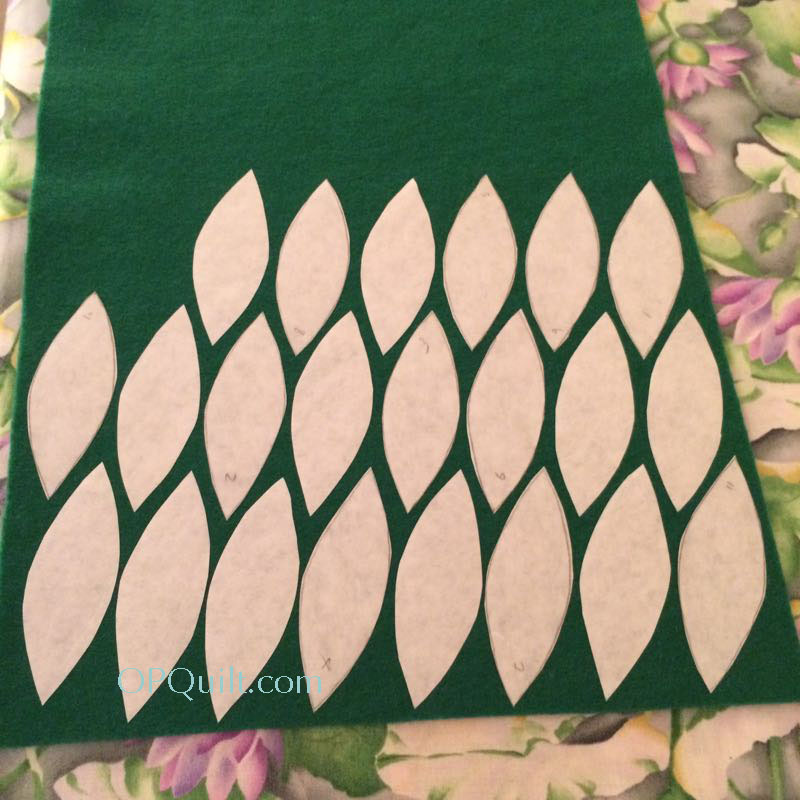
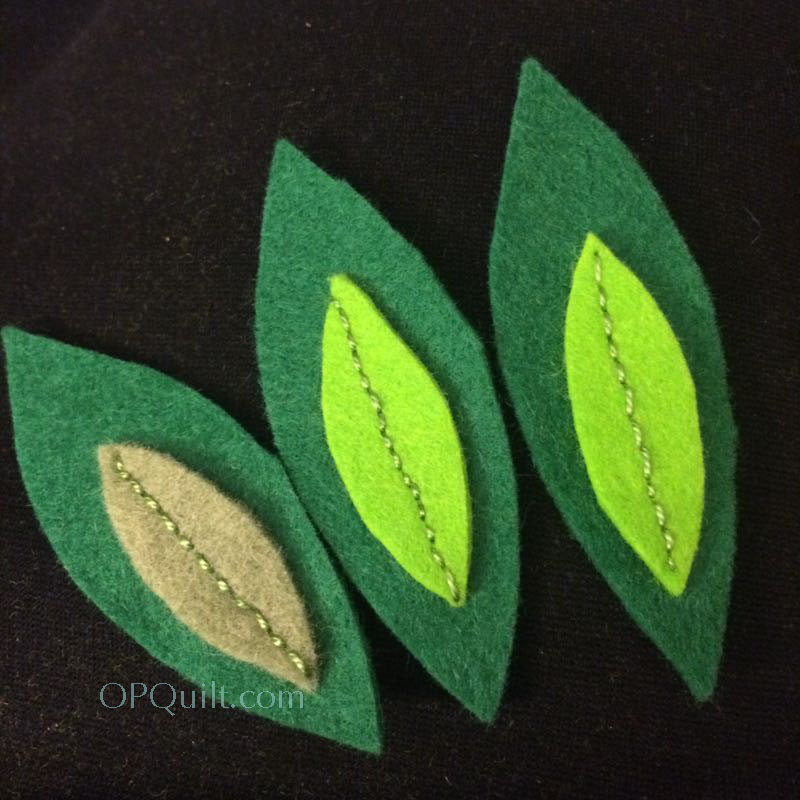
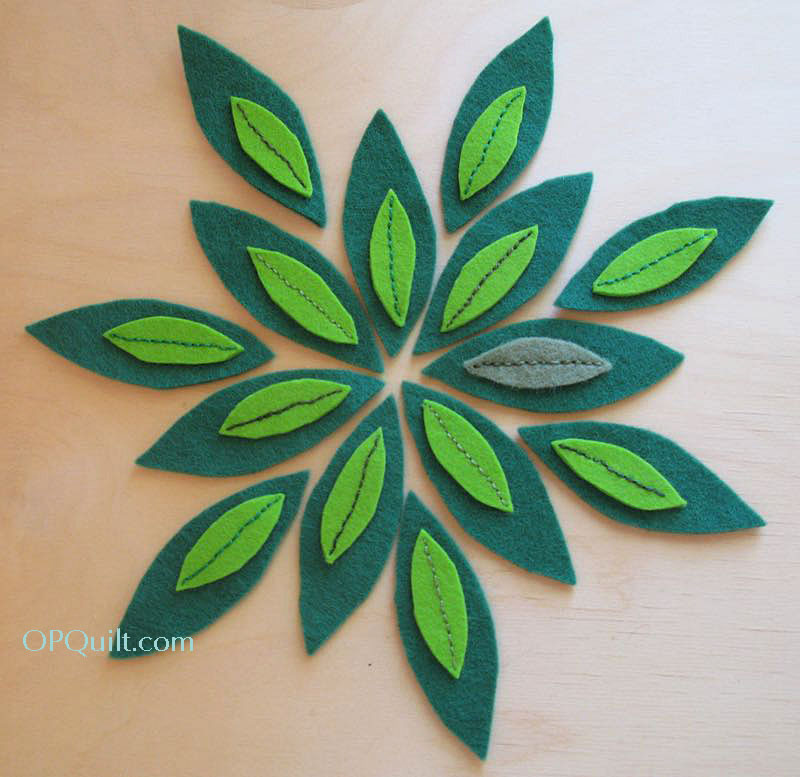
Okay, that wasn’t hard!  I traced half of all the leaves I’d need onto freezer paper, doubled it over to get two layers, then cut them out.  Iron on to your felt using a wool setting, and cut out.  Repeat for the inner, smaller, leaves.  I cut a few out of a different green just to give some variety.  Place the smaller leaves as shown, setting them closer to one end.  Using a backstitch, sew them down.  It’s tricky near the tip, but you can see how wobbly mine are and how it really doesn’t matter.  (Last time I checked, The Creator didn’t use a ruler to create his leaves either, and our world is the more beautiful for that variation.)

ohchristmastree3_mockup1

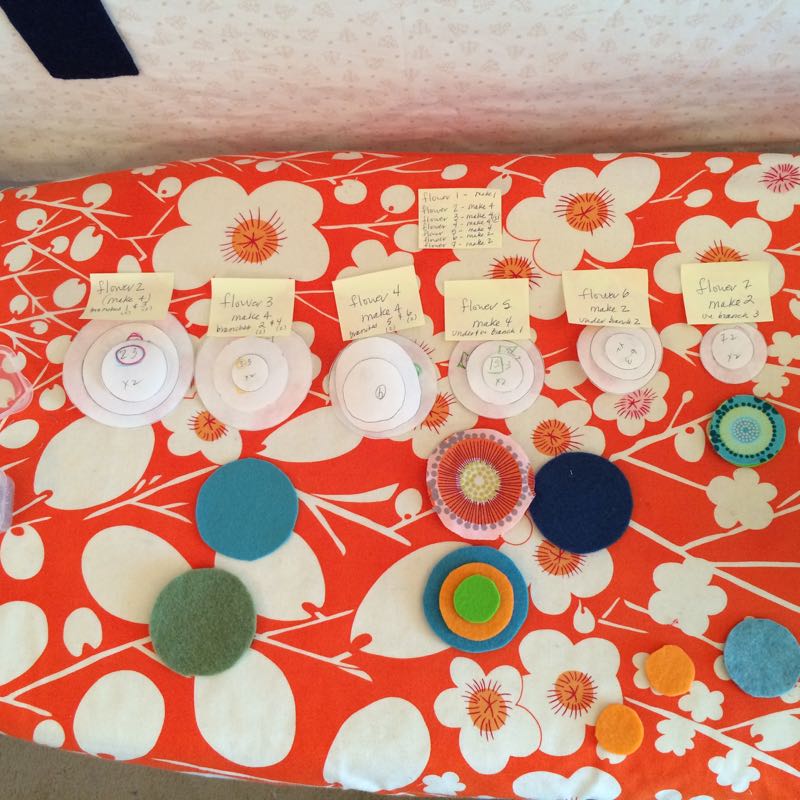
So I was curious as to how I was doing at this point, so I smoothed my tree up on the design wall, and stabbed pins through all the flowers and the four birds I’d finished.  Then, ACK! I was stuck.  What number flowers were where?  What had I sewn and cut and what was I lacking?  I got out all the baggies of labeled flowers and set up a little station on my ironing board, right below the tree.  I wrote out post-it notes labeling the flowers as in the pattern, and then a master list of where they were supposed to go.  I then lined up the circles from the pattern, drawn out on freezer paper below each sticky note, so I could see the relative sizes.ohchristmastree3_mockup2

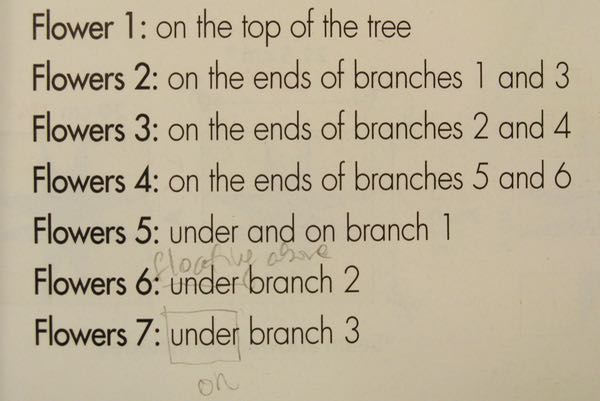
Now that I was organized, I could figure it out.  I had enough of certain flowers and needed more of others.  Some of the directions in the pattern were wrong, so I corrected for those:

OhChristmasTree_pattern errataIf you want it to look like the one in the magazine, Flowers 6: should read “floating above branch 2” and Flowers 7: should read “on branch 3.”  I say, just squinch them all in where they’ll look good.  This is just a test run, but later we’ll do it for real.
ohchristmastree3_mockup3

After a while, I could pin up what I’d cut out, fabric medallions, layered felts and all, and was pretty pleased with how it was coming along!  I’d encourage you to do this interim step, if only to give yourself a little pat on the back that you’ve come this far.  After taking the photo, I put everything away in the proper baggies, and planned to keep stitching flowers and finish up the birds.

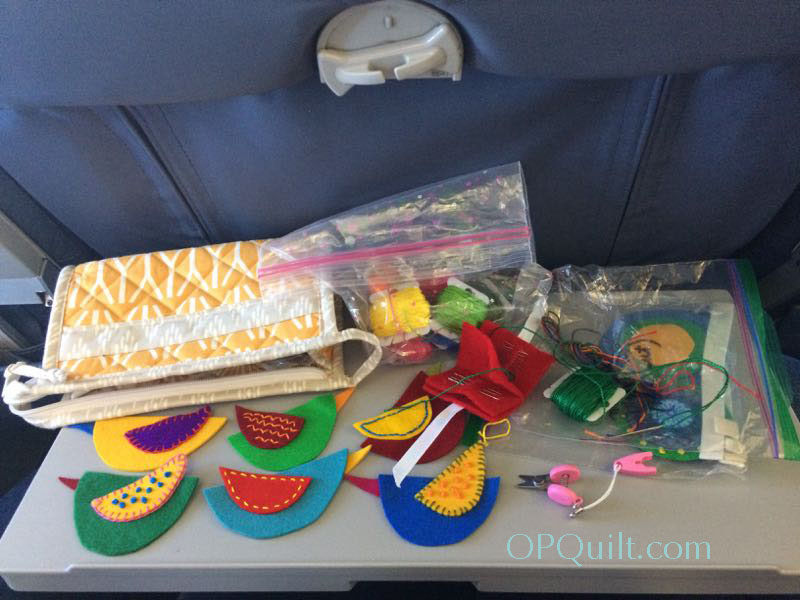
ohchristmastree3_64stitchingAt the last minute, I decided to take a bunch of the flowers with me on our trip, squeezing them into a cute bag made by Sherri of A Quilting Life.  I snapped a photo of my stitching on the airplane tray table.  I kept stitching until I had nearly all of the flowers done:

ohchristmastree3_62flowers
ohchristmastree3_61mockup2

And after getting home, I did another mockup. I didn’t pay too much attention as to what number flower should go where, but instead put my largest one on top, then the next two largest on the lowest limbs, moving on up the tree and thinking more about size and color placement. I’ll let this stay up on the design wall for a few days while I move things around.  I did have one dud–a flower I ended up not liking, but that’s pretty good, I think.  I only had three flowers left to finish, which I did yesterday, so I’m ready to move on to the next phase.

A recap of where we are:

January, Step “prepare”: buy the magazine, books, gather your fabrics, buy the felt/wool, buy/find the pearl cotton. 

February, Step 1: Make the tree on the background and stitch it down.  

March, Step 2: Make 21 flowers.Keep stitching, keep stitching!

April, Step 3: Make 10 birds and the leaves.  Keep stitching, keep stitching!

May, Step 4: Scene at bottom of tree.

June, Step 5: Appliqué down the flowers.  (Wendy gave me some tips for this last week, which I’ll pass along.)

July, Step 6: Appliqué down the birds and the scene.

August, Step 7: Sawtooth border (reds); sew together and attach.

September, Step 8 (finish up Quilt-A-Long): Make wonky star blocks, sew them together and attach border #2.

See you May 2nd for the next step: scene at the bottom of the tree.  Wendy’s done one scene, the pattern shows one, and I’m cooking up another.  See below for the giveaway.

#startyourneedles for the #ohchristmastreeqal

Giveaway Banner

ohchristmastree3_65GIVEAWAY

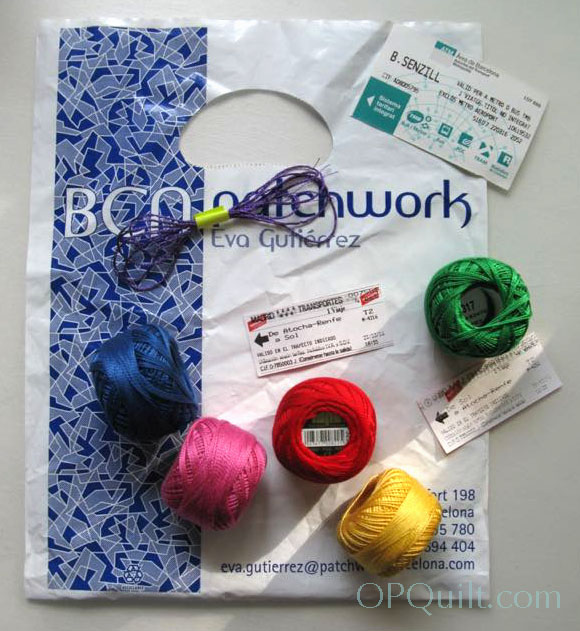
Initially I wasn’t going to do a giveaway, but after visiting with Anna in Barcelona, I thought it would be fun to have a Spanish connection from our trip.  In Barcelona, I purchased five balls of size 8 pearl cotton (my favorite size) and will send that to the lucky person who is chosen from comments left below.  I’m also including a 1 yard piece of metallic purple embroidery floss that I purchased in Lisbon.  Even though it is a little like sewing with tensile steel, it makes fun accents on our flowers (I used mine for some back stitching here and there, and also for some French knots on another flower).

Please leave a comment below, telling me either where you’d like to go a a trip outside the US and why, or the place where you had your favorite trip (outside the US) and why.  I love to read about other people’s trips, or their hoped-for travels!  I’ll let this run for a few days, then will close it off and chose a winner.

UPDATE: Comments are closed now.  Thanks for writing!

Oh Christmas Tree QAL · Quilt-A-Long · Quilts

The Thread in Spain Stays Mainly on the Train

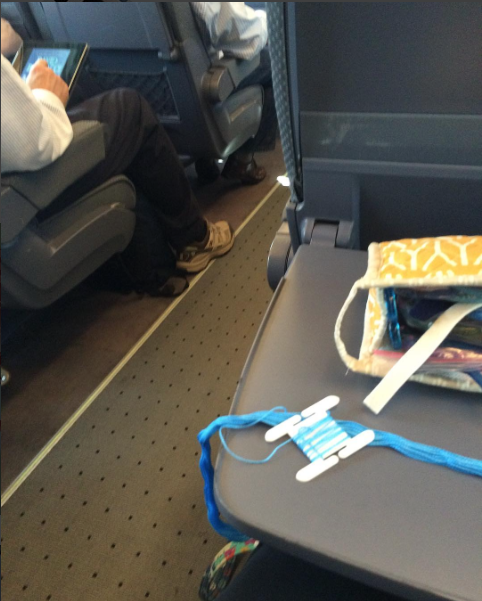
ThreadonTrainin SpainThe title of this post came from Cathy, one of my Instagram readers, after I posted the above photo.  I was on a train, in Spain, wrapping thread onto a little organizer.  It totally cracked me up, so I thought I would write a bit about my trip, and the hunt for threads.  In an interesting ironic twist, it rained all that afternoon.

ohchristmastree3_64stitching

It all started here, with me packing a few of my Oh Christmas Tree hand-sewing pieces along on our trip to Spain and Portugal.  I crammed everything into a wee bag and am so glad I did.

Stitching on Airplane2It helped keep my sanity while on the long flight over and on our various ground travel segments while in Spain and Portugal.  Like a train (above).

Threads_spain2bus

Or a bus from Antequera-Santa Ana Train Station to Granada (they were working on the rails so we had to be bussed in).

Threads_lisbon3

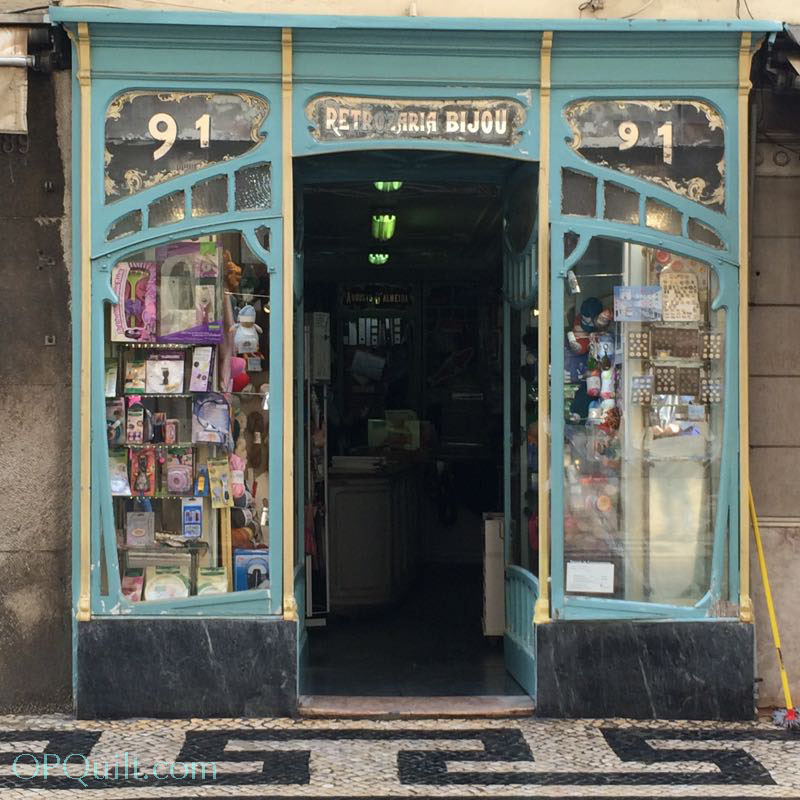
We first went to Lisbon, and I thought I’d brought enough threads for what I needed, but when my husband spotted this little shop, I couldn’t resist going in and buying a couple of more.

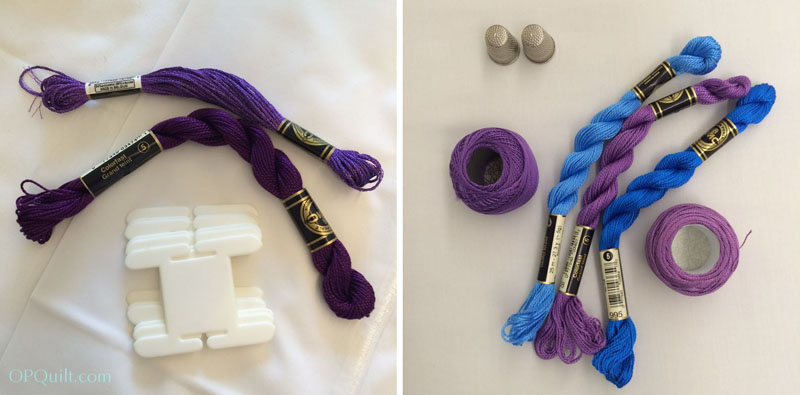
Threads_Lisbona5I definitely needed some purple threads. Check out those larger organizers, which is what they called them.  Nice big tabs so the threads don’t fall off.

Threads_lisbon2

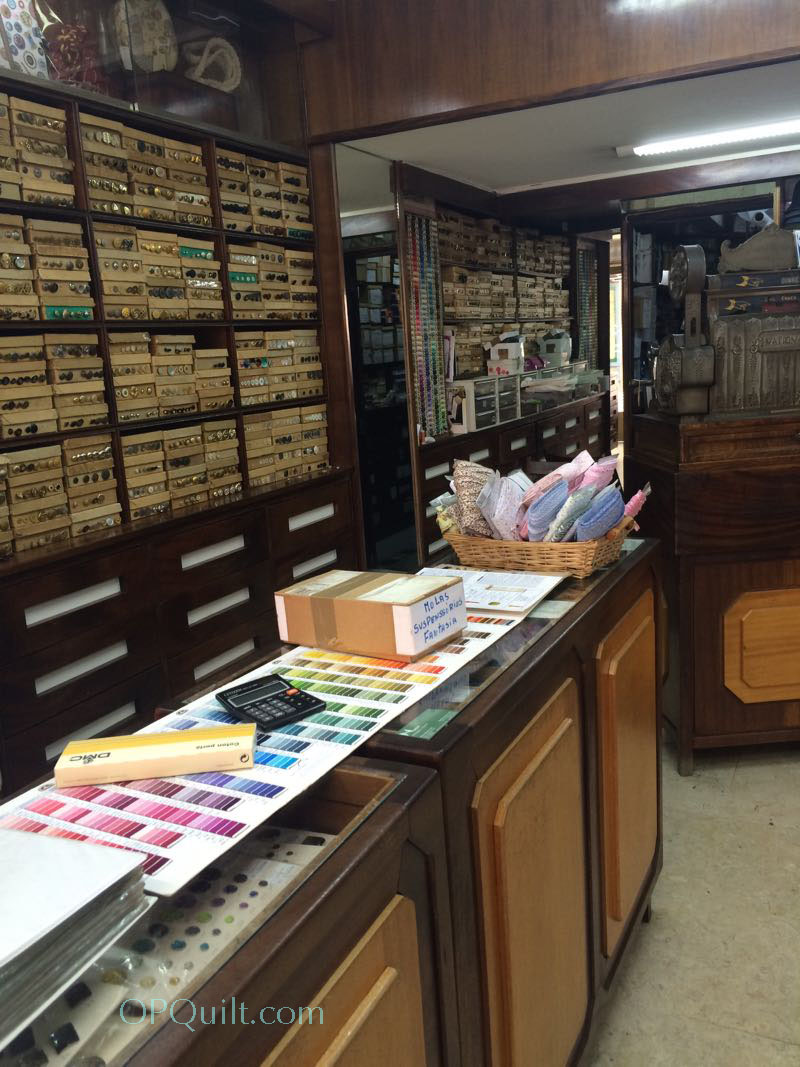
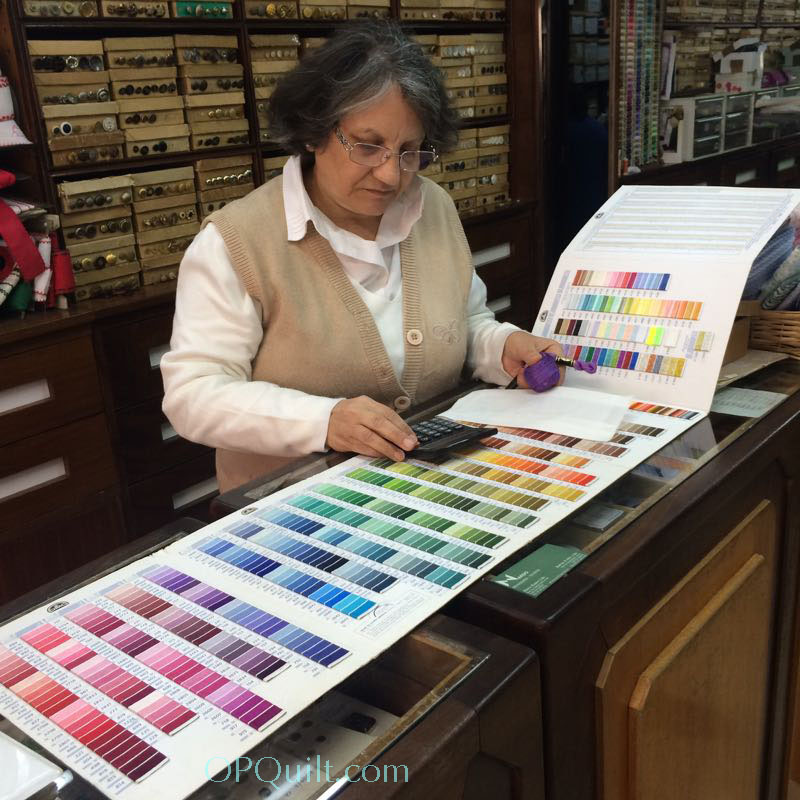
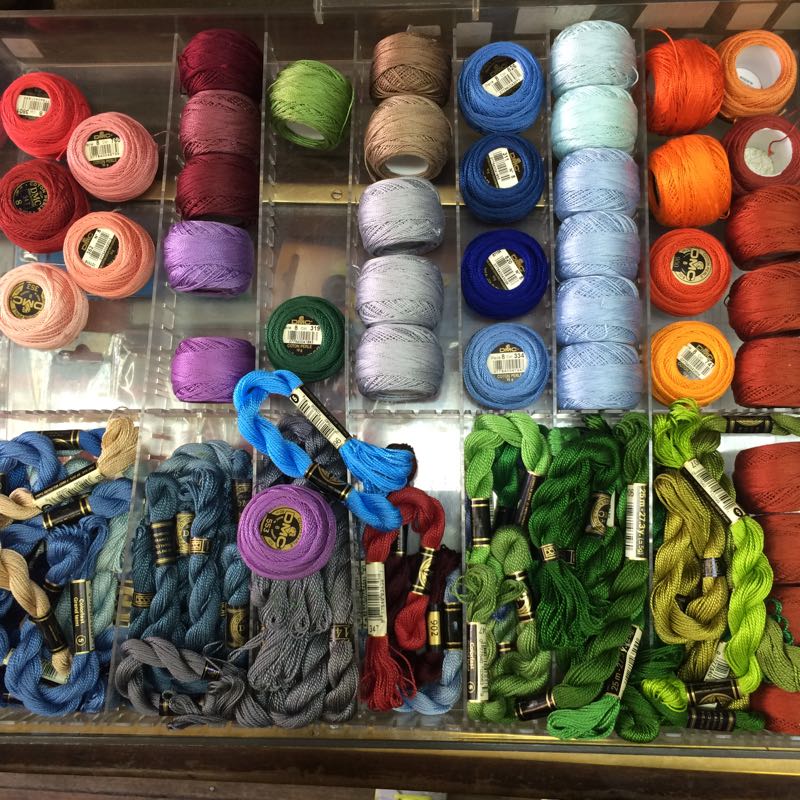
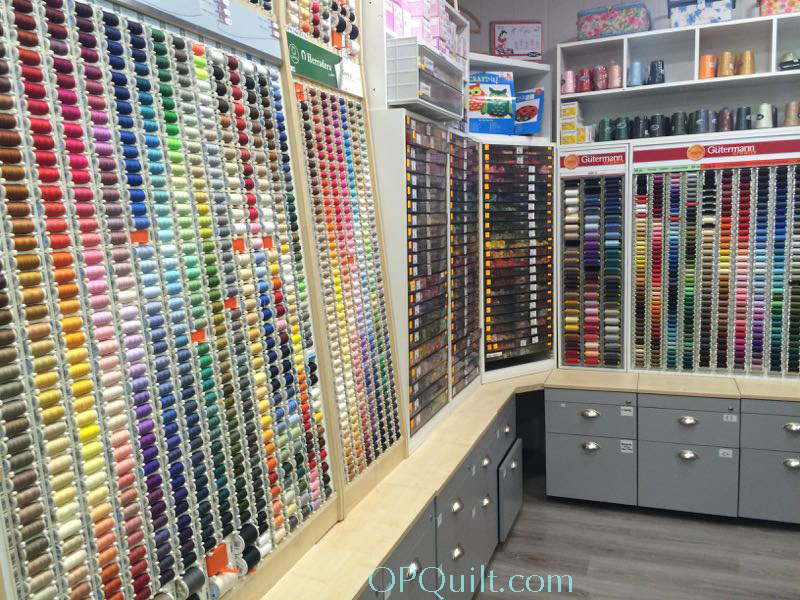
This shop was next door, and to buy threads, she pulled out her color card, scurried to the back room, and brought back a flat box of DMC, from which she selected one for me.  The first shop I went into, I had a hard time communicating what I wanted because they spoke Portuguese and I didn’t.  I mimed a sewing action, and somehow they figured out what I wanted.Threads_lisbon1 Pearl Cotton Lisbon1

This was from another shop next door to that one, and I chose a couple of skeins. I found out they had metallic embroidery floss in colors–something I’d never seen in the States–so purchased some purple. It’s a bit like sewing with rods of steel, but I split the floss apart into 3 threads; it makes a fun accent on my flowers and birds. Pearl Cotton Lisbon2

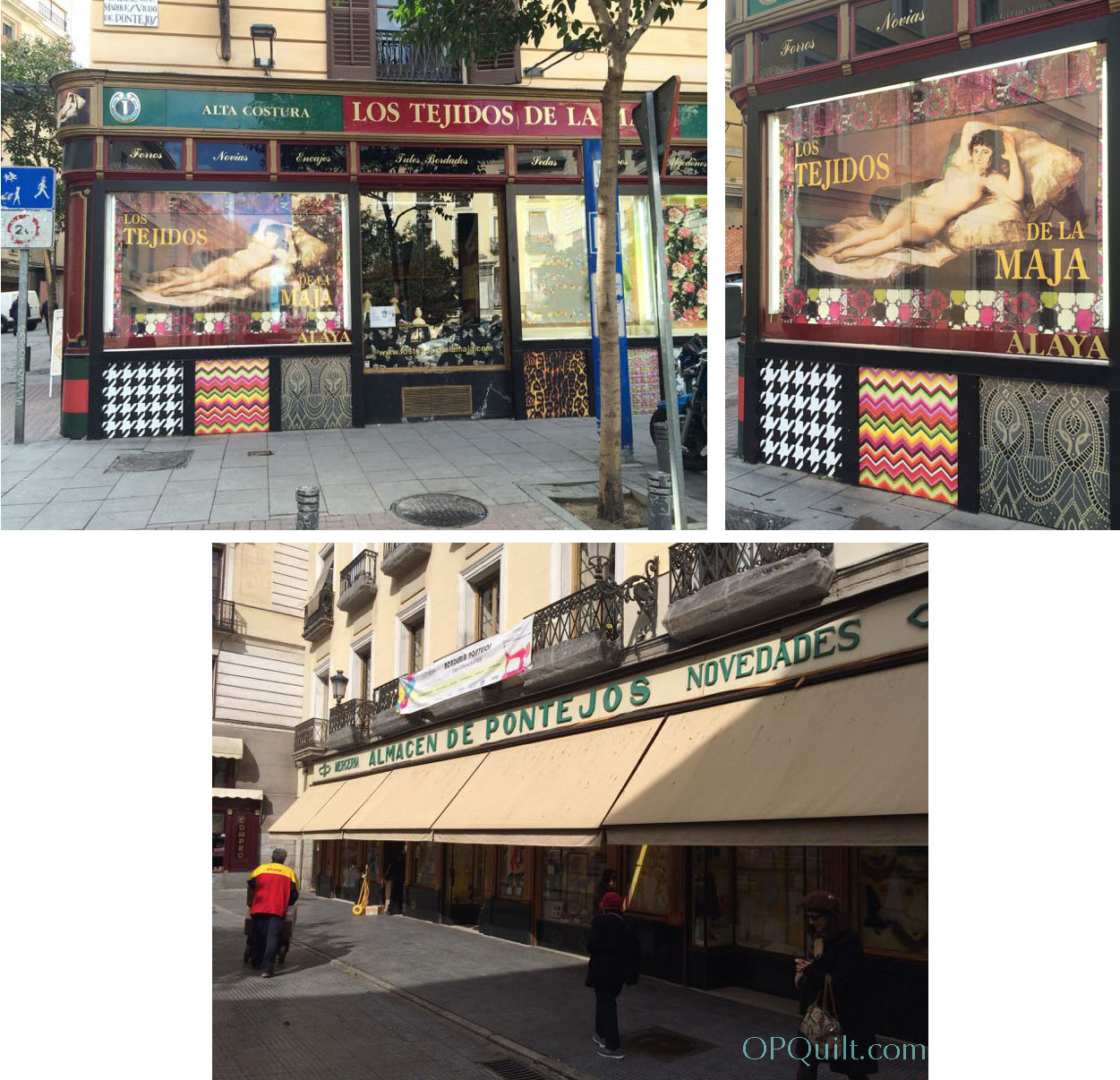
Fabric Shops Madrid 2016

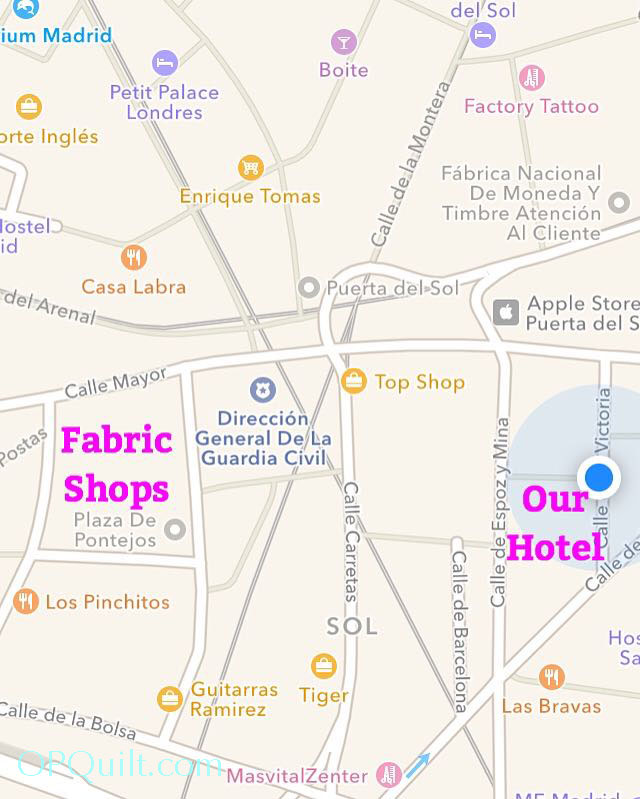
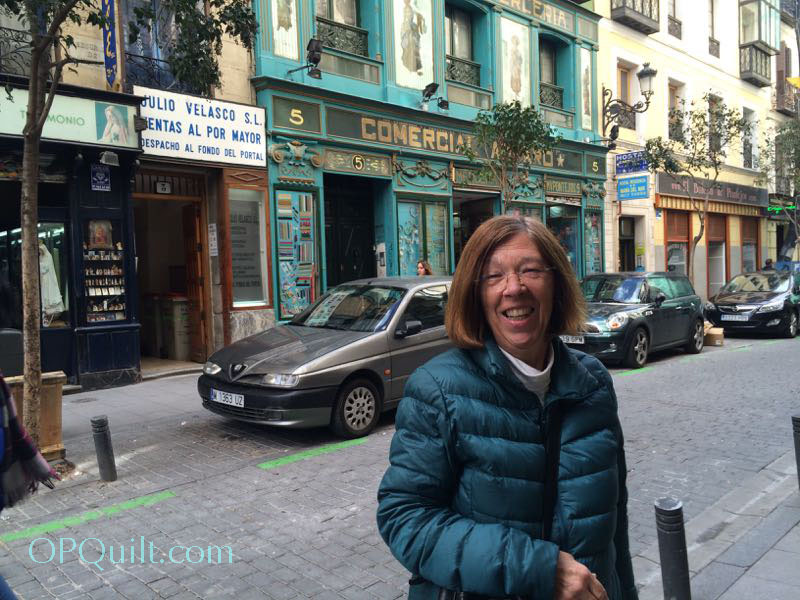
The next city I went hunting for thread was Madrid.  In case you ever go there, here’s a map.  I needed regular thread for the appliqué centers of the Oh Christmas Tree flowers, and had left my spool of thread at home (or else it had already gotten lost, which is entirely possible).

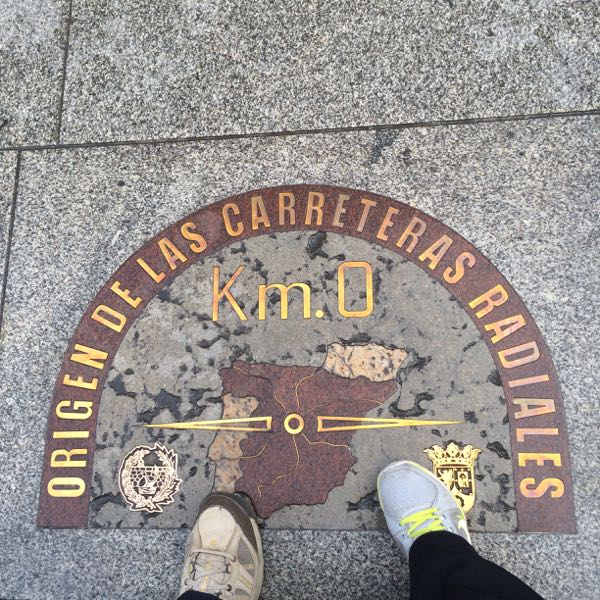
POint Zero for MadridIt’s all near the Puerta del Sol, which is the center beginning point of All Points in Spain, which of course, is where the fabric shops are located.  Fabric Shops Madrid 2016_2

As I joked on Instagram, we quilters need a sultry babe like the Maja to be our pitchwoman.  (This comes from a famous painting in the Prado Museum, which is in Madrid.) So this time I had looked up how to say “pearl cotton” in Spanish, tried it out, and even though I’m no slouch in the accent department (having lived in Peru when I was a teenager and having progressed through 7 years of Spanish), they had no clue what I was asking for.

Threads_spain8

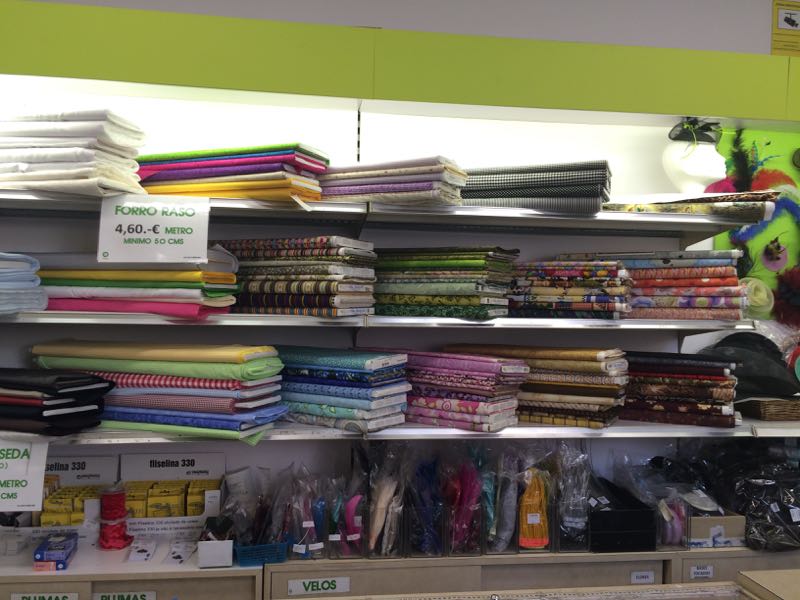
This lovely woman came to my rescue.  Stephanie is an ex-pat American who has lived more years in Spain than in the US, and took me around to three other shops, all in the same block, helping me find my thread and of course, I bought another couple of balls of pearl cotton.  The selection is amazing there!Threads_spain10 Threads_spain11patchworkfabrics

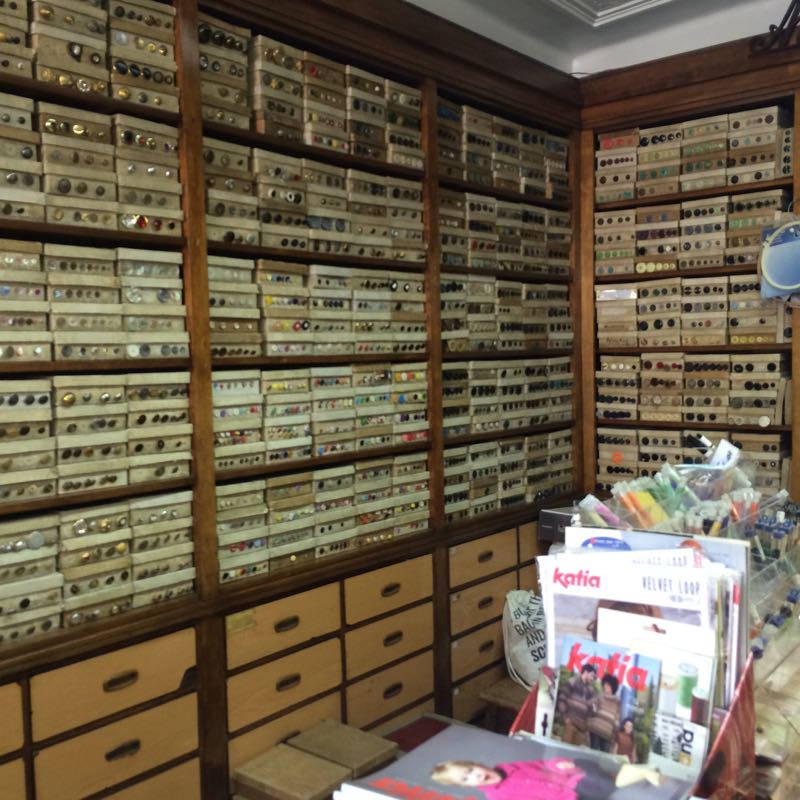
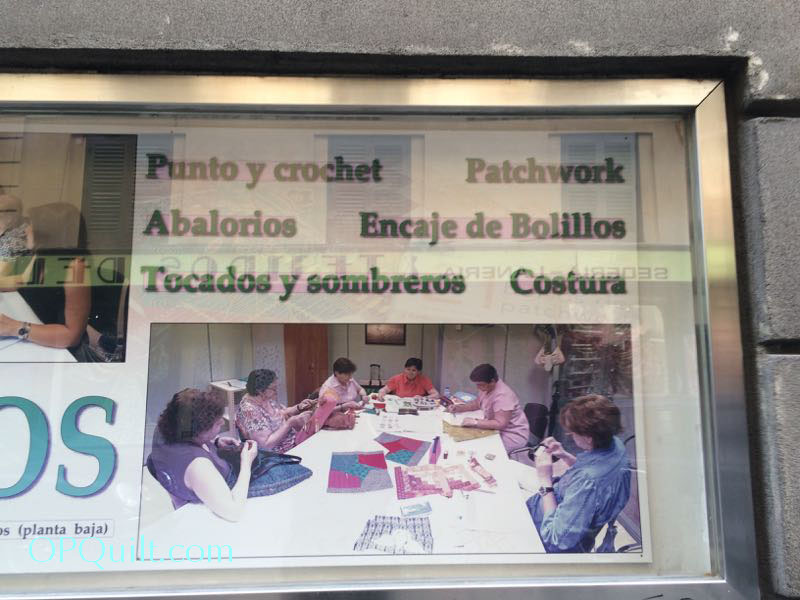
I was excited when I saw the signs for “patchwork.”  This selection on the shelves. . .is it. Threads_spain13

In the photo, one woman is doing embroidery, one is doing lace making, one is making a log cabin and the rest are just sort of looking busy for the camera.  Stephanie told me that lace making, with all the bobbins, is big there, and that she’d made an entire tablecloth.Threads_spainBCN

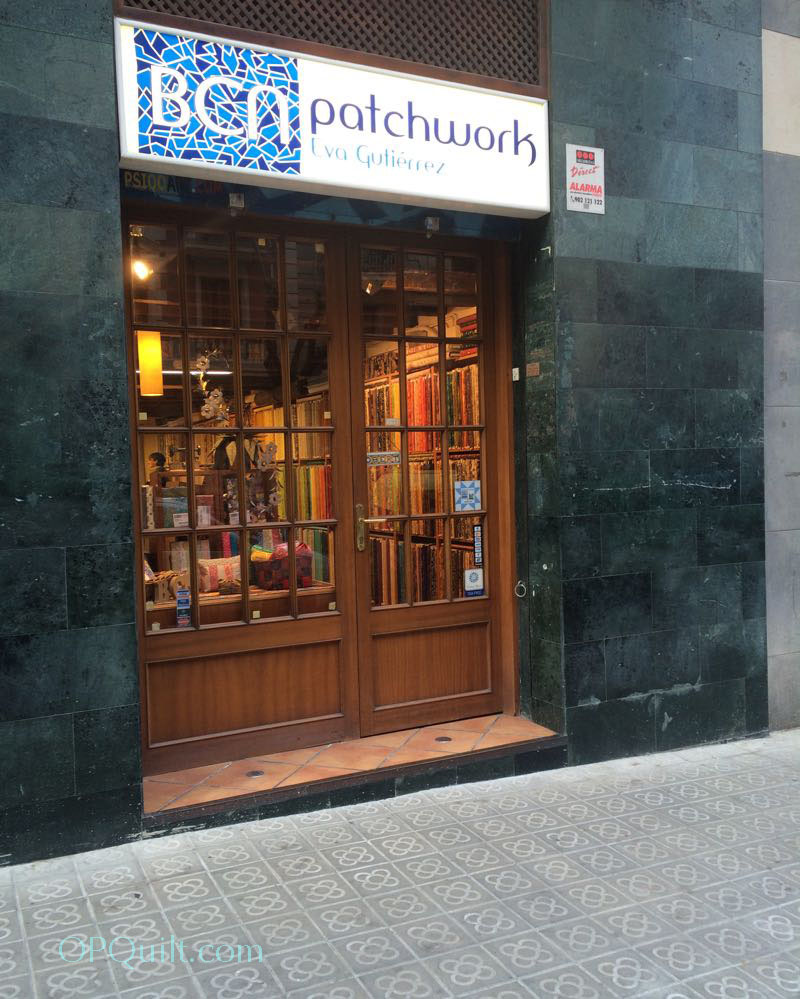
And then we went to Barcelona, where Anna of @annaorduna, met me.  She and I had corresponded on IG, and she was teaching a class here at BCN Patchwork.  Notice the interesting flower tiles in front of the shop.  That’s the emblem of Barcelona and I saw it everywhere (check my IG feed, to the right).

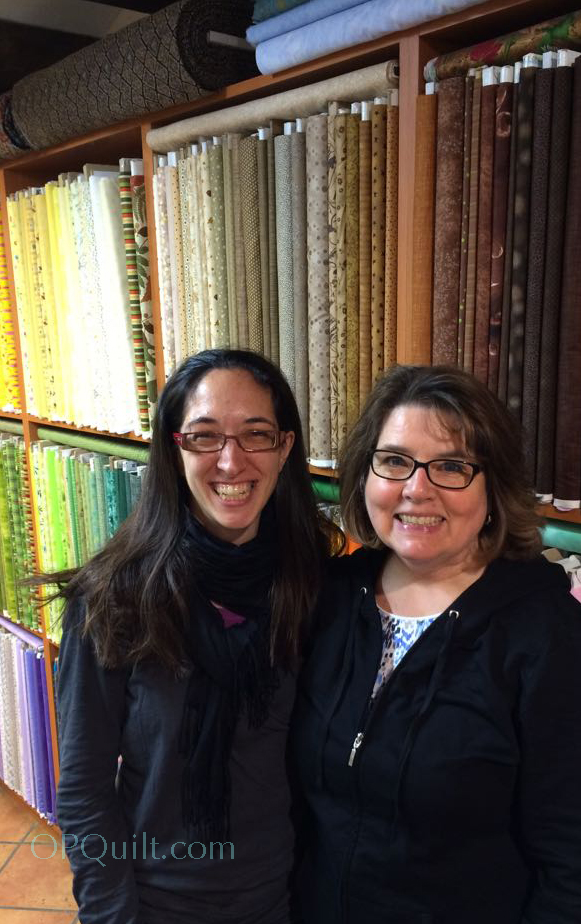
Threads_SpainAnna

She was lovely, and she and her class of two women, the shop owner and another employee gave us great suggestions for places to go and see and to eat dinner.  I also asked if she had pearl cotton (this seems to be an obsession with me right now) and they did!  The shop employee asked me what color and when I said “all colors,” she brought down from their storage room 7 different trays of pearl cottons.  I selected a few for the giveaway for my Oh Christmas Tree post (coming on Saturday), and then one more luscious golden orange color for me.

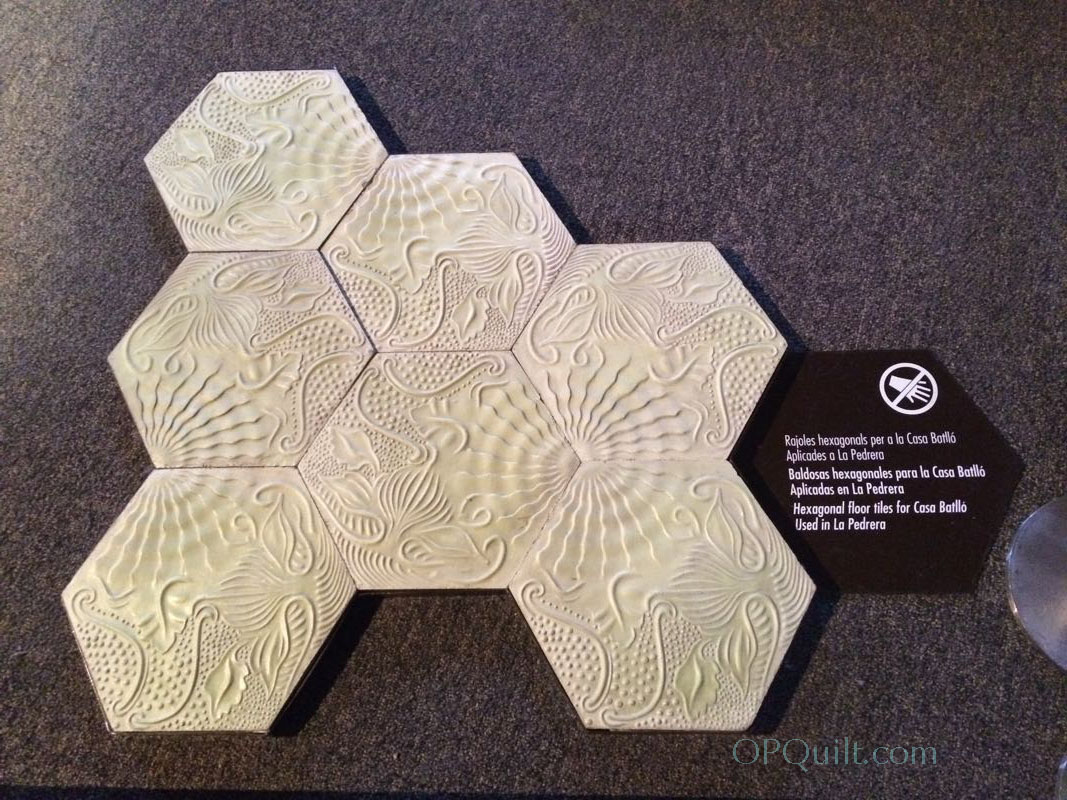
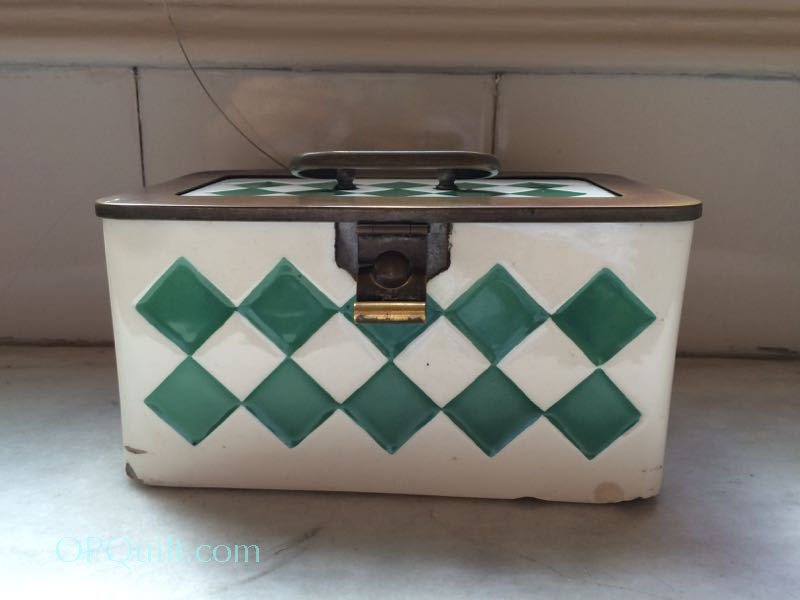
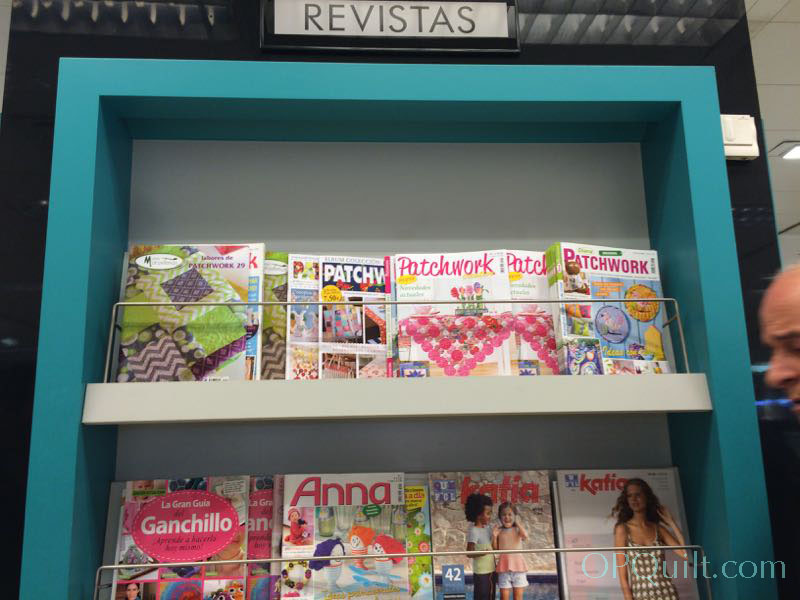
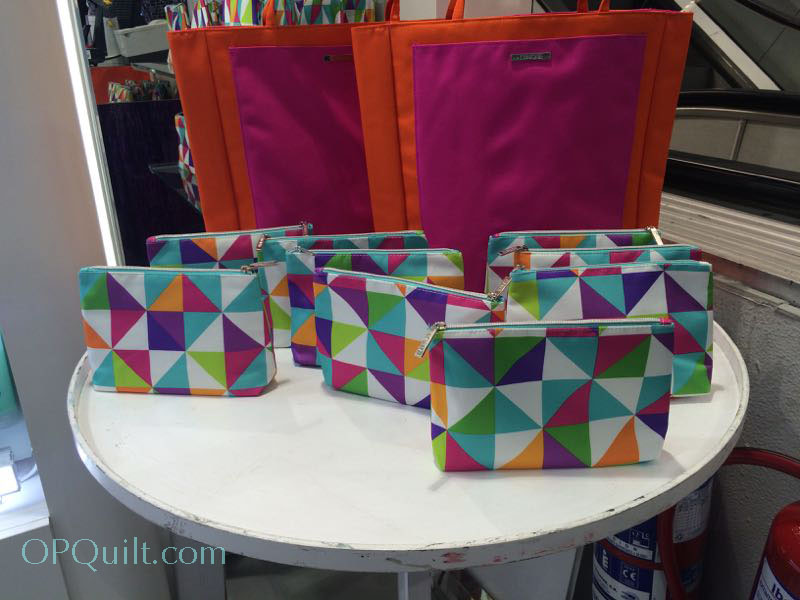
Threads_spaintiles1 Threads_spaintiles2 Threads_spainpatchwork Threads_spaincliniqueOther quilts-related things I saw were hexagonal tiles, designed by Guadi for one of his houses, a sweet little ceramic bin with a simple checkerboard-on-point in the historic La Pedrera house, a series of Patchwork Magazines in El Cortes Ingles department store and lastly, a Clinique Giveaway.  Oh, how I wanted that one (why do we always get the flowery Clinique pouches–I want this one!), but with the prices for American cosmetics roughly double what I would pay here, I had to leave it in the store.  But now I’m determined to make one for myself, in just those colors.  Actually I saw tons and tons of tile designs, all over Lisbon and Spain, giving me lots of inspiration for future quilts.

Threads_spain4

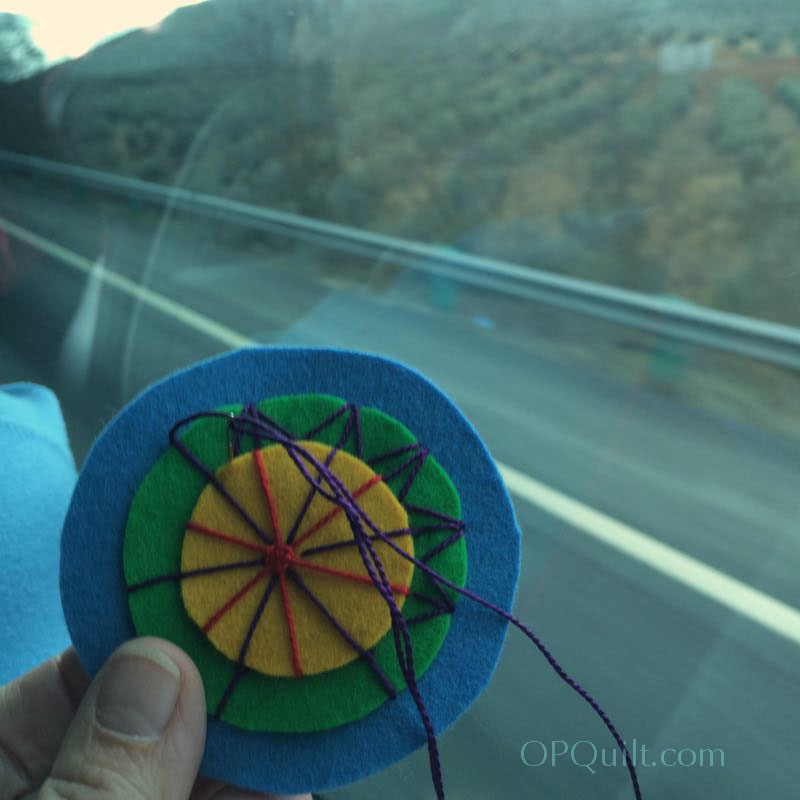
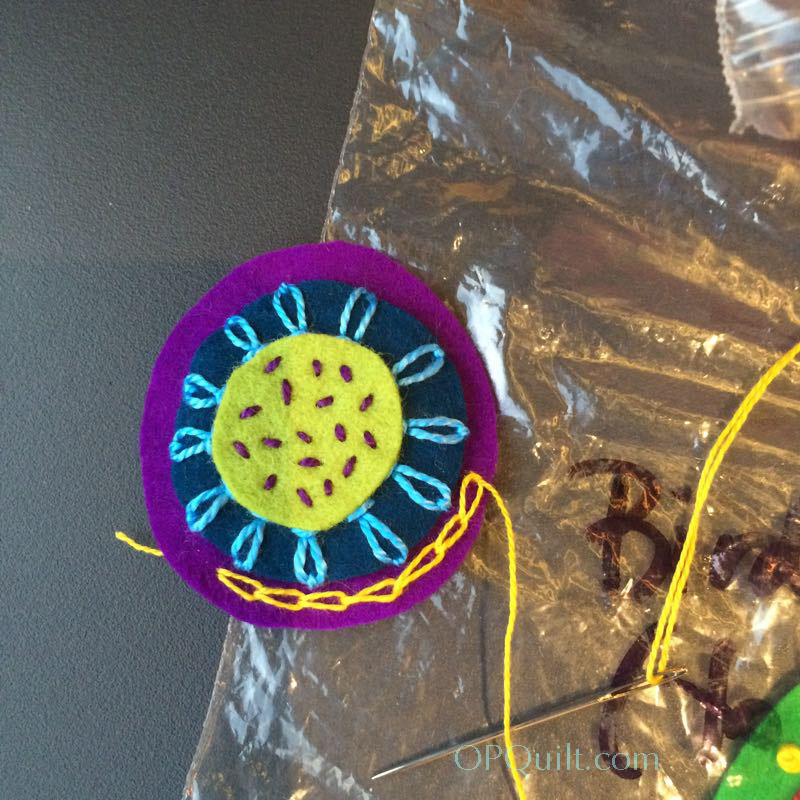
Still stitching.  I hated this yellow chain stitch, so I took it out.  Below is what finished up with, then sewed to another larger felt circle when I got home (I didn’t carry any felt with me, and although I saw lots of felt in Madrid, it was all acrylic–yuch).Threads_spain5 SpanishInspiration

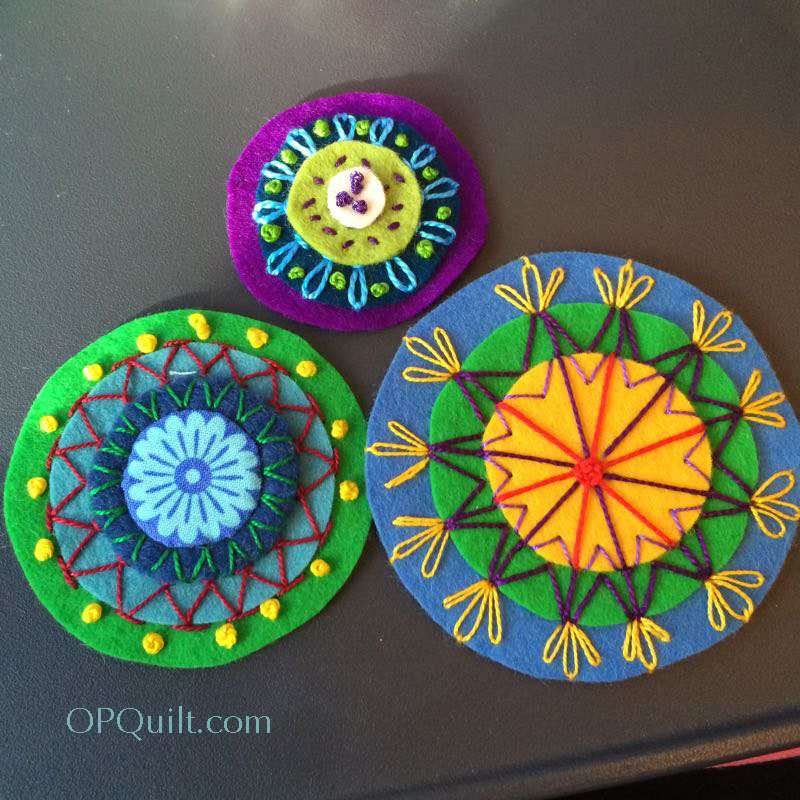
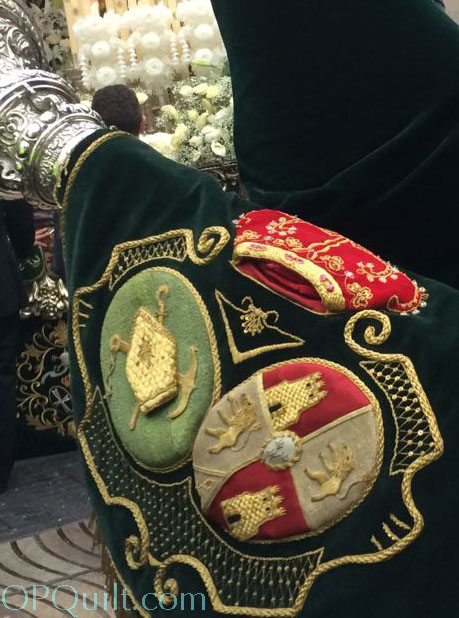
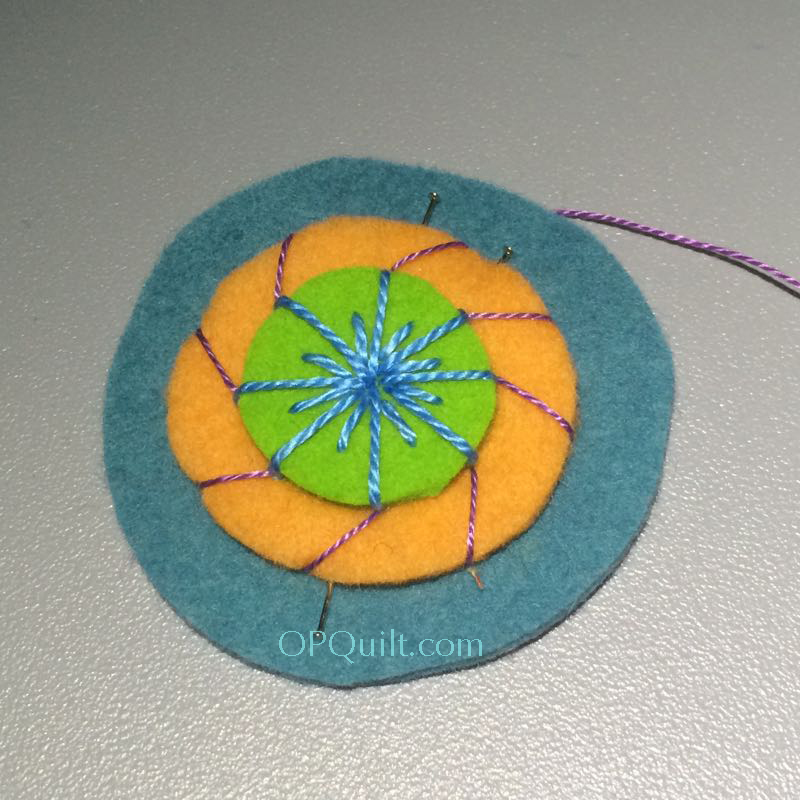
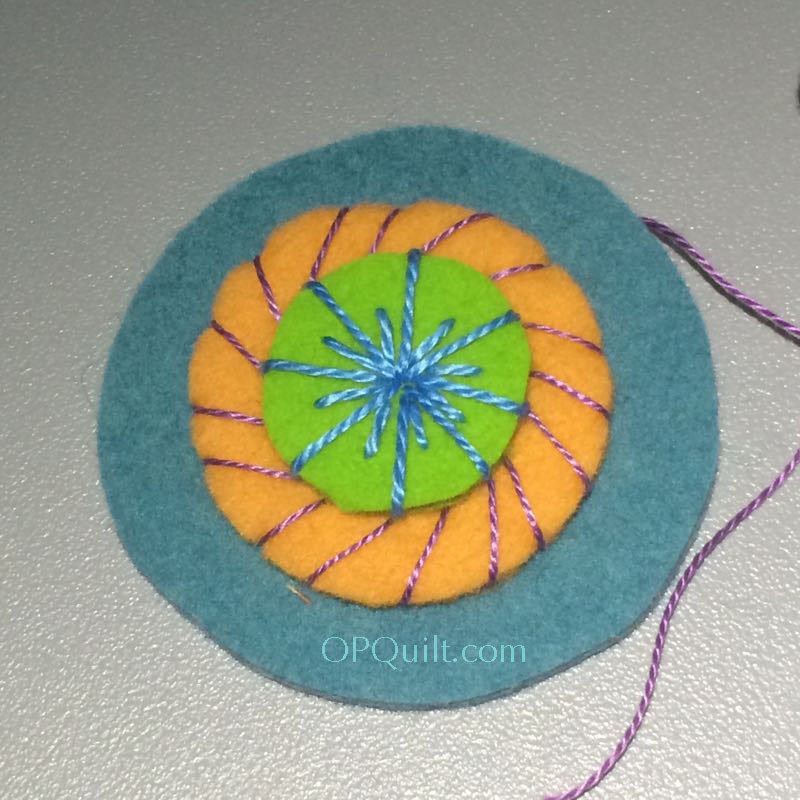
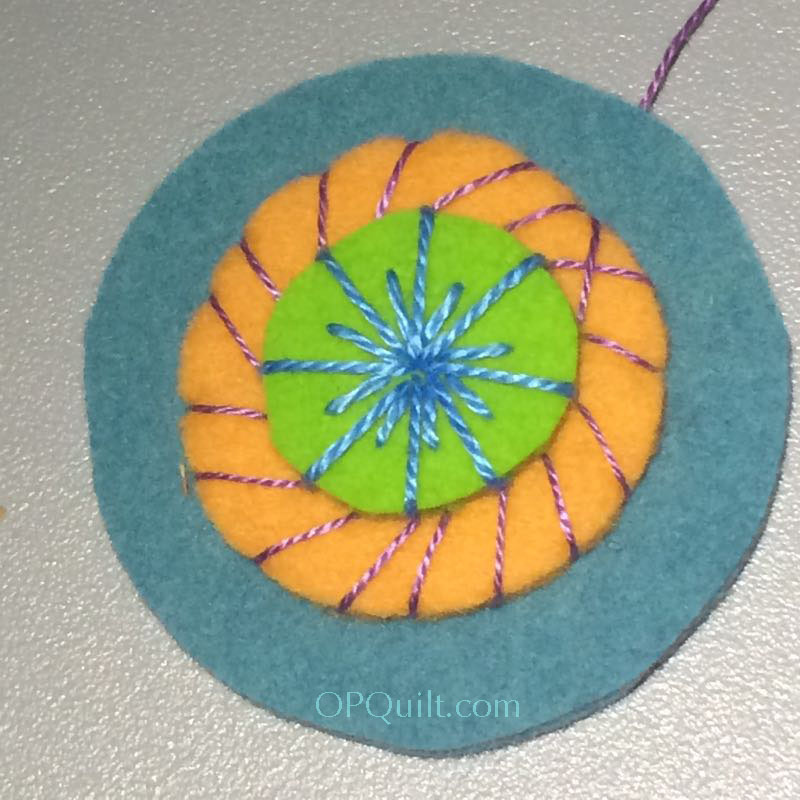
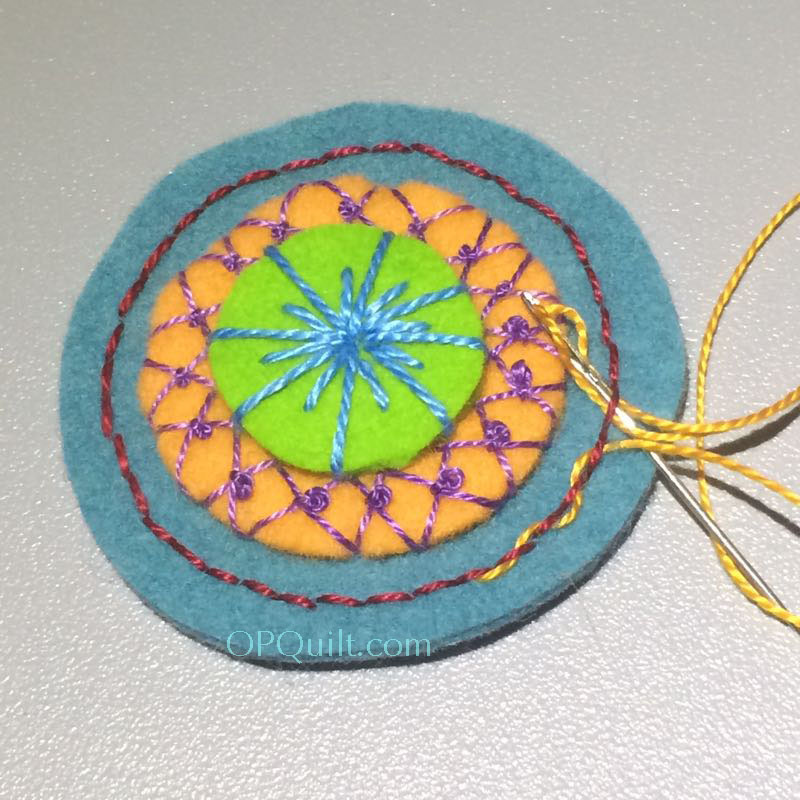
Another place I got inspiration from was the costumes of the participants in the Procession in Barcelona.  See that gridded lace-like background?  Why couldn’t I try that on one of my circles?xmastreeflowerX_1

I started by marking the divisions of the circle with pins, then stitched it, as shown, moving from a lower point on the inside to a shifted-over point on the outside.xmastreeflowerX_2

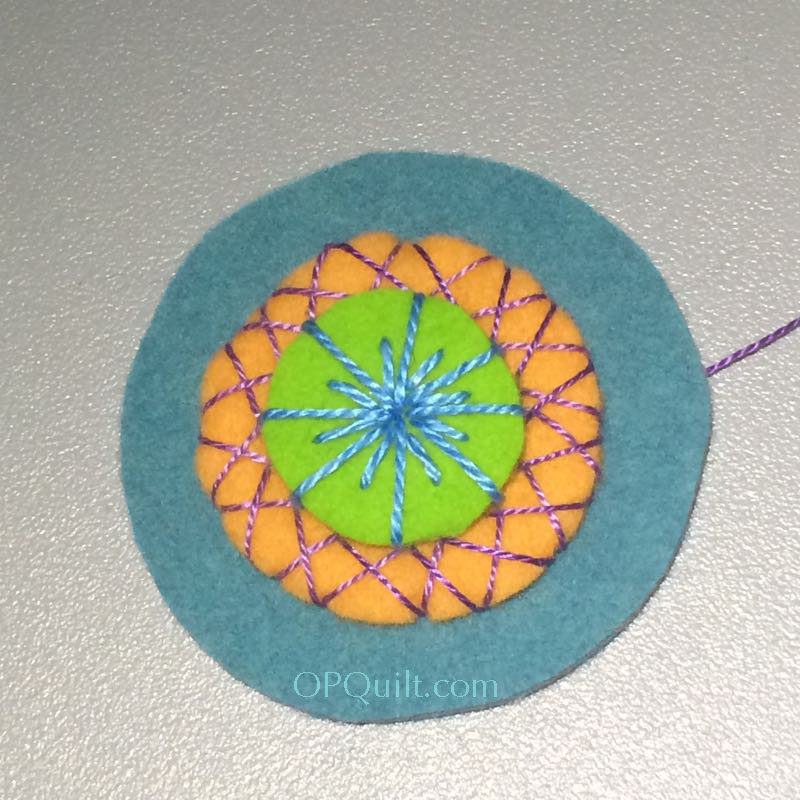
Went back in and subdivided those.xmastreeflowerX_3

Now I’m working going the other way, so that it makes an intersection.xmastreeflowerX_4

All done.xmastreeflowerX_5

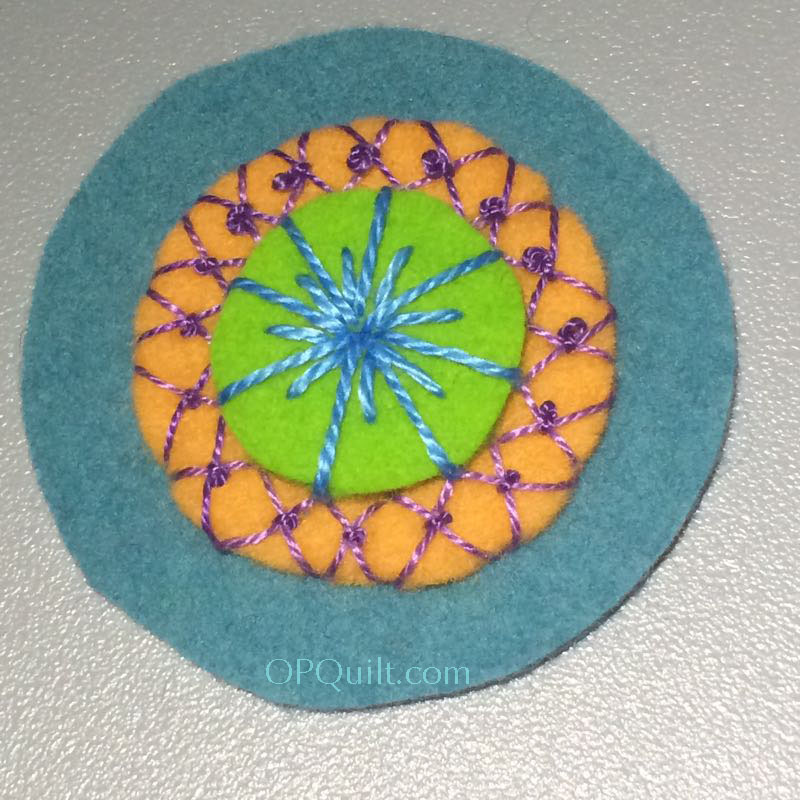
Now I went in and put little French knots at each intersection.  I started out with three-wraps of thread, but it was too big, so went down to two-wraps of thread.  And no, I didn’t take out the first few.  There is so much going on in these flowers, I didn’t worry about being perfect, and I’m guessing you didn’t notice at first that some knots were bigger and some were smaller.  Now you can.  This is another reason NOT to point out flaws in our quilts to anyone else.xmastreeflowerX_6

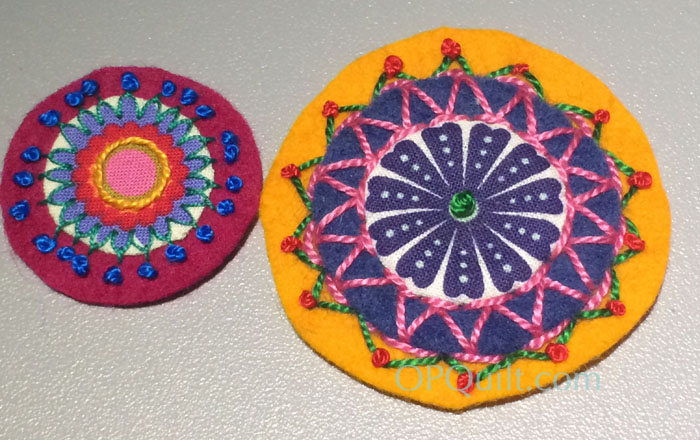
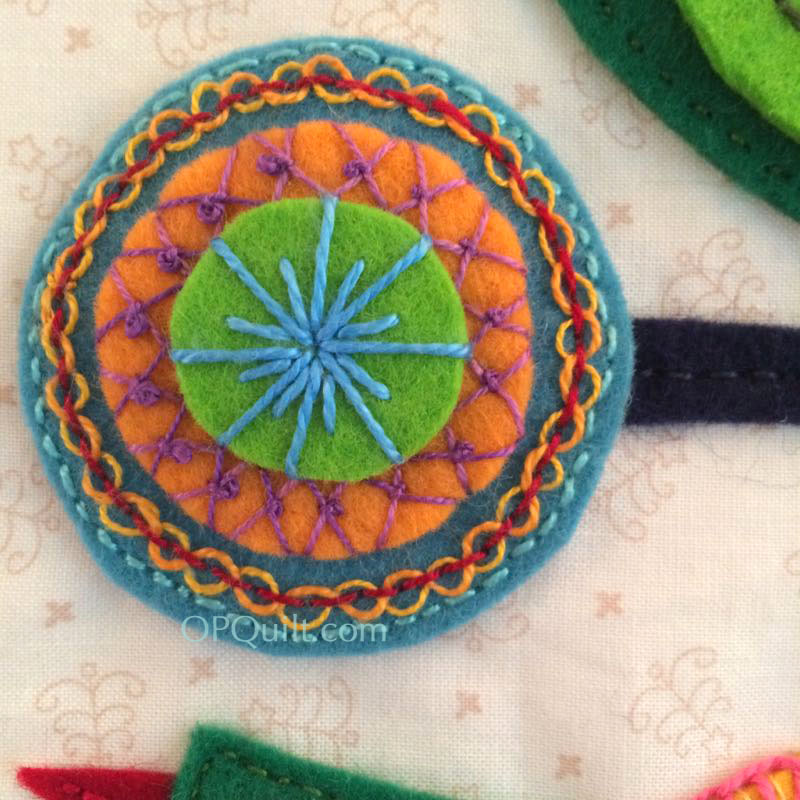
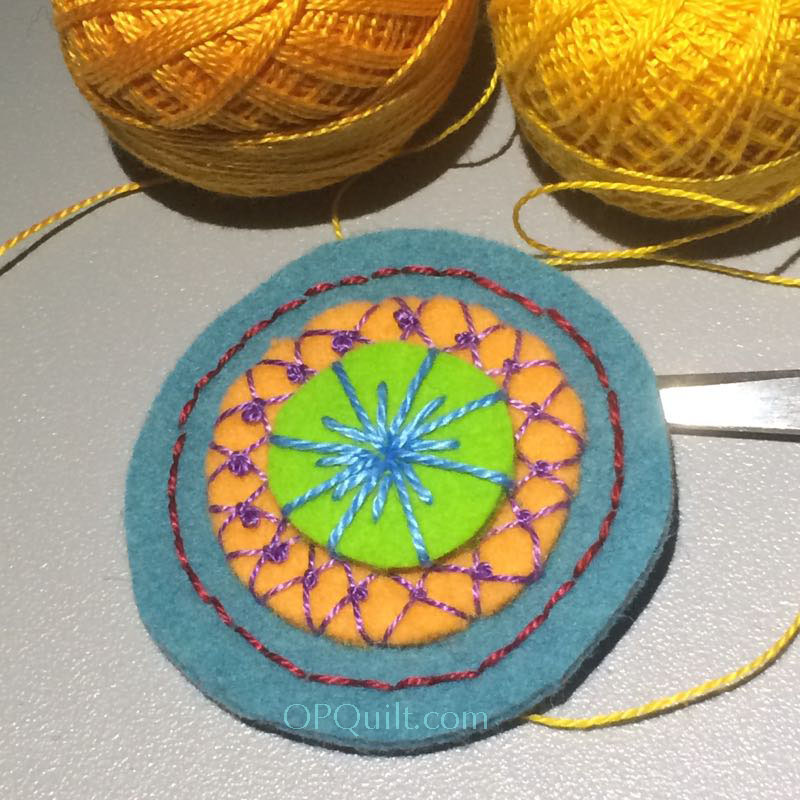
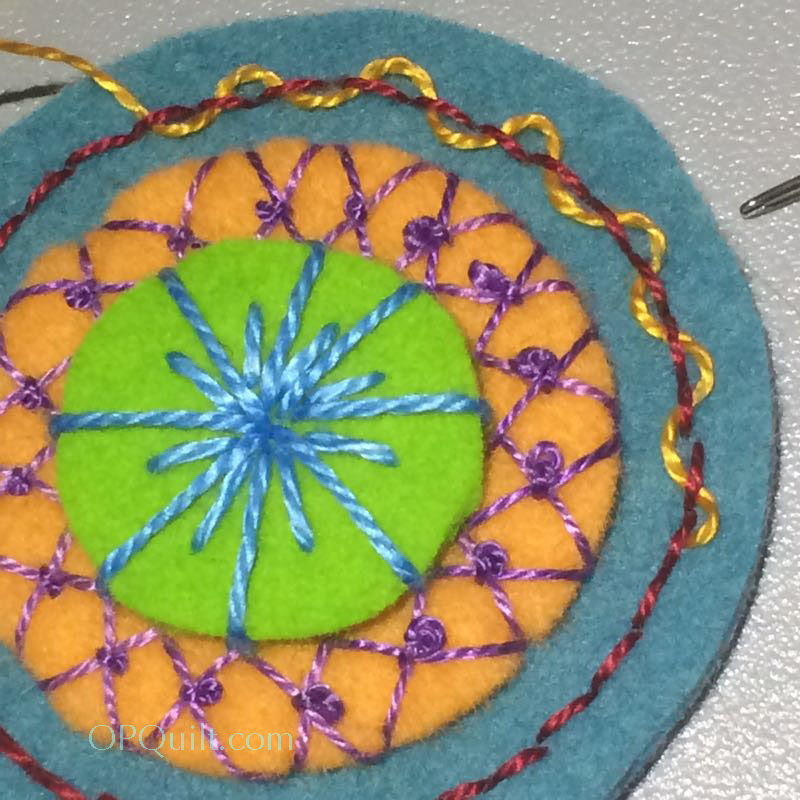
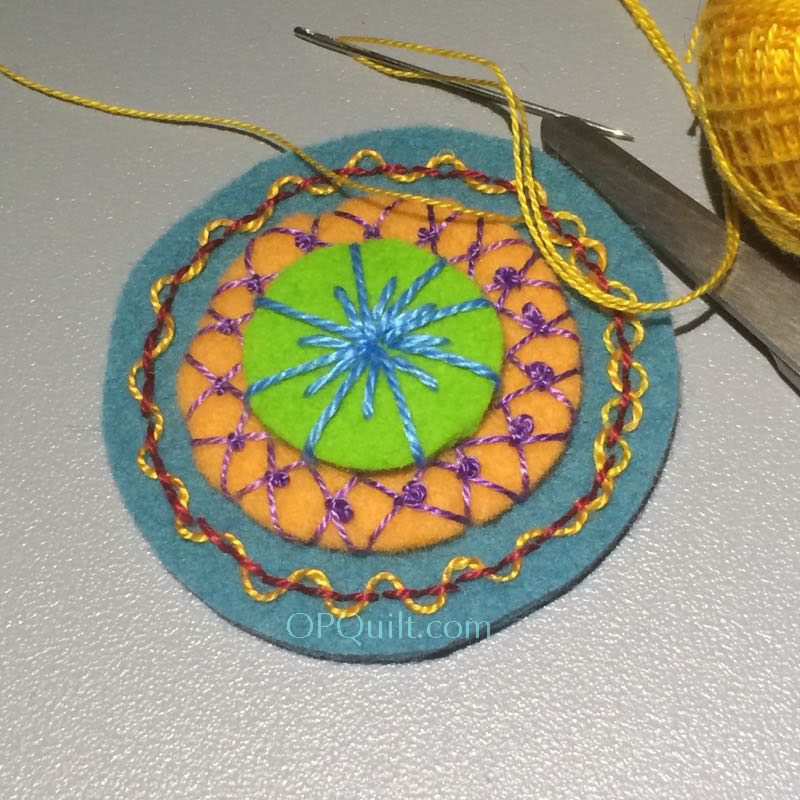
Now for another type of border, one that I learned when I was 12 years old.  (Thank you, Mom, for teaching me how to embroider.)  Begin by doing a simple backstitch around the circle, shown here in red.xmastreeflowerX_7Bring up your needle in a different color just in the middle and using the eye of the needle, weave your thread in and out those stitches, as shown.
xmastreeflowerX_8

Don’t pull them too tight–you want a lovely little serpentine loop to show.xmastreeflowerX_9

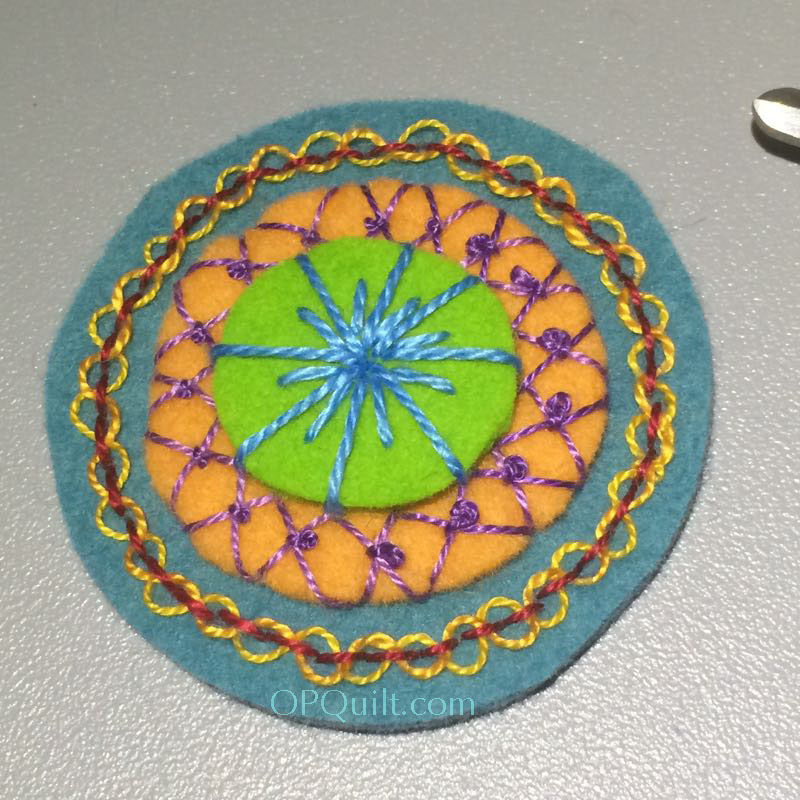
I chose a slightly different color (because I had tons to choose from) but you could use the same.  Bring up your needle where you did in the first one, then weave in the opposite direction, completing the loopy design.  Or you could just stop with one thread. xmastreeflowerX_10

I was worried that I was supposed to do an even number of backstitches. . . or an odd number of backstitches, but decided not to worry about it and just make it work.  Can you see where the problem was?  Yes, now that I’ve told you, but you couldn’t see it before.  Just make it work, and don’t worry about it.

Herringbone_1

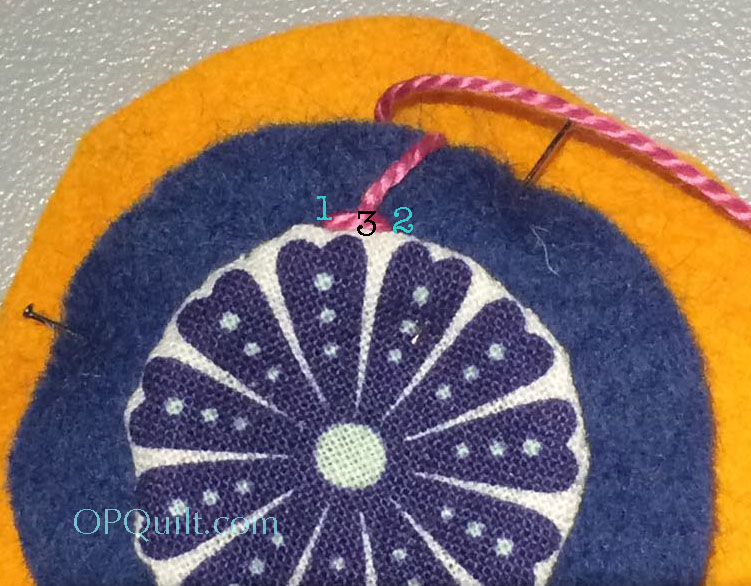
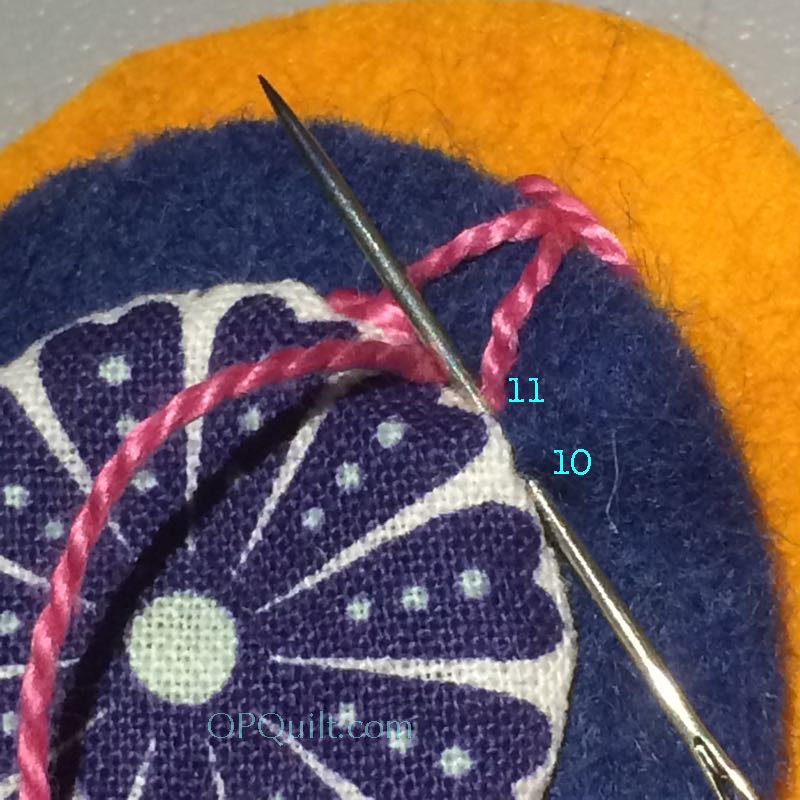
Here’s another stitch: the herringbone, my style.  (I’m sure there’s an official name for this.)  I numbered the sequence for you.  Start by bring your needle out at 1, then poke it to the back at 2, then before you’ve pulled the thread all the way through, bring your needle up at 3, right in between 1 and 2.  Now tighten up the thread.Herringbone_2

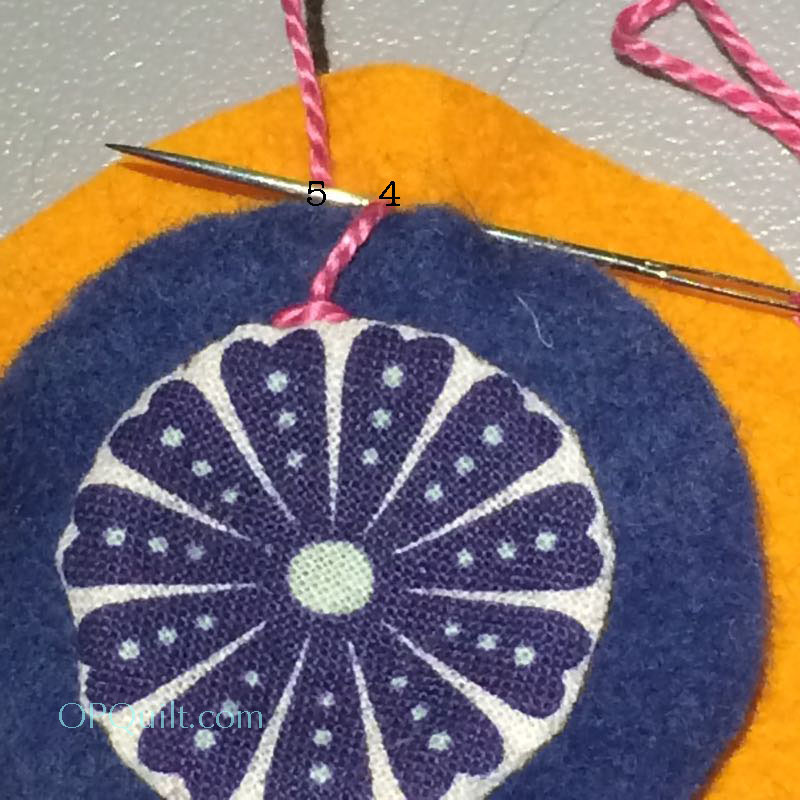
Go up to the outside edge, and poke your needle down at 4, then out at 5.Herringbone_3

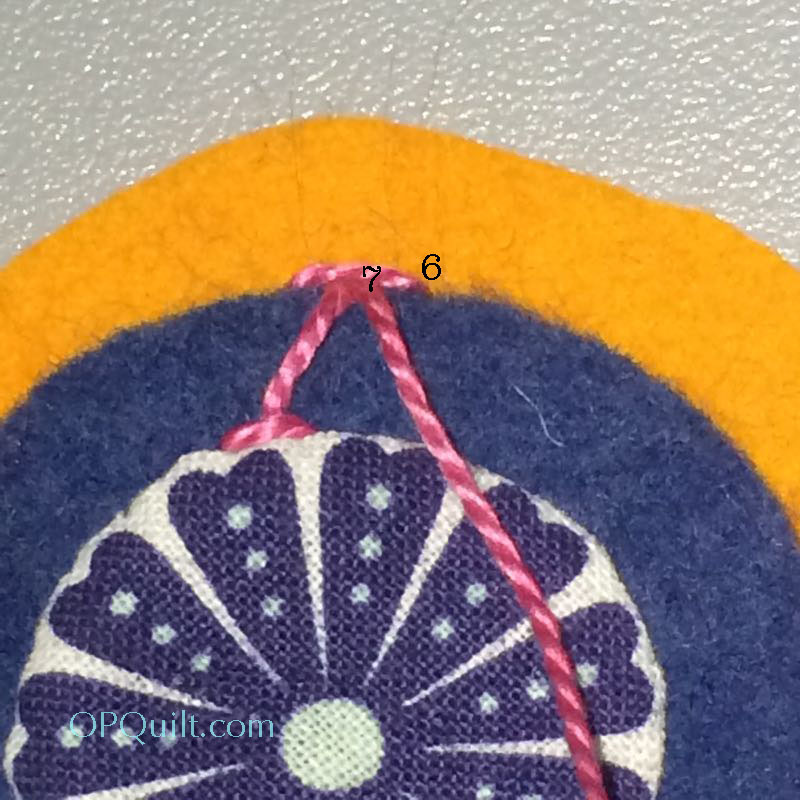
Complete the stitch by poking it to the back at 6, then bringing it back out before you’ve drawn it completely through, at 7.

Herringbone_4

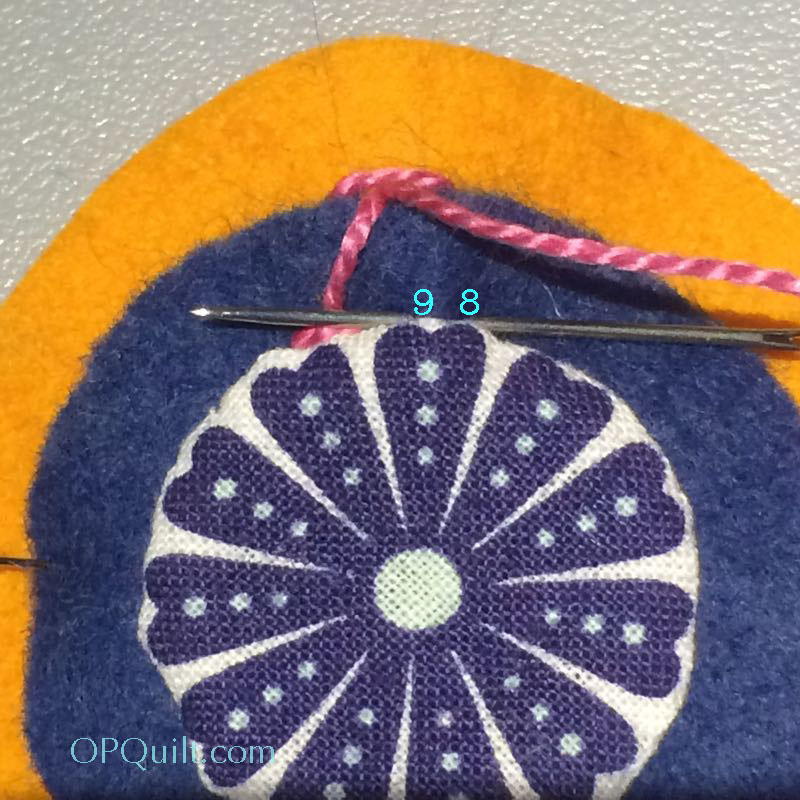
We’re repeating now, but I’m showing you how I catch the two points with one slide of the needle.  Go through at 8 and come out at 9.Herringbone_5

Then over to 10 and out at 11.Herringbone_6

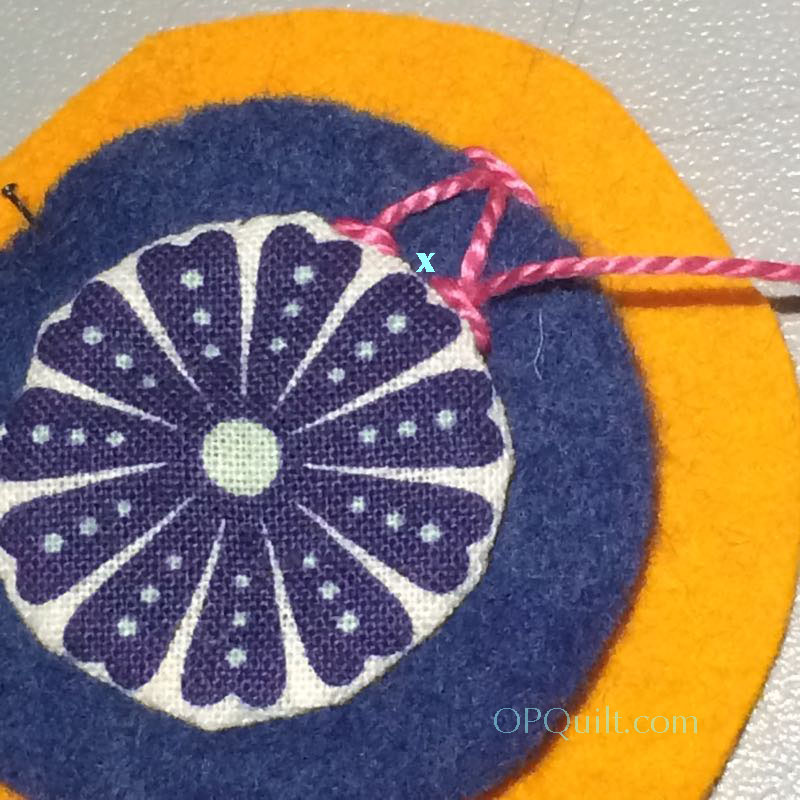
You can start to see the completed stitch here.  I don’t mind the little gap at “x” but if you don’t like it, close it up by taking bigger “bites” of your needle.Herringbone_7

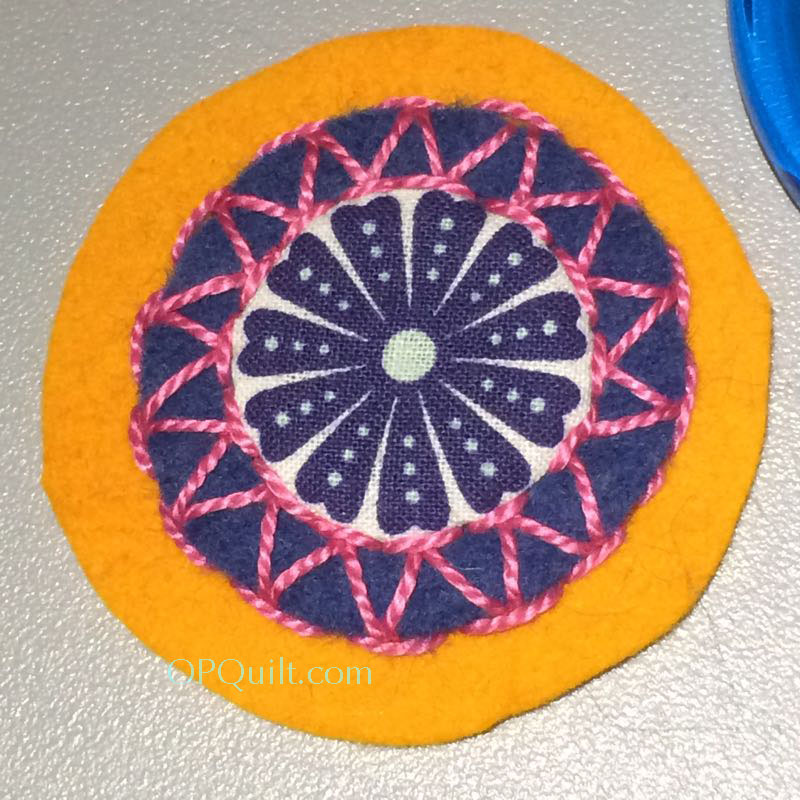
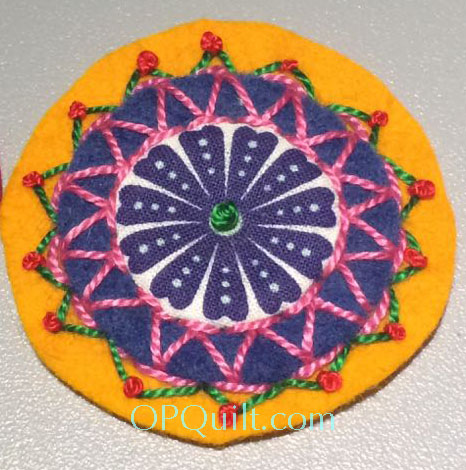
Here’s the completed stitch all the way around this circle.  I worked this in size 5 pearl cotton–big and fat.

ohcrhristmastree_spain flower

Finished!
ohchristmastree_plane stitching

On the way home, a ten-plus hour flight from Frankfurt to LAX, I couldn’t sleep.  So I watched movies I’d already watched before, flicked on my overhead light and kept stitching and stitching.  I finished all of these on the plane home.ohchristmastree_plane flowers all

Here, posing in all their beauty on an airplane tray table, are all the flowers I finished on our trip.  I hope you are posting them on IG with the hashtag of #startyourneedles or #ohchristmastreeqal so we can all borrow ideas from each other.  Keep stitching–don’t worry if yours are not finished.  We still have a couple of months to go, so just take them with you and add another round wherever you can.  I’ll show the completed set of circles and the tree, all mocked up (again) on my next post on April 2nd, plus I’ll be hosting a giveaway for those Barcelona size 8 threads.

ohchristmastree3_65GIVEAWAY

(posing here with metro tickets from our trip)

I’m glad to be home, and looking forward to our next part of the Oh Christmas Tree Quilt-A-Long!

ChristmasTreeLogoSM