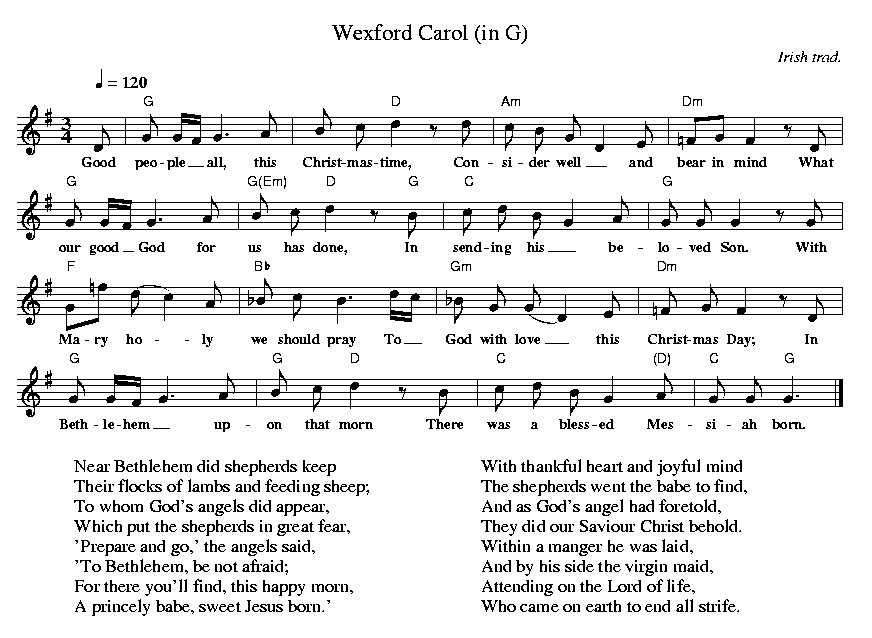
I always try to put this up each Christmas season, as The Wexford Carol is one of my favorite Christmas carols, and I love this arrangement by Alison Krauss and Yo-Yo Ma.
I also think…that with a week left to go until the Christmas…we kind of need a moment to pause to remember why we do all this.
Enjoy!
(click to enlarge)
˚˚˚˚˚˚˚˚˚˚˚˚˚˚˚˚˚˚˚˚˚˚˚˚˚˚˚˚˚˚˚˚˚˚˚˚˚˚˚˚˚˚˚˚˚˚˚˚˚˚˚˚ My blogging software puts ads here so I can use their site for free. I do not know about, nor choose, the content, nor do I receive any money from these ads. ˚˚˚˚˚˚˚˚˚˚˚˚˚˚˚˚˚˚˚˚˚˚˚˚˚˚˚˚˚˚˚˚˚˚˚˚˚˚˚˚˚˚˚˚˚˚˚˚˚˚˚˚˚˚˚
Oh! Christmas Tree Quilt
Quilt #175
Began January 2016 • Finished December 2016
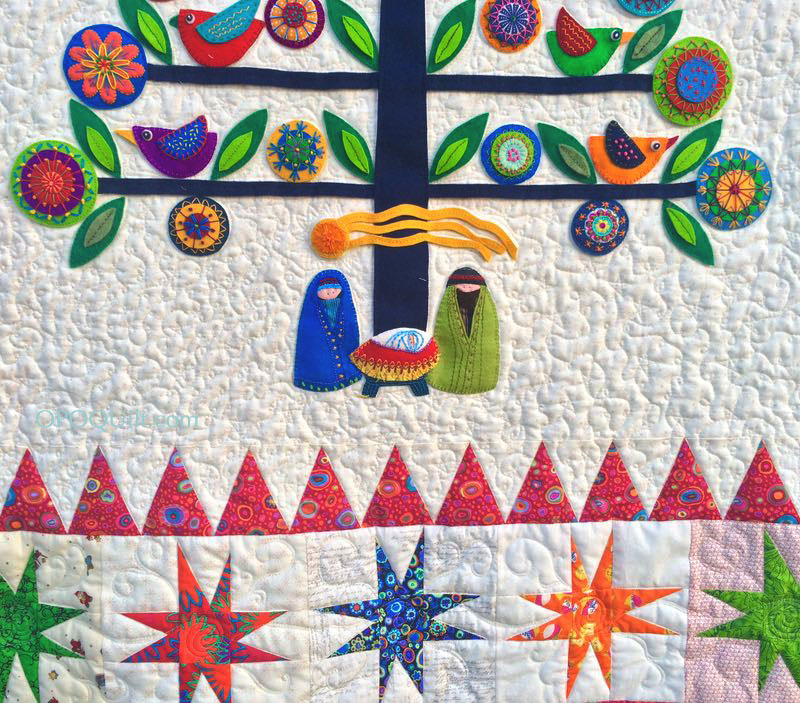
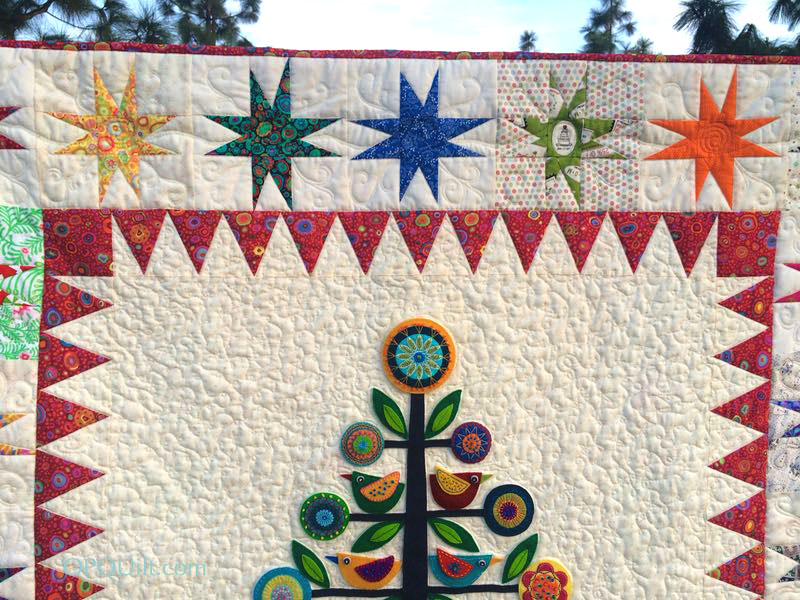
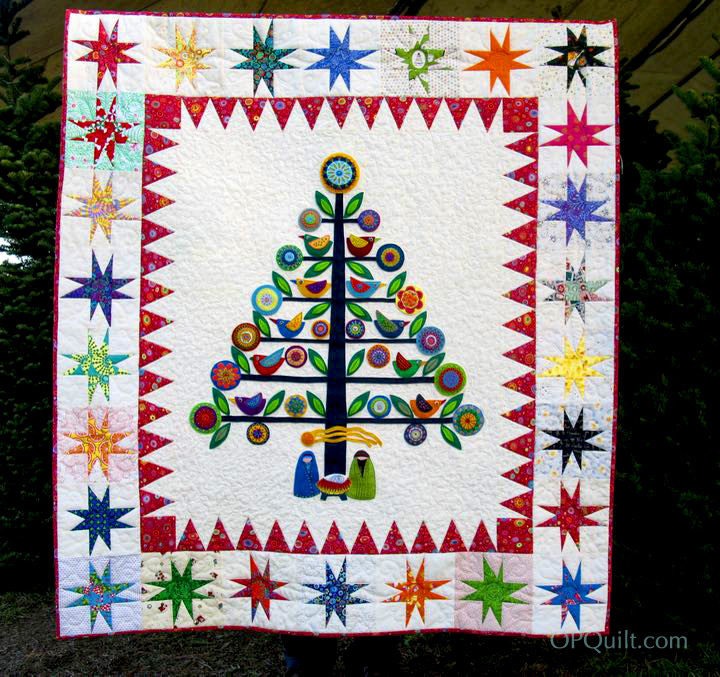
It’s finally finished. I started this once I saw the QuiltMania magazine it was featured in. It is a pattern from Wendy Williams of Flying Fish Kits. I had a companion in the making of this, in Wendy Welsh from New Zealand. She was about a month ahead of me in construction and was such a great help, especially in untangling the borders dilemma. All of the posts about the making of this quilt are referenced in the Quilt-A-Longs tab, up above.
I did finish it by my goal of December 1st, but had to find the right locale accessories, like the lumber-jack looking guy above. (By the way, the most important man in this photo is unseen, holding up the Christmas Tree quilt. Thanks, dear!)
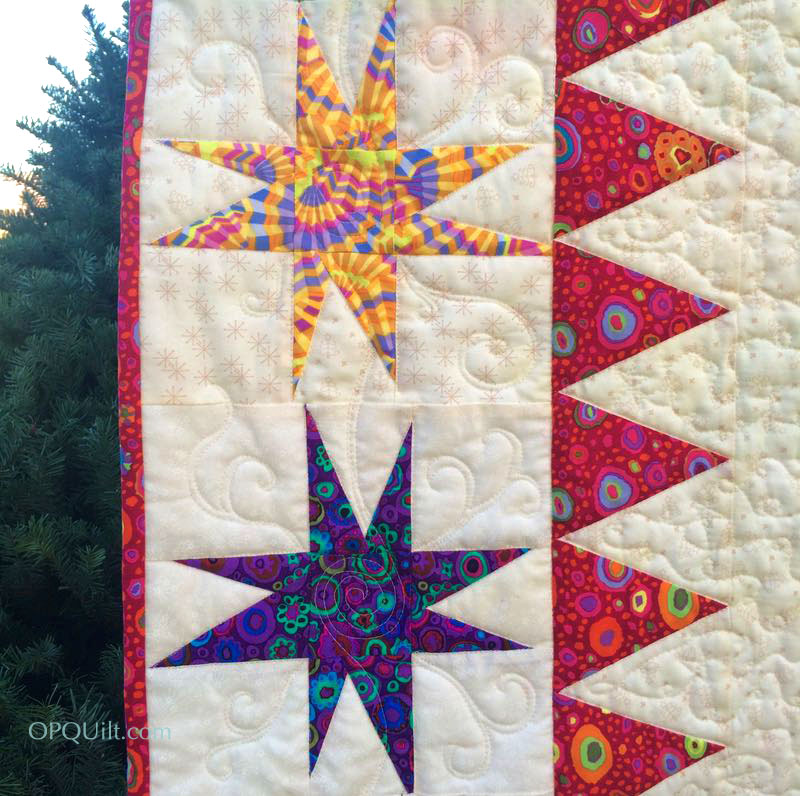
I had written about how I quilted the center: a meander with tiny stars here and there.
As usual, I printed out my quilt with partial transparency and doodled and doodled, coming into a dead end always. But finally, inspired by an idea from *here,* I chose to do swirls around my stars with a spiral in the center, linking them all together.
I quilted the cream background fabric around the wool felt appliqués, then in around those red triangle points, leaving them unquilted. I did outline them in a straight stitch, helping them to stand out from the background.
My husband Dave and I went out for a photo shoot as the sun was dimming, first hitting the tree lot at Teen Challenge (below), a charity near our house.
And then we went looking for more evergreens for backdrops, a near herculean task in Southern California. We finally found these pines in the university parking lot. I told my husband that Marsha, in Vermont, could photograph hers out in the woods amid the snow, but that typical to our climate and locale, we have to pose in an asphalt parking lot.
The back is a series of panels and fabrics from Cori Dantini from her Merry Stitches line, purchased at Quilt Market this past May and available now. It’s fun to use them on the back.
This quilt (or parts of it) have gone to Spain, all around my town, and then finally tucked in at home to be finished with the quilting. I took inspiration from all of those who followed along on the Quilt-A-Long and on Instagram, but am indebted to my husband for his love of my quilting and constant support. Lastly, the design for Mary and Joseph and Baby Jesus are found here on the blog. Uusually we say that what’s important about Christmas isn’t found under the tree.
But in this case, it is.
I hope your Christmas season is merry and bright and filled with the love of our Savior.
Christmas Tree Skirt 2014 Quilt #141 on the 200 Quilts List (Post updated August 2019)
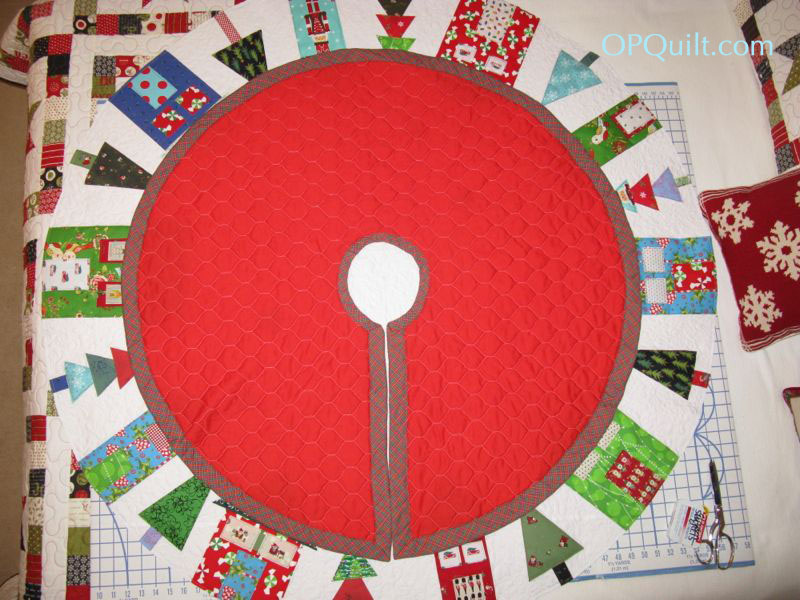
Here I laid out the old Christmas Tree Skirt on top of the new one; it was made in the early 1970s out of pre-quilted fabric with a tricot backing, and homemade bias tape.
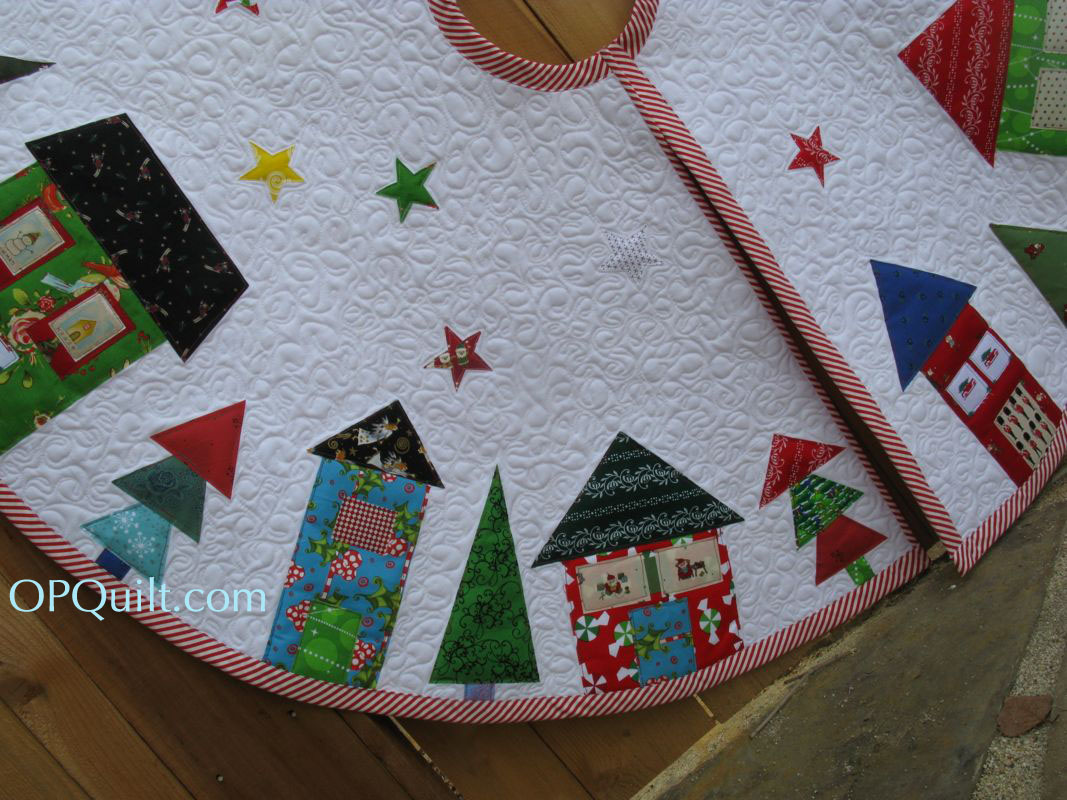
I was inspired by Betty’s skirt that she made last year, as well as others. The original inspiration was a tree skirt from Fat Quarterly 2013, but since I didn’t have a pattern and it was all proportional squares, triangles and rectangles, I just started cutting. Here I’ve laid an embroidery hoop so I could judge how the center circle would look. It took me about two days to get all the houses and trees arranged, partly because I wanted to use my stash and it that necessitated some color and value balancing. I have a piece of fabric from my first quilt in here, as well as some scraps from dirndls made from German fabric (which I love). I even have scraps of fabric from cotton I’d purchased in Rome, Italy some 14 years ago, as well as some Japanese fabrics, also purchased on a trip. Build your stash, everyone. It’s a fun place to visit.
UPDATE 2019, BASIC DIMENSIONS:
Fuse a series of fun fabrics to Steam a Seam II. I cut everything a bit larger, then trimmed to make sure the fusing covered the back completely.
Basic skirt circle: 52″ diameter (piece some white cotton fabric to allow for this dimension of circle)
Center hole is a traced 6″ circle embroidery hoop.
Tall Skinny House: 9″ tall by 3.5″ wide
Pointed triangle roof is 6.6″ wide and 4.5″ high. Follow the basic directions for tall Christmas Trees to cut yourself a wonky triangle.
Two-story house, short: 7″ tall by 6″ wide
Two-story house, taller: 9″ tall by 7″ wide
Trapezoidal Roof measures 8″ across the bottom, 3″ across the top and is 3″ high. So, cut a rectangle 8″ by 3″ and fold in half. From the outside lower corner, draw a line so it ends 1.5″ from the fold. Cut that section off and you’ll have the roof.
Pointed Roof for two-story house measures 7″ wide by 4″ tall.
Tall Christmas Trees: Cut a rectangle 7″ tall by 4″ wide. Fold in half lengthwise, and cut from lower outside corner to the center fold at the top, making a Christmas Tree shape.
Medium Christmas Trees: 6″ tall by 4.5″ wide (cut as above)
Stacked Christmas Trees are formed the same, but the dimensions are 3.5″ tall and 3″ wide.
Christmas Tree Trunks are 3.5″ tall by 1″ wide…but some are shorter (like 1.5″ tall). Cut them to your liking.
Wonky-cut stars (Do a search for a 2″ pattern online; trace the outlines onto fused fabric, then cut). —-> Or use this one: 5-sided-stars <——
Use my photograph at the top of this post to plan and map our your pieces, but cut some different dimensions if that’s what you like (like making a shorter, skinny house).
WARNING: Prewash your reds!!! I did them once with Dye Catcher Sheets. I should have done it three times, so my tree skirt suffered. We still use the tree skirt, as the discoloration is up near the binding in the center circle, but I wish I’d washed them more than once. Now we call it Christmas Tree Skirt at Sunset.
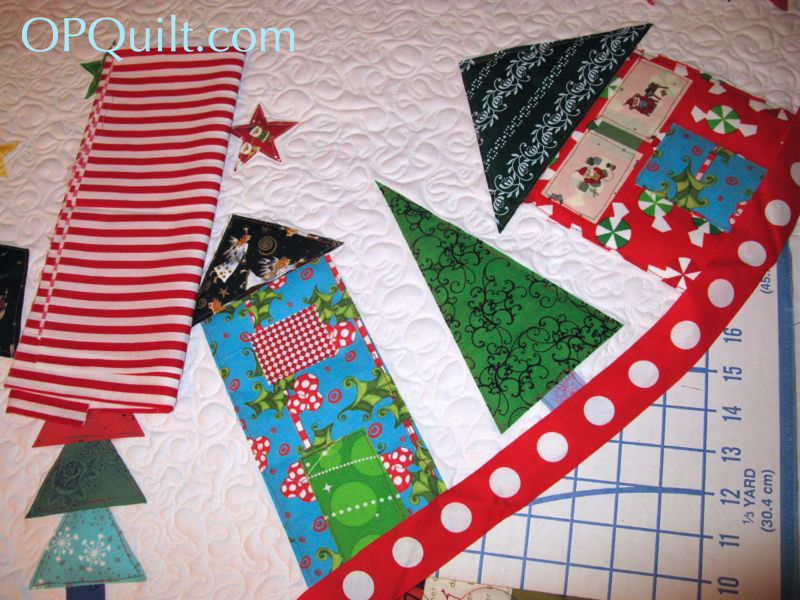
I thought I’d use a large red/white dot for the binding, but when I cut it on the bias, I got this effect. So I went with a narrower stripe than the one shown, cutting it on the bias so it would go around the curves. I pieced it, then folded it in half, then sewed it to the back and topstitched it to the front. A trick I learned in Clothing and Textiles in college was to press a curve into the bias tape. It went on like a charm.
In working on this, I zipped through two books and am in the middle of one more. The two I couldn’t wait to listen to were both Inspector Gamache mysteries, set in Canada. One was titled Still Life and the other was titled A Fatal Grace, both by Louise Penny. And I’m halfway through The Snow Child by Eowyn Ivey. Fitting, isn’t it?
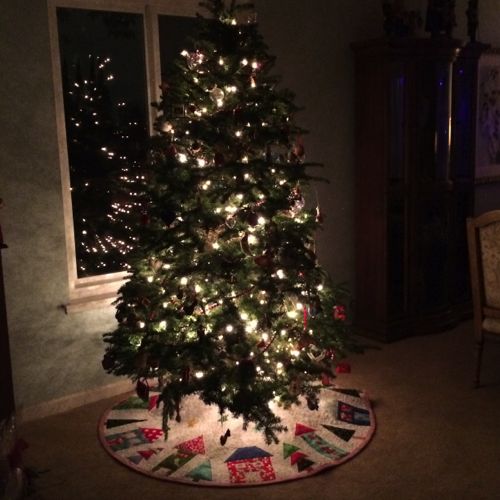
We finally finished decorating the tree, and I’m enjoying the new tree skirt!
Bobbin Statistic: 5 (in other words, how many bobbins it took to get this thing quilted) Quilting: First I stitched through the quilt sandwich on the raw-edges of all the house and tree shapes, letting it be slightly wonky as I went. Then the top-stitching on the stars. I switched to white thread and did a loose, large meandering quilting around all the shapes.










 OccasionalPiece--Quilt!