

First up at the Long Beach Show is wait. Wait until the show opens. I’d gotten there about 45 minutes early, and was about 12 from the front. By the time the show opened at 10:00, the line snaked out behind me, and down the long passageways.
Second up at the Long Beach Quilt Show–go and see the people who sold me the fabric for my Provence quilt, French Connections from the Carolinas. They also sell fabulous baskets, which I saw many women toting around all morning. They were kind enough to pose for a photo before all the crowds arrived.
I then wandered around, browsing through vendors, looking at things to buy. The strength of this gathering is NOT the showing of quilts, although some are interesting. Road to California, in January, is more varied and has a juried quilt show, so I always spend a lot of time looking at things there. This show, an off-shoot of Houston, is like all the vendors came, but not too many of the quilts. And there always seems to be a display where we are not allowed to photograph. So I spent the bulk of my time looking at the new ideas offered by the multiple vendors, and picked up a few sacks of treasures to bring home.

I ended up buying the kit to this quilt. I have no idea why, other than it is very very cute and the fabric choices were right on target. That’s all I’ll say about shopping at the vendors.
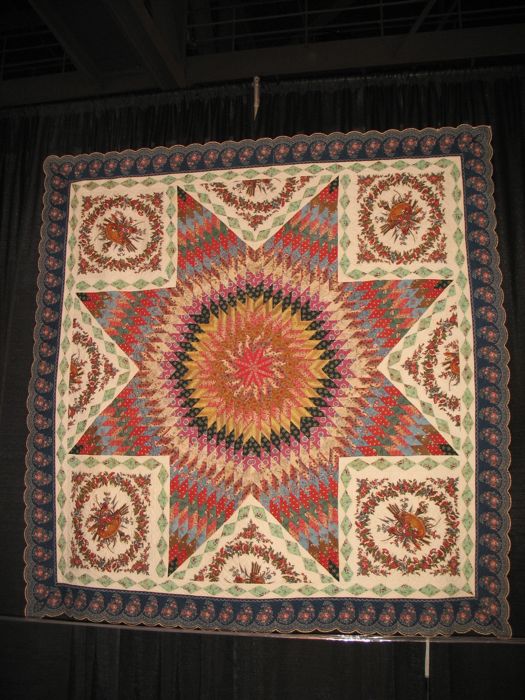
One exhibit was a selection of very old quilts. While I was standing there admiring this vintage piece from the 1800s, a group of quilters passed by. One said ” I don’t like these colors.” Another said, “And what’s with those borders? How could she have chosen those?” At this point I said, “I guess from whatever they had in the 1800s.” They did a double take, and said, “Oh! I didn’t know these were old quilts.” And they moved on.
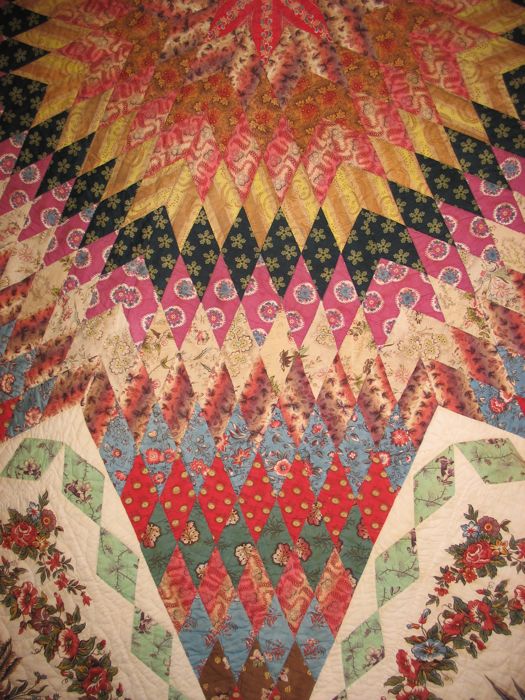
This quilt was made around 1845, and is titled Star of Stars. The panel block prints date from 1815, and the quilt includes French and English chintz, Indiennes prints–just like my Provence quilt!
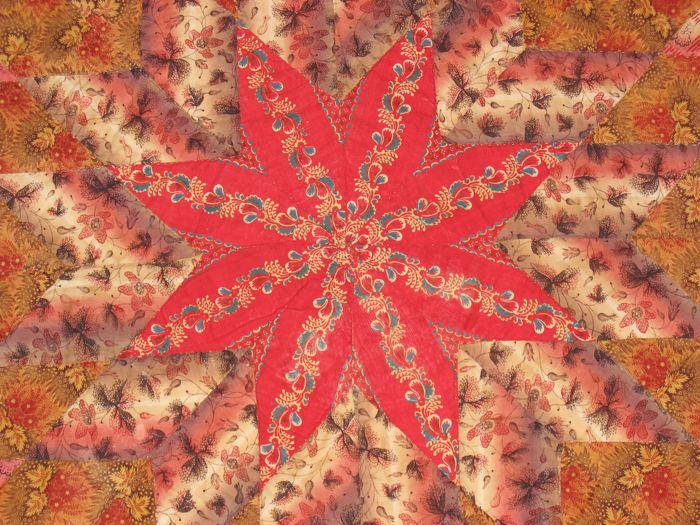
The center star was fussy cut, and really makes this old quilt pop.
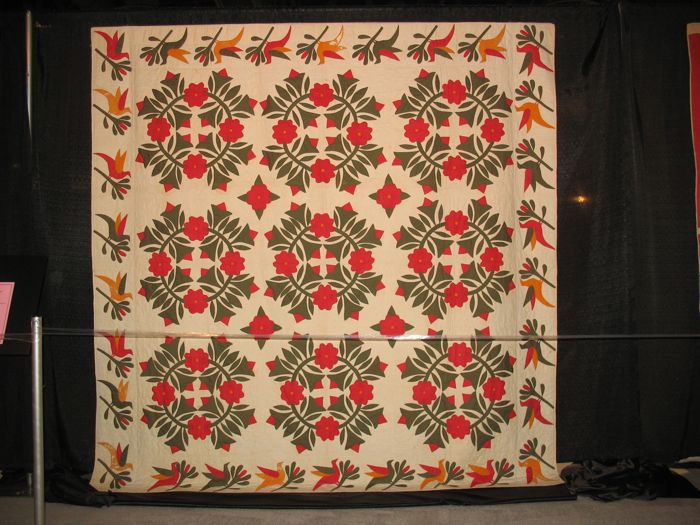
So what can we learn from these early quiltmakers? Symmetry, as found in this one, from 1870.
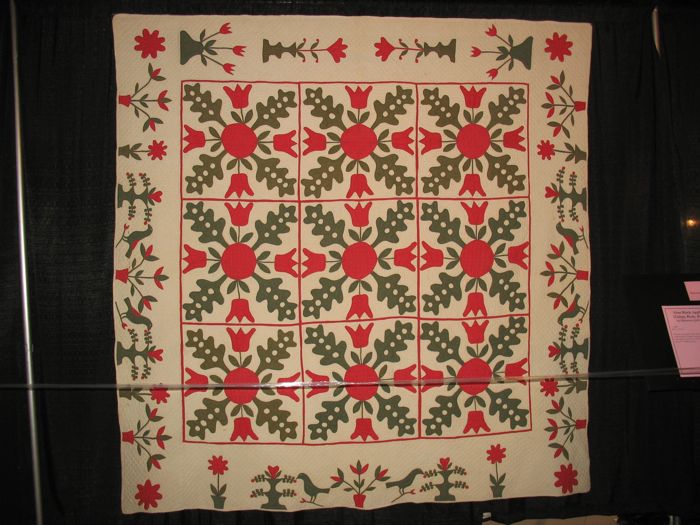
Pictoral borders? I liked that each of these blocks in this quilt from around 1870 were slightly different, showing that they are truly handmade.

Cleverly placed corner blocks in the border? Good use of contrasting values? I happened on a quilt site the other day and the woman’s quilts were very colorful and well done. But they were all medium tones, so the overall effect was mushy. This is anything but mushy.
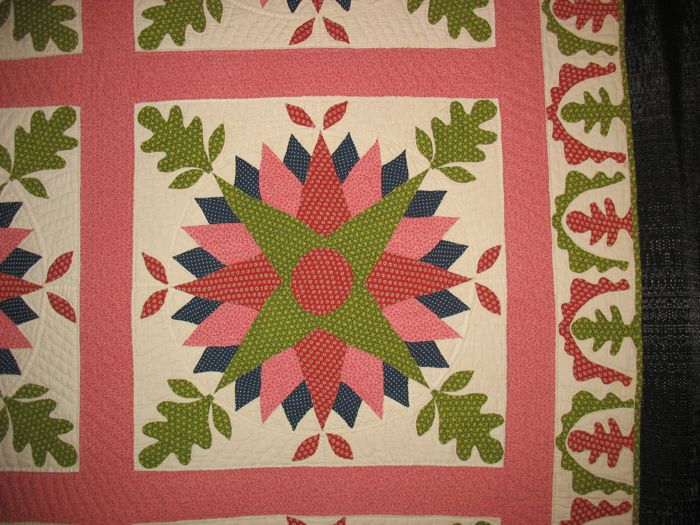
And when I got up close, I think the outer quilted circle around the points might even be trapunto.
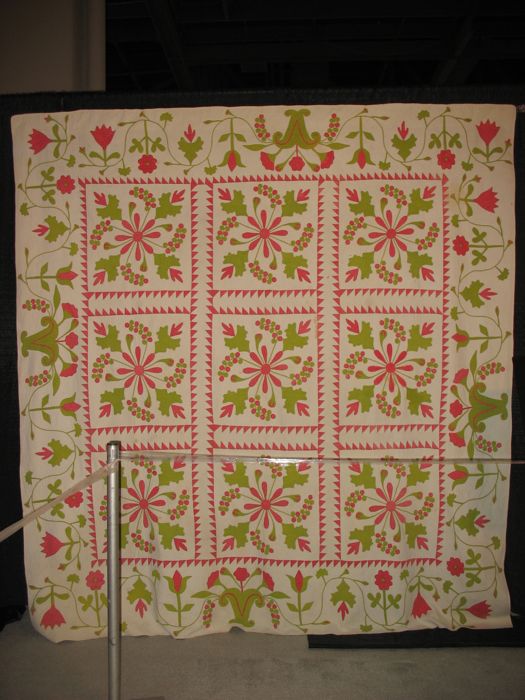
How long did it take this skilled needlewoman to applique all these leaves and vines?
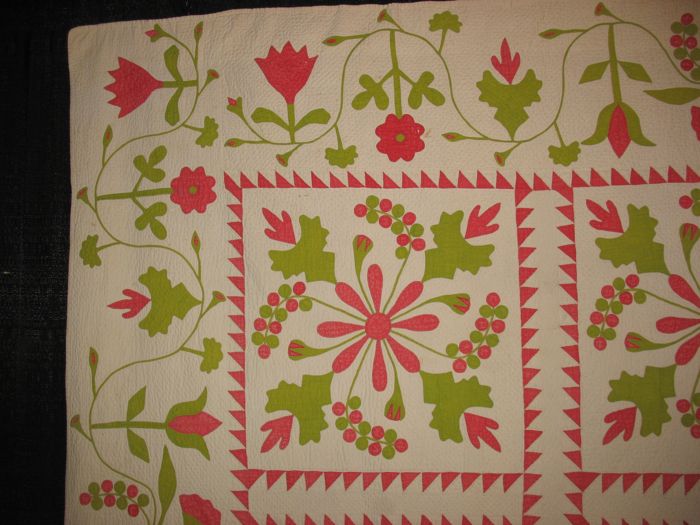
Detail of above quilt.

Everything new under the sun is old, or something like that. The use of lots of stark white in the quilt from 1850 is very much what some of our “modern quilters,” as they like to call themselves, use to bring contrast and pop to their quilts. There appear to be three parts to the quilt world today: those who do traditional quilts using traditional methods and patterns, those who do art quilts which includes lots of free form and interesting techniques and lots of embellishment, and these modern quilters. I like this group, thinking that it has rejuvenated quilting. One study, oft-quoted, says the average age of a quilter now is 60 years old. If you’re striving for longevity in your industry, I’d be worried if that was the number.
However, I’d bet that the average age of the modern quilters is around 30 to 35; they are the new blood of the quilting industry, and some manufacturers are recognizing this, using the blogs these quilters maintain to reach out to new customers. We need all three kinds of quilters, I think.

A few more of the older quilts. Barn Raising Log Cabin, from the 1890s.
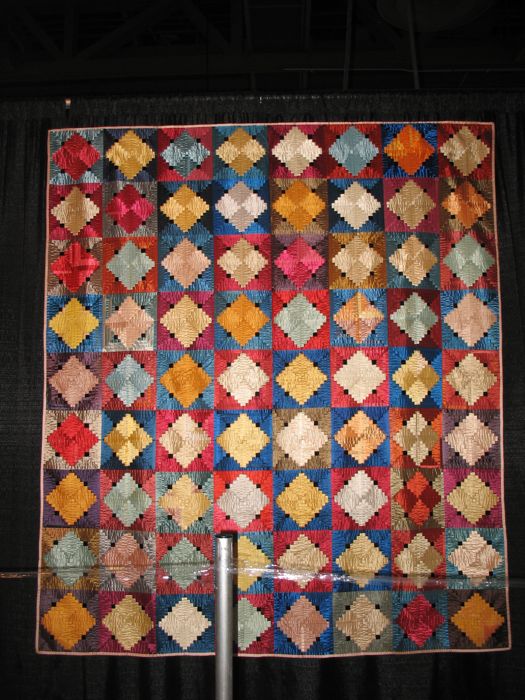
Courthouse Steps, from 1890, made of silk. Another variant in the Log Cabin block.
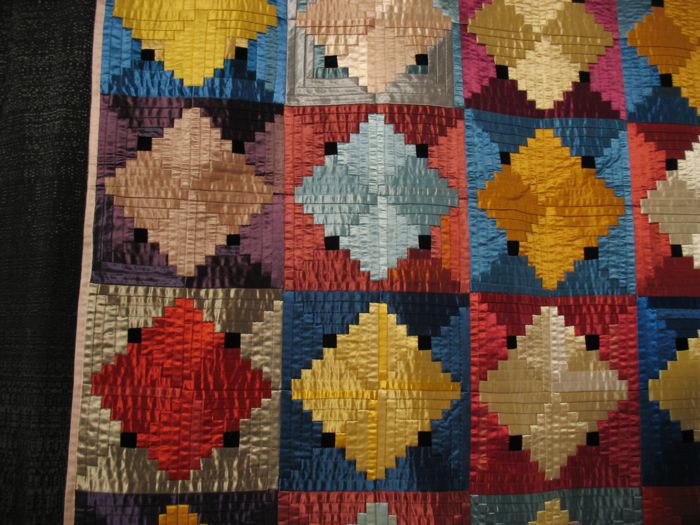
Detail of above quilt.
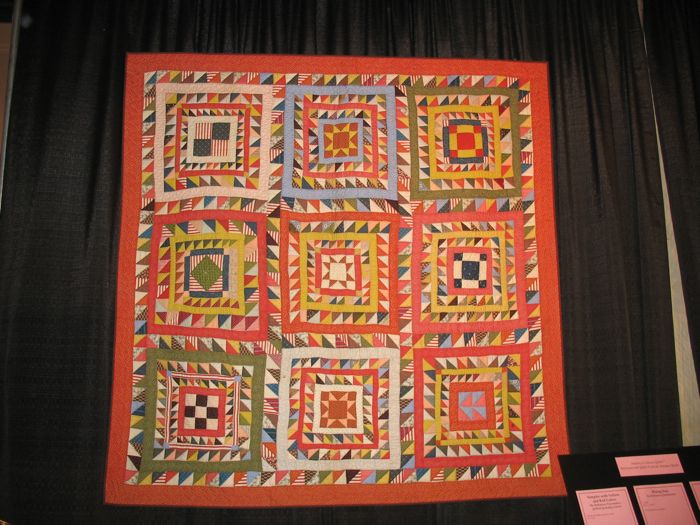
Wild Goose Chase. It’s the variations in the center blocks, coupled with the wild goose chase borders and strong colors that make this quilt a standout. I like that the lower left green border seems to float.

Detail of above block, showing the casual way the quilter “matched” (or didn’t) her borders and blocks.

This center block is pretty unusual. The value shift on the left side of the block in the geese border, appears to make the direction of the points switch directions. While I know this is all happenstance, it’s what makes this quilt interesting to look at. Do you think her friends criticized her borders? I hope not.

The amount of pieced triangles in this quilt must number in the hundreds.
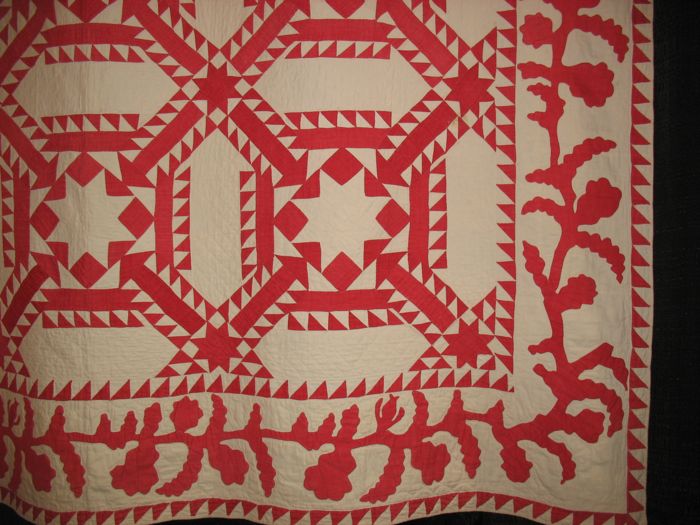
While I’m not sure, my impression is that the shapes in the borders are flowers and leaves–irises?
More tomorrow.


 OccasionalPiece--Quilt!