(Please note the updated directions on the final Oh Christmas Tree post (highlighted in pink). Thanks. Okay back to our regularly scheduled programming.)
What is Purple Passion?
A drink from the 1980s?
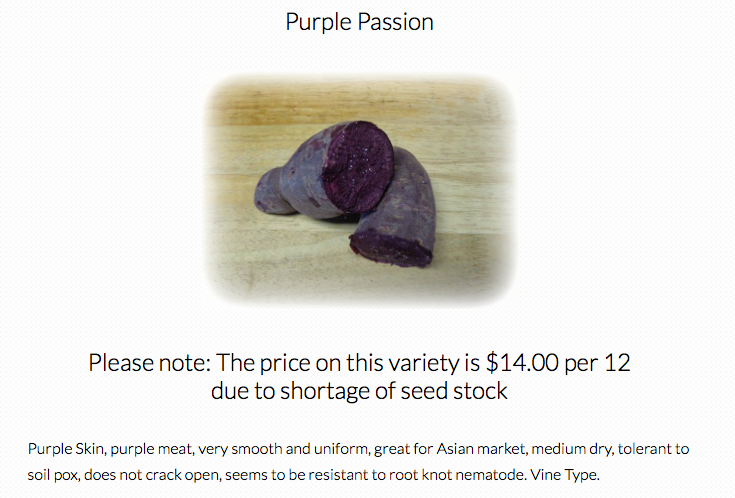
A variety of potato?
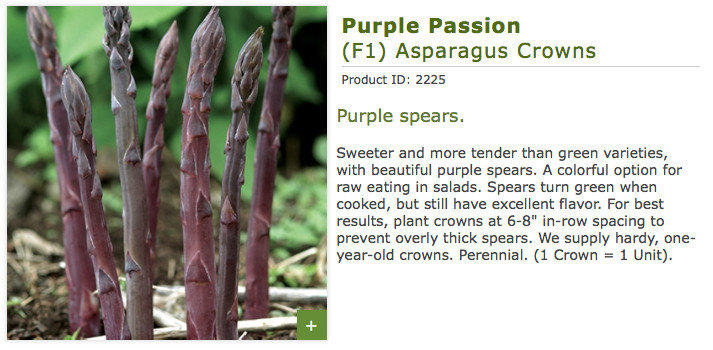
Asparagus?
Hair color?
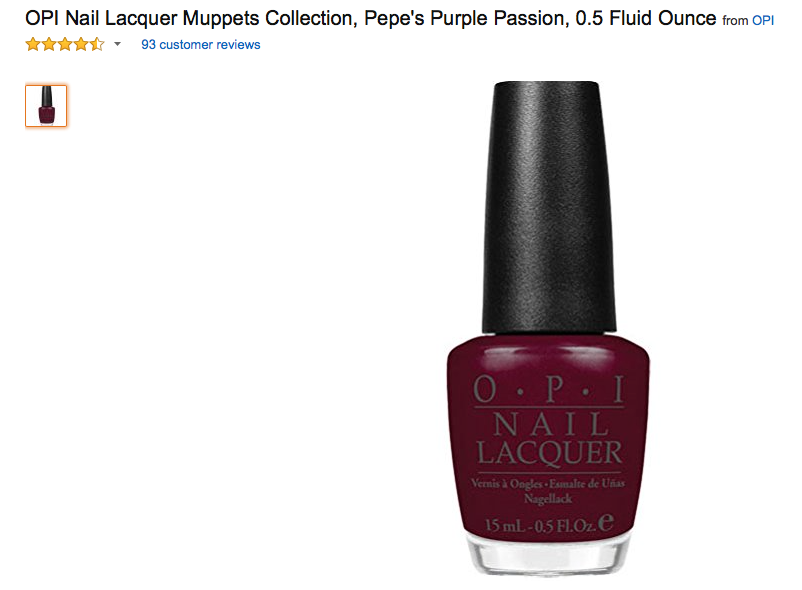
Muppet’s Collection Nail Polish?
Floral Arrangement?
Eulogy for Prince?
A purple-clad seductress? (FYI: I always hang out in feathers and beads when I’m not quilting.)
Worshippers in Peru during the month of October? (called Mes Morado, and yes, they really do wear a lot of purple)
A unique flower?
A quilt made from the image of that flower? (I think it was the pipe cleaners that sent me over the edge.)
Nope, none of those, at least not this time.
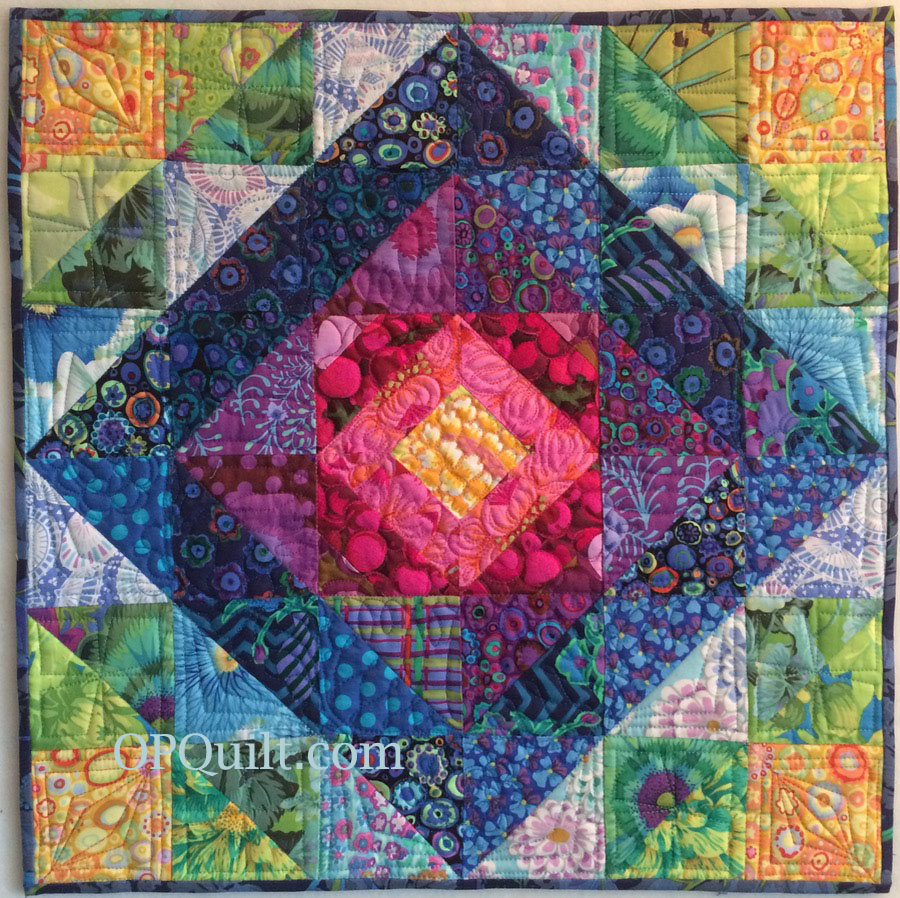
It’s the theme of this quarter’s Four-in-Art Challenge. This will really be a challenge, for unlike some people, I don’t tend to use purple in my quilts.
Well, maybe here and there.
Okay. . .at least twice.
Purple embodies the balance of red’s stimulation and blue’s calm. This dichotomy can cause unrest or uneasiness unless the undertone is clearly defined, at which point the purple takes on the characteristics of its undertone. With a sense of mystic and royal qualities, purple is a color often well liked by very creative or eccentric types and is the favorite color of adolescent girls. (from here)
I laser-beamed in on the words “well liked by. . creative. . types.” Couple that with the image of the purple chick above, and I’m totally down with this theme. It’s due in about a week, on August 1st. Guess I’d better get going (as the voice in her head starts shrieking, It’s August already???!!!??).
According to the leaders of IDEO, a design and innovation firm, one way to become more creative is to practice being creative. They often use creative exercises to push into new ways of thinking about a task, or an idea. They note that “exercising your mind can sometimes feel more daunting than exercising your muscles.” So they’ve “developed ten creativity challenges to jump-start your practice.” Note the word “challenge.” That’s one reason why joining a group with challenges can help you practice your creativity.
David Brooks, in an article titled “The Creative Climate” says that creativity is “the joining of the unlike to create harmony. Creativity rarely flows out of an act of complete originality. It is rarely a virgin birth. It is usually the clash of two value systems or traditions, which, in collision, create a transcendent third thing.”
I’m definitely working on clashing here, having culled a few photos from my photo stash for inspiration (you don’t have a photo stash? I recommend it), and working towards that transcendent third thing.
I’ve been keeping a log of the steps in the tab above, Oh Christmas Tree Quilt-A-Long, so consult that page when you need to find a post.
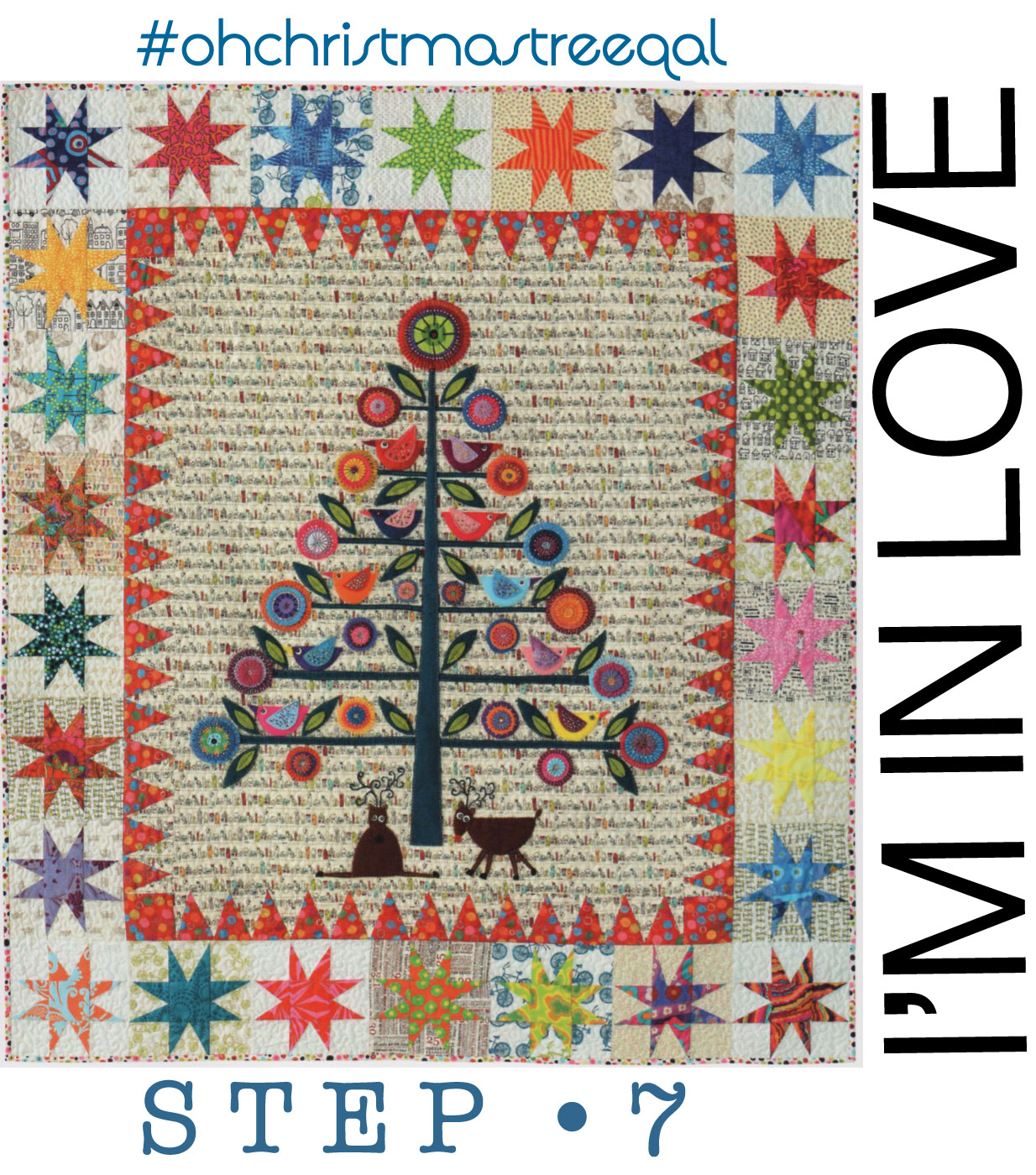
Yes, today we are wishing upon a star, the final part of this quilt. We started this journey 7 months ago in January 2016, right after the magazine came out, and today we’ll finish it up.
Your tree should have the red triangle borders on. See earlier post for how to get them on.
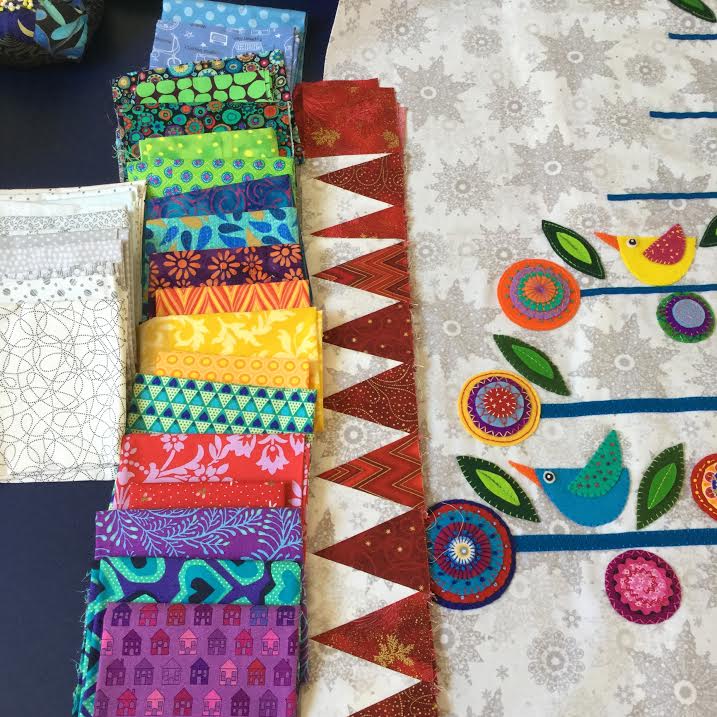
Wendy has laid out several fabrics for her stars, above. I thought I wanted to go with traditional Christmas colors of red and green, but realized quickly that I should go with colors that coordinated with the flowers and birds. In other words, be bold in your star colors.
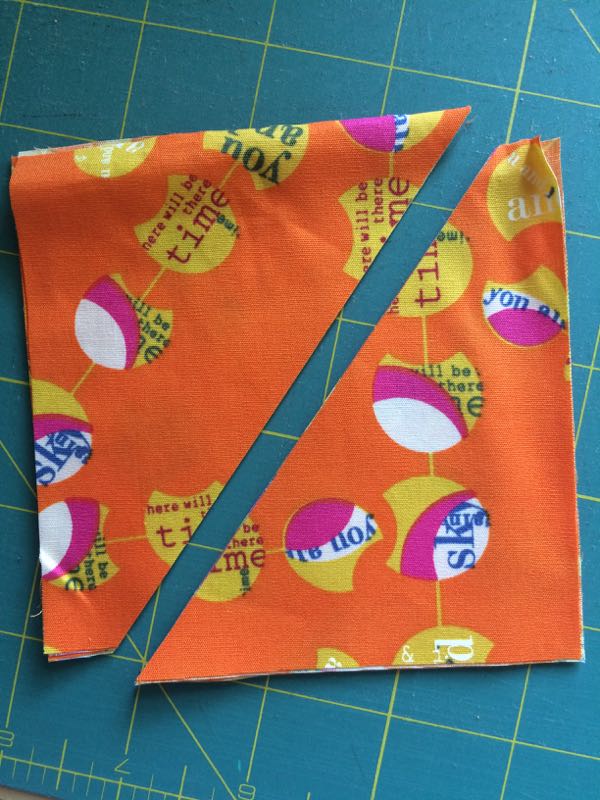
With your fabrics chosen, now it’s time to make the stars, but before you start, one issue with wonky stars is getting the star points too close to the edge.As Wendy writes: “Yellow star is what NOT to do. Points are at the edge and will be cut off during trimming, or lost in seam allowance. Star points need to finish further down the sides.” I’ve circled them in red, so you’ll recognize this when it happens. It happened to Wendy (that’s her block), it happened to me. Consider that your Training Wheels Block. Now one way to be aware of this is to cut all your blocks a bit larger than they ask for, and to slice the diagonal a bit differently as well.
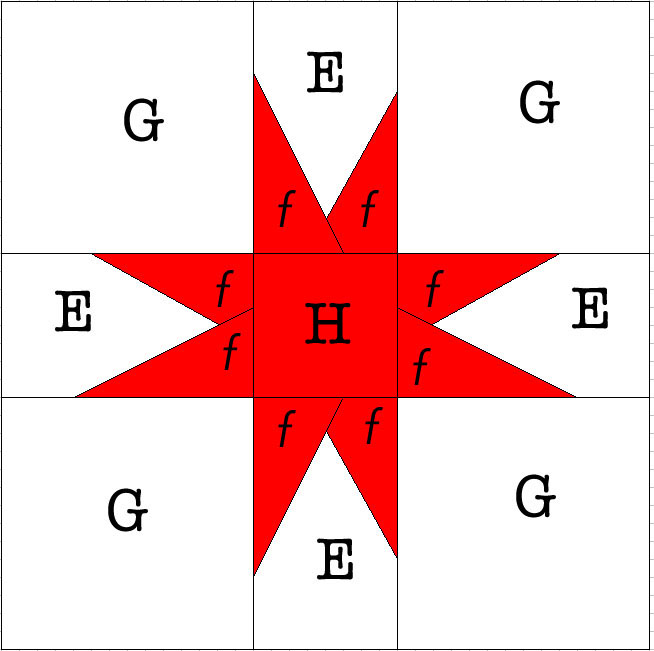
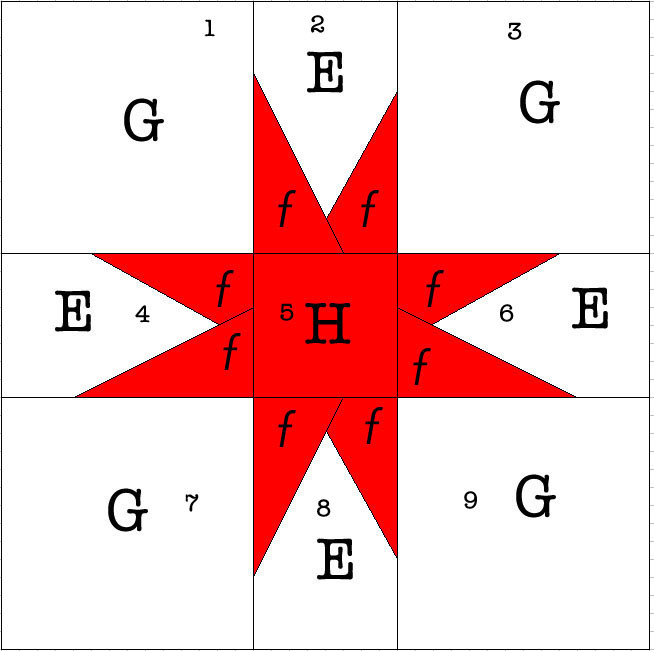
And here’s your roadmap/key to the letters. I put the “f” in lowercase and italicized it, as everything was getting a bit overwhelming with that alphabet floating around.
You’ll notice on the chart I mention to cut the f-triangles “skewed.” Cut them like the above shows, so there is a chunky bit on one end. If you haven’t made wonky stars before, you can try it first by cutting it on a strict diagonal, and after some construction, see which one you like. I like this way because I feel like it gives me a good angle and I’m less inclined to get the star points too close to the edge.
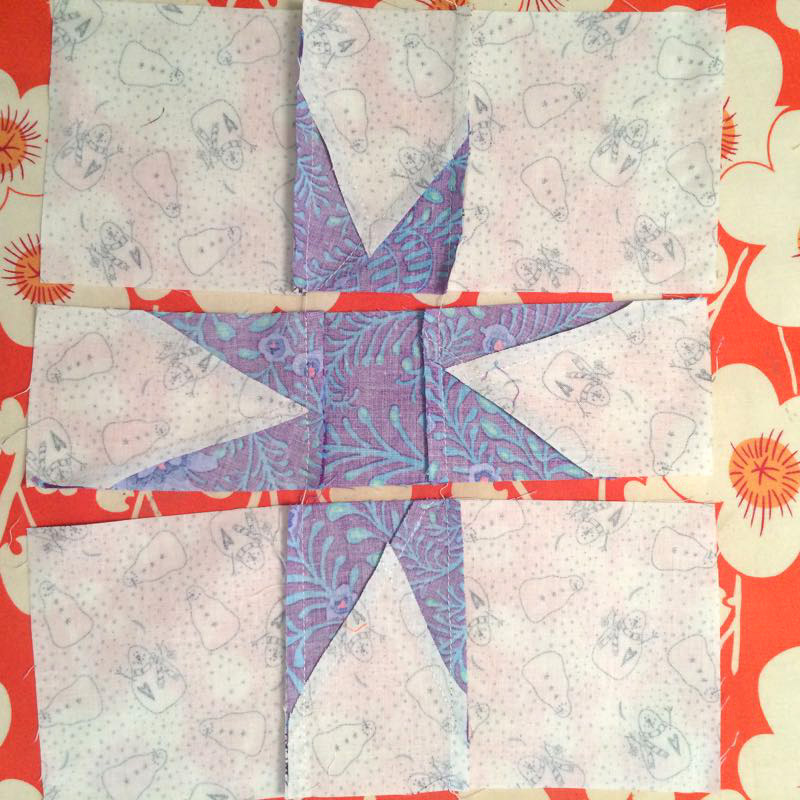
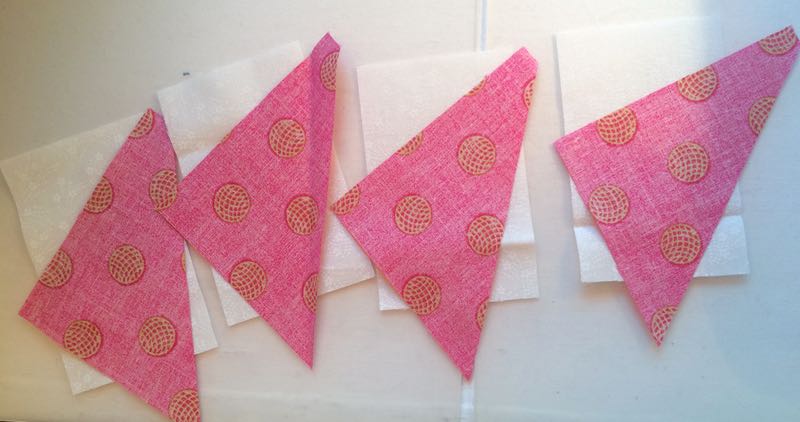
Find the narrower center piece, “E” and lay them out. Layer four f-triangles on top, with the chunky top down from the top edge, as shown. Try to have the lower pointy edge near the middle of the lower bottom edge of the E piece. I often finger-crease a little mark in that bottom edge of the E-rectangle so I know what I’m aiming for. See the next photo.On this piece, I’ve got a pretty good start. What counts is the seam line. So at the top right, it’s down about 1″ to 1-1/2″ and the seamline is about midline, or just a bit to the side of it. As long as you are in the ballpark of the red X at the bottom, you’re fine.
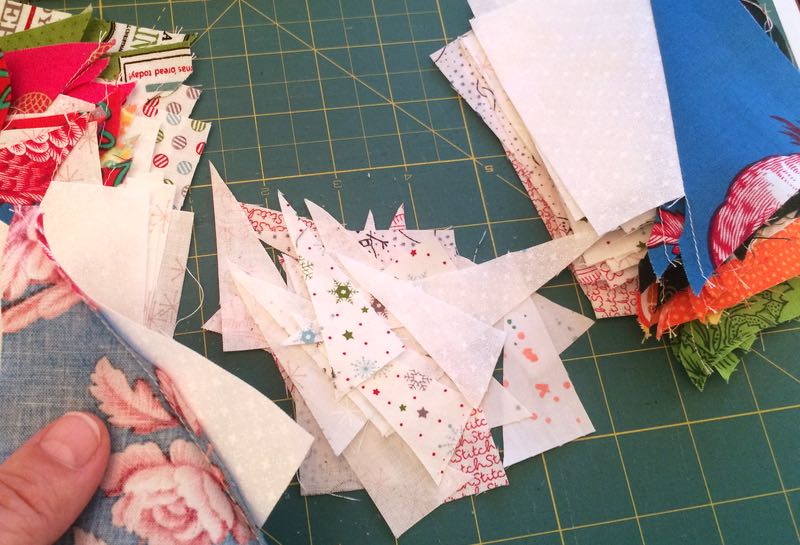
Fold it back to check. Press. Trim off that wedge underneath the star point fabric, as shown below (I’m doing a stack here.)
Now line up the next set. Yes, they are all upside down, as that’s how I’m going to sew them. Again, the chunky tip is near the top edge, and the pointy edge overlaps the first wonky start point.
Stitch, press and turn. If you are worried, check it before you stitch it by folding it back to make sure your star point fabric covers the background E piece all the way on those two lower corners.
Now trim it up to 2 -1/2″ by 4.” In the photo above, I laid my ruler on the outline of the E piece for placement.
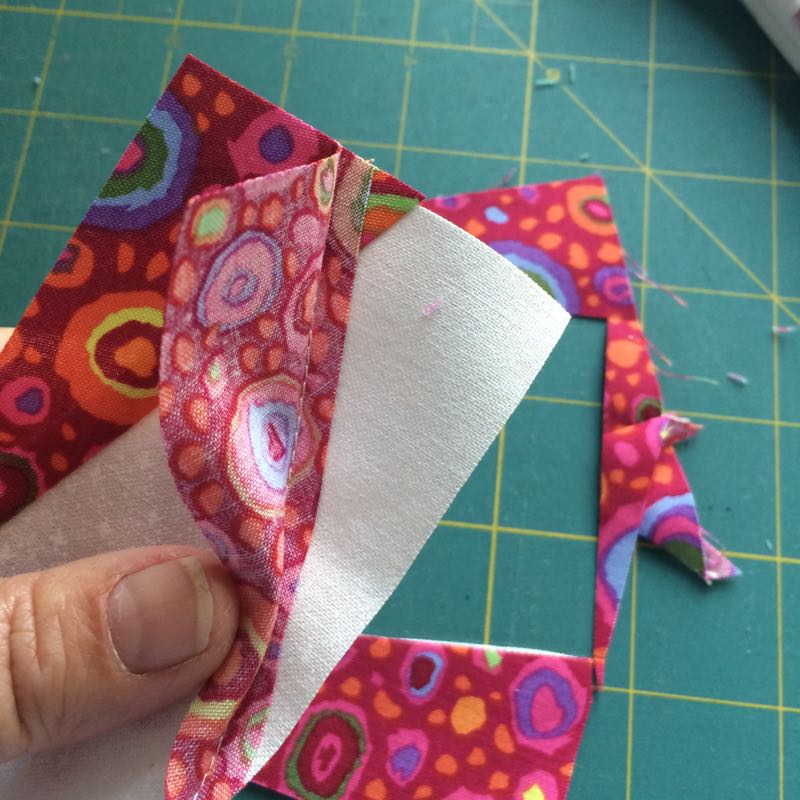
Now trim off that underneath piece.
Done with one! Repeat three more times for one star block. Don’t try to get all the points the same–let them be different lengths and placement, as your block will be more interesting. DO make sure you are not too close to the outer edge–you’ll need that extra space for trimming.
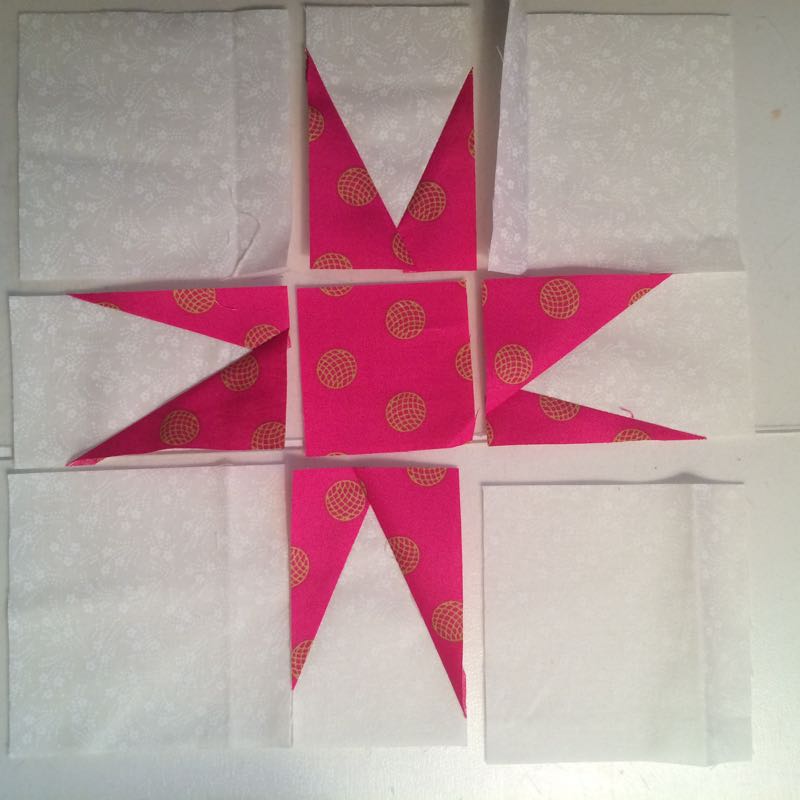
Now line them up as shown, with the H-piece in the center and the four corner G-pieces in their place.
Now you are going to make a “web” of thread, as you sew the pieces into rows. Keep reading.
Unit #1: I stitched G-1 to E-2. Without cutting the thread, I slipped the next pair under the needle and kept stitching:
Unit #2: I stitched E-4 to H-5. Without cutting the thread, I slipped the next pair under the needle and kept stitching:
Unit #3: I stitched G-7 to E-8.
Sew onto a leader/ender piece (mine are just scrap, even though I always think I should be piecing another quilt or something.)
Now to Unit #1 above, stitch on G-3. Without cutting the thread, I kept stitching:
Stitch Unit #2 to E-6. Without cutting the thread, I kept stitching:
Stitch Unit #3 to G-9.
If you can get the hang of this, you can keep all your star points together and really crank through them.
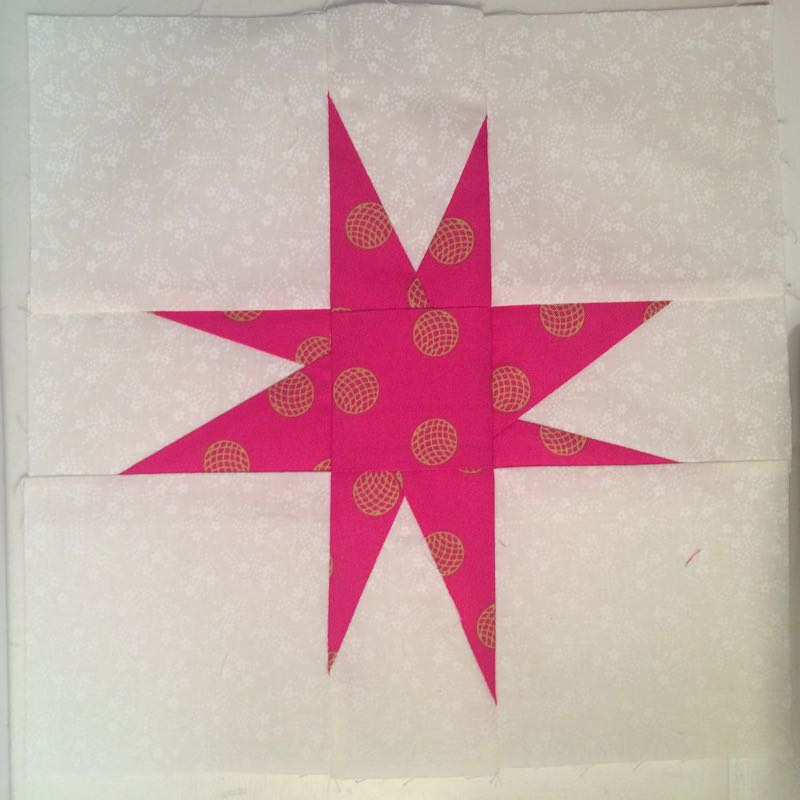
Here, I’ve circled the bit of connecting “web” threads. Press as shown: the center row has the seams pressed to the center, and the top/bottom rows have the seams pressed towards the G-piece (outer corner block).
I’ve sewn them, pressed them, and now I can stack them, ready to sew the rows together. Because of the thread-web, I won’t get a piece turned around, or upside down.
There’s no magic, just press them how you like them, but I do always believe a seam will generally indicate which is the easiest way for it to fall. In this case, it was away from the center.
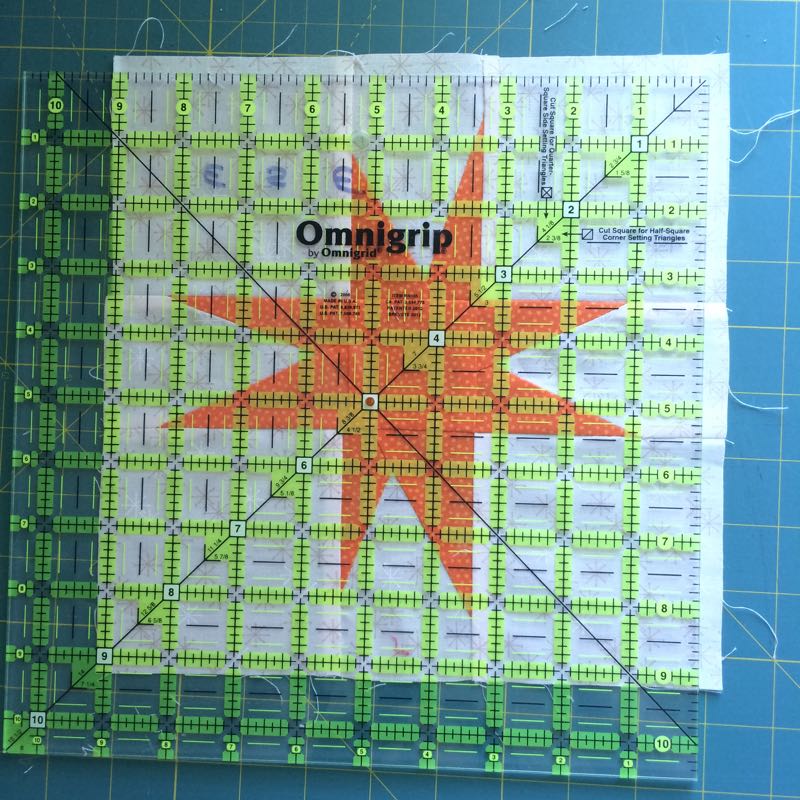
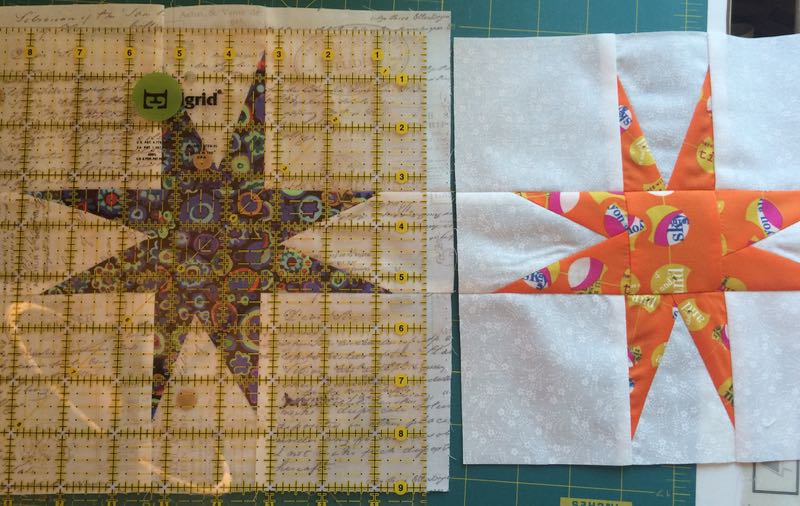
Arrange your stars around the tree how you think you’ll like them. Take a photo, re-arrange if you want. In my case, I ended up making some brighter, bolder stars, and shuffling several times. It also helps if you go get some lunch, or fold a batch of laundry, or maybe snack on some chocolate. Anything to take a break so you can bring some fresh eyes to the process. Do this until you are happy with how they look.Now for some measuring fun. You know that each corner of this quilt will have a star. And generally, the finished measurement is 8″, or trimmed to 8-1/2.” Both Wendy and I caution that you need to make VERY SURE that your H-block is centered in your trimming. Pay attention to the diagonal line and make sure it’s running through the center of the H-piece.
Trim FOUR blocks only, and set aside. What you see above is me making sure that the middle row of my stars would line up when they were placed next to each other. I took my time trimming. If you don’t have the middle of the star lined up, you can fudge it a bit, but not by much.
Diagram of how to get the Wonky Star borders attached
Now comes the hard part.
Take a measurement across the top of Border #1 (triangle-border). Mine was just over 39.” I called it close enough to 40″ as that would fit five star blocks nicely (8″ blocks x 5= 40″); I can also sew a seam or two with a bit bigger seam allowance to get it closer to my measurement (yes, there are all sorts of ways to make our Zen Quilt behave). In my case, I trimmed them to 8 1/2″ so they finish at 8″ when they are sewn in.
Once you get that figured it, trim up TEN blocks. Use the trimming trick above to make sure the star blocks will line up.
See how that trimmed edge is away from those star points? (And yes, I’ve re-done a couple of blocks in my lifetime of wonky star blocks when I trimmed them off.) Sew the FIVE top star blocks together in a row. DO NOT SEW THE CORNER BLOCKS ON YET.
Press the seams to one side, and stitch that row of Border #2 (wonky star) on to your Border #1 (red triangles). Repeat with the bottom row of star blocks. Press seam toward the red triangles border. Your quilt should now look like this.
Before you start on the sides, get more chocolate.
Here comes the part where Wendy says it is kind of like childbirth: you’ll forget about it once it’s over with. I measured the side border, counted up how many blocks were shown in the pattern, and divided that into the border measurement. That was a scary number, so I subtracted one block, and did the dividing again. I ended up needing SIX blocks of just about 7 3/4.” This is the same as the pattern.
Because the measurements were kind of weird, I decided to cheat.
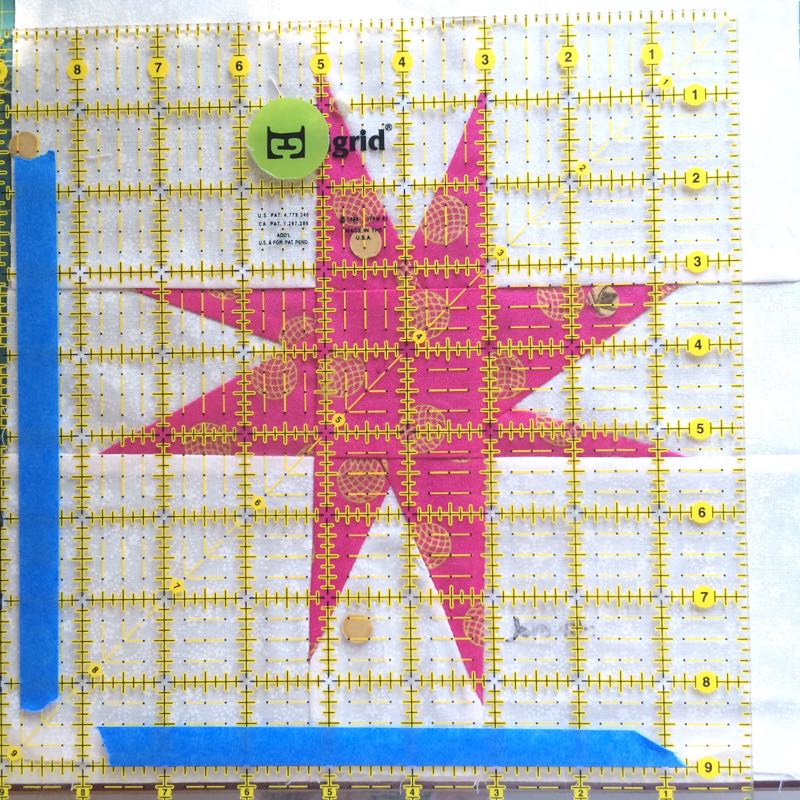
I kept my blocks at 8-inches finished “north-to-south” but cut them to be 7-3/4 inches finished “east-to-west.” Which means I was trimming them to 8-1/2″ and 8-1/4″ as shown above by the blue tape. The “West Side” tape is at 8 1/4″ whereas the “South Side” tape is at 8 1/2.”
I just wanted to make sure that I had at least 3/8″ to 1/2″ away from the pointy edges (blue ovals). Most of the time I succeeded.
Trim up your blocks. Now rotate them so the 7-3/4″ finished dimension is running north-south, and the 8″ finished dimension is running East-West.(This is an update from the original post.)Then sew them together. Press and hold them up against the border. Chances are they won’t fit–they’ll be too big. So. . . cheat again.
Take a bit bigger seams between all the blocks: from 1/4″ inch to 5/16ths of an inch. Check your sewn row again. If they are still too large (and can’t be eased in), choose the two stars that have the most room between the tips of their star points and the seam, and make another teeny bit bigger seam. Now you should be fine.
Breathe Deeply. Go Zen.
NOW sew the star corner blocks to each side border strip–two to each side strip of stars–one on the top and one on the bottom. Press all seams on the strip towards one side. Stitch these borders to the existing quilt.
I then pressed all seams toward that red triangle seam, even if it didn’t want to go there. Now, in looking at it, can you tell that the side blocks are sized a tiny bit differently than the top/bottom blocks? Didn’t think so, and no one else will be able to tell either. I think the solution to the challenging measurements was a success.
As Gwen Marston said, “Nobody ever said, ‘I need a little more stress in my life–think I’ll make a quilt.’ ” Quilting should be fun, even if it’s challenging (and this was definitely a challenging quilt).
Here’s Wendy’s…
…and Betty’s.
Now let’s see yours. Shoot me an email when you get yours done, with a photo of your quilt, and if (I mean, when–I’m thinking positively) I get a few, I’ll put up a post showing off your hard work.
Try not to dance, but you are done! It’s over! You made your quilt!! (Click *here* for a fun dance scene from On the Town, a favorite movie of mine.)
Thanks for joining us on this journey, from January to July, of making the Oh Christmas Tree quilt. I’ve appreciated all your enthusiasm, your comments, and seeing photos on Instagram.
Here’s one of Wendy’s new patterns, My Place or Yours, if you want to feast your eyes on something new. Pattern can be purchased *here.*
Another one of hers is Pieces O My Heart, which just won a blue ribbon at the Sydney Quilt Show. Visit her Instagram feed for more inspiration.
Lastly, if you are not a follower of my blog and you’ve enjoyed this quilt-a-long, I’d like to invite you to become an email follower. Just enter your email in the box above. I generally post about twice a week, with occasional longer gaps. I try to post worthy and interesting content with an occasional “friends and me doing quilty stuff.” I think by building communities and sharing discussions about issues and happenings in our world, we shorten the distance between us, forming strong links of like-minded quilters.
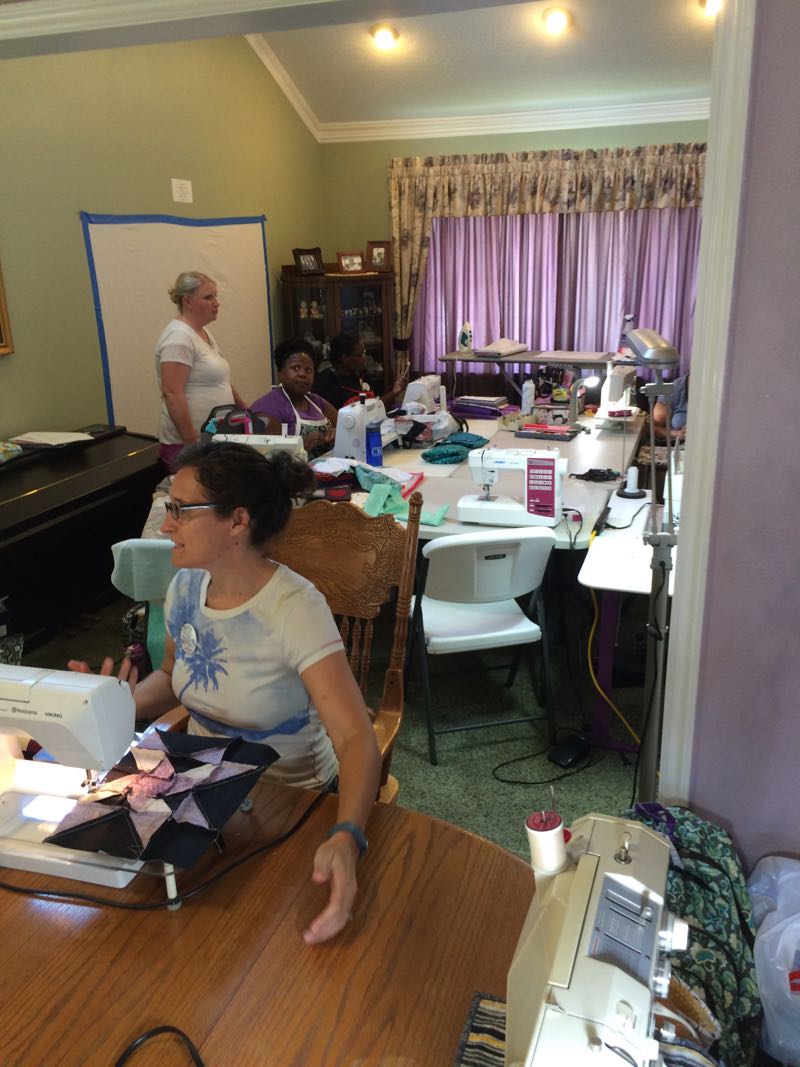
The 5th Annual Good Heart Quilters Retreat began last Friday morning (7/8/16). For those of you who don’t know yet about this small quilting group I participate in, The Good Heart Quilters began meeting about 20 years ago, and have been meeting about once a month, taking summers off. Five years ago, Lisa decided she wanted to do a retreat, so she clears out all the furniture, brings in tables and chairs and we come and sew (or mostly sing and talk, it seems like) for two days in July.
She also invites her relatives to join us, so they all schlep down from Utah/Washington, which is really fun. Above is Elly, our newest member. In the background are Nycole and Brittany.
I always believe I will get something done, which is a complete fantasy. On Friday, I made four log cabin bee blocks, all the wrong size, and put this Chuck Nohara square together, then had to rip it apart when it didn’t fit. I did make it over to Costco at dinner time and brought back an “All-American Chocolate Cake” (aka, “Death by Chocolate”) so the day wasn’t a total loss.
Lori just puts her head down and goes. This is the culmination of her LQS Sampler Saturdays.
Jean is another who quilts and quilts and gets her blocks sewn together at retreat. She’s amazing.
Coming back from dinner. I think we had about 12 sewers on machines, and one doing handwork.
We had two more join us on Saturday, which is when I pulled out all my words from the Spelling Bee I’m in, and tried to make some to fill in where I didn’t have. Again, a total illusion that I’ll actually get something done.
We do Show and Tell at Saturday lunch. This is Brittany’s.
Charlotte did a quilt with Monopoly Fabrics.
Nycole made a quilt in her husband’s favorite soccer team’s colors, and played us the RSL song that is sung at the games.
Laurel finished her exquisite Millefiore Hexie Quilt-A-Long, and even has it backed to a border. I love this one! (Mine sits in pieces on the guest room bed–six months down, six to go.)
Simone’s been working on a baby quilt: free-form hexies will be appliquéd to a very creative front.
And YES! I finished something: Simone’s word for this month’s Spelling Bee. She’s playing with all our minds and asking us to make the names of colors in a color other than is indicated.
Lisa sent us home with lots of goodies, all in a Daiso Japan zipper case — thank you, Lisa!! See you all next year!
I recently had a post about creativity/uniqueness/Uppercase/Collaboration, where I had a giveaway with two Uppercase magazines and a charm pack of Uppercase Fabric. So many of your comments were incredibly thoughtful about the process of creativity and the quality of being unique. Several were very encouraging to me, which was quite appreciated and touched my heart. Of course, I’ve pasted them in my journal for those less-than-stellar creative days. Thank you all so very much.
I used the True Random Number Generator (I like to spread the love around the random number generators), and it picked Mary, of NeedledMom. Email is on it’s way to you, Mary, and I’ll get the treats mailed off to you this week!
Okay, back to Halloween 1904. This was our schedule:
Step 1 (Preparation): February 13, 2016–buy all the fabrics and find the pattern. Patterns are available from Primitive Gatherings. The quilt measures 90 by 90, which is too large for me, so I’m only doing nine blocks. Each block is 20″ square, and with the outer borders, that should come to roughly 65″ square. I may change my mind, but this looks good from here.
Step 2: March 13, 2016–Cut out the quilt: the tan backgrounds of the squares, the border triangles, the smaller half-square triangles, strips for the wonky stars, but save the piano key border for later.
Step 3: April 13, 2016–Assemble four blocks and add large appliques; use Thelma’s method (of Cupcakes and Daisies) for adding the curlicue stem. Make and add half-square triangeles (HSTs) around these blocks, using the 8-at-a-time method of HSTs.
Step 4: May 13, 2016–Cut and make the wonky star blocks from templates and strips. I’m doing five blocks, so will need to make twenty wonky stars and true them up. Add on the large outside triangles.
Step 5: June 13, 2016–Assemble the rest of the star blocks, by adding their HST borders. In the pattern, they are mixed up and varied, but also harmonized (some have a mix of orange and black, some have just black, some have just orange.) Make your own rules and go with it.
AND NOW! WE ARE AT Step 6: July 13, 2016–Arrange the blocks on your design wall and stitch together. Cut the pieces for your borders. Make the four corner pinwheels. Sew borders together and attach them to the quilt. Ta-Done!!
AND THERE IS AN UPDATE AT THE END OF THIS POST, added December 2016
We finished up here last time, with the center of the quilt put together, the blocks placed and sewn together (and yes, I fixed the lower sawtooth edge on the right). Leisa and I are making a 9-block quilt; the pattern calls for 12 blocks.
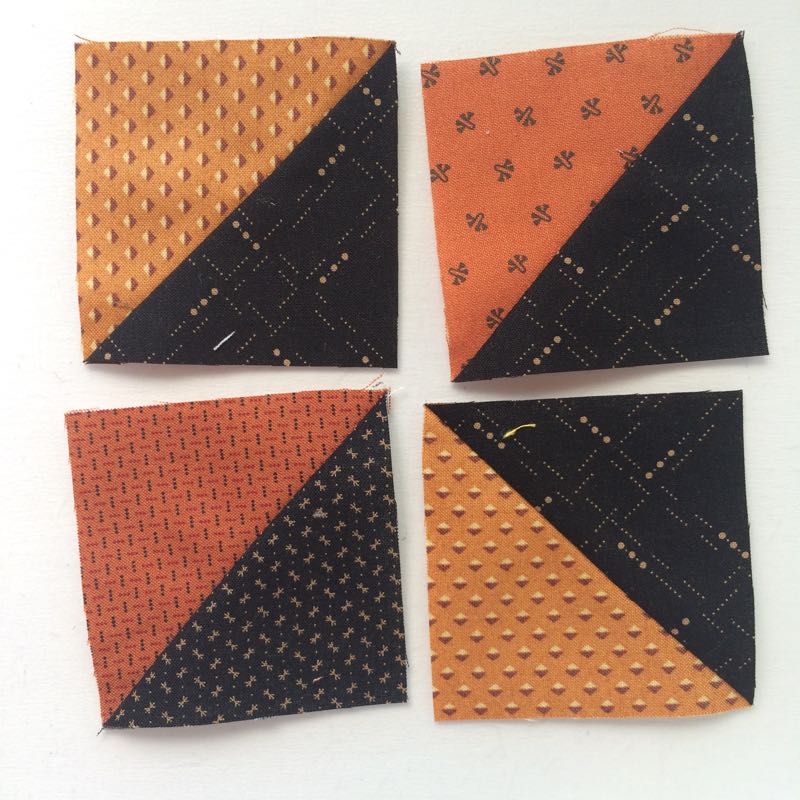
Make more HST blocks: there are four blocks per pinwheel, so this time I didn’t use the eight-at-a-time method, but instead, followed the pattern’s recipe for two-at-a-time (check there for dimensions).
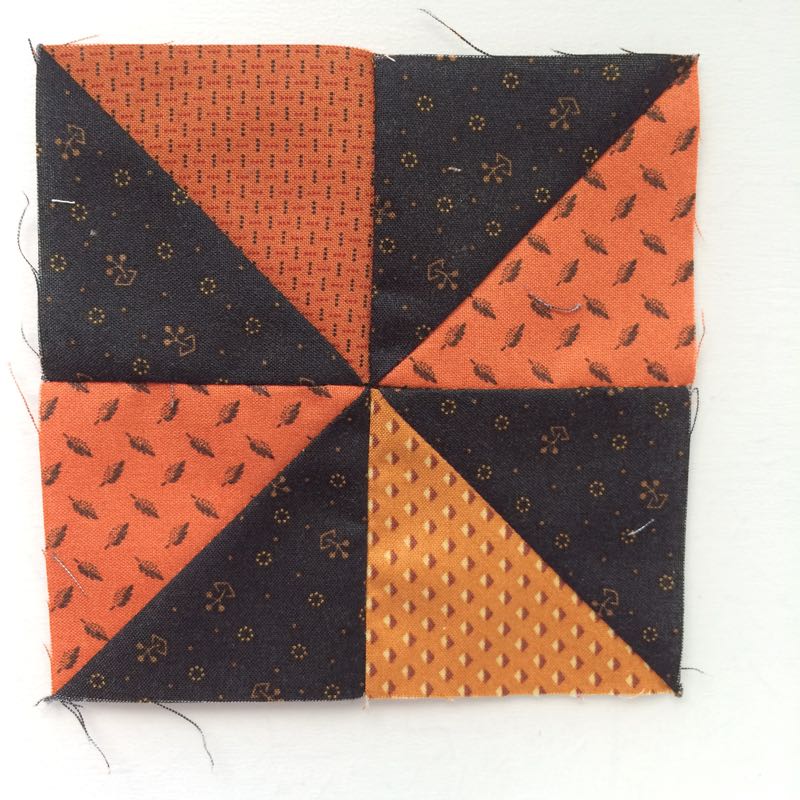
Trim each HST to 3″ using your favorite method, then stitch four together to make a pinwheel.
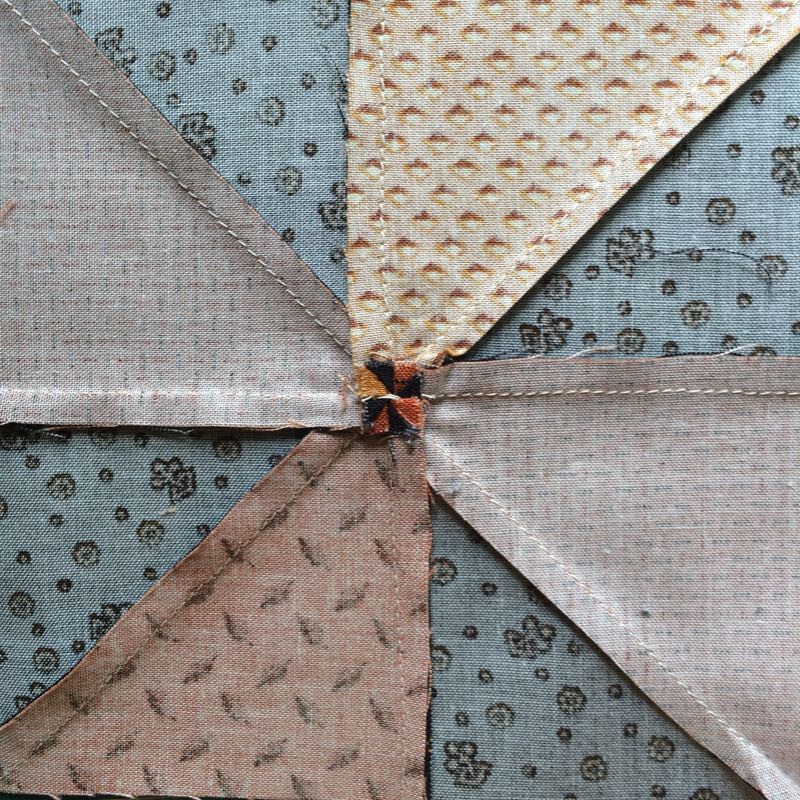
Press, as shown, with all seams to the dark, popping a few stitches in the middle to allow the seam allowances to make their own tiny pinwheel.
True the corner pinwheel square to 5 1/2.”
You’ll be making four corner pinwheels.
Cut your pieces for your borders, following the pattern directions. For the smaller nine-block quilt, adjust down to 24 total per side. I tried to randomize the sewing of the oranges in between the black pieces, as I had many more different types of orange. Just do your best.
Press the seams going one way. You’ll notice that you begin with a black and end with an orange piece (or visa versa). I chose to press my seams toward the orange, from the black, doing the same on all four border strips.
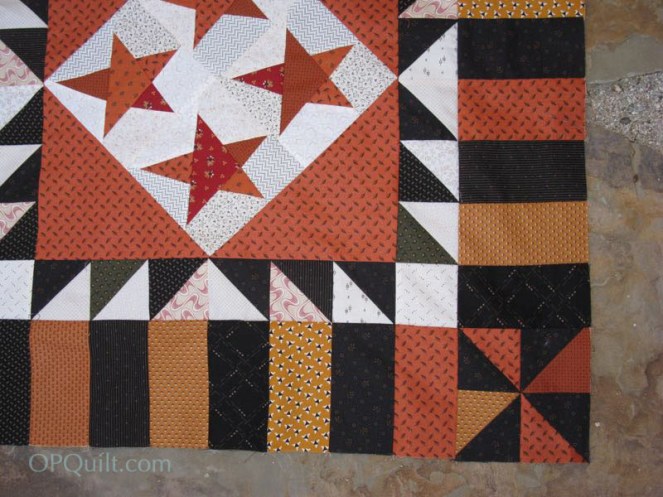
Matching all the seams, pin and stitch on the borders: I sewed on the top border and the bottom border and pressed the seam away from the quilt top (towards the border). Then I sewed the sides on, but I left one inch free on the beginning of that seam and on the end of that seam, which would allow me to stitch on the pinwheel blocks later. You can kind of see where it’s not sewn down, above.
Now, audition your pinwheels–you’ll like them going one way or the other, or swap them out to get the look that pleases you. But please don’t overthink this step. When you get them how you like them, stitch them on the side borders at both ends. Press. Then finish stitching the side seams.
Now press those seams away from the quilt top, towards the border. You are done!
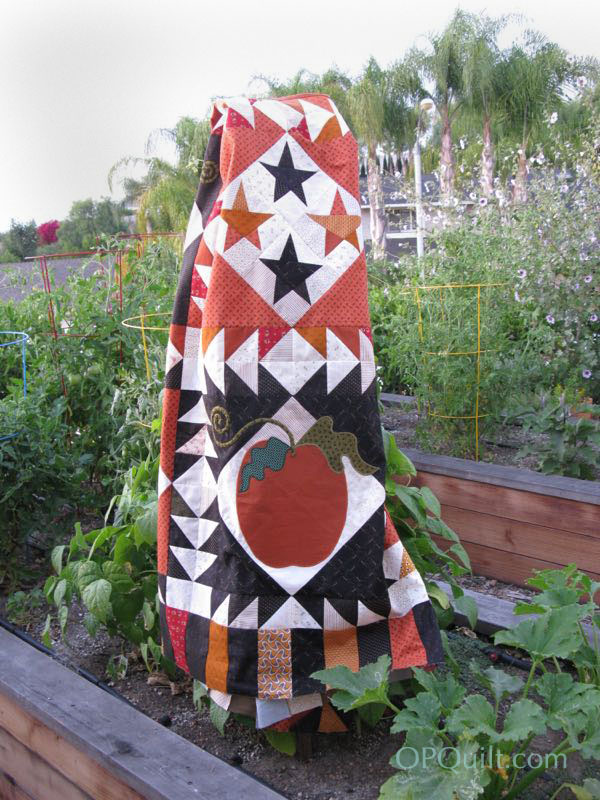
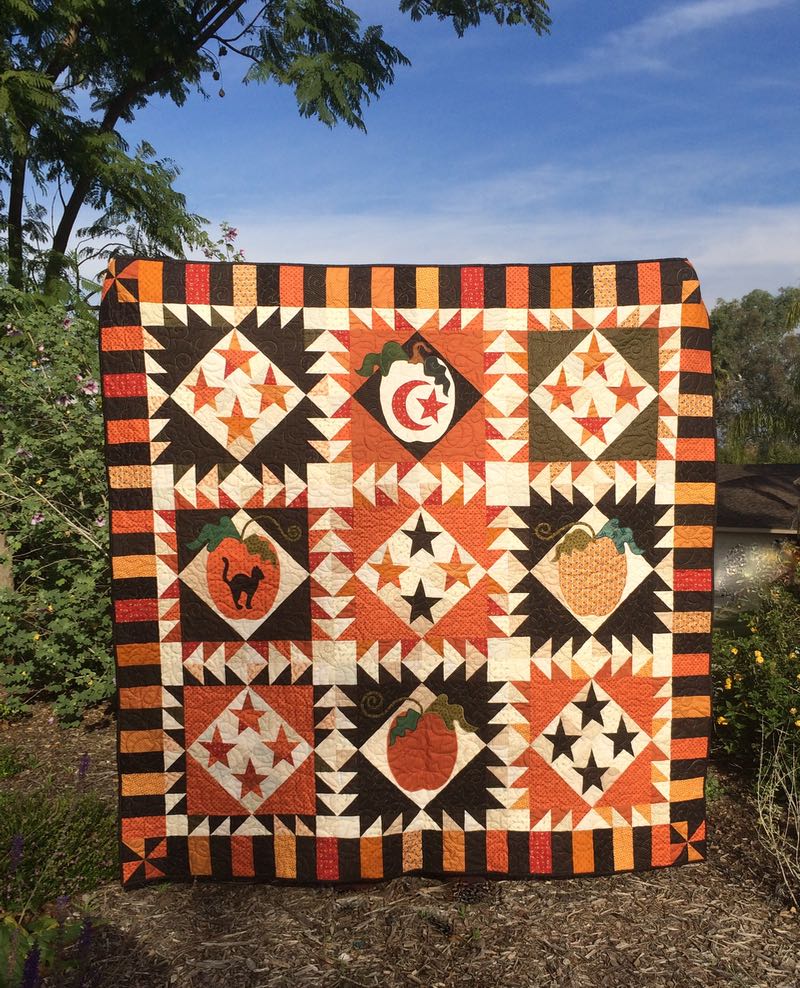
I went outside in the sunset and took pictures of the completed quilt top.
I know when you were deep in wonky stars and then deeper in making millions of half-square triangles, you wanted to quit; however, this last part is easy-peasy, so you should come roaring into the finish line.
All Hallows Eve Quilt #174 68″ square
Update (December 2016): I finished the quilt, taking it over to my quilter. She got it back to me by the end of November and by December, the binding and sleeve were on.
Here’s the back! (Now back to the original post)
Congratulations on finishing your Halloween Quilt, and so early! Thanks for following along our QAL. Hope you enjoy your quilt this Halloween!
When you finish, send me a photo (or two) and I’ll put them up on the blog. Happy Haunting, everyone!








 Well, maybe here and there.
 Okay. . .at least twice.



 On this piece, I’ve got a pretty good start. What counts is the seam line. So at the top right, it’s down about 1″ to 1-1/2″ and the seamline is about midline, or just a bit to the side of it. As long as you are in the ballpark of the red X at the bottom, you’re fine.










 Trim up your blocks.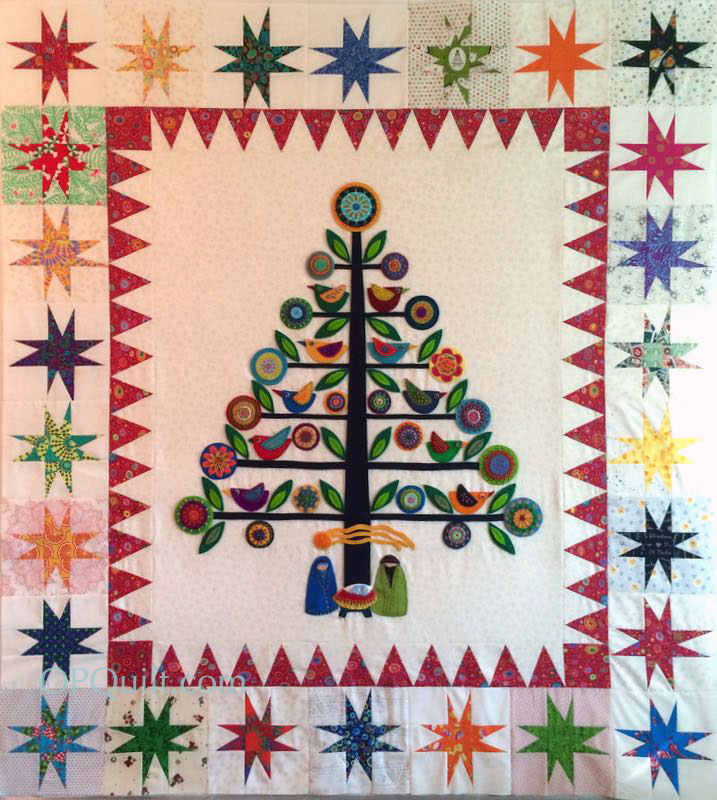











 Now press those seams away from the quilt top, towards the border. You are done!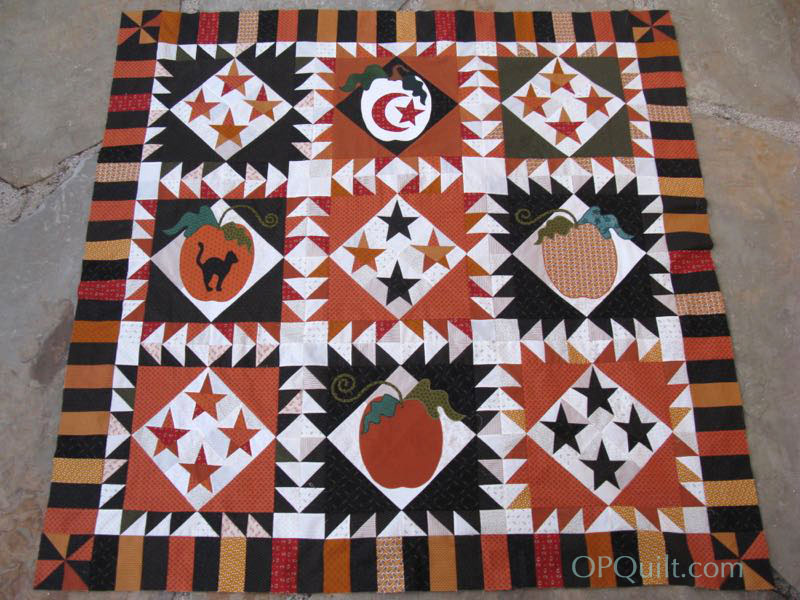



 OccasionalPiece--Quilt!