
Note: This post has been updated (March 2024), with notes on the pattern and the quilt. See below.
Recently I had a chance to do some beta-testing on BlockBase+, which is a revised version of Electric Quilt’s original software. I will write about the sofware next month when I host a giveaway for this software, but this post is about the process of making. In our beta-testing, we were asked to make test quilt blocks, check for spelling issues, functionality, etc. so I thought I would try out a new-to-me quilt block.
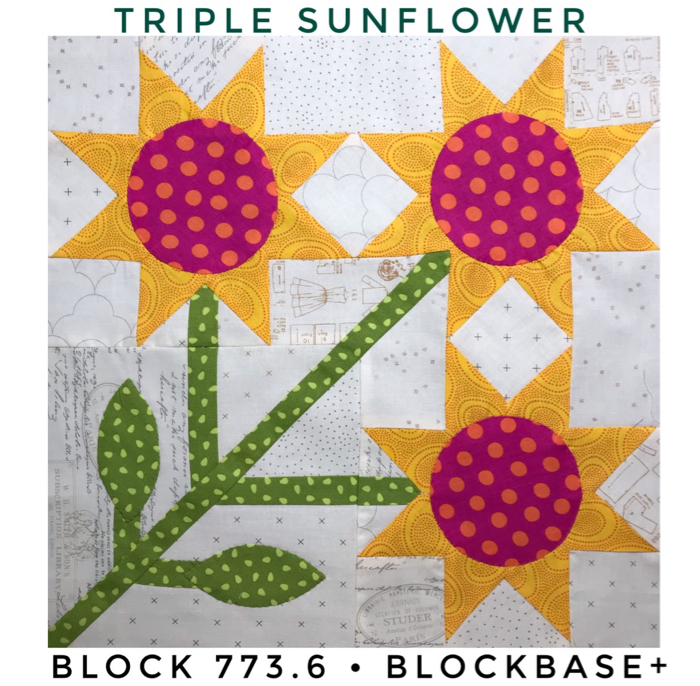
Every block in BlockBase+ has a name and a number, based as it is on the Barbara Brackman Encyclopedia of Pieced Quilt Patterns. I thought this looked cute, so I went for it.
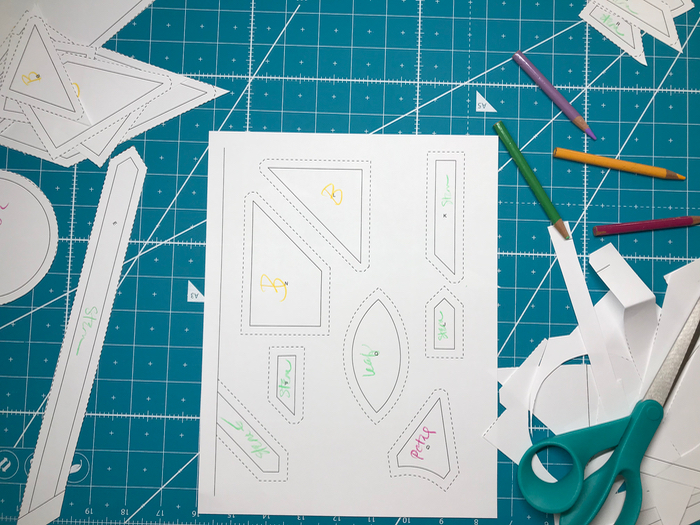
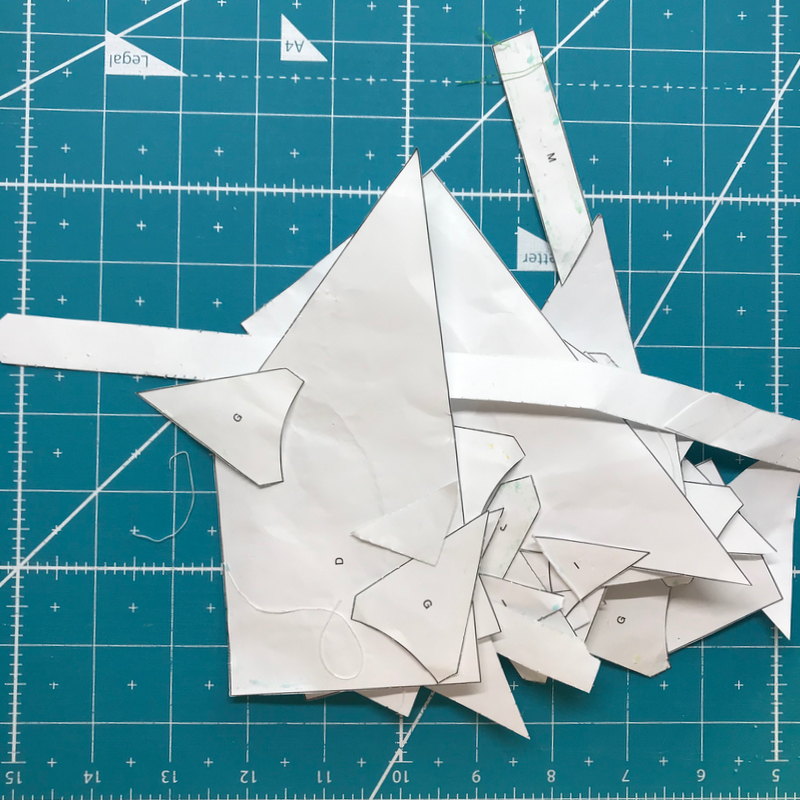
I printed out the templates, labeled them as to the color I wanted, then got to work.

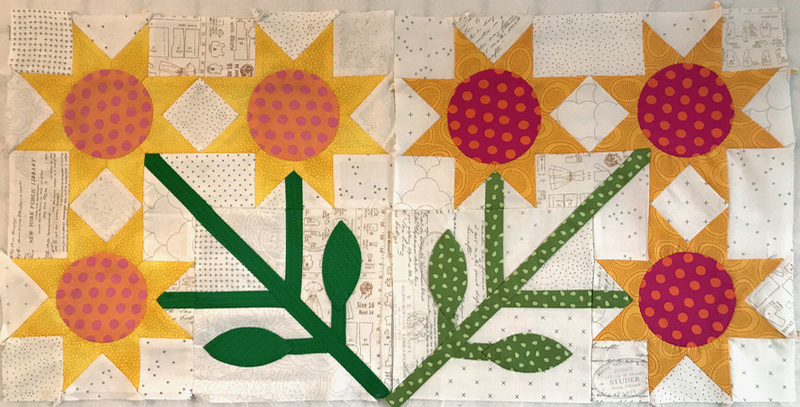
This whole thing was a little tricky, trying to get the petals seamed around the blocks and little triangles. But I really really liked the design I had cooked up (coming soon), so I persisted.
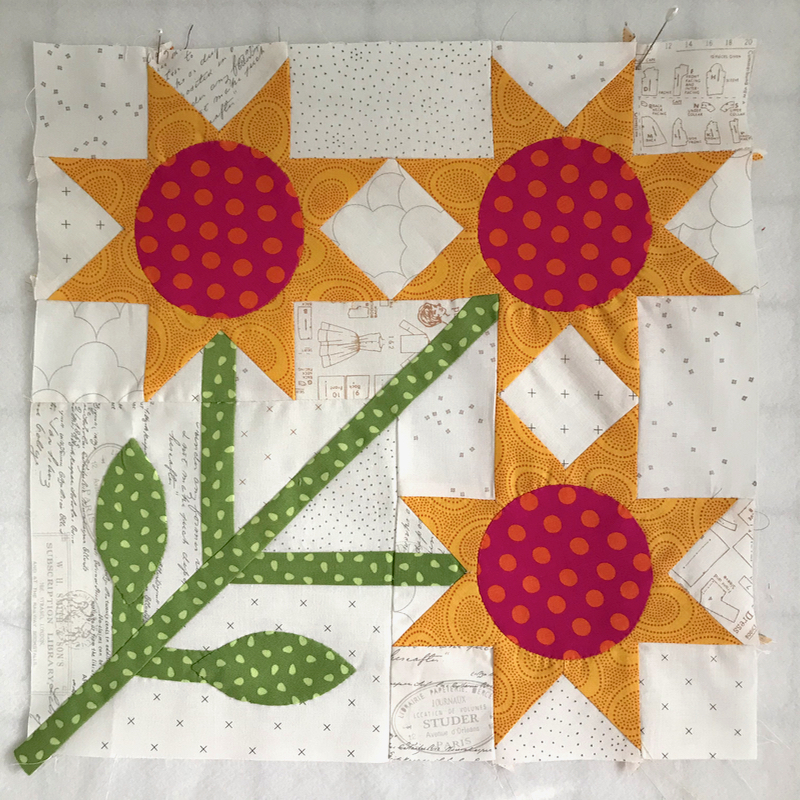
You can see the finished quilt block above, but all I could think was, how did this quilter in the early part of the 20th century put this thing together? But some early quilters did, as I found in a search online:

The blurb describing it says: “Antique Vintage Triple Sunflower Quilt Top in 1930’s prints beautifully hand and machine stitched. This measures about 33 x 47.5 inches and is in very good as found vintage condition with 8 places that need to be resown.” NOTE: It sold for $26 this past September 2020.

I had not seen those antique quilts when I started this block. So on the second round, I decided to try using English Paper Piecing in putting it together. Many sections went together more easily, like the petals: crisp and sharp.
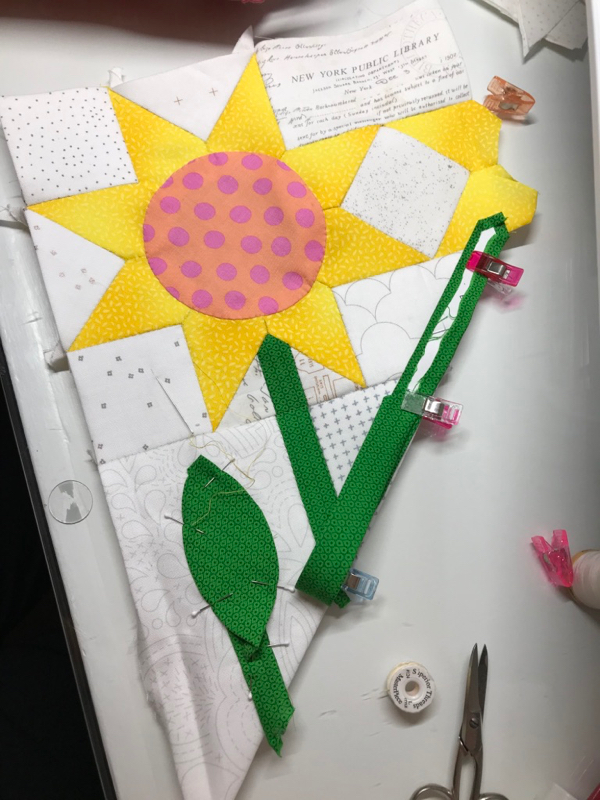
This long stem was less fun.

The back. I think it’s always fun to look at the reverse side of EPP.

Done. This took me about two days of pretty constant piecing, but I did get to watch a few episodes of Ted Lasso on Apple TV (colorful language alert).

Side by side, back and front.
But there was a clue! And what was the clue I garnered from the antique blocks?

Okey-dokey. This would have made things so much faster and easier. There is also a lot of variety on the stems and leaves, all hand-appliquéd after the four blocks were assembled. And I was able to really enlarge the green-bordered block to see the grain of the background pieces: the grain is not all straight of grain, so while I don’t know if they did a lot of EPP at that time, they might have. Or they might have used odd bits from their scrap bags.
(I don’t know about you, but I wish some fabric designer would do a replica of the lower right petals of the blue sunflower block at the bottom, with those cool alternating blue-white half circles.)
Overall: putting in a seam on the rectangles and the center squares would make it easier to construct. However, I do like the long stem in one piece…pieced-in, rather than appliqued.
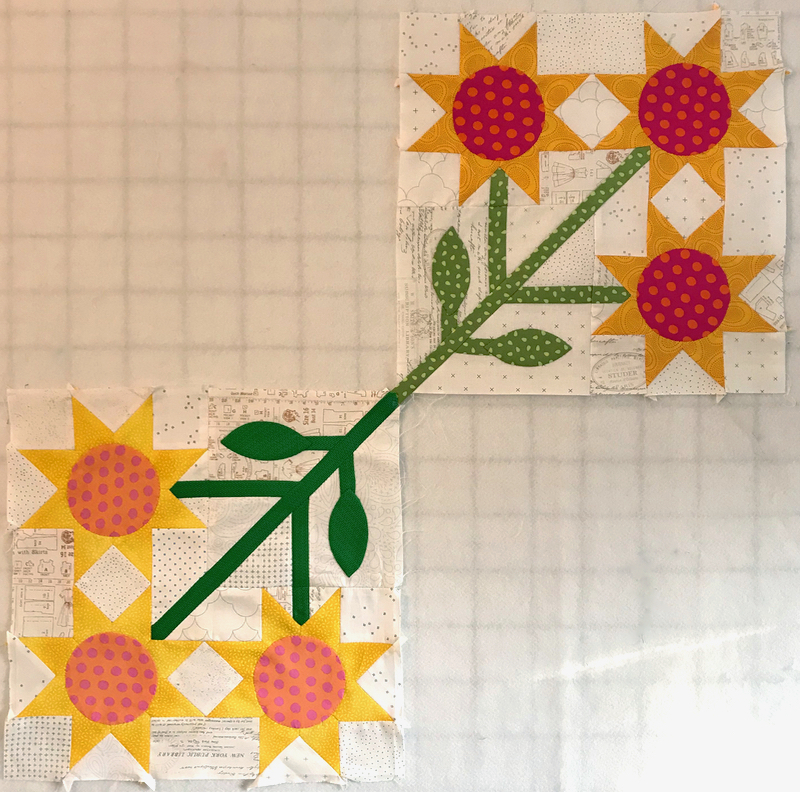
Stay tuned for more updates.
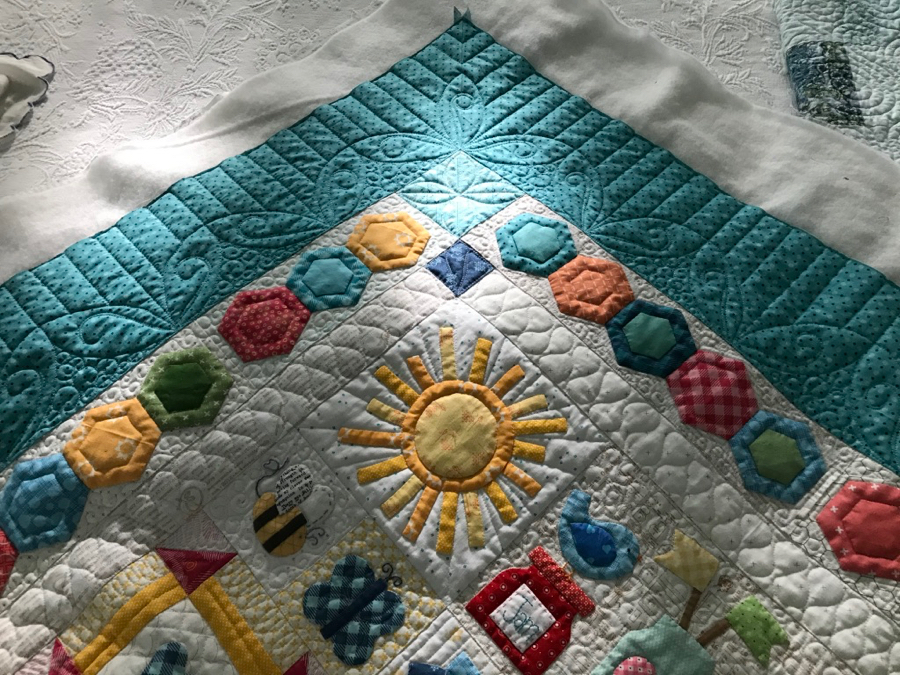
March 2024: Thought you might like an update on the finished quilt.

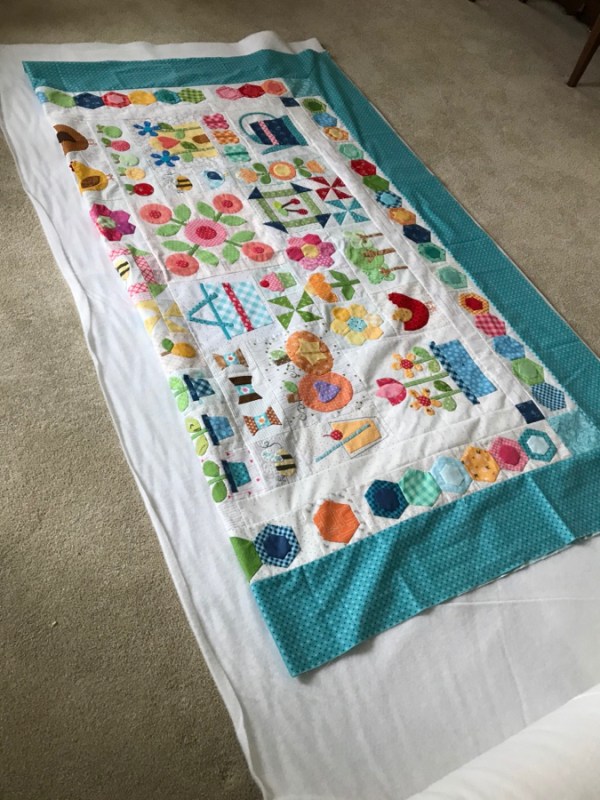
I finished Sunny Flowers, and while it has always been available in my pattern shop as a PatternLite pattern, I recently did an major overhaul on the pattern, adding in bits that I hadn’t before (like the borders), and yes, I changed the pattern to include a seam between the flowers, as you can see in the blue-dotted block in the lower left.
If you purchased one of the earlier versions, you should be able to download the revised pattern for no charge. (If there is a problem, please contact me.)
Now, back to our originally scheduled blog post.
Regarding the giveaway for the Walk book: the Husband Random Number Generator picked a winner, and I’ve notified the winner by email. Thank you to all who wrote. I had the best time reading all your springtime descriptions, and felt like I was visiting different areas of the country and world. I laughed at many, and got warm feelings on others. You are all amazing writers and quilters. Thank you for reading.
Happy Quilting!
P.S. Happy Pi Day. Since I’m not making a pie, enjoy these random pie charts from The Internets.







 OccasionalPiece--Quilt!