I have so much to share from my trip to the Carrefours European Patchwork Show in Alsace, France last month, but first…strawberries.
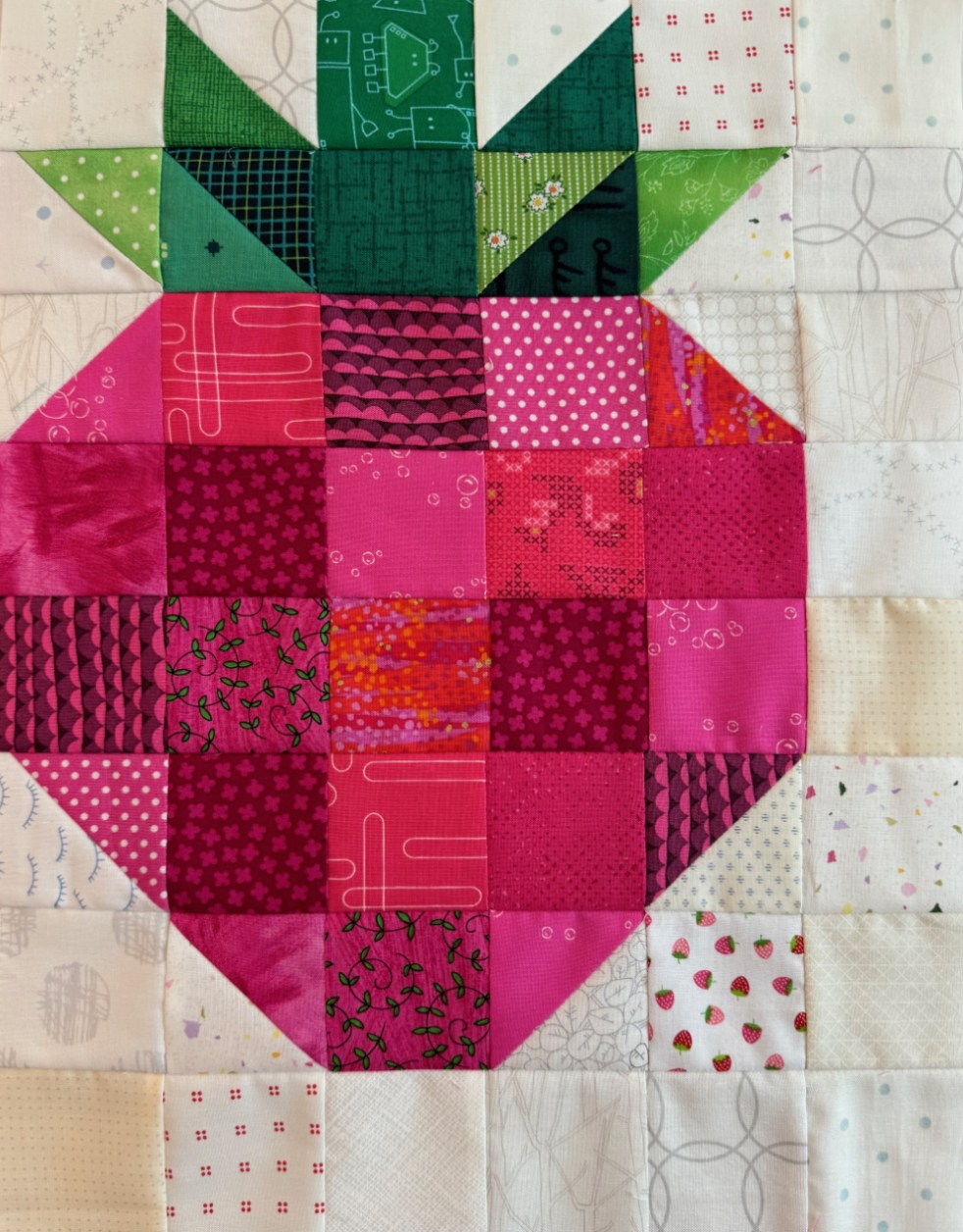
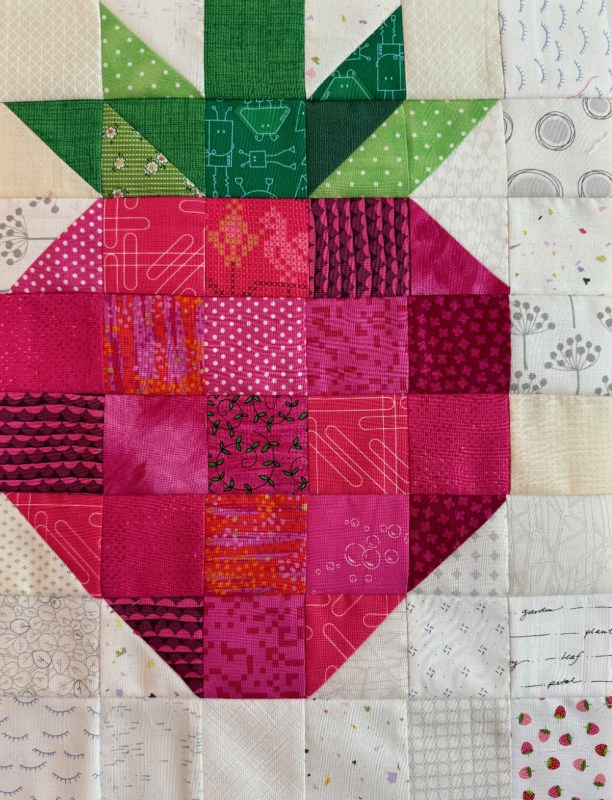
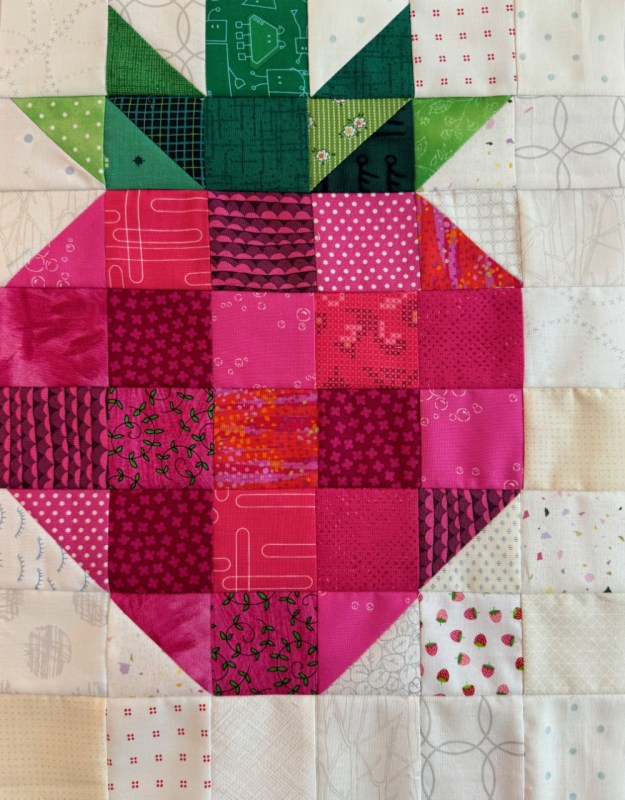
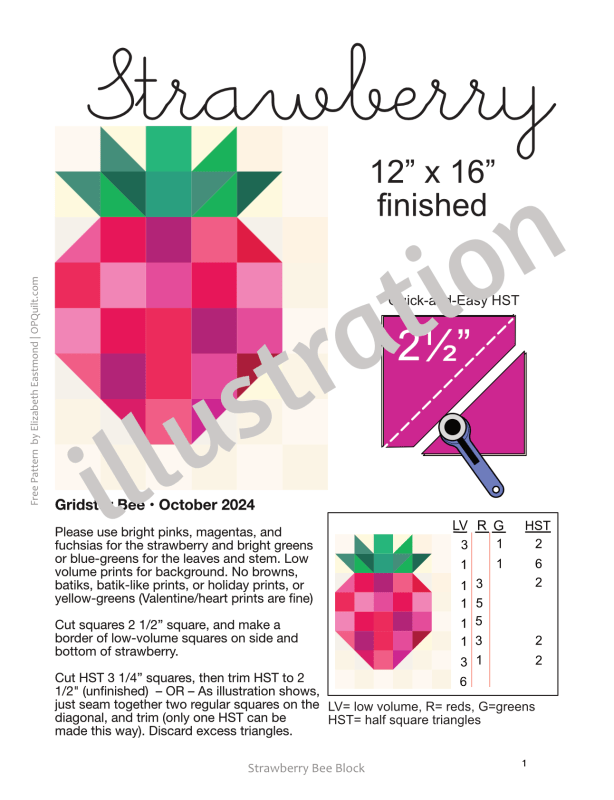
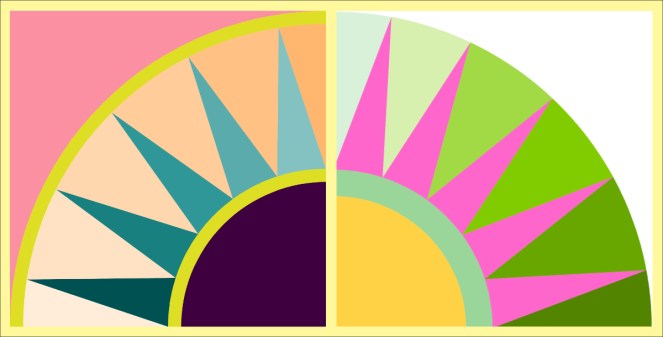
I know we just did Halloweeeeen, but when my beemate asked for strawberries for her block in October, I couldn’t resist drawing up a free block guide for you to download.
Almost as soon as I got my suitcases cleared out then I came down with a case of covid, which meant Paxlovid (cue: grimace, for the taste it leaves in your mouth, but cue: happy face, for having this drug). I’m just now coming up to the top of things and curating my photos. All is coming, but here’s a taste of things:
Yes, it really is in a series of small villages set in the beautiful Alsace region of France (just below Strasbourg), and there really were amazing quilts to be seen in beautiful venues, but it’s coming, I promise!
El Niño, by Brazilian artist Sarah Luise Kaminski. Done with various fabrics, thread painting and free-motion quilting and layers of metallic thread.
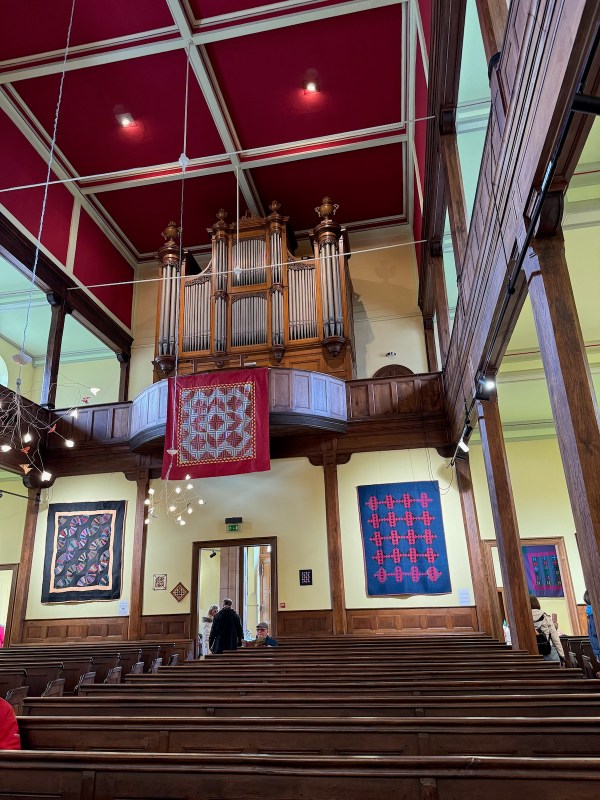
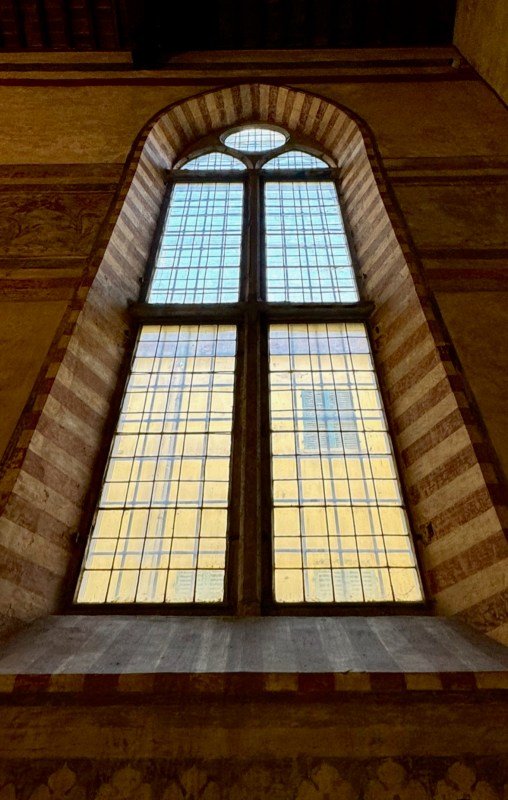
One of the many sites where quilts and art were displayed: this was an old church filled with Amish-style quilts, honoring the early emmigrants from this region to America.
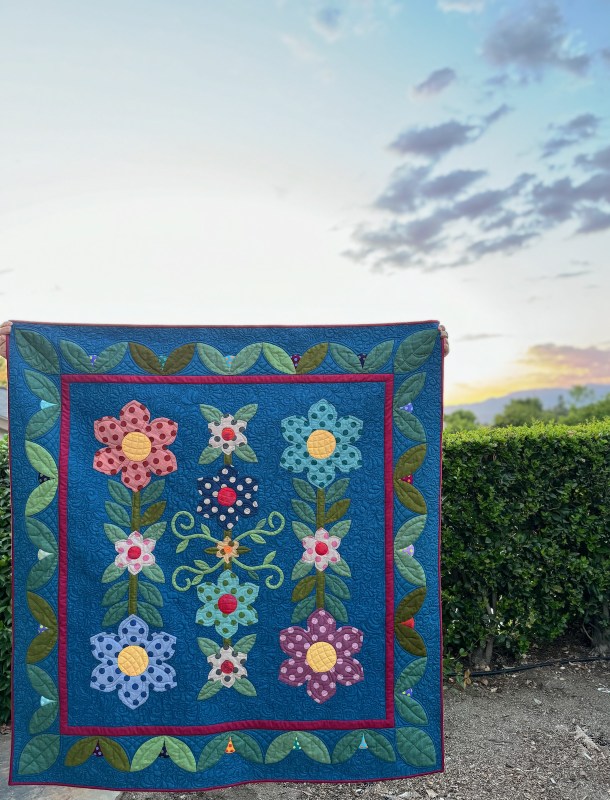
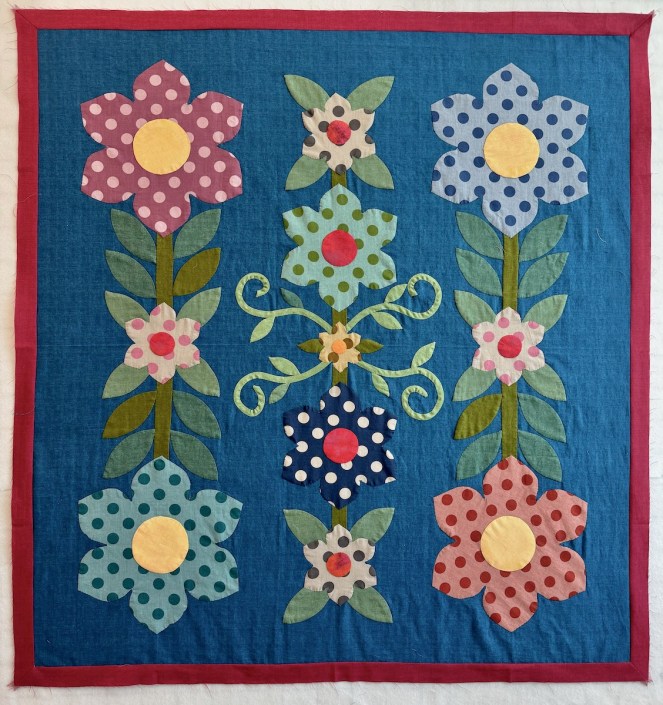
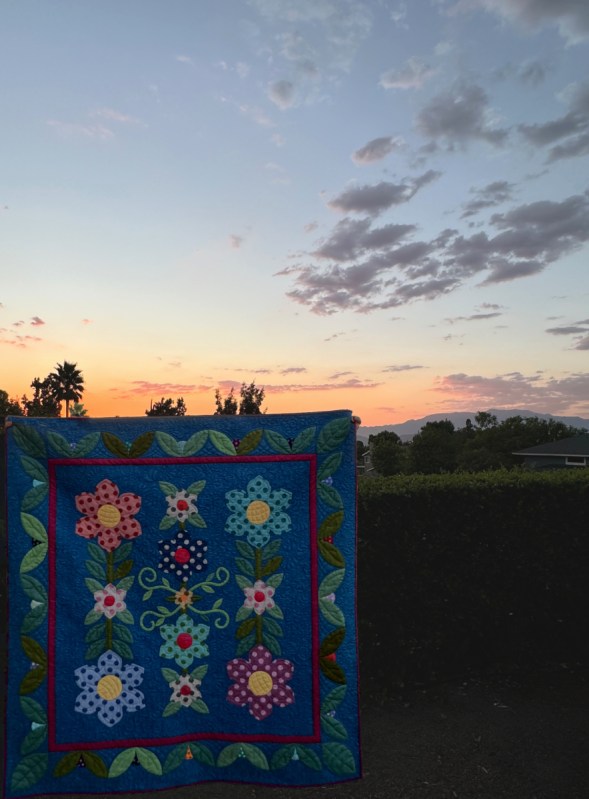
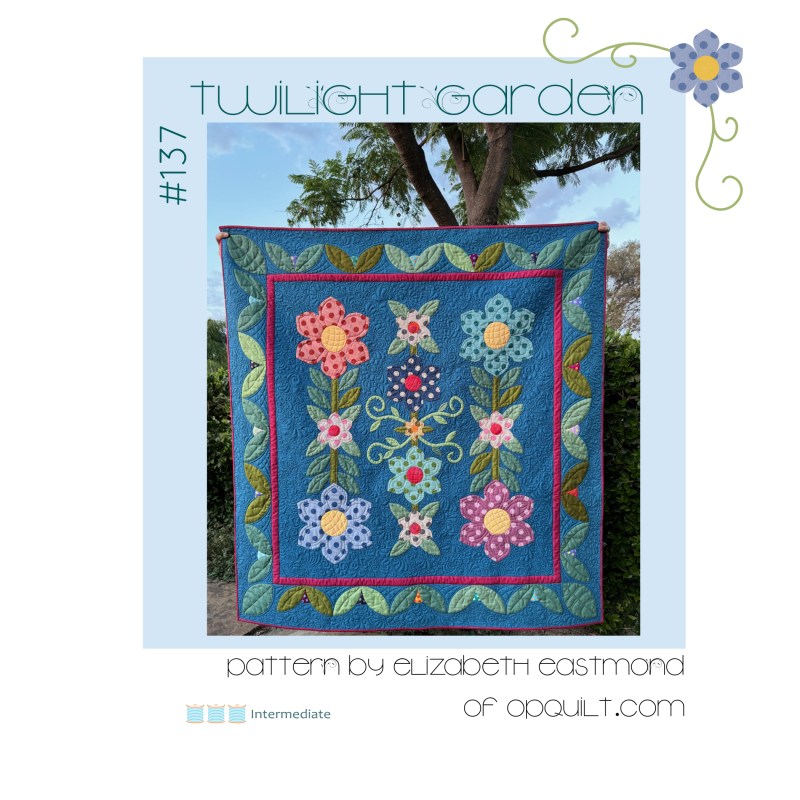
One summer night when we were sitting out in the garden, the year before all the mosquitoes arrived, we watched the bats dip and speed away, the tiny bird dash in to alight on the fountain. The night was calm, the sunset was unfurling in the background. We lingered, talked, until the stars blinked on and the twilight had slid into night. This quilt is about that kind of night, that feeling of letting the chatter of children, and friends, and a loved one float around you, when time is…timeless.
Sometimes ideas have to percolate a while in my brain. I’ve learned you can’t hurry them, anymore than you can recapture your sew-jo, as quilters like to say. Creative time comes on its own schedule. (This is Quilt #292 on the Quilt Index, above.)
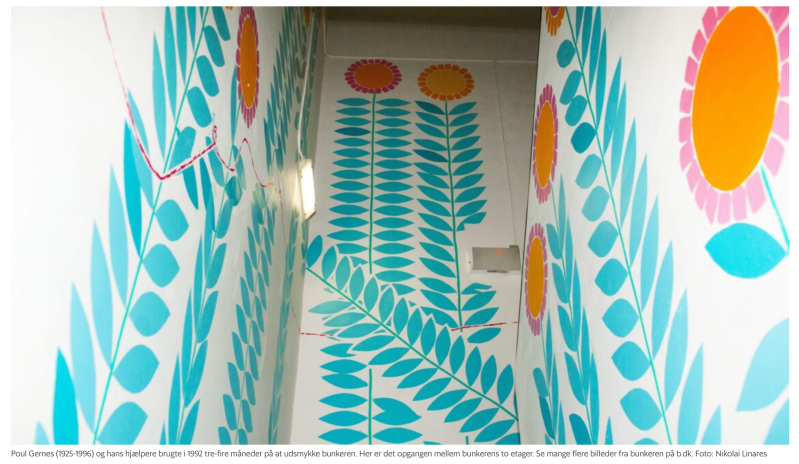
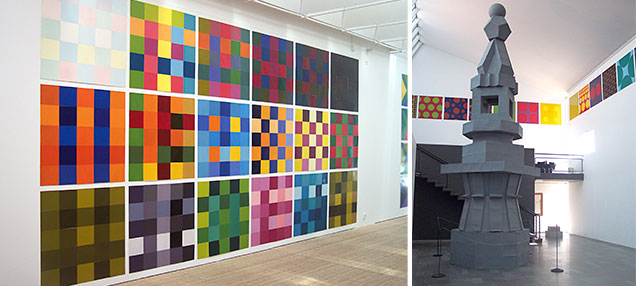
I was also inspired by a trip in 2016 to Copenhagen and Stockholm, where I learned about the art of Poul Gernes, an artist who used strong colors, and simple shapes that expressed a wild traditionalism, if there is such a term.
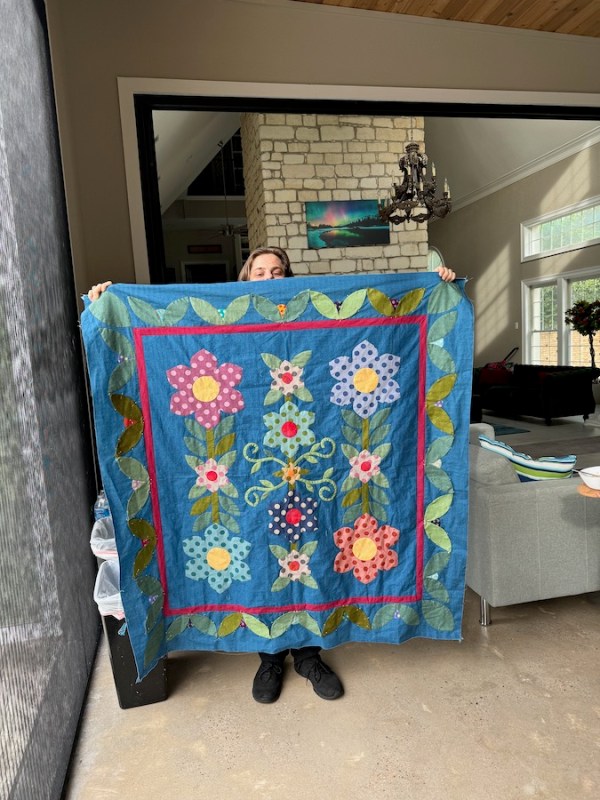
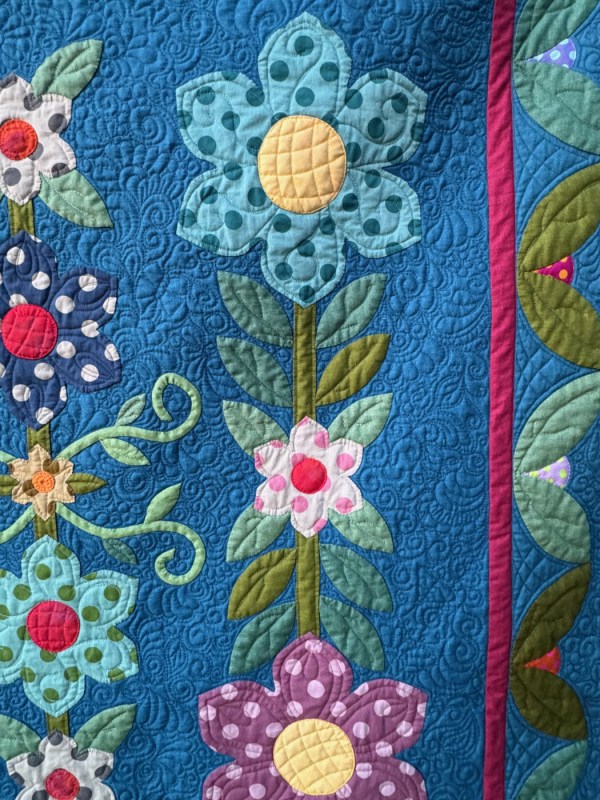
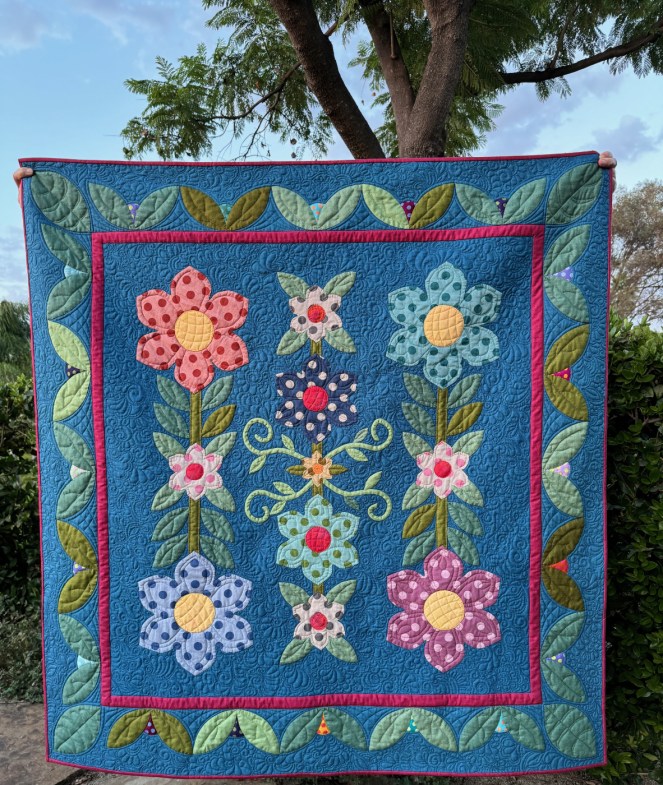
So somewhere between a summer night and a trip long ago, I started playing around with flowers on strong stems, then threw in the center tendrils to focus the eye. I’d been given a stack of Tilda’s polka dot flowers, which are not a typical palette, and I found some linen-look fabric for the background and leaves.
This was all I’d envisioned, but it just didn’t look “done.” So I ordered up more fabric–difficult to do when designers don’t label their colors (well, Kaffe does…)–and got to work.
It was during my New York Beauties project, so I kept going back and forth between the bright saturated solids of that quilt, to these inviting, musky deep colors of twilight.
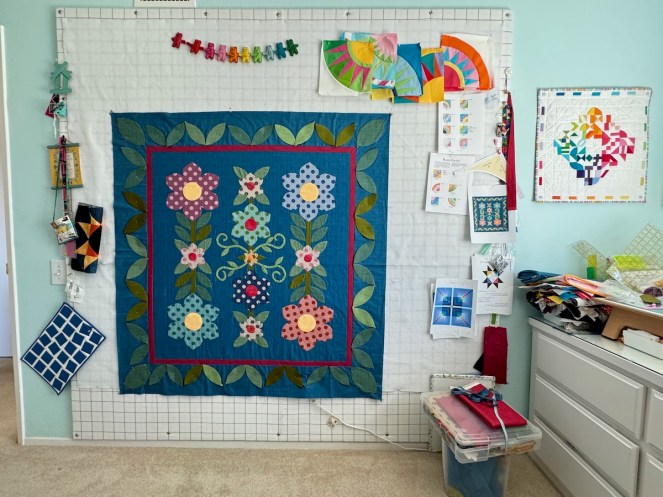
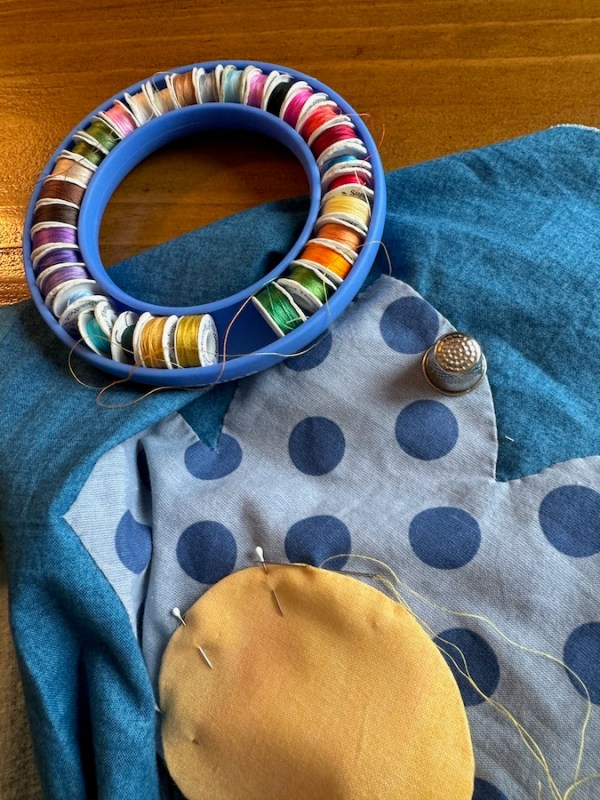
I pinned everything together with short appliqué pins, and took it on the road — traveling to see grandchildren and the total eclipse in Texas.
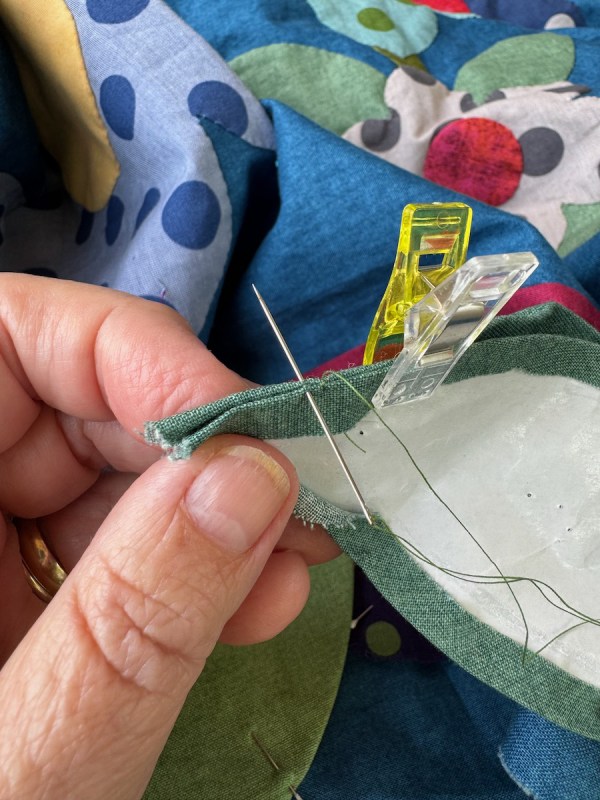
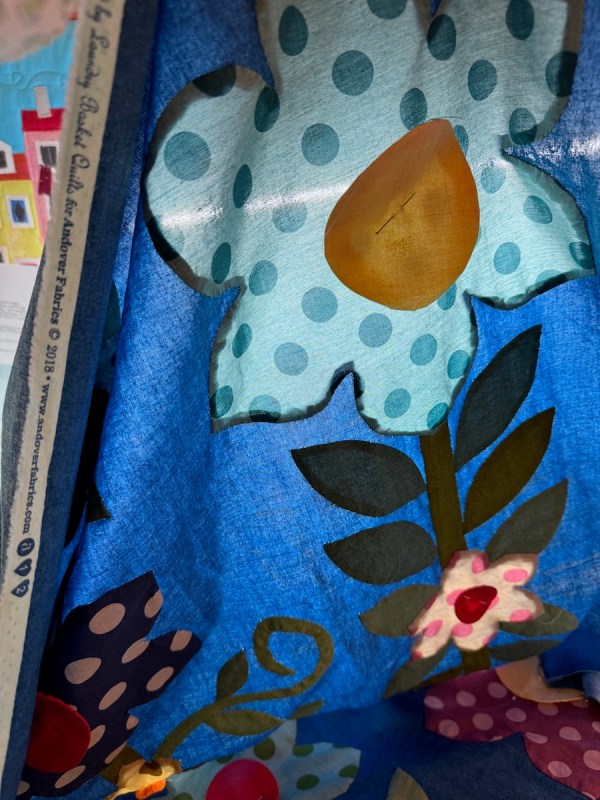
Yes, I cut out the background of the flowers, and lined the centers of the flowers for a flat, solid look. (I glue-dotted the lining into place, to hold it until I would get it quilted.)
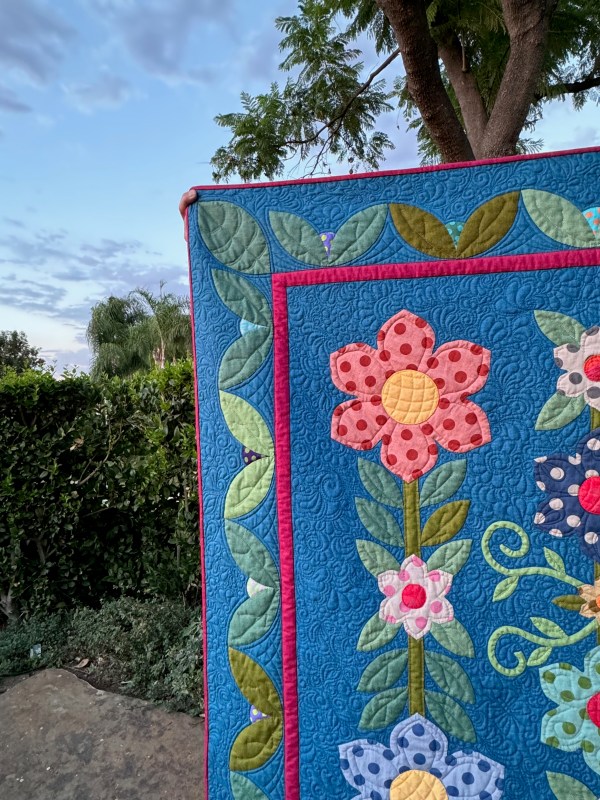
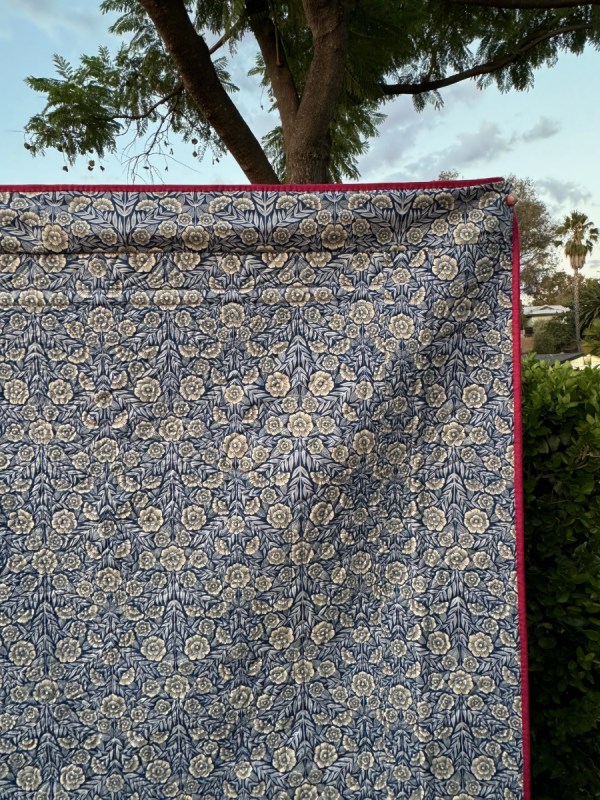
A couple of nights ago, I grabbed Dave and we went out to the side garden just as the light was dimming, so as to photograph the quilt. This light makes the details soft, the dense quilted foliage falling into the deep blue background, letting those simple Danish-inspired flowers rise to the front.
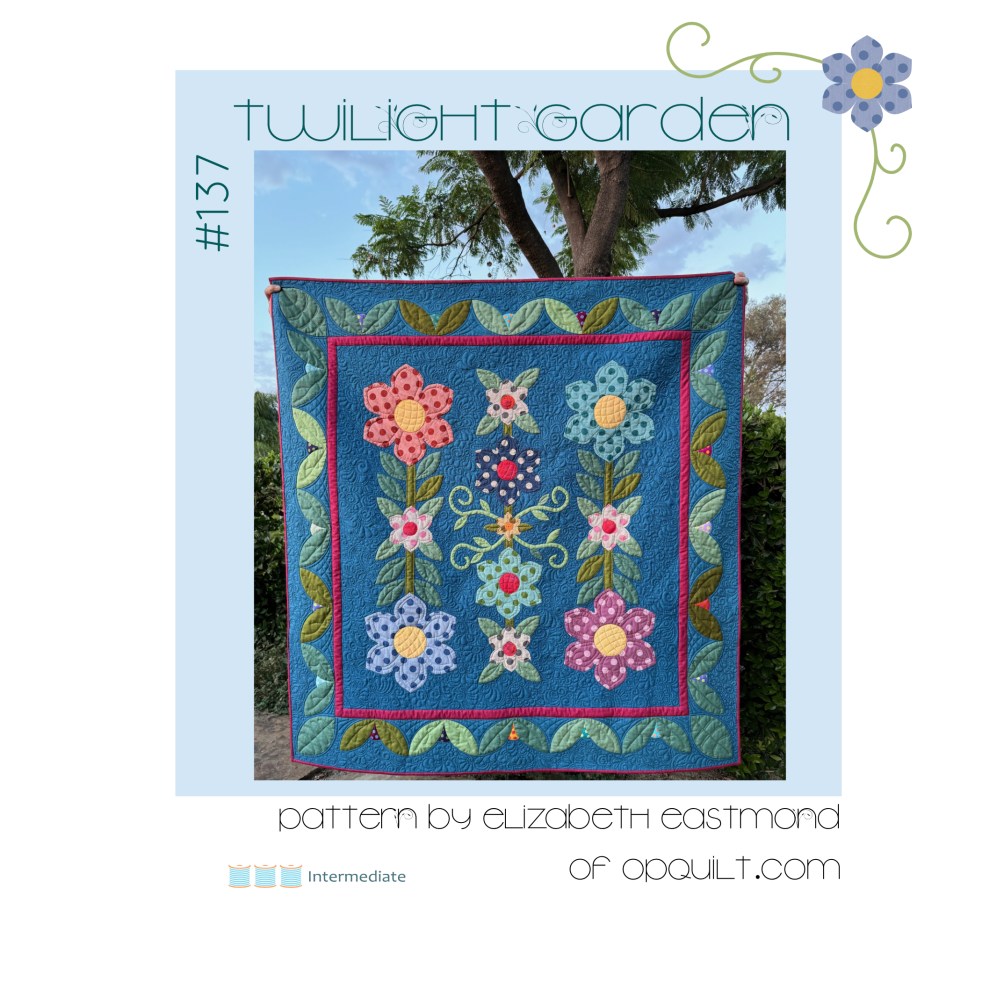
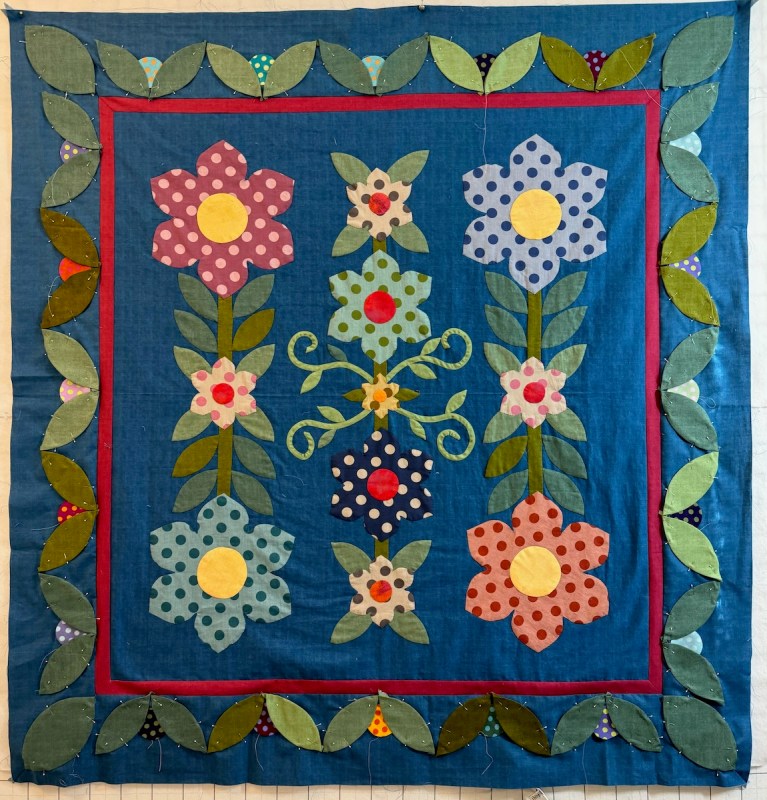
I wrote the pattern as I made this, and decided to add in three different sets of instructions, in case you were making it with raw-edge appliqué or needle-turn or machine appliqué. And then I added that outside border, so it’s thorough, with lots of patterns and words. But hopefully you’ll find your own design when you make it, and will add another garden to our world.
I went back and forth between Intermediate or Experienced Beginner, but in the end, decided that if you knew something about appliqué, it would go better. But other than that, it’s not a difficult quilt. I do have an extensive guide for laying it out, but it’s okay if you just want to use your own eye. I do reference a couple of quilters in the pattern, who I thought explained things well. One is Gladi Porshe, who writes about making vines and mixing appliqué styles.
Pattern is in my PayHip Shop here. Usually my patterns are $12 US, but I decided we all need more flowers so I have it for an introductory price until mid-November. Sometimes I post a coupon for a percentage off when I put up a new pattern, but this way, you won’t have to enter in a code, and can just grab the deal if you want it. All my patterns are downloadable PDFs.
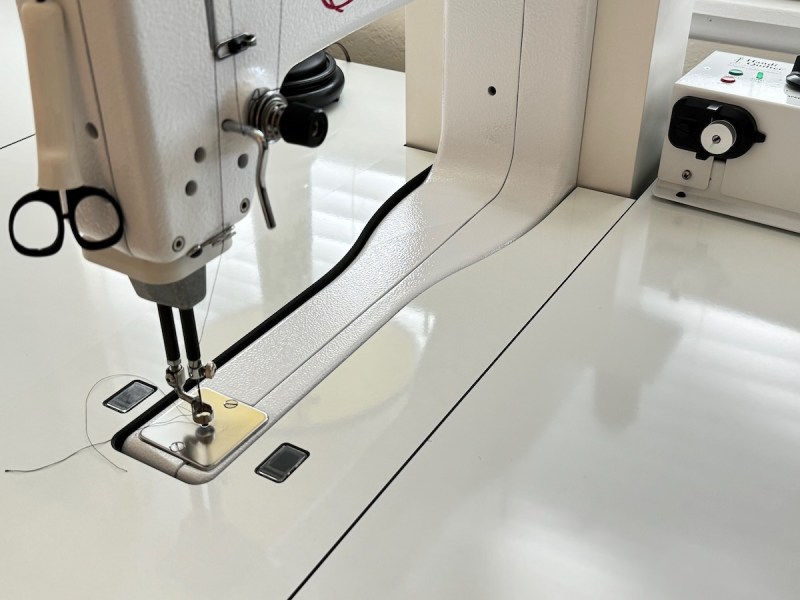
Here it is: the “Insight Table” for the HandiQuilter Sweet Sixteen. This table was purchased in another life, in January of this year. I had avoided trying to quilt with it since so much had crowded my personal spaces. But finally, I pulled this quilt top from the closet:
It was perfect for trying to learn to quilt a new way to work with this machine. The little “eyeballs” on either side of the needle (see above) are supposed to track my movements. It’s all coordinated with a few dials and buttons on the screen, which I couldn’t figure out at first, leaving me with skips in my stitches:
I’d be moving the quilt, and it would stop, skip a stitch, then start again. The stitches were very even, but…sigh. Because this is so new, there’s not much out there on the internet. I finally figured out to up the percentage of my “Cruise Speed” to 18% (I previously had it at 11%). That seemed to fix it. This doesn’t make me go faster, but it keeps up with me when I do. I could always get even stitches when I was going really slow, but now this sensing system gives me more even stitches, a welcome assistant in my world.
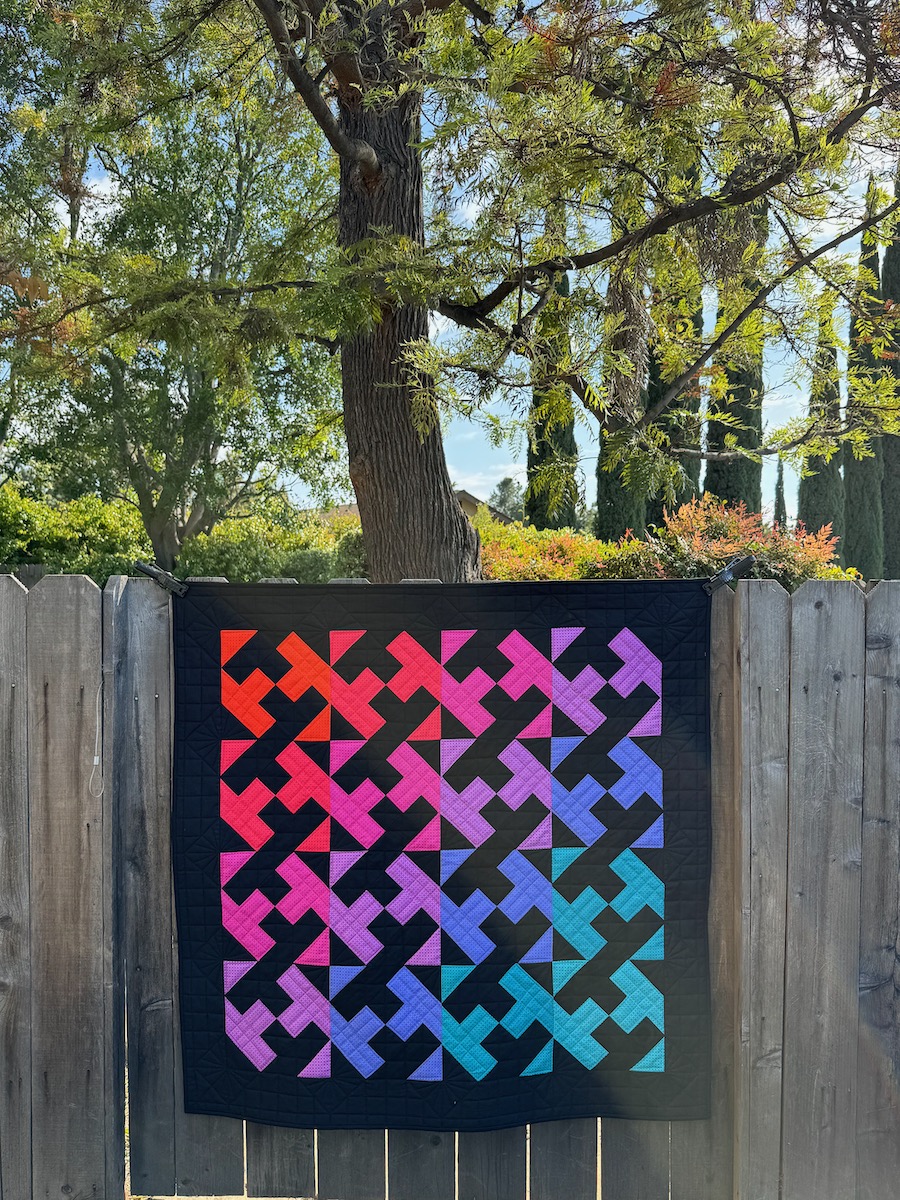
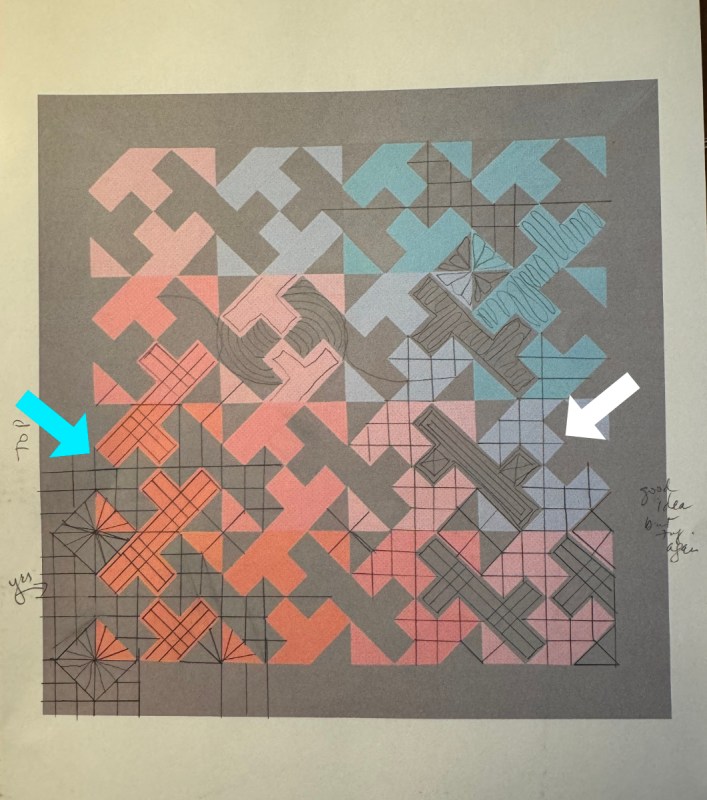
I’d started sketching this out (right side, white arrow), setting the grid into the colors. However, that seemed to make the black come forward, when I wanted it to go backward. So I reversed it (left side, blue arrow).
Break for dinner. I knew I was going to be sore the next day, as I hadn’t quilted on this machine for nearly four months. (I was.)
After dinner, laid out on the floor. All the black was quilted, so I could start deciding on how I want to quilt the colors. You’ll have to take my word for it, as the camera was fighting for a proper exposure with all those reds.
I finished it up a few days later. I always have troubles when trying to figure out how to quilt borders; this one showed me as we went along.
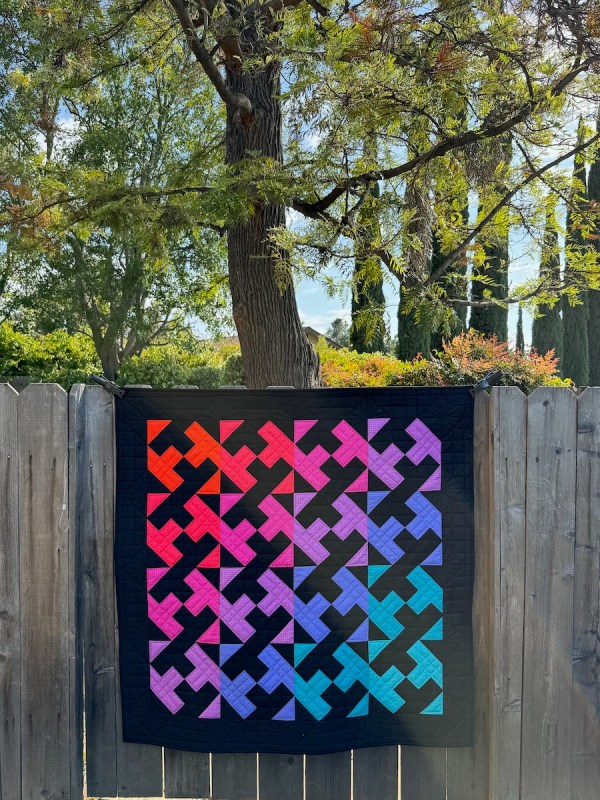
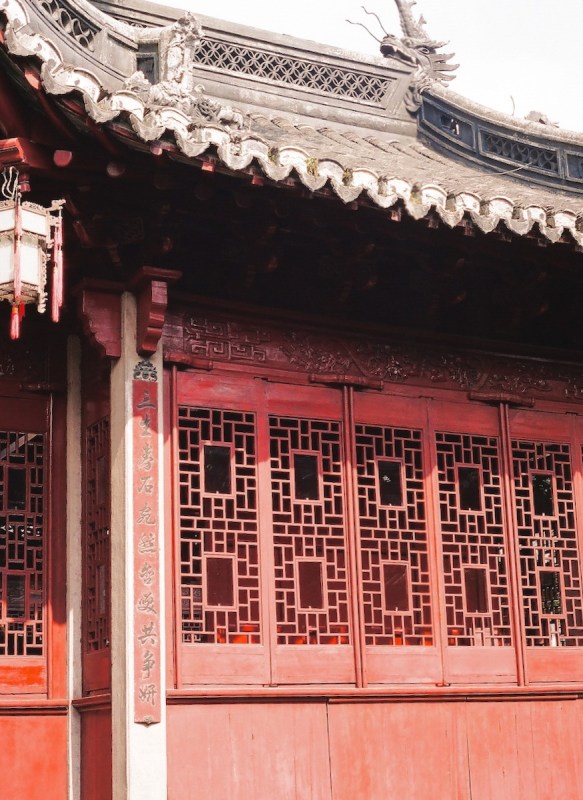
This is quilt #250, from when I finished up the quilt top and listed it in my Index, above. Here is another post about the origins, if you are for some more reading. The original block came from my rendition of a Chinese wooden window screen, as I was fascinated by all the patterns that I saw when I went to China about a thousand years ago.
All these photos are from Shanghai. I strolled the streets while my husband was in scientific meetings. All of this was one month after 9/11; the airports were ghost towns, the streets in Shanghai had plentiful police officers. Half the people in the conference had cancelled their travel, but we were so anxious to see China (and Japan, which was also part of the trip) that we went. With great trepidation. I wrote personal letters to all the children, just in case our airplane was shot out of the sky, but the trip was a wonderful introduction to that part of the world. We’ve been back to Japan one more time, but not to China, and I doubt we ever will return.
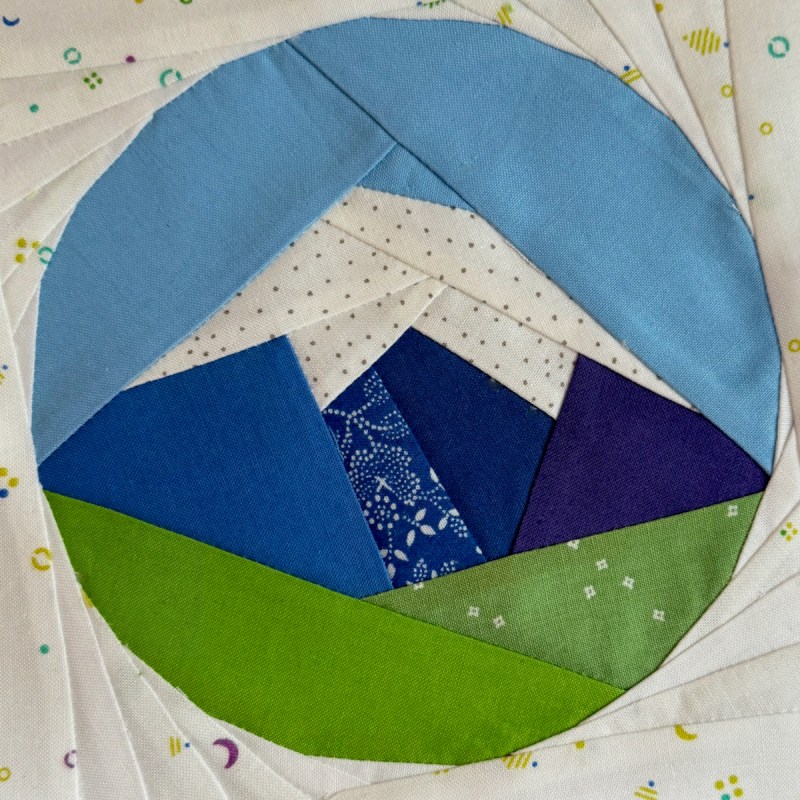
NYBeauties Update: I’ve mapped out a schedule for finishing the blocks, for those who are doing this with me. It will also help keep me honest, and keep me on track, especially when Leila has started a really fun foundation paper piecing freebie called Back to Nature (visit her Instagram to find out more). I’ve got to get those going, too.
Leila is incredibly talented. And the flip side is: I wish I had a better attitude for doing all those itty-bitty wedges around the outside. But it’s done, and only three weeks late. I’m so spoiled by using freezer paper on my Foundation Paper Piecing, that going back to paper (and I even used my vellum paper) is driving me nuts. I’ll have to try the next one with freezer paper.
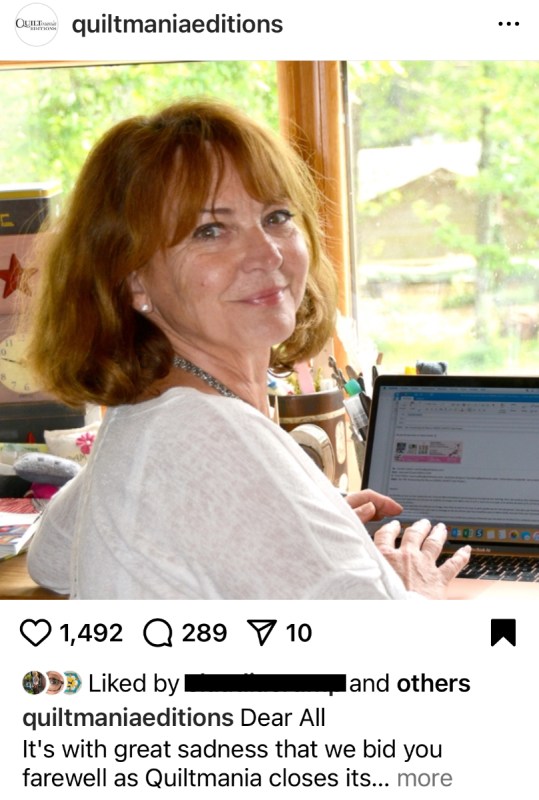
This was a shock: QuiltMania stopped publishing. There doesn’t seem to be any information about this at all, but I do know that they, along with every other magazine, were struggling after covid. I guess they finally just ran out of the ability to go forward.
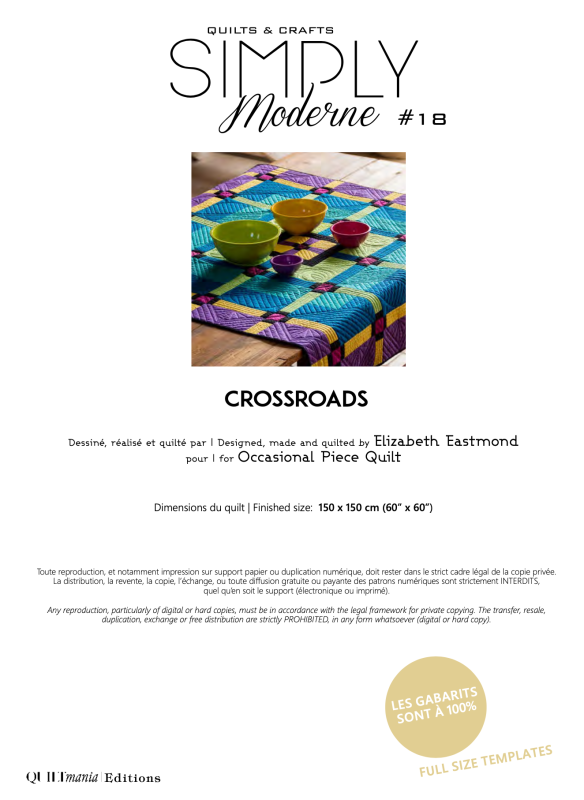
I feel fortunate that I was able to have some quilts published in their magazines. (I’ve been holding off on releasing one of my patterns, because a variation could be found in their recent Simply Vintage magazine.) I will miss Carol’s unerring eye for bringing us new and interesting quilt shows and quilts. She made a difference in what I see and what I make. Thank you, Carol and QuiltMania.
This week I had some friends come over for a Sew Day, and one of them brought the new project she was trying out: Manx quilting, which originated on the Isle of Man.
We were all fascinated when she told us the history, and how the measurements and sizes were based on a quilter’s hand. While my friend used a rotary cutter and a ruler to help her get her fabrics ready, in traditional Manx quilting, strips were torn from worn garments. Amy Smart has a tutorial on how to make one of these blocks, typically done in red, white and blue. There are other links, if you want to do a search on this. I like the little tucks that are formed: all construction is hidden and the sewing is done by hand.
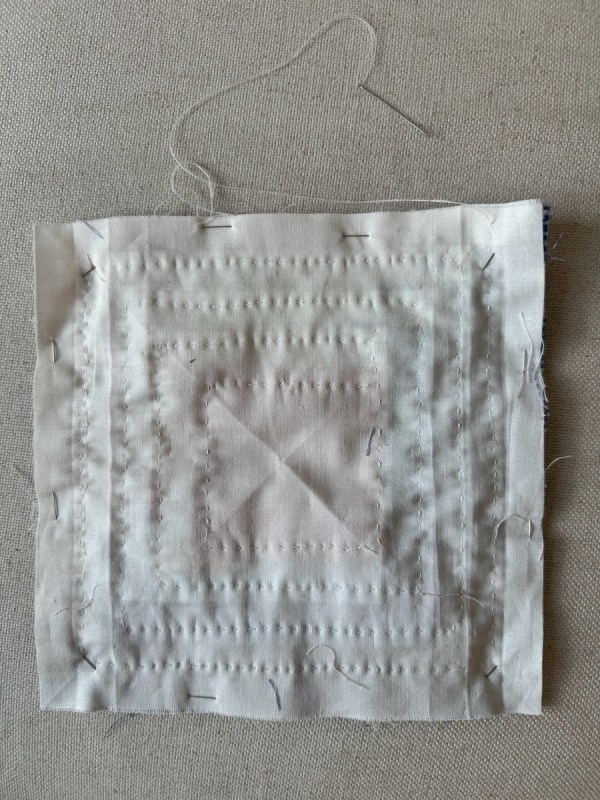
I worked on this: a new-to-me collage technique from Emily Taylor, the Collage Quilter. Unlike the Laura Heine version, this one is based on color and value, rather than shape.
My greatest challenge was not cutting out shapes that looked like jelly beans. I’m working on it, I’m working on it.
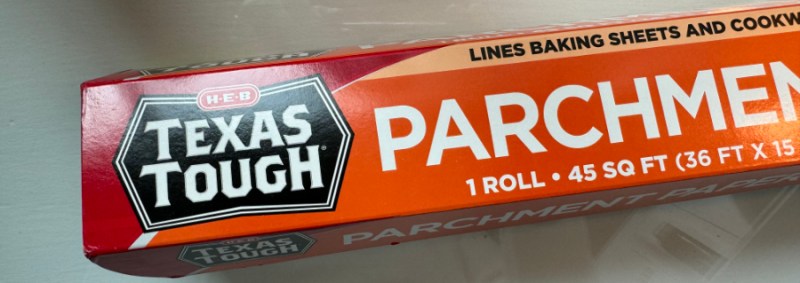
I’d purchased a roll of parchment paper from the grocery store H-E-B when were there. Who can’t succeed with a name like this (see below)?
(Really, it was just like regular parchment paper, but don’t tell the good folks at H-E-B.)
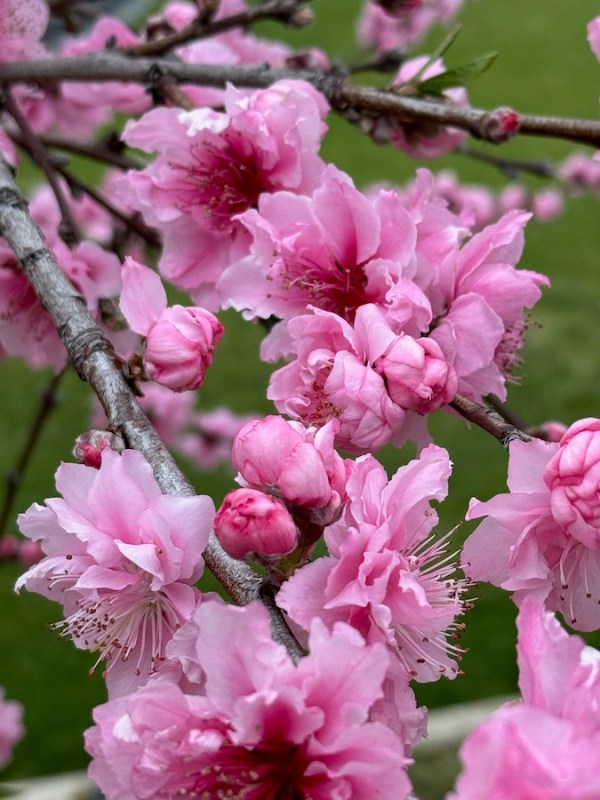
Local cherry blossoms, not plum blossoms. Here’s why I think so (no leaves, oval buds, multiple blooms on a stem).
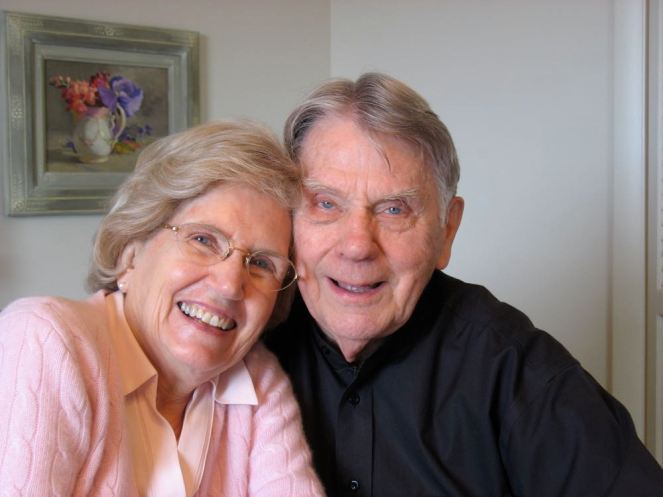
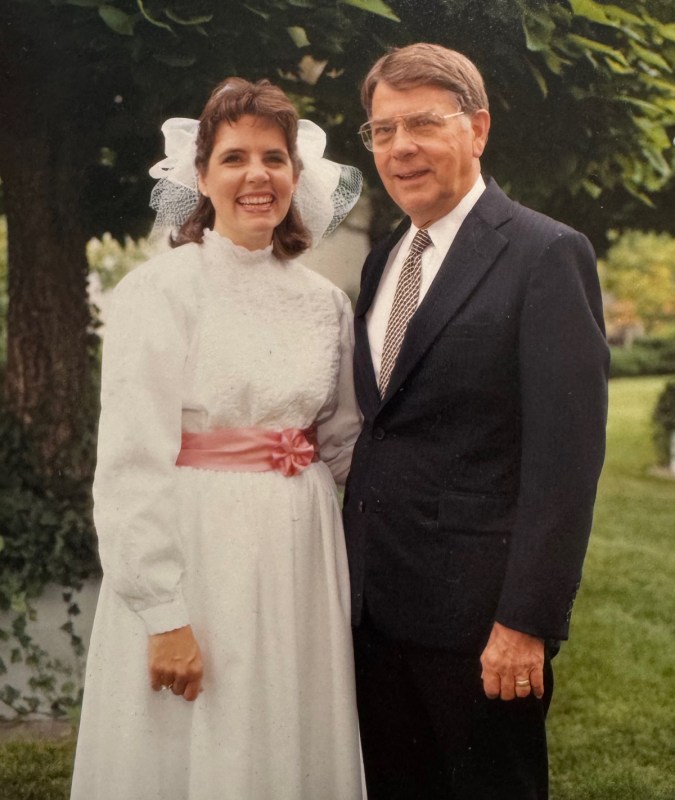
This is the other bookend to my life this past fourteen months: my father died Monday afternoon. He was 98, a wit, a smart man with grand ambitions, most of all for his children.
Finally that gulf between he and Mother — opened up in November of 2022 when she left this earth — has been closed.
I wanted to write about Road to California this year, but aside from some bright moments, I wept on and off all week, probably in anticipation of the news I was to receive of his death. (It’s okay in my world to say death.) We all knew it was close.
So I’m going to pause for a moment before I pick up the strands of my quilting. Since he was an artist himself (and a businessman and a faith-filled scholar and a father-to-seven-husband-to-one), he knew about picking up that brush and getting back to work.

























 OccasionalPiece--Quilt!