Quilt Shows

Road to California 2011–part II

Okay–I admit it.  I’ve done this a lot of times.

The first year it was held in the Marriott hotel, and the quilts were everywhere–in the central courtyard with many of the vendors in classrooms–a mess.  Then the Ontario Convention Center was finished and at some point we moved over there.  I have the 2009 bar. Somewhere.  2010 (the 15th anniversary) is still in its baggie, as is this year’s–if I can find it.

So, that impacts how I look at the quilts, what I’m interested in photographing.  So, if I’ve excluded your favorite, I’m sorry.  In this quilt show I have seen a migration from the more mainstream quilts (the kind that you and I make) to more and more elaborate quilts.  A natural progression, I suppose, but I have known of some quilts (that I thought were worthy) that didn’t get in.  And so the kinds of quilts that you and I make, seem to be in a different sphere than many of these.  I have found a lot of those types of quilts in the vendors’ booths, which is another reason to haunt them.

I enjoyed seeing the “travel” quilts.

These are the quilts taken from photographs of faraway places.  This was begun in a faraway place as well–in Esterita Austin’s class at a 13th-century villa in Tuscany, Italy.  Patricia Masterson was the piecer and the maker, and the title is Reminiscence of Tuscany.

I’m a complete fan of these group quilts, where everyone is given a strip of the photo, and encouraged to make it in what ever style or technique they wished. Then the quilter finishes it off.  The makers of this quilt, titled Annency, France, are “The Extreme Quilters Group”  from Simi Valley  and the quilter was Sue Rasmussen.

Detail.

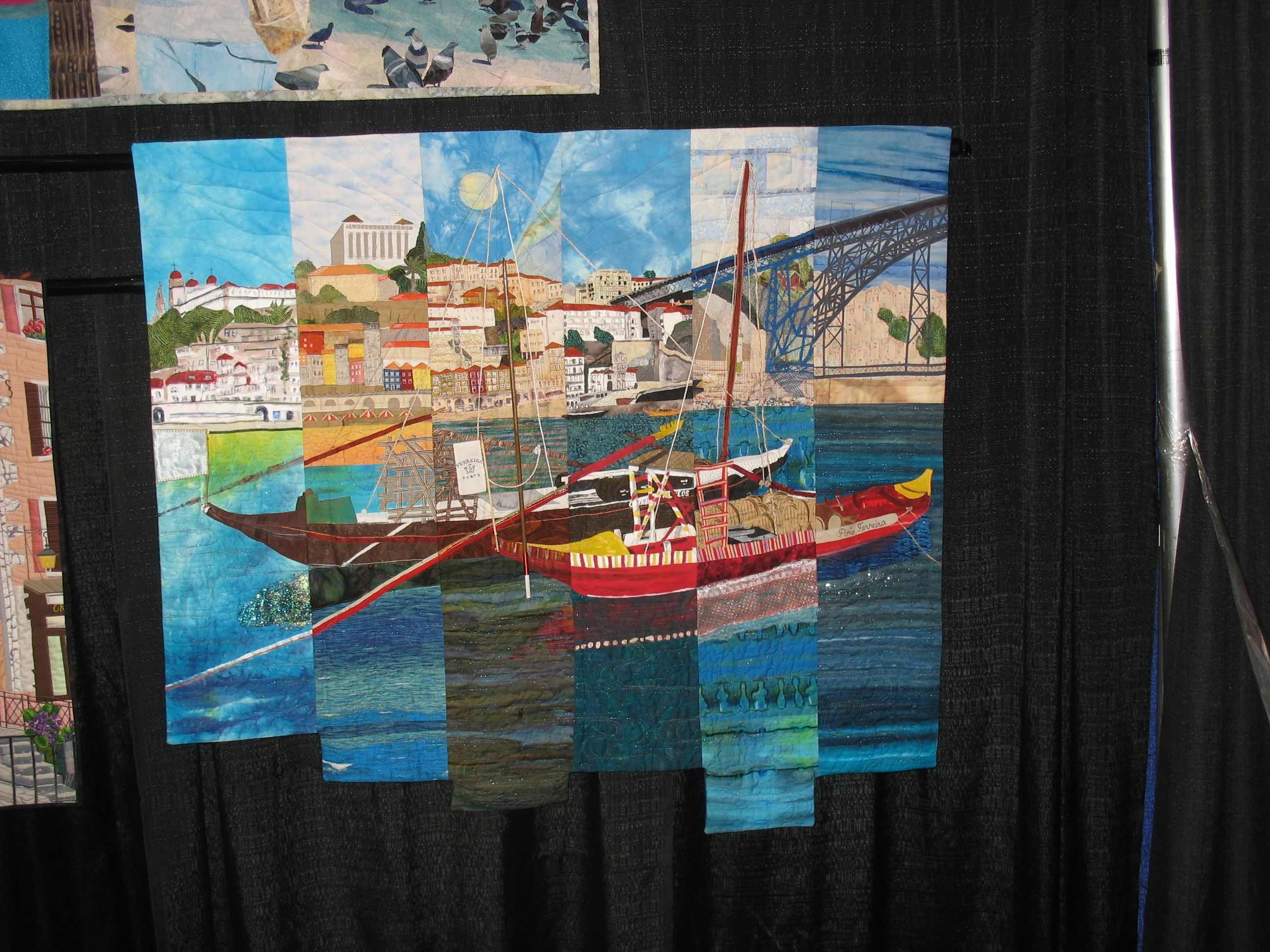
Of course we all know where this is located.  History and Tradition was made and quilted by Judith Eselius from Oregon. (I don’t remember the canals being that blue, but I like that color when used in this composition.)

Detail of the quilting.

Incommunicato, by Esteria Austin (recognize that name?  from the quilt above?)  She writes: “Every September it is my privilege to lead a workshop and tour in Tuscany.  One year, after lunch, I snapped a photo of two participants caught in this wonderful pose.”  How many times has my husband been checking out our photos of the day, while I re-applied my lipstick?  Many.

And of course, this glowing sunset of a photo, from yesterday’s post.

Quilt Shows

Road to California-2011 (part I)

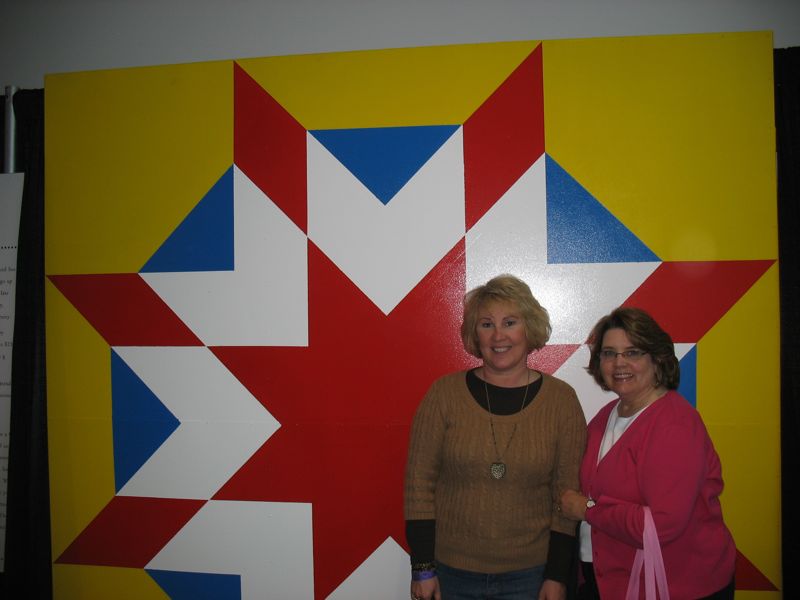
Road to California, our local quilt show, is being held this weekend in Ontario, California.  My friend Leisa and I had pre-purchased our arm bands, and joined the other eight billion middle-aged women in line.  Some of these women had brought their husbands.  One woman described another’s husband as “the runner,” and I suppose that meant he ran packages to the car.  Then her friend suggested that the husband had also come to keep an eye on his wife’s purchases.  Which made the first woman laugh.  That’s Leisa and I posing in front of one of the giant barn decorations in an exhibit in the hallway.

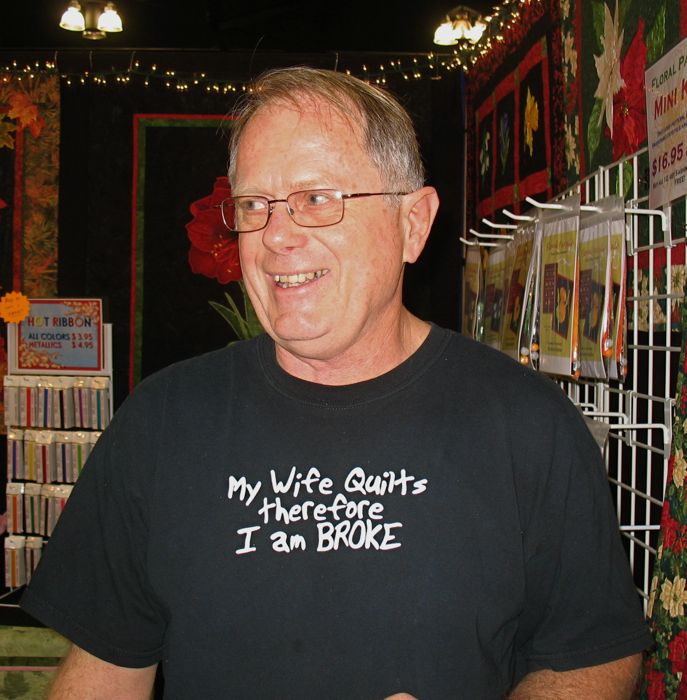
This duality–of going to see a display of first-rate quilts and shopping the over 200 vendors–is what makes a quilt show so much fun, as witnessed by this man’s T-shirt:

He said if he’d had a dollar for everyone who took a picture of him, he wouldn’t be broke anymore.

I read somewhere that the average age of a woman who quilts is 55.  This crowd proved it.  But I’d have to say there were a LOT of older women who were in scooters, with walkers, and in wheelchairs.  An interesting cross-section of the aging quilt population.  We’d better get some newer, younger quilters in here pronto.  The doors opened and Leisa and I crossed through the front doors, figured out a time to meet, then waved good-bye to each other.  She likes to look in the vendor’s booths, but I always hit the quilt show first.

I like to look at the wearable art, because I follow the blog of someone who enters her garments in these shows: Summerset Banks.  She’d entered a garment titled “Spring’s First Blush,” inspired by her friend Ann, a cancer survivor.  This outfit features “free motion quilting, Prismacolor pencil colors and hand beading.”

The top, showing her second place ribbon.

The skirt, with its exquisite details.  Congratulations, Summerset!

Jo P. Griffith’s quilt, Last Harvest, was part of the special exhibit Fall, The Noble Seasons Series.  She also curated the exhibit, and it was filled with quilters’ percpetions of fall.

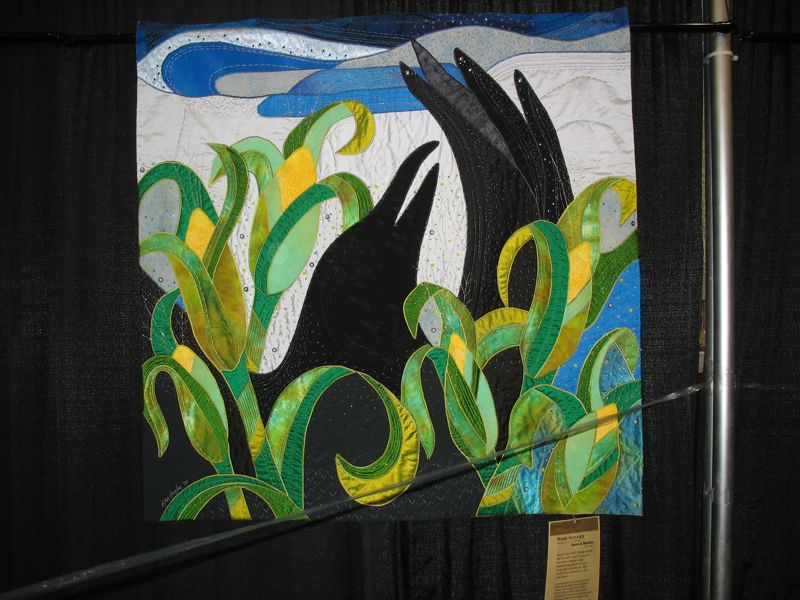
Gone A’ Maizin, by Rose Hughes

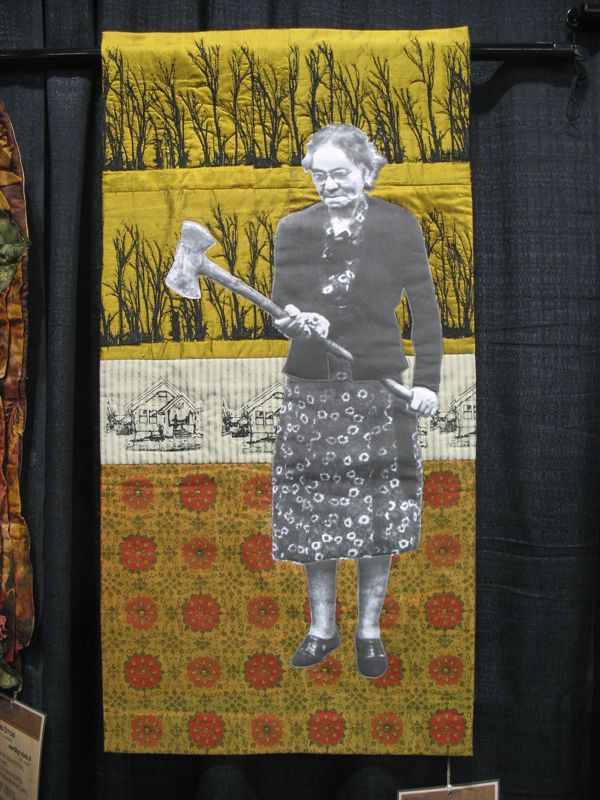
Grandma with an ax in Minnesota in the Fall, by Joanell Connolly.  She wrote: “I work with vintage photos of women from the 1930’s that speak to me.  Grandma just sings–fall.”  The women next to me who were looking at this kept wondering why the ax?  I don’t think there’s any good reason–just a funny photograph.


Mia Bloom made Autumn Glow.

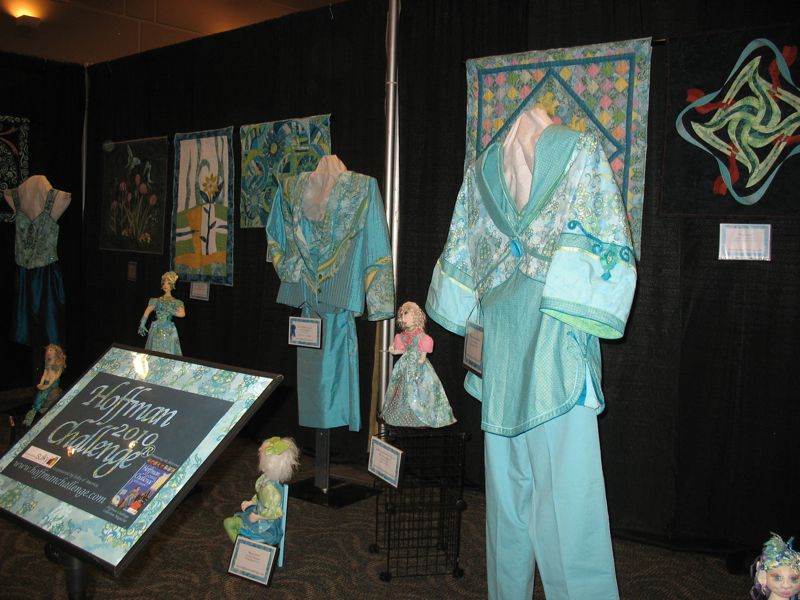
The Hoffman 2010 Challenge was a sea of turquoise, quite striking.  Their 2011 Challenge Fabric looks like a re-do from something I saw in the 1990s, but I’m being snarky (um, I didn’t like it then and I still don’t like it).  I’m sure glorious things will come from it, though, as they always do.

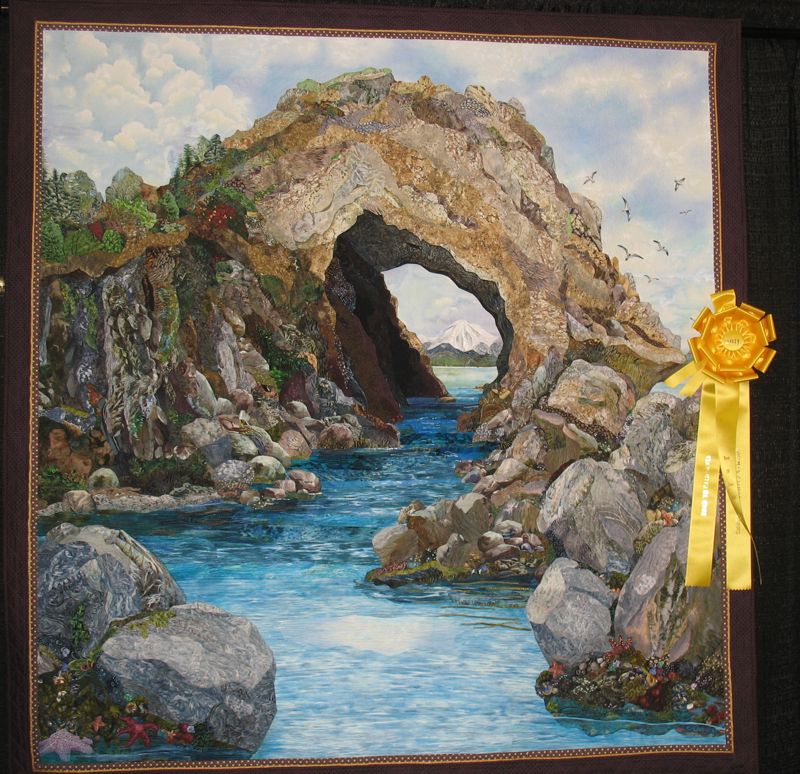
One of the grand award winners was Natural Wonders, by Kathy McNeil (she also quilted the quilt).  Detail below.

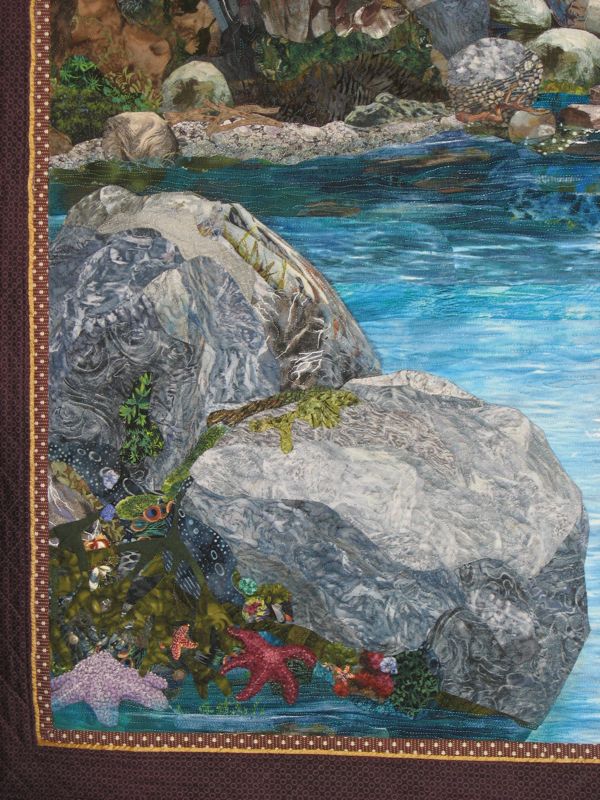
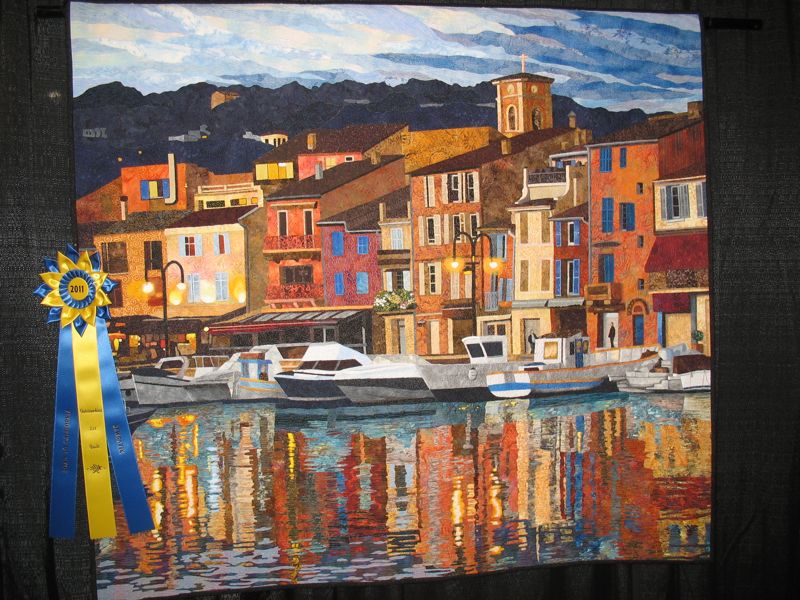
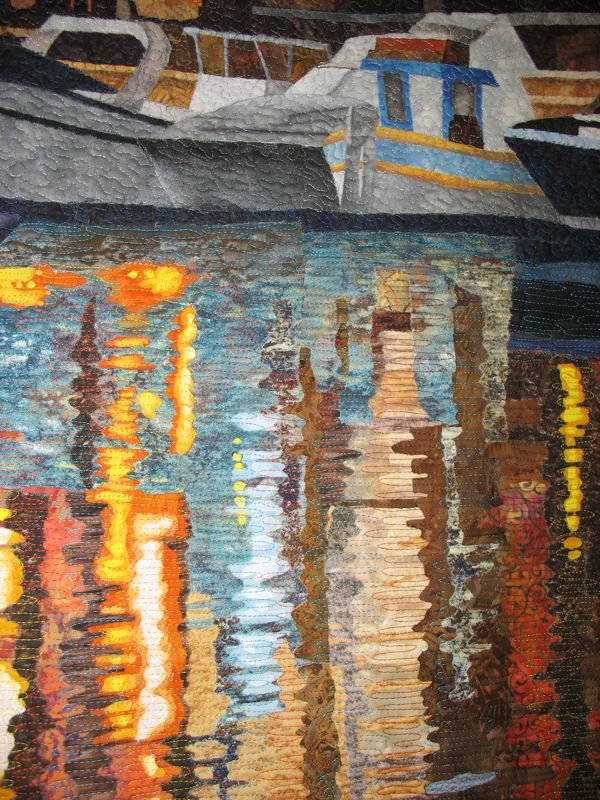
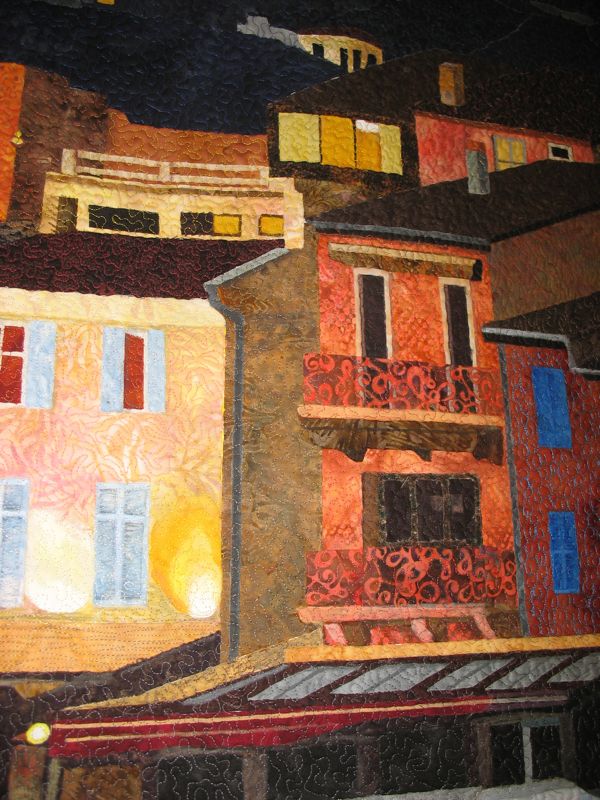
Port of Cassis, by Lenore Crawford.  She used a fusing/fabric painting technique to depict this ancient port on the French Mediterrean Sea.  This scene just glows–it was a lovely quilt.  Details below.

I was taking this photo and some lady came up and said, “I have that fabric.”  I laughed because I have it too.  But when I said that neither she nor I probably do anything like this with our fabrics, she agreed.

“Get Maynard’s rear end,” said one friend to another.  I took a picture of it too–a snow scene titled Maynard, made and quilted by David M. Taylor.

*

And this one got the award for most humorous.  Really?  I thought it was a bit of a mess, although I’m sure the maker was pleased.  It will remain nameless, in case the owner does a search on his or her name.

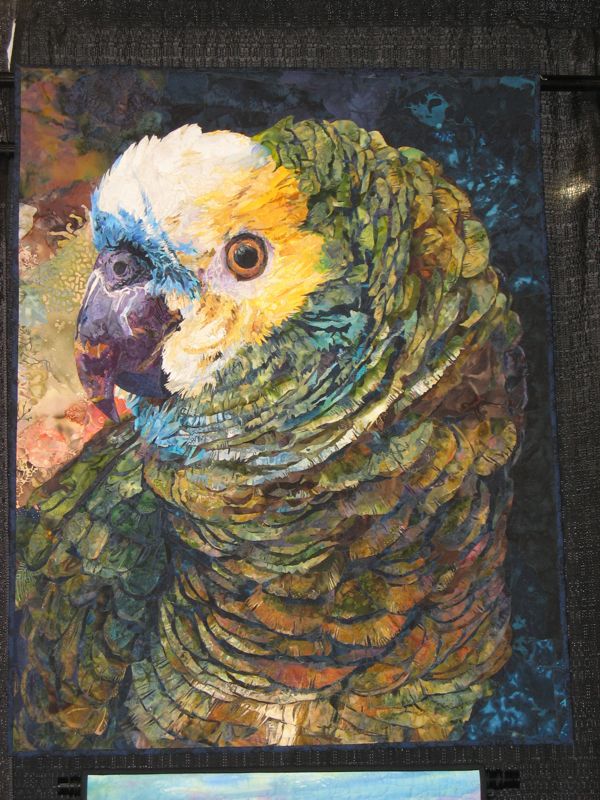
So I don’t leave you on a downer, here’s a stunner of a quilt, all raw-edge appliqued.

Ruffled Feathers, made and quilted by Roxanne Nelson from Calgary Canada.  She fell in love with a photograph of this parrot, and she used only fabric “as the medium to build layers of color blends.”  I was frustrated that I couldn’t get closer to look at, but hoped I could look at by using the telephoto on my camera.  It was a really lovely quilt.

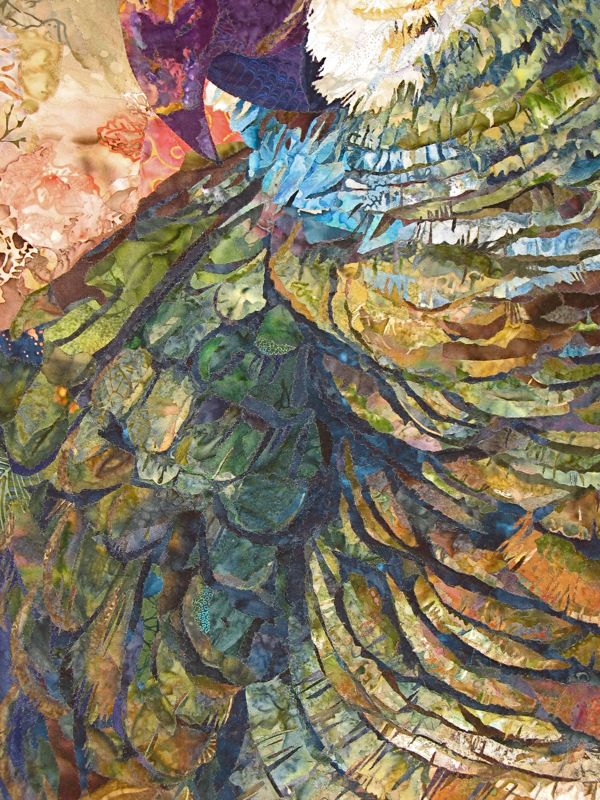
Detail of above.

More, later.
Quilt Shows

Long Beach Quilt Show–New Quilts

First the whine.

Studio Art Quilters Association had a large medium number of studio artists exhibiting their work, but alas, no photographs.  While I understand their need to “protect” their work from Evil Unscrupulous Folks, not allowing photographs is not allowing people to interact with their work in a reflective way.  Many times the lighting is so dim  that I enjoy going home to review my photographs on the computer.  I would have been happier if they’d said, “Photos allowed, but no posting to blogs or commercial uses.”  That would make more sense to me. {Note: in the comments today was an alternative: buying their catalogue (link included).  Okay, a reasonable suggestion, but I still would not have the same enjoyment in looking at their photographs as getting in close to photograph it myself and enjoy.}
Whine over.
Kathleen H. McCrady patterned her Sawtooth X quilt after an old one from 1875, using reproduction fabrics in brighter colorways.
Detail of above

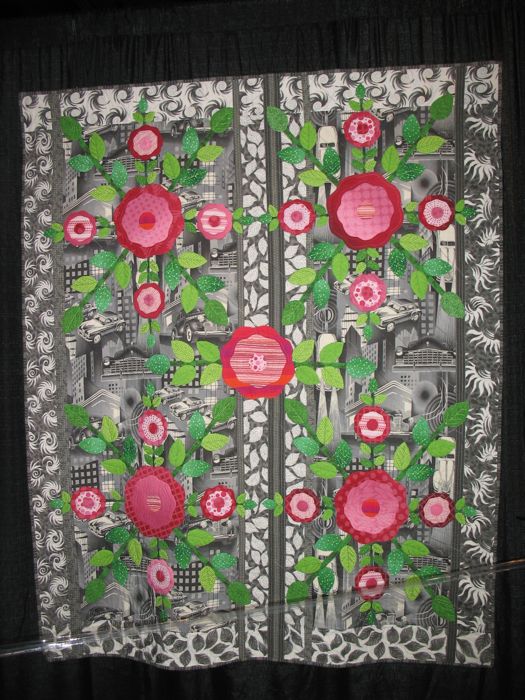
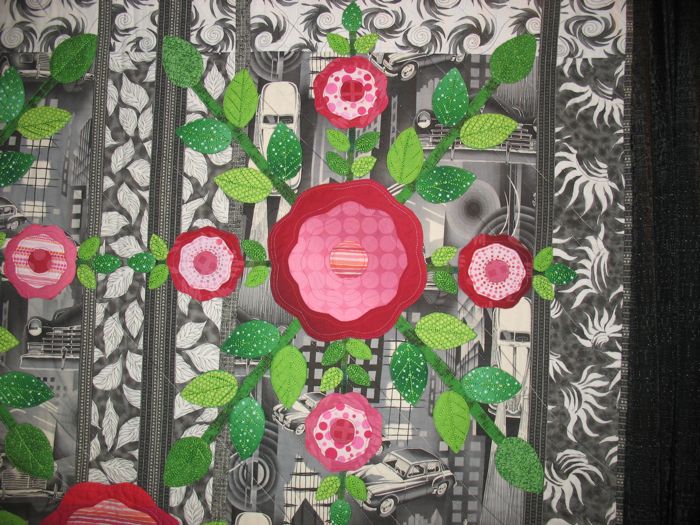
Another quilt that used the old quilts as a springboard was this one, with busy, modern fabric behind a very traditional Rose of Sharon block.

Metropolis in Bloom, detail
by Kathryn Botsford

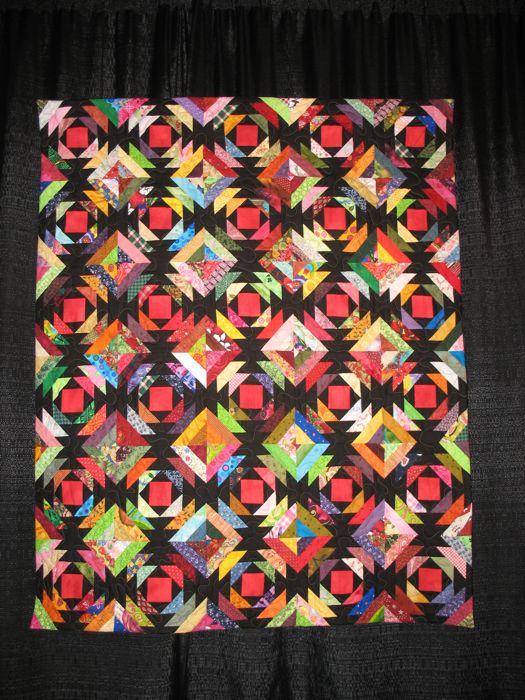
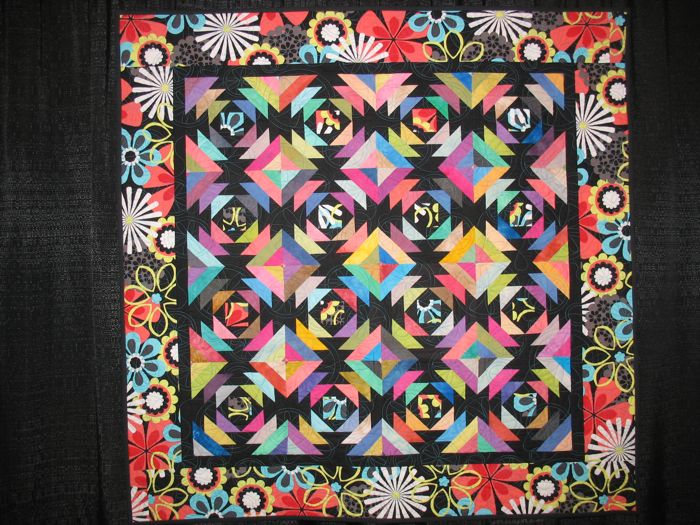
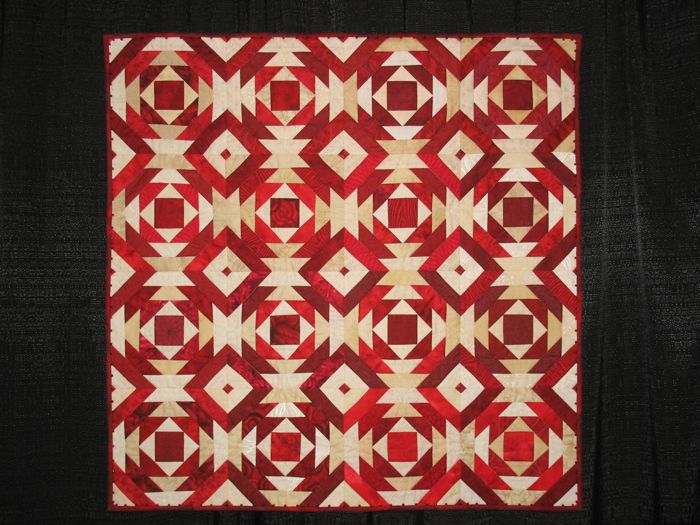
Again, let me reiterate that this show is not strong (I think) on variety, depth and breadth of their quilt exhibit. One intriguing idea was to contact a guild and have them exhibit works by their members.  While this might be a good idea, if you’ve ever gone to a (non-juried) guild show you know you get the range of quilts from excellent to should-have-stayed-in-the-closet.  The quilt above was the only one to make the cut for this blog, although I enjoyed seeing these quilts from Canada.  Another portion of the exhibit was organized by a well-known quilter, Gyleen Fitzgerald, who worked around the theme of Trash to Treasure.  She encouraged her participants to take those miniature scraps we all toss and make a treasure out of them.  She chose to use the Pineapple Quilt Block as the criteria. I love this block so here are few that were interesting.

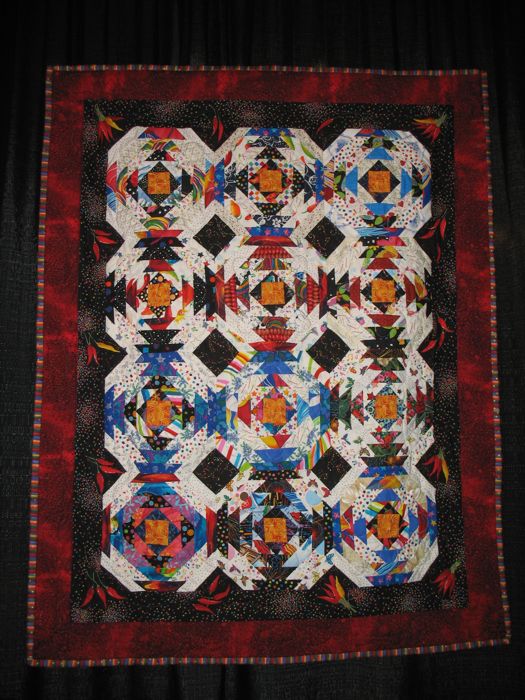
Pineapple Salsa, Too by Barbara A. Johnston.
She combined the idea of the pineapple block with her enjoyment of hot peppers for this quilt.


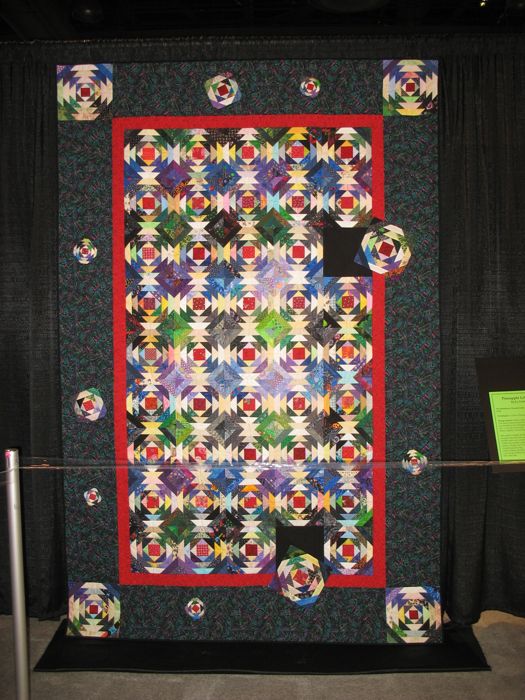
My notes are not as clear as I’d like, but I believe this is titled Chaos and Relief and is by Ann Hein. [Note: Ann has left a comment giving us more information about her quilt–thanks!]

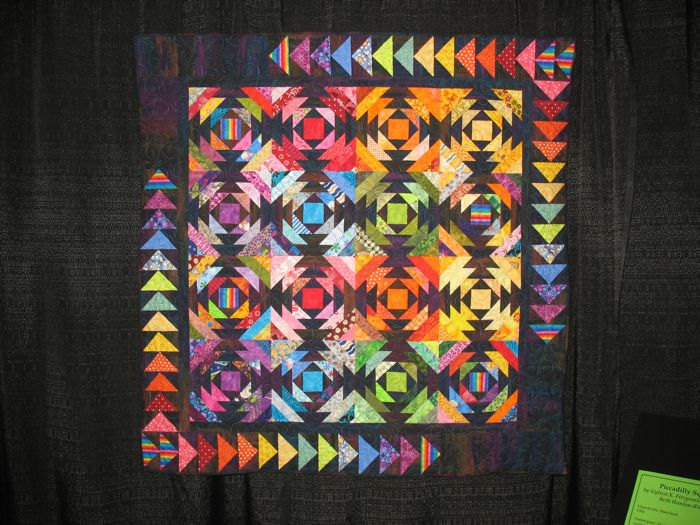
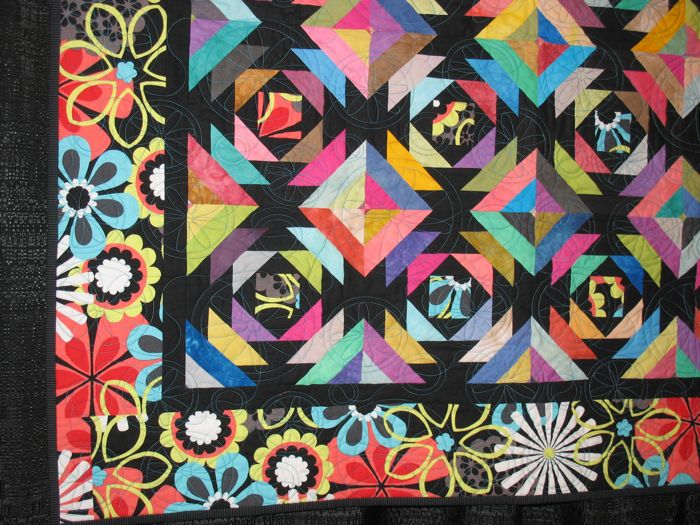
This one is Gyleen’s quilt and is called Picadilly Square, and is quilted by Beth Hanlon-Ridder.  The use of a large-scale print in the borders, and fussy cut for the centers is intriguing.  One of the vendors had this fabric and people were lined up to buy it. {In the comments, Gyleen says she didn’t fussy cut–very cool, then, how it all came out.}

Detail of above.  I like the quilting.


Really Red, by Charlotte Noll
She revealed in her notes that Gyleen had a “Trash to Treasure” Pineapple Tool that she used to make the quilt.  Ah, another way to market something.  I did think this was a stunning quilt.


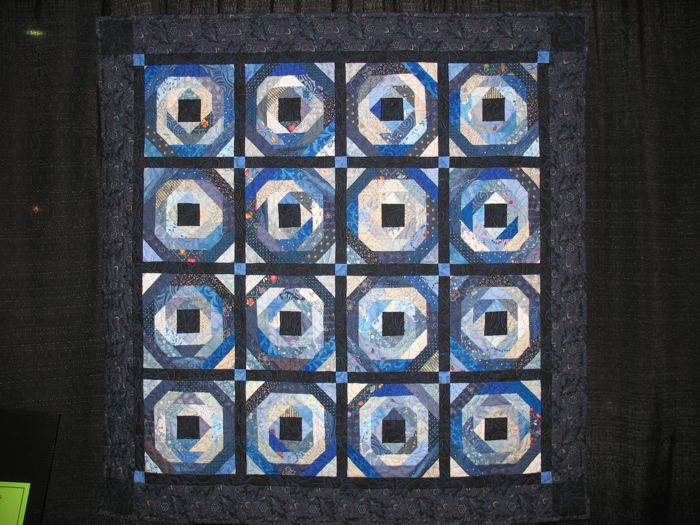
Blueberries and Pineapples . . . Yum, by Florence Gray.
A bigger pitch in her notes about the tool.  And by the way, after seeing the name of this quilt, I think some of us quilters could stand some tutoring in effective titles. I admit I sometimes struggle too.  I’ve taken to using an old quote book that I found at an estate sale, for it contains lots of bits of old verse, sayings and poetry that have inspired me. Perhaps we quilters get so tired by the end of the quilt, we take the easy way out and just make simple word associations without thinking about how those titles will play out long-term.

Birds Fly Over the Rainbow, by Barbara Polston, quilted by Beth Hanlon-Ridder.
Nice title.  Nice use of the flying geese block in the border.

Harvesting Pineapples. . . Out of Thin Air, by Mary Jo Yackley.


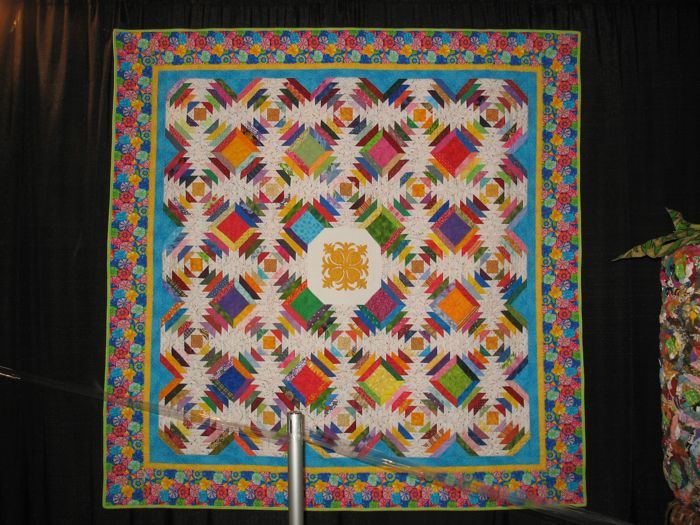
Pineapple Daiquari, by Rellajeanne Cook, quilted by Dottie Bettiker.
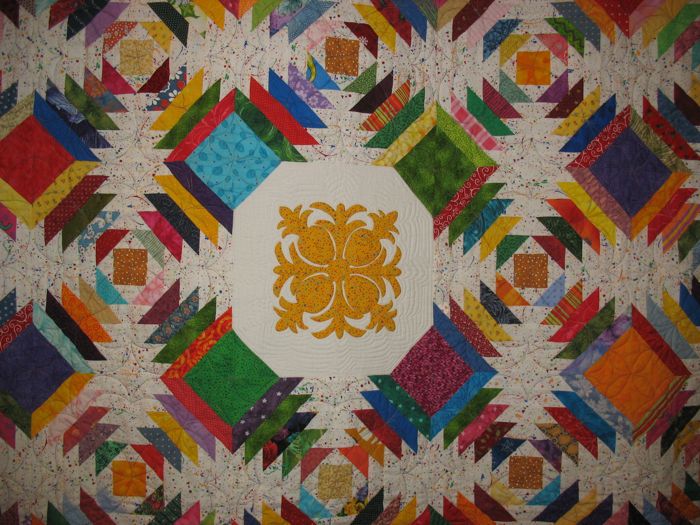
What makes this quilt unusual is the quilter’s pun of using a traditional Hawaiian-quilting-style center block in the middle of a pineapple quilt.


Detail of above quilt.


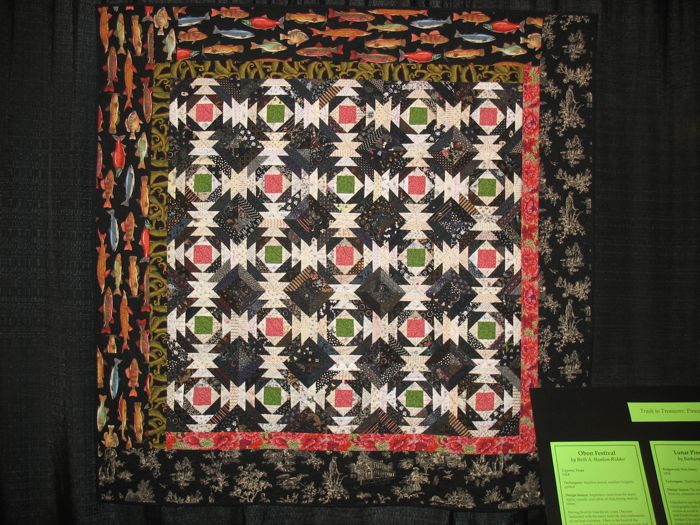
Lunar Pineapple, by Barbara Vedder.  Why the fish border?  She liked it.  Although perhaps it detracts from the quilt with its bold coloration (I would have preferred to focus in on the colorful centers than been distracted by that part of the border), I think the use of black is intriguing in the pineapple block.  Okay, end of Pineapple Block quilts.


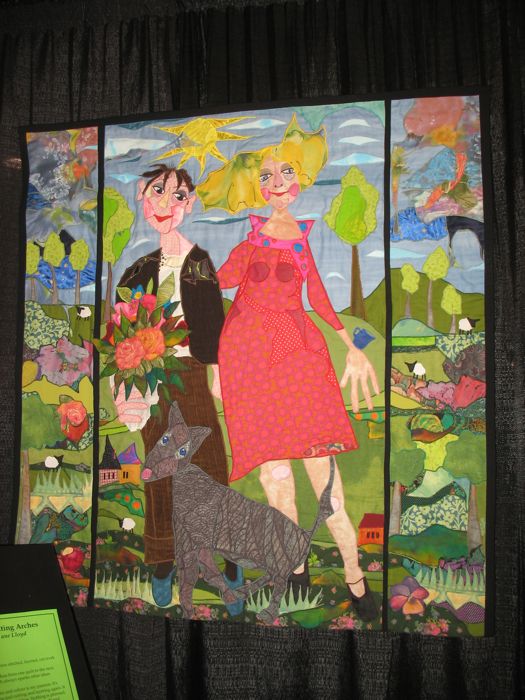
Bodil Gardner, from Denmark, memorialized a wedding day in her quilt Show me the road to Timbuktu, Take my hand and let us go.


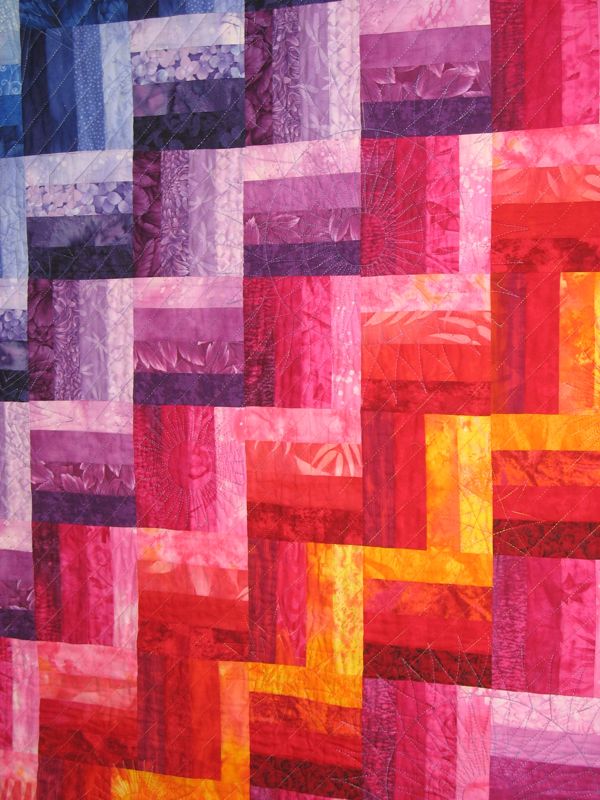
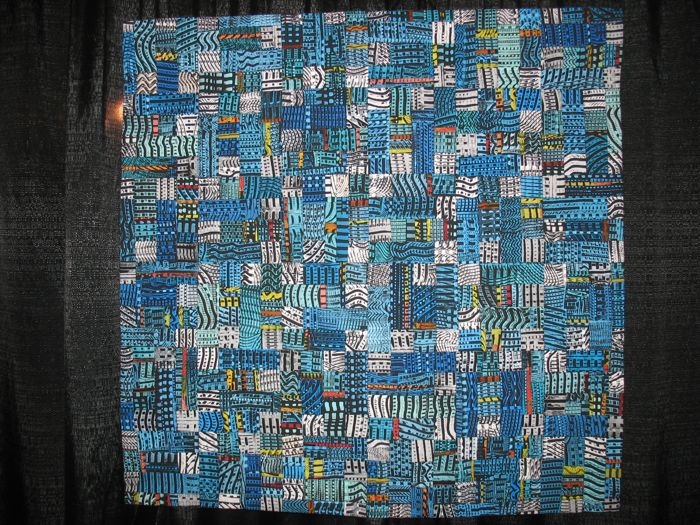
Units 9, by Benedicte Caneill is one of those quilts I admire, but know I’ll probably never do.  She used a Rail Fence block as a basis for exploring the use of “geometric units. . . [to] create an abstract cityscape composition.”  So then I tried to figure out what the basic Rail Fence unit was.


This one?

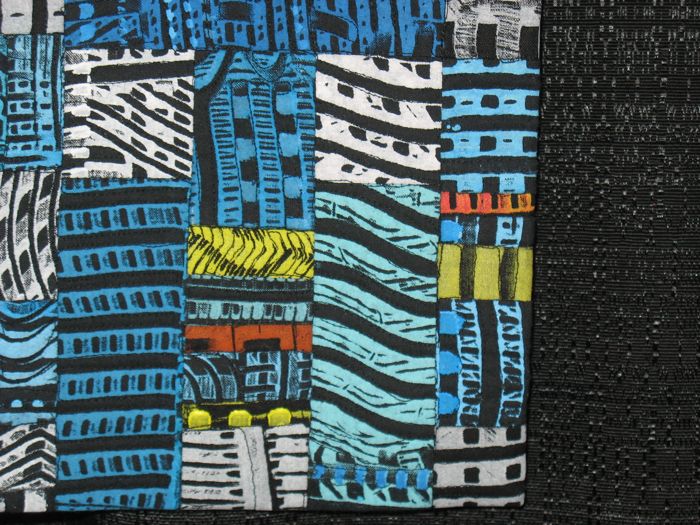
Or this one?  She printed her own designs on the fabric.  It was very interesting, quite fascinating.

This woman confronted all her forays to the vendors’ booths in My Stash at 50 (aka Log Cabin with an Attitude). Karen Eckmeier gave herself a challenge to celebrate her 50th birthday by using only fabrics from her “stash;” each block had to contain 24 different fabrics.  She also used her “layered-top stitching technique” in the construction.  This was great!


Detail of above (click to enlarge in order to see her technique).

This work, Duck and Cover by Kathy York, “references the absurd survival strategy from the 1950s for surviving an atomic bomb blast to the current crisis of the failing economy.”  I like it when quilters take on current events, interpreting them in their own fashion.

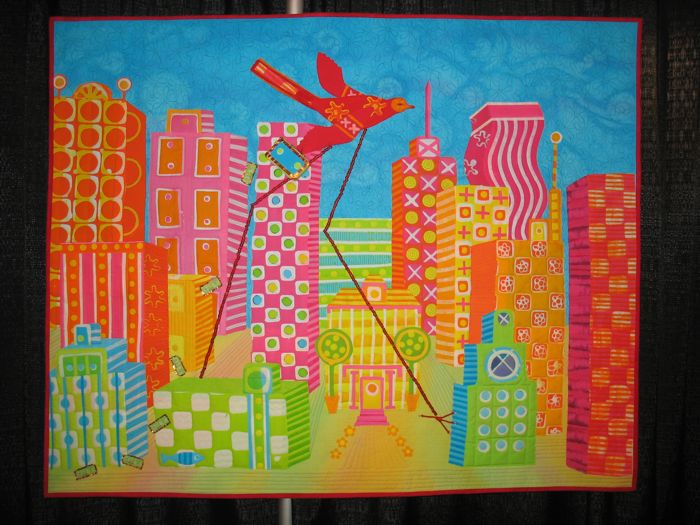
Here’s another by the same quilter: Red Legged Bird with a Tale to Tell. This is a parable of Wall Street this past year, and she writes in the notes that “the bird is a mockingbird, mocking us as we watch him get away with a suitcase full of money.”  Click to enlarge and see the money fluttering out from the escaping bird’s suitcase.

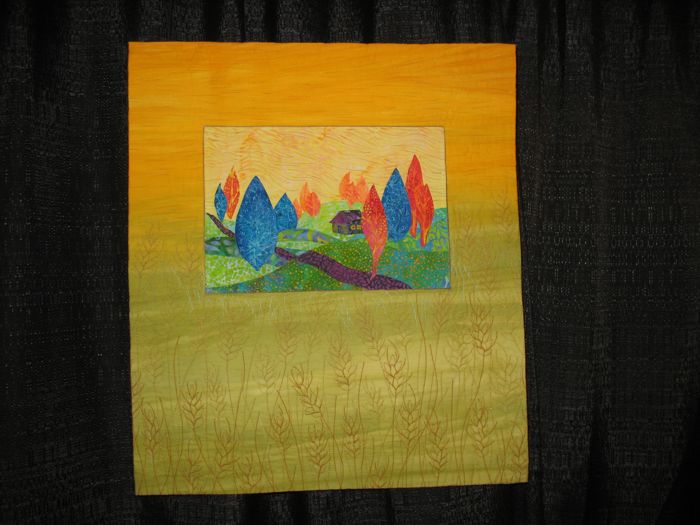
This last quilt I’ll show you was a small quilt, but a little gem.  Titled Fields of Gold and made by Sarah Ann Smith, it had lovely quilting to carry the motif out into the large border.


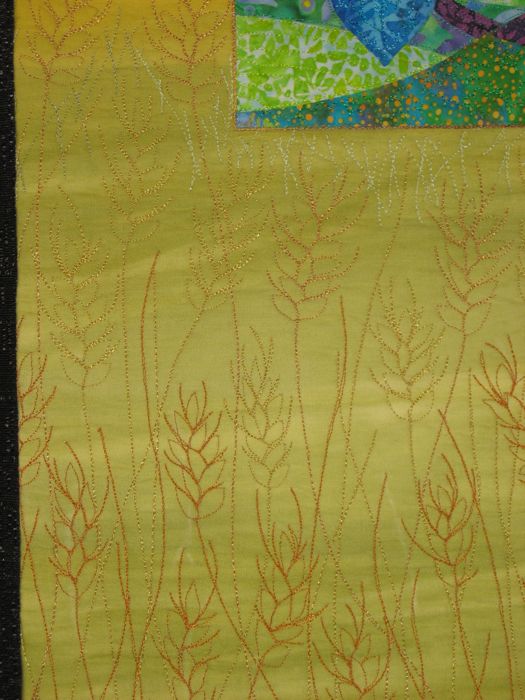
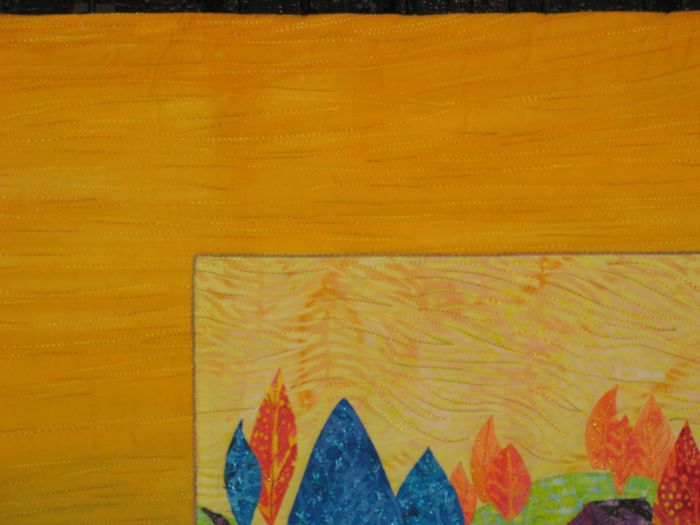
Click to enlarge if you wish to see the detail of the waving stalks of wheat or the strata of the sky (below).

All in all, I had a fun day, getting new ideas, escaping the house before I headed up to see family the next week.  Now I guess the challenge to to get all the projects all sewn up!

Quilt Shows

Long Beach Quilt Show–Old Quilts

First up at the Long Beach Show is wait.  Wait until the show opens.  I’d gotten there about 45 minutes early, and was about 12 from the front.  By the time the show opened at 10:00, the line snaked out behind me, and down the long passageways.

Second up at the Long Beach Quilt Show–go and see the people who sold me the fabric for my Provence quilt, French Connections from the Carolinas.  They also sell fabulous baskets, which I saw many women toting around all morning.  They were kind enough to pose for a photo before all the crowds arrived.

I then wandered around, browsing through vendors, looking at things to buy.  The strength of this gathering is NOT the showing of quilts, although some are interesting.  Road to California, in January, is more varied and has a juried quilt show, so I always spend a lot of time looking at things there.  This show, an off-shoot of Houston, is like all the vendors came, but not too many of the quilts.  And there always seems to be a display where we are not allowed to photograph.  So I spent the bulk of my time looking at the new ideas offered by the multiple vendors, and picked up a few sacks of treasures to bring home.

I ended up buying the kit to this quilt.  I have no idea why, other than it is very very cute and the fabric choices were right on target.  That’s all I’ll say about shopping at the vendors.

One exhibit was a selection of very old quilts.  While I was standing there admiring this vintage piece from the 1800s, a group of quilters passed by.  One said ” I don’t like these colors.” Another said, “And what’s with those borders?  How could she have chosen those?”  At this point I said, “I guess from whatever they had in the 1800s.”  They did a double take, and said, “Oh!  I didn’t know these were old quilts.”  And they moved on.

This quilt was made around 1845, and is titled Star of Stars.  The panel block prints date from 1815, and the quilt includes French and English chintz, Indiennes prints–just like my Provence quilt!

The center star was fussy cut, and really makes this old quilt pop.

So what can we learn from these early quiltmakers?  Symmetry, as found in this one, from 1870.

Pictoral borders?  I liked that each of these blocks in this quilt from around 1870 were slightly different, showing that they are truly handmade.

Cleverly placed corner blocks in the border? Good use of contrasting values?  I happened on a quilt site the other day and the woman’s quilts were very colorful and well done.  But they were all medium tones, so the overall effect was mushy.  This is anything but mushy.

And when I got up close, I think the outer quilted circle around the points might even be trapunto.

How long did it take this skilled needlewoman to applique all these leaves and vines?

Detail of above quilt.

Everything new under the sun is old, or something like that.  The use of lots of stark white in the quilt from 1850 is very much what some of our “modern quilters,” as they like to call themselves, use to bring contrast and pop to their quilts.  There appear to be three parts to the quilt world today: those who do traditional quilts using traditional methods and patterns, those who do art quilts which includes lots of free form and interesting techniques and lots of embellishment, and these modern quilters.  I like this group, thinking that it has rejuvenated quilting.  One study, oft-quoted, says the average age of a quilter now is 60 years old. If you’re striving for longevity in your industry, I’d be worried if that was the number.

However, I’d bet that the average age of the modern quilters is around 30 to 35; they are the new blood of the quilting industry, and some manufacturers are recognizing this, using the blogs these quilters maintain to reach out to new customers.  We need all three kinds of quilters, I think.

A few more of the older quilts.  Barn Raising Log Cabin, from the 1890s.

Courthouse Steps, from 1890, made of silk.  Another variant in the Log Cabin block.

Detail of above quilt.

Wild Goose Chase.  It’s the variations in the center blocks, coupled with the wild goose chase borders and strong colors that make this quilt a standout.  I like that the lower left green border seems to float.

Detail of above block, showing the casual way the quilter “matched” (or didn’t) her borders and blocks.

This center block is pretty unusual.  The value shift on the left side of the block in the geese border, appears to make the direction of the points switch directions.  While I know this is all happenstance, it’s what makes this quilt interesting to look at.  Do you think her friends criticized her borders?  I hope not.

The amount of pieced triangles in this quilt must number in the hundreds.

While I’m not sure, my impression is that the shapes in the borders are flowers and leaves–irises?

More tomorrow.