Quilt Shows

Long Beach Quilt Show–New Quilts

First the whine.

Studio Art Quilters Association had a large medium number of studio artists exhibiting their work, but alas, no photographs.  While I understand their need to “protect” their work from Evil Unscrupulous Folks, not allowing photographs is not allowing people to interact with their work in a reflective way.  Many times the lighting is so dim  that I enjoy going home to review my photographs on the computer.  I would have been happier if they’d said, “Photos allowed, but no posting to blogs or commercial uses.”  That would make more sense to me. {Note: in the comments today was an alternative: buying their catalogue (link included).  Okay, a reasonable suggestion, but I still would not have the same enjoyment in looking at their photographs as getting in close to photograph it myself and enjoy.}

Whine over.

Kathleen H. McCrady patterned her Sawtooth X quilt after an old one from 1875, using reproduction fabrics in brighter colorways.

Detail of above
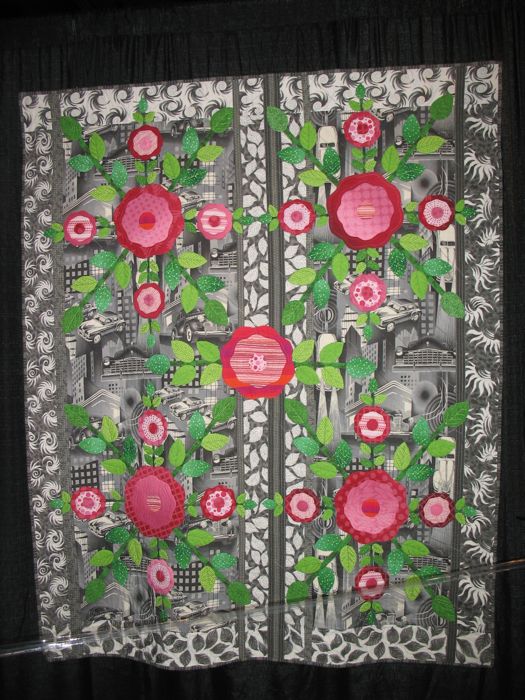
Another quilt that used the old quilts as a springboard was this one, with busy, modern fabric behind a very traditional Rose of Sharon block.
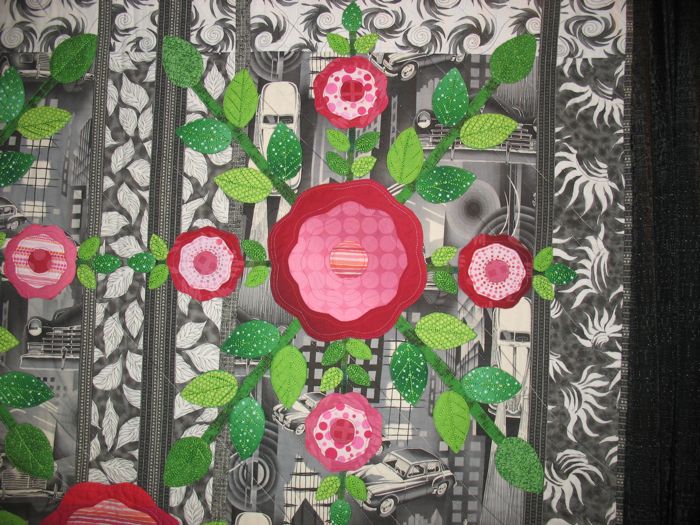
Metropolis in Bloom, detail
by Kathryn Botsford

Again, let me reiterate that this show is not strong (I think) on variety, depth and breadth of their quilt exhibit. One intriguing idea was to contact a guild and have them exhibit works by their members.  While this might be a good idea, if you’ve ever gone to a (non-juried) guild show you know you get the range of quilts from excellent to should-have-stayed-in-the-closet.  The quilt above was the only one to make the cut for this blog, although I enjoyed seeing these quilts from Canada.  Another portion of the exhibit was organized by a well-known quilter, Gyleen Fitzgerald, who worked around the theme of Trash to Treasure.  She encouraged her participants to take those miniature scraps we all toss and make a treasure out of them.  She chose to use the Pineapple Quilt Block as the criteria. I love this block so here are few that were interesting.
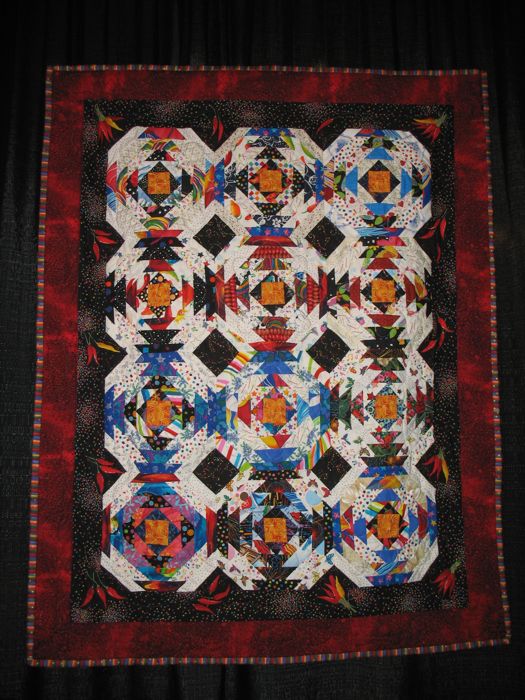
Pineapple Salsa, Too by Barbara A. Johnston.
She combined the idea of the pineapple block with her enjoyment of hot peppers for this quilt.
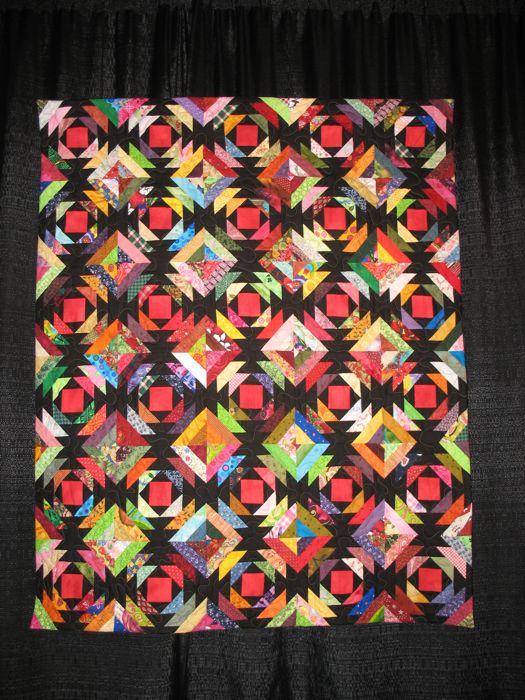

My notes are not as clear as I’d like, but I believe this is titled Chaos and Relief and is by Ann Hein. [Note: Ann has left a comment giving us more information about her quilt–thanks!]
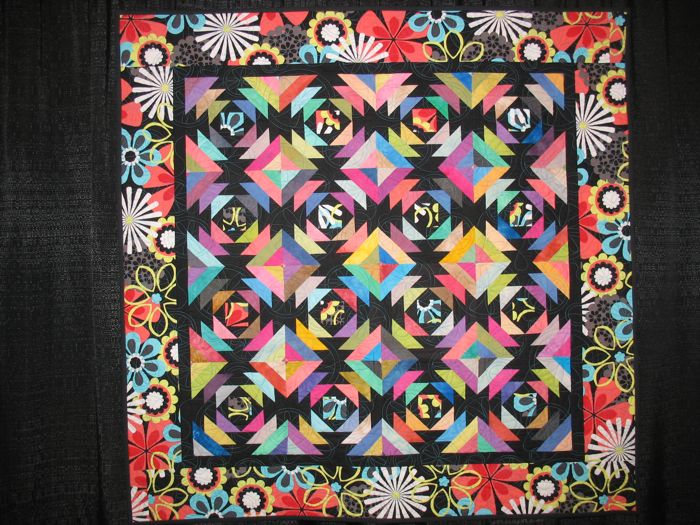
This one is Gyleen’s quilt and is called Picadilly Square, and is quilted by Beth Hanlon-Ridder.  The use of a large-scale print in the borders, and fussy cut for the centers is intriguing.  One of the vendors had this fabric and people were lined up to buy it. {In the comments, Gyleen says she didn’t fussy cut–very cool, then, how it all came out.}
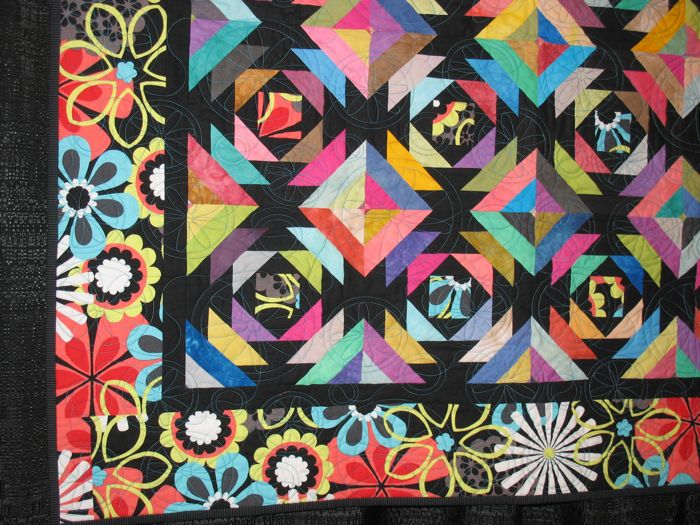
Detail of above.  I like the quilting.
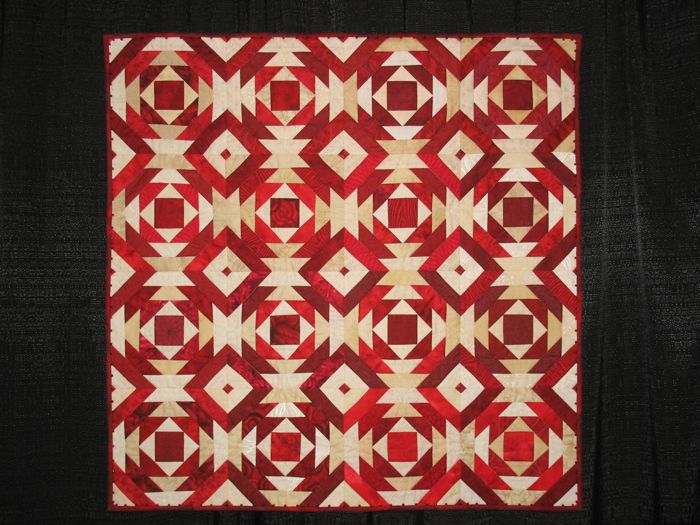

Really Red, by Charlotte Noll
She revealed in her notes that Gyleen had a “Trash to Treasure” Pineapple Tool that she used to make the quilt.  Ah, another way to market something.  I did think this was a stunning quilt.
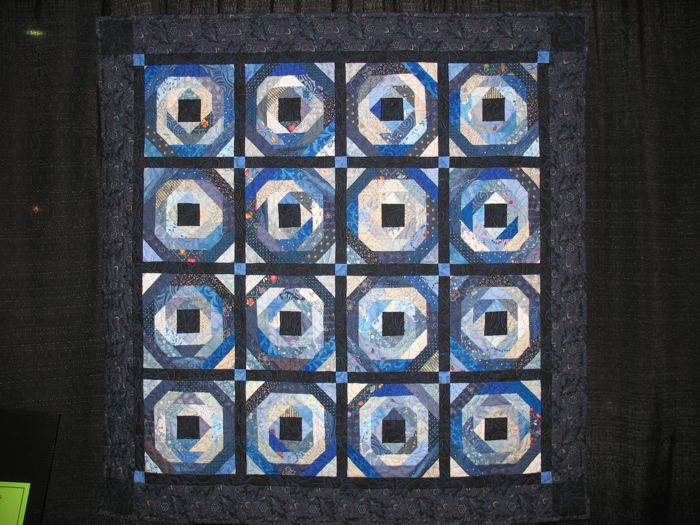

Blueberries and Pineapples . . . Yum, by Florence Gray.
A bigger pitch in her notes about the tool.  And by the way, after seeing the name of this quilt, I think some of us quilters could stand some tutoring in effective titles. I admit I sometimes struggle too.  I’ve taken to using an old quote book that I found at an estate sale, for it contains lots of bits of old verse, sayings and poetry that have inspired me. Perhaps we quilters get so tired by the end of the quilt, we take the easy way out and just make simple word associations without thinking about how those titles will play out long-term.
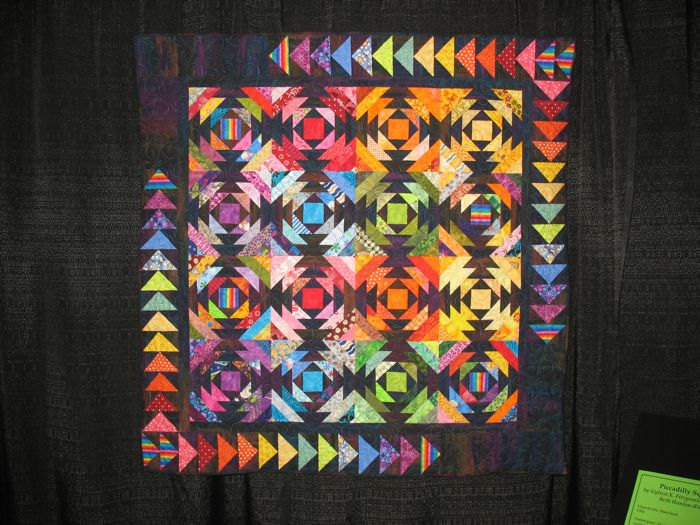
Birds Fly Over the Rainbow, by Barbara Polston, quilted by Beth Hanlon-Ridder.
Nice title.  Nice use of the flying geese block in the border.
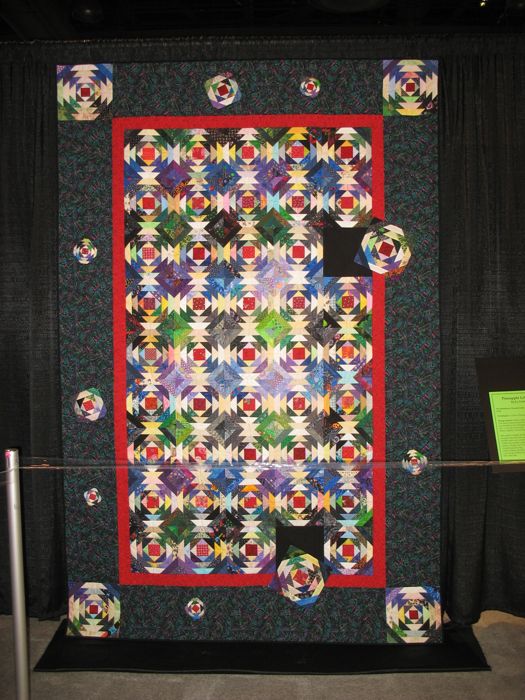
Harvesting Pineapples. . . Out of Thin Air, by Mary Jo Yackley.
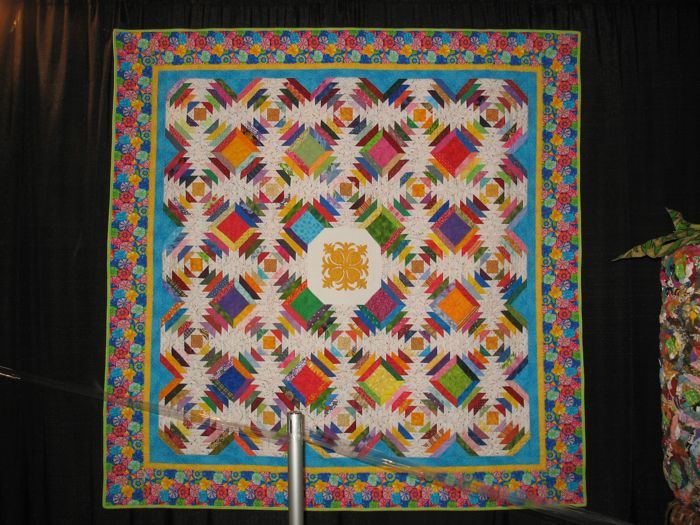

Pineapple Daiquari, by Rellajeanne Cook, quilted by Dottie Bettiker.
What makes this quilt unusual is the quilter’s pun of using a traditional Hawaiian-quilting-style center block in the middle of a pineapple quilt.
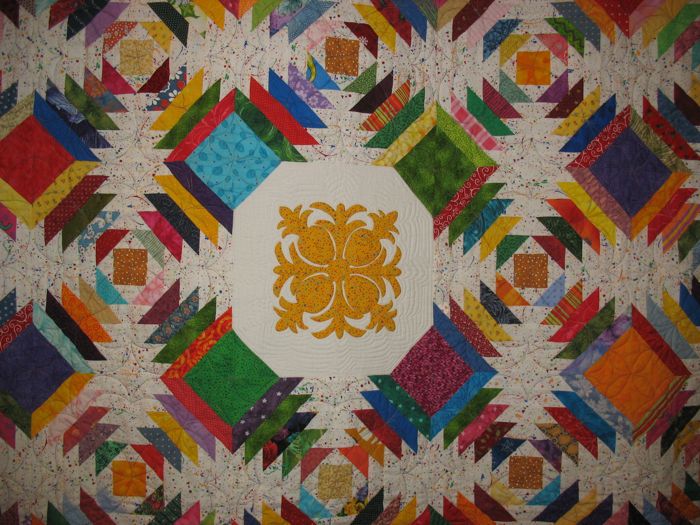

Detail of above quilt.
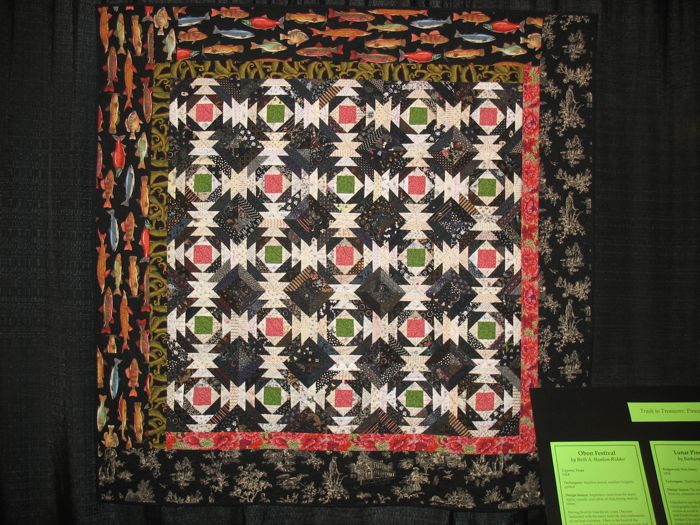

Lunar Pineapple, by Barbara Vedder.  Why the fish border?  She liked it.  Although perhaps it detracts from the quilt with its bold coloration (I would have preferred to focus in on the colorful centers than been distracted by that part of the border), I think the use of black is intriguing in the pineapple block.  Okay, end of Pineapple Block quilts.
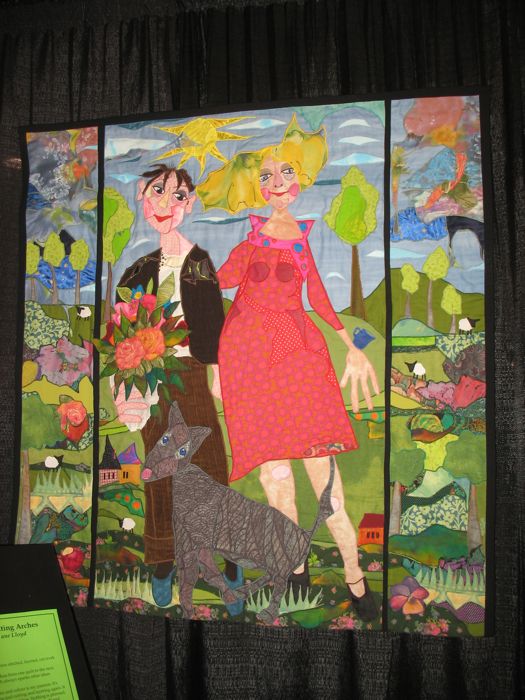

Bodil Gardner, from Denmark, memorialized a wedding day in her quilt Show me the road to Timbuktu, Take my hand and let us go.
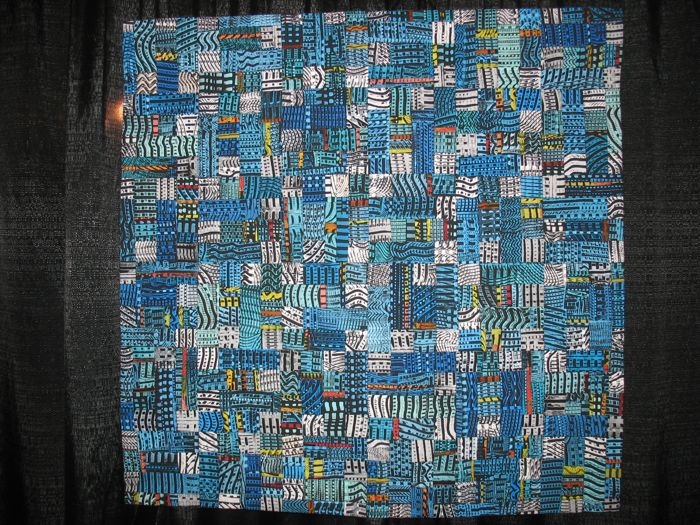

Units 9, by Benedicte Caneill is one of those quilts I admire, but know I’ll probably never do.  She used a Rail Fence block as a basis for exploring the use of “geometric units. . . [to] create an abstract cityscape composition.”  So then I tried to figure out what the basic Rail Fence unit was.
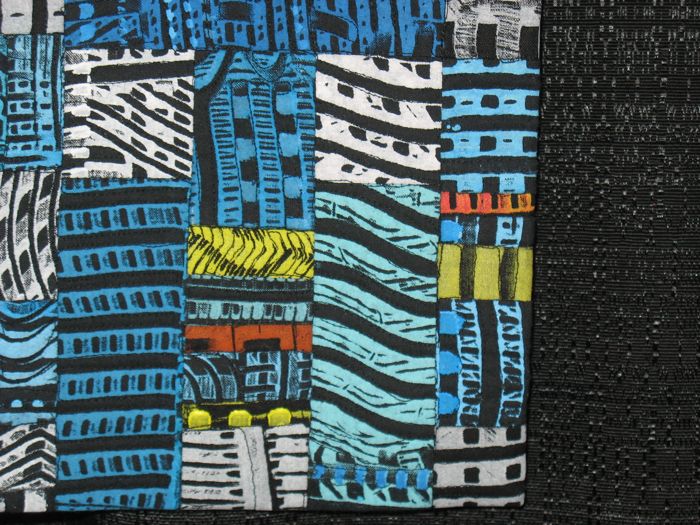

This one?
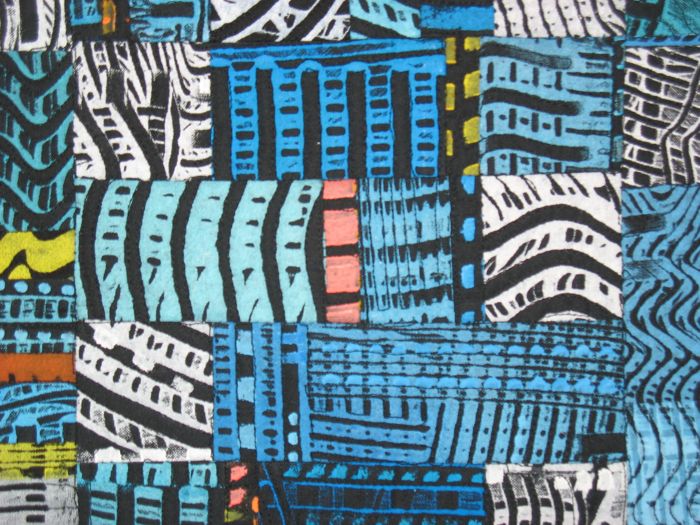
Or this one?  She printed her own designs on the fabric.  It was very interesting, quite fascinating.
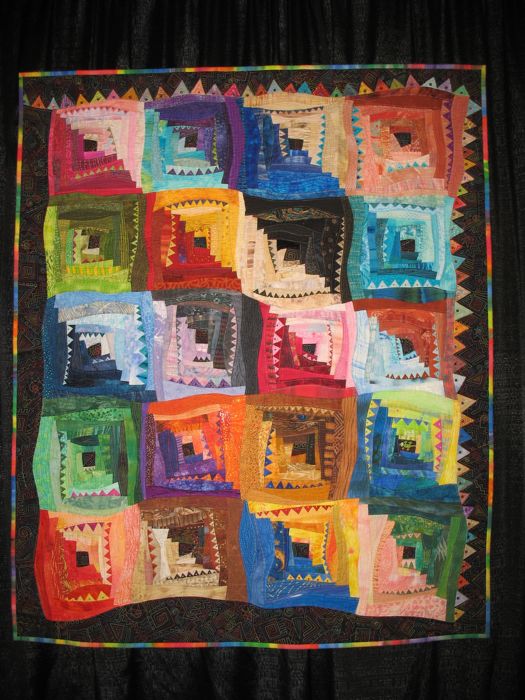
This woman confronted all her forays to the vendors’ booths in My Stash at 50 (aka Log Cabin with an Attitude). Karen Eckmeier gave herself a challenge to celebrate her 50th birthday by using only fabrics from her “stash;” each block had to contain 24 different fabrics.  She also used her “layered-top stitching technique” in the construction.  This was great!
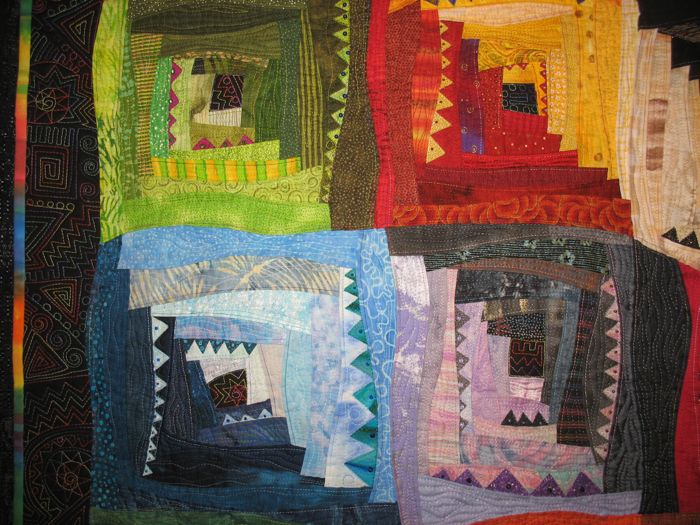

Detail of above (click to enlarge in order to see her technique).
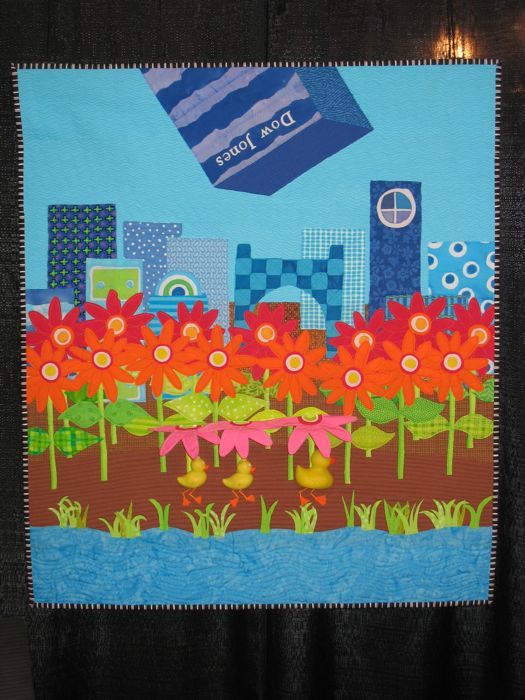
This work, Duck and Cover by Kathy York, “references the absurd survival strategy from the 1950s for surviving an atomic bomb blast to the current crisis of the failing economy.”  I like it when quilters take on current events, interpreting them in their own fashion.
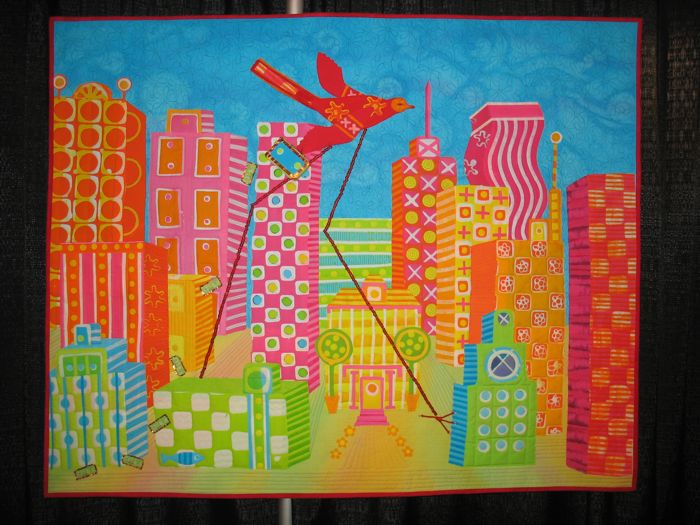
Here’s another by the same quilter: Red Legged Bird with a Tale to Tell. This is a parable of Wall Street this past year, and she writes in the notes that “the bird is a mockingbird, mocking us as we watch him get away with a suitcase full of money.”  Click to enlarge and see the money fluttering out from the escaping bird’s suitcase.
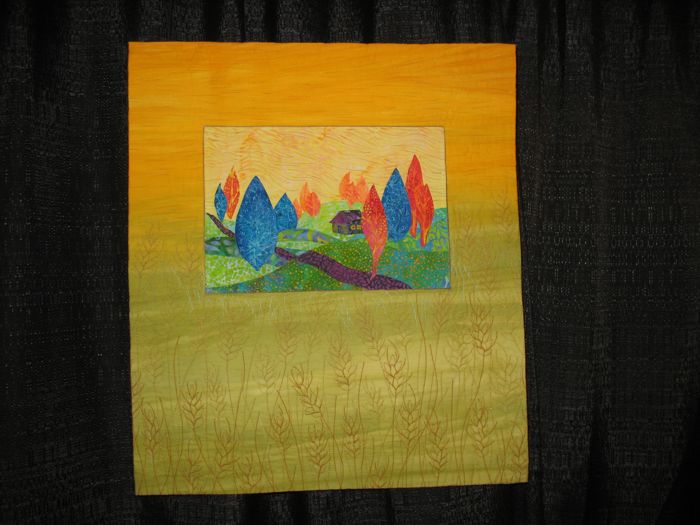
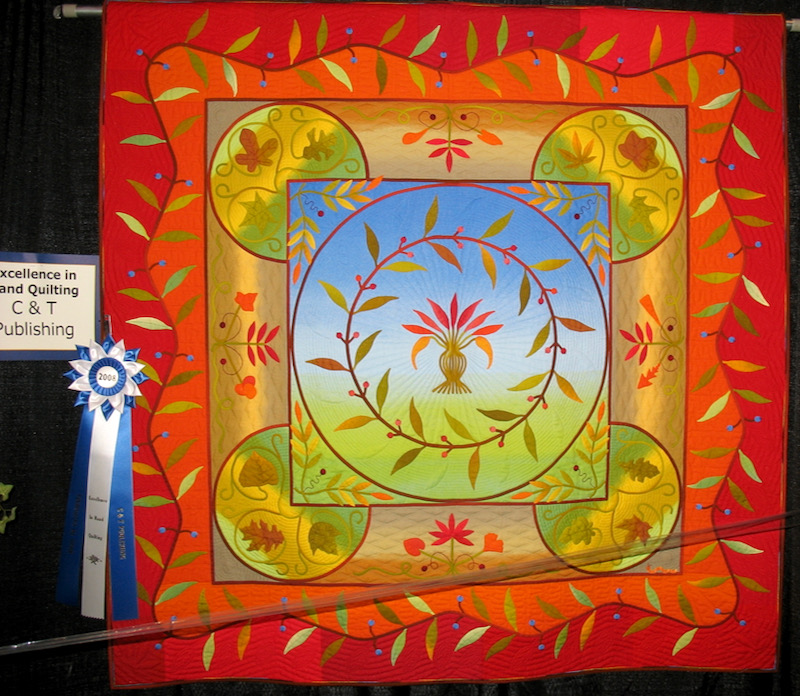
This last quilt I’ll show you was a small quilt, but a little gem.  Titled Fields of Gold and made by Sarah Ann Smith, it had lovely quilting to carry the motif out into the large border.
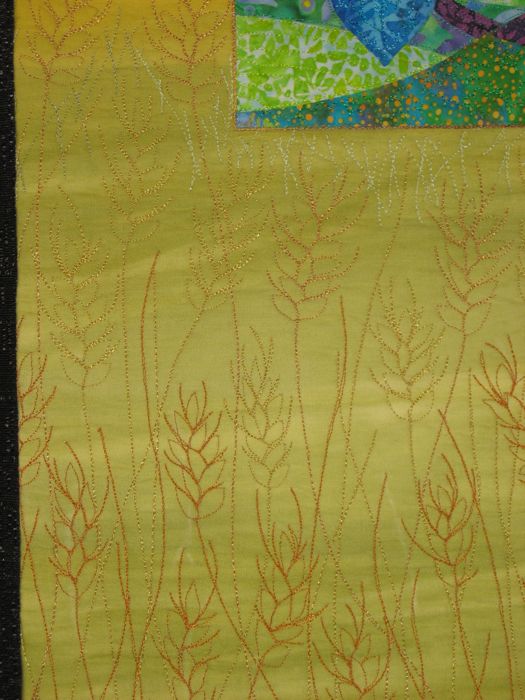

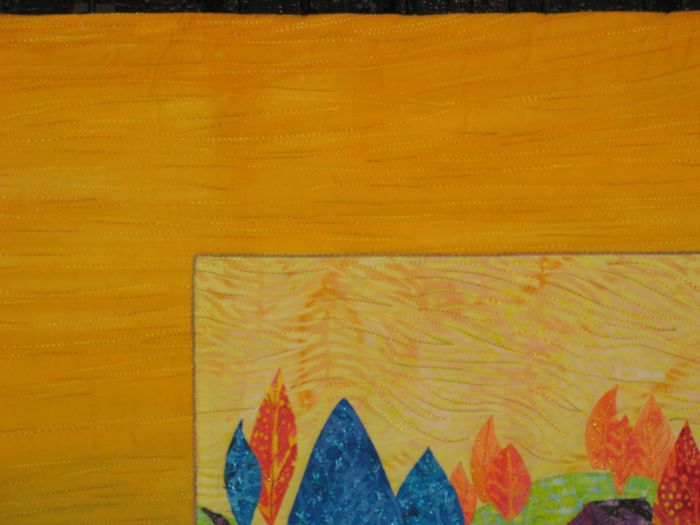
Click to enlarge if you wish to see the detail of the waving stalks of wheat or the strata of the sky (below).
All in all, I had a fun day, getting new ideas, escaping the house before I headed up to see family the next week.  Now I guess the challenge to to get all the projects all sewn up!

Quilt Shows

Long Beach Quilt Show–Old Quilts

First up at the Long Beach Show is wait.  Wait until the show opens.  I’d gotten there about 45 minutes early, and was about 12 from the front.  By the time the show opened at 10:00, the line snaked out behind me, and down the long passageways.

Second up at the Long Beach Quilt Show–go and see the people who sold me the fabric for my Provence quilt, French Connections from the Carolinas.  They also sell fabulous baskets, which I saw many women toting around all morning.  They were kind enough to pose for a photo before all the crowds arrived.

I then wandered around, browsing through vendors, looking at things to buy.  The strength of this gathering is NOT the showing of quilts, although some are interesting.  Road to California, in January, is more varied and has a juried quilt show, so I always spend a lot of time looking at things there.  This show, an off-shoot of Houston, is like all the vendors came, but not too many of the quilts.  And there always seems to be a display where we are not allowed to photograph.  So I spent the bulk of my time looking at the new ideas offered by the multiple vendors, and picked up a few sacks of treasures to bring home.

I ended up buying the kit to this quilt.  I have no idea why, other than it is very very cute and the fabric choices were right on target.  That’s all I’ll say about shopping at the vendors.

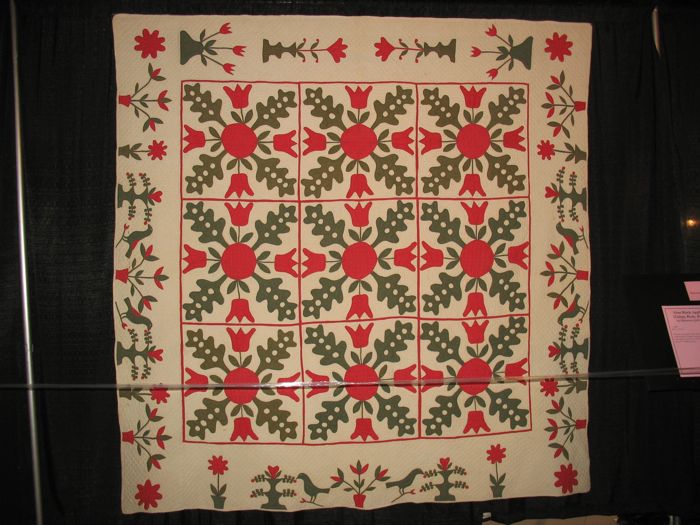
One exhibit was a selection of very old quilts.  While I was standing there admiring this vintage piece from the 1800s, a group of quilters passed by.  One said ” I don’t like these colors.” Another said, “And what’s with those borders?  How could she have chosen those?”  At this point I said, “I guess from whatever they had in the 1800s.”  They did a double take, and said, “Oh!  I didn’t know these were old quilts.”  And they moved on.
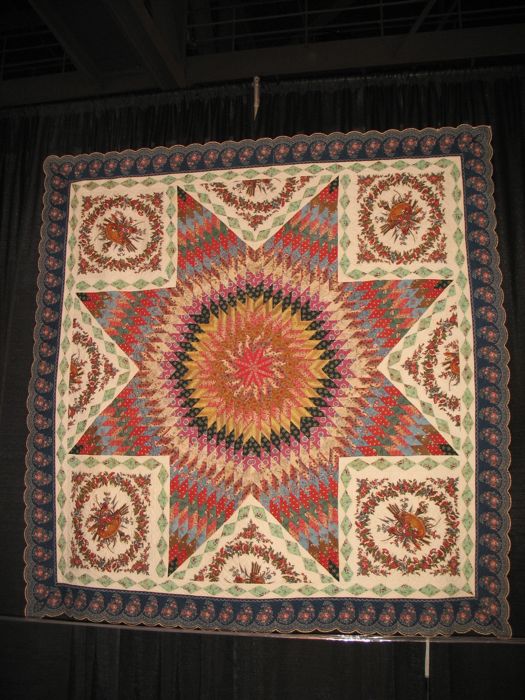
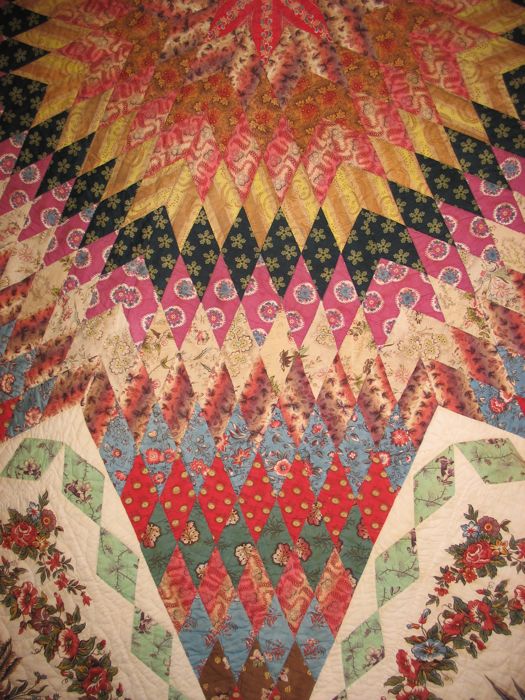
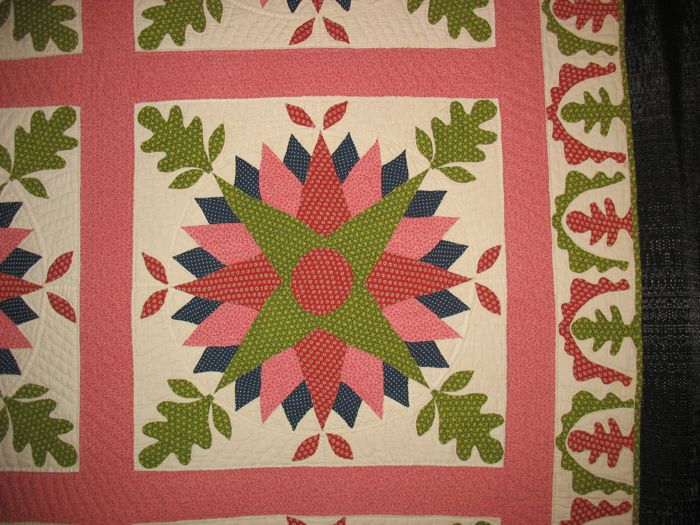
This quilt was made around 1845, and is titled Star of Stars.  The panel block prints date from 1815, and the quilt includes French and English chintz, Indiennes prints–just like my Provence quilt!

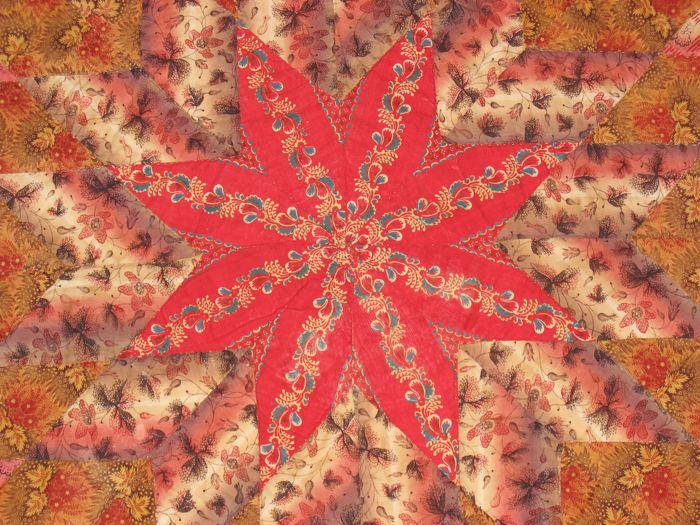
The center star was fussy cut, and really makes this old quilt pop.

So what can we learn from these early quiltmakers?  Symmetry, as found in this one, from 1870.

Pictoral borders?  I liked that each of these blocks in this quilt from around 1870 were slightly different, showing that they are truly handmade.

Cleverly placed corner blocks in the border? Good use of contrasting values?  I happened on a quilt site the other day and the woman’s quilts were very colorful and well done.  But they were all medium tones, so the overall effect was mushy.  This is anything but mushy.

And when I got up close, I think the outer quilted circle around the points might even be trapunto.

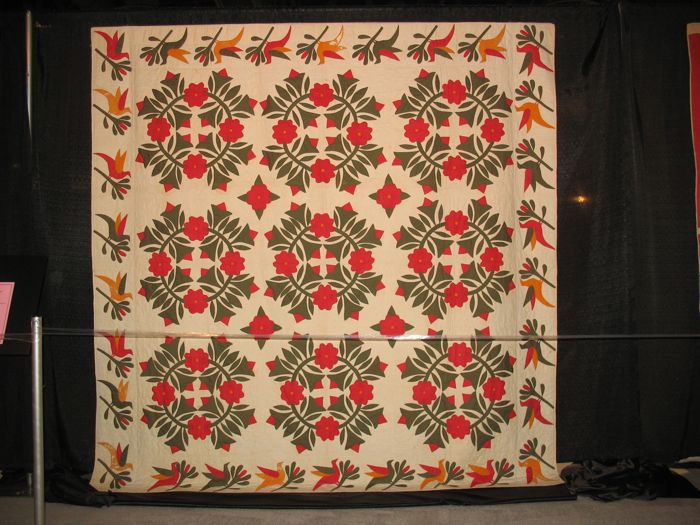
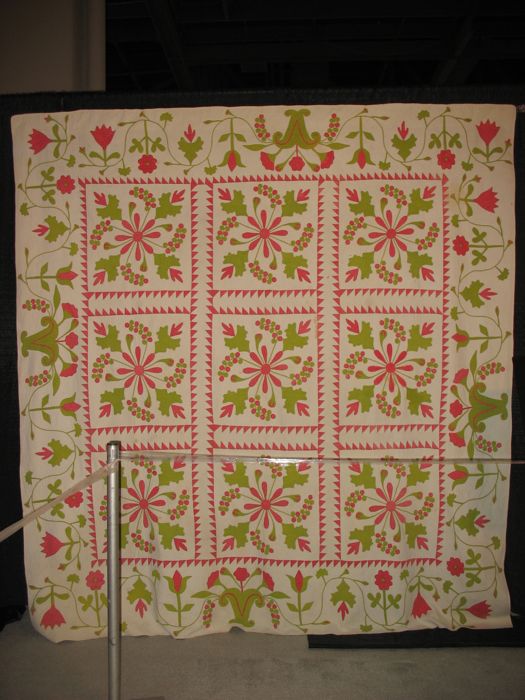
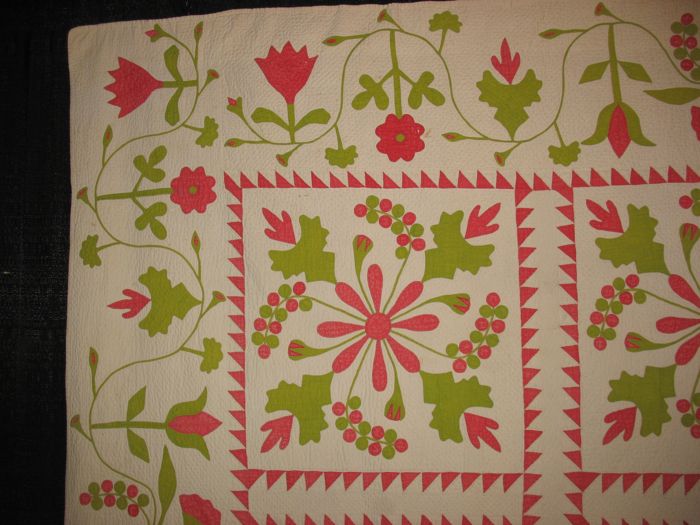
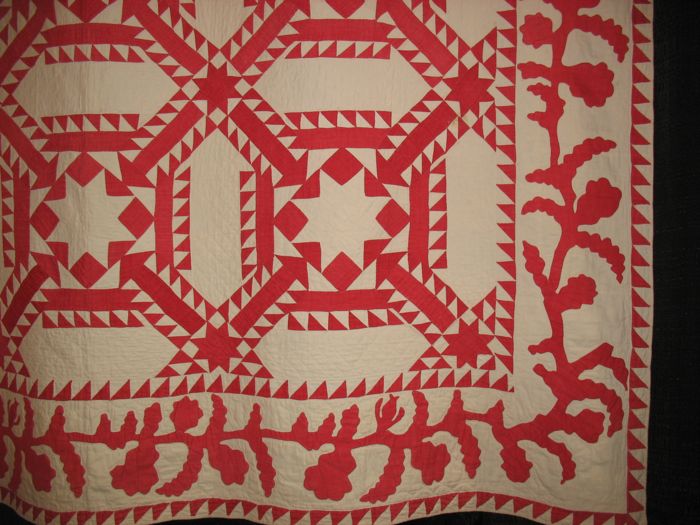
How long did it take this skilled needlewoman to applique all these leaves and vines?

Detail of above quilt.

Everything new under the sun is old, or something like that.  The use of lots of stark white in the quilt from 1850 is very much what some of our “modern quilters,” as they like to call themselves, use to bring contrast and pop to their quilts.  There appear to be three parts to the quilt world today: those who do traditional quilts using traditional methods and patterns, those who do art quilts which includes lots of free form and interesting techniques and lots of embellishment, and these modern quilters.  I like this group, thinking that it has rejuvenated quilting.  One study, oft-quoted, says the average age of a quilter now is 60 years old. If you’re striving for longevity in your industry, I’d be worried if that was the number.

However, I’d bet that the average age of the modern quilters is around 30 to 35; they are the new blood of the quilting industry, and some manufacturers are recognizing this, using the blogs these quilters maintain to reach out to new customers.  We need all three kinds of quilters, I think.

A few more of the older quilts.  Barn Raising Log Cabin, from the 1890s.

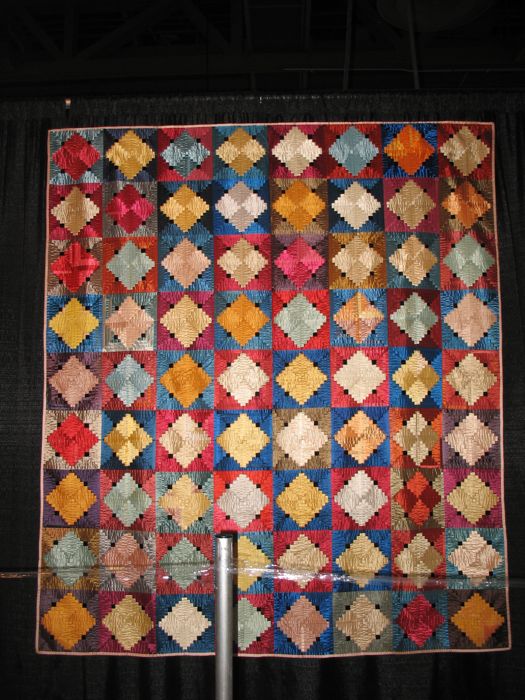
Courthouse Steps, from 1890, made of silk.  Another variant in the Log Cabin block.

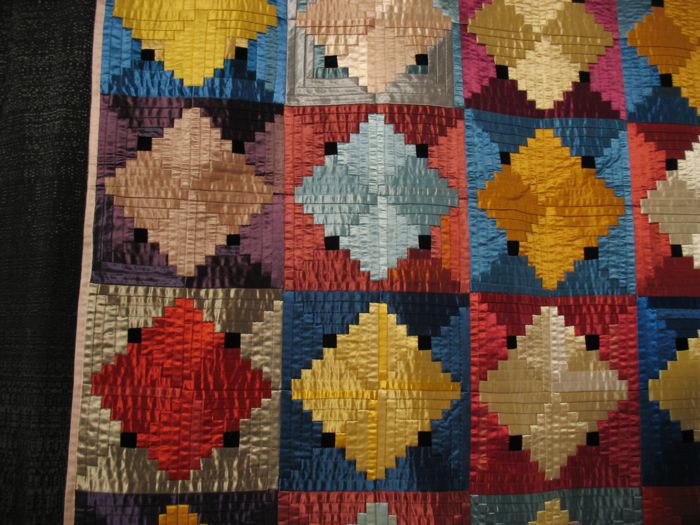
Detail of above quilt.

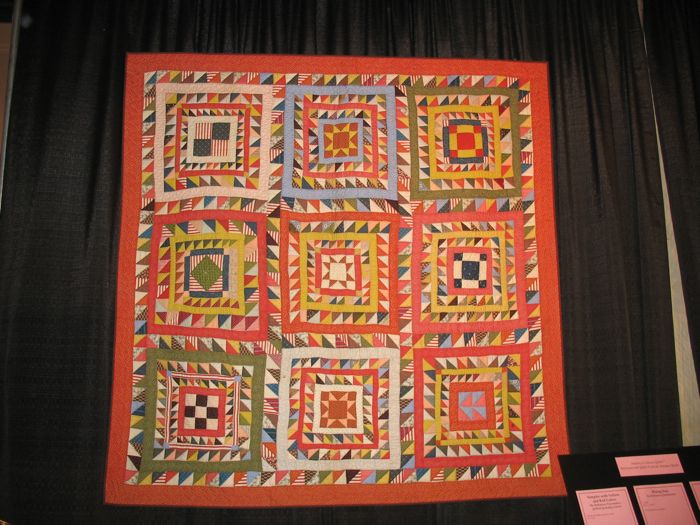
Wild Goose Chase.  It’s the variations in the center blocks, coupled with the wild goose chase borders and strong colors that make this quilt a standout.  I like that the lower left green border seems to float.

Detail of above block, showing the casual way the quilter “matched” (or didn’t) her borders and blocks.

This center block is pretty unusual.  The value shift on the left side of the block in the geese border, appears to make the direction of the points switch directions.  While I know this is all happenstance, it’s what makes this quilt interesting to look at.  Do you think her friends criticized her borders?  I hope not.

The amount of pieced triangles in this quilt must number in the hundreds.

While I’m not sure, my impression is that the shapes in the borders are flowers and leaves–irises?

More tomorrow.

Quilt Shows

Road to California 2010

This was my tenth appearance at the Road to California Quilt Show, held in Ontario California. I have entered in the past, but haven’t since grad school, lacking either the time or the interest.

But there’s also this nagging suspicion that my quilts may not measure up, given the direction that quilting seems to be going. So when I come to the show, I come with a critical eye, trying to identify trends. Or fads (such as crystals). One trend is in the quilting. Not just the single line of thread tracing around a patch or creating a feather, but Quilting As The Star.

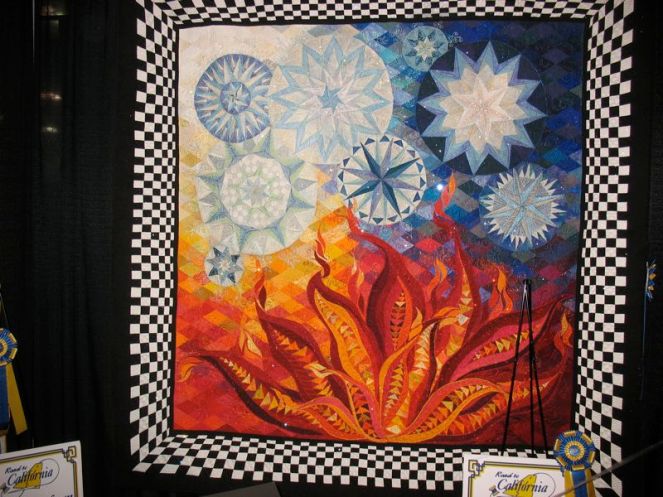
Fire and Ice, by Claudia Pfeil of Krefeld, Germany.

This quilt typifies that, with its narrowly spaced lines of thread (don’t even get me started on why we quilters need to use certain types of thread), decorative jewels, sequins, crystals adding to the main pieced design. There are quilted flames shooting off the appliqued fabric flames, and tightly scrolled quilting suppressing certain areas of the quilt in order to create a sort of trapunto effect. The whole quilt is layer upon layer on texture, color, design.

While I think the above quilt is beautiful, I think this trend has gotten out of hand. In the early 1990s I entered a large bed-sized quilt (quilts are not identified anymore as “bed quilts,” that idea having faded as it seems the main thrust of quilting now is about art, design and its decorative function); this quilt was evaluated by a team of three judges as it was a juried show. No noticeable faults with my piecing or design, but one judge scrawled, “Not enough quilting.”

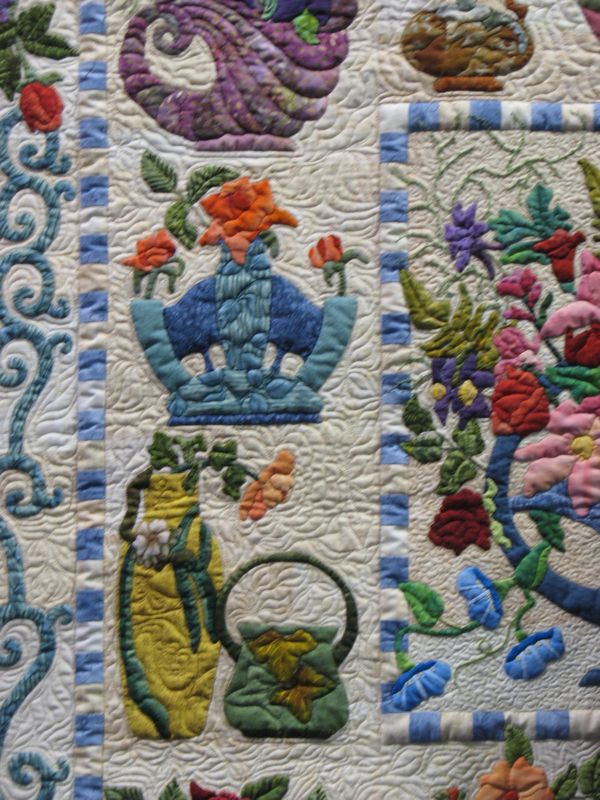
I think that was the year that two quilts were exhibited at the back of the hall, covered in heavily quilted design and crystals for accent. Multi-colored threads outlined feathers, swirls, circles, and a dragon (if I remember correctly). We were in awe. We all had a crush on this new boy in town. Now the heavily quilted are at the front of the hall, strutting their stuff and this influence has had some unfortunate effects, I think. Case in point is the quilt below.

In this first picture, the appliquéd vases and flowers of baskets have the full stage, but upon closer (blurry, my apologies) inspection–

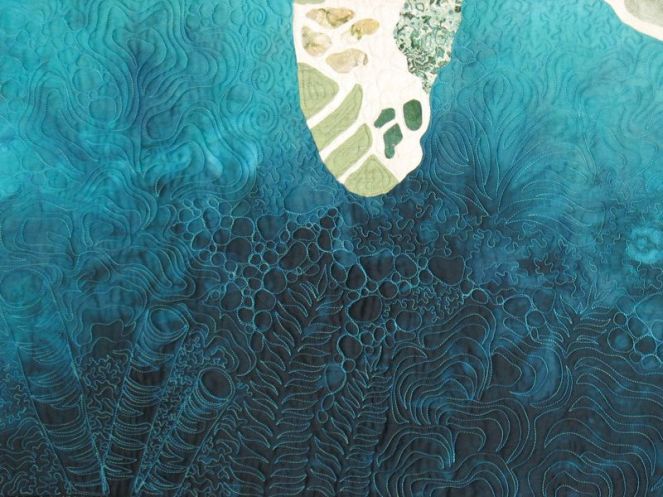
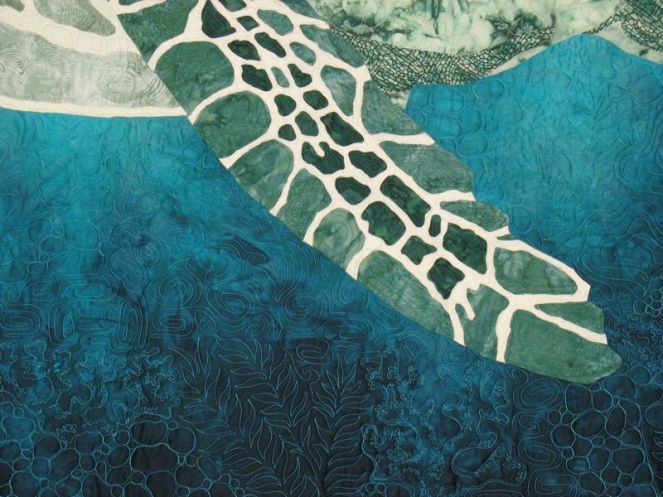
Hawaiian Green Sea Turtle, by Cheryl Spalding of Portland, Oregon; Quilted by Karen Saltzberg

The quilting really works in this quilt, and it is used to bring out the texture of the turtle and the motion of the water. The quilting complements what is going on in the design, instead of competing or obscuring it.

Here are some that caught my (untrained) eye.

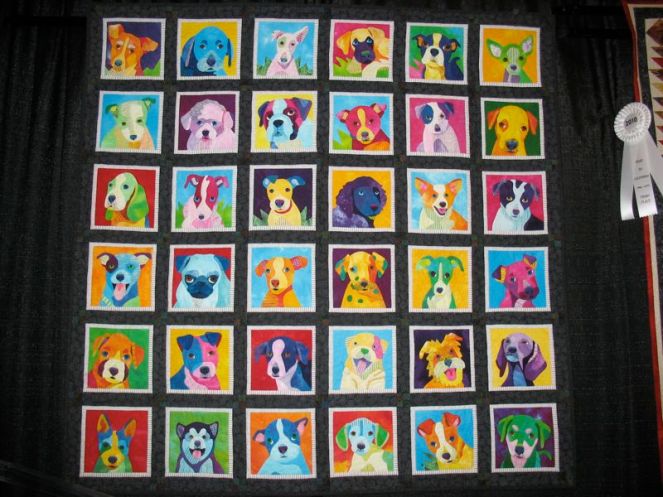
Pup Art, by Nancy S. Brown of Oakland, California

Christmas Chickadee, by David M. Taylor of Steamboat Springs, Colorado. The inclusion of the Christmas tree light elevates it from a simple nature scene into a conversation.

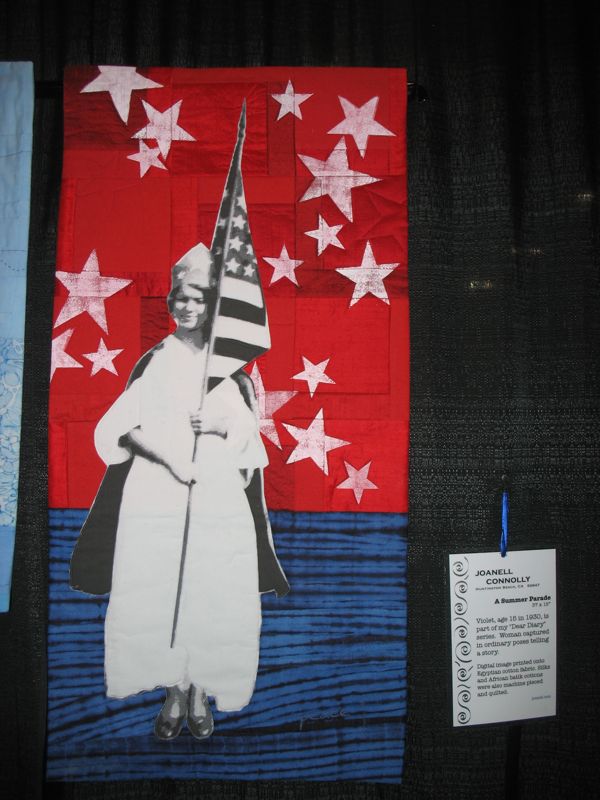
A Summer Parade, by Joanell Connolly of Huntington Beach, California

The Moment of Inspiration, by Sandy Curran of Newport News, Virginia. Hitchcock keeping an eye on these birds was what pulled me in, but I also liked the reference to the film by the inclusion of “sprocket holes” on the side of the quilt.

Memories of Monet, by Joen Wolfrom
Joen Wolfrom’s quilt works well on so many levels. It’s the first I’ve seen of hers in many years. She’d stopped quilting for a while when her hand was injured in a dog attack.

Colors Unfurled, aka, If Betsy Ross Had My Stash, by Maria C. Shell of Anchorage, Alaska
Great use of quilting blocks and traditional motifs to create a flag. Depictions of the flag in red, white and blue are found a lot at quilt shows (we’re a patriotic bunch, I guess) but this one, with its brights and bolds was a real stunner. It’s huge, probably 9 feet long by 5 feet tall.

Love the paper doll blocks, swimming fish, flags–this quilt has everything!

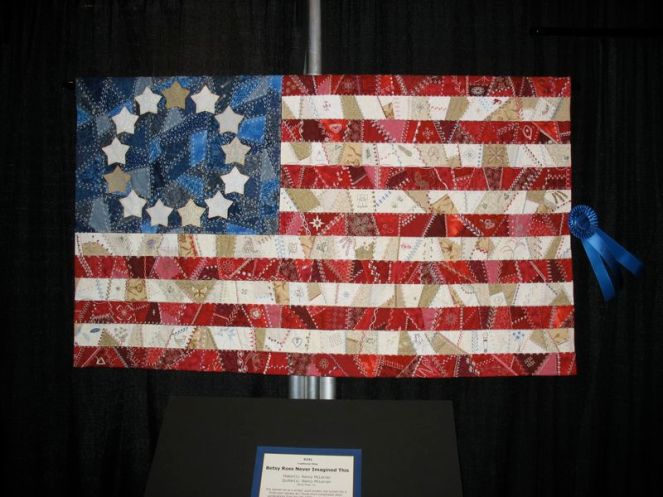
Betsy Ross Never Imagined This, by Nancy McLerran of Santa Rosa, California. A crazy-quilt version of the flag. This is a new idea as well, as most depictions are traditionally pieced.

Play Dead (Guns Kill Children), by Janice Pennington of San Diego, California; Quilted by Laurie Daniells.
Nostalgic fabrics, reproductions of designs from earlier days, are used in a quilt that makes a statement against handgun violence.

Enjoy these for now. I’ll try to get a few more posted later.

Quilt Shows

Road to California 2008

I was bedazzled by the quilts, the shopping, and low on energy this year, so I apologize–I didn’t write down the makers of the quilts. None of these are mine, and some may be found on the website for the quilt conference . They usually post the winners as well as put out a CD for purchase.

I focused my camera a lot on the quilting this go-round, interested to see if the quilters escaped the “stipple jail” and broke out some new patterns, new ways of filling in background. I also tried to find the new, different and interesting as I feel my quilting could benefit from a fresh way of looking at things.

The quilt on the left uses black tulle for an interesting effect. The snippets of fabric are layered in, then covered with a veil of tulle and quilted. More bright dabs of colors were laid over that and quilted down, creating an interesting foreground-background effect.

A faculty exhibit? The quilter depicts scenes from Australia in an interesting way.

The colors of this appliqué quilt are not the least bit traditional.
We both liked the quilt as it said “hot chocolate, good movie and a quiet night,” of course, while cuddled up in this.
How can someone not be drawn to this razzle-dazzle quilt?

A woman made this quilt in honor of her husband’s car and their road trip. The quilt docent was enthusiastically lifting it up to show everyone the back. After admiring it, we walked around the corner. I guess that last time she was a little too enthusiastic, as a series of quilts and frames and drapes came tumbling down. I looked over and she was standing there, still holding the corner of the quilt, looking shell-shocked. Many tried to help, but the show officials came and made it right.

Cinque Terre–one of the places Dave and I want to go to in Italy.
This orangey quilt vibrated right off the wall–the use of the cool blues and greens really made it pop.

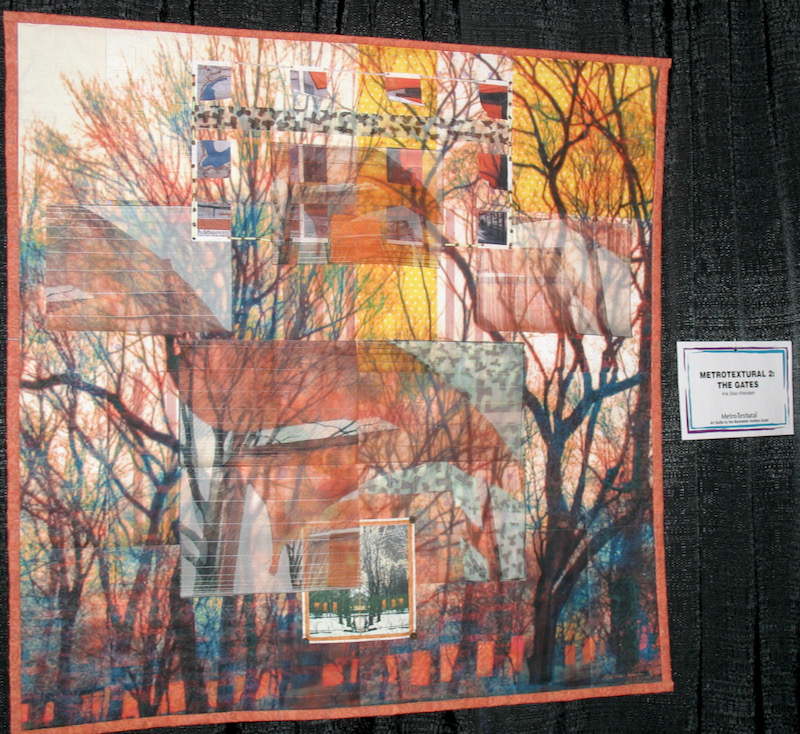
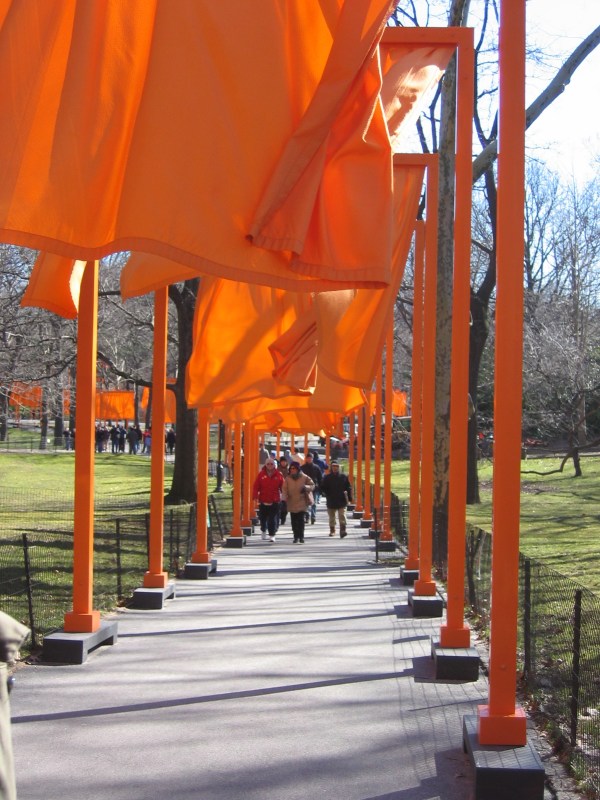
Dave and I had been to see Cristo’s The Gates in 2005 in New York City’s Central Park. They had a quilt there that responded to that amazing art installation.

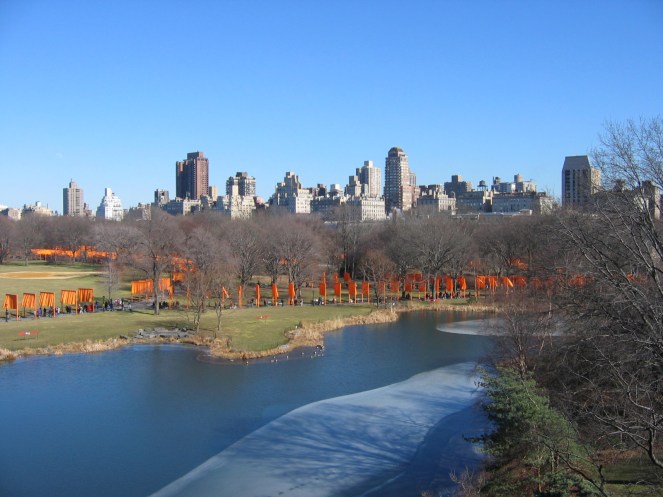
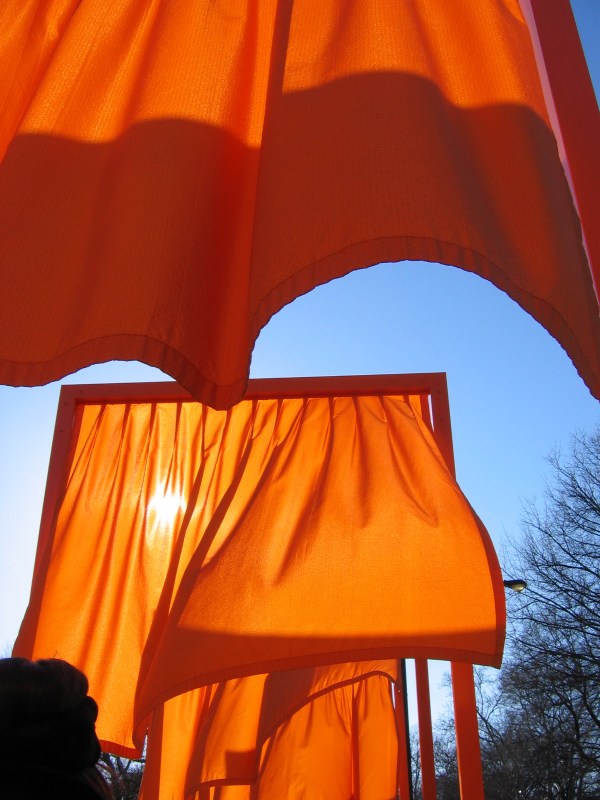
Okay, here’s some more shots we took of The Gates–can’t resist.

Now, back to the quilt show.

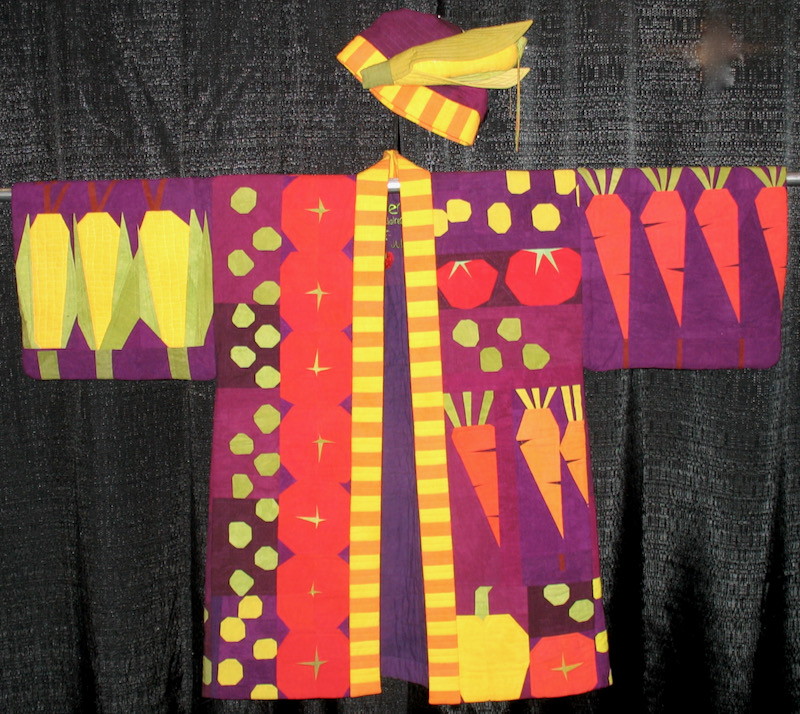
If I had this, I’d wear it everywhere. Maybe.

There was a special exhibit there about antique aprons–very fun.

The end!