European Patchwork Meeting · Quilt Shows · Quilts

European Patchwork Meeting • September 2017

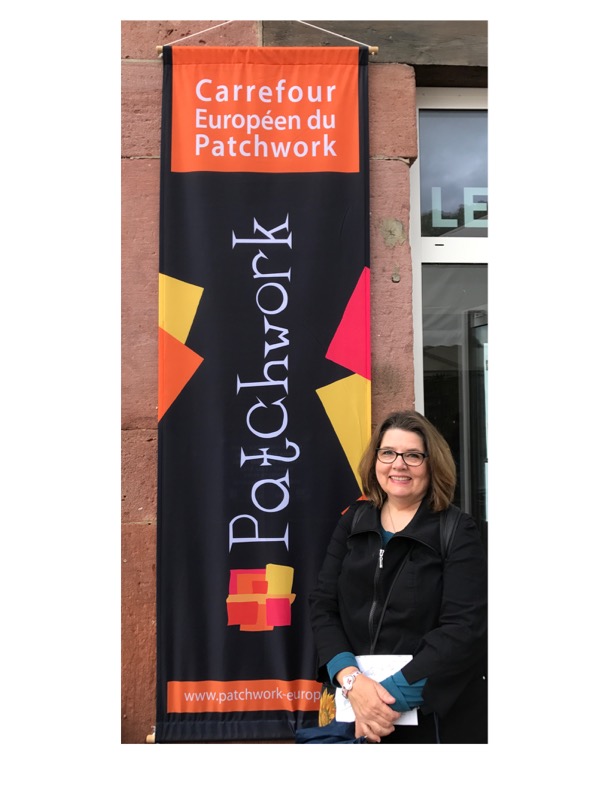
European Patchwork Meeting Banner

All posts in order are on the European Patchwork (Carrefour) page (both years listed).

When my husband had the chance to work again in Geneva, France and we found out the European Patchwork Meeting was the same weekend, we made plans to drive up to France to attend.  I have several posts about this, so it will be a bit comprehensive, as it was an experience that was unique in many ways, but familiar as well.  The bits of a quilt show (as we call it in the United States) are a big convention center, filled one-half with the quilt show and one-half with the vendors.  We are used to certain fabrics and know the prices of things and pretty much know how the quilt show part is run, too.

The name of this is the 23rd Carrefour European Patchwork Meeting, and as Sally S., an astute reader pointed out, “The word [Carrefour] means crossroads in French and is a reference to the fact that the show is at the centre of Europe, literally where France, Germany and Switzerland meet, and also I suppose where European quilters meet. It’s also the place where the Amish found themselves figuratively at a crossroads, many of them deciding to follow their leader to a new life in America.”  Their website has many of the particulars, and I trolled their Instagram feed for weeks before coming.

Roxanne and ESE

How did I find out about this?  The lovely Roxanne.  Here we are before we headed out one day (I am terrible at selfies).  I’d met her last year in the Manor Dept. Store in Geneva, and we’ve corresponded ever since.

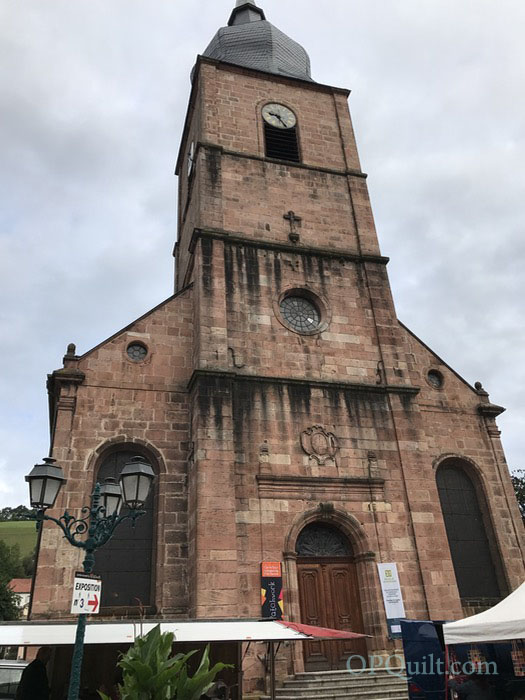
The Patchwork Meeting was about 4 hours from Geneva, so my husband and I drove most of the way, breaking our journey in Mulhouse, France, where we stayed overnight.  We drove the rest of the way Saturday morning and arrived in St. Marie-aux-Mines about 9:10 a.m. [Roxanne and her husband went separately.] We were so early, we found a great parking place.  Above are scenes from the village.  It rained off and on that day, which was too bad for the vendors, but we did our part (insofar as my suitcase could accommodate–see next post).
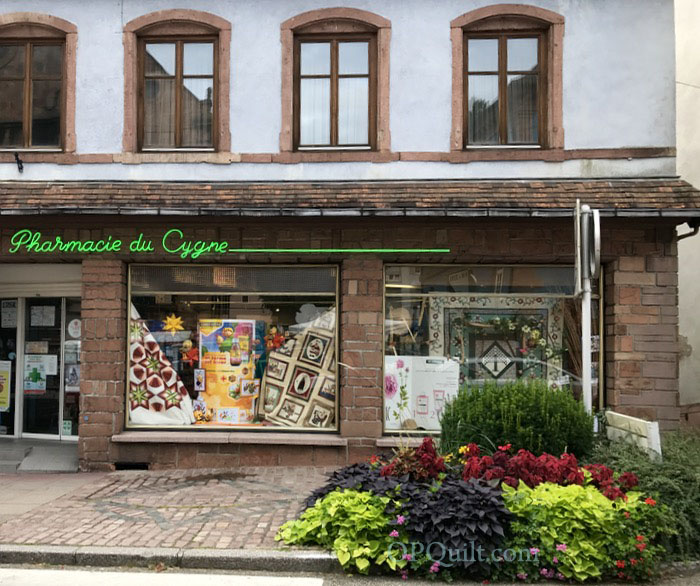
The whole town put out the welcoming carpet, with quilts hanging in shop windows, little pop-up shops in various places, food for sale, and in front of many venues, local & regional shops would bring their items for sale: breads, leather goods, flowers, souvenir items.  It’s a very festive feeling!

Europatchwork Sites
from here

The Patchwork Meeting is in four separate villages:
Sainte Marie-aux-Mines (main)
Sainte Croix-aux-Mines
Liepvre
Rombach-Le-Franc

These four towns are in the Val d’Argent region (silver mining was the early mainstay industry), which is also where the our American Amish had their beginnings, so there is always an Amish display, apparently, in each show.  I’ve been putting up some teasers on Instagram, but wanted to save the quilts for this space, as I can go slower and write more about the exhibit.

My planned posts are (I’m listing them here so I can link them):
European Patchwork Meeting Overview (this post)
Vendors and What I Purchased
European Patchwork Meeting International Contest Winners
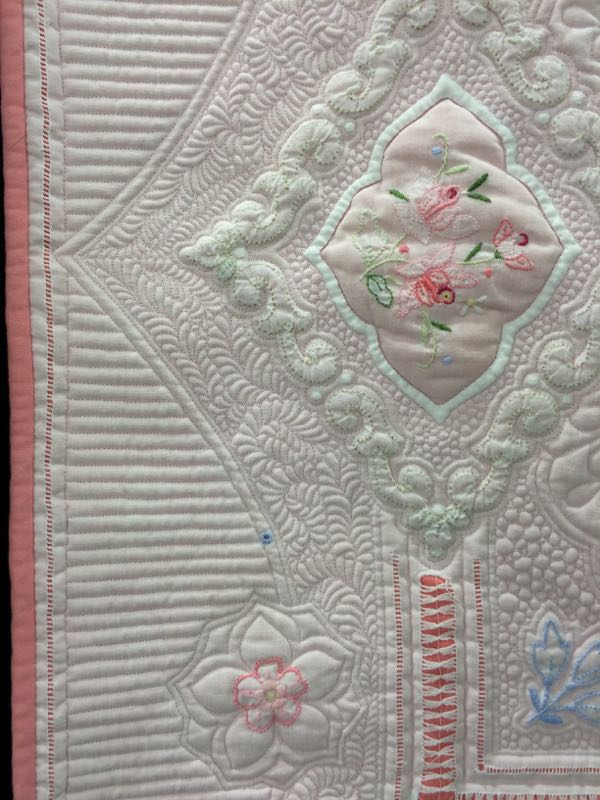
Lea Stansal’s Embellishment Embroideries & Mary Koval’s Antique Quilts
Gabriel Paquin: Design and Graphics
Quilt National Contemporary Quilts
Luke Haynes/Ian Berry/Nancy Crow/Mirjam Pet-Jacobs
SAQA Canada: Art Quilt Exhibition
Final Post: Amish Quilts, ValPatch (quilt guild from this area), Beauville, Andree Leblanc’s Log Cabin creations/various, Patchwork Guilde–Germany/various

EuroPatchworkMtg 2017_1
Woman in traditional Alsace costume

I think that about (un)covers it!
Quilt Shows

Road to California Quilt Show, 2017

road2ca_unknown

The Road to California Quilt Show was held this past weekend, and I think it was my 22nd year of going…or something like that.  The highlights for the first day are found on my Instagram Account ( as well as some found in #roadtocalifornia2017), but here are quilts that I didn’t post up.  road2ca_unknown2

This was the gallery for the Art Abstract quilts, and yes.  They were abstract.  Sometimes it’s helpful just to see how they are laid out.
road2ca2017_jeanimpey_benito

I liked the collage effect of this one by Jean Impey, titled Ernestine Benito.  It was started in a class with Susan Carlson, using “Susan’s collage techniques as well as some ‘reckless and raw edge’ appliqué and India Inks.”road2ca2017_jeanimpey

Jean Impey also made Dance in the Wind, started in a class with another teacher who “taught me how to look at something and abstract it, to see things in different colors.”road2ca2017_hahn

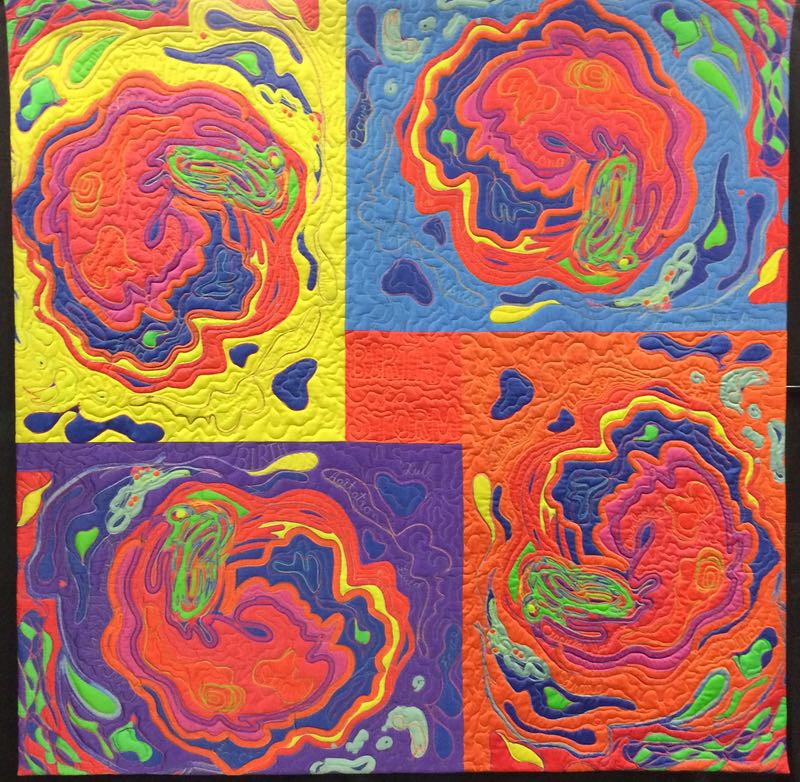
Birth of a Storm is by Betty Hahn, who used the “color and movement of the Doppler radar forecasts of tropical storms” as her inspiration.road2ca2017_beach

Orange You Glad I Got the Blues? is by Mel Beach, representing the “influence of improvisation within Jazz music.road2ca2017_blairknight

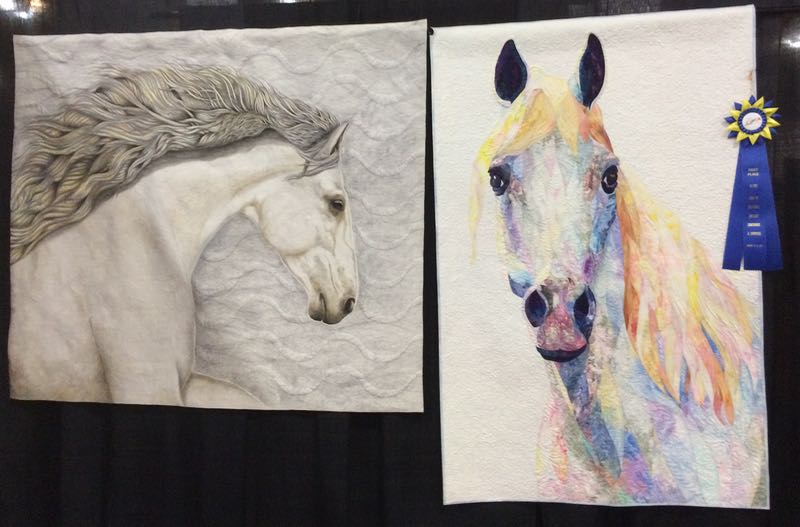
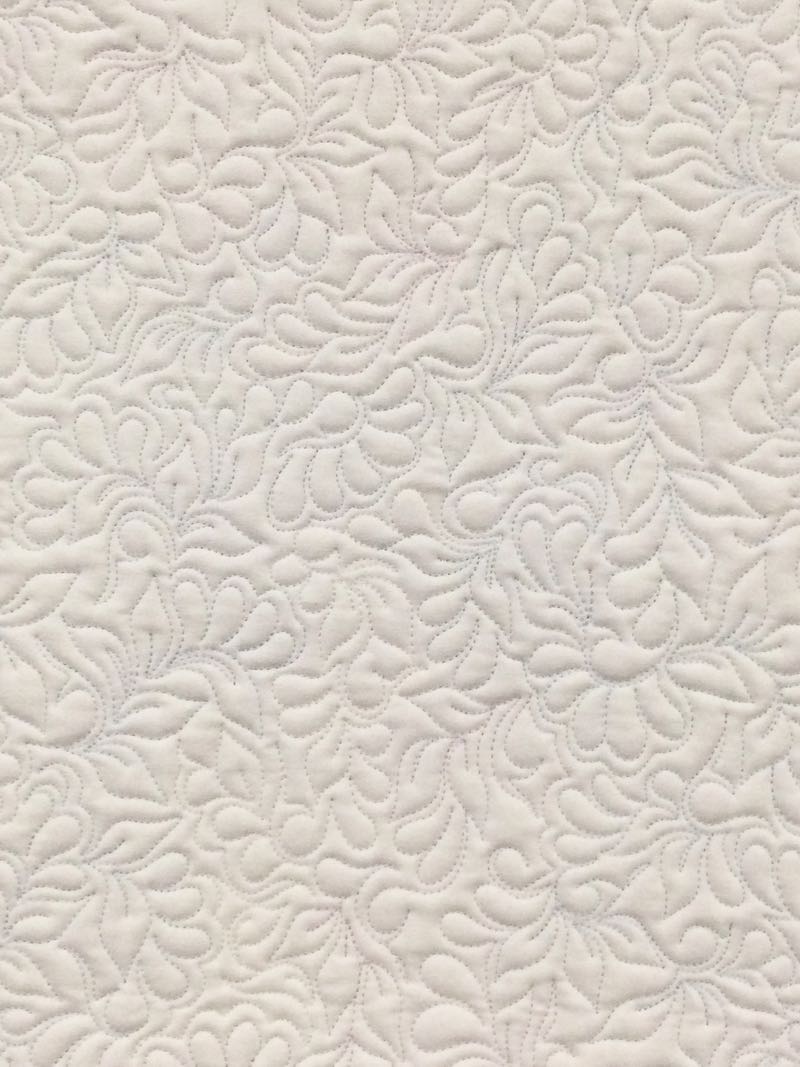
The tape keeping people out was placed too far out this year, so the only way I could photograph these horses was side-by-side.  The one on the left is White Knight, by Patt Blair.  The one on the right is Wendy Knight’s Here’s Looking’ at You.  I was mesmerized by her quilting, shown in the next images.
road2ca2017_knight_1 road2ca2017_knight_2 road2ca2017_knight_3 road2ca2017_cynthiaengland

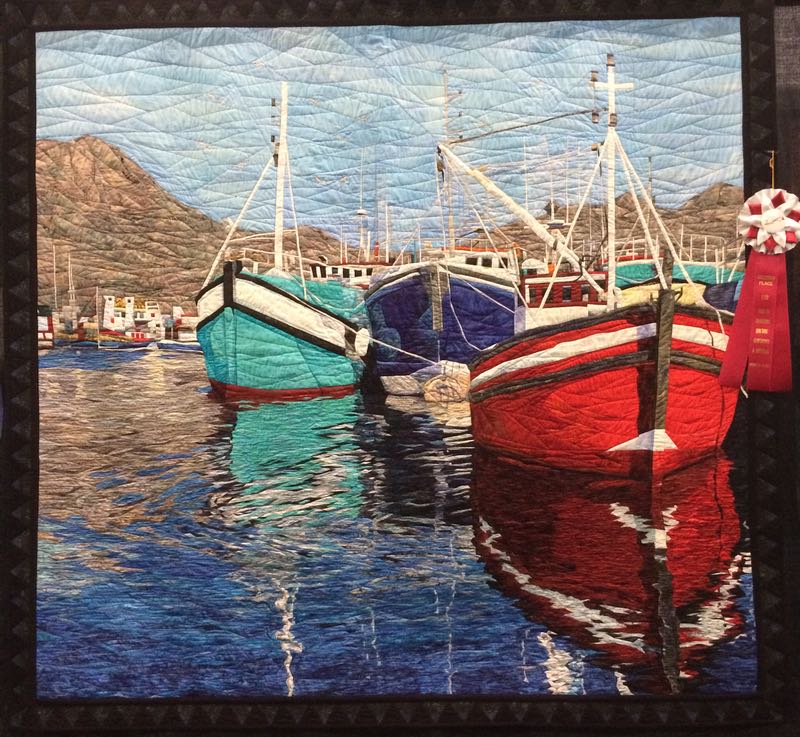
Cynthia England’s Reflections of Cape Town took a year to make and has about 8400 individual pattern pieces in it.  Detail of this is below.road2ca2017_england_2 road2ca2017_bianchi_1

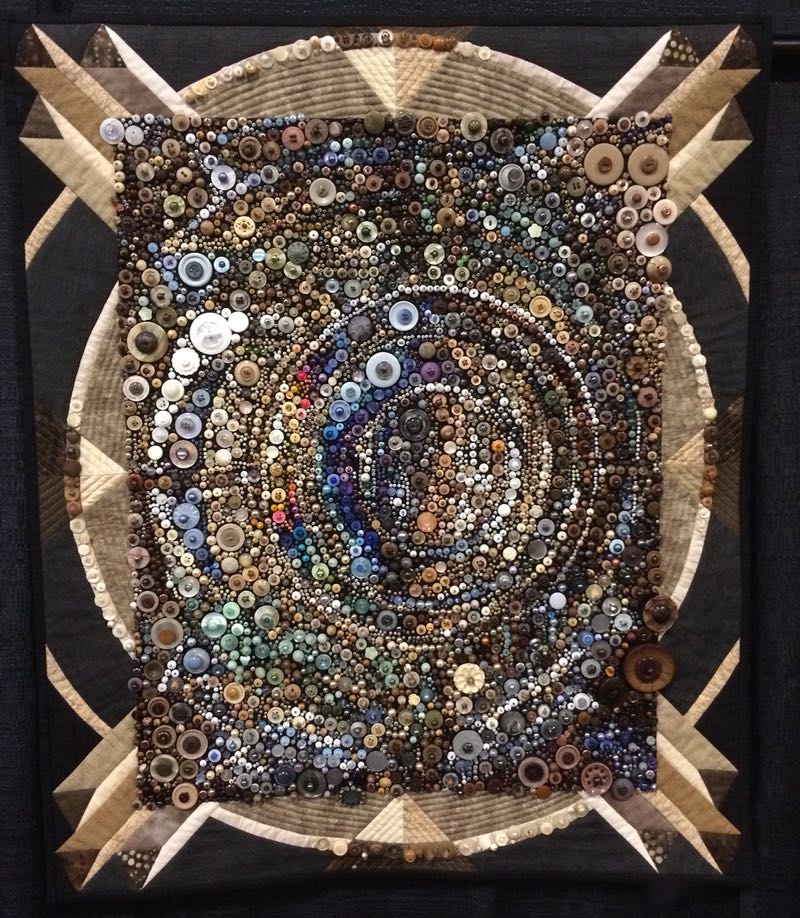
This small quilt, probably 14″ by 18″ is loaded with buttons.  Beacon, by Susan Bianchi, represents her “impression of an antique lighthouse lens and prism.”road2ca2017_bianchi_2 road2ca2017_kona-yellow_1

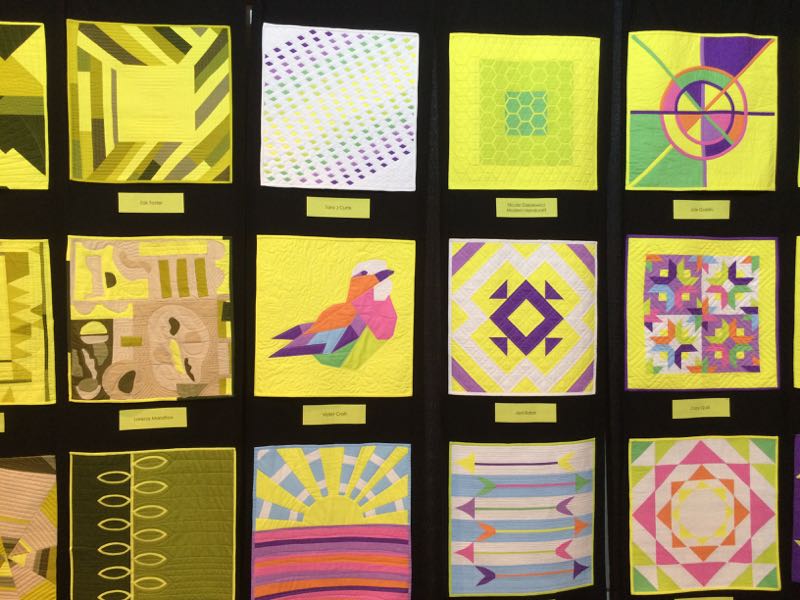
Kona Fabrics had a series of small quilts (around 16″ square) using that bright lemony yellow from last year (above and below).  There was also a wonderful exhibit by Cherrywood Fabrics of Lion King, but I could never get a good shot at it as people were always looking at them all closely.road2ca2017_kona-yellow_2 sarahannsmith

Peony, by Sarah Ann Smith, is a stunning blossom interpreted in fabric.

road2ca_brokenshire

But I couldn’t help constrasting it with the bluesy-purpled Blue Anemone, by Andrea Brokenshire, admiring its use of periwinkle, turquoise and other colors, and that exquisite quilting.

Overall impressions (including these and the images on Instagram): thankfully the use of sparkly bling has fallen to new lows, with the few quilts that did add crystals keeping them to appropriate usage.  Margaret Solomon Gunn’s quilts (here and here) are always exquisite, and I realize that I’m never going to measure up to her long-arm quilting skills.  In fact, I heard the moans of “I’m not good enough” over and over.  Aside from the usual don’t-compare-yourself-to-others cliches that I could offer, I say the only good remedy for that one is to go home and make a one-patch quilt and have something to show for your time, and that will allow you to realize that every quilt has a beauty all its own.  We have quilt shows to admire the best of the best, and the others and to use them to inspire us.

I was very happy to see my friend Simone’s quilts hanging in the show (here and here), as well as other people I know.  Those friendships are what tie us all together in our quilting community.

I didn’t choose a “Most Ugly” quilt this year, although there were several that might have qualified.  And I’ve decided to change that award to “Didn’t Live Up To Its Promise” so as not to offend.

I took two classes; one was awesome and the other — even though the teacher was so nice and knew her stuff–not worth it.  Why?  Because they sent a long-armer to do teaching about quilting on a domestic machine.  And because they made us use machines that were difficult to use, and we spent a ton of time re-threading them, fighting their built-in stitch regulators and waiting for the tech to come.  And because when we showed up, these complicated machines were not threaded or ready for sewing, so we spent nearly 90 minutes of class time getting them up to snuff.

One last gripe: the practice of teachers charging us Beaucoup Bucks for our “kits” of materials that we have at home, for supplies that we already own, and for threads that we don’t care to try.  Unless it’s some specialty item that we wouldn’t think to buy, I’d prefer a teacher include a detailed supply list for us to bring.  Yes, we will buy the teacher’s stuff in class if we forget ours, or hunt for it down on the vendor floor, but I now have another blue marking pen, two spools of thread that I probably won’t use again (I’m a Superior Thread fan) and a 18″ by 44″ marked quilt sandwich.  Those three things cost me $45 (!).

I like having such a high-quality show so close to me, and I enjoy seeing my “yearly” friends.  I heard lots of gripes about no printed showbooks, the cheezy Road to California bag, and no lanyard-style name tag holders (and no, I’m not buying their blue Road badge holder), but I think we were all happy to be there.

Until next year, Road!

Quilt Shows · Quilts

Quilts from Quilt Market 2016 • part 2

The following quilts were exhibited in the center of Quilt Market this year, in a special exhibit.  They are the prize winners from Houston, and the area around them was always calm and quiet, so it was a nice place to visit.  Here are the rest of the pictures I took.

QMBrown_WhyKnot

Why Knot? is by Tanya Brown, who writes: “This quilt was inspired by watching my Cub Scout son practice knot tying, an exercise designed to torment the uninitiated.  In this piece, the metaphorical nightmare of becoming hopelessly engulfed in one’s own knots is made real.”  Follow the link on her name to read her (hilarious) description of how this piece came to light, as well as interesting reading on her process.
QMFleschner_RavendaleStar1

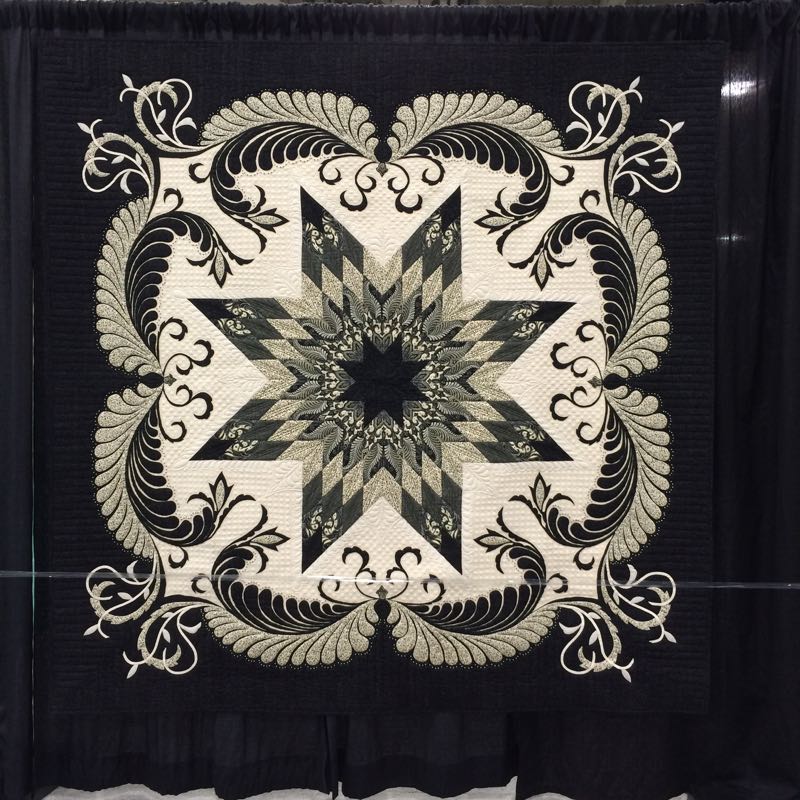
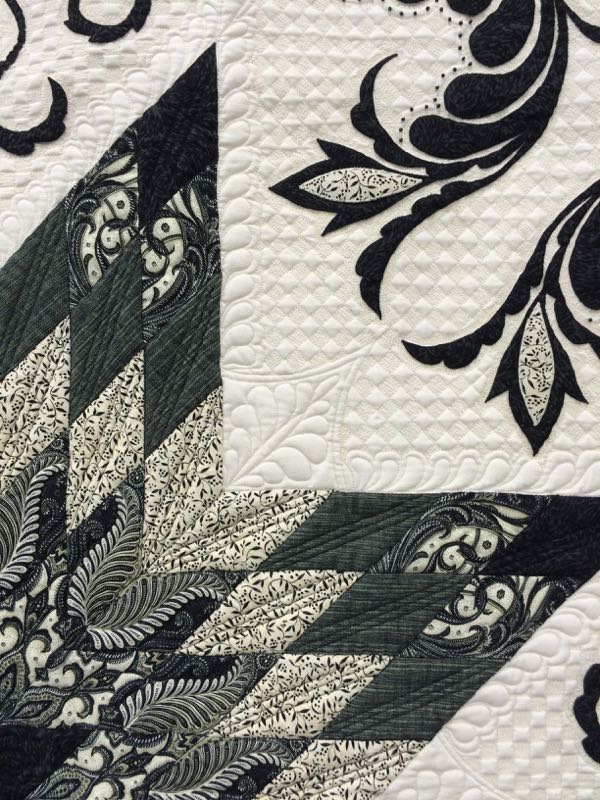
Ravendale Star, by Linda Fleschner, is a quilt where she did not design the entire thing before she started but knew that she would “use the Ravendale paisley print in a Radiant Star.”  She goes on to say, “When that was finished, I designed the border feather, staying with a black and white palette–a big departure from the bright colors I normally use.”QMFleschner_RavendaleStar2 QMFleschner_RavendaleStar3

(Okay, I took this one because it bulges slightly in the middle, just like mine do.  However, mine aren’t as intricate or beautiful or amazing as hers.  This is my make-me-feel-better-about-my-creations shot.)
QMFogg_VisionsApplePie1

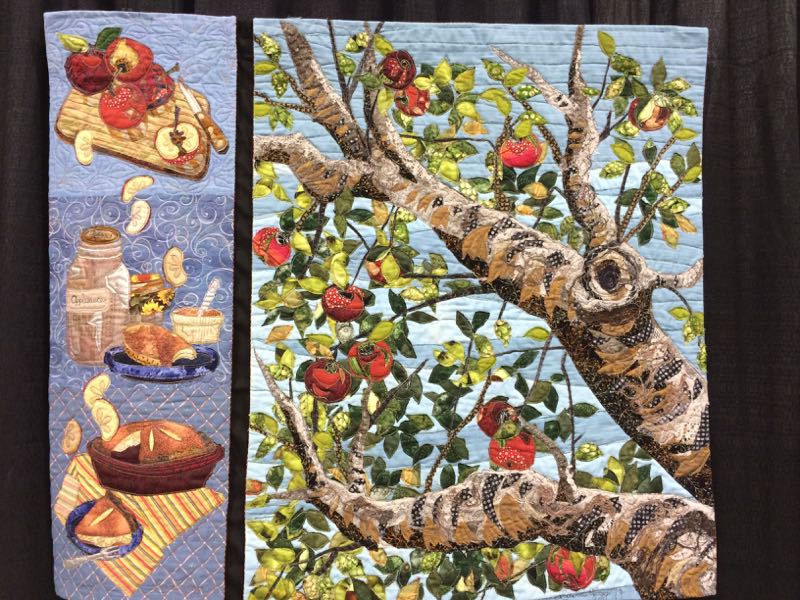
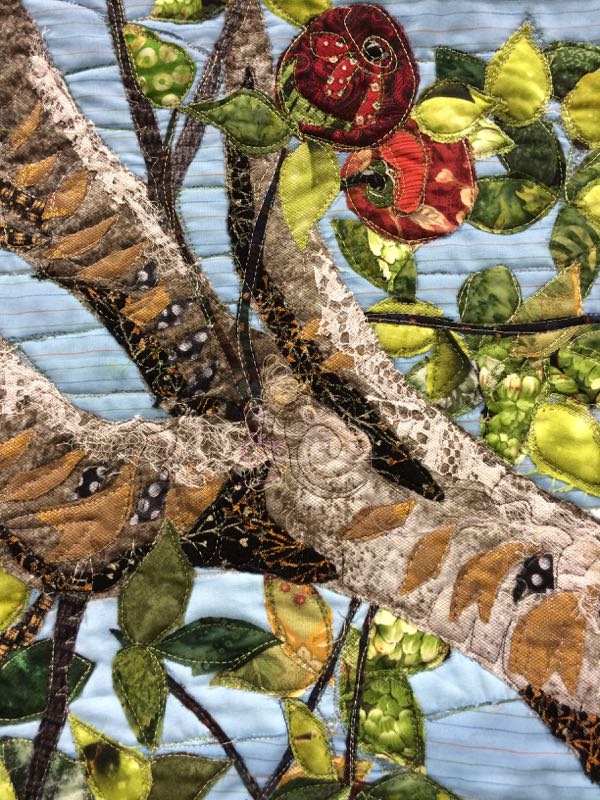
Laura Fogg‘s Visions of Apple Pie.  Her artist’s notes say: “Looking up into a loaded apple tree on a hot summer day, I imagined all of the things I could make with the glorious fruit.”

QMFogg_VisionsApplePie2 QMGorder_AnniversaryRoses

Anniversary Roses, by Susan Gorder.  She writes: “The appliqué rose blocks and borders were my take-along project on many trips over several years.  Once the top was finished, it took me another six months to hand quilt.  Instead of traditional grid quilting behind the appliqué, I decided to quilt feathers and to repeat elements of the border design around the center blocks.”QMHayward_WhiteHoles

White Holes by Peter Hayward.  His notes state that “I wanted to take the basic concept behind op art quilts to a new level by adding color gradation and concentric lines as a way of enhancing the 3-D effect.”QMIke_magicalZone1

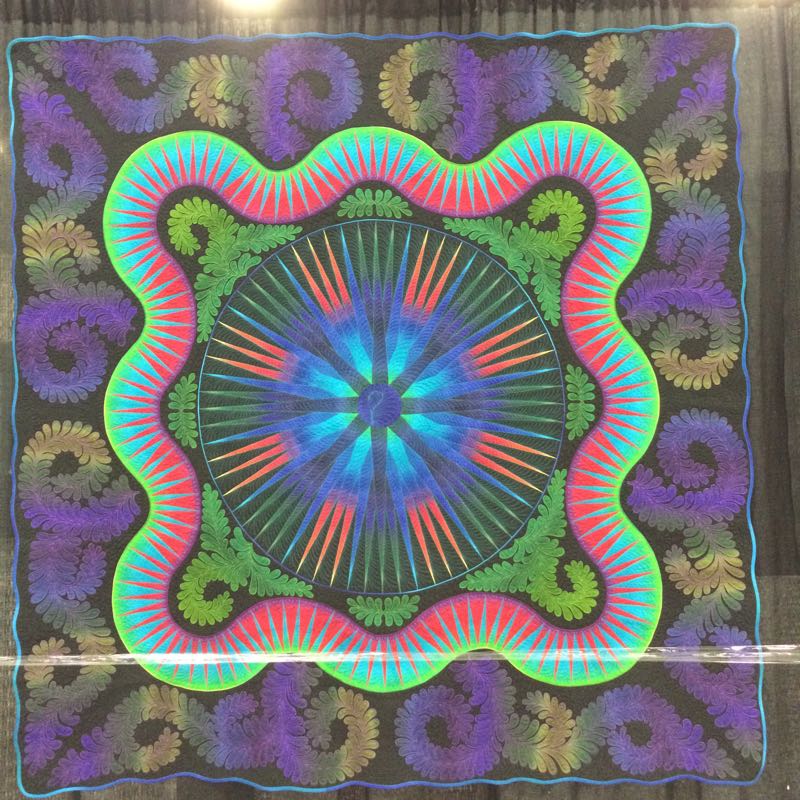
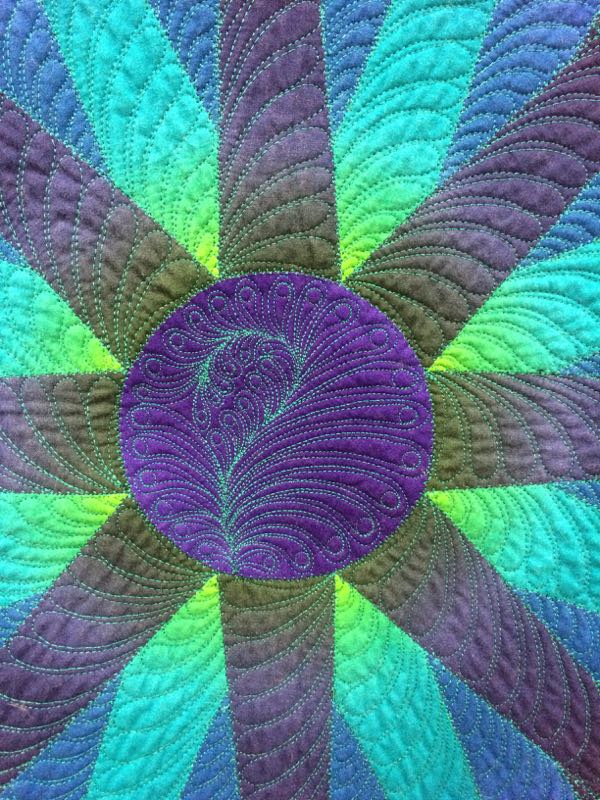
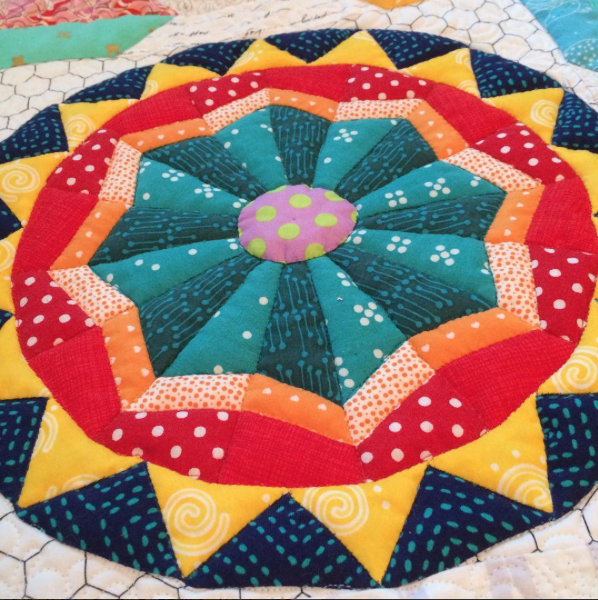
Magical Zone, by Keiko Ike.  She writes: “I wanted to create a mysterious quilt with design and color.  I perfectly pieced the extremely sharp points in the Mariner’s Compass, which is normally difficult to finish flat.”QMIke_magicalZone2 QMIke_magicalZone3 QMKotani_CoastalTown1

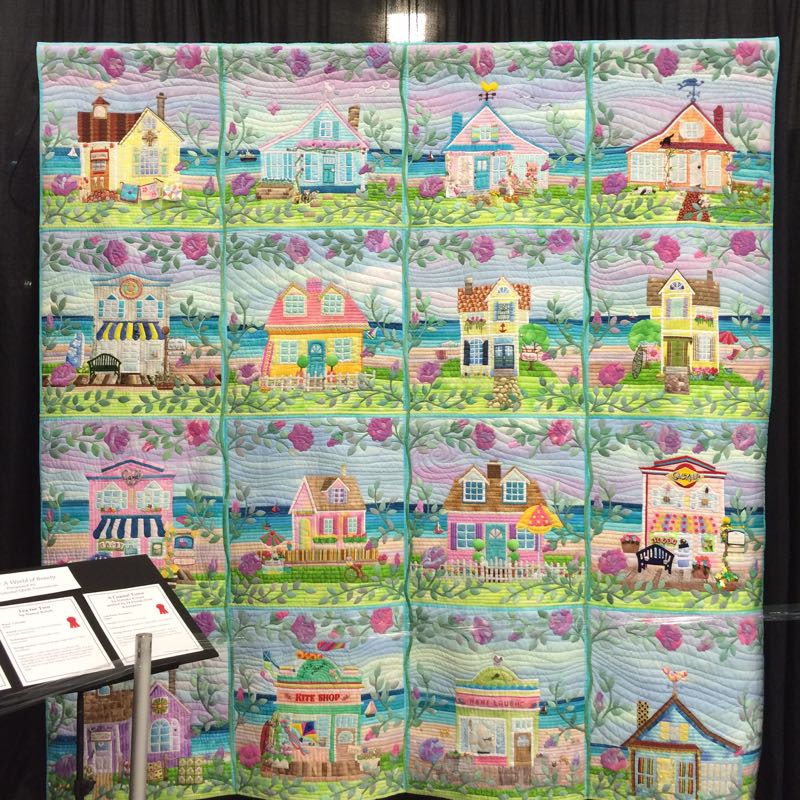
A Coastal Town is made by Nobuko Kotani and quilted by “14 friends from Kanagawa.”QMKotani_CoastalTown2

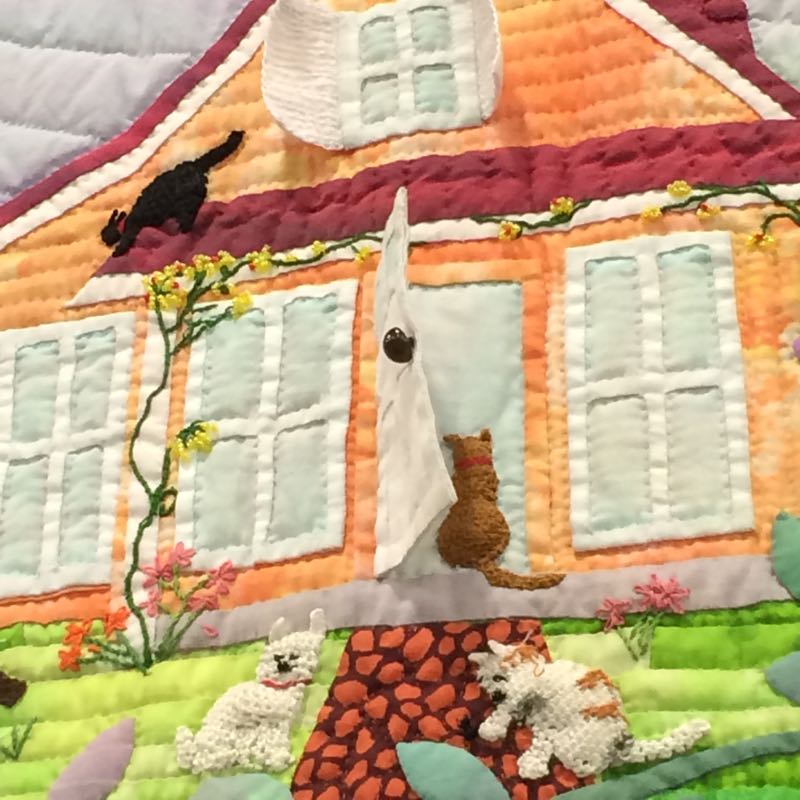
She writes: “This started from a fabric I found while I was on a trip.  The pattern on it was interesting, so Katy designed a town with many unique houses along a coast.”QMKotani_CoastalTown3 QMKotani_CoastalTown4 QMKotani_CoastalTown5

Can you tell I loved all the details?QMMarquez_Dance1

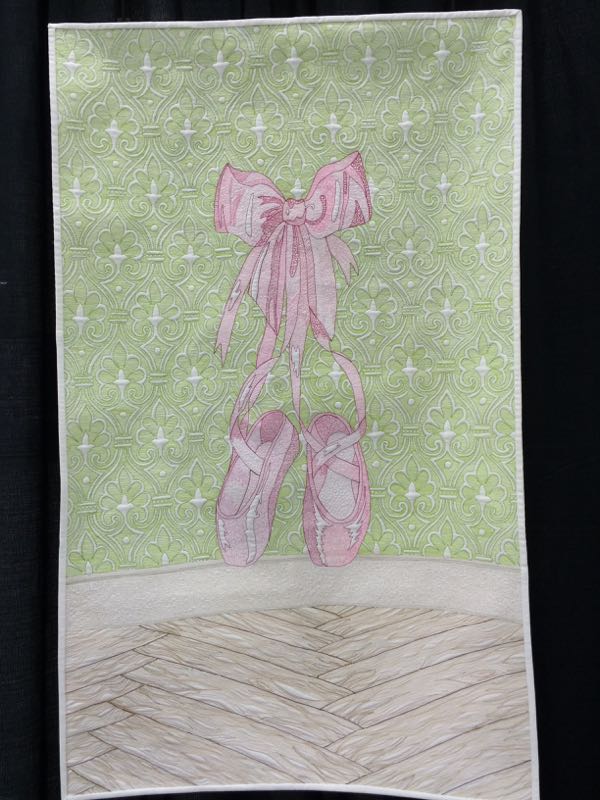
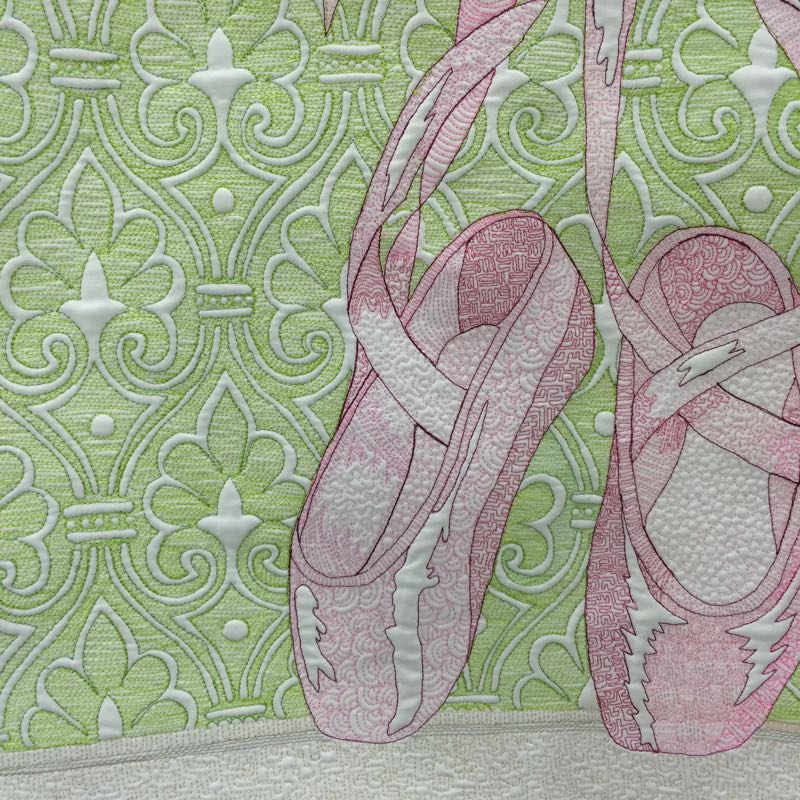
Dance, by Marisa Marquez (of Madrid, Spain): “Every little girl’s dream is to become a dancer–elegant and graceful.  As we grow up, we continue dreaming.”QMMarquez_Dance2 QMMulheren_AudreyII

Audrey II Plus 3, by Marianne Mulheron.  Her notes say that “In response to a Spring Into It quilt challenge, I used real springs to attach three dimensional baby plants to their carnivorous mother, Audrey II, from the movie Little Shop of Horrors.”QMNozawa1_mysteriousletter

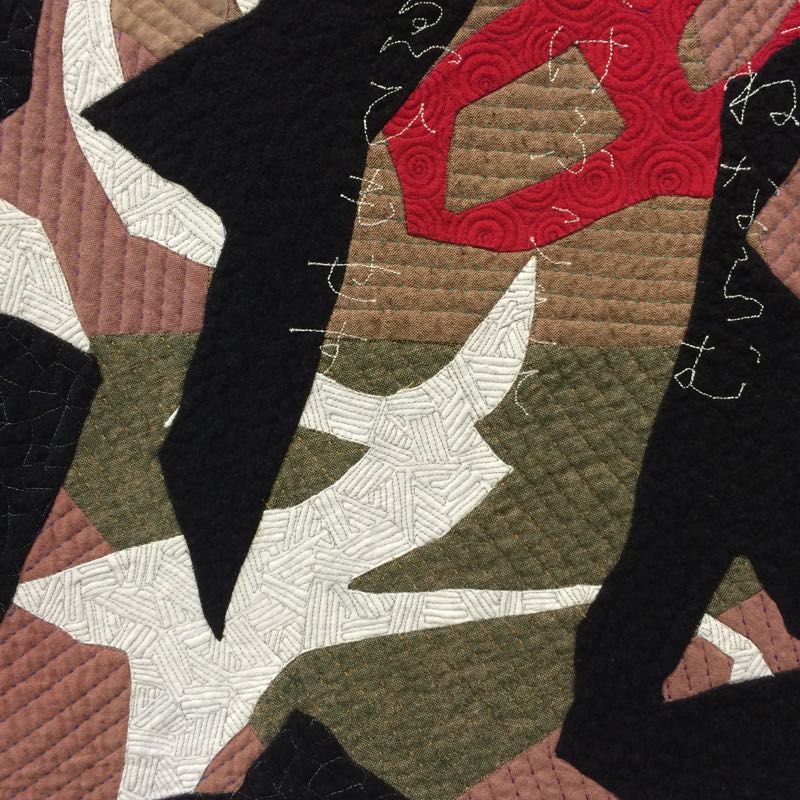
Mysterious Letter, by Noriko Nozawa.  Her notes say: “The Kana letter, which is a Japanese inherent letter, is the main theme of this work.  Although I used the Japanese traditional letter, I added a sense of fun by changing the color, placing the letter randomly, and repeating it.”QMNozawa2_mysteriousletter

I love all the different textures in her quilt.QMPerejda_ArroyoGrandeAlbum1

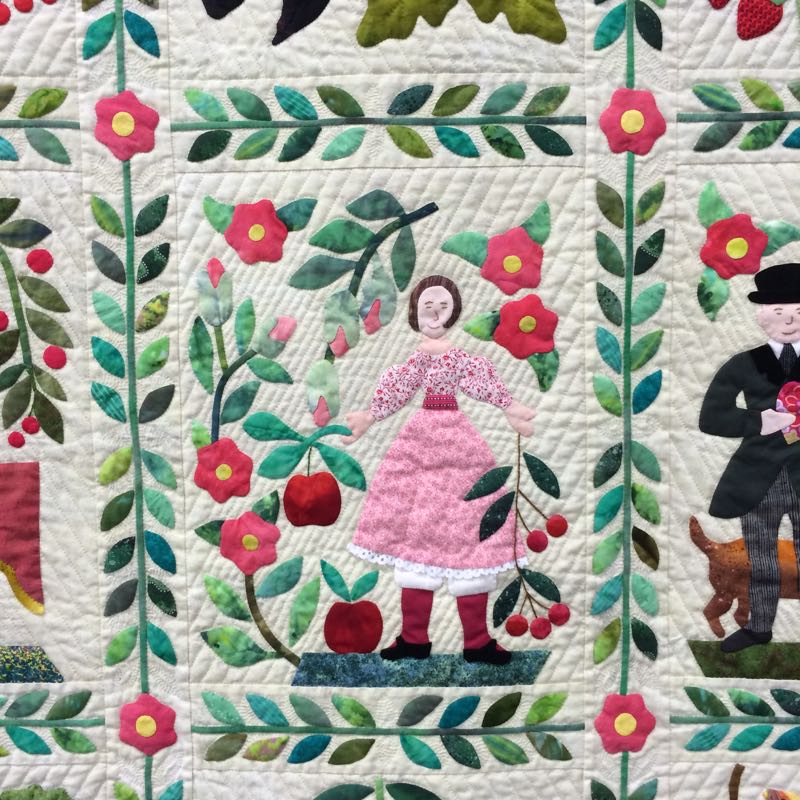
Arroyo Grande Album is by Andrea Perejda.  She writes: “Folk-art appliqué has been an interest of mine for many years.  I started with Threadbear’s pattern for their Civil War Bride quilt top.  I altered it considerably, adding personally meaningful motifs and appliqué sashings.”QMPerejda_ArroyoGrandeAlbum2 QMWasilowski1_birdonbranch

Laura Wasilowski‘s Bird on a Branch #6.  “This quilt,” she writes, “depicts a view of my front garden.”QMWasilowski2_birdonbranch QMWeichselbaum_Exuberance

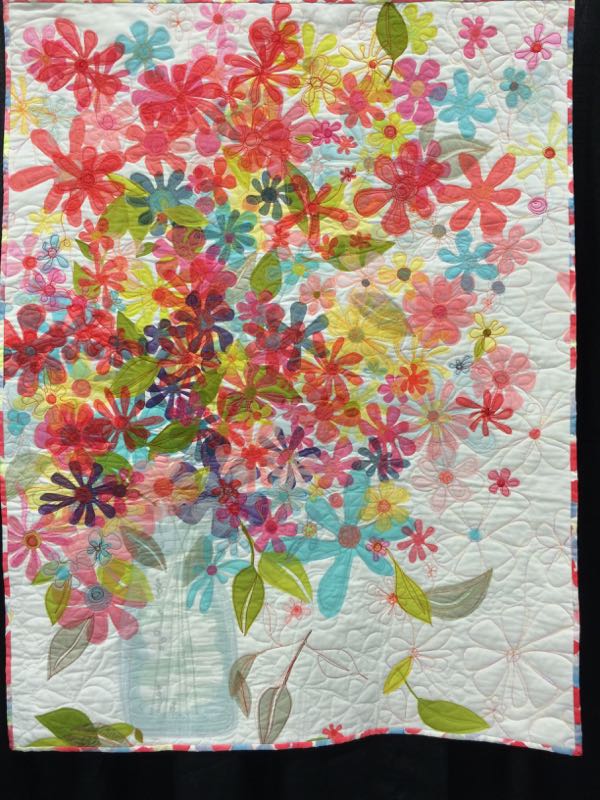
Exuberance, by Enid Gjelten Weichselbaum, was “[i]spired by the layering of colors created in watercolor paintings.”  She “used layers of bright organzas to ‘grow’ a joyful bouquet of flowers and a transparent vase.QMWeichselbaum_Exuberance2

That’s it for my quilt show today.

Shine Circle quilted

I’ve been working on my own quilts, finally tackling the hard job of quilting through two layers of batting (some make this look easy, but really, they are lying. . . unless they are on a big machine).

OCT Working on borders

I’m also working out the thorny problem of those pesky border instructions for our Oh Christmas Tree border post, which is coming up quickly.  Don’t worry.  I’m on it.

ChristmasTreeLogoSM

It’s all coming July 2nd–just in time to stay home that weekend and sew!  We’re almost finished with that quilt. Just keep on  quilting; we want to see YOUR quilts next year in Houston, and then Quilt Market!

Quilt Shows · Quilts

A Look at the Quilts at Quilt Market 2016

Giveaway Banner

First, I need to report on the giveaway held in the last post–all your comments were terrific! and seemed to be a healthy range from “just the kids” to “adults have a great time, too.”  I really liked the ones that said to include them both–so now you know.
The winner was Number 7HalloweenGiveawayJune2106. . . and it was Leslie, so I’ll get those shipped out to her right away so she can keep going on her Halloween quilt.  She wrote: Leslie comment HalloweenI do miss the homemade donuts that our neighbor used to make and for which we, as children, would double back around for.  Now it’s only wrapped candies, and we Moms all sort even those for scary things, but I do like Leslie’s perspective.  Okay, here we go with the quilts.

QMBleiweiss_TuttiFruittiAlleyway1

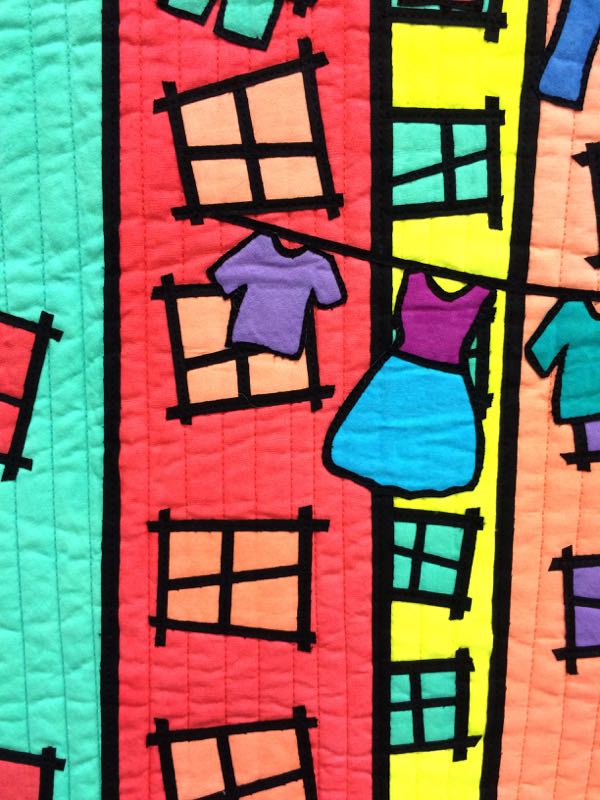
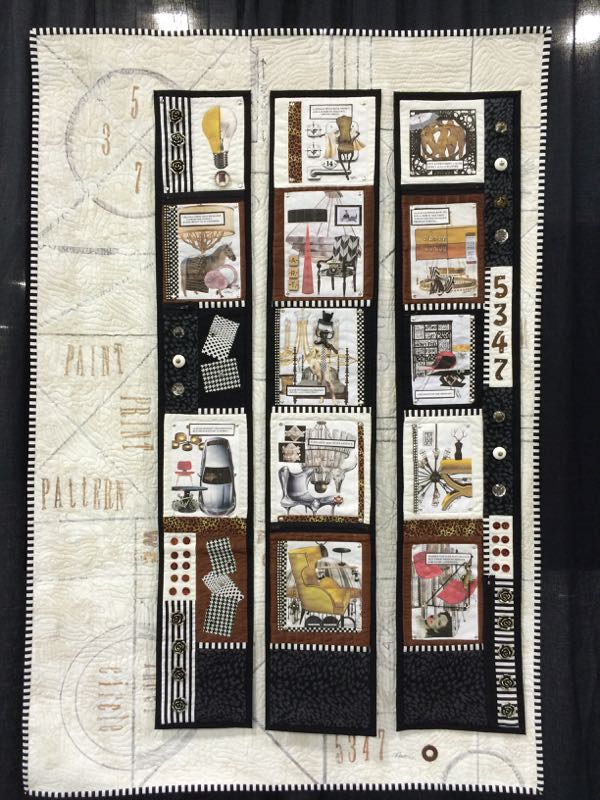
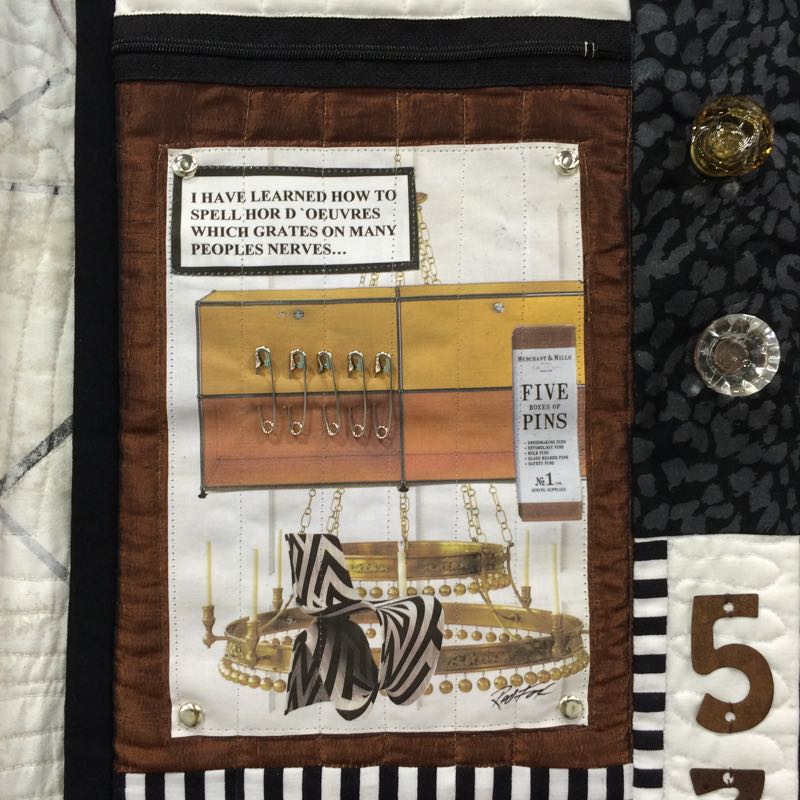
Tutti-Frutti Alleyway, by Susan Bleiweiss.  She writes: “This quilt is part of my ongoing series of art quilts which celebrate the use of vibrant color and whimsical imagery.”QMBleiweiss_TuttiFruittiAlleyway2 QMBranjord_BlueprintLife15347 Redfox Circle. . . Blueprint of a Life, by Sandra Branford.  Her artist’s statement: “Using my collage skills, I created a fantasy story board of my imaginative home.  Through my original designs, I define myself and take the viewers on a journey through my mind. . . some wit, a few brains, and loads of imagination.”

QMBranjord_BlueprintLife2

And as an English teacher, I smiled when I saw the misspelling in this text.  (You’ll have to find it yourself, and no, it’s not “hors d’oeuvres.”) Whenever I find typos and misspellings in things I write, I die a little of embarrassment, so I understand how things can get overlooked.QMBrown_Triology

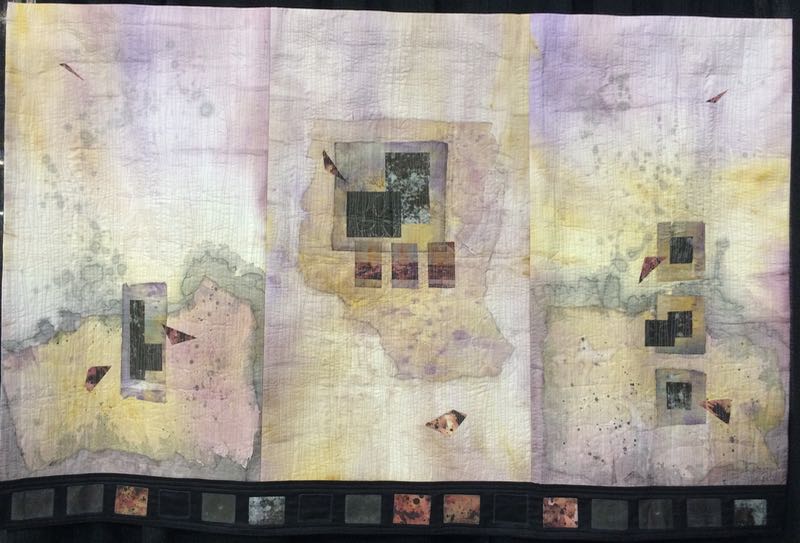
Trilogy, by Peggy Brown.  “My goal,” she writes, “was to start with a painted free-flowing design, add collage and overlays of more paint, and compose a well-designed and unique painting on fabric — an art quilt.”QMCoatesPerez_PinkBird1

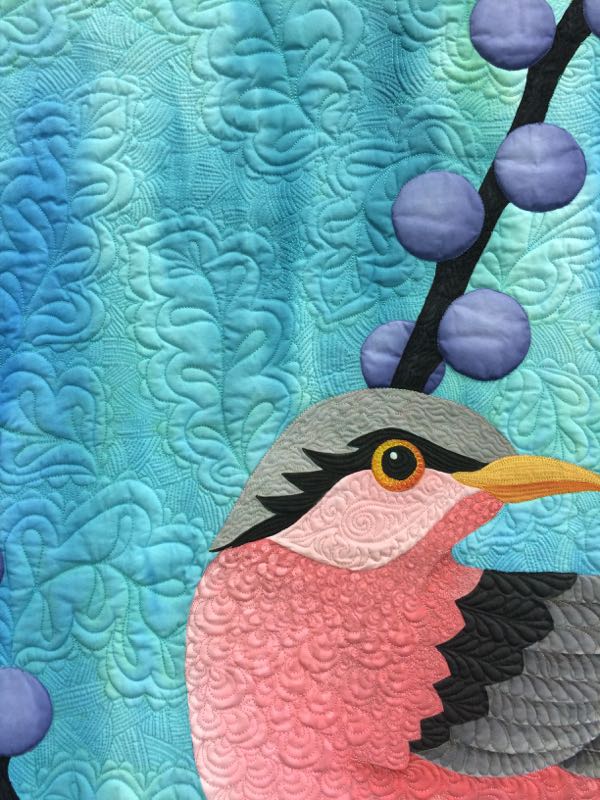
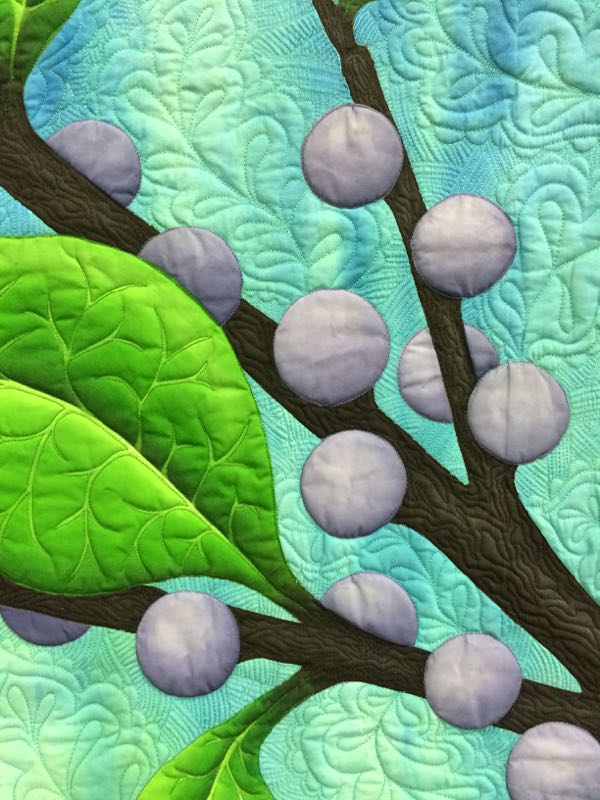
Pink Bird, by Judy Coates Perez  (Check out the quilting in the following photos!)  She write that she likes “painting images inspired by nature, using photos of real birds as reference for a pose, then altering them graphically; simplifying details, creating new patterns, and choosing different colors to create unique stylized birds and plants.”QMCoatesPerez_PinkBird2 QMCoatesPerez_PinkBird3 QMCoatesPerez_PinkBird4 QMDaniels_LongWinter1

Long Winter Flower Basket Sampler, by Eileen Daniels.  During a “long, cold winter in Wisconsin” she “became addicted to embroidery.”  She writes that she “spent hours listening to podcasts by Jonathan Welton and to my husband reading books aloud as I designed and embroidered this quilt.”QMDaniels_LongWinter2

I noticed more embroidery in this show than I’ve seen before–a welcome addition!QMDaniels_LongWinter3 QMDay_CubanBallerina1

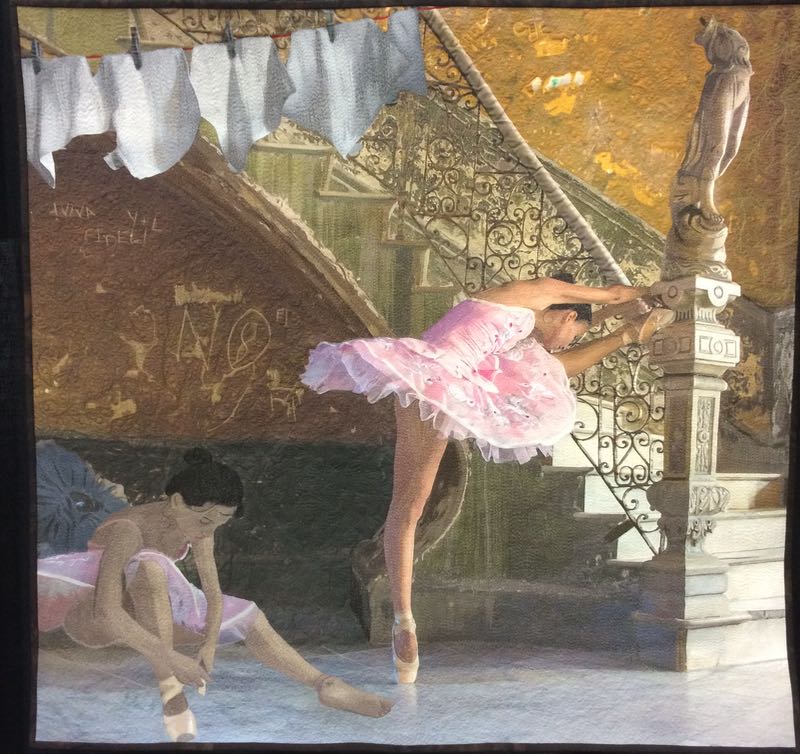
Cuban Ballerina, by Jennifer Day.  She writes: “This quilt is based on a photograph that I took of a ballerina with the National Cuban Ballet in Havana.  She is dancing in a wonderful old building built in the early 1900s that has fallen into ruin since 1959.  This quilt is a testament to the young ballerina who is gracing the building with her beauty in dance.”QMDay_CubanBallerina2

More threadwork, but this time by machine.  It was stunning.QMRehak_TeaforTwo1

Nancy Rehak‘s Tea for Two.  “Inspired by Cindy Needham,” she writes, “I took an old tablecloth of my mom’s and created a quilt.  It was a challenge for me to design my quilting to highlight the tablecloth.  I named it Tea for Two because my dad used to sing that song to us when we were little.”QMRehak_TeaforTwo2 QMRidgway_TreeTokyo

A Tree Grows in Tokyo, by Helen Ridgeway and her friends: Anita Crane, Mary Ann Hildebrand, Linda Humphrey, Marilyn Lampman, Holly Nelson, Bonnie Sprado and Barbara Woodman.  The artists’ statement reads: “This was a collaboration by the eight members of the Sew Be It Bee.  We each hand appliquéd a block from Kumiko Sudo’s book.  One of our members, Mary Ann Hildebrand, designed and made the tree, using a scrunching technique, and made the cherry blossoms out of Yo-yos from a synthetic fabric.”

QMShearer_EagertoLearn1

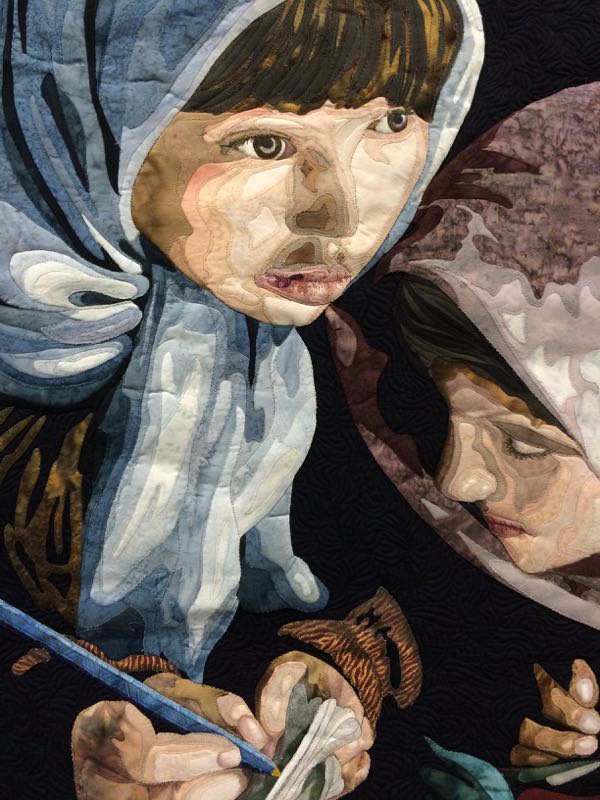
Gillian Shearer’s Eager to Learn – Afghanistan.  “In 2011, in Wakhan Corridor, Afghanistan, Ellend Jaskol recorded this image of two girls eager to learn at a new school in Sust,” she writes.  “They were studying in a temporary tent until the school was completed.  The power of educating girls is slowly breaking through.  ‘When you educate a girl, you educate a nation.’ ”
QMShearer_EagertoLearn2 QMSim_Journey1

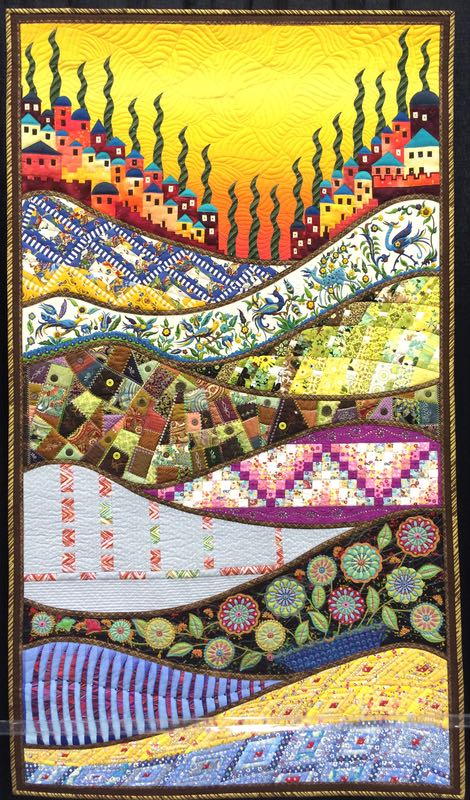
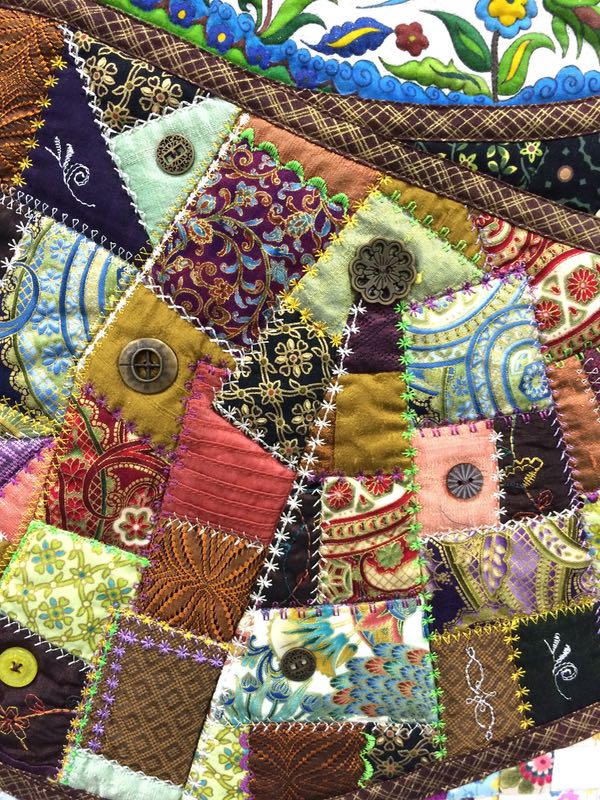
Journey, by Grace Sim.  She writes that “This quilt allowed me to try techniques I have wanted to try for a long time — fabric manipulation, liberated blocks, crazy quilting, modern quilting, Broderie Perse, and the use of buttons and crystals.  I used them to form my favorite Italian landscape.”QMSim_Journey2 QMSim_Journey3 QMSim_Journey4

More quilts are coming.

I realized in doing this post that if a person desires to become a quilt artist, it’s pretty important that they create a place in space to reside: whether it be a blog page, or a gallery of images, or just a single place where people like me can go and search in order to read more about them. There are many platforms that can be used: Instagram, Pinterest, blogging, Tumblr, etc.

I was unsuccessful in a finding a couple of the above artists.  In this day and age of >instant< and >quick< and rushrushrush there is a tendency to overlook the long form of blogs.  But they become important when looking at the bigger picture, or, your journey as a quilter. So if you are just starting, you might consider building your own little place where people can find you.  While there may not be much more than four walls and a piece of carpet (where others might have several fully-furnished rooms), it will be your space.