300 Quilts · New York Beauties · Patterns by Elizabeth of OPQuilt

Cereus: New York Beauties Block 9

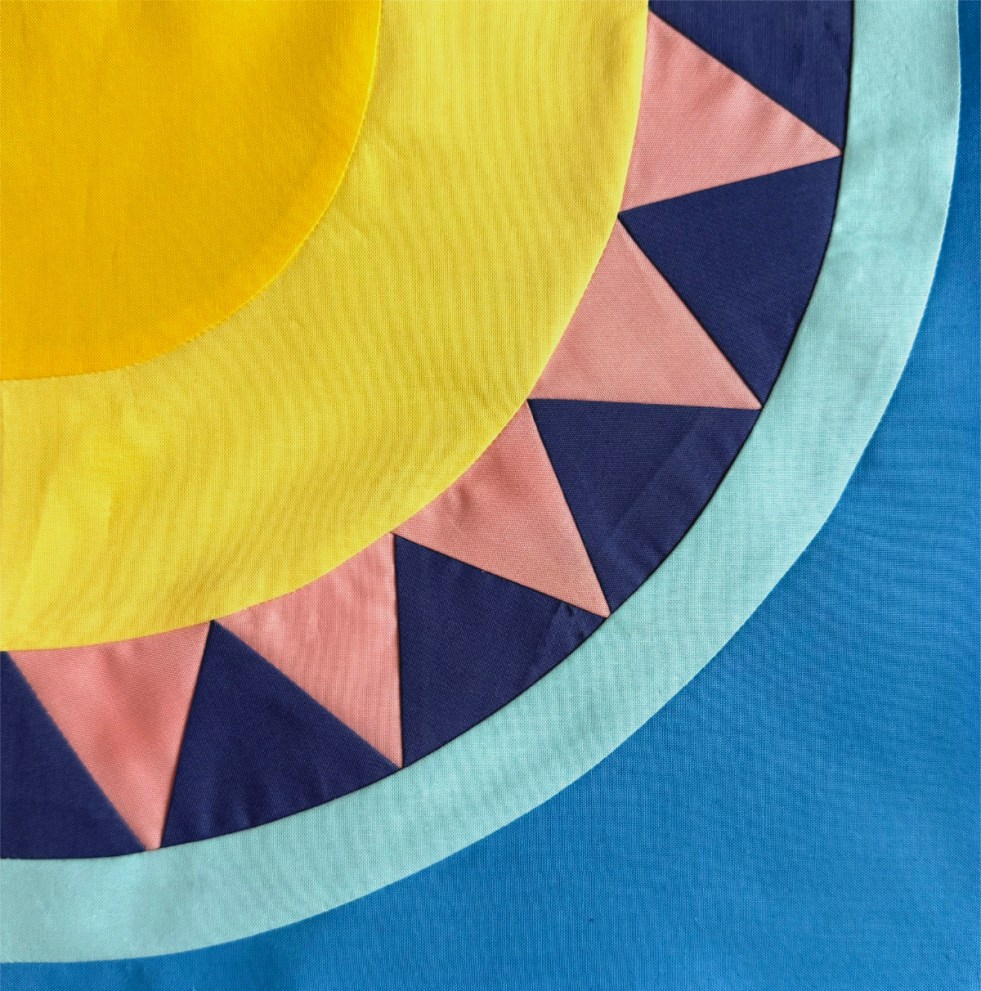
If you say “Cereus” it sounds like “Sirius” which is a legit star in our heavens. And if you spell it slightly differently — like Cerus (which I think it was started out to be) — that is the largest object in the asteroid belt between Mars and Jupiter. But no, it’s Cereus, which is a night-blooming cactus, usually only for one night. Most all the names of these New York Beauties have a name related to light or the sun, but this one is related to the moon — when it shines, the cereus flowers open up and bloom.
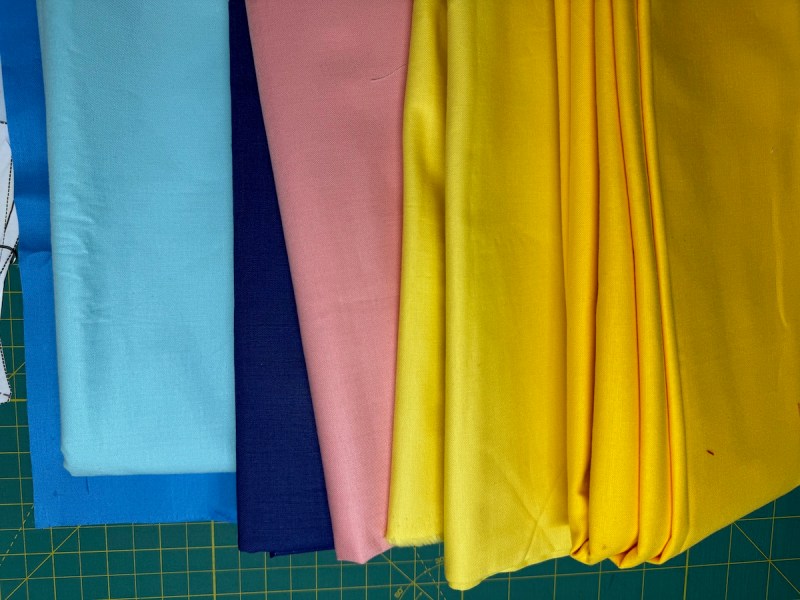
I start, as always, by layering up the fabrics. I use Painters Palette Solids, by Paintbrush Studios, and since two of our fabric shops have closed recently, I purchase them from Keepsake Quilting online. I have updated the colors chart online, where you can find this pattern. The colors chart is a free print-out: find the Preview Icon just underneath the buttons for purchasing, and you can download it to get the colors I used for the blocks. Since we are doing the blocks bit by bit, I’ll update them as we sew.

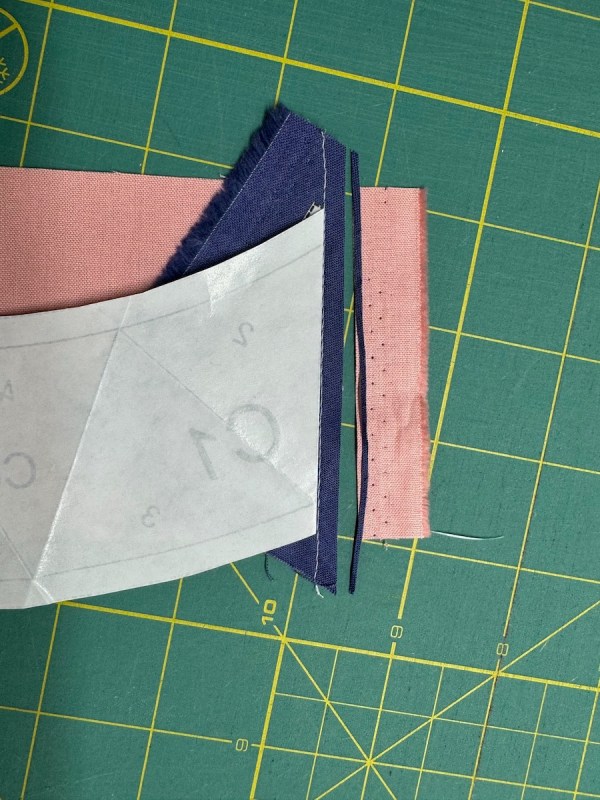
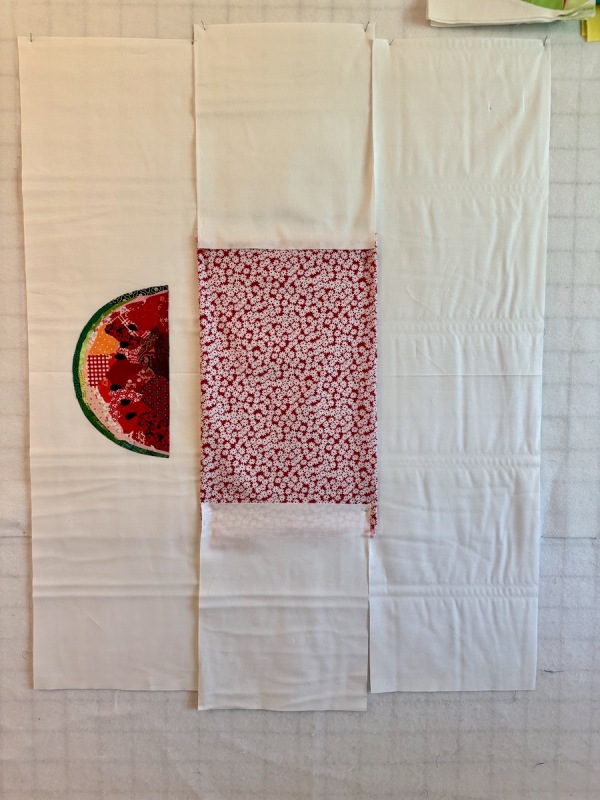
From Left to Right: Section 1 is ironed onto the purple, paper is folded back and like Photo 2, we are ready to sew that seam just to the wide of the fold of the freezer paper. In Photo 3, I trimmed it a little narrower than 1/4″ wide, maybe somewhere between an 1/8″ and a 1/4-inch. I have many seams on this section, so I don’t want a lot of huge seam allowances clogging up the works. But this is the only section that is pieced, making Cereus a quick block to make.

I have become completely besotted with the freezer paper method. Some quilters are using regular paper, dabbing glue on it, and continuing as if it were freezer paper, but I’ll put up with the prep work as I like how the freezer paper adheres well as I’m working. Plus I’m not a fan of glue (but maybe that’s because I worked on the collage fruits quilt in between sewing this block, and…ugh).
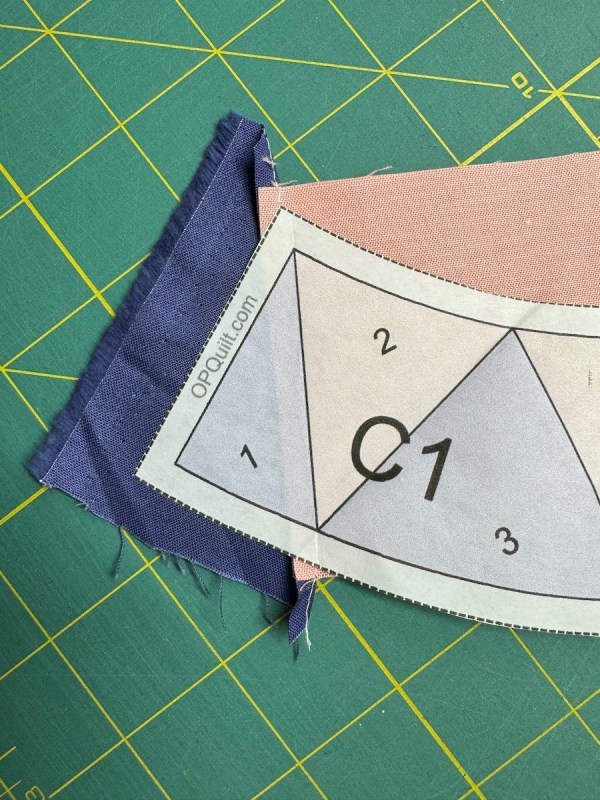
I lift the folded edge between section 1 and section 2 and iron the fabric toward the dark, then lay it down and iron section 2 onto the fabric. There are many tips on the other blocks I’ve sewn; a complete listing is here, at the tab at the top of the blog. But you can count on the freezer paper lasting for about 4-5 times of use.
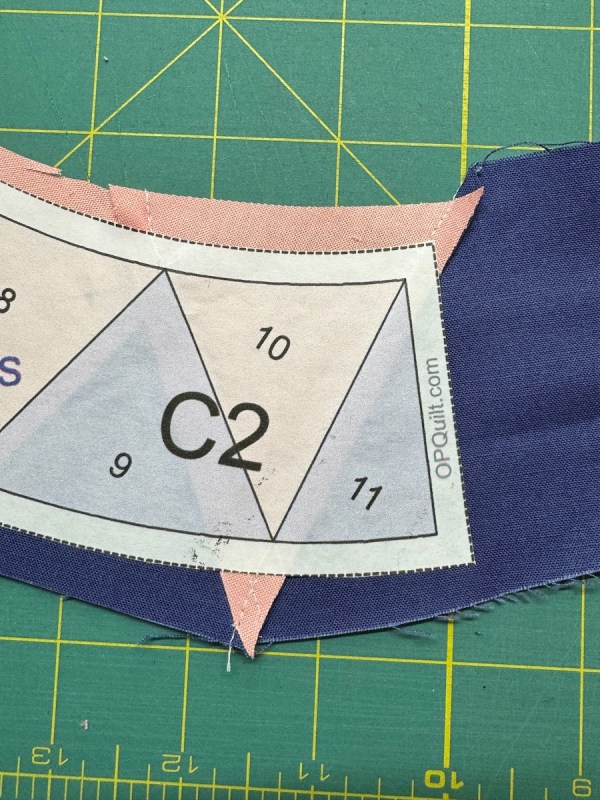
Here I just press the freezer paper section straight over onto the fabric.

And here again, I lift the fold, slip the seam allowances under the paper, and press into place.

One trimmed up.
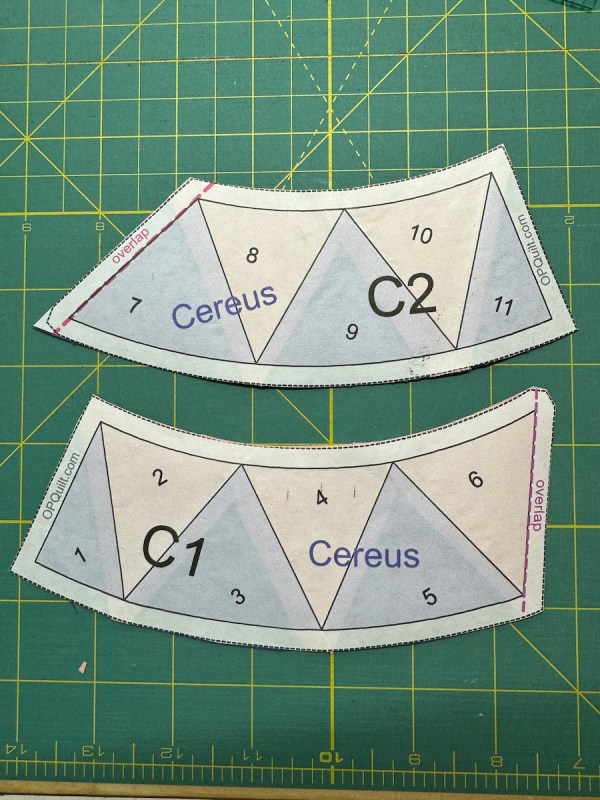
Both trimmed up.

Fold back the sections at the ends, and pin to join the C1 and the C2 pieces together. Make sure you don’t sew the paper anywhere (fold the bits of it out of the way if needed).
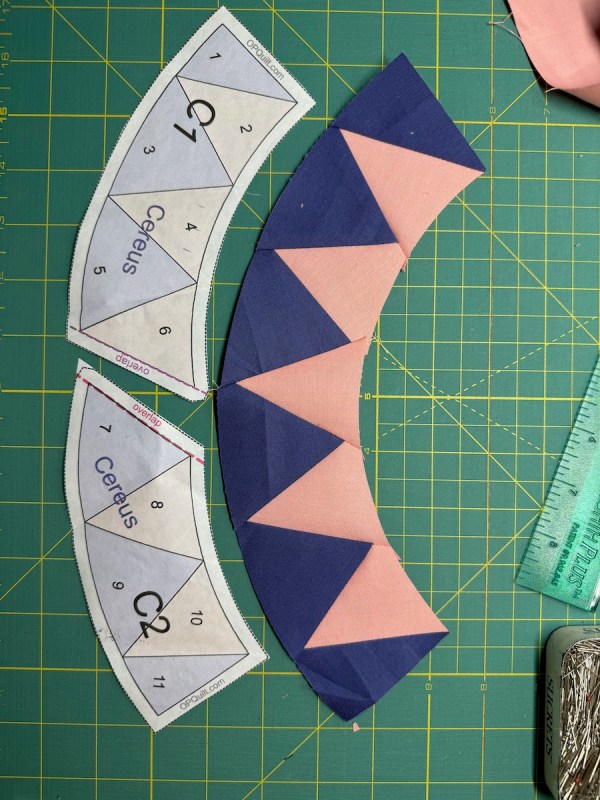
Press and there you are!

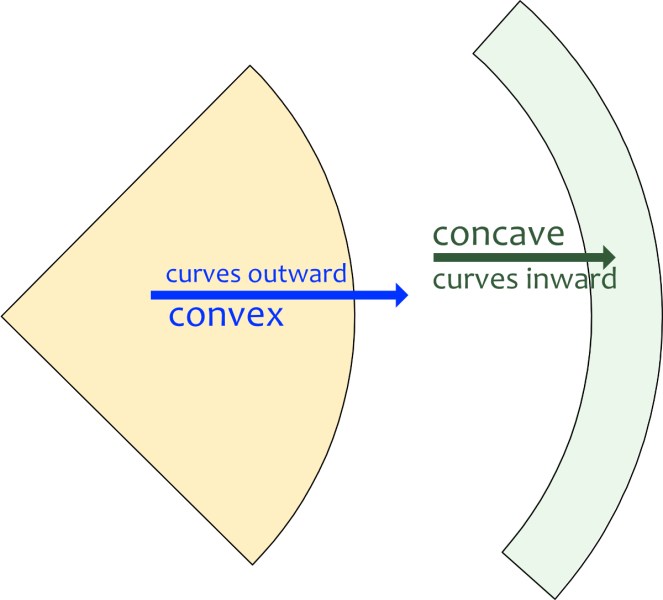
I always place the C-curve shape on top with the reverse-C-shape on the bottom. The correct term is the Convex on the bottom, and the Concave (now backwards as it is right sides together…and looks like a “C”) on the top. I mark it into sections with pins, match those up, and sew slowly, nudging the edges into place.

I was sewing these on the weekend that the Northern Lights came really low on the hemisphere, during the recent magnetic sun storms. When I stepped outside to see if we had any, alas, we were too low on the globe. I have really enjoyed all the photos I’ve seen of them. I saw the Northern Lights when I was a child, but it’s too far back in the memory bank for me to have any recollection. So I’ll just have to continue with these!

Six blocks mock-up.

How I pressed the different arcs. I like dimension in my quilts.

We need three blocks, but I made four…just because it looks really fun this way.
Enjoy making Cereus!


Yes, I’m a bonafide freezer paper enthusiast. Remember this one? When I about lost my marbles with that outside edge? (although I like the block a lot). Hurry if you want to sign up and get all their blocks — it ends in June.) I printed out the remaining blocks on my freezer paper, and will tackle those soon.

300 Quilts

A Basket/Quilt of Fruit for Mother’s Day

All the fruits are finished, and applied to the background this week.

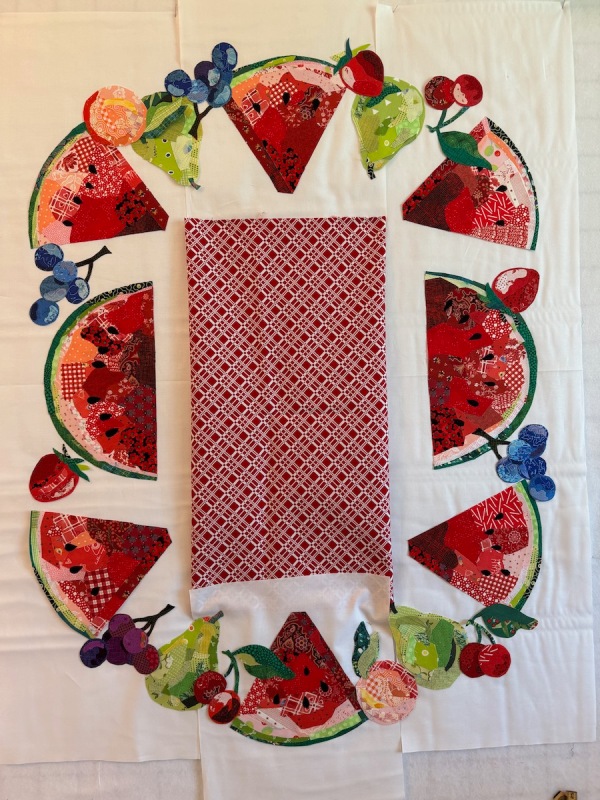
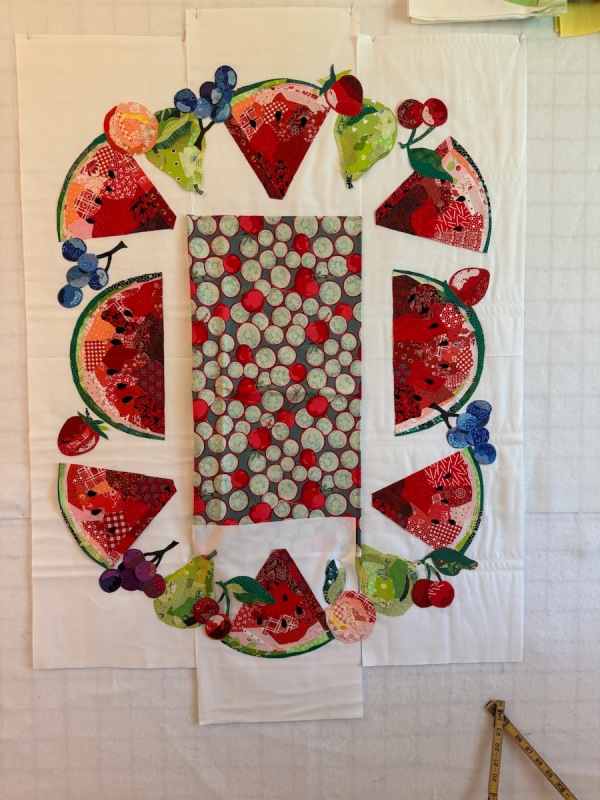
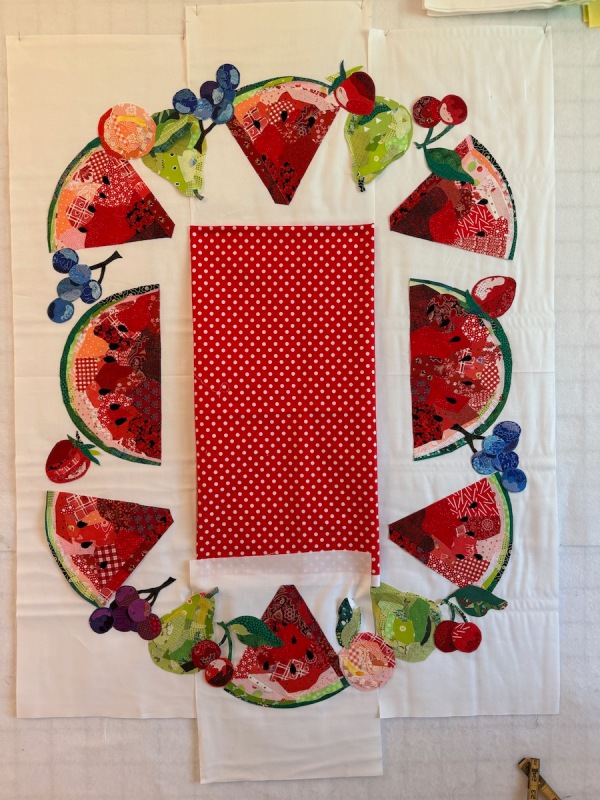
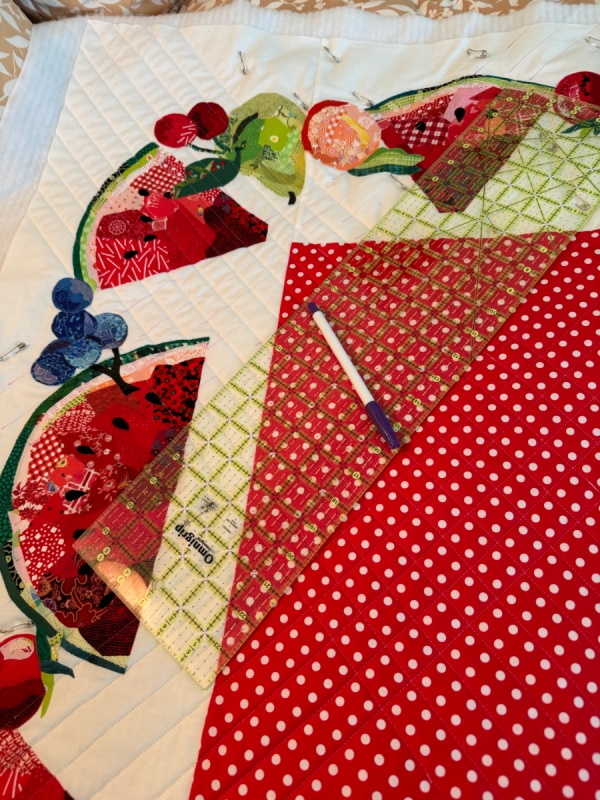
I tried three different centers, from white daisies on red (no), a double plaid (no), a beautiful radish print (no).

Dots. That’s what worked, was dots.

This was my first tentative step forward. As I peeled the fruits from their parchment paper backgrounds, I would occasionally find a place where the light crept through, so I reached for my bag of scraps and cut another tiny angular piece to cover up the holes. I have now learned that obsessing over these scraps is a fool’s errand.

I’ve got a good start, but the needle keeps gumming up. I looked for anti-stick needles, but they don’t make them for the big quilting machines (I have a Handiquilter Sweet Sixteen) so I’m resigned to changing out the needle often and in between, swipes with nail polish remover. We run a high-tech shop, here.

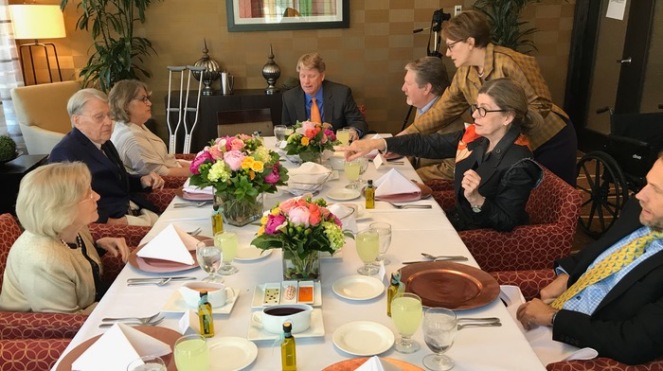
When my mother was 90 years old, just the seven children hosted a luncheon for her, celebrating her life, which led me to think about mothers.

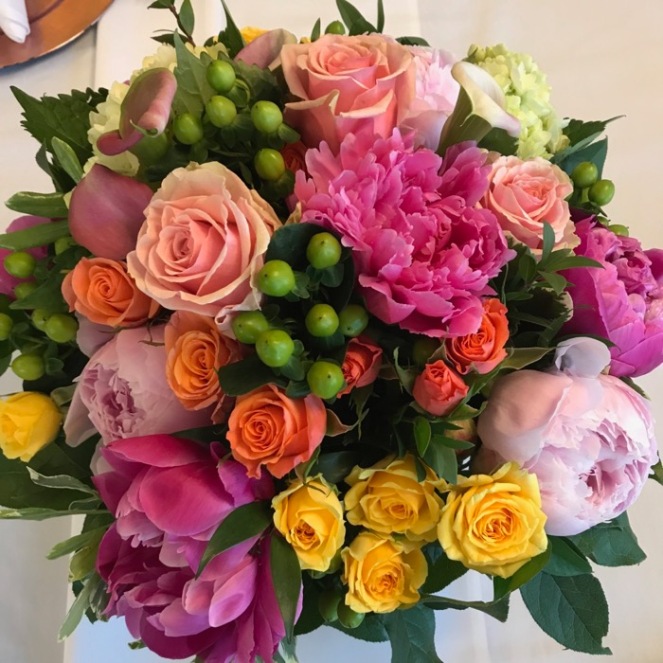
Mothers come in tall, medium and large. Mothers come in grumpy and happy. Mothers come in tired. Mothers come in a combination of adoring their children, frustrated with their children, and when will this kid ever go to college. Mothers love flowers, stroking babies’ cheeks, catching them when they dash through the mall as toddlers, pining for them when they go off to college, usually never to return home. Mothers come in all colors. Mothers come in street-smart, book-smart, and not-so-smart, but they all come in surprised at the task that lies before them and hope they will make it. Mothers mostly do, and if and when they don’t, other mothers somehow find their way to us, to teach us, bring us up, and leave us with memories.

Happy Mother’s Day–

300 Quilts · Free Motion Quilting · Something to Think About

Small Steps: Push-Pull

I’ve been thinking a lot about Push, and Pull.

The terms are popularly used when discussing how we interact with the internet. We receive Push Notifications, which means that someone, somewhere is sending us information or things that can be helpful. Or not. We can choose where we go, pulling information to us in terms of blogs (like this one, thank you). We can also pull information from bank sites, news sites, school and medical sites so we can gather information or read for pleasure.

We are familiar with push-pull in our own lives, aside from the internet. For example, when I go to a Guild meeting like I did this week, and have to show up early to set up the book sale, take minutes, make sure the substitute photographer is squared away (because the regular one didn’t show up), serve on the Nominating Committee (hallelujah — we got our President-Elect!), it is a push because NONE of those jobs are what I officially do (I run the website). Some activities in our lives are push-pull: volunteering, for example. Or paying attention to the weeds in the garden because you want to plant flowers.

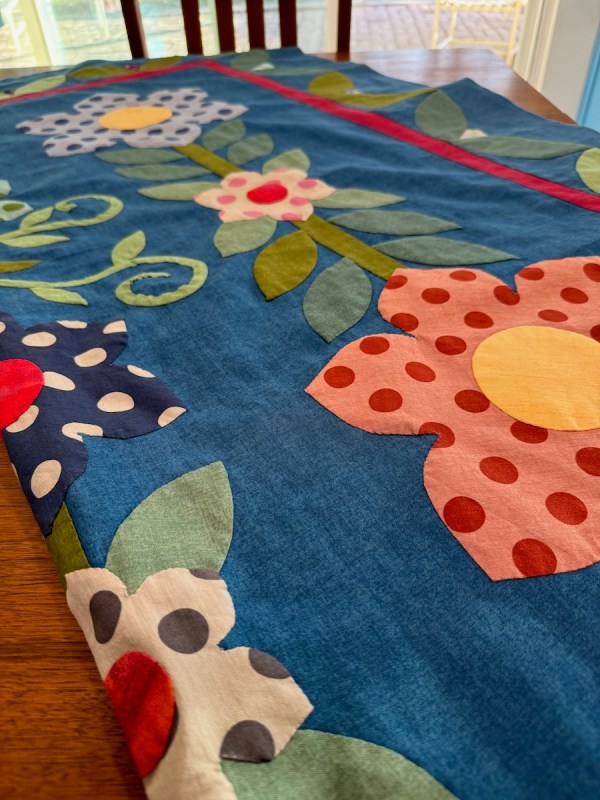
But if I can plan an appliqué project, take a 3300-mile road trip visiting family (and grandson Alex, below) and enjoy time with my husband, I’d call it mostly a pull.

This idea of push-pull on the internet was discussed in a radio interview of Kyle Chayka with Ezra Klein. During their discussions about the nature of the internet these days, as well as Chayka’s newest book, Filterworld, I became interested in this idea. What is pushed onto me, and how does it affect how I feel about the quality of my life? And what is the effect of all that pushing? Chayka feels like it changes how we view things on the internet, and why — perhaps — our eyes glaze over quickly:

CHAYKA: “I mean, most of the encounters we have with culture online are pretty bad, I think. We do have much more choice in what we consume and all of these other possibilities surround us. But what we lack is that kind of museum-like experience or movie theater-like experience where you do have to sit with something and think about it and puzzle your way through it without flipping to get an answer.”

EZRA KLEIN chimed in: “And the problem with the push internet is it’s not really under your control, right? It’s about what the force pushing is doing. But as that became bigger, people stopped doing the things that allowed the pull internet to exist. There aren’t so many blogs anymore. Not none, but there are fewer. People put their effort — because it’s the easier way to find audience and eventually to make a living — into the algorithmic spaces. And so there’s simply less of this other thing there to explore.”

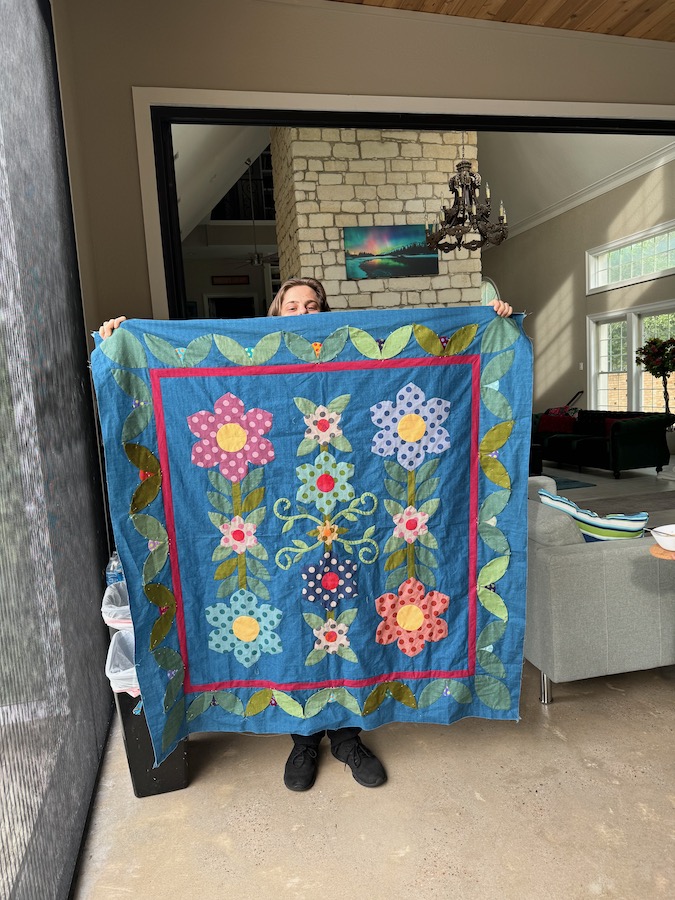
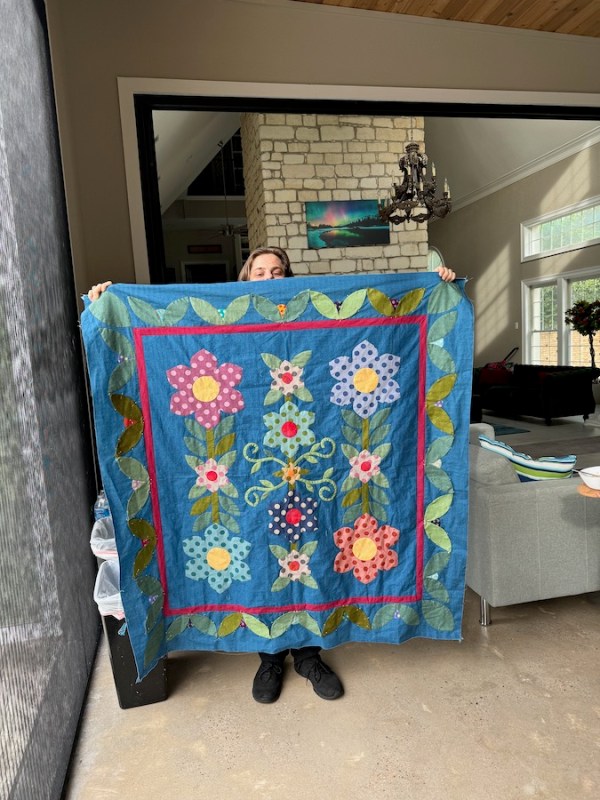
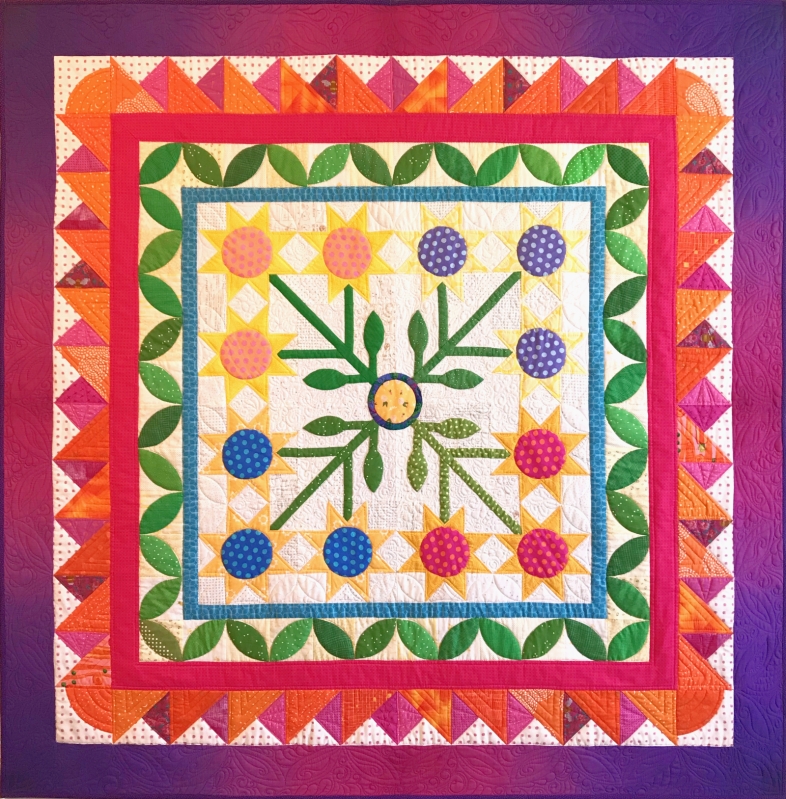
Top finished: April 2024

CHAYKA: “I think a feeling I’ve been having a lot lately is that scarcity is often what creates meaning. When you’re surrounded by infinite possibilities, when you know around the next corner is another video that might be funnier or more to your liking, you’re never going to sit with the thing that’s in front of you. You’re never going to be forced to have the patience, or the fortitude maybe, or the kind of willpower to fight through something and figure out if you truly like it or not.” ~ Kyle Chayka

Sitting with the thing in front of you.
Museum-like experience.
Algorithmic spaces.
Push is not under our control.
Scarcity creates meaning.
Puzzle our way through it.

How much of our life is a “push” experience? How much of our activities and interests are “pull”? Do we value our time at the machine, or with cloth, or with the needle because it is a “scarce” activity? Or because we had the patience and stick-to-it-iveness to finish the stitching, the quilting, the cutting?

I guess it could be both. I guess it could be all.

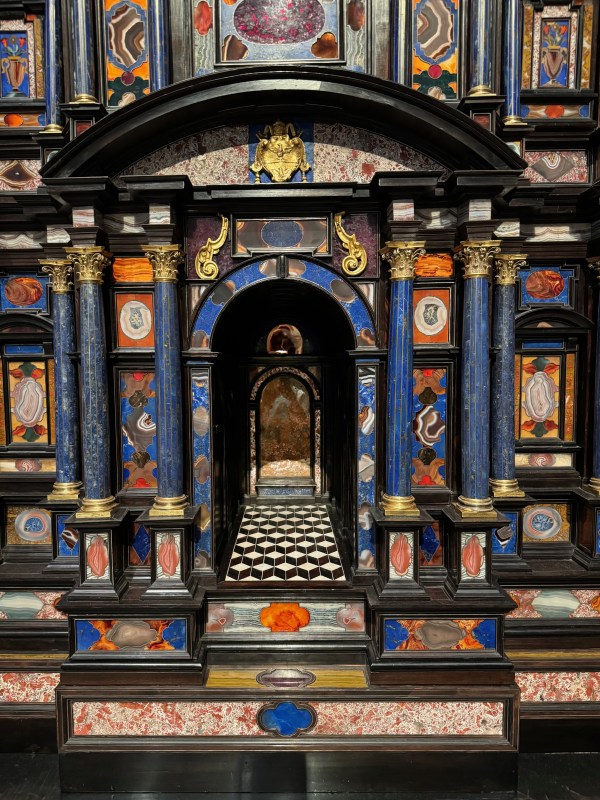
Final image: Made in the 1600s for one of the popes, this smallish curio cabinet is a classic example of sitting with the thing in front of you until it is finished. Although I have to admit that if I were the cabinet-maker on the other side of the centuries, it might be feeling like a push. And that’s how it goes, right? I saw this in the Getty Museum in March.