
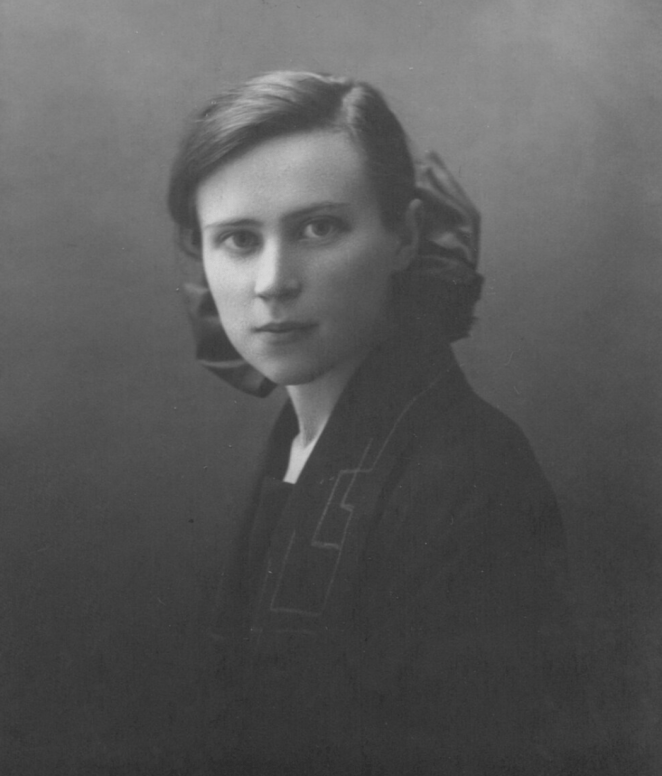
Adrian Zumbrunnen, a human interface designer, wrote recently about how “Blooma Zeigarnik [on the right] and her professor of Gestalt psychology were having coffee at a bustling restaurant…While waiting for the check, the two eagerly discussed an odd observation they both made. Somehow waiters seem to better recall bills that were still open than the ones that had been settled. It seemed like the moment a bill was paid, it vanished from the waiters’ memory. Based on this simple insight, Zeigarnik conducted a series of experiments that showed that unfinished tasks loom larger than finished ones.”
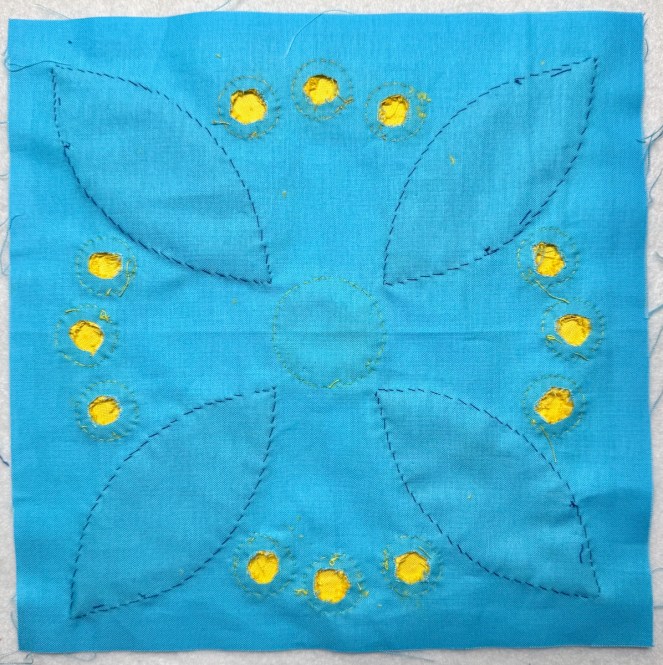
As I was fascinated by this idea, and after chasing down a few rabbit holes (see complete bibliography at the end), I came to learn that the unfinished has a certain power that finished items do not.
The term for this is the Zeigarnik Effect.
This is not hot news for quilters.
Joshua Everts defines it as the “power of unfinished business or interrupted or uncompleted activity to hold a privileged place in memory,” in other words, those undone tasks just won’t leave us alone. He notes that they “create a cognitive burden, weigh more heavily on the mind, and are more easily recalled than completed tasks.”
In another unsigned article, it states that the “Zeigarnik Effect explains why people are haunted by unfulfilled goals and may be more apt to recall what they haven’t achieved than what they have. Some have speculated that the cognitive burden of unfinished work causes some to see themselves negatively and contributes to such problems as impostor syndrome.”
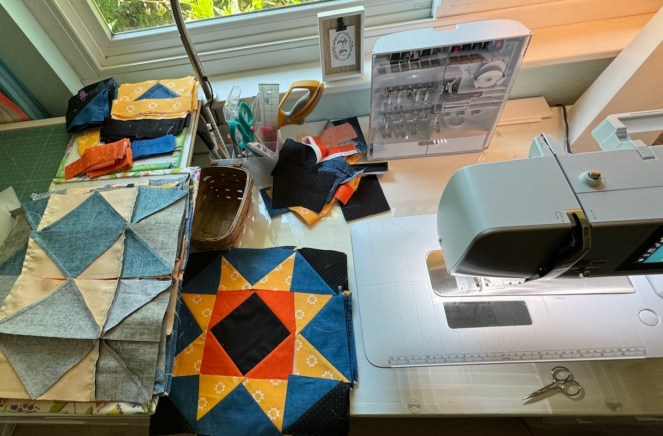
But while it is not hot news for us, the people who coined the term UFO (Un-Finished Object), how do these unfinished objects affect us?
Zumbrunnen notes that “Unfinished tasks lead to cognitive tension, a feeling of restlessness and discomfort that makes us seek closure and come back to it again and again. This effect goes beyond remembering individual items on a bill. It affects whether we achieve our goals, our creative output, and how we pay attention.”
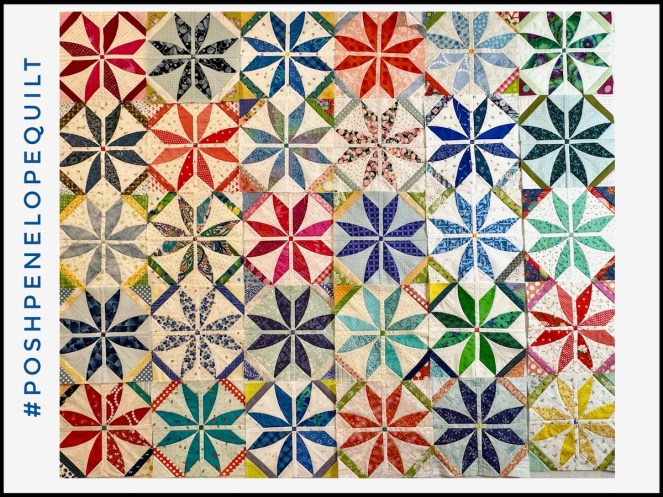
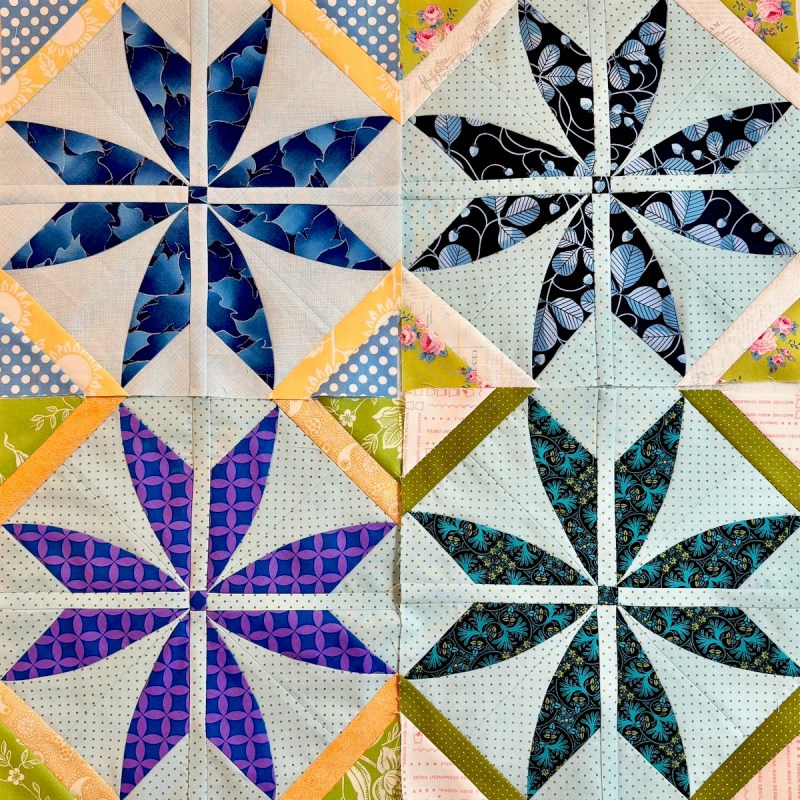
Carol and I were discussing our progress on our Posh Penelope blocks, and I wrote:
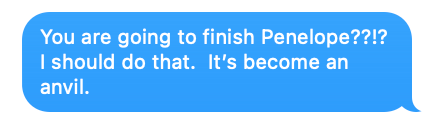
Public Service Announcement:
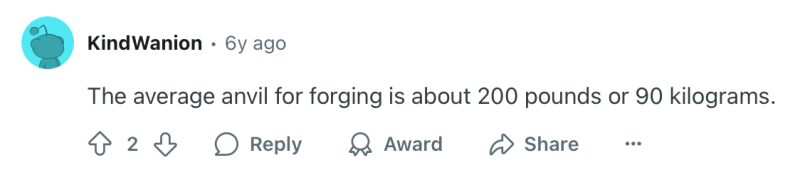
Another Public Service Announcement:
The Zeigarnik effect should not be confused with the Ovsiankina effect, an urge to complete tasks previously initiated. Maria Ovsiankina, a colleague of Zeigarnik, investigated the effect of task interruption on the tendency to resume the task at the next opportunity.
Yes, let’s not confuse the two, although maybe what I was experiencing this week was more of the Ovsiankina effect? Nah. I’ve been working on this Posh Penelope quilt for forever, like since 2020. In my mind, the Ovsiankina effect is more like finishing making dinner. Or changing loads of laundry.
Yet Another Public Service Announcement:
What does the Zeigarnik Effect teach us about multitasking?
The Zeigarnik Effect makes a powerful case against multitasking. Focusing on one task at a time will avert intrusive thoughts of unfinished work that will only create delays in finishing all the tasks. Completion of each task approached sequentially instead of simultaneously will clear mental space for the next task.
Will you please stop with these Public Service Announcements:
Yes. But you should know that taking the first step on a project, no matter how small, can create enough tension when the task is interrupted to motivate the resumption of the task, doing an end-run around procrastination. (I can’t help you if you are addicted to your phone. That’s a whole other blog post.)
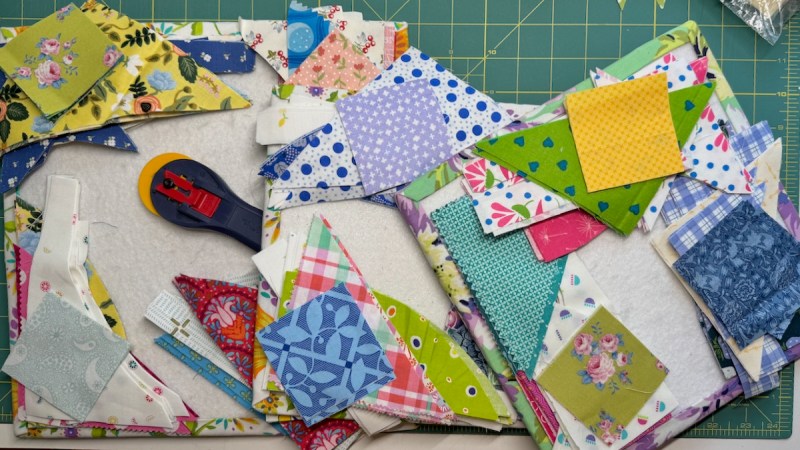
So I cut out the rest of the Posh Penelope blocks. Over the next few days, I’ll get to the sewing. Understanding that having this project hanging over my head (like an anvil) was in reality stopping my creative work, helped me get going in going forward.
Other Interesting ideas from Everts to aid in managing these open-ended tasks are:
• • Create intentional closure points in ongoing projects. Even if an initiative isn’t fully complete, establishing clear milestones allows your mind to experience completion moments.
• • Develop systematic ways to document and track progress. This helps reduce the mental load while maintaining awareness of important tasks.
• • Practice regular “mind clearing” sessions. Whether through journaling, team reviews, or simple list-making, giving your brain regular opportunities to process and organize open loops is crucial.
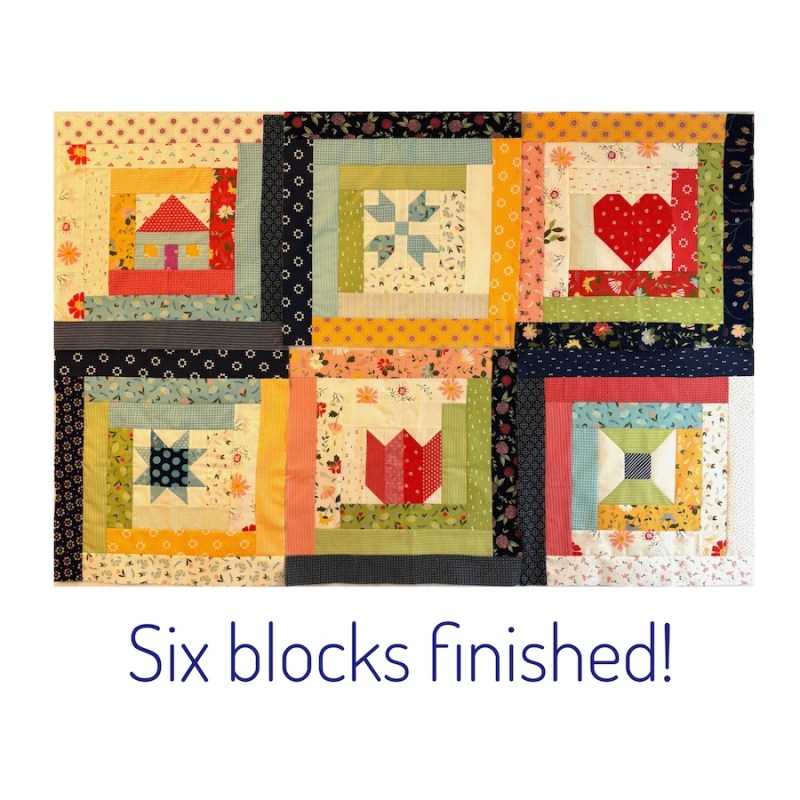
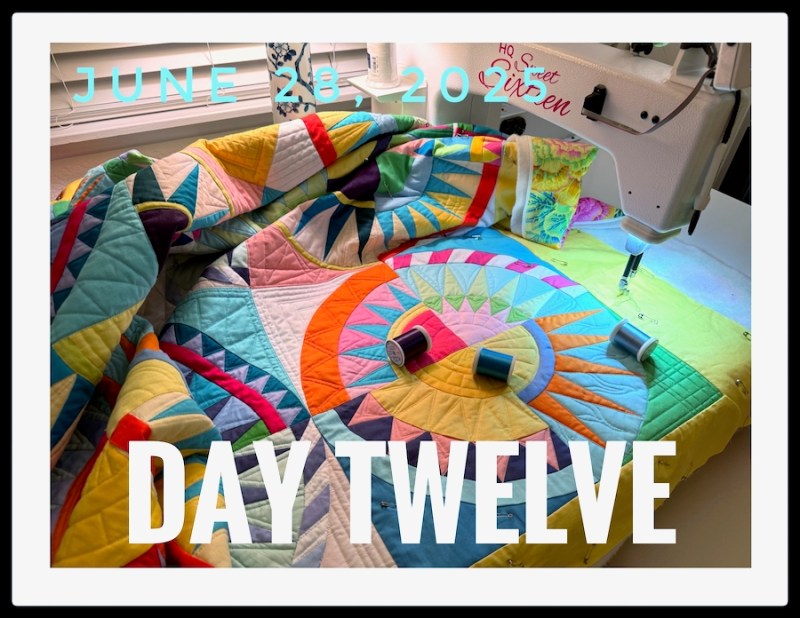
Reading this helped me understand the value of placing little labels (or “intentional closure points”) on my ongoing progress. With the BOM, it will run one year, so I know I’ll be finished with the blocks in December, and the quilt some time after that. With the quilting on my New York Beauties quilt, I mark the days so I know what I have completed as I want to finish this by early fall. With the Posh Penelope blocks, I made a chart to “document and track progress,” coloring in squares. These small signposts help me manage the tension that Zeigarnik identified, and keeps my quilting projects from torturing me with their incomplete state.
Good luck in all that you are working on–
Bibliography, by order of appearance:
Zumbrunnend, Adrian. The Power of Unfinished, blog.
Everts, Joshua. The Zeigarnik Effect: Understanding the Weight of Unfinished Business.
Unsigned article, Zeigarnik Effect, in Psychology Today.
How much does your anvil weigh? question on Reddit, my go-to source for internet information now that Google has jumped the shark and insists on putting resource-intensive AI into every answer.
Ovsiankina effect, discussed in the article on the Zeignernik Effect, Wikipedia.
Multi-tasking discussed in the Psychology Today Article (above), as is Procrastination.
And bonus: a video of Adrian Zumbrunnen talking about talking with bots, if you are into that sort of thing. Starts at 2 minutes in.
Discover more from OccasionalPiece--Quilt!
Subscribe to get the latest posts sent to your email.

 OccasionalPiece--Quilt!
Your colors are fantastic! I will patiently wait to see the finished top. it’s funny how colors can influence whether we like patterns or not. I’ve been training myself to look more at the pattern than the colors to really decide if I like a pattern.
I have been doing the milestones of a task since I was a kid. It’s just easier to finish a task when it’s not a whole giant thing. As you know, that’s how we eat an elephant.
Good luck with Posh Penelope! I would have renamed that quilt by now…
Loved today’s post. It certainly explains SO MUCH of my life!!!
I know myself pretty well and definitely feel the Zeigarnik effect. I do like your advice to have milestones for projects and when I do need to break up a quilt into a work in progress, meeting milestones is my next best method for keeping my peace of mind. This is all fascinating, and I’m glad you were able to make forward progress on you Penelope blocks, I hope that you can feel the tension ease and your creative process works better as a result!
I have long noticed that some projects mushroom into such a big task that it can feel overwhelming. At least in my mind. And then it’s done. That’s it. It’s over. I’m on to the next project and don’t often take the time to relish and appreciate my finish. Keep those Penelope blocks going. They are lovely.
I am ambivalent! I have enjoyed hopping from project to project this year – felt like it kept them fresh. On the other hand, I am DESPERATE for a finish and for some reason, every time I count up the Penelope blocks I STILL NEED EIGHT. Hopefully, my last count was true and this will be the FINAL EIGHT!!!
This goes to support one of my favorite philosophies that helped me a lot during my formal career, and, come to think of it, in my more creative pursuits:
Done is better than perfect.
This helps me have perspective about the standards I need to meet. Sometimes, perfect (or very close to it) is important. However, in almost every case, a little imperfection is acceptable and even useful. I recently wrote an artist statement that addressed the value of imperfection. Here is an excerpt:
One reason I choose to focus on [designing and creating] children’s clothing is that I want every child to understand what real love feels like. The imperfect and personal nature of hand-made garments echoes the imperfect and unique ways in which we all offer and accept love. I think it is especially important that children learn that both imperfection and variation are acceptable and even expected. Love shown by investing time and effort into individually crafted items is much more important than perfection. I have many privileged childhood and adult experiences of feeling enfolded by my very busy mother’s love when wearing clothing she crafted by hand in her precious spare moments. The most precious are those that include her hand stitches — stitches that were not all the same length, but always exactly the length needed.
Ha, ha. Your PSAs are so thoughtful! While it’s nice to give names and explanations to our foibles and idiosyncrasies, living with them can feel quite burdensome. The weight of guilt over an unfinished project is real (Since learning all this, you’re not feeling “tortured” anymore?); the mini goals I unknowingly set are worthwhile (like making myself complete a step of PP block-making before going to bed last night); and creating a UFO list is a visual reminder (it’s posted on the cabinet in my sewing room). Having now been enlightened by aspects of my human condition, I will happily continue as I am. 🙂 It’s also really nice to see you going from project to project – though multi-tasking is a no-no – because I see you making progress. Your PP blocks are especially impressive, and I’m thrilled for you to have finished making them. They are, in no uncertain terms, time-consuming to make. I’ll have eight more PP blocks made in July!
I completely love your your Posh Penelope but I’m very familiar with projects morphing into anvils. I feel that the Ovsiankina effect propels my projects when I start out but if progress goes too slowly (usually owing to an excess of non-creative interruptions) I ‘lose momentum’ and that’s when the Zeigarnik Effect kicks in…I struggle with multi tasking. Whatever I’m doing, I want to keep doing it until It’s finished, which is how I fall out of my blog into the garden every Summer or I have one quilt going on and on and on. I think having several creative projects on the go at once definitely makes for a more interesting blog and I’m always aspiring to be that person one day : )