
You know when I stood in the shopping area of Carrefour Quilt Show last September (2024), I wanted to buy up all the fabrics and patterns and everything, but alas my suitcase was small, so I had to limit myself. One of the choices was a series of small pouches from ABCDaires, with a soft velvety fabric with absolutely charming printed designs. I tend to buy something that I won’t see in the States, and this fit the ticket. I bought three: two kits and one that just had the printed fabric.
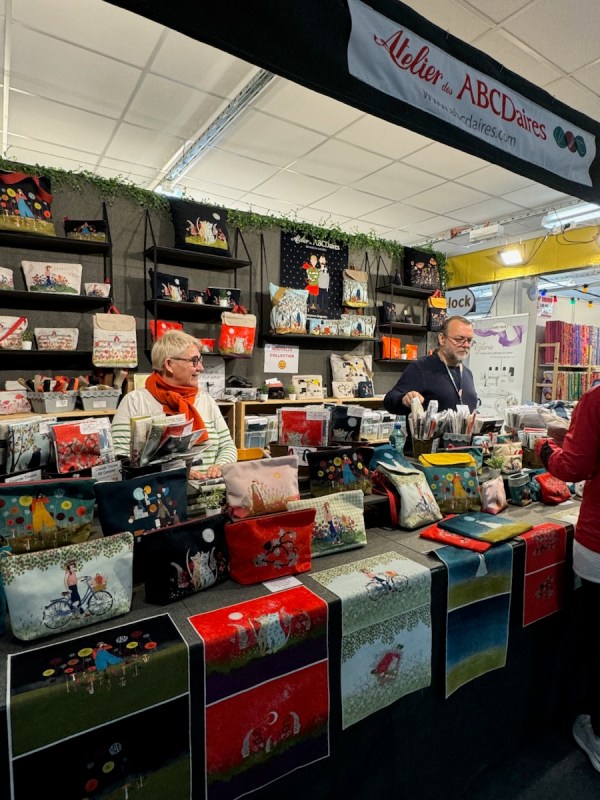
(taken with permission)
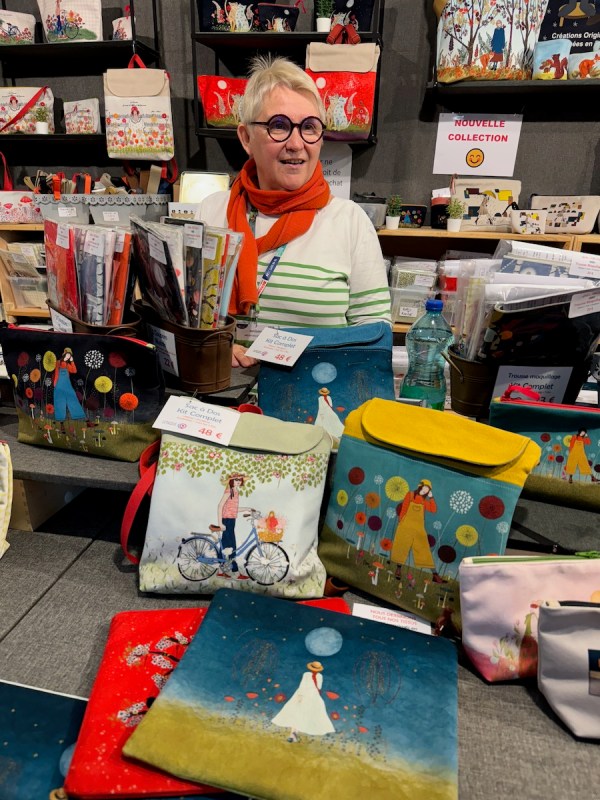
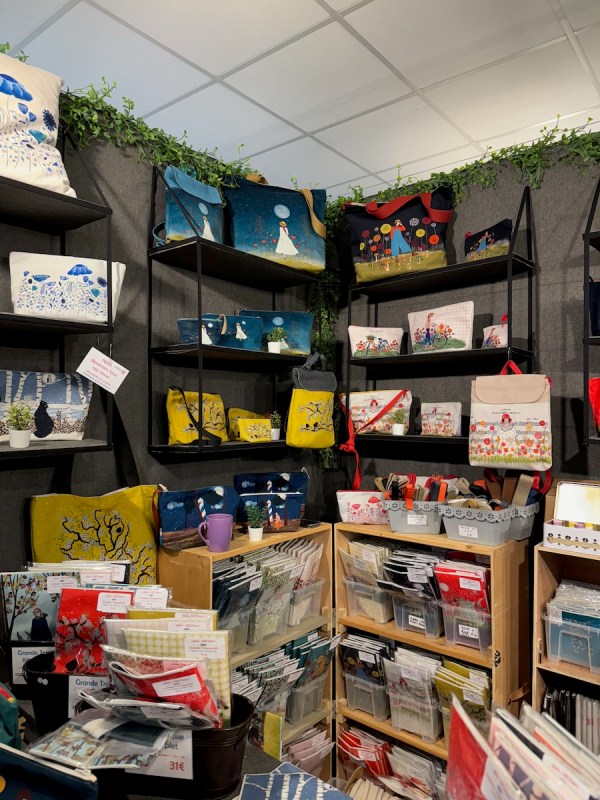
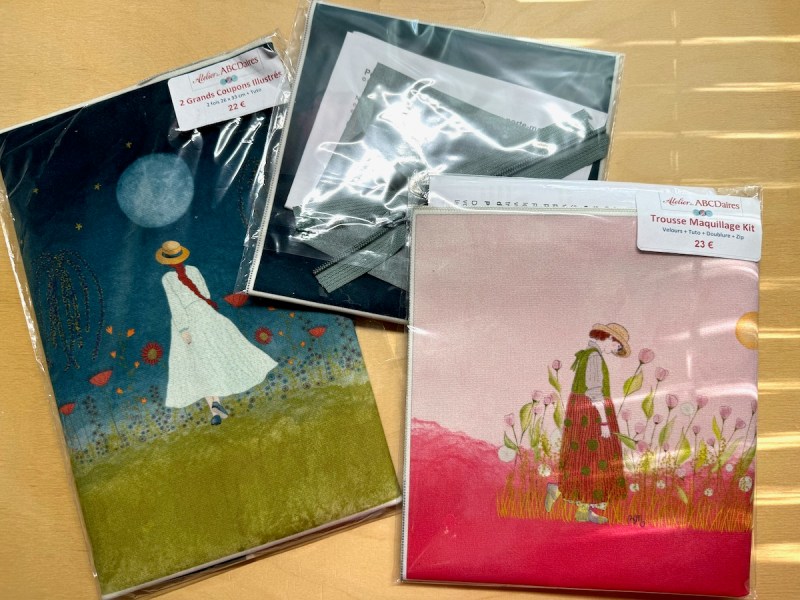
There is a front and a back to each pouch with different designs. One kit was pink with a girl in flowers on the front, and then just the flowers on the back. The colors were rich and saturated, so I was hooked.
However…Note to future self: Just.Buy.The.Kit. For the un-kit purchase, I luckily had a zipper that was a perfect match. However, the zippers in the kit were just a bit heavier duty, plus she included the lining, a waxed lightweight canvas.
But how can I sew it if it is in another language? you ask. Google Translate to the rescue. Let’s start with their website, ABCDaires:
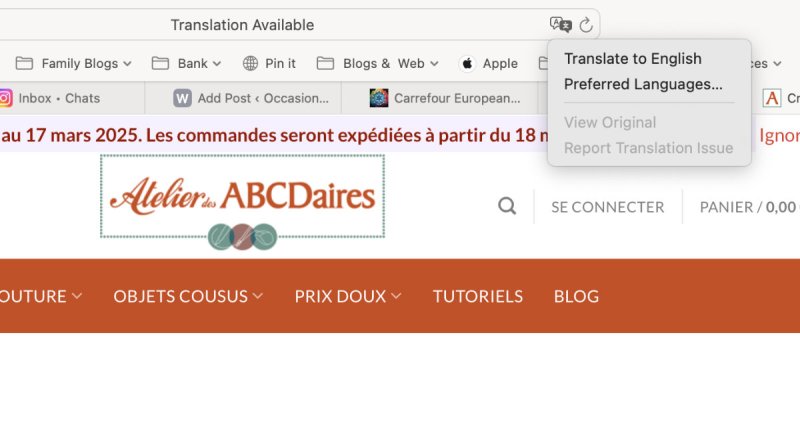
I have the Google Translate in my browser, so I just click on the little icon in the upper right of the search bar; in some reading I did it suggested that now you have to use Chrome as your browser to get that. (I don’t know–do some searching online.) Or you can head to Google Translate and paste in the URL of the page you want to see in English:
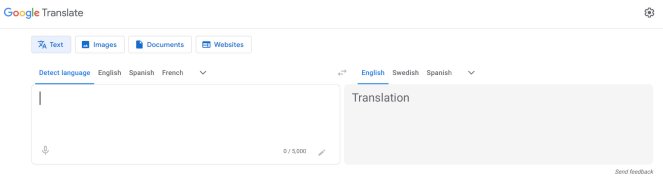
This is Google Translate (above). Click on the Websites box, paste in your URL and it should translate most of the language for you.
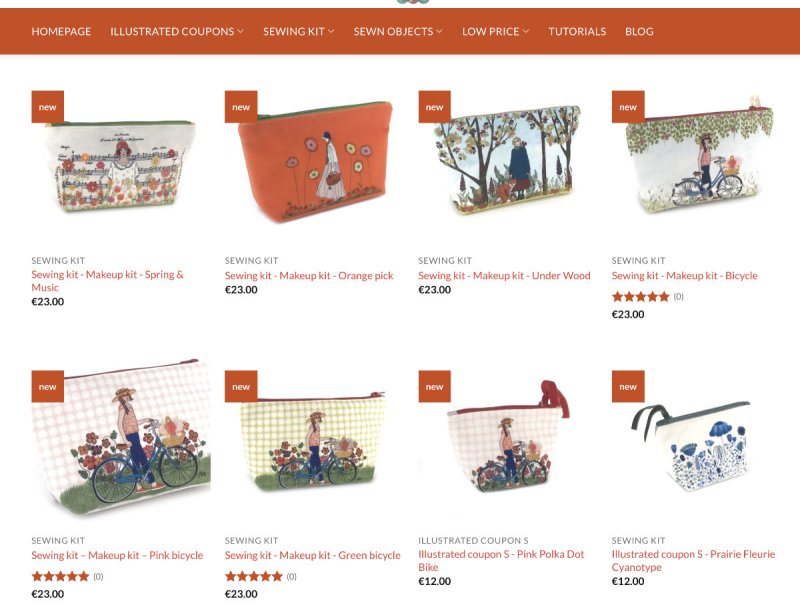
Now the website is all in English, and you can click around to purchase the little kit you want. Yes, you will still have to convert the metric measurements while sewing. I have a small ruler that I use for just this.
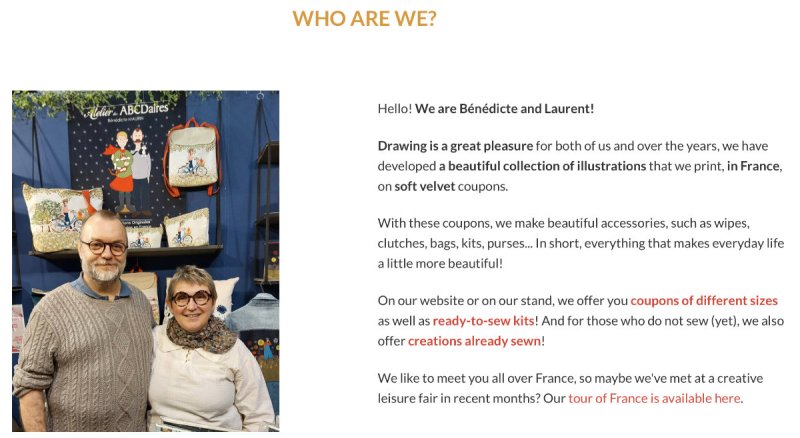
She was very helpful and just lovely and spoke English! They also have a downloadable PDF of instructions on their website. I’ll talk about that in a minute.
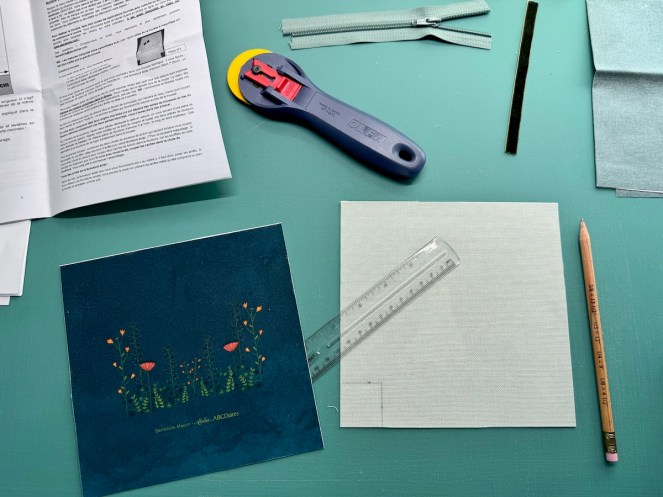
This is the smallest of the three I purchased. You can see the little ruler I use that has cm and mm marked on it. The first thing you do it mark off small squares in the corners, but she has two different measurement options. This was the first wrinkle in the translation business. Which one? I tried using my Google Translate on my iPhone. You open up the app, choose PHOTO and hold it over the paragraph:
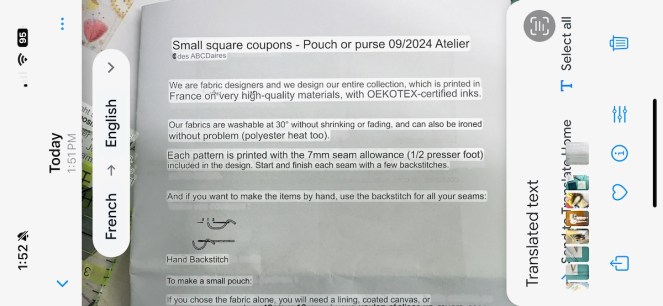
After a second or two, all the French is in English (I chose the language, but you could choose any). I learned a “coupon” is a “pouch” or maybe “fabric” or not (it’s not always perfect). So I went to the section about the corners, but alas, still couldn’t figure it out. I then went to math, something we quilters are good at. If the fabric measured X by X then I used the larger dimension, and if it was a different X by X, I would use the smaller. I measured the printed fabric, which gave me my answer. (I’m using “X” so I don’t give away her pattern.) I’m just saying, don’t be frustrated, but try another angle to solve your translation difficulty. Onward.
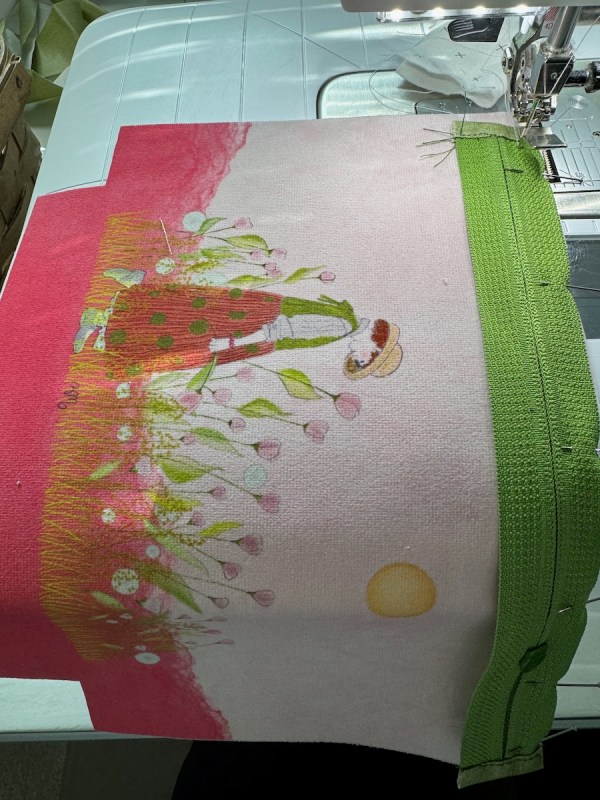
Ends go on the zipper, zipper gets sewn to the fabric…a usual sequence of steps for a pouch.
Since this is a velvet minky, I didn’t want to put a hot iron on it and scorch it, so I found my roller came in handy for flattening the seams. On the pink pouch, I opted to topstitch down the fabric with the zipper (she gives two options). I won’t do that again — in a minute I’ll show you why. [Of course it could be that I’m a dweeb at sewing pouches, and the results have everything to do with that.]
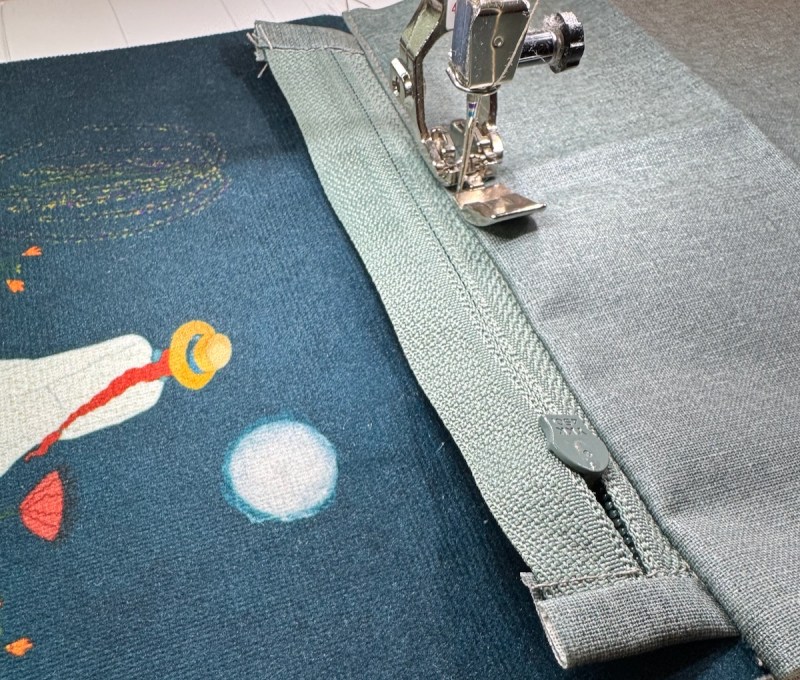
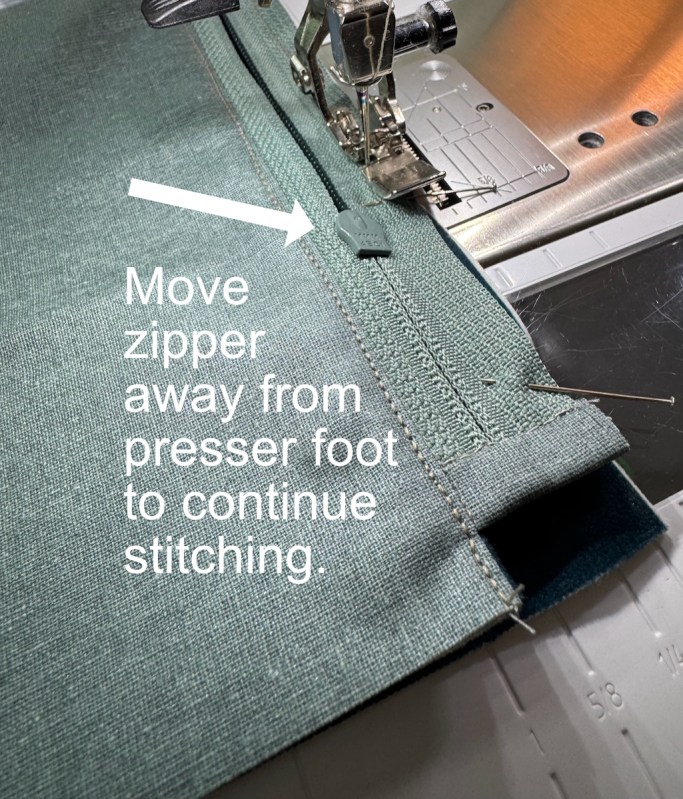
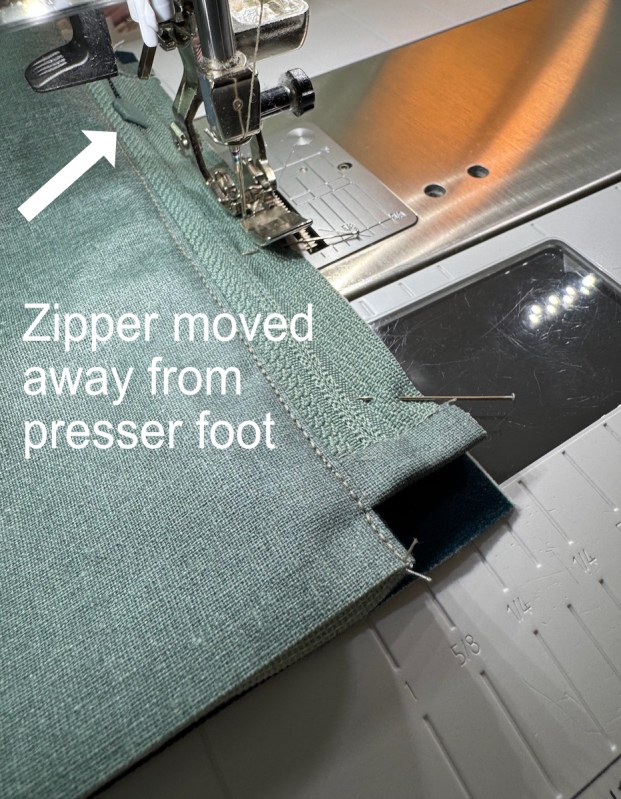
In the first photo, the designer fabric is shown smoothed away to the left, away from the stitching going on on the lining/zipper tape. As usual, when your presser foot approaches the zipper pull, leave the needle in the fabric, raise the presser foot slightly, and move it to the back where you’ve already stitched. This will eliminate bumps in the stitching line.

First one done! She has a clever way to put in the velvet ribbon so it becomes a nice zipper pull on a traditional zipper.

Here we go again. I used a bit of fabric from the stash for the zipper ends. I chose a spotty lining fabric (in upper right corner).
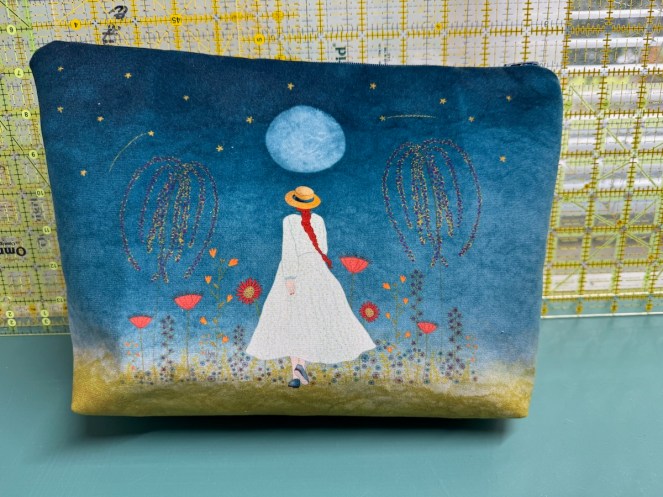
Done! The second one went so much faster, and I only top-stitched on the zipper, not the top designer fabric.
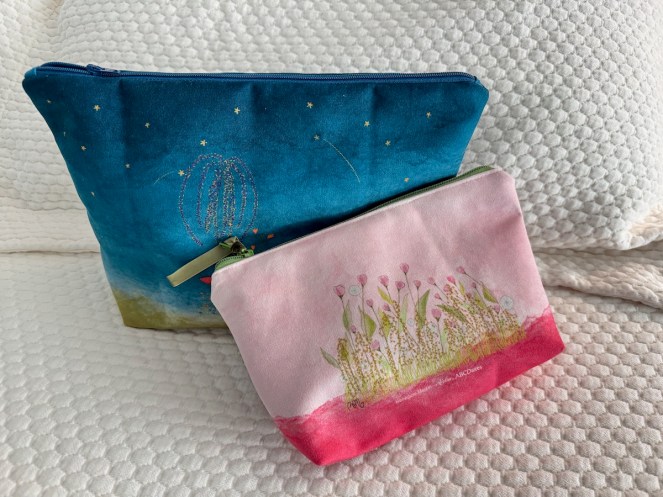
Back designs on both.
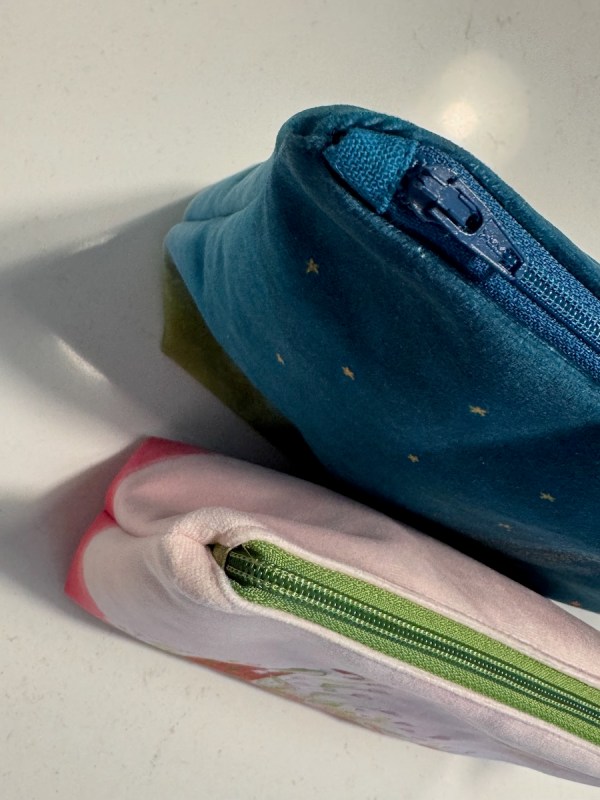
Notice how wonky the zipper ending is on the pink? I mean, it’s functional, but not as lovely as the blue zipper. I chalk it up to how the top-stitching impeded the inner seam. (I need to find a cute ribbon for the blue bag.)
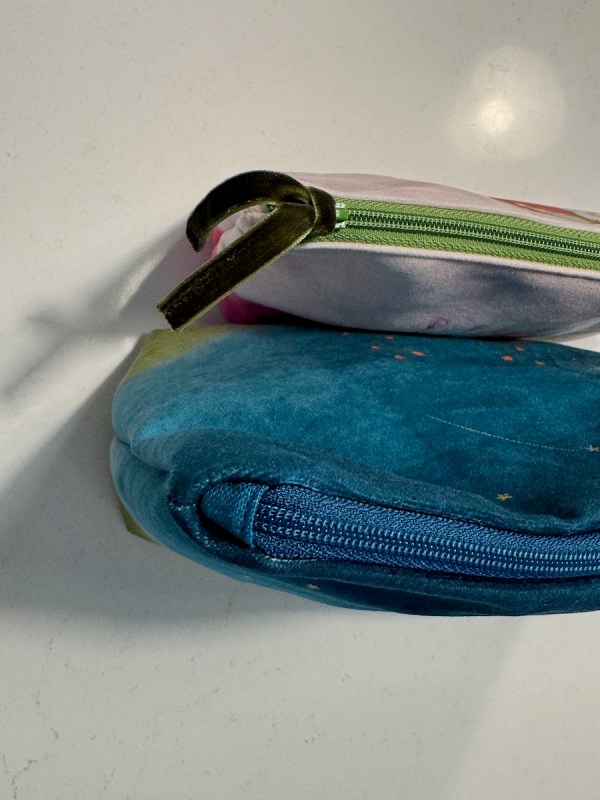
UPDATE: I’ve since sewn the last blue pouch, and now I think it was the coated lining fabric “zipper ends” that gave me so much trouble. The fabric “end,” shown above, was much easier to manipulate. So maybe, if you make these, find a coordinating fabric, rather than use the coated fabrics.
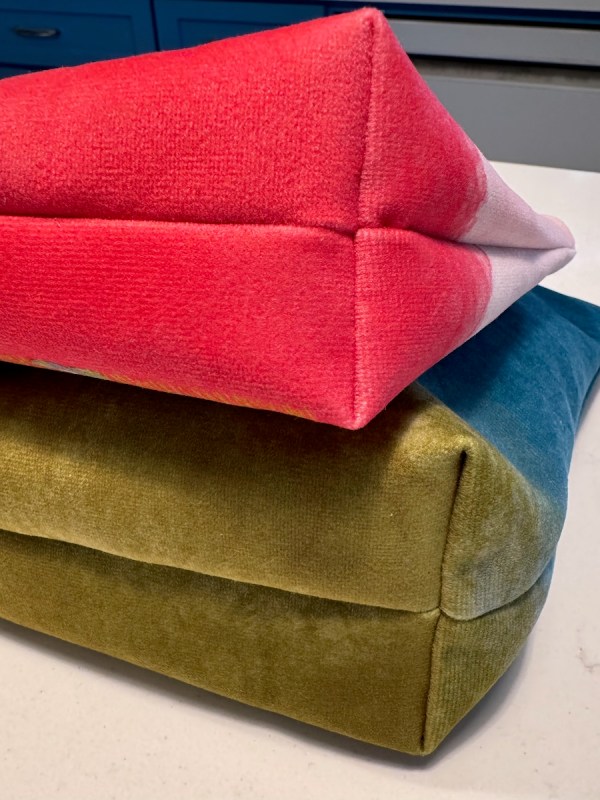
I love how the bag color blends into a second color for the base.
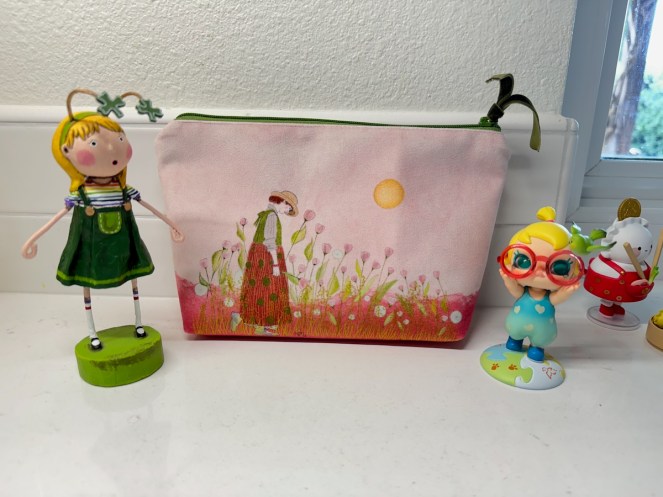
Baby Molly and St. Patrick Day Girl posing with the pink bag. (You know I have to put Molly in here somewhere.)
Now, a caveat. This was an easy translation task, relatively. The company had an English download for the instructions, and I already had the Google Translate installed in my browser. I was also familiar with how the iPhone’s Google Translate worked too, having tried it out on an earlier trip to Japan, where I found out that my breakfast roll was made with the “breath of heaven.” (Okay, so it doesn’t always work so well with idioms, but I took that to mean it had flour in it.) The app has improved greatly since then, I assume because of a a positive use of AI in our lives.
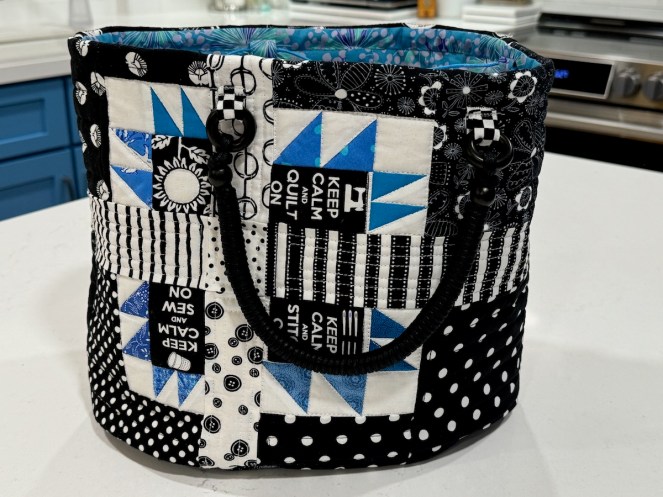
I struggled more on this project, made from a book I’d purchased at Carrefours and also published in French. The trip-up came because it was a JAPANESE bag, translated into French:
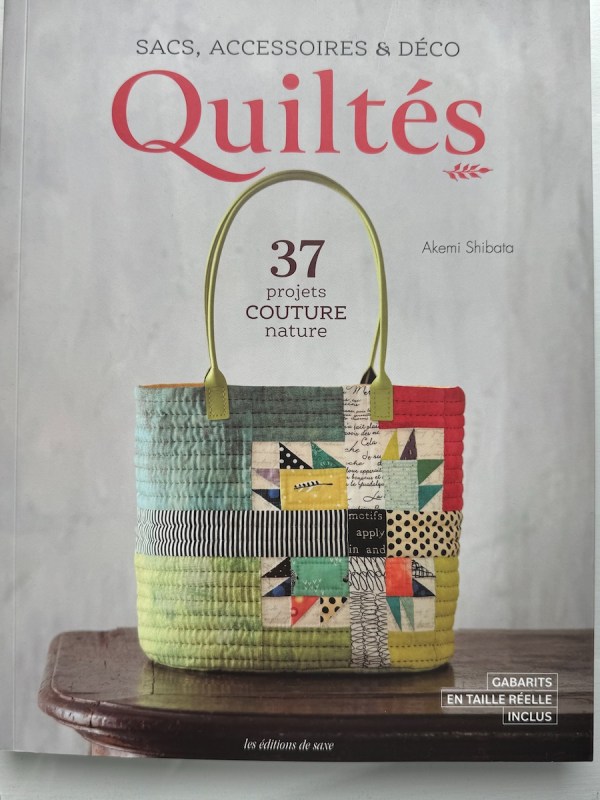
I did use a lot of “how to sew Japanese bags” searches on the internet, with questions like “Do I trace the pattern off the pattern sheet in the back of the book?” (yes) and “Are seam allowances included?” (no). This required a huge MIND shift, and aside from sewing the bottom to the top edge of the bag, I made it. (That’s why it looks upside down, ahem.) I did a lot of improvising, but I also love it, too.
I guess what I want to say is that it is a big world of quilting out there and we can always stand to have our horizons enlarged and widened, helping us to bridge all the acrimony and bitterness that can sometimes be found around us. I am in minor grief just about every day with the parts of what I once held dear being taken apart and sold for dross. So I’ve stepped up and purchased another subscription to a news organization, donated to three different local public broadcast stations, apologized to my Canadian friend Kaylie for who I’ve made two baby quilts, apologized to some scientists I know who won’t get funding for their research saving crops from pests (I do like to eat). I guess I’ll soon be apologizing soon to Greenland, too. And Mexico. And Europe, where I’ll be this year — I hope they let me in. I hope America lets me back in, and lets me have my phone after going through customs. I remember traveling in Italy when Hilary Clinton was running for President and the taxi driver went on and on about how her opponent was like Berlusconi, a real rat, he said. I assured him that she would win. Haha, spoke too soon.
I guess I just want to say that make friends with our international neighbors, sew their projects, buy American products (so they can survive the boycotts from other nations), but mostly just sew. I could go on and on, but I have many friends who are very happy right now, and I love them too. Mostly I just try to translate my complicated feelings and make the results come out with a bit of peace, a bit of kindness and a lot of forbearance.
Sort of like sewing with beautiful fabrics from a lovely French shopkeeper–

Update: I had some questions about what kind of fabric this was. After reading this post, I’d say it hews closer to a product similar to Celosia Velvet, as the back is very sturdy and is not stretchy, nor drapable.
Discover more from OccasionalPiece--Quilt!
Subscribe to get the latest posts sent to your email.

 OccasionalPiece--Quilt!
The pouches are lovely Elizabeth! I think I’d call that fabric an uncut velvet or velveteen. It looks so soft! And the graphics are so pretty! Sadly the Australian dollar cannot compete in the international community. The pouch kit alone would cost me $Aus40, before I added postage. And we know what that is like!
The USA has provided research funding to our CSIRO here in Australia, and even their employees there were sent questionnaires about DEI! But you have no need to apologise. I think the majority of the world’s population see them for what they really are. I saw a story on Threads about not giving up hope! That is certainly how I try to approach the daily news cycle.
Your pouches are just lovely. I so rarely make anything small like that and often think I should to use up my stash. I don’t like following directions. Haha says the former pattern designer. With all the various projects you have tried and investigated do you have any thoughts on using old linens in a quilt? I’ve just gone through a box of my mother’s and grandmother’s linens. It seems a shame to keep them boxed up but I’d never use them for a tablecloth. They’re either not my style, or stained and frayed. Anyway…just thinking of how I might use them. Off to search for ideas.
Lovely pouches, the perfect choice of what to bring home. And yes, I am feeling all the feelings of apology and sadness and powerlessness that you express, myself, so thank you for sharing so I don’t feel alone. I’ll just keep sewing through it, and try to manage!
-Beth
I love those prints on the pouches. The way the color fades is so neat.
You’ve certainly demonstrated your determination to succeed in the face of a language barrier and different terminology! The pouch fabrics are lovely, so I understand why they attracted your attention. And now that you’ve gone to so much effort, will you keep them for yourself? Or will you thoughtfully determine who is worthy enough to receive one? While it’s nice to have a keepsake or two from one’s travels, if I ever go anywhere, I think I’ll buy ready-made. <smile>
The bags look delightful, and I like all the ways you thought about working through the translation. I would definitely lean on the x” by x” dimensions as well to decode. I hope that however these pouches are used they are well appreciated!
Nice bags! And I think I’ll email you more privately about the rest.
Lovely bags, and I admire your “stick-to-it” ness in solving that pattern. Congrats! As to the other, I pray a lot.
Blessings,
Angie in SoCal
Thank you for taking the time to share this post on translation. I’ve saved the email with the link so that I can refer to it whenever I come upon an opportunity to translate something.
No matter our political party, we have all been concerned, depressed, and worried about what’s going on in this world, and the direction of our country. What comforts me is knowing that God is the one that is in control. He is not sitting up in heaven surprised by what’s going on here on earth. And while we may not understand, what he allows or orchestrates, he promises in his word, the Bible to give us His Peace. When I worry, I hold onto these words of Jesus.
“Peace I leave with you, My peace I give to you; not as the world gives do I give to you. Let not your heart be troubled, neither let it be afraid.”
John 14:27 NKJV
https://bible.com/bible/114/jhn.14.27.NKJV
Those pouches are beautiful with their gorgeous illustrations and you did well to stick with the translating. It’s nice that you found something you wouldn’t have come upon elsewhere.
And who knows what is becoming of the world lately. We are going to dogs here! But you certainly have nothing to apologise for. Your blog is a little light in a mad world and I’m quite sure you will be welcome wherever you go 🙂