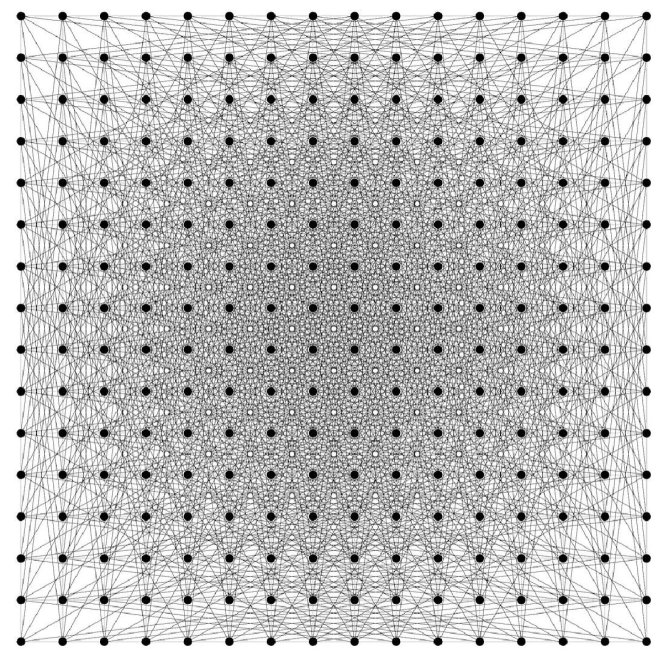
Eric Hodel, a scientist and writer of The Intrinsic Perspective substack letter, described a breakthrough by AI this week. It involves the above image, which was the answer proposed 80 years ago by mathematician Paul Erdös to the question “If you place a set of nodes down on a plane, how can you organize this set of nodes such that as many pairs of nodes as possible are an exact fixed distance apart?”
If you are a quilter, like I am, you looked at this and thought, Can I make a quilt out of this geometric design? for that’s what we are all about; that’s what caught my eye. Do I understand the above mathematical question? Not in the least, but here’s the new answer, courtesy of machine learning:
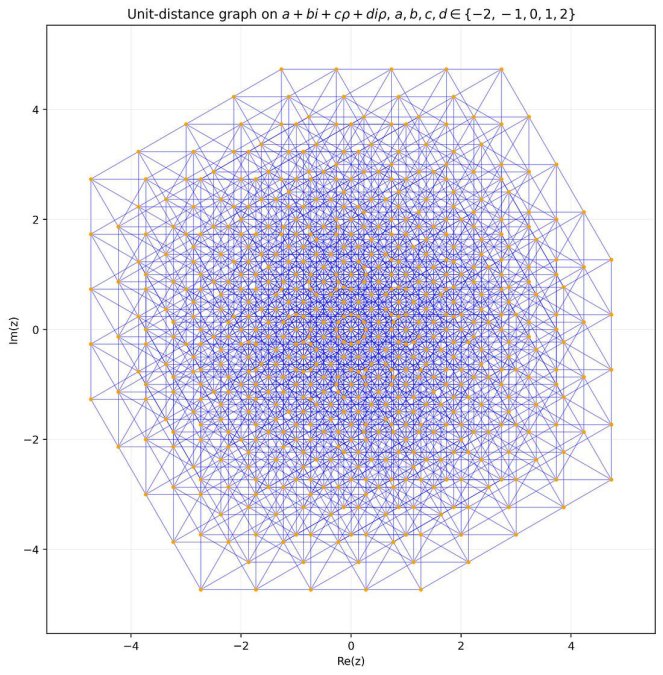
Nature magazine’s headline reads “AI cracks 80-year-old mathematics challenge — researchers are astonished.” The first drawing looks like that string art we made in grade school, where there are all these nails driven into a board in a grid. That was as far as we could see, as much as we knew to do at that early time, and we put our heads down and concentrated and wrapped our string around the nails.
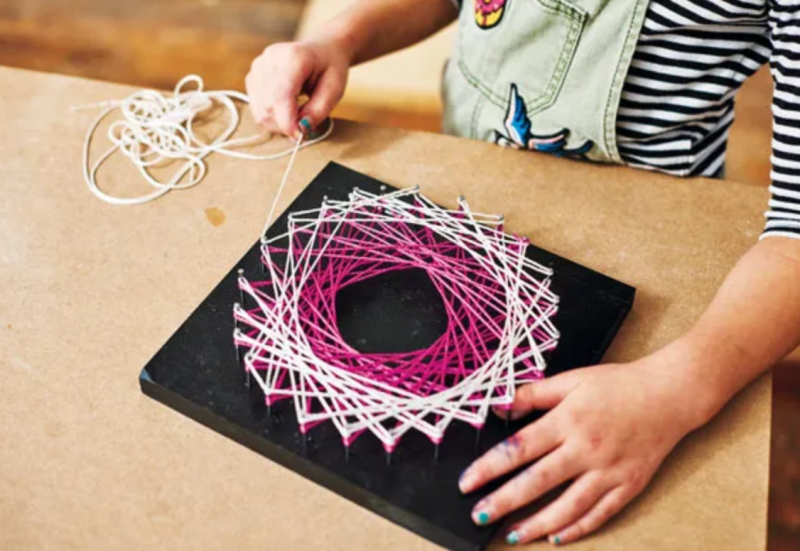

Years go by, we get busy, advances in science and in life are made and we get older, we realize the wisdom in the old adage my mother used to say about keeping your eye on the sparrow: paying attention to what’s important. I could say something here about AI and its intrusion into our lives: some of it helpful, some of it not. However, I’d rather pay attention to the things I can make with my hands, keeping my eye on things I can discover myself, building relationships with the humans around me.
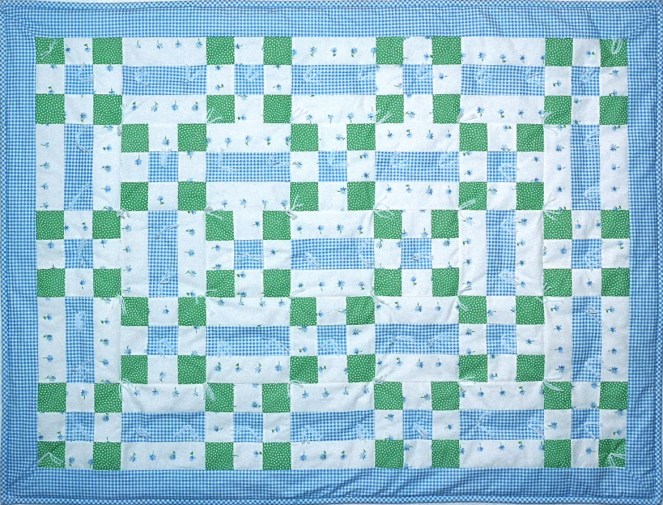
I made baby quilts for all of my grandchildren. This is Alex’s and I used one of my favorite block at the time: a nine-patch. This little boy turned 22 last week, I say with some shock.
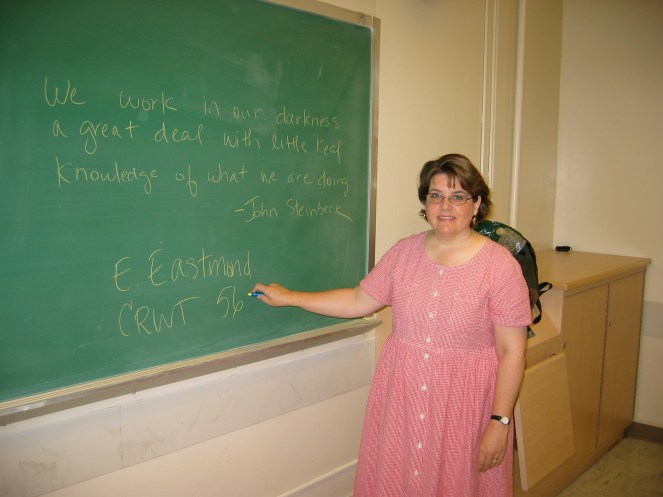
That year I was teaching Creative Writing while finishing up my MFA. I sewed very little for two years. It felt like forever.
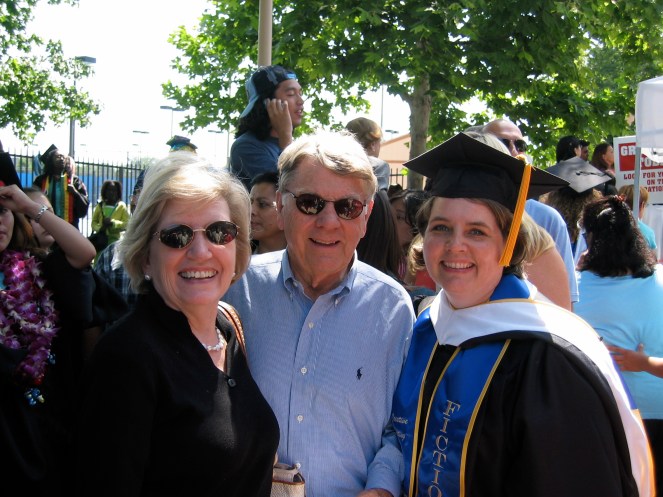
But it did end, here, with my parents and family in a jubilant day. They — and the grading and the teaching and the going to classes and the little first grandchild I held in my arms — are now gone or grown. Did I keep my eye on the sparrow? The answer is obvious on some levels: the university gave me my degree. But my eyes are not everywhere, nor can they be. And we move on, hopeful for forgiveness for what we miss, or cannot yet see.
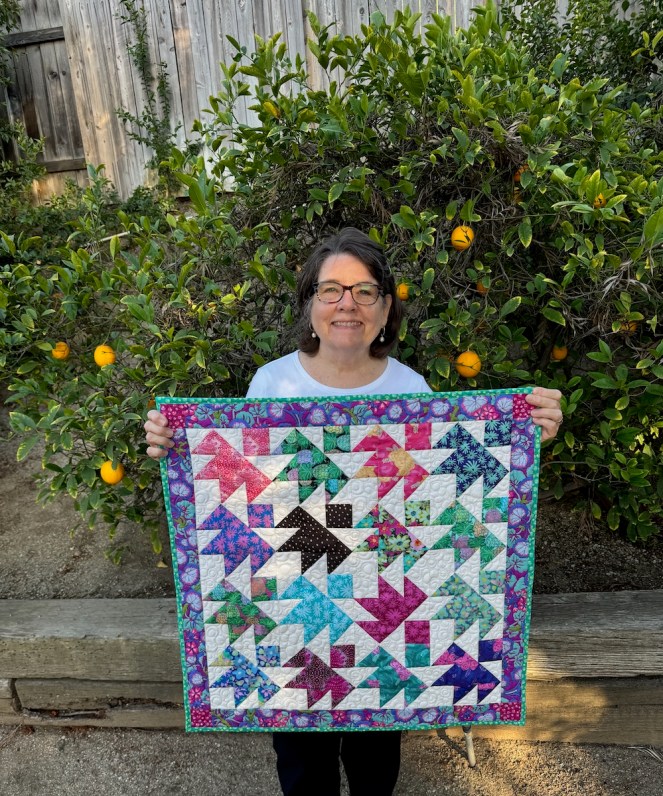
And here I am now. I do not teach, whether it be in a classroom full of 20-somethings, or in a Guild workshop, which I also did for a while. I still collect interesting quotes (see the Steinbeck, below). I live a relatively quiet life, as our children are all grown, the grandchildren nearly so. How to keep my eye on these sparrows, now that they have flown away?
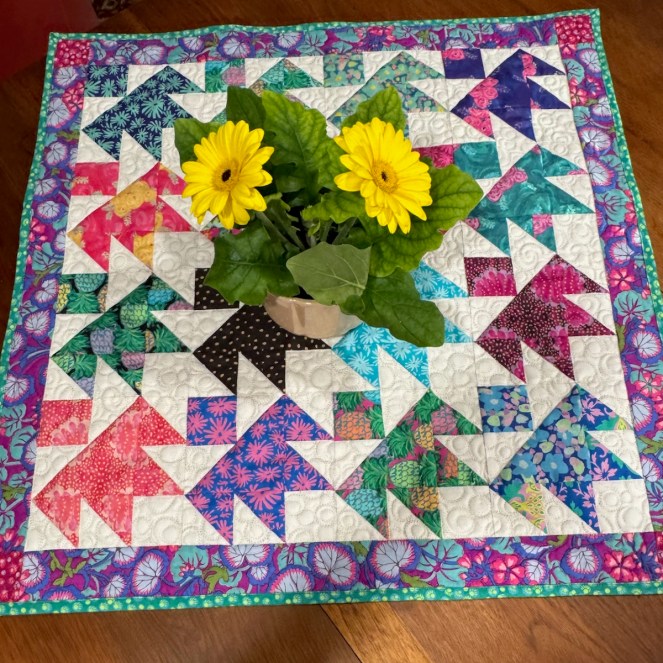
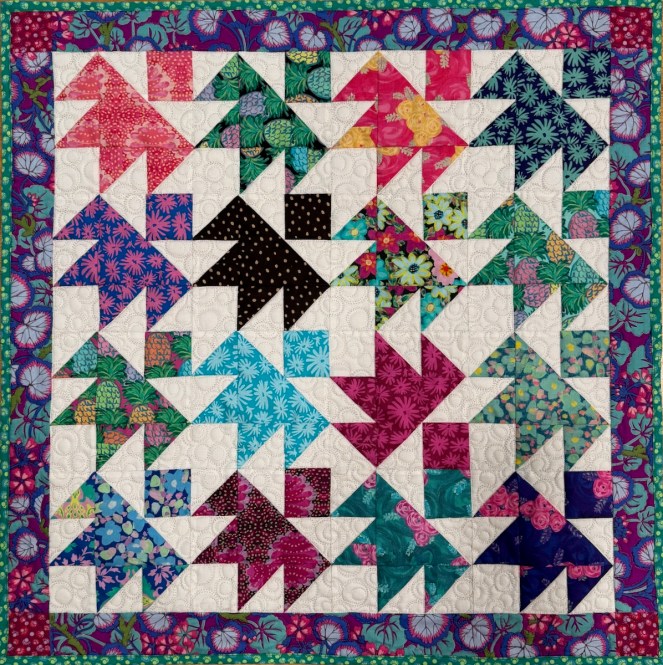
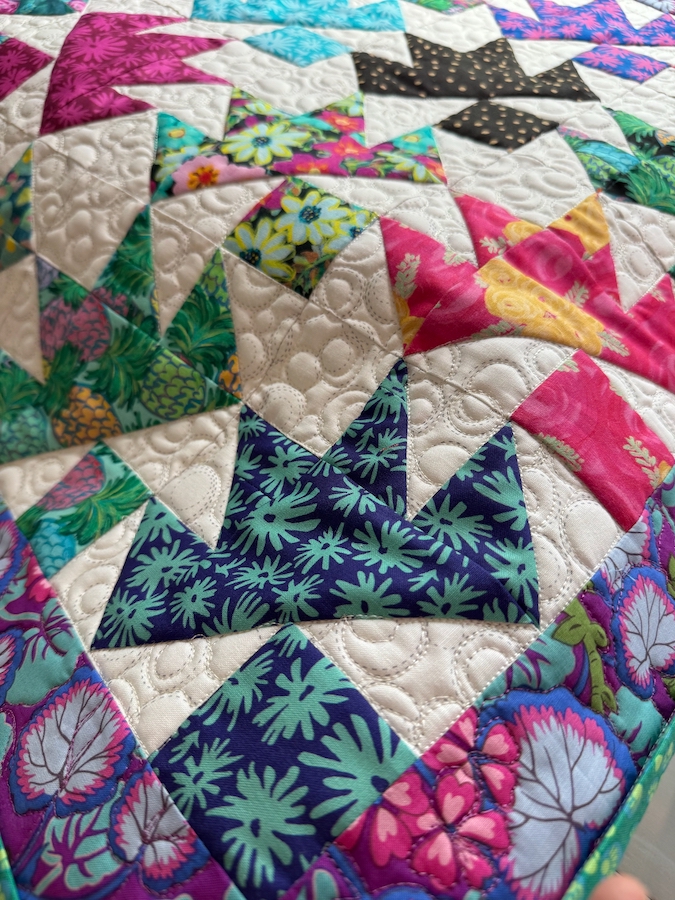
I do what I can, keeping in mind my mother’s advice, but also realizing she said it for herself. The small quilt is titled His Eye is On The Sparrow, and it comes from the song that continues, “and I know He watches me.” And so I depend on others. I let a lot more things go, I get a lot less done, but it is still a gratifying life: this making quilts and writing about it…and seeing the sparrows when they fly home for a visit.
Thanks for reading, and thanks for keeping your eye on this sparrow–

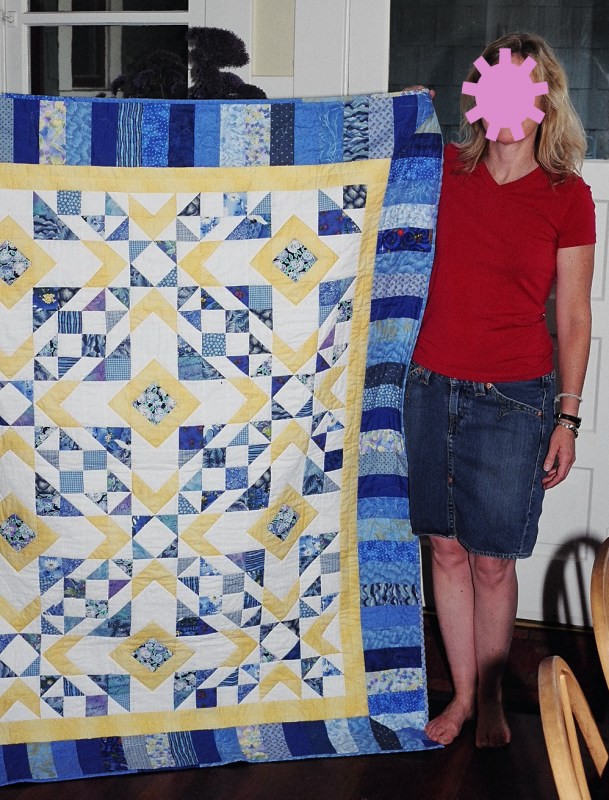
Postscript: As a thank-you, I gave my grad advisor a quilt I’d made in a Mystery Quilt Along before I started grad school. Besides Alex’s quilt, this is about all I sewed during that time.
We work in our darkness a great deal with little real knowledge of what we are doing. ~John Steinbeck
The quote on the blackboard (chalk! how quaint!): I wrote a quote on the board every day, and had them free-write for 5 minutes in their journals to loosen up their writing hands and minds.
Alex’ baby quilt was Quilt #55. My grad advisor’s quilt was Quilt #56. The sparrow is a free mini-quilt pattern, available in an earlier post on this blog.