Quilts

Pineapple Quilt Block (for Bee-mates)

Queen Bee

As my friend Susan of Patchworknplay says, I’m Queen Bee.  I wrote this post as I had both my bees,  the Always Bee Learning Bee (August) and the Mid-Century Modern Bee (November), make this block for me.

Pineapple Block August ABL

When thinking about what I wanted, I thought I’d try a Pineapple Quilt Block, but use a paper foundation piecing technique to keep everything true and accurate during the process.  This is an 8″ block when finished (8 1/2″ when you finish your block for me), and I’m using solid fabrics coupled with small print fabrics with a WHITE background — no grey, no tan, no beiges, just white.  In this bee we also mail out fabrics, and some of my bee-mates have already received theirs; I mailed them out early because of traveling and family visits in the last half of July.  Idid this as well in November for the Mid-Century Modern Bee, but for that bee we typically don’t mail fabrics, but simply provide descriptions and examples.  **NOTE: If you feel you have too many of the same prints, feel free to substitute in any from your stash, as long as the print background is bright white, and the figures are small rainbow-colored designs.  Ditto for the substituting the solids. I tried to distribute them randomly, but you know how things go.**

I’ve written up some step-by-step directions (below) but I got the paper foundation from Generations Quilt Patterns, another website with a really good tutorial on Pineapple Blocks. (They have a discussion of setting the blocks on this page.)  Their ideas and explanations are top-notch, so if you find my step-by-step confusing, feel free to step over to that site and take a look.  If you want the pattern, head over *here* and download the 8″ size of the Pineapple Quilt Block.

Cutting Chart Pineapple(Chart modified from Generations Quilt Patterns.  Used with permission.)

Using the diagram above, which is modified from Generations Quilt Patterns *here* cut your pieces to size, keeping track of which is which (solids vs. light bright prints). I cut all my strips 1 and a 1/2″ wide as I didn’t ever want to have to mess with unpicking if it went on slightly skewed.  (NOTE: for the outer corners (#38-41), sometimes I just cut a 3″ piece of fabric by 6″ piece of fabric.  I know the corner will be on the bias that way, but that’s okay with me.)
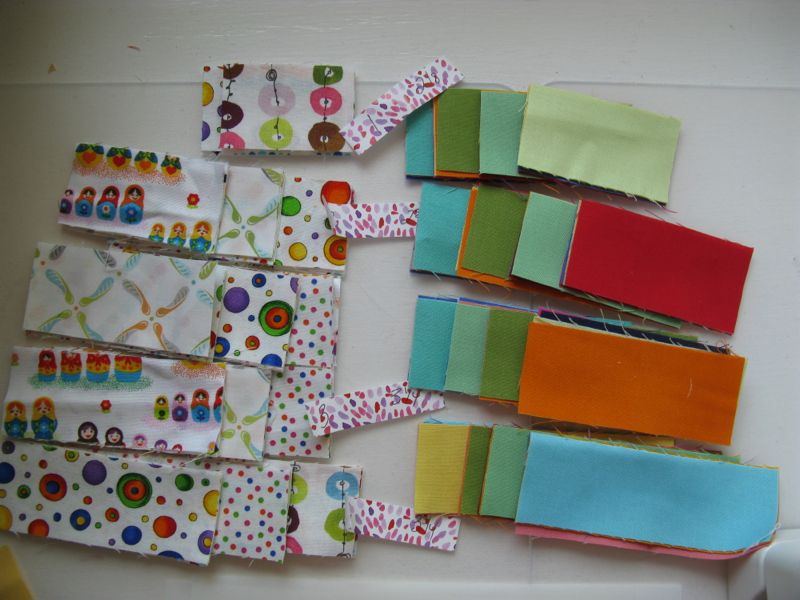
5_ Pieces Lined Up

Here they are, all cut out and ready to go (I am doing multiple blocks, so don’t get confused by what you see above).

Step One

1_Center Square affixed

Using a glue stick, dab a small amount of glue on the small square and glue it to the back (unprinted side) of your paper foundation chart.

Step Two

2_Beginning of First Row

One by one, align, then sew on the first set of print strips, using a 1/4″ seam.
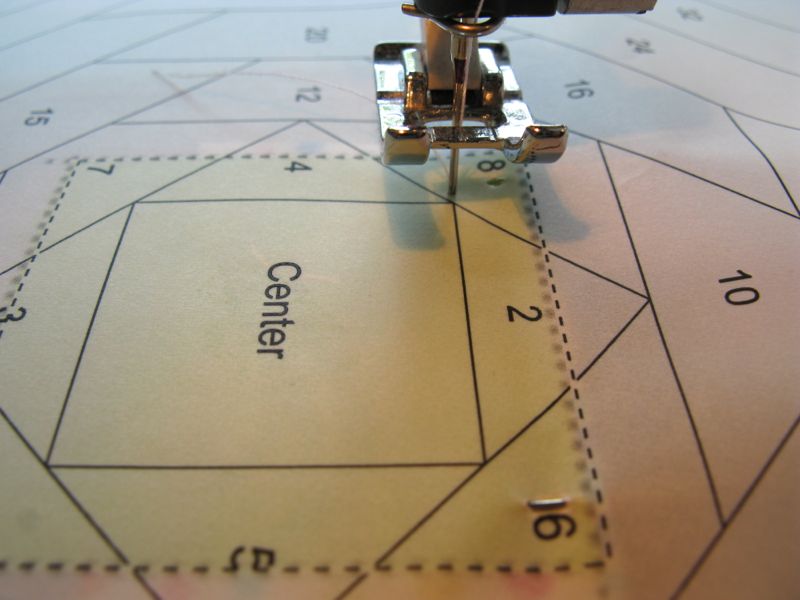
3_ Beginning of Stitching Line

When stitching on this, and all other rows, start your stitching a couple of stitches before the line, and finish a couple of stitches beyond the line, so as to secure the sewing.

4_Ending First Row

I sewed on the first two, pressed them to the side, then did the next two.  I learned to pin the fabrics so as not to have slippage.
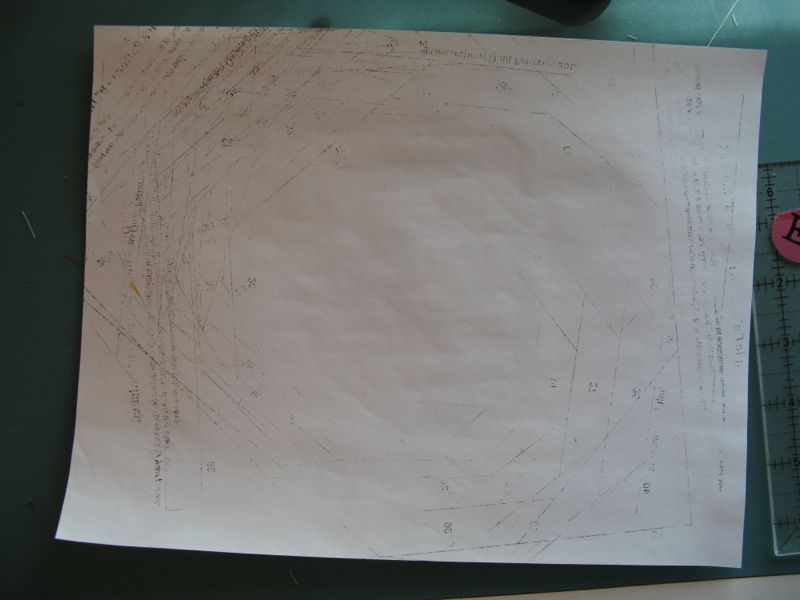
Messy Ironing Paper

I printed out your parchment paper on my Laserjet, which can leave a residue on the ironing board, so I put down a piece of paper and pressed on that.  This is the messy paper at the end of my pressing session (sorry about all the transfer stuff).

Step Three
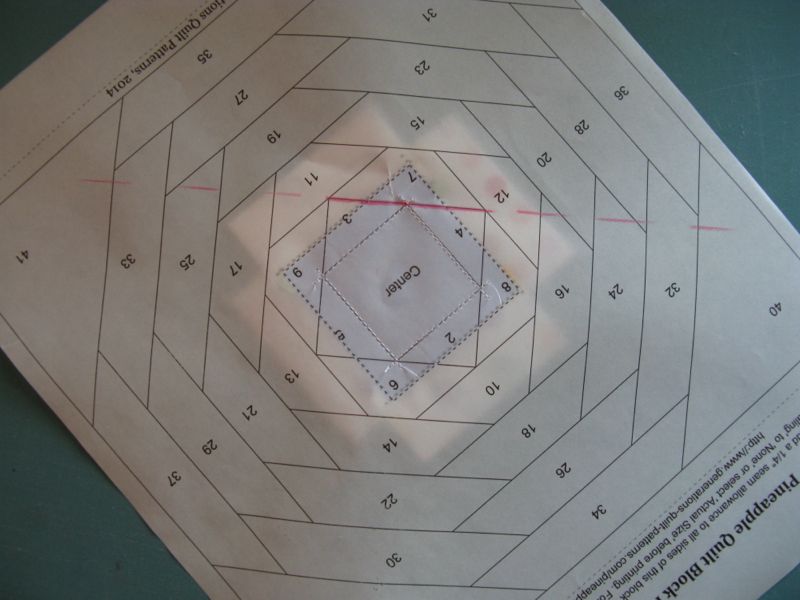
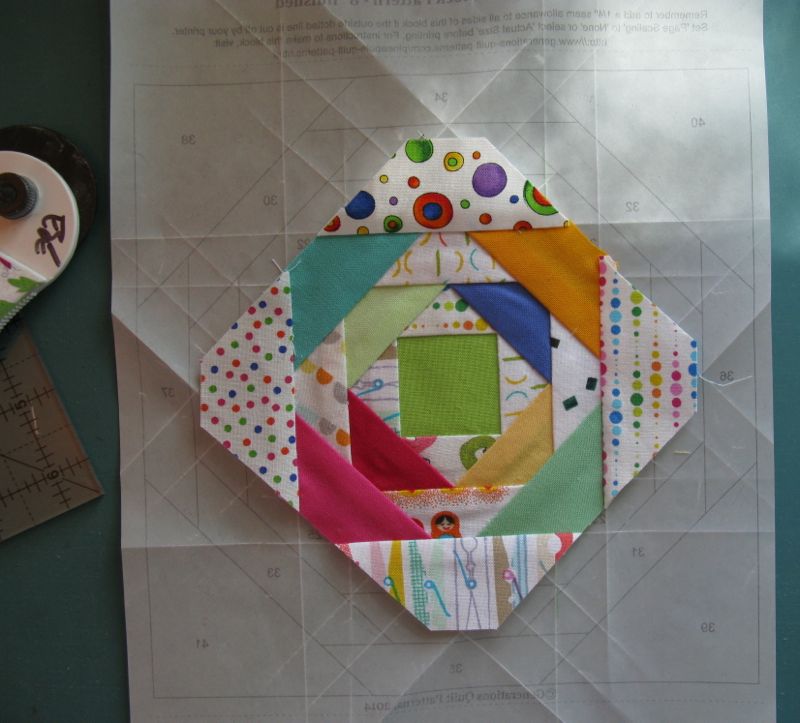
6_Cutting and Folding_1

Fold back your parchment paper in order to trim it up.  I sketched in the first fold, above, in pink.
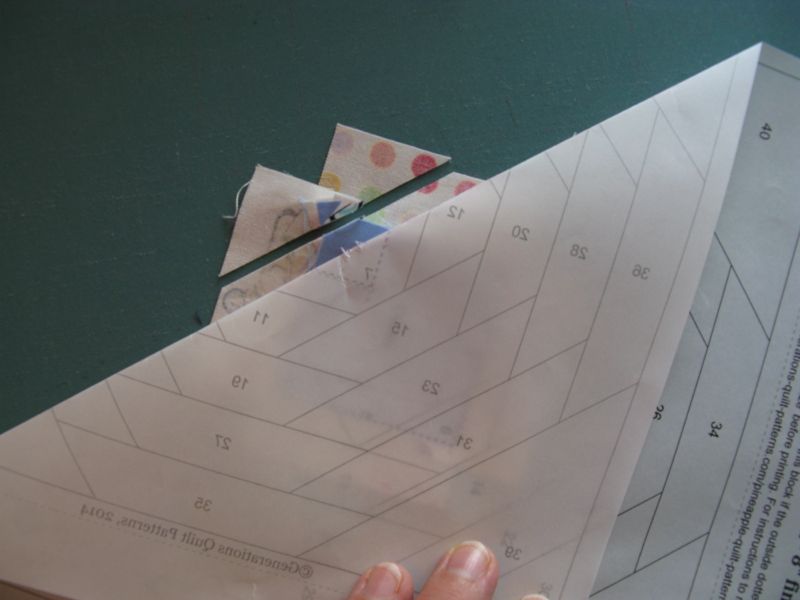
6a_Cutting and Folding

Lay your ruler so that 1/4″ peeks out, then trim.  Again, I used Generations Quilt Patterns as a reference, if you need to read or see it differently.
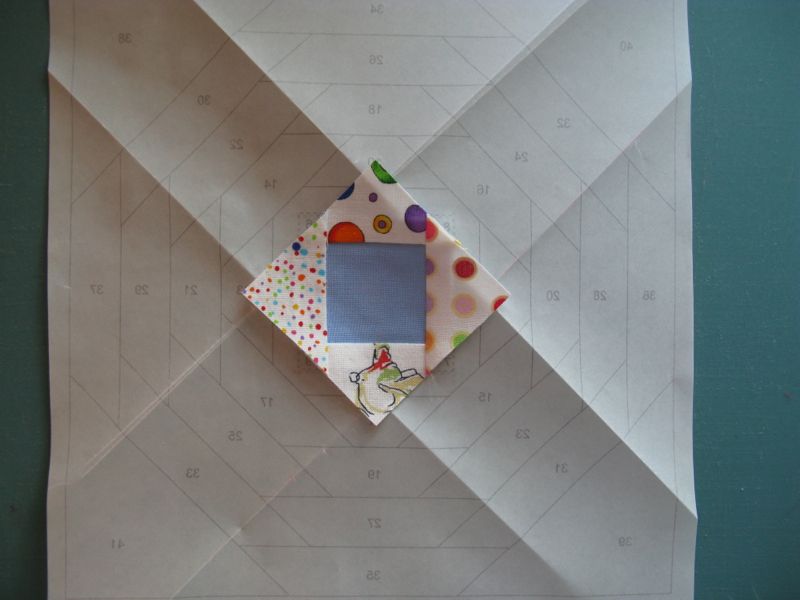
7_First Row On

All four sides have been trimmed (those fold lines look so crisp in this paper!).

7a_Stitching First Row

Here’s what the stitching looks like from the printed side.  Notice I’m a couple of stitches over the line every time.  Generations recommends a full quarter-inch over, but it tore the parchment paper too much.  Two or three stitches will be fine.

Step Four

8_Second Row

Repeat this process, using the solids this time.  At this point you can do two at a time (opposite sides, like the yellow and green shown above).  Stitch those, press out, then add on the remaining two solid strips.  Stitch, then press open.
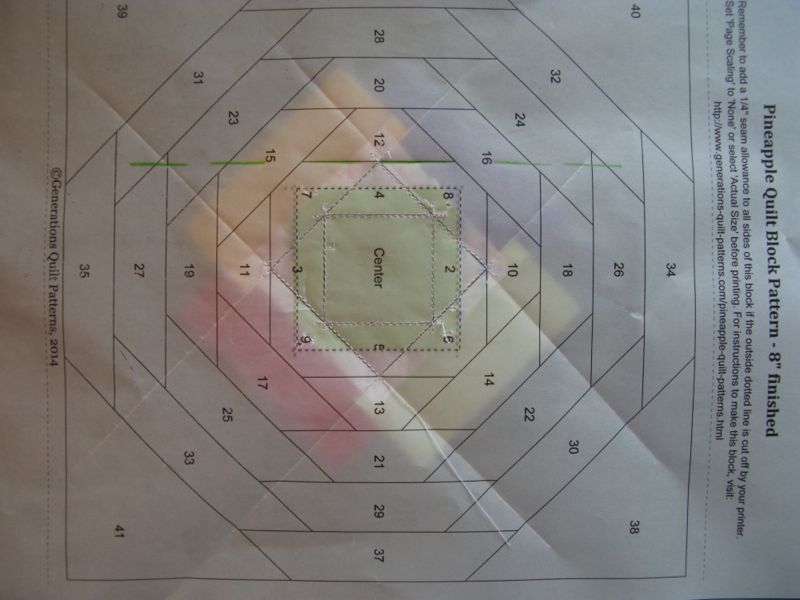
9_Cutting and Folding

You’ll turn the paper and fold back again, as shown this time by the green line, above.  Trim as in the previous step, all four corners.

10_Second Row Sewn

It’s looking pretty cute!  I like how now I start to see blunt ends on the corners.

Step Five

11_Third Row Beginning

Add on the next row of light bright print strips, again doing two (only) at a time.  Soon you can do all four, just not yet. Trust me on this.
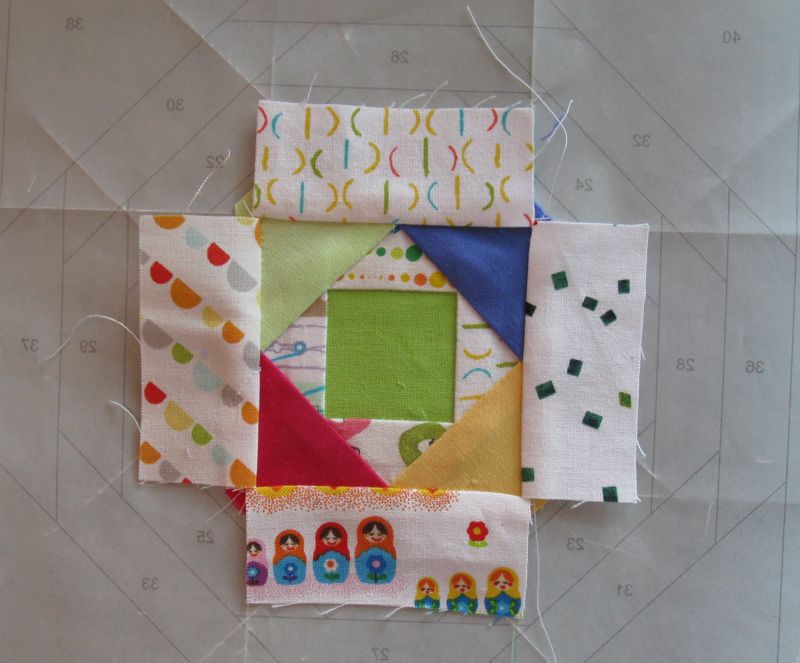
12_Third Row Sewn and Pressed

Press open, then trim.

13_Third Row Trimmed

One nice thing about paper-foundation piecing is how nicely the points come out and how it is all perfectly aligned.

Step Six

14_Fourth Row

Still doing only two at a time (opposites) add on the next row of solids.

15_Fourth Row Sewn Pressed Trimmed

All pressed and trimmed up.  The blunt end is becoming more pronounced.

Step Seven
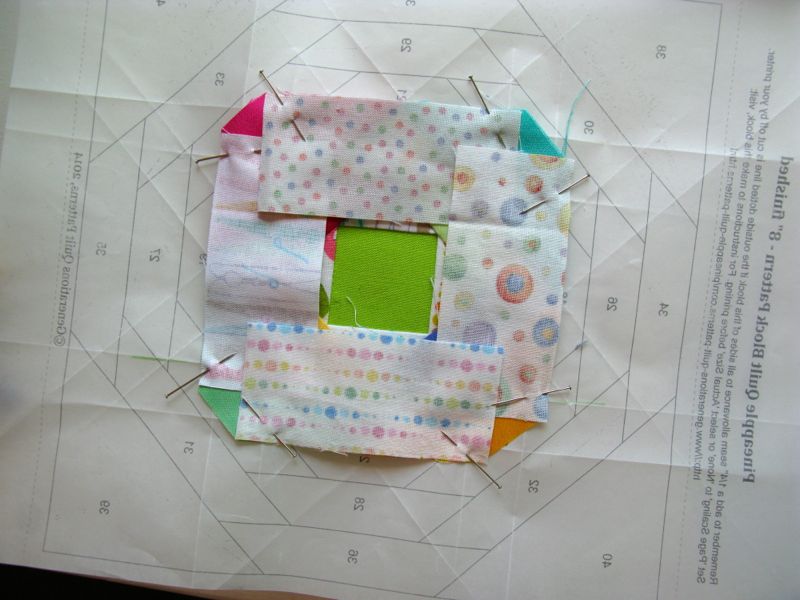
16_Fifth Row Pinned

Okay, now!  You can now pin on all four light bright print strips onto your pineapple, and lifting your needle/presser foot in between to pivot the paper and move to the new stitching place, then begin sewing again.  Clip through the traveling threads after you are finished sewing.

17_Fifth Row Sewn Pressed

It’s pressed.

18_Fifth RowTrimmed

And now, trimmed.  Keep going, keeping track of which row is solids and which row is light bright prints until you only have the corners left to do.
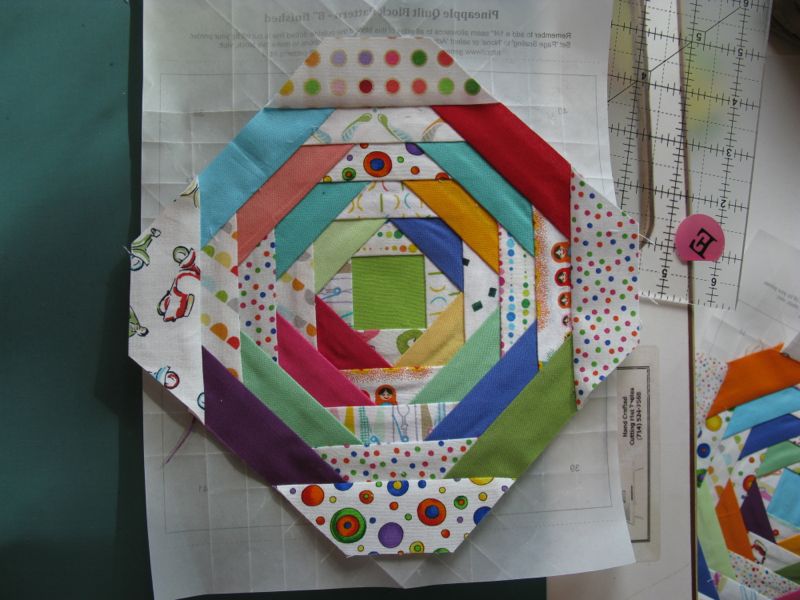
19_Penultimate Row Sewn

Step Eight

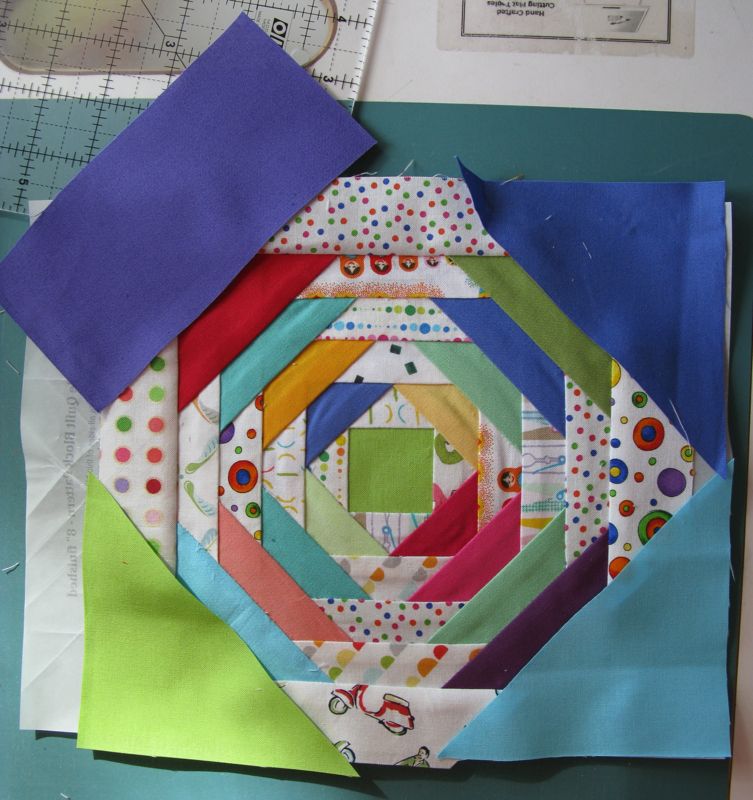
20_Outer Blocks placed

Some of you have 4 1/2″ triangles in your packet and some of you have 3″ x 6″ strips.  I show both in the following photos. To figure out the alignment, Generations Quilt Pattern uses a nifty trick of letting the point of the triangle guide you.

21_Outer Block Aligned

Line up the outer raw edges of the diagonally cut triangle, with the point centered in the square, as shown by the bright blue (above).  Stitch.
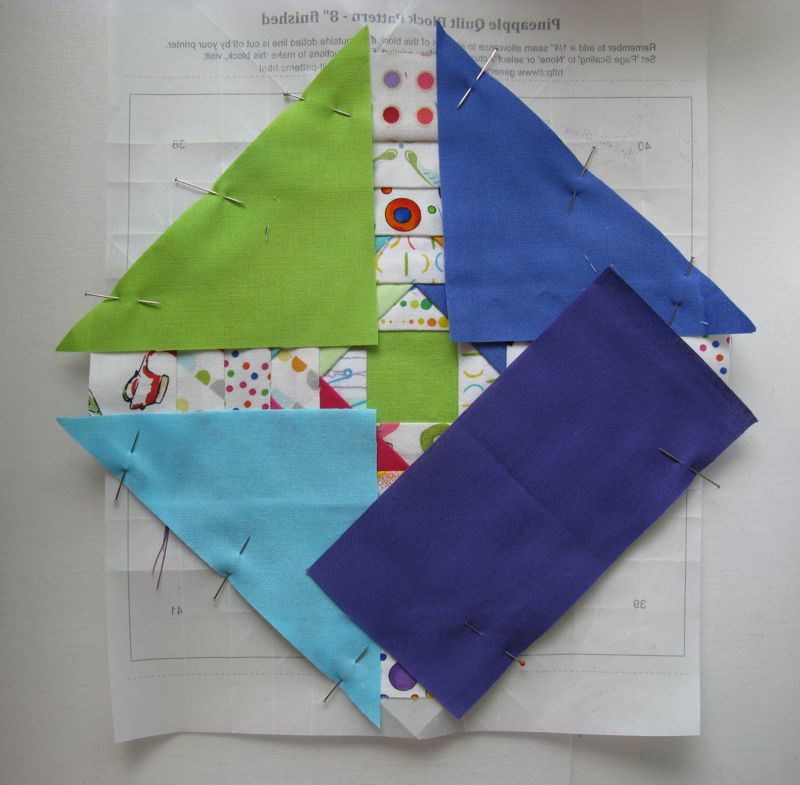
22_Outer Blocks Pinned

For the 3″ by 6″ strip, fold in half to find the center, then line that up with the center square, as shown.  Pin, then stitch.

22a_Outer Blocks SewnPressed

Corner blocks pressed.

Step Nine

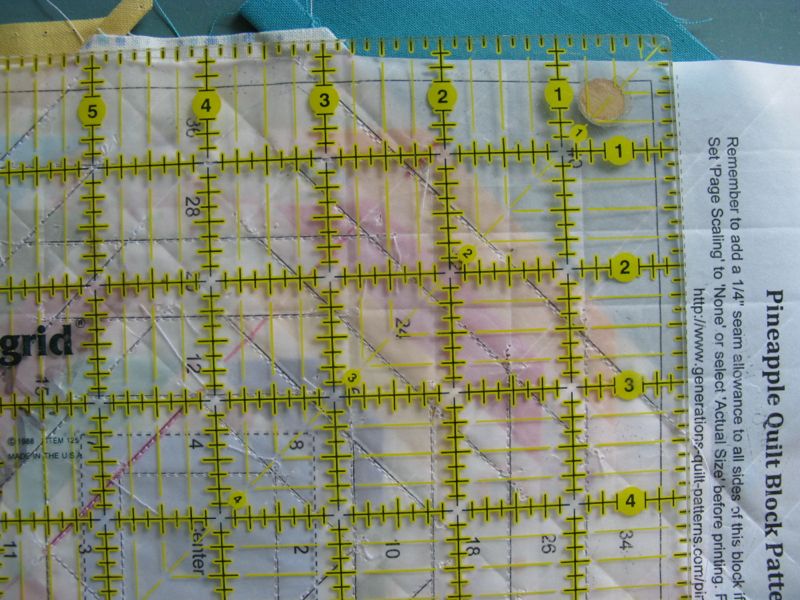
23_Trimming

Okay, I know this ruler isn’t perfectly aligned (the phone rang right as I was going to snap the photo and startled me, and I didn’t find out until later how crooked it was). So, don’t do as I show, do as I did: make sure to only trim 1/4″ outside the solid line, all the way around.  DON’T TRIM ON THE SOLID LINE.
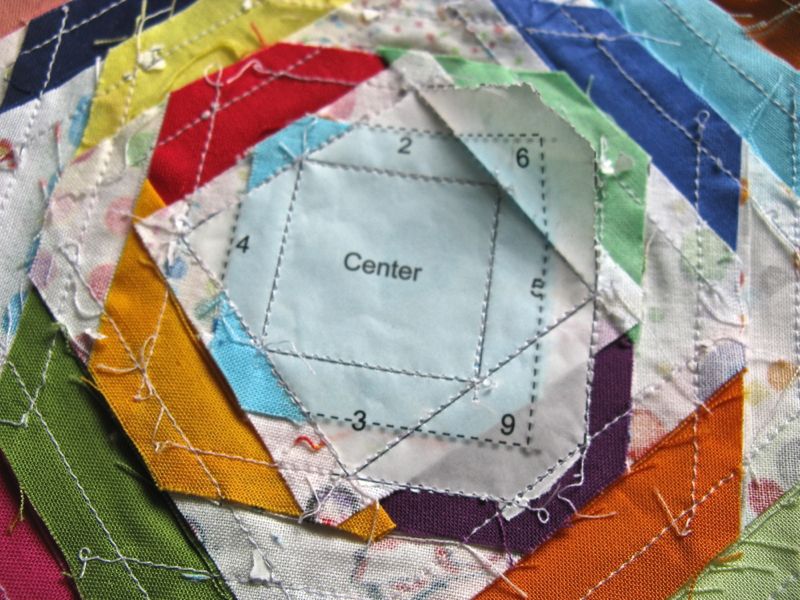
Ripping Off Paper

Once trimmed, turn it over and use Katie Pasquini-Masopust’s famous “Fatty Thigh” method for removing foundation papers (I learned this from her at Houston one year).  As she instructed us: lay it over your fatty thigh, and pop the papers off, starting on the outside, working in.  The parchment paper comes off so much easier for me than regular paper, so I hope you have an easy time of it.  Thank you, thank you!!  You are done!

Final Four

Here are four together.  I look forward to seeing all of yours!

–Final notes–

Boys in the Boat

I listened to The Boys in the Boat while working on this project, a fascinating story.  I’ll never look at this sport the same way again.

Parchment Paper

And the paper? Here’s a photograph of the information on the edge of my ream of paper.  I bought this paper several years ago, beginning with my Come A-Round quilt (below), a foundation-pieced quilt, and have used if for several other projects (including Scrappy Stars and I am currently using it for my selvage quilt).  It will probably last me until I die, and although not cheap (I think I paid 35 bucks for this ream) I feel like it was a great investment.  I bought mine at my local Kelly Paper store.

Come A-Round, full SM

Yep,  all those spiral dotty circles in the middle were arcs that were paper-foundation pieced on this paper.  The pattern is a Piece O’ Cake Design, titled Everyday Best.

˚˚˚˚˚˚˚˚˚˚˚˚˚˚˚˚˚˚˚˚˚˚˚˚˚˚˚˚˚˚˚˚˚˚˚˚˚˚˚˚˚˚˚˚˚˚˚˚˚

My blogging software places ads here so I can use this site for free.  I do not control the content of these ads.

Quilts

Faced Binding Tutorial

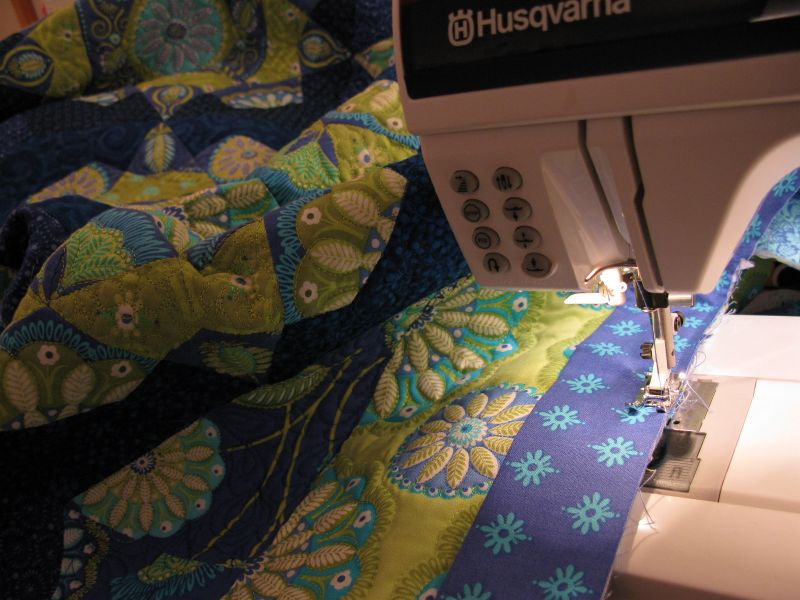
FacedBindingTitleA faced binding is applied to the front of your quilt and is wrapped to the back.  If done well, it can’t be seen at all from the front, allowing the last border of your quilt to act as the frame for your quilt, and eliminating one last design element from your quilt.  Often used on art quilts, when an additional line of a border would distract from the art, it can be also be used on our regular quilts.

kaleidoscope-top

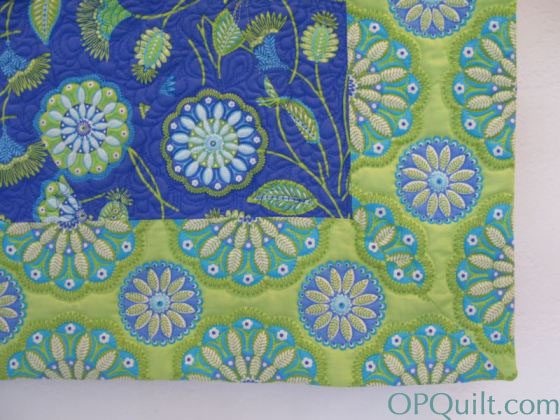
I used it on Kaleidoscope, as the printed border needed no other embellishment.

Step One: Prepare the quilt and strips
Trim the batting and edges of your quilt.  In the best world, your trimmed line falls at the edge of your fabric.  A little fudging here and there is okay.

For the binding, you’ll need four strips, one for each edge.  Measure the edges of your quilt and add 10 extra inches to that measurement.

Cutting

Cut 4″ wide strips for a medium- or large-sized quilt, and 3″ wide strips for smaller quilts.

Trim Ends

If you need to piece the strip to provide the right length, trim both ends at a right angle (make sure they are slanted the same way) and piece together on the bias.  Fold the strip in half lengthwise and iron.

Step Two: Applying Binding Strips
Leaving a tail on each side of about 5 inches, pin the binding strip to the FRONT of your quilt, raw edges even, with the folded edge of the binding falling toward the quilt center, just like you would for a regular binding. Only this binding is giant-sized, and you won’t stitch around the corners continuously.

Pinned Binding

Continue pinning the strips onto each side.  Pin the strip nearly to the end, as you’ll be leaving the last one-quarter-inch of each seam unsewn.

QuarterInch from Corner

I measured one-quarter-inch from each corner edge, and placed a pin there to remind me to stop sewing.

Stitching Binding

Stitch on the binding, using a quarter-inch seam allowance, and stopping at your placed pin, 1/4″ from the edge.

Step Three: Mitering the Corner

Pressing

Take the quilt to your ironing board and using a light touch, press the binding strips away from your quilt.

Mitered Corner2

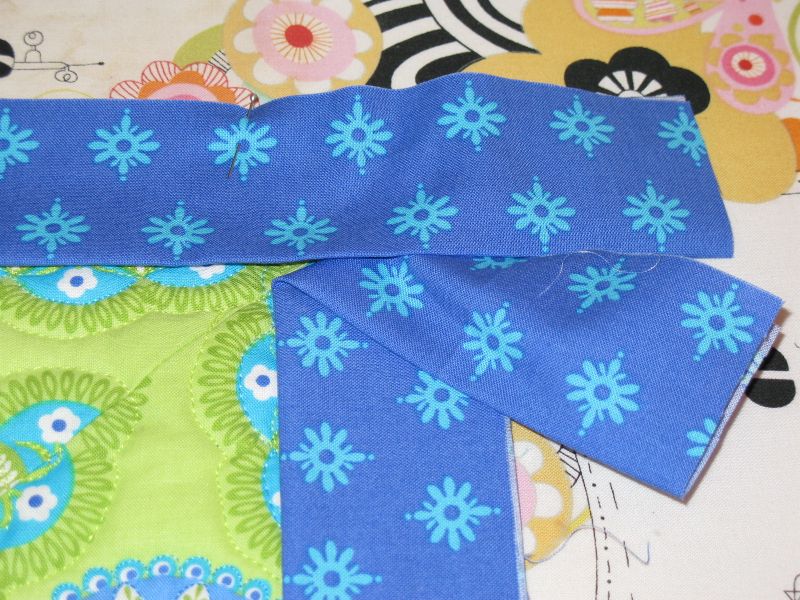
Then lay the quilt so you can fold back the binding tails, as shown.  Work to have a perfectly straight 45-degree angle on those folds where they meet; use a ruler to help you align it, if necessary. Press.  The slight gap you see there between the folds is normal–the folds relax when you take the iron off.  It’s better to have a slight gap than to have an overlap.

Mitered corner1

Another view, but this is just fingerpressed.  While you can just fingerpress the folds, I think it’s better to get a hot iron on there so you can see the crease.  (See next image.)  Remember that you are pressing through double-folded fabric, so do a thorough job.

Unfold and align the binding strips for the first corner, making sure the pressed diagonal lines meet and folding the quilt down and out of the way.  You are also making sure the top folded edges meet.  I try not to pin this next seam to death, instead using only three pins:

Mitered corner3a

• #1–Place a pin at the outer, folded edges of each binding strip and line the creases up.

• #2–Then go to the bottom, near where it’s joined to the quilt, and poke a pin from the top crease down into the bottom crease, lining them up.

• #3–Lastly, line up the creases at the center and place a pin there.

Again, you are pinning along the crease you made when you ironed in that beautiful miter at the ironing board.

Stitch the seam.  You’ll begin stitching from the folded, outer edges and sew back towards the quilt-binding seam (at the bottom of the picture).  There’s really no need to “tack” by backstitching.  So don’t.  Just leave your thread tails long and you should be fine.

Mitered Corner 4

Trim the extra fabric to one-quarter-inch, as shown, then press the seam open.

TrimCorner

This is the backside of that mitered join up above.  Notice how the seam allowances become smaller at the point?  That’s because I trimmed them down to eliminate bulk.  Trim out as much of the batting as you can, while making sure you don’t cut the stitching. Don’t skip this step.  Just proceed carefully.  (You will be fine.)

Step Four: Understitching
Often used when attached a facing to a neckline in dress-making, understitching is a technique to join the weensy seam allowances to the faced binding, which will keep them from rolling to the front and showing on your quilt.

First, since you pressed the binding away from the quilt up above, you’ve already started on this step.  If you didn’t press at that time, do your best to press it now, going as far into the corner as your iron will allow.

Understitching

Line up your needle so you are just to the right of the binding seam.  Stitch a straight line, smoothing the binding and the quilt away from the seam as you go, keeping a light tension on the quilt/binding fabric.  Light.  The success of understitching depends on not letting the binding bunch up toward the quilt, nor wandering in your stitching onto the quilt.  Stay on the binding, smooth away the  binding and it will go as smooth as butter.

Of course you can’t sew deep into the corner, so go as far as you can and cut the thread tails long.  Now begin again on the next side.  You’re almost there.

Step Five: Sewing down the Binding

Carefully turn the binding to the back of your quilt, giving it a quick press, if needed.  Gently ease out the corners.  If you are brave and not foolhardy, you can use a chopstick to help ease out the tip.  But if you go too far, you’ll have a mess on your hands.  Proceed gingerly.

If after turning, you think your corners are distorted and look like the tips of a witch’s shoe, a little pulling at the side edges, just below the tip, will shorten that tip and bring it back into shape.  Set it with a little shot of steam from your iron, then press it with your fingers or a piece of wood until it cools.  Seamstresses use “clappers,” or smoothed wooden tools just for this purpose.  However, it’s better to lay a piece of cloth down and put your tender fingers on that, that to smash the heck out of it with a hot iron.  Never over-iron your quilts, or blocks, for that matter!  A horribly flattened block means that, to me, someone has decided to start wearing out their quilts early.

Stitching Down Binding

You’ll stitch the binding down by hand, just as you do a regular quilt binding.  Now you can clip those long thread tails on the top of the binding as you come to them.  Tuck the long tails that are on the backside of the binding up inside–no need to trim those.  If you find your miter is buckling just a little and has too much fabric, with your handsewing needle take a small tuck and secure it with tiny stitches.

All done!

Faced Binding--back

This is what the binding looks like from the back, when finished.

faced-binding-front

And this is the binding from the front–invisible!

Note: If you need to attach a quilt sleeve for hanging, you’ll create your tube of fabric and stitch it on now, aligning the top edge 1/2″ to 3/4″ down from the top, and leaving a slight bulge in the sleeve to leave room for the hanging rod.

˚˚˚˚˚˚˚˚˚˚˚˚˚˚˚˚˚˚˚˚˚˚

Return to OccasionalPiece-Quilt (or OPQuilt.com)

Colorwheel Blossom_front