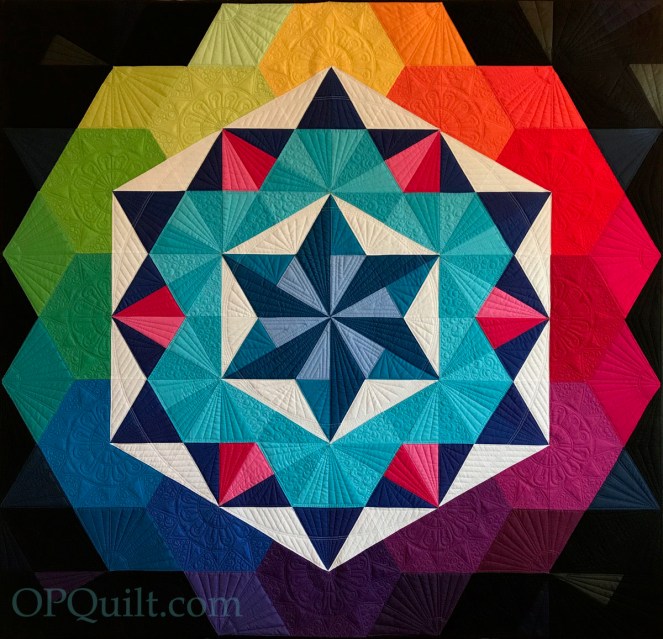
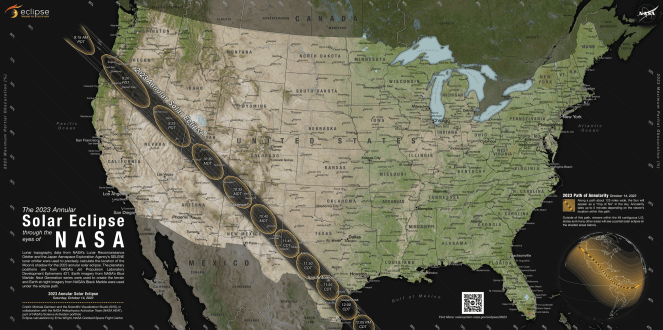
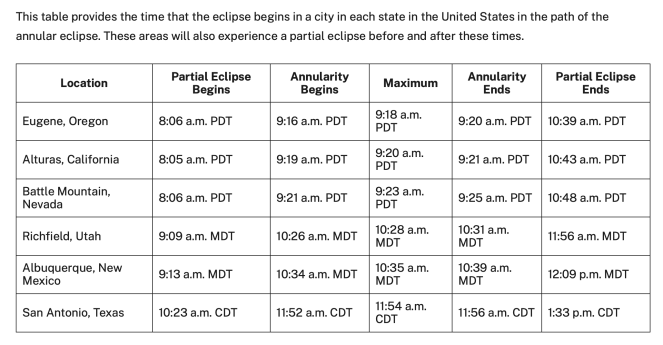
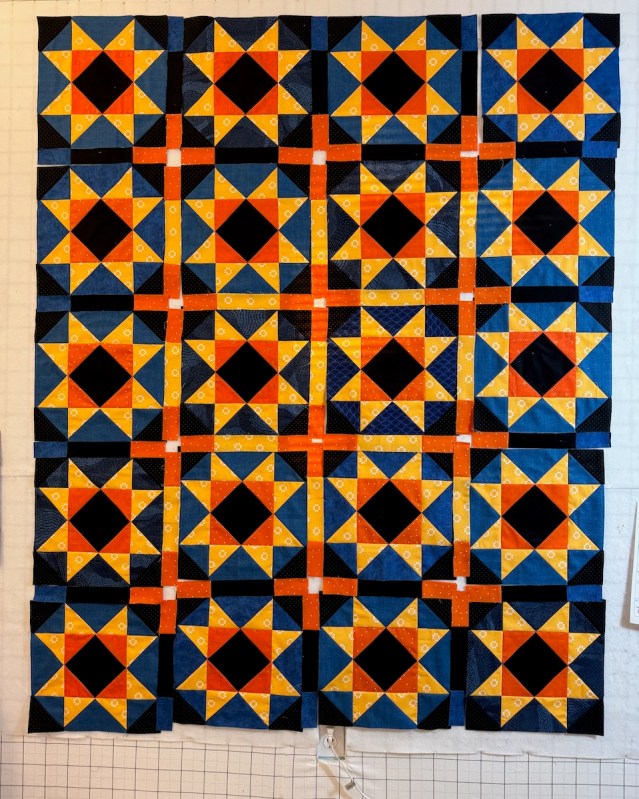
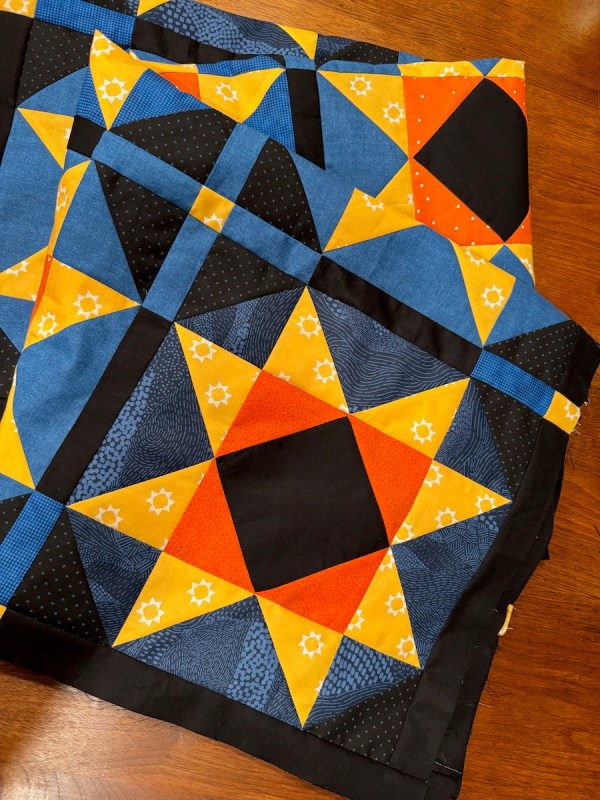
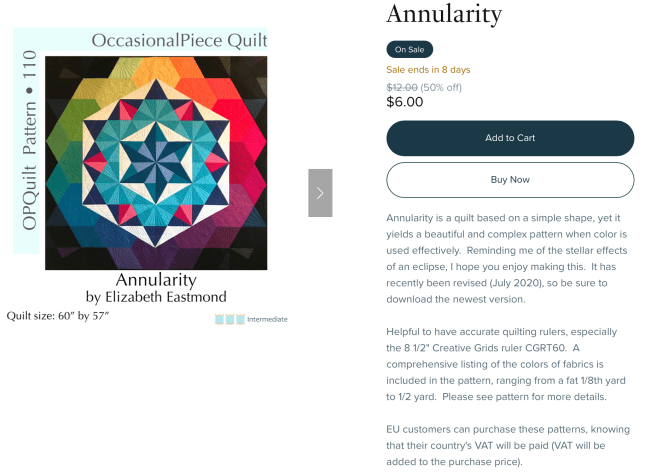
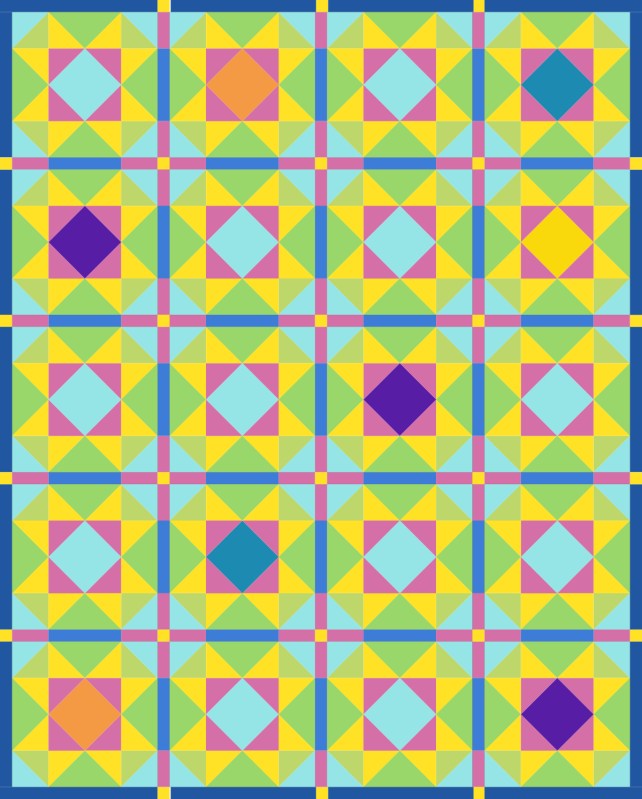
Way back in the darker ages, eclipses were thought to run the gamut of Should Never Be Looked At, to fear and terror. Nowadays, thanks to NASA and all the people like me who love the heavens, eclipses are a big deal, and rightfully so. Way back in the day, I made this quilt and titled it Annularity, never dreaming I might be able to see an a real-life annular eclipse, but it’s going to happen in a week!
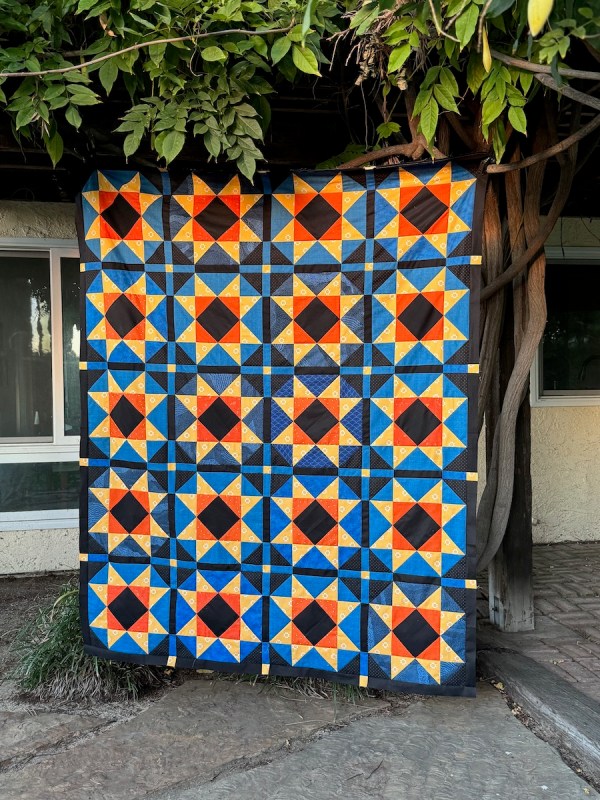
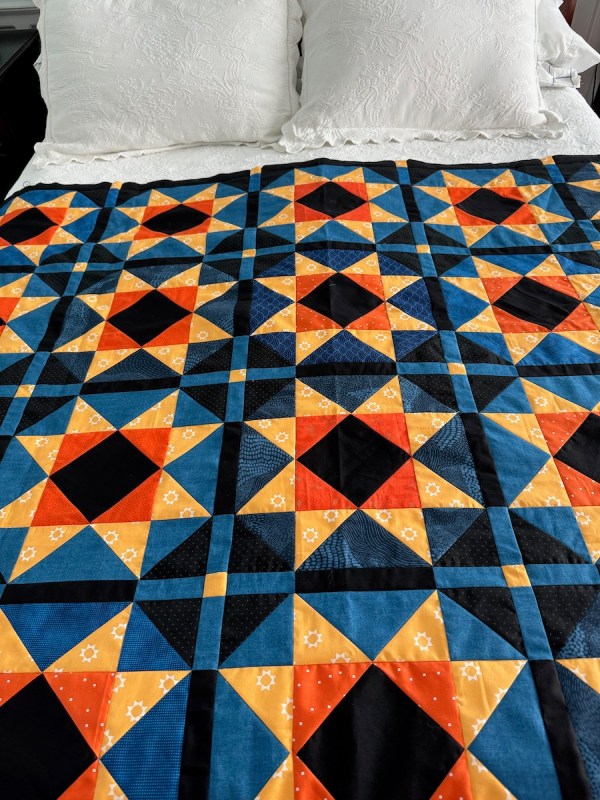
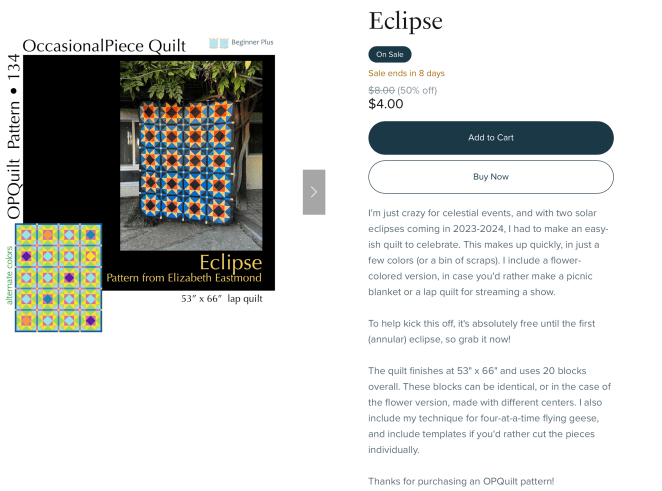
And. . . I made another quilt to celebrate. This one is called Eclipse, and is an easier –much, much easier — quilt to whip up to watch the Real Annular Eclipse. Next week! (Have I mentioned that before?) Here’s proof:
Yeah, I’m pretty interested in this.
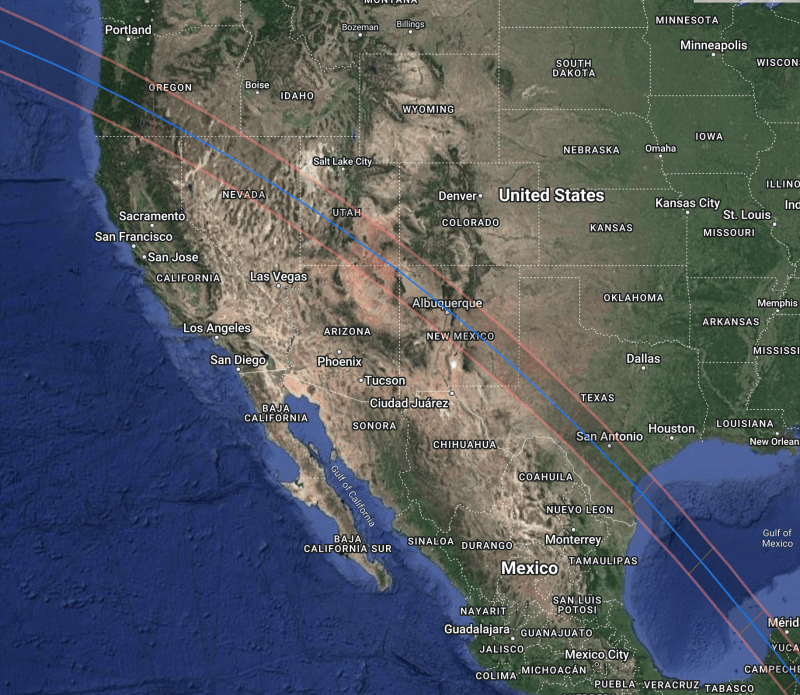
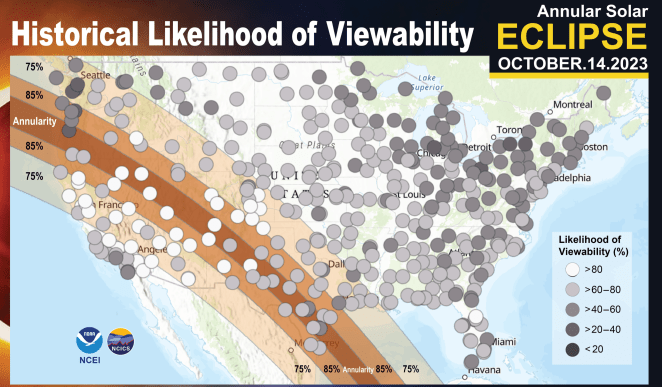
I missed the big one a few years ago, and I’m determined not to miss these two, and am hoping that the weather in Southern Utah will cooperate. Historically, we have a good chance:
(Who makes up these charts? I don’t know, but I’m all in.)
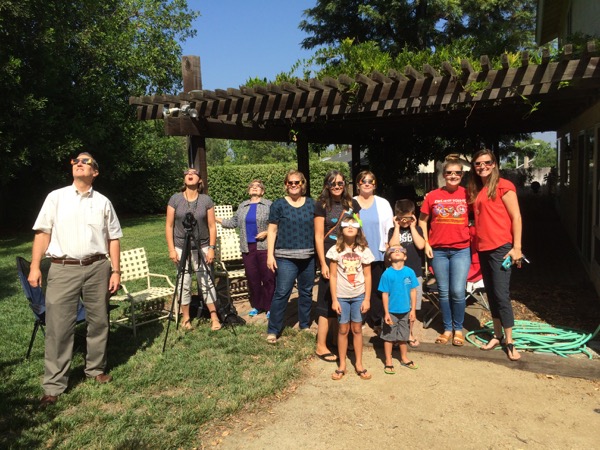
Scenes from the Missed Eclipse in 2017:
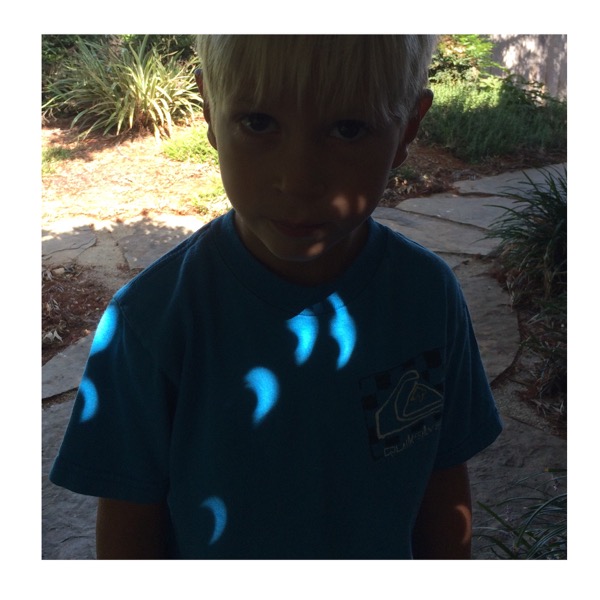
We stayed in Southern California, and I doled out glasses and made eclipse cookies and friends came over. I hear libraries are passing out the solar glasses this year, but you can also rustle some up on Amazon, if you hurry. You HAVE to have them to gaze heavenward. If no glasses, then look at shadows:
Even the shadows in a far-away eclipse are cool. I’ve read advice to take colanders or steamer inserts to hold over white paper to see all the quirky shadows. Yes, I will. Okay, back to threads and fabrics and eclipse patterns.
This was my first thinking: to have the narrow sashing do a dance of colors, too. My husband helped me decide, and yeah — it’s fun, but you lose the eclipse blocks.
So I took out all the colorful bits in the sashing, and then put a narrow black border on it.
I will send it to the quilter when I return home, and get it ready for April 2024.
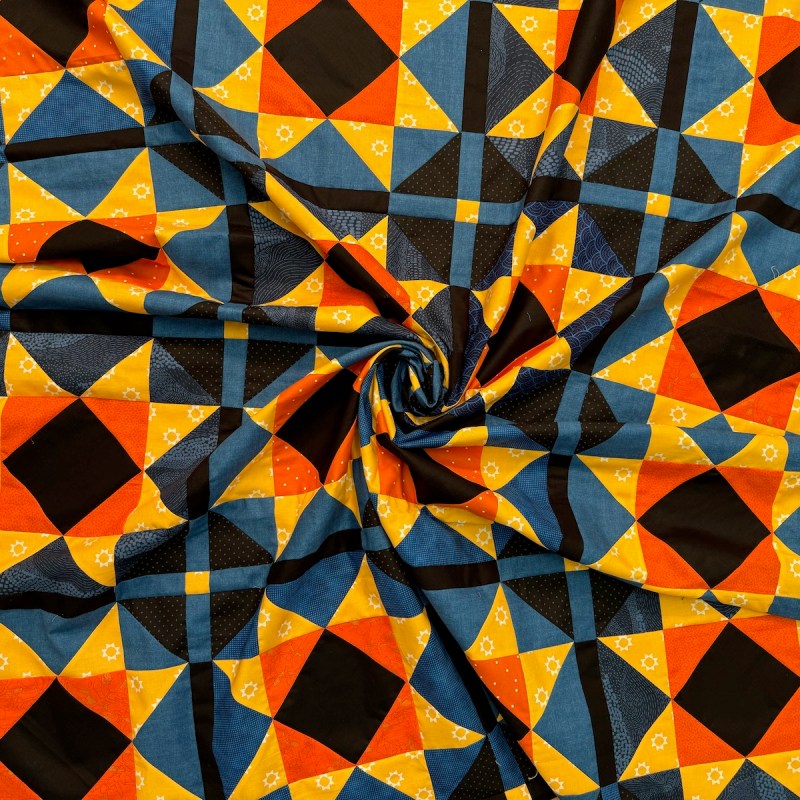
The ubiquitous swirled quilt top photo
And because you might want a dedicated eclipse quilt, too, I made you two patterns. The Eclipse pattern you will have done in two days. Anularitywill be finished by the next solar eclipse. These sales are on until the end of the Annular Eclipse — like in a week. So head to my pattern shop if you want either a quick and easy — or many pieces, but beautiful — pattern. {Note: Sale has expired.}
And in case you aren’t the least bit interested in the heavens, but love a field of flowers, I illustrated this version just for you. All you Kaffe lovers, those centers are calling out for some fussy cutting. All info is on the pattern.
I hope you get a chance to wander outdoors next Saturday, and either with your glasses, or a sheet of white paper, take a look at the dance in the heavens.
I think it started with the post-fun-trip dreck (laundry, cleaning out suitcase, realizing I couldn’t just walk out the door and play all day), then it morphed into I-got-an-RSV-vaccine blahs (a needed shot, as I already had a doozy of a respiratory illness last December and I don’t want another one). Add that to the I-just-don’t-feel-like-sewing, and before you know it, a week, then two goes by without ever turning on the machine.
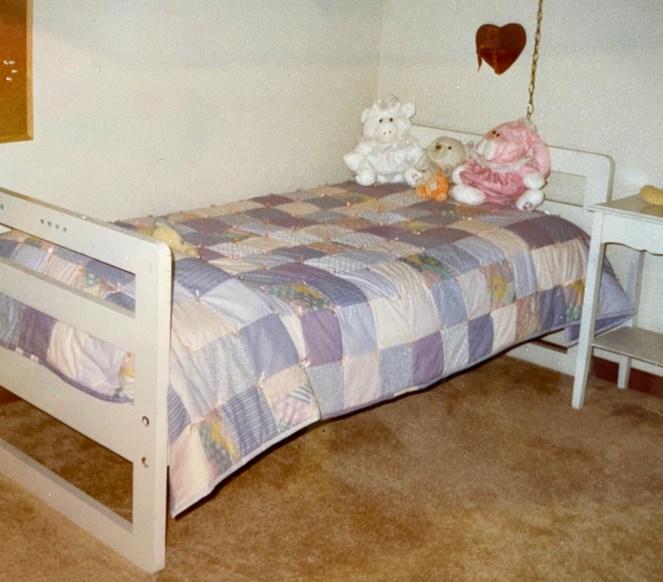
I also started trying to find photos of my first 100 quilts, and regretfully, some just can’t be found. Or if they are found, they are a photo-of-a-photo-of-a-bad-photo sort of thing, and by this point in this narrative, the Hyphen-Police are going to be coming after me (and yes, I know that last one wasn’t a proper usage).
So, hiding out is the best term for what I’ve been doing. I like seeing you all on Instagram, but felt like I want to pull the covers over my head when assaulted by all of Meta-formerly-Facebook’s ads, including questionable movie ads filled with gore, cleavage, and anger. It’s a Catch-22 for all of us, so I try to find you to comment; sorry if I missed you! I haven’t even replied to the comments on my last blog post which is something I genuinely love doing, and I would offer up an explanation, but this whine has gone on far too long. So…photos:
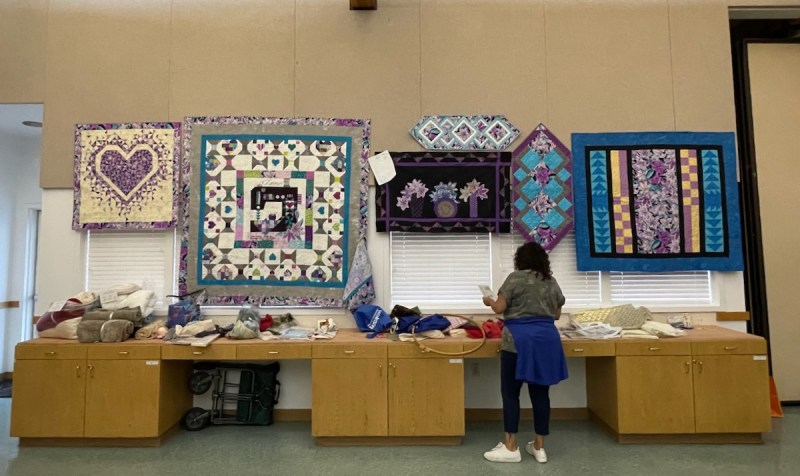
That’s Susan there, and that charming sewing-machine quilt (proper hyphen usage: linking together two or more adjectives that can’t stand alone) is hers too. When I was feeling stronger after last winter’s events, I volunteered to help with our Guild website. Which turned into their FB (bad, b/c I hate FB), which turned into setting up a new website, helping my friend Char write a set of Bylaws (8 pages) and Standing Rules (16 pages), and take photos when the photographer doesn’t show, and notes when the secretary can’t. Yes, my simple little stream volunteerism has turned into a torrent, but those of you who are involved with Guilds know how this goes.
This next month we vote on these Bylaws (in 24+ years they’ve never had any and now the President of 22 years wants to retire, but it’s a process made easier if you have guidelines…hence the process) and then hopefully I can slink back into my favorite place: doing hand piecing while the Guild meeting takes place.
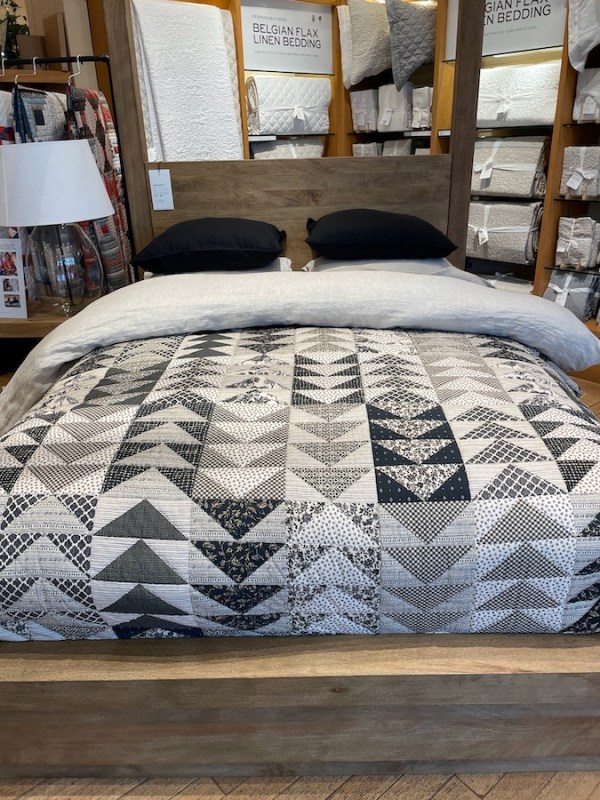
Still feeling the buzz after picking up my new phone (it’s for the camera, the camera, the camera), we walked through Pottery Barn and what to my wondering eyes should appear??
FAKE QUILTS! Boo! Hiss!!
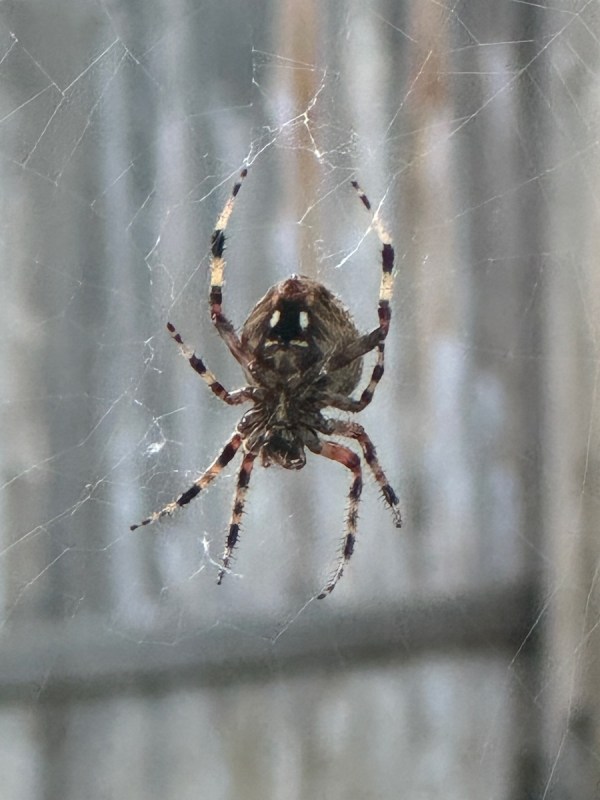
Speaking of Boo, we decorated, both inside and out, both stuff from the bin in the garage and naturally. That spider is on like 15x zoom OUTSIDE my bedroom window and it has on its own grumpy scary face, like it has also decorated. It’s an Orb Spider and is pretty harmless. We used to spray for bugs, etc. all the time, but when they raised their prices and insist on coming every quarter (in our territory that is not needed), we do it ourselves (since my husband is a toxicologist and has worked with bugs). Which means we live with a lot more spiders outside.
Moving on, this photo means I had to weigh a package that is going to France. (Hint: one of the QuiltMania magazines)
I also set up my quilt stand in my bedroom, and let the diffuse afternoon light shine in while I photographed this quilt and this quilt and this quilt to enter into Road. I do love the back of the Autumn Leaves quilt, with blocks made for me by the Gridsters. I will link you a hashtag, but Instagram — in all their bone-headed wisdom — has decided to not allow us to see the full range of hashtags. But the Gridsters were, and are, quite active, with over 1300 photos of our blocks and quilts. (Do I expect to get into Road to California this year? Not in the least, but it’s good to keep in practice.)
Finally got this one pinned. We have our church’s General Conference this weekend, which is broadcast over the internet. We don’t go to our church buildings, but we get to listen at home to thoughtful, uplifting talks. It’s good to have a project to keep my hands busy, so I plan to quilt this one. Or make the one below:
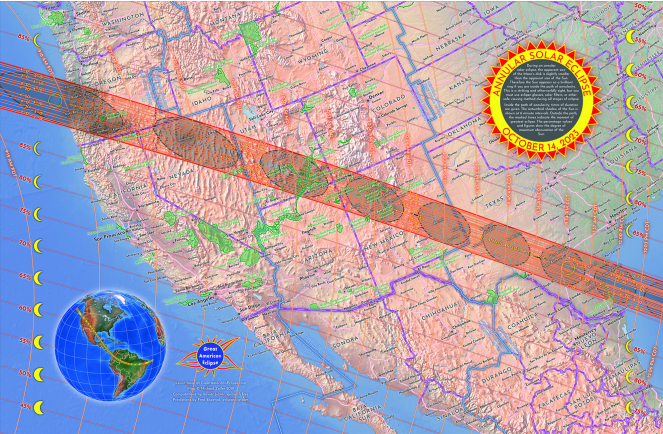
I’ve already written the pattern, and here is one of the graphics:
Yes, there are TWO solar eclipses and I went back-and-forth on whether to label it “Dual Solar Eclipse” or “Double Solar Eclipse” and that’s how you know I am losing it.
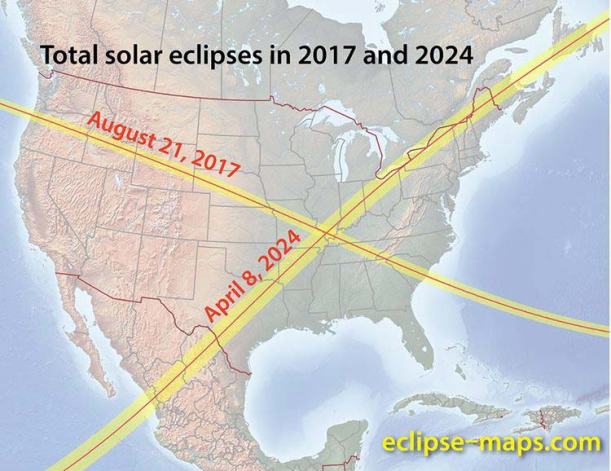
So now there are double-not-dual graphics of the Double Solar Eclipse for you. The first celestial event is an Annular Solar Eclipse and is October 14th. The second one is a Total Solar Eclipse and it’s on April 8, 2024. Those in the southern Midwest and on the East Coast will have the best views of that one.
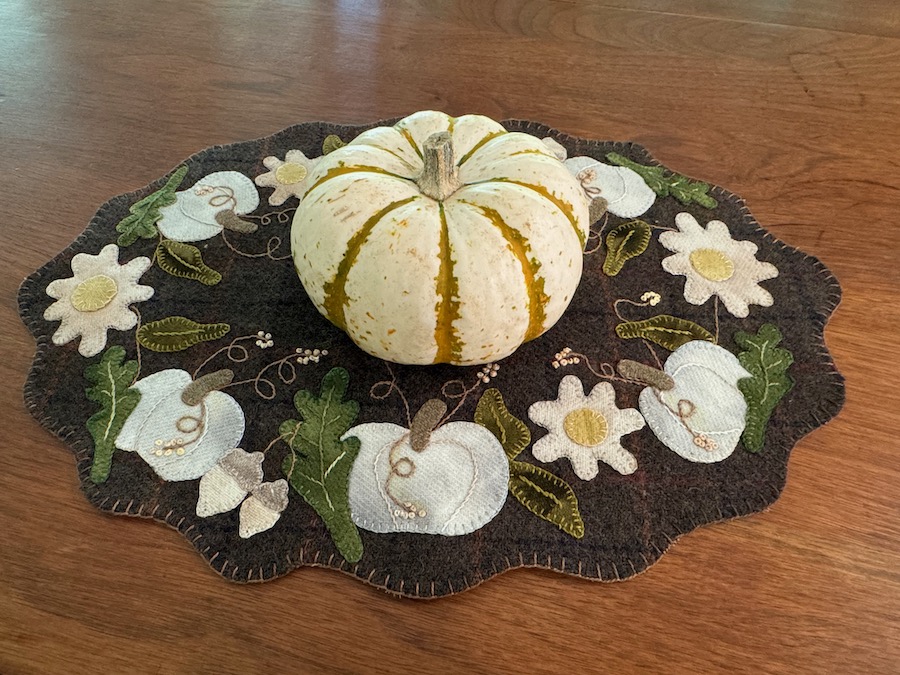
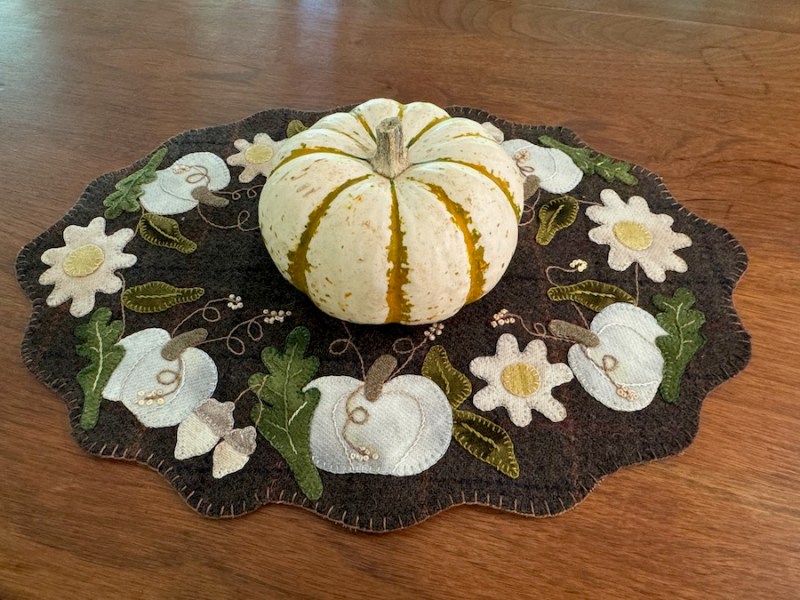
Lastly (finally!! She’s at “lastly!”) while I didn’t turn on my sewing machine for nearly three weeks, I did sew a stitch. I finished this little wool mat filled with pumpkins and all sorts of twiny-viney lines of stem stitching, which I can finally say I’ve mastered. I purchased this for a friend who was going through stem cell treatments, but her eyes took a turn and she couldn’t see very well until she got new glasses. (She is working on the larger one I already gave her.) So I kept it back, then lost it, then found it again, and decided it would make a nice doo-dah for our table.
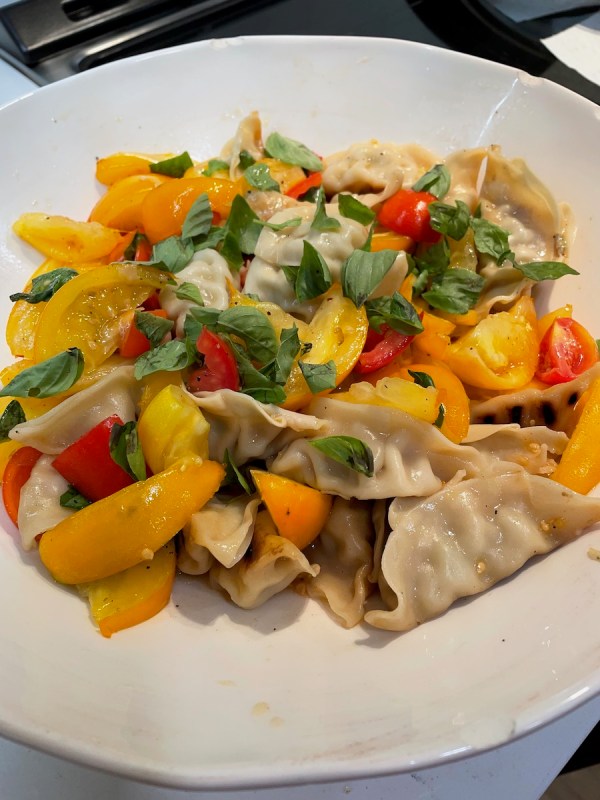
Not *this* kind of dumpling! Yes, these are dumplings, but it’s not the kind I meant. However, if you want the recipe, I describe it here (but the NYTimes Cooking website is the original source). It’s soooo good for an end-of-summer recipe.
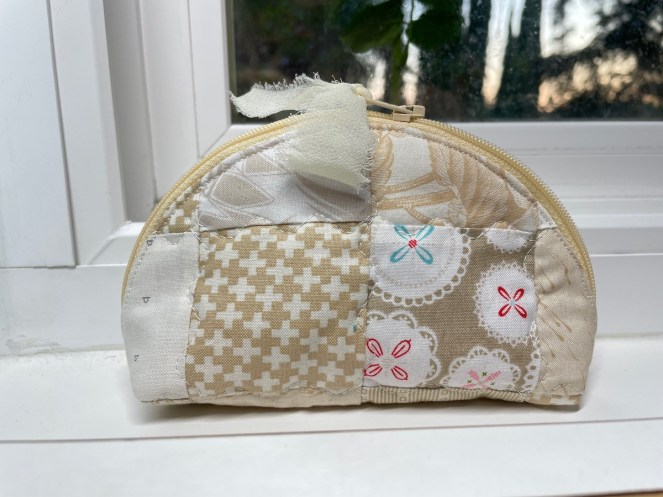
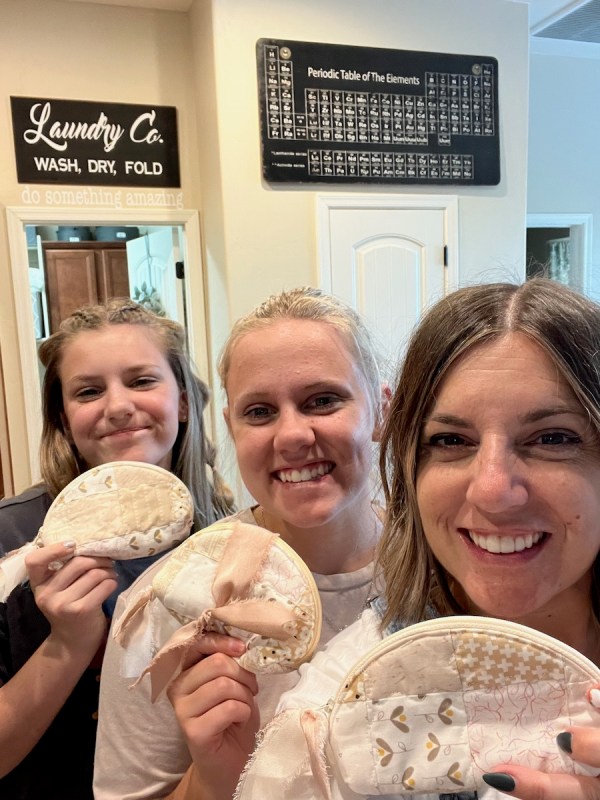
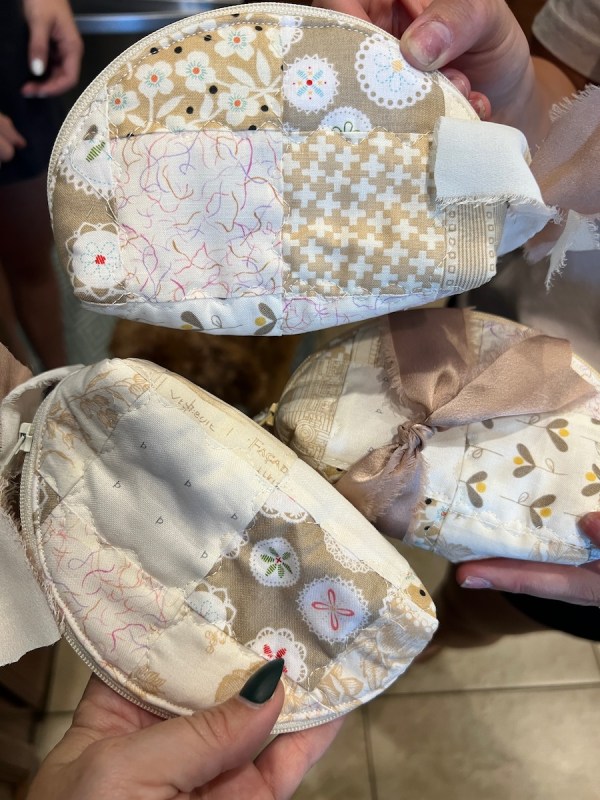
This is the Dumpling I was thinking of — a sweet little zippy bag. It’s a design by Michelle Patterns, and she has a great tutorial and a free pattern at her website. I’ve made many, and use them for little things in my purse, I use them for travel (it carries my tiny portable phone charger/battery/thing). They hold lip gloss, lipstick, treats — all kinds of stuff.
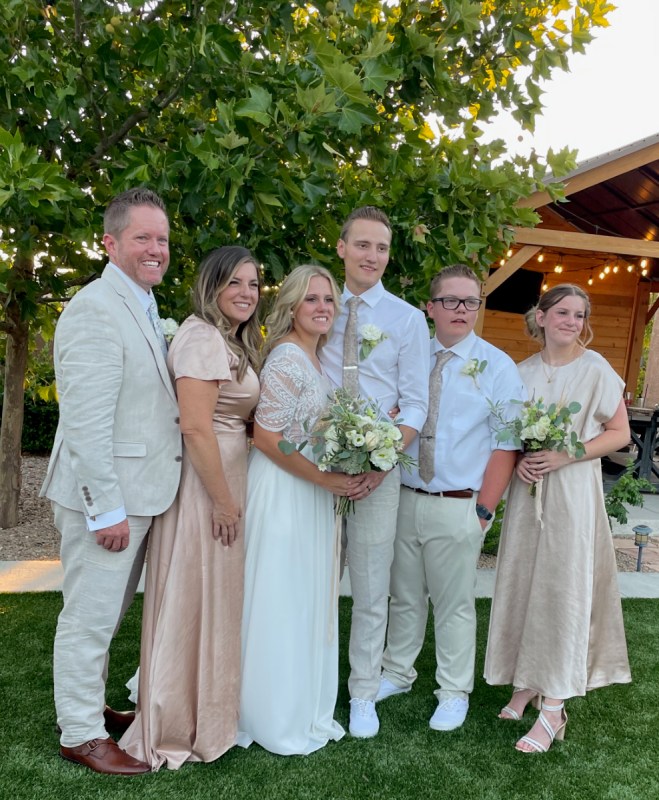
This is why I made them: my granddaughter’s wedding had champagne and beige and cream and white for her wedding, and my daughter — the designer — had used chiffon and satin ribbons everywhere. So I grabbed some of the ribbons when we were cleaning up and brought them home.
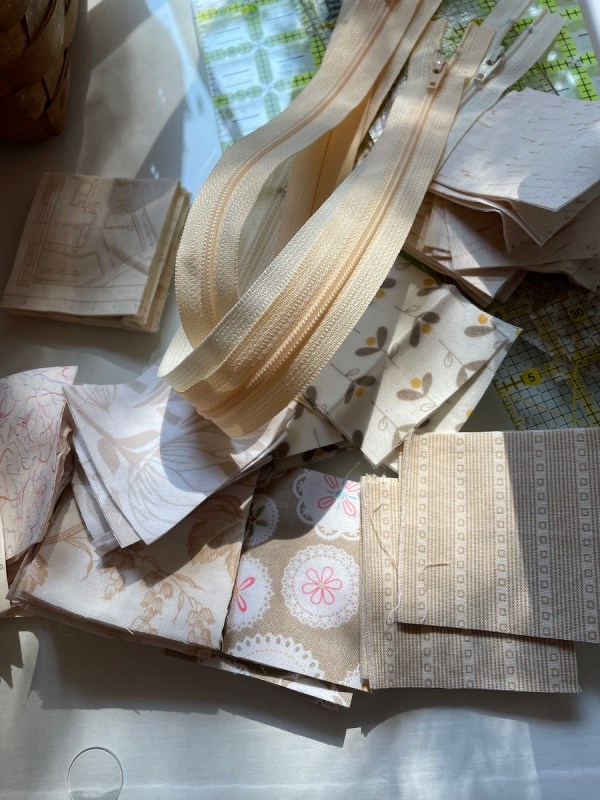
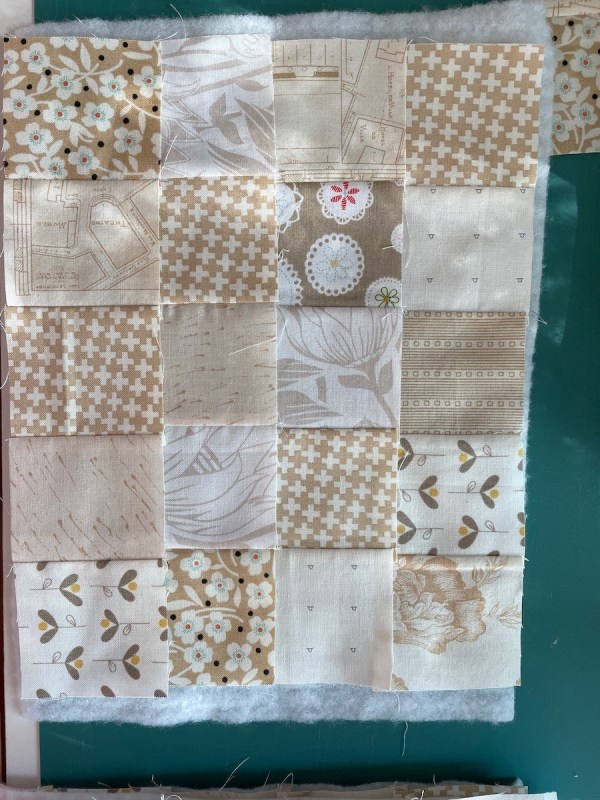
I pulled all the tones of the wedding I could find in my stash, cut 2 1/2″ squares and sewed them together in rows. Then I backed them with batting and fabric, did a random wavy pattern for quilting, and cut out the dumpling bag shape. It goes together really quickly. I sewed a clump of ribbons onto the zipper pull and sent them off!
Glad they like them! A little momento of a big day.
And what else have I been doing? Mending quilts. If you’d told me I’d be mending quilts decades after making them, I wouldn’t have believed you. The Christmas quilt (since passed down) was ripped, but luckily I had the fabric. Watch the little movie here. But the other was an earlier quilt of mine.
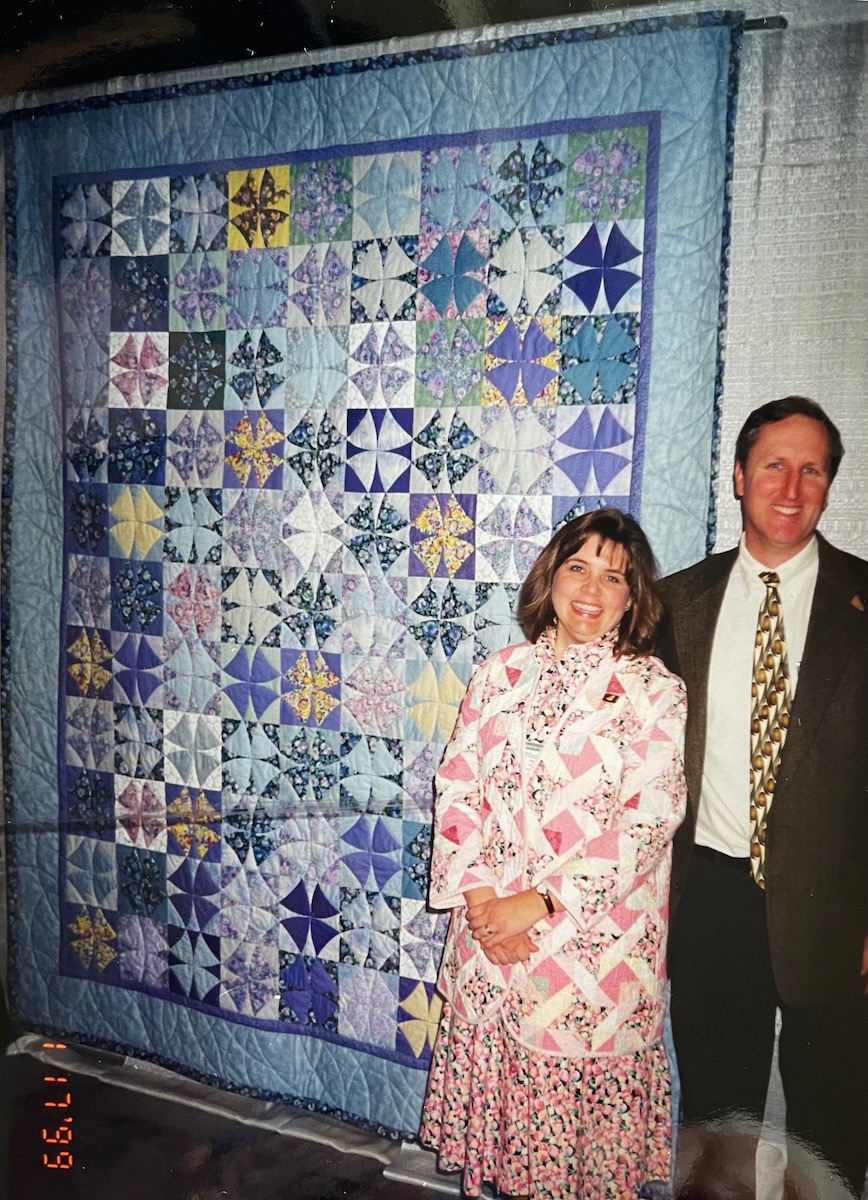
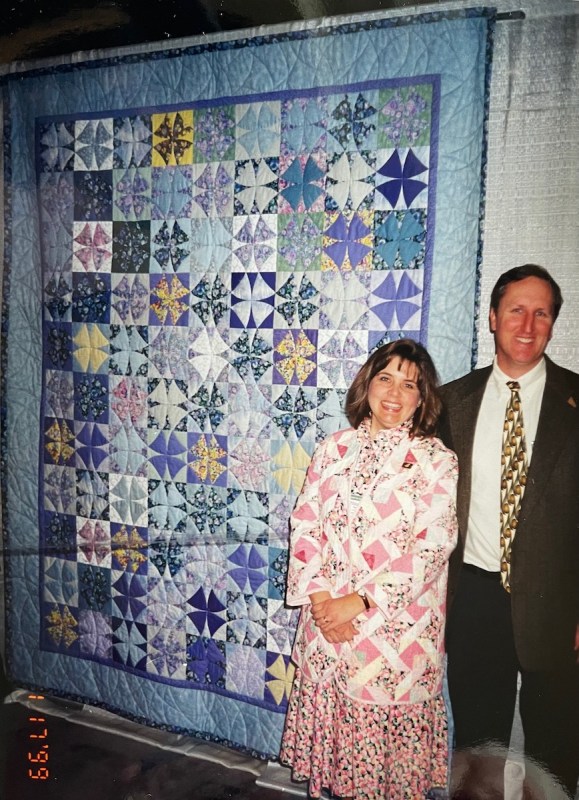
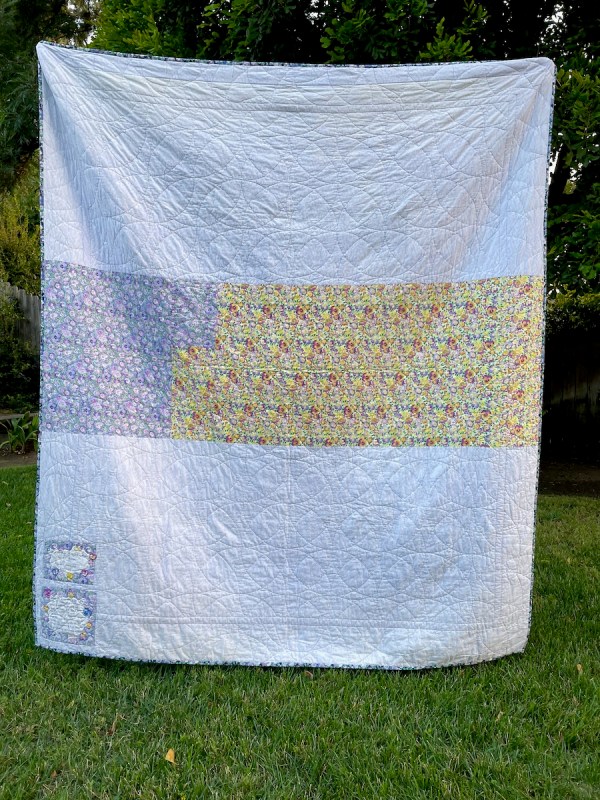
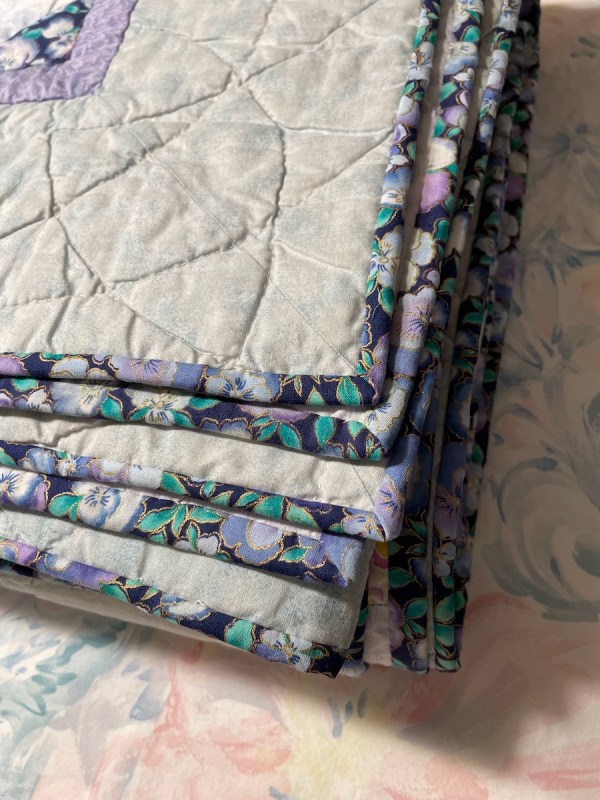
This is how it — and we — looked in Road to California in 1998. I’d seen a Wheel of Mystery Quilt in a National Quilt Show in a city close to ours (the only time I can remember one coming that close). I didn’t have a template and can hardly remember if 25 years ago we were using rotary cutters, but I’d sort of figured out the pattern and made a template from a Crisco shortening container lid, and used that to draw all those circle-y shapes.
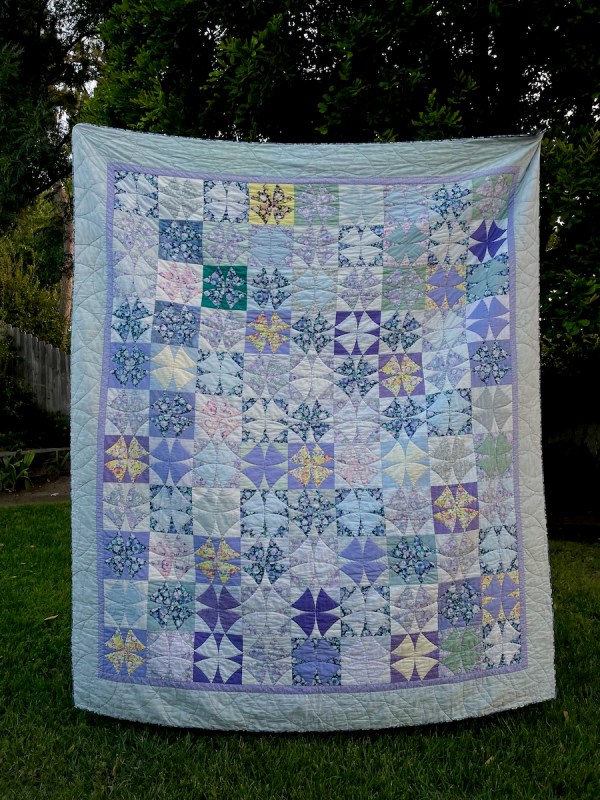
I purchased just about every color way in the pansies fabric, and used solids to coordinate. It took me about 3 years to make this, and yes, it was hand-quilted, on a small hoop stand that was in the corner of our dining room.
Last night, Dave held it up for me in our back yard, another sun-going-down photo.
The back. This is Quilt #25, in my Quilt Index. Unbelievably, that’s 254 quilts ago.
The label on this well-loved quilt reads:
I SEND thee pansies while the year is young, Yellow as sunshine, purple as the night; Flowers of remembrance, ever fondly sung By all the chiefest of the Sons of Light; And if in recollection lives regret For wasted days and dreams that were not true, I tell thee that the “pansy freaked with jet” Is still the heart’s-ease that the poets knew. Take all the sweetness of a gift unsought, And for the pansies send me back a thought. Poet: Sarah Dowdney
I used the phrase “heart’s-ease” as a title on another quilt, but this one is just all Pansies. And yes, that label is all reverse appliqué –I slid the hand-written poem underneath a pansy rectangle, and edged it with a border of pansies. I cut out and appliquéd more pansies around the edges.
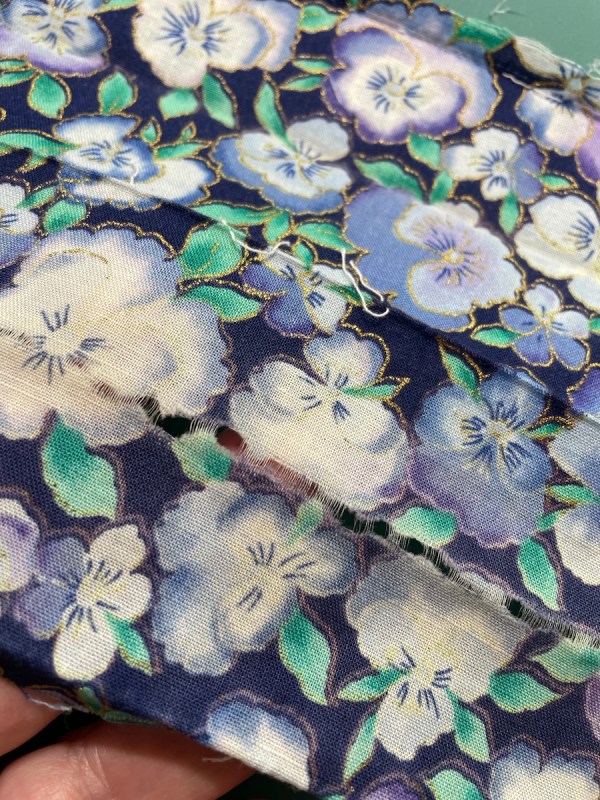
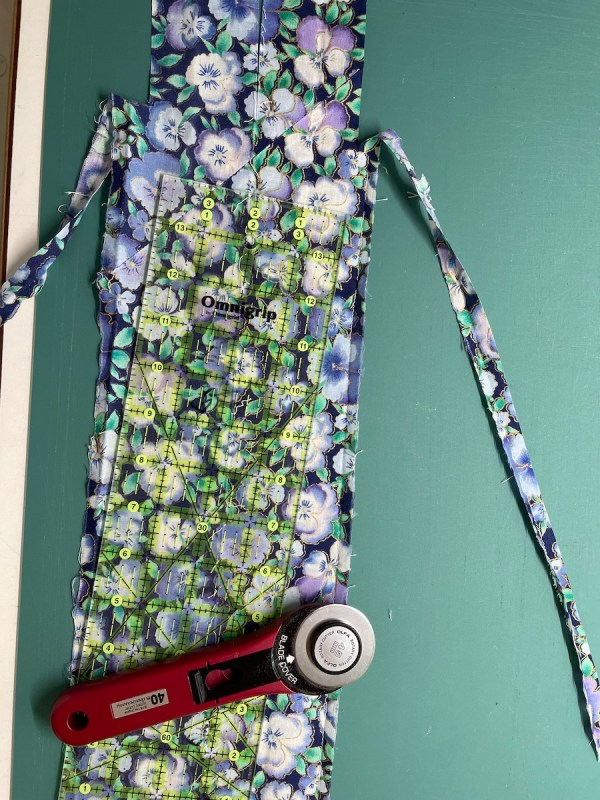
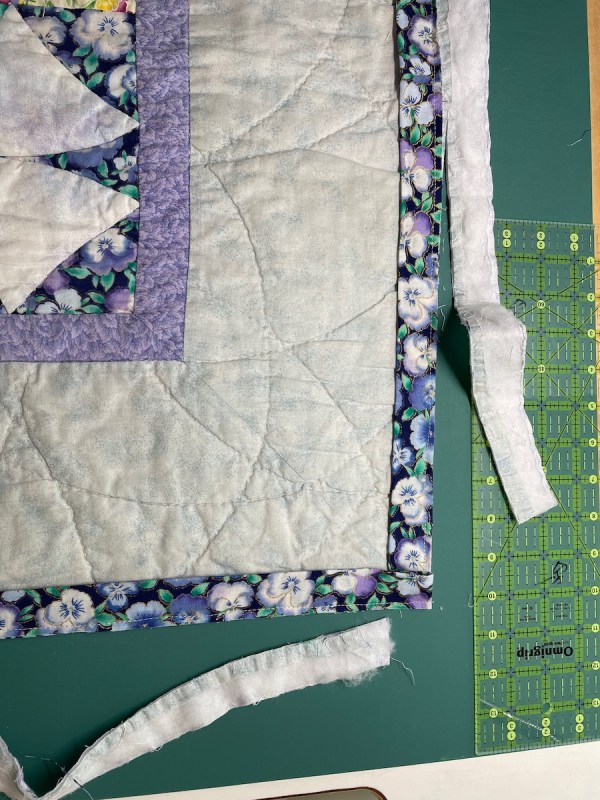
Why was I mending it? The binding had worn right along the edges (we used it on our bed for many years). Because I had made a double-width binding, and because I didn’t have any more of that fabric, I pulled off the binding, pressed it, and cut it down the middle, tossing the worn side, and saving the “underneath” side:
I did a double-fold binding, sewed it on, then trimmed away excess before I folded it back over the raw edge and hand-sewed it down.
That’s what talking on the phone is for: put in earbuds/put on headphones and talk and sew. It’s already been claimed by one of the children, and I’ll deliver it to him in the next couple of weeks.
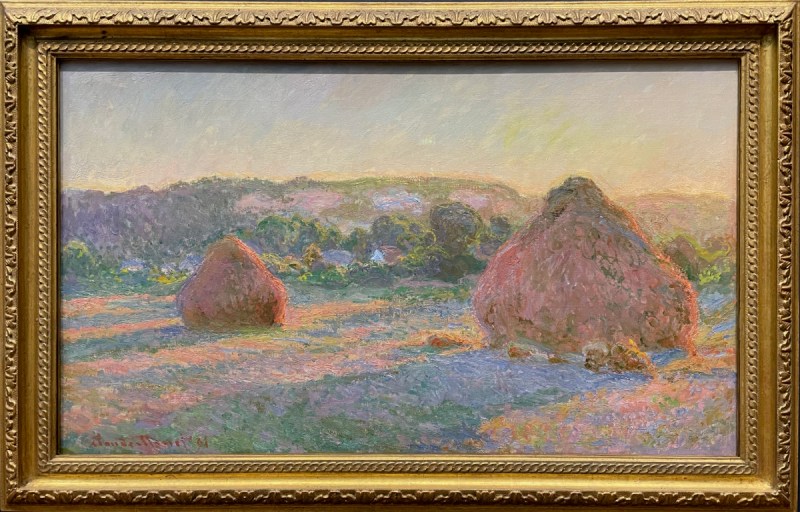
Stacks of Wheat (End of Summer) by Claude Monet (1890-91)
In last week’s poem, I mentioned “ricks” and found out they were haystacks. Well, this past week I was in Chicago (my husband was at a scientific meeting) and I spent two of those days at the Art Institute of Chicago, even becoming a member. And here they were, these piles of hay as described by Dylan Thomas: “hay / Fields high as the house” and “the nightjars / Flying with the ricks” as painted by Claude Monet. There were multiple images of these haystacks, and lots of beautiful Monets.
(Above is a video, if technology is working for me. ) I hope that wasn’t too fast, but you get the picture. Multiple pictures. And a patchwork Rail Fence floor.
When I left to Chicago, I determined I was not going to seek out quilts, or fabric stores, but instead accept whatever Chicago was going to give to me. It gave me so much: time away, time for walking, time for seeing pattern, time for seeing art, time for resting. It also gave me a chance to see many interesting things, catch up with some friends, go to church with a different congregation, and stay in a grand old hotel where I didn’t have to clean and I didn’t have to cook one meal all week, and where they claim the brownie was invented.
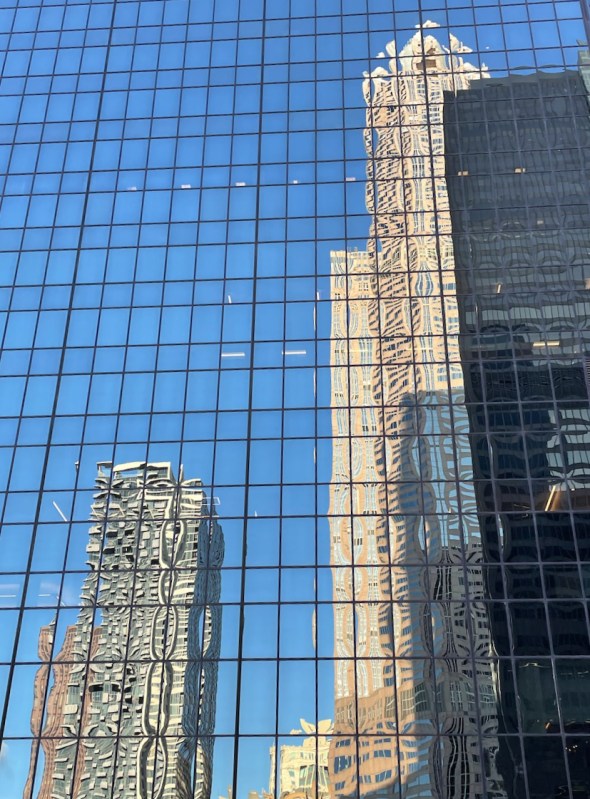
Of course, I saw the grid — and quilts — in everything, everywhere–
Title: For the Pansies, Send Me Back a Thought My quilting has evolved and changed, but I still love this quilt.
Last night we had smoke from fires somewhere, but I never could figure out where. And so I gave up, because that’s what you do at the end of summer: you play it easy, play it nice. You take a breath. You don’t work too hard to find out things that don’t really matter. For nearly a week the temperatures here have felt like end-of-summer, with highs in the 70s and at night, lows that allow the window open.
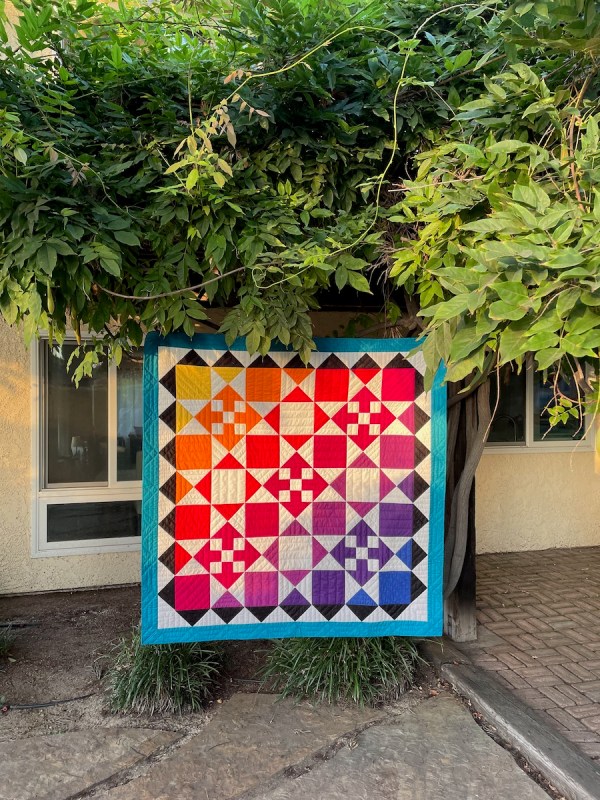
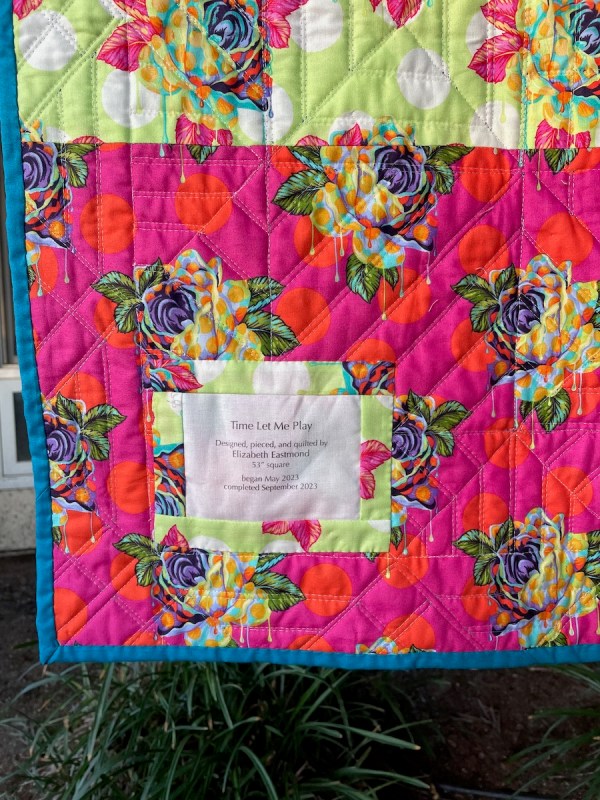
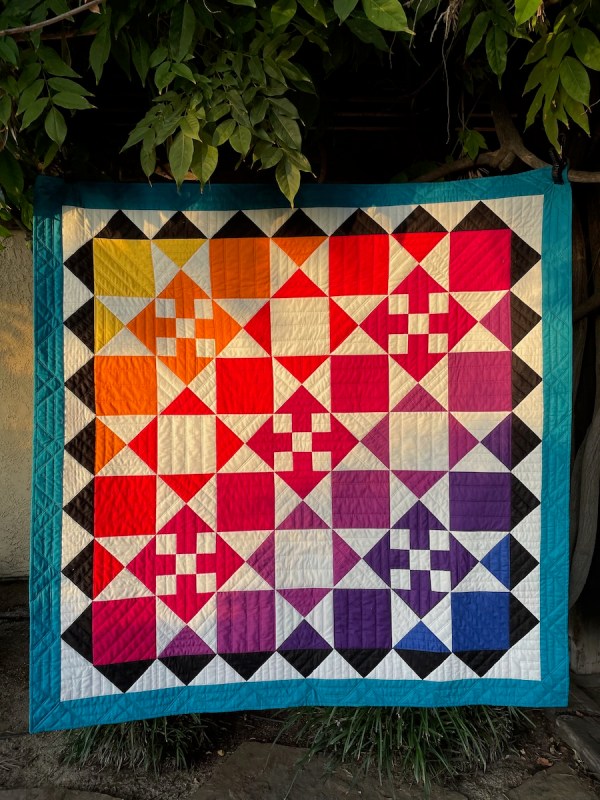
This quilt is Time Let Me Play, the line taken from “Fern Hill,” a poem by the esteemed Dylan Thomas, where he describes his childhood from the vantage point of a grown man. He looks back, riffing, remembering and describing how he was king of the hill, lost in the verdant landscapes of his childhood Wales. I especially liked the repeating of the center lines of several stanzas:
Time let me hail and climb / Golden in the heydays of his eyes, / And honoured among wagons I was prince of the apple towns
Time let me play and be / Golden in the mercy of his means, / And green and golden I was huntsman and herdsman
And playing, lovely and watery / And fire green as grass. / And nightly under the simple stars / As I rode to sleep the owls were bearing the farm away
Who is this personage that he refers to? It is Time, which gives him a chance to be “green” and “golden” — a reference perhaps to being young like a growing sprout, but also as a golden, or fair-haired and favorite child. The child is the “prince of the apple towns” and lord of the trees and leaves. He repeats “Time let me play” only once, but does refer to that necessary activity of youth, over and over.
Only at the end does Thomas allude to the ephemerality of what he has just described, when he says that Time held him both “green” and “dying,” giving hint to the arc of a day, of a season, the arc of a life.
And while I could go on forever, pulling out the ideas from this rich poem, I want to say tonight that I slipped out the door just at sunset, the sun climbing down from its throne in the sky, soon to slip down over the horizon. I had the quilt in my hands, and quickly clamped it up to the sprawling woody vines of our wisteria. I stepped back and took pictures as the golden light lit up the quilt.
The shadow of the leaves were soft smudgey shapes, a contrast to the crisp angles and simple lines of the quilt. The sun moved quickly and so did I, turning the quilt over to snap an image of the label, sewn on this afternoon.
I felt caught on the edge between day and night. And I am also caught on the edge of another shift of time: I am no longer that young child, climbing trees, playing as if it were the only thing to do in summer, drinking in the richness of clouds and dew and green and gold. But with cloth in my hands, I can still play once in a while, as that pure essence of a quilt — of color and line and shape and imagination — will still let me wander.
Time, let me play. Again and again and again.
Quilt Details
Quilt #279 in my Quilt Index • 53″ square Painters Palette Solids are from Paintbrush Studios Magnifico thread is what I used for quilting, and that is made by Superior Threads Designed, pieced and quilted by Elizabeth Eastmond (me!) Pattern can be purchased in my Pattern Shop
Now as I was young and easy under the apple boughs About the lilting house and happy as the grass was green, The night above the dingle starry, Time let me hail and climb Golden in the heydays of his eyes, And honoured among wagons I was prince of the apple towns And once below a time I lordly had the trees and leaves Trail with daisies and barley Down the rivers of the windfall light.
And as I was green and carefree, famous among the barns About the happy yard and singing as the farm was home, In the sun that is young once only, Time let me play and be Golden in the mercy of his means, And green and golden I was huntsman and herdsman, the calves Sang to my horn, the foxes on the hills barked clear and cold, And the sabbath rang slowly In the pebbles of the holy streams.
All the sun long it was running, it was lovely, the hay Fields high as the house, the tunes from the chimneys, it was air And playing, lovely and watery And fire green as grass. And nightly under the simple stars As I rode to sleep the owls were bearing the farm away, All the moon long I heard, blessed among stables, the nightjars Flying with the ricks, and the horses Flashing into the dark.
And then to awake, and the farm, like a wanderer white With the dew, come back, the cock on his shoulder: it was all Shining, it was Adam and maiden, The sky gathered again And the sun grew round that very day. So it must have been after the birth of the simple light In the first, spinning place, the spellbound horses walking warm Out of the whinnying green stable On to the fields of praise.
And honoured among foxes and pheasants by the gay house Under the new made clouds and happy as the heart was long, In the sun born over and over, I ran my heedless ways, My wishes raced through the house high hay And nothing I cared, at my sky blue trades, that time allows In all his tuneful turning so few and such morning songs Before the children green and golden Follow him out of grace,
Nothing I cared, in the lamb white days, that time would take me Up to the swallow thronged loft by the shadow of my hand, In the moon that is always rising, Nor that riding to sleep I should hear him fly with the high fields And wake to the farm forever fled from the childless land. Oh as I was young and easy in the mercy of his means, Time held me green and dying Though I sang in my chains like the sea.
Last words about the poem: I searched to understand what a nightjar was (found it), but that flying rick? Well, a rick was a name for a tall haystack, and I suppose the child falling asleep at Fern Hill might dream of flying nightjars and haystacks, just as the “owls” might “bear the farm away.”