Quilts

Criss-Cross Finished!

th_friendshipswapbutton_zpseeb9f31a

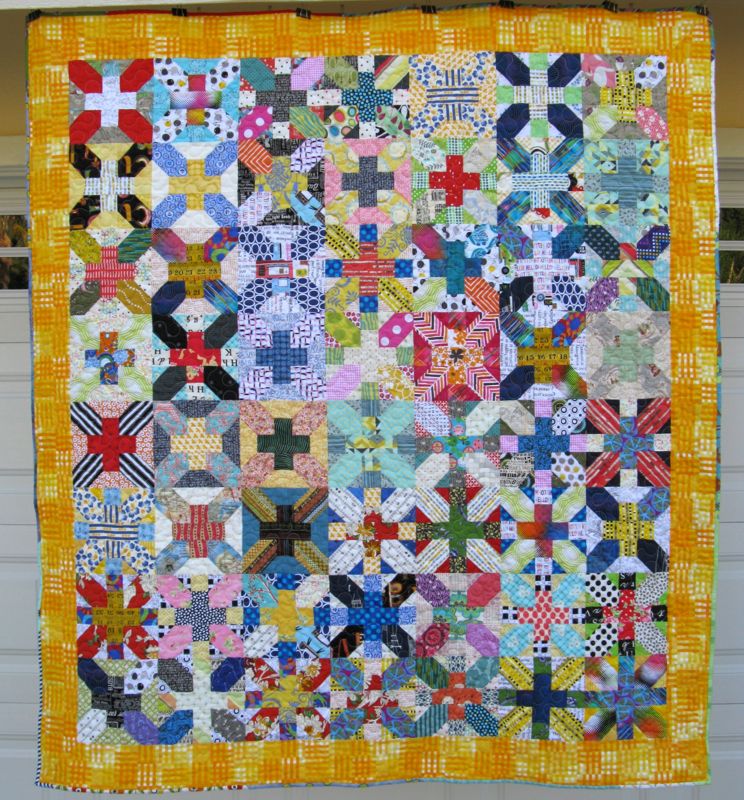
It all started with a request to join the Friendship X and + Swap, me digging out one lonely block from the back of the closet, marooned there from when I’d started to make the blocks but abandoned the project, and an invitation from Krista.  And now I can show you the finished quilt.

Criss-Cross_final front

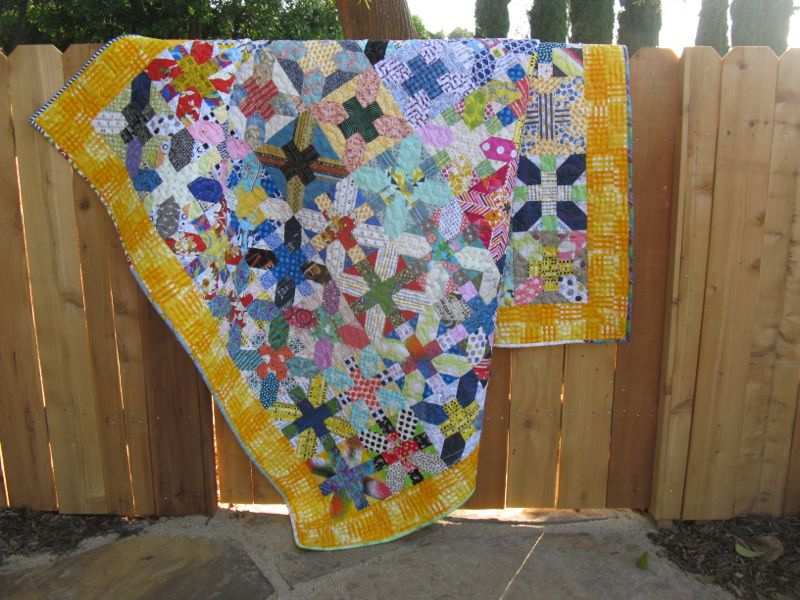
Criss-Cross_draped front

Lounging around on my new gate in my re-done landscape.

Criss-Cross_detail2

Criss-Cross_detail1

To go with this scrappy quilt, I used up odds and ends of binding ends, plus cut a few more pieces here and there.

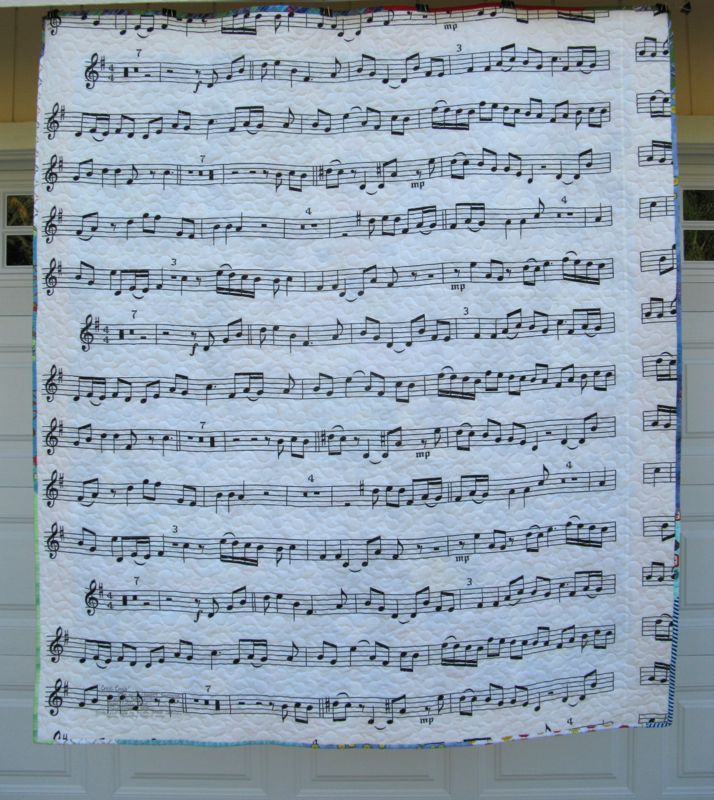
Criss-Cross_full back

The back: IKEA music fabric.

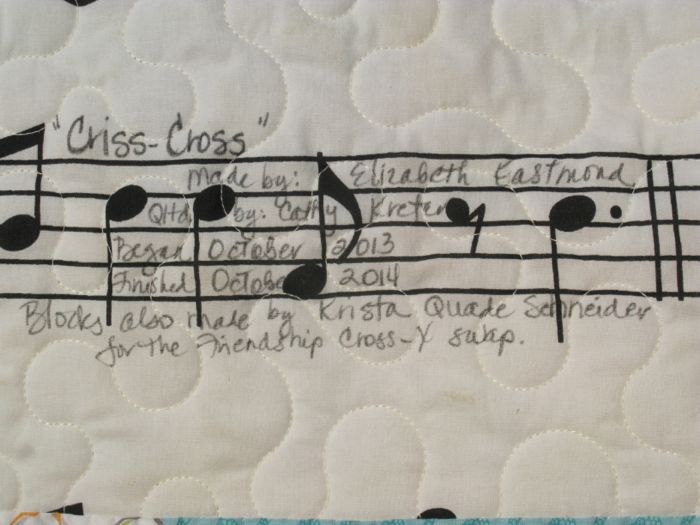
Criss-Cross_label

Some days you make a fancy printed label, but when the fabric is so fun with lines and notes, I think some days you should write the label.  So I did.

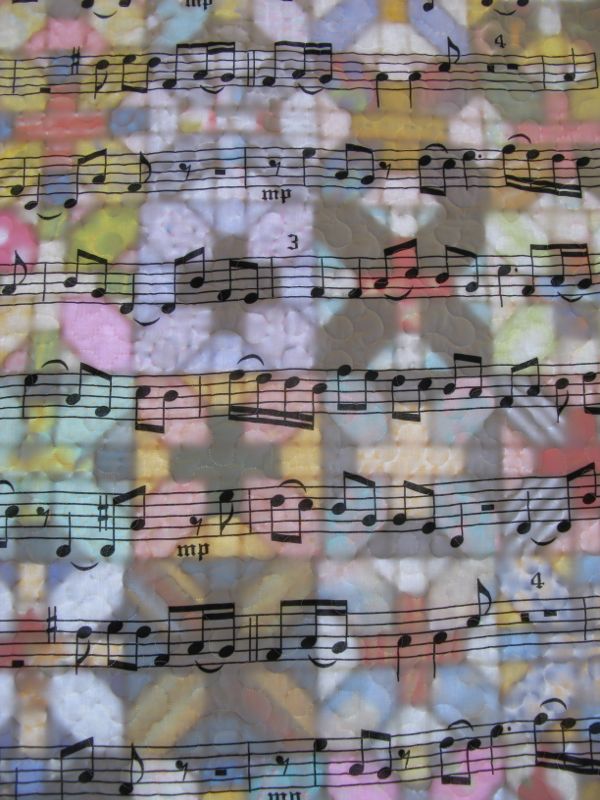
Criss-Cross_stained glass

The stained glass effect of the front showing through the musical back.  It’s done!
For more posts about this quilt, type “cross” into the search box on the right; you’ll get several, including one that has a diagram of the pattern I used.

This is #136 on my 200 Quilts List.

˚˚˚˚˚˚˚˚˚˚˚˚˚˚˚˚˚˚˚˚˚˚˚˚˚˚˚˚˚˚˚˚˚˚˚˚˚˚˚˚˚˚˚˚˚˚˚


Quilts

Free Pattern for Shopping Bags

As the Governor of California recently signed a bill banning those single-use shopping bags that we all get at the grocery stores, we’ve all been buzzing about what to replace it with.  There is still the paper bag, but a section of the bill suggests paying 10-cents for each shopping bag (even though Ralph’s and Trader Joe’s now offer them for free).  Whether you hate this bill or love it, a shopper still needs to come up with a way to carry their groceries home.

tote_grocery-sack2a

I made my first bags out of lightweight canvas, and figured out how to get two out of one yard of fabric. Because these are canvas, I didn’t need to put the handles all the way to the bottom seam.  However, if you are making it out of lightweight cotton, you might consider doubling up on that to make it sturdier, or yes, buying some webbing for your handles.

Whenever I use these, I get positive comments from the checkers. . . and a whole slew of awful stories about those re-usable plastic bags that some people have.  One clerk told me that he unzipped one and a whole bunch of moths flew out into the store.  Another talked about the smell of those bags that are re-used and re-used.  I think we quilters have the best possible world with our cloth bags, which can be thrown in the washer.  Apparently bags at the produce counter and at the butcher’s counter are still okay, so I don’t have to worry about those grocery items messing up the cloth bags.

Shopping Bag Pattern

I’ve written it up in a downloadable PDF pattern that is free: OPQuilt’s Shopping Bag Pattern.

Just send back some good karma, if you wouldn’t mind, and always practice good attribution, acknowledging that it’s from OPQuilt.com.  To do so, please do not post the pattern on your blog, nor print off five copies for your friends.  Instead link back here, and let them print off their own.  Thanks.

Quilts

Antique Crib Quilts and Karl Benjamin

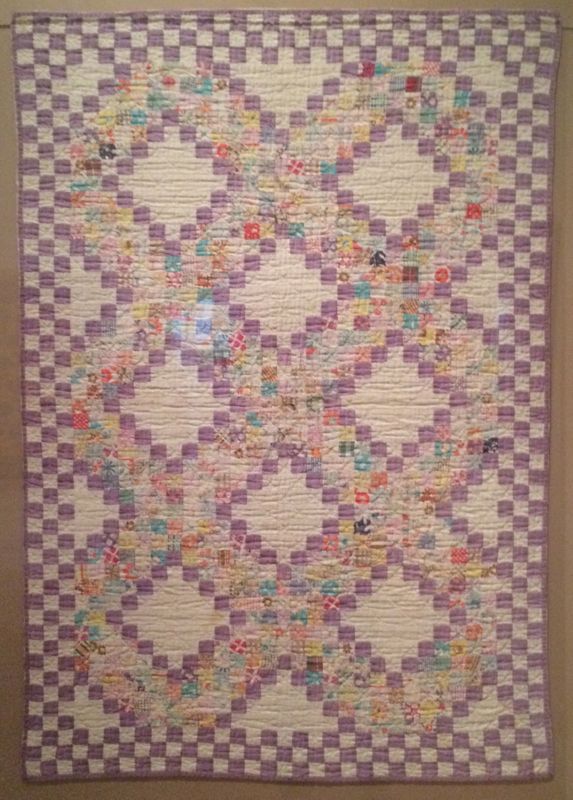
triple irish chain crib quilt

Recently we went to the Los Angeles County Museum of Art (LACMA) and viewed a small exhibition of crib quilts.  I thought I’d share them with you because while they look so old and antique they also are refreshingly current in some of their color choices and design.  Above is a Triple Irish Chain from the 1930s, one of the “younger” quilts in the exhibit.  I did find interesting that while no one really knows the origin of the label “Irish Chain” some suggest it came from the quilts fashioned “from bags of scraps sold to workers in the Irish shirt industry, who made quilts for sale in their spare time.”  No dimensions were given, but they are smaller quilts, roughly 2 feet across and 3 feet high.
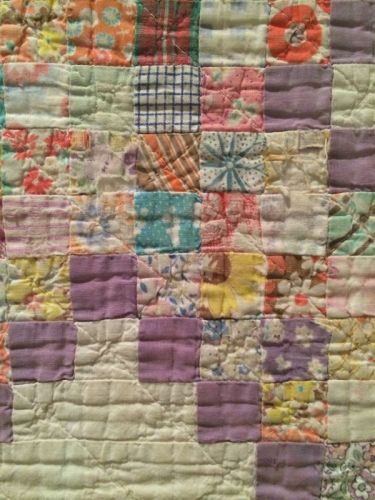
triple irish chain crib quilt detail

Detail of Triple Irish Chain crib quilt.
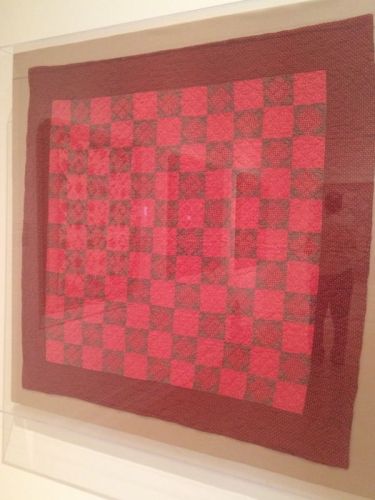
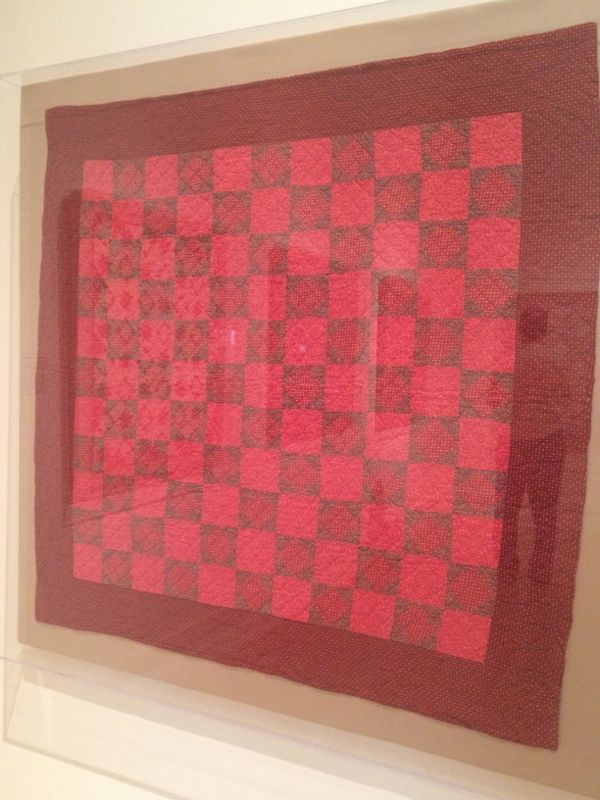
square in a square crib quilt

This “Square within a Square” quilt was made in Pennsylvania around 1880.  All of the crib quilts were protected behind a plexiglass box, and some quilts were really hard to photograph, given the glare of the lights (I never could get a decent photo of the “Bars” quilt).

square in a square crib quilt detail

Detail, “Square within a Square.”

dutch windmill crib quilt

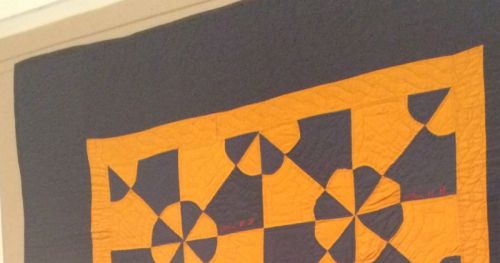
Another more contemporary quilt, made around 1920, is this quilt with two names: “Dutch Windmill” or “Hearts and Gizzards.”  This one is also from Pennsylvania and is machine quilted.
dutch windmill crib quilt detail

While you can’t really see it too well, on each larger black piece is a name embroidered in red, perhaps revealing the “creators of each separate block.”
churn dash

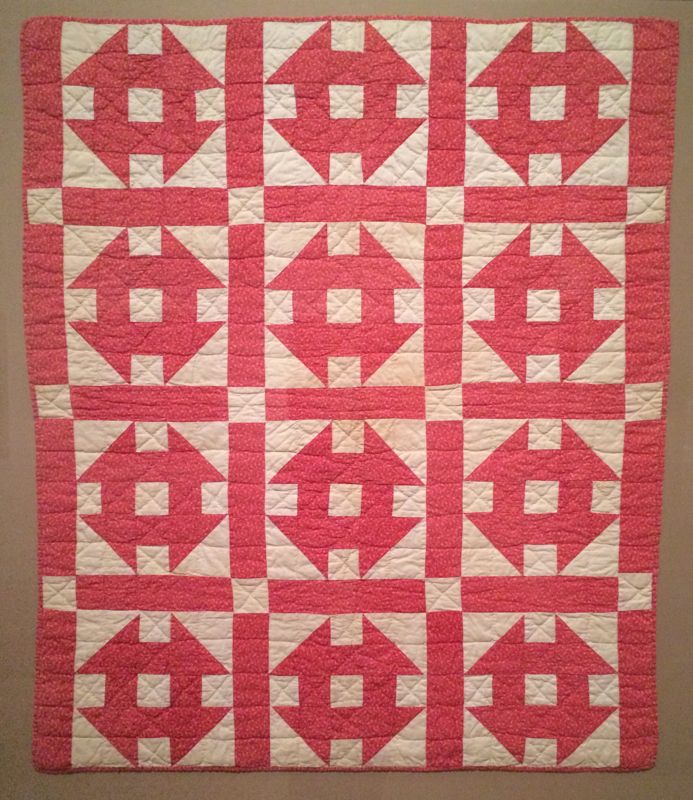
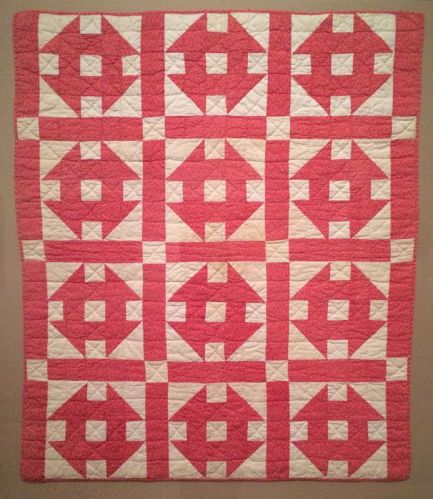
While this pattern is known as “Hole in the Barn Door” or “Monkey Wrench,”  we typically refer to it as “Churn Dash.”  This one is both hand and machine pieced and is from the 1880s.  The title card next to this had this tidbit: “From the beginning of the 1880s, the primary sources for patterns were magazines and newspapers with diagrams and instructions, and ultimately mail-order companies.”  The more things change, the more they stay the same.

mariner's compass crib quilt

“Mariner’s Compass,” from the 1880s.

mariner's compass crib quilt detail

“Mariner’s Compass,” detail.

lemoyne star crib quilt

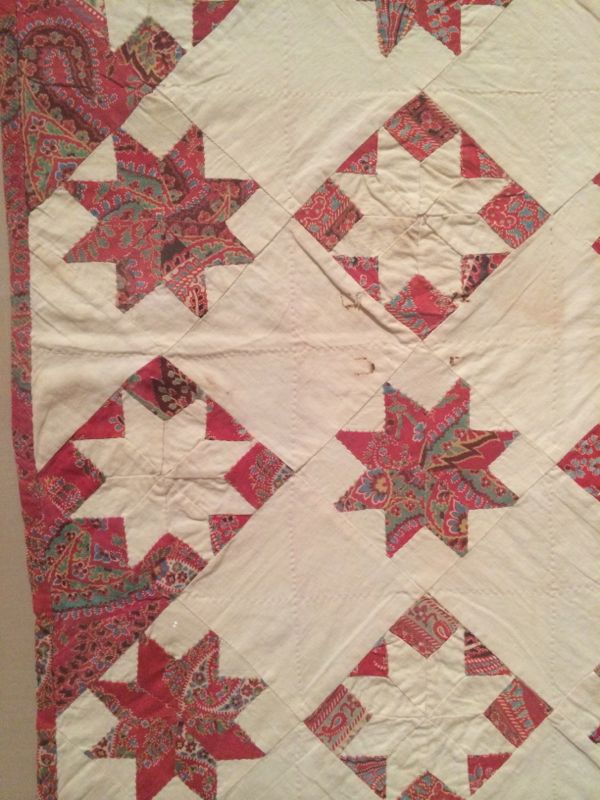
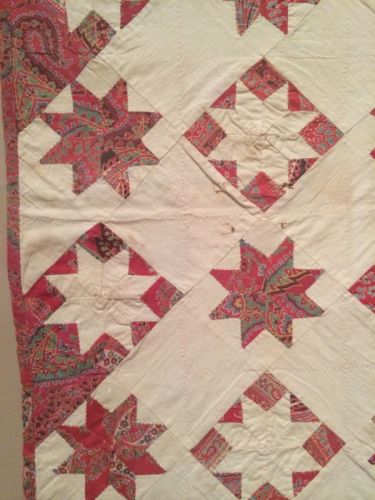
This little “Le Moyne Star” is hand pieced and quilted and is dated to 1840.  I love the on point setting of this little quilt, as well as the use of the red setting triangles in the borders, causing it to look like a shooting star effect.  The title card shared this info about the dye: “Before the synthetic production of alizarin crimson in 1869, printed patterns on textiles were colored by “Turkey Red” dyeing, named for an eastern Mediterranean method that required soaking cloth in oil and dyeing it with madder root.  The print on this quilt resembles chintz patterns from India that were popular in Europe in the eighteenth and early nineteenth century.”
lemoyne star crib quilt detail

The quilt was slightly pinkish; this is not an aberration of photography.

flying geese crib quilt

This “Flying Geese” quilt is hand pieced and hand quilted, by machine bound and dates from 1870.  This one was my favorite in the collections because of its very modern look and the fabulous fabrics.  LACMA’s curator wrote “This quilt exemplifies the reductive nature of quilt imagery, which distills and captures an enduring impression of an object. . . .[namely] the migrations of geese.”

flying geese crib quilt detail

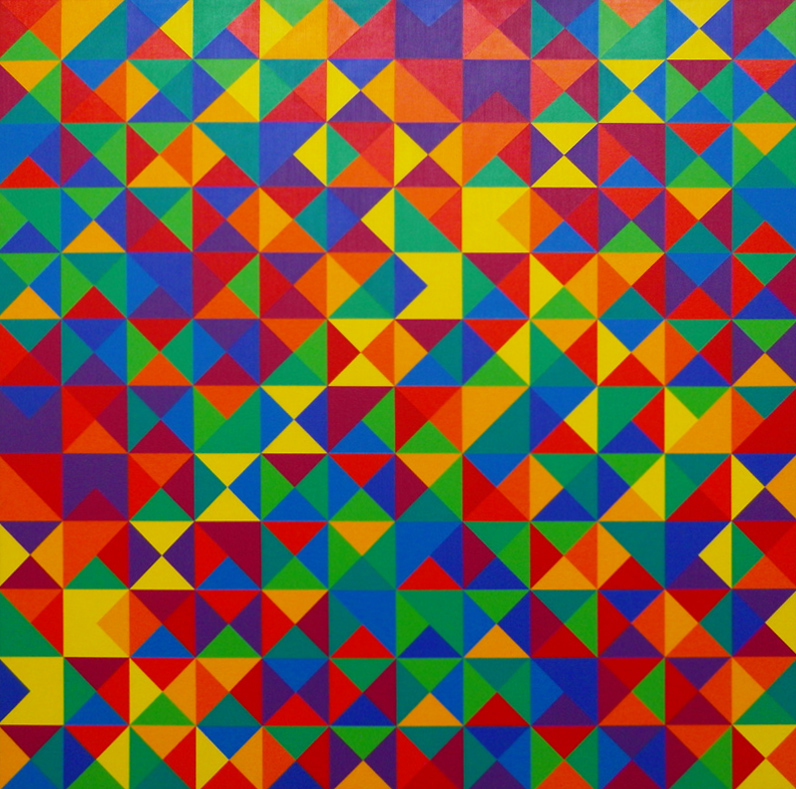
Modern Art Painting random

We walked out through an adjoining gallery, where this painting caught my eye.  Since we were with my sister Christine and her daughter (and baby granddaughter), I didn’t linger, but did think it would make a great quilt.  And while we’re on the subject of fine-art-possibly-inspiring-a-quilt, take a look at these:
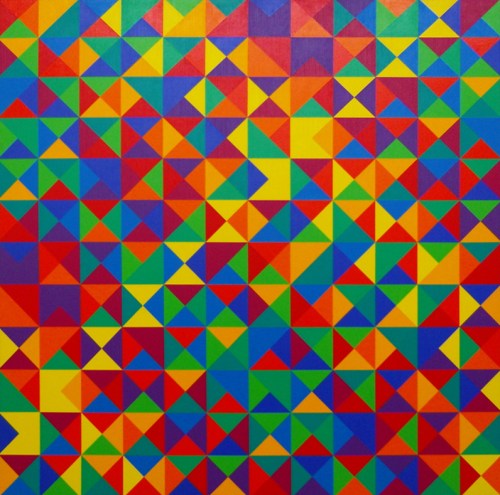
SAMSUNG DIGITAL CAMERA(found *here*)

This is the work of Karl Benjamin, known as the father of Hard Edge painting.  His ideas are perfect for inspiring quilters, as we work in hard edges, with our seams and our cloth.

Karl Benjamin log cabin(from *here*)

He died two years ago at the age of 86, but has left a legacy of  “vision, not logic” as the LATimes says.  As we quilters struggle with “naming” the different factions of the quilting world (art quilters, traditional quilters, modern quilters. etc.) I loved how he talked about the various labels given to his paintings, in an interview (click if you want to read more):

“Hard Edge got started the late 50s, and I hate that word. It doesn’t mean anything. What’s a soft edge? Monet? To write about something, you have to find a word, so unfortunately I don’t think that was a very good word.
“Abstract Classicism was another one. Someone had a show in London, and irrationally corporate called it Abstract Classicism. Well, it was good for your career, because you had a name now, but it didn’t mean anything. But you take it in context. In any art, there’s the romantic and the classical. It’s always kind of torn between those two poles. So there was Abstract Expressionism, which was accepted for wild painters, which were brand new then, and Abstract Classicism, which was opposed to expressionism. But it balanced out equally.”

Los Angeles Modern Auctions (LAMA) May 6, 2012 auction catalogue(from *here*)

You can find more of his paintings *here*  and *here* or just do a search on his name in Google Images.  (Have a great time.) Okay, back to our museum visit. . .

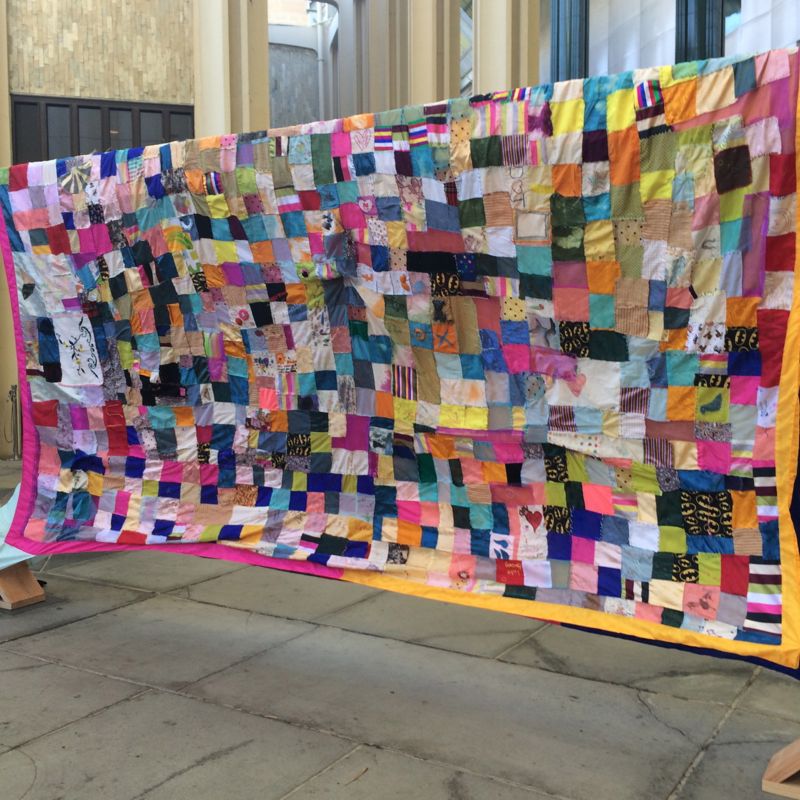
bojagiIt was Korean Day at LACMA and in the courtyard was this quilt-like display, titled “Community Bojagi.”  A bojagi is a “traditional Korean wrapping cloth,” and over 1700 people collaborated to make this riot of color and patches.

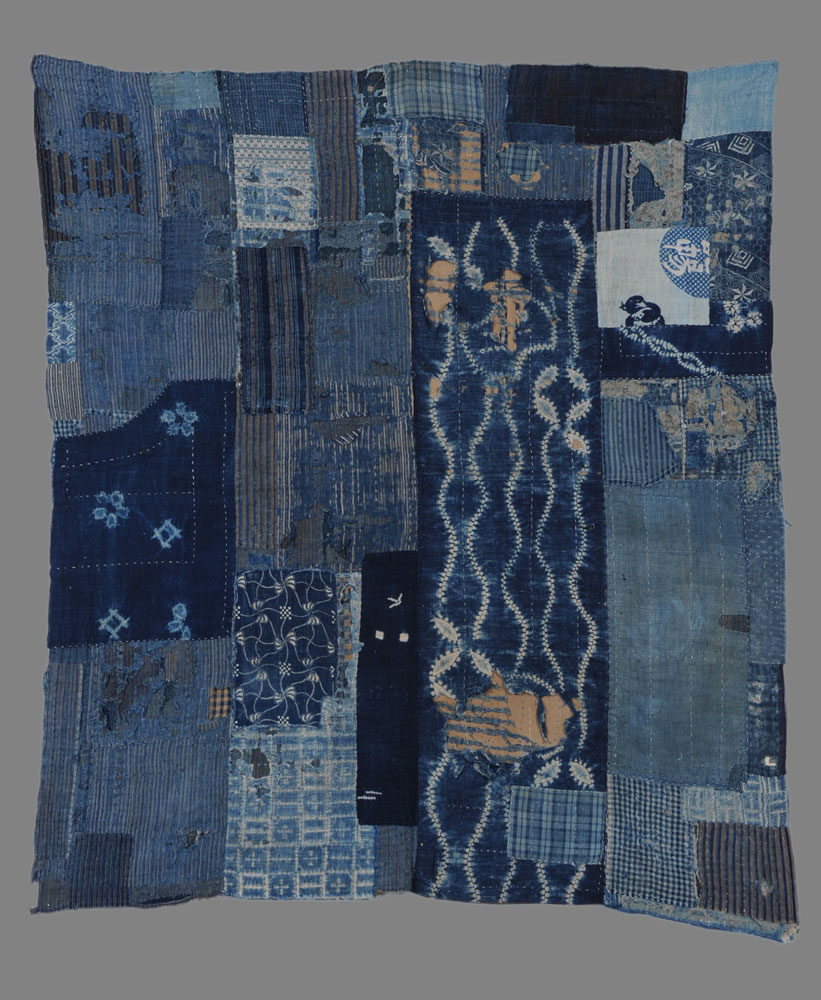
Boro(photo from *here*)

It reminded me of boro, the Japanese tradition of mending cloth to keep it viable and which, over time, becomes its own art piece. . . just like some of our quilts.  They, like the crib quilts shown above, are made for use but are often made for display.  Who knows how many of ours will end up in museums a hundred-plus years in the future?

Quilts

Signature Quilt for Lora

Lora suddenly moved away and two of us in our church group decided she needed a quilt to remember us. One day she was here, puttering around in her house. Then a fall, where she wasn’t discovered, which led a brief stay in a skilled nursing home. Her children rallied round her and took her to live near them, where Lora can be cared for.  So I went looking for ideas for a signature quilt (see them at the bottom of this post), and decided on the basic signature quilt block since it needed to be put together quickly.  My friend Lisa (who is our friend’s niece) and I decided on a 6″ block.

Signature Block 1

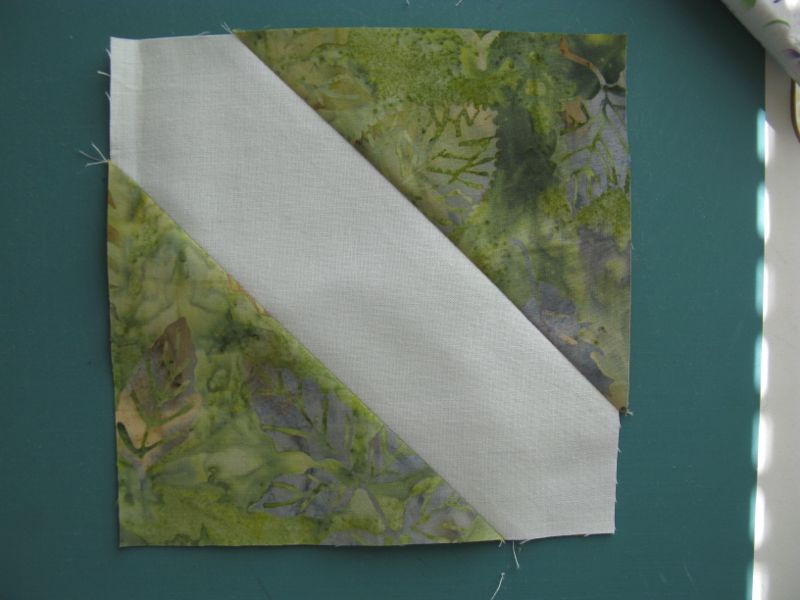
For every signature block, cut one bigger square in a light color (so the signatures will show) and two contrast squares.  The dimensions are above.  You can see that I double-stitched the diagonal seam, the lines 1/2″ apart. I then cut in between that line so I could have some HSTs in case we needed more places for signatures.  In case you haven’t done one of these, the directions are:

1–Line up the contrast square with the light-colored square and sew a diagonal.  I use The Angler tool from Pam Bono so I don’t have to draw lines.  Stitch a batch of blocks, then go back in and stitch 1/2″ away.

2– Cut in between the two stitched lines, then press the contrast fabric away from the center white block.  (Set aside the cut-off triangle.  You’ll now have a growing stack of Half-Square Triangles  (HSTs) for another project!)

3– Sew the other side (which is what you see above).

Signature Block 2

Done.  I then cut a bunch of strips of freezer paper and ironed them on the back of the white strip, so to make it easier to sign.  We’ll have them sign with a Micron Pigma Pen .08 as it leaves a nice line.

This same process is the one I follow when we make Signature Blocks for our bee, only we use the light colored fabric cut to a 3 1/2″ square and the contrasting “snowball” blocks are 2 1/2″.  I don’t save the triangles on those.

Signature Block 3

I finished 74 squares this past couple of days.  Isn’t the fabric beautiful?  Lisa has a whole collection of batiks which she graciously contributed to this project.  (Yeah.  I contributed the Kona Snow.)

Signature Block 4

I signed mine so you can see what it looks like.

Signature Quilt 1

Here’s a signature quilt, pulled from the web (sorry, I don’t have the attribution), and they used their extra HSTs in the borders.

Signature Quilt 2Here’s another version, without borders.

Lora, in her earlier years, made wedding cakes.  The rich, the famous, the well-heeled, and well, all of the young girls in our church all sought out her cakes, because not only did they look elegant and beautiful, they tasted good.  Rich and yummy, full of vanilla fragrance and just the right amount of sweetness to make you come back for seconds.  Or thirds. For my daughter’s wedding, she also made a double-fudgey chocolate groom’s cake.  It was only at the very end, a year ago, that she gave two of us her secret recipe for the frosting, and the secret ingredient that made my kitchen smell like her cake was baking right there.  She also did flowers, interior decorating, and we loved it when she decorated the church hall at Christmastime for our church dinner, transforming it to a winter wonderland, making us all feel like we were the rich, the famous, and the well-heeled, instead a bunch of modest church-goers.  Lora did everything up Big.  Every year she would get the giant wreath out of the storage closet at our church, get a ladder and hang it up on the wall behind the speaker’s podium, arranging and re-arranging the red glass balls so they looked like someone just tossed them up there.  That look takes real skill.  Lora was part of the warp and weft of our church, and while some say she’ll be back, others say she won’t.

I think the reason why this affected us all so much is that within the space of a couple of weeks, Lora’s life spun around on a dime and her life in her home, which she had decorated in rich autumns and golds, was probably over.  That quickly.  Yes, she’d had some health problems.  Yes, we knew she was more frail.  But how our lives in our carefully curated homes end is not something any of us like to think about.  So a fall can happen, or a sudden health reversal, and like a flash, we can be taken from our collections, our quilts, our memories: a sudden shearing off of a life.  And what happened to Lora is right around the proverbial corner for all of us, and we know it.  So perhaps by making her this quilt, we are saying we understand.  To the best of our abilities at this younger times in our lives, our hearts ache for you.

With this quilt we are saying, Lora, you are not forgotten.