Creating · Something to Think About

Orvieto, Austria and Quilting Designs

I’ve been working on posting to our travel blog (The TraveledMind.com) some photos from a trip we took to Italy in 2007 (I know, I know).  And given that my last post was about a contemporary artist who inspires me, I thought I’d mention that many old architectural sites inspire me too.

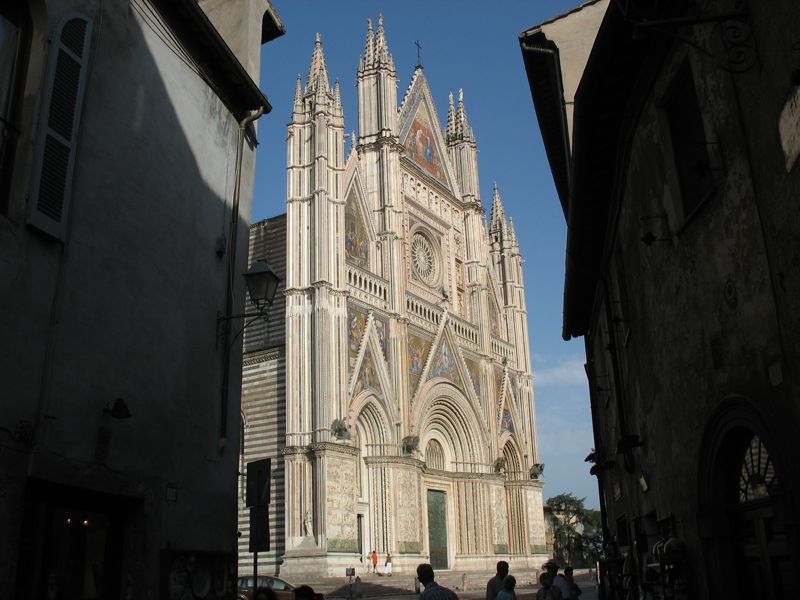
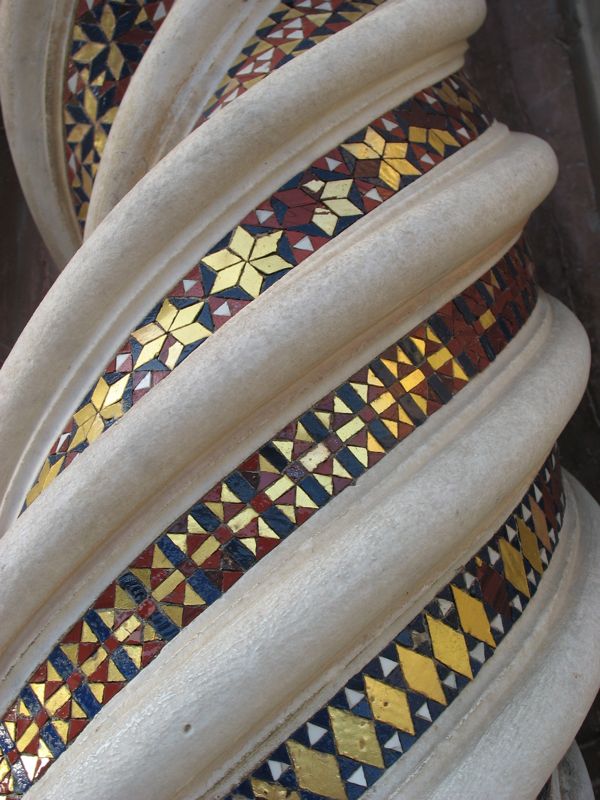
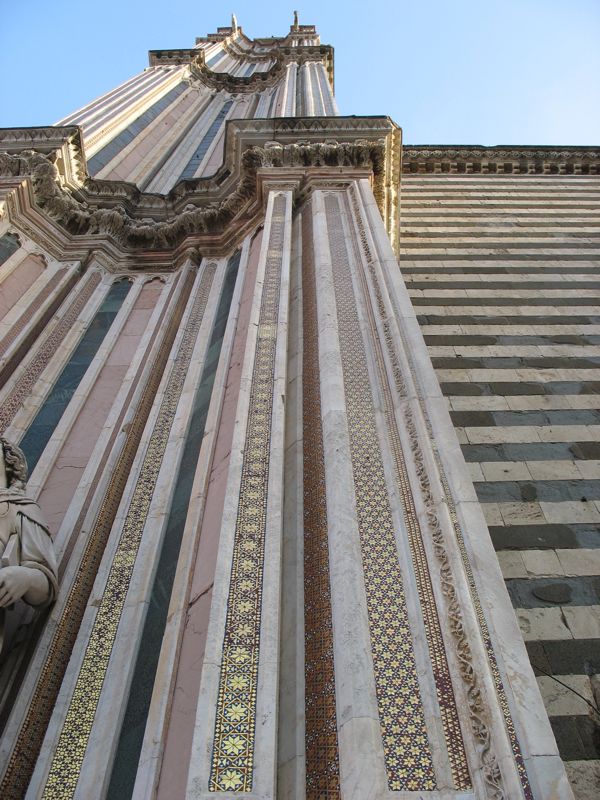
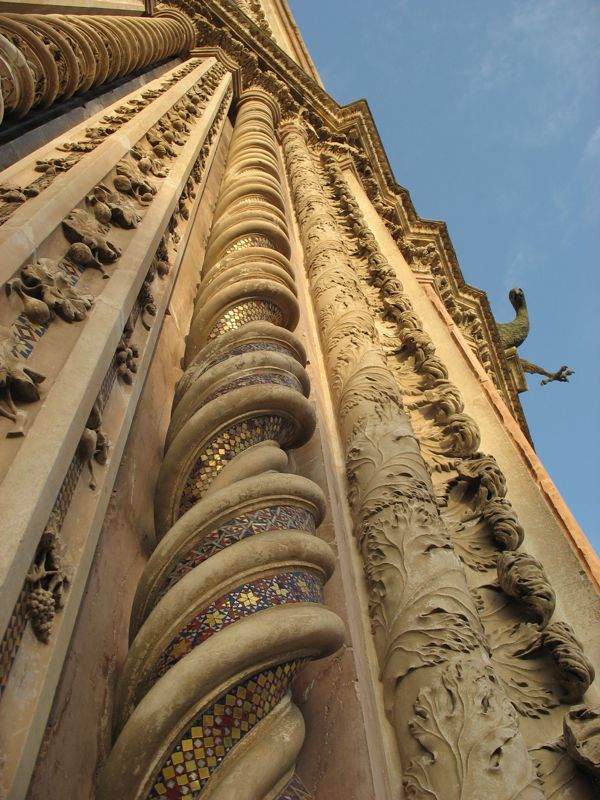
This is a pillar on the front of the Duomo (cathedral) in Orvieto, Italy.  Can’t you just see some of these very old (13th century, some of them) inlaid mosaic designs being made into a quilt?  Just simple shapes, really, but really fun to think about. Here are some more shots of that cathedral (it’s what the town is known for).

I love digital cameras.  Before I’d be whipping out my sketch book to take it all down for a future quilt, rather than waste my film (always limited on international trips).

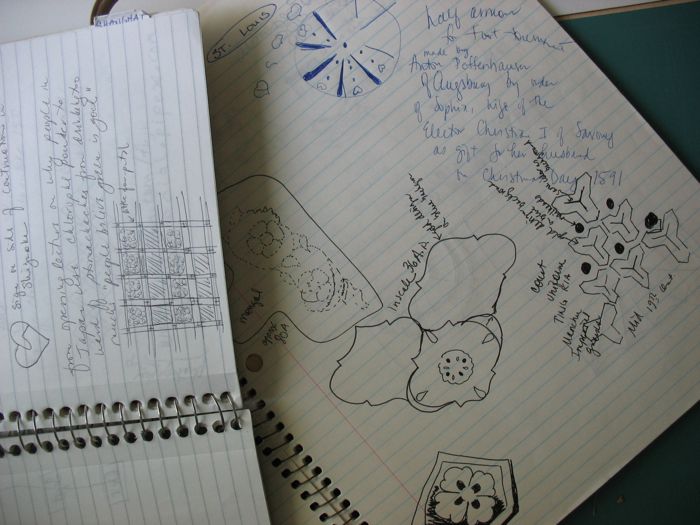
The one on the left is from a trip to Asia (my husband is a scientist and has spoken at seminars all over the world.  I try to go along when I can).  The sketchbook on the right is from a vacation to England long, long ago.  I think I was sketching the armor patterns from the Tower of London.  Of course sketchbooks are always handy when The Powers That Be won’t let you take photos.

And this one’s from my honeymoon with my scientist husband.  I was a single mom with four children and he married me us, then took me on a honeymoon to Austria (hence the notation above of “Wien” was Vienna).  Yep.  He’s a gem.  We just celebrated 22 years together–it took us that long to get all the children raised and out on their own.  And I’m still grateful to my parents for watching the children so we could start our married life in a memorable way.

This post has taken a bit of a detour, but sometimes when I reflect on the path that has brought me to where I am, I marvel at my good fortune.  It has not been without difficulties, like many of your lives, but we are very fortunate to be at a place in time and space where we have blogs, and lots of access to fabrics and sewing, and have the ability to make quilts, both for art’s sake and for use in our lives.

My road has taken me to many places, but I’m always happy to come home, unpack the bags and take up the reins of my life again.

Family Quilts · Something to Think About

Everyday Use

I teach college English and currently we are studying short fiction.  I had a nice moment the other day when my vocation interlocked with my avocation and I was able to talk about quilts in class.  The short story we were studying was “Everyday Use” by Alice Walker and it’s an interesting riff on how our quilts become valuable to others once they become a commodity, or have a price put on them.  In this scene, the returning daughter named Dee (who calls herself Wangero) is going through the house looking for decorations, and fixates on some quilts.  Ignoring her sister Maggie, who is in the kitchen doing the dishes, her actions are narrated by her mother:

            After dinner Dee (Wangero) went to the trunk at the foot of my bed and started rifling through it. Maggie hung back in the kitchen over the dishpan. Out came Wangero with two quilts. They had been pieced by Grandma Dee and then Big Dee and me had hung them on the quilt frames on the front porch and quilted them. One was in the Lone Star pattern. The other was Walk Around the Mountain. In both of them were scraps of dresses Grandma Dee had won fifty and more years ago. Bits and pieces of Grandpa Jattell’s Paisley shirts. And one teeny faded blue piece, about the size of a penny matchbox, that was from Great Grandpa Ezra’s uniform that he wore in the Civil War.
“Mama,” Wangro said sweet as a bird. “Can I have these old quilts?”
I heard something fall in the kitchen, and a minute later the kitchen door slammed.
“Why don’t you take one or two of the others?” I asked. “These old things was just done by me and Big Dee from some tops your grandma pieced before she died.”
“No,” said Wangero. “I don’t want those. They are stitched around the borders by machine.”

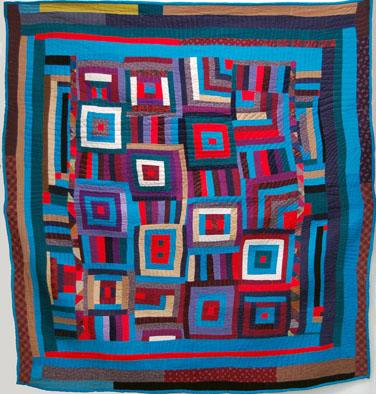
I found pictures of Gee’s Bend (above) and made a Google Doc slideshow about the quilts that these women made.  While the quilts mentioned in Walker’s story appear to be more traditional than the Gee’s Bend quilts, I thought it would be interesting for the students to see this body of work.

            “No,” said Wangero. “I don’t want those. They are stitched around the borders by machine.”
“That’ll make them last better,” I said.
“That’s not the point,” said Wangero. “These are all pieces of dresses Grandma used to wear. She did all this stitching by hand. Imag’ ine!” She held the quilts securely in her arms, stroking them.
“Some of the pieces, like those lavender ones, come ftom old clothes her mother handed down to her,” I said, moving up to touch the quilts. Dee (Wangero) moved back just enough so that I couldn’t reach the quilts. They already belonged to her.
“Imagine!” she breathed again, clutching them closely to her bosom.
“The truth is,” I said, “I promised to give them quilts to Maggie, for when she marries John Thomas.”
She gasped like a bee had stung her.
“Maggie can’t appreciate these quilts!” she said. “She’d probably be backward enough to put them to everyday use.”

So the title comes from the returning daughter (Dee/Wangero) aghast that these treasures would be put to “everyday use.”  She goes about raiding the house for things that ARE put to everyday use: the top of the churn dash, various other household items.  The final straw for the mother (who is the alternate voice in those two passages above) is when Dee/Wangero is asked what she’ll do with the quilts:

“Maggie can’t appreciate these quilts!” she said. “She’d probably be backward enough to put them to everyday use.”
“I reckon she would,” I said. “God knows I been saving ’em for long enough with nobody using ’em. I hope she will!” I didn’t want to bring up how I had offered Dee (Wangero) a quilt when she went away to college. Then she had told they were old~fashioned, out of style.
“But they’re priceless!” she was saying now, furiously; for she has a temper. “Maggie would put them on the bed and in five years they’d be in rags. Less than that!”
“She can always make some more,” I said. “Maggie knows how to quilt.”
Dee (Wangero) looked at me with hatred. “You just will not under.stand. The point is these quilts, these quilts!”
“Well,” I said, stumped. “What would you do with them?”
“Hang them,” she said. As if that was the only thing you could do with quilts.

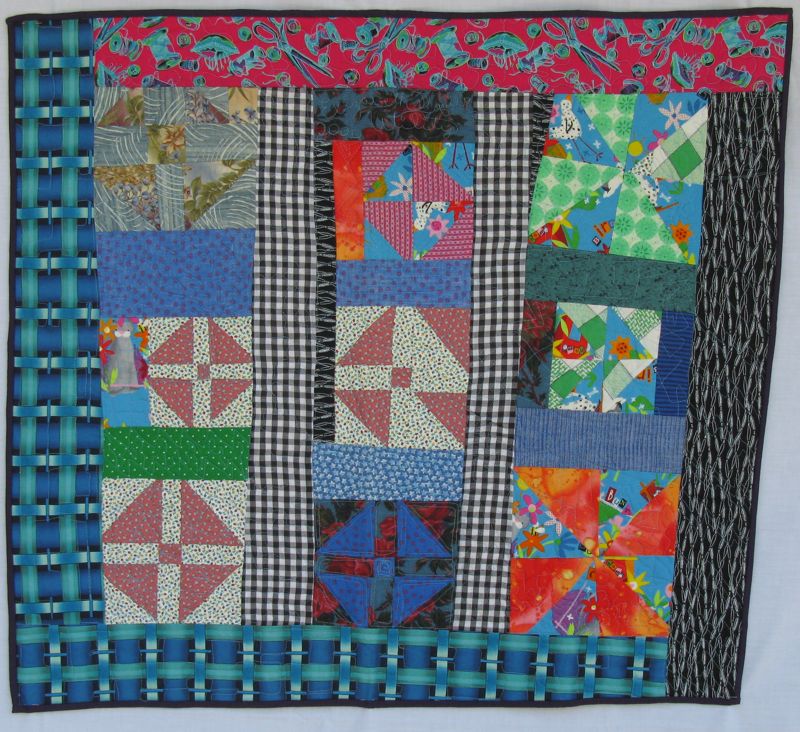
I also took in a utility quilt I had made with Roberta Horton in a class I took when I went to Houston.  Roberta didn’t allow us to use our rulers (which made the quilt very “wonky” and crooked), and made us put in an “ugly” fabric so we could learn to work around it.  We also had to sew a few of the patches in backwards, but the general appeal for me of this quilt was the idea that quilts don’t always have to be perfection, an idealized thing of beauty.  I liked learning that quilts were sometimes made in a hurry and were made to be used.

So it was a lovely few minutes in class, and I resisted the urge to keep talking about the quilts and quilters and focus instead on the Englishy part of class: Walker’s story.  But the underlying thread — that many quilts are made to be used and not hung on a wall — resonates with me.

And perhaps it’s why this photo of my grandson Riley is so pleasing to me.  He and his two sisters came for a visit this past weekend, and he toted along the baby quilt that I’d made for him.  That first morning, he called me in to show me that he’d made his bed, and I couldn’t resist snapping this photo of him, standing atop his quilt.  It’s being put to good use — everyday use, even when he comes to Grandma’s house.

Quilts · Something to Think About

Leaving the Grading Galaxy

I’ve been in the Grading Galaxy for the last three days.  It was a pretty arduous trip this time.

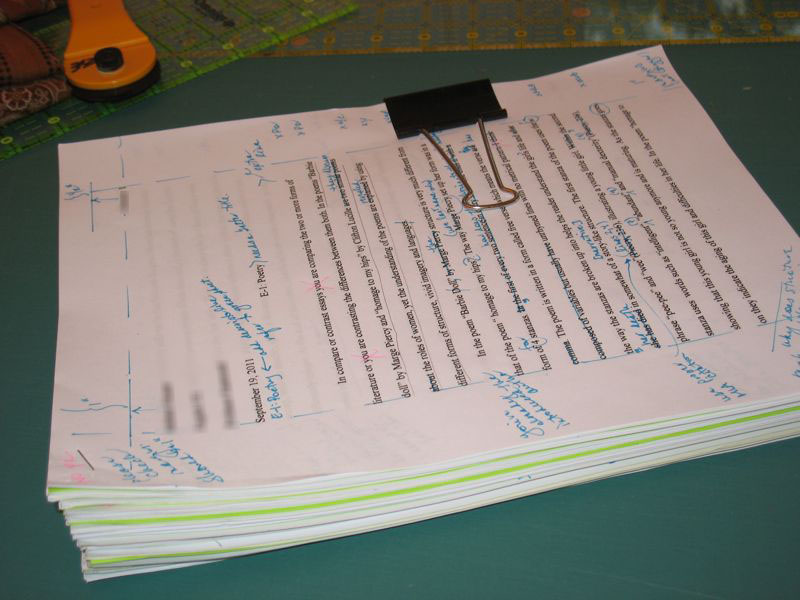
This top paper had over 50 errors.  Which made me really cranky.  Chocolate helped as did a whining phone call to a colleague, who had just finished her trip to the Grading Galaxy last week and had another stack to grade (she has one more class than I do, which puts her into saintly territory).

But last night, after I entered in the last grade and said to myself that I’d do the prep for Monday’s class—much, much later—my colleague sent me an email saying look what I’ve been working on!

And she’d sewn 9 squares of her Christmas quilt.  Inspired by her, I started working on the centers to my Square on Square quilt, and this morning I finished them up.

I did have a flash picture, but I prefer the warm glow of no flash, even though you are all squinting and saying things about my photography skills.  Now on to the vacuuming, and if I finish that and the bathrooms, I’ll work on the rusty red triangles, working my way toward that one completed square on the right.

My daughters says her favorite months are the “bers.”  That’s September, October, November and December.  It’s those months of the year when we plan things, give things, change is always in the air (although more for those in colder climes than for us SoCal folks).  It’s a time of anticipation, of making Christmas gifts (I’m already seeing early birds in the blogosphere working on them), of remembering that first day of school, or funny Halloween costumes, or when the turkey didn’t cook, and when the newest baby was there for opening presents under the tree.

It’s such a rich time, these “bers,” and like my daughter, I look forward to them every year and am sad when they go.  I remember my mother telling me a story about my grandmother.  My grandmother had been a school teacher for many many years but then finally retired.  And every fall when she’d hear the school bell toll, she wished she were there, back in the classroom, greeting students.  My father is a teacher, as is my husband, and my sister.  Teaching runs in our blood, so even though I may have been cranky about students who want me to do their work of finding the errors, I am happy that this September found me in a classroom.  And that October will find me making a fall quilt and seeing fall foliage up in Canada.  And November has me in New York with my daughter, and we’ll meet my son and see a Broadway show and the Ground Zero memorial.  And hopefully, if all goes well and there’s no major health crisis (I always get sick in November), by December I’ll be putting the final touches on my newest Christmas quilt, welcoming the holiday spirit to our home.

I hope you enjoy the “bers.” It all begins today.  It all begins now.

Dive in.

Something to Think About

Six-Step Process for Fabricaholics

To every addict comes a time when they must admit they have overstepped the line and must seek help. Hence, a fabric-aholics Six-Step Process, condensed down from a 12-step process therapy.

1. Take everything out of your fabric closet, your fabric shelves, and leave it in a heap while your husband/spouse/other walks in and says nothing.  Their eyes say it all.  Like, Wow.

2. Refold the fabrics because we all know that really helps. Because you can always get more in the closet after you refold them, right? And because scientific studies have proven that working with tactile items keeps the old blood pressure down.  It’s a health issue.

3. Start putting them back in.  Realize that you’ll never get your stash back in its “box” after its been sprung.   Organized fabrics take WAAAY more space.

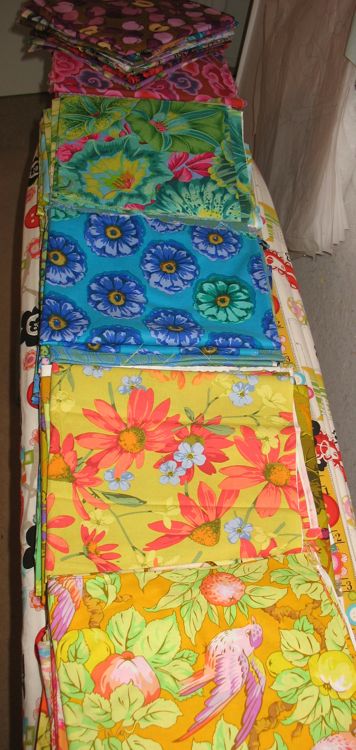
4. Re-think your organization plan.  Try sorting them by color groups — only six: yellow, green, blue, red, purple, grays (see photo).  Browns? Decide if they are a yellow-brown or an orange-brown or a yellow-orange brown because that’s the basic three places brown comes from.  (I learned this in college.  I give it to you now, free of charge.)  Or you can group the browns/blacks together. Put the darkest of the colors on the bottom of the color stack.  Or try organizing by theme: like those food fabrics you’ve been collecting since you learned how to thread a needle.  It was always going to be a “basket quilt” and now you look at some of them and wonder if you could stand to see them in a quilt.

5. Realize that you have accumulated enough fabric for 20 years worth of quilts. Why?  We need to subdivide this category.  These observations are not all autobiographical, but come from almost forty years of being a quilter/involved with fabric (before I was a quilter, I was a sewer and don’t even kid yourself — they’re stashers too):
a) you were at a quilt show and we all know they spray fabric pheromones in the air at those events, or
b) you were shopping with friends and they bought some, and you didn’t want to be left out, so you did too, or
c) you were feeling blue and needed a little cheering up, or
d) you were taking a class with _________ (fill in the blank) and needed more yellow-green, or
e) it was a beautiful day (weather or other) and you just felt like a stroll through a fabric store would be a great thing and you noticed the clearance racks, or
f) you are doing your part to help the economy and your local fabric store, or
g) the online email that your favorite online shop sent you had that new line and while you were really excited about only four of the prints, their fat-quarter bundle of nine prints would be a better bargain, or
h) it was a really horrid day (weather or other) and you just felt like visiting those people who you have made friends with at your local shop would cheer your day, or
i) you were in the mood for some new fabric, or
j) you saw a quilt on the blogs or in a magazine that you wanted to make, and of course, this required new fabric, or
k) you are a blogger and have to have something new to show on the blog, or
l) ______________ (fill in the blank).

6. Realize that you will probably always buy fabric (here’s where we differ from traditional 12-step programs) but that a little restraint now and again would be a good idea.  And if you are going to buy, consider making a quick quilt or two to give away to a woman’s shelter, or the Quilts of Valor , Home of the Brave, or other such charitable and worthy causes** such as 100 Quilts for Kids because they don’t need the latest fabric and you can use up the stash at the back of the closet.

But most of all, enjoy the process!  Enjoy the new idea, the cutting out with friends or while listening to a great book, the stitching (gives you time to think about your loved ones) the colors coming together, the design working, and the glorious finished quilt top.  Because if you fill yourself up with high-quality experiences while creating out of cloth, it will satisfy you far longer than a stack of fabrics in your closet.  I love my Come A-Round quilt, and I still savor the many months it took to create.  I have stories associated with all my quilts, and they are my legacy.

They’ll be yours, too.

(**Caveat: don’t give the charities junk! I worked with a woman’s shelter quilt drive once and we had to pitch a few smelly quilts (think: mildew) and quilts that were made of sub-standard fabric.  Just throw that shoddy stuff away and don’t acquire any more.)