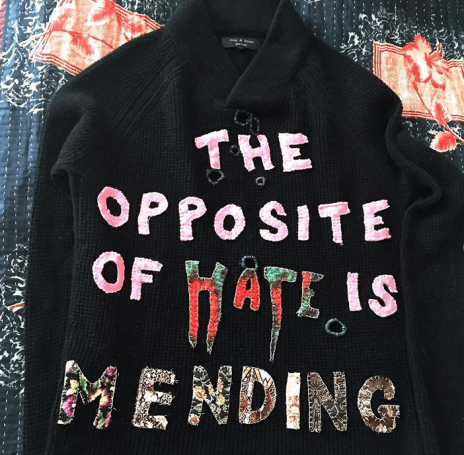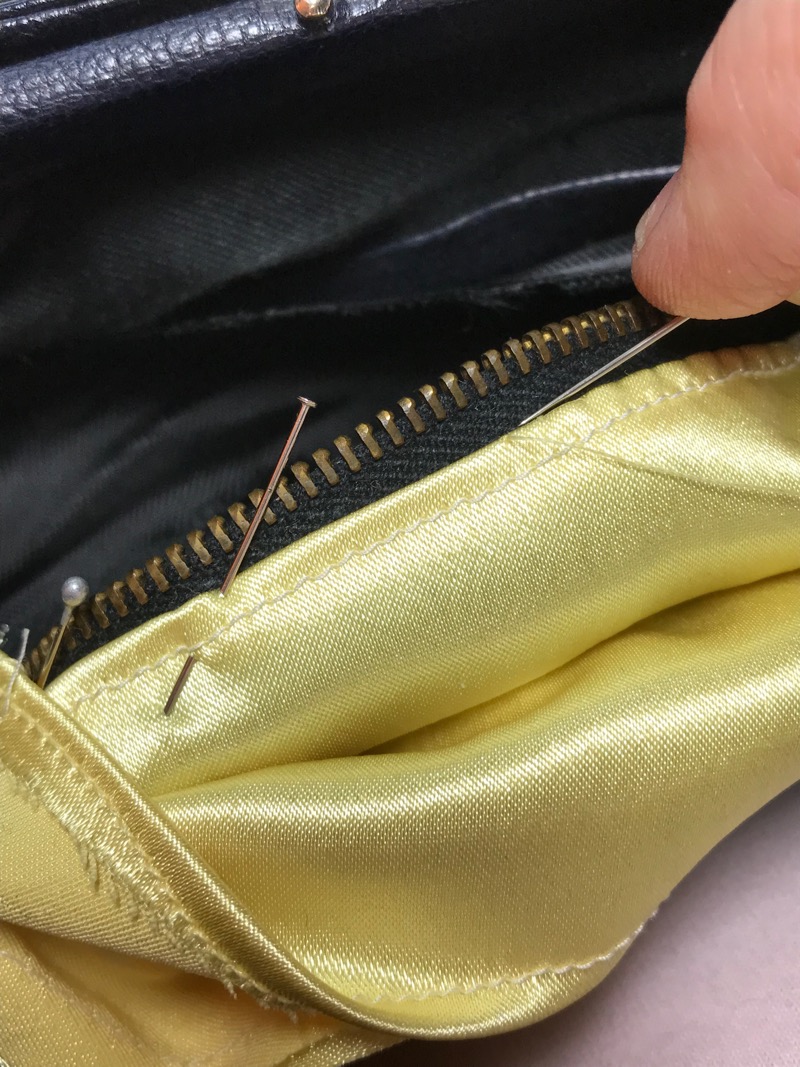
I’m a long-time mender. I recently fixed a favorite purse for my mother, replacing the torn pocket with some vivid yellow lining. I stitched up a few other ripped places, re-glued the lining into the frame and sent it back to her; she was pleased as punch to have her little purse back in working order.
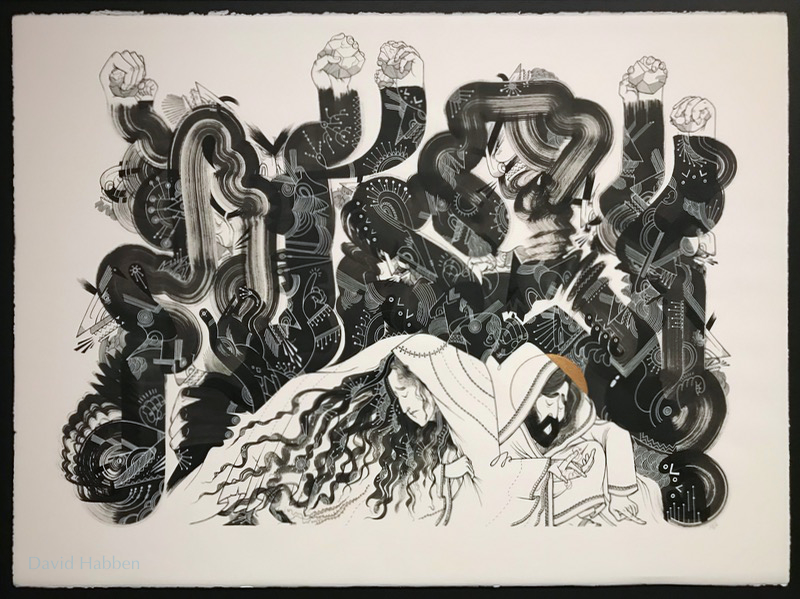
I always look for handsewing in pieces of art, and found it in this image by David Habben, in a recent art exhibit in Salt Lake City. It depicts Jesus and the adulteress with her angry mob of accusers. The clenched fists with rocks, the tortured shapes, and the vile expressions in the background convey the tension in this well-known scene.
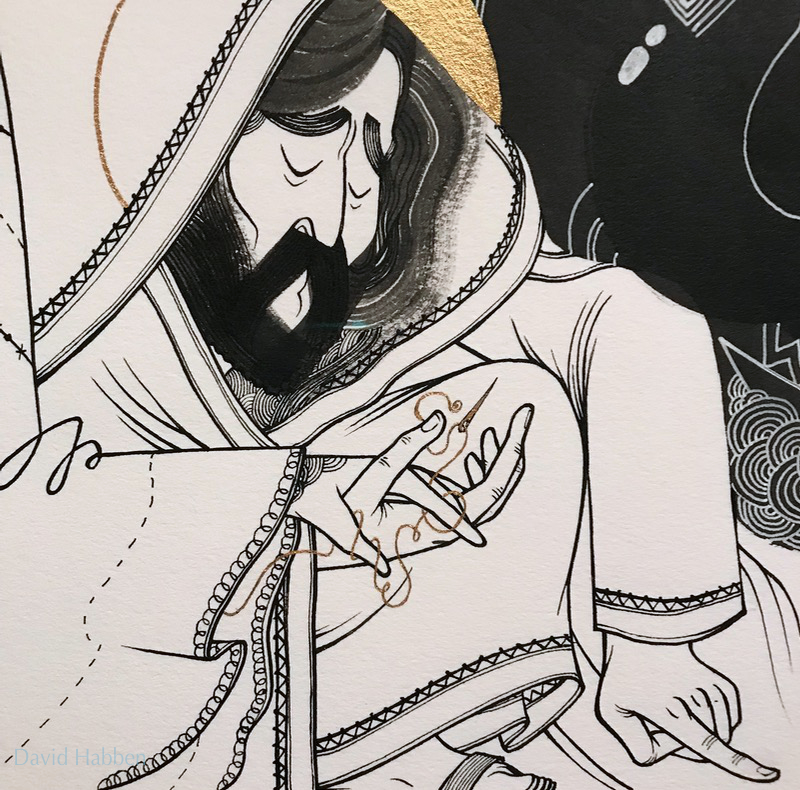
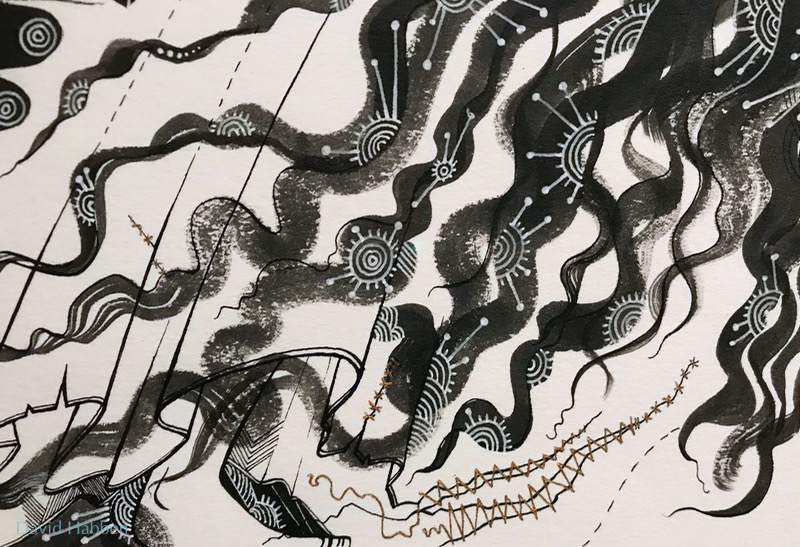
In the foreground, Christ kneels and writes on the ground, this thread looping around his other hand. This puzzled me, as I knew it wasn’t in the original story.
I found gold stitching in areas of the woman’s veil, clues to my small mystery. My sister, viewing this with me, provided the connection: calmly drawing in the dust with his finger, the accusers slinking away after his measured rejoinder, Christ was mending. The accused woman may have stitched her clothing, but now He would mend her soul.
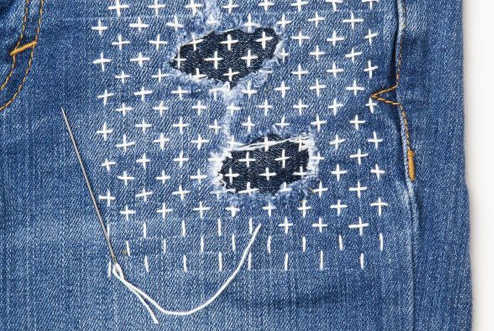
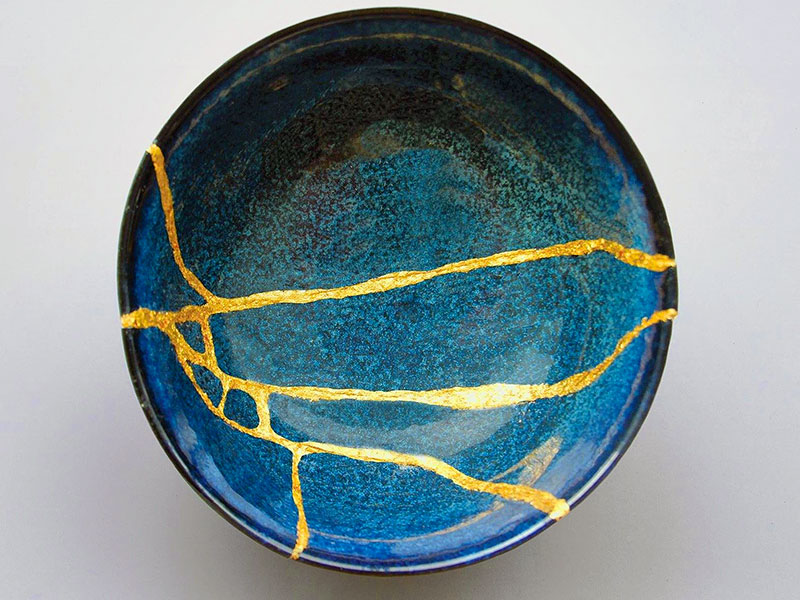
A mended surface can carry a scar. In the case of boro, or of artful kintsugi, we appreciate the addition. But more often that not, we humans don’t want imperfections, or wrinkles, or sadness, death, old age, or any evidence of a rent place. We want happy. We want life to go on with daisies and sunshine and lollipops: no fights or bad diagnoses or mistakes that reverberate for generations.
For years I’ve taken comfort in Eugene O’Neill’s line: “Man is born broken. He lives by mending. The grace of God is glue.” Are we broken? Certainly we only have to the watch unbelievable tragedies of this past weekend trickle in a headline at a time on our screens, to know that broken and torn places are piling up somewhere in a onslaught of rage. I turned away from the yet-again, awful headlines, not knowing what to do.
I take comfort in O’Neill’s wisdom, and Christ’s golden thread. Rather than join the fury, I can fix a torn pocket, a broken heart, work through a quarrel, listen to someone who is trying to heal a shattered life. Whether at the epicenter of the current bad news or in our own homes, we can do our part to draw together the gaping edges, mending them with careful, even stitches.
Recently a few of us here were involved in the Heritage Day Celebration, honoring the early pioneers in this valley. It happened last Saturday, on a mildly hot day. Good day to be wearing all these layers, right?
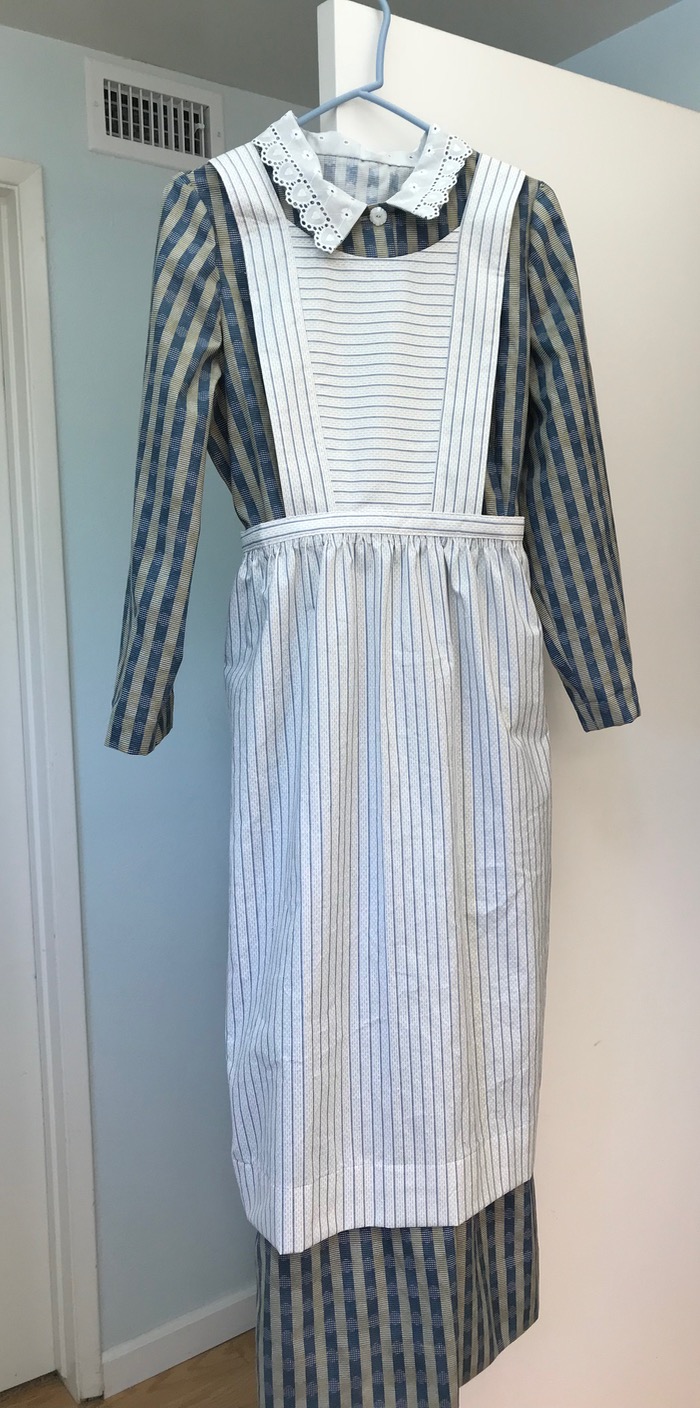
Didn’t Thoreau say something like “Beware of all enterprises that require new clothes”? I think the dress looks like a cross between Mary Poppins and the mother from Little House on the Prairie, an ancient TV show that forever colored our view of what women in the 1850s wore around the farm, and notable for the final show: they blew up all the set houses with dynamite to keep them from the local evil corporate guy.
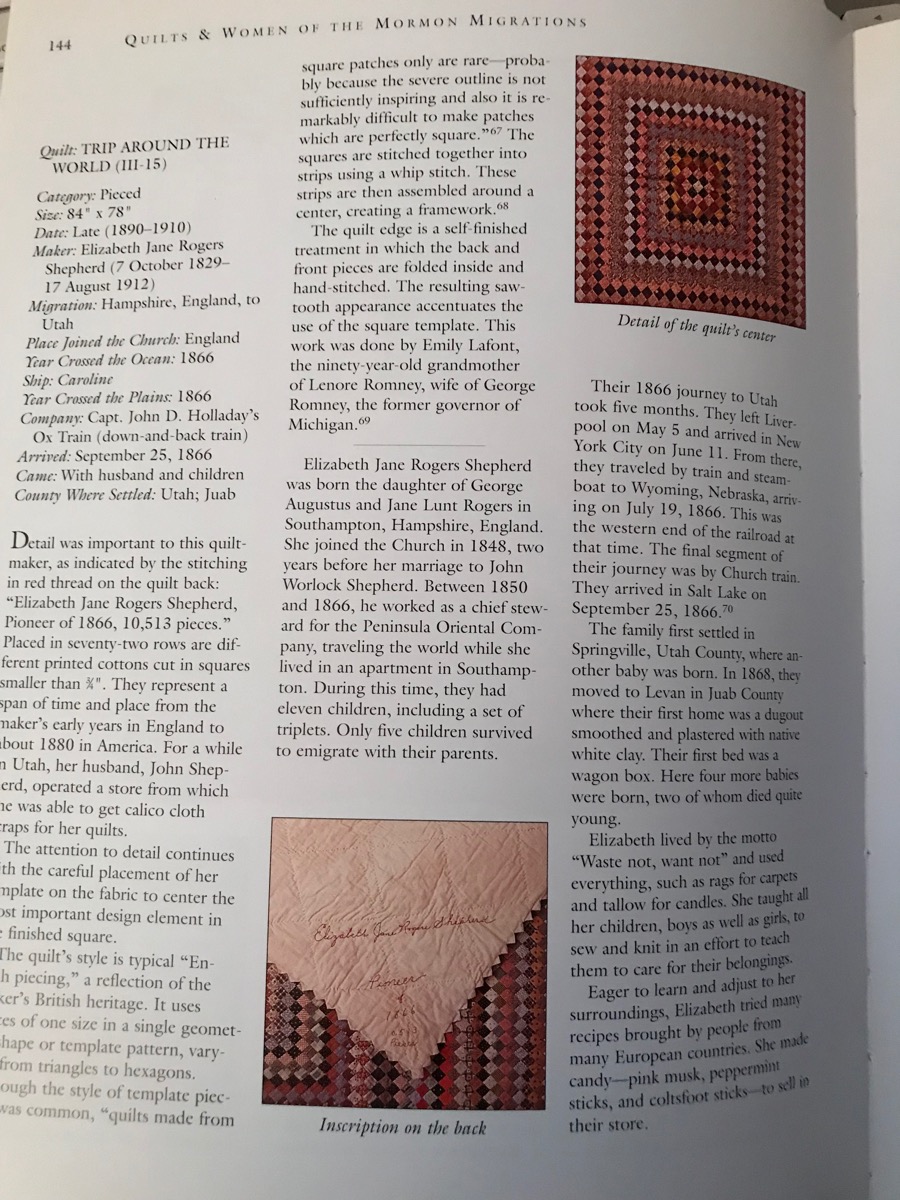
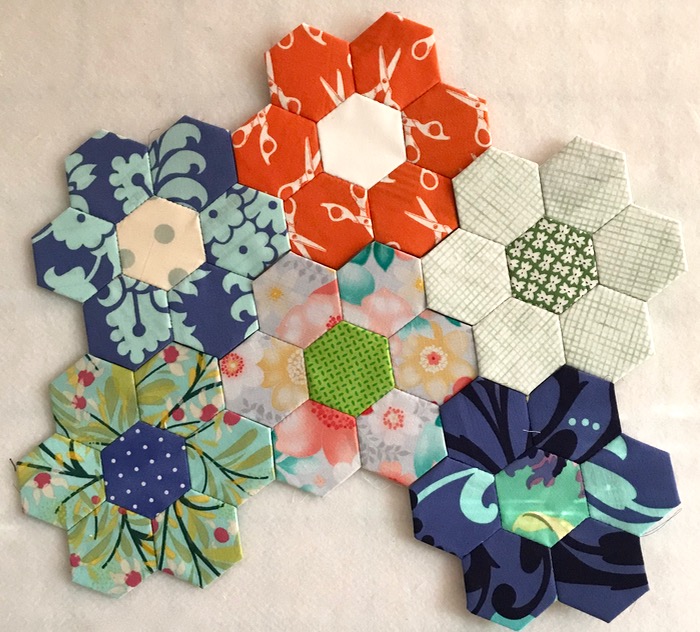
We hosted a “quilting booth” but instead of that tired old trope of setting out a quilt top so people could mangle it with their stitches, we ran a hexie booth, based on the research I found that quilters at the time were doing English paper piecing.

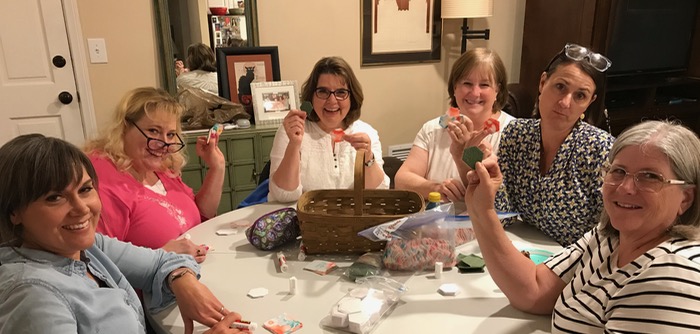
We had some work to do. We, meaning, several of us who have attended our quilting group for many years, plus some others we conned into asked to participate.
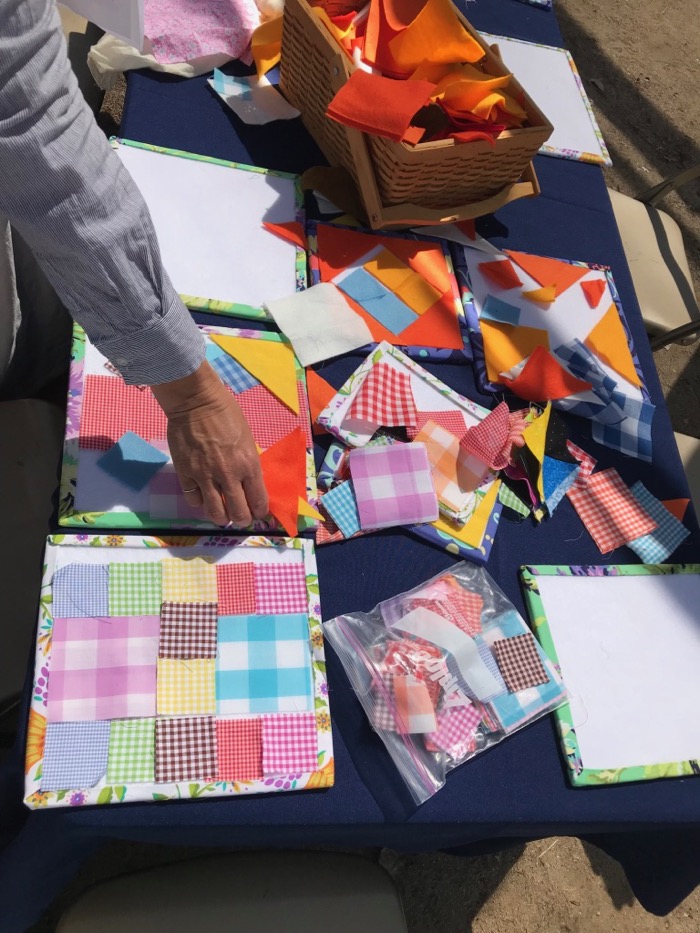
First, combine four patterns to make a pioneer outfit (seen above). Then start working on the demo goods: hexies.
I appliqued them to a tote bag I picked up a couple of years ago at Quilt Market, figuring the “maker” theme was a good fit for hexies.
l to r: Julie, Melissa, me, Laurel, Simone, Lisa. (PS Simone doesn’t really look like this. She likes to pull faces. Her texts always make me laugh.)
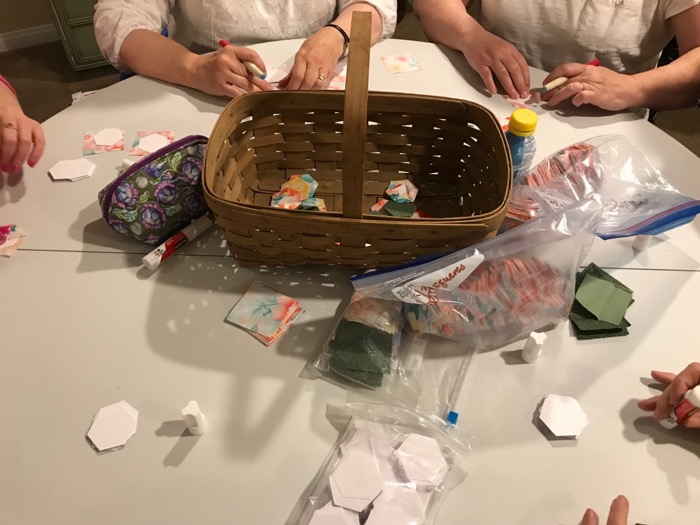
We figure we glued up about 500 hexies, total, between this and what Leisa did later on. It was so good to have these!
It was a team effort: our friend Dennis brought us tables and chairs, and Leisa was the “set decorator,” using quilts from near and far. We arrived at 7:10 a.m. and left at 2:20 p.m., the right amount of time.
We also had some modern hexies there to entice the participants; that is Laurel’s beautiful Modern Millefiore Hexie quilt on the left, with Simone’s hexie pillow (pattern here), and other props.
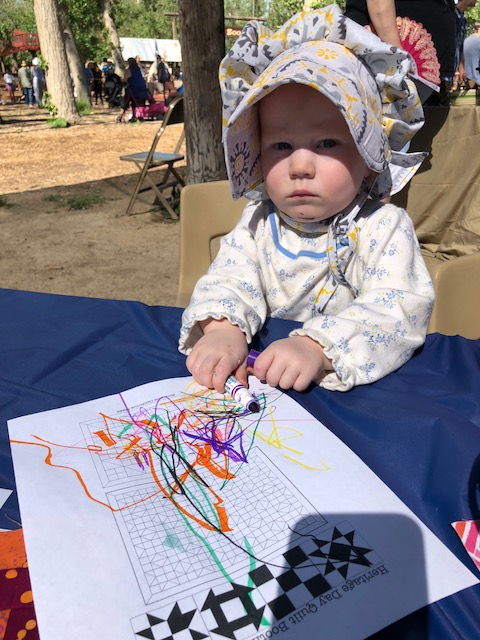
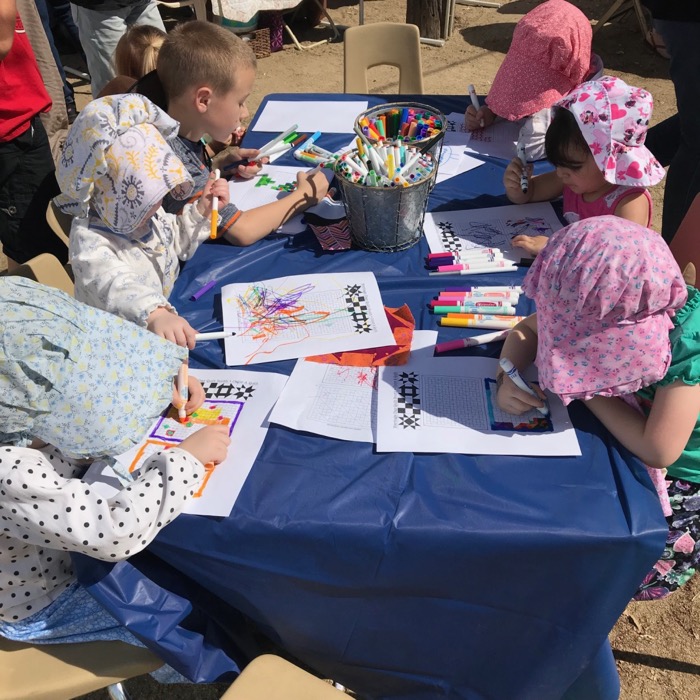
We had Color-A-Quilt pages for the littlest visitors, as well as create your own quilt block (below). We had to remind them that it was a visual treat–take a photo with your phone sort of thing–as people kept walking off with my design boards. That is Julie’s hand you see there, making a mock-up. She kept these two sections rolling the whole day.
from l to r: Cindy, Julie, Denese, me, Laurel and her husband Ralph, Leisa, Simone
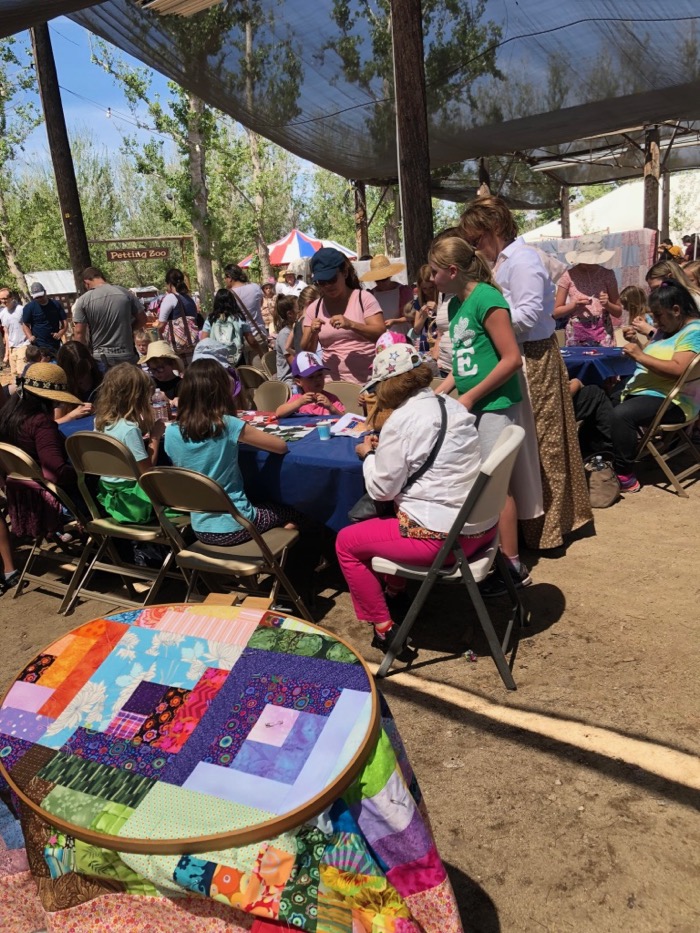
The original crew, plus my husband, Dave (who is taking the photo). We swapped out two for four others mid-day; we were swamped, so were glad to have them. Here are some photos from our day:
We were suprised by the number of teens — and teen boys — who sat down and made a three-hexie patch from start to finish.
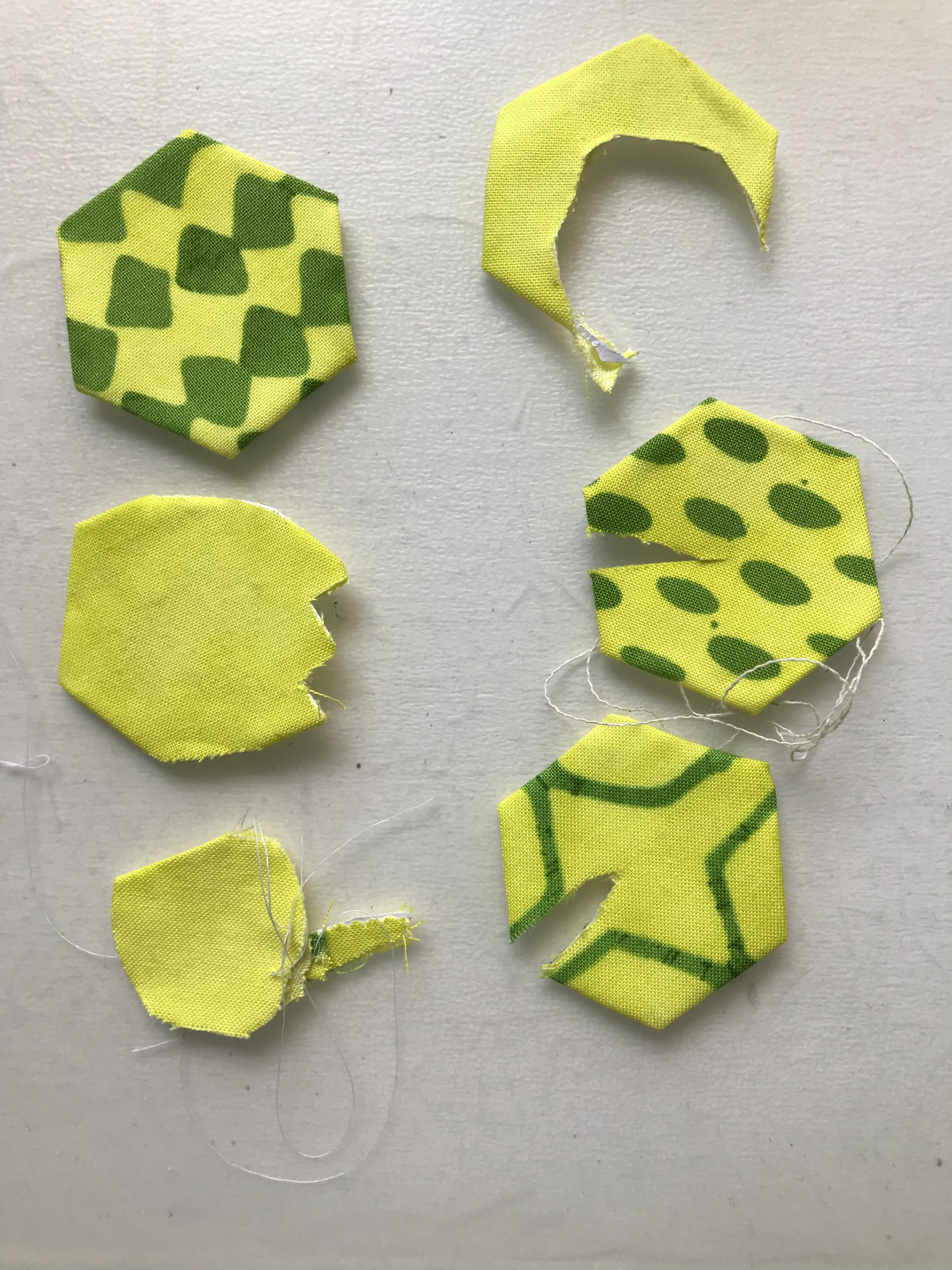
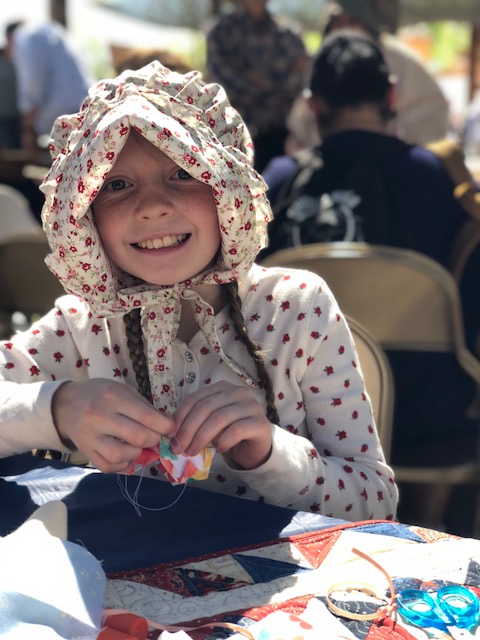
Most did not look like this–they sewed them up properly, although sometimes with an interesting twist or two, but we thought this won the prize for “Most Interesting Hexie” of the day. We had to teach many how to tie knots (about half had no idea how to do that), and we saw that lots of youngsters (and oldsters) liked to be able to sit and sew, a skill not often available to them in other places.
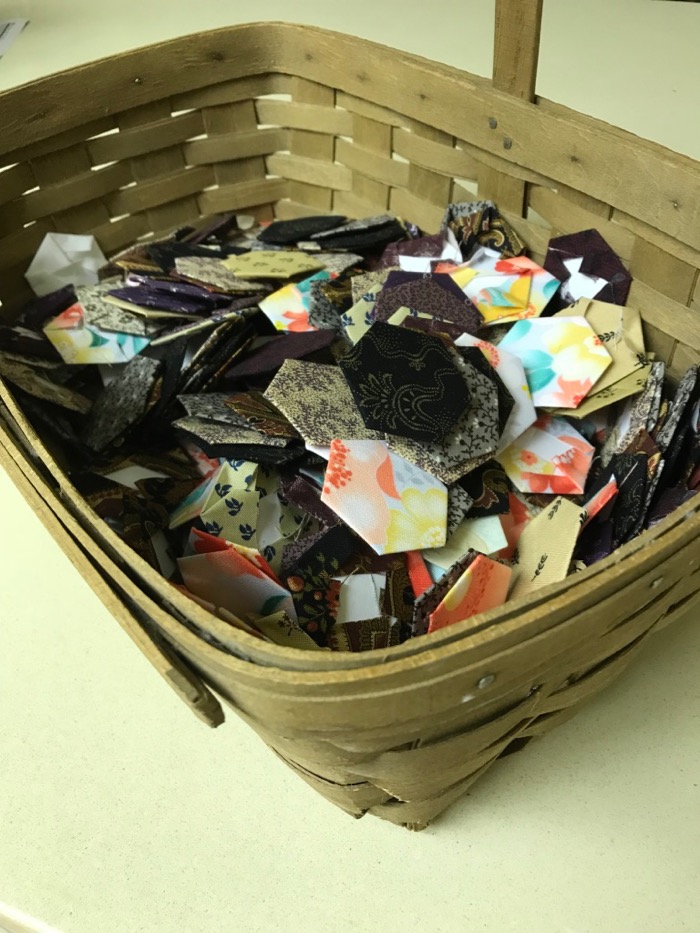
We had a sample quilt set up in a hoop in case anyone wanted to try hand-quilting. Most were more fascinated by the hexies. And most wanted to pick through the baskets of cut fabric squares and glue their own shapes, too.
Wee Pioneers
I love sharing our craft with some new quilters!
Stats: 3,000 paper hexies purchased
60 needles (only 35 were brought home–don’t know where the rest went)
3 needle-threaders: one from Clover, my friend Laurel, and my husband Dave
2 ten-gallon jugs of water
4,000 cut squares prepped up: fabric donated by Paintbrush Studio and Primitive Gatherings
Project boards that are not dusty: 0
Number of pioneer outfits that will never be used again: 7
I was recently sent a stack of fabrics as I was asked to be a part of the On Your Mark Create! blog hop; I jumped at the chance to work more with my friend Simone’s On Your Mark fabrics. I stewed over what I could sew, since I’d already made a baby quilt. This time I wanted some quilty project that would be fun and helpful for me and for you.
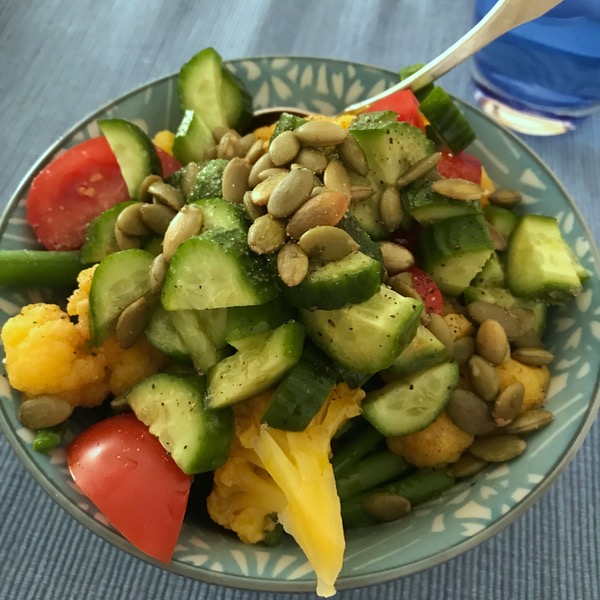
Then it was time for lunch.
What?
Yes, lunch, and when I looked those placemats on the table, I knew they were way past their Sell By date. It was time for some new ones.
I hunted around for placemat tutorials that had some style and were quick and easy and that would show off the fun prints in Simone’s fabrics. (As a former English teacher, I’m totally in love with the exclamation point fabric.)
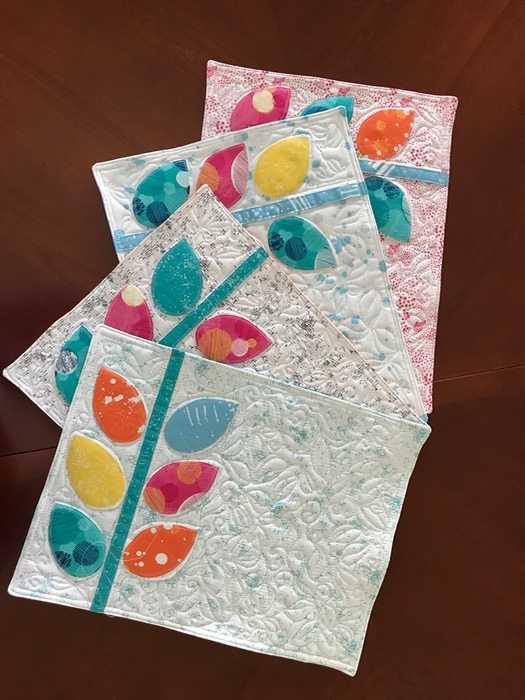
I found this free pattern on Craftsy by Samelia’s Mum, and thought it would be perfect. I had toyed with another design by Fabric Mutt, which had pockets for paper plates and plasticware at picnics, but opted instead for the leafy design on “All Seasons Placemats.”
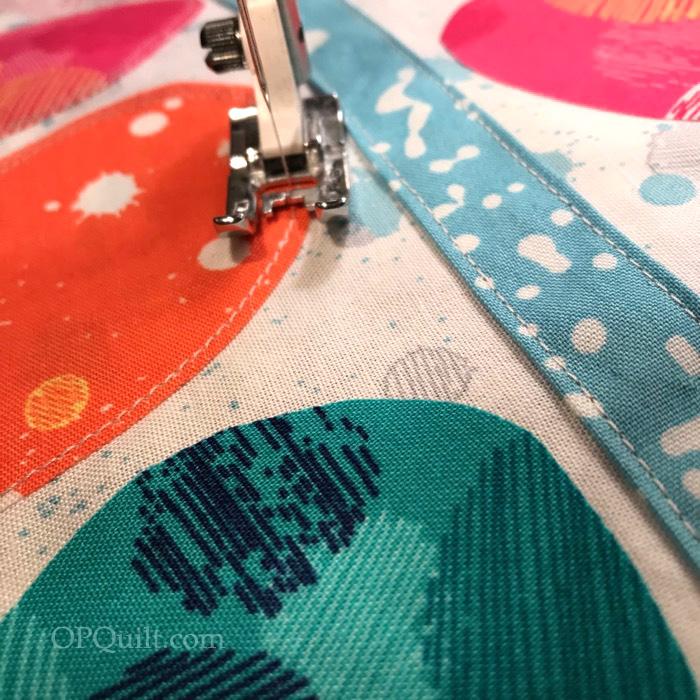
The fabric has a soft hand, and to make sure I didn’t have the placemats shrink out of shape (and, as a mostly-I-prewash-fabric quilter), I threw the fabrics into the washer, then dryer, until they were damp-dry and then pressed up the fabric.
I had fun choosing which leaves to go where. I also made some changes to how the pattern went together. First I constructed the placemat completely, following her instructions for fusing and stitching.
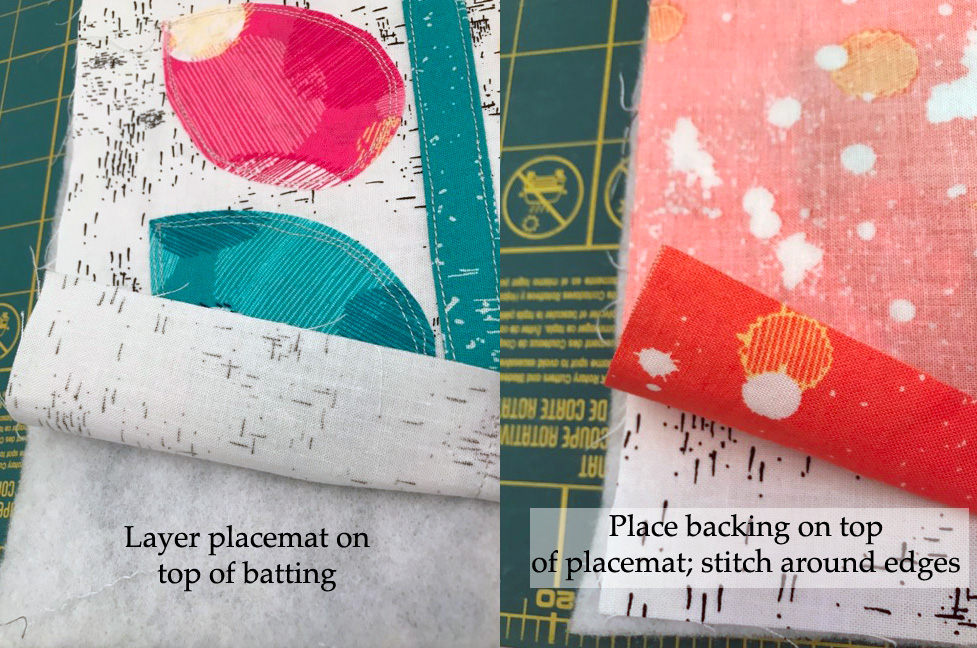
But then I layered the placemat on top of batting without quilting it down first. I layered the backing on top of that RST. I stitched around the edges, leaving an opening.
I turned it inside out, and closed the opening by top-stitching around the outside edge of the placemat. It looks poofy, but it settles down when you quilt it, which is the next step. After stitching around the outside edge, I’d say to do it again, 1/4″ away. Then quilt the plain spaces in the mat. I went around the leaves first, then stitched more leaves in a random fill pattern all over.
Did I mention they are reversible?
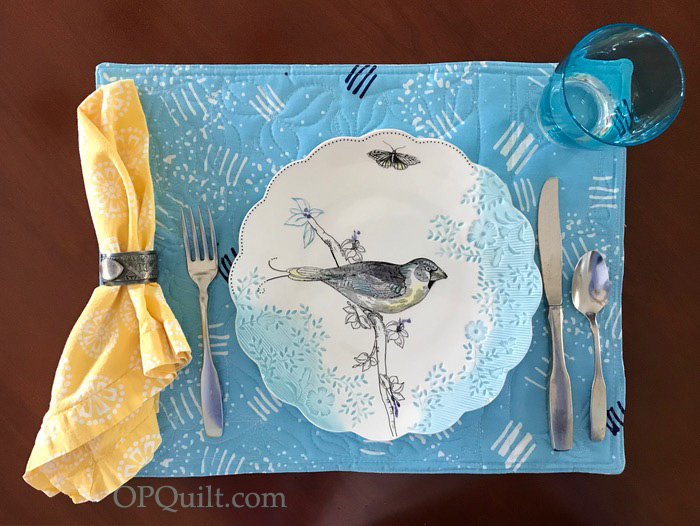
I know a lot of folks don’t set proper tables anymore, but there’s something so lovely about a well-set table that shows love to all who join in. After using them for a few days, I think I should have places the leaves on the RIGHT side of the placemat, for then the glass would be like the flower at the top of the leafy stem. Next time.
PS. That’s my grandmother’s napkin ring you see up there.
Here are my On Your Mark placemats, gracing our table for dinner. By the way, one night we spilled on them, and I tossed them in the washer then laid them out flat on top of the dryer to dry, and they look as good as new. No shrinking.
Paintbrush Studio, who makes these fabrics, is offering one fat quarter bundle to be given away each day of the blog hop (like what you saw at the beginning of the post). (So you can hop around for more chances to win!)
UPDATE: Giveaway closed now. Thank you all!
To win one from me, leave a comment telling me when the last time was you purchased placemats (if you can remember), and I’ll draw one name randomly (USA only) to win. Winner will be contacted via email and the bundle will be mailed out from Paintbrush Studio. (But if you don’t win, you can purchase them here.)
Please visit the others on the blog hop (the first listing is the Instagram address, and if there is a second, it is their blog):
Rescue boats fill a flooded street at flood victims are evacuated as floodwaters from Tropical Storm Harvey rise Monday, Aug. 28, 2017, in Houston. (AP Photo/David J. Phillip)
Okay–here’s what helps keep me busy while I’m watching hours of footage about the Hurricane Harvey disaster: hand-sewing. So I came up with my own little sewing kit. Start Here, with this rough sketch of a pattern: Sewing Kit_opquilt-pattern
and these dimensions:
Cut out. Quilt Soft & Stable lightly to backing, as you just want to hold it in place, you don’t want to distort it. NOTE: although it doesn’t show really well, I cut two of the notions pocket (thimble and thread glide); the dotted one (you can see it below) is the lining. Remember to cut with wrong sides together, as the pattern piece is not symmetrical.
Stitch it together along the curvy top, and the right side. Turn inside out, topstitch along the curvy edges. and make the pleats. Top stitch along the two sides and the bottom, holding it in place to the inner lining. I like light linings, so I can see what’s going on.
Refer to above photo for the rest of these sketchy detailed directions.
Sew down one long side of the scissors pocket; turn and press. Turn in 1/4″ on the other long side; press. Top-stitch the scissors pocket onto the lining. Slide your scissors into place, and figure out where the ribbon needs to go: backstitch a ribbon into place.
Match up the backing with the lining and all its decor, putting wrong sides together and pin. All the edges will be raw edges. Find the center line (where you will fold this closed) and stitch down the center to anchor the parts together.
Insert the zipper between the two zipper pocket pieces, cutting zipper down to size after sewing thread tacks on each end to keep the zipper on its track.
If you want a needle holder, cut a piece 1-3/4″ by 4″ and stitch to the zipper pocket as shown in photo above. Then fold the zipper-pocket-assembly in half, creating a pocket. (You can see the aqua ribbon sneaking into the pocket in the above photo.) Place zipper pocket on right side of lining and stitch around this narrowly–just to hold it in place.
Lay a spool of thread on all the corners and trace; cut the edges into a rounded edge. You can omit this step, and just do the corners like a quilt binding.
Bind the edges with a double-fold binding: cut a piece approximately 20″ long and 1-1/4″ wide. Fold raw edges into the center and press. Open out binding; first stitch WST with binding to back. Fold to the inside, pinning or glueing to keep in in place, then topstitch. Make two other double-fold pieces, roughly 12″ by 1-1/4″ and zig-zag. These are your ties. Stitch them to either side of the outer edge (refer to photo way below).
Add other trim: two buttons for the “String & Button” closure (yes, that is its official name). I found some interesting thick string and sewed that through the little pocket at its tallest point and then knotted it behind the pocket. I used Fray-Chek on all raw edges of string and ribbon and ties. To close, you wrap it around the button (shown, above).
I use the Superior Threads Bobbin Donut in doing my hand stitching. I tried and tried to think of a way to get it attached, and finally resorted to sewing a ribbon to the center.
I also tried it out on their new Super Bobs box, which is what is replacing the Donut. They still have a few donuts for sale on their website if you hate to see it go. Truth: I probably won’t shove the donut or the box into the sewing kit…but I might.
I realize that I assume you have some sewing knowledge when I posted this, but another Truth: it’s also for my reference if I ever want to make another one. The very cool fabric on the outside is from Timeless Treasures Fabrics a few whiles back. It’s called Lux, if you want to go looking.
Why did I make this? I have lots of pouches and bags and I love them all, as most came from friends. I also have a couple of sewing cases, too, but I found myself toting around my stuff in a zipper baggie, as nothing quite suited me. So I know this is what works for me, but maybe you can find something in here that will work for you.
It matters little how much equipment we use; it matters much that we be masters of all we do use. ~Sam Abell
I have to say that my attention has been preoccupied with the victims of the Houston flooding. My son and his family moved there a week ago (I know!), and I try to keep tabs on them as much as he is able to. I’m not the only one focused that way, with loved ones being flooded. We’ve contributed to the Google Hurricane Harvey Response (they’ll contribute matching funds), and there are many other charities where you can donate. Please consider helping in this way, as this is catastrophic.
And One More Thing: Get your own Emergency Supply Kit. Have water, basic necessities, food that’s portable. None of us can expect that rescue will be a part of our community’s offerings, in case of disaster (and you know what your own disaster can be). We have to expect that we’ll need to help ourselves first.
Samaritans help push a boat with evacuees to high ground during a rain storm caused by Tropical Storm Harvey along Tidwell Road in east Houston, Texas, U.S. August 28, 2017. REUTERS/Adrees Latif TPX IMAGES OF THE DAY – RTX3DRSF