


Stopping by Woods on a Snowy Evening
#1 in the Literature Series
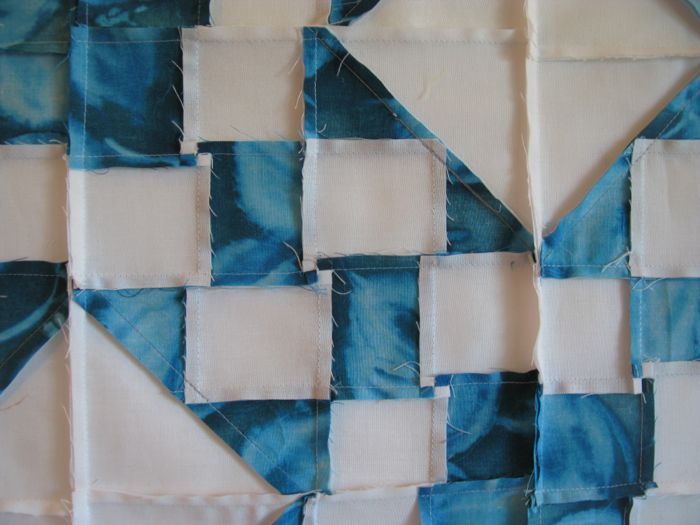
Quilt #142
Moving a different direction, the Four-in-Art quilters have chosen a year-long theme of Literature for this current series, and within that, we each have chosen our own way to think about literature. Some have chosen to focus in fiction or non-fiction or others have chosen children’s literature. I have chosen poetry.
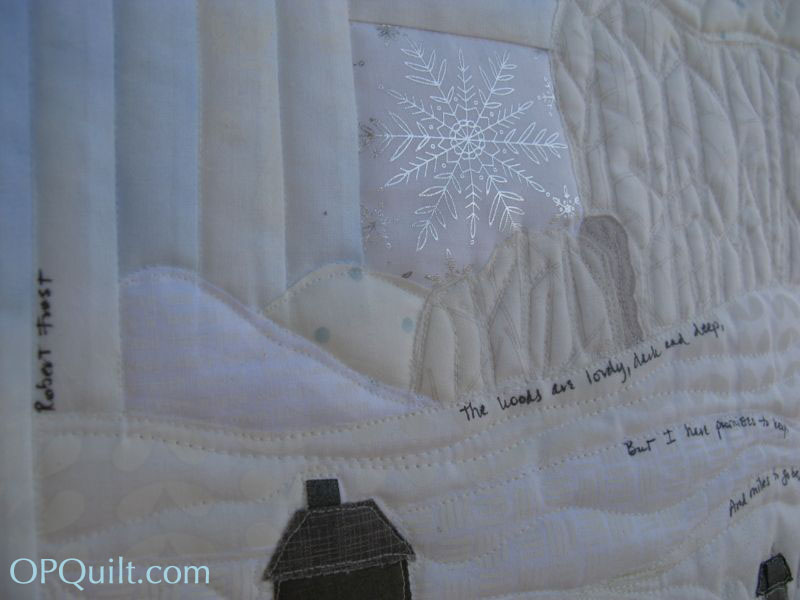
Robert Frost’s poem, “Stopping by Woods on a Snowy Evening,” is one that I taught in my literature class at school, which gave me a chance to really research it, to hear a recording of him reading his work, to explore what others have thought about it. Depression runs in our family, and many writers have commented about the intimation of suicide — the struggle over this — buried deep in the implied meaning in many of the lines. Frost, of course, has denied that, but I think that while the writer may write the lines, it’s the readers who get to interpret what they see in the poem. Time for you to see the poem:
“Stopping by Woods on a Snowy Evening”
by Robert Frost
Whose woods these are I think I know.
His house is in the village though;
He will not see me stopping here
To watch his woods fill up with snow.
My little horse must think it queer
To stop without a farmhouse near
Between the woods and frozen lake
The darkest evening of the year.
He gives his harness bells a shake
To ask if there is some mistake.
The only other sound’s the sweep
Of easy wind and downy flake.
The woods are lovely, dark and deep,
But I have promises to keep,
And miles to go before I sleep,
And miles to go before I sleep.
In class we study the iambic tetrameter, the rhyme scheme, the internal rhymes and then focus in on those repeated lines. When you watch Frost read his poem, the first line of that last stanza really comes through that the woods are dark and deep, although lovely, and then he raises his eyebrows, almost in a shrug, saying he has promises to keep, as if that prevents him from exploring the darker woods before him. And many times our obligations do keep us on a certain track, keeping us from veering off into depression or getting lost in other ways. When you have to put food on the table for your young family, you have fewer minutes to ruminate or cry or sit in the corner and stare out the window.
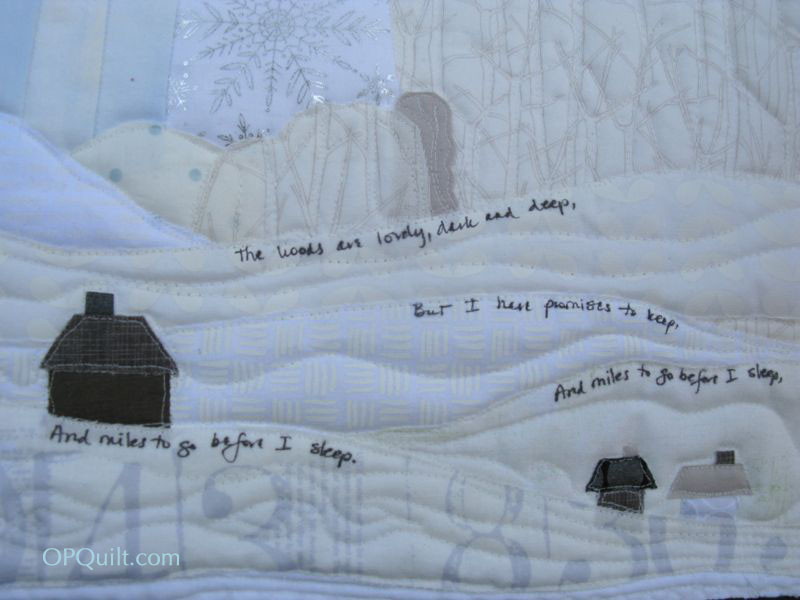
I think the first line, “And miles to go before I sleep,” might refer to the tasks we all face: the laundry, work, family and social obligations, that daily list of compiled chores that pile up before us. I know I certainly had a week like that, and even though some were delightful obligations that brought great pleasure, there was no extra space on the calendar, no breathing room to stop and look at woods filling up with snow.
Perhaps that second repeated line refers to the longer view, past calendars, past busyness, past the To-Do list. We all need purpose in our lives as it is the engine that drives us to get up and get dressed, to engage with the world and to lay out our days in ways that not only contribute to the lives of those around us, but more importantly, lets us focus on the miles both behind us and in front of us. Frost’s genius lay in crafting the lines that cause us to reflect on the bigger picture. His poem reminds us to pay attention to the journey of our lives, rather than than the mere detritus of our lives.
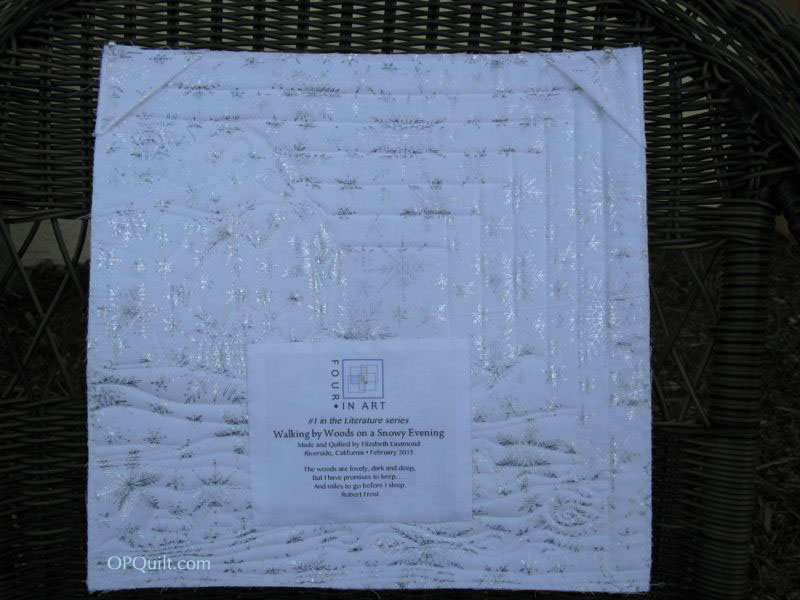
While some may think of the quilting as just a hobby, for me it has become part of my purpose in life: to explore and to create, to reach across the world or country and build friendships, like this small art quilt group. Certainly I can outline the big ideals that inform my choices, but when traveling miles to bring a quilt to fruition, I take heart in Frost’s reminder to keep to the journey.
I like this new challenge for this year. I’ve already chosen my poem for the next reveal, which is in May, and yes, all mine this year will have a seasonal theme.

Please take time to visit the other Four-in-Arters, who have also put up their Challenge Quilts today
(just bits and snips of their quilts are shown–be sure to see the full quilt at their sites):

 Catherine at Knotted Cotton

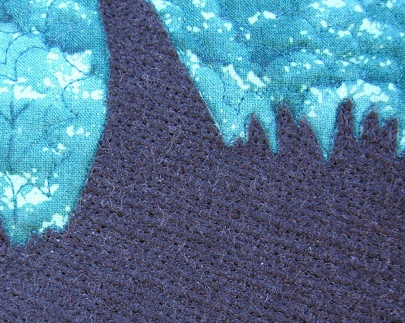
 Simone at Quiltalicious
 Susan at PatchworknPlay


 OccasionalPiece--Quilt!