


Yes, it does, but sometimes I forget and think that it’s the State-of-our-Nation or the News or my List-of-Things-To-Do, but really…we all know. This was the block for our Gridster Bee this month for Carolyn. It’s a block from Brigette Heitland of Zen Chic.

And this was made because of Love. It’s a curtain that goes around a lab table that has a sensitive microscope: you need darkness to do the work.

It’s made out of black-out lining, and after a couple of repairs when the chairs ran over it, I wrote this on the side. Why am I talking about my husband’s lab at the university? Because he’s clearing it out, shutting it down, and it was like Old Home Week in there. I seriously have not been up on campus for like three years, well before the Covid Shut-Down. So it was strange walking through all those familiar places (I earned my Undergraduate and Masters Degrees in Creative Writing there, so yes — I spent a lot of time on campus at one point in my life).
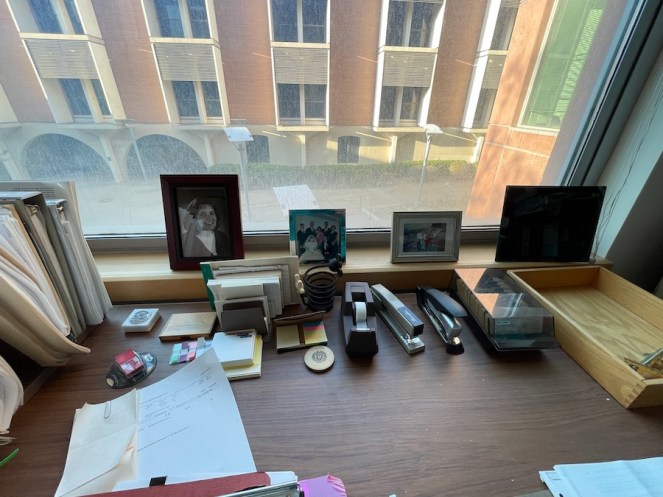
On the left above Dave’s desk: a photo my friend took of me when I was an undergrad, and then two other photos are pivotal times in our life together: the small silver frame holds a family vacation taken about one month after we were married: Dave, Me, and the Four Children. The middle frame, just above the tape dispenser is when our first son married.
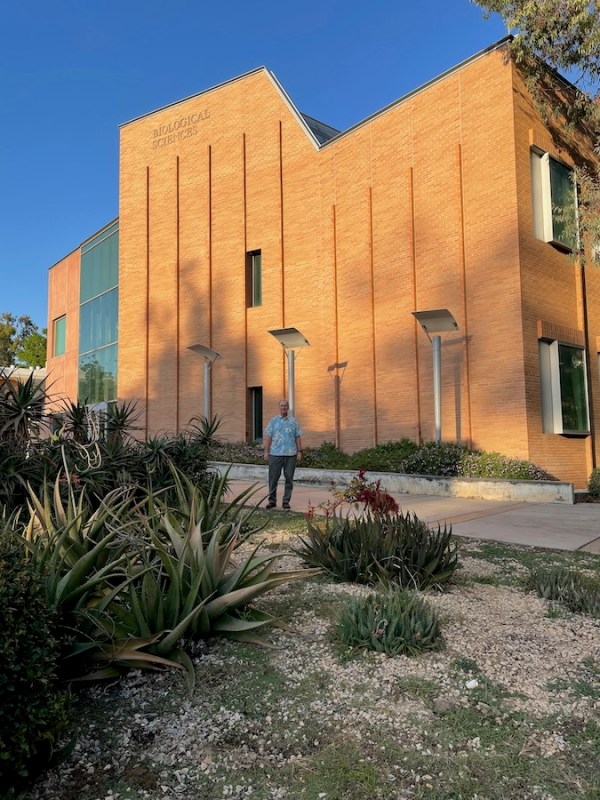
Dave got this building built, as I like to say. I won’t be leaving any buildings on campus to my memory, but I will be leaving a black-out lab curtain. Which they will probably throw away.
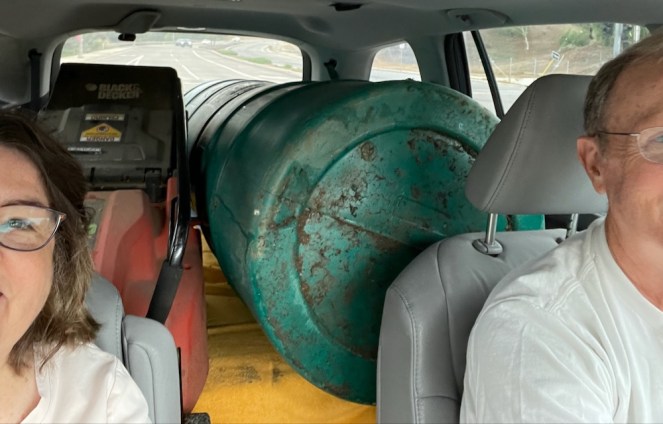
Speaking of trash, this was us yesterday morning, on the way to the Free Dump Day.

Why is it that I find even trash interesting? (aside from the smell)

All done! Regular Trash and Hazardous Waste Trash. Showing our love to our home, one happy trash day at a time.

This is the second Louise Erdrich book this year. Because she reads her own books, it’s like entering a trance to listen to them. In grad school we used to call it the Fictive Dream, and the goal (always) was to get the reader there, and then not break the spell. Erdrich has succeeded with this novel.

A couple of weeks ago, when my friend Joan was bedridden, recovering from a stroke, then all of a sudden another, and then her Stage Four lung cancer was diagnosed (she’s not a smoker) and we rang the doorbell to say hello for just a minute, or maybe not. Depending. Her granddaughter Greta answered and came out on the porch, and then was joined by Hanna, then Elsa, the Three Graces, I think, all lovely and tender and shining while their grandmother was dying in the back room, only we didn’t quite know it yet. At my stage of life, I recognized quickly that this potentially sad news was completely unwelcome to these young women, and how to find a way to step over the gap of fighting hard, unwilling to let go to that place where you accept and wait and watch? I remembered Maxwell’s quote and Susan Sontag’s stitched quote about the Kingdom of the Well and the Kingdom of the Sick. Joan had lived in the Kingdom of the Well for nearly all her 92 years, felled last year by a broken hip, but still calling me up to check in with me, ask me something, folding me into her life, always.
And now this.
I read them the quotes, and Greta wept. I cried inside, both for Joan and for these three beautiful Graces of granddaughters. Elsa slipped us into Joan’s room — just for a minute — and brought chairs. After five minutes, we began pulling away, saying our good-byes, not wanting to tire her out, this radiant bright spirit of a friend. I didn’t know then it would be the last time to see her. Do we ever know? We left Joan’s favorite, Irish Soda Bread on the doorstep for them to find when they returned at night from the hospital, and left our love through texts and notes, and then…she left us. Joan was called Home.

When I was writing my novel for grad school, about a woman who loses her family in one icy accident on the road, I asked Joan if I could interview her. Long ago, her young adult son was riding in the hills with another friend, taking a break from families, renewing their friendships when the vehicle suddenly turned over, tragically taking the life of both men. Joan was left another granddaughter and years of grief. We talked a long time about what it felt like on that day of the news, the day of the funeral and burial, the hollow spot left for years afterward. I don’t know if my writing reflected all that Joan shared with me, but from her, I learned about resilience and pain and sorrow and forgiveness and moving on.

In our brief time at her bedside, I also read this thought to Joan, at her granddaughters’ request:
[S]ince this life is such a brief experience, there must be regular exit routes. Some easy. Some hard. Some sudden. Others lingering. Therefore, we cannot presume, even by faith, to block all these exits, all the time, and for all people. Nor, if possessed of full, eternal perspective, would we desire so to do.
Since certain recollections are withheld, we do not now see the end from the beginning. But God does. Meanwhile, we are in what might be called “the murky middle.” Therein, however, we can still truly know that God loves us, individually and perfectly, even though we cannot always explain the meaning of all things happening to us or around us.
Neal A. Maxwell, “The Great Plan of the Eternal God”
Take care,

 OccasionalPiece--Quilt!